Cameco uranium company cuts production in view of nuclear industry slowdown
 Cameco outlook sours amid doubts on nuclear’s future * Company sees 2012 revenue flat to down 5 percent
* Eyes lower production in 2012
* Shares down 1 pct at C$23.12
TORONTO, Feb 10 (Reuters) – Uranium producer Cameco forecast lower sales and highlighted doubts about the takeup of nuclear power in its stronger than expected quarterly results, and its shares edged lower on Friday, ……
Cameco, the world’s No.1 publicly-listed uranium producer, also lowered its 2012 uranium production outlook by 3 percent to 21.7 million pounds and said delays and cancellations after last year’s Fukushima nuclear disaster could hit prices.
Germany, which represents about 5 percent of the global market for uranium, plans to phase out its reactors by 2022.
Japan shut down most of its reactors for testing after the March 2011 earthquake and tsunami that crippled the Fukushima Daiichi power plant, and is expected to take its remaining three reactors offline for maintenance in the next few months.
“It remains unclear what level of nuclear power Japan itself – which represents 12 percent of global nuclear generating capacity – will depend on in the future,” Cameco said.
Canada’s emerging renewable energy power needs a national focus
Clean energy also needs political focus, Montreal Gazette, By TIM WEIS, Financial Post February 10, 2012 Whether it is the Keystone XL pipeline, the Northern Gateway pipeline or securing an export market in China, the oil sands have dominated
much of the recent energy discussions in Canada.
What might surprise many is that Canada is quietly emerging as a renewable energy leader, but it will take the same political focus
currently being put toward oil sands to ensure we retain and grow the jobs that are being created in the country’s emerging clean energy sector.
In 2011 Canada was sixth in the world in wind energy installations, and as recently as November 2011, Ernst & Young ranked Canada as the eighth most attractive country in the world for renewable energy investment, ahead of some traditional leaders including Denmark, Spain and Japan.
Despite having fewer than 35 million people, Canada has the sixth-largest electricity system on the planet, behind only China, the
United States, Russia, Japan and Germany. Given the size of our electricity system, perhaps it shouldn’t come as a surprise that
Canada ought to be one of the leading markets for renewable electricity. Continue reading
Canadian govt to sell nuclear laboratories, to reduce taxpayers’ financial risks
Government of Canada to Unload AECL Laboratories, TechFinance, February 9, 2012 Government of Canada is seeking “Expression of Interest” as a process of selling Atomic Energy of Canada Limited (AECL)’s Nuclear Laboratories.
Government of Canada said this process will help inform the restructuring process, a critical step to further strengthen Canada’s nuclear industry while reducing taxpayers’ exposure to financial risks in this sector.
AECL’s Nuclear Laboratories include two main sites: Chalk River Laboratories (CRL), located in Ontario, and Whiteshell Laboratories, located at Pinawa, Manitoba…….
http://news.techfinance.ca/government-of-canada-to-unload-aecl-laboratories/
Radioactive threats to the Great Lakes
Nuclear worries abound in Great Lakes region. Do solutions?, Medill News, BY RORY KEANE, JAN 26, 2012 “..…The report, titled “Too Close to Home,” cites numerous articles that followed the unfolding disaster at Japan’s Fukushima-Daiichi nuclear power plant and concerns in the U.S., including a series of Associated Press stories dating from summer of 2010.
According to the report, over 10 million Americans in Great Lakes states, excluding Indiana and Minnesota, receive drinking water originating within 12 miles of a nuclear power plant. The AP stories cited focused on radioactive isotopes that could leak into drinking water. Continue reading
Cameco uranium company talks big, but future is doubtful
 Uranium miners still waiting on that rebound, TIM KILADZE, Globe and Mail , January 24, 2012 When stocks of uranium miners plummeted after last March’s traumatizing Japanese earthquake, some people expected a rebound once the market’s initial shocks and fears subsided.
They’re still waiting.
Close to a year after the earthquake, shares of Cameco Corp. (CCO-T23.54-0.25-1.05%) are still down 40 per cent and smaller rivals are faring just as badly, with Denison Mines (DML-T1.89-0.12-5.97%) down about 50 per cent. The death knell apparently came when Germany declared a retreat from nuclear energy.
Are these miners doomed for good? Depends on who you ask. Investors are clearly too scared to go near the industry, considering the stocks have moved very little since their initial free fall. (Check out a stock chart for the past year.
Quite scary.) But the companies themselves keep saying that everyone has it wrong.
Cameco chief financial officer Grant Isaac repeated this view when he sat down at CIBC World Market’s Whistler conference last week….. there’s still a major problem. Even if Cameco is bullish over the next decade, its consumers, particularly utilities, like to secure long-term supply contracts, and Cameco can’t talk long-term contracts when they would have to lock-in at today’s prices.
So for now, Cameco is touting plans to increase production. Mr. Isaac said Cameco is sitting on 1 billion pounds of reserves and resources, and the firm wants to bump production from 2 per cent of this a year to 4 per cent.
On this front, investors are cautious. Much of this growth centres on developing the second shaft of Cameco’s Cigar Lake project in northern Saskatchewan, and it’s been plagued with problems…..
http://www.theglobeandmail.com/globe-investor/investment-ideas/streetwise/uranium-miners-still-waiting-on-that-rebound/article2313513/
Canada’s government kept mum about Fukushima radiation fallout
he’s asking questions about rain which fell on Calgary shortly after the nuclear disaster last March, containing radioactive iodine well above the Health Canada guidelines for drinking water.
“There are certain people who might be concerned — for instance, a pregnant woman,”

 Fukushima fallout hit home Nuclear critic says Health Canada should have issued warning on radioactive raindrops BY MICHAEL PLATT ,CALGARY SUN, 22 Jan 12, There’s no need to panic — probably.
But not knowing whether to shrug or cower over radioactive iodine falling on Calgary as a result of a meltdown in Japan last year has Canada’s top nuclear critic wondering why.
“There’s no need to be concerned, but what you should be concerned about is why the authorities are so quick to dismiss it,” says Dr. Gordon Edwards. Continue reading
AREVA’s environmental plan for uranium mining rejected by Nunavut
 “Barry McCallum [Areva’s manager of Nunavut affairs] from Areva has been boasting about how many thousands of pages long their draft environmental impact statement is. It appears that size isn’t everything,” said Jack Hicks, a member of Nunavummiut Makitagunarningit, in an email.
Nunavummiut Makitagunarningit has lobbied against the Kiggavik project for years and is opposed to uranium mining in Nunavut….
NIRB gives Areva failing grade on Kiggavik’s draft EIS Environmental review on uranium scheme stalled NUNATSIAQ NEWS, Nunavut January 20, 2012 The Kiggavik uranium project, about 80 km from Baker Lake, would cost
$2.1 billion to build … The Nunavut Impact Review Board has rejected Areva Canada’s
draft environmental statement and said an environmental review cannot begin until the company fixes its work.
An environmental review of Nunavut’s first uranium mine is stalled for the time being, following a decision by the Nunavut Impact Review Board to reject an 11-volume draft environmental impact statement from Areva Canada on its proposed Kiggavik uranium extraction project near Baker Lake. Continue reading
Canadian authorities keep mum about radiation in rainwater
Radioactive iodine in rainwater: Public was in the dark By ALEX ROSLIN, The Montreal Gazette January 14, 2012 After the Fukushima nuclear accident, Canadian health officials assured a nervous public that virtually no radioactive fallout had drifted to Canada. Continue reading
Indigenous peoples fight against nuclear waste dumping on their land

 No nuclear Northwest: Grand Chiefs Kenora Daily Miner and News, By Jon Thompson, 10 Jan 12 Grand chiefs representing every inch of Northwestern Ontario are publicly taking a hard line against burying nuclear waste in their traditional territory, claiming it would violate international law. Continue reading
An “under-performing investment” – Cameco uranium company
Cameco (CCJ) Downgraded by Zacks Investment Research to “Underperform”, Localised USA, Jan 10th, 2012 Cameco (NYSE: CCJ) was downgraded by equities research analysts at Zacks Investment Research from a “neutral” rating to an “underperform” rating in a research note issued to investors on Tuesday.
Cameco Corporation (Cameco) is a Canada-based company. The Company and its subsidiaries are primarily engaged in the exploration for and the development, mining, refining, conversion and fabrication of uranium for sale as fuel for generating electricity in nuclear power reactors in Canada and other countries. Cameco has three reportable segments: uranium, fuel services and electricity.
The company has a 31.6% interest in Bruce Power L.P. (BPLP). Cameco’s uranium joint venture interests are comprised of McArthur River, Rabbit Lake, Cree Extension Millenium, Moon Lake, Dawn Lake, Read Lake and Virgin River. Cameco’s projects include Kintyre Uranium Exploration Project (Kintyre) and GoviEx Uranium (GoviEx). Kintyre project is located in the East Pilbara region of Western Australia. Cameco holds 12% interest in GoviEx. Its wholly owned subsidiary is Global Laser Enrichment LLC (GLE).
Canada’s chequered history on nuclear safety
A closer look at Canada’s nuclear plants CBC News Canada: Jan 9, 2012 Reports of two radioactive spills at the nuclear power plant in Point Lepreau, N.B., late in 2011 have raised concerns with the head of Canada’s Nuclear Safety Commission.
Michael Binder, the president of the commission, called the news “unsettling.”…….
Some notable nuclear accidents in Canada
Chalk River, 1952 and 1958
A power surge and partial loss of coolant led to significant damage to the NRX reactor core in 1952. It was the world’s first major nuclear reactor disaster, and it resulted in 4.5 tonnes of radioactive water collecting in the cellar of the building. In 1958, a fuel rupture in the reactor led to a fire and complete contamination of the NRU building. The military was called in both times to aid in the cleanup.
Pickering, 1974 and 1983
The most serious nuclear accidents in Canada happened at the Pickering facility east of Toronto, in 1974 and in 1983. In each case, pressure tubes — which hold fuel rods — ruptured. Some coolant escaped, but was recovered before it left the plant, and there was no release of radioactive material from the containment building.
Darlington, 2009
In 2009, more than 200,000 litres of tritium, the radioactive isotope of hydrogen, spilled into Lake Ontario after workers accidentally filled the wrong tank with a mixture of tritium and water. The level of the isotope in the lake was not enough to pose harm to residents. http://www.cbc.ca/news/canada/story/2012/01/09/f-canada-nuclear-reactors.html
Radioactive shipments: Canadian Nuclear Safety Commission did not consult First Nations
The Council of Canadians is calling on the Canadian Nuclear Safety Commission to hold another public hearing on the matter before renewing Bruce Power’s permits to ship the nuclear waste across the Great Lakes to Sweden.
 the CNSC has not fulfilled its duty to consult with First Nations by obtaining free, prior and informed consent.
Bruce Power cannot ship nuclear waste until permit is renewed, Rabble Ca, BY EMMA LUI | DECEMBER 30, 2011 Bruce Power will not be able to ship 16 radioactive steam generators until they renew their permit with the Canadian Nuclear Safety Commission (CNSC) As of tomorrow, December 31, 2011, the Welland Canal is officially closed to all vessels, preventing Bruce Power from proceeding with the nuclear waste shipment until the spring.
Bruce Power had planned to ship 16 bus-sized radioactive steam generators from Owen Sound, through Lake Huron and Lake Erie, then along the Welland Canal and
through Lake Ontario and the St. Lawrence Seaway. The shipment would end up in Sweden where Studsvik, the Swedish company contracted by Bruce Power, would decontaminate the waste in order to sell the scrap metal back onto consumer markets.
On February 4, 2010, Bruce Power had received the necessary CNSC permits to ship the nuclear waste to Sweden. However, the permits are only good for one year and will expire on February 3, 2012 — before the Welland Canal re-opens again for the shipping season. The Canal generally re-opens for shipping sometime in March….. Continue reading
Uranium’s radiation danger: Port Hope and Huntington
“Contrary to statements provided by federal government agencies, no level of radiation is safe and it is cumulative — each dose adds to the risk of cancer. Children are 10 to 20 times more radiosensitive than adults, and fetuses are extremely sensitive,”
Port Hope Uranium Plant Contamination Circumstances Contain Similarities to Huntington’s Buried Uranium Plant, December 29, 2011 BY TONY RUTHERFORD HUNTINGTON NEWS Port Hope has a water treatment plant supplying its drinking water. Incredibly, adjacent to this water treatment plant, is a huge factory which emits uranium gas and dust into the air and Lake Ontario. Continue reading
Secrecy as Canada transports weapons grade uranium to USA
Canada shipping bomb-grade uranium to U.S.: memo Andy Blatchford, The Canadian Press, 27 Dec 11 MONTREAL — Weapons-grade uranium is quietly being transported within Canada, and into the United States, in shipments the country’s nuclear watchdog wants to keep cloaked in secrecy. Continue reading
Canadian tribes say NO to nuclear waste
No nuclear waste here, North Shore Tribal Council says,SooToday.com, December 20, 2011 Chiefs of the North Shore Tribal Council say no! to a multi-billion dollar nuclear waste disposal project in their territory CUTLER, ON – The First Nations of the North Shore Tribal Council strongly reject the prospect of the North Shore of Lake Huron becoming a site for the long-term storage of nuclear waste for the Nuclear Waste Management Organization (NWMO). The City of Elliot Lake has publicly expressed interest in possibly becoming one of the sites for the long-term disposal of nuclear waste for Canada’s nuclear industry.
Elliot Lake has a long history of uranium mining that resulted in the boom and bust of the city, as well as significant and lasting environmental damage to the local watershed and nearby ceremonial grounds. In addition, there are dozens of tailings ponds surrounding Elliot Lake currently waiting for a solution for their safe disposal.
“We cannot idly stand by and watch as they inject Mother Earth with this cancer,” says Chief Lyle Sayers, chairman of the North Shore Tribal Council. “We must ensure that the future natural resources of this area are there for our children, generations to come, and businesses alike.”
The half-life of this material is hundreds of thousands of years old and could impact generation after generation. No site can ever be totally safe for nuclear waste storage. “Natural disasters sometimes happen, such as we’ve seen in Japan. It could make this whole area a nuclear wasteland suitable for only that industry,” says Chief Sayers.
Our statement to the Canadian Nuclear Safety Commission and to the Nuclear Waste Management Organization is: Do not waste your financial resources if you plan to conduct a study in this area because a nuclear waste dump is not going to happen here.
The North Shore Tribal Council represents seven First Nation communities across the North Shore of Lake Huron.Chief Lyle Sayers is the chief of the Garden River First Nation and also the chairman of the North Shore Tribal Council. http://www.sootoday.com/content/news/details.asp?c=37141
1 This Month
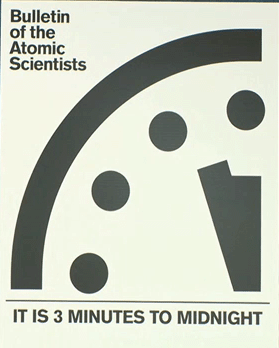
Watch the 2026 Doomsday Clock unveiling live here on January 27 at 10 a.m. EST
To see nuclear-related stories in greater depth and intensity – go to https://nuclearinformation.wordpress.com/

29 Jan. Thursday 7-8 p.m. Webinar – World’s Largest Nuclear Station in Port Hope, ON?


31st January – Challenging the War Machine – a DECLASSIFIED UK SUMMIT

Website of the Week
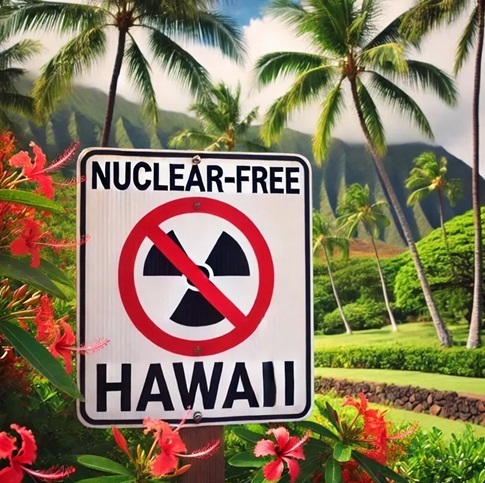
Now until to February 10, 2026 Radioactive waste storage in France: the debate is finally open! How to participate?
-
Archives
- January 2026 (277)
- December 2025 (358)
- November 2025 (359)
- October 2025 (376)
- September 2025 (258)
- August 2025 (319)
- July 2025 (230)
- June 2025 (348)
- May 2025 (261)
- April 2025 (305)
- March 2025 (319)
- February 2025 (234)
-
Categories
- 1
- 1 NUCLEAR ISSUES
- business and costs
- climate change
- culture and arts
- ENERGY
- environment
- health
- history
- indigenous issues
- Legal
- marketing of nuclear
- media
- opposition to nuclear
- PERSONAL STORIES
- politics
- politics international
- Religion and ethics
- safety
- secrets,lies and civil liberties
- spinbuster
- technology
- Uranium
- wastes
- weapons and war
- Women
- 2 WORLD
- ACTION
- AFRICA
- Atrocities
- AUSTRALIA
- Christina's notes
- Christina's themes
- culture and arts
- Events
- Fuk 2022
- Fuk 2023
- Fukushima 2017
- Fukushima 2018
- fukushima 2019
- Fukushima 2020
- Fukushima 2021
- general
- global warming
- Humour (God we need it)
- Nuclear
- RARE EARTHS
- Reference
- resources – print
- Resources -audiovicual
- Weekly Newsletter
- World
- World Nuclear
- YouTube
-
RSS
Entries RSS
Comments RSS
 nuclear-news