ANNE LINDSEY DENOUNCES MARK CARNEY’S NUCLEAR TEMPTATIONS.

Article published on April 16 in the Winnipeg Free Press. https://www.artistespourlapaix.org/anne-lindsey-denonce-tentations-nucleaires-carney/
IN this “flag-waving” moment, where the U.S. government is threatening our sovereignty and economic well-being, it now appears the federal election is the Liberals’ to lose.
Amid the hype and adulation for Liberal Leader Mark Carney, however, the Liberals are promoting ideas that merit a closer look. Not least their plan to “make Canada the world’s leading energy superpower” announced in Calgary on April 9.
On the surface, it looks like the perfect recipe for self-reliance in energy and building a stronger Canada. It’s an industrial development strategy meant to exploit our natural mineral resources, build needed infrastructure and create jobs.
But what kind of energy and infrastructure? The plan includes many welcome and essential commitments to reducing emissions: investment in zero-emission vehicles, developing battery and smart grid technologies, reducing methane, and references to our “clean energy advantage.”
But there is also this nagging notion of “dominating the market in conventional energy” and building out pipelines… neither of which square with the looming climate emergency, regardless of (and exacerbated by) the external pressures from the south.
The “clean energy advantage” is not well defined. Conventional wisdom suggests it includes hydropower, renewables like solar, wind, and geothermal energy, along with energy efficiency. However, although Carney mentioned “more nuclear, both large scale and small modular” in his Calgary announcement, the word “nuclear” is absent from the written plan.
Why? Nuclear is a controversial energy technology, for good reason. It seems inevitable that nuclear power will play a starring role in Canada’s energy future but not one the Liberals want to highlight.
Nuclear’s proponents might be winning the semantic battle branding it as “clean,” despite its routine operations releasing a cocktail of radioactive substances, its waste products containing among the most dangerous elements on the planet, and its inextricable link to the manufacture and proliferation of nuclear weapons.
Federal Liberals (and for that matter, Conservatives) have always been pro-nuclear, even though no nuclear plants have been built in Canada for decades. The annual federal expenditure on Crown corporation Atomic Energy of Canada Limited is more than $1 billion, due in no small part to the massive liabilities of managing nuclear waste. Tax credits for nuclear companies already abound.
Just this year, in the month of March alone, the current Liberal government committed another nearly half a billion dollars to a variety of nuclear projects across the country. The plan may not talk, but money does.
Mark Carney himself, a former UN special envoy on climate change and finance, has said there is “no path to net zero without nuclear.” In 2022, he joined Brookfield Asset Management, a firm holding both renewable energy and nuclear portfolios that, together with uranium giant Cameco, purchased bankrupt reactor company Westinghouse, under his watch. No question that Carney has a strong pro-nuclear bent.
More nuclear energy is an inappropriate climate action response, for at least two reasons. First, reactors take decades to be licensed, constructed and connected to the grid. And that’s a luxury we can’t afford.
Business as usual while waiting for nuclear power to get online means we surpass the tipping points of global warming, a scenario we must avoid.
Second, nuclear is the costliest way to generate electricity. Studies by organizations from the Ontario Clean Air Alliance to Lazard show that nuclear is not competitive with renewable alternatives which continue to drop in price. As governments fund nuclear, there is a massive lost opportunity cost for developing cheaper and readily available renewable energy.
Nuclear is too slow and too expensive to address climate change. The IPCC shows nuclear to be inefficient in reducing emissions. This is not an ideological perspective. It is fact.
Besides, “new generation” reactors being touted in Canada (such as GE Hitachi’s BWRX300) carry a massive political liability, given current world events: most are American designs and all require enriched uranium fuel fabricated outside Canada.
Hardly a prescription for self-sufficiency. It’s a bit mysterious why “nuclear” does not appear in Liberal election plans while getting so much government (Liberal and Conservative) attention and money — unless we recognize the essential role of civilian nuclear infrastructure in maintaining weapons of mass destruction. Canada was instrumental in building the first atomic bombs and remains central to today’s U.S. defence/weapons supply chains for critical minerals, including uranium. Let’s keep that in mind as leaders negotiate trade and tariffs.
Canada should define itself not by becoming an “energy superpower” in the conventional and nuclear sense, but by disengaging from the defence industrial complex. We should use our critical minerals, ingenuity and workforce to pursue a decentralized, affordable, locally based renewable energy infrastructure leaning heavily into building and transportation efficiencies. We need to work together with Indigenous and remote communities, fully understand environmental and social impacts of developments and create smart grid interconnections that allow for maximum flexibility in energy sharing within Canada.
Anne Lindsey volunteers with the No Nukes MB campaign of the Manitoba Energy Justice Coalition and has been monitoring nuclear waste since the 1980s.
During Canada’s leaders’ debate, Carney praised a nuclear firm he bought while at Brookfield
Investment fund co-headed by Liberal leader acquired 51% of Westinghouse in 2023
Daniel Leblanc · CBC News ·Apr 17, 2025
During the first leaders’ debate on Wednesday, Liberal Leader Mark Carney praised nuclear energy and named two companies in the sector with which he did business during his tenure at Brookfield Asset Management.
In 2023, Brookfield formed a partnership with uranium mining firm Cameco to purchase the Westinghouse Electric Company. Brookfield Asset Management acquired 51 per cent of Westinghouse while Cameco got the rest, according to a news release.
The purchase was made within the Brookfield Global Transition Fund, an investment fund that was co-headed by Carney at the time. He was an executive at Brookfield Asset Management from 2020 until early 2025, when he entered politics and became leader of the Liberal Party and prime minister of Canada.
During Wednesday’s French-language leaders’ debate, Carney praised nuclear energy in response to a question from host Patrice Roy. In Canada, nuclear energy falls within the jurisdiction of the federal government, which invested hundreds of millions of dollars in the sector earlier this year.
“It’s a great opportunity,” responded Carney, adding it’s up to the provinces to decide whether or not to invest in nuclear power.
“We have a great advantage here in Canada. We have uranium, that’s one of the advantages. We have major nuclear companies including CANDU, Westinghouse and Cameco,” he said.
Carney then began talking about “small” modular reactor technology in which several firms including Westinghouse are active, but he was interrupted.
According to documents made public by Brookfield Asset Management, as of Dec. 31, Carney had stock options in the firm worth $6.8 million US.
Carney has repeatedly explained that he co-operated with the ethics commissioner when he entered politics to establish a blind trust to hold all of his assets except cash and his personal real estate holdings. In addition, Carney established anti-conflict of interest screens as prime minister to avoid intervening in matters affecting Brookfield.
Carney facing calls for more transparency
Political scientist Geneviève Tellier said she wonders whether some of Carney’s assets are still linked to his time at Brookfield, adding a clear answer should be provided before the federal election on April 28.
“To directly mention companies in a leaders’ debate, when he perhaps has interests in these companies or has benefited from these companies, I think that raises major ethical questions,” the University of Ottawa professor said.
“I understand the law does not require it, but morally and for the sake of transparency, we should have more information.”…………………………………
In a written statement issued Thursday, Conservative MP Michael Barrett criticized the Liberal leader’s failure to disclose whether or not he has an ongoing financial interest in Brookfield.
According to the Conservatives, Carney’s response during the debate was designed to “promote” nuclear energy and Westinghouse.
“If Westinghouse was to rake in billions of Canadian tax dollars, Mark Carney would almost certainly benefit financially,” Barrett said.
“[He] should come clean now and disclose all his assets and conflicts of interest before Canadians go to vote. If Carney has done nothing wrong and has nothing to hide, he should have no problem doing so.” https://www.cbc.ca/news/politics/during-leaders-debate-carney-praised-a-nuclear-firm-he-bought-while-at-brookfield-1.7513169
‘Risk of insolvency’ at parent company of N.B. nuclear developer
Moltex Canada CEO says money problems in U.K. ‘slowed us down’ on small modular reactor development
Jacques Poitras · CBC News ·Apr 17, 2025
Saint John-based Moltex Energy Canada Inc. is hoping potential new owners for its overseas parent company will breathe new life into its development of small modular nuclear reactor technology in the province.
But the company acknowledges that cash flow problems at its U.K.-based parent company have slowed down those efforts.
There is “a risk of insolvency” at the parent company, Moltex Canada CEO Rory O’Sullivan acknowledged in an interview.
An administrator is now looking for buyers for the U.K. company’s assets, which include Moltex Energy Canada.
“As a technology development company we need to almost continuously be fundraising to keep progressing technical milestones,” O’Sullivan told CBC News. “And, because we need parent company authorization to raise new capital, we have not got that authorization.
“That has slowed us down. And so that’s why we’re looking forward to new owners as soon as possible.”
The U.K. administrator overseeing the sale, Azets Holdings Ltd., said in a statement that the holding company had been unable to get majority shareholder consent for new investments or a sale of assets.
That led directors to decide on March 17 to put the company under Azets administration…………………………………………………………………………………………………………………..
“They are looking for investors now. … We also have to have a Plan B in the event ARC isn’t ready.”
That could include buying small reactors from companies not operating in New Brunswick.
Ontario Power Generation was recently granted a licence by the Canadian Nuclear Safety Commission to build its first SMR, a competing model by GE-Hitachi, at its Darlington power station.
ARC spokesperson Sandra Donnelly said in a statement Wednesday that the company aims to complete design work by 2027 so it can apply to the commission for a licence to build its first reactor. https://www.cbc.ca/news/canada/new-brunswick/moltex-canada-parent-potential-sale-1.7512014
Canada’s Liberal energy plan: more corporate, less climate?
Winnipeg Free Press, By: Anne Lindsey, Apr. 16, 2025
In this “flag-waving” moment, where the U.S. government is threatening our sovereignty and economic well-being, it now appears the federal election is the Liberals’ to lose.
Amid the hype and adulation for Liberal Leader Mark Carney, however, the Liberals are promoting ideas that merit a closer look. Not least their plan to “make Canada the world’s leading energy superpower” announced in Calgary on April 9.
On the surface, it looks like the perfect recipe for self-reliance in energy and building a stronger Canada. It’s an industrial development strategy meant to exploit our natural mineral resources, build needed infrastructure and create jobs.
But what kind of energy and infrastructure? The plan includes many welcome and essential commitments to reducing emissions: investment in zero-emission vehicles, developing battery and smart grid technologies, reducing methane, and references to our “clean energy advantage.”…………..
The “clean energy advantage” is not well defined…………………..
Why? Nuclear is a controversial energy technology, for good reason. It seems inevitable that nuclear power will play a starring role in Canada’s energy future but not one the Liberals want to highlight.
Nuclear’s proponents might be winning the semantic battle branding it as “clean,” despite its routine operations releasing a cocktail of radioactive substances, its waste products containing among the most dangerous elements on the planet, and its inextricable link to the manufacture and proliferation of nuclear weapons.
Federal Liberals (and for that matter, Conservatives) have always been pro-nuclear, even though no nuclear plants have been built in Canada for decades. The annual federal expenditure on Crown corporation Atomic Energy of Canada Limited is more than $1 billion, due in no small part to the massive liabilities of managing nuclear waste. Tax credits for nuclear companies already abound.
Just this year, in the month of March alone, the current Liberal government committed another nearly half a billion dollars to a variety of nuclear projects across the country. The plan may not talk, but money does.
Mark Carney himself, a former UN special envoy on climate change and finance, has said there is “no path to net zero without nuclear.” In 2022, he joined Brookfield Asset Management, a firm holding both renewable energy and nuclear portfolios that, together with uranium giant Cameco, purchased bankrupt reactor company Westinghouse, under his watch. No question that Carney has a strong pro-nuclear bent.
More nuclear energy is an inappropriate climate action response, for at least two reasons. First, reactors take decades to be licensed, constructed and connected to the grid. And that’s a luxury we can’t afford.
Business as usual while waiting for nuclear power to get online means we surpass the tipping points of global warming, a scenario we must avoid.
Second, nuclear is the costliest way to generate electricity. Studies by organizations from the Ontario Clean Air Alliance to Lazard show that nuclear is not competitive with renewable alternatives which continue to drop in price. As governments fund nuclear, there is a massive lost opportunity cost for developing cheaper and readily available renewable energy.
Nuclear is too slow and too expensive to address climate change. The IPCC shows nuclear to be inefficient in reducing emissions. This is not an ideological perspective. It is fact.
Besides, “new generation” reactors being touted in Canada (such as GE Hitachi’s BWRX-300) carry a massive political liability, given current world events: most are American designs and all require enriched uranium fuel fabricated outside Canada.
Hardly a prescription for self-sufficiency. It’s a bit mysterious why “nuclear” does not appear in Liberal election plans while getting so much government (Liberal and Conservative) attention and money — unless we recognize the essential role of civilian nuclear infrastructure in maintaining weapons of mass destruction. Canada was instrumental in building the first atomic bombs and remains central to today’s U.S. defence/weapons supply chains for critical minerals, including uranium. Let’s keep that in mind as leaders negotiate trade and tariffs.
Canada should define itself not by becoming an “energy superpower” in the conventional and nuclear sense, but by disengaging from the defence industrial complex. We should use our critical minerals, ingenuity and workforce to pursue a decentralized, affordable, locally based renewable energy infrastructure leaning heavily into building and transportation efficiencies. We need to work together with Indigenous and remote communities, fully understand environmental and social impacts of developments and create smart grid interconnections that allow for maximum flexibility in energy sharing within Canada.
Anne Lindsey volunteers with the No Nukes MB campaign of the Manitoba Energy Justice Coalition and has been monitoring nuclear waste since the 1980s. https://www.winnipegfreepress.com/opinion/analysis/2025/04/16/the-liberal-energy-plan-more-corporate-less-climate
Nuclear Energy Means Climate Action Delay: O’Donnell and Winfield

Susan O’Donnell and Mark Winfield, https://www.theenergymix.com/nuclear-energy-means-climate-action-delay-odonnell-and-winfield/ 16 Apr 25
What is the best way for utilities to delay the transition from fossil fuels? Propose to build nuclear reactors.
Electricity utilities wanting to “decarbonize” have several options for replacing the fossil fuel (coal, oil and gas) plants on their grids: aim to increase energy efficiency and productivity; add new renewable energy and storage resources; consider adding carbon capture and storage (CCS); or propose to build new nuclear reactors.
By objective measures, building new nuclear power plants will cost more, take longer to deploy, and introduce catastrophic accident risks—relative to improving energy productivity, expanding renewables with energy storage, and developing distributed energy resources. CCS suffers from limits of appropriate geology, reduced plant efficiency, and high costs.
However, if the goal is to keep fossil fuel-fired plants operating as long as possible, promising to build more nuclear energy has definite appeal.
Reactor design, planning, and build times are notoriously long—usually measured in decades—with well-established patterns of significant “unexpected” delays. Delaying while waiting for the promised new nuclear builds or reactor refurbishments maintains the status quo, effectively kicking actual climate action well down the road.
The two Canadian provinces with operating nuclear power reactors, Ontario and New Brunswick, provide case studies in this strategy. Both provinces are investing in significant new fossil gas generating infrastructure while waiting for new reactor designs to be developed and then built.
In Ontario, greenhouse gas emissions from the electricity sector have already risen dramatically as fossil gas plants are run to replace out-of-service nuclear reactors, and the province proposes to add more gas-fired generating capacity to its system. After a nearly decade-long hiatus, it only recently proposed a feeble reengagement with renewable energy. New nuclear reactor builds at Darlington, Bruce, and now Wesleyville, with timelines stretching well into the 2030s and 40s, remain the centrepiece of its energy (and supposed) climate strategy.
New Brunswick’s NB Power plans to add 600 MW of new nuclear power at its Point Lepreau nuclear site on the Bay of Fundy. Calls to build renewables instead have been rebuffed. In 2018, the province invited two nuclear start-up companies to set up in Saint John and apply for federal funding. Despite generous support from federal and provincial taxpayers, the companies have been unable to attract matching private funds. The NB Power CEO recently said she is “unsure” if the ARC-100, the reactor design promoted in 2018 as the closest to commercialization, will be ready by “the late 2030s.”
Meanwhile, the government recently announced support for building a large fossil gas plant, the biggest power project in the province in more than a decade.
The reality is that the new nuclear reactors being pushed by proponents are largely “PowerPoint reactors”—unproven and unbuilt designs. The BWRX-300 reactor that Ontario Power Generation (OPG) is proposing for its Darlington site, for example, lacks a fully-developed design, including key elements like safety systems. The Canadian Nuclear Safety Commission (CNSC) still gave OPG a licence to build it, while the U.S. Nuclear Regulatory Commission is still reviewing the design and asking for more information.
Recent analyses from the U.S. Tennessee Valley Authority also suggest the cost of the reactors will be far higher than OPG has claimed, and the timeline to construction and completion by 2030 seems less and less likely.
The new Monark design for a CANDU reactor that AtkinsRéalis (formerly SNC Lavalin) is proposing for the Bruce Power nuclear site is even further behind the BWRX-300 in development. According to the CNSC, the Monark is at a “familiarization and planning” stage, with no date set for even the first, preliminary stage of the design review.
The Monark’s main competitor is the AP-1000 reactor by Westinghouse. In 2002, the company submitted the AP-1000 design for formal review by the U.S. Nuclear Regulatory Commission. Two reactors came online in 2023 and 2024 at the Vogtle plant in Georgia, more than two decades later and twice the original timeline. Prior to the Vogtle project, the last reactor to come online in the U.S. took more than five decades from the start of construction to supplying power to the grid.
The final cost of the recent Vogtle project, at US$36.8 billion, was more than twice the original budget. If the same cost profile is applied to Ontario’s nuclear expansion projects, the total bill to Ontario electricity ratepayers and taxpayers could exceed $350 billion.
Promising to build more nuclear power is a political path to climate action delay and a distraction from a sustainable and decarbonized energy system transition. There is a reason why the International Energy Agency predicts that despite new nuclear reactor builds, nuclear energy will provide only eight percent of electricity supplies globally by 2050. In the meantime, while renewables development continues to accelerate globally, Canadian utilities, detoured by nuclear and CCS ambitions, double down on fossil gas and drift further and further behind in the global energy revolution.
Dr. Susan O’Donnell is adjunct research professor and lead investigator of the CEDAR project at St. Thomas University in Fredericton. Dr. Mark Winfield is a professor at the Faculty of Environmental and Urban Change at York University in Toronto, and co-chair of the faculty’s Sustainable Energy Initiative.
.
A nuclear play in New Brunswick is facing a fragile outlook.

14 Apr 25
- What’s happening: The British owner of New Brunswick’s small modular reactor startup has entered insolvency, throwing its assets on the auction block.
- Why it matters now: The Canadian subsidiary says it’s forging ahead, but with delays, money troubles and fading momentum, Ottawa’s nuclear play is wobbling.
- The broader view: It’s a gut check for Canada’s SMR strategy – and a reminder of how fragile government-backed innovation can be when the scaffolding cracks.
Moltex Canada pushes on with nuclear project as U.K. parent struggles
Matthew McClearn, Globe and Mail, Toronto, 14 Apr 25
The British owner of New Brunswick small modular nuclear reactor developer Moltex Energy Canada Inc. is up for sale as part of a U.K. insolvency proceeding.
Moltex Energy Ltd., a private company based in Stratford-upon-Avon, announced last month the appointment of two insolvency practitioners from accounting firm Azets Holdings Ltd. to manageitsaffairs. Azets hired appraisers Hilco Valuation Services to solicit offers for its assets, which are due May 7.
It’s the latest complication fortaxpayer-sponsored efforts to construct small modular reactors, or SMRs, in New Brunswick.
Moltex’s wholly owned Canadian subsidiary is one of two vendors partnered with New Brunswick Power to build reactors at Point Lepreau Nuclear Generating Station. Moltex Canada’s is known as the Stable Salt Reactor-Wasteburner (SSR-W), and it’s also developing a plant to reprocess spent nuclear fuel. The second company, ARC Clean Technology, is working on another reactor called the ARC-100.
Both were originally promised by 2030. But developing a novel nuclear reactor is a painstaking, resource-intensive process that can require hundreds of employees, billions of dollars and decades of effort. New Brunswick and the federal government backed startups with only one or two dozen employees, and they’ve struggled to raise funds privately.
Moltex’s British holding company was founded in 2014 by Ian Scott, who previously worked in the biological-sciences field including as a senior scientist at Unilever PLC. (A co-founder, John Durham, stepped down as a director in October.) According to its latest financial report, published in January, it employed two people during the year ended March 31, 2024, and lost £630,000 (about $1.1-million). For several years its reports raised uncertainty about its ability to continue as a going concern.
Britain’s administration process is similar to proceedings under Canada’s Companies’ Creditors Arrangement Act; according to the British government, it’s intended to provide “breathing space” while a rescue package or sale of assets is executed.
According to Moltex Energy Ltd.’s financial statements, its shareholders had provided its equity throughout its history; it carried no long-term debt. The company reported in 2023 that its future depended on raising external capital; it had enough cash flow to survive through December, 2025, albeit “there would need to be cuts.”
Rory O’Sullivan, chief executive officer of Moltex Energy Canada, was also a director of the parent company for much of the past several years. He said the British company’s shareholders would not approve the Canadian subsidiary’s fundraising efforts, effectively stalling them.
“The key here is we needed to get someone else in control of Moltex Energy Ltd. so that we could have a competitive sale process,” Mr. O’Sullivan said…………………………..
New Brunswick’s government attracted Moltex and ARC to establish offices in the province in 2018. The two companies have each estimated that it would cost around $500-million to develop their respective technologies…………………………
As for ARC, its CEO and other employees suddenly departed last summer; ARC has published no announcements on its website since then. The ARC-100 is undergoing a prelicensing review by the Canadian Nuclear Safety Commission. Spokesperson Sandra Donnelly said the company will complete its design by 2027 to support an application for a construction licence.
NB Power’s CEO, Lori Clark, presented SMRs as playing a crucial role in her utility’s plans to achieve “net zero” emissions. More recently, however, she acknowledged that neither project is likely to follow its original schedule, and the utility is now considering other reactors for construction at Point Lepreau.
Spokesperson Dominique Couture wrote in a statement that NB Power has been working on an environmental impact assessment for the ARC-100 during the past year. And it assisted Moltex’s development efforts for reprocessing spent fuel.
All this is far less than what the federal government envisioned in the SMR Roadmap, a 2018 document developed with extensive input from the nuclear industry. It promised demonstration projects across the country; successive federal budgets allocated hundreds of millions of dollars to support them.
Canadian Nuclear Laboratories was to have an SMR called the Micro Modular Reactor up and running at its Chalk River facility by 2026. But its partner in that project, Ultra Safe Nuclear Corp., initiated a court-supervised sale process under Chapter 11 of the U.S. Bankruptcy Code in October. Another partner, Ontario Power Generation, pulled out last year.
Of the demonstration projects contemplated in the SMR Roadmap, only one appears to be on track: OPG’s proposal to build a “grid-scale” SMR at its Darlington Station. This month it received a construction licence from the CNSC to build its first reactor, a BWRX-300 designed by U.S. vendor GE-Hitachi Nuclear Energy. If completed on schedule by 2028, it would be the first SMR in any G7 country. https://www.theglobeandmail.com/business/article-moltex-canada-pushes-on-with-nuclear-project-as-uk-parent-struggles/#comments
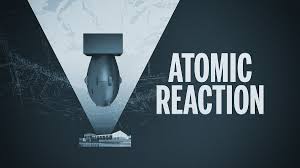
Canada supplied uranium for atomic bombs in WWII — 80 years later, the cleanup continues
Gordon Edwards, 6 Apr 25
Atomic Reaction is a documentary feature film dealing with the radioactive history and contamination of the town of Port Hope Ontario, located on the North shore of Lake Ontario just east of Toronto.
Here is a YouTube of the film: https://www.youtube.com/watch?v=8jC1DPOYoQ0
Canada played a key role in chemically refining uranium from Canada and the Congo for use in the first two atomic bombs dropped on the cities of Hiroshima and Nagasaki in 1945. Canada then became the largest supplier and exporter of uranium in the world, in the post-war period, most of it sold for tens of thousands of nuclear warheads during the Cold War, until the sale of Canadian uranium for nuclear weapons was ended by Prime Miniister Pearson in 1965.
In the process, the town of Port Hope (where all this refining took place until 1980) became thoroughly contaminated with radioactive wastes that were carelessly discarded and dispersed all about town – dumped into the harbour and into open ravines about town, used in roadways and mingled with the sandy beach, and used in huge quantities as construction material and as fill for up to a thousand buildings – homes, schools, offices, throughout town – requiring a massive radioactive cleanup costing over two billion dollars, resulting in two surface mounds of about a million tons each which will remain highly radiotoxic for many thousands of years to come. The cleanup is stlll ongoing today.
A similarly sized mound of radioactive waste is currently planned for the cleanup of the Chalk River Laboratories, created near the end of World War 2 as a secret site for producing plutonium for the US bomb program among other things. Canada sold plutonium to the US military for weapons purposes.
For 20 years after the end of World War 2. The Chalk River megadump has been approved by Canada’s Nuclear regulator, but two of three court challenges have been successful in delaying the implementation pending legally required consultations with the Algonquin peoples on whose traditional land the megadump would be located, and pending the careful evaluation of alternative sites or waste management options that will not destroy the habitat of several endangered species.
Federal regulator approves Canada’s first small modular reactor
the commissioners heard concerns from intervenors that GE-Hitachi hadn’t yet finished designing the reactor, raising questions about how its safety could be analyzed properly.
CNSC decisions are particularly vulnerable to challenges from First Nations.
Matthew McClearn, April 5, 2025, https://www.theglobeandmail.com/business/article-federal-regulator-approves-canadas-first-small-modular-reactor/
The federal nuclear safety regulator has authorized construction of an American small modular reactor (SMR) at the Darlington Nuclear Generating Station in Clarington, Ont., a crucial milestone for a project that has garnered worldwide attention.
The Canadian Nuclear Safety Commission granted the license to Ontario Power Generation on Friday for its Darlington New Nuclear Project. OPG has said it will finish building the first 327-megawatt reactor by the end of 2028, and begin supplying electricity to the province’s grid the following year. The reactor’s cost has not been disclosed publicly, but estimates suggest it could be several billion dollars.
“We now await the go-ahead from the Ontario government to proceed,” said OPG spokesperson Neal Kelly.
The Darlington SMR would represent a host of firsts, accompanied by larger risks and anticipated benefits. It would be the only nuclear reactor under construction in the Western hemisphere, and Canada’s first reactor start since the mid-1980s.
It would also represent the first SMR in any G7 country. And it would be the first BWRX-300; utilities in other jurisdictions (including Saskatchewan, the U.S., Poland and Estonia) have announced plans to build reactor fleets based on the same design.
The BWRX-300 is being designed by Wilmington, N.C.-based GE-Hitachi Nuclear Energy, a leading American reactor vendor. Its construction would make Canada more reliant on U.S. suppliers for enriched uranium fuel and other critical inputs at a moment when relations between the two countries are rapidly deteriorating.
Yet this has not diminished support from Canadian officials. In a statement Friday, Ontario Energy Minister Stephen Lecce called the license “a historic milestone” for his province and the country.
“Ontario is realizing its potential as a stable democratic energy superpower, and I look forward to sharing next steps for this exciting project in the coming weeks.”
OPG applied for the license in late 2022. During hearings held this fall and winter, the commissioners heard concerns from intervenors that GE-Hitachi hadn’t yet finished designing the reactor, raising questions about how its safety could be analyzed properly.
But the commissioners dismissed this concern, finding OPG had supplied adequate information. They noted that an OPG representative told them the design was 95 per cent done; CNSC staff said in other countries, licenses are typically issued when designs are less than one-third complete.
Intervenors also said that the BWRX-300 lacked two fully independent emergency shutdown systems, because it features two systems that insert the same set of control rods into the reactor. The CNSC’s own staffers confirmed this, but told the Commission the probability both insertion systems would fail was “very low.” The Commission said OPG would have to provide additional information about this at a later date.
In response to concerns from certain First Nations concerning OPG’s and the CNSC’s obligation to engage with them, the CNSC imposed what it calls “regulatory hold points.” The first occurs before construction begins on the reactor building’s foundation, another before OPG can install the reactor’s pressure vessel, and a third before testing and commissioning of the facility can begin. The Commission delegated responsibility for supervising these license conditions to CNSC chief regulatory operations officer Ramzi Jammal.
“The Commission is satisfied that the honour of the Crown has been upheld and that the legal obligation to consult and, where appropriate, accommodate Indigenous interests has been satisfied,” the commissioners wrote in their decision.
CNSC decisions are particularly vulnerable to challenges from First Nations. In February the Federal Court granted an application from Kebaowek First Nation for a judicial review of the CNSC’s decision to approve construction of a nuclear waste disposal facility at Chalk River Laboratories. Justice Julie Blackhawk found that the commissioners erred when they declined to apply the United Nations Declaration on the Rights of Indigenous Peoples, and ordered a resumption of consultations.
The CNSC’s authorization applies only to OPG’s first SMR. Since the 1960s, Ontario’s long-standing practice has been to build “four-packs,” power plants with four identical reactors sharing workers and common infrastructure. In 2023, the Ontario government instructed OPG to begin planning for another three BWRX-300s at Darlington.
Over the past several years the utility has cleared and re-graded the site for the first reactor; ongoing excavation has reached 8 metres below ground level. OPG has been installing utilities all four reactors would share, such as water and sewer lines and network cabling.
OPG’s pivot to SMRs means the plant will generate far less power than originally envisioned. Under an earlier plan the site was licensed for up to 4,800 megawatts, whereas the BWRX-300s would possess a quarter of that capacity. (According to rough industry estimates, a single BWRX-300 could meet electricity demand from a city the size of Markham or Vaughan, Ont.)
Also working on the project are AtkinsRealis Group Inc., serving as architect-engineer, and construction giant Aecon Group Inc. Major reactor components are to be built by subcontractors in Ontario: BWX Technologies, for example, is preparing to build its massive pressure vessel at its plant in Cambridge. A 2023 study by the Conference Board of Canada said the four-reactor plant would increase Canada’s GDP by $15.3 billion over 65 years, and support 2,000 jobs.
Promoters, including OPG, have argued that building the first SMR will grant Ontario “first-mover” advantage and allow its nuclear industry to participate in subsequent BWRX-300 constructions worldwide. With numerous U.S. federal officials proclaiming an era of American energy “dominance” and imposing punishing tariffs on allies and trading partners, some observers now doubt this will happen. Mr. Lecce, though, appeared to dismiss that concern in his statement Friday.
“Our government has insisted and successfully negotiated that local Ontario and Canadian businesses must be overwhelmingly used to build SMRs for the world.”
Why Ontario won’t consider the nuclear option in its fight over Trump’s tariffs
Although Ontario Premier Doug Ford vowed that his
government would “not back down,” “apply maximum pressure” and
“keep up the fight” in the Canada-U.S. trade war, one nuclear option is
off the table: cancelling contracts to build American power reactors.
The province’s utility, Ontario Power Generation, is on the cusp of starting
construction of the first of four BWRX-300 small modular reactors, or SMRs,
at Darlington Nuclear Generating Station in Clarington. They’re designed
by Wilmington, N.C.-based GE-Hitachi Nuclear Energy, a stalwart of the
U.S.‘s nuclear industry. While the cost hasn’t been disclosed yet, the
first reactor is likely to cost several billion dollars.
Globe & Mail 30th March 2025,
https://www.theglobeandmail.com/business/article-why-ontario-wont-consider-the-nuclear-option-in-its-fight-over-trumps/
Federal Court Orders Reconsideration of Nuclear Waste Facility Approval, Citing Inadequate Indigenous Consultation

By NNL Digital News , March 20, 2025, https://www.netnewsledger.com/2025/03/20/federal-court-orders-reconsideration-of-nuclear-waste-facility-approval-citing-inadequate-indigenous-consultation/#google_vignette
OTTAWA – A Federal Court decision has ordered the Canadian Nuclear Safety Commission (CNSC) to revisit its approval of a Near Surface Disposal Facility (NSDF) at the Chalk River Laboratories site, citing errors in its assessment of Indigenous consultation obligations.
The ruling, issued by the Honourable Madam Justice Blackhawk on February 19, 2025, in the case of Kebaowek First Nation v. Canadian Nuclear Laboratories, highlights the importance of adhering to the United Nations Declaration on the Rights of Indigenous Peoples (UNDRIP) in Canadian law.
The Case at a Glance
The Kebaowek First Nation challenged the CNSC’s decision to grant Canadian Nuclear Laboratories Ltd. (Canadian Nuclear) a license amendment to construct the NSDF, a proposed facility for the permanent storage and disposal of low-level nuclear waste. Kebaowek argued that the CNSC erred by:
- Failing to apply the UNDRIP and the United Nations Declaration on the Rights of Indigenous Peoples Act (UNDA) to its decision-making process regarding the duty to consult and accommodate.
- Concluding that the Crown had fulfilled its duty to consult and accommodate Kebaowek.
- Determining that the NSDF is not likely to cause significant adverse environmental effects.
Court’s Findings
Madam Justice Blackhawk’s decision focused on the CNSC’s handling of Indigenous consultation. Key findings included:
- Jurisdiction to Apply UNDRIP/UNDA: The court found that the CNSC erred in determining it did not have the jurisdiction to consider the application of the UNDRIP and the UNDA to the duty to consult and accommodate.
- Duty to Consult and Accommodate: The court determined that the CNSC’s assessment of whether the Crown had fulfilled its duty to consult and accommodate Kebaowek was flawed due to the failure to consider the UNDRIP and its principle of “free, prior, and informed consent” (FPIC) as an interpretive lens.
- Flawed Consultation Process: The court stated that the consultation process was inadequate, and Canadian Nuclear failed to consult in a manner consistent with the UNDRIP and the FPIC standard.
Remedy and Next Steps
The Federal Court has ordered the matter to be remitted back to the CNSC for reconsideration. The CNSC, or a newly struck commission, is directed to:
- Address the jurisdictional question regarding the application of UNDRIP and the UNDA.
- Re-assess the Crown’s fulfillment of the duty to consult and accommodate, considering the UNDRIP and the FPIC standard.
Canadian Nuclear and CNSC staff are also directed to resume consultation with Kebaowek, aiming to implement the UNDRIP FPIC standard in a robust manner and work towards achieving an agreement. The court has set a target completion date of September 30, 2026, for this renewed consultation process.
Implications
This decision has significant implications for future development projects in Canada that may affect Indigenous rights and interests. It underscores the importance of:
- Properly interpreting and applying the UNDRIP and the UNDA.
- Conducting meaningful and robust consultation with Indigenous communities, consistent with the principles of FPIC.
The ruling emphasizes that consultation processes must be approached from an Indigenous perspective and take into account Indigenous laws, knowledge, and practices.
NetNewsLedger.com will continue to follow this developing story and provide updates.
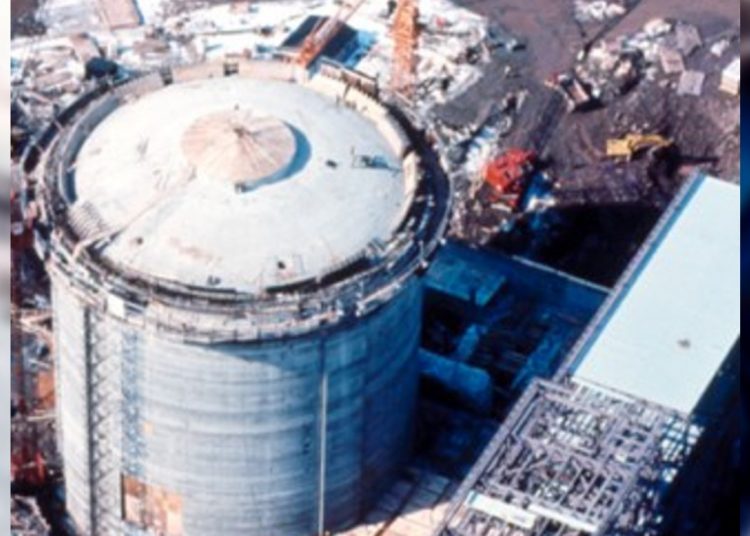
Idle Lepreau nuclear plant threatens to post worst operational year in 4 decades
Refurbishing only half the nuclear plant was a mistake, utility president admits
Robert Jones · CBC News : Mar 21, 2025
An end-of-the-fiscal-year breakdown at Point Lepreau is worsening what may turn out to be the poorest operational year on record for the 42-year-old plant.
The nuclear generating station was shutdown on Monday after a malfunctioning cooling fan was deemed to need immediate repair. That fix is expected to take almost until the end of the month
“Work is underway to repair an issue with the cooling fan and motor assembly,” D’Arcy Walsh, an N.B. Power spokesperson, said in an email. “We expect the station to return to service by the end of next week.”
A scheduled maintenance shutdown last spring, followed by the discovery of a major issue last summer in Lepreau’s generator, previously had the plant offline from early last April to mid-December. The latest problem is dragging the year’s low productivity further
Not including the years Lepreau was offline between 2008 and 2013 for a $2.5-billion refurbishment, the plant’s least productive year was in 1995, when it underwent work on sagging pressure tubes in its reactor and operated for just over 100 days.
Downtime at Lepreau is expensive for N.B. Power and has been cited as the primary cause for its current financial problems.
In February, N.B. Power president Lori Clark told MLAs the fortunes of the utility are largely dependent on how well, or poorly, the nuclear plant performs…………………….
Since it returned from refurbishment in late 2012, Lepreau has suffered a number of problems and has been taken offline for maintenance and repairs for more than 1,100 days in total.
More than one third of that downtime has occurred just in the last three years.
It has been estimated by the utility to cost between $1 million and $4 million per day when Lepreau is idle, depending on the time of year and the cost of generating or buying replacement power……………………………https://www.cbc.ca/news/canada/new-brunswick/idle-lepreau-nuclear-plant-threatening-worst-operational-year-nb-1.7490177
Canada Pours Nearly $450M into New Nuclear Subsidies

March 18, 2025 The Energy Mix, Author: Jody MacPherson
Canada has announced around C$450 million in new subsidies for nuclear energy, including the reallocation of funds collected from industrial emitters of greenhouse gases, in what the government frames as a bid to enhance energy security and reliability.
Ottawa will lend AtkinsRéalis, formerly SNC-Lavalin Group, C$304 million over four years to finance the development and modernization of a new Canadian deuterium uranium (CANDU) nuclear reactor named MONARK, Energy and Natural Resources Minister Jonathan Wilkinson said in a news release.
But a leading nuclear critic told The Energy Mix the new subsidies will be far from sufficient to bring the new design to life, and the new design is years if not a decade or more away from going into service………………………………………….
Nuclear Cost Concerns
But nuclear is also by far the most expensive way to generate electricity, Susan O’Donnell, an adjunct research professor at St. Thomas University who studies energy transitions in Canada, told The Mix. Ottawa’s funding is “nowhere near the amount” needed to fully develop and build reactors, she said, adding that it will take years to develop the MONARK design toward applying for a licence to build.
O’Donnell pointed to two similar reactors that just came online in Georgia, United States, at a cost of US$35 billion, compared to just $4 billion for the equivalent solar capacity.
“The big nuclear reactors were almost nine times more expensive than solar,” said O’Donnell. “It makes no sense.”
More Federal Cash for SMRs
Canada is also directing $55 million from Environment and Climate Change Canada’s Future Electricity Fund (FEF) to Ontario Power Generation’s Darlington New Nuclear Project for three new small modular reactors (SMRs) that together could power about 900,000 average Ontario homes……………
The SMRs destined for Darlington were designed by GE Hitachi Nuclear Energy, based out of North Carolina, and would require enriched uranium fuel, which Canada cannot produce domestically, reported the Globe and Mail. Wilkinson told the Globe that Canada’s options for enriched uranium include the United States or Russia, and that Canada could develop that capability if necessary, but it was not preferable.
While collaborating on nuclear projects with the U.S. might help eliminate tariffs, he added, “we’re unlikely to be spending an enormous amount of time collaborating with a party that is treating us like an adversary.”
First Nations Concerns
The Canadian Nuclear Safety Commission held its second set of public hearings just over a month ago for the first of the three reactors planned for Darlington. The hearing included presentations from the chiefs of four First Nations—Curve Lake, Hiawatha, Mississaugas of Scugog Island, and Alderville—calling for a new collaborative relationship built on respect, trust, and partnership.
Chief Kelly LaRocca of the Mississaugas of Scugog Island First Nation said “the current relationship is not working effectively.”
Additional Funding Announced
Further funding will also go to SaskPower’s SMR pre-development program. The FEF increased its program funding from $24 million to $80 million.
More federal subsidy support is also destined for Saskatchewan, Alberta, and Ontario. ……..
https://www.theenergymix.com/canada-pours-nearly-450m-into-new-nuclear-subsidies/
Canada to review the purchase of US-made F-35 fighter jets in light of Trump’s trade war
By ROB GILLIES, March 16, 2025
TORONTO (AP) — Canada’s new Prime Minister Mark Carney has asked Defense Minister Bill Blair to review the purchase of America’s F-35 fighter jet to see if there are other options “given the changing environment,” a spokesman for Blair said Saturday.
Defense ministry press secretary Laurent de Casanove said the contract to purchase U.S. military contractor Lockheed Martin’s F-35 currently remains in place and Canada has made a legal commitment of funds for the first 16 aircraft. Canada agreed to buy 88 F-35’s two years ago.
Carney, who was sworn in on Friday, has asked Blair to work with the military “to determine if the F-35 contract, as it stands, is the best investment for Canada, and if there are other options that could better meet Canada’s needs,” de Casanove said……………………………………………………………………………………………………..more https://apnews.com/article/f35-canada-trump-0d3bf192d3490d87570d48475ff2c3a6
Court upholds two legal challenges to the Chalk River Radioactive Megadump.

Gordon Edwards, 14 Mar 25
The radioactive megadump planned for Chalk River (an “engineered mound” intended to contain about one million tonnes of so-called “Low-level” radioactive waste in a permanent landfill-like toxic waste dump just one kilometre from the Ottawa River) was planned by Canadian Nuclear Laboratories (CNL) and approved by CNSC.
Three legal challenges against this decision were launched in the Federal Appeals Court. The first had to do with the inadequacy of the safety case and the lack of adequate monitoring of the contents of the megadump. The second had to do with the failure to consult the Indigenous Algonquin peoples as required by the “Duty to Consult” and the UN Declaration on the Rights of Indigenous Peoples (UNDRIP). The third challenge had to do with the failure to consider alternative sites for such a toxic waste facility to provide adequate protection for endangered species.
Although the first challenge was not successful, the good news is that the second and third challenges were upheld by the court and CNSC and CNL will have to re-open the regulatory process to correct the inadequacies that have been noted. This does not mean that the existing megadumo has been forbidden but that more work must be done by both the proponent and the regulator to satisfactorily address these inadequacies.
The success of the third challenge was only announced yesterday.
The Federal Court overturned the Species at Risk permit for the nuclear waste facility planned for Chalk River, just 180 km up the Ottawa River from Ottawa.
The project proponent, CNL, said that the construction would harm, harass, or kill the endangered Blanding’s Turtle and 2 endangered bat species.
The Court found that CNL did not consider all reasonable alternative locations, and CNL admitted that it picked Chalk River even though it was less favourable for protecting species at risk than two other viable sites.
This violated s. 73(3)(a) of the Species at Risk Act, which says that “all” reasonable alternatives that would reduce the impact on species at risk must be considered and the best solution must be adopted.
There’s a lot to parse, but essentially, Justice Zinn agreed about the first 2 issues (not all reasonable locations were considered, and the best option was not chosen), but disagreed about the others (bat boxes, wildlife corridors, bird nests, the Monarch).
The win on the location issue is huge, of course. If they have to pick a new location, they have to start over from scratch and none of the other issues matter. See para 48 (of the decision) for some good reasoning by Zinn J:
“During both the hearing and public consultation with the Canadian Nuclear Safety Commission, CNL conceded that it would only consider non-AECL properties if no suitable AECL-owned site was identified. This admission confirms that CNL’s default approach was to confine its search to AECL lands unless compelled to broaden it. This methodology is directly at odds with the statutory mandate under paragraph 73(3)(a). The Minister failed to reconcile this self-imposed limitation with the statutory requirement for a comparative assessment of ecological impacts on protected species. I am of the view that, even if a non-AECL site posed greater logistical challenges, such as increased transportation distances, the Act would still require CNL to consider it if it offered reduced harm to at-risk species. Administrative or logistical difficulties do not absolve the project’s proponent of its duty to evaluate such alternatives under paragraph 73(3)(a), even if those factors later justify rejecting them.”
Unfortunately, this does not mean that ECCC will not approve the permit for Chalk River. The decision is being sent back for redetermination, as is normal in admin law cases. From Zinn’s interpretation of the statutory language, it’s hard to see how it could be approved for Chalk River, given CNL’s deficient siting process, but Zinn seemed to be aware of these massive implications and tried to avoid these repercussions. He goes out of his way to say that it could be possible for ECCC to approve the permit for Chalk River if 1) they give appropriate justification for only looking at AECL sites (para 50) and 2) interpreted “best option” differently than ECCC has in the past, to include non-species-at-risk factors, and justified this different interpretation (paras 57-61).
1 This Month
19 February – VIRTUAL EVENT-Decision Time: AI and Our Nuclear Arsenal
12:45 p.m. Central / 1:45 p.m. Eastern
To see nuclear-related stories in greater depth and intensity – go to https://nuclearinformation.wordpress.com

-
Archives
- February 2026 (141)
- January 2026 (308)
- December 2025 (358)
- November 2025 (359)
- October 2025 (376)
- September 2025 (258)
- August 2025 (319)
- July 2025 (230)
- June 2025 (348)
- May 2025 (261)
- April 2025 (305)
- March 2025 (319)
-
Categories
- 1
- 1 NUCLEAR ISSUES
- business and costs
- climate change
- culture and arts
- ENERGY
- environment
- health
- history
- indigenous issues
- Legal
- marketing of nuclear
- media
- opposition to nuclear
- PERSONAL STORIES
- politics
- politics international
- Religion and ethics
- safety
- secrets,lies and civil liberties
- spinbuster
- technology
- Uranium
- wastes
- weapons and war
- Women
- 2 WORLD
- ACTION
- AFRICA
- Atrocities
- AUSTRALIA
- Christina's notes
- Christina's themes
- culture and arts
- Events
- Fuk 2022
- Fuk 2023
- Fukushima 2017
- Fukushima 2018
- fukushima 2019
- Fukushima 2020
- Fukushima 2021
- general
- global warming
- Humour (God we need it)
- Nuclear
- RARE EARTHS
- Reference
- resources – print
- Resources -audiovicual
- Weekly Newsletter
- World
- World Nuclear
- YouTube
-
RSS
Entries RSS
Comments RSS
 nuclear-news