Canadian farming community not happy about taking on nuclear wastes

Teeswater area debating taking on ‘forever’ nuclear waste project, Scott Miller CTV News London 25 May 20, WINGHAM, ONT. — Anja van der Vlies is worried about the future of her 1200 dairy goat operation, if Canada’s most radioactive nuclear waste is buried a couple side roads away from her family’s farm.
“It’s fairly close to where we farm. If I just look at the radius of 10 kilometres from the proposed site, so much food is being prepared here. What’s going to happen to that?”she says.
Right next door, dairy farmer Ron Groen has posted signs around his property sharing his concerns about the proposed project, just north of Teeswater.
“The waste is going to be radioactive for a million years, so basically the waste will be eternally radioactive and our kids, grandkids, 33,000 generations after us living in and around town will have to worry about this problem,” he says.
About 1200 acres of farmland north of Teeswater has been optioned by the Nuclear Waste Management Organization to potentially build Canada’s first permanent nuclear waste facility.
Over five million used nuclear fuel bundles, would be buried 500 metres under these Bruce County farms, if the community agrees to it.
Darren Ireland is one the landowners, whose agreed to option his land for the project.
“For me, it’s about five generations. This area has struggled for years to keep things going. I look at this as something, that we could be looking at for five generations, that’s huge,” he says.
The mayor of the municipality of South Bruce, Robert Buckle, also sees upside to the project…….
Signs opposing the project starting going up around the area around March. A local group has formed to keep nuclear waste out of South Bruce’s soil.
“The sooner we can stop this, the better for our community,” says van der Vlies…….
Two communities remain in the running to house Canada’s most radioactive waste. Ignace, in Northern Ontario, and the Municipality of South Bruce, north of Teeswater. One site will selected, no later, than 2023. https://london.ctvnews.ca/teeswater-area-debating-taking-on-forever-nuclear-waste-project-1.4953737
Bruce Power and the Ontario Government ordered come clean on the cost of nuclear power
 Bruce Power ordered to reveal prices https://www.cleanairalliance.org/bcost/ –
 Angela Bischoff, Director, 23 May 20 The Ontario Information and Privacy Commissioner has ruled that Bruce Power and the Ontario Government must come clean on the cost of power from rebuilt reactors noting that “the public has a right to know what the electricity cost will be from the multi-billion Bruce NGS [Nuclear Generating Station] project as they are paying for it and will be locked into paying for it for almost 50 years.”
In her response to an appeal by Bruce Power of an earlier decision, Adjudicator Diane Smith acknowledged that the Independent Electricity System Operator (IESO) has the power to suppress this information, but ruled that the public right to know trumped this authority.
In ruling that the pricing information should be released, the Adjudicator reasoned that “the annual price of the Bruce NGS electricity options… would allow the public to assess and potentially advocate for alternative energy sources, such as conservation, demand response, hydro power imports from Quebec, renewable generation, and energy storage. Environmental advocates need the annual price of the nuclear option as soon as possible to advocate for alternatives that may take up to 10 years to implement.”
Further, the Adjudicator found the IESO and Bruce Power rationale for suppressing information about the price of power from rebuilt Bruce reactors to be without substance. She noted that contrary to the IESO’s assertions, “I find that the amount of information already disclosed is not adequate to address the public interest considerations.” She also found Bruce Power’s assertion that disclosing the information would somehow raise electricity prices rather baffling, noting “neither the IESO nor Bruce Power provided particulars that support their concerns about this.”
It’s important to note that pricing information for all renewable energy projects in Ontario is fully public and there is no need for citizens or environmental organizations to undertake long and costly Freedom of Information appeals to see this information. Similarly, Ontario Power Generation must publicly disclose all its costing information through the Ontario Energy Board. Only Bruce Power has had the special privilege of keeping all its pricing information firmly under wraps – until now.
Thanks to the Privacy Commissioner we are optimistic we will soon see just what kind of deal Bruce Power is really offering the people of Ontario. The nuclear industry loves to talk about how it supplies “low cost power” though the numbers tell a very different tale.
This matter should never have required a multi-year effort by an environmental NGO. If the Ontario government was serious about reducing hydro costs, it would have long since ordered this information be made public to allow a real comparison of the cost of different energy options. We cannot have an informed debate about the best options for Ontario when one powerful entity and our electricity system manager cling to secrecy.
Over 100 public interest organisations call on Canadian govt to halt decision on nuclear waste disposal
Groups ask Ottawa to press ‘pause’ on nuclear waste disposal https://www.tbnewswatch.com/local-news/groups-ask-ottawa-to-press-pause-on-nuclear-waste-disposal-2361184 ‘There’s no rules’ for evaluating an underground storage site, spokesperson says. By: Gary Rinne OTTAWA — More than 100 public interest organizations, environmental groups and others are calling on the federal government to suspend all decision-making regarding radioactive nuclear waste disposal.
In a letter to Natural Resources Minister Seamus O’Regan, they describe Canada’s current nuclear waste policy as “deficient,” saying it must be improved in consultation with the public and Indigenous peoples.
Among the signatories are numerous groups in northern Ontario, including Thunder Bay-based Environment North and Keep Nuclear Waste Out of Northwestern Ontario.
The letter follows a February report from the International Atomic Energy Agency which recommended that the government “enhance” its existing radioactive waste management policy.
The IAEA said the policy framework “does not encompass all the needed policy elements nor a detailed strategy” required for long-term nuclear waste management.
The signatories say their request is urgent because the regulator, the Canadian Nuclear Safety Commission, is pressing ahead with licensing decisions on a number of radioactive waste projects.
“Fearing Canada’s deficient radioactive waste framework will imprint itself on decisions affecting the health and safety of future generations and the environment, signees urged Canada to provide leadership, and establish sufficient guidance and federal policy,” they said in a statement Tuesday.
The groups also want Ottawa to establish objectives and principles to underly a nuclear waste policy, and that the government identify “the problems and issues exposed by existing and accumulating radioactive waste.”
The Nuclear Waste Management Organization is currently studying potential future underground nuclear waste storage sites in the Ignace area and South Bruce in southern Ontario.
Brennan Lloyd of North Bay-based Northwatch said NWMO’s search for a future repository is “part and parcel” of concerns about Canada’s overall approach to managing radioactive waste issues.
Nuclear waste disposal isn’t the only pressing matter, Lloyd said, but “we have lots of concerns about the Nuclear Waste Management Organization, their operation…going back to 2002 when the Nuclear Waste Fuels Act allowed the industry to create the NWMO.”
She added that “the lack of a solid set of rules around radioactive waste, we believe, does affect how the NWMO has conducted itself, but even more importantly it may affect the review process if the NWMO ever actually arrives at a site that they can in some way present as having the support of a host community.”
According to Lloyd, there are no rules as to how such a proposal would be evaluated.
She said that in 1996, the federal government presented a Radioactive Waste Policy Framework that’s less than a page long, and it’s problematic that “almost 25 years later, that’s still all we have in the way of real policy, strategy, rules around radioactive waste at the national level.”
Canadian Nuclear Safety Commission staff have recently proposed regulatory documents, Lloyd said, “which are really very general descriptions of how they might go about issuing a licence for various activities. And they really lack rigour.”
She said two of the five regulatory documents the CNSC plans to bring forward next month deal directly with nuclear waste burial.
“One is around how you would assess the long-term performance of a deep geological repository, and one is about how you would characterize a site that was being considered. And both of them are just incredibly weak documents,” Lloyd maintained.
“The dividing line is between ‘shall’ and ‘should.’ The CNSC documents are all ‘should’ or ‘may.’ Which means there’s no rules.”
Lloyd and the other signatories to the letter ask Minister O’Regan to instruct the CNSC to stop developing radioactive waste management and nuclear decommissioning documents until new, overarching policies and strategies are in place.
‘Small Modular Nuclear Reactor’ entrepreneurs trying to revive dangerous ‘plutonium economy’ dream.

It seems that these two SMNR entrepreneurs in New Brunswick, along with other nuclear “players” worldwide, are trying to revitalize the “plutonium economy” — a nuclear industry dream from the distant past that many believed had been laid to rest because of the failure of plutonium-fuelled breeder reactors almost everywhere, including the US, France, Britain and Japan.
The phrase “plutonium economy” refers to a world in which plutonium is the primary nuclear fuel in the future rather than natural or slightly enriched uranium. Plutonium, a derivative of uranium that does not exist in nature but is created inside every nuclear reactor fuelled with uranium, would thereby become an article of commerce.
The proposed SMNR prototype from ARC Nuclear in Saint John is the ARC-100 reactor (100 megawatts of electricity). It is a liquid sodium-cooled SMNR, based on the 1964 EBR-2 reactor – the Experimental Breeder Reactor #2 in Idaho. Its predecessor, the EBR-1 breeder reactor, had a partial meltdown in 1955, and the Fermi-1 breeder reactor near Detroit, also modelled on the EBR-2, had a partial meltdown in 1966.
Admiral Hyman Rickover, who created the US fleet of nuclear-powered submarines, tried a liquid-sodium-cooled reactor only once, in a submarine called the Sea Wolf. He vowed that he would never do it again. In 1956 he told the US Atomic Energy Commission that liquid sodium-cooled reactors are “expensive to build, complex to operate, susceptible to prolonged shutdown as a result of even minor malfunctions, and difficult and time-consuming to repair.”
The ARC-100 is designed with the capability and explicit intention of reusing or recycling irradiated CANDU fuel. In the prototype phase, the proposal is to use irradiated fuel from NB Power’s Point Lepreau Nuclear Generating Station. Lepreau is a CANDU-6 nuclear reactor.
The other newly proposed NB SMNR prototype is the Moltex “Stable Salt Reactor” (SSR) — also a “fast reactor”, cooled by molten salt, that is likewise intended to re-use or recycle irradiated CANDU fuel, again from the Lepreau reactor in the prototype phase.
The “re-use” (or “recycling”) of “spent nuclear fuel”, also called “used nuclear fuel” or “irradiated nuclear fuel,” is industry code for plutonium extraction. The idea is to transition from uranium to plutonium as a nuclear fuel, because uranium supplies will not outlast dwindling oil supplies. Breeder reactors are designed to use plutonium as a fuel and create (“breed”) even more plutonium while doing so.
It is only possible to re-use or recycle existing used nuclear fuel by somehow accessing the unused “fissile material” in the used fuel. This material is mainly plutonium. Accessing this material involves a chemical procedure called “reprocessing” which was banned in the late 1970s by the Carter administration in the US and the first Pierre Elliot Trudeau administration in Canada. South Korea and Taiwan were likewise forbidden (with pressure from the US) to use this chemical extraction process.
Why did both the US and Canada ban this recycling scheme? Two reasons: 1) it is highly dangerous and polluting to “open up” the used nuclear fuel in order to extract the desired plutonium or U-233; and 2) extracting plutonium creates a civilian traffic in highly dangerous materials (plutonium and U-233) that can be used by governments or criminals or terrorists to make powerful nuclear weapons without the need for terribly sophisticated or readily detectable infrastructure.
Argonne Laboratories in the US, and the South Korean government, have been developing (for more than 10 years now) a new wrinkle on the reprocessing operation which they call “pyroprocessing.” This effort is an attempt to overcome the existing prohibitions on reprocessing and to restart the “plutonium economy.”
Both New Brunswick projects are claiming that their proposed nuclear reactor prototypes would be successful economically. To succeed, they must build and export the reactors by the hundreds in future.
On the contrary, however, the use of plutonium fuel is, and always has been, much more expensive than the use of uranium fuel. This is especially true now, when the price of uranium is exceedingly low and showing very little sign of recovering. In Saskatchewan, Cameco has shut down some of its richest uranium mines and has laid off more than a thousand workers, while reducing the pay of those still working by 25 percent. Under these conditions, it is impossible for plutonium-fuelled reactors to compete with uranium-fuelled reactors.
And to make matters worse for the industry, it is well known that even uranium-fuelled reactors cannot compete with the alternatives such as wind and solar or even natural-gas-fired generators. It is an open question why governments are using public funds to subsidize such uneconomical, dangerous and unsustainable nuclear technologies. It’s not their money after all – it’s ours!
Dr. Gordon Edwards, a scientist and nuclear consultant, is the President of the Canadian Coalition for Nuclear Responsibility. He can be reached at: ccnr@web.ca Note from the NB Media Co-op editors: Dr. Edwards visited New Brunswick in March for a series of public talks on the development of so-called Small Modular Nuclear Reactors. The story of his talk in Saint John can be accessed here. The video of the webinar presentation scheduled for Fredericton can be accessed here.
Nuclear waste plan divides South Bruce community
 residents still have concerns about a high-level nuclear waste DGR in their community.
“The folks in South Bruce, who I would consider the key and primary stakeholders in all of this, are concerned about … health and safety, and the stigma that will be attached to” nuclear waste, Grant explawelined. These stakeholders are also worried about “the value of land and businesses in the immediate vicinity as l as along the transportations route from where the high-level nuclear waste is currently stored into the community.”
The siting process has disrupted families’ property values and farm planning and decision making.
We’ve invested 25 years into this property,” Stein said. And “people aren’t interested in moving into an area that might have all of Canada’s high-level nuclear waste.”
A Change.org petition against the DGR has accumulated over 1,300 signatures as of early May, and community members have formed a group called Nuclear Tanks No Thanks to counter the NWMO’s plans
South Bruce divided over nuclear waste, Farms.com Community members clash over the site selection for a high-level nuclear waste deep geologic repository By Jackie Clark, Staff Writer Farms.com Bryon Mckee |May 12 2020
South Bruce is an Ontario municipality that boasts “rolling hills, scenic highways and warm-hearted people,” on its website. However, over the last several months, a debate over a plan to build an underground nuclear waste facility has divided the community.
Proposals in Bruce County…….
……….The DGR would require about 250 acres or the surface facilities and 1,500 acres for the underground repository. ……..some residents have not found the community engagement to be satisfactory. Continue reading
Water loss in northern peatlands threatens to intensify fires, global warming
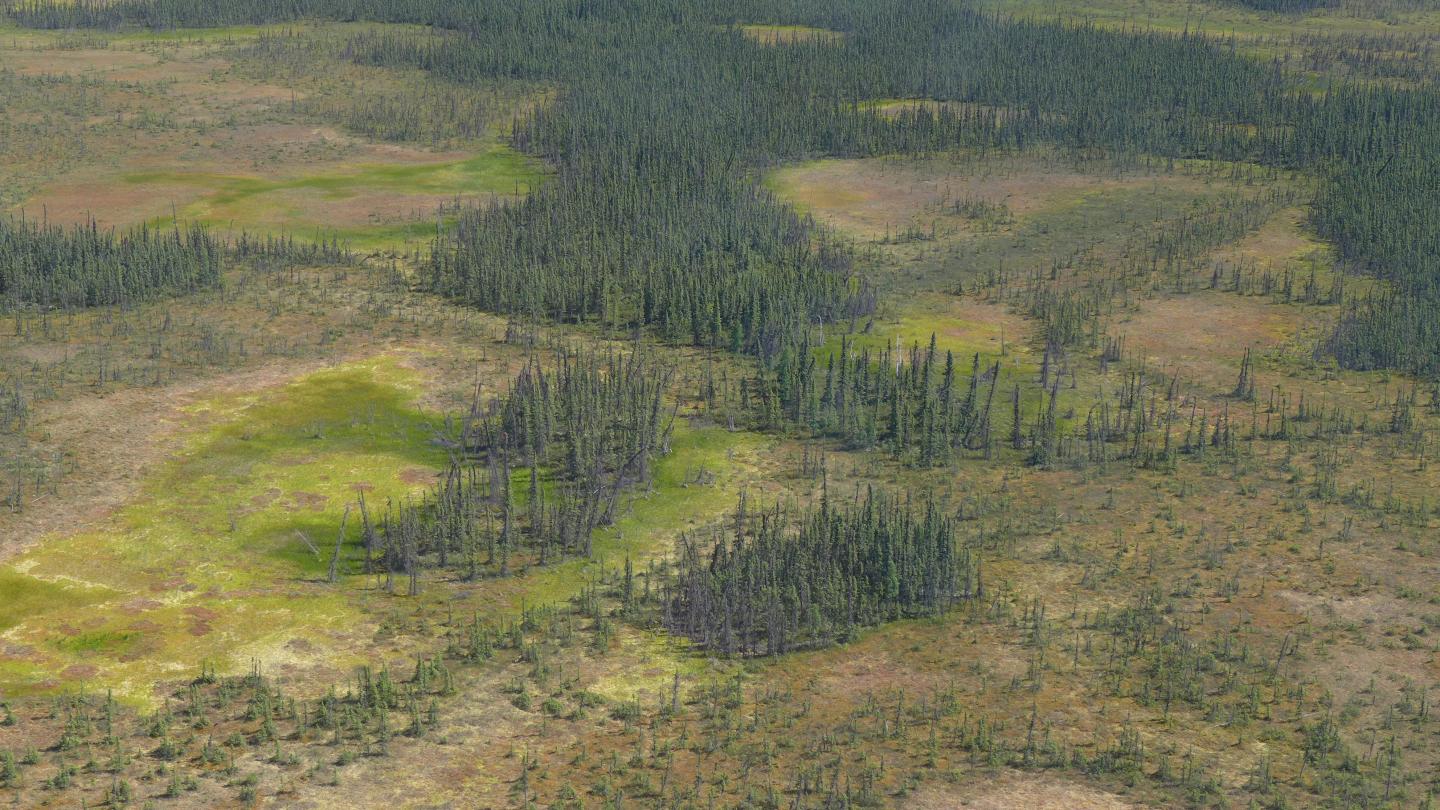 Water loss in northern peatlands threatens to intensify fires, global warming
https://www.eurekalert.org/pub_releases/2020-05/mu-wli050820.php Boreal climate change study features 59 authors, MCMASTER UNIVERSITY HAMILTON, ON, MAY 11, 2020 – A group of 59 international scientists, led by researchers at Canada’s McMaster University, has uncovered new information about the distinct effects of climate change on boreal forests and peatlands, which threaten to worsen wildfires and accelerate global warming.Manuel Helbig and Mike Waddington from McMaster’s School of Geography and Earth Sciences gathered observational data from collaborators in countries across the boreal biome. Their study of how ecosystems lose water to the atmosphere appears today in the journal Nature Climate Change.
The unprecedented detail of their work has highlighted dramatic differences in the ways forests and peatlands regulate water loss to the atmosphere in a warming climate, and how those differences could in turn accelerate the pace of warming.
Most current global climate models assume the biome is all forest, an omission that could seriously compromise their projections, Helbig says.
“We need to account for the specific behavior of peatlands if we want to understand the boreal climate, precipitation, water availability and the whole carbon cycle,” he says.
“Peatlands are so important for storing carbon, and they are so vulnerable.”
Until now, Helbig says, it had not been possible to capture such a comprehensive view of these water-cycle dynamics, but with the support of the Global Water Futures Initiative and participation from so many research partners in Canada, Russia, the US, Germany and Scandinavia, new understanding is emerging.
As the climate warms, air gets drier and can take up more water. In response to the drying of the air, forest ecosystems – which make up most of the world’s natural boreal regions – retain more water. Their trees, shrubs and grasses are vascular plants that typically take up carbon dioxide and release water and oxygen through microscopic pores in their leaves. In warmer, dryer weather, though, those pores close, slowing the exchange to conserve water.
Together with lakes, the spongy bogs and fens called peatlands make up the remainder of the boreal landscape. Peatlands store vast amounts of water and carbon in layers of living and dead moss. They serve as natural firebreaks between sections of forest, as long as they remain wet.
Peatland mosses are not vascular plants, so as warming continues, they are more prone to drying out. Unlike forests, they have no active mechanism to protect themselves from losing water to the atmosphere. Dehydration exposes their dense carbon stores to accelerated decomposition, and turns them from firebreaks into fire propagators, as shown in previous research from Waddington’s ecohydrology lab.
Drier peatlands mean bigger, more intense fires that can release vast amounts of carbon into the atmosphere, accelerating global warming, Helbig says.
“It’s crucial to consider the accelerated water loss of peatlands in a warming climate as we project what will happen to the boreal landscape in the next 100 to 200 years,” he says.
Canada on verge of investing in plutonium
Gordon Edwards <ccnr@web.ca>\, 26 Apr 2020, It seems that the two SMNR (Small Modular  Nuclear Reactor) entrepreneurs in New Brunswick (Canada), along with other nuclear “players” worldwide, are trying to revitalize the “plutonium economy” — a nuclear industry dream from the distant past that many believed had been laid to rest because of the failure of plutonium-based breeder reactors almost everywhere – e.g. USA, France, Britain, Japan …
Bill McKibben on the Virus and the Climate Movement
How the Virus Has Hit the Climate Movement: Bill McKibben
The Tyee talks to the prominent activist and author about fighting on two fronts. Geoff Dembicki 23 Mar 20 | TheTyee.ca
Geoff Dembicki reports for The Tyee. His work also appears in Vice, Foreign Policy and the New York Times. A few weeks ago, this was looking like a big year for Canada’s climate movement.
After years of grassroots opposition to the Trans Mountain pipeline in B.C., an eruption of rail blockades across the country in solidarity with the Wet’suwet’en natural gas fight and Teck Resources shelving a major new oil sands mine for economic reasons, all the conditions seemed there to push for economy-transforming policies on the scale of the Green New Deal.
Then the coronavirus hit.
At a time when climate leaders in Canada, the U.S. and Europe imagined millions of people on the streets pressuring financial institutions to ditch fossil fuels and forcing political leaders to enact bold legislation, people are now fearful and physically alone, stuck in their homes to prevent a public health catastrophe as outside ecosystems veer towards collapse.
To help Tyee readers make sense of this new reality, we reached out to author and activist Bill McKibben, co-founder of the climate group 350 and a global authority on what must be done to fight the climate emergency. It was McKibben who wrote the book The End of Nature about climate change in 1989 that put the threat firmly on the public radar.
On the impact of coronavirus on the climate movement:
In a conversation that has been edited for length and clarity, he urges Canadians to pressure politicians to keep the climate emergency front and centre as we navigate this crisis, while using these terrifying and inexplicable times as a chance to reflect on the fairer and more sustainable world we must build after the crisis is over.
On the similarities between coronavirus and climate change:
There’s a sense in which something like coronavirus is like climate change except encapsulated in a few months instead of a few decades…The biggest difference is that there’s no enormous industry that gets rich off of coronavirus, so there’s not like a built-in opposition to doing what needs to be done and that’s always been one of the problems with climate change.
On how coronavirus is helping kill off the fossil fuel industry:
One thing that’s happening I think is that last year will mark the peak of fossil fuel demand. I don’t think fossil fuels will be able to recover to the point they were at before. I can’t imagine anyone deciding that what they’re going to invest their money now in is another tar sands mine. I find it hard to imagine that even the Canadian government is going to want to spend $12 billion to build its pipeline out to Burnaby. I think we’re going to be reminded that there are other more important things to spend money on.
It seems to me that probably some of the landscape of oil and gas is getting rewritten even as we watch. That is a direct testament to the power of protest and organization over this last decade and to the incredible work of people, especially Indigenous organizers, pushing this case for a very long time. And it’s gotten through. Earlier this winter, the decision of investors that they weren’t going to throw more money into the Teck Frontier mine was a kind of bell ringing and those echoes will reverberate for a long time.
On the message Canadians should send to businesspeople and politicians:
I do think that the best thing for people to be doing in North America at the moment is to be putting huge pressure on the banks and financial institutions that fund fossil fuels, like JPMorgan Chase, BlackRock, Liberty Mutual, RBC, all the Toronto banks, reminding them that it’s not ok to be trying to profit off the end of the world.
Some of these banks are going to need bailouts as the economy tanks and it should be pretty clear that we should not be bailing out them without making sure that they’re not going to contribute to the next even larger crisis facing the planet. https://thetyee.ca/News/2020/03/22/How-The-Virus-Has-Hit-Climate-Movement-McKibben/
Nuclear – a failing technology, example Canada’s risky CANDU reactors
Ask yourself: Would we build a massive nuclear power station in the middle of Canada’s largest urban area today? The answer, of course, is a common sense “no.”
It’s common sense because nuclear energy, despite its boosters’ assurances, is not without risk. And while the risk of something going wrong may be small, the consequences could be catastrophic. Just ask the people of Japan.
There is a persistent myth that there is something “special” about CANDU (Canada’s nuclear) technology. But that’s just wishful thinking. CANDU’s are just as prone to risk as any other type of system for splitting atoms.
In fact, the inability of nuclear engineers to address some of the risks built into the CANDU process led to the shelving of both the CANDU 6 “advanced” reactor design and the Maple small reactors that were to supply medical isotopes (a role that is now being increasingly filled by non-nuclear technologies). Those failures cost us billions in wasted taxpayer dollars.
Furthermore, with their miles and miles of corrosion-prone piping and complex designs, CANDUs are notoriously hard to maintain, and all our reactors have had to undergo significant rebuilding well before reaching the end of their promised lifetimes………
The total radioactivity in Pickering’s spent nuclear fuel is 200 times greater than the total radiation released to the atmosphere by the Fukushima accident in 2011.
Maybe the risk involved in storing 15,000 tonnes of radioactive waste next to the source of our drinking water and surrounded by millions of people would be worth it if we had no alternatives. But we have plenty of options to keep our lights on and our beer cold. What we don’t have is any viable solution for the long-term storage of highly radioactive waste that will have to be kept absolutely secure for hundreds of thousands of years.
There’s no shortage of happy talk about deep geologic waste disposal or even miraculous waste-consuming mini breeder reactors (a technology long since dismissed by countries around the world due to its horrendous risk profile). What you won’t find are any actual operational solutions — or even any ready-to-implement plans on the near horizon.
And then there’s the danger to your wallet. Nuclear power — with risks so huge that no commercial insurance industry will touch it for any amount of premium — is no bargain. Today, Ontario Power Generation is charging 9.5 cents per kilowatt hour for nuclear power; within 5 years that will jump to 16.5 cents as OPG deals with the huge cost of rebuilding Darlington’s reactors.
That is three times the cost of renewable power we could secure from Quebec, twice what Ontario was paying for wind power (and about equal to solar) four years ago, and eight times what we pay to help our industries and businesses improve their energy efficiency and reduce their need for power (and their bills).
So, the calculus is simple. On one hand we have a fading technology — nuclear now generates half the power it did worldwide 10 years ago — with rising costs and security concerns, and a long history of bringing in projects behind schedule and massively over budget.
On the other, a 100 per cent renewable system where costs continue to plummet, technology — including storage — is leaping ahead, and safety is about making sure workers wear harnesses, not radiation monitors. Which one would you choose for your neighbourhood?
Unjustified hype over non existent Small Nuclear Reactors
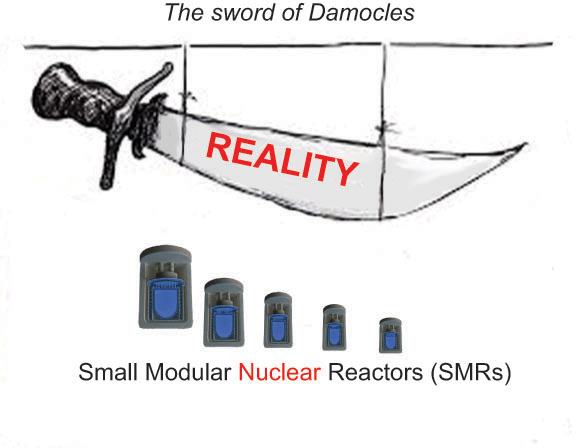 Let’s call SMRs what they are, Leaving out “nuclear” doesn’t minimize the danger, or the cost https://beyondnuclearinternational.org/2020/02/23/lets-call-smrs-what-they-are/By Gordon Edwards, Michel Duguay and Pierre Jasmin, February 23, 2020, On Friday the 13th, September 2019, the St John Telegraph-Journal’s front page was dominated by what many gullible readers hoped will be a good luck story for New Brunswick – making the province a booming and prosperous Nuclear Energy powerhouse for the entire world.
After many months of behind-the-scenes meetings throughout New Brunswick with utility company executives, provincial politicians, federal government representatives, township mayors and First Nations, two nuclear entrepreneurial companies laid out a dazzling dream promising thousands of jobs – nay, tens of thousands! – in New Brunswick, achieved by mass-producing and selling components for hitherto untested nuclear reactors called SMNRs (Small Modular Nuclear Reactors) which, it is hoped, will be installed around the world by the hundreds or thousands!
On December 1, the Saskatchewan and Ontario premiers hitched their hopes to the same nuclear dream machine through a dramatic tripartite Sunday press conference in Ottawa featuring the premiers of the provinces. The three amigos announced their desire to promote and deploy some version of Small Modular Nuclear Reactors in their respective provinces. All three claimed it as a strategy to fight climate change, and they want the federal government to pledge federal tax money to pay for the R&D. Perhaps it is a way of paying lip service to the climate crisis without actually achieving anything substantial; prior to the recent election, all three men were opposed to even putting a price on carbon emissions.
Motives other than climate protection may apply. Saskatchewan’s uranium is in desperate need of new markets, as some of the province’s most productive mines have been mothballed and over a thousand uranium workers have been laid off, due to the global decline in nuclear power. Meanwhile, Ontario has cancelled all investments in over 800 renewable energy projects – at a financial penalty of over 200 million dollars – while investing tens of billions of dollars to rebuild many of its geriatric nuclear reactors. This, instead of purchasing surplus water-based hydropower from Quebec at less than half the cost.
Three previous “small reactor” failures in Canada so far
These new nuclear reactors are so far perfectly safe, because they exist only on paper and are cooled only by ink. But declaring them a success before they are even built is quite a leap of faith, especially in light of the three previous Canadian failures in this field of “small reactors”. Two 10-megawatt MAPLE reactors were built at Chalk River and never operated because of insuperable safety concerns, and the 10-megawatt “Mega-Slowpoke” district heating reactor never earned a licence to operate, again because of safety concerns. The Mega-Slowpoke was offered free of charge to two universities – Sherbrooke and Saskatchewan – and several communities, all of whom refused the gift. And a good thing too, as the only Mega-Slowpoke ever built (at Pinawa, in Manitoba) is now being dismantled without ever producing a single useful megawatt of heat.
This current media hype about modular reactors is very reminiscent of the drumbeat of grandiose expectations that began around 2000, announcing the advent of a Nuclear Renaissance that envisaged thousands of new reactors — huge ones! — being built all over the planet. That initiative turned out to be a complete flop. Only a few large reactors were launched under this banner, and they were plagued with enormous cost-over-runs and extraordinarily long delays, resulting in the bankruptcy or near bankruptcy of some of the largest nuclear companies in the world – such as Areva and Westinghouse – and causing other companies to retire from the nuclear field altogether – such as Siemens.
 Speculation about that promised Nuclear Renaissance also led to a massive (and totally unrealistic) spike in uranium prices, spurring uranium exploration activities on an unprecedented scale. It ended in a near-catastrophic collapse of uranium prices when the bubble burst. Cameco was forced to close down several mines. They are still closed. The price of uranium has still not recovered from the plunge.
Large nuclear reactors have essentially priced themselves out of the market. Only Russia, China and India have managed to defy those market forces with their monopoly state involvements. Nevertheless, the nuclear contribution to world electricity production has plummeted from 17 percent in 1997 to about 10 percent in 2018. In North America and Western Europe, the prospects for new large reactor projects are virtually nil, and many of the older reactors are shutting down permanently without being replaced.
During long construction times nuclear makes the climate problem worse
Many people concerned about climate change want to know more about the moral and ethical choices regarding low-carbon technologies: “Don’t we have a responsibility to use nuclear?” The short reply is: nuclear is too slow and too expensive. The ranking of options should be based on what is cheapest and fastest — beginning with energy efficiency, then on to off-the-shelf renewables like wind and solar energy.
As a case in point, Germany installed over 30,000 megawatts of wind energy capacity in only 8 years, after deciding to close down all of its nuclear reactors by 2022. That is an impressive achievement – more than twice the total installed nuclear capacity of Canada. It would be impossible to build 30,000 megawatts of nuclear in only 8 years.
By building wind generators, Germany obtained some carbon relief in the very first year of construction, then got more benefit in the second year, even more benefit in the third, and so on, building up to a cumulative capacity of 30,000 MWe after 8 years. With nuclear, even if you could manage to build 30,000 megawatts in 8 years, you would get absolutely no benefit during that entire 8-year construction period.
In fact you would be making the problem worse by mining uranium, fabricating fuel, pouring concrete and building the reactor core and components, all adding to greenhouse gas emissions – earning no benefit until (and IF) everything is finally ready to function.
In the meantime (10 to 20 years), you will have starved the efficiency and renewable alternatives of the funds and political will needed to implement technologies that can really make an immediate and substantial difference.
In Saskatchewan, professor Jim Harding, who was director for Prairie Justice Research at University of Regina where he headed up the Uranium Inquiries Project, has offered his own reflection. Here is the conclusion of his December 2, 2019 comment:
“In short, small reactors are another distraction from Saskatchewan having the highest levels of GHGs on the planet – nearly 70 metric tonnes per capita. While the rest of Canada has been lowering emissions, those here, along with Alberta with its high-carbon tar sands, have continued to rise. Saskatchewan and Alberta’s emissions are now almost equal to all the rest of Canada. Shame on us!”
In the USA, engineers and even CEO’s of some of the leading nuclear companies are admitting that the age of nuclear energy is virtually over in North America. This negative judgment is not coming from people who are opposed to nuclear power, quite the opposite — from people lamenting the decline. See, for example, one major report from the Engineering faculty at Carnegie-Mellon University.
The SMR order book is filled with blank pages; there are no customers
That Carnegie-Mellon report includes Small Modular Nuclear Reactors in its analysis, without being any more hopeful for a nuclear revival on that account. The reason? It is mainly because a new generation of smaller reactors, such as those promised for New Brunswick, will necessarily be more expensive per unit of energy produced, if manufactured individually. The sharply increased price can be partially offset by mass production of prefabricated components; hence the need for selling hundreds or even thousands of these smaller units in order to break even and make a profit. However, the order book is filled with blank pages — there are no customers. This being the case, finding investors is not easy. So entrepreneurs are courting governments to pony up with taxpayers’ money, in the hopes that this second attempt at a Nuclear Renaissance will not be the total debacle that the first one turned out to be.
Over 150 designs and none built, tested, licensed or deployed
Chances are very slim however. There are over 150 different designs of “Small Modular Reactors”. None of them have been built, tested, licensed or deployed. At Chalk River, Ontario, a consortium of private multinational corporations, comprised of SNC-Lavalin and two corporate partners, operating under the name “Canadian Nuclear Laboratories” (CNL), is prepared to host six or seven different designs of Small Modular Nuclear Reactors — none of them being identical to the two proposed for New Brunswick – and all of these designs will be in competition with each other. The Project Description of the first Chalk River prototype Small Modular Reactor has already received over 40 responses that are posted on the CNSC web site, and virtually all of them are negative comments.
The chances that any one design will corner enough of the market to become financially viable in the long run is unlikely. So the second Nuclear Renaissance may carry the seeds of its own destruction right from the outset. Unfortunately, governments are not well equipped to do a serious independent investigation of the validity of the intoxicating claims made by the promoters, who of course conveniently overlook the persistent problem of long-lived nuclear waste and of decommissioning the radioactive structures. These wastes pose a huge ecological and human health problem for countless generations to come.
Finally, in the list of projects being investigated, one finds a scaled-down “breeder reactor” fuelled with plutonium and cooled by liquid sodium metal, a material that reacts violently or explodes on contact with air or water. The breeder reactor is an old project abandoned by Jimmy Carter and discredited by the failure of the ill-fated French SuperPhénix because of its extremely dangerous nature. In the event of a nuclear accident, the Tennessee Clinch River Breeder Reactor was judged capable of poisoning twelve American states and the SuperPhénix half of France.
One suspects that our three premiers are only willing to revisit these bygone reactor designs in order to obtain funding from the federal government while avoiding responsibility for their inaction on more sensible strategies for combatting climate changes – cheaper, faster and safer alternatives, based on investments in energy efficiency and renewable sources.
Gordon Edwards PhD, is President of the Canadian Coalition for Nuclear Responsibility. Michel Duguay, PhD, is a professor at Laval University. Pierre Jasmin, UQAM, is with Quebec Movement for Peace and Artiste pour la Paix.
Bruce County, Ontario, protest against nuclear waste dump plan
 MillerVideographer@ScottMillerCTV Contact
https://london.ctvnews.ca/nuclear-tanks-no-thanks-say-bruce-county-protesters-1.4820155 Thursday, February 20, 2020 LONDON, ONT. — About 40 Bruce County residents protested outside Bruce County council chambers in Walkerton this morning.They’re protesting plans to bury Canada’s used nuclear fuel under 1300 acres of farmland north of Teeswater. South Bruce is one of two communities in Canada left in the running to host the country’s high level nuclear waste.
A 1300 acre site just north of Teeswater has been identified as a potential underground site for the multi-billion dollar project, that would house approximately 5.2 million used fuel bundles, that remain dangerously radioactive for hundreds of thousands of years.
The Nuclear Waste Management Organization says they’ll pick one site between South Bruce and Ignace, in Northern Ontario, by 2023.
Michelle Stein lives near the proposed site in South Bruce. She organized today’s protest. “Burying your problems to get them out of site is never the answer. I don’t want this underground mess to be the heritage that I leave for my children and grandchildren.”
Saugeen Shores Mayor Luke Charbonneau is the one bringing forward today’s motion to support DGR’s to store nuclear waste. “There’s an international scientific consensus that the best way to store waste materials from nuclear power production is through passive isolation in a Deep Geological Repository.”
The protest comes as Bruce County council debates a motion to reinforce its support for a permanent solution to the country’s nuclear waste, specifically the Deep Geological Repository model that encases the waste in copper containers, encased in clay “buffer boxes”.
Canada’s Nuclear Waste Management Organization (NWMO) courts indigenous communities

More specifically, the NWMO, which is a consortium of Canadian nuclear industry players created by an act of parliament, is looking for a community willing to allow used nuclear fuel to be placed in what’s called a deep geological repository – or DGR.
Currently the NWMO is engaging with Ignace, Ontario a small community 250 km northwest of Thunder Bay, as well as the municipality of South Bruce, on Lake Huron northwest of Toronto.
Indigenous communities in both those areas are being courted and having the DGR concept pitched to them by the NWMO.
Indigenous engagement is a major focus at the NWMO.
It has put out an eight-part video series on reconciliation, and it also employs Bob Watts as their vice president of Indigenous Relations.
Watts is a long time major player in Indigenous politics who has held high-level positions with the Assembly of First Nations and the federal government………
Fundamentally, a DGR needs to protect radioactive waste from water, because water could potentially bring the deadly radioactive material back into contact with our environment. …….
not everyone is sold on the safety case made by the NWMO.
Gordon Edwards is president of the Canadian Coalition for Nuclear Responsibility and is likely the nuclear industry’s best known critic in Canada.
Edwards isn’t impressed with the NWMO’s multiple barrier system.
“You can put barrier after barrier after barrier, that doesn’t mean that you have a safe system,” he said. ”The same multiple barrier philosophy is used in nuclear reactors. They say the fuel is inside metal tubes, which are called zirconium, that’s another barrier, it’s called the sheath. And those are inside pressure tubes, which is another barrier. And then that’s inside a calandria, which is another barrier. And that’s inside the reactor building, which is another barrier. Consequently, there cannot be a nuclear accident.
“Well, we’ve seen what happened with that philosophy. Chernobyl exploded and the whole area around Chernobyl is still uninhabitable and will be for at least another hundred years. Fukushima, we’ve had three reactors melting down on the same weekend and those multiple barriers were all in place.”
Edwards said the notion that we can build something to last hundreds of thousands of years, the length of time used nuclear fuel will potentially remain dangerously radioactive – is folly.
“You have to realize that the pyramids of Egypt are only 5,000 years old,” said Edwards. “Go and look at them there. They’re really deteriorated a great deal. So the half-life of plutonium is 24,000 years. The Great Lakes didn’t even exist 24,000 years ago. So we’re talking about periods of time that dwarf the span of human history.”
Edwards said he believes taking a wait-and-see approach is better than putting the used fuel in a DGR.
“We can afford to wait another century or two and see if we can come up with a genuine solution,” he said. “If we can’t come up with a genuine solution, we can continue to look after it. We can continue to transmit the information. We can continue to repackage it periodically into better and better packages, which is going to make sure. And if there is leakage that occurs, failure of containment – we can spring into action right away and fix it and not let it get out of hand. That’s a much better approach.
“This is called rolling stewardship.”………
The NWMO said it hopes to have identified a willing host community for a deep geological repository by 2023.
Nuclear Courtship, Part 2 airs next week, and will be accompanied with a web story which will examine the mood of some of the communities engaging with the nuclear industry.cread@aptn.ca https://aptnnews.ca/2020/02/07/indigenous-communities-courted-as-nuclear-industry-looks-for-place-to-put-used-fuel/
Ontario Power Generation says ‘no’ to proposed nuclear waste disposal site following opposition from Saugeen FN
Ontario Power Generation says ‘no’ to proposed nuclear waste disposal site following opposition from Saugeen FN Manitoulin Expositor, By Michael Erskine, February 5, 2020 SAUGEEN FIRST NATION – The Saugeen Ojibway Nation (comprised of the Chippewas of Saugeen First Nation and the Chippewas of Nawash Unceded First Nation) were asked to vote on a proposal to host a deep geologic repository (DGR) close to the shores of Lake Huron on the site of the Bruce nuclear power station. The response of the band membership was a resounding no, with 1,058 no votes out of 1,232 total votes (170 voted yes, with four spoiled ballots).
“This vote was an historic milestone and momentous victory for our people,” said Ogimaa Lester Anoquot in a release following the vote on Saturday. “We worked for many years for our right to exercise jurisdiction in our territory and the free, prior and informed consent of our people will be recognized.”
Ontario Power Generation (OPG) spokesperson Fred Kuntz accepted the result, noting that “OPG respects the decision of the SON community. We followed the SON process. So we will uphold our 2013 commitment not to proceed with the DGR at the Bruce site without their support, and now we will move forward to develop an alternate solution.”
Indigenous tribe, Saugeen Ojibway Nation, has voted down plans for nuclear waste dump near Lake Huron
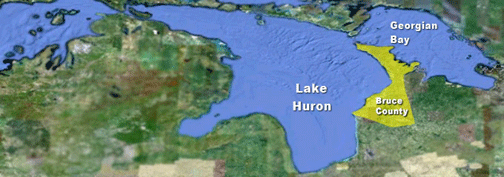
Hervé Courtois to C.A.N. Coalition Against Nukes, 1 Feb 2020, Members of the Saugeen Ojibway Nation (SON) have voted down plans to bury Ontario’s low- and intermediate-level nuclear waste within 1.2 kilometres of Lake Huron….On Friday, 1,232 members of the First Nation band voted. The vote results saw 1,058 ‘no’ votes, with 170 ‘yes’ and 4 spoiled ballots…It means Canada’s first permanent nuclear waste facility will need to be built somewhere else in Ontario…OPG will now have to start searching for a new host community to house over 200,000 cubic metres of low- and intermediate- level nuclear waste…OPG says finding a new site may set the project back 20 to 30 years….https://www.facebook.com/groups/C.A.N.CoalitionAgainstNukes
Opposition to Nuclear Waste Storage Plan Near Lake Huron
|
Canada Nuclear Waste Storage Plan Near Lake Huron Faces Vote, Bloomberg, Jan. 31, 2020,
U.S. lawmakers from the Great Lakes region are weighing in on the fate of two major Canadian nuclear waste facilities, which could hinge on a vote in a First Nation community in western Ontario on Friday. The 4,500-member Saugeen Ojibway Nation, based on Lake Huron’s Bruce Peninsula, is voting on whether to support construction of Ontario Power Generation Inc.’s C$2.4 billion ($1.8 billion) deep geological repository for low- and intermediate-level nuclear waste near the shore of Lake Huron. But several U.S. members of Congress oppose it, claiming it could endanger drinking water for millions. Ontario Power Generation pledged not to move ahead if the First Nation community votes against the repository. The Nuclear Waste Management Organization, which could build a much larger C$23 billion repository for more radioactive spent nuclear fuel in the same region, won’t proceed in the area if it doesn’t have a partnership with the nation. The vote on Friday doesn’t deal with its proposal directly. The two projects together represent the bulk of Canada’s long-term plan to store nuclear waste. Canada has 2.9 million bundles of highly radioactive used nuclear fuel, according to 2015 data, and around 100,000 cubic meters of low and intermediate nuclear waste, according to 2016 figures, the most recent available. U.S. Lawmakers Oppose Both SitesU.S. lawmakers from across Lake Huron in Michigan have long opposed both projects, and environmental groups say storing radioactive materials deep underground near large bodies of water isn’t safe. “Storing high-level nuclear waste could threaten the well-being of the Great Lakes for generations to come and undo progress made to preserve them,” Sen. Gary Peters (D-Mich.) said in a statement Thursday. “This makes no sense,” said Sen. Debbie Stabenow (D-Mich.). “Canada has as much at stake as we do in protecting our Great Lakes. There is no justification for a nuclear waste site so close to Lake Huron to even be under consideration.” At its closest point, the low- and intermediate-level nuclear waste could be stored underground within a mile of the lake’s shoreline. Peters and seven other senators from the Great Lakes region introduced a resolution in the Senate on Jan. 15 calling on Canada’s federal government to stop both projects and for the Trump administration to help find a solution. An identical resolution was introduced in the House of Representatives Jan. 17. The U.S. Environmental Protection Agency has shared concerns about the project’s potential impact on the U.S. and the Great Lakes, the agency said in a statement Thursday. Highly Radioactive Waste SiteThe Nuclear Waste Management Organization repository would be built to store 5.2 million bundles of used nuclear fuel Canada is projected to produce. It could be built in South Bruce, Ontario, or farther north in Ignace, the organization said Jan. 24. The waste is currently stored outside nuclear facilities across four provinces, with 90% of it in Ontario. “We’re working to identify a single, preferred location for a deep geological repository to be located in an area with informed and willing hosts,” spokesperson Bradley Hammond wrote in an email Wednesday. Landowners in South Bruce gave the organization the go-ahead to dig bore holes to test the area’s suitability this month. The joint private-federal agency wants to pick its site by 2023. The U.S. has long wrestled with its own plan to store nuclear waste. First Nation VoteThe vote by the Saugeen Ojibway Nation on the site for low- and intermediate-level nuclear waste is a monumental accomplishment for First Nations having a say over major decisions, the nation’s environment office said in a statement in December. “Never before has a First Nation secured this level of consent on a project of this magnitude,” the nation said. It declined to comment further. Ontario Power Generation has proposed a financial benefit for the nation, but details aren’t public. A Canadian federal review panel approved the Ontario Power Generation project in May 2015, but the then environment minister asked the company to get more information on impacts to the Saugeen Ojibway Nation’s cultural heritage and wait for the results of the community vote. After receiving the new information, the Impact Assessment Agency will write a draft report on the project’s community impacts, Alison Reilander, agency spokeswoman, wrote in an email Jan. 21. Underground StorageCanada’s existing low- and intermediate-level nuclear waste is currently stored at the surface of where the repository will be located, which is also home to the eight-reactor Bruce Power plant……… https://news.bloombergenvironment.com/environment-and-energy/canada-nuclear-waste-storage-plan-near-lake-huron-faces-vote |
|
1 This Month



Shut down the radiation-damaged Heysham nuclear reactors now
To see nuclear-related stories in greater depth and intensity – go to https://nuclearinformation.wordpress.com

Say No to NASA’s Reckless Nuclear Reactor on the Moon
Say No to NASA’s Reckless Nuclear Reactor on the Moon
-
Archives
- October 2026 (256)
- September 2026 (339)
- August 2026 (330)
- July 2026 (355)
- June 2026 (287)
- May 2026 (306)
- April 2026 (356)
- March 2026 (251)
- February 2026 (267)
- January 2026 (308)
- December 2025 (358)
- November 2025 (359)
-
Categories
- 1
- 1 NUCLEAR ISSUES
- business and costs
- climate change
- culture and arts
- ENERGY
- environment
- health
- history
- indigenous issues
- Legal
- marketing of nuclear
- media
- opposition to nuclear
- PERSONAL STORIES
- politics
- politics international
- Religion and ethics
- safety
- secrets,lies and civil liberties
- spinbuster
- technology
- Uranium
- wastes
- weapons and war
- Women
- 2 WORLD
- ACTION
- AFRICA
- Atrocities
- AUSTRALIA
- Christina's notes
- Christina's themes
- culture and arts
- Events
- Fuk 2022
- Fuk 2023
- Fukushima 2017
- Fukushima 2018
- fukushima 2019
- Fukushima 2020
- Fukushima 2021
- general
- global warming
- Humour (God we need it)
- Nuclear
- RARE EARTHS
- Reference
- resources – print
- Resources -audiovicual
- Weekly Newsletter
- World
- World Nuclear
- YouTube
-
RSS
Entries RSS
Comments RSS

