Nuclear waste flyers heading to 50,000 households in Grey-Bruce
|
Scott MillerCTV News London Videographer @ScottMillerCTV Contact, Monday, September 14, 2020 WINGHAM, ONT. — Roughly 50,000 homeowners in Grey and Bruce County will be getting some unexpected mail this week. “South Bruce is not a willing host to a nuclear waste dump” flyers will be showing up in people’s mailboxes thanks to a group of concerned landowners near Teeswater, where Canada’s highest level nuclear waste could be permanently buried. Michelle Stein leads the group, Protect Our Waterways-No Nuclear Waste. Why would we want to take that kind of a risk with our water and the Great Lakes basin. Anything that happens in the Great Lakes Basin happens to our Great Lakes. We need to protect our water,” she says. All of the highly radioactive fuel bundles are currently stored in above ground warehouses at Canada’s nuclear reactor sites, right now. The Nuclear Waste Management Organization (NWMO) has two proposed sites to permanently bury over 5 million used nuclear fuel bundles, that once powered Canada’s nuclear reactors. One near Ignace, in Northern Ontario, and another north of Teeswater, in Bruce County. All of the highly radioactive fuel bundles are currently stored in above ground and near ground containers at Canada’s nuclear reactor sites, right now……… Stein says people far and wide should know that the NWMO plan includes walking away from the underground facility and the waste, after 50 to 75 years of operation, leaving the radioactive waste in the ground, forever. “There is no country in the world with an operational high level spent fuel DGR (deep geological repository), and history shows us that the low and intermediate level DGR’s have had failures, accidents, and leaks,” she says……. The Nuclear Waste Management wants to have a site selected, either South Bruce or Ignace, by 2023. https://london.ctvnews.ca/nuclear-waste-flyers-heading-to-50-000-households-in-grey-bruce-1.5104113 |
|
Campaign against nuclear fuel waste storage in South Bruce, Canada
People in communities near the Municipality of South Bruce may receive a leaflet from the group Protect Our Waterways-No Nuclear Waste with information on the proposal to store used nuclear fuel deep underground near Teeswater.
Spokesman Michelle Stein said 50,000 leaflets were sent out this week to let people know some of the group’s concerns about the plan to store Canada’s nuclear waste in a Deep Geologic Repository or DGR.
Stein said the Nuclear Waste Management Organization is assembling land in the municipality of South Bruce to store irradiated nuclear fuel from 4.6 million spent fuel bundles.
“The proposed site includes the Teeswater River flowing through it, and that leads to Lake Huron. And 40 million people get their drinking water from Lake Huron,” she said.
“It’s a decision that is going to affect so many people, and change our community in such a large way, I think each individual deserves to have a vote,” she added.
Stein says 1,600 residents of South Bruce signed a petition opposing the proposed DGR. Stein wants to see a referendum on the issue, as both the Nuclear Waste Management Organization and the municipality have stated that the project needs broad community support to go ahead.
If the proposed nuclear waste dump is approved there will be two loads of spent nuclear fuel travelling by truck every day for forty years from Canada’s nuclear reactors. And if there is a radioactive leak underground it could affect 40 million people in Canada and the US,” said Stein.“People need to know the risks. Nowhere in the world is there an operating DGR for high-level nuclear waste as is being proposed here. Underground storage sites for low-medium level nuclear waste in the US and Germany have leaked radioactive material and required multi-billion-dollar clean-ups”, says Stein. “I encourage everyone who lives in a community near South Bruce to contact their own Mayor and tell them you oppose NWMO’s proposal for a nuclear waste dump.”
POW-NNW believes that the “rolling stewardship” method of managing nuclear waste is better because it maintains it in a monitored and retrievable state at all times, with continual improvements to packaging and environmental protection.
Stein added that ongoing scientific studies examine how spent nuclear fuel can be reused, reduced, and even neutralized. In its initial report to Parliament, the NWMO did not say that on-site storage at the reactor sites was unsafe or not feasible.
Bruce County divided over becoming permanent site to store Canada’s nuclear waste,
 Bruce County divided over becoming permanent site to store Canada’s nuclear waste,
Canada has 57K tonnes of highly radioactive spent nuclear fuel and nowhere to put it, Colin Butler · CBC News · Feb 21 2020, Bruce County calls itself a place “where the smiles are bigger and a little more frequent,” but those smiles belie a deepening divide among neighbours over what to do with Canada’s growing stockpile of nuclear waste.
The town of South Bruce, on the rim of the sparkling waters of Lake Huron, is one of two sites selected by a federal agency tasked with finding permanent locations to store Canada’s nearly three million bundles of highly radioactive spent nuclear fuel.
On Thursday, politicians in Bruce County debated whether their community should be home to a place to put that waste, what’s called a deep geologic repository, or DGR; a multi-billion dollar high tech nuclear waste dump that would see the material stored in perpetuity hundreds of metres below the Earth.
At issue in the debate are the ethics of leaving the burden of some of Canada’s most dangerous nuclear material to future generations, the possible development and devaluation of prime Ontario farmland and concerns over the potential safety of the drinking water for 40 million people in two countries.
‘I am strongly opposed’
On Thursday, that politically-fraught debate took centre stage in Walkerton, Ont. before a packed council chamber where politicians debated whether DGRs were “settled science” in an argument that has already played out at dinner tables, arenas and coffee shops in the area for years, dividing neighbours and leaving communities deeply polarized.
“I am strongly opposed,” said Brockton Mayor Chris Peabody, whose township includes Walkerton, a place that two decades ago grappled with a tainted water crisis where e. coli killed six people and sickened thousands.
“The proposal is to bury the waste under the Teeswater River,” he told council. “I can’t support that. I’ve got several communities down river that get their drinking water from aquifers along that river.”
Peabody said if a deep geologic repository were to be located west of Teeswater, it would potentially devalue prime farmland and the resulting stigma of burying nuclear waste near his community might affect the ability of local farmers to sell their wares.
“It would make it very difficult for them to market their produce and survive,” he said. “I don’t think the scientific consensus supports burying nuclear waste in class one farmland in Southern Ontario.”
Utilizing a deep geologic repository isn’t simply a matter of “burying nuclear waste in class one farmland” as Peabody suggests. The proposed underground project is a highly sophisticated $23 billion nuclear waste disposal site designed to contain and isolate some of the most dangerous materials on Earth for thousands of years.
The sprawling complex of tunnels and chambers would occupy a footprint of about 600 hectares underground, where nuclear waste would be stored at a depth as low as the CN Tower is tall (500 to 600 metres). The idea is the material would be encased in containers below natural bedrock to keep the harmful effects of radiation at bay for millennia.
While proponents of the system claim a DGR is a safe way to store nuclear waste, those opposed argue it has a spotty record at best, pointing out that similar facilities in New Mexico and Germany have leaked – and by that token, opponents say a DGR near Lake Huron would potentially put the drinking water of 40 million people at risk.
It’s not the first time the debate has come to the area. Ontario Power Generation recently abandoned a 15-year campaign for a similar proposed facility to store low to intermediary waste at a site not far from the Bruce Nuclear Generating Station.
The failure to move ahead with the project is part of a larger problem of Canada’s struggle to find a permanent home for its growing stockpile of nuclear waste.
As of 2018, it’s estimated Canada had some 57,000 tonnes of highly radioactive spent nuclear fuel and nowhere to put it.
So far, the federal agency tasked with disposing it, the Nuclear Waste Management Organization, or NWMO, has identified two potential communities with the right geological makeup; Ignace in Ontario’s north and South Bruce, in Ontario’s Great Lakes Basin. ……. https://www.cbc.ca/news/canada/london/canada-nuclear-waste-1.5469727
Canadian Public asked for views on transport of used nuclear fuel
 Public asked for views on transport of used nuclear fuel Owen Sound The Sun Times Scott Dunn 27 Aug 20 The Nuclear Waste Management Organization wants public input on its planning framework concerning shipping about 5.5 million used nuclear fuel bundles by road and possibly rail, to a permanent storage site, possibly in Bruce County.Spent nuclear fuel rods are currently stored above ground at nuclear sites and the aim is to create a long-term storage solution.
The NWMO’s draft transportation planning framework, based partly on public consultations since 2016, is the subject of a detailed online survey. The survey contains background and facts about the plan and about the management and transportation of used nuclear fuel.
There are five sections to comment on: The basic requirements of used nuclear fuel transportation planning, the plan’s objectives and principles, environmental protection, who needs to be involved in decision-making, and how should the modes and routes be decided. The survey can be found at https://ca.surveygizmo.com/s3/50081627/NWMOworkbookSMEN…....South Bruce, the local municipality near the Bruce Power nuclear station on Lake Huron, is one of two locations which remain potential sites for a $23-billion permanent storage facility buried deep underground.
So far, South Bruce has not declared itself a willing host, or even how that conclusion would be arrived at, though an opposition group has called for a community vote and the mayor has suggested that might be the solution.
The other remaining potential site is Ignace area, northwest of Lake Superior.
Approval of the local First Nations people is also required and earlier this year they turned down a separate plan to bury low- and mid-level nuclear waste in a dedicated underground vault at the Bruce nuclear site.
NWMO says it expects to select its preferred location for the used nuclear fuel vault in 2023. Operation of the deep geological repository and transportation of used nuclear fuel is planned to start in the 2040s. Transport of the bundles will take about 40 years.
The used nuclear fuel will be transported by roads and possibly rail, depending on the location of the repository.
“If an all-road approach were taken, this might involve about 620 truck shipments each year, approximately one-to-two shipments per day. If an all-rail approach were taken, this might involve about 60 train shipments each year, approximately one shipment every six days,” says the organization’s Moving Forward Together document, found on the NWMO website……….. https://www.owensoundsuntimes.com/news/local-news/public-asked-for-views-on-transport-of-used-nuclear-fuel
Canada communities don’t want the so-called “clean” Small Modular Nuclear Reactors (SMRs)

even with SMRs under 300 megawatts, nuclear waste is a byproduct.
waste generated from SMRs would become a dangerous part of the transportation system “even if they do remove it.”
“It will be big, big transports of highly radioactive stuff, driving down the roads as an easy dirty bomb
the high cost of building infrastructure and then containing nuclear fallout and radiation are all concerns before they can go ahead.
Nuclear giants team up to develop reactors in Sask. and Ontario, Michael Bramadat-Willcock / Local Journalism Initiative Reporter, National Observer, AUGUST 23, 2020
Canada’s leading nuclear industry players announced an inter-provincial corporate partnership Thursday to support the launch of a research centre that will work on developing small modular reactors (SMRs) for use in Saskatchewan.
Saskatoon-based Cameco is the world’s biggest uranium producer and has long supplied fuel to Bruce Power, Ontario’s largest nuclear power company.SMRs are designed to produce smaller amounts of electricity, between 50 and 300 megawatts,……
The secretariat is mandated to develop and execute a strategic plan for the use of “clean-energy small modular reactors” in the province. ……
No timeframe or SMR sites were included in the announcement, but the government’s plans already have some northern residents raising alarms.
Committee for Future Generations outreach co-ordinator Candyce Paul of La Plonge at the English River First Nation told Canada’s National Observer that they haven’t been consulted on any aspects of the plan, but all signs point to the north as a site for the reactors.
Paul’s group fights nuclear waste storage in Saskatchewan and was instrumental in stopping a proposal that considered Beauval, Pinehouse and Creighton as storage locations in 2011.
“When we informed the communities that they were looking at planning to bury nuclear waste up here in 2011, once they learned what that entailed, everybody said no way. Eighty per cent of the people in the north said no way, absolutely not. It didn’t matter if they worked for Cameco or the other mines. They said if it comes here, we will not support it coming here,” she said.
Paul said she sees small modular nuclear reactors as another threat to the environment and to human safety in the region.
She noted that even with SMRs under 300 megawatts, nuclear waste is a byproduct.
“Even if they’re not burying nuclear waste here, they could be leaving it on site or hauling it through our northern regions and across our waterways,” Paul said.
She said that waste generated from SMRs would become a dangerous part of the transportation system “even if they do remove it.”
“It will be big, big transports of highly radioactive stuff, driving down the roads as an easy dirty bomb. You’d be driving down the road (behind a nuclear waste transport vehicle) and not know you’re following it,” Paul said.
Paul said the intent behind installing SMRs is anything but green and that the real goal is to prop up Saskatchewan’s ailing uranium industry and develop oilsands in the northwest.
Paul said that communities around Canada, and especially in the Far North, have long been pitched as sites for SMR development and have refused.
A 2018 brief from Pangnirtung Hamlet Council in Nunavut concluded “any Arctic-based nuclear power source should be an alternative energy choice of last resort.”
“None of our people are going to get trained for operating these. It supports people from other places. It doesn’t really support us,” Paul said.
SMRs have been pitched in the north as a way to move away from reliance on diesel fuel, which can be costly. Paul said any benefits of that remain to be seen.
She said companies would need to do environmental impact assessments for smaller reactors even though the exclusion zone around SMR sites is smaller.
“Even if the exclusion zone is only a few kilometres, a few kilometres affects a lot in an ecosystem and especially in an ecosystem that is wild,” Paul said.
“I’m not feeling confident in this at all, Canadian nuclear laboratories saying that it would only be a small radius exclusion zone. Well that’s our territory. That’s our land, our waters, our wildlife.
“It’s not their backyard, so they couldn’t care less.”
Brooke Dobni, professor of strategy at the University of Saskatchewan’s Edwards School of Business, told Canada’s National Observer that any development of small reactors would take a long time.
“It could be a good thing, but on the other hand, it might have some pitfalls. Those talks take years,” Dobni said.
He said nuclear reactors face bigger challenges because of public concerns about the environment and that the high cost of building infrastructure and then containing nuclear fallout and radiation are all concerns before they can go ahead.
“Anything nuclear is 25 years out if you’re talking about small reactors, those kinds of things to power up the city,” Dobni said.
“That technology is a long ways away and a lot of it’s going to depend on public opinion.
The court for that is the court of public opinion, whether or not people want that in their own backyard, and that’s the whole issue anywhere in the world.” https://www.humboldtjournal.ca/news/nuclear-giants-team-up-to-develop-reactors-in-sask-and-ontario-1.24191077
Alberta premier’s small nukes pipe dream makes no economic sense.
 Look Over There! Jason Kenney’s Phoney Nuclear Power
  Distraction Why the Alberta premier’s small nukes pipe dream makes no economic sense., David Climenhaga 14 Aug 20, | TheTyee.ca
When Alberta Premier Jason Kenney says small nuclear reactors “could be a game changer in providing safe, zero-emitting, baseload power in many areas of the province,” as he did this week in a tweet, he’s pulling your leg…….
No electrical utility is ever going to buy one unless they are forced to by government policy or regulation — the kind of thing Alberta’s United Conservative Party purports to oppose……..
Small nuclear reactors are not as cheap to build as the premier’s fairy tale suggests.
Bringing an acceptable small nuclear reactor design all the way from the drawing board to approval by a national nuclear regulatory authority will cost hundreds of millions of dollars.
While dozens of speculative companies are printing colourful brochures with pretty pictures of little nukes being trucked to their destinations, very few are serious ventures with any possibility of building an actual reactor. The United Nations International Atomic Energy Agency says diplomatically there are about 50 concepts “at different stages of development.” Those that are serious, like NuScale Power in the United States, have huge amounts of government money behind them.
The only small nuclear reactor plant known to be operating in the world now is the Akademik Lomonosov, Russia’s floating power barge with two 35-megawatt reactors aboard. From an original estimate of US$140 million in 2006, its cost had ballooned to US$740 million when the vessel was launched last year.
The kind of small reactors Kenney is talking about won’t be cheap by any yardstick.
Small reactors are less economical to run than big reactors…….
This is why nobody wanted to buy the scaled-down CANDU-3 reactor, development of which was paid for by Canadian taxpayers in the 1980s. At 300 megawatts, they were just too small for commercial viability. A working CANDU-3 has never been built.
The cost of small reactors would have to come down significantly to change this. And remember, the research and development requirements of small reactors are just as high as for big ones. With nobody manufacturing modules, there are no existing economies of scale. In other words, dreamy brochures about the future of small reactors are just that — dreams.
By the way, in 2011 the Harper government privatized the best commercial assets of Crown-owned Atomic Energy of Canada Ltd. to… wait for it… SNC-Lavalin Group Inc. Think about that every time you hear Conservatives in Ottawa screeching about the goings on at SNC-Lavalin!
Small reactor designs mostly require enriched uranium, and Canada doesn’t produce any……
Small reactors might be safer than big ones, but we don’t really know.
Kenney and Savage talk about small reactors as if it were a fact they’re safer than big reactors. Maybe they are. But we don’t really know that because nobody but the Russians actually seems to have built one, and in most cases they haven’t even been designed.
Remember, the Russians’ small reactors are both on a barge. For what it’s worth, critics have called it “Floating Chernobyl.”
Small reactors won’t be safe without public regulation……..
Then there’s the matter of waste disposal.
Nuclear plants don’t produce a lot of waste by volume, but what there is sure has the potential to cause problems for a very long time. Thousands of years and more. So safe storage is an issue with small nukes, just like it is with big ones.
Where are we going to store the waste from all these wonderful small nuclear reactors Kenney is talking about?
How many jobs is it likely to create here in Western Canada? Well, Saskatchewan’s Ministry of Environment recently posted a job for a director of small modular reactors. That person will supervise four people. That’s probably about it for jobs for the foreseeable future.
If Alberta ever ends up with the same number of people working on this, we’ll be lucky https://thetyee.ca/Analysis/2020/08/13/Kenney-Nuclear-Power-Plant-Distraction/
Alberta joins Ontario, New Brunswick and Saskatchewan -led by the nose by nuclear NuScam?

Going Nuclear: Alberta Signs Inter-Provincial MOE to Explore Small Modular Reactors, J.D. Supra, 14Aug 20,
On August 7, 2020, the Government of Alberta announced its intention to enter into a Memorandum of Understanding (MOU) to explore emerging nuclear power generation technology in the form of Small Modular Reactors (SMRs).
Alberta is the fourth province to sign the MOU, following in the footsteps of the governments of Ontario, New Brunswick and Saskatchewan, which signed the MOU in December 2019. Ontario and New Brunswick are Canada’s only provinces currently producing nuclear energy, while uranium fuel is mined in Saskatchewan. Athabasca Basin contains the world’s largest high-grade deposits of uranium and straddles the Alberta-Saskatchewan border……
Problems in planned nuclear waste dump at Chalk River
New nuclear waste guidelines could lead to ‘massive dump’ upstream from Ottawa if approved, CapitalCurrent , By Bailey Moreton, 23 July 20,
New nuclear waste guidelines set to undergo public consultation this fall could clear the way for a much-debated, large, above-ground waste disposal mound to be built at Chalk River, the national nuclear research facility 180 kilometres northwest of Ottawa.
The proposed guidelines would frame the way nuclear companies dispose of waste, including the creation of deep ground repositories. Under the guidelines, companies would present waste disposal safety cases — a set of justifications for a planned disposal strategy — which are then assessed by the Canada Nuclear Safety Commission.
But one longtime critic of the Chalk River site says the guidelines would give too much flexibility to operators of nuclear facilities. Ole Hendrickson, a former scientist with Environment Canada and a researcher with the Concerned Citizens of Renfrew County Area, says the guidelines need to be more stringent.
“In my view, what they say is, ‘Let’s make these reg docs as flexible as possible and non-prescriptive’ — and the CNSC actually uses those terms, non-prescriptive and flexible, to describe its regulatory approach,” he said. “That may work for industry, but for us members of the public, it raises a lot of concerns.”
In the minutes of a CNSC meeting on June 18, Ramzi Jammal, executive vice-president of the commission, said the safety cases allow for performance-based assessment and for the regulatory documents to be adaptable to future conditions.
“With performance-based you’re always achieving and applying the new standards as they become available. The same thing applies for the new technology,” Jammal said at the meeting. “As you are looking at enhancement for safety, you always take into consideration the new available information.”
But what is defined as low-level waste is flexible and depends on the safety cases presented to the CNSC, said Richard Cannings, NDP MP for South Okanagan-West Kootenay and the party’s natural resources critic.
“That’s a problem. That’s not how it’s done elsewhere in the world,” he said. “They did it in Ottawa’s backyard.”
In the June 18 meeting, Karine Glenn, director of the wastes and decommissioning division for the CNSC, said low-level waste would mostly involve medical materials, but each safety case would be reviewed by the CNSC.
In Chalk River’s case, critics such as Eva Schacherl, a volunteer with the Coalition Against Nuclear Dumps on the Ottawa River, say they believe the “massive waste dump” would fail to manage the nuclear waste safely and that operators are failing to meet international standards at the site……….
both Schacherl and Hendrickson said they are concerned the site — which is within a little more than a kilometre of the Ottawa River, according to Hendrickson — could spread contamination.
“Waste has piled up at Chalk River, and there’s no long-term way of dealing with it,” said Hendrickson. “There would be a lot of leaching that would flow back into the Ottawa River.”
“Most countries with large quantities of nuclear waste have an independent federal nuclear waste agency,” said Hendrickson. “It’s not run by the industry like the Nuclear Waste Management Organization. It’s definitely not run by the nuclear regulator.”
Cannings agreed, adding that he was worried what impact having the NWMO responsible for the deep ground repositories could have for safety.
“There’s risks with everything. But the assessment of risks to a project by the proponent, by the industry — they’re going to be much more favourable, they’re going to accept more risk than the public because they’re protecting themselves,” said Cannings.
Two Ontario sites — South Bruce, near London, and Ignace, a three-hour drive northwest of Thunder Bay, are the only two communities still vying for the deep-ground repository project. Both proposals have been met with resistance from local residents………
Critics noted that several organizations and advocacy groups had requested but were denied permission to be present at the June meeting where the regulatory documents were presented via video conference. ……… https://capitalcurrent.ca/new-nuclear-waste-guidelines-could-lead-to-massive-dump-upstream-from-ottawa-if-approved/
The next threat: A high-level nuclear waste dump near Lake Huron
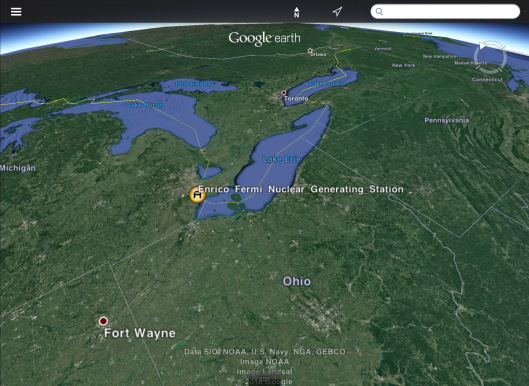
|
The next threat: A high-level nuclear waste dump near Lake Huron https://www.voicenews.com/news/the-next-threat-a-high-level-nuclear-waste-dump-near-lake-huron/article_674abc28-c779-11ea-a297-c7742bb35220.html NWMO selects site near scrapped Ontario DGR, By Jim Bloch For MediaNews Group, Jul 16, 2020
No sooner than the Saugeen Ojibway Nation had voted overwhelmingly against Ontario Power Generation’s effort to build a deep geological repository for low and intermediate nuclear waste the repository on the lip of Lake Huron, a similar, perhaps more lethal threat has emerged. The Nuclear Waste Management Organization, the industry group tasked in 2002 with finding a permanent waste site for Canadian high-level nuclear waste, announced earlier this year that it had landed on two possible locations, down from 22 prospective sites — Ignace in northwest Ontario and the municipality of South Bruce, virtually next door to the now scrapped site for low and intermediate nuclear waste storage. “High-level radioactive waste in Canada is used (irradiated) nuclear fuel that has been declared as radioactive waste. Used nuclear fuel produces ionizing radiation,” according to the Canadian Nuclear Safety Commission. “This type of radiation has a strong ability to penetrate matter, so shielding against the radiation is required. Since used nuclear fuel contains significant quantities of radionuclides with long half-lives, it requires long-term management and isolation.” Low and intermediate nuclear waste refers to all other forms of nuclear waste. Calling any kind of radioactive waste “low level” is somewhat inaccurate, according to Diane D’Arrigo, the radioactive waste project director at the Nuclear Information and Resource Service, headquartered in Tacoma Park, Maryland. “A lot of what’s in that waste might be low level, but it’s not low risk,” said D’Arrigo. Both can contain the same dangerous radioactive elements. Like the scrapped plan, the new effort calls for a deep geological repository. The effort relies on core samples from the shelved DGR to demonstrate the ostensible suitability of the site. “In Huron-Kinloss and South Bruce, detailed assessment of available historic local and regional geo-scientific studies, including recent deep borehole data from the Bruce nuclear site, showed that the geological setting has a number of favourable characteristics for hosting a deep geological repository for used nuclear fuel,” according to information on the NWMO website. OPG proposed to excavate a storage chamber in a layer of limestone 2,200 feet underground, capped by shale on the top and granite below; OPG geologists estimated that the rock had been stable for 450 million years. The proposed site would be about 600 feet less deep. The members and financiers — via dedicated trust funds — of the NWMO are Ontario Power Generation, New Brunswick Power, Hydro-Québec and Atomic Energy of Canada Limited. Huron-Kinloss, which neighbors South Bruce, is no longer under consideration for the dump. South Bruce sits 29 miles southeast of Bruce Power nuclear station and about 20 miles east of Lake Huron. The DGR proposed for the Bruce Power site, home to eight reactors, was a half mile from Lake Huron. The nuclear complex is on the shore of Lake Huron, roughly 125 miles uplake of Port Huron and 150 miles uplake and upstream from Algonac. The new high-level waste dump would accept spent fuel rods from the 18 nuclear reactors in Ontario and the single reactor at Point Lepreau, New Brunswick. Like the previously proposed dump, the high-level dump is within the Great Lakes basin, inland from Kincardine, said Emily Grant, a South Bruce activist opposed to the project, via email. Grant is a member of the group Protect Our Waterways – No Nuclear Waste. NWMO optioned about 1,300 acres of land in January and “the site will lie directly below the Teeswater River, a tributary of Lake Huron,” said Grant. “As you know, the Great Lakes provide drinking water to over 30 million Americans and 10 million Canadians … There isn’t a single DGR that houses high-level radioactive material in the world, and this experiment does not belong anywhere near the world’s largest body of freshwater.” The Teeswater River flows generally north and joins the Saugeen River in Paisley, which then runs northwest and flows into Lake Huron at Southampton, 19 miles north of the Bruce Power nuclear station. “Spent fuel is thermally hot as well as highly radioactive and requires remote handling and shielding,” according to the U.S. Nuclear Regulatory Commission. Three of the byproducts of the fission process used to generate nuclear power remain dangerous for long periods of time. “Strontium-90 and cesium-137 have half-lives of about 30 years (half the radioactivity will decay in 30 years). Plutonium-239 has a half-life of 24,000 years.” Strontium-90 acts like calcium in the body, seeking out bones, where it can cause cancer; cesium-137 is a muscle seeker; plutonium-239 ends up in the bones, liver and spleen. “Some can give a lethal dose in 15-20 minutes unshielded,” D’Arrigo said. There is no level at which human exposure to radiation has been deemed safe. High-level nuclear waste will remain toxic for more than 100,000 years, ten times longer than the Great Lakes are old, and some of it for more than a million years. NWMO acknowledges this potential problem. “There is some uncertainty about how the system will perform over the very long term because we cannot obtain advance proof of actual performance over thousands of years,” says the organization. Protect Our Waterways – No Nuclear Waste announced on July 3 that it had hired environmental lawyer David Donnelly to help fight the repository. Right now, reactor operators are required to store high-level nuclear waste onsite. According to the Detroit Free Press in a December story, nearly 60,000 tons of spent fuel is parked at reactors that dot the shores of the Great Lakes in the U.S. and Canada. Nearly 3,000 spend fuel bundles await permanent interment in Canada. According to the NWMO’s prospective timeline, a final site will be chosen by 2023 and construction will begin in 2033. Ten years later, after costs of at least $23 billion, the dump will be in operation, accepting high-level waste for 50 years. Over the course of its construction and operating life, more than 2,000 people will be employed. The repository would be sealed and monitored for a certain amount of time and then essentially Right now, reactor operators are required to store high-level nuclear waste onsite. According to the Detroit Free Press in a December story, nearly 60,000 tons of spent fuel is parked at reactors that dot the shores of the Great Lakes in the U.S. and Canada. Nearly 3,000 spend fuel bundles await permanent interment in Canada. According to the NWMO’s prospective timeline, a final site will be chosen by 2023 and construction will begin in 2033. Ten years later, after costs of at least $23 billion, the dump will be in operation, accepting high-level waste for 50 years. Over the course of its construction and operating life, more than 2,000 people will be employed. The repository would be sealed and monitored for a certain amount of time and then essentially Right now, reactor operators are required to store high-level nuclear waste onsite. According to the Detroit Free Press in a December story, nearly 60,000 tons of spent fuel is parked at reactors that dot the shores of the Great Lakes in the U.S. and Canada. Nearly 3,000 spend fuel bundles await permanent interment in Canada. According to the NWMO’s prospective timeline, a final site will be chosen by 2023 and construction will begin in 2033. Ten years later, after costs of at least $23 billion, the dump will be in operation, accepting high-level waste for 50 years. Over the course of its construction and operating life, more than 2,000 people will be employed. The repository would be sealed and monitored for a certain amount of time and then essentially abandoned. Like the proposed dump for low and intermediate level nuclear waste, the NWMO says that the high-level dump will not go forward without the approval of the Saugeen Ojibway Nation, on whose historic lands the DGR will sit. “I would imagine that we will not allow high-level waste to be buried within our territory either, because that was the big fear with the last project, that high-level waste would go into it,” Vernon Roote, a former chief with the Saugeen First Nation, told CTV News London in March. Eighty-six percent of the first nation voted against the low and intermediate nuclear waste dump, 1,058-170, in January. Jim Bloch is a freelance writer. Contact him at bloch.jim@gmail.com. |
|
Safety documents by Canadian Nuclear Safety Commission (CNSC) are vague, inadequate and put Canadians at risk
 Nuclear waste regulations put Canadians at risk https://www.trailtimes.ca/opinion/cannings-nuclear-waste-regulations-put-canadians-at-risk/ Richard Cannings is in his second term as MP for the South Okanagan-West Kootenay riding, Jul. 2, 2020 The Canadian Nuclear Safety Commission (CNSC) should not approve a suite of regulatory documents on radioactive waste at its meeting June 18, 2020 and instead live up to the Liberal government’s commitment to openness and transparency for regulatory development.
Some of these regulations developed by commission staff are at best vague guidelines that leave nuclear waste policy decisions in the hands of private industry, instead of actually prescribing actions that are in the public interest.
These regulatory changes would pave the way for several controversial nuclear waste disposal projects, including a giant mound at Chalk River, Ontario, two entombments of shut-down reactors, and a proposed deep geological repository for the burial of high-level nuclear fuel waste.
For example, the entombment of nuclear reactors is designated as “in-situ decommissioning”, a practice that the International Atomic Energy Agency says should only be used as a last option for facilities damaged in accidents.
Of further concern is the lack of clarity in the proposed regulations.
In many cases the licensee is directed to develop safety requirements with no explicit directions as to what those safety requirements are.
The giant mound at Chalk River is meant to contain up to 1 million cubic metres of low- to intermediate-activity nuclear waste but these activity levels are not defined and the private owner of the facility would get to decide what materials are stored in that mound of nuclear waste.
The Minister of Natural Resources has committed to consulting Canadians on a policy framework and strategy for radioactive waste. Instead we have this backdoor process with limited public input and no parliamentary oversight.
The minister should be conducting a public process to develop a Canadian framework for radioactive waste management that meets or exceeds international best practices, a framework that does not allow the nuclear industry to police itself.
Richard Cannings is NDP Natural Resources Critic and MP for South Okanagan-West Kootenay
No nuclear waste dump near Lake Huron: opposition of indigenous people, Saugeen Ojibway Nation, the deciding factor
The quest for a deep geologic repository for nuclear waste on the lip of Lake Huron in Ontario is dead.
The 15-plus-year-old effort by Ontario Power Generation to build the underground dump for low and intermediate nuclear waste from Ontario’s 20 reactors appeared to end in January, following the vote of the Saugeen Ojibway Nation against the repository. Eighty-six percent of the first nation voted against the dump, 1,058-170.
SON is made up of the Chippewas of Nawash Unceded First Nation and the Chippewas of Saugeen First Nation. Their territory includes the Bruce Peninsula and runs down the coast of Lake Huron past Goderich and along the shores of Georgian Bay to just beyond Collingwood. SON has roughly 4,500 members.
OPG officially terminated the project on May 27 in a letter to Jonathon Wilkerson, the Federal Minister of Environment and Climate Change, asking for the withdrawal of its application for a building license and ending the environmental impact assessment for the DRG.
“… OPG has informed the Canadian Nuclear Safety Commission that we do not intend to carry out the Project and have asked that the application for a Site Preparation and Construction License be withdrawn,” said Lise Morton, vice president of OPG’s Nuclear Waste Management Division. “Similarly, OPG requests the minister to cancel the environmental assessment for the Project.”
Wilkerson responded on June 15.
“I accept Ontario Power Generation’s request to withdraw the project from the federal environmental assessment process…,” said the minister.
Wilkerson also forwarded his decision to Rumina Velshi, president of the Canadian Nuclear Safety Commission……..
The long term safety of the project — located less than a half-mile from Lake Huron, one of the five Great Lakes that provide drinking water to at least 34 million people in two countries — was at the heart of the controversy. …..
The underground dump was designed to store 200,000 cubic meters of nuclear waste, some of which would remain toxic for at least 100,000 years, roughly 10 times longer than the Great Lakes have been in existence; some of it would remain lethal for more than a million years.
Depositing so much toxic waste on the edge of 20% of the world’s surface fresh water was dubbed as insanity by critics, who pointed to the possibility of the DGR being overtopped by fresh water tsunamis like the Great Lakes Hurricane of 1912, breached by seismic activity in the region, of which there has been a significant amount, threatened by rising lake levels due to climate change, or even targeted by terrorists.
Critics noted that all major underground repositories for nuclear waste to date have failed. https://www.voicenews.com/news/opg-ends-quest-for-nuclear-waste-dump-on-lake-huron/article_9c8334ac-bb07-11ea-8003-7fbee9888ced.html
Small modular nuclear reactors fraught with problems
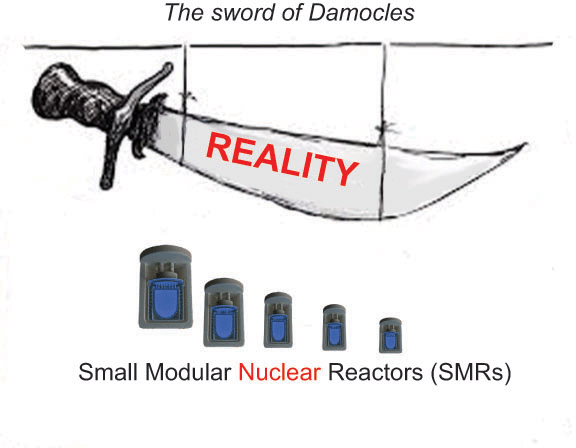 ‘Many issues’ with modular nuclear reactors says environmental lawyer
Jordan Gill · CBC News ·Dec 03, 2019 Modular nuclear reactors may not be a cure for the nation’s carbon woes, an environmental lawyer said in reaction to an idea floated by three premiers.
Theresa McClenaghan, executive director of the Canadian Environmental Law Association, said the technology surrounding small reactors has numerous pitfalls, especially when compared with other renewable energy technology.
This comes after New Brunswick Premier Blaine Higgs, Saskatchewan Premier Scott Moe and Ontario Premier Doug Ford agreed to work together to develop the technology……..
The premiers say the smaller reactors would help Canada reach its carbon reduction targets but McClenaghan, legal counsel for the environmental group, disagrees
“I don’t think it is the answer,” said McClenaghan. “I don’t think it’s a viable solution to climate change.”
McClenaghan said the technology behind modular reactors is still in the development stage and needs years of work before it can be used on a wide scale.
“There are many issues still with the technology,” said McClenaghan. “And for climate change, the risks are so pervasive and the time scale is so short that we need to deploy the solutions we already know about like renewables and conservation.”
Waste, security concerns: lawyer
While nuclear power is considered a low-carbon method of producing electricity, McClenaghan said the waste that it creates brings its own environmental concerns.
“You’re still creating radioactive waste,” said McClenaghan.
“We don’t even have a solution to nuclear fuel waste yet in Canada and the existing plans are not taking into account these possibilities.”
McClenanghan believes there are national security risks with the plan as well.
She said having more reactors, especially if they’re in rural areas, means there’s a greater chance that waste or fuel from the reactors could be stolen for nefarious purposes.
“You’d be scattering radioactive materials, potentially attractive to diversion, much further across the country,” said the environmental lawyer. https://www.cbc.ca/news/canada/new-brunswick/many-issues-modular-nuclear-1.5381804
Ontario Power Generation pulls the plug on nuclear waste project
|
OPG abandons nuclear waste burial project By Colin Perkel, T https://www.guelphmercury.com/news-story/10053446-opg-pulls-plug-on-nuclear-waste-project/
The Canadian Press, 26 June 20, TORONTO — A politically fraught plan to store hazardous nuclear waste deep underground near the Lake Huron shoreline has been formally put to rest more than 15 years after it was first proposed.In a recent letter to the federal environment minister, Ontario’s publicly owned power generator said it no longer wished to proceed with the multibillion-dollar project. “We do not intend to carry out the project and have asked that the application for a site preparation and construction licence be withdrawn,” the letter from Ontario Power Generation states. “Similarly, OPG requests the minister to cancel the environmental assessment for the project.” In response, federal Environment Minister Jonathan Wilkinson said he accepted the request, and had terminated the ongoing assessment. The project, estimated to cost more than $2.4 billion, had called for the storage of hundreds of thousands of cubic metres of low- and intermediate-level radioactive waste 680 metres underground about 1.2 kilometres from Lake Huron. TORONTO — A politically fraught plan to store hazardous nuclear waste deep underground near the Lake Huron shoreline has been formally put to rest more than 15 years after it was first proposed. The bunker was to have been built at the Bruce Nuclear Generating Station near Kincardine, Ont. While Kincardine had been a “willing host,” the proposal drew years of fierce opposition from environmentalists and hundreds of communities on both sides of the Canada-U.S. border. All argued that the threat to drinking water that serves millions of people was simply too great. OPG, for its part, steadfastly defended the planned repository as a completely safe option for storing waste that can remain hazardous for thousands of years. While a joint environmental panel gave its approval in May 2015, the project stalled. Successive environment ministers called for more information. The last request was for buy-in from the Saugeen Ojibway Nation or SON, which had complained for years about being shut out of decisions related to the Bruce power plant. The utility promised it would not proceed without that agreement. Since then, members of SON — comprising the Saugeen First Nation and Chippewas of Nawash Unceded First Nation — have debated the issue. In late January, the 4,500-member community overwhelmingly rejected the underground storage facility. “We worked for many years for our right to exercise jurisdiction in our territory and the free, prior and informed consent of our people to be recognized,” Chippewas of Saugeen Chief Lester Anoquot said at the time. “We didn’t ask for this waste to be created and stored in our territory.” OPG, which had previously said it would look for alternative storage solutions, said Friday it has spent about $200 million on the repository. The Saugeen Ojibway Nation responded immediately on Friday for a request to comment on the end of the project. n her letter, Lise Morton, vice president at OPG, said the utility remained committed to ongoing dialogue with the Saugeen Ojibway Nation about “future potential solutions” for the safe and long-term storage of nuclear waste. Separately, the federally-mandated Nuclear Waste Management Organization announced earlier this year it was proceeding with development plans for a nearby site at which to bury highly radioactive reactor waste. Landowners in South Bruce . about 30 minutes east of Kincardine, signed agreements allowing suitability testing on their properties. The only other site under consideration for high-level waste storage is in Ignace in northern Ontario. Indigenous groups have yet to indicate support for that project. About three-million highly radioactive used fuel bundles from reactors are currently stored at existing nuclear generating stations in Canada, including at the Bruce Nuclear Generating Station. Authorities have long contended the current storage system is not sustainable and have been searching for a permanent solution, with the aim of finding a site for storage by 2023. |
|
Coalition for Responsible Energy Development wants a stop to nuclear expansion in Canada
The Coalition for Responsible Energy Development in New Brunswick includes public interest organizations and individuals and is intended to advocate for responsible energy development.
David Thompson is a project coordinator for CRED-NB.
“I guess a number of people in the province were looking at organizations also, were looking at the way energy was proposed to be developed and the kind of energy we had here and we felt that something a lot better could happen,” he said.
Thompson said there is a need to reduce the demand for energy in the province by eliminating energy waste and maximizing energy efficiency.
“We respond to climate change and to promote emission-free and waste-free energy, that sort of thing and to get on the bandwagon of the new renewable energies,” he said.
CRED-NB wants the provincial and federal government to invest in sources of renewable energy such as wind, solar, geo-thermal, tidal, certain types of bio-energy and water-driven power.
“I think everyone wants more cost-effective energy and energy that’s not going to leave behind waste or pollute our environment and we have to get energy in place rather quickly now to deal with climate change.”
The coalition is calling upon governments to invest in less costly and safer renewable energy, coupled with energy efficiency and conservation programs. CRED-NB says this will create more jobs and economic activity in New Brunswick.
Opposition by Saugeen-Ojibway nation brings end to plan for nuclear waste near Lake Huron
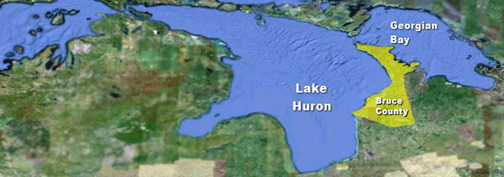
Ontario Power Generation Formally Ends Effort To Place Nuclear Storage Site Near Lake Huron, WKAR
In letters sent in May, Ontario Power Generation officially withdrew from an environmental assessment of the project and an application for a construction license. Those withdrawals were first reported in the Detroit Free Press.
Fred Kuntz is with OPG. He said after fifteen years the company decided to look elsewhere to build a storage facility.
“You need three things in Ontario for a project like this to proceed. You need good geology, which we had, you need municipal support, which we had, and you need indigenous support. Without that, we couldn’t proceed with the project.”
Kuntz said the company will begin looking for alternate locations. …….
In letters sent in May, Ontario Power Generation officially withdrew from an environmental assessment of the project and an application for a construction license. Those withdrawals were first reported in the Detroit Free Press.
Fred Kuntz is with OPG. He said after fifteen years the company decided to look elsewhere to build a storage facility.
“You need three things in Ontario for a project like this to proceed. You need good geology, which we had, you need municipal support, which we had, and you need indigenous support. Without that, we couldn’t proceed with the project.”
Kuntz said the company will begin looking for alternate locations. …..A second, high-level nuclear storage facility could still be built near Lake Huron. The Canadian Nuclear Waste Management Organization is considering two possible sites for a facility, one of which is near the lake.
A spokesperson for the organization said the Saugeen-Ojibway vote was not a referendum on their plan
The organization is expected to select a site for the facility by 2023. https://www.wkar.org/post/ontario-power-generation-formally-ends-effort-place-nuclear-storage-site-near-lake-huron#stream/0
1 This Month
To see nuclear-related stories in greater depth and intensity – go to https://nuclearinformation.wordpress.com/

29 Jan. Thursday 7-8 p.m. Webinar – World’s Largest Nuclear Station in Port Hope, ON?


31st January – Challenging the War Machine – a DECLASSIFIED UK SUMMIT


Website of the Week
Now until to February 10, 2026 Radioactive waste storage in France: the debate is finally open! How to participate?
-
Archives
- January 2026 (259)
- December 2025 (358)
- November 2025 (359)
- October 2025 (376)
- September 2025 (258)
- August 2025 (319)
- July 2025 (230)
- June 2025 (348)
- May 2025 (261)
- April 2025 (305)
- March 2025 (319)
- February 2025 (234)
-
Categories
- 1
- 1 NUCLEAR ISSUES
- business and costs
- climate change
- culture and arts
- ENERGY
- environment
- health
- history
- indigenous issues
- Legal
- marketing of nuclear
- media
- opposition to nuclear
- PERSONAL STORIES
- politics
- politics international
- Religion and ethics
- safety
- secrets,lies and civil liberties
- spinbuster
- technology
- Uranium
- wastes
- weapons and war
- Women
- 2 WORLD
- ACTION
- AFRICA
- Atrocities
- AUSTRALIA
- Christina's notes
- Christina's themes
- culture and arts
- Events
- Fuk 2022
- Fuk 2023
- Fukushima 2017
- Fukushima 2018
- fukushima 2019
- Fukushima 2020
- Fukushima 2021
- general
- global warming
- Humour (God we need it)
- Nuclear
- RARE EARTHS
- Reference
- resources – print
- Resources -audiovicual
- Weekly Newsletter
- World
- World Nuclear
- YouTube
-
RSS
Entries RSS
Comments RSS
 nuclear-news