Canada, Sweden Restore UNRWA Funds as Report Accuses Israel of Torturing Agency Staff
“The work that UNWRA does cannot be overstated,” said Canadian lawmaker Salma Zahid. “It will save lives as we have seen the visuals of children dying of hunger in Gaza. The need for immediate aid is non-negotiable.”
JON QUEALLY, Mar 09, 2024 https://scheerpost.com/2024/03/09/canada-sweden-restore-unrwa-funds-as-report-accuses-israel-of-torturing-agency-staff/
The governments of Canada and Sweden have announced they will resume funding for the United Nation’s agency that provides humanitarian aide and protection to Palestinians living in Gaza and elsewhere—a move that other powerful nations, including Israel’s most powerful ally the United States, continue to refuse.
Calling the lack of humanitarian relief inside Gaza “catastrophic,” Canadian Minister of International Development Ahmed Hussen said Friday his nation would restore funding for the United Nations Relief and Works Agency for Palestine Refugees in the Near East (UNRWA) in order to help address the “dire” situation on the ground living.
Sweden made its announcement Saturday and said a $20 million disbursement would be made to help UNRWA regain its financial footing.
The restoration of funds follows weeks of global criticism and protest for the decision by many Western nations to withhold UNRWA funds after Israel claimed, without presenting evidence, that a few members of the agency—the largest employer in the Gaza Strip—had participated in the Hamas-led attacks of October 7.
As a result, UNRWA has said it’s ability to provide aid and services to Gaza—where over 100,000 people have been killed or wounded in five months of constant bombardment and blockade by the Israeli military—has been pushed to the “breaking point” as malnutrition and starvation has been documented among the displaced population of over 2 million people.
“Canada is resuming its funding to UNRWA so more can be done to respond to the urgent needs of Palestinian civilians,” Hussen said. “Canada will continue to take the allegations against some of UNRWA’s staff extremely seriously and we will remain closely engaged with UNRWA and the UN to pursue accountability and reforms.”
“I welcome Canada lifting the pause on funding for UNWRA,” said Canadian MP Salma Zahid, a member of the Liberal party representing Scarborough Centre in the House of Commons. “The work that UNWRA does cannot be overstated. It will save lives as we have seen the visuals of children dying of hunger in Gaza. The need for immediate aid is non-negotiable.”
Earlier this week, UNRWA Commissioner-General Philippe Lazzarini told a special meeting of the U.N. General Assembly the agency was “facing a deliberate and concerted campaign” by Israel “to undermine its operations, and ultimately end them.”
On Friday, Reutersreported on an internal UNRWA report that included testimony of employees who said they were tortured by Israeli officers while in detention to make false admissions about involvement in the October 7 attack.
The nuclear narrative.

What is a narrative? ……… In other words, it is about occupying public space to disseminate enchanting stories that give pride of place to industry, multinationals, investors, billionaires, each greener than the last.
Jean-François Nadeau, March 4, 2024, https://www.ledevoir.com/opinion/chroniques/808350/chronique-narratif
The future of the world, at least according to the head of the AtkinsRéalis firm, lies in nuclear power. This company, formerly known as SNC-Lavalin, has changed its name. The scandals that have affected her, she asserts, belong to the past.
For its campaign to promote atomic energy, AtkinsRéalis secured the services of two former prime ministers: Jean Chrétien and Mike Harris. In 2019, as revealed by Radio-Canada, Jean Chrétien had already gone so far as to propose, with astonishing lightness, storing foreign nuclear waste in Labrador. In a letter, the former prime minister wrote to a Japanese firm: “Canada has been the largest supplier of nuclear fuel for years, and I have always thought it would be appropriate for Canada to become, at the end of account, the steward and guarantor of the safe storage of nuclear waste after their first service cycle. »
No carbon neutrality without nuclear power , repeats the boss of AtkinsRéalis like an advertising slogan. We must replace fossil fuels, while doubling or tripling, thanks to nuclear power, the production of electricity, he pleads. There is no question, in this presentation, of rethinking a model of society based on an infinite expansion of consumption. Always more cars, as long as they are electric. Always more heating, regardless of the fact that our buildings are thermal sieves. In other words, what continues to matter is growth. And the increase in AtkinsRéalis’ turnover is largely due to nuclear power, as noted by Le Devoir .
Last week, Minister Pierre Fitzgibbon reiterated again that he was not closing the door to the return of nuclear power. Since the arrival of Michael Sabia at the head of Hydro-Québec , the signals pointing in the direction of this revival have multiplied. “I think that as a government, in the ministry, at home, we must stay on the lookout for what is happening in nuclear power,” the minister further affirmed in front of an audience of business people. To have such projects accepted, the minister specified that “you simply have to have a good narrative”. In Quebec, he laments, “we have not had any narrative on nuclear power” since the closure of Gentilly-2 .
What is a narrative? In 1928, Edward Bernays, the founding father of the public relations and advertising industry, called these language elements capable of manipulating public opinion propaganda . This word ended up, as we know, having unfavorable connotations. Others were therefore substituted. Here is the latest addition, used in all sauces: the narrative . In other words, it is about occupying public space to disseminate enchanting stories that give pride of place to industry, multinationals, investors, billionaires, each greener than the last.

Pierre Fitzgibbon shows interest in mini nuclear reactors. The boss AtkinsRéalis also praises this technology, which is far from wonderful. Nobody says too loudly that these types of plants produce more nuclear waste per megawatt. These mini power plants would produce up to thirty times more radioactive waste than conventional nuclear power plants.
In his “narrative”, the boss of AtkinsRéalis barely concedes that the management of radioactive materials constitutes a serious danger for humanity.
In Ontario, a large dump for radioactive waste was approved on January 9. Tons of heavy metals, dangerous radioactive elements, plutonium, uranium, etc. will pile up there for a century, not far from the Ottawa River. The whole thing promises to occupy, for eternity, an area equivalent to 70 National Hockey League ice rinks.
In France, 280 km of underground galleries are being built to store nuclear waste. To give an idea, the galleries of the Montreal metro total 71 km. This giant sarcophagus will be the largest construction site in Europe. In these galleries, the most dangerous waste will be able to spew radioactivity for 100,000 years.
So that the hydrogen and the fumes released from this collection of waste do not explode, it is necessary to continually ventilate. Which requires electricity. A power outage, if it lasts more than a week, could be catastrophic. Obviously, electrical problems, cataclysms, wars, terrorists, this will never happen in a hundred years. Not again in a thousand years, probably. Moreover, at the entrance to these sites, in what language should we warn future generations not to dig?
The speech of the boss of AtkinsRéalis is very similar to that which is also being given these days by the cereal manufacturer Kellogg’s. Gary Pilnick, its CEO, is sad to see the cost of food soaring. However, he does not recommend reviewing the profit margins on which the food giants are fattening, nor the exploitation system which governs this surge in prices. He simply suggests eating cereal at dinner, so that consumers can lower their bills and cereal manufacturers can make more money. At the bottom of the scale, this makes no difference to the misfortunes of the majority. Agricultural producers in Quebec, for example, find themselves this year with the lowest net incomes since 1938, they say.
Nuclear industries operate according to the same elastic logic which consists of making money at all costs. Our dependence on automobiles and energy-intensive lifestyles suits them. And it is enough, to hear them, to continue to rush forward, head down, to escape from a reality that is ruining the future. Their technologies promise to fix everything. As long as you are willing to swallow their narrative first, like soft cereal .
Setting the record straight on Canada’s arms exports to Israel
Canadian officials, including the Minister of Foreign Affairs, have recently claimed that Canada does not export weapons to Israel, and instead has only exported “non-lethal” equipment to that country. Moreover, the Prime Minister stated before Parliament on February 14, 2024, that no export permits have been issued for Canadian arms transfers to Israel since October 7, 2023.
The Foreign Minister’s statement is misleading. The Prime Minister’s is patently false.
Documents recently released by Global Affairs Canada show that Canadian officials authorized nearly $30-million in military goods to Israel since October 7, 2023. These recent arms export authorizations are in addition to the more than $140-million (constant CAD) in military goods Canada has transferred to Israel over the last decade.
Under Canada’s export control regime, there exists no category for “non-lethal” arms exports. The relevant question is whether Canada has authorized the export of controlled military goods to Israel – and it has.
Given that the Government of Canada recognizes all these proposed exports as military goods, the claim that Canada only exports “non-lethal” equipment to Israel is misleading. Technology does not need be lethal itself to otherwise enable lethal operations.
We urge the Government of Canada to clarify and rectify its messaging on this matter.
Project Ploughshares also reiterates its call for Canada to end the supply of military goods to Israel, as per its obligations under the Export and Import Permits Act and the United Nations Arms Trade Treaty.
“Tritium Removal”: A Report on the Proposed MCECE Facility at Chalk River.
Gordon Edwards, 2 Mar 24
As it happens, both heavy water (used in all Canadian CANDU reactors) and tritium (produced in great quantities as a radioactive pollutant from CANDU reactors) are sensitive materials from the point of view of nuclear weapons proliferation.
Heavy water can be used to produce nuclear-weapons usable plutonium without the need to buy enriched uranium, a carefully controlled material. And tritium, in a purified form, can be used to vastly increase the explosive yield of an atomic bomb by acting as a “booster”. As little as two grams of tritium can magnify the blast of an implosion-type nuclear bomb by a factor of ten.
These matters are briefly touched upon in this report, which is mainly focussed on the dangers of tritium as an environmental pollutant that can endanger the health and safety of humans and the environemnt, especially for pregnant women.
“Tritium Removal”: A Report on the Proposed MCECE Facility at Chalk River
Prepared for Keboawek First Nation by Gordon Edwards, Ph.D.
Executive Summary
In a letter to Keboawek First Nation dated February 2, 2024 (reference # 2), we read that “CNL is restoring and protecting Canada’s environment by reducing and effectively managing nuclear liabilities. Among these liabilities is Atomic Energy of Canada’s (AECL) large inventory of tritium- contaminated heavy water.” In an accompanying Fact Sheet (reference # 3) CNL states that “tritiated heavy water cannot be used, re-used or disposed of in its current form.”
The fact that tritium-contaminated heavy water cannot be used, re-used, or even disposed of in its present form is a testament to the considerable hazards posed by radioactive tritium. Nevertheless, tritiated heavy water can be safely stored, and kept out of the environment, as is being done at present. There is no reason given by CNL as to why such storage cannot be continued indefinitely, until the radioactive tritium has disintegrated to innocuous levels.
Instead, CNL plans to build a tritium removal facility called the Modernized Combined Electrolysis and Catalytic Exchange facility (MCECE) to extract the radioactive tritium in a gaseous form from the non-radioactive heavy water. In the above-mentioned letter from CNL, we learn that CNL expects tritium emissions into the environment from this facility. Some simple arithmetic reveals that up to 10.7 trillion becquerels of tritium will be dispersed into the environment per year from this facility. (In the letter, up to 2 curies per week of tritium gas (T2) and up to 5 curies per week of deuterium tritium (DT) will be released into the atmosphere, for a total of 259 billion becquerels of tritium per week. Assuming an 80 percent capacity factor, that’s 10.7 trillion becquerels of tritium released per year.)
It is concluded that there is no justification for the proposed facility in terms of “protecting the environment by reducing and effectively managing nuclear liabilities”. The proposed facility does nothing to reduce the amount of radioactive tritium, but it does provide a mechanism for dispersing trillions of becquerels of tritium into the environment every year. Tritium is not effectively managed to protect the environment. Evidently, indefinite safe storage of tritium- contaminated heavy water is the preferred option if protecting the environment is the goal.
“Tritium Removal” A Report on the Proposed MCECE nuclear Facility at Chalk River
“Tritium Removal” A Report on the Proposed MCECE Facility at Chalk
River by Gordon Edwards, Ph.D. for the Keboawek First Nation. In a letter
to Keboawek First Nation dated February 2, 2024 (reference # 2), we read
that “CNL is restoring and protecting Canada’s environment by reducing
and effectively managing nuclear liabilities.
Among these liabilities is
Atomic Energy of Canada’s (AECL) large inventory of tritium contaminated
heavy water.” In an accompanying Fact Sheet (reference # 3) CNL states
that “tritiated heavy water cannot be used, re-used or disposed of in its
current form.”
The fact that tritium-contaminated heavy water cannot be
used, re-used, or even disposed of in its present form is a testament to
the considerable hazards posed by radioactive tritium. Nevertheless,
tritiated heavy water can be safely stored, and kept out of the
environment, as is being done at present. There is no reason given by CNL
as to why such storage cannot be continued indefinitely, until the
radioactive tritium has disintegrated to innocuous levels.
Canadian Coalition for Nuclear Responsibility 27th Feb 2024
Burying nuclear waste the best of a bad bunch of options
A reader offers her opinion on what to do with nuclear waste as Saskatchewan considers small modular reactors for its future energy needs.
I share the concern that Dale Dewar expressed in the StarPhoenix of Feb. 20 about the long-term management of Canada’s used nuclear fuel.
However, my conclusion is that, while far from ideal, deep burial is the best of a bunch of bad available options. There are no good options. Even proposals to extract recyclable material from the used fuel will leave behind most of the waste to be somehow disposed of.
Dewar’s suggestion that the wastes should remain permanently on the surface, with a system of rolling stewardship that would be passed on from generation to generation, might work in a world that could be guaranteed to be permanently free of war, terrorism, natural disasters, negligence and political instability.
But that’s not the world we live in. We cannot assume that safe stewardship would be maintained in perpetuity. Leaving the wastes indefinitely on the surface would seem to create far greater risk than deep geological burial would.
Of course, it would have been nice if we had thought about this problem before we started creating these wastes.
Exploding Alberta’s Myths about Small Nuclear Reactors

Small nuclear reactors are unproven and years away from being in use. But the Alberta government is presenting them as a way to keep fossil fuels flowing.
The untested technology is more about greenwashing than about cutting emissions.
Tim Rauf 15 Feb 2024, The Tyee
Alberta’s government is really excited about nuclear power.
More specifically, about novel and unproven small modular nuclear reactors. It hopes to use these to help lower the province’s carbon emissions while letting the energy industry continue operating as usual — an enticing prospect to the government given its intention to increase oil and gas production, while still having the energy sector get to net zero by 2050.
Small modular nuclear reactors produce less than one-third of the electricity of a traditional reactor.
The premise is that small reactors are easier to place and build, and cheaper.
Alberta hitched its horse to this wagon with Ontario, New Brunswick and Saskatchewan in 2022, taking part in a strategic plan for small modular reactor development and deployment. Alberta Innovates, the province’s research body, had a feasibility study conducted for it by Pacific Northwest National Laboratory. The study focused on using the reactors for greenhouse-gas-free steam emissions for oilsands projects, electricity generation in our deregulated market and providing an alternative to diesel when supplying power to remote communities.
More recently, Ontario Power Generation and Capital Power out of Edmonton entered into an agreement to assess SMRs for providing nuclear energy to Alberta’s grid. Nathan Neudorf, Alberta’s minister of affordability and utilities, was gleeful. “This partnership represents an exciting and important step forward in our efforts to decarbonize the grid while maintaining on-demand baseload power,” he said of the announcement.
All of this buzz makes it seem like SMRs are just over the horizon, an inevitability that will allow the province to evolve to have a cleaner, modern energy landscape.
But small modular reactors are nowhere near ready for deployment, and won’t be in Alberta for about a decade. That means for 10 years, they’ll provide no GHG-free steam to mitigate emissions.
“It’s still in the design phase,” Kennedy Halvorson said, speaking about the reactors. Halvorson is a conservation specialist with the Alberta Wilderness Association. The reactors are “so far off from being able to be used for us,” Halvorson added. “The earliest projections would be 2030. And we need to be reducing our emissions before 2030. So, we need to have solutions now, basically.”
With SMRs unable to stem the emissions tide for years, it’s confusing as to how they could make enough of a difference to get Alberta to net zero by 2050 (in line with United Nations emissions reduction targets to keep global warming to no more than 1.5 degrees).
Capital Power made similar projections………………………………………………………………………..
Construction itself is only one piece. Adding to that is the need to build a regulatory framework, which Alberta doesn’t have for nuclear…………………………………………………….
Ontario’s nuclear troubles
Listening to these public voices is prudent. We can look east to see what happens when the government and power utilities sidestep the process of getting explicit consent from communities that stand to be affected.
With its status as the nuclear activity hub in Canada, we can use Ontario as a litmus test of sorts and gauge Canada’s track record of care with nuclear. The report card isn’t great. There have been multiple cases of improper consultation with Indigenous Peoples on whose lands the waste, production or extraction sites are placed………………………………………………………………………..
Small reactors face a critical economic challenge
Adding to the timeline troubles are questions as to whether small reactors truly offer that much of an economic advantage, if any, compared with their larger counterparts.
In a previous article Ramana wrote, he pointed to the first reactors as an indication of the answer.
The first reactors started off small. Their size, though, coupled with the exorbitant price tag of nuclear development, meant they couldn’t compete with fossil fuels.
The only thing they could do to reduce the disadvantage was to build larger and larger reactors, Ramana said.

A large reactor that could produce five times as much electricity didn’t cost five times as much to build, he said, improving the return from the investment.
Economically the SMR can’t seem to compete with its larger sibling. Adding this to the delays abundant with nuclear, controversies around construction and communities, and the misalignment of timelines for meeting climate commitments, we need to ask why we’re seeing such a fervent enthusiasm for small modular reactors.
Greenwashing by any other name
The answer is likely a simple one: The Alberta government wants to keep the taps on. Their friends in the energy industry do too. Like carbon capture and sequestration before it, SMRs are the next way to stave off pesky talk of divestment and transition…………………………………………………………….
Deflecting and delaying isn’t the only greenwashing happening either, Halvorson argued. She noted there’s a special kind of tactic that comes with nuclear and other “clean” technology, where only carbon dioxide and greenhouse gas offsets are counted.
“When we reduce it all to just how much CO2 something emits, we’re not getting the full picture of environmental impacts,” Halvorson said. She pointed to water use in nuclear as an example.

“Most nuclear technologies require a massive input of water to work. And as we know, right now we’re in a drought in Alberta. Our water resources are so precious. We already have industries that are using way too much water as is, in a way that’s not allowing our environments and ecosystems to replenish their reserves, like their water resources,” she said.
Despite the cheerleading for nuclear Alberta, where small nuclear reactors will let us enjoy the fruits of fossil fuels (and even produce more) in a cleaner way, the bones don’t read that way. The argument that we can keep on drilling so long as we have that newest silver bullet hasn’t stood up to scrutiny before, and it doesn’t now. https://thetyee.ca/Analysis/2024/02/15/Exploding-Alberta-Myths-Small-Nuclear-Reactors/
PM Trudeau dismisses Algonquin concerns over Chalk River nuclear waste dump

COMMENT. This is a sad day when we witness so clearly who Trudeau sides with in regard to nuclear waste, as well as the betrayal to Indigenous peoples about authentic reconciliation as per the violations related to UNDRIP.
Thank heavens that various news media, including CBC, are beginning to pay increasing attention to the folly of nuclear waste disposal and how the CNSC absolutely fails to protect human health and the natural environment.
Attention also must be solicited among the news media about the proposed NWMO DGR, because if it is not stopped at this autumn’s site selection stage, I have no faith or trust in what would follow, namely, a federal environmental assessment (EA), because the EA would be controlled by the CNSC.
Trudeau touts nuclear safety commission’s expertise as Bloc leader allies with First Nations
Brett Forester · CBC News · Feb 14, 2024
Algonquin leaders are finding the Canadian government largely unmoved, but they continue to fight construction of a radioactive waste dump on unceded territory near Deep River, Ont., roughly one kilometre from the Ottawa River.
First Nations chiefs have allied with Bloc Québécois and federal Green Party leaders, joined forces with concerned civil society groups, and launched a legal fight against the project. On Wednesday they all rallied on Parliament Hill to voice their united opposition.
“The time to act is now, for the sake of our environment, our communities and the principles enshrined in the United Nations Declaration on the Rights of Indigenous Peoples,” said Lance Haymond, chief of Kebaowek First Nation, at a news conference outside the House of Commons.
While legally non-binding, the UN declaration, or UNDRIP, outlines minimum human rights standards, including against storing hazardous materials in Indigenous territories without their consent.
Last month, the Canadian Nuclear Safety Commission (CNSC) authorized construction of a “near surface disposal facility” at the government-owned, Second World War-era Chalk River nuclear laboratory, about 190 kilometres northwest of Ottawa.
Kebaowek applied for judicial review of that decision earlier this month, relying largely on UNDRIP. Three citizens’ groups applied for judicial review the same day.
Later on Wednesday in question period, Prime Minister Justin Trudeau dismissed the concerns, swatting away questions from Bloc leader Yves-François Blanchet, who picked up the cause.
“This is not a political decision. On this side of the House, we trust our experts,” said Trudeau in French.
Trudeau touted the commission as an independent, science-driven, quasi-judicial expert panel that consults with First Nations. But Haymond suggested Trudeau, always keen to recognize how Parliament Hill sits on unceded Algonquin land, is failing to live up to his promises.
“Actions speak louder than words. Reconciliation is a series of actions, and not words,” Haymond told reporters.
“So if this government is serious about reconciliation with the Anishinaabe people, we’ve given him and his government a golden opportunity.”
Run by private sector
Regulatory filings describe the disposal facility as similar to a municipal landfill, with added features for hazardous material, such as a base liner, cover, leak-detection system and wastewater treatment plant.
Canadian Nuclear Laboratories (CNL), a private-sector consortium contracted to manage federal nuclear sites, intends to bury a million cubic metres of low-level radioactive waste in the giant hillside mound.
The commission concluded the project is not likely to cause significant adverse effects on the environment or Indigenous peoples, provided CNL implements mitigation and monitoring measures.
Ten out of 11 federally recognized Algonquin First Nations oppose the project, while the Algonquins of Pikwàkanagàn, roughly 150 kilometres northwest of Ottawa, is the lone community to consent.
Before hosting a rally outside, Haymond and other Algonquin leaders joined Green Party leader Elizabeth May, Bloc MP Sébastien Lemire, and Ole Hendrickson, spokesperson for the citizens’ groups that launched a court challenge.
May accused the government of ignoring UNDRIP in the interests of industry. She singled out AtkinsRéalis, a member of the CNL consortium better known by its former name SNC Lavalin, the engineering giant that pleaded guilty to fraud in a 2019 corruption scandal.
“They are the powerful corporate lobbying interest behind ignoring UNDRIP, ” May told reporters………………………
Tritium in Perch Lake
Hendrickson warned the mound “would release pollutants into the Ottawa River during and after operation, according to the proponent’s own study. This makes it an issue for millions of people.”…………………………………https://www.cbc.ca/news/indigenous/prime-minister-chalk-river-nuclear-waste-1.7115467
First Nations urge Environment Minister not to green light Chalk River nuclear waste dump.
MARIE WOOLF, OTTAWA, Globe and Mail, 15 Feb 24
Environment Minister Steven Guilbeault was urged by First Nations chiefs Wednesday not to issue a permit to allow a nuclear waste dump on a forested site northwest of Ottawa where a variety of wildlife, including “at risk” wolves, live.
Ten chiefs and members of First Nations in Quebec and Ontario travelled to Parliament to urge the federal government to halt the Chalk River Near Surface Disposal Facility (NSDF), which the Canadian Nuclear Safety Commission approved for construction last month.
First Nations, supported by environmentalists and Bloc Québécois and Green MPs, said the site of the Canadian Nuclear Laboratories’ planned nuclear waste dump is too near the Ottawa River, which supplies drinking water to the country’s capital. They fear it could be polluted with a radioactive substance running off the site.
Kebaowek First Nation last week filed a Federal Court application for a judicial review of the Jan. 9 decision by the Canadian Nuclear Safety Commission, alleging the government breached its duty to consult Indigenous people.
At a press conference, preceding a rally with First Nations on Parliament Hill, Kebaowek Chief Lance Haymond urged the Prime Minister to intervene and halt the project saying First Nations had not been properly consulted.
Chief Dylan Whiteduck of Kitigan Zibi Anishinabeg First Nation told The Globe and Mail that an inadequate assessment of the impact on plants and mammals – including black bears hibernating in dens on the site – was conducted before approval was given.
First Nations spent several months surveying the site and found it rich with wildlife, but he said they were not given long enough, and a more extensive survey is needed.
Mr. Haymond said if Mr. Guilbeault were to issue a permit under the Species at Risk Act (SARA) it would pre-empt an assessment his department is carrying out on upgrading to a threatened species eastern wolves that roam on the site………………………………………………………………
In 2015, the Committee on the Status of Endangered Wildlife in Canada reassessed the status of the eastern wolf as threatened.
If the wolves are classed as threatened, their habitat would need to be protected, which could put on hold plans to build the waste dump on territory where they roam.
The eastern wolf, also known as the Algonquin wolf, numbers between an estimated 236 and 1,000 adults, and is confined to forests in Central Ontario and Southwestern Quebec. It is currently listed as a species of special concern.
The federal government published the proposed uplisting of the eastern wolf to a threatened species in November last year, carrying out a month-long consultation. It has until August to make a decision.
The proposed order amends Schedule 1 to the Species at Risk Act “to support the survival and recovery of the eastern wolf in Canada by uplisting it from a species of special concern to threatened.”……………………… https://www.theglobeandmail.com/politics/article-first-nations-urge-environment-minister-not-to-green-light-chalk-river/
Small Nuclear Modular Reactors (SMRs) and Consent in Saskatchewan: What You Haven’t Been Told
Uranium Mining in Northern Saskatchewan: What You Need To Know―Four-Part Webinar Series Webinar #2: February 13th, 2024,
Small Nuclear Modular Reactors (SMRs) and Consent in Saskatchewan: What You Haven’t Been Told Everyone is welcome to attend this webinar series that will help you know more about what is happening with uranium mining in Northern Saskatchewan. While many people have been busy in survival mode and exhausted from the pandemic, wars around the world, and the extreme rising cost of living, uranium mining lobbyists and governments have been taking advantage, passing industry-favourable laws that will further degrade and threaten freshwater systems already desperately overburdened by farming and mining use and wastewater byproducts.
Hosted by Tori Cress Guests: Paul Belanger, Keepers of the Water Science Advisor. Dr. Gordon Edwards, President and co-founder of the Canadian Coalition for Nuclear Responsibility, and Benjamin Ralston BA, JD, LLM, Assistant Professor at the College of Law, University of Saskatchewan Technical support: Beverly Andrews Paul Belanger works on the Keepers of the Water team as our Science Advisor and is also an environmentalist – entrepreneur, and designer. Paul founded his first environmental organization in 1987, then went on to mentor with scientists and operate an oil field supply and safety company. After more education and some research, Paul began an ecological design company called Living Design Systems – which is still active. Paul holds much knowledge and will now take us through a brief history of uranium mining in Saskatchewan.
Benjamin Ralston is an assistant professor at the College of Law at the University of Saskatchewan. Some of his research areas include Aboriginal rights, Canadian constitutional law, environmental law, human rights law, and natural resource law. Benjamin has worked at the U of S in various capacities since 2014. Including for the first year of the Nunavut law program in Iqaluit. He taught law courses in the Kanawayihetaytan Askiy (kaun-a-way-taa-tan-ah-ski) Program for Indigenous land managers and continues to teach a graduate course on environmental law and policy for the School of Environment and Sustainability. He is completing his Ph.D. at the College of Law with a dissertation investigating the intersection between environmental assessment practices and Indigenous rights in Canada. No registration is required. We will be broadcasting live from our Facebook Event Page here, https://fb.me/e/4cpZppDBU and on our YouTube channel here, https://youtube.com/live/f6TOoWU-w5A?…
Canada citizens challenge environmental safety of Canadian Nuclear Safety Commission waste facility near Ottawa River

Pitasanna Shanmugathas | Vermont Law & Graduate School, US, FEBRUARY 9, 2024 https://www.jurist.org/news/2024/02/canada-citizens-challenge-environmental-safety-of-canadian-nuclear-safety-commission-waste-facility-near-ottawa-river/
A group of Canadian citizens launched a legal challenge against the Canadian Nuclear Safety Commission (CNSC) on Thursday over the commission’s recent approval of the construction of a Near Surface Disposal Facility (NSDF) near the Ottawa River. Led by the Concerned Citizens of Renfrew County and Area, Ralliement contre la pollution radioactive, and the Canadian Coalition for Nuclear Responsibility, the challenge encompasses a broad array of environmental and public health concerns surrounding the NSDF’s potential impacts.
At the core of this legal action is an application for judicial review pursuant to section 18 of the Federal Courts Act. The challenge targets the CNSC’s decision, dated January 8, approving Canadian Nuclear Laboratories’ (CNL) application to amend the Nuclear Research and Test Establishment Operating License for the Chalk River Laboratories sites. This amendment would authorize the construction of the NSDF, classified as a Class IB Nuclear Facility—a project not previously sanctioned under the existing license.
Represented by Nicholas Pope, the applicants seek an order to quash the decision to amend the license for NSDF construction.
The NSDF is envisaged as a nuclear waste disposal facility designed to contain up to one million cubic meters of radioactive waste. Its anticipated lifespan comprises several phrases, including a construction phase, operation phase, closure phase, institutional control period, and post-institutional control period. Of potential concern to the applicants is the potential for rainwater infiltration during the operation phase, which could lead to the leaching of radioactive materials into the environment. Moreover, plans to mitigate this risk by discharging treated wastewater into Perch Lake, a tributary of the Ottawa River, have raised further alarm.
To secure the license amendment, CNL underwent a rigorous approval process, which required an environmental assessment under the Canadian Environmental Assessment Act, compliance with the Nuclear Safety and Control Act (NSCA), and consultation with Indigenous communities. However, the applicants raised concerns about the CNL’s fulfillment of these requirements.
Of particular contention is the inclusion of an override section within the Waste Acceptance Criteria documented submitted by CNL. This provision, if implemented, would ostensibly permit the disposal of waste that does not meet the established acceptance criteria, thereby eroding any assurances of stringent waste management standards and rendering the safety case effectively null and void. Moreover, concerns persist regarding the efficacy of waste verification processes to ensure compliance with the acceptance criteria.
Assertions have been made that the CNL failed to adequately consider the environmental impacts of alternative wastewater discharge methods, including the proposed pipeline to Perch Lake.
In a comment to JURIST, Pope asserted:
According to Canadian Nuclear Laboratories, the proponents of the project, even if all goes according to plan and there are no disruptive events, the public will still be subjected to radiation doses that are one and a half times the regulated standard for radioactive material that have been released from regulatory controls. And, if a disruptive event does occur, the public could receive up to fourteen times the legal limit of a radiation dose. So this surface level facility has been designed to only last for 550 years before it erodes and only be under institutional control for 300 years yet the materials they are planning on placing in this mound have half-lives of thousands of years and will remain radioactive for thousands of years—well beyond when it is no longer under governmental control and when the cover has eroded away so the materials will be free to be released into the environment.
The applicants also raised concerns about CNL’s compliance with consultation requirements with Indigenous nations, particularly Kebaowek First Nation, whose traditional territory encompasses the proposed NSDF site.
The folly of Ontario’s nuclear power play
MARK WINFIELD, THE GLOBE AND MAIL, 5 Feb 24
Mark Winfield is a professor of environmental and urban change at York University and co-chair of the faculty’s Sustainable Energy Initiative. He is also co-editor of Sustainable Energy Transitions in Canada (UBC Press, 2023).
The Ontario government’s announcement last week of its intention to pursue the refurbishment of the Pickering B nuclear power plant on the shore of Lake Ontario between Toronto and Pickering represents a strategic triumph for the provincially owned Ontario Power Generation utility. The project would significantly reinforce the utility’s already dominant position in the province’s electricity system.
How well the decision serves the interests of Ontario residents, taxpayers and electricity ratepayers, and advances the sustainable decarbonization of the province’s electricity system, is another question altogether.
A Pickering B refurbishmenthad been assessed as uneconomic in 2010 and the plant scheduled to close in 2018. The facility is located in what is now a densely populated urban area where approval of a new plant would be unlikely.
New plans for that refurbishment are part of larger nuclear expansion strategy being pursued by OPG and the province. The plans include the refurbishment of six reactors at the Bruce Nuclear facility (also owned by OPG) and four reactors at the OPG Darlington facility. There are also proposals for four large new reactors totalling 4,800 MW in capacity at Bruce and four new 300 MW reactors at Darlington.
The total costs of these plans are unknown at this point, but an overall estimate in excess of $100-billion ($13-billion Darlington refurbishment; $25-billion Bruce refurbishment; $15-billion Pickering B refurbishment; $50-billion for Bruce new build; Darlington new build $10-billion or more) would not be unrealistic. Even that figure would assume that things go according to plan, which they rarely do with nuclear construction and refurbishment projects. This could constitute the largest nuclear construction program in the Americas or Europe.
Under the current legislative and policy regime for electricity in Ontario, none of these plans are subject to any external review or regulatory oversight in terms of costs, economic and environmental rationality, or availability of lower-cost and lower-risk pathways for meeting the province’s electricity needs and decarbonizing its electricity system. Rather, the system now runs entirely on the basis of ministerial directives that agencies in the sector – including the putative regulator, the Ontario Energy Board – are mandated to implement.
The government has justified its plans on the expectation of dramatic growth in electricity demand over the next few decades. This would be the result of population and economic growth, the widespread adoption of electric vehicles, the electrification of space heating – principally via heat pumps – and expectations of industrial development in areas like the hydrogen economy
There are serious grounds on which to question these projections. Growth in electricity demand in the province has been virtually flat these past two decades despite sustained population and economic growth. The province has no plans of its own for the electrification of transportation or space heating. In fact, it is currently proposing legislation to facilitate the expansion of natural gas service to new housing developments. Many of the anticipated industrial developments, particularly around things like hydrogen, are speculative at best……………………………………..
While nuclear energy may offer a low-carbon energy source, it fails in virtually every other dimension of sustainability: costs; the production of high-volume, toxic and radioactive waste streams that require management on timescales of hundreds, if not thousands, of millennia; and security, catastrophic accident and weapons proliferation risks that simply do not exist in relation to other energy technologies.
These considerations mean that nuclear projects need to be options of last resort in efforts to decarbonize energy systems. This is precisely the opposite of the approach now being taken by Ontario. These are choices that Ontarians and Canadians may come to regret for decades, if not centuries, if they are not subject to some form of serious external review before it is too late to reconsider https://www.theglobeandmail.com/business/commentary/article-ontario-pickering-nuclear-power-plant-refurbishment/
‘All we can do is hope for the best’: Concerns persist about Canada’s planned radioactive waste disposal site


dilution is not a solution to pollution. It just means that millions of people are going to be exposed to much smaller doses. When it comes to cancer-causing materials, the number of people exposed “is very important” because when even a small dose of tritium or any other radioactive material is allowed to enter the drinking water for millions of people, the number of expected cancers and genetic mutations is magnified by the size of the population”
By Natasha Bulowski | News, Ottawa Insider | February 6th 2024
Everyone agrees a safe solution is needed for Canada’s current and future radioactive waste. But whether a recently approved disposal facility in Deep River, Ont., is the answer is the subject of hot debate.
The “near-surface disposal facility” (NSDF) will see up to one million cubic metres of radioactive waste buried in a shallow mound at Chalk River Laboratories (CRL), about 190 kilometres northwest of Ottawa. Project proponents argue Canada must find a way to store low-level nuclear waste, some of which is currently not well-managed…….
Opponents argue the project, a kilometre from the Ottawa River, poses risks to the drinking water supply for millions, will not safely contain the waste and the company failed to adequately consult many Algonquin Nations. Representatives from six concerned groups recently wrote an open letter to the federal government urging it to halt the project. The waste contains long-lived radionuclides, which many experts say require far more robust containment than this facility will offer.
Radionuclides are unstable, radioactive atoms. Some will remain radioactive for thousands or millions of years, while others are short-lived and decay quickly. The Environmental Protection Agency and other health organizations classify all radionuclides as cancer-causing.
Of the radionuclides present in the waste destined for the NSDF, 19 of 29 listed by Canadian Nuclear Laboratories (CNL) have half-lives of more than a thousand years. This means they’ll be present for more than 10,000 years, said Gordon Edwards, president of the Canadian Coalition for Nuclear Responsibility, in his 2022 submission to the Canadian Nuclear Safety Commission (CNSC). Another 12 on the list have half-lives of more than 100,000 years, so they will remain in the NSDF for well over a million years, wrote Edwards, a retired professor of mathematics and science with over 45 years serving as a consultant on nuclear issues.
Several groups and many Algonquin Nations are worried about the radionuclides, particularly one called tritium. This radioactive form of hydrogen is a carcinogen most dangerous when ingested because it enters the waterways with ease and can’t be filtered out with water treatment methods either at CRL or at the municipal level, notes Edwards.
These long-lived radionuclides are in “limited” quantities and “intrinsically part of the radiological fingerprints of waste streams at CRL and other CNL sites,” reads CNL’s submission. “It is not practical, technical, or economical to separate the long-lived radionuclides” because much of the waste is in the form of soil and building debris, it says.
CNL is run by a consortium of private companies (including AtkinsRéalis, formerly known as SNC-Lavalin) and contracted by the federal government to operate its laboratories and deal with waste.
When completed, CNL says the facility will resemble a huge grassy mound the size of 10 soccer fields. The bottom and top of the mound will be lined with synthetic membranes to keep water from getting in, according to CNL.
Construction is expected to take three years and cost $475 million, along with an estimated $275 million in operating costs over 50 years. During that time, CNL will verify all waste placed in the hollowed-out depression in the hillside meets the waste acceptance criteria.
The loose soil and smaller building debris will be compacted into layers and larger debris and waste packaged in drums and containers will be placed in the mound. Water that contacts areas where waste is stored or handled will be routed through a wastewater treatment plant and discharged in nearby Perch Lake. Once all the waste is inside, the final cover of earthen materials and a synthetic membrane go on top to keep precipitation away from the mound.
According to CNL’s draft monitoring plan, wastewater treatment will continue for 30 years and after that, it will be up to the liner and facility design to contain the mound’s contents. Some surveillance will take place to verify the facility is meeting environmental requirements. The top and bottom liners — which are supposed to “remain functional” for 500 years — will eventually erode.
However, it is “a critical flaw” that CNL didn’t plan for waste to be retrieved if something goes wrong later, the Canadian Environmental Law Association argued at the 2022 licensing hearings.
A retrieval plan is important because it gives future generations access to the waste for monitoring, repairs, to move it to a safer location or take advantage of safer technologies in the future, said Tanya Markvart, the law association’s environmental consultant.
“We really don’t know what’s going to happen over the next 100 to 500 or 2,000 years,” said Markvart.
CNL says there’s no plan to retrieve the waste because the facility design will safely manage it long term, but notes nothing is stopping future generations from retrieving its contents. But the law association says it is “unjust to shift the burden” to future generations, who neither created nor benefited from activities that made the radioactive waste………………………………………………………………………………………………………………….
Water worries
The NSDF’s proximity to the Ottawa River concerns environmentalists, many Algonquin leaders and more than 140 municipalities downstream. CNL materials indicate the facility’s base will be 50 metres above the current water levels of the Ottawa River and on bedrock sloping away from the river.
“Any site anywhere in the Ottawa Valley eventually drains to the river. That’s just basic hydrogeology,” said Mayor D’Eon, a member of CNL’s environmental stewardship council, when asked about opponents’ concern for the river.
“So whether you put it on that military base, which some people have said, or five kilometres away, hydrogeology takes everything to the Ottawa River,” she said.
The bedrock slopes towards Perch Lake, which has a creek that feeds directly into the Ottawa River and in the event of an overflow or other design failure, it wouldn’t take long for contaminated water to reach the lake, according to the Ottawa Riverkeeper, a charity focused on the health of the river and its tributaries. Hydrologist Wilf Ruland reviewed the NSDF proposal for Ottawa Riverkeeper and noted the location has “unfavourable geology” and will rely entirely on the NSDF’s engineered features to contain, collect and treat contaminated water leaching from the mound and prevent it from contaminating groundwater and surface water flow systems. The Ottawa Riverkeeper is also concerned about the presence of chemical contaminants and heavy metals, not just radioactivity.
………………………………. Edwards doesn’t think the waste would cause “a huge kill-off,” after all, “the Ottawa River is huge and the stuff does get diluted,” he told Canada’s National Observer in an interview.
“But we’ve learned over the years that dilution is not a solution to pollution. It just means that millions of people are going to be exposed to much smaller doses.” When it comes to cancer-causing materials, the number of people exposed “is very important” because when even a small dose of tritium or any other radioactive material is allowed to enter the drinking water for millions of people, the number of expected cancers and genetic mutations is magnified by the size of the population, added Edwards.
Pontiac County, Que., made up of 18 municipalities, is right across the river from the facility. Unlike Deep River, which calls itself the “proud home of Canadian Nuclear Laboratories,” Pontiac has opposed the project location from the get-go, said Jane Toller, head of the county council, in an interview with Canada’s National Observer………………………………………………………………………………………….
Toller supports Kitigan Zibi and Kebaowek First Nations, which are currently pressuring the federal government to deny CNL permits required under the Species at Risk Act. Toller says the CNSC’s decision is a “cut-and-dry” violation of the United Nations Declaration on the Rights of Indigenous Peoples, which says no hazardous material can be stored on Indigenous land without prior, free and informed consent. While Pikwakanagan First Nation — the Algonquin nation closest to the facility — signed an agreement with CNL, Kitigan Zibi and Kebaowek say they were not adequately consulted and do not consent to the facility.
“I just don’t know why our federal government has not paid attention to that,” said Toller.
The CNSC’s recent decision only granted CNL a licence to construct the facility. The company still must apply for an operating licence.
Natasha Bulowski / Local Journalism Initiative / Canada’s National Observer
To be responsible does not mean being intimidated in favor of nuclear power
Jean-François Nadeau, February 5, 2024, https://www.ledevoir.com/opinion/chroniques/806606/chronique-etre-responsable
Thus, nothing prevents relaunching the nuclear reactor in Gentilly, according to the very words of a study commissioned by Hydro-Québec .
Nothing. Otherwise money. A lot of money.
Nothing. Otherwise common sense.
It would not be before 2035, we are told. Given the time it takes to get this type of operation underway, it’s tomorrow.
The study was carried out by AtkinsRéalis. A firm previously known as SNC-Lavalin. They are the prime contractors for Canada’s CANDU nuclear reactors. Basically, it’s a bit like asking the oil industry to comment on the appropriateness of oil wells.
When will the day come when foxes will be invited, for their part, to explain to us what we should think of henhouses?
In August 2023, the new management of Hydro-Québec affirmed, against all expectations, that it would be “irresponsible at this time” not to closely consider the relaunch of nuclear power on the banks of the St. Lawrence. Irresponsible?
Minister Fitzgibbon, the man who claims not to be buyable for only $100, immediately gave several signs of satisfaction, while formulating considerations favorable to nuclear power.
It is difficult to imagine that, in the name of reason, we are not totally mobilized against the absurdity of such nuclear energy production programs in Quebec. Are we to believe that the idea of progress, at least for some, does not necessarily lead to progress of the mind?
The reactors have improved, they say. However, accidents or incidents are always possible, as current events have continued to prove to us. Three Mile Island, Chernobyl and Fukushima are not nothing. In Japan, more than a million cubic meters of contaminated water have just been thrown into the ocean, due to a lack of space to store it ad vitam aeternam . What will be the consequences on marine life?
In May 1977, the Gentilly 1 reactor was shut down due to a breakdown. Ten tons of heavy water, loaded with 31,000 curies of tritium, escaped from the power plant into the St. Lawrence River. After only five years of activity, Gentilly 1 was finished. However, it was necessary to wait until 1984 to remove the fuel, without resolving the issue of radioactive waste. In all, Gentilly 1 only operated for the equivalent of 183 days. This plant cost $128 million to build, the equivalent of more than $900 million in 2024.
The new power plant, Gentilly 2, will replace it. Small iodine tablets are distributed to the surrounding population. Until 2012, citizens were instructed to swallow them, in the event of a problem, to try to save at least their thyroid gland… Too expensive, the site was finally closed in 2012. But it would be necessary to wait until 2060 for it to be completely secure. Here again, the question of radioactive waste proves to be an impossible puzzle.
In Ontario, in Chalk River, the green light has just been given, despite objections, to the construction of a facility to manage nuclear waste . There, two serious nuclear accidents occurred in 1952 and 1958. They required the intervention of the army. It was close for everything to slide towards the worst. Among the specialists rushed to the site was a future president of the United States: Jimmy Carter. More than half a century later, the soldiers who worked, like Carter, on the decontamination of Chalk River were offered by Ottawa — as long as they were still alive — a large check for… $24,000.
Justified in pirouettes in the name of the fight against climate change , the enthusiasm for nuclear energy is not about to diminish. Neither are its risks. At what price ? In the summer of 2023, the Canadian government indicated that it wanted to revise upwards the compensation regime adopted in 2016 in the event of a nuclear accident. Ottawa now committed to paying $1 billion as a compensation ceiling rather than the $75 million initially planned. An increase commensurate with awareness of the risks.
An irradiated body, shaken by nausea, doomed to wither from the conjunction of cancers, how is it truly “compensated”?
Nuclear power constitutes a danger and a burden on the future of humanity that Quebec can very well do without.
I hear from here saying this: “Oh! Mr. Nadeau… You are exaggerating so much! Civilian nuclear power plants, after all, are not to be confused with nuclear weapons. Let’s see, Mr. Nadeau! »
Radiations do not know whether they are military or civilian. They always put us within death’s reach, no matter in the name of which flag they are produced. Who will deny today that the nuclear technology transferred by Canada to India allowed this country to develop bombs? Has Canada therefore become friends with New Delhi?
The Zaporizhia nuclear power plant in Ukraine is not a military site. Despite disregard for life, she nevertheless serves as a target in the conflict with Russia.
Who will tomorrow be the new leaders capable of contemplating, like those of today, the destruction of humanity without flinching? Should we ignore the fact that Nero, Genghis Khan and Napoleon have constantly found themselves reincarnated until today?
Even complete strangers can have designs that are dangerous to say the least. In 1982, an Israeli-Swiss engineer, Chaïm Nissim, launched an attack on a nuclear site in France. He was armed with a rocket launcher. What could happen like this now, at a time when low-cost drones make it possible to discreetly carry fire and death everywhere from a clear blue sky?
Being responsible does not mean bowing down or being intimidated in favor of nuclear power in front of hired engineers or passing politicians.
Nuclear industry veterans warn some radioactive waste destined for Ontario disposal facility should not be accepted
Observer, Natasha Bulowski • Feb 16, 2024 •
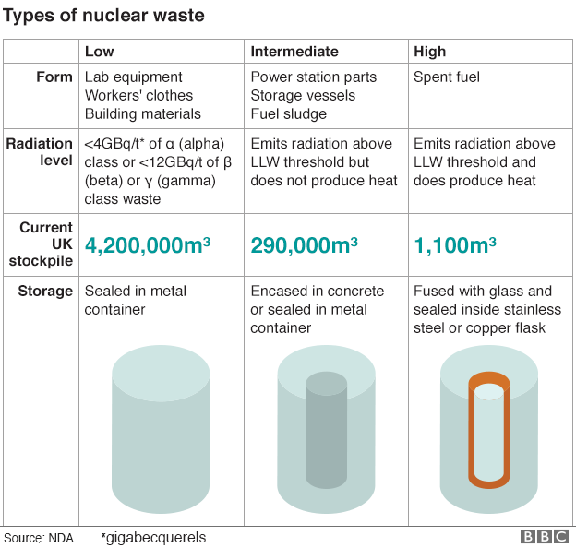
Approval of a nuclear waste disposal site near the Ottawa River hinged on a promise that only low-level radioactive waste would be accepted. But former nuclear industry employees and experts warn some waste slated for disposal contains unacceptably high levels of long-lived radioactive material.
The “near-surface disposal facility” at Chalk River Laboratories (CRL) will store up to one million cubic metres of current and future low-level radioactive waste inside a shallow mound about one kilometre from the river, which provides drinking water to millions of people in the region. But former employees who spent decades working at the labs in waste management and analysis say previous waste-handling practices were inadequate, imprecise and not up to modern standards. Different levels of radioactive material were mixed together, making it unacceptable to bury in the mound.
“Anything pre-2000 is anybody’s guess what the hell they have on their hands,” said Gregory Csullog, a retired waste inventory specialist and former longtime employee of Atomic Energy of Canada Limited (AECL), the Crown corporation that ran the federal government’s nuclear facilities before the Harper government privatized it in 2015.
Csullog described the waste during this earlier time as an unidentifiable “mishmash” of intermediate- and low-level radioactivity because there were inadequate systems to properly label, characterize, store and track what was produced at Chalk River or shipped there from other labs. “Literally, there were no rules,” said Csullog, who was hired in 1982 to develop waste identification and tracking systems.
International safety standards state low-level radioactive waste is suitable for disposal in various facilities, ranging from near the surface to 30 metres underground, depending primarily on how long it remains radioactive. High-level waste, like used fuel rods, must be buried hundreds to thousands of metres underground in stable rock formations and remain there, effectively forever. Intermediate-level waste is somewhere in the middle and should be buried tens to hundreds of metres underground, not in near-surface disposal facilities, according to the International Atomic Energy Agency (IAEA).
Radioactive waste is recognized by many health authorities as cancer-causing and its longevity makes disposal a thorny issue. Even short-lived radioactive waste typically takes hundreds of years to decay to extremely low levels and some radioactive isotopes like tritium found in the waste — a byproduct of nuclear reactors — are especially hard to remove from water.
Canadian Nuclear Laboratories (CNL) originally wanted its near-surface disposal facility to take intermediate- and low-level waste when it first proposed the project in 2016. Backlash was swift and concerned groups, including Deep River town council and multiple experts, argued it would transgress international standards to put intermediate-level waste in that type of facility. In 2017, CNL changed its proposal and promised to only accept low-level waste. The announcement quelled the Deep River town council’s concern, but some citizen groups, scientists, former employees and many Algonquin Nations aren’t buying it.
CNL says its waste acceptance criteria will ensure all the waste will be low-level and comply with international and Canadian standards. Eighty seven per cent of the waste will be loose soil and debris from environmental remediation and decommissioned buildings. The other 13 per cent “will have sufficiently high radionuclide content to require use of packaging” in containers, drums or steel boxes in the disposal facility, according to CNL.
However, project opponents note that between 2016 and 2019, about 90 per cent of the intermediate-level waste inventory at federal sites was reclassified as low-level, according to data from AECL and a statement from CNL. The timing of the reclassification raised the alarm for critics, who took it to mean intermediate-level waste was inappropriately categorized as low-level so it could be stored in the Chalk River disposal facility. CNL said the 2016 estimate was based on overly “conservative assumptions” and the waste was reclassified after some legacy waste was retrieved, examined and found to be low-level.
The disposal facility will also accept waste generated over the next two decades and some shipments from hospitals and universities.
The history of Chalk River Laboratories
To fully understand the nuclear waste problem, you first have to know the history of Chalk River Lab’s operations and accidents,…………………………………………………………………………………………………………………………………………………………………………………………………………… more https://www.pembrokeobserver.com/news/local-news/nuclear-industry-veterans-warn-some-radioactive-waste-destined-for-ontario-disposal-facility-should-not-be-accepted Natasha Bulowski is a Local Journalism Initiative reporter working out of Canada’s National Observer. LJI is funded by the Government of Canada.
1 This Month


Tell the Ukrainian Government to Drop Prosecution of Peace Activist Yurii Sheliazhenko

Petition to revoke the licensing of the Near Surface Nuclear Disposal Facility (NSDF) at Chalk River. https://www.ourcommons.ca/petitions/en/Petition/Details?Petition=e-7247


of the week – STOP SMALL MODULAR REACTORS IN CANADA
To see nuclear-related stories in greater depth and intensity – go to https://nuclearinformation.wordpress.com
-
Archives
- March 2026 (176)
- February 2026 (268)
- January 2026 (308)
- December 2025 (358)
- November 2025 (359)
- October 2025 (376)
- September 2025 (258)
- August 2025 (319)
- July 2025 (230)
- June 2025 (348)
- May 2025 (261)
- April 2025 (305)
-
Categories
- 1
- 1 NUCLEAR ISSUES
- business and costs
- climate change
- culture and arts
- ENERGY
- environment
- health
- history
- indigenous issues
- Legal
- marketing of nuclear
- media
- opposition to nuclear
- PERSONAL STORIES
- politics
- politics international
- Religion and ethics
- safety
- secrets,lies and civil liberties
- spinbuster
- technology
- Uranium
- wastes
- weapons and war
- Women
- 2 WORLD
- ACTION
- AFRICA
- Atrocities
- AUSTRALIA
- Christina's notes
- Christina's themes
- culture and arts
- Events
- Fuk 2022
- Fuk 2023
- Fukushima 2017
- Fukushima 2018
- fukushima 2019
- Fukushima 2020
- Fukushima 2021
- general
- global warming
- Humour (God we need it)
- Nuclear
- RARE EARTHS
- Reference
- resources – print
- Resources -audiovicual
- Weekly Newsletter
- World
- World Nuclear
- YouTube
-
RSS
Entries RSS
Comments RSS
 nuclear-news