As Trump Talks of Taking Cuba, Havana Promises “Impregnable Resistance”
March 18, 2026, Joshua Scheer, https://scheerpost.com/2026/03/18/as-trump-talks-of-taking-cuba-havana-promises-impregnable-resistance/
As Miguel Díaz-Canel denounced escalating threats from Donald Trump, Havana made clear that any U.S. attempt to impose regime change by force would not go unanswered.
“The United States threatens Cuba publicly, almost daily, with overthrowing the constitutional order by force,” Díaz-Canel wrote, accusing Washington of manufacturing crisis conditions through an economic siege that has targeted the island for more than sixty years.
He argued that the same powers tightening sanctions and restricting fuel are now presenting Cuba’s hardship as justification for intervention — a pattern familiar across decades of U.S. policy toward governments unwilling to submit to Washington’s demands.
“They announce plans to seize the country, its resources, its property, even the economy they themselves are trying to suffocate,” Díaz-Canel said, warning that collective punishment of the Cuban people is being openly paired with renewed language of occupation. “Any external aggressor will collide with impregnable resistance.”
The warning came after Trump declared from the White House that he believed he would have “the honor of taking Cuba,” speaking as if sovereignty itself were negotiable.
The remark landed amid intensifying pressure on the island, where fuel shortages and blackout conditions have deepened under a tightening oil embargo imposed after the U.S. confrontation with Nicolás Maduro.
According to recent reporting, officials inside the administration are treating Díaz-Canel’s removal as a condition for any future talks, reviving a familiar regime-change formula dressed up as diplomacy.
Marco Rubio, long one of Washington’s most aggressive voices on Cuba, reinforced that message by saying the island “has to get new people in charge,” a statement widely read in Havana as confirmation that coercion — not negotiation — remains U.S. policy.
Yet public support inside the United States for another foreign intervention appears thin. Recent polling shows more Americans oppose than support the embargo, while only a small minority back military action against Cuba.
Meanwhile, the economic war continues to hit ordinary Cubans hardest: prolonged blackouts, fuel shortages, and collapsing infrastructure remain the immediate consequences of sanctions that Washington insists are aimed at the government.
Against that backdrop, the first delegation of the Nuestra América Convoy reached Havana this week carrying humanitarian aid — food, medicine, and energy supplies intended to bypass the blockade’s human toll.
Editors from Current Affairs joining the mission said the convoy is meant not only to deliver material support but to send a political message: that many Americans reject threats of annexation, strangulation, and forced political change carried out in their name.
“Words like “sanctions” and “restrictions” really don’t capture the reality. This is an undeclared economic war, and a lethal one. Trump and Secretary of State Marco Rubio want to bring about regime change in Cuba, and have demanded that President Miguel Díaz-Canel resign from office. So they’re inflicting as much pain and suffering on the Cuban people as they can, in hopes of bringing the entire nation to its knees. If the blackouts continue, they will kill people; it’s possible they already have.
Now, it’s the rest of the world’s turn to come to Cuba’s aid. This month, a coalition of activists from around the globe are launching a humanitarian aid mission to Cuba to break the siege. Modeled after the Global Sumud Flotilla that attempted to bring aid to Gaza last year, the Nuestra América Convoy will converge in Havana on March 21, with participants coming from around the world by air and sea… Alex Skopic and Nathan J. Robinson: Why We’re Going to Cuba
For many on the American left, the convoy is more than a humanitarian delivery — it is a direct rejection of a foreign policy that continues to treat economic deprivation as leverage and sovereignty as conditional. At a moment when Washington openly discusses who should govern Cuba while tightening measures that deepen daily hardship on the island, the mission underscores a longer political truth: sanctions are never merely abstract instruments of pressure. They land in darkened homes, empty pharmacies, strained hospitals, and disrupted food supplies, while officials in Washington frame that suffering as evidence that the system must collapse. In traveling to Havana, the delegation is asserting that solidarity means refusing the logic that punishment can be called diplomacy when an entire population is made to absorb its cost.
At a time when American officials speak casually of deciding Cuba’s future, the deeper question is whether empire still assumes it owns that right. For Cuba, the message from Havana is equally blunt: pressure may deepen, but surrender is not on offer.
Washington’s Public Swagger Meets Private Panic Over Iran
18 March https://scheerpost.com/2026/03/17/washingtons-public-swagger-meets-private-panic-over-iran/
The White House is denying that special envoy Steve Witkoff sent back-channel messages to Iranian officials during the current war—but the denial itself is beginning to look like another chapter in Washington’s increasingly frantic damage control.
In an interview with Breaking Points, Jeremy Scahill said Iranian officials told him that the Trump administration, only days into the bombing campaign, began using intermediaries and private communications to probe whether Tehran would accept talks over an “endgame.”
According to Scahill, Iran’s answer was silence.
That silence matters because it punctures one of the White House’s most repeated claims: that Tehran is “begging” Washington for negotiations while President Donald Trump supposedly holds firm from a position of strength.
Instead, the picture emerging from multiple channels suggests something far less triumphant: an administration that expected rapid capitulation, encountered resistance, and then quietly began searching for exits.
The Story the White House Wants—and the One It Can’t Control
Scahill reported that Iranian officials described third countries carrying messages from Washington almost immediately after the bombing began.
The request was simple enough: was Iran prepared to discuss terms?
The answer, according to those officials, was no—at least not until Tehran believed it had restored deterrence and raised the cost of future U.S.-Israeli attacks.
That refusal reportedly extended to direct outreach allegedly sent through WhatsApp by Witkoff to senior Iranian officials, including Foreign Minister Abbas Araghchi.
The White House responded not with evidence, but with fury.
Rather than issue a standard denial, Scahill said officials sent back a statement attacking Drop Site News as “abhorrent,” accusing it of carrying water for Iran and engaging in “America Last” journalism.
The intensity of that reaction may explain why the administration’s denial has drawn more scrutiny than reassurance.
In Washington, the louder the outrage, the more often it signals a pressure point.
A Diplomatic Reality Hidden Beneath Public Swagger
Trump has publicly insisted that Iran wants talks.
But if Tehran is refusing direct engagement while Washington privately tests channels through intermediaries, the public posture begins to look less like confidence and more like performance.
Scahill’s account suggests Iran’s leadership concluded that entering negotiations too early would validate a pattern it believes has defined recent U.S. policy: negotiate, strike, then negotiate again under coercion.
Their reported demands are expansive—ceasefire terms extending beyond Iran to Lebanon and Iraq, reparations for wartime destruction, and a U.N. Security Council resolution.
Those are not the demands of a government signaling surrender.
They are the demands of a government convinced it has leverage.
Assassinations and the Elimination of Moderates
The timing is especially volatile following reports that senior Iranian figure Ali Larijani may have been killed in Israeli strikes.
If confirmed, the killing would remove one of the few figures widely viewed as capable of mediating future de-escalation.
Scahill warned that each assassination of relatively pragmatic political actors hardens the internal balance inside Iran, strengthening factions less inclined toward diplomacy.
That pattern has repeated across the region for years: eliminate negotiators, then express surprise when negotiations become impossible.
The same logic has played out in Gaza, Lebanon, Iraq, and now appears to be repeating inside Iran itself.
Strait of Hormuz: The War’s Economic Fault Line
At the same time, Washington’s strategic problems are multiplying in the Strait of Hormuz.
Scahill described an administration struggling to recruit allies for maritime operations after Iran demonstrated it can selectively restrict shipping without imposing a total blockade.
That distinction matters.
A full closure would trigger universal backlash.
Selective disruption punishes adversaries while preserving Tehran’s own export routes, particularly toward China.
It also leaves Washington facing a dangerous choice: tolerate strategic embarrassment or escalate naval exposure near Iranian missile range.
Trump reportedly wants allied participation.
So far, major partners appear reluctant.
Even governments normally aligned with Washington are signaling caution.
That hesitation reflects what military planners already know: every additional vessel sent into contested waters increases the odds of casualties—and with them, political consequences at home.
The Familiar Machinery of Narrative Collapse
For now, the administration continues selling a narrative of control.
But the contradiction is becoming harder to conceal:
Publicly, Trump says Iran wants talks.
Privately, according to Iranian accounts, Washington is the one reaching out.
Publicly, officials frame escalation as strength.
Privately, they appear increasingly anxious about where escalation leads.
And as always, the press corps closest to power receives selective denials while independent reporters absorb the political blowback for asking whether the official story holds.
The deeper the war goes, the harder it becomes for the White House to keep its public narrative intact. Even as Trump claims Iran is “begging” for negotiations, reporting by Drop Site News indicates his own administration has been quietly reaching out through back channels, with envoy Steve Witkoff allegedly sending private messages that Tehran chose not to answer. In the account assembled by Jeremy Scahill, Iran’s refusal reflects a belief that Washington is again seeking a pause only after misjudging how costly escalation could become—for U.S. credibility, global energy markets, and a region already pushed to the edge. Here is the larger story from Drop Site News
Iranian Officials Say They Have Been Ignoring Witkoff’s Private Requests to Talk
Trump’s special envoy has been texting Iran’s foreign minister asking to start talks. Tehran says the war will end only when Iran believes it has established long-term deterrence.
Reader support is what makes Drop Site possible. Without it, this journalism wouldn’t exist. If you’re able, please consider making a tax-deductible donation or upgrading to a paid subscription today.
Principled: Trump-appointed counterterrorism director Joe Kent resigns in protest over US war with Iran
ZeroHedge, 17 Mar 2026
In a massive break from President Trump and MAGA, Joe Kent, Director of the National Counterterrorism Center (NCTC), announced his immediate resignation on Tuesday, citing irreconcilable opposition to the ongoing U.S. military operations against Iran.
Kent declared he could not “in good conscience support the ongoing war in Iran,” stating unequivocally that Iran posed “no imminent threat to our nation” and that the conflict was initiated “due to pressure from Israel and its powerful American lobby.” The move comes weeks into active strikes targeting Iranian nuclear sites, leadership, and infrastructure, with Iranian retaliation underway and global oil markets feeling the strain.
Kent, a retired Green Beret with 11 combat deployments, former CIA paramilitary officer, and Gold Star husband who lost his wife Shannon in a 2019 ISIS-claimed suicide bombing in Syria, framed his exit as a defense of the “America First” principles Trump championed during his 2016, 2020, and 2024 campaigns. He praised Trump’s first term for decisively striking Qasem Soleimani and defeating ISIS without escalating into endless wars, noting that until June 2025, Trump recognized Middle East conflicts as a “trap” draining American lives and wealth. However, Kent alleges that “early in this administration, high-ranking Israeli officials and influential members of the American media deployed a misinformation campaign” that undermined Trump’s platform, deceived him into believing Iran posed an imminent threat with a “clear path to a swift victory,” and echoed tactics used to draw the U.S. into the “disastrous Iraq war.” He explicitly compares the current situation to Iraq, warning against repeating the mistake that cost thousands of American lives.
“As a veteran who deployed to combat 11 times and as a Gold Star husband who lost my beloved wife Shannon in a war manufactured by Israel, I cannot support sending the next generation off to fight and die in a war that serves no benefit to the American people,” Kent wrote.
The resignation carries profound weight as Kent was a Senate-confirmed Trump loyalist installed in July 2025, not a career holdover. As head of the NCTC – tasked with assessing terrorist threats from Iranian proxies and beyond – Kent is directly challenging the administration’s justification for the conflict. The letter, addressed personally to the president and thanking DNI Tulsi Gabbard, signals deeper fractures in the MAGA coalition or prompts a policy pivot, Kent’s bombshell exit underscores the high personal and political stakes of America’s latest Middle East engagement.
The resignation effectively places Kent within a growing bloc of Republican lawmakers who have opposed the Iran campaign from the outset, elevating what had been a vocal but limited faction into a more institutionally significant challenge to the administration’s approach.
Rep. Thomas Massie (R-KY) and Sen. Rand Paul (R-KY), longtime advocates of non-interventionist “America First” foreign policy, were among the earliest critics of the strikes, warning they risk entangling the U.S. in another costly and open-ended Middle East conflict. Both have argued in recent weeks that the operation mirrors the strategic missteps that led to the Iraq and Afghanistan wars, calling for de-escalation and greater congressional oversight.
The most prominent political voice amplifying that message has been Rep. Marjorie Taylor Greene (R-GA), who has emerged as one of the war’s fiercest critics within Trump’s base. Since the first strikes in late February, Greene has repeatedly denounced the operation in media appearances and on social platforms, calling it a betrayal of Trump’s campaign pledge to avoid new foreign entanglements.
On Saturday, Greene told CNN that the Republican base is fractured“along generational lines.”
“Many of the older Americans from the Baby Boomer generation that watch Fox News all day long very much believe the talking points on Fox News, and they have spent decades of their lives convinced that fighting these wars is the right thing to do,” she explained.
Meanwhile, the knives are out. Trump’s former Deputy Chief of Staff Taylor Budowich said that Kent is a “crazed egomaniac who was often at the center of national security leaks, while rarely (never?) producing any actual work.”
Petition to revoke the licensing of the Near Surface Nuclear Disposal Facility (NSDF) at Chalk River.

The word is getting around that dumping a million cubic metres of long-lived radioactive waste 1 km from the Ottawa River is not a great idea, particularly without the free, prior and informed consent of Kebaowek First Nation, on whose unceded territory this flawed project would be located.
A new e-petition calls on the Government of Canada “to issue a directive under Section 19 (1) of the Nuclear Safety and Control Act to order the CNSC to revoke the licensing of the NSDF at Chalk River.” A very good idea.The link is
https://www.ourcommons.ca/petitions/en/Petition/Details?Petition=e-7247
Just one small correction — most of the radionuclides in the waste will remain radioactive for millennia, so the radioactivity will not “wear off” in 300 years.
Safety meltdown: Trump’s weakening of nuclear reactor regulations sparks opposition

Morning Star 16th March 2026, https://www.morningstaronline.co.uk/article/safety-meltdown-trumps-weakening-nuclear-reactor-regulations-sparks-opposition
Nuclear safety experts warn that sweeping cuts to oversight rules could undermine environmental safeguards as the White House races to bring new reactors online by 2026, says Chauncey K Robinson
ON MARCH 4, attorneys general from several states across the US announced they’d formed a coalition to oppose the Trump administration’s new rules slashing security and environmental requirements for experimental nuclear reactors.
The coalition asserts that the new rules incentivise the creation of “much more nuclear waste.” They argue that the fundamental nature of nuclear fission technology entails risks to the environment and public health, which the federal government is downplaying.
In January, exclusive reporting from National Public Radio revealed that President Donald Trump’s Department of Energy (DOE) quietly overhauled a set of safety directives related to nuclear power plants. The changes were shared with the companies the administration is charged with regulating, but not with the public, according to documents obtained by NPR.
As reported by the news outlet, the orders eliminate hundreds of pages of security requirements for reactors. The updated rules loosen protections for groundwater and the environment, cut back on record-keeping requirements, and raise the amount of radiation a worker can be exposed to before an official accident investigation is triggered.
The public announcement of this move didn’t come until early February, when the DOE finally disclosed the fact that it was establishing a categorical exclusion (CatEx) for the application of the National Environmental Policy Act (NEPA) procedures on the authorisation, construction, operation, reauthorisation, and decommissioning of advanced nuclear reactors.
The DOE defended the change, claiming that it is “based on the experience of DOE and other federal agencies, current technologies, regulatory requirements, and accepted industry practice.” In a statement sent to NPR after it broke the initial story, the DOE asserted that the “reduction of unnecessary regulations will increase innovation in the industry without jeopardizing safety.”
Yet the announcement, and the Trump administration’s rationale for it, have drawn immediate backlash from critics who say the move is dangerous and irresponsible.
Edwin Lyman, director of nuclear power safety for the Union of Concerned Scientists, asserted that the experimental reactors have insufficient operating experience “to justify a claim that you can just turn them on and they’re going to be safe and that you don’t have to worry.”
The scientist said that the administration was taking a “wrecking ball to the system of nuclear safety and security regulation oversight that has kept the US from having another Three Mile Island accident,” referencing the historic 1979 nuclear meltdown in Pennsylvania.
The overhaul of the reactor rules came about after the president signed an executive order in May last year titled “Reforming Nuclear Reactor Testing at the Department of Energy,” which called for three or more experimental reactors to come online in time for the 250th anniversary of US independence on July 4 2026. The new rules seem to be intended to help the administration meet the unprecedentedly tight deadline, despite warnings of danger.
According to the Nuclear Regulatory Commission (NRC), which has usually been in charge of regulating commercial nuclear reactors, “advanced reactors” are defined as next-generation nuclear fission systems that “differ from today’s reactors primarily by their use of inert gases, molten salt mixtures, or liquid metals to cool the reactor core.
“Advanced reactors can also consider fuel materials and designs that differ radically from today’s enriched uranium-dioxide pellets within zirconium cladding.”
While the DOE touts these new reactors as being designed for improved safety, economics and environmental impact, scientific reports paint a different picture. In 2021, a report by the Union of Concerned Scientists (UCS) found that “they [‘advanced’ non-light-water nuclear reactors] are no better — and in some respects significantly worse — than the light-water reactors in operation today.”
Critics also note that Trump’s push for more nuclear reactors by July 4 may have less to do with “advancement” or celebrating our nation’s birthday than with the demands of AI and the tech billionaires connected to it.
Billions of dollars in private equity, venture capital and public investments are reported to be backing the reactors. This includes tech giants Amazon, Google and Meta.
Last year, when numerous nuclear power industry executives visited the Oval Office, Trump called the industry “hot” and “brilliant.” This sentiment seems to align with his aggressive public rejection of renewable energy sources such as wind and solar power.
Yet, the coalition of attorneys general — from Washington, California, Illinois, Maryland, Massachusetts, Minnesota, New Mexico, New York, Nevada, Oregon, Vermont, and the District of Columbia — is sounding an alarm that the administration’s actions will be detrimental to the environment and communities.
“The words ‘exemptions,’ ‘exclusions,’ and ‘nuclear safety regulations’ should never be put together. When it comes to nuclear energy and public safety, there should be more safety regulations and environmental protections, not less,” said coalition participant California attorney general Rob Bonta.
“With this new exemption, the Trump administration is trying to run before it can walk by accelerating the development of certain experimental and largely unproven advanced nuclear reactors — just like the president himself acknowledged,” Bonta said in a statement.
Bonta noted that advanced nuclear reactors lack a proven track record of safety.
The coalition’s comment letter makes a number of key assertions. It states that the DOE failed to adequately consider the potential environmental impacts of advanced nuclear reactors and that the department provided no concrete data demonstrating the reactors do not have the potential to “create significant environmental impacts.” The letter also accuses the DOE of exceeding its authority to regulate nuclear reactors.
The recent expansion and deregulation of nuclear power around the globe, particularly in the United States, has been a cause of concern for many environmental and safety advocates who warn that the world is sliding further down a “slippery nuclear slope.”
This is an edited version of an article published at peoplesworld.org.
Trump, Netanyahu down to last card in criminal Iran war
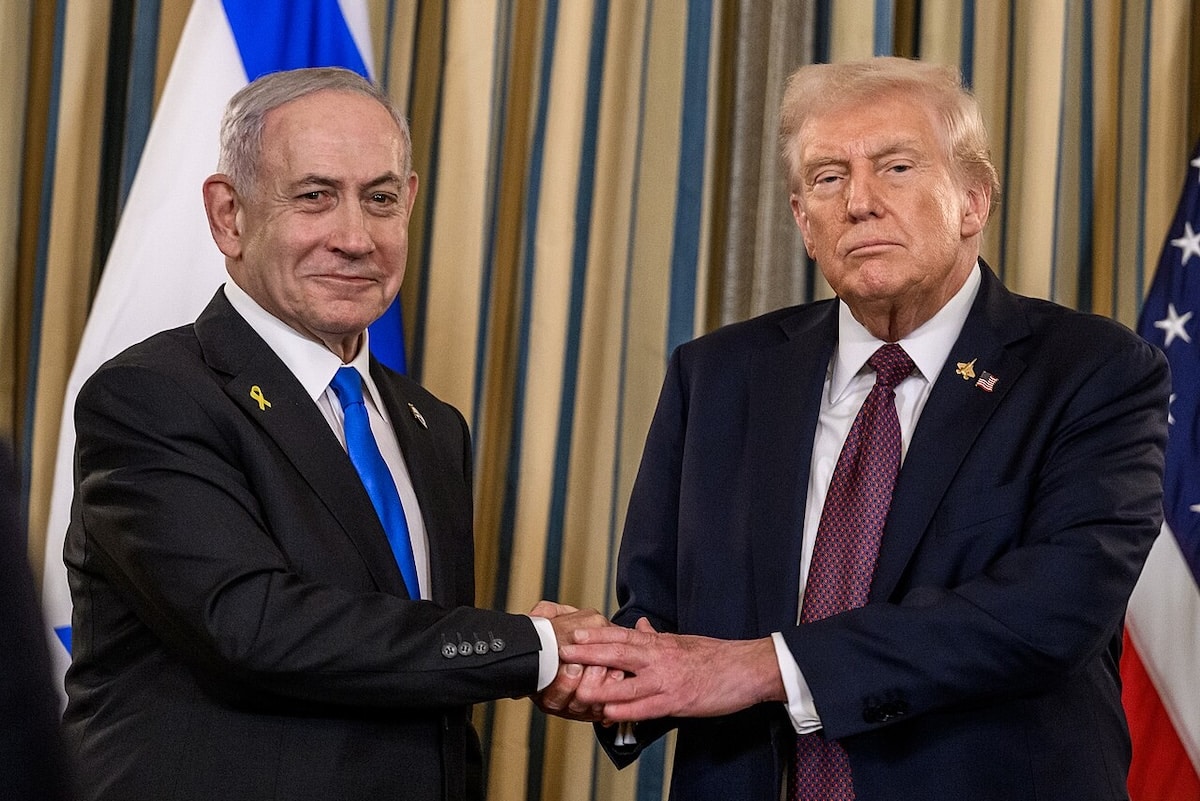
10 March 2026 AIMN Editorial, By Walt Zlotow, West Suburban Peace Coalition Glen Ellyn IL, https://theaimn.net/trump-netanyahu-down-to-last-card-in-criminal-iran-war/
President Trump and Israeli Prime Minister began their second war on Iran in 7 months with just 2 war crime cards to play.
The first card was the US, Israeli version of Blitzkrieg from the air. Kill Iran’s beloved leader the Ayatollah Ali Khamenei, demand surrender, then wait for the 90 million Iranians to capitulate to new masters Trump and Netanyahu. That was projected to take just about 72 hours.
As expected, millions of Iranians came into the streets following Khamenei’s assassination. But not to welcome the grisly invaders bombing them. It was to show near total support to the Islamic government, cheering them on to inflict as much retaliation possible to repel the Trump Netanyahu criminal tag team.
And they are succeeding, causing massive damage to US military facilities in Bahrain, Qatar, Jordan, Kuwait. Saudi Arabia and UAE. All 6 are running out of defensive interceptors provided by Uncle Sam. Why? Trump is giving them all to himself and his war partner Netanyahu. When this is all over, the Gulf States will never again trust America for their defense. They may even tell the US to vamoose the region PDQ.
Iran is also bombing Israel night and day, giving Netanyahu, flying around the region 24/7 to avoid Khamenei’s fate, a taste of what he visited on Palestinians in Gaza for 2 years.
That leaves Trump and Netanyahu with their last war crime card to play. Bomb Iran to smithereens till there is no more Iranian weapons or personnel left with which to retaliate.
Big problem facing America and Israel is size. Both Israel and US military facilities nearby are compact in size making them easy targets, while Iran, the 17th largest country by area, has their tens of thousands of missiles scattered and largely unreachable.
Now that Iran has chosen to fight to the death rather than capitulate as expected, the advantage may be tiltng in their favor. Rumors surfacing Trump is pondering an off ramp to stop the bleeding he has no way of controlling.
Worst case scenario remains that Netanyahu may get so desperate facing unfathomable defeat, he escalates to war crime card 3… nuke Tehran.
Trump hints U.S. will turn to Cuba after Iran: ‘Just a question of time’
Kevin Breuninger, Fri, Mar 6 2026, https://www.cnbc.com/2026/03/05/trump-cuba-iran-regime-change.html
Key Points
- President Donald Trump suggested his administration will turn its sights to Cuba after U.S. military operations in Iran are done.
- It “will be just a question of time before you and a lot of unbelievable people are going to be going back to Cuba, hopefully not to stay,” Trump told a crowd at the White House.
- On Iran, Trump said the U.S. and Israeli militaries are continuing to “totally demolish the enemy.”
President Donald Trump on Thursday suggested his administration will turn its sights to Cuba after U.S. military operations in Iran are finished.
“What’s happening with Cuba is amazing,” Trump said at the White House while participating in a visit of Inter Miami CF, the 2025 Major League Soccer champions.
“We think that we want to fix — finish this one first, but that will be just a question of time before you and a lot of unbelievable people are going to be going back to Cuba, hopefully not to stay,” Trump said to the Miami-heavy audience that included people of Cuban heritage.
The comments show Trump, less than a week into an escalating military conflict in the Middle East, is considering another major foreign policy move.
“We want you back, and we don’t want to lose you. We don’t want to make it so nice that they stay. But some people probably do want to stay. They love Cuba so much,” he said. “That was another one that wasn’t supposed to happen.”
Trump turned his focus to Cuba after providing a boastful update on the war in Iran, where he said the U.S. and Israeli militaries are continuing to “totally demolish the enemy.”
Trump said Secretary of State Marco Rubio has been “doing a fantastic job.”
“And you’ve been doing a fantastic job on a place called Cuba,” Trump added, prompting applause from the room.
Trump’s latest remarks on Cuba follow previous hints, some less subtle than others, that he and his allies have dropped about their plans for the Caribbean island nation.
“Cuba’s next,” Sen. Lindsey Graham, R-S.C., said Sunday on Fox News after the Iran strikes began.
In an interview with Politico earlier Thursday, Trump predicted that after Iran’s regime is toppled, “Cuba’s going to fall, too.”
Trump also took credit for choking Cuba’s economy to force them to the negotiating table, which he had vowed to do after the U.S. military in January attacked Venezuela, a major supplier of oil to Cuba.
“We cut off all oil, all money, or we cut off everything coming in from Venezuela, which was the sole source. And they want to make a deal,” he told Politico.
“We are talking to Cuba,” Trump also said in that interview. “How long have you been hearing about Cuba — Cuba, Cuba — for 50 years?” he added. “And that’s one of the small ones for me.”
“AIPAC Is Toxic”: Illinois Races Expose a Shifting Democratic Landscape

SCHEERPOST, March 8, 2026 Joshua Scheer
The shift comes amid growing criticism of the pro-Israel lobby. Senator Chris Van Hollen recently telling a Jewish audience at a J Street conference that the actions of American Israel Public Affairs Committee were “un-American.”
A growing divide over the war with Iran is emerging inside Democratic politics and within AIPAC itself, and nowhere is it more visible than in Illinois.
According to reporting by Jewish Currents, several Democratic congressional candidates in Illinois who are backed by the powerful pro-Israel lobby American Israel Public Affairs Committee (AIPAC) have publicly criticized the U.S. attack on Iran—despite the lobby’s strong support for the military action.
The break highlights a political dilemma for AIPAC as it pours millions of dollars into Democratic primary races across the country in an effort to maintain strong congressional backing for Israel.
AIPAC praised Donald Trump’s decision to strike Iran, describing the move as “decisive.” But the Democratic candidates the group has supported in Illinois have largely taken the opposite position, condemning the U.S. attack while carefully avoiding direct criticism of Israel’s role in the conflict.
Among them is Illinois State Senator Laura Fine, who warned that Trump’s decision could send the Middle East into further chaos and suggested the president’s actions were grounds for impeachment. Other AIPAC-backed candidates—including former congresswoman Melissa Bean, Cook County Commissioner Donna Miller, and Chicago City Treasurer Melissa Conyears‑Ervin—also criticized the strikes, describing them as unconstitutional, dangerous, or an immoral “war of choice.”
Yet none of the candidates have openly challenged Israel’s involvement in the conflict, reflecting the delicate balancing act facing Democrats who rely on AIPAC support while campaigning in districts where Democratic voters overwhelmingly oppose the war.
Political analysts say that tension is not accidental. Matt Duss, executive vice president at the Center for International Policy and a former adviser to Senator Bernie Sanders, noted that Democratic voters are strongly against the war.
A recent poll by The Washington Post found that roughly 87 percent of Democrats oppose the conflict with Iran. As a result, many candidates are directing their criticism at Trump rather than confronting AIPAC or Israel directly.
“They have to be careful if they want to keep AIPAC support,” Duss explained.
The same political dynamic is playing out in several other races. In New York, Representative Dan Goldman, who has received backing from AIPAC, criticized Trump for defying the Constitution in launching the attack but did not mention Israel. Goldman is currently facing a progressive challenge from former New York City comptroller Brad Lander.
Meanwhile, in North Carolina, Representative Valerie Foushee narrowly defeated progressive challenger Nida Allam in a Democratic primary where the Iran war emerged as a late campaign issue. Allam ran television ads highlighting her opposition to the war and criticizing Foushee for accepting donations from defense contractors. Foushee also opposed the war and attempted to distance herself from AIPAC during the race.
Progressive candidates have seen stronger results in other states. In Texas, Reverend Frederick Haynes won the Democratic primary in the heavily Democratic 30th Congressional District. Haynes has been outspoken in criticizing Israeli policies in Gaza and has also opposed the war with Iran.
Advocates on the left say the results reflect a broader shift within Democratic politics. Beth Miller, political director of Jewish Voice for Peace Action, said recent primaries demonstrate how rapidly the political landscape is changing………………………………………………………………………………………………………………………….
In a joint statement, several progressive candidates—including Peters, Ahmed, Evanston Mayor Daniel Biss, and union organizer Anthony Driver—accused Trump of dragging the United States into what they described as an unnecessary war backed by AIPAC, and called on their opponents to reject the lobby’s “pro-war agenda.”……………………………………………………………. https://scheerpost.com/2026/03/08/aipac-is-toxic-illinois-races-expose-a-shifting-democratic-landscape/
‘The Military-Industrial Complex Is Winning’: While Bombing Iran, Trump Says Weapons Contractors to Boost Production.

The president and Lockheed Martin said that the expansion began months ago, but his comments followed a White House meeting held amid a US-Israeli assault on Iran and mounting threats against Cuba.
Jessica Corbett, Common Dreams, Mar 06, 2026
After meeting with several chief executives at the White House on Friday—while also bombing Iran with Israel and threatening Cuba—US President Donald Trump said that top military contractors “have agreed to quadruple Production of the ‘Exquisite Class’ Weaponry in that we want to reach, as rapidly as possible, the highest levels of quantity.”
Trump said on his Truth Social platform that he met with the CEOs of BAE Systems, Boeing, Honeywell Aerospace, L3Harris Missile Solutions, Lockheed Martin, Northrop Grumman, and RTX—formerly Raytheon.
“Expansion began three months prior to the meeting, and Plants and Production of many of these Weapons are already underway,” he wrote, adding that another meeting is scheduled in two months.
……………………………………………………………………………………………………………….
It was not immediately clear whether the meeting… resulted in any new agreements to boost production beyond those previously announced by the Pentagon since the beginning of the year.
Those agreements include a multiyear deal to triple PAC-3 production and quadruple THAAD interceptor production with Lockheed. It also included separate multiyear deals with RTX to boost production for the Tomahawk, AMRAAM air-to-air missile, Standard Missile-3 IIA and IB, and Standard Missile-6, with production for certain of those munitions set to double or quadruple, RTX said at the time………………….
Northrop Grumman said in a statement that “we support the president’s focus on speed and investment to deliver military capabilities. With our industry-leading levels of investment and decades of proven performance, we continue to grow production capacity and deliver mission-ready technologies for the nation’s warfighters.”
Using Trump’s preferred name for the Pentagon, an RTX spokesperson said the company “is proud to support the administration’s goals of defending the US and its allies at this critical moment and committed to accelerating the production of five key munitions in accordance with the historic frameworks reached with the War Department last month.”
Defense Secretary Pete Hegseth also joined the meeting, according to White House press secretary Karoline Leavitt. After Hegseth shared Trump’s Truth Social post on the platform X, Lockheed Martin replied, saying that it began working with the Pentagon chief and Feinberg “months ago,” and the company has “agreed to quadruple critical munitions production………………………………………………………….. https://www.commondreams.org/news/trump-defense-contractors
Bill Gates’ TerraPower Finally Has a Permit for a Nuclear Reactor, but No Reliable Way to Fuel It.

“HALEU is not currently available from domestic suppliers, and gaps in supply could delay the deployment of advanced reactors,” the HALEU Availability Program website says. Filling the gap will involve “downblending”—or converting highly concentrated weapons-grade uranium into relatively low-concentration HALEU. This literally means dismantling warheads, melting the uranium, and rejiggering the concentration of the crucial fissile isotope.
Gizmodo, By Mike Pearl, 5th March 2026
By unanimous vote, TerraPower, a Nuclear Power company founded and chaired by Bill Gates, just reached a major milestone by receiving the most important federal permit: clearance to build a commercial nuclear reactor in Kemmerer, Wyoming, scheduled to start operating in 2031. This places TerraPower at the front of the pack when it comes to small, cutting-edge nuclear reactors for generating power in the U.S.
Unfortunately, there’s currently no way to fuel this reactor.
The plant has already been under-construction since 2024, and a spokesman for TerraPower named Andy Hallmark confirmed to me that only the “nonnuclear sections of the plant” were being built at the time.
But while TerraPower’s Natrium sodium-cooled fast reactor can now at least be constructed, it won’t put power into the Wyoming energy grid without high-assay, low-enriched uranium (HALEU), which is only made in commercial quantities by a company called Techsnabexport, which is a subsidiary of another company called Rosatom, which is owned by the Russian state.
This has been presenting a problem ever since 2022 when Russia invaded mainland Ukraine. At that point, “it became very clear, for a whole set of reasons — moral reasons as well as commercial reasons — that using Russian fuel is no longer an option for us,” TerraPower spokesman Jeff Navin told WyoFile.
But Hallmark told me in 2024 that alternative suppliers “are expected to develop similar capacity as demand grows,” and that Terrapower believes a solution will materialize in time for the project to stay on track.
The US government has been prioritizing and cheerleading this project (along with similar projects), and has an alternative plan, which the Department of Energy calls the HALEU Availability Program.
“HALEU is not currently available from domestic suppliers, and gaps in supply could delay the deployment of advanced reactors,” the HALEU Availability Program website says. Filling the gap will involve “downblending”—or converting highly concentrated weapons-grade uranium into relatively low-concentration HALEU. This literally means dismantling warheads, melting the uranium, and rejiggering the concentration of the crucial fissile isotope.
It is, of course, unsustainable for commercial power plants to be fueled by the guts of the aging U.S. nuclear stockpile, and a real supply chain for HALEU has to exist if TerraPower’s plant is actually going to operate.
In the short term, TerraPower needs enough fuel from early sources like downblending to load its reactor for the first time, and then it can focus on staying online. One report says it needs about 150 metric tons of the fuel to run from 2028 through 2037—roughly 15 metric tons per year on average.
But according to Reuters, there’s only one U.S. company actually attempting to make HALEU by enriching uranium rather than downblending: Ohio’s Centrus Energy. But Centrus was projecting 900 kilograms per year in 2024—by my rough math that’s about 6% of what Terrapower’s Kemmerer plant will need per year. To stay Centrus needs to ramp-up quickly is an understatement.
Needless to say, Terrapower is racing to find alternatives, which include companies like South Africa’s ASP Isotopes, Inc. with whom it launched a “strategic agreement” in 2024. As of last month, ASP was hoping to build a HALEU plant soon.
At any rate, TerraPower’s Kemmerer plant can be built now, and that construction can now include its reactor. There’s not enough fuel for that reactor—unless of course the war in Ukraine ends, and Russia-U.S. relations get patched up in a hurry—but there are still five years between now and then, and a whole lot is riding on this. Generating nuclear fuel has always forced people to move mountains. Why should this plant be any different?
Gizmodo reached out to TerraPower for a statement, or additional information about any as-yet unreported sources of HALEU. We will update if we hear back.
00
.00
US Argues ‘Emergency’ of Iran War Means Israel Needs 20,000+ More Bombs Without Congressional Approval
This is the first time that the second Trump administration has formally declared an emergency, allowed under the Arms Export Control Act, to bypass Congress to sell arms to Israel. The administration has bypassed the informal approval process in Congress three times to sell arms or send weapons aid to Israel, but previously has not declared an emergency
‘Who cares about Israel’s genocide, apartheid, and aggression?” asked one human rights expert.
Jon Queally, Mar 07, 2026, https://www.commondreams.org/news/us-bombs-for-israel-iran-lebanon
The US State Department is hiding behind the war against Iran that was started by US President Donald Trump last week to justify an emergency order to ship more than 20,000 bombs—estimated at a value of $660 million—to Israel, skirting a pending approval process for the sale by Congress.
In a statement issued quietly on Friday night, the State Department said 12,000 BLU-110A/B general purpose, 1,000-pound bombs had been determined for approval, noting that Secretary of State Marco Rubio has “provided detailed justification that an emergency exists that requires the immediate sale to the Government of Israel of the above defense articles and defense services is in the national security interests of the United States, thereby waiving the Congressional review requirements under Section 36(b) of the Arms Export Control Act.”
Not included in the statement, according to the New York Times, were additional parts of the sale that “include 10,000 bombs of 500 pounds each and 5,000 small-diameter bombs.”
“This is an emergency of the Trump administration’s own creation.” —Rep. Gregory Meeks (D-N.Y.)
According to the Times:
The State Department did not mention these details in the announcement, but two current US officials and a former, Josh Paul, who worked on weapons transfers at the State Department, said they were part of the emergency sale. The current officials spoke on the condition of anonymity to discuss sensitive arms transactions.
This is the first time that the second Trump administration has formally declared an emergency, allowed under the Arms Export Control Act, to bypass Congress to sell arms to Israel. The administration has bypassed the informal approval process in Congress three times to sell arms or send weapons aid to Israel, but previously has not declared an emergency.
The push for the “emergency” arms sale comes as Israel pummels Lebanon with airstrikes, forcing an estimate 500,000 people or more in southern regions outside of Beirut to flee their homes. It also coincides with Israeli forces hitting targets in Iran alongside the US in what experts say is a wholly illegal attack on that country.
Rep. Gregory W. Meeks (D-N.Y.), ranking member of the House Foreign Affairs Committee, denounced the move by the Rubio in a Friday statement.
“Today’s invocation of the Arms Export Control Act’s emergency authority to bypass congressional review for two munitions cases to Israel exposes a stark contradiction at the heart of this administration’s case for war,” said Meeks. “The Trump administration has repeatedly insisted it was fully prepared for this war. Rushing to invoke emergency authority to circumvent Congress tells a different story. This is an emergency of the Trump administration’s own creation.”
Others also questioned the emergency sale, especially given Israel’s record of genocide in Gaza over the last two years and its pivotal role in pushing the Trump administration toward a war of choice with Iran.
Meeks, in his statement, argued that key questions about Trump’s war in Iran remain unanswered.
“What is the endgame? What preparations have been made to protect American citizens in the region? And how much will this war cost the American people?” asked Meeks. “The administration has provided no credible answers. The American people deserve answers, and Congress must demand them.”
Marco spills the beans…’Bibi made us do it’

Walt Zlotow, Mar 04, 2026, Walt Zlotow West Suburban Peace Coalition Glen Ellyn IL, https://substack.com/home/post/p-189862460
In 4 days of immoral, criminal war on Iran, the Trump administration changes the rationale every day, indeed almost every hour.
The most preposterous comes from supreme American warmonger Marco Rubio who masquerades as Secretary of State while every fiber of his damaged soul plots endless war.
“It was abundantly clear that if Iran came under attack by anyone, the United States, Israel, or anyone, they were going to respond and respond against the United States. If we stood and waited for that attack to come first, before we hit them, we would have suffered much higher casualties. And so the president made the very wise decision. We knew that there was going to be an Israeli action, we knew that that would precipitate an attack against American forces,”
Rubio could not have been more disingenuous. He’s pretending we’re a neutral observer that will be involved if Israel attacks and must attack first to avoid US casualties. . He knows full well the US and Israel have been plotting together to destroy Iran for decades. He’s spent the last year as Secretary of State involved in that war plotting. The US wants to extend its dominance over the entire Middle East while Israel wants to eliminate its only hegemonic rival in the region. Together the US, Israeli tag team seeks to accomplish both imperialistic goals.
The combined attack February 28 was a replay on steroids of the smaller combined preemptive attack last June. Since it didn’t accomplish regime change and Iran’s destruction, Netanyahu and Trump decided to launch an all out war to the death. This time Americans are dying along with Israelis, and the shutdown of oil production and transit may send America spiraling into a major recession.
Since few Americans are buying into this madness, rejecting one Trump justification after another, Rubio came to the rescue. ‘I’ve got it’ he proclaimed. ‘We’ll tell the public that we had to attack because it was the only way to save American lives after Israel attacks Iran. We’re simply playing defense.’
Rubio’s logic would be hilarious if not for the fact that it guarantees US body bags coming home as a result of Rubio’s self-licking ice cream cone.
Cardinals McElroy and Cupich denounce Iran war: ‘War now has become a spectator sport.’
“Our government is treating the suffering of the Iranian people as a backdrop for our own entertainment,”
by Edward DesciakMarch 9, 2026, https://www.americamagazine.org/politics-society/dispatches/2026/03/09/cardinal-mcelroy-cupich-iran-war/?utm_source=ActiveCampaign&utm_medium=email&utm_content=Cardinals%20McElroy%20and%20Cupich%20denounce%20Iran%20war%3A%20%20War%20now%20has%20become%20a%20spectator%20sport&utm_campaign=Daily%203%209%2026
Following the United States and Israel’s overnight missile barrage of Iran on Feb. 28 and the widening war across the Middle East, a number of U.S. bishops have spoken out in opposition to the war.
They underscored an urgent need for peace and a return to diplomacy, denounced as unjust American and Israeli military aggression and expressed deep concern for the millions in the region affected by the armed conflict.
“At this present moment, the U.S. decision to go to war against Iran fails to meet the just war threshold for a morally legitimate war,” Cardinal Robert McElroy of the Archdiocese of Washington, D.C., said.
In an interview with the Catholic Standard on March 9, he explained that the U.S. offensive operations failed to meet at least three criteria of just war theory—the Catholic framework for evaluating the morality of military action—including the requirements for just cause, right intention and clarity that “the benefits of this war will outweigh the harm which will be done,” made impossible by the unpredictability of the region
Cardinal McElroy said: “Almost everyone rightly believes that the Khamenei regime has been for decades a brutal and repressive government that has spread terrorism throughout the world and should be replaced. But there is immense concern that this war will spiral out of control and embroil the United States in ever greater depth.”
The cardinal, who has also voiced opposition to the Trump administration’s mass deportation policy, mentioned particular concern for the military families he has spoken with who are worried about their loved ones’ safety.
“We must all work together to forbid this expansionism to lead us into an ongoing morass in Iran,” he said, expressing his “deepest concern” for the “deterioration of moral norms” in the United States and the world, signified by the growing willingness to turn to preventative war over diplomacy as a legitimate means of foreign policy.
Cardinal McElroy’s responses echoed comments from Cardinal Blase Cupich of the Archdiocese of Chicago, who criticized the war and the Trump administration’s mix of militarism and entertainment in a statement on March 7.
Cardinal Cupich cited a post from the official White House X account captioned “JUSTICE THE AMERICAN WAY” that spliced clips from popular action movies, cartoons and TV shows “with actual strike footage from their war on Iran.”
It was one of many edits the White House has posted over the last few days in which the account has similarly spliced together video footage of the war with NFL and MLB highlights and video game references.
“A real war with real death and real suffering being treated like it’s a video game—it’s sickening,” Cardinal Cupich said. “This horrifying portrayal demonstrates that we now live in an era when the distance between the battlefield and the living room has been drastically reduced.”
He noted that the social media post dishonored the six U.S. soldiers who had been killed at that point during the war (the death of another service member was confirmed on March 8) as well as the hundreds of others who have died across the Middle East, “including the scores of children who made the fatal mistake of going to school” the day a U.S. missile struck a naval base next to an elementary school in Iran, killing 175 people.
“The moral crisis we are facing is not just a matter of the war itself, but also how we the observers, view violence, for war now has become a spectator sport or strategy game,” Cardinal Cupich wrote, referencing a particularly macabre scandal involving the popular prediction market site Kalshi, where Americans can now gamble on matters of life and death. The company is the respondent in a $54 million class action lawsuit after it declined to pay out wagers on whether Iran’s Supreme Leader Ali Khamenei would be ousted by March 1, citing a “death carveout.”
Cardinal Cupich also urged the American people not to “become addicted to the ‘spectacle’ of explosions.”
“Our government is treating the suffering of the Iranian people as a backdrop for our own entertainment,” he wrote, “as if it’s just another piece of content to be swiped through while we’re waiting in line at the grocery store.”
“I know that the American people are better than this. We have the good sense to know that what is happening is not entertainment but war, and that Iran is a nation of people, not a video game others play to entertain us,” he concluded.
The cardinals joined the president of the U.S. Conference of Catholic Bishops, Archbishop Paul Coakley, who followed Pope Leo XIV’s lead and released a statement on March 1 condemning the hostilities: “We ask for a halt to the spiral of violence, and a return to multilateral diplomatic engagement that seeks to uphold the ‘well-being of peoples, who yearn for peaceful existence founded on justice.’”
Archbishop Coakley added: “I invite Catholics and all people of goodwill to continue our ardent prayers for peace in the Middle East, for the safety of our troops and the innocent, that leaders may seek dialogue over destruction, and pursue the common good over the tragedy of war.”
The Archdiocese of New York’s new archbishop, Ronald Hicks, also commented on the Iran crisis in a brief interview for 1010 WINS on March 5, calling for prayers and diplomacy. “We have to give some special prayers for our men and women in uniform and pray for their protection, too, and everyone involved,” he said. “It is absolutely heartbreaking.”
As proposals for nuclear stations proliferate across Canada, ‘fleet-based’ reactor deployment remains elusive.

The Ontario government announced last summer a body called the New Nuclear Technology Panel, composed of senior executives from OPG, Bruce Power and the government, and instructed it to co-ordinate a technology selection decision. But the panel has not been established, and there is no timeline for doing so.
among those few proponents that have publicly committed to specific models, at least three have already wavered on their decisions. The situation underlines how tentative plans for nuclear expansion in Canada remain
Matthew McClearn, 9 March 26, https://www.theglobeandmail.com/business/article-nuclear-stations-canada-fleet-based-reactor-deployment-remains-elusive/
In the nuclear industry it is practically gospel: Canada isn’t populous or wealthy enough to purchase a smorgasbord of different nuclear reactors. Yet after years of lukewarm efforts by Canadian utilities and governments to reach a consensus on which ones to buy, there are few indications that one is emerging.
In January, Saskatchewan’s government announced it had begun evaluating large nuclear reactors for potential deployment. Jeremy Harrison, a minister whose responsibilities include the Crown-owned SaskPower, said the utility will study the readiness of reactors to be built, vendors’ ability to support licensing and construction, and their track record of executing previous projects.
Ontario’s utilities have been asking similar questions for several years. In 2023 Bruce Power began hunting for a reactor for Bruce C, a proposed four-unit station at its facility near Tiverton, Ont. Ontario Power Generation recently began its own search for a huge plant dubbed Wesleyville, planned in Port Hope, Ont.
Observers have long warned that given Canada’s population and economy, utilities, private developers and provinces must co-ordinate procurement of reactors – an approach sometimes dubbed “fleet-based deployment.” But it hasn’t arrived yet.
Indeed, among those few proponents that have publicly committed to specific models, at least three have already wavered on their decisions. The situation underlines how tentative plans for nuclear expansion in Canada remain, even as governments forecast spiking demand for electricity in the immediate future and consider their options for generating that power.
All 25 reactors built in Canada during the 1960s through the 1990s featured Canada deuterium uranium (Candu) technology developed by Atomic Energy of Canada Ltd., a Crown corporation. One benefit was that later Candus, such as those at the Bruce B and Darlington stations, proved significantly more reliable than earlier ones in that they suffered fewer outages. Similar dynamics applied when those stations required midlife overhauls. Another advantage was that utilities could share operational experience through the Candu Owners Group (now known as Conexus Nuclear).
By the time the federal government began promoting small modular reactors (SMRs), though, the Candu’s monopoly seemed precarious, and international vendors arrived promoting early-stage designs. In 2018 the government published a “roadmap” for SMRs, recommending stakeholders settle on a small number of finalized designs.
Jeremy Whitlock, a nuclear consultant and adjunct professor at McMaster University, wrote in an e-mailed response to questions that fleet-based deployment is vital for nuclear. “There is simply not enough infrastructure, resources, and (currently at least) work force to support multiple lines of technology,” he wrote.
A report released in February by Clean Prosperity, a Toronto-based energy and climate policy think tank, asserted that one necessary precondition for nuclear expansion is that all proponents converge on three designs at most: one “large” design with a capacity of 1,000 megawatts or more (enough to power a large city), one “small” reactor with an output around 300 megawatts, and one “micro” reactor putting out less than 20 megawatts.
Brendan Frank, Clean Prosperity’s head of policy development, said a first-of-a-kind reactor is far too expensive; the industry needs to learn how to build subsequent units more cheaply to compete with other generation options. “Your chances of doing that are significantly higher if you build the same reactor design over and over and over again,” he said.
The BWRX-300 from U.S.-based GE Vernova Hitachi Nuclear Energy has seemingly emerged as the lone contender among the larger SMRs. Yet only OPG has committed to build one.
As for large and micro-reactors, no firm orders have been placed in Canada. However attractive fleet-based deployment might seem, it might be difficult to achieve. Selecting a model has numerous implications, from securing a fuel supply to managing the resulting waste; what’s best for Ontario mightn’t seem so for Saskatchewan or New Brunswick.
Nuclear power is among the few generation options that has grown more expensive, and eliminating pricing competition by sourcing from a single reactor vendor won’t help
Options are limited. AtkinsRéalis Group Inc.
ATRL-T -1.07%decrease, the company which purchased Atomic Energy of Canada’s reactor business more than a decade ago, is developing an updated 1,000-megawatt Candu dubbed the Monark. Its most significant home-court advantage is that utilities and their workers are already familiar with operating and maintaining Candus. Moreover, its supply chain is on Canadian soil, an appealing feature amid surging economic nationalism. Its greatest vulnerability might be its readiness: The Canadian Nuclear Safety Commission says it has not yet begun a preliminary assessment of the Monark, known as a vendor design review.
The CNSC reviewed the Monark’s most obvious competitor more than a decade ago. It concluded there were “no fundamental barriers” to licensing Westinghouse Electric Co.’s AP1000. Although AP1000s have been built in China and the U.S., the American projects suffered disastrous setbacks during construction. Souring Canada-U.S. relations further diminish the AP1000’s appeal.
GE Vernova Hitachi, which designed the BWRX-300, faces similar obstacles in marketing its larger Advanced Boiling Water Reactor. Dark horses include the European Pressurized Reactor, a French design, and the South Korean APR-1400.
If fleet-based deployment is to succeed in Canada, Ontario appears to be the most credible co-ordinator. Between Bruce C and Wesleyville, it might purchase up to 14 large reactors.
Neither OPG nor Bruce Power specified reactors in their regulatory applications, which are intended to encompass a variety of options. Bruce Power’s chief operating officer, James Scongack, said since late 2023 his company has sought information from reactor vendors, a process intended to ascertain which reactors are ready to be constructed and at what cost. The process “was really designed to look at what are all the technologies available for new nuclear, assess them, review them, narrow them down,” he said.
Citing confidentiality agreements, Mr. Scongack declined to discuss which ones had emerged as front-runners. But “we’re now very focused on options that would not be a surprise to you.”
The Ontario government announced last summer a body called the New Nuclear Technology Panel, composed of senior executives from OPG, Bruce Power and the government, and instructed it to co-ordinate a technology selection decision. But the panel has not been established, and there is no timeline for doing so.
Lately, Ontario Energy Minister Stephen Lecce has spoken emphatically about the importance of promoting Canadian technology and supply chains – comments suggesting strong support for Candus.
“My first preoccupation is: What is going to advance the national interest of Canada in a post-Trump world,” he told The Globe in late January.
“We need to be fiercely protective of our intellectual property, of Canadian technology for Candu, a large-scale [reactor] that is made in Canada, stored in this country, a supply chain that is Canadian, a work force that is mature and Canadian.”
But a different champion could emerge in Saskatchewan. As far back as 2022, SaskPower selected the BWRX-300. Yet just two years later, SaskPower announced it had signed an agreement with Westinghouse to evaluate other models including its AP300, a direct competitor.
That sudden interest in Westinghouse didn’t come out of nowhere. The uranium giant Cameco Corp. CCO-T +5.86%increase, based in Saskatoon, is one of the province’s most influential companies. In 2023 it purchased a 49-per-cent stake in Westinghouse.
Mr. Harrison said the AP300 is no longer under consideration, and SaskPower confirms it’s planning to announce a proposed site for building BWRX-300s later this year. But SaskPower won’t make a final investment decision until at least 2029, leaving plenty of time to pivot again.
And that’s one reason Saskatchewan’s decision to explore large reactors could be highly significant. Mr. Harrison said the province is prepared to go its own way. And while SaskPower will consider candidate reactors on their merits, he added that local companies’ interests are an important consideration.
“We are really very, very proud of Cameco, a great Saskatchewan company,” Mr. Harrison said. “To be a 49-per-cent owner of this iconic American company, Westinghouse Electric, is really a quite an amazing story for a company that began life as a Crown corporation.”
He added: “Without question, benefits to the supply chain in Saskatchewan is a part of the consideration. We’ve been very upfront about that.”
Energy Alberta, a nascent developer with a long-standing proposal to build a four-reactor plant in Peace River, Alta., offers perhaps the most striking example of indecision. It had selected the Monark, but late last year announced it was considering Westinghouse’s AP1000s instead.
New Brunswick selected two reactors for construction at its Point Lepreau station nearly a decade ago. But neither the ARC-100 nor the SSR-W appear to be nearing a completed design; their vendors (ARC Clean Technology and Moltex Energy Canada, respectively) have few employees and have struggled to raise capital.
NB Power’s chief executive officer, Lori Clark, said her utility remains committed to building reactors. But it has come around to fleet-based thinking: it no longer wants to build a first-of-a-kind, or one-of-a-kind, reactor, because they are inevitably costlier. Provincial officials have expressed interest in a variety of different reactors over the past year, including the BWRX-300, AP1000 and Candu.
“We want to watch what’s happening in Ontario, because they are much bigger player in the nuclear field than we are.”
1 This Month

Petition to revoke the licensing of the Near Surface Nuclear Disposal Facility (NSDF) at Chalk River. https://www.ourcommons.ca/petitions/en/Petition/Details?Petition=e-7247


of the week – STOP SMALL MODULAR REACTORS IN CANADA
To see nuclear-related stories in greater depth and intensity – go to https://nuclearinformation.wordpress.com
-
Archives
- March 2026 (163)
- February 2026 (268)
- January 2026 (308)
- December 2025 (358)
- November 2025 (359)
- October 2025 (376)
- September 2025 (258)
- August 2025 (319)
- July 2025 (230)
- June 2025 (348)
- May 2025 (261)
- April 2025 (305)
-
Categories
- 1
- 1 NUCLEAR ISSUES
- business and costs
- climate change
- culture and arts
- ENERGY
- environment
- health
- history
- indigenous issues
- Legal
- marketing of nuclear
- media
- opposition to nuclear
- PERSONAL STORIES
- politics
- politics international
- Religion and ethics
- safety
- secrets,lies and civil liberties
- spinbuster
- technology
- Uranium
- wastes
- weapons and war
- Women
- 2 WORLD
- ACTION
- AFRICA
- Atrocities
- AUSTRALIA
- Christina's notes
- Christina's themes
- culture and arts
- Events
- Fuk 2022
- Fuk 2023
- Fukushima 2017
- Fukushima 2018
- fukushima 2019
- Fukushima 2020
- Fukushima 2021
- general
- global warming
- Humour (God we need it)
- Nuclear
- RARE EARTHS
- Reference
- resources – print
- Resources -audiovicual
- Weekly Newsletter
- World
- World Nuclear
- YouTube
-
RSS
Entries RSS
Comments RSS
 nuclear-news