Climate Emergency strikes Islam’s Holy Ritual, with nearly 600 dead of Heat stroke at 124.24° F. in Mecca

JUAN COLE, 06/19/2024Ann Arbor (Informed Comment)
– As the temperature in Mecca reached 125.24° F. (51.8° C.) on Tuesday, word leaked out that nearly 600 pilgrims had died of heat stroke and 2,000 have been hospitalized for treatment. A virtual clinic treated more thousands remotely. Some 324 of the dead were Egyptians,, while dozens were from Jordan. The season of the annual Hajj or pilgrimage to Mecca, the birthplace of Islam, just ended. Some 1.8 million pilgrims participated.
Eyewitnesses said that not all the dead were elderly, that young persons died, as well.
Pilgrims carry out a series of rituals during the pilgrimage, beginning with preparing themselves and establishing their pious intention. Many of the steps involve being outside and being active. They dress in white robes. They circumambulate the cube-shaped Kaaba shrine. They run between the nearby hillocks of Safa and Marwa seven times, in commemoration of the search of Abraham’s wife Hajar for water for her son with the patriarch, Ishmael. They walk or are taken in buses to Mina and spend some nights of the pilgrimage there. There, they throw stones at satan.
AFP explains that some pilgrims try to avoid paying the hefty visa fees by just showing up unregistered. They however, then lack access to air conditioned facilities and are at special risk of heat stroke.
The number of heat stroke deaths seems to have doubled since last year. Saudi Arabia is one of the world’s major oil producers, and burning petroleum to power vehicles puts the deadly heat-trapping gas, carbon dioxide, into the atmosphere, heating up the planet.
The G20 Climate Risk Atlas writes, “The science shows that Saudi Arabia will experience devastating climate impacts if it follows a high-emissions pathway. Without urgent action, Saudi Arabia will see an 88% increase in the frequency of agricultural drought by 2050. Heatwaves will last more than 4,242% longer and the combination of sea level rise, coastal erosion and fiercer weather will cause chaos for Saudi Arabia’s economy, which stands to lose around 12.2% of GDP by 2050.”……………………………………..more https://www.juancole.com/2024/06/climate-emergency-strikes.html
US-Saudi officials meet for security and nuclear deal

the Biden administration is offering a strategic deal on nuclear deal to the Saudis to assist a Saudi civilian nuclear program, as Iran has reached the weapons threshold under President Joe Biden’s watch.
May 20, 2024 , https://www.middleeastmonitor.com/20240520-us-saudi-officials-meet-for-security-and-nuclear-deal/
US National Security Adviser, Jake Sullivan, and Saudi Crown Prince, Mohammed Bin Salman, met in Dhahran to discuss a range of issues, including normalisation of ties with Israel, Reuters reports.
According to the report, a Saudi statement on Sunday also said, “the semi-final version of the draft strategic agreements between the two countries, which are almost being finalised”, were discussed.
The report added that the Biden administration is offering a strategic deal on nuclear deal to the Saudis to assist a Saudi civilian nuclear program, as Iran has reached the weapons threshold under President Joe Biden’s watch.
The meeting also covered “what is being worked on between the two sides on the Palestinian issue to find a credible path towards a two-state solution”, as well as attempts to stop the war in Gaza and facilitate the distribution of humanitarian aid there.
Congress must stop Biden from fueling a Saudi nuclear bomb
The Hill BY ANDREA STRICKER AND HENRY SOKOLSKI, – 05/18/24
National Security Advisor Jake Sullivan is heading to Saudi Arabia and Israel this weekend in hopes of delivering an elusive Biden foreign policy triumph — a U.S.-Saudi-Israel “mega deal” that would upgrade the U.S.-Saudi alliance while normalizing relations between Riyadh and Jerusalem.
Proponents see this as a win-win proposition, yet at the deal’s heart lies a dangerous American concession: Saudi Arabia is demanding Washington upend decades of U.S. nonproliferation policy and give Riyadh the means to enrich uranium — a process essential to producing fuel for either nuclear reactors or atomic weapons. Congress must act now and stop the administration from setting off a nuclear arms-race in the Middle East.
Never before has the Saudi motivation been so high to join the Western-led security order: The recent salvo of drones and missiles Iran launched at Israel were almost entirely eliminated by the missile defenses of the U.S., Israel and partners. This is the kind of protection Russia, China and Iran, with their venal and revisionist ambitions, are unlikely to provide.
President Biden has a narrowing window to secure the mega-deal, after spending his first years in office taking Riyadh to task on human rights and downplaying the Abraham Accords, through which his predecessor helped three Arab states normalize relations with Israel.
Beyond the non-trivial matters of the ongoing Israeli military operation in Rafah and a future Palestinian state, on which Saudi Arabia’s foreign minister says the two sides are close to an agreement in principle, there remains one big problem:
Riyadh wants America to open the door to a domestic program for uranium enrichment.
Since the start of the atomic age, however, American policy has discouraged the further spread of these crown jewels of nuclear weapon-making technology. The United States has joined with other nuclear suppliers to oppose such transfers.
Underscoring the risk, Saudi Crown Prince Mohammed Bin Salman has openly said that Riyadh will obtain nuclear weapons if Iran does, meaning he might eventually pilfer or misappropriate U.S. technology for nuclear weapons. The crown prince refuses to foreswear enrichment, something the United Arab Emirates (UAE) did in 2009 when it committed to what became known as the “gold standard” of nonproliferation. Bin Salman also refuses to sign an enhanced inspection agreement, known as the Additional Protocol, with the International Atomic Energy Agency (IAEA).
And why would he?
The United States granted Iran domestic uranium enrichment under the 2015 nuclear deal known as the Joint Comprehensive Plan of Action (JCPOA), torpedoing prior UN resolutions demanding Tehran cease that practice. UN Iran sanctions remain lifted under UN Resolution 2231, even though no party continues to observe the nuclear deal and Tehran is moving deliberately toward production of weapons-grade uranium.
Now, some nonproliferation experts are suggesting how Washington might “responsibly” give enrichment technology to the Saudis, even though doing so would likely trigger similar demands or independent efforts by Turkey, Egypt, the UAE and South Korea — suddenly putting multiple countries on the brink of nuclear weapons. One proposal is even stunningly similar to the JCPOA: Restrain Saudi enrichment for 10 years before lifting all restrictions. ……………………………………………………………….. more https://thehill.com/opinion/4668719-congress-must-stop-biden-from-fueling-a-saudi-nuclear-bomb/
—
Saudi Arabia is set to witness major developments in nuclear sector: IAEA chief Rafael Grossi
The director general’s visit reaffirms the IAEA’s commitment to supporting Saudi Arabia’s nuclear ambitions and signifies a positive collaboration between international and national institutions
Arab News, December 13, 2023
RIYADH: Saudi Arabia is poised to witness significant developments in its nuclear sector, according to the International Atomic Energy Agency.
In his first visit to the Kingdom, IAEA Director General Rafael Mariano Grossi expressed his delight and admiration for Saudi Arabia’s nuclear capabilities and high professionalism within the sector.
Grossi also acknowledged Saudi Arabia’s imminent entry into nuclear operations, starting with a research reactor and paving the way for more extensive facilities in the future, expressing confidence in the preparedness of the Saudi workforce to embrace this new chapter in the Kingdom’s development.
“Saudi Arabia is on the doorsteps of nuclear operation starting with this research reactor, and later with bigger facilities. …………………………………..
The top official said: “When we talk about the nuclear regulator, it is the institution that must make sure that all these activities will not have any negative impact on the country, that will be a perfect protection of the population.”…………………………………………………………….
The director general’s visit reaffirms the IAEA’s commitment to supporting Saudi Arabia’s nuclear ambitions and signifies a positive collaboration between international and national institutions. https://www.arabnews.com/node/2425281/business-economy
Biden’s $582 Million Arms Sale to Saudi Arabia. Can It Be Blocked?
BY CHARLES PIERSON, https://www.counterpunch.org/2024/01/11/bidens-582-million-arms-sale-to-saudi-arabia-can-it-be-blocked/
On December 24, 2023, the Biden Administration announced a $582 million arms sale to the Kingdom of Saudi Arabia. Three Congressional resolutions aim at blocking the sale.
S.Res. 109,[1] which Senator Christopher Murphy (D-CT) introduced on March 15, 2023, invokes a little-used section of the Foreign Assistance Act of 1961.[2] Section 502B bars the US from providing “security assistance,” including arms sales, to any country with a “consistent pattern of gross violations of internationally recognized human rights.”[3] The Kingdom of Saudi Arabia certainly fits that requirement.
502B allows Congress to request that the White House produce a report on a foreign government’s human rights record. A 502B report on Saudi Arabia[4] would focus on (1) Saudi Arabia’s human rights record; and (2) Saudi conduct with respect to Yemen, particularly the Kingdom’s disproportionate killing of civilians (which the US has aided).[5] If the Executive fails to produce the report within 30 days all security assistance to the country in question stops automatically.[6]
There are exceptions. Even if the Executive does not produce a report within 30 days security assistance can continue if the Secretary of State determines that “extraordinary circumstances” exist;[7] or, if in the Secretary’s opinion, continuing the assistance is in the US “national interest”;[8] or, the if president determines that there has been a significant improvement in the country’s human rights practices.[9] These exceptions are big enough to drive a truck through and could allow the president to evade enforcing the law. Whether Congress approves S.Res. 109 or not may not make a difference.
Biden Promises to End US Arms Sales to Saudi Arabia
Even before he was elected, Biden promised to reevaluate the US-Saudi relationship.
This was in part a reaction to the assassination of dissident Saudi journalist Jamal Khashoggi, who had been chopped up by a bone cutter at the Saudi consulate in Istanbul on October 2, 2018. Khashoggi’s murder was ordered by Saudi Arabia’s de facto ruler, Crown Prince Mohammed bin Salman. During the November 20, 2019 Democratic presidential debate, Biden called Saudi Arabia an international “pariah” and vowed that the US would no longer sell weapons to the Saudis.
Biden condemned arms sales to Saudi Arabia in his first major foreign policy speech as president on February 4, 2021. Biden announced that he was “ending all support for offensive operations in the war in Yemen, including relevant arms sales.” Pay close attention to that wording.
Biden’s Empty Promises
The Biden Administration has not treated Saudi Arabia as a “pariah.” Biden even visited the crown prince on July 15, 2022, in hopes of persuading Bin Salman to boost oil production.
And the weapons continued to flow. For the first six months of Biden’s presidency there were no US arms sales to Saudi Arabia or the United Arab Emirates. In January 2021, the administration announced a temporary freeze on the Trump Administration’s pending weapons sales to Saudi Arabia. There was less to this move than met the eye. As the Wall Street Journal noted: “U.S. officials said it isn’t unusual for a new administration to review arms sales approved by a predecessor, and that despite the pause, many of the transactions are likely to ultimately go forward.”
Then on August 2, 2021 the Biden Administration announced $5 billion in arms contracts to the Kingdom of Saudi Arabia and the United Arab Emirates. This was followed by a $650 million arms sale to Saudi Arabia which was announced on November 21, 2021.
On December 7, the US Senate voted 30-67 against a joint resolution (S.J. Res. 31) which would have blocked the sale.
Biden said during his February 4 speech that he was “ending all support for offensive operations in the war in Yemen, including relevant arms sales.” The key word here is “offensive.” Which weapons are “offensive” and which “defensive”? The Biden Administration won’t say and has rebuffed Congressional attempts to find out. Many weapons can be used for either defense or offense. Whenever the Biden White House sells arms to Saudi Arabia or the United Arab Emirates it simply asserts that they will be used for defense, such as defense against Iran or the Houthis.
This brings us to the $582 million sale announced by the Administration on December 24, 2023. S.Res. 109 would block this sale, along with all other arms sales and security assistance to Saudi Arabia. Two other resolutions target only the $582 million sale. The two resolutions are S.J. Res. 53 , introduced on Dec. 11, 2023 by Senator Rand Paul (R-KY) and H.J. Res. 106 , introduced on January 2, 2024 by Representative Ilhan Omar (D-MN-5). Representative Omar has said: “It is simply unconscionable to sell weapons to Saudi Arabia while they continue to kill and torture dissidents and support modern-day slavery.” Omar has also excoriated Saudi Arabia’s “systematic murder, rape, and torture of [hundreds of Ethiopian refugees]” who were attempting to enter Saudi Arabia from Yemen.[10]
S.Res. 109 has been gathering dust since March 2023 without a vote. Let’s hope that these two new resolutions have more luck.
“The coming US-Saudi nuclear deal: Keep it honest,” The Bulletin of Atomic Scientists

Sharon Squassoni Henry Sokolski January 5, 2024, https://thebulletin.org/2024/01/the-coming-us-saudi-nuclear-deal-keep-it-honest/
With the daily parade of Gaza calamities, American, Saudi, and Israeli officials have quietly shelved normalizing Israeli-Saudi relations. But a Saudi-bankrolled “peace” deal and a generous US civilian nuclear agreement to get Riyadh to recognize Israel is really just a matter of time. For those within the Beltway, the deal is too audacious to let die.
The real problem is the nuclear bit, which raises the curtain on a Saudi bomb and a future nuclear food fight in the Middle East. Saudi Crown Prince Mohammed bin Salman wants Washington to green-light Saudi efforts to enrich uranium, which could bring the Kingdom within weeks of acquiring a bomb—just as enrichment capabilities already did for Iran. The Saudi crown prince, known as MBS, has been brutally frank: He will not hesitate to dump the Nuclear Nonproliferation Treaty (NPT) if he thinks Iran is building bombs. Of course, whatever Washington allows MBS to do with his nuclear program will prompt other Middle Eastern states Washington has nuclear cooperation agreements with—the United Arab Emirates, Turkey, and Egypt—to demand the same, creating not one, but potentially many nuclear weapons-ready states.
Ever eager to close a deal with Riyadh, nuclear enthusiasts will be quick to note that any cooperation would be safeguarded by the International Atomic Energy Agency (IAEA). Nuclear enthusiasts further suggest that Saudi uranium enrichment could be conducted under the watchful eyes not just of the IAEA but of Americans, and that key portions of the plant might be “black boxed” to keep the Saudis from diverting any sensitive technology. Others have suggested introducing remote shutdown mechanisms for the plant.
Cast in the context of a “breakthrough” Middle East peace package, Congress and the press will celebrate. Pro-Trump, pro-nuclear Republicans and pro-Israeli, net-zero carbon emissions Democrats will join in a bipartisan moment. The deal will be sealed.
What could go wrong? If Iran is MBS’s nuclear role model, plenty. The Islamic Republic exploited its “peaceful,” IAEA-safeguarded power reactor at Bushehr as a procurement front for illicitly acquiring bomb-making goods. By the time US and other Western intelligence agencies tracked this trade, it was too late to block. The Saudis understand this. The bottom line is clear: Even if Washington restricts its civilian nuclear cooperation with Riyadh to building IAEA-safeguarded light-water power reactors, the deal could literally bomb.
Wouldn’t our intelligence on ally Saudi Arabia be better than it has been on Iran? Perhaps, but so far, it’s been pretty awful. In 1988, the Central Intelligence Agency did discover that Riyadh bought SS-2 medium-range missiles from China but only after the deal was sealed. In 2003, when China exported DF-21 ballistic missiles to the Kingdom, the CIA again found out and was even allowed to verify the missiles were not nuclear-capable, but only after the missiles were delivered.
Several years later, when intelligence finally leaked out that China secretly built missile factories for the Saudis, the Trump administration was mum on whether there was an intelligence failure and allowed speculation that it had blessed the transaction. Then, in 2020, when US intelligence confirmed China was helping the Kingdom mill uranium domestically, it did so, again only after the mining and milling were well underway.
This track record of studied inadvertence, then, brings us to the next worry: MBS wants Washington to green-light the Kingdom enriching uranium, even though this IAEA-“safeguarded” activity is precisely what has brought Tehran to the brink of having several nuclear bombs. Will monitoring this process be enough? By the time anything suspicious gets detected, it’s too late to block the last few steps needed to make bombs. The tough part of the process—acquiring enough fissile material for a bomb—will be over. Weaponization is both faster and easier to conceal. Black-boxing key portions of this activity and employing American enrichment operators and observers would not change this calculation. On Saudi soil, foreign operators can be forced to leave. This is precisely what the Kingdom did in the 1970s when it expelled foreign oil companies.
What can be done? First, a normalization deal may be greased with US security inducements, but any nuclear carrots should be hived off from the package and treated like any other trade agreement: with a required Congressional majority approval. Currently, the Atomic Energy Act only requires the White House to announce nuclear agreements and wait 90 legislative days for them to come into force. This is a formula for congressional inattention. Instead, Congress should amend the Atomic Energy Act to require both houses to approve nuclear deals with countries that want to enrich uranium or separate out plutonium from spent fuel or that publicly announce their willingness to violate the NPT. This would cover Saudi Arabia but also other worrisome future cases.
Second, Congress should require the intelligence community to certify that it can reliably detect a potential nuclear military diversion early enough for authorities outside the Kingdom to intervene and prevent the construction of a bomb. In the nuclear field, this is called “timely warning.” The intelligence community should explain publicly how such warning can be achieved and what actions would prevent Saudi Arabia from acquiring a bomb.
These efforts may seem to be a lot, but doing anything less risks dropping the ball on blocking the bomb’s further spread.
Senators worry about Saudi nuclear arms plans
Beyond Nuclear #nuclear #antinuclear #nuclear-free #NoNukes
US should reconsider helping Saudi Arabia develop domestic nuclear power, they wrote
Editor’s introduction: Brett Wilkins with Common Dreams has reported on an important step taken by a handful of US Senators who pushed back last week on selling commercial nuclear technology to Saudi Arabia. We republish the article below. (As always, any views expressed in the article are the writer’s own and do not necessarily reflect those of Beyond Nuclear.) But while the Senators’ letter to President Joe Biden voices concern that the Saudis could use a domestic reactor program to transition to nuclear weapons, it fails to recognize that this is an inevitable outcome of nuclear power technology no matter whose hands it is in.
By Brett Wilkins, Common Dreams
Amid reports that Saudi Arabia is seeking United States support for its nuclear energy program—whose capacities critics fear could be utilized to develop nuclear weapons—a group of 20 U.S. senators on Wednesday urged President Joe Biden to “seriously consider” whether such a move is in the national interest as the administration brokers a possible normalization deal between the kingdom and Israel.
In addition to concerns over the fundamentalist monarchy’s desire for a U.S. security guarantee as a condition for normalizing relations with apartheid Israel, as well as the future of a two-state solution in illegally occupied Palestine, the senators note in a letter to Biden that “the Saudi government is also reportedly seeking U.S. support to develop a civilian nuclear program, and to purchase more advanced U.S. weaponry.”
“While we should seriously consider whether it is in U.S. interests to help Saudi Arabia develop a domestic nuclear program, we should always maintain the high bar of the ‘gold standard’ 123 Agreement and insist on adherence to the Additional Protocol,” the senators wrote, referring to a provision of the Atomic Energy Act of 1954 requiring a country seeking a nuclear cooperation deal with the United States to commit to a set of nine nonproliferation criteria and expanded International Atomic Energy Agency (IAEA) inspections. The U.S. has entered into such agreements with more than two dozen countries, Taiwan, and the IAEA…………………………
The lawmakers’ letter was led by Democratic Sens. Chris Murphy (Conn.), Chris Van Hollen (Md.), Dick Durbin (Ill.), and Peter Welch (Vt.). Signatories include Sens. Bernie Sanders (I-Vt.), Elizabeth Warren (D-Mass.), John Fetterman (D-Pa.), Jeff Merkley (D-Ore.), Patty Murray (D-Wash.), and Ed Markey (D-Mass.)……………………………………………………………………………. more https://beyondnuclearinternational.org/2023/10/08/senators-worry-about-saudi-nuclear-arms-plans/
Saudi nukes: A desire for energy, weapons, or just leverage?
Riyadh’s pursuit of civilian nuclear energy is fast becoming regarded as a geopolitical strategy to influence the US, exert leverage over Iran and Israel, and explore potential partnerships with Russia and China.
Stasa Salacanin, OCT 3, 2023, The Cradle, #nuclear #antinuclear #nuclear-free #NoNukes
Saudi Arabia’s pursuit of a civilian nuclear energy program has recently taken a controversial turn, fueled by alternative offers from Russia and China to develop the Persian Gulf state’s nuclear facilities.
Earlier this year, Saudi Energy Minister Prince Abdulaziz bin Salman drew global attention to his country’s nuclear intentions by announcing that Riyadh intends to enrich domestically sourced uranium to bolster its renewable energy industry.
While this may appear to be a purely energy-focused endeavor on the surface, it is increasingly being viewed as a geopolitical maneuver by the kingdom to extract a defense security pact from Washington in return for the normalization of Saudi relations with Israel.
Aware of its increased leverage gained from improved ties with the Russians and Chinese, Riyadh is using the momentum to extract as many benefits as possible, reportedly seeking access to the most advanced US military technology, including a military alliance with Washington and US approval for the enrichment of uranium for civilian purposes.
However, the Americans have been adamant about imposing restrictions on the kingdom’s uranium enrichment activities, in great part due to deep Israeli reservations about Riyadh’s nuclear aspirations.
Nuclear ambitions, geopolitical concerns
So far, Saudi Arabia has favored nuclear cooperation with the US over bids from other countries – this, despite stricter US conditions and a myriad disagreements with the Biden administration…………………………………
According to Dr. Paul Dorfman, Chair at Nuclear Consulting Group and Visiting Fellow at the University of Sussex’s Science Policy Research Unit, nuclear energy is an even more controversial issue in West Asia than anywhere else because Persian Gulf states are concerned that neighbors might use their civilian nuclear programs for military ends. He tells The Cradle:
“And they have a point. Unless uranium enrichment and reprocessing technologies are tightly regulated against diversion of civil materials for military purposes, the fact is that new nuclear power plants provide the cover to develop and make nuclear weapons.”
Dr. Dorfman further adds:
“Saudi officials have made it clear on more than one occasion that there is another reason for their interest in nuclear energy technology which was not captured by the royal decree on the Saudi nuclear program – the relationship of the civil program to nuclear weapon production.“
…………………………………………………………………………………………………… Riyadh has options. If the US and Saudi Arabia fail to reach a consensus, the latter could turn to other potential partners such as China and Russia, whose influence in the kingdom has spiked in the past year………………………………………………………………………………………………………….
West Asian nuclear arms race
The implications of Riyadh’s nuclear program – particularly its intent to enrich uranium – extend to its neighbors, most notably to rogue regional nuclear state Israel, and has the potential to jeopardize Tel Aviv’s relentless normalization efforts with Saudi Arabia.
For this reason, while some Israeli circles express strong disagreement and concerns about Saudi nuclear ambitions, the Israeli political establishment itself has remained relatively muted on the subject.
……………………………………………………………………………………………. Between managing its traditional alliance with the US, its pivot towards Eurasian powers Russia and China, efforts to foster regional stability with Iran, and the highly sensitive issue of normalization with Israel, Saudi Arabia’s ever-nuclear move will be the subject of international scrutiny and censure. https://new.thecradle.co/articles/saudi-nukes-a-desire-for-energy-weapons-or-just-leverage
In nuclear push, Saudi Arabia could play US, China off each other
Saudi Arabia is making a push for nuclear power as part of any US-brokered pact with Israel – and Riyadh won’t be shy about seeking what it wants.
Breaking Defense, By RIAD KAHWAJIon October 02, 2023 #nuclear #anti-nuclear @=#nuclear-free #NoNukes
DUBAI — With Saudi Arabia making clear its desire for nuclear power, the Middle East could find itself on the edge of a potential nuclear arms race — one in which the Kingdom attempts to play the great powers off each other in order to achieve its goals.
Right now, the Kingdom is nowhere near having a operative nuclear program. But Saudi Crown Prince Mohammed bin Salman raised eyebrows in a late September interview when he said that if Iran were to get a nuclear weapon “we will have to get one.”
The timing of MBS’ statement was noteworthy for many analysts who believe it reflected a growing concern of the advancement of the Iranian nuclear program and to capitalize on the push by Washington and Tel Aviv to normalize relations with Riyadh by making the establishment of a Saudi nuclear program with full fuel cycle as a conditional step……………………………………………………………………………………………………..
The concern among nonproliferation advocates: there is no reason to think the Saudis will be content with keeping the program purely civil, especially after MBS’ public statements about seeking a bomb…………………………………
Given MBS’ statement, there seems to be little doubt among experts that given a civil nuclear program, the Kingdom would seriously consider nuclear weapons.
“Besides satisfying Saudi Arabia’s energy needs, a civil nuclear programme could provide the basis for a Saudi nuclear weapons capability should the Saudis choose to weaponize in the future” in retaliation to an Iranian nuclear breakout, said Al Hassan. https://breakingdefense.com/2023/10/in-nuclear-push-saudi-arabia-could-play-us-china-off-each-other/
Top nuclear experts urge Biden to not allow Saudi uranium enrichment in mega-deal
“even if the enrichment facility in Saudi Arabia is operated by Americans, it will pose “an unacceptable proliferation risk, particularly given Crown Prince Mohammed bin Salman’s public comments on nuclear weapons”.
Barak Ravid 22 Sept 23 https://www.axios.com/2023/09/21/saudi-nuclear-power-uranium-mbs-biden-megadeal-israel
A bipartisan group of more than two dozen nuclear and Middle East experts sent a letter to President Biden on Thursday urging him not to allow Saudi Arabia to have a uranium enrichment program on its soil, according to the letter first shared with Axios.
Why it matters: The Saudi demand for a civilian nuclear program that includes uranium enrichment is the most complicated and sensitive part of the mega-deal the White House is negotiating with the kingdom and Israel.
- It is one of Saudi Arabia’s main demands in the Biden administration’s efforts to secure a peace deal between the kingdom and Israel.
- But it not only faces opposition from the experts who sent Thursday’s letter but also from Israel’s opposition, as well as many members of Congress who are critical of the Saudi government over its human rights record.
What they’re saying: The 27 experts who signed the letter say they support normalization but think the kingdom doesn’t need uranium enrichment to produce peaceful nuclear energy.
- “We urge you to reject the Kingdom of Saudi Arabia’s request for uranium enrichment as part of or separate from a normalization agreement between Saudi Arabia and Israel,” they wrote.
- The experts stressed that uranium enrichment on Saudi soil could bring Saudi Arabia to the brink of acquiring nuclear arms — a reality U.S. policy should keep from happening.
Signatories to the letter include several former U.S. officials who served under both Republican and Democratic administrations and worked on nuclear or Middle East issues.
- They also include David Albright, one of the leading nuclear experts in the world, Olli Heinonen and Pierre Goldschmidt, both former deputy director generals of the International Atomic Energy Agency, and Israeli Prime Minister Benjamin Netanyahu’s former national security adviser, Jacob Nagel.
- The letter was co-organized by the Nonproliferation Policy Education Center and the Foundation for the Defense of Democracies (FDD), a Washington think tank that holds pro-Israeli views.
State of play: The Biden administration is still negotiating with the Saudi officials the conditions for a possible civilian nuclear program.
Separate negotiations on the issue are being held between the Biden administration and the Israeli government.- Unlike the signatories of the letter, Netanyahu doesn’t object to Saudi Arabia having a civilian nuclear program and his government is negotiating with the U.S. the red lines and the guardrails for a program that would include uranium enrichment.
- A senior U.S. official told reporters on Wednesday that there is total alignment between the Israeli government and the Biden administration when it comes to the red lines.
- The White House did not immediately respond to Axios’ request for comment.
The big picture: In the letter, the experts also said that even if the enrichment facility in Saudi Arabia is operated by Americans, it will pose “an unacceptable proliferation risk, particularly given Crown Prince Mohammed bin Salman’s public comments on nuclear weapons”.
- MBS told Fox News in an interview that was aired on Wednesday that if Iran obtains a nuclear weapon, Saudi Arabia would “have to get one, for security reasons, for balancing power.”
- The experts also wrote that Saudi threats to go to China for nuclear technology are not a reason for the U.S. to change its policy on nuclear enrichment, a step that will be “a sign of weakness” and could encourage similar efforts by other countries.
The experts added that allowing Saudi Arabia to have uranium enrichment capability like Iran could trigger a regional nuclear arms race.- “Any nuclear cooperation agreement with Saudi Arabia must meet the highest non-proliferation standards and enhanced inspection and transparency measures through a strong Additional Protocol with the International Atomic Energy Agency,” they wrote.
Foundation for the Defense of Democracy and The Nonproliferation Policy Education Center urge Biden against helping Saudi Arabia to enrich uranium
In an effort to get Saudi Arabia to recognize Israel, the Biden
Administration is considering offering Riyadh a U.S. civilian nuclear
cooperative agreement that would allow the Kingdom to enrich uranium, a
process that could bring it within weeks or days of acquiring a nuclear
weapon.
With nuclear fuel making activities, such as uranium enrichment,
there is no way to assure timely warning of possible military diversions:
By the time there is a detection, it’s too late to prevent the last few
steps to making a bomb. This inherent safeguards gap makes any endorsement
of enrichment in the Kingdom dangerous.
Mohammed bin Salman Al Saud is
publicly on record pledging to acquire nuclear weapons if he believes Iran
is acquiring one. Some argue this risk must be taken to keep the Kingdom
from embracing ever tighter relations with China. This is mistaken The
United States is the richest nation in the world. It has other more
powerful and far less dangerous ways to influence the Saudis’ thinking.
NPEC 21st Sept 2023
Saudi Arabia Says It Will Get Nuclear Weapon If…
Crown Prince Mohammed bin Salman denied in an interview with Fox News that the Saudis have suspended US-brokered talks with Israel.
World NewsAgence France-Presse September 21, 2023
Israel’s is the region’s only nuclear weapons state, if an undeclared one.
Saudi Arabia’s de facto leader said Wednesday that a historic normalization of relations with Israel is getting “closer,” as he also warned that the kingdom will seek a nuclear weapon if foe Iran gets one first. Crown Prince Mohammed bin Salman denied in an interview with Fox News that the Saudis have suspended US-brokered talks with Israel.
“Every day we get closer,” the prince, who is widely seen as effectively the kingdom’s leader, said……………………..
In the interview, the crown prince, most commonly known by his initials MBS, renewed warnings that Saudi Arabia would seek nuclear weapons if Iran does.
“If they get one, we have to get one,” he said.
Saudi Arabia has been seeking security guarantees, including reportedly a treaty, with the United States in return for normalizing with Israel.
Iran denies seeking a nuclear weapon but has breached agreed limits on uranium enrichment since former president Donald Trump left a 2015 international agreement to put curbs on Tehran’s nuclear program in return for lifting sanctions.
Israel’s is the region’s only nuclear weapons state, if an undeclared one.
President Joe Biden discussed Saudi Arabia during a meeting with Netanyahu on the sidelines of the UN General Assembly.
The Biden administration’s diplomatic plans in the Middle East have been rocked by tense relations with Netanyahu, who is accused at home by opponents of undermining Israeli democracy through far-reaching reforms of the judiciary……………
https://www.ndtv.com/world-news/saudi-arabia-says-it-will-get-nuclear-weapon-if-iran-does-first-4409031
Congress should seek ‘poison pills’ for any US-Saudi nuclear agreement
Federal Times, By Eric Gomez, Jon Hoffman and Jordan Cohen, 13 Sept 23,
Swirling reports of a U.S.-Saudi Arabia deal that would trade normalization with Israel for U.S. security guarantees are raising questions about what Washington will put on the table.
A U.S.-Saudi civil nuclear agreement—also known as a “123 agreement” after the Atomic Energy Act’s section that governs such cooperation — could be part of the broader arrangement, per reports that Saudi Arabia is demanding such cooperation as part of this “grand bargain.”
Any other country that possessed Saudi Arabia’s mix of gross human rights abuses, authoritarian government, malign activities abroad and stated intentions to build a nuclear weapon if Iran gets the bomb would be rightly isolated by the U.S., and not be a serious contender for a 123 agreement.
The U.S. ought to be drawing down its Middle East presence to focus limited resources on more pressing interests in other regions of the world. Nonetheless, if President Joe Biden proceeds, Congress should take steps to make the agreement as stringent and difficult as possible for Saudi Arabia……………………..
The Saudi government claims that it only wants to produce low-enriched uranium, which is suitable for nuclear energy but not weapons. However, a complete nuclear fuel cycle would make it much easier to either covertly manufacture fissile material for a nuclear weapon over time or quickly “sprint” to a weapon on short notice. Past statements by Saudi Arabia’s political leadership that Riyad will develop a nuclear weapon if Iran does should raise alarm bells about the proliferation risks of a Saudi civil nuclear program.
These risks mean that Congress should do everything in its power to introduce so-called poison pills provisions that would make the process of finalizing an agreement as difficult as possible. The legislative body can prevent a 123 agreement from taking effect though a joint resolution of disapproval, but such a resolution can be easily overturned by presidential veto. Regardless, Congress still has tools at its disposal.
The U.S.-India and U.S.-United Arab Emirates 123 agreements provide examples of ways to make a potential U.S.-Saudi nuclear deal more stringent…………………………………….
The U.S. should similarly link any Saudi nuclear deal to end-use monitoring of all weapons transferred to Riyad. Since Saudi Arabia started its war in Yemen, the country has used U.S. weapons to commit vast human rights abuses and endanger U.S. troops. Making a 123 agreement contingent on U.S. end-use monitoring of all weapons sent to Saudi Arabia would improve American security.
Put simply, helping one of Washington’s most problematic allies build a civil nuclear program is non-sensical. The Biden administration should not go ahead with such an agreement in the first place, but if it does Congress should implement poison pills to make the deal as unpalatable as possible for Saudi Arabia. https://www.federaltimes.com/opinions/2023/09/13/congress-should-seek-poison-pills-for-any-us-saudi-nuclear-agreement/
Saudi Arabia could build a nuclear bomb, experts say – and the US might help it
Resurgent Saudi Arabia ‘could build nuclear bomb’ and America could
help it. Until the vexed issue of Iran’s plans for a nuclear weapon are
resolved, the potential for proliferation in the Middle East will be a
constant threat.
Some had hoped that Saudi Arabia – or at least its
current malign incarnation – would fade into insignificance as its oil
either ran out or became irrelevant in the greener future. But the fossil
fuel industry is not yet on its last legs. More importantly, it’s made
the Gulf state a mountain of cash. Saudi Arabia hopes its giant trust fund
will exceed $2trn by 2030, which would make it bigger than Norway’s .
iNews 4th Sept 2023
https://inews.co.uk/news/world/resurgent-saudi-arabia-build-nuclear-bomb-america-help-2586059
There should be no Saudi uranium enrichment
The ultimate argument against a US-Saudi nuclear deal is the crown prince himself, who is in line to be king and for practical purposes already is.
He is a liar and a gruesome killer. Saudi Arabia, for all its modern trappings, is a primitive state with no effective checks on his powers. The king makes the laws, rules by decree, and is the chief judge. He has powers the British king gave up in the 13th century. Saudi Arabia has a long way to go before it will be a safe place for nuclear energy.
By Victor Gilinsky | August 28, 2023
https://thebulletin.org/2023/08/there-should-be-no-saudi-uranium-enrichment/?utm_source=Newsletter&utm_medium=Email&utm_campaign=MondayNewsletter08282023&utm_content=NuclearRisk_SaudiUranium_08282023&utm_source=Newsletter&utm_medium=Email&utm_campaign=MondayNewsletter08282023&utm_content=NuclearRisk_SaudiUranium_08282023
There is increasing talk of a United States-brokered “grand bargain” on Middle East security, the core of which would be normalization of ties between Israel and Saudi Arabia. It isn’t clear what motivates Joe Biden to press for this deal now. The obvious goal would involve the eternal search for peace in the Middle East, but there are hints that such a bargain may have more to do with keeping the Saudis out of China’s orbit.
One thing we know, Biden’s lieutenants are lobbying hard in the Senate for acceptance of some version of far-reaching demands from the Saudi crown prince, Mohammed bin Salman, among them access to uranium enrichment technology that would ostensibly provide fuel for future Saudi nuclear power plants. Indeed, enrichment is a step in the production of nuclear reactor fuel. It is also a vital part of one of two paths to the atomic bomb.
One thing we know, Biden’s lieutenants are lobbying hard in the Senate for acceptance of some version of far-reaching demands from the Saudi crown prince, Mohammed bin Salman, among them access to uranium enrichment technology that would ostensibly provide fuel for future Saudi nuclear power plants. Indeed, enrichment is a step in the production of nuclear reactor fuel. It is also a vital part of one of two paths to the atomic bomb.
That isn’t of course the polite version of the crown prince’s plan. He says he wants to use domestic uranium, of which the Saudis claimed to have large deposits, to fuel civilian nuclear power reactors. He wants to produce fuel domestically, ergo he needs to acquire enrichment technology. But despite Saudi claims, there are no significant uranium deposits in the country. Recent reports reveal that the teams of geologists sent to search for it have turned up empty-handed. That hasn’t, however, caused the crown prince to lose interest in enrichment, which is itself a revealing fact about his intentions—and his reliance on American cupidity.
To cope with what the Saudis regard as excessive suspicion of others, they have suggested they are open to accepting some modest additional oversight arrangements, which they cynically expect Congress to accept after members engage in some ritual handwringing.
You would think the Saudi insistence on inclusion of enrichment, no matter how restricted, would be a non-starter for a US-Saudi “123” agreement for nuclear cooperation. (Compliance with Section 123 of the Atomic Energy Act is essential for any significant US-Saudi nuclear trade.) But such common sense is a thin reed to lean on when it comes to Washington nuclear politics. Powerful lobbies have been pushing for years for sale of power reactors in the Middle East and for generous subsidies to allow this to happen. The departments of Energy and State will be supporting this, too, claiming that international “safeguards” would be effective in preventing misuse of civilian nuclear facilities. The official line on nuclear energy is still Atoms for Peace, as it has been since President Eisenhower’s 1953 speech. Recall that George W. Bush said even Iranian power reactors, by themselves, were perfectly legitimate.
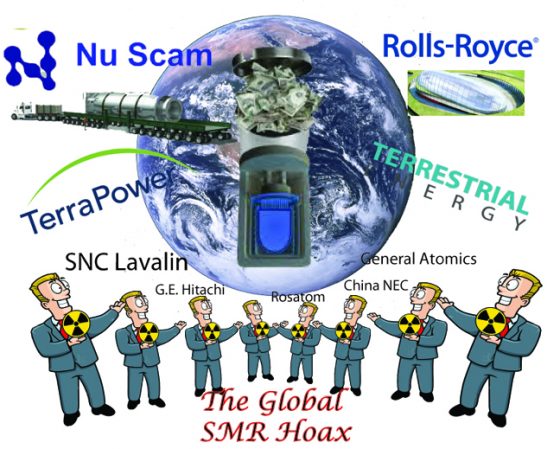
The problem is that hardly anyone in Congress has any real understanding of nuclear technology. The members are swept off their feet by promises of safe, non-carbon producing energy sources, especially when nuclear proponents use adjectives like “small” and “modular” and “advanced.” Congressional discussions on international aspects seldom get beyond “restoring America’s competitive advantage in nuclear energy.”
There is also little understanding of the limitations of international “safeguards,” the inspection system of the International Atomic Energy Agency (IAEA). (Is there any realistic recourse if the Saudis break the rules?) It is indicative of Saudi Arabia’s attitude toward the IAEA that it has used every stratagem to minimize its safeguards responsibilities. The minimization strategy does not violate IAEA requirements, yes, but a country anxious to demonstrate its nuclear bona fides should be more forthcoming in its nonproliferation cooperation.
The 2008 US-India civil nuclear agreement is an eternal warning about how American international nuclear policy can go off the rails when the president and Congress are swept away by visions of gaining an ally against China plus the prospect of dozens of power reactor sales. That agreement ran a truck through the Non-Proliferation Treaty, and none of the sales of nuclear power plants materialized.
The Saudis know Americans can be made to swallow principle—they recently succeeded in humbling the US president on human rights and oil prices—and so are unlikely to soften their stance on inclusion of enrichment in a 123 agreement. The White House will be looking for a formula that accepts it, but adds some restriction, or appearance of restriction, or another sweetener, perhaps related to Palestinian rights, that would allow members of the House and Senate to go along with inclusion of enrichment in a US-Saudi agreement.
Who would stand in the way? Not the Republicans: They love the Saudis. The one possibility is if Israel balks at any deal that includes Saudi enrichment. Opposition Leader Yair Lapid told Democratic Party lawmakers visiting Israel recently that he opposes a potential Israel-Saudi Arabia normalization deal that allows Riyadh to enrich uranium because it would harm Israel’s security. But the Israeli government’s response—that is, Prime Minister Netanyahu’s—has been ambiguous.
Somebody needs to stand up. Not only should the United States say no to Saudi enrichment, but Washington should also rethink the entire notion of nuclear power reactors in Saudi Arabia. Such reactors, coupled with a reprocessing facility to extract plutonium from used fuel, which the Saudis will surely want as well, provide the other path to a bomb, a plutonium bomb.
With its constant threat of wars, the Middle East is no place for nuclear reactors. Nuclear reactors in the region have been targeted in aerial attacks a dozen times. The safety issues that followed the capture by the Russians of the Zaporizhzhia power reactors in Ukraine should teach us something, too. Nuclear reactors do not belong in regions of potential conflict.
The ultimate argument against a US-Saudi nuclear deal is the crown prince himself, who is in line to be king and for practical purposes already is. He is a liar and a gruesome killer. Saudi Arabia, for all its modern trappings, is a primitive state with no effective checks on his powers. The king makes the laws, rules by decree, and is the chief judge. He has powers the British king gave up in the 13th century. Saudi Arabia has a long way to go before it will be a safe place for nuclear energy.
1 This Month

of the week – Shut Down Drone Warfare!


Tell the Ukrainian Government to Drop Prosecution of Peace Activist Yurii Sheliazhenko

Petition to revoke the licensing of the Near Surface Nuclear Disposal Facility (NSDF) at Chalk River. https://www.ourcommons.ca/petitions/en/Petition/Details?Petition=e-7247
To see nuclear-related stories in greater depth and intensity – go to https://nuclearinformation.wordpress.com
-
Archives
- March 2026 (237)
- February 2026 (268)
- January 2026 (308)
- December 2025 (358)
- November 2025 (359)
- October 2025 (376)
- September 2025 (257)
- August 2025 (319)
- July 2025 (230)
- June 2025 (348)
- May 2025 (261)
- April 2025 (305)
-
Categories
- 1
- 1 NUCLEAR ISSUES
- business and costs
- climate change
- culture and arts
- ENERGY
- environment
- health
- history
- indigenous issues
- Legal
- marketing of nuclear
- media
- opposition to nuclear
- PERSONAL STORIES
- politics
- politics international
- Religion and ethics
- safety
- secrets,lies and civil liberties
- spinbuster
- technology
- Uranium
- wastes
- weapons and war
- Women
- 2 WORLD
- ACTION
- AFRICA
- Atrocities
- AUSTRALIA
- Christina's notes
- Christina's themes
- culture and arts
- Events
- Fuk 2022
- Fuk 2023
- Fukushima 2017
- Fukushima 2018
- fukushima 2019
- Fukushima 2020
- Fukushima 2021
- general
- global warming
- Humour (God we need it)
- Nuclear
- RARE EARTHS
- Reference
- resources – print
- Resources -audiovicual
- Weekly Newsletter
- World
- World Nuclear
- YouTube
-
RSS
Entries RSS
Comments RSS
 nuclear-news