Rolls Royce aims to market its Small Nuclear Reactors to Saudi Arabia (a good step towards nuclear weapons?)
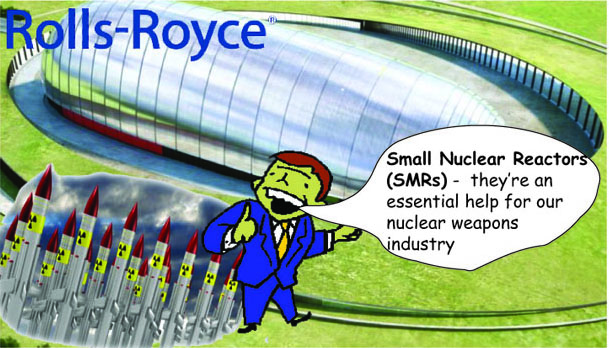
Rolls-Royce heads to Middle East as Saudi Arabia plots £74bn nuclear investment,
ROLLS-ROYCE is looking to the Middle East to export its new [so-called] green technology while Saudi Arabia is reportedly eyeing up a £74billion nuclear investment.
Express UK By JACOB PAUL, Wed, Jan 19, 2022………….. Rolls-Royce looks set to bring its SMR technology to the World Future Energy Summit. This is a global conference showcasing green energy technology. Mr Samson said the company is hoping to start talks with government representatives and large industrial in the Middle East……
And this comes as Saudi Arabia is reportedly exploring options of investing $100 billion (£73.55billion) in several nuclear plants with a combined capacity of 22 gigawatts………
It comes as Rolls-Royce looks set to bring its SMR technology to the World Future Energy Summit.
This is a global conference showcasing green energy technology.
Mr Samson said the company is hoping to start talks with government representatives and large industrial in the Middle East.
And this comes as Saudi Arabia is reportedly exploring options of investing $100 billion (£73.55billion) in several nuclear plants with a combined capacity of 22 gigawatts……..
Mtr Samson – “We have opened up a whole spectrum of customers.”
And Rolls-Royce has already been looking for opportunities to sell its technology to potential UK customers.
But the first SMR units are not expected to come online before the early 2030s. Mr Samson said the company needs to first go through the regulatory processes in Britain. It also needs time to build factories, certify its designs and move on to the production process………… https://www.express.co.uk/news/science/1552184/rolls-royce-middle-east-Saudi-arabia-smr-nuclear-world-future-energy-summit
Iran nuclear talks deadlock risks dangerous vacuum
Iran nuclear talks deadlock risks dangerous vacuum, Analysis: As clock runs down on Vienna talks, key obstacles remain to be cleared by Tehran and the west. Guardian, Patrick Wintour Diplomatic editor, Mon 17 Jan 2022 The countdown to the end of the six-month-long talks in Vienna on the future of the Iran nuclear deal has begun. No deadline has been formally set, but if there is no progress in less than two weeks the process will come to an end leaving a dangerous vacuum.
The White House has already been rolling the pitch preparing its political lines for a breakdown by saying the US withdrawal from the agreement by Donald Trump in 2018 has proved to be a disaster. If there is no agreement, the Biden team intend Trump will take the blame…………
Those close to the talks say they think there can be an agreement, but that from a western perspective it will possibly be so limited in scope it is will be seen as temporary. If so, as Enrique Mora, the chief EU negotiator has said, it will not be for lack of trying……….
Full-scale talks will resume on Monday, with both the UK and Germany represented by new chief negotiators, Stephanie Al-Qaq and Tjorven Bellmann respectively. Detail on progress is being kept to a minimum………………….
A second issue surrounds the guarantees Iran is seeking that the US will not repeat Trump’s withdrawal from the deal in May 2018. The US cannot offer a legally binding treaty since the Senate would never agree to one. Price said: “There is no such thing as a guarantee in diplomacy and international affairs. We can speak for this administration, but this administration has been very clear that we are prepared to return to full compliance with the JCPOA [Joint Comprehensive Plan of Action] and to stay in full compliance with the JCPOA as long as Iran does the same.”
A UN security council resolution might be a bare minimum of comfort for Iran, but is hardly binding on the parties. Tehran wants binding commitments that if the US quits the deal, the EU will do more to defy secondary US sanctions by injecting real cash into the abortive trading mechanism Instex set up by the EU to bypass US sanctions.
A third issue is verification. What are the metrics by which Iran can verify that sanctions have been lifted in reality and not just on paper, and consequently that it must stop enriching uranium at levels of purity not allowed under the agreement? There has been loose talk that the US believes the lifting of sanctions could be verified in 48 hours, but Iran wants a longer process with benchmarks.
The final issue is how to handle both the technical knowledge, including advanced centrifuges and large amounts of enriched uranium that Iran has acquired during the period it has ended its commitments to the JCPOA. https://www.theguardian.com/world/2022/jan/17/iran-nuclear-talks-deadlock-risks-dangerous-vacuum
It is time for Israel to come clean about its nuclear weapons.
It is time for Israel to come clean about its nuclear weapons, America The Jesuit Review, Drew Christiansen, January 14, 2022 Yet again, Covid-19 has led to the postponement of the 10th Nonproliferation Treaty (NPT) Review Conference, which was originally scheduled for 2020, the 50th anniversary of the treaty going into effect. The meeting of the state parties to the treaty is now delayed until this coming August. The treaty is the most important in the badly shredded network of arms control agreements that were drawn up in the Cold War and post-Cold War eras to prevent nuclear war and to set the world on the path to abolition of nuclear weapons.
The NPT is the one treaty to which the historic, or legacy, nuclear powers (China, France, the Russian Federation, the United Kingdom and the United States) all belong. All have opposed the 2017 Treaty on the Prohibition of Nuclear Weapons that explicitly aims for the abolition of nuclear weapons. But non-nuclear states largely support the TPNW, as they believe the legacy states have abused the NPT to defend their own interests and, particularly in the last decade, to evade their own commitments to nuclear disarmament.
Non-nuclear states also perceive legacy states as playing favorites with certain nations outside the NPT, including Israel. In today’s nuclear landscape, however, Israel can no longer justify its evasiveness about its nuclear status, and its aggressive policies toward potential nuclear states among its regional rivals have made it a destabilizing force, constraining progress toward disarmament. It is time for Israel to come clean about its nuclear capacity and to join the international system of arms control.
The new realities of a multipolar nuclear world
While the TPNW establishes a duty for member states to try to universalize the treaty, the NPT has no such requirement. Its members seem content to sustain the status quo with a divide between the legacy nuclear states and non-nuclear states, with four nuclear-armed states outside the treaty (Pakistan, India and North Korea, in addition to Israel). In recent years, however, the bipolar balance of power between the United States and the former Soviet Union that sustained the treaty, with lesser powers in subordinate roles, has evolved dramatically.
This means that in its 52nd year, the NPT, with its current membership, is less useful as a framework for nuclear disarmament than it was only a decade ago. New realities include the fact that China is vying to become a nuclear superpower on par with the United States and Russia by modernizing its nuclear arsenal. Also, North Korea has become a powerful rogue state, developing a variety of weapons and delivery systems, challenging the United States, and threatening America’s East Asian allies of South Korea and Japan.
As for Israel, it remains the sole (though undeclared) possessor of nuclear weapons in the Middle East and seems determined to remain so. Securing its nuclear superiority has become the driving force of its strategic policy. After bombing nuclear reactors in Iraq and Syria, it has reportedly conducted assassinations of nuclear scientists and sabotage operations, and it encouraged the Trump administration’s withdrawal from the 2015 international agreement designed to deny Iran the potential for developing its own bomb. Senior Israeli aides now regard those moves as a mistake because the Iranian program has shown surprising resilience. The situation in Iran is also a reminder that in a multipolar nuclear world, with major actors outside the NPT, that treaty fails to provide the nuclear peace it once promised……………….. https://www.americamagazine.org/politics-society/2022/01/14/israel-npt-nuclear-nonproliferation-treaty-242184
Nuclear war is a genuine threat, so why have non-proliferation efforts stalled?
Nuclear war is a genuine threat, so why have non-proliferation efforts stalled? Arab News, 10 Jan 22,
- The Treaty on the Non-Proliferation of Nuclear Weapons committed states to reduce their arsenals with the goal of eliminating them
- The P5 group of nations released a joint statement on Jan. 3 affirming “a nuclear war cannot be won and must never be fought”
NEW YORK CITY: Although the world is understandably preoccupied with the coronavirus pandemic, climate change, and regional conflicts, it would be wrong to assume that the threat of nuclear war had vanished. In fact, the probability of nuclear annihilation remains perilously high.
At the beginning of the year, the pandemic claimed yet another casualty — the 10th Review Conference of the parties to the Treaty on the Non-Proliferation of Nuclear Weapons, which had been scheduled to take place on Jan. 4.
The postponement of the meeting until August went largely unreported at the time because, it would appear, the perceived threat posed by nuclear weapons had lost its urgency in recent decades.
However, the development came as tensions escalated between Western countries and Russia over Ukraine as well as between the US and China over Taiwan.
The non-proliferation treaty, or NPT, which forms the foundation of the non-proliferation regime, was signed in 1968 and came into force in 1970. It is the single most important instrument that the 191 states-parties have to prevent further proliferation and lead the world toward total disarmament.
The bargain that underpins the NPT is very simple: The nuclear states under the treaty commit to reduce their nuclear arsenals with the ultimate goal of eliminating them, and the non-nuclear states adhere to their commitments enshrined in the treaty to not acquire nuclear weapons.
Not everyone has adhered to this. India, Pakistan, Israel, and North Korea are not signatories, while Iran, although an NPT signatory, is nevertheless enriching uranium and is locked in a battle with the West over its nuclear program.
It is the second time the 10th RevCon has been rescheduled due to the pandemic. The 2020 conference, which would have coincided with the NPT’s 50th anniversary, was also delayed, scuttling hopes of getting the non-proliferation regime back on track and breathing new life into the arms control and disarmament process.
The three pillars of the NPT — non-proliferation, disarmament, and the peaceful use of nuclear technologies — have seen varying degrees of success.
While the non-nuclear states kept their end of the bargain and adhered to the treaty, bar a couple of exceptions, the nuclear states have been less faithful. They have not fulfilled their obligations, as stipulated by article six of the NPT, to rid the world of nuclear weapons. This has led to tensions and placed a strain on the whole non-proliferation regime.
Looking for an alternative, the non-nuclear states pushed for a process in the UN General Assembly, which culminated in the adoption of a Treaty on the Prohibition of Nuclear Weapons on July 7, 2017, coming into force on Jan. 22, 2021.
However, the conference’s postponement could not have come at a worse time, as anxiety over the fraying of the architecture of arms control is mounting.
Experts believe the risk of nuclear war is greater than ever. The Bulletin of the Atomic Scientists has set its Doomsday Clock at 100 seconds to midnight — the closest the timepiece has been to symbolic doom in its more than 70 years of its existence.
A speech by former US Senator Sam Nunn, an authority on nuclear weapons, on the 50th anniversary of the NPT in 2020 described the danger in stark terms…………….
The Stockholm International Peace Institute has estimated that the world’s nuclear states collectively possessed approximately 13,080 nuclear weapons as of January 2021. That figure represented a small decrease on the 13,400 estimate of 2020.
However, this has been offset by the increase in the number of nuclear weapons deployed with operational forces, from 3,720 in 2020 to 3,825 in 2021. Of these, around 2,000 were “kept in a state of high operational alert,” the institute said in its 2021 report.
All of this has occurred in the absence of a credible arms control process because of growing tensions between the US and Russia over Ukraine, and America and China over Taiwan, Hong Kong, and the Indo-Pacific.
Although they were disappointed by the conference postponement, the non-nuclear states were heartened on Jan. 3 when the US, Russia, China, France, and the UK, a group of powers known as the P5, put out a joint statement claiming they “consider the avoidance of war between nuclear-weapon states and the reduction of strategic risks as our foremost responsibilities.
However, this has been offset by the increase in the number of nuclear weapons deployed with operational forces, from 3,720 in 2020 to 3,825 in 2021. Of these, around 2,000 were “kept in a state of high operational alert,” the institute said in its 2021 report.
All of this has occurred in the absence of a credible arms control process because of growing tensions between the US and Russia over Ukraine, and America and China over Taiwan, Hong Kong, and the Indo-Pacific.
Although they were disappointed by the conference postponement, the non-nuclear states were heartened on Jan. 3 when the US, Russia, China, France, and the UK, a group of powers known as the P5, put out a joint statement claiming they “consider the avoidance of war between nuclear-weapon states and the reduction of strategic risks as our foremost responsibilities……………….
From the standpoint of Arab countries, there was also an important element missing from the joint statement, which failed to mention the 1995 NPT resolution introduced by the US, the UK, and Russia agreeing in support of the principle of a Middle East region free from all weapons of mass destruction.
It had been hoped that the 10th RevCon would provide an opportunity to acknowledge the progress made in this regard. The first Conference on the Establishment of a Middle East Zone Free of Nuclear Weapons and Other Weapons of Mass Destruction took place at the UN headquarters in New York in 2019, chaired by Jordan, and again in 2021, chaired by Kuwait.
Israel, the only state in the Middle East thought to possess nuclear weapons, did not attend any of the sessions, nor did the US, despite being one of the main sponsors of the 1995 resolution.
Supporters of arms control therefore have little choice but to wait until August to see whether the P5 will back up their words with action and deliver a “meaningful outcome” that will preserve the integrity of the NPT. https://www.arabnews.com/node/2001751/world
Former Israeli premier says notion of destroying Iran’s nuclear capabilities mere ‘nonsense’
Former Israeli premier says notion of destroying Iran’s nuclear capabilities mere ‘nonsense’Press Tv, 11 January 2022 The former Israeli prime minister has dismissed any possibility of a preemptive attack on Iran’s nuclear facilities by the regime, saying that such a notion is “nonsense.”
Ehud Olmert made the remarks in a Monday interview with Israel’s Channel 12 news, during which he derided the idea that the Tel Aviv regime would be able to destroy Iran’s nuclear facilities through a military strike.
Olmert emphasized that such a notion would be pure “nonsense,” adding, “It is unnecessary arrogance that indicates weakness, not strength.”
Olmert’s latest remarks echoed his previous assertions in an opinion piece published in Haaretz Hebrew site in which he noted that Israel did not have conventional military capabilities that enable it to strike and permanently eliminate Iran’s nuclear facilities as it did in Iraq in 1981 and Syria in 2007.
The Israeli regime has never stopped advertising the threat of “military action” against Iran and falsely accusing the Islamic Republic of seeking to acquire nonconventional military capability.
Iran, for its part, has repeatedly downplayed Israel’s threats against its nuclear facilities, promising crushing response to any act of aggression against the country.
On January 3, Iran’s foreign minister slammed anti-Iranian remarks by Israel’s foreign minister Yair Lapid, saying that the Islamic Republic will defend its interests with power.
Hossein Amir-Abdollahian’s remarks came in a tweet in response to earlier claims by Lapid that the Zionist regime “could attack Iran if necessary without informing the Biden administration,” adding that “Israel has capabilities, some of which the world, and even some experts in the field, cannot even imagine.”…………………………… https://www.presstv.ir/Detail/2022/01/11/674486/Ex-Israeli-PM-destroy-Iran-s-nuclear-capabilities-nonsense
Will 2022 Bring A Revived Iran Nuclear Deal — Or A Hard-Line Plan B?
Will 2022 Bring A Revived Iran Nuclear Deal — Or A Hard-Line Plan B?, Radio Free Europe 31 Dec 21, The year 2022 could see an escalation of tensions between Iran and the United States if nuclear talks aimed at reviving the stalled 2015 nuclear deal collapse.
While analyst believe an agreement is still reachable as ongoing negotiations are entered into the new calendar, the United States and EU countries have warned that there are only “weeks” left to salvage the agreement, formally known as the Joint Comprehensive Plan Of Action (JCPOA).
The landmark accord, which significantly limited Tehran’s nuclear activities in exchange for sanctions relief, unraveled after 2018 when then-U.S. President Donald Trump pulled Washington out of the deal and reimposed crippling economic sanctions on Iran………………
Ali Vaez, director of the Iran Project at the International Crisis Group, says there is still a “narrow pathway” for mutual compliance with the 2015 deal, adding that it requires flexibility on both sides and a pragmatic approach by Tehran…………
Experts say the alternatives to the nuclear deal are not attractive.
“None of the alternatives are good, which is, of course, why the West has pushed to revive the deal. But Iran is leaving it little choice,” Henry Rome, a senior Iran analyst at the Eurasia Group in Washington, told RFE/RL. “The most likely no-deal scenario involves a year of escalation with more Iranian nuclear progress, American and European economic sanctions, Israeli and American military threats, and popular protest and economic stagnation in Iran.”
“The U.S. is likely to pull the plug and switch to a much more coercive approach by the end of January, unless either talks make good progress or Iran’s nuclear progress slows down,” Vaez said.
A more forceful approach could include attempts by the United States to cut off Iran’s oil exports to China, which have continued despite U.S. sanctions that prevent Iran from selling its oil, a main source of revenue for the country. Such oil sales, which according to figures by the commodity analytics firm Kpler increased to almost 18 million barrels in November, have helped Tehran survive under sanctions that have crippled its economy.
There have also been talks about an interim deal under which Tehran would suspend its sensitive nuclear activities in exchange of some economic relief. Such an agreement, similar to the approach employed in working out the original JCPOA, could stave off an immediate nuclear crisis and create time and space for a future deal.
But as analyst Rome notes, Tehran is unlikely to go that route for now.
“I am doubtful there will be an interim deal next year,” Rome said. “If Iran is not keen on the economic benefits of the full JCPOA, it’s not clear why it would settle for lesser benefits under a smaller deal.”……………………… https://www.rferl.org/a/iran-nuclear-talks-2022-options/31634579.html
Iran launches rocket into space as nuclear talks continue
Iran launches rocket into space as nuclear talks continue, Aljazeera, 31 Dec 21,
Iran uses satellite carrier rocket to send three research devices into space, state media reports, as talks to revive nuclear deal continue in Vienna.
Iran has launched a satellite carrier rocket bearing three research devices into space, according to state media, as difficult negotiations over its tattered nuclear deal with world powers continue in Vienna.The reports on Thursday did not say when the launch was conducted, nor what devices the carrier brought with it. It was unclear whether any of the objects entered orbit around the Earth…………………….. https://www.aljazeera.com/news/2021/12/30/iran-announces-new-space-launch-amid-nuclear-talks-in-vienna
Iran Simulated Attack On Israel’s Dimona Nuclear Site In Recent Wargames
Iran Simulated Attack On Israel’s Dimona Nuclear Site In Recent Wargames, Iran International, 26 Dec 21, Iran simulated an attack against Israel’s Dimona nuclear reactor during extensive military drills this week, that included launching multiple ballistic missiles.
Fars news agency, an affiliate of Iran’s Revolutionary Guard, published a video on Sunday that shows a mock-up of the Israeli nuclear site as the target of the simulated operation.
The Dimona reactor, officially known as the Shimon Peres Negev Nuclear Research Center, was marked as “WMD production center” in the high-resolution video.
Sixteen ballistic missiles and five suicide drones were launched against the mock target in the operation.
Rhetoric has intensified between Iran and Israel in recent weeks as nuclear talks between Tehran and world powers have stalled in Vienna. Israel has vowed that if Iran’s nuclear program reaches a statge close to production of weapons, it will act regardless of an agreement the United States and other world powers reach with Tehran……………. https://www.iranintl.com/en/202112260336
Iran: The chance for nuclear diplomacy shouldn’t be wasted
Mahmood Monshipouri, PhD. The chance for nuclear diplomacy shouldn’t be wasted, Tehran Times, ,December 26, 2021 – With negotiations over the Iran nuclear deal (also known as the Joint Comprehensive Plan of Actions—JCPOA) being disrupted and delayed for so long, the parties concerned cannot avoid very serious talks any longer. Given the ongoing the US-Russia tensions over Ukraine on the one hand and the US-China tensions over Taiwan on the other, the importance of the negotiations over Iran’s nuclear deal cannot be underestimated. Furthermore, regional cooperation between Iran and its oil-rich neighbors is likely to increase as the prospects for the gradual U.S. withdrawal from the Persian Gulf region seem all but certain.
It is worth noting that the UAE has facilitated selling Iranian oil to China, significantly reducing the risks of regional escalation with Iran. Many sources have recently indicated that a thaw in economic relations between Tehran and Abu Dhabi has already occurred even as U.S. sanctions on Iran continue to remain in place. In light of these new realities, the real question persists: Will the Biden administration stay on the current path of stalemate and trigger further tensions with Iran or will it instead act swiftly enough to avoid the very worst consequences of gamesmanship? A failed nuclear diplomacy could have profound and destabilizing consequences for the region and the rest of the world. Needless to say, such an eventuality must be avoided at all costs. …………………………………….
What is at stake is the global economy and peace. The likely consequences of failed diplomacy—both in the immediate future and over the longer term—include military conflicts, disruption of oil shipments, and an unprecedented rise in regional tensions. Aside from the dangers of military confrontation, which could have grave ramifications, disruption of the world’s most important oil chokepoint, the Strait of Hormuz—through which over 20 million barrels of oil flow per day, or the equivalent of nearly one-fifth of global petroleum consumption—could plunge the global economy into a depression of historic proportion. Increasing regional tensions between Iran and its neighbors and the possibility of Iranian military actions in retaliation to mounting economic and political pressures would have far worse consequences……………………. https://www.tehrantimes.com/news/468480/The-chance-for-nuclear-diplomacy-shouldn-t-be-wasted
Iran Diplomat Condemns West’s ‘Psychological Warfare’ in Nuclear Deadlock
Iran Diplomat Condemns West’s ‘Psychological Warfare’ in Nuclear Deadlock, NewsWeek
BY DAVID BRENNAN ON 12/23/21 An Iranian official has fired more barbs at the Western signatories of the Joint Comprehensive Plan of Action (JCPOA) nuclear deal, ahead of the resumption of talks to revive the accord in Vienna next week.
Iran’s ambassador to the U.K., Mohsen Baharvand, is the latest Iranian diplomat to criticize the conduct of the U.S., France, Germany and the U.K. in the ongoing negotiations, which after seven rounds of talks have failed to break the deadlock.
Both European and American representatives are warning that the window to make a deal is closing. In the absence of a diplomatic solution, some reports have suggested that the U.S.—with Israeli backing—will consider military action to slow Iran’s nuclear program.
“When we do not negotiate with them, they use all their tools and hypocritically pretend to be in favor of dialogue and engagement,” Baharvand wrote on his Instagram account, as reported by Iran’s Mehr News Agency.
“However when Iran agrees to sit at the table, the Western side makes excessive demands contrary to their previous statements. They do not give the other side any rights and adopt an aggressive stance so that any negotiator with any political background regrets the constructive and positive attitude…………….
Iran and its European and American partners have blamed one another for the failure of the recent rounds of talks, both sides suggesting the other is making unrealistic demands designed to be rejected…………..
Tensions are high as representatives prepare for the next round of Vienna talks on Monday.
From Iran, Abolfazl Amouei—the spokesperson for the Iranian Parliament’s National Security and Foreign Policy Committee—said on Friday that Western negotiators should “stop stubbornness and accept Iran’s proposals for removal of sanctions.” https://www.newsweek.com/iran-diplomat-condemns-west-psychological-warfare-nuclear-deadlock-jcpoa-vienna-1662569
Iran holds air defence drill near Bushehr nuclear plant
Iran holds air defence drill near Bushehr nuclear plant
Drill comes days after latest round of talks in Vienna to restore Iran’s nuclear deal with world powers ended without an agreement. Aljazeera, Maziar Motamedi 20 Dec 2021
Tehran, Iran – Iran has held an air defence drill in the vicinity of its southwestern Bushehr nuclear power plant amid ongoing tensions over the country’s nuclear programme.
State media reported that the drill was conducted in the early hours of Monday to the south of the Bushehr province and also over parts of the Persian Gulf.
The drill comes days after the latest round of talks in Vienna to restore Iran’s nuclear deal with world powers which ended with some modest gains but no agreement.
Israel has opposed efforts to revive the 2015 deal, which lifted sanctions on Tehran in exchange for curbs on its nuclear programme and has continued to threaten direct military action against Iranian nuclear facilities.
Nournews, a media outlet close to Iran’s security forces, reported last week that security forces assess there may be a credible possibility Israel would launch an attack in an effort to thwart the talks in Vienna.
On Monday, it quoted Gholamali Rashid, the commander of the Islamic Revolutionary Guard Corps’ (IRGC) Khatam al-Anbiya military base, as also mentioning the Vienna talks, and adding that any potential Israeli attack
would not be possible without the US giving its approval………..
The Natanz facilities were the target of two main sabotage attacks, which Iran blamed on Israel, in 2020 and 2021. There was also another sabotage attack in June, also blamed on Israel, on a centrifuge parts assembly workshop in Karaj near capital Tehran.
The seventh round of nuclear talks in Vienna between Iran and the world powers party to the accord the US abandoned in 2018 closed with modest progress on Friday. Talks are expected to resume in the coming days before the end of the current year.
Iran and Western powers have so far been at odds in the talks over which sanctions need to be lifted, and what measures Iran needs to take to scale back down its advancing nuclear programme. https://www.aljazeera.com/news/2021/12/20/iran-holds-air-defence-drill-over-bushehr-nuclear-plant
Iran and UN inspector reach agreement on reinstalling cameras at Karaj nuclear facility
Iran and the UN inspector have reached an agreement on the imminent reinstallation of cameras at the Karaj nuclear facility, a move that is seen as indispensable to keeping alive the broader nuclear talks and the lifting of US sanctions on Tehran. Those negotiations appear to be hanging by a thread judging by a string of negative comments from European diplomats when they discussed the progress of the talks at the UN security council on Tuesday. Guardian 16th Dec 2021 https://www.theguardian.com/world/2021/dec/16/iran-un-inspector-agreement-cameras-nuclear-facility-us-sanctions |
Iran nuclear talks to resume ‘soon’ after modest gains in Vienna
Iran nuclear talks to resume ‘soon’ after modest gains in Vienna
Negotiators trying to agree on a joint text that would act as the basis for a potential agreement. Aljazeera By Maziar Motamedi 17 Dec 202117 Dec 2021
The seventh round of talks in Vienna to restore Iran’s 2015 nuclear deal has ended and while it appears progress was made, the negotiating world powers are not close to an agreement.
A Joint Commission meeting of the remaining signatories of the deal the United States abandoned in 2018 was held in Palais Coburg on Friday…………………….. https://www.aljazeera.com/news/2021/12/17/iran-nuclear-talks-to-resume-soon-after-modest-gains-in-vienna
Because Trump left the nuclear deal, we might have to learn to live with a nuclear Iran
Because Trump left the nuclear deal, we might have to learn to live with a nuclear Iran https://www.washingtonpost.com/opinions/2021/12/13/because-trump-left-nuclear-deal-we-might-have-learn-live-with-nuclear-iran/ By Max Boot
President Donald Trump’s 2018 decision to pull out of the Iran nuclear deal might have been the most disastrous foreign policy miscalculation since the invasion of Iraq in 2003. (The only competitor for that dubious honor is the one-sided agreement that Trump concluded with the Taliban and that President Biden implemented.)
Under the 2015 nuclear deal, Iran got rid of 97 percent of its nuclear fuel and limited its uranium enrichment to just 3.67 percent purity. Its “breakout” time to produce enough material to make a nuclear bomb was estimated to be more than a year.
Trump’s withdrawal allowed Iran to rev up its nuclear program. The International Atomic Energy Agency reported last year that Iran had 12 times the amount of enriched uranium allowed under the deal. It is also enriching uranium to 60 percent purity, just short of the 90 percent needed to make nuclear weapons. Its breakout time has shrunk to as little as three weeks. It will take longer to manufacture the warheads needed to create nuclear weapons, but Iran is far closer to that dreaded milestone than it was in 2018.
Even former Israeli security officials, most of whom opposed President Barack Obama’s nuclear deal, now admit that pulling out of it has backfired. Benjamin Netanyahu’s former defense minister, Moshe Yaalon, said last month: “Looking at the policy on Iran in the last decade, the main mistake was the withdrawal of the U.S. administration from the agreement.” Former Mossad director Tamir Pardo described the pullout as a “tragedy.” Retired general Isaac Ben Israel, chairman of the Israeli Space Agency, called “Netanyahu’s efforts to persuade the Trump administration to quit the nuclear agreement … the worst strategic mistake in Israel’s history.”
Now they tell us.
The Biden administration has been trying to revive the nuclear deal. Talks are going on in Vienna. But Iran feels burned by Trump’s pullout, and its new hard-line president, Ebrahim Raisi, hasn’t shown much interest in compromise. Secretary of State Antony Blinken said this month that “Iran right now does not seem to be serious about doing what’s necessary to return to compliance.”
That means the United States and Israel might be drawing closer to the decision they have long dreaded: Do they bomb Iran or allow Iran to get The Bomb? In the past, I would have said that bombing was the least-bad option, but I no longer believe that.
A nation of 85 million people, Iran is much larger and much stronger than the adversaries that America couldn’t defeat in Iraq and Afghanistan. And its nuclear program is far more advanced than those of Iraq or Syria when Israel bombed suspected nuclear facilities in those countries in 1981 and 2007, respectively.
The Iranian nuclear program is dispersed across dozens of hardened, hidden sites, all protected by a sophisticated air-defense system. The Fordow fuel enrichment plant is buried deep inside a mountain. Taking down Fordow, if it can be done at all, would probably require the 30,000-pound Massive Ordnance Penetrator. Israel does not have this bomb or the bomber — either a B-2 or B-52— needed to drop it.
The United States could, of course, provide Israel with these munitions, or it could bomb Iranian installations itself. But even successful strikes would only delay Iran’s nuclear program: You can eliminate nuclear facilities but not nuclear know-how.
Moreover, there is a real risk that any attack could trigger a larger Middle Eastern war. Iran would likely retaliate against U.S. forces in the region and against U.S. allies. Lebanese Hezbollah, for example, could rain down more than 100,000 missiles and rockets on Israel, enough to overwhelm its missile defenses. (In the 2006 Lebanon war, Hezbollah fired only 4,000 short-range rockets at Israel.) There’s a good reason no Israeli or American leader — not even hawks such as Netanyahu, George W. Bush and Trump — has been willing to bomb Iran. As I wrote in 2019, war with Iran could be “the mother of all quagmires.”
Letting Iran go nuclear, if that proves unavoidable, might actually be the less dangerous option. The Iranian regime has employed suicide bombers in the past, but it isn’t suicidal itself. Its leaders know that Israel has a large nuclear arsenal — including nuclear missiles reportedly deployed on submarines that could survive any attack on Israel. The United States could further deter Iran by explicitly extending its nuclear umbrella not only to Israel but also to Saudi Arabia, Turkey and other neighboring states. Nuclear weapons would allow Iran to avert a U.S. invasion that isn’t going to happen anyway but would do nothing to protect the regime against the biggest danger it faces: an uprising from its own people.
The Biden administration should keep trying to peacefully stop the Iranian nuclear program, but that might no longer be possible because of Trump’s catastrophic decision to leave the accord. And if those efforts fail? Well, we have lived with nukes in the hands of other vile and abhorrent regimes, such as the Soviet Union/Russia, North Korea and China. If we have to, we could learn to live with a nuclear Iran, too.
Push for a nuclear-weapons-free zone in the Middle East, BUT Israel is the elephant in the room
A Nuclear-Weapons-Free-Zone in the Middle East— & the Elephant in the Room http://www.ipsnews.net/2021/12/nuclear-weapons-free-zone-middle-east-elephant-room/?utm_source=rss&utm_medium=rss&utm_campaign=nuclear-weapons-free-zone-middle-east-elephant-room By Thalif Deen UNITED NATIONS, Dec 8 2021 (IPS) – Israel’s nuclear presence in the Middle East is best characterized as “the elephant in the room” -– an obvious fact intentionally ignored with deafening silence.
A Wall Street Journal cartoon, amplified the idiom, when it depicted a group of animals huddled together in the jungle with the elephant complaining: “I don’t know why they keep ignoring me when I am in the room.”
Nobody wants to openly discuss Israel as a nuclear power because it is a politically-sensitive issue, particularly in the United States.
And Israel has remained tight-lipped in the company of the world’s eight other nuclear powers– US, UK, France, China, Russia, India, Pakistan and North Korea— and it has never formally declared itself a nuclear power.
In an op-ed piece in the New York Times last August, Peter Beinart, a Professor of Journalism and Political Science at the City University of New York, wrote that US attempts at “feigning ignorance about Israeli nuclear weapons makes a mockery of America’s efforts at non-proliferation.”
Last December, President-elect Joe Biden warned that if Iran goes nuclear, Saudi Arabia, Turkey and Egypt might go nuclear too — “and the last goddamn thing we need in that part of the world is a build-up of nuclear capability.”
But like most US politicians and presidents, including Barack Obama, Biden too believes that Israel’s nuclear weapons are best ignored—and never challenged in public.
Back in 2009, says Professor Beinart, when Obama was asked by a reporter if he knew of any country in the Middle East with nuclear weapons, he said: “I don’t want to speculate.”
It is time for the Biden administration to tell the truth, Beinart wrote.
The nuclear weapons gamesmanship in the militarily and politically volatile Middle East goes in circles and semi-circles reaching a point of no return.
If Israel gets away with its nukes, the Iranians argue, “why shouldn’t we go nuclear too”, while the Saudis, the Egyptians and Turks warn: “If Iran goes nuclear, we will follow too”.
Meanwhile, since 1967, five nuclear-weapon-free zones (NWFZ) have been established worldwide — in Latin America and the Caribbean, South Pacific, Southeast Asia, Africa and Central Asia.
But such a weapons-free zone in the conflict-ridden Middle East continues to remain elusive.
UN Secretary-General Antonio Guterres points out that the established five zones include 60 percent of the UN’s 193 Member States– and cover almost all of the Southern Hemisphere.
Guterres welcomed the successful conclusion of the Second Session of the “Conference on the Establishment of a Middle East Zone Free of Nuclear Weapons and Other Weapons of Mass Destruction,” which took place November 29 to December 3, and congratulated the participating States “on their constructive engagement and the decision to establish a working committee to continue deliberations during the intersessional period”.
Dr M.V. Ramana, Professor and Simons Chair in Disarmament, Global and Human Security at the School of Public Policy and Global Affairs (SPPGA), University of British Columbia, Vancouver, told IPS establishing a nuclear weapons free zone in the Middle East is not only a major challenge but it is also important.
The challenge is primarily due to Israel’s refusal to not just discuss its decades-old nuclear weapons program but even acknowledge it, while at the same time attacking countries like Iran over even its nuclear energy-related programs, he argued.
Being backed by the United States, which adopts one rule for Israel and another rule for other countries, it is very difficult to involve Israel, said Dr Ramana, who is also Director of the Liu Institute for Global Issues and the Acting Director of the Centre for India and South Asia Research (CISAR) in the Institute of Asian Research.
The only way to change this state of affairs is for efforts like this to be mounted. Even if they are not successful, they at least raise the issue publicly, Dr Ramana declared.
Hillel Schenker, Co-Editor, Palestine-Israel Journal, told IPS there is no question that a Nuclear and Weapons of Mass Destruction (WMD) Free Zone in the Middle East is in the interests of all the peoples of the region.
However, the issue of a WMD Free Zone is simply not on the political or public agenda in Israel, whose leaders and people find it very convenient to be the only presumed nuclear power in the region, he noted.
“And it also doesn’t appear to be on the agenda of the Egyptians who used to be the primary advocates for the Zone.”
Right now, he said, the main possible step to advancing towards this goal is a successful conclusion of the talks being held in Vienna for a revival of the Joint Comprehensive Plan of Action (JCPOA), the nuclear agreement with Iran and the Western powers.
Although Israeli Prime Minister Naftali Bennett and Foreign Minister Yair Lapid have expressed opposition to a renewed deal, many senior figures in the Israeli security establishment support it, and believe it was a major mistake for former Prime Minister Netanyahu to have urged former US President Trump to withdraw from the JCPOA, he added.
If the talks are not successful, and Iran moves forward towards becoming a nuclear threshold state, it could produce a very dangerous chain reaction which might motivate Saudi Arabia, Egypt, Turkey and perhaps others to also try to go nuclear, seriously destabilizing the entire region, said Schenker.
Abdulla Shahid of the Maldives, President of the UN General Assembly, said nuclear disarmament and non-proliferation regimes remain pivotal in ensuring that such an intolerable reality never manifests. And Nuclear-Weapon-Free Zones are crucial to the success of disarmament and non-proliferation regimes, he said.
Like other regions, he argued, the geopolitics of the Middle East are complex. Reaching just settlements that will satisfy all parties requires sound diplomacy and negotiations based on good faith.
The addition of nuclear weapons and other weapons of mass destruction to the region’s politics will complicate an already challenging process, undermining trust and portending existential consequences.
It was in recognition of this that the General Assembly mandated a nuclear-weapons-free Middle East back in 1974, he said last week.
1 This Month
29 Jan. Thursday 7-8 p.m. Webinar – World’s Largest Nuclear Station in Port Hope, ON?
To see nuclear-related stories in greater depth and intensity – go to https://nuclearinformation.wordpress.com/
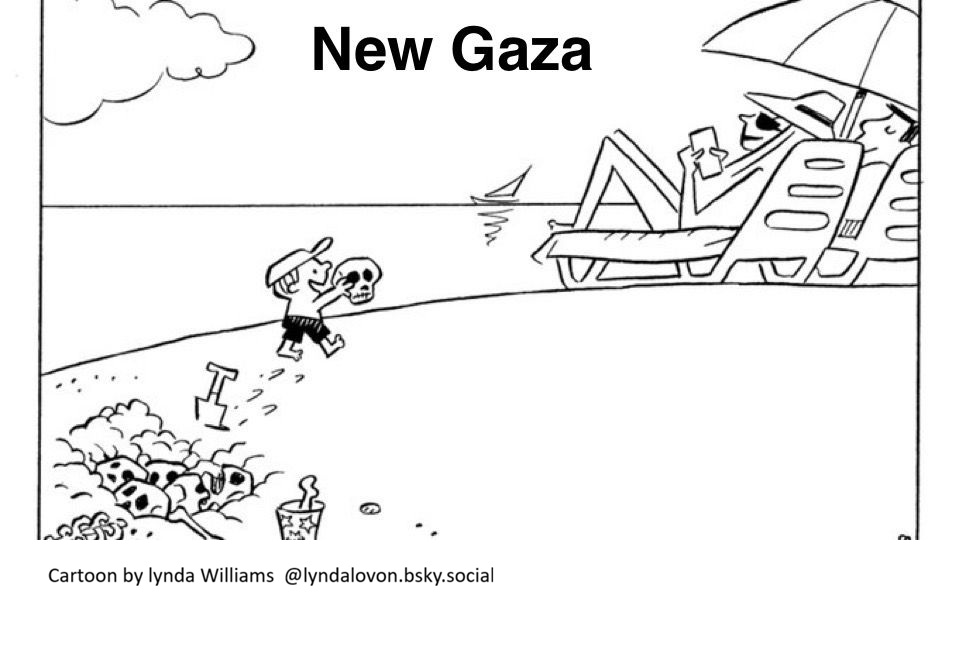

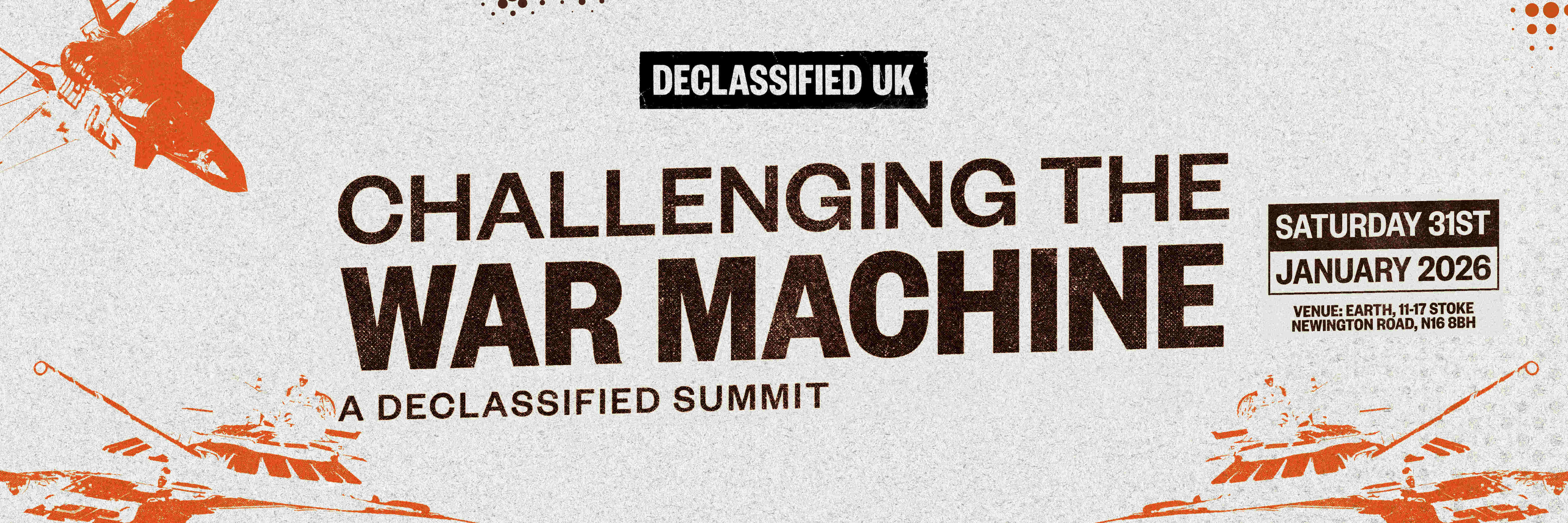
31st January – Challenging the War Machine – a DECLASSIFIED UK SUMMIT

Website of the Week
Now until to February 10, 2026 Radioactive waste storage in France: the debate is finally open! How to participate?
-
Archives
- January 2026 (288)
- December 2025 (358)
- November 2025 (359)
- October 2025 (376)
- September 2025 (258)
- August 2025 (319)
- July 2025 (230)
- June 2025 (348)
- May 2025 (261)
- April 2025 (305)
- March 2025 (319)
- February 2025 (234)
-
Categories
- 1
- 1 NUCLEAR ISSUES
- business and costs
- climate change
- culture and arts
- ENERGY
- environment
- health
- history
- indigenous issues
- Legal
- marketing of nuclear
- media
- opposition to nuclear
- PERSONAL STORIES
- politics
- politics international
- Religion and ethics
- safety
- secrets,lies and civil liberties
- spinbuster
- technology
- Uranium
- wastes
- weapons and war
- Women
- 2 WORLD
- ACTION
- AFRICA
- Atrocities
- AUSTRALIA
- Christina's notes
- Christina's themes
- culture and arts
- Events
- Fuk 2022
- Fuk 2023
- Fukushima 2017
- Fukushima 2018
- fukushima 2019
- Fukushima 2020
- Fukushima 2021
- general
- global warming
- Humour (God we need it)
- Nuclear
- RARE EARTHS
- Reference
- resources – print
- Resources -audiovicual
- Weekly Newsletter
- World
- World Nuclear
- YouTube
-
RSS
Entries RSS
Comments RSS
 nuclear-news