”Infinite war” – NATO and U.S. weapons industry found the perfect sales opportunity in Yemen
Arms Industry Sees Ukraine Conflict as an Opportunity, Not a Crisis, Jonathan Ng, Truthout , 2 Mar 22,

In the United States, the industry employs around 700 lobbyists. Nearly three-fourths previously worked for the federal government — the highest percentage for any industry. The lobby spent $108 million in 2020 alone, and its ranks continue to swell. Over the past 30 years, about 530 congressional staffers on military-related committees left office for defense contractors. Industry veterans dominate the Biden administration, including Secretary of Defense Lloyd Austin from Raytheon.
”’………………….Yemen Burning
Arms makers found the perfect sales opportunity in Yemen. In 2011, a popular revolution toppled Ali Abdullah Saleh, who had monopolized power for two decades. His crony, Abdu Rabbu Mansour Hadi, became president the next year after easily winning the election: He was the only candidate. Thwarted by elite intrigue, another uprising ejected Mansour Hadi in 2015.
That year, Prince Salman became king of Saudi Arabia, but power concentrated into the hands of his son, Mohammed bin Salman, who feared that the uprising threatened to snatch Yemen from Saudi Arabia’s sphere of influence.
Months later, a Saudi-led coalition invaded, leaving a massive trail of carnage. “There was no plan,” a U.S. intelligence official emphasized. “They just bombed anything and everything that looked like it might be a target.”
The war immediately attracted NATO contractors, which backed the aggressors. They exploit the conflict to sustain industrial capacity, fund weapons development and achieve economies of scale. In essence, the Saudi-led coalition subsidizes the NATO military buildup, while the West inflames the war in Yemen.
Western statesmen pursue sales with perverse enthusiasm. In May 2017, Donald Trump visited Saudi Arabia for his first trip abroad as president, in order to flesh out the details of a $110 billion arms bundle. His son-in-law, Jared Kushner, arrived beforehand to discuss the package. When Saudi officials complained about the price of a radar system, Kushner immediately called the CEO of Lockheed Martin to ask for a discount. The following year, Mohammed bin Salman visited company headquarters during a whirlwind tour of the United States. Defense contractors, Hollywood moguls and even Oprah Winfrey welcomed the young prince Yet the Americans were not alone. The Saudi-led coalition is also the largest arms market for France and other NATO members. And as the French Ministry of the Armed Forces explains, exports are “necessary for the preservation and development of the French defense technological and industrial base.” In other words, NATO members such as France export war in order to retain their capacity to wage it.
President Macron denies that the coalition — an imposing alliance that includes Saudi Arabia, Egypt, Jordan, the United Arab Emirates, Kuwait, Bahrain, Qatar, Sudan and Senegal — uses French weapons. But the statistics are suggestive. Between 2015 and 2019, France awarded €14 billion in arms export licenses to Saudi Arabia and €20 billion in licenses to the United Arab Emirates. CEO Stéphane Mayer of Nexter Systems praised the performance of Leclerc tanks in Yemen, boasting that they “have highly impressed the military leaders of the region.” In short, while Macron denies that the coalition wields French hardware in Yemen, local industrialists cite their use as a selling point. Indeed, Amnesty International reports that his administration has systematically lied about its export policy. Privately, officials have compiled a “very precise list of French materiél deployed in the context of the conflict, including ammunition.”
Recently, Macron became one of the first heads of state to meet Mohammed bin Salman following the assassination of journalist Jamal Khashoggi. Like Trump’s trip, Macron’s diplomatic junket was a sales mission. Eventually, Macron clinched a deal with the United Arab Emirates for 80 Rafale fighters. The CEO of Dassault Aviation called the contract “the most important ever obtained by French military aerospace,” guaranteeing six years of work for a pillar of its industrial base.
French policy is typical of NATO involvement in Yemen. While denouncing the war, every Western producer has outfitted those carrying it out. Spanish authorities massage official documents to conceal the export of lethal hardware. Great Britain has repeatedly violated its own arms embargo. And the United States has not respected export freezes with any consistency.
Even NATO countries in Eastern Europe exploit the war. While these alliance members absorb Western arms, they dump some of their old Soviet hardware into the Middle East. Between 2012 and July 2016 Eastern Europe awarded at least €1.2 billion in military equipment to the region.
Ironically, a leading Eastern European arms exporter is Ukraine. While the West rushes to arm Kyiv, its ruling class has sold weapons on the black market. A parliamentary inquiry concluded that between 1992 and 1998 alone, Ukraine lost a staggering $32 billion in military assets, as oligarchs pillaged their own army. Over the past three decades, they have outfitted Iraq, the Taliban and extremist groups across the Middle East. Even former President Leonid Kuchma, who has led peace talks in the Donbas region, illegally sold weapons while in office. More recently, French authorities investigated Dmytro Peregudov, the former director of the state defense conglomerate, for pocketing $24 million in sales commissions. Peregudov resided in a château with rolling wine fields, while managing the extensive properties that he acquired after his years in public service.
The Warlords
Kuchma and Peregudov are hardly exceptional. Corruption is endemic in an industry that relies on the proverbial revolving door. The revolving door is not simply a metaphor but an institution, converting private profit into public policy. Its perpetual motion signifies the social reproduction of an elite that resides at the commanding heights of a global military-industrial complex. Leading power brokers ranging from the Mitterrands and Chiracs in France, to the Thatchers and Blairs in Britain, and the Gonzálezes and Bourbons in Spain have personally profited from the arms trade.
In the United States, the industry employs around 700 lobbyists. Nearly three-fourths previously worked for the federal government — the highest percentage for any industry. The lobby spent $108 million in 2020 alone, and its ranks continue to swell. Over the past 30 years, about 530 congressional staffers on military-related committees left office for defense contractors. Industry veterans dominate the Biden administration, including Secretary of Defense Lloyd Austin from Raytheon.
The revolving door reinforces the class composition of the state, while undermining its moral legitimacy. As an elite rotates office, members insulate policymaking from democratic input, taint the government with corruption and mistake corporate profit with national interest. By 2005, 80 percent of army generals with three stars or more retired to arms makers despite existing regulations. (The National Defense Authorization Act prohibits top officers from lobbying the government for two years after leaving office or leveraging personal contacts to secure contracts. But compliance is notoriously poor.) More recently, the U.S. Navy initiated investigations against dozens of officers for corrupt ties to the defense contractor Leonard Francis, who clinched contracts with massive bribes, lavish meals and sex parties.
Steeped in this corrosive culture, NATO intellectuals now openly talk about the prospect of “infinite war.” Gen. Mike Holmes insists that it is “not losing. It’s staying in the game and getting a new plan and keeping pursuing your objectives.” Yet those immersed in its brutal reality surely disagree. The United Nations reports that at least 14,000 people have died in the Russo-Ukrainian War since 2014, and over 377,000 have perished in Yemen.
In truth, the doctrine of infinite war is not so much a strategy as it is a confession — acknowledging the violent metabolism of a system that requires conflict. As a self-selecting elite propounds NATO expansion, military buildup and imperialism, we must embrace what the warlords most fear: the threat of peace.The author would like to thank Sarah Priscilla Lee of the Learning Sciences Program at Northwestern University for reviewing this article. https://truthout.org/articles/arms-industry-sees-ukraine-conflict-as-an-opportunity-not-a-crisis/?eType=EmailBlastContent&eId=734c56bc-48da-4e66-bea1-f2bedb7d1431
Russia still part of Iran nuclear talks, US hopes for progress, White House says
Russia still part of Iran nuclear talks, US hopes for progress, White House says, https://www.reuters.com/world/russia-still-part-iran-nuclear-talks-us-hopes-progress-white-house-says-2022-02-28/ WASHINGTON, Feb 28 (Reuters) – Russians continue to be part of nuclear negotiations with Iran, and the Biden administration hopes to make progress in those talks, White House press secretary Jen Psaki said on Monday.
Drone and missile attacks on UAE’s Barakah nuclear plant
The United Arab Emirates’ only nuclear power plant is “well protected”
against security threats, the regulator said on Wednesday, following a
series of unprecedented drone and missile attacks on the Gulf state.
Yemen’s Iran-aligned Houthis said in 2017 they fired a cruise missile
towards the Barakah plant, a report which the UAE denied. The group has
repeatedly threatened to target critical infrastructure in the UAE.
Reuters 23rd Feb 2022
The Iran Nuclear Deal Isn’t a Threat, and Israel Must Find a New Approach

Editorial | The Iran Nuclear Deal Isn’t a Threat, and Israel Must Find a New Approach, https://www.haaretz.com/opinion/editorial/.premium-the-iran-nuclear-deal-isn-t-a-threat-and-israel-must-find-a-new-approach-1.10624130 The latest reports on the issue of Iran’s nuclear program have sown fear in the hearts of Israeli decision makers. There has apparently been significant progress in the talks between Iran and the Western powers in Vienna, and they may soon sign a new nuclear agreement. Prime Minister Naftali Bennett was quick to warn that “two things have happened” since the original deal was signed in 2015 – “the Iranians have made great strides in building their enrichment capability and time has passed. If the world signs the agreement again – without extending the expiration date – then we are talking about an agreement that buys a total of two and a half years, after which Iran can and may develop and install advanced centrifuges, without restrictions.”
Bennett forgot to mention that Iran began to violate the agreement only about a year after the United States withdrew from it unilaterally in 2018. He also forgot to mention that Israel made a big contribution to that American decision. Israel invested all its diplomatic efforts and military capabilities into torpedoing the agreement before it was signed, and now, it’s complaining that the new agreement will freeze Iran’s nuclear program for too short a time.
This complaint is inaccurate. The supervision and most of the restrictions will remain in place for many years, and in any case, Iran won’t be allowed to develop nuclear weapons. Moreover, had the agreement still been in force, the reduced sanctions and Iran’s increased profits would have made it possible to scrutinize its intentions more seriously, so there would be no need to automatically continue nurturing the idee fixe of an existential threat.
After the negotiations with Iran were frozen last June due to the election of a new Iranian president, Israel rushed to market the theory that Iran didn’t intend to return to the negotiating table. When the negotiations did resume, Israel predicted that Tehran would try to buy time and that its goal was to further develop its nuclear program under cover of the talks. Both of these prophecies proved wrong. Iran is negotiating aggressively – and while the negotiations haven’t been free of ups and downs, Tehran has demonstrated seriousness and appears determined to sign a deal.
If the deal is signed, it won’t allay all of Israel’s fears. Iran will still be able to continue developing ballistic missiles, and it’s not expected to stop supporting Hezbollah, Islamic Jihad, the Houthis in Yemen or militias in Iraq. At the same time, Tehran is seeking to repair its relationships with Saudi Arabia, the United Arab Emirates and the other Gulf states that are considered Israeli allies.
Israel’s government must view the agreement with suspicion, participate in the international supervisory effort to ensure that all its provisions are indeed upheld and work to thwart any Iranian threat against Israelis. But when the government views the agreement itself as a threat, it is undermining its aspiration to neutralize the existential threat Iran poses to Israel’s citizens.
New USA Federal Report Warns of Accelerating Impacts From Sea Level Rise.
New Federal Report Warns of Accelerating Impacts From Sea Level Rise. The
global average sea level is rising 2 inches per decade and speeding up, but
in some regions, the rate is more than twice that fast. Many residents of
coastal Southern Mexico don’t know that the sea around them is likely to
rise another 15 to 20 inches in just the next 30 years.
Those projections
were confirmed Tuesday by an updated report from the National Oceanic and
Atmospheric Administration and NASA using new satellite data and climate
models along with improved evaluations of historic data from tide gauges
dating back more than 100 years.
“What we’re reporting today is
historic,” said NOAA administrator Rick Spinrad, who told Americans that,
on average, sea level at their coasts will climb 10 to 12 inches in the
next 30 years and 2 feet by the end of the century.
Inside Climate News 16th Feb 2022
Why the Iran nuclear talks have stalled
Why have the nuclear negotiations with Iran stalled? Middle East Monitor, February 16, 2022 ”” …………………………………………………………………… Optimism about the outcome of the current negotiations remains difficult, not only because of the internal pressures — US negotiators obliged to make changes to the agreement; the Iranians calling for the complete lifting of sanctions — but also because of the other Iranian demand for a pledge that a new deal will remain in effect even when the US administration changes.
The difficulty in this is that it is not related to America’s relationship with Iran, but to the nature of the US political system, which refuses to make any agreement or treaty binding on future administrations. At the moment, the Iranian negotiator does not want to understand this, and instead insists on pressing for a guarantee which the Biden administration cannot provide. https://www.middleeastmonitor.com/20220216-why-have-the-nuclear-negotiations-with-iran-stalled/
US Grants Sanctions Relief To Iran,Inches Closer To Nuclear Deal Renewal
US Grants Sanctions Relief To Iran,Inches Closer To Nuclear Deal Renewal, Kashmir Observer
Agencies | February 5, 2022 Washington- The Biden administration has restored a sanctions waiver to Iran, a senior State Department official said on Friday, as indirect talks between the United States and Iran on returning to the 2015 nuclear agreement entered the final stretch.
The waiver, which was rescinded by the Trump administration in May 2020, had allowed Russian, Chinese and European companies to carry out non-proliferation work at Iranian nuclear sites.
The waiver was needed to allow for technical discussions that were key to the talks about return to the deal formally known as the Joint Comprehensive Plan of Action (JCPOA), a State Department official said………….. https://kashmirobserver.net/2022/02/05/us-grants-sanctions-relief-to-iraninches-closer-to-nuclear-deal-renewal/
Movie on assassination of nuclear scientist Dariush Rezainejad premieres at FajrCulture
Movie on assassination of nuclear scientist Dariush Rezainejad premieres at Fajr Culture. Tehran Times, February 6, 2022 TEHRAN – “Henas”, a drama about the assassination of nuclear scientist Dariush Rezainejad, premiered at the 40th Fajr Film Festival on Saturday.
35-year-old Rezainejad was shot dead by Mossad gunmen before the eyes of his wife and little girl in front of his house in Tehran in July, 2011. The movie portrays the terrorist attack through the eyes of his wife.
We never intended to make a spy drama,” director Hossein Darabi said in a press conference after the premiere of the film.
“Due to the fact that the subject is a matter of great security sensitivity, we wanted to portray the feelings of the wife in that situation,” he added.
He noted that the story of the film has been written based on Rezainejad’s life story and has its roots in reality.
“There is no point in the film in conflict with reality,” said Rezainejad’s widow, Shoreh Pirani, who was in attendance at the screening and press conference………………………. https://www.tehrantimes.com/news/469877/Movie-on-assassination-of-nuclear-scientist-Dariush-Rezainejad
Israel Simulated Attack On Iran’s Nuclear Facilities In Recent Drills
Israel Simulated Attack On Iran’s Nuclear Facilities In Recent Drills
The Israel Air Force has held a drill to simulate an attack on Iran’s nuclear facilities with dozens of warplanes, as tensions remain high in the region.
According to an unsourced report by Israel’s public broadcaster Kan news on Tuesday, the classified military exercise was held some two weeks ago, with a US Air Force officer in attendance.
The drills that took place over the Mediterranean included various scenarios such as mid-air refueling, long-range strikes, and different responses to anti-aircraft missiles……………… https://www.iranintl.com/en/202202021753
Iran says nuclear talks have made ‘significant’ headway
Iran says nuclear talks have made ‘significant’ headway, Argus 31 Jan 22, Negotiations in Vienna aimed at restoring the 2015 Iran nuclear deal made “significant progress” over the past three weeks, although differences remain on some key points, Iran’s foreign ministry spokesman Saeed Khatibzadeh said today.
The latest round of discussions resumed in December, with all the original parties to the deal working concurrently on issues relating to sanctions relief, Iran’s nuclear activities, verification and sequencing. The talks broke up late last week to allow delegates to return to their countries for consultations with their respective governments.
“The negotiations over the past three weeks have seen significant progress in four areas: sanctions lifting, nuclear commitments, verification and guarantees,” Khatibzadeh said, echoing some of the more positive assessments that have been made over the past few days.
Russia’s envoy to the talks Mikhail Ulyanov said last week that a deal between Iran and the US could be sealed as early as the end of February. The US has also been more optimistic in its appraisal of the talks, with White House Middle East adviser Brett McGurk saying last week that we are “in the ballpark of a possible deal”……………………. https://www.argusmedia.com/en/news/2297117-iran-says-nuclear-talks-have-made-significant-headway
MOST of Iran’s nuclear facilities are vulnerable to devastating drone attacks
Iran Fukushima warning: Iran’s nuclear plants could be WIPED OUT https://www.express.co.uk/news/world/1558057/Iran-news-nuclear-threat-war-latest
MOST of Iran’s nuclear facilities are vulnerable to devastating drone attacks, a report has found.
By MARCO GIANNANGELI – DIPLOMATIC EDITOR11:00, Sun, Jan 30, 2022 But using unmanned vehicles (UMVs) laden with explosives could lead to a critical Fukushima-style reactor meltdown.
The revelation comes as diplomatic efforts to rein in Iran’s nuclear ambitions continue to flounder, with former Italian foreign minister Giulio Terzi last night warning: “The Iran nuclear deal is already on life-support and it is very possible that it might falter altogether due to Iran’s shameless violations.”
Detailed analysis of its 22 nuclear facilities by Dr Bahram Ghiassee, of the Henry Jackson Society think-tank, found that all except the Fordow fuel enrichment plant, near Qom – built into a mountain – are vulnerable to drone strikes which could incapacitate them.
And burying the Fordow facility under 60 metres of rock does not protect it from attacks on air shafts and other external supply systems.
While many facilities would result in little overall impact if attacked, there are glaring exceptions, the report found. These include the conversion plant at the Esfahan nuclear technology centre – a critical part of the nuclear fuel cycle – and the Bushehr nuclear power plant on the Persian Gulf.
The same applies to the Natanz enrichment facility now being rebuilt into a mountain after an explosion – believed to have been caused by Israel – destroyed the previous overland structure.
Though nuclear power plants are built to withstand light aerial attacks, Bushehr’s ancillary facilities “are highly vulnerable to aerial attacks, including drone strikes”, said the report, including by “commercially available as ‘Surface UMVs’ and ‘Submersible UMVs’, with an operating range of some 120 kilometres. “
However, Dr Ghiassee, a nuclear consultant, added: “A synchronised attack on the cooling water facilities, external electricity supply and electricity distribution systems could lead to the overheating of the reactor core and the spent fuel ponds.
“Under such circumstances, as in the Fukushima nuclear accident, the reactor core could melt down.”
Attacks against Iranian nuclear facilities are not a new phenomenon.
The Bushehr power plant was attacked by Saddam Hussein during the Iran-Iraq war in 1980, though this caused minor damage.
More recently, Iran has been the recipient of incapacitating explosions, cyber strikes and UMV attacks.
Though not confirmed by Tel Aviv, these are believed to have been carried out by Israel after it openly pledged never to allow Iran – which has threatened to blow Israel off the face of the world – to possess nuclear weapons.
We have a duty to be brave and responsible for the fate of our children and grandchildren. We have used force against our enemies in the past, and we are convinced that in extreme situations, there is a need to act using military means,” said Israeli Deputy Defence Minister Alon Schuster recently.
Actions have included the assassination of Iranian nuclear scientists, the explosion at Natanz in 2020 – said to have been caused by the provision of faulty materials following Mossad’s infiltration of the supply chain- and the cyber strike in 2010 using the Stuxnet virus, which reportedly infected more than 200,000 commuters and destroyed a fifth of Iran’s nuclear centrifuges.
Iran nuclear negotiations reaching final stage
 | |||
Iran nuclear talks reaching final stage – E3 negotiators https://www.reuters.com/world/middle-east/iran-nuclear-talks-reaching-final-stage-e3-negotiators-2022-01-28/Reuters LONDON, Jan 28, 22 (Reuters) – Nuclear talks between Iran and Western powers are reaching their final stage and now require political input, E3 negotiators said in a statement on Friday.
Iran nuclear talks reaching final stage – E3 negotiators https://www.reuters.com/world/middle-east/iran-nuclear-talks-reaching-final-stage-e3-negotiators-2022-01-28/Reuters LONDON, Jan 28 (Reuters) – Nuclear talks between Iran and Western powers are reaching their final stage and now require political input, E3 negotiators said in a statement on Friday.
aJnuary has been the most intensive period of these talks to date,” said the statement from the so-called E3: France, Britain and Germany.
“Everyone knows we are reaching the final stage, which requires political decisions. Negotiators are therefore returning to capitals for consultation.”
Shadowy battle – Israel’s attacks on Iran’s facilities and personnel

Attacks inside one of Iran’s most secure nuclear facilities are the latest blows in a shadowy battle with Israel, Insider, Stavros Atlamazoglou , 24 Jan 22,
- A shadowy battle between Israel and Iran has intensified since the US withdrew from the Iran nuclear deal in 2018.
- They have mostly avoided open clashes, but their ongoing campaigns have been punctuated by high-profile attacks and assassinations.
- ………………………. Israel has long followed a no-holds-barred strategy in which the threat justifies the means. Its shadowy campaign against the Iranian nuclear programs uses complementary diplomatic, military, and intelligence tactics.While Israel’s military has been heavily involved in that campaign, Mossad, Israel’s main intelligence service, has landed many of the blows against Iran itself.
- According to a recent report by The Jewish Chronicle, which didn’t name or describe its sources, Mossad successfully infiltrated the Iranian supply chain and used the opportunity to sell Tehran faulty materials that caused fires at the Natanz nuclear-enrichment facility in July 2020.The report also said Israeli intelligence officers recruited Iranian nuclear scientists who conducted sabotage at Natanz in April 2021 before being smuggled out of the country. Mossad is said to have used an unmanned aerial vehicle to attack the Iran Centrifuge Technology Company, a factory making centrifuges crucial for producing weapons-grade uranium.
- Facilities are easier to replace than expert knowledge, and Mossad has also gone after the hard-to-acquire know-how necessary for a nuclear-weapons capability by killing Iranian scientists working on the nuclear program.
- Attacks against Iranian scientists have become more brazen. The November 2020 assassination of Mohsen Fakhrizadeh, reportedly with a remote-controlled machine gun using advanced artificial-intelligence technology, on a highway in Iran is something straight out of a Hollywood movie………….
- In addition to those clandestine actions, the Israeli Defense Forces has been preparing and presenting Israeli policymakers with military options to take out targets associated with Iran’s nuclear program. This is standard planning for any military, and the IDF has received nearly $3 billion in additional funds to do it……
Nuclear deal unlikely unless Iran releases US prisoners: Report
Nuclear deal unlikely unless Iran releases US prisoners: Report
US Special Envoy for Iran Robert Malley tells the Reuters news agency agreement ‘hard to imagine’ while four ‘innocent Americans held hostage’. Ajjazeera, The United States is unlikely to strike a deal with Iran to save the 2015 Iran nuclear agreement unless Tehran releases four US citizens Washington says it is holding hostage, the lead US nuclear negotiator told the Reuters news agency on Sunday.
US Special Envoy for Iran Robert Malley repeated the long-held US position that the issue of the four people held in Iran is separate from the nuclear negotiations. He moved a step closer, however, to saying that their release was a precondition for a nuclear agreement…………….
In recent years, Iran’s elite Revolutionary Guards have arrested dozens of dual nationals and foreigners, mostly on espionage and security-related charges.
Rights groups have accused Iran of taking prisoners to gain diplomatic leverage, while Western powers have long demanded that Tehran free their citizens, who they say are political prisoners.
Tehran denies holding people for political reasons……………………
The indirect talks between Iran and the United States on bringing both countries back into full compliance with the landmark 2015 nuclear deal are in their eighth round. Iran refuses to hold meetings with US officials, meaning others shuttle between the two sides……………………… https://www.aljazeera.com/news/2022/1/24/iran-nuclear-deal-unlikely-without-us-prisoner-release-report
Iran ‘will consider’ direct talks with US, says foreign minister
Iran ‘will consider’ direct talks with US, says foreign minister, US administration says direct talks are ‘urgently needed’ to facilitate communication to restore the Iran nuclear deal. Aljazeera, 24 Jan 22, Tehran is willing to engage in direct talks with Washington if negotiations to revive the Iranian nuclear deal reach an advanced stage that requires such dialogue, Iran’s foreign minister has said.
Hossein Amirabdollahian’s remarks on Monday came as United States officials have been urging direct negotiations to restore the 2015 accord, formally known as the Joint Comprehensive Plan of Action (JCPOA)……….
Iran had previously ruled out direct meetings with the US. Instead, the two sides have been negotiating indirectly in Vienna to revive the deal, which saw Iran scale back its nuclear programme in exchange for lifting international sanctions against its economy………………..
Biden has pledged to restore the deal, but several rounds of talks in the Austrian capital have failed to secure a path back into the agreement so far.
The US administration says preventing Iran from acquiring a nuclear weapon is one of its foreign policy priorities, but Tehran has denied it is seeking nuclear weapons…………………. https://www.aljazeera.com/news/2022/1/24/iran-will-consider-direct-talks-with-us-says-foreign-minister
1 This Month
29 Jan. Thursday 7-8 p.m. Webinar – World’s Largest Nuclear Station in Port Hope, ON?
To see nuclear-related stories in greater depth and intensity – go to https://nuclearinformation.wordpress.com/

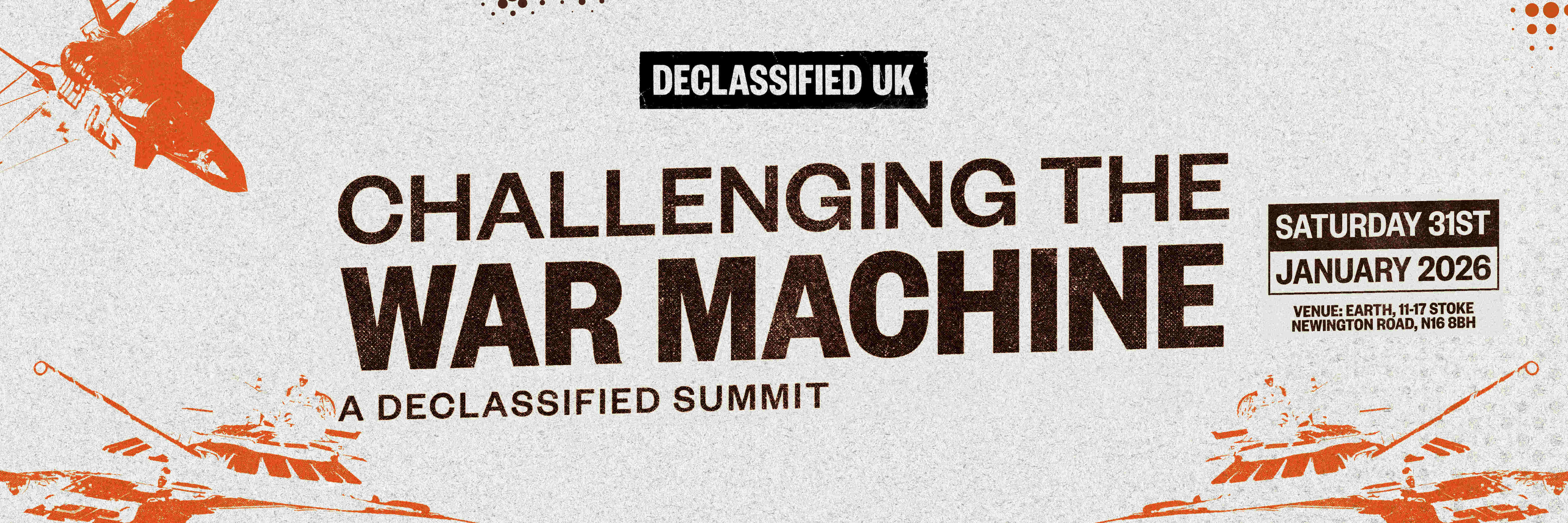
31st January – Challenging the War Machine – a DECLASSIFIED UK SUMMIT


Website of the Week
Now until to February 10, 2026 Radioactive waste storage in France: the debate is finally open! How to participate?
-
Archives
- January 2026 (288)
- December 2025 (358)
- November 2025 (359)
- October 2025 (376)
- September 2025 (258)
- August 2025 (319)
- July 2025 (230)
- June 2025 (348)
- May 2025 (261)
- April 2025 (305)
- March 2025 (319)
- February 2025 (234)
-
Categories
- 1
- 1 NUCLEAR ISSUES
- business and costs
- climate change
- culture and arts
- ENERGY
- environment
- health
- history
- indigenous issues
- Legal
- marketing of nuclear
- media
- opposition to nuclear
- PERSONAL STORIES
- politics
- politics international
- Religion and ethics
- safety
- secrets,lies and civil liberties
- spinbuster
- technology
- Uranium
- wastes
- weapons and war
- Women
- 2 WORLD
- ACTION
- AFRICA
- Atrocities
- AUSTRALIA
- Christina's notes
- Christina's themes
- culture and arts
- Events
- Fuk 2022
- Fuk 2023
- Fukushima 2017
- Fukushima 2018
- fukushima 2019
- Fukushima 2020
- Fukushima 2021
- general
- global warming
- Humour (God we need it)
- Nuclear
- RARE EARTHS
- Reference
- resources – print
- Resources -audiovicual
- Weekly Newsletter
- World
- World Nuclear
- YouTube
-
RSS
Entries RSS
Comments RSS
 nuclear-news