Iran Media Looks Beyond Nuclear Deal As Negotiations ‘Fail’
https://www.iranintl.com/en/202211243491 Iran International Newsroom, 24 Nov 22
With nuclear talks frozen and the US and Europe levying further sanctions, Iranian commentators are looking at life under permanent US ‘maximum pressure.’
IRNA, the official news agency, November 24 portrayed Iran’s acceleration of its nuclear program since 2019 as a series of responses to United States, Israeli or European actions – beginning 2018 with the US “covenant-breaking” in leaving the 2015 Iran nuclear agreement, the JCPOA (Joint Comprehensive Plan of Action), and imposing ‘maximum pressure’ sanctions.
Iran’s announcement Tuesday that it was enriching uranium to 60 percent at the Fordow site was yet another “reaction to the excesses of the West,” IRNA argued, just as enrichment to 60 percent at Natanz, another nuclear site, in April came in response to “sabotage actions” at the site attributed to Israel.
In fact, Iran decided to start 60-percent enrichment in early 2021 just as the new US administration had announced its readiness to return to the JCPOA and talks in Vienna were about to begin.
Tehran announced the latest move as a reply to a resolution raised by France, Germany, the United Kingdom, and the United States passed November 17 at the board of the 37-member board of the International Atomic Energy Agency (IAEA). The US and ‘E3’ had “tied a technical and legal case…to events inside the country and protests turned into riots,” IRNA argued. “The troika of Europe and the United States stopped the nuclear talks under the pretext of unrest inside Iran.”
Casting further doubts on talks, IRNA argued, was the looming return to power of Benjamin Netanyahu, which it suggested would “definitely intensify…the Zionist regime’s delusional claims against the Islamic Republic of Iran.”
‘Impasse’ in diplomacy
Separately, Fararu, a privately owned news agency, carried a discussion with Hosseini Kanani-Moghadam, head of Iran’s conservatively-inclined Green Party, and Fereydoun Majlesi, a former diplomat who has for some time been pessimistic over the JCPOA.
Majlesi argued that “the West” had long given up hope of negotiating with Iran and sought to re-use tactics that had undermined the Soviet Union. “Western countries,” he said, had judged that President Ebrahim Raisi’s government, which took office in 2021, inclined against the JCPOA with ministers asking why Iran accepted nuclear restrictions while gaining nothing from the agreement.
The result was an “impasse” in diplomatic efforts to restore the JCPOA – an impression confirmed, Majlesi said, by the French president and Canadian prime minister recently meeting “supporters of subversion in our country,” a reference to exiled activists and social-media ‘influencers.’ This accelerated an “agenda against Iran” over “recent years” that had “led to significant economic pressures” aimed at “impoverishing Iran.”
Kanani-Moghadam argued that Iran retained political levers “in the event of the escalation of hostile policies,” including “complete withdrawal from the JCPOA” (presumably ending all nuclear restrictions but staying within the Nuclear Non-Proliferation Treaty), or even leaving the NPT.
Bagheri-Kani in India: Focus on economy
Post-JCPOA thinking were also evident in discussions during the visit to India of Ali Bagheri-Kani, deputy Iranian foreign minister and leading nuclear negotiator. While IRNA Thursday reported Bagheri-Kani attacking “the atmosphere created by some western media regarding the developments in Iran,” its focus was business.
While Bagheri-Kani’s brief as one of five deputy ministers is politics, his interview with Asia International News Agency(ANI) also focused on economics, and how commerce might continue should US ‘maximum pressure’ last. ANI noted that bilateral trade had risen 46 percent between 2011-12 and 2019-20.
While criticizing the US for disrupting world energy security with sanctions against Iran, Russia, and Venezuela, Bagheri-Kani highlighted potential for Iran to help India over energy in return for food exports, presumably through barter or non-dollar arrangements. He also stressed that India’s project for developing Chabahar port, in Sistan-Baluchistan province, was continuing.
New Delhi has been slow to develop the port in fear of US punitive action under ‘maximum pressure.’ Once a major buyer of Iranian oil, India has grown increasingly frustrated at Washington’s approach. It abstained, along with Pakistan, at the recent vote condemning Iran at the IAEA board.
U.N. Supplied Qatar With Tech to ‘Prevent Nuclear Security Incident’ at 2022 World Cup
Washington Free Beacon, Adam Kredo • November 21, 2022,
The United Nations provided Qatar with equipment and training to prevent “a nuclear security incident” from occurring during the 2022 World Cup, according to the U.N.’s nuclear watchdog group.
The International Atomic Energy Agency (IAEA), which works on proliferation issues across the globe, says it has worked with Qatar’s National Committee for the Prohibition of Weapons for the past year “to thwart any attack involving nuclear or other radioactive material.” The announcement comes as jihadist groups like al Qaeda urge its militant followers “wage jihad” against the tournament as Westerners pour into the country……………
The IAEA says that in the lead up to the games, the organization helped Qatar integrate its nuclear security measures into larger plans that could help disrupt a nuclear or radiological attack. This included providing “comprehensive training to national counterparts on developing and implementing nuclear security measures and on responding to nuclear security events and related emergencies.”
The nuclear watchdog lent Qatar more than 120 radiation detecting devices, including personal radiation detectors, portable backpack detectors, and other instruments that can spot things like a dirty bomb, a crude explosive device that includes radioactive materials.
This is “the first time” the IAEA’s Malaysia-based security center provided such equipment to a country hosting a major public event, according to the IAEA………………………. https://freebeacon.com/national-security/un-supplied-qatar-with-tech-to-prevent-nuclear-security-incident-at-2022-world-cup/
Fears that oil exporters will control the next COP climate summit

Fears are growing among climate experts and campaigners over the influence
of fossil fuel producers on global climate talks, as a key Gulf petro-state
gears up to take control of the negotiations. The United Arab Emirates, one
of the world’s biggest oil exporters, will hold the presidency of Cop28,
the next round of UN climate talks that will begin in late November next
year. Decisions taken at the Cop27 climate summit in Egypt, which finished
on Sunday, showed the clear imprint of fossil fuel influence, according to
people inside the negotiations. They said Saudi Arabia – an ally of Egypt
outside the talks – played a key role in preventing a strong commitment
to limiting temperature increases to 1.5C above pre-industrial levels. Many
countries, including the UK and the EU, were bitterly disappointed. Alok
Sharma, the UK president of last year’s Cop26 summit, said in visible
anger at the conclusion of Cop27 on Sunday morning: “Those of us who came
to Egypt to keep 1.5C alive, and to respect what every single one of us
agreed to in Glasgow, have had to fight relentlessly to hold the line.”
Guardian 22nd Nov 2022
“Everywhere you look at Egypt’s COP27 you can see and hear the influence of the fossil fuel industry” – Greenpeace .
Yeb Saño, Executive Director, Greenpeace Southeast Asia and Head of the
Greenpeace delegation attending the COP said: “While this is merely a
skeleton of the Egyptian Presidency’s draft of a COP cover note
Greenpeace is shocked that it has no backbone. It is scarcely credible that
they have forgotten all about fossil fuels especially with the level of
carbon cartel capture present here in Sharm el-Sheikh.”
“Everywhere you
look in Sharm el-Sheikh you can see and hear the influence of the fossil
fuel industry. They have shown up in record numbers to try and decouple
climate action from a fossil fuel phase out.”
“India clearly put all
fossil fuels on the phase down negotiating table. The EU could not have
been simpler in calling for a phase out. And, Tuvalu powerfully connected
transitioning away from fossil fuels with staying below 1.5C as a human
right. T
The ever present COP chroniclers of the Egyptian Presidency somehow
seem to have failed to record any of it.” The cover note must make it
clear that limiting temperature rise to 1.5C by 2100 is the only acceptable
interpretation of the Paris Agreement and acknowledge the 1.5°C aligned
global phase out dates for the production and consumption of coal, gas and
oil.”
Greenpeace International 15th Nov 2022
Israeli nuclear arsenal condemned by world’s govts in overwhelming UN vote
https://morningstaronline.co.uk/article/f/global-majority-leads-way-nuclear-disarmament-time-reflect-reality-here, Sameena Rahman,November 9, 2022,
In an overwhelming vote, the United Nations General Assembly declared last week that apartheid Israel must immediately cease operations of all its nuclear weapons, get rid of the ones that exist, and place all its nuclear sites under the supervision of the International Atomic Energy Agency.
These stipulations against Israel were outlined in a resolution submitted by Egypt on behalf of the UN-member countries that are also a part of the Arab League, including the Palestinian Authority, Bahrain, Jordan, Saudi Arabia and United Arab Emirates.
The resolution was approved by 152 countries — 79% of UN member states — with five votes against, unsurprisingly the United States and Israel, and also Canada, Micronesia and Palau. Some 24 abstentions were composed of European Union members, NATO allies and India.
Resolution calling for an end to Israel’s illegal nuclear stockpile
The resolution, titled “The risk of nuclear proliferation in the Middle East,” highlighted the risks of unsafeguarded nuclear facilities in the Middle East and demanded that Israel follow the principles of universal adherence to the Treaty on the Non-Proliferation of Nuclear Weapons, adopted in the region in 1995. Since then, Israel has been the only entity in the region that has repeatedly refused to sign the treaty and has spent the last few decades hypocritically denying the existence of its nuclear weapons.
A recent United Kingdom Parliamentary report states “that Israel possesses a nuclear weapons capability, outside of the framework of the NPT,” after specific details were revealed by whistleblower Mordechai Vanunu in 1988. Israel is believed to have at least 90 nuclear warheads, according to the report, and continues to produce weapons-grade plutonium.
Israel, hiding behind its imperial backer, the United States, continues its stockpiling of nuclear weapons in an extensive threat to the geopolitical stability in the Middle East. Documents from the early 1960’s, revealed in 2014, show that Washington played a key role in building Israel’s nuclear arsenal in secret while publicly denying any knowledge and adopting a line of ambiguity on nuclear power and weapons. Numerous reports since then established that the United States knew of and supported Israel’s nuclear capabilities in gross violation of international law and while punishing countries like Iran and North Korea for having or developing defensive weapons.
U.S. and Israel’s hypocritically label Iran as a nuclear threat
In the last few decades, the United States and Israel consistently labeled Iran as a nuclear threat to peace and stability in the Middle East despite Israel itself invading all bordering countries. Of note, Iran has no nuclear weapons, and signed on to the NPT as well as the Joint Comprehensive Plan of Action, which the United States pulled out of. Meanwhile, Israel remained in flagrant violation of international law.
Israel violated international law on numerous occasions by blatantly attacking Iran’s nuclear power plants used to generate energy, plunging the many areas of the country already suffocated by sanctions into darkness. In April last year, senior Israeli officials hinted at Mossad’s culpability for an attack on Iran’s key nuclear site Natanz, a heinous act of nuclear terrorism. Israel has also carried out the targeted assassination of Iranian nuclear scientist Mohsen Fakhrizadh and other Iranian scientists. Israel also admitted to attacking what it called “suspected” nuclear reactors in other neighboring countries, like Syria in Operation Outside the Box.
Nasser Kanaani, spokesperson for the Iranian Foreign ministry, said in a social media post, “The advanced nuclear military program of the apartheid regime of Israel and the regime’s continued reluctance to put its nuclear facilities under comprehensive safeguards and not to join the non-proliferation treaty is a serious threat to international security and the non-proliferation regime.”
Environmental fallout in Palestinian Occupied Territory
Israel’s criminal behavior is also significantly harming Palestinians in the West Bank. In 2021, Palestinian Prime Minister Mohammad Shtayyeh accused Israel of storing lethal radioactive waste in the West Bank and sickening Palestinians living in the area. He also linked high cancer rates in Hebron to the nearby Israeli Negev nuclear reactor, Dimona. Palestine currently suffers from major climate issues due to Israel’s seven-decade long occupation and the fallout from Israel’s military proliferation.
U.S. corporate media silence
While the UN and the international community have repeatedly pointed to and labeled Israel as a major threat to geopolitical stability in the Middle East, there has been a critical lack of coverage by the western mainstream corporate media. It is clear that the fog of fear of the United States and Israel is lifting in the international community as governments are more empowered to label Israel for what it is: an apartheid state and a gross violator of human rights in Palestine and elsewhere. The recent vote is an important recognition that Israel is the major threat to peace and stability in the Middle East.
Tale Of Two Broken Accords: Oslo And Minsk
Ukraine’s President Zelensky was elected on a platform promising to implement Minsk and end the death toll. Then the neo-Nazis enabled by the U.S. and NATO got to him. I suspect he was threatened with assasination unless he signed on to his country serving as the killing grounds for proxy war to weaken Russia.
https://went2thebridge.org/2022/11/07/tale-of-two-broken-accords-oslo-and-minsk/—
Many people understand that war is hell. That’s why they clamor for negotiated settlements that move belligerents back from the battlefield and set them on a path to reconciliation.
The Oslo Accords established a two-state solution to Israel’s violent occupation of Palestinian homelands and at the time was hailed as a major achievement.
Then came facts on the ground for the last several decades.
It would by now be virtually impossible to create a State of Palestine that was not hopelessly Balkanized into tiny, unconnected territories. At the time of Oslo, many expressed doubt and believed that only a truly democratic one-state solution could work. (Full disclosure: I’m in that camp.)
The insanely belligerent and corrupt Israeli PM Netanyahu has won the recent elections and stands poised to bring even more violence and suffering to the long-occupied Palestinians. And Israel is a nuclear weapons nation. With lots of nuclear threats and innuendoes being thrown around these days, it’s important to keep that in mind.
So we can expect to see a continuation of Israel’s attacks on Palestinians in blockaded Gaza
The Minsk II agreement established a game plan for resolving civil war in Ukraine.
Tens of thousands of civilians and combatants had been killed by missile strikes and more hands-on violence from militias operating freely in the Donbas border region with Russia following a 2014 CIA-sponsored coup in Kyiv. Years later, Ukraine’s President Zelensky was elected on a platform promising to implement Minsk and end the death toll. Then the neo-Nazis enabled by the U.S. and NATO got to him. I suspect he was threatened with assasination unless he signed on to his country serving as the killing grounds for proxy war to weaken Russia.
One wonders why nations sign on to accords and then immediately show no intention of fulfilling them?
It could be a stalling tactic to temporarily reduce international pressure to de-escalate.
Or it could be a case where those who signed on are ousted either by coup or elections, and succeeded by those with a lust for war.
Or maybe diplomatic efforts like accords are doomed in the face of the profit motive provided by modern industrialized killing?
Workers hold the key to stopping wars no matter what the motives of those waging them.
An international general strike would make wars literally impossible.
I pray we are seeing signs of this developing, especially in Europe where the economic impact of the war on Russia via Ukraine has been most intense. Certainly we are seeing signs of alarm from rulers enacting laws that actually criminalize gathering
The new Jewish state in the Levant: A fanatics-led nuclear power
Israel is about to get the most extreme government in the country’s history. But there are limits to what it can do.
- Marwan Bishara, Senior political analyst at Al Jazeera. 4 Nov 22
Israel’s colonial democracy has given birth to a potentially more extreme type of ‘Jewish state’ akin to a more sophisticated and modern version of the ‘Islamic state’. But unlike ISIL which was conceived in and defeated by war, Israel is the only nuclear power in the Middle East today.
The fanatics, fascists, and far-right fantasists, who won this week’s elections in Israel, are about to form the most openly extreme government in the country’s history. It is sure to include the Jewish state’s new rising star Itamar Ben-Gvir — a violence-spewing, Palestinian-hating radical on whose support the government will stand.
A majority of religious nationalists and ultraorthodox parties in government, the first in Israel’s history, would want to transform the Jewish state towards a theocracy that lives by the Halacha (Jewish law) and finish colonising the entirety of Palestine, come what may.
But could they? What can they do in reality that their predecessors have not done already, in terms of exacting death and destruction, and further expanding the illegal Jewish settlement in Palestine?
Benjamin Netanyahu, who will likely form and lead the new coalition government, knows from his experience as Israel’s longest-serving prime minister that there is a limit on how far Israel can go before it starts to meet fierce Palestinian and Arab resistance. Any further, and Israel could also lose support in Europe and the United States; support that is indispensable to its security and regional standing.
He has previously preferred incremental steps to radical measures that could alienate Israel’s main backers and its new regional partners. Netanyahu may therefore try to curb his partners’ eagerness to annex the occupied West Bank and ethnically cleanse it of its Palestinian inhabitants.
But then again, it is doubtful whether he will be able to tame these religious fanatics, knowing all too well they have a hold over the survival of his premiership; his only guarantee to stay out of prison, after having been indicted for serious corruption charges.
I think the genie is finally out of the bottle.
The elections have opened a Pandora’s box that may well take Israelis to the dark side. They have exposed the fragility of Israel’s peculiar liberality as a colonial state, and unmasked the p
ervasive fanaticism among the majority of the electorate after decades of unfettered military occupation.
The unruly pronouncements of Netanyahu’s scandalous new partners reflect the prevailing beliefs among the majority of Israel’s right-wing parties, including his own Likud, that have ruled the country for the past few decades. But now that they are boasting of Jewish supremacy out in the open, it is harder for Netanyahu’s hasbara to conceal their — or his — racism from the rest of the world.
After all, it was Bibi, as Netanyahu is known, who back in August midwifed the union of two or three small fanatic parties, to ensure they maximise the number of their seats and join his future coalition government. They did exceedingly well: The Religious Zionist Party won 14 seats. Its legislators include Ben-Gvir.
Netanyahu’s two other coalition partners, the ultraorthodox Jewish parties, Shas and UJT, which are as socially regressive and politically fanatic, won 18 seats. Together with the 32 far-right Likud members, they command a comfortable like-minded majority of 64 seats in the 120-member Knesset……………………. more https://www.aljazeera.com/opinions/2022/11/4/the-new-jewish-state-in-the-levant-a-fanatics-led-nuclear-power
Conditions for Fair Iran Nuclear Deal Outlined
Iran is ready for an agreement, but that has to be fair, Raisi said. https://financialtribune.com/articles/national/115358/conditions-for-fair-nuclear-deal-outlined 30 Sept 22,
President Ebrahim Raisi said a fair agreement on the revival of the 2015 nuclear deal is conditional on guarantees for the lasting removal of sanctions as well as the settlement of safeguards issues.
“We are ready for an agreement, but the agreement must be fair,” he said in an address to the Iranian people on state television on Wednesday, President.ir reported.
The 2015 deal, known as the Joint Comprehensive Plan of Action, lifted international sanctions on Tehran in return for curbs on its nuclear program, but the United States pulled out in 2018 and reimposed tough sanctions that prompted Iran to react by rowing back on its commitments.
Negotiations have been going on since April 2021 in Vienna, Austria, to work out how both sides can resume compliance.
The talks, however, are facing a stalemate with the West refusing to entertain Iran’s key demands, including assurances that the sanctions will not be reimposed again under a new US government.
Given that the Americans exited the nuclear deal and Europeans failed to meet their commitments, it is essential to focus on adherence to obligations this time, Raisi said.
He stressed the need for guarantees by western countries as a prerequisite for an agreement.
Iran has also demanded the closure of investigations by the International Atomic Energy Agency over nuclear material allegedly found at undeclared sites in the country.
The IAEA has called for explanation about the origin and current whereabouts of uranium particles it claims have been found at three sites in Iran, and has so far rejected Tehran’s answers as incredible.
The global watchdog’s Board of Governors also passed a resolution against Iran in June on the same ground.
The Islamic Republic argues that the allegation is based on false and fabricated data and is meant to be used against the country in the future in the event that an agreement is sealed on the JCPOA.
“In the latest script the Islamic Republic has presented, it has emphasized reliable guarantees and settlement of safeguards issues to prevent repeated violation of commitments by the western side and passing of resolutions against Iran under political safeguards pretexts,” Raisi said.
The president also criticized the IAEA for politicization, of which there are numerous examples, including the director general’s change of tone soon after leaving Iran.
Raisi further highlighted his administration’s policy of neutralizing sanctions, so that people’s lives would not be dependent on the nuclear deal.
“Sanctions will not stop us and we will not tie people’s lives to this agreement,” he said.
He said despite sweeping sanctions, there is huge interest among all countries for cooperation with Iran.
“In all my foreign meetings, I faced other countries’ welcoming of cooperation with Iran,” he said, referring particularly to his meetings during a trip to Uzbekistan to attend the Shanghai Cooperation Organization summit.
Authorities from China, Russia and India were among the countries which emphasized the need to expand relations with Tehran, according to the president.
“Our intention is [to enhance] economic and trade ties with all countries, regardless of eastern or western.”
He later highlighted Iran’s admission as permanent member of the Shanghai Cooperation Organization as an important achievement of his government.
“By becoming a member of the SCO, Iran was linked with Asia’ economic infrastructures,” he said.
France, Germany and UK lose faith in negotiations with Iran, to restore the nuclear agreement.
We the governments of France, Germany and the United Kingdom have
negotiated with Iran, in good faith, since April 2021 to restore and fully
implement the Joint Comprehensive Plan of Action (JCPoA), along with other
participants to the deal and the United States.
In early August, after a
year and a half of negotiations, the JCPoA Coordinator submitted a final
set of texts which would allow for an Iranian return to compliance with its
JCPoA commitments and a US return to the deal. In this final package, the
Coordinator made additional changes that took us to the limit of our
flexibility.
Unfortunately, Iran has chosen not to seize this critical
diplomatic opportunity. Instead, Iran continues to escalate its nuclear
program way beyond any plausible civilian justification. While we were
edging closer to an agreement, Iran reopened separate issues that relate to
its legally binding international obligations under the Non Proliferation
Treaty (NPT) and its NPT safeguards agreement concluded with the
International Atomic Energy Agency (IAEA).
This latest demand raises
serious doubts as to Iran’s intentions and commitment to a successful
outcome on the JCPoA. Iran’s position contradicts its legally binding
obligations and jeopardizes prospects of restoring the JCPoA.
French Ministry of Foreign Affairs 10th Sept 2022
Revival of the Iran nuclear deal is not likely any time soon
Tehran has submitted its latest response in the ongoing negotiations to
restore the Iran nuclear deal — and the United States is slamming it as a
“not at all encouraging” step “backwards.” The negative reaction
from the Biden administration — as well as European sources — suggests
that a revival of the 2015 nuclear agreement is not imminent as some
supporters of the deal had hoped, despite roughly a year and a half of
talks.
Politico 1st Sept 2022
https://www.politico.com/news/2022/09/01/nuclear-talks-u-s-iran-00054603
Iran seeks stronger U.S. guarantees for revival of 2015 nuclear deal
By Parisa Hafezi, 1 Sept 22, DUBAI, Aug 31 (Reuters) – Iran needs stronger guarantees from Washington for the revival of a 2015 nuclear deal, its foreign minister said in Moscow on Wednesday, adding that the U.N. atomic watchdog should drop its “politically motivated probes” of Tehran’s nuclear work.
Reporting by Parisa Hafezi in Dubai Additional reporting by Doina Chiacu, Rami Ayyub and Jeff Mason in Washington Editing by Nick Macfie and Matthew Lewis………………more https://www.reuters.com/world/iran-seeks-stronger-us-guarantees-revival-2015-nuclear-deal-2022-08-31/
Iran does not seek to develop nuclear weapons, says President Ebrahim Raisi
Business Standard, 29 Aug 22, Iranian President Ebrahim Raisi has said his country did not seek to develop nuclear weapons but would employ nuclear technology for civilian purposes
Iranian President Ebrahim Raisi has said his country did not seek to develop nuclear weapons but would employ nuclear technology for civilian purposes.
“Nuclear industry and nuclear capability are the right of the Islamic Republic and the people of Iran, and we have repeatedly said that nuclear weapons have no place in the doctrine of the Islamic Republic,” Raisi told a press conference on Monday………………
Raisi lambasted Israel for wanting to prevent Iran from having nuclear capability and having access to relevant knowledge.
“But today, this knowledge has become indigenous and cannot be taken away from Iran,” he said. https://www.business-standard.com/article/international/iran-does-not-seek-to-develop-nuclear-weapons-says-president-ebrahim-raisi-122083000107_1.html
The Saudi path to nuclear weapons — Beyond Nuclear International

Is Riyadh preparing to build the bomb?
The Saudi path to nuclear weapons — Beyond Nuclear International Kingdom’s pursuit of nuclear power development should set off alarm bells
By Henry Sokolski, 328 Aug 22,
Iran’s nuclear program, oil, and human rights dominated Biden’s much-anticipated first presidential trip to the Middle East earlier this month. But there is one topic President Biden chose not to showcase during his visit with Saudi Crown Prince Mohammed Bin Salman Al Saud—the Kingdom’s most recent interest in nuclear energy—and the nuclear weapons proliferation concerns that come with it.
Only weeks before Biden’s visit, Riyadh invited South Korea, Russia, and China to bid on the construction of two large power reactors. On that bid, Korea Electric Power Company (KEPCO) is the most likely winner. KEPCO has already built four reactors for Riyadh’s neighbor, the United Arab Emirates, and is the only vendor to bring a power reactor of its own design online in the Middle East. South Korea also is the only government to provide reliable, generous financing, free of political strings—something neither Moscow nor Beijing can credibly claim.
And then, there’s this: Any Korean sale would be covered by a generous 2011 South Korean nuclear cooperative agreement with Riyadh that explicitly authorizes the Saudis to enrich any uranium it might receive from Seoul. Under the agreement, Riyadh could enrich this material by up to 20 percent, without having to secure Seoul’s prior consent.
That should set off alarm bells.
Do the Saudis want a bomb?
In 2018, Crown Prince Mohammed Bin Salman announced that “if Iran developed a nuclear bomb, we will follow suit as soon as possible.” As if to prove the point, late in 2020, word leaked that the Saudis have been working secretly with the Chinese to mine and process Saudi uranium ore. These are steps toward enriching uranium—and a possible nuclear weapon program.
Unlike the Emirates, which legally renounced enriching uranium or reprocessing spent fuel to separate plutonium, the Kingdom insists on retaining its “right” to enrich. Also, unlike most members of the International Atomic Energy Agency (IAEA), Saudi Arabia refuses to allow intrusive inspections that might help the IAEA find covert nuclear weapons-related activities, if they exist, under a nuclear inspections addendum known as the Additional Protocol.
Saudi Arabia’s enrichment program and refusal to adopt the Additional Protocol, doubled with a possible permissive South Korean reactor sale, could spell trouble. South Korea currently makes its nuclear fuel assemblies using imported uranium, which mainly comes from Australia. This ore is controlled by Australia’s uranium export policy, which requires that the uranium be monitored by the IAEA and that materials derived from it not be retransferred to a third country without first securing Australia’s consent. Yet, if Seoul decides to pass Australian uranium on to Riyadh, the Saudis are free to enrich it up to 20 percent at any time without having to secure anyone’s approval. In addition, Riyadh could proceed to enrich this material without having to agree to intrusive IAEA inspections under the Additional Protocol, making it easier for Riyadh to enrich beyond 20 percent uranium 235 without anyone knowing.
Can Washington block the reactor export?
In Washington, the US nuclear industry understandably is miffed that Riyadh excluded Westinghouse from bidding on the Saudi reactors. Meanwhile, State Department officials say that KEPCO can’t sell Riyadh its APR-1400 reactor because it incorporates US nuclear technology that is property of Westinghouse………………………………..
Does the Republic of Korea need Washington’s blessing to begin enriching uranium itself or to transfer enrichment technology to other countries, such as Saudi Arabia?
The short answer is no…………………………..
how committed is the Biden Administration to prevent Saudi Arabia from enriching uranium and reprocessing spent reactor fuel? …………………….more https://beyondnuclearinternational.org/2022/08/28/the-saudi-path-to-nuclear-weapons/—
A Crucial Week For The Iran Nuclear Deal
Iran Nuclear Deal Has Never Been Closer, https://oilprice.com/Energy/Energy-General/A-Crucial-Week-For-The-Iran-Nuclear-Deal.html 26 Aug 22, Indirect talks between the United States and Iran are moving closer to a final stage as both Tehran and Washington have responded to the European Union’s final draft, with further talks expected next week.
-It remains to be seen if the Iranian authorities would drop demands such as scrapping the IRGC from the US terrorist list or demanding written guarantees there would be no sudden US snapback on the JCPOA.
-Iranian crude exports have averaged approximately 800,000 b/d so far this year, the highest level since the Trump administration quit the JCPOA, as oversight turned laxer.
-There have been no exports to Europe since November 2018, whilst almost all of Asian demand is coming from China which takes in cargoes either directly or via ship-to-ship transfers in Malaysia.
Iran’s UN envoy slams Israel refusal to join NPT, urges nuclear-weapon-free zone in Middle East
Israel, which pursues a policy of deliberate ambiguity about its nuclear weapons, is estimated to possess 200 to 400 nuclear warheads in its arsenal, making it the sole possessor of non-conventional arms in West Asia.
Friday, 26 August 2022,
A senior Iranian diplomat has denounced Israel’s continued refusal to join the Nuclear Non-Proliferation Treaty (NPT), stressing that establishing a Middle East region free of nuclear weapons is of utmost importance.
Iran’s ambassador and permanent representative to the United Nations, Majid Takht-Ravanchi, made the remarks while speaking to reporters on Friday on the sidelines of the Tenth Review Conference of the Parties to the Treaty on the Non-Proliferation of Nuclear Weapons held at the UN headquarters in New York.
“The issue of the Middle East as a region free of nuclear weapons is one of the important discussions… because the Israeli regime, as the only possessor of hundreds of nuclear warheads, is not ready to join the Nuclear Non-Proliferation Treaty and place its nuclear facilities under the supervision of the International Atomic Energy Agency,” he said.
He added that Israel’s refusal to join the NPT comes as some countries are cooperating with the regime and have always supported it.
The Iranian delegation attending the tenth NPT review conference played a constructive role in highlighting the significance of a Middle East region free of weapons of mass destruction, he said
As documents relating to the NPT review conferences in 1995, 2000, and 2010 have explicitly announced that the Israeli regime must join the treaty, the Iranian team emphasized that the issue should also be included in the final statement of the 10th NPT review meeting, Takht-Ravanchi added.
He emphasized that during the current conference, the Islamic Republic clearly announced that it would not back down from its stance on the importance of a Middle East without any weapons of mass destruction.
“We said that this issue is one of the red lines of the Islamic Republic of Iran and if they want to act honestly and constructively, the literature used in the statements of previous conferences should also be used in this conference in order to move towards a Middle East without nuclear weapons,” the senior Iranian diplomat pointed out.
He noted that Iran seeks to reach a consensus with the participants at the current NPT review conference but it has principles and certain measures must be carried out.
n a Monday address to the Tenth Review Conference of the Parties to the Treaty on the Non-Proliferation of Nuclear Weapons, Takht-Ravanchi expressed concern over the lack of progress in the implementation of the 1995 Nuclear Nonproliferation Treaty (NPT) resolution and the 2010 action plan on the Middle East, saying the Israeli regime must eliminate its stockpile of nuclear weapons.
Takht-Ravanchi also slammed the US double standards, saying Israel’s accession to the NPT “without precondition and further delay” and the placement of all of its nuclear activities and facilities under the comprehensive IAEA safeguards are “essential in realizing the goal of universal adherence to the Treaty in the Middle East and the establishment of a nuclear-weapon-free zone in the Middle East.”
Israel, which pursues a policy of deliberate ambiguity about its nuclear weapons, is estimated to possess 200 to 400 nuclear warheads in its arsenal, making it the sole possessor of non-conventional arms in West Asia.
The illegitimate entity has, however, refused to either allow inspections of its military nuclear facilities or sign the NPT.
What has emboldened Tel Aviv to accelerate its nuclear activities, according to observers, is the support from the US and Europe, the two countries most critical of Iran’s peaceful nuclear program.
The regime has assassinated at least seven Iranian nuclear scientists and conducted a series of sabotage operations against the Islamic Republic’s nuclear facilities.
1 This Month
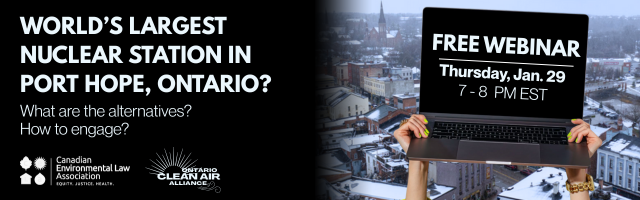
29 Jan. Thursday 7-8 p.m. Webinar – World’s Largest Nuclear Station in Port Hope, ON?
To see nuclear-related stories in greater depth and intensity – go to https://nuclearinformation.wordpress.com/
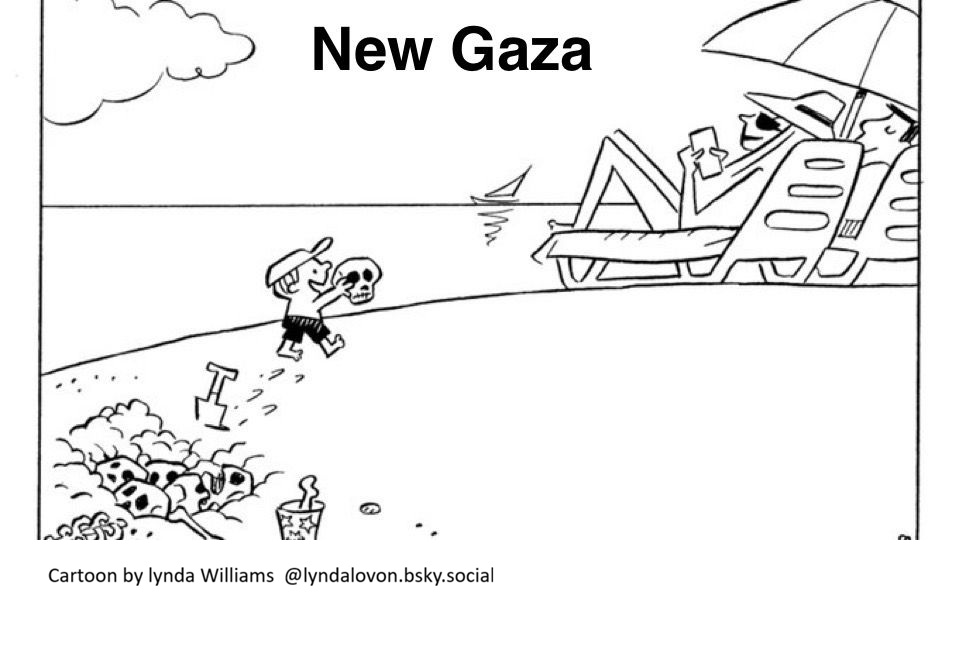
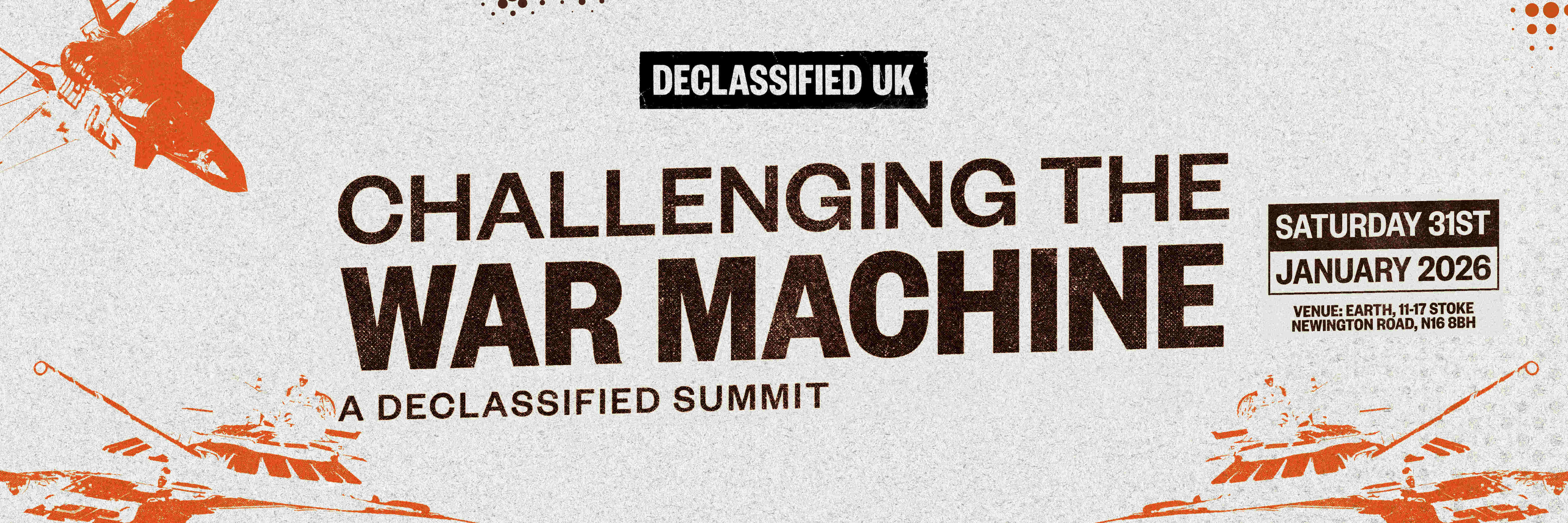
31st January – Challenging the War Machine – a DECLASSIFIED UK SUMMIT


Website of the Week
Now until to February 10, 2026 Radioactive waste storage in France: the debate is finally open! How to participate?
-
Archives
- January 2026 (288)
- December 2025 (358)
- November 2025 (359)
- October 2025 (376)
- September 2025 (258)
- August 2025 (319)
- July 2025 (230)
- June 2025 (348)
- May 2025 (261)
- April 2025 (305)
- March 2025 (319)
- February 2025 (234)
-
Categories
- 1
- 1 NUCLEAR ISSUES
- business and costs
- climate change
- culture and arts
- ENERGY
- environment
- health
- history
- indigenous issues
- Legal
- marketing of nuclear
- media
- opposition to nuclear
- PERSONAL STORIES
- politics
- politics international
- Religion and ethics
- safety
- secrets,lies and civil liberties
- spinbuster
- technology
- Uranium
- wastes
- weapons and war
- Women
- 2 WORLD
- ACTION
- AFRICA
- Atrocities
- AUSTRALIA
- Christina's notes
- Christina's themes
- culture and arts
- Events
- Fuk 2022
- Fuk 2023
- Fukushima 2017
- Fukushima 2018
- fukushima 2019
- Fukushima 2020
- Fukushima 2021
- general
- global warming
- Humour (God we need it)
- Nuclear
- RARE EARTHS
- Reference
- resources – print
- Resources -audiovicual
- Weekly Newsletter
- World
- World Nuclear
- YouTube
-
RSS
Entries RSS
Comments RSS
 nuclear-news