Libyan general says uranium reported missing by UN nuclear watchdog IAEA has been recovered
ABC News 16 Mar 2023
Several containers of natural uranium reported missing by the UN’s nuclear watchdog in war-torn Libya are found, according to a general with one of the country’s two rival governments.
Key points:
- The IAEA reported the 10 drums of uranium ore concentrate missing in Libya on Wednesday
- It says reaching the site — that is not under government control — required “complex logistics”
- Estimates put Libyan stockpiles of yellowcake uranium at some 1,000 metric tonnes under the regime of the late dictator, Moamar Gaddafi
General Khaled al-Mahjoub — commander of eastern strongman Khalifa Haftar’s communications division — said on his Facebook page that the containers of uranium had been recovered “barely 5 kilometres” from where they had been stored at Sabha, some 660km south-east of Libya’s capital, Tripoli, in the country’s lawless southern reaches of the Sahara Desert…………………………………………………………… more https://www.abc.net.au/news/2023-03-16/un-nuclear-watchdog-says-tonnes-of-uranium-missing-in-libya/102108314
Saudi crown prince is plotting to get US nuclear secrets by playing the White House, Russia, and China off against each other, report says
Business Insider Tom Porter ,Mar 15, 2023,

- Saudi Arabia’s de-facto ruler is seeking to pit major powers against each other, a report said.
- Mohammed bin Salman reportedly believes it will help him secure US nuclear technology.
- Saudi Arabia has snubbed the US and drawn closer to rivals including China.
Saudi Arabia’s de-facto ruler, Mohammed bin Salman, is trying to get better access to US nuclear technology by playing global powers against each other, Saudi officials told The Wall Street Journal.
In recent months, Saudi Arabia has provoked the ire of the US, traditionally its closest international ally, while drawing closer to US adversaries including China and Russia.
Analysts have told Insider that the move appears to be part of a power play by Crown Prince Mohammed, amid perceptions that US influence in the region is waning.
According to The Wall Street Journal, Crown Prince Mohammed may be using its relations with China and Russia to establish a closer US security relationship…………………………………………………………………………….
The balancing act appears to be based on the calculation by Saudi Arabia that the US will be forced to offer concessions to the Saudis in order to maintain the alliance and offset the growing influence of China.
A civilian nuclear program and better access to US weapons have long been core Saudi objectives, and Riyadh said last week that they would be the price for normalizing its relations with Israel.
US officials are wary of providing nuclear technology to Saudi Arabia, The New York Times reported, as they believe the Saudis could seek to develop nuclear weapons, amid fears that Iran is again gearing up its nuclear program. https://www.businessinsider.com/mohammed-bin-salman-playing-us-secure-nuclear-technology-saudi-report-2023
Alarm over 10 drums of uranium missing in Libya
Approximately 2.3 tonnes of natural uranium have gone missing from a site
in Libya not under government control, according to the United Nation’s
nuclear watchdog. The UN’s International Atomic Energy Agency (IAEA) has
told the organisation’s member states that 10 drums containing uranium
“were not present as previously declared” at the location in Libya.
The missing uranium stockpile could pose radiological risk and security
concerns, the agency has said. The IAEA sounded the alarm after a visit by
its inspectors to the undisclosed site earlier this week, where it found
less uranium than originally reported. Currently, officials are working to
locate the 2.3 missing tonnes.
Engineering & Technology 16th March 2023
Saudi Arabia seeks US security guarantees, nuclear assistance in return for Israel normalisation
Middle East Monitor March 12, 2023
Saudi Arabia is reportedly seeking a number of conditions to be met by the United States in return for its normalisation of relations with Israel, a report has claimed.
According to the New York Times, Saudi Arabia has said that it could potentially normalise ties with Israel if the US provides it security guarantees, assistance in its civilian nuclear program, and the lifting of restrictions on arms sales to the kingdom.
Those intentions and conditions were reportedly communicated to Washington by senior Saudi officials last year, when they talked to policy experts in the US such as members of the Washington Institute for Near East Policy – a pro-Israel think tank – who visited Riyadh in October………………………………………………………………. https://www.middleeastmonitor.com/20230312-saudi-arabia-seeks-us-security-guarantees-nuclear-assistance-in-return-for-israel-normalisation/
Saudi Arabia Seeks U.S. Security Pledges, Nuclear Help

Agreement could upend Middle East geopolitics but faces daunting obstacles
Saudi Arabia is asking the U.S. to provide security guarantees and help to develop its civilian nuclear program as Washington tries to broker diplomatic relations between the kingdom and Israel, people involved in discussions between the two countries said.
Striking a normalization deal between Israel and Saudi Arabia has become a priority for President Biden and Prime Minister Benjamin Netanyahu amid a looming confrontation with Iran over its nuclear program and military aid to Russia during the Ukraine war. The Biden administration is deeply involved in the complex negotiations, the people said, and any deal would reshape the Middle East’s political landscape……………(Subscribers only) https://www.wsj.com/articles/saudi-arabia-seeks-u-s-security-pledges-nuclear-help-for-peace-with-israel-cd47baaf
Netanyahu justifies strikes on nuclear facilities
https://www.rt.com/news/572511-israel-iran-nuclear-facilities/ 6 March 23
The Israeli PM has challenged the UN watchdog’s statement that any attacks against nuclear plants are “outlawed”
Israeli Prime Minister Benjamin Netanyahu has insisted that the option of attacking an Iranian nuclear facility in “self-defense” must be left on the table, arguing that the chief of the UN’s International Atomic Energy Agency (IAEA) made an “unworthy” statement when he declared that any such strikes are banned.
“Are we forbidden to defend ourselves?” Netanyahu said on Sunday in a cabinet meeting. “Of course, we are allowed, and of course, we are doing this… Nothing will prevent us from protecting our country and preventing oppressors from destroying the Jewish state.”
Netanyahu’s remarks came a day after IAEA Director-General Rafael Mariano Grossi was asked by a reporter about US and Israeli threats to attack Iran if it doesn’t agree to curb its nuclear program.
“Any military attack on a nuclear facility is outlawed, is out of the normative structures that we all abide by,” Grossi said at a press briefing in Tehran after meeting with Iranian leaders. That principle applies to all nuclear facilities, including Europe’s biggest atomic facility in Zaporozhye.
Netanyahu said no such prohibition could apply to Israel. “Rafael Grossi is a worthy person who made an unworthy remark,” he said. “Outlawed by what law? Is Iran, which publicly calls for our extermination, allowed to protect its weapons of destruction that will slaughter us?”
Grossi’s trip to Tehran apparently paid dividends, as Iranian officials agreed to restore the UN watchdog’s access to some surveillance tools at the country’s nuclear facilities. The IAEA also was granted an increase in inspections at the Fordo nuclear site, as well as additional verification and monitoring activities.
“These are not words,” Grossi told reporters upon his return to Vienna on Saturday. “This is very concrete.”
Tehran has denied having any ambition to acquire nuclear weapons. Iran signed a deal with the US and other world powers in 2015, agreeing to impose restrictions on its nuclear industry, including uranium enrichment, to allay fears about its potential for warhead development. Washington reneged on the agreement in 2018, when then-US President Donald Trump said he would instead apply “maximum pressure” through sanctions on Iran to contain its nuclear program.
UN nuclear chief says Iran pledges more access for inspectors
Iran makes sweeping pledges of cooperation after the head of the UN atomic agency meets top Iranian officials in Tehran.
Iran has agreed to reconnect cameras and other monitoring equipment at its nuclear sites and increase the pace of inspections, according to the head of the United Nations atomic agency.
Rafael Grossi made the announcement on Saturday after meeting Iranian President Ebrahim Raisi and other top officials in Tehran
His visit followed the discovery of uranium particles enriched to near weapons-grade level at an underground Iranian facility and came just two days before a quarterly meeting of the International Atomic Energy Agency’s (IAEA) 35-nation board of governors.
“Over the past few months, there was a reduction in some of the monitoring activities” related to cameras and other equipment “which were not operating,” Grossi told reporters upon his return to Vienna, Austria, where the agency has its headquarters.
“We have agreed that those will be operating again.”………………………………..
The statement gave little additional detail, but the possibility of a marked improvement in relations between the two is likely to stave off a Western push for another resolution ordering Iran to cooperate, the Reuters news agency cited diplomats as saying.
A confidential IAEA report to member states seen by Reuters said Grossi “looks forward to … prompt and full implementation of the Joint Statement”. https://www.aljazeera.com/news/2023/3/4/iran-makes-sweeping-pledge-of-cooperation-to-iaea
—
South Korea, France keen to sell nuclear reactors to Saudi Arabia (no connection with nuclear weapons OF COURSE!)
Saudi Arabia moves forward with bids for nuclear plant

The kingdom has received bids to build its first nuclear power plant and South Korea is reportedly expressing interest.
AL-MONITOR, February 27, 2023
Saudi Arabia is progressing with its plans to build its first nuclear power plant and has received a number of bids.
The Saudi Ministry of Finance’s 2023 budget statement published Feb. 15 notes that bids to build the plant were received last December, reported the Dubai-based business intelligence outlet Middle East Economic Digest on Monday.
Background: Saudi Arabia has had an interest in nuclear power for decades. The kingdom was a major investor in Pakistan’s nuclear weapons program that began in the 1970s, for example. In 2009, the late Saudi King Abdullah bin Abdulaziz told the Obama administration that the country would obtain nuclear weapons of its own if Iran were to do so. In 2018, Crown Prince Mohammed bin Salman said the same thing to the US news outlet CBS.
More recently, Saudi Arabia has been considering developing nuclear energy for peaceful purposes. In 2018, the Saudi government announced its intention to add nuclear power to its energy mix.
Saudi Arabia’s nuclear ambitions have been gaining momentum. Korea JoongAng Daily reported in November that South Korea was interested in building Saudi Arabia’s first nuclear power plant.
Last December, the International Atomic Energy Agency (IAEA) held a nuclear law workshop with Saudi officials in Riyadh. The IAEA’s purpose was to “support the implementation of its nuclear energy program in a safe, secure and transparent manner,” according to a press release.
In early February, Saudi Arabia signed a memorandum of understanding with France on energy cooperation. The memo noted nuclear energy as well as hydrogen and electricity interconnection, the official Saudi Press Agency reported……………… https://www.al-monitor.com/originals/2023/02/saudi-arabia-moves-forward-bids-nuclear-plant#ixzz7uaRVErTd
Iran denies enriching uranium to 84 percent purity amid IAEA row
The IAEA says it is talking to Iran over enrichment, as Tehran says the agency is being used as a ‘political tool’.
Aljazeera, By Maziar Motamedi, 20 Feb 202320 Feb 2023
Tehran, Iran – Iran has denied that it has intentionally enriched uranium to a purity of 84 percent amid ongoing issues with the global nuclear watchdog and disagreements over its 2015 nuclear deal.
US-based financial news agency Bloomberg reported on Sunday that inspectors with the International Atomic Energy Agency (IAEA) had found uranium enriched to a purity of 84 percent — just below the 90 percent required for a bomb — and are trying to determine if it was produced intentionally.
This is the highest purity uranium ever found in Iran, which has gradually boosted its enrichment since 2019, one year after the unilateral withdrawal of the United States from its nuclear deal with world powers, and has declared enrichment up to 60 percent. Iranian officials have said that they are not seeking a nuclear weapon.
“The IAEA is aware of recent media reports relating to uranium enrichment levels in Iran,” the agency wrote on Twitter early on Monday. “Director General @rafaelmgrossi is discussing with Iran the results of recent Agency verification activities and will inform the IAEA Board of Governors as appropriate.”
Behrouz Kamalvandi, the spokesperson for the Atomic Energy Organisation of Iran, told the state-linked Fars news website late on Sunday that particles with a purity of higher than 60 percent had been found by inspectors, but that had happened before and was nothing out of the ordinary.
“The existence of a uranium particle or particles with a purity of over 60 percent in the enrichment process does not mean that there has been enrichment over 60 percent,” he said.
“This is something very natural which can even occur as a result of a decrease in the feed of centrifuge cascades at a moment. What matters is the final product, and the Islamic Republic of Iran has so far not tried to enrich over 60 percent.”
According to Kamalvandi, an issue like this was not something the agency would even report to its member states, so the fact that it has been leaked to Western media showed it was an effort towards “smearing and warping facts”.
The spokesperson also repeated Iranian accusations that the agency was being used as a “political tool” to pressure Iran with confidential reports previously leaked to media in Western countries……………………………………………
There has been no significant progress on efforts to restore the nuclear deal since September, when the Western parties accused Iran of derailing the talks.
Since then, they have imposed several rounds of sanctions on Iranian officials and entities for allegedly selling drones to Russia for the war in Ukraine, and for cracking down on antigovernment protests.
Tehran, for its part, has maintained that it wants a deal and has accused the West of lacking political will.
Russia and China are also part of the JCPOA. https://www.aljazeera.com/news/2023/2/20/iran-denies-enriching-uranium-to-84-percent-purity-amid-iaea-row
Quake revives debate over Turkey’s nuclear plant
In a statement to the AP, the Cyprus Anti-Nuclear platform, a coalition of over 50 Greek Cypriot and Turkish Cypriot environmentalist groups, trade unions and political parties, said it “calls on all political parties, scientific and environmental organizations and the civil society to join efforts and put pressure on the Turkish government to terminate its plans for the Akkuyu nuclear power plant.”
Northwest Arkansas Democrat Gazette, by MENELAOS HADJICOSTIS and JENNIFER McDERMOTT The Associated Press
NICOSIA, Cyprus — A devastating earthquake that toppled buildings across parts of Turkey and neighboring Syria has revived a longstanding debate locally and in neighboring Cyprus about a large nuclear power station being built on Turkey’s southern Mediterranean coastline.
The plant’s site in Akkuyu, located about 210 miles west of the epicenter of the Feb. 6 quake, is being designed to endure powerful tremors and did not sustain any damage or experience powerful ground shaking from the 7.8 magnitude earthquake and aftershocks.
Cypriot European Parliament member Demetris Papadakis asked the European Commission what immediate actions it intends to take to halt the plant because of the dangers posed by building a nuclear power station in a seismic zone so close to Cyprus……..
 | |||
But the size of the quake, the deadliest in Turkey’s modern history, sharpened existing concerns about the facility being built on the edge of a major fault line…………………………………………..
An official with Turkey’s Energy Ministry, when contacted by the AP, said there were no immediate plans to reassess the project. The official spoke on condition of anonymity in line with government protocol. Some activists, however, still say the project — the first nuclear power plant in Turkey — poses a threat.
Nuclear facilities are constructed of heavily reinforced concrete, sized for significant earthquake shaking and far more robust than commercial buildings, said Andrew Whittaker, a professor of civil engineering at the University at Buffalo who is an expert in earthquake engineering and nuclear structures.
The fact that it’s being built off the western end of the East Anatolian Fault, which was linked to the powerful tremor, suggests that the design would have been checked for significant shaking, Whittaker added.
Still, Whittaker said, it would be prudent to reassess seismic hazard calculations in the region for all infrastructure, including the plant.
“There’s no reason to be concerned, but there’s always a reason to be cautious,” he said.
That’s little comfort to activists in Turkey and on both sides of ethnically divided Cyprus. They’ve renewed their calls for the project to be scrapped, saying that the devastating earthquake is clear proof of the great risk posed by a nuclear power plant near seismic fault lines.
In a statement to the AP, the Cyprus Anti-Nuclear platform, a coalition of over 50 Greek Cypriot and Turkish Cypriot environmentalist groups, trade unions and political parties, said it “calls on all political parties, scientific and environmental organizations and the civil society to join efforts and put pressure on the Turkish government to terminate its plans for the Akkuyu nuclear power plant.”…………………….. https://nwaonline.com/news/2023/feb/19/quake-revives-debate-over-turkeys-nuclear-plant/?news-wor1
Saudi Arabia says nuclear arms race in the Middle East ‘cannot be ruled out’
Kingdom wants to be involved in global negotiations with Iran
N UK, 19 Feb 23,
Saudi Arabia’s Minister of Foreign Affairs, Prince Faisal bin Farhan Al Saud, has said he “cannot rule out” a nuclear arms race in the region.
Speaking at the Munich Security Conference, he said the kingdom was concerned about Iran’s nuclear programme and wanted negotiations between Tehran and world powers to resume.
At a session titled Middle Men: The Geostrategic Role of Middle Eastern Countries, Prince Faisal said: “If one state gets nuclear weapons, especially one that has expressed aggression towards its neighbours, I think everyone will start thinking about how to protect themselves.
“I hope that never happens. If it is a genie that gets out, it will be very hard to put back into the bottle…………………………………………………….. more https://www.thenationalnews.com/world/uk-news/2023/02/18/saudi-arabia-says-nuclear-arms-race-in-the-middle-east-cannot-be-ruled-out/
Iranians Caught Between Optimism, Pessimism Over Nuclear Talks
Iran International News.19 Feb 23
Iranian media sounded optimistic this week following news on Wednesday that Tehran and Washington seemed to be negotiating over a prisoner exchange deal.
But gradually the optimism dissipated as no follow-up news was heard and the foreign ministry spokesman on Saturday told a local news website that the talks have stopped.
Moderate conservative Khabar Online in Tehran was quick to pick up the news about “Progress in the Iran-US negotiations.” The website’s editors were upbeat that finally, US officials have spoken positively about the revival of the Joint Comprehensive Plan of Action (JCPOA), which is another name for the 2015 nuclear deal with Iran.
Khabar Online observed that “Although some analysts maintain that pressures by Israel and disputes with the Congress as well as some domestic political issues give reasons to the Biden Administration to be reluctant about resuming the nuclear talks, yet the bigger picture indicates a more positive outlook compared to past weeks and months.”
Indirect nuclear talks between Tehran and Washington reached a deadlock in September 2022, when at the same time antigovernment protests broke out in Iran. The US in early October signaled that it is not focused on the negotiations any more and is determined to support the rights of protesters………………………….
Apart from statements by President Ebrahim Raisi and Foreign Minister Hossein Amir-Abdollahian, Iranian nuclear chief Mohammad Eslami also told the press that Iran is prepared to continue the nuclear negotiations based on previous agreements.
Regardless of any real or imagined progress, Iran’s former ambassador to London, Mohsen Baharvand warned in a commentary he wrote for Etemad Newspaper that the possible death of the JCPOA will have unforeseeable repercussions. Baharvand said: “After the death of the JCPOA is announced any of the two parties might resort to actions that would endanger regional and international peace.”…………………………..more https://www.iranintl.com/en/202302197995
The latest warning — Continuing with Akkuyu nuclear plant in seismic Turkey would be reckless

Devastating Turkey earthquake should end nuclear plant plans
The station is being built like all major projects in Turkey through non-transparent procedures with direct commissioning and guarantees from the government, just like the apartment buildings we saw crumble into rubble during the recent earthquake.
For those wondering why Erdogan supports unsafe, expensive and dirty nuclear power, the answer lies in his statement in 2019, at an AKP conference, that “Turkey’s intention is to acquire a nuclear arsenal”.
The latest warning — Beyond Nuclear International
Continuing with Akkuyu nuclear plant in seismic Turkey would be reckless
By Maria Arvanitis Sotiropoulou
The devastating earthquakes of February 7, with a magnitude of 7.8 in Turkey, brought to the fore the issue of the danger of the nuclear plant under construction there in Akkuyu.
The Akkuyu Nuclear Power Plant, consisting of four 1,200 MWe VVER1200 units, is being built under an intergovernmental agreement between the Turkish and Russian governments. In May 2010, Russia and Turkey signed an agreement that Rosatom would build, own and operate the 4.8 GW nuclear power plant at Akkuyu. The agreement was ratified by the Parliament of Turkey in July 2010. Construction began in 2011 and was expected to be commissioned in 2023 in celebration of the 100 years of the Turkish Republic.
The station is being built like all major projects in Turkey through non-transparent procedures with direct commissioning and guarantees from the government, just like the apartment buildings we saw crumble into rubble during the recent earthquake.
From the beginning of the construction, many technical issues were revealed: ground subsidence, serious deficiencies in the geotechnical and environmental studies, even a case of a forged design signature in 2015. Then, in January 2021, two explosions occurred at the construction site, causing interventions in the European Union where MEP George Georgiou submitted a pertinent question to the European Commission, while the Minister of Foreign Affairs Nikos Dendias also took similar actions without a response.
Unfortunately, as demonstrated by the Classification Vote (on including nuclear power in the green taxonomy) in the European Parliament, the nuclear lobby prevails in the EU today, despite the justifiable alarm among European citizens caused by the war in Ukraine, due to the presence of the Chornobyl and Zaporizhzhia nuclear plants in the war zone.
On January 10, 2021, Kemalist Republican People’s Party (CHP) MP, Mahir Basasir, tweeted that seawater was seeping through the concrete floor of the Akkuyu station. But even if the nuclear plant were structurally safe, such strong earthquakes can cause damage to the piping, so a Fukushima-style disaster is to be expected.
In Fukushima, we saw radioactive contaminated water pouring into the Pacific ocean and pollution has now been measured in the Atlantic as well. The Mediterranean is a closed basin and a similar disaster would turn it into a Dead Sea.
Additional risks arise with radioactive waste because Turkey is not a party to the IAEA (1997) treaty on the safe management of nuclear waste, and, in the Agreement with Rosatom, Russia retains the right to return the irradiated highly radioactive waste fuel to Turkey, after five to 10 years, for dry storage.
The recent earthquakes are an opportunity to stop this madness again. After all, this is not the first time that citizens have managed to reason with their leaders on this matter.
The nuclear era in Turkey began in 1969 when Demirel decided to build a 3,000MW nuclear plant. Ecevit approved a bid from the Swedish ASEA — Atom Metex — but the agreement ended due to problems within the company. Because the nuclear lobby has always been powerful, three companies, from Switzerland, France and Germany, immediately bid and in 1975 the Akkuyu site, 25 km from an active seismic area, was chosen.
In 1985, an agreement was signed with the Canadian AECL for a capacity of 7,000 MW, causing many negative reactions both in Turkey and in the Mediterranean, Europe and Canada, especially after the deadly 6.3 earthquake of June 27, 1998 in Adana, whose epicenter was 136 km east of Akkuyu .
This, along with the 1986 Chornobyl nuclear disaster, prompted a rapid mobilization of citizens, including in Greece, where a press conference was held in Athens on September 28, 1998 with the Greek-Canadian MP and scientific director of the “Nuclear Awareness Project”, David Martin, as the speaker.
Further concerns were raised after the even larger earthquake of August 17, 1999 in the Kocaeli Province of Turkey, with a catastrophic magnitude of 7.6. It caused enormous damage and led to more than 18,000 deaths.
Thanks to the reactions of citizen activists and due to the enormous financial costs, the construction of Akkuyu was canceled in 2000. However, President Erdogan, who does not hide his nuclear ambitions, decided in 2010 to revive it using Russian financing and know-how. Ground was broken for the first of the four reactors in April 2018. Groundbreaking for the fourth reactor took place in July 2022.
Although the nuclear lobby argues that it provides cheap and sustainable energy production, Akkuyu refutes this.
With an estimated cost of $20 billion, the Akkuyu nuclear power plant is one of the most expensive for an estimated lifetime of 60 years. Its construction and operation for the first 20 years is under the exclusive control of Rosatom. Although control of the power station will pass to Turkey after that, 51% of the shares will remain with Rosatom.
The claim that Akkuyu will provide cheap energy is also not true. With the Akkuyu deal, Turkey has guaranteed to buy electricity at a weighted average price of 12.35 to 15.33 US cents/kWh for at least 15 years, while Turkey’s average power purchase price is 4.4 cents/kW currently.
For those wondering why Erdogan supports unsafe, expensive and dirty nuclear power, the answer lies in his statement in 2019, at an AKP conference, that “Turkey’s intention is to acquire a nuclear arsenal”.
Although after the experience of India and Pakistan, who went from nuclear reactors to nuclear everything, the process has become more difficult, Erdogan apparently hopes that the three planned nuclear plants (Akkuyu, Sinop, Iconium, all in seismic areas of military interest) will allow Turkish scientists to be trained in the relevant fields.
As happened after the deadly earthquakes of 1998 and 1999, we hope today that the politics of peace will prevail, that the disastrous nuclear course for the Mediterranean will stop and that the nuclear plant in Akkuyu will remain on the drawing board.
This article is a translation from the Greek of Maria Arvanitis Sotiropoulou’s blog. A retired doctor, she is the President of the Greek affiliate of International Physicians for the Prevention of Nuclear War.
Headline photo of February 2023 earthquake damage in Turkey by Voice of America/Wikimedia Commons.
US defense official flags ‘no objections’ to Kiev attacking Crimea
any attack on Crimea would be interpreted as an attack on the country itself. Kiev must understand that such moves would be “met with inevitable retaliation using weapons of any kind.”
the administration of US President Joe Biden was warming to the prospect of helping Ukraine to target Crimea, “even if such a move increases the risk of escalation.”
https://www.rt.com/russia/571323-us-no-objections-crimea-attack/ 12 Feb 23,
Washington will not limit Ukrainian strikes on territory it claims as its own, Celeste Wallander said.
The US would have no objections to Ukrainian forces striking targets inside Crimea with American-supplied weapons, a senior defense official said on Friday.
Dr Celeste Wallander, Assistant Secretary of Defense for International Security Affairs, was asked whether Washington supports Kiev in seizing Crimea, or at least in striking Russian targets there. The peninsula overwhelmingly voted to become part of Russia in 2014 following a Western-backed coup in Kiev.
Speaking at the Center for a New American Security, Wallander reiterated that the US “supports Ukraine’s territorial integrity and sovereignty over its internationally recognized borders, and that includes Crimea.” With this in mind, the official argued that Kiev “has the right to defend every inch of its territory.”
As long as Ukraine “identifies operational value in targeting Russian forces on Ukrainian territory… we don’t have objections and do not seek to limit Ukrainian military operations to achieve their objectives.”
She also commented on remarks made by Chairman of the US Joint Chiefs of Staff General Mark Milley, who warned in January that it would be “very difficult” for Ukraine “to militarily eject the Russian forces” from all the territories they currently control.
“I am not going to contradict general Milley, and I think he was giving a hard-headed assessment of the scale of the challenge,” she said.
In January, The New York Times reported, citing sources, that the administration of US President Joe Biden was warming to the prospect of helping Ukraine to target Crimea, “even if such a move increases the risk of escalation.”
On February 3, the US announced a new $2.17 billion security package for Ukraine which included ground-launched, small-diameter bombs (GLSDB) with a range of up to 150 kilometers (93 miles). While the Pentagon said that this long-range capability would enable Ukrainians “to take back their sovereign territory,” it declined to speculate about Kiev’s future potential operations.
Last week, former Russian President Dmitry Medvedev, who now serves as Deputy Chair of the nation’s Security Council, warned that any attack on Crimea would be interpreted as an attack on the country itself. Kiev, he said, must understand that such moves would be “met with inevitable retaliation using weapons of any kind.”
EU’s Top Diplomat Says Iranian Deal Is Only Way to Stop Tehran’s Nuclear Program
Foreign-policy chief Josep Borrell sees no good alternative to reviving the nuclear deal even as the Biden administration shifts focus
KYIV, Ukraine—The European Union’s top diplomat, Josep Borrell, is refusing to give up on efforts to rescue the 2015 Iranian nuclear deal, even as Tehran cracks down on protesters at home and helps Russia in its war against Ukraine.
On a secure train returning from an EU leaders trip to Kyiv, Mr. Borrell told The Wall Street Journal that critics of his efforts to revive the pact perhaps “don’t value enough” the dangers of a nuclear Iran. …… (subscribers only) more https://www.wsj.com/articles/eus-top-diplomat-says-iranian-deal-is-only-way-to-stop-tehrans-nuclear-program-1167568142
1 This Month
29 Jan. Thursday 7-8 p.m. Webinar – World’s Largest Nuclear Station in Port Hope, ON?
To see nuclear-related stories in greater depth and intensity – go to https://nuclearinformation.wordpress.com/

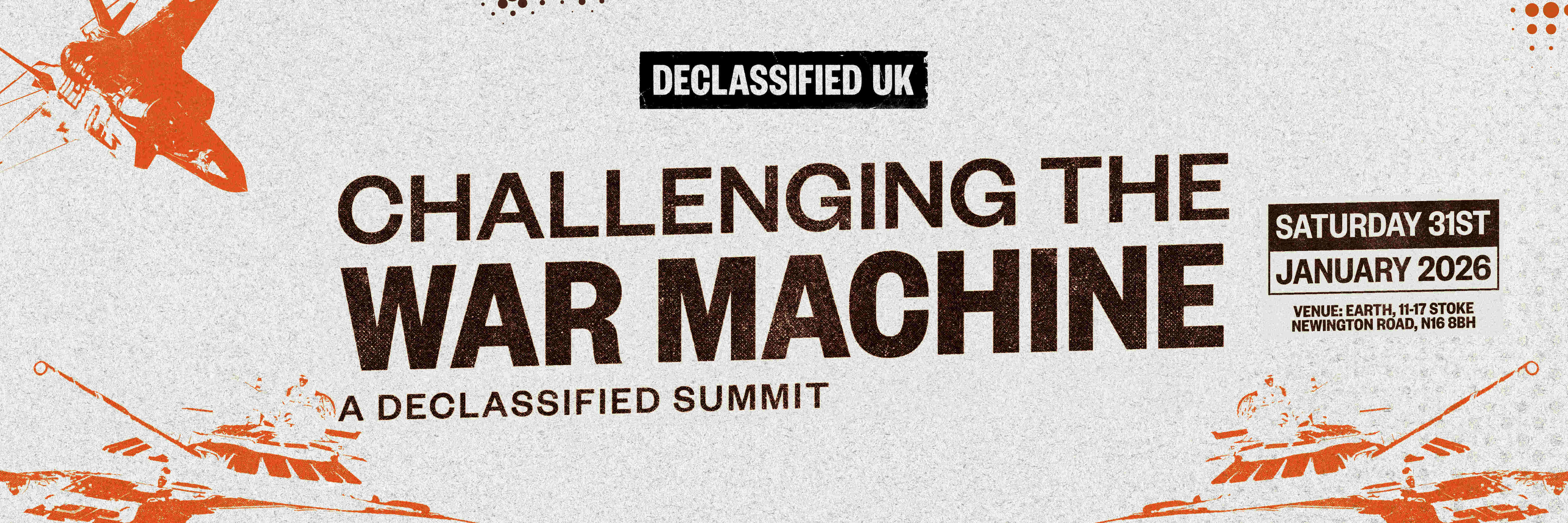
31st January – Challenging the War Machine – a DECLASSIFIED UK SUMMIT


Website of the Week
Now until to February 10, 2026 Radioactive waste storage in France: the debate is finally open! How to participate?
-
Archives
- January 2026 (288)
- December 2025 (358)
- November 2025 (359)
- October 2025 (376)
- September 2025 (258)
- August 2025 (319)
- July 2025 (230)
- June 2025 (348)
- May 2025 (261)
- April 2025 (305)
- March 2025 (319)
- February 2025 (234)
-
Categories
- 1
- 1 NUCLEAR ISSUES
- business and costs
- climate change
- culture and arts
- ENERGY
- environment
- health
- history
- indigenous issues
- Legal
- marketing of nuclear
- media
- opposition to nuclear
- PERSONAL STORIES
- politics
- politics international
- Religion and ethics
- safety
- secrets,lies and civil liberties
- spinbuster
- technology
- Uranium
- wastes
- weapons and war
- Women
- 2 WORLD
- ACTION
- AFRICA
- Atrocities
- AUSTRALIA
- Christina's notes
- Christina's themes
- culture and arts
- Events
- Fuk 2022
- Fuk 2023
- Fukushima 2017
- Fukushima 2018
- fukushima 2019
- Fukushima 2020
- Fukushima 2021
- general
- global warming
- Humour (God we need it)
- Nuclear
- RARE EARTHS
- Reference
- resources – print
- Resources -audiovicual
- Weekly Newsletter
- World
- World Nuclear
- YouTube
-
RSS
Entries RSS
Comments RSS
 nuclear-news