Israel’s New Minister for Nuclear Absurdity
Yossi Melman, HAARETZ, 28 May 23
Shortly after the cabinet approves David Amsalem’s appointment as minister in charge of the Israel Atomic Energy Commission, which will happen soon, he’ll head south to visit the Shimon Peres Negev Nuclear Research Center in Dimona.
Amsalem will be accompanied by Dr. Gil Dagan, the research center’s director, and Moshe Edri, the IAEC’s director general. They will go down a few floors, to an underground level, and arrive at the “Golda Balcony.”
Based on what nuclear whistleblower Mordechai Vanunu told the Sunday Times in 1986, this balcony is located two floors below ground level, in the research center’s Building 2. From it, senior Israeli officials can observe the center’s production facilities, which are commonly known as the Dimona nuclear reactor. Ever since Prime Minister Golda Meir visited the reactor roughly half a century ago, reactor workers have called this observation platform the Golda Balcony.
Last week, Prime Minister Benjamin Netanyahu decided to appease and flatter Amsalem, who is constantly angry and bitter, by appointing him as minister in charge of the Holy of Holies of Israeli security.
………………………………….. It’s impossible to understand Netanyahu’s decision to appoint one of his most loquacious, loudmouthed and irritable ministers to Israel’s most sensitive position, thereby making him privy to the country’s most classified secrets. Dealing with Israel’s nuclear program requires someone with very fine tuning, who walks on tiptoe and scrupulously maintains maximum secrecy. All these are traits seemingly far beyond Amsalem’s ability. He acts like a bull in a china shop.
………………..Way back in 1952, Ben-Gurion set up the IAEC and put chemistry professor Ernst David Bergmann in charge of it. Bergmann is considered the father of Israel’s nuclear program, which, according to foreign reports, is primarily a military nuclear program.
………………..According to foreign reports, in 1966, Israel became the sixth country in the world to acquire nuclear weapons, following the five big powers. It did so thanks to France, which provided it with a nuclear reactor, the equipment needed to run it and the uranium needed to fuel it between 1958 and 1962.
According to those reports, Israel has at least several dozen nuclear bombs based on both uranium and plutonium, as well as planes, missiles and submarines capable of launching them. Israel, which initially agreed to sign the Nuclear Non-Proliferation Treaty but later backtracked on this promise, also refuses to allow international supervision of the Dimona reactor.
………………… Other agencies include the air force, whose planes, according to foreign reports, are supposed to carry the bombs, and the navy, whose submarines can also be armed with missiles carrying nuclear warheads.
Foreign reports about Israel’s nuclear program also describe a facility called Kanaf 2, located west of Beit Shemesh, where Jericho surface-to-surface missiles armed with nuclear warheads are stored deep underground.
Amsalem, in his usual offensive language, called demonstrators against the government’s planned legal overhaul “anarchists.” These “anarchists” include reservist pilots and submariners, reservists from the air force’s special operations unit, and scientists from Rafael and the Dimona reactor who are responsible for Israel’s nuclear program. Now, when there’s no limit to absurdity, at least the official kind, he will be the minister in charge of them.
Clearly, ultimate responsibility was and remains in Netanyahu’s hands, and the powers he has granted his irascible minister are limited. Netanyahu, Defense Minister Yoav Gallant, Israel Defense Forces Chief of Staff Herzl Halevi and everyone else privy to the secrets of Israel’s nuclear program will continue running it in practice.
Nevertheless, Amsalem’s addition to the elite circle of people in the know sends a symbolic message:…………………. https://www.haaretz.com/opinion/2023-05-28/ty-article-opinion/.premium/this-is-israels-new-minister-for-atomic-absurdity/00000188-638e-dde3-abf9-fb8fa1570000
After AP report, Iran’s nuclear chief says Tehran to cooperate with inspectors on ‘new activities’
The head of Iran’s nuclear program is insisting that his nation will cooperate with international inspectors on any “new activities” regarding its nuclear sector
abc news, ByJON GAMBRELL Associated Press, May 24, 2023
DUBAI, United Arab Emirates — The head of Iran’s nuclear program insisted Wednesday that his government would cooperate with international inspectors on any “new activities.” His statement followed an exclusive Associated Press report about Tehran’s new underground tunnel system near a nuclear enrichment facility.
The AP outlined this week how deep inside a mountain, the new tunnels near the Natanz facility are likely beyond the range of a last-ditch U.S. weapon designed to destroy such sites…………………. more https://abcnews.go.com/Technology/wireStory/after-ap-report-irans-nuclear-chief-tehran-cooperate-99562281
The US silence on Israeli nuclear weapons and the right-wing Israeli government
While the US government tiptoes around the issue, Israel brags about its nuclear force.
Who would have imagined that, just as we have been worrying about Pakistani weapons falling into the hands of Islamic fanatics, we would come to the point where we have to fear Israel’s nuclear weapons falling into the hands of Israeli fanatics, who, as Ehud Barak explained, are “determined to attack Islam.” Our government cannot deal with these issues if it ignores the existence of Israeli nuclear weapons.
By Victor Gilinsky | May 4, 2023, Victor Gilinsky is a physicist and was a commissioner of the US Nuclear Regulatory Commission during the Ford, Carter, and Reagan administrations https://thebulletin.org/2023/05/the-us-silence-on-israeli-nuclear-weapons-and-the-right-wing-israeli-government/?utm_source=Newsletter&utm_medium=Email&utm_campaign=MondayNewsletter05042023&utm_content=NuclearRisk_IsraeliNukes_05042023
The Israeli protests against its new right-wing government have now touched on Israel’s nuclear weapons. To underline what is at stake, former Israeli prime minister Ehud Barak cast aside Israeli ambiguity over whether it possesses nuclear weapons to warn his compatriots that Western diplomats are worried that a Jewish messianic dictatorship could gain control over Israel’s nuclear weapons.
One thing we can be sure of is that the United States was not officially represented among those Western diplomats. American diplomats—in fact all US government employees—are forced to pretend they know nothing about Israeli nuclear weapons. Since everyone knows it’s not true, the pretense hobbles America’s policy on restraining the spread of nuclear weapons in the Middle East. Barak’s acknowledgment of Israel’s weapons, backhanded as it was, should free the United States from this outdated omerta.
The popular explanation of the US gag on Israeli nuclear weapons is that it is required by a September 1969 deal between Richard Nixon and Israel’s then-prime minister Golda Meir in which America would accept a nuclear-armed Israel and both would keep Israel’s nuclear weapons secret. US policy toward Israeli nuclear weapons was indeed eased after their meeting, but judging by Nixon’s memoirs, it was because he didn’t care much whether Israeli had them. His main interest was to gain Israeli support in the Cold War.
They spoke alone, kept no notes, and told no one what they talked about. A memorandum days later to the president from Henry Kissinger, then his national security advisor, shows even he knew little about the conversation. As to maintaining secrecy, they didn’t need a formal agreement. Nixon and Meir both understood a declared Israeli nuclear arsenal would have led to pressure on Moscow to provide their Arab allies with nuclear weapons.
The US bureaucracy and academics later created a myth about a nuclear deal, turning a convenient accommodation into a perpetual obligation, and subsequent presidents fell in line. But an international deal of which there is no record is no deal at all.
Nevertheless, US presidents since Bill Clinton are said to have signed a secret letter that they will not interfere with Israel’s nuclear weapons, and Israel acted as if it was entitled to such a commitment from every incoming US president. It got the commitment. When President Obama took office in 2009, the first question at his first televised press conference, from veteran reporter Helen Thomas, was: “Do you know of any country in the Middle East that has nuclear weapons?” The president’s slippery reply was: “I don’t want to speculate.” Helen Thomas got fired soon after, and while this was for her anti-Israeli remarks on a different occasion, no reporter has asked the question since. In February 2017 Israeli ambassador Ron Dermer managed to infuriate even the newly arrived Trump White House staff, sympathetic to Israel, with his heavy-handed demands the new president sign “the letter.” Still, it worked.
A change won’t come easily. A realistic US government assessment of Israel’s nuclear weapons will have to overcome not only Israeli intervention for its own reasons, but also State Department and White House resistance, in part because of the embarrassment of such an admission after years of denial, but also because such an admission could lead to complications under US law.
There is persuasive evidence that Israel detonated at least one test nuclear explosion on September 22, 1979, about a thousand miles south of South Africa. The signal, detected by a US Vela satellite, with corroborating evidence, was widely interpreted by the US intelligence community and most analysts as coming from an Israeli nuclear test explosion.
While the Carter White House publicly argued otherwise, months after the event Carter wrote in his diary: “We have a growing belief among our scientists that the Israelis did indeed conduct a nuclear test explosion in the ocean near the southern end of Africa.” Such an explosion was a violation of the 1963 Limited Test Ban Treaty, to which Israel was a party.
Confirmation of such a test would also trigger the 1977 Glenn Amendment to the Arms Export Control Act, which imposes tough economic and military sanctions on any state, other than the five nuclear powers authorized under the Non-Proliferation Treaty, that detonates a bomb post-1977. The president can waive the penalty, but not without political embarrassment.
While the US government tiptoes around the issue, Israel brags about its nuclear force. At the 2016 ceremony for the arrival of the fifth German-built submarine which Israel outfits with long range nuclear-tipped missiles, Netanyahu said: “Our submarine fleet is used first and foremost to deter our enemies who strive to extinguish us. They must know that Israel is capable of hitting back hard against anyone who seeks to hurt us …” No mention of “nuclear,” but the message was unmistakable.
Who would have imagined that, just as we have been worrying about Pakistani weapons falling into the hands of Islamic fanatics, we would come to the point where we have to fear Israel’s nuclear weapons falling into the hands of Israeli fanatics, who, as Ehud Barak explained, are “determined to attack Islam.” Our government cannot deal with these issues if it ignores the existence of Israeli nuclear weapons.
In his book on Israeli spy Jonathan Pollard, Wolf Blitzer wrote there is “a widely held attitude among Israeli officials that Israel can get away with the most outrageous things. There is a notion among many Israelis that their American counterparts are not too bright, that they can be ‘handled’.” We should not any longer put up with that. The Cold War reasons for America to stay mum about Israeli nuclear weapons evaporated decades ago. What the Israeli government says about its nuclear weapons is its business—but what our government says about it is American business.
Five years after Trump’s exit, no return to the Iran nuclear deal
Trump’s slew of sanctions and a changing political climate have contributed to JCPOA remaining in limbo.
Aljjazeera On 8 May 20238 May 2023
Tehran, Iran – Five years ago today, President Donald Trump held up a signed executive order for the cameras at the White House, announcing a unilateral withdrawal from a nuclear deal the United States had signed in 2015 with Iran and world powers.
Despite years of efforts, and after many ups and downs, the landmark accord known formally as the Joint Comprehensive Plan of Action (JCPOA), has not been restored, contributing to rising tensions across the region.
The Trump administration’s many designations of Iranian entities and institutions, specifically aimed at making it difficult for his successor Joe Biden to undo his damage, worked in tandem with a changing political climate to prevent a restored JCPOA.
The then-US president had argued that the deal was not doing enough to permanently keep Tehran from acquiring a nuclear weapon, and Trump rejoiced as he undid one of the most important foreign policy achievements of his predecessor Barack Obama.
His administration set out a dozen conditions to renegotiate a deal more favourable to Washington with Tehran, which would effectively amount to a total political capitulation by Iran…………………………
Iranian leaders, however, have not surrendered their doctrine of defying the US, and attacks by pro-Iran groups on US interests across the region have only multiplied in recent years, according to Washington.
The US assassination of Iran’s top general Qassem Soleimani in Iraq in early 2020 took tensions to new heights, with Tehran and Washington teetering on the edge of war…………………………………………………………..
JCPOA in the region
Since its inception, Israel has been the JCPOA’s biggest foe, incessantly lobbying Washington to declare the deal dead.
Prime Minister Benjamin Netanyahu praised Trump after his reneging on the deal, and Tel Aviv has repeatedly pushed against efforts by other signatories – namely China, Russia, France, Germany and the United Kingdom – to restore the accord through now-stalled talks that began in 2021.
Israel has also warned it will attack Iran to stop it from acquiring a bomb, and Biden’s national security adviser, Jake Sullivan, last week said the US president is willing to recognise “Israel’s freedom of action” if necessary.
The comment drew ire in Tehran, prompting security chief Ali Shamkhani to deem it a US admission of responsibility for Israeli attacks on Iranian facilities and nuclear scientists.
Elsewhere in the Middle East, many Arab states, led by Saudi Arabia, also cheered for Trump as they expressed concern over Tehran’s nuclear programme – which it maintains is strictly peaceful – and its support for proxies across the region.
But as Tehran also ramped up the pressure, and the US gradually saw its role in the region diminished, Arab leaders recognised a need for change.
The 2019 attack on Saudi oil facilities by the Iran-aligned Houthis in Yemen, and the subsequent non-response from Washington, appeared to be a turning point for Arab nations.
After two years of direct talks, Iran and Saudi Arabia agreed in March to restore diplomatic relations in a deal mediated by China, and embassies are expected to be reopened this week.
More challenges ahead
At least for now, JCPOA stakeholders appear to be content with maintaining the status quo while managing tensions.
The passing of two Western-introduced resolutions last year at the board of the International Atomic Energy Agency (IAEA) that censured Iran – and Tehran’s response – and a deadlock in talks since September have not prompted any side to declare the JCPOA dead in the absence of a better alternative for the accord.
The deal’s fate, however, promises to produce more confrontations between Tehran and the West in the coming months.
The Western parties have already reportedly warned Iran that if it further increases its enrichment of uranium to levels that could be potentially used to produce a bomb, it will prompt them to activate the deal’s so-called “snapback” mechanism that will automatically reinstate the United Nations sanctions on Iran.
Iran and the IAEA reached an agreement in Tehran in March to increase cooperation, which could potentially prevent another resolution at the upcoming board meeting of the nuclear watchdog in June.
Another major deadline arrives in October when the JCPOA is set to lift a number of restrictions on Iran’s research, development and production of long-range missiles and drones.
With Israel also pushing for snapback and the West accusing Tehran of selling armed drones to Russia for the war in Ukraine, stakeholders will have their work cut out for them in managing tensions during the coming months. https://www.aljazeera.com/news/2023/5/8/five-years-after-trumps-exit-no-return-to-the-iran-nuclear-deal
UK courts Bahrain and the United Arab Emirates for investments to salvage the nuclear dream
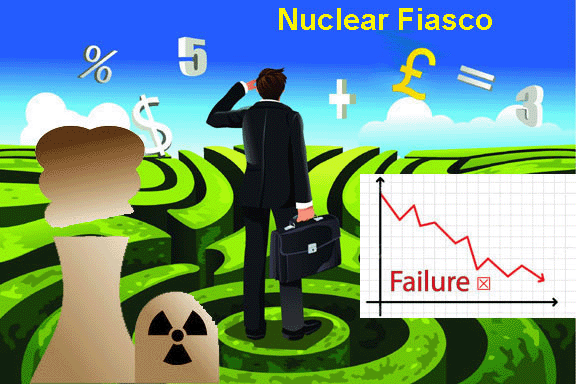
Gulf states poised to bail Britain out of energy crisis
Bahrain and the UAE courted by energy secretary Grant Shapps for fresh nuclear investment
By Rachel Millard, 30 April 2023
Gulf states are poised to help bankroll Britain’s efforts to build new
nuclear power stations to keep the lights on, the energy security secretary
has indicated. Grant Shapps visited the region in January and said he
remains “in constant contact” with investors in the region who are
“very interested” in the nuclear sector. Countries such as the UAE and
Bahrain have built up vast sovereign wealth funds which are now pushing
into clean energy amid global efforts to cut fossil fuel use.
Jeremy Hunt, the chancellor, met with the UAE’s Mubadala, a sovereign investment firm,
in February, and has abandoned plans to toughen tax rules for sovereign
wealth funds. Mr Shapps said: “I was in the Gulf states [this year] and
I’m in constant contact with our friends and colleagues over there. “They
have already been investing massive amounts in renewable energy – and
they’re very interested in nuclear power as well. The scale of their
ambitions are pretty big – watch this space.”
Ministers are trying to drum up investment for EDF’s planned £20bn power plant in Suffolk as well as other nuclear projects as part of a push on the carbon-free [?] power
source. Legal & General, Britain’s biggest money manager with £1.3 trillion
of assets, has said it is focused on supporting other “viable, and
cost-effective” {?] clean [?] energy solutions.
French state energy giant EDF
owns Britain’s nuclear fleet but will need outside investors to build its
planned Sizewell C project in Suffolk. The Government and EDF have pushed
China’s CGN out of the project amid concern about China’s involvement in
critical national infrastructure.
Telegraph 30th April 2023
Libya lost, then found, 2.5 tonnes of uranium – a red flag for nuclear safety

The Conversation Olamide Samuel.Track II Diplomat and Expert in Nuclear Politics, University of Leicester 1 May 23
Earlier this year the International Atomic Energy Agency Director General Rafael Grossi reported that about 2.5 tonnes of uranium ore concentrate had gone missing from a site in Libya. This was arguably one of the largest quantity of uranium ore concentrate that had ever been misplaced.
Barely a day after the IAEA’s announcement, General Khaled Mahjoub of the self-styled Libyan National Army said the uranium ore had been found about 5km from the warehouse where it had been stored. A week later, the IAEA, which had been monitoring the stockpile occasionally, confirmed that most of the uranium ore concentrate had been found.
Uranium ore concentrate, popularly known as ‘yellowcake’, is a type of uranium concentrate powder obtained after uranium ore has been milled and chemically processed. Yellowcake has very low radioactivity, equivalent to the radioactivity of uranium ore found in nature, and it is produced by all countries where uranium ore is mined.
Yellow cake is further processed to become enriched uranium, which is used to manufacture the fuel for nuclear reactors. However, enriched uranium can also be used to manufacture nuclear weapons. If the technology were available, the 2.5 tons of missing yellowcake would have been half the amount required for a nuclear bomb.
Nuclear material experts had said the Libyan uranium ore concentrate in case posed “no significant security risk” as it required prohibitively sophisticated processing capabilities before it can be suitable for civil or weapons use.
Nevertheless, the news of missing Libyan uranium ore concentrate did highlight serious problems with the national and global governance structures for managing uranium.
Based on my experience in nuclear non-proliferation and politics, I believe that the missing Libyan uranium debacle illustrates two things.
Firstly, it illustrates the dangers of a IAEA that doesn’t have enough resources to monitor uranium ore stockpiles, especially in countries with unstable regimes. And faced with more pressing issues such as the safety and security of nuclear power plants in Ukraine, the IAEA won’t prioritise yellowcake storage.
Secondly, many African countries still struggle to implement nuclear safety and security governance provisions.
A regional destabiliser
Libya has been unstable since the fall of Muammar Gaddafi’s regime in 2011. This plunged the country into a civil war that has destabilised the North African and the Sahel regions, as Libya lost control of the largest and most diverse military arsenals in the region.
Much of this arsenal eventually fell into the hands of various non-state actors. Among them were Boko-Haram which mounted a reign of terror in northern Nigeria, and Ansar Al-Sharia in Tunisia.
Gaddafi had amassed stockpiles of nuclear material and technology as he sought to develop nuclear weapons. He had help from Abdul Qadeer Khan, who had been identified as a key facilitator for the global smuggling of nuclear material and technology.
Gaddafi eventually abandoned the weapons program in 2003, after months of secret disarmament negotiations with the US and British.
Following this deal, the US airlifted about 25 metric tonnes of Libya’s nuclear weapon programme components and documents. The last of Libya’s enriched uranium was removed in 2009. But there remained in Sabha, the southern Libyan city, about 6400 barrels of uranium ore concentrate. It’s this material that was under the control of an army battalion.
Olli Heinonen, a former Deputy Director of the IAEA, has since explained that it would have been very costly to airlift the remaining concentrate. He also said there were incentives for Libyans to holding onto the concentrate until the spot price of uranium was high enough for profitable export.
More questions than answers
Though the missing 2.5 tonnes of uranium have been recovered, questions remain: Why did 2.5 tonnes go missing in the first place? Who would have wanted to acquire it?
…………………………….. more https://theconversation.com/libya-lost-then-found-2-5-tonnes-of-uranium-a-red-flag-for-nuclear-safety-203775
Why a nuclear-weapons-free zone in the Middle East is more needed than ever
Why a WMD-free zone in the Middle East is more needed than ever., By Almuntaser Albalawi | April 10, 2023
Recent news reports suggesting Saudi Arabia is seeking US aid for a peaceful nuclear program are bringing attention to the distressing potential for nuclear weapons proliferation in the Middle East. Yet conversations about averting such a doomed future for the region might be heading once again in the wrong direction. History suggests that power politics—in which self-interest is prioritized over global interests—may not be the best lens for looking at issues of arms control.
During the 10th review conference of the Nuclear Non-Proliferation Treaty last year, Arab states reiterated their call for establishing a Middle East zone free of weapons of mass destruction (WMD). This has been a long-standing position, but it should not be taken for granted.
A growing interest in nuclear technology in the Middle East—combined with ambiguity over nuclear activities in Iran and Israel—raises concerns about potential proliferation in the region. A robust and inclusive WMD-free zone remains the best solution for addressing these concerns…………………………………………………………………………………………. more https://thebulletin.org/2023/04/why-a-wmd-free-zone-in-the-middle-east-is-more-needed-than-ever/?utm_source=Newsletter&utm_medium=Email&utm_campaign=MondayNewsletter04102023&utm_content=NuclearRisk_WMDFreeZone_04102023
Ex-PM Ehud Barak Confirms Israel Has Nuclear Weapons: Why it Matters
Israel has maintained a strict policy of never confirming or denying it possesses nuclear weapons.
By Pesach Benson | Apr 9, 23, https://www.israeltoday.co.il/read/ex-pm-ehud-barak-confirms-israel-has-nuclear-weapons-why-it-matters/
(TPS) Former Prime Minister Ehud Barak broke Israel’s policy of ambiguity and tweeted his confirmation that Israel possesses nuclear weapons last Tuesday.
While commenting on the fallout from the governing coalition’s judicial reform initiative, Barak tweeted:
“It sounds weird to us. But in Israelis’ conversations with political parties in the West, their deep concern emerges about the possibility that, if the coup d’état in Israel succeeds, a messianic dictatorship will be established in the heart of the Middle East, possessing nuclear weapons, and fanatically wishing for a confrontation with Islam centered on the Temple Mount. In their eyes – it’s really scary. not going to happen. Happy holiday”
Israel has maintained a strict policy of never confirming or denying it possesses nuclear weapons. Nevertheless, it has been widely believed that Israel possesses them, with foreign reports estimating the nuclear arsenal’s size from dozens to hundreds of bombs.
Barak, a former Defense Minister and Israel Defense Forces Chief of Staff, argued in a Sept. 2021 op-ed that Israel should review its policy of nuclear ambiguity, suggesting disclosure could be a better deterrent against Iran’s nuclear program.
Proponents of ambiguity say it protects Israel from being forced to sign the Non-Proliferation Treaty or possibly facing international sanctions. Signing the NPT would require Israel to open its nuclear facilities to international inspection.
Meanwhile, the US reportedly floated a proposal with Israel and other allies in February to resume nuclear talks with Iran in which Tehran would not enrich uranium above 60 percent purity in exchange for sanctions relief. The White House has neither confirmed nor denied those reports.
The International Atomic Energy Agency reported in March that Iran has enriched uranium to 83.7 percent purity, far higher than the 3.67% necessary for a civilian nuclear program. Nuclear weapons require uranium enriched to 90% purity.
It is widely believed that Iran could finish enriching enough uranium to produce an atomic bomb in about four weeks.
Iran and the US agreed to the Joint Comprehensive Plan of Action in 2015 along with France, Germany, Britain, Russia and China. Under the terms of the JCPOA, Iran was supposed to limit its uranium enrichment under UN supervision in exchange for the US lifting economic sanctions. Israel opposed the agreement, saying it wasn’t strong enough.
In 2018, President Donald Trump withdrew the US from the agreement. Restoring the JCPOA has been a key foreign policy goal of the Biden administration.
Israel and its Gulf allies oppose a resumption of the nuclear talks.
B1 US Navy sends nuclear-powered guided-missile submarine to Middle East
The US Navy has deployed a guided-missile submarine capable of carrying up to 154 Tomahawk missiles to the Middle East, a spokesman said Saturday.
The Navy rarely acknowledges the location or deployment of submarines. Cmdr. Timothy Hawkins, a spokesman for the 5th Fleet based in the Gulf nation of Bahrain, declined to comment on the submarine’s mission or what had prompted the deployment……………………………………… more https://english.alarabiya.net/News/gulf/2023/04/08/US-Navy-sends-nuclear-powered-guided-missile-submarine-to-Middle-East-Statement
Worst-kept secret? In tweet, ex-PM Barak seems to confirm Israel has nuclear weapons
Says Western officials fear judicial overhaul will turn country into ‘messianic dictatorship that possesses nuclear weapons,’ thirsting for confrontation with Islam at Temple Mount.
By TOI STAFF4 April 2023 https://www.timesofisrael.com/in-tweet-ex-pm-barak-seems-to-confirm-israel-has-nuclear-weapons/
—
Former prime minister Ehud Barak appeared to confirm on Twitter Tuesday that Israel has nuclear weapons — something Israeli officials have heavily implied but avoid publicly confirming as a matter of policy.
“In conversations between Israelis and Western diplomatic officials, there are deep concerns raised of the possibility that if the coup in Israel succeeds, a messianic dictatorship — that possesses nuclear weapons and fanatically wishes for a confrontation with Islam centered on the Temple Mount — will be established in the heart of the Middle East,” tweeted Barak in his latest criticism of the government’s judicial overhaul effort.
One of National Security Minister Itamar Ben Gvir’s aides tweeted last week that the overhaul “will eventually lead to a freedom-protecting and God-fearing DAVIDIC MONARCHY [akin to the] UAE,”
Since the government’s unveiling of its plan to radically curb the High Court of Justice’s power three months ago, Barak has become a leading voice in the protests against the plan.
He has warned that Israel risks devolving into a dictatorship, adding that people are duty-bound to refuse orders by “an illegitimate regime.”
In February, Barak likened President Isaac Herzog’s proposal to the government for compromise on the judicial plan to former British premier Neville Chamberlain’s appeasement efforts vis-à-vis Nazi leader Adolf Hitler, in a post to social media he later deleted.
He accused the Netanyahu government of pursuing a “coup d’état” and said the overhaul plan was an “attack on the Declaration of Independence” and did not serve the interests of the public or the country.
Saudi quest to become a nuclear player is coming up short
Bloomberg News | April 5, 2023
Saudi Arabia’s efforts to break into the ranks of global uranium suppliers — and feed a nascent nuclear power program — are coming up short, with exploration investments failing to find any significant deposits of the heavy metal.
The amount worth developing is smaller than that found in Botswana, Tanzania or the US, according to an assessment published by the Nuclear Energy Agency and the International Atomic Energy Agency. This is the first time the Saudi government submitted data for the biennial Red Book, which is used by geologists prospecting for the commodity that fuels nuclear reactors
Saudi Arabia has spent more than $37 million since 2017 searching for deposits but only managed to identify reserves that would be “severely uneconomic” to mine, the report said.
…………………… Saudi Arabia didn’t respond to requests for comment.
………………………. Yellowcake prices have declined in recent decades because of plant shutdowns and public concern over nuclear power. Global expenditures on exploration of about $350 million are near 10-year lows, according to the Red Book…………………………. https://www.mining.com/web/saudi-quest-to-become-a-nuclear-player-is-coming-up-short/
Inside Saudi Arabia’s Global Push for Nuclear Power
Despite qualms in Washington, Saudi officials have pressed the United States to help them develop nuclear power. But they are also exploring other options, including China.
NY Times, By Edward Wong, Vivian Nereim and Kate Kelly, This article was reported from Washington and Riyadh, Saudi Arabia. April 1, 2023
For years, Saudi Arabia has pressed the United States to help it develop a nuclear energy program, as Saudi leaders look beyond oil to power their country.
But talks about a nuclear partnership have dragged on, largely because the Saudi government refuses to agree to conditions that are intended to prevent it from developing nuclear weapons or helping other nations do so, according to officials with knowledge of the discussions.
Frustrated Saudi officials are now exploring options to work with other countries, including China, Russia or a U.S. ally.
At the same time, they are renewing a push with the United States — their preferred partner — by offering to try to normalize relations with Israel in exchange for U.S. cooperation on building nuclear reactors and other guarantees.
New details of the Saudi efforts provide a window into the recent difficulties and distrust between Washington and Riyadh, and into the foreign policy that Crown Prince Mohammed bin Salman is pursuing: greater independence from the United States as he expands partnerships with other world powers, including China……………
The Saudi nuclear efforts raise a specter of proliferation that makes some American officials nervous: Prince Mohammed, the kingdom’s de facto ruler, has said that Saudi Arabia will develop nuclear weapons if Iran does. Any civilian nuclear program has dual-use elements that could aid a country in producing weapons-grade material.
…………………………………………………………….. Saudi officials have refused to commit to the restrictions, which would undermine their goal of enriching and selling uranium. The United Arab Emirates, a Saudi neighbor, and Taiwan have agreements with the United States that include bans on enrichment and fuel reprocessing.
Even if Saudi officials express willingness to sign a 123 agreement, any deal would face significant political obstacles in Washington. President Biden distrusts Prince Mohammed and denounced Saudi Arabia during a blowup over Riyadh’s oil policy in October. And many Democratic lawmakers and some Republican ones say Saudi Arabia has been a destabilizing force…………………………………………………………………………………………………
Flirting With China
As the Biden administration insists on certain safeguards, Saudi officials have continued looking at non-American companies.
An attractive one is the Korea Electric Power Corporation, or Kepco, based in South Korea. A company spokesperson said Kepco is talking to U.S. officials about the nuclear program and is interested in working with Saudi Arabia but declined to go into details, citing a confidentiality agreement with the Saudis.
But the South Korean government, a U.S. ally, would likely bar the company from the project if Saudi Arabia does not enter into a strict nonproliferation agreement with a government or the International Atomic Energy Agency. The company said it hoped “the conditions for participation in the project will be created.” And a complicating factor is a legal dispute between Kepco and Westinghouse over reactor designs.
…………………………… China has built up Saudi Arabia’s ballistic missile arsenal over decades and sends military officers to work on the program, current and former U.S. officials said. And with Chinese technology, Saudi Arabia is now able to build its own missiles, they said. New satellite imagery showing bulldozer activity at previous missile sites indicates Saudi Arabia could be housing a new type of missile underground, said Jeffrey Lewis, a nuclear nonproliferation expert at the Middlebury Institute of International Studies.
………………………………… Chinese nuclear companies have also offered to help explore and develop the country’s uranium resources. In 2017, the China National Nuclear Corporation and the Saudi Geological Survey signed a memorandum of understanding on surveying uranium deposits. In 2021, the Saudi Geological Survey issued a “certificate of appreciation” to the Beijing Research Institute of Uranium Geology for help in exploring uranium and thorium resources……. more https://www.nytimes.com/2023/04/01/us/politics/saudi-arabia-nuclear-biden-administration.html
THE LAST THING THE UKRAINIAN PEOPLE NEED IS DEPLETED URANIUM

27 Mar 2023 • by Kate Hudson, Stop the War Coalition
KATE HUDSON: THE USE OF DU RUNS COUNTER TO THE BASIC RULES AND PRINCIPLES OF INTERNATIONAL HUMANITARIAN LAW
In a shocking development, the government has announced it will be sending depleted uranium (DU) rounds to Ukraine along with Challenger 2 tanks. As we know from several wars in the past few decades, the health consequences for Ukrainian civilians will be high. DU is a chemically toxic and radioactive heavy metal and it’s a by-product of the enrichment process used to make reactor-grade uranium. Its chemical and physical properties have made it popular for a range of military and commercial uses: its density and its ability to self-sharpen attracted the attention of the US Department of Defense (DoD) in the late 1950s. The military was looking to increase the armour piercing capacity of munitions and to strengthen the armour of tanks. DU seemed to fit the bill. But its use has had a devastating impact on the populations caught up in numerous conflicts, with the terrible type of health consequences that we associate with radiation impacts.
………………………. The risk is not that DU munitions will cause a nuclear explosion. It’s that the impact of their use causes toxic or radioactive dust to be released and if this is subsequently inhaled or ingested in other ways, it has very significant negative health consequences. After the first Gulf War the DoD Office of the Special Assistant for Gulf War Illnesses (OSAGWI) identified a number of DU exposure scenarios including through wounds caused by DU fragments, inhalation of airborne DU particles, ingestion of DU residues, or wound contamination by DU residues.
DU munitions were used on a large scale by the US and UK in the Gulf War in 1991 and in Iraq in 2003. Their use has caused a sharp increase in the incidence rates of some cancers, such as breast cancer and lymphoma, in the areas where it has been used. It has also been implicated in a rise in birth defects from areas adjacent to the main Gulf War battlefields. Other health problems associated with DU include kidney failure, nervous system disorders, lung disease and reproductive problems.
A report funded by the Norwegian Ministry of Foreign Affairs in 2013 showed that more than 400 tonnes of DU ammunition were estimated to have been used in 1991 and 2003, the vast majority by US forces. The report showed that the Iraqi government’s Radiation Protection Centre had identified between 300 and 365 contaminated sites by 2006, mostly in the Basra region in southern Iraq. As well as warning of contamination being spread by poorly regulated scrap metal dealers, including children, it also shared evidence that DU munitions were fired at light vehicles, buildings and other civilian infrastructure including the Iraqi Ministry of Planning in Baghdad – in spite of official assurances of military-only armoured targets.
Its use in the former Yugoslavia by NATO forces in 1995 and 1999 led to the same type of consequences. It was also used by the US in Syria in 2015. The impacts have not been confined to local populations – they have also affected the troops involved in or close to their use, and also military clean-up teams sent to deal with the impact of the DU. The severe health consequences have led to the terms ‘Gulf War syndrome’ and ‘Balkan syndrome’ entering our vocabulary. The Ministry of Defence disputes the risks of DU, yet it recommends ‘ongoing surveillance’ for veterans with embedded DU fragments.
No treaty explicitly banning the use of DU is yet in force, but it is clear that its use runs counter to the basic rules and principles of International Humanitarian Law. In 2006, the European Parliament strengthened its previous calls for a moratorium by calling for an introduction of a total ban, classifying the use of DU, along with white phosphorus, as inhumane. Since 2007, repeated UN General Assembly resolutions have highlighted serious concerns over the use of DU weapons. The UK, together with the US, France and Israel are the only states that have consistently voted against the resolutions.
The British government must put an immediate end to its use of DU – inflicting it on the people of Ukraine is the last thing they need. https://www.stopwar.org.uk/article/the-last-thing-the-ukrainian-people-need-is-depleted-uranium/?link_id=14&can_id=6af7fc84f5bc6c4d25d736c71bd0eab7&source=email-europe-for-peace-stop-the-war-in-ukraine-3&email_referrer=email_1865172&email_subject=uniting-european-anti-war-forces
UK’s depleted uranium plan threatens all of Europe – Moscow
RT.com 22 Mar 23
The Ukraine conflict could descend into a fight “to the last European,” a top Russian lawmaker has warned.
The British decision to supply depleted uranium munitions to Kiev is part of a dangerous trend that makes the Ukraine conflict a threat to the whole of Europe, Russian State Duma Chairman Vyacheslav Volodin has warned.
“The war to the last Ukrainian could become a war to the last European,” the politician said in a social media post. Numerous Russian officials have claimed that Kiev’s Western backers are prepared to sacrifice every Ukrainian for their geopolitical interests.
Volodin argued that Kiev’s acquisition of depleted uranium munitions, which can contaminate the battlefield and cause health risks for generations to come, could become a stepping stone to even more dangerous weapons.
The next step “could be the use of a dirty bomb by the Kiev regime or the deployment of a tactical nuclear weapon,” added Volodin.
President Vladimir Putin expressed concern about the British decision earlier this week, warning that Russia “will be forced to react accordingly, bearing in mind that the collective West has already started to use weapons with a nuclear component.”……………………………………………………………………
The British government announced on Monday that it will send Ukraine armor-piercing rounds containing depleted uranium, alongside previously-promised Challenger 2 main battle tanks. https://www.rt.com/russia/573407-volodin-ukraine-depleted-uranium/
Iraqi children with congenital disabilities caused by depleted uranium
|
Iraqi Kids Test Positive for Depleted Uranium Remnants Near Former US Air Base, https://truthout.org/articles/iraqi-children-test-positive-for-depleted-uranium-near-former-us-air-base/ Mike Ludwig, September 19, 2019 For the first time, independent researchers have found that the bodies of Iraqi children born with congenital disabilities, such as heart disease and malformed limbs, near a former United States air base in southern Iraq are contaminated with high levels of radioactive heavy metals associated with toxic depleted uranium pollution leftover from the 2003 U.S.-led invasion.
The findings appear to bolster claims made by Iraqi doctors who observed high rates of congenital disabilities in babies born in areas that experienced heavy fighting during the bloody first year of the most recent Iraq war. In 2016, researchers tested the hair and teeth of children from villages in proximity to the Talil Air Base, a former U.S. air base, located south of Baghdad and near the city Nasiriyah. They found elevated levels of uranium and of thorium, two slightly radioactive heavy metals linked to cancer and used to make nuclear fuel. Thorium is a direct decay product of depleted uranium, a chemically toxic byproduct of the nuclear power industry that was added to weapons used during the first year of the war in Iraq. Thanks to its high density, depleted uranium can reinforce tank armor and allow bullets and other munitions to penetrate armored vehicles and other heavy defenses. Depleted uranium was also released into the environment from trash dumps and burn pits outside U.S. military bases. Mozhgan Savabieasfahani, an independent researcher based in Michigan and a co-author of the study, said that levels of thorium in children born with congenital disabilities near the Talil Air Base were up to 28 times higher than in a control group of children who were born without congenital disabilities and live much further away. “We are basically seeing a depleted uranium footprint on these children,” Savabieasfahani said in an interview. Using statistical analysis, the researchers also determined that living near the air base was associated with an increased risk of giving birth to a child with congenital disabilities, including congenital heart disease, spinal deformations, cleft lip and missing or malformed and paralyzed limbs. The results of the study will soon be published in the journal Environmental Pollution, where the authors argue more research is needed to determine the extent that toxins left behind after the U.S.-led war and occupation are continuing to contaminate and sicken the Iraqi population. For years following the 2003 U.S-led invasion, Iraqi doctors raised alarms about increasing numbers of babies being born with congenital disabilities in areas of heavy fighting. Other peer-reviewed studies found dramatic increases in child cancer, leukemia, miscarriages and infant mortality in cities such as Fallujah, which saw the largest battles of the war. Scientists, Iraqi physicians and international observers have long suspected depleted uranium to be the culprit. In 2014, one Iraqi doctor told Truthout reporter Dahr Jamail that depleted uranium pollution amounted to “genocide.” The U.S. government provided Iraq’s health ministry with data to track depleted uranium contamination but has said it would be impossible to identify all the material used during wartime. War leaves behind a variety of potentially toxic pollutants, and some researchers have cast doubt on the connection between depleted uranium and congenital disabilities, noting that Iraq has faced a number environmental problems in recent decades. However, political manipulation was suspected to have skewed results of at least one study, a survey of congenital disabilities released by the World Health Organization and the Iraqi government in 2013 that contradicted claims made by Iraqi doctors. While the authors caution that more research is needed, by identifying the presence of thorium in the teeth and hair of Iraqi children born with congenital disabilities near the Talil Air Base, the latest studies draw direct links to depleted uranium and the U.S. military. “Baby teeth are highly sensitive to environmental exposures,” said Savabieasfahani. “Such high levels of thorium simply suggest high exposure at an early age and potentially in utero.” Up to 2,000 metric tons of depleted uranium entered the Iraqi environment in 2003, mostly from thousands of rounds fired by the U.S., according to United Nations estimates. Depleted uranium munitions were also fired by U.S. forces in Iraq, Kuwait and Saudi Arabia during the Persian Gulf War in 1993. Researchers and veterans have long suspected that depleted uranium could be a potential cause of Gulf War syndrome, a wide range of harmful symptoms experienced by thousands of service members for years after the war. The U.S. has also imported thousands of tons of military equipment into Iraq, including tanks, trucks, bombers, armored vehicles, infantry weapons, antiaircraft systems, artillery and mortars – some of which were coated with depleted uranium. Much of this equipment eventually found its way into military junkyards, dozens of which remain scattered near former U.S. military bases and other installations across country. Depleted uranium was also stored at U.S. military bases and was known to leak into the environment. The Talil Air Base, which served as a focal point for the new study, is only one of dozens of sites across Iraq where the U.S. military is believed to have left a highly toxic legacy. “What we see here, and what we imply with this study, is that we could see this very same scenario around every single U.S. military base in Iraq,” Savabieasfahani said. “The exposure of pregnant mothers to the pollutions of war, including uranium and thorium, irreversibly damages their unborn children.” In 2013, international observers reported that between 300 and 365 sites with depleted uranium contamination were identified by Iraqi authorities in the years following the 2003 U.S. invasion, with an estimated cleanup cost of $30 million to $45 million. In some cases, military junk contaminated with depleted uranium was being sold as scrap metal, spreading the contamination further. At one scrap site, children were seen climbing and playing on contaminated scrap metal. Savabieasfahani, who has researched military pollution across Iraq, said the violence of war continues through pollution long after the carnage ends and the troops come home. Dropping tons of bombs and releasing millions of bullets leaves toxic residues in the air, water and soil of the “targeted population,” poisoning the landscape – and the people — for generations. Of course, U.S. war making in Iraq has not ended. The U.S. military continues to train Iraqi security forces and lead a coalition that carried out airstrikes against ISIS (also known as Daesh) insurgents in Iraq as recently as last week. “The U.S. must be held responsible and forced to clean up all the sites which it has polluted. Technology exists for the cleanup of radiation contamination,” Savabieasfahani said. “The removal and disposal of U.S.-created military junkyards would go a long way toward cleaning toxic releases out of the Iraqi environment.” The U.N. Internal Law Commission is currently circulating 24 draft principles urging governments to protect the environment from the ravages of war. In July, an international group of scientists renewed calls for a Fifth Geneva Convention that would establish an international treaty declaring environmental destruction a war crime under international law. While a Fifth Geneva convention on environmental war crimes would be significant, it would not ensure accountability for the U.S., which routinely shields itself from international prosecution for its war crimes. |
|
1 This Month
29 Jan. Thursday 7-8 p.m. Webinar – World’s Largest Nuclear Station in Port Hope, ON?
To see nuclear-related stories in greater depth and intensity – go to https://nuclearinformation.wordpress.com/

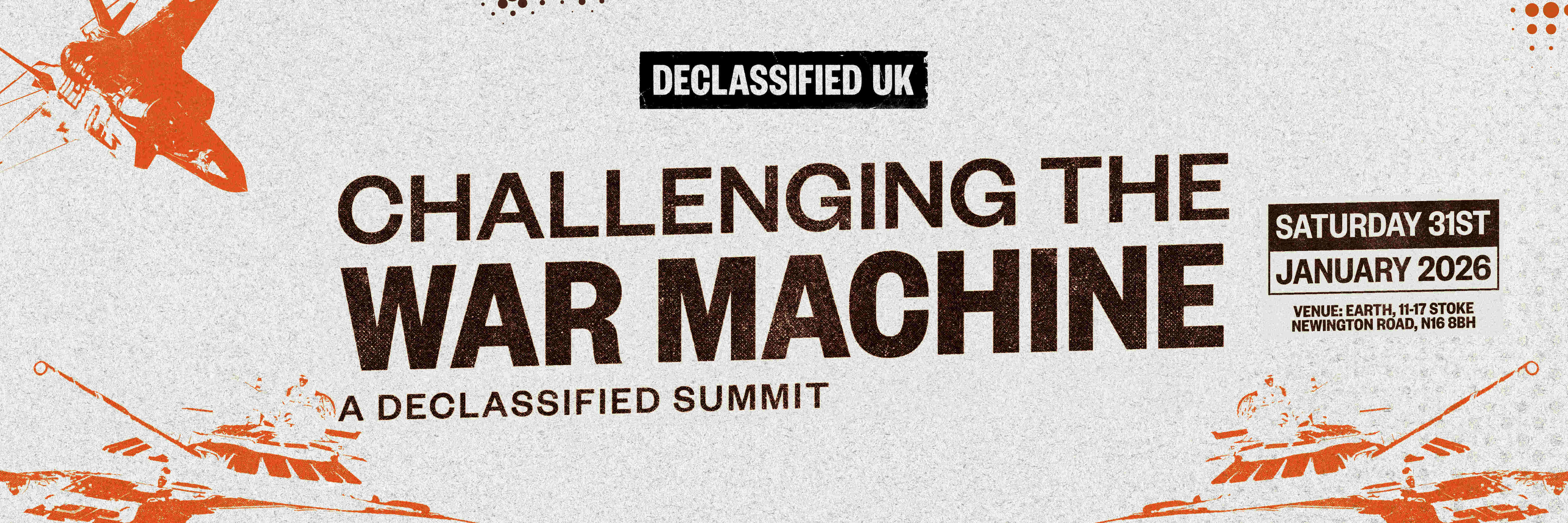
31st January – Challenging the War Machine – a DECLASSIFIED UK SUMMIT


Website of the Week
Now until to February 10, 2026 Radioactive waste storage in France: the debate is finally open! How to participate?
-
Archives
- January 2026 (288)
- December 2025 (358)
- November 2025 (359)
- October 2025 (376)
- September 2025 (258)
- August 2025 (319)
- July 2025 (230)
- June 2025 (348)
- May 2025 (261)
- April 2025 (305)
- March 2025 (319)
- February 2025 (234)
-
Categories
- 1
- 1 NUCLEAR ISSUES
- business and costs
- climate change
- culture and arts
- ENERGY
- environment
- health
- history
- indigenous issues
- Legal
- marketing of nuclear
- media
- opposition to nuclear
- PERSONAL STORIES
- politics
- politics international
- Religion and ethics
- safety
- secrets,lies and civil liberties
- spinbuster
- technology
- Uranium
- wastes
- weapons and war
- Women
- 2 WORLD
- ACTION
- AFRICA
- Atrocities
- AUSTRALIA
- Christina's notes
- Christina's themes
- culture and arts
- Events
- Fuk 2022
- Fuk 2023
- Fukushima 2017
- Fukushima 2018
- fukushima 2019
- Fukushima 2020
- Fukushima 2021
- general
- global warming
- Humour (God we need it)
- Nuclear
- RARE EARTHS
- Reference
- resources – print
- Resources -audiovicual
- Weekly Newsletter
- World
- World Nuclear
- YouTube
-
RSS
Entries RSS
Comments RSS
 nuclear-news