Saudi Arabia Says It Will Get Nuclear Weapon If…
Crown Prince Mohammed bin Salman denied in an interview with Fox News that the Saudis have suspended US-brokered talks with Israel.
World NewsAgence France-Presse September 21, 2023
Israel’s is the region’s only nuclear weapons state, if an undeclared one.
Saudi Arabia’s de facto leader said Wednesday that a historic normalization of relations with Israel is getting “closer,” as he also warned that the kingdom will seek a nuclear weapon if foe Iran gets one first. Crown Prince Mohammed bin Salman denied in an interview with Fox News that the Saudis have suspended US-brokered talks with Israel.
“Every day we get closer,” the prince, who is widely seen as effectively the kingdom’s leader, said……………………..
In the interview, the crown prince, most commonly known by his initials MBS, renewed warnings that Saudi Arabia would seek nuclear weapons if Iran does.
“If they get one, we have to get one,” he said.
Saudi Arabia has been seeking security guarantees, including reportedly a treaty, with the United States in return for normalizing with Israel.
Iran denies seeking a nuclear weapon but has breached agreed limits on uranium enrichment since former president Donald Trump left a 2015 international agreement to put curbs on Tehran’s nuclear program in return for lifting sanctions.
Israel’s is the region’s only nuclear weapons state, if an undeclared one.
President Joe Biden discussed Saudi Arabia during a meeting with Netanyahu on the sidelines of the UN General Assembly.
The Biden administration’s diplomatic plans in the Middle East have been rocked by tense relations with Netanyahu, who is accused at home by opponents of undermining Israeli democracy through far-reaching reforms of the judiciary……………
https://www.ndtv.com/world-news/saudi-arabia-says-it-will-get-nuclear-weapon-if-iran-does-first-4409031
UN nuclear agency slams Iran for barring inspectors from monitoring program
The UN nuclear watchdog has criticised Iran for effectively barring several of its most experienced inspectors from monitoring the country’s program.
International Atomic Energy Agency (IAEA) chief Rafael Grossi on Saturday condemned Iran’s “disproportionate and unprecedented” move to bar multiple inspectors assigned to the country, hindering its oversight of Tehran’s atomic activities.
Iran’s move is a response to a call led by the United States, Britain, France and Germany at the IAEA’s Board of Governors this week for Tehran to cooperate immediately with the agency on issues including explaining uranium traces found at undeclared sites.
Grossi made clear, however, that he believed Iran had overreacted.
“I strongly condemn this disproportionate and unprecedented unilateral measure which affects the normal planning and conduct of agency verification activities in Iran and openly contradicts the cooperation that should exist between the agency and Iran,” he said in a statement.
The strongly worded statement came amid longstanding tensions between Iran and the agency, which is tasked with monitoring a nuclear program that Western nations have long suspected is aimed at eventually developing a nuclear weapon. Iran insists the program is peaceful.
Iran’s move, known as “de-designation” of inspectors, is allowed; member states can generally veto inspectors assigned to visit their nuclear facilities under the nuclear Non-Proliferation Treaty (NPT) and each country’s safeguards agreement with the agency governing inspections.
But the IAEA said Tehran’s decision went beyond normal practice. It said Iran had told it that it would bar “several” inspectors, without giving a number.
“These inspectors are among the most experienced agency experts with unique knowledge in enrichment technology,” the agency said. “With today’s decision, Iran has effectively removed about one third of the core group of the agency’s most experienced inspectors designated for Iran.”
Iran’s foreign ministry linked the move to what it said was an attempt by the US and three European countries to misuse the body “for their own political purposes”. He appeared to be referring to Britain, France and Germany, which said on Thursday they would maintain sanctions on Iran related to its nuclear and ballistic missile programs.
“Of course, Iran will continue its positive cooperation within the framework of the agreements that have been made, and emphasise the necessity of the agency’s neutrality,” he added.
A Vienna-based diplomat said Iran had de-designated all the French and German members of the IAEA inspection team. There were already no US or British members.
The Vienna-based IAEA reported earlier this month that Iran had slowed the pace at which it is enriching uranium to nearly weapons-grade levels. That was seen as a sign that Tehran was trying to ease tensions after years of strain between it and the US.
Iran and the US are negotiating a prisoner swap and the release of billions of dollars in Iranian assets frozen in South Korea.
Then-President Donald Trump unilaterally pulled the US out of the accord in 2018, restoring crippling sanctions. Iran began breaking the terms a year later. Formal talks in Vienna to try to restart the deal collapsed in August 2022.
Israel’s nuclear commission head refuses to side by High Court – in the case of a constitutional crisis
Brig.-Gen. (res.) Moshe Edri, unofficially affiliated with the ruling Likud party, has not committed to siding with the court in case of a constitutional crisis.
By JERUSALEM POST STAFF SEPTEMBER 17, 2023 https://www.jpost.com/breaking-news/article-759427
The head of Israel’s Atomic Energy Commission (IAEC) as of Sunday has yet to address a request by other members of the commission to adhere to the High Court of Justice in the case that the government refuses to respect any of its rulings, N12 reported on September 17.
Brig.-Gen. (res.) Moshe Edri, unofficially affiliated with the ruling Likud party, was asked by his fellow IAEC members to announce along with other Israeli security establishment heads to “choose the kingdom over the king,” if Prime Minister Benjamin Netanyahu’s government does not respect a potential High Court ruling on the reasonableness standard amendment to Basic Law: The Judiciary.
Edri, who formerly headed the Defense Ministry’s Special Measures Division, has been acting as IAEC director-general since July 2022.
Nuclear scientists are against Israel’s judicial reform
Senior nuclear scientists in the Israel Atomic Energy Commission are considering resigning in protest against the government’s judicial reform plan, Channel 13 reported two months ago.
The groups of scientists, dozens as per the report, are still discussing whether or not to resign.
These scientists are reportedly targeted across the globe due to the nature of their occupation and have had security detail attached following Iranian threats on their lives.
The report continues, adding that any decision is unlikely to be taken as a united group, but rather as individuals.
Congress should seek ‘poison pills’ for any US-Saudi nuclear agreement
Federal Times, By Eric Gomez, Jon Hoffman and Jordan Cohen, 13 Sept 23,
Swirling reports of a U.S.-Saudi Arabia deal that would trade normalization with Israel for U.S. security guarantees are raising questions about what Washington will put on the table.
A U.S.-Saudi civil nuclear agreement—also known as a “123 agreement” after the Atomic Energy Act’s section that governs such cooperation — could be part of the broader arrangement, per reports that Saudi Arabia is demanding such cooperation as part of this “grand bargain.”
Any other country that possessed Saudi Arabia’s mix of gross human rights abuses, authoritarian government, malign activities abroad and stated intentions to build a nuclear weapon if Iran gets the bomb would be rightly isolated by the U.S., and not be a serious contender for a 123 agreement.
The U.S. ought to be drawing down its Middle East presence to focus limited resources on more pressing interests in other regions of the world. Nonetheless, if President Joe Biden proceeds, Congress should take steps to make the agreement as stringent and difficult as possible for Saudi Arabia……………………..
The Saudi government claims that it only wants to produce low-enriched uranium, which is suitable for nuclear energy but not weapons. However, a complete nuclear fuel cycle would make it much easier to either covertly manufacture fissile material for a nuclear weapon over time or quickly “sprint” to a weapon on short notice. Past statements by Saudi Arabia’s political leadership that Riyad will develop a nuclear weapon if Iran does should raise alarm bells about the proliferation risks of a Saudi civil nuclear program.
These risks mean that Congress should do everything in its power to introduce so-called poison pills provisions that would make the process of finalizing an agreement as difficult as possible. The legislative body can prevent a 123 agreement from taking effect though a joint resolution of disapproval, but such a resolution can be easily overturned by presidential veto. Regardless, Congress still has tools at its disposal.
The U.S.-India and U.S.-United Arab Emirates 123 agreements provide examples of ways to make a potential U.S.-Saudi nuclear deal more stringent…………………………………….
The U.S. should similarly link any Saudi nuclear deal to end-use monitoring of all weapons transferred to Riyad. Since Saudi Arabia started its war in Yemen, the country has used U.S. weapons to commit vast human rights abuses and endanger U.S. troops. Making a 123 agreement contingent on U.S. end-use monitoring of all weapons sent to Saudi Arabia would improve American security.
Put simply, helping one of Washington’s most problematic allies build a civil nuclear program is non-sensical. The Biden administration should not go ahead with such an agreement in the first place, but if it does Congress should implement poison pills to make the deal as unpalatable as possible for Saudi Arabia. https://www.federaltimes.com/opinions/2023/09/13/congress-should-seek-poison-pills-for-any-us-saudi-nuclear-agreement/
Saudi Arabia could build a nuclear bomb, experts say – and the US might help it
Resurgent Saudi Arabia ‘could build nuclear bomb’ and America could
help it. Until the vexed issue of Iran’s plans for a nuclear weapon are
resolved, the potential for proliferation in the Middle East will be a
constant threat.
Some had hoped that Saudi Arabia – or at least its
current malign incarnation – would fade into insignificance as its oil
either ran out or became irrelevant in the greener future. But the fossil
fuel industry is not yet on its last legs. More importantly, it’s made
the Gulf state a mountain of cash. Saudi Arabia hopes its giant trust fund
will exceed $2trn by 2030, which would make it bigger than Norway’s .
iNews 4th Sept 2023
https://inews.co.uk/news/world/resurgent-saudi-arabia-build-nuclear-bomb-america-help-2586059
Report: US, Israel to Conduct Joint Drills Simulating Attacks on Iran
The US and Israel held their largest-ever joint exercise earlier this year
By Dave DeCamp / AntiWar.com September 3, 2023 https://scheerpost.com/2023/09/03/report-us-israel-to-conduct-joint-drills-simulating-attacks-on-iran/
The US and Israel will simulate striking Iranian nuclear facilities as part of a series of joint military exercises that will be held in the coming months, The Times of Israel reported Wednesday, citing Israeli TV.
Back in January, the US and Israel conducted the Juniper Oak exercises, which were the largest-ever joint drills between the two nations. The Israeli military said Juniper Oak was just the first of a series of drills that the US and Israel will hold this year.
Israel’s Channel 12 reported one of the upcoming drills would simulate Israel facing a multi-front missile attack that will involve the US deployment of Patriot missile systems. Another drill will rehearse a joint US-Israeli attack on Iranian nuclear facilities.
The plan to simulate attacks on Iran has not been publicly confirmed by the US or Israel, but the two nations have previously rehearsed bombing Iran, including during drills that were held over the Mediterranean Sea in November 2022.
While nuclear facilities would be the target in the simulated drills, there’s no sign Iran is looking to build a nuclear weapon, which was affirmed by a recent US intelligence report. Often missing from the conversation about Iran’s civilian nuclear program is the fact that Israel has a secret nuclear weapons program and an arsenal of nukes that the US does not acknowledge exists.
The report comes amid heightened tensions between the US and Iran in the Persian Gulf. The US seizure of a tanker carrying Iranian oil in April provoked two Iranian tanker seizures, and the US responded by beefing up its military presence in the region.
There should be no Saudi uranium enrichment

The ultimate argument against a US-Saudi nuclear deal is the crown prince himself, who is in line to be king and for practical purposes already is.
He is a liar and a gruesome killer. Saudi Arabia, for all its modern trappings, is a primitive state with no effective checks on his powers. The king makes the laws, rules by decree, and is the chief judge. He has powers the British king gave up in the 13th century. Saudi Arabia has a long way to go before it will be a safe place for nuclear energy.
By Victor Gilinsky | August 28, 2023
https://thebulletin.org/2023/08/there-should-be-no-saudi-uranium-enrichment/?utm_source=Newsletter&utm_medium=Email&utm_campaign=MondayNewsletter08282023&utm_content=NuclearRisk_SaudiUranium_08282023&utm_source=Newsletter&utm_medium=Email&utm_campaign=MondayNewsletter08282023&utm_content=NuclearRisk_SaudiUranium_08282023
There is increasing talk of a United States-brokered “grand bargain” on Middle East security, the core of which would be normalization of ties between Israel and Saudi Arabia. It isn’t clear what motivates Joe Biden to press for this deal now. The obvious goal would involve the eternal search for peace in the Middle East, but there are hints that such a bargain may have more to do with keeping the Saudis out of China’s orbit.
One thing we know, Biden’s lieutenants are lobbying hard in the Senate for acceptance of some version of far-reaching demands from the Saudi crown prince, Mohammed bin Salman, among them access to uranium enrichment technology that would ostensibly provide fuel for future Saudi nuclear power plants. Indeed, enrichment is a step in the production of nuclear reactor fuel. It is also a vital part of one of two paths to the atomic bomb.
One thing we know, Biden’s lieutenants are lobbying hard in the Senate for acceptance of some version of far-reaching demands from the Saudi crown prince, Mohammed bin Salman, among them access to uranium enrichment technology that would ostensibly provide fuel for future Saudi nuclear power plants. Indeed, enrichment is a step in the production of nuclear reactor fuel. It is also a vital part of one of two paths to the atomic bomb.
That isn’t of course the polite version of the crown prince’s plan. He says he wants to use domestic uranium, of which the Saudis claimed to have large deposits, to fuel civilian nuclear power reactors. He wants to produce fuel domestically, ergo he needs to acquire enrichment technology. But despite Saudi claims, there are no significant uranium deposits in the country. Recent reports reveal that the teams of geologists sent to search for it have turned up empty-handed. That hasn’t, however, caused the crown prince to lose interest in enrichment, which is itself a revealing fact about his intentions—and his reliance on American cupidity.
To cope with what the Saudis regard as excessive suspicion of others, they have suggested they are open to accepting some modest additional oversight arrangements, which they cynically expect Congress to accept after members engage in some ritual handwringing.
You would think the Saudi insistence on inclusion of enrichment, no matter how restricted, would be a non-starter for a US-Saudi “123” agreement for nuclear cooperation. (Compliance with Section 123 of the Atomic Energy Act is essential for any significant US-Saudi nuclear trade.) But such common sense is a thin reed to lean on when it comes to Washington nuclear politics. Powerful lobbies have been pushing for years for sale of power reactors in the Middle East and for generous subsidies to allow this to happen. The departments of Energy and State will be supporting this, too, claiming that international “safeguards” would be effective in preventing misuse of civilian nuclear facilities. The official line on nuclear energy is still Atoms for Peace, as it has been since President Eisenhower’s 1953 speech. Recall that George W. Bush said even Iranian power reactors, by themselves, were perfectly legitimate.
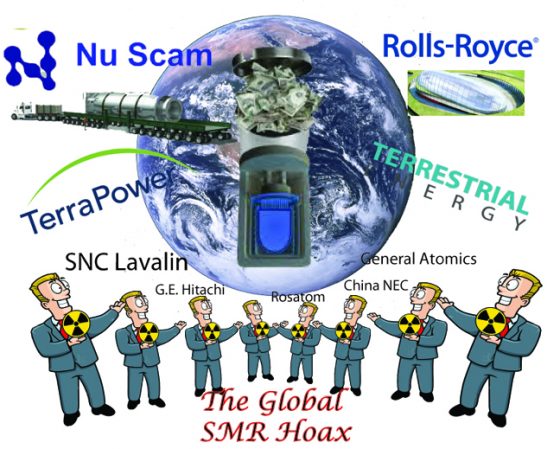
The problem is that hardly anyone in Congress has any real understanding of nuclear technology. The members are swept off their feet by promises of safe, non-carbon producing energy sources, especially when nuclear proponents use adjectives like “small” and “modular” and “advanced.” Congressional discussions on international aspects seldom get beyond “restoring America’s competitive advantage in nuclear energy.”
There is also little understanding of the limitations of international “safeguards,” the inspection system of the International Atomic Energy Agency (IAEA). (Is there any realistic recourse if the Saudis break the rules?) It is indicative of Saudi Arabia’s attitude toward the IAEA that it has used every stratagem to minimize its safeguards responsibilities. The minimization strategy does not violate IAEA requirements, yes, but a country anxious to demonstrate its nuclear bona fides should be more forthcoming in its nonproliferation cooperation.
The 2008 US-India civil nuclear agreement is an eternal warning about how American international nuclear policy can go off the rails when the president and Congress are swept away by visions of gaining an ally against China plus the prospect of dozens of power reactor sales. That agreement ran a truck through the Non-Proliferation Treaty, and none of the sales of nuclear power plants materialized.
The Saudis know Americans can be made to swallow principle—they recently succeeded in humbling the US president on human rights and oil prices—and so are unlikely to soften their stance on inclusion of enrichment in a 123 agreement. The White House will be looking for a formula that accepts it, but adds some restriction, or appearance of restriction, or another sweetener, perhaps related to Palestinian rights, that would allow members of the House and Senate to go along with inclusion of enrichment in a US-Saudi agreement.
Who would stand in the way? Not the Republicans: They love the Saudis. The one possibility is if Israel balks at any deal that includes Saudi enrichment. Opposition Leader Yair Lapid told Democratic Party lawmakers visiting Israel recently that he opposes a potential Israel-Saudi Arabia normalization deal that allows Riyadh to enrich uranium because it would harm Israel’s security. But the Israeli government’s response—that is, Prime Minister Netanyahu’s—has been ambiguous.
Somebody needs to stand up. Not only should the United States say no to Saudi enrichment, but Washington should also rethink the entire notion of nuclear power reactors in Saudi Arabia. Such reactors, coupled with a reprocessing facility to extract plutonium from used fuel, which the Saudis will surely want as well, provide the other path to a bomb, a plutonium bomb.
With its constant threat of wars, the Middle East is no place for nuclear reactors. Nuclear reactors in the region have been targeted in aerial attacks a dozen times. The safety issues that followed the capture by the Russians of the Zaporizhzhia power reactors in Ukraine should teach us something, too. Nuclear reactors do not belong in regions of potential conflict.
The ultimate argument against a US-Saudi nuclear deal is the crown prince himself, who is in line to be king and for practical purposes already is. He is a liar and a gruesome killer. Saudi Arabia, for all its modern trappings, is a primitive state with no effective checks on his powers. The king makes the laws, rules by decree, and is the chief judge. He has powers the British king gave up in the 13th century. Saudi Arabia has a long way to go before it will be a safe place for nuclear energy.
Saudi Arabia weighs nuclear power offers from China and France in bid to sway US
Saudi Arabia is considering bids to build a nuclear power station from
countries including China, France and Russia as the kingdom seeks to sway
the US over a sensitive security pact.
The kingdom, which is the world’s
largest oil exporter, has long sought its own civil nuclear capability and
has made US assistance with the programme a key demand in a potential deal
to normalise relations with Israel. One person said Saudi Arabia would make
its decision based on the best offer.
Another said that while Riyadh would
prefer the US, which is seen to have better technology and is already a
close Saudi partner, Washington’s restrictions on uranium enrichment would
scupper co-operation.
FT 26th Aug 2023
https://www.ft.com/content/ec613036-86ab-479e-bedc-99d152030c34
Bibi Isn’t Serious About Preventing a Regional Nuclear Arms Race
Benjamin Netanyahu has long warned of the perils of a nuclear Middle East. Now he seems willing to allow Saudi nukes in exchange for normalization.
FP, By Azriel Bermant, a senior researcher at the Institute of International Relations Prague. 25 Aug 23
Three years ago, the tormented Israeli Prime Minister Benjamin Netanyahu found refuge from his domestic troubles with the announcement of peace agreements with the United Arab Emirates (UAE) and Bahrain which became known as the Abraham Accords. Three years on, speculation has grown in Israel over the possibility of the most significant breakthrough in regional diplomacy in 40 years: the signing of a normalization deal with Saudi Arabia.
……………………………………………………………………………. the Saudi government in Riyadh is also insisting it should be permitted to enrich uranium as part of a civil nuclear program.
This flies in the face of Israel’s long-standing attempts to prevent other countries in the region from acquiring any nuclear capability. This policy became known as the Begin Doctrine, named after then-Israeli Prime Minister Menachem Begin, who famously authorized the bombing of Iraq’s Osirak nuclear reactor in June 1981……. https://foreignpolicy.com/2023/08/24/netanyahu-saudi-mbs-nuclear-enrichment-arms-race/
Israel will not agree to Saudi nuclear program: Netanyahu
Saudi Arabia has demanded US assistance for establishing a civilian nuclear program in exchange for normalization with Israel
The Cradle, News Desk AUG 20, 2023
The office of Israeli Prime Minister Benjamin Netanyahu clarified on 20 August that Israel would not agree to any of its neighbors having a nuclear program.
“That was and remains Israel’s policy,” Netanyahu stated during a cabinet meeting.
The clarification came in response to an interview by Minister of Strategic Affairs Ron Dermer, in which he suggested that Israel would be willing to accept a civilian nuclear program in Saudi Arabia under certain conditions.
Saudi Arabia has stated that it demands US assistance in developing a civilian nuclear program as one of its conditions for normalizing relations with Israel.
The Saudis are reportedly also asking for a defense pact with Washington and access to purchase more advanced US weapons.
The White House has prioritized reaching a deal between its two closest allies in West Asia before the next presidential election.
In an interview with the PBS TV network on 18 August, Dermer said that when it comes to a civil nuclear program in Saudi Arabia, “the devil is in the details.”
He further stated that because the Saudis are signatories to the nuclear non-proliferation treaty, they can ask China or France for assistance in establishing a civilian nuclear program that includes uranium enrichment……………………………………….. more https://new.thecradle.co/articles/israel-will-not-agree-to-saudi-nuclear-program-netanyahu
Egypt rejects multiple US requests to arm Ukraine: Report
PRESS TV , 12 August 2023
Egyptian President Abdel Fattah el-Sisi has reportedly rejected multiple requests from the United States to send arms and military equipment to Ukraine.
The New York-based Wall Street Journal reported on Friday that US Secretary of Defense Lloyd Austin received a “noncommittal” reply in March when he asked Sisi to send weapons to Ukraine.
The American daily said Washington had asked Cairo to provide Kiev with artillery shells, antitank missiles, air defense systems and small arms, but Egyptian officials privately said they had no intention of sending arms to Ukraine.
It added that since Austin’s meeting with the Egyptian president, senior US officials have made multiple requests for Cairo to follow through on the request to no avail……………………………………………………………………………………………………………………. more https://www.presstv.ir/Detail/2023/08/12/708774/Egyptian-President-Abdel-Fattah-el-Sisi-multiple-requests-US-arms-military-equipment-Wall-Street-Journal-
Saudi Arabia could convert civilian nuclear to military, Israeli expert warns

Former deputy head of Atomic Energy Commission fears that Riyadh’s demand to enrich uranium as part of Israel normalization deal may open ‘Pandora’s box,’ launch Mideast arms race
Times of Israel, By TAL SCHNEIDER2 August 2023,
Illustrative: A US nuclear bomb test at the Marshall Islands, 1954. (Wikicommons/US Department of Energy)
A former top official for the Israel Atomic Energy Commission has warned that agreeing to Saudi Arabia’s demand to be allowed to build a nuclear power plant as part of a normalization deal with Israel may create a dangerous international precedent and effectively prompt a nuclear arms race in the Middle East.
“It won’t matter how many guarantees we receive from the International Atomic Energy Agency,” Ariel (Eli) Levite, who served as principal deputy director general for policy at Israel’s Atomic Energy Commission from 2002 to 2007, told Zman Israel, The Times of Israel’s Hebrew-language sister site, on Monday.
Saudi Arabia has reportedly set three conditions for signing a normalization agreement with Israel — access to advanced American defense technology such as the THAAD missile system, the establishment of a defense alliance with the United States, and a green light to develop nuclear power for civilian purposes.
…………………………………………………. “If Saudi Arabia builds a reactor, they can only place it near the Red Sea, because a reactor needs large amounts of water for cooling, and if a disaster or terrorist attack occurs there it won’t be a simple matter — for us too, since we are not far away,” – Levite, the former Atomic Energy Commission deputy director
Illustrative: A US nuclear bomb test at the Marshall Islands, 1954. (Wikicommons/US Department of Energy)
A former top official for the Israel Atomic Energy Commission has warned that agreeing to Saudi Arabia’s demand to be allowed to build a nuclear power plant as part of a normalization deal with Israel may create a dangerous international precedent and effectively prompt a nuclear arms race in the Middle East.
“It won’t matter how many guarantees we receive from the International Atomic Energy Agency,” Ariel (Eli) Levite, who served as principal deputy director general for policy at Israel’s Atomic Energy Commission from 2002 to 2007, told Zman Israel, The Times of Israel’s Hebrew-language sister site, on Monday.
Saudi Arabia has reportedly set three conditions for signing a normalization agreement with Israel — access to advanced American defense technology such as the THAAD missile system, the establishment of a defense alliance with the United States, and a green light to develop nuclear power for civilian purposes.
Binary Options Fraud – ToI journalist Simona Weinglass’ storyPauseNext playlist itemUnmute
Loaded: 49.91%Picture-in-PictureFullscreenClose
For the last demand, National Security Adviser Tzachi Hanegbi said Monday that Israel’s approval would not be required.
“Dozens of countries operate civilian nuclear programs. This is not something that endangers them or their neighbors,” Hanegbi told the Kan public broadcaster, adding that the issue would be solely between Washington and Riyadh.
Get The Times of Israel’s Daily Editionby email and never miss our top storiesNewsletter email addressGET IT
By signing up, you agree to the terms
Levite, the former Atomic Energy Commission deputy director, said there was no problem with nuclear reactors for energy production as long as they are properly maintained. However, he cautioned, “If a security or operational failure occurs, there can be an enormous environmental fallout. We know this from several incidents in the past, such as Chernobyl and Fukushima” — two severe nuclear leaks in Ukraine in 1986 and Japan in 2011.
“If Saudi Arabia builds a reactor, they can only place it near the Red Sea, because a reactor needs large amounts of water for cooling, and if a disaster or terrorist attack occurs there it won’t be a simple matter — for us too, since we are not far away,” he added.
Ariel (Eli) Levite speaking at a conference at the Reichman Institute in Herzliya, 2019. (YouTube screenshot via Zman Israel; used in accordance with Clause 27a of the Copyright Law)
Israel is also worried about the possibility of a civilian reactor being converted for military applications, Levite noted.
He said the biggest problem with Riyadh’s demand was that “they’re not satisfied with reactors for energy purposes, but are also interested in a uranium enrichment program. This is the most problematic and sensitive part of the deal that may be currently in the making.”…………………………………. more https://www.timesofisrael.com/saudi-arabia-could-convert-civilian-nuclear-to-military-israeli-expert-warns/
Iran says ready to settle remaining dispute with IAEA over nuclear program
IXinhua https://www.chinadaily.com.cn/a/202307/27/WS64c15113a31035260b818ab4.html 2023-07-27
TEHRAN – Iran’s nuclear chief said on Wednesday the country is determined to close a remaining case of outstanding differences with the International Atomic Energy Agency (IAEA) regarding its nuclear program, according to the Iranian Students’ News Agency.
Speaking to reporters on the sidelines of a cabinet meeting in the Iranian capital Tehran on Wednesday, President of the Atomic Energy Organization of Iran (AEOI) Mohammad Eslami said the country has sent a “comprehensive and written” response to the IAEA regarding the two remaining “undeclared sites,” in which the agency claims to have found “traces of uranium.”
If the agency does not accept the response and has any uncertainty or doubt regarding the issue, Iran will provide further explanation and review the documents, he added.
The AEOI chief said his organization is enriching uranium according to the level stipulated in a 2020 law passed by the Iranian parliament to counter the U.S. sanctions.
He added Iran’s “relations with the agency are based on the agreement reached with IAEA Director General Rafael Grossi during his visit to Tehran in March as well as the safeguards agreements and the Non-Proliferation Treaty and we are implementing what we have agreed to do.”
He noted that Iran and the IAEA are in “constant and sustainable” interactions with each other.
Faced with international sanctions, the country signed a nuclear deal, formally known as the Joint Comprehensive Plan of Action (JCPOA), with world powers in July 2015, agreeing to put some curbs on its nuclear program in return for the removal of the sanctions on the country. The United States, however, pulled out of the deal in May 2018 and reimposed its unilateral sanctions on Iran, prompting the latter to drop some of its nuclear commitments according to the law passed by its parliament in December 2020.
The Iranian parliament’s law mandated the government to restrict inspections of Iran’s nuclear facilities by the IAEA and accelerate the development of the country’s nuclear program beyond the limits set under the JCPOA.
The talks on the JCPOA’s revival began in April 2021 in Vienna. No breakthrough has been achieved after the latest round of talks in August 2022.
United Arab Emirates keen to become an exporter of nuclear reactors and nuclear technology

ABU DHABI, 23rd June, 2023 (WAM) — H.H. Sheikh Hamdan bin Zayed Al Nahyan, Ruler’s Representative in Al Dhafra Region, visited Barakah Nuclear Energy Plant to view the latest developments of Unit 4, the final unit at the plant approaching commercial operation, and praised Emirati competencies that contributed to developing nuclear energy sector technologies to export globally.
Sheikh Hamdan was received by Mohamed Ibrahim Al Hammadi, Managing Director, and Chief Executive Officer of the Emirates Nuclear Energy Corporation (ENEC); and Ali Al Hammadi, Chief Executive Officer of ENEC’s subsidiary Nawah Energy Company (Nawah); as well as a delegation from ENEC’s senior management.
At the beginning of his visit, Sheikh Hamdan inaugurated the state-of-the-art Nuclear Reactor Operators Training Centre, which will enhance nuclear reactor operators’ expertise, and was briefed on the “Orchid” digital reactor room, which provides advanced maintenance training for engineers without entering the reactor area.
Sheikh Hamdan bin Zayed then toured the simulation training centre, which is one of the largest and most modern simulation training centres in the world. He also heard from Emirati engineers on the Plant’s developments and achievements, the latest of which was the operational readiness preparations for Unit 4, the fourth and final unit at the Barakah Nuclear Energy Plant in Abu Dhabi…………………..
https://www.wam.ae/en/details/1395303172381
Saudi Arabia demands own nuclear program in exchange for ties with Israel
According to NYT, Riyadh may sideline long-held demand to establish Palestinian state for normalization with Israel; Netanyahu could face strong opposition from defense establishment, fearing move would initiate a nuclear arms race across Middle East
In discreet U.S.-mediated talks between Saudi Arabia and Israel, Riyadh has conditioned normalizing ties with Jerusalem on the establishment of a civilian nuclear program, as well as a robust defense pact with Washington and removing restrictions on American arms sales, the New York Times reported on Saturday.
The demand reportedly came during U.S. Secretary of State Antony Blinken’s visit to the Gulf kingdom earlier this month where he held a lengthy meeting with Saudi Crown Prince Muhammed bin Salman.
Blinken then held a 40-minute phone call with Netanyahu, briefing him about the details of bin Salman’s demands.
The Times cited two American officials who described the phone call as “a turn in the Biden administration’s long-shot bid to broker a landmark diplomatic deal” between Jerusalem and Riyadh
For such a deal to fructify, each side would have to have to reverse course on at least one long-held position: Israel would have to allow the Saudi kingdom to enrich uranium; Saudi Arabia will have to abandon its policy to avoid normalization with Israel as long as the Palestinians are not allowed to establish their own state; and Biden would have to explain his volte-face on bin Salman, whom he promised to make a “pariah” during his 2020 presidential election campaign for his alleged involvement in the murder of Saudi-American journalist Jamal Khashoggi.
According to the report, Prime Minister Benjamin Netanyahu could face strong opposition from the national security establishment to consenting to a Saudi nuclear enrichment program, fearing such a move would initiate a nuclear arms race across the Middle East.
1 This Month
29 Jan. Thursday 7-8 p.m. Webinar – World’s Largest Nuclear Station in Port Hope, ON?
To see nuclear-related stories in greater depth and intensity – go to https://nuclearinformation.wordpress.com/

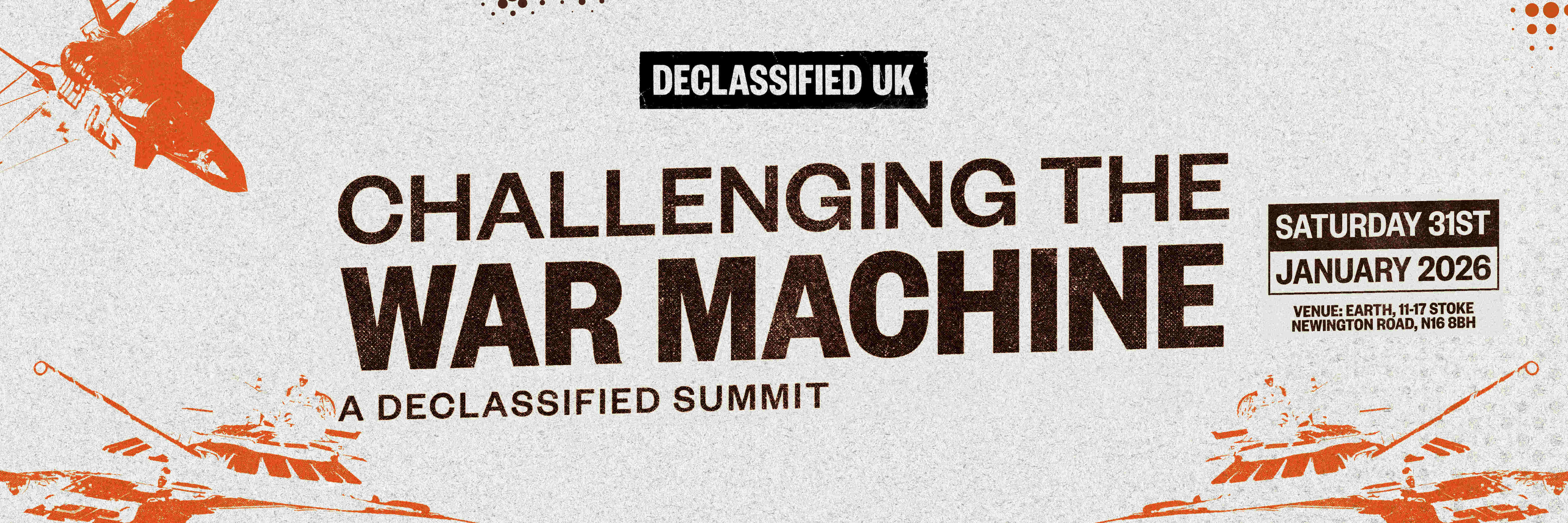
31st January – Challenging the War Machine – a DECLASSIFIED UK SUMMIT


Website of the Week
Now until to February 10, 2026 Radioactive waste storage in France: the debate is finally open! How to participate?
-
Archives
- January 2026 (288)
- December 2025 (358)
- November 2025 (359)
- October 2025 (376)
- September 2025 (258)
- August 2025 (319)
- July 2025 (230)
- June 2025 (348)
- May 2025 (261)
- April 2025 (305)
- March 2025 (319)
- February 2025 (234)
-
Categories
- 1
- 1 NUCLEAR ISSUES
- business and costs
- climate change
- culture and arts
- ENERGY
- environment
- health
- history
- indigenous issues
- Legal
- marketing of nuclear
- media
- opposition to nuclear
- PERSONAL STORIES
- politics
- politics international
- Religion and ethics
- safety
- secrets,lies and civil liberties
- spinbuster
- technology
- Uranium
- wastes
- weapons and war
- Women
- 2 WORLD
- ACTION
- AFRICA
- Atrocities
- AUSTRALIA
- Christina's notes
- Christina's themes
- culture and arts
- Events
- Fuk 2022
- Fuk 2023
- Fukushima 2017
- Fukushima 2018
- fukushima 2019
- Fukushima 2020
- Fukushima 2021
- general
- global warming
- Humour (God we need it)
- Nuclear
- RARE EARTHS
- Reference
- resources – print
- Resources -audiovicual
- Weekly Newsletter
- World
- World Nuclear
- YouTube
-
RSS
Entries RSS
Comments RSS
 nuclear-news