‘Obscene’: Biden Quietly OKs More 2,000-Pound Bombs, Warplanes for Israel

U.S. support for Israel—which already included nearly $4 billion in annual military aid—has continued unabated, with the Biden administration seeking an additional $14.3 million in armed assistance and repeatedly bypassing Congress to fast-track emergency weapons shipments.
“Arming a war criminal makes you a war criminal,” one critic admonished the U.S. president.
BRETT WILKINS, Mar 29, 2024, https://www.commondreams.org/news/us-military-aid-to-israel-2667634511
Despite growing worldwide calls for an arms embargo, the Biden administration in recent days has approved the transfer of billions of dollars worth of new weapons shipments to Israel, including warplanes and 2,000-pound bombs that have been dropped on densely populated areas of Gaza with devastating results.
The Washington Postreported Friday that the administration has “quietly” authorized arms shipments including more than 1,800 MK84 2,000-pound bombs and 500 MK82 500-pound bombs, as well as 25 F-35A fighter jets and engines worth approximately $2.5 billion. The transfers are the latest of more than 100 arms shipments authorized by the Biden administration since the October 7 attacks on Israel.
“‘Quietly,'” Palestinian American writer and political analyst Yousef Munayyer scoffed in response to the report. “This is cowardly from the administration. If you are going to be full backers of genocide, own it. We see you and history sees you as well.”
“It is scary to think of the world U.S. support for Israel is creating. A world with no rules, no limits in war, where norms don’t exist, and where genocide is supportable,” he added. “Good luck getting anyone to listen to you about international law after this.”
Edward Ahmed Mitchell, deputy executive director of the Council on American Islamic Relations, said in a statement: “We strongly condemn the Biden administration’s unbelievable and unconscionable decision to secretly send hundreds of new 2,000-pound bombs and other weapons to support Benjamin Netanyahu’s genocide. Arming a war criminal makes you a war criminal.”
According to the Post:
The 2,000-pound bombs, capable of leveling city blocks and leaving craters in the earth 40 feet across and larger, are almost never used anymoreby Western militaries in densely populated locations due to the risk of civilian casualties.
Israel has used them extensively in Gaza, according to several reports, most notably in the bombing of Gaza’s Jabalia refugee camp October 31. U.N. officials decried the strike, which killed more than 100 people, as a “disproportionate attack that could amount to war crimes.” Israel defended the bombing, saying it resulted in the death of a Hamas leader.
The Biden administration’s arms shipments to Israel continue despite urgent pleas from United Nations officials, international human rights groups, and some progressive U.S. lawmakers to stop arming Israel’s 175-day Gaza onslaught, during which Israeli bombs and bullets have killed more than 32,600 Palestinians—mostly women and children—while wounding over 75,000 others and damaging or destroying hundreds of thousands of homes, schools, hospitals, mosques, and other structures.
The International Court of Justice in January found that Israel is plausibly committing genocide in Gaza and ordered the country to prevent genocidal acts. However, Israel has been accused of ignoring the ICJ order, and amid ongoing atrocities—including the forced starvation of Palestinians—the court on Thursday issued another order demanding that Israel allow desperately needed humanitarian aid into Gaza.
Last December, when the death toll in Gaza stood at approximately 18,000, President Joe Biden implored the far-right government of Israeli Prime Minister Benjamin Netanyahu to stop Israel’s “indiscriminate bombing” of Palestinian civilians in the embattled enclave.
However, U.S. support for Israel—which already included nearly $4 billion in annual military aid—has continued unabated, with the Biden administration seeking an additional $14.3 million in armed assistance and repeatedly bypassing Congress to fast-track emergency weapons shipments.
“The U.S. cannot beg Netanyahu to stop bombing civilians one day and the next send him thousands more 2,000-pound bombs that can level entire city blocks,” U.S. Sen. Bernie Sanders (I-Vt.) said on social media Friday. “This is obscene. We must end our complicity: No more bombs to Israel.”
Sen. Chris Van Hollen (D-Md.) told the Post that “the Biden administration needs to use their leverage effectively and, in my view, they should receive these basic commitments before greenlighting more bombs for Gaza. We need to back up what we say with what we do.”
Biden administration officials have claimed they don’t have any leverage over Israel, drawing ridicule from observers who point to the indispensable military and diplomatic support the U.S. provides.
The staggering death and destruction wrought by Israel’s assault on Gaza has drawn criticism from even staunch supporters of the key U.S. ally.
Referring to the worsening famine in Gaza—which one U.S. State Department official acknowledged anonymously to Reuters on Friday—New York Times columnist Nicholas Kristof wrote on social media: “Really, POTUS? With Gaza facing starvation and Netanyahu defying you over Rafah, you ship billions of dollars in additional weapons to Israel, including 2,000-pound bombs, without end-use restrictions? Bibi is rolling you.”
1
Killing Humanitarians: Israel’s War on Aid Workers in Gaza
April 3, 2024, by: Dr Binoy Kampmark, https://theaimn.com/killing-humanitarians-israels-war-on-aid-workers-in-gaza/
Eulogies should rarely be taken at face value. Plaster saints take the place of complex individuals; faults transmute into golden virtues. But there was little in the way of fault regarding Lalzawmi “Zomi” Frankcom’s messianic purpose, whose tireless work for the charity, World Central Kitchen (WCK) in northern Gaza had not gone unnoticed. Sadly, the Australian national, along with six other members of WCK, were noticed by the Israeli Defense Forces (IDF) around midnight of April 1 and 2 and targeted in a strike that killed all of them.
Other members of the slain crew included Polish citizen Damian Sobol, three British nationals whose names are yet to be released, a US-Canadian dual citizen, and the driver and translator Saif Abu Taha.
The charity workers had been unloading food supplies from Cyprus that had been sent via sea in a designated “deconflicted” area. All three vehicles, two armoured and one “soft skin”, sported the WCK logo. Even more galling for the charity was the fact that coordinating efforts between WCK and the IDF had taken place as it left the Deir al-Balah warehouse, where the individuals had been responsible for uploading over 100 tonnes of humanitarian food aid.
On April 2, Haaretz reported that three missiles had been fired in rapid succession at the convoy by a Hermes 450 UAV on direction of a unit guarding the aid transport route. The troops in question claimed to have spotted what they thought was an armed figure riding a truck that had entered one of the aid storage areas with three WCK vehicles. The armed figure, presumed to be a Hamas militant, never left the warehouse in the company of the vehicles.
In a public relations war Israel is increasingly losing, various statements of variable quality and sincerity could only confirm that fact. IDF spokesman Rear Adm. Daniel Hagari stated that he had spoken to WCK founder Chef José Andrés “and expressed the deepest condolences of the Israel Defense Forces to the families and the entire World Central Kitchen family.”
Hagari went on to add the IDF’s expression of “sincere sorrow to our allied nations who have been doing and continue to do so much to assist those in need.” This was a bit rich given the programmatic efforts of the IDF and Israeli officials to stifle and strangulate the provision of aid into the Gaza Strip, from the logistical side of keeping land crossings closed and delaying access to existing ones, to aggressive efforts to defund the United Nations Relief and Works Agency (UNRWA).
As for the operation itself, Hagari announced that “the highest levels” of military officialdom had been “reviewing the incident” to comprehend the circumstances that led to the deaths. “We will get to the bottom of this and we will share our findings transparently.” Again exalting the prowess of his organisation in investigating such matters, he promised that the army’s General Staff Fact-Finding Assessment Mechanism – yet another independent body designed to give the impression of thoroughness and impartiality – would look into this “serious incident” to “reduce the risk of such an event from occurring again.”
Israeli Prime Minister Benjamin Netanyahu gave a better barometric reading of the mood, and it was certainly not one of grieving or feeling aggrieved. The killings had merely been “a tragic instance of our forces unintentionally harming innocent people in the Gaza Strip. It happens in war.” Israel would “investigate it” and had been “in contact with the governments and we will do everything we can so that it doesn’t happen again.”
This is mightily optimistic given the butcher’s toll of 173 aid workers from UNRWA alone, with 196 humanitarians said to have died as of March 20, 2024 since October 7 last year. Aid workers have been killed in IDF strikes despite the regular provision of coordinates on their locations. Be it through reckless indifference, conscious intent, or a lack of competence, the morgues continue to be filled with humanitarian workers.
A bristling CEO of WCK, Erin Gore, proved blunter about the implications of the strike. “This is not only an attack against WCK, this is an attack on humanitarian organisations showing up in the most dire of situations where food is being used as a weapon of war.”
Project HOPE’s Executive Vice President, Chris Skopec, drew attention to the obvious, yet repeatedly neglected fact in the Gaza conflict that aid workers are protected by international humanitarian law. Gaza had become “one of the most dangerous places in the world to be a humanitarian worker. This is unacceptable and demands accountability through the International Criminal Court.”
Responsibility for the killings is unlikely to translate into accountability, let alone any public outing of the individuals involved. This is not to say that such exercises are impossible, even with Israel not being a member of the International Criminal Court. The pageantry of guilt can still be pursued.
When Malaysian Airlines MH17 was downed over Ukraine in July 2014 by a Buk missile, killing all 298 on board, international efforts of terrier-like ferocity were initiated against those responsible for the deadly feat. The MH17 Joint Investigation Team (JIT), comprising the Netherlands, Australia, Malaysia, Belgium and Ukraine, identified the missile as having come from the 53rd Anti-Aircraft Missile Brigade of the Russian armed forces from Kursk. Four suspects were identified. Of the four, one was acquitted, with the district Court of The Hague handing down three life sentences in November 2022 along with an order to pay over €16 million in compensation to the victims. The individuals remain at large, and the Kremlin largely unmoved, but the point was made.
In this case, any hope for seeking an external accounting for the event is likely to be kept in-house. Excuses of error and misidentification are already filling press releases and conferences. Doing so will enable the IDF to continue its program of quashing the Palestinian cause while pursuing an undisclosed war against those it considers, publicly or otherwise, to be its ameliorating collaborators. With an announcement by various humanitarian groups, including WCK, Anera and Project Hope, that their operations will be suspended following the killings, starvation, as a policy in Gaza, can receive its official blessing.
United Arab Emirates in talks to invest in European nuclear power infrastructure
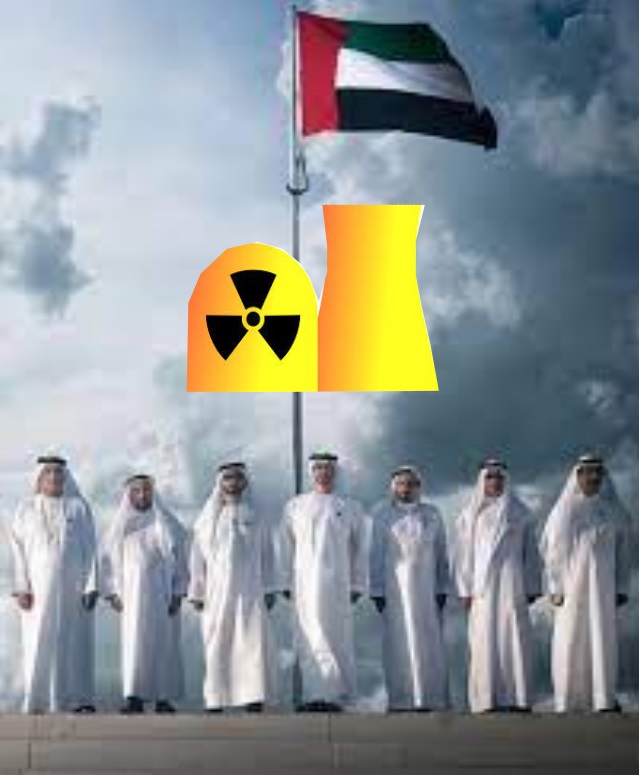
The United Arab Emirates (UAE) is exploring opportunities to invest in
nuclear power infrastructure across Europe, including in Britain, Reuters
has reported.
The state-owned Emirates Nuclear Energy Company (ENEC) is
considering becoming a minority investor in several nuclear power assets.
ENEC, which is owned by Abu Dhabi’s investment fund, the Abu Dhabi
Developmental Holding Company, has ambitions to expand its international
footprint by acquiring minority stakes in nuclear projects.
The company has
been in discussions to invest in the UK, specifically in the Sizewell C
nuclear project, which is currently seeking additional private investment
following the exit of a Chinese investor. Alongside Saudi Arabia, the UAE
is looking to diversify its economy beyond oil, while Britain is actively
seeking private investment to support its nuclear energy ambitions.
Power Technology 2nd April 2024
https://www.power-technology.com/news/uae-invest-european-nuclear-infrastructure
Michigan Republican congressman says Gaza should be destroyed with nuclear bomb ‘like Nagasaki and Hiroshima’, as he slams US for sending humanitarian aid
- Michigan Republican Congressman Tim Walberg has suggested using a nuclear bomb on Gaza in order to facilitate Israel’s elimination of Hamas
- He referenced bombs used in World War II on the Japanese cities of Nagasaki and Hiroshima
- Walberg’s remarks drew condemnation, with some calling for his resignation while his spokesperson said he was using a metaphor
By JAMES GORDON FOR DAILYMAIL.COM , 31 March 2024, https://www.dailymail.co.uk/news/article-13255849/Michigan-GOP-congressman-says-Gaza-destroyed-nuclear-bomb-like-Nagasaki-Hiroshima-slams-sending-humanitarian-aid.html
A Michigan Congressman has suggested a nuclear bomb should be dropped on Gaza to ‘support Israel‘s swift elimination of Hamas.’
Speaking during a town hall earlier this week, U.S. Rep. Tim Walberg, a Republican from Lenawee County, appeared entirely comfortable advocating for the use of nuclear weapons against the Palestinians.
‘It should be like Nagasaki and Hiroshima. Get it over quick,’ Walberg could be heard stating in a video posted to X in which he mentioned the Japanese cities in which America detonated atomic bombs at the end of World War II.
Walberg, an eight-term Republican congressman from Lenawee County, can also be heard speaking against providing humanitarian aid for those in the Palestinian territory.
‘We shouldn’t be spending a dime on humanitarian aid,’ Walberg stated in response to a question about American troops being deployed into Gaza to build a port that would help aid be delivered to the Palestinians.
Walberg had been responding to a question about an initiative put forward by President Joe Biden to use American tax dollars to construct a port off the Gaza coast that would allow humanitarian aid to be delivered more quickly.
Many recent reports have suggested the Gaza’s two million inhabitants are on the brink of famine as Israel’s war against Hamas approaches the six month mark.
The conflict began after Hamas terrorists launched an attack on Israeli citizens, killing 1,200 and taking 240 hostages.
Walberg’s office has now attempted to explain the GOP congressman’s seemingly straightforward answer as a metaphor.
‘During his community gathering, he clearly uses a metaphor to support Israel’s swift elimination of Hamas, which is the best chance to save lives long-term and the only hope at achieving a permanent peace in the region,’ Walberg spokesman Mike Rorke said on Saturday.
‘Congressman Walberg vehemently disagrees with putting our troops in harm’s way. He has great empathy for the innocent people in Gaza who have been thrust into this situation due to the attack carried out by Hamas leaving 1,163 innocent civilians dead,’ Rorke continued.
‘To this day, Hamas still is holding hostages, including Americans. Hamas should surrender and return the hostages.’
Walberg’s comments have been described as ‘clear call to genocide by a member of Congress’.
The Michigan chapter of the Council on American-Islamic Relations said his remarks should be ‘condemned by all Americans who value human life and international law.’
‘To so casually call for what would result in the killing of every human being in Gaza sends the chilling message that Palestinian lives have no value,’ CAIR Executive Director Dawud Walid said to Detroit News.
‘It is this dehumanization of the Palestinian people that has resulted in the ongoing slaughter and suffering we see every day in Gaza and the West Bank.’
The U.N. food agency has said famine is ‘imminent’ in northern Gaza, with two-thirds of population experiencing catastrophic hunger.
Later in the town hall, held on March 25 in Dundee, Michigan, Walberg went on to suggest that a nuclear bomb should also be used in Russia’s war with Ukraine in order to ‘defeat Putin quick.’
He said instead of American money being used to provide aid to Ukraine for humanitarian purposes, it should instead be used ‘to wipe out Russia, if that’s what we want to do.’
Walberg has been taken to task over his comments by his Democratic colleagues with some calling for his immediate resignation.
Michigan state Democratic Senator Darrin Camilleri tweeted how Walberg had been caught on video ‘endorsing and calling for a complete genocide in Gaza.’
‘He’s an absolute disgrace and needs to resign,’ Camilleri stated.
‘Threatening to use, suggesting the use of, or, God forbid actually using nuclear weapons, are unacceptable tactics of war in the 21st Century,’ wrote Democratic Michigan Rep. Haley Stevens.
Ecocide a ‘Critical Dimension of Israel’s Genocidal Campaign’ in Gaza: Probe
Analysis by a research group found that roughly 40% of Gaza land that was previously used for food production has been destroyed by Israeli forces.
JAKE JOHNSON, Mar 29, 2024, https://www.commondreams.org/news/ecocide-israel-gaza
The widespread destruction Israel’s military has inflicted on Gaza’s farmland and agricultural infrastructure amounts to a “deliberate act of ecocide,” according to a new investigation that uses satellite imagery to survey the extent of the damage.
Released Friday ahead of Palestine’s Land Day, the analysis by the London-based research group Forensic Architecture (FA) shows that Israel’s ground forces—including tanks and other military vehicles—have advanced over half of Gaza’s farms and orchards, critical food sources that the besieged enclave’s population has worked tirelessly to cultivate in the face of decades of occupation.
“Since 2014, Palestinian farmers along Gaza’s perimeter have seen their crops sprayed by airborne herbicides and regularly bulldozed, and have themselves faced sniper fire by the Israeli occupation forces,” FA said. “Along that engineered ‘border,’ sophisticated systems of fences and surveillance reinforce a military buffer zone.”
Comparing satellite imagery from prior to Israel’s invasion and the present, FA found that roughly 40% of Gaza land that was previously used for food production has been destroyed by Israeli forces. Nearly a third of Gaza’s greenhouses have been demolished, according to the investigation.
“In total, Forensic Architecture has identified more than 2,000 agricultural sites, including farms and greenhouses, which have been destroyed since October 2023, often to be replaced with Israeli military earthworks,” the group said. “This destruction has been most intense in the northern part of Gaza, where 90% of greenhouses were destroyed in the early stages of the ground invasion.”
It is no surprise, then, that northern Gaza is currently experiencing famine conditions, with most of the population there at imminent risk of starvation as Israeli forces impede the flow of humanitarian assistance and continue their relentless bombing campaign.
Leading human rights organizations have accused the Israeli government of using starvation as a weapon of war in Gaza, pointing to the decimation of the territory’s agricultural sector and attacks on aid convoys. The United Nations warned less than two months into Israel’s assault that “in the north, livestock is facing starvation and the risk of death due to shortage of fodder and water.”
The new investigation was published amid growing global momentum to formally codify ecocide as an international crime alongside genocide, which Israel also stands accused of committing against Palestinians in Gaza.
An expert panel convened by Stop Ecocide International has defined ecocide as “unlawful or wanton acts committed with knowledge that there is a substantial likelihood of severe and either widespread or long-term damage to the environment being caused by those acts.”
Ecocide is officially recognized as a crime in at least 10 countries, including France, Ecuador, Russia, and Ukraine. Earlier this week, the European Council adopted new rules that include a provision criminalizing acts deemed “comparable to ecocide.”
FA’s analysis argues that Israel’s latest military assault on the Gaza Strip and the intentional targeting of the enclave’s agriculture is “a critical dimension of Israel’s genocidal campaign,” fueling both a humanitarian and environmental disaster.
“The targeted farms and greenhouses are fundamental to local food production for a population already under a decades-long siege,” the research group said. “The effects of this systematic agricultural destruction are exacerbated by other deliberate acts of deprivation of critical resources for Palestinian survival in Gaza.”
“These acts include the well-reported, catastrophic, and Israeli-made famine ongoing in Gaza, continued obstruction of humanitarian aid destined for Gaza, the destruction of medical infrastructure, the destruction beyond repair of other areas of civilian infrastructure, including bakeries, schools, mosques, churches, and cultural heritage sites,” the group added.
United Arab Emirates signals interest in European nuclear energy investments, sources say
ENEC has ambitions of becoming an international nuclear energy company holding minority stakes in nuclear power infrastructure of other nations, without managing or operating them.
A lack of investment, cost overruns and delays have also plagued recent projects.
It could also face political opposition to an investment in such a sensitive area.
29/03/2024 , By Alexander Cornwell and Maha El Dahan, https://uk.investing.com/news/commodities-news/uae-signals-interest-in-european-nuclear-energy-investments-sources-say-3408307
DUBAI (Reuters) – The United Arab Emirates has approached European nations including Britain to gauge their interest in the Middle Eastern state investing in their nuclear power infrastructure, according to three sources familiar with the talks.
As part of its outreach, the UAE has discussed the idea of state-owned Emirates Nuclear Energy Company (ENEC) becoming a minority investor in European nuclear power assets, the sources said. They requested anonymity because the discussions are private.
ENEC has ambitions of becoming an international nuclear energy company holding minority stakes in nuclear power infrastructure of other nations, without managing or operating them, the sources told Reuters.
ENEC, owned by Abu Dhabi’s ADQ, has been holding talks to invest in the United Kingdom, the sources who have been briefed on the discussions added, without elaborating. Cash-rich oil producers United Arab Emirates and Saudi Arabia are seeking to diversify their economies away from fossil fuels. Meanwhile, Britain is looking for additional private investment in the Sizewell C large-scale nuclear project being built by French energy giant EDF (EPA:EDF) in southeast England after buying out a China backer.
The UAE and Britain in December signed a so-called memorandum of understanding on civil nuclear cooperation at the U.N. climate summit in Dubai, where more than 20 countries agreed a pledge to treble nuclear capacity by 2050.
“Sizewell C is a crucial part of the UK’s agenda for new nuclear power, which is central to our plans for achieving a low cost, clean and secure electricity system,” a spokesperson for Britain’s Department for Energy Security and Net Zero told Reuters.
“The commercial structure of the project is subject to ongoing development and commercially sensitive discussions,” the spokesperson said, adding they could not comment further.
As part of “international growth and investment plans, ENEC is working with a multitude of partners to explore collaboration opportunities in both new civil nuclear projects and civil nuclear technologies and related clean energy technologies such as clean hydrogen,” ENEC said in a statement to Reuters.
EDF declined to comment.
The UK and EDF are ‘on track’ to raise 20 billion pounds ($25.2 billion) for Sizewell C by end of year, a UK energy security minister told the Financial Times in January, without naming the investors. UK ministers have been lining up Abu Dhabi investors for Sizewell C, the Times of London reported last year.
The sources told Reuters that, among the proposals, ENEC could also be a partner in the development of new nuclear energy infrastructure in European countries given its relatively recent experience in building a facility.
ENEC oversaw the construction of the UAE’s sole nuclear power plant, which was constructed in Abu Dhabi by Korea Electric Power Corp (KEPCO), and started commercial operations in 2021.
Several European countries are pushing to expand nuclear – a low-carbon energy source – in an effort to meet ambitious climate goals and develop alternatives to Russian energy supplies.
But European Union states are divided over nuclear energy use, which fell out of favour over safety concerns following Japan’s Fukushima nuclear accident in 2011.
A lack of investment, cost overruns and delays have also plagued recent projects.
ENEC’s backing by a wealthy Gulf state could potentially help overcome investment challenges. However, it could also face political opposition to an investment in such a sensitive area.
Emirati state investments have recently raised concerns in Britain, which has blocked a state-linked acquisition of prominent conservative newspaper the Telegraph.
Britain’s government also determined that a recent investment by UAE state-linked telecommunications company E& posed national security concerns, although approved the deal.
($1 = 0.7925 pounds)
The Nuclear Explosion That Makes US Aid to Israel Illegal
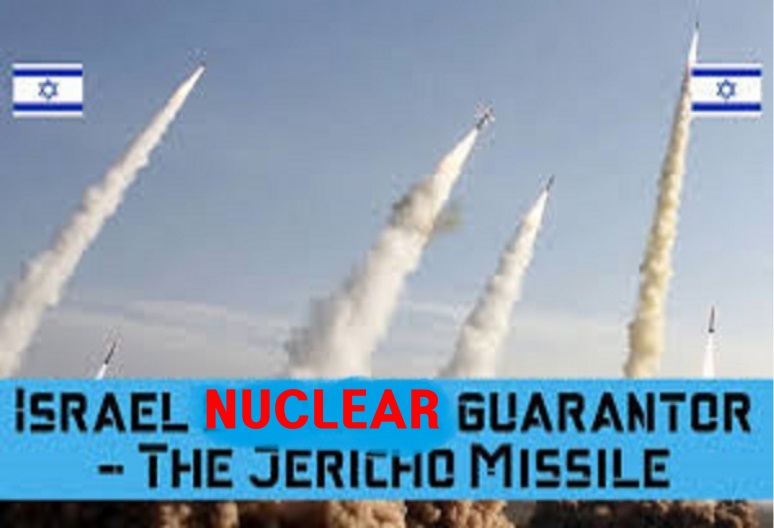
President Carter noted in his White House dairy at the time, “We have a growing belief among our scientists that the Israelis did indeed conduct a nuclear test explosion in the ocean near the southern end of Africa.”
Under US law, Israel must be banned from receiving its annual package of billions of dollars and arsenal of bombs.
Americans are being deliberately lied to by their own government as to Israel’s vast and deadly nuclear stockpile, largely built with nuclear materials stolen from the United States.
At the same time that US administrations were failing to enforce the ban on nuclear weapons testing by Israel, they also deliberately engaged in a campaign of censorship, lies, and disinformation to hide the truth from the American public
Israel’s nuclear program has been in violation of international law for decades, rendering it ineligible for American assistance.
JAMES BAMFORD, 1 April 24 https://www.thenation.com/article/world/israel-nuclear-weapons/
The researchers were startled as they looked up and saw the coal-black sky suddenly turn into a brilliant, multicolored aurora. As geophysicists with Tokyo’s Earthquake Research Institute, they were wintering over at an isolated ice station near Antarctica’s Queen Maud Land, a place where the temperature has dropped to as low as minus-50 degrees Fahrenheit. At about the same time, half the earth away in Puerto Rico, the giant 1,000-foot Arecibo radio telescope picked up an unusual disturbance. An odd and powerful electromagnetic ripple appeared on the lower surface of the ionosphere. And 1,200 miles to the north on the Atlantic coast of Florida, in a secret US government lab, long thin styluses like a spider’s legs began swinging back and forth tracing two hump-shaped images on a rolling sheet of graph paper.
The computer’s action was triggered by a signal from a satellite in the frigid blackness of deep space, 67,000 miles above Earth. Shaped like a giant, 26-sided Christmas tree ornament and hanging weightlessly in the empty void, VELA 6911 was one of a series of satellites designed to act as America’s sentinels in space, watching for signs of nuclear detonations on any part of the planet. And in the early morning of September 22, 1979, at 00:52:43 UTC, VELA 6911’s sensitive instruments recorded what appeared to be a very bright flash, followed quickly by a second. They were the classic indicators of a powerful nuclear explosion. Somewhere down below, as close as someone can come to terra incognita, a rogue country had set off a nuclear bomb. A rogue country that was hoping not to get caught. It was the first and only time in history that a clandestine nuclear blast has taken place. And based on its analysis, US intelligence agencies concluded that the rogue country was Israel.
Now, 45 years later, that explosion could play a significant role in bringing an end to Israel’s genocidal assault on Gaza by using American lawfare to halt Israeli warfare—finally enforcing US laws that would cut off all aid, including the billions and billions of dollars and the tons and tons of weapons Israel now receives. For decades, these laws, enacted by Congress to halt harmful and destructive actions by rogue actors, have been deliberately ignored with regard to Israel. Clearly, they must now be enforced.
Just this week, Francesca Albanese, the UN special rapporteur on human rights in the occupied Palestinian territories, issued a report titled, “Anatomy of a Genocide.” It declared that “there are reasonable grounds to believe that the threshold indicating the commission of the crime of genocide against Palestinians as a group in Gaza has been met.” A few days earlier, the Office of the UN High Commissioner for Human Rights had warned that “any transfer of weapons or ammunition to Israel” could violate international humanitarian law. This week, a Gallup poll indicated that most Americans disapprove of Israel’s war in Gaza as well as of sending them military aid to fight it.
Hours after the sky lit up from the blast, confirmation that it was a nuclear explosion came from another US government facility, this one on remote Ascension Island. A bleak and rugged volcanic speck in the middle of the South Atlantic Ocean, it lies near the equator between Africa and South America and is one of the most secret places on the planet. No one is allowed on the island without the approval of the US and British governments. In addition to a massive British eavesdropping base that targets countries on both continents, the island is also home to an American facility that monitors all undersea activity throughout the Atlantic. And because, at a certain depth, hydroacoustic signals travel through the water at about 5,000 feet per second, the sound of the massive blast was detected about 110 minutes after it took place.
In the netherworld of US intelligence, the rogue atomic explosion was shocking. The Jimmy Carter White House was quickly notified, and, following a series of highly classified meetings, spy agencies became unanimous in their view. “The Intelligence Community has high confidence, after intense technical scrutiny of satellite data, that a low yield atmospheric nuclear explosion occurred in the early morning hours of September 22,” said a Secret/Sensitive Department of State document.
Attention, as a result, turned immediately to Israel. Its nuclear facility in the desert at Dimona had long since ceased to be a secret, and the question wasn’t whether Israel could construct a nuclear weapon but how many it had already built. However, while constructing them secretly inside a building is one thing, secretly testing them out in the open without getting caught is much more difficult. Addressing the issue of “A Secret Test by Israel,” another CIA document outlined a number of reasons the state might have wanted to carry out a hidden nuclear test. Among them was “developing the fission trigger [an atom bomb] for a thermonuclear weapon [an hydrogen bomb]…. A low-yield nuclear test conducted clandestinely at sea could have enabled them to make basic measurements of the device’s performance.”
The report concluded, “Indeed, of all the countries which might have been responsible for the 22 September event, Israel would probably have been the only one for which a clandestine approach would have been virtually its only option.” And President Carter noted in his White House dairy at the time, “We have a growing belief among our scientists that the Israelis did indeed conduct a nuclear test explosion in the ocean near the southern end of Africa.”
The VELA satellite system was designed in particular to watch for rogue tests by nuclear pariah states like Israel, one of the very few countries that had refused to sign both the 1970 Nuclear Non-Proliferation Treaty and the 1975 Biological Weapons Convention, in spite of the fact that it had an illegal hidden arsenal of nuclear weapons and a secret biological weapons program. The problem for Israel—and a key reason for the secrecy involving the tests—was the Glenn Amendment to the US Arms Export Control Act. Passed by Congress in 1977, the amendment aimed particularly at the nuclear pariah states. It mandated an end to arms assistance, and an automatic application of extensive US sanctions, if the president determined that any state (other than the nuclear states authorized by the Nuclear Non-Proliferation Treaty) detonated a nuclear explosive after 1977. The nuclear test was also a clear violation of the 1963 Limited Test Ban Treaty, to which Israel was a party.
Under US law, Israel must be banned from receiving its annual package of billions of dollars and arsenal of bombs. In a 2016 Haaretz column, Victor Gilinsky, a physicist and former commissioner of the US Nuclear Regulatory Commission, laid out the penalties: “The sanctions for detonating a nuclear explosion are tough: termination of assistance under the Foreign Assistance Act, termination of sales of defense equipment and military financing, prohibition of loans from US banks, and more. In other words, if the U.S. government were to conclude Israel detonated a nuclear explosion after 1977, the law, unless waived, would effectively end all US aid to Israel.” Newell Highsmith, who spent three decades with the State Department and was responsible for legal issues related to nonproliferation, agrees. “Glenn Amendment sanctions for detonation or receipt of a nuclear explosive device have been viewed as a ‘death sentence’ because of the breadth of sanctions and because there is no presidential waiver,” he wrote last year for the Carnegie Endowment for International Peace.
In addition to the violation of the Glenn Amendment, Israel is also in violation of the Symington Amendment, which has similar penalties for any country that delivers nuclear materials and technology to another country. Israel had a long history of friendship and cooperation with apartheid South Africa, and in addition to supplying millions of dollars worth of weapons to help violently suppress the country’s Black majority population, it also provided nuclear weapons materials and offered to sell the racist regime nuclear warheads to keep it in power. In return, Israel received uranium from South Africa to develop its weapons.
For decades, US presidents and members of Congress have willfully turned a blind eye to Israel’s extensive violations of American laws. Earlier this month, Maryland Democratic Senator Chris Van Hollen and seven other senators, including Bernie Sanders of Vermont and Jeff Merkley of Oregon, sent a strong letter to President Joe Biden. It urged him to enforce section 6201 of the Foreign Assistance Act by requiring Israel to stop restricting humanitarian aid access to Gaza or forfeit military aid from the US. The law prohibits the sale and transfer of military weapons to any nation that restricts the delivery of US aid, precisely what Israel is doing in its deliberate war of starvation against Palestinian civilians in Gaza. “We need the president and the Biden administration to push harder and to use all the levers of US policy to ensure people don’t die of starvation,” Van Hollen told The Guardian.
At the same time that US administrations were failing to enforce the ban on nuclear weapons testing by Israel, they also deliberately engaged in a campaign of censorship, lies, and disinformation to hide the truth from the American public. The Clinton White House even promulgated a regulation that threatens past and present government employees with harsh actions, including firing, if they publicly acknowledge that Israel has nuclear weapons. “All US government employees are forced to pretend they know nothing about Israeli nuclear weapons,” former NRC commissioner Gilinsky wrote in the Bulletin of the Atomic Scientists. “Since everyone knows it’s not true, the pretense hobbles America’s policy on restraining the spread of nuclear weapons in the Middle East.”
Because of this official gag order, Americans are deliberately kept in the dark regarding the dangerousness of Israel’s illegal stockpile of nuclear weapons—weapons that have never been subject to international inspection and are therefore of questionable safety. And then there is the problem of that secret cache of nuclear weapons being controlled by a number of top Israeli officials whose extreme positions would sanction their use. Last November, Israeli Minister Amichai Eliyahu said one of Israel’s options in the war is to drop a nuclear bomb on Gaza. “That’s one way,” he said. Another Israeli official, Revital “Tally” Gotliv, urged her government to use “everything in its arsenal,” including “doomsday” weapons, against Hamas. “Who would have imagined that, just as we have been worrying about Pakistani weapons falling into the hands of Islamic fanatics, we would come to the point where we have to fear Israel’s nuclear weapons falling into the hands of Israeli fanatics?” said Gilinsky.
With hundreds of drone attacks in the region and missiles flying back and forth, there is also the danger of one of them deliberately or accidentally hitting Israel’s Dimona nuclear weapons plant and setting off a nuclear catastrophe. Last October, according to Israeli reports, “Incoming rocket sirens are sounding in the Southern Negev region, close to the southern city of Dimona.” Adding to the danger is more than half a century’s worth of volatile nuclear waste, numbering hundreds of tons, in shallow trenches at the nuclear weapons complex—material that, unless carefully disposed of, could turn Dimona into another Chernobyl.
Americans are being deliberately lied to by their own government as to Israel’s vast and deadly nuclear stockpile, largely built with nuclear materials stolen from the United States. For those on Capitol Hill and in the White House, the incentive for keeping Israel’s secret—and thus allowing it to avoid US laws—is money and power. Millions in campaign donations from wealthy pro-Israel supporters and PACs, and power from lobbies like AIPAC. In 1979, rather than take any actions against Israel, President Carter, like those in the White House before and after him, did nothing. Carter has acknowledged this in years since, writing that the “reluctance to criticize any policies of the Israeli government is because of the extraordinary lobbying efforts” of AIPAC.
The strength of AIPAC is something CNN’s Wolf Blitzer knows a great deal about. Before his gig with cable news, he was a top propagandist for AIPAC. There is, he noted, “a widely held attitude among Israeli officials that Israel can get away with the most outrageous things. There is a notion among many Israelis that their American counterparts are not too bright, that they can be ‘handled.’”
Vermont Senator Bernie Sanders apparently agrees, having repeatedly warned that Israel is violating both international and US laws. “To pretend that Israel is not violating international law or interfering with US humanitarian aid is absurd on its face,” he said this week. “The State Department’s position makes a mockery of US law and assurances provided to Congress.” Nevertheless, he concluded that “relatively few Democrats are prepared to pull the trigger and say, ‘You know what, hey, Mr. Netanyahu. You continue that and you’re not getting another nickel in American aid.’ Why’s that so? I guess it has a lot to do with AIPAC.”
Sanders then pointed his finger at the White House. “And it’s a lot to do with the president,” he said. Indeed, Joe Biden, during his time in the Senate, was the number-one recipient in Congress of pro-Israel millions—which apparently put him at the top of Israel’s list of “not-too-bright American politicians” that can be “handled” with bags of cash. While vice president in 2011, Biden gave an address to a group of fundraisers and supporters of the Yeshiva Beth Yehuda school in Detroit. “I’ve raised more money from AIPAC than some of you have,” he said to applause. “You think I’m kidding, don’t you,” he added. “I’m not.”
For the White House and Congress, it’s time to rip off the gag, stop being “handled,” reject the cash, and enforce the law with Israel—including the Glenn and Symington amendments. If its leaders want to secretly explode nuclear weapons, sell nuclear materials to racist countries, violate treaties, commit war crimes, and engage in ethnic genocide, America’s billions, bombs, and backing should not be making it possible.
Security concerns as UAE Eyeing Investments in Europe’s Nuclear Energy Sector
By Julianne Geiger – Mar 29, 2024 https://oilprice.com/Latest-Energy-News/World-News/UAE-Eyeing-Investments-in-Europes-Nuclear-Energy-Sector.html
The United Arab Emirates is considering investments in Europe’s nuclear power segment, approaching several European nations to gauge their receptivity to a collaboration, sources familiar with the talks told Reuters this week.
The UAE has discussed the possibility of its state-owned Emirates Nuclear Energy Company (ENEC) investing in European power assets, including Britain’s, to become a minority owner.
According to Reuters’ sources, ENEC has aspirations of expanding its area of operations, becoming an international nuclear energy company that holds minority stakes in other countries. Its aspirations stop short of wanting to manage or operate those stakes, ending with minority ownership only.
ENEC has been in discussions about such an investment in the United Kingdom, the sources said.For Britain, an investment could mean relief for its massive Sizewell C nuclear project, which it says it has successfully drummed up $25 billion in investments so far, in an effort to complete.
As part of “international growth and investment plans, ENEC is working with a multitude of partners to explore collaboration opportunities in both new civil nuclear projects and civil nuclear technologies and related clean energy technologies such as clean hydrogen,” ENEC told Reuters.
While several European nations are looking to expand their nuclear power footprint to help them reach their ambitious net-zero goals, others are divided on whether nuclear power should be classified as green energy at all.
While Britain appears to need investors for Sizewell C, UAE investors have found themselves out of favor, with Britain’s government blocking a UAE investment for the acquisition of The Telegraph and showing concern over a UAE telecom company investment, saying that it raised national security concerns.
4 UN observers injured by Israeli airstrike whilst on mission in Lebanon
The Palestine Chronicle Sat, 30 Mar 2024
An Israeli aircraft targeted on Saturday morning a military vehicle belonging to the United Nations Interim Force near the southern Lebanese village of Rmeish, leaving at least four injured, Lebanese media reported on Saturday.
According to Al-Manar TV channel, the vehicle carried three UN observers, from Australia, Norway and Chile, and a Lebanese translator.
A UNIFIL helicopter reportedly arrived at the site of the attack and transported the wounded peacekeepers.
Reuters news agency reported that two security sources confirmed that “the observers were wounded in an Israeli strike”…………………………………………………………………………………. more https://www.sott.net/article/490246-4-UN-observers-injured-by-Israeli-airstrike-whilst-on-mission-in-Lebanon
Chris Hedges: A Genocide Foretold
Minister of Heritage Amichai Eliyahu supported using nuclear weapons on Gaza as “one of the possibilities.”
By Chris Hedges https://scheerpost.com/2024/03/31/chris-hedges-a-genocide-foretold/–
The genocide in Gaza is the final stage of a process begun by Israel decades ago. Anyone who did not see this coming blinded themselves to the character and ultimate goals of the apartheid state.
There are no surprises in Gaza. Every horrifying act of Israel’s genocide has been telegraphed in advance. It has been for decades. The dispossession of Palestinians of their land is the beating heart of Israel’s settler colonial project. This dispossession has had dramatic historical moments — 1948 and 1967 — when huge parts of historic Palestine were seized and hundreds of thousands of Palestinians were ethnically cleansed. Dispossession has also occurred in increments — the slow-motion theft of land and steady ethnic cleansing in the West Bank, including East Jerusalem.
The incursion on Oct. 7 into Israel by Hamas and other resistance groups, which left 1,154 Israelis, tourists and migrant workers dead and saw about 240 people taken hostage, gave Israel the pretext for what it has long craved — the total erasure of Palestinians.
Israel has razed 77 percent of healthcare facilities in Gaza, 68 percent of telecommunication infrastructure, nearly all municipal and governmental buildings, commercial, industrial and agricultural centers, almost half of all roads, over 60 percent of Gaza’s 439,000 homes, 68 percent of residential buildings — the bombing of the Al-Taj tower in Gaza City on Oct. 25, killed 101 people, including 44 children and 37 women, and injured hundreds — and obliterated refugee camps. The attack on the Jabalia refugee camp on Oct. 25 killed at least 126 civilians, including 69 children, and injured 280. Israel has damaged or destroyed Gaza’s universities, all of which are now closed, and 60 percent of other educational facilities, including 13 libraries. It has also destroyed at least 195 heritage sites, including 208 mosques, churches, and Gaza’s Central Archives that held 150 years of historical records and documents.
Israel’s warplanes, missiles, drones, tanks, artillery shells and naval guns daily pulverize Gaza — which is only 20 miles long and five miles wide — in a scorched earth campaign unlike anything seen since the war in Vietnam. It has dropped 25,000 tons of explosives — equivalent to two nuclear bombs — on Gaza, many targets selected by Artificial Intelligence. It drops unguided munitions (“dumb bombs”) and 2000-pound “bunker buster” bombs on refugee camps and densely packed urban centers as well as the so-called “safe zones” — 42 percent of Palestinians killed have been in these “safe zones” where they were instructed by Israel to flee. Over 1.7 million Palestinians have been displaced from their homes, forced to find refuge in overcrowded UNRWA shelters, hospital corridors and courtyards, schools, tents or the open air in south Gaza, often living next to fetid pools of raw sewage.
Israel has killed at least 32,705 Palestinians in Gaza, including 13,000 children and 9,000 women. This means Israel is slaughtering as many as 187 people a day including 75 children. It has killed 136 journalists, many, if not most of them deliberately targeted. It has killed 340 doctors, nurses and other health workers — four percent of Gaza’s healthcare personnel. These numbers do not begin to reflect the actual death toll since only those dead registered in morgues and hospitals, most of which no longer function, are counted. The death toll, when those who are missing are counted, is well over 40,000.
Doctors are forced to amputate limbs without anesthetic. Those with severe medical conditions — cancer, diabetes, heart disease, kidney disease — have died from lack of treatment or will die soon. Over a hundred women give birth every day, with little to no medical care. Miscarriages are up by 300 percent. Over 90 percent of the Palestinians in Gaza suffer from severe food insecurity with people eating animal feed and grass. Children are dying of starvation. Palestinian writers, academics, scientists and their family members have been tracked and assassinated. Over 75,000 Palestinians have been wounded, many of whom will be crippled for life.
“Seventy percent of recorded deaths have consistently been women and children,” writes Francesca Albanese, the Special Rapporteur on the situation of human rights in the Palestinian Territory occupied since 1967, in her report issued on March 25. “Israel failed to prove that the remaining 30 percent, i.e. adult males, were active Hamas combatants — a necessary condition for them to be lawfully targeted. By early-December, Israel’s security advisors claimed the killing of ‘7,000 terrorists’ in a stage of the campaign when less than 5,000 adult males in total had been identified among the casualties, thus implying that all adult males killed were ‘terrorists.’”
Israel plays linguistic tricks to deny anyone in Gaza the status of civilians and any building – including mosques, hospitals and schools – protected status. Palestinians are all branded as responsible for the attack on Oct. 7 or written off as human shields for Hamas. All structures are considered legitimate targets by Israel because they are allegedly Hamas command centers or said to harbor Hamas fighters.
These accusations, Albanese writes, are a “pretext” used to justify “the killing of civilians under a cloak of purported legality, whose all-enveloping pervasiveness admits only of genocidal intent.”
In scale we have not seen an assault on the Palestinians of this magnitude, but all these measures – the killing of civlians, dispossession of land, arbitrary detention, torture, disappearances, closures imposed on Palestinians towns and villages, house demolitions, revoking residence permits, deportation, destruction of the infrastructure that maintains civil society, military occupation, dehumanizing language, theft of natural resources, especially aquifers — have long defined Israel’s campaign to eradicate Palestinians.
The occupation and genocide would not be possible without the U.S. which gives Israel $3.8 billion in annual military assistance and is now sending another $2.5 billion in bombs, including 1,800 MK84 2,000-pound bombs, 500 MK82 500-pound bombs and fighter jets to Israel. This, too, is our genocide.
The genocide in Gaza is the culmination of a process. It is not an act. The genocide is the predictable denouement of Israel’s settler colonial project. It is coded within the DNA of the Israeli apartheid state. It is where Israel had to end up.
Zionist leaders are open about their goals.
Israeli Minister of Defense Yoav Gallant, after Oct. 7, announced that Gaza would receive “no electricity, no food, no water, no fuel.” Israeli Minister of Foreign Affairs Israel Katz said: “Humanitarian aid to Gaza? No electrical switch will be turned on, no water hydrant will be opened.” Avi Dichter, the Minister of Agriculture, referred to Israel’s military assault as “the Gaza Nakba,” referencing the Nakba, or “catastrophe”, which between 1947 and 1949, drove 750,000 Palestinians from their land and saw thousands massacred by Zionist militias. Likud member of the Israeli Knesset Revital Gottlieb posted on her social media account: “Bring down buildings!! Bomb without distinction!!…Flatten Gaza. Without mercy! This time, there is no room for mercy!” Not to be outdone, Minister of Heritage Amichai Eliyahu supported using nuclear weapons on Gaza as “one of the possibilities.”
The message from the Israeli leadership is unequivocal. Annihilate the Palestinians the same way we annihilated Native Americans, the Australians annihilated the First Nations peoples, the Germans annihilated the Herero in Namibia, the Turks annihilated Armenians and the Nazis annihilated the Jews.
The specifics are different. The process is the same.
We cannot plead ignorance. We know what happened to the Palestinians. We know what is happening to the Palestinians. We know what will happen to the Palestinians.
But it is easier to pretend. Pretend Israel will allow in humanitarian aid. Pretend there will be a ceasefire. Pretend Palestinians will return to their destroyed homes in Gaza. Pretend Gaza will be rebuilt. Pretend the Palestinian Authority will administer Gaza. Pretend there will be a two-state solution. Pretend there is no genocide.
The genocide, which the U.S. is funding and sustaining with weapons shipments, says something not only about Israel, but about us, about Western civilization, about who we are as a people, where we came from and what defines us. It says that all our vaunted morality and respect for human rights is a lie. It says that people of color, especially when they are poor and vulnerable, do not count. It says their hopes, dreams, dignity and aspirations for freedom are worthless. It says we will ensure global domination through racialized violence.
This lie — that Western civilization is predicated on “values” such as respect for human rights and the rule of law — is one the Palestinians, and all those in the Global South, as well as Native Americans and Black and Brown Americans have known for centuries. But, with the Gaza genocide live streamed, this lie is impossible to sustain.
We do not halt Israel’s genocide because we are Israel, infected with white supremacy and intoxicated by our domination of the globe’s wealth and the power to obliterate others with our industrial weapons. Remember The New York Times columnist Thomas Friedman telling Charlie Rose on the eve of the war in Iraq that American soldiers should go house to house from Basra to Baghdad and say to Iraqis “suck on this?” That is the real credo of the U.S. empire.
The world outside of the industrialized fortresses in the Global North is acutely aware that the fate of the Palestinians is their fate. As climate change imperils survival, as resources become scarce, as migration becomes an imperative for millions, as agricultural yields decline, as costal areas are flooded, as droughts and wild fires proliferate, as states fail, as armed resistance movements rise to battle their oppressors along with their proxies, genocide will not be an anomaly. It will be the norm. The earth’s vulnerable and poor, those Frantz Fanon called “the wretched of the earth,” will be the next Palestinians.
Starvation in Gaza: The World Court’s Latest Intervention

March 30, 2024, by: Dr Binoy Kampmark, https://theaimn.com/starvation-in-gaza-the-world-courts-latest-intervention/
Rarely has the International Court of Justice been so constantly exercised by one topic during a short span of time. On January 26, the World Court, considering a filing made the previous December by South Africa, accepted Pretoria’s argument that the Convention on the Prevention and Punishment of the Crime of Genocide was applicable to the conflict in so far as Israel was bound to observe it in its military operations against Hamas in Gaza. (The judges will determine, in due course, whether Israel’s actions in Gaza meet the genocidal threshold.) By 15-2, the judges noted that “the catastrophic humanitarian situation in the Gaza Strip is at serious risk of deteriorating further before the Court renders its final judgment.”
At that point 26,000 Palestinians had perished, much of Gaza pummelled into oblivion, and 85% of its 2.3 million residents expelled from their homes. Measures were therefore required to prevent “real and imminent risk that irreparable prejudice will be caused to the rights found by the Court to be plausible, before it gives its final decision.”
Israel was duly ordered to take all possible measures to prevent the commission of acts under Article II of the Genocide Convention; prevent and punish “the direct and public incitement to genocide” against the Gaza populace; permit basic services and humanitarian assistance to the Gaza Strip; ensure the preservation of, and prevent destruction of, evidence related to acts committed against Gaza’s Palestinians within Articles II and III of the Convention; and report to the ICJ on how Israel was abiding by such provisional measures within a month. The balance sheet on that score has been uneven at best.
Since then, the slaughter has continued, with the Palestinian death toll now standing at 32,300. The Israelis have refused to open more land crossings into Gaza, and continue to hamper aid going into the strip, even as they accuse aid agencies and providers of being tardy and dishonest. Their surly defiance of the United States has seen air drops of uneven, negligible success (the use of air to deliver aid has always been a perilous exercise). When executed, these have even been lethal to the unsuspecting recipients, with reported cases of parachutes failing to open.
On March 25, the UN Security Council, after three previous failed attempts, passed Resolution 2728, thereby calling for an immediate ceasefire for the month of Ramadan “leading to a lasting sustainable” halt to hostilities, the “immediate and unconditional release of all hostages”, “ensuring humanitarian access to address their medical and other humanitarian needs” and “demands that the parties comply with their obligations under international law in relation to all persons they detain.”
Emphasis was also placed on “the urgent need to expand the flow of humanitarian assistance to and reinforce the protection of civilians in the entire Gaza Strip.” The resolution further demands that all barriers regarding the provision of humanitarian assistance, in accordance with international humanitarian law be lifted.
Since January, South Africa has been relentless in its efforts to curb Israel’s Gaza enterprise in The Hague. It called upon the ICJ on February 14, referring to “the developing circumstances in Rafah”, to urgently exercise powers under Article 75 of the Rules of Court. Israel responded on February 15. The next day, the ICJ’s Registrar transmitted to the parties the view of the Court that the “perilous situation” in the Gaza Strip, but notably in Rafah, “demands immediate and effective implementation of the provisional measures indicated by the Court in its Order of 26 January 2024.”
Throughout the following month, more legal jostling and communication took place, with Pretoria requesting on March 6 that the ICJ “indicate further provisional measures and/or to modify” those ordered on January 26.
The application was prompted by the “horrific deaths from starvation of Palestinian children, including babies, brought about by Israel’s deliberate acts and omissions … including Israel’s concerted attempts since 26 January 2024 to ensure the defunding of [the United Nations Relief and Works Agency (UNRWA) and Israel’s attacks on starving Palestinians seeking to access what extremely limited humanitarian assistance Israel permits into Northern Gaza, in particular.”
Israel responded on March 15 to the South African communication, rejecting the claims of starvation arising from deliberate acts and omissions
“in the strongest terms.” The logic of the sketchy rebuttal from Israel was that matters had not materially altered since January 26 to warrant a reconsideration: “the difficult and tragic situation in the Gaza Strip in the last weeks could not be said to materially change the considerations upon which the Court based its original decision concerning provisional measures.”
On March 28, the Court issued a unanimous order modifying the January interim order. Combing through the ghoulish evidence, the judges noted an updated report from March 18 on food insecurity from the Integrated Food Security Phase Classification Global Initiative (IPC Global Initiative) stating that “conditions necessary to prevent Famine have not been met and the latest evidence confirms that Famine is imminent in the northern governorates and projected to occur anytime between mid-March and May 2024.” The UN Children’s Fund had also reported that 31 per cent of children under 2 years of age in the northern Gaza Strip were enduring conditions of “acute malnutrition”.
In the face of this Himalaya of devastation, the Court could only observe “that Palestinians in Gaza are no longer facing a risk of famine, as noted in the Order of 26 January 2024, but that famine is setting in, with at least 31 people, including 27 children, having already died of malnutrition and dehydration.” There were “unprecedented levels of food insecurity experienced by Palestinians in the Gaza strip over recent weeks, as well as the increasing risks of epidemics.”
Such “grave” conditions granted the Court jurisdiction to modify the January 26 order which no longer fully addressed “the consequences arising from the changes in the situation.” In view of the “worsening conditions of life faced by Palestinians in Gaza, in particular the spread of famine and starvation”, Israel should take “all necessary and effective measures to ensure, without delay, in full cooperation with the United Nations, the unhindered provision at scale by all concerned of urgently needed basic services and humanitarian assistance.”
The list of what is needed is also enumerated: food, water, electricity, fuel, shelter, clothing, hygiene, sanitation requirements, and “medical supplies and medical care to Palestinians throughout Gaza, including by increasing the capacity and number of land crossing points and maintaining them open for as long as necessary.”
A less reported aspect of the March 28 order, passed by fifteen votes to one, was that Israel’s military refrain from committing “acts which constitute a violation of any rights of the Palestinians in Gaza as a protected group” under the Genocide Convention “including by preventing, through any action, the delivery of urgently needed humanitarian assistance.”
In this, the Court points to the possible, and increasingly plausible nexus, between starvation, famine and deprivation of necessaries as state policies with the intent to injure and kill members of a protected group. It is no doubt something that will weigh heavily on the minds of the judges as they continue mulling over the nature of the war in Gaza, which South Africa continues to insist is genocidal in scope and nature.
Israel Lies About Being A Victim So That It Can Victimize
CAITLIN JOHNSTONE, MAR 30, 2024, https://www.caitlinjohnst.one/p/israel-lies-about-being-a-victim?utm_source=post-email-title&publication_id=82124&post_id=143090068&utm_campaign=email-post-title&isFreemail=true&r=ln98x&triedRedirect=true&utm_medium=email
The Washington Post reports that in recent days the Biden administration has quietly signed off on sending Israel billions of dollars worth of fighter jets and the 2,000-pound bombs that have been causing so much death and destruction in Gaza, even as Israel prepares to launch a bloody assault on the strip’s densely-populated southernmost point.
Literally just completely ignore every single thing US officials say about the need to protect civilians and how Biden’s feelings are privately “frustrated” with Netanyahu. Just ignore their entire narrative about what their goals are in Gaza. Their actions make it clear.
Protesters from Palestine Action have forced Israel-based arms dealer Elbit Systems to permanently close one of its factories in the UK as demonstrators have made it too difficult for the factory to operate. We’ll never vote the empire away, but we might someday be able to direct action it away.
Video footage has surfaced of IDF troops murdering two unarmed Palestinians in cold blood and then burying their bodies with bulldozers to conceal their crime. This is surely not anywhere close to the first time such a thing has happened in Gaza, and is yet another sign that the death toll from this onslaught is probably a massive undercount.
Israel’s assault on Gaza features heavy earth-moving equipment more extensively than any other military operation anyone’s ever seen. One reason is because it’s a great way to destroy Palestinian homes. Another reason is because it’s a great way to hide dead Palestinian bodies.
An IDF commander has told Israeli media that on October 7 he made the decision to fire on vehicles he knew could have Israelis in them because “it’s better to stop the abduction and that they not be taken,” adding more weight to the mountain of evidence that Israeli troops fired on Israelis on October 7 to prevent them from being taken hostage. Israeli bombs and blockades have been picking off the remaining hostages ever since, with Israel now estimating that only 60 to 70 of the 134 hostages are still alive.
Whenever you run into an Israel apologist who is defending against criticisms of Israel’s actions in Gaza by saying “Hamas just needs to release the hostages and this all ends,” maybe go ahead and remind them of this.
ADL chief Jonathan Greenblatt just went on MSNBC’s Morning Joe and compared wearing a Palestinian keffiyeh to wearing a Nazi armband. The mass media keep having this lunatic on as an expert analyst and he keeps saying the most bat shit insane things imaginable. Any screaming schizophrenic off the street would be just as qualified as Greenblatt.
❖
A former ranking IDF officer has told Haaretz that Israel is conducting “a war of cruel rich people” which is causing many times more destruction than necessary to accomplish its stated objectives against Hamas.
“In principle, it would be possible to arrive at similar achievements with 10 percent of the destruction we have caused,” the unnamed source told Haaretz.
Ten percent. Israel is causing ten times more damage than it needs to to achieve its stated objectives because its stated objectives are false — Israel’s real goal is not to defeat Hamas, it’s to grab a bunch of land from a Palestinian territory.
Of all the pants-on-head idiotic things Israel and its apologists ask us to believe, “The UN just hates Israel for no good reason so all its claims should be dismissed” is definitely among the dumbest.
Israel apologists constantly claiming the UN is antisemitic and treats Israel unfairly remind you of a boy who never does any homework and keeps saying his bad grades are because his teacher hates him. The UN talks about Israel a lot because Israel is a murderous criminal regime.
❖
If you still have any doubt that we live in a profoundly sick dystopia as deranged as anything that’s ever been imagined in fiction, take note of the fact that the most powerful empire in history is currently trying to propagandize you into thinking an obvious genocide is fine.
They lied about decapitated babies so that they could kill babies.
They lied about rape so that they could rape.
They lied about Hamas using civilians as human shields so that they could use civilians as human targets.
They lie about being victims so that they can victimize.
UN expert says she faces threats after Israel-Gaza genocide report
Francesca Albanese had stated there were clear indications Israel has violated three acts in the UN Genocide Convention.
A United Nations expert who published a report saying there were reasonable grounds to believe Israel has committed genocide in its war on Gaza says she has received threats throughout her mandate.
Francesca Albanese, the special rapporteur on the human rights situation in the occupied Palestinian territories, presented a report entitled “Anatomy of a Genocide” to the UN Human Rights Council on Tuesday, which Israel said it “utterly rejects
In the report, Albanese said there are clear indications that Israel has violated three of the five acts listed under the UN Genocide Convention in its war on Gaza.
Asked whether her work on the report had caused her to receive threats, Albanese said: “Yes, I do receive threats. Nothing that so far I considered needing extra precautions. Pressure? Yes, and it doesn’t change either my commitment or the results of my work.”
Albanese, who has held the position since 2022, did not elaborate on the nature of the threats, nor did she say who had issued them.
“It’s been a difficult time,” she said. “I’ve always been attacked since the very beginning of my mandate.”
27:55
Israel has criticised Albanese, saying she was “delegitimising the very creation and existence of the State of Israel”. Albanese denied the accusation.
Albanese said one of her key findings was that Israel’s executive and military leadership and soldiers have intentionally “subverted their protection functions in an attempt to legitimise genocidal violence against the Palestinian people”.
“The only reasonable inference that can be drawn from the unveiling of this policy is an Israeli state policy of genocidal violence toward the Palestinian people in Gaza,” she said, adding that it was a “long-standing settler colonial process of erasure”.
She called for the “ongoing Nakba” to stop, referring to the ethnic cleansing of Palestine in 1948.
Israel’s diplomatic mission in Geneva said the use of the word genocide was “outrageous” and said the war was against Hamas and not Palestinian civilians.
Albanese, an Italian lawyer and academic, is one of dozens of independent human rights experts mandated by the United Nations to report on specific themes and crises.
The views expressed by special rapporteurs do not reflect those of the global body as a whole.
Israel Remains Intent on Genocide Despite World Court Orders
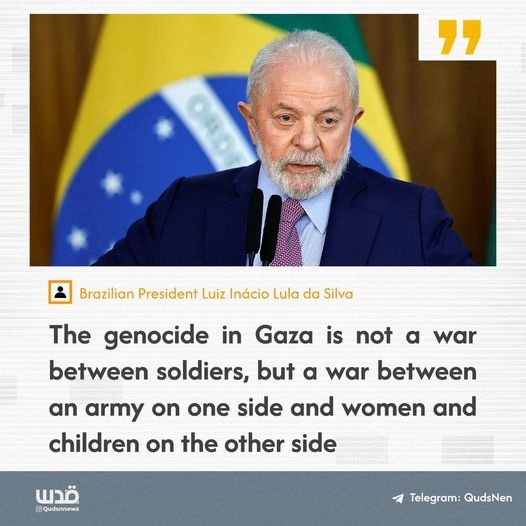
After the ICJ told Israel not to commit genocide, it killed, wounded and denied aid to tens of thousands of Gazans.
By Marjorie Cohn , TRUTHOUT, 27 Mar 24
srael is continuing its genocidal campaign against the Palestinians in Gaza and hindering humanitarian relief efforts despite specific orders from the International Court of Justice (ICJ), or the World Court, to refrain from these very actions.
On January 26, in South Africa’s genocide case against Israel, the ICJ ordered the following provisional measures be taken:
- Israel shall prevent the commission of all genocidal acts, especially (a) killing Palestinians in Gaza; (b) causing serious bodily or mental harm to Palestinians in Gaza; (c) deliberately inflicting on Palestinians in Gaza conditions of life calculated to bring about their physical destruction in whole or in part; and (d) imposing measures intended to prevent Palestinian births in Gaza;
- Israel shall immediately ensure that its military does not commit any of the acts listed above;
- Israel shall punish the direct and public incitement to commit genocide;
- Israel shall immediately enable urgently needed basic services and humanitarian assistance to Palestinians in Gaza;
- Israel shall prevent the destruction and ensure the preservation of evidence; and
- Israel shall submit a report to the ICJ on all measures taken to carry out this order within one month.
Since the ICJ issued the order, Israel has consistently flouted its mandate.
Israel Continues to Kill, Wound and Deny Humanitarian Aid
Gaza’s Health Ministry reported that between January 26 and February 23, more than 3,400 Palestinians in Gaza had been killed. Israeli forces repeatedly killed and wounded civilians fleeing or taking shelter in areas the Israeli military had declared “safe zones.” As of this writing, more than 32,000 Palestinians have been killed and nearly 75,000 have been wounded in Gaza.
One month after the ICJ’s ruling, Human Rights Watch reported that, “Israel continues to obstruct the provision of basic services and the entry and distribution within Gaza of fuel and lifesaving aid, acts of collective punishment that amount to war crimes and include the use of starvation of civilians as a weapon of war. Fewer trucks have entered Gaza and fewer aid missions have been permitted to reach northern Gaza in the several weeks since the ruling than in the weeks preceding it,” citing a study by the United Nations Office of the Coordination of Humanitarian Affairs.
“The Israeli government is starving Gaza’s 2.3 million Palestinians, putting them in even more peril than before the World Court’s binding order,” said Omar Shakir, who is Israel and Palestine director at Human Rights Watch. “The Israeli government has simply ignored the court’s ruling, and in some ways even intensified its repression, including further blocking lifesaving aid.”
On March 18, the Integrated Food Security Phase Classification, the world’s leading tracker of humanitarian crises, reported that a state of famine is “imminent” in Gaza unless there is an immediate ceasefire and full access granted to protect civilians; provide food, water and medicine; and restore health, water, energy and sanitation services.
Euro-Med Human Rights Monitor found that “The ongoing Israeli massacre in Gaza City’s Al-Shifa Medical Complex and surrounding areas has left at least 100 Palestinians dead, many of whom were victims of extrajudicial executions after their arrest. The international community must intervene immediately to put an end to this atrocity.”
South Africa Asks the ICJ to Order Additional Measures……………………………………………
US, Germany Supplied 99% of Israel Weapons Import Despite Pressure: Data

JOE SABALLA, MARCH 26, 2024, https://www.thedefensepost.com/2024/03/26/us-germany-israel-weapons/
“At the end of 2023, the US rapidly delivered thousands of guided bombs and missiles to Israel,” the SIPRI report noted, adding that 61 combat aircraft from the US and four submarines from Germany are pending delivery.
SIPRI claimed that the weapons Israel imported from its allies have played a major role in its military actions against Hamas and Hezbollah.
Global Pressure
The data was released amid international calls to stop arming Israel, which has been carrying out relentless ground and aerial attacks on Gaza.
Since the war broke out between Hamas militants and the Israel Defense Forces (IDF) in October last year, more than 32,000 Palestinians, mostly women and children, have been killed.
Canada recently ordered a halt in arms exports to Jerusalem as Canadian Prime Minister Justin Trudeau weighed in on Israel’s right to defend itself and the alleged lack of action to protect civilian lives.
Eight American senators have also sent a letter to President Joe Biden urging him to stop supplying weapons to the country’s Middle Eastern ally.
They said Israeli Prime Minister Benjamin Netanyahu’s actions against humanitarian operations have prevented Washington from safely and easily delivering aid to Gaza.
Media reports have claimed that the relationship between the two leaders has been strained following Biden’s call to scale down the Israeli offensive in the Palestinian territory.
1 This Month
10 June – Assessing Canada’s Investments in Small Modular Nuclear Reactors – https://zoom.us/meeting/register/IiqHA5feRhaEBycOLNTJlA#/registration



Cuba Is Not a Failed State – It Is a Besieged State
PETITION: “Global Appeal to Endorse Palestinian Right of Return of Refugees”
To see nuclear-related stories in greater depth and intensity – go to https://nuclearinformation.wordpress.com
-
Archives
- June 2026 (68)
- May 2026 (306)
- April 2026 (356)
- March 2026 (251)
- February 2026 (268)
- January 2026 (308)
- December 2025 (358)
- November 2025 (359)
- October 2025 (376)
- September 2025 (257)
- August 2025 (319)
- July 2025 (230)
-
Categories
- 1
- 1 NUCLEAR ISSUES
- business and costs
- climate change
- culture and arts
- ENERGY
- environment
- health
- history
- indigenous issues
- Legal
- marketing of nuclear
- media
- opposition to nuclear
- PERSONAL STORIES
- politics
- politics international
- Religion and ethics
- safety
- secrets,lies and civil liberties
- spinbuster
- technology
- Uranium
- wastes
- weapons and war
- Women
- 2 WORLD
- ACTION
- AFRICA
- Atrocities
- AUSTRALIA
- Christina's notes
- Christina's themes
- culture and arts
- Events
- Fuk 2022
- Fuk 2023
- Fukushima 2017
- Fukushima 2018
- fukushima 2019
- Fukushima 2020
- Fukushima 2021
- general
- global warming
- Humour (God we need it)
- Nuclear
- RARE EARTHS
- Reference
- resources – print
- Resources -audiovicual
- Weekly Newsletter
- World
- World Nuclear
- YouTube
-
RSS
Entries RSS
Comments RSS
 nuclear-news