Israeli Official: Without US Aid, Israel Couldn’t Sustain Gaza Operations for More Than a Few Months

The US has sent over 50,000 tons of weapons to Israel since the genocidal war began and increased shipments over the past month
by Dave DeCamp September 3, 2024 , https://news.antiwar.com/2024/09/03/israeli-official-without-us-aid-israel-couldnt-sustain-gaza-operations-for-more-than-a-few-months/
A senior Israeli Air Force official has told Haaretz that without US military aid, Israel would not have been able to sustain military operations in Gaza for more than a few months, demonstrating how crucial US support is for the genocidal slaughter of Palestinians.
The support is especially crucial for the Israeli Air Force. The report said the US provides the IAF with “all of its fighter planes and some of its bombs, missiles and intelligence equipment.” The US also helps Israel develop “joint weapons systems for all three layers of air defense.”
Since October 7, the US has shipped Israel over 50,000 tons of weapons and other military equipment. Weapons shipments have increased over the past month, with flight tracking data showing that August was the busiest month for US deliveries since October 2023.
President Biden also signed a bill into law that included $17 billion in additional military aid for Israel on top of the $3.8 billion it receives in annual military assistance. The administration recently approved $20 billion in new arms deals for Israel, which includes a new fleet of F-15 fighter jets.
The official speaking to Haaretz said the IAF is crafting a recommendation to increase the domestic production of bombs, missiles, and other ammunition to reduce reliance on the US. But any changes would take years to implement, meaning Israel will continue to be almost entirely reliant on US support.
Israel’s reliance on the US gives the Biden administration enormous leverage over the Israeli government. The administration has refused to use that power to force a ceasefire despite claims that US officials are working for one.
Iran desperately needs a nuclear deal to save its battered economy

The Islamic Republic has few good options – a nuclear accord 2.0 may be its best hope
By Michael Day, iNews 4th Sept 2024
Iran appears increasingly willing to scale back its nuclear weapons programme in return for sanctions relief to rescue its stricken economy. This might explain Tehran’s reluctance to retaliate hard against Israel’s alleged assassination of a senior Hamas figure.
The delay in Iran’s threatened retribution for the provocative killing of Hamas’s political leader Ismail Haniyeh in Tehran on 31 July has been explained in part by Tehran’s willingness to allow negotiators to pursue peace talks between Hamas and Israel.
America’s increased naval presence in the region with aircraft carriers and a guided missile-capable submarine might also have made the regime in Tehran think long and hard about how it should respond to Haniyeh’s killing……………………
Iran’s supreme leader, Ayatollah Ali Khamenei, allowed the election of a moderate president, Masoud Pezeshkian, in July, after deciding that a degree of rapprochement and thereby sanctions relief with the West was badly needed to tackled Iran’s dire economic situation and the social unrest that it – along with the regime’s brutality – has created.
………………………now Azizi thinks: “Iran is seriously interested in pursuing agreements with the West that could help it lift sanctions and this is indeed a priority for it. The return of the JCPOA [2015 nuclear deal] triumvirate (Iran’s nuclear negotiators Mohammad Javad Zarif, Abbas Araghchi, Majid Takht-Ravanchi) indeed speaks to that”.
The nuclear deal was concluded with world powers in 2015 under Iran’s former president Hassan Rouhani – an accord ripped up by the Trump administration in 2018.
Underlining the regime’s desire to use a freeze in its nuclear programme as a bargaining chip, Pezeshkian is, according to reports in state media, about to appoint the nuclear negotiations specialist Takht-Ravanchi to a senior role in the foreign affairs department.
The news comes a week after Iran’s supreme leader suggested that his country might resume nuclear negotiations with the US.
…………………………………………………………………………………………….there is of course the seismic matter of the US election result, which is likely to have a huge bearing on America’s willingness to deal with Tehran. Nothing concrete will be agreed on before then. https://inews.co.uk/news/world/iran-nuclear-deal-sanctions-relief-economy-3258961
Netanyahu ‘torpedoed’ Palestinian peace talks – CNN

https://www.rt.com/news/603450-netanyahu-derails-gaza-peace-talks/ 3 Sept 24
The Israeli prime minister has insisted on keeping troops in southern Gaza, along the Egyptian border.
Prime Minister Benjamin Netanyahu’s insistence on maintaining an Israeli military presence in Gaza could undermine ongoing peace talks and jeopardize the release of hostages, CNN reported on Monday.
Officials from the administration of US President Joe Biden have reportedly been discussing ways of pushing the ceasefire and hostage deal forward, the outlet wrote. Peace efforts intensified following the discovery of six bodies, including that of an American-Israeli citizen, in an underground tunnel in the enclave over the weekend.
Speaking to reporters on Monday, Biden said his administration was “very close” to proposing a “final” hostage deal to both sides.
In a press conference in Jerusalem on the same day, however, Netanyahu vowed that Israel would not relinquish control over a strategic 14km strip of land along the Gaza-Egyptian border known as the Philadelphi corridor. An Israeli military presence there is vital to ensure victory over Hamas, he claimed.
In reaction to the statement, a source familiar with the discussions in Washington told CNN that “this guy [Netanyahu] torpedoed everything in one speech.”
The Israeli prime minister’s stance on the Philadelphi corridor has emerged as a key obstacle to a ceasefire deal. According to CNN sources familiar with the negotiations, Netanyahu’s insistence on maintaining troops in Gaza represents a change in position.
The Israeli proposal for a hostage release and ceasefire deal with Hamas, which was submitted in May and negotiated with the help of Qatar, Egypt and the US, contains no mention of Philadelphi. Israel added its continued presence in the corridor as a “non-negotiable” condition in July.
Hamas has accused the Jewish state of prolonging negotiations by issuing new demands. Lead Hamas negotiator Khalil Al-Hayya told Al Jazeera on Sunday that there would be no deal without the Israeli military withdrawing from the Philadelphi corridor.
Netanyahu’s latest comments also drew ire from the Israeli opposition and the families of the hostages who remain trapped in Gaza.
Opposition leader Yair Lapid dismissed the Israeli leader’s statements as “unfounded political spin,” arguing that Netanyahu’s new condition “has no relation to reality.”
The Hostages Families Forum said the prime minister’s remarks showed “that he does not intend to return the hostages.”
Hostilities between Israel and Hamas flared up when the Palestinian militant group attacked southern Israel on October 7, killing around 1,100 people and taking more than 200 others hostage. Some were later released through prisoner swaps or were rescued by the Israeli army. According to Israel, Hamas is still holding 103 people captive in Gaza.
The massive military retaliation by Israel has claimed nearly 41,000 lives, mostly women and children in the enclave, according to Palestinian health officials.
UK suspends 30 arms exports to Israel over Gaza war crimes concerns
Arms campaigners and human rights groups welcome ban, but say move does not go far enough
MIDDLE EAST EYE, By Dania Akkad and Imran Mulla, 2 September 2024
The UK has suspended 30 arms export licences to Israel following a review under the new Labour government which found that British-made weapons may have been used in the violation of international humanitarian law in Gaza.
Arms campaigners and rights advocates who have pressed for a full suspension of arms sales to Israel for months welcomed the decision, but criticised the continued export of F-35 fighter jet components which one called “a workhorse of Israel’s brutal bombing campaign”.
The suspension, announced by Foreign Secretary David Lammy in parliament on Monday, covers components for other types of military aircraft, including fighter planes, helicopters and drones. Around 320 other licences, including for items for civilian use, remain in place.
Under its arms exporting criteria, the government is obligated to suspend licences for arms exports if it determines that there is a clear risk that British weapons might be used in serious violations of international humanitarian law.
“Facing a conflict such as this, it is this government’s legal duty to review export licences,” Lammy told MPs. ………………………………….
Lammy also said the government was “deeply concerned” about reports of mistreatment of Palestinian detainees, which the International Committee of the Red Cross has not been able to investigate after being denied access.
“My predecessor and major allies have raised these concerns,” he said of the detainees. “Regrettably, these have not been addressed satisfactorily.”
He added that Britain would continue to support Israel if it was under attack, particularly from Iran, announcing fresh sanctions against three members of the Islamic Revolutionary Guard Corps. …………
‘Took too long, not far enough’
The announcement cames hours before two organisations which have challenged the UK government in the High Court over the continued exports were set to pursue fresh legal action in an attempt to force the exports to stop immediately.
Lawyers with the UK-based Global Legan Action Network (Glan) and the Palestinian human rights group Al-Haq said they told the government last week of their intent to request an emergency order and had planned to do this at a Tuesday morning hearing.
But late on Monday, the organisations said they would now consider whether the announced ban was “extensive enough to meet the gravity of the situation and assess whether further litigation remains necessary”………………………………………
Without F-35 components included in the ban list, campaigners and human rights groups which have called for a blanket end of UK arms exports to Israel sales for months said the announcement fell short…………………………………………………………………. more https://www.middleeasteye.net/news/uk-suspends-30-arms-exports-israel-over-gaza-war-crimes-concerns
Israel’s nuclear arsenal poses major threat to global peace’

Tehran Times, September 5, 2024
TEHRAN – Iran’s Ambassador to the United Nations in New York, Amir Saied Iravani, has said that the Israeli regime is threatening countries in the West Asia region with “nuclear annihilation”, warning the regime’s nuclear arsenal poses a significant threat to both regional and global peace and security.
Iravani made the comment on Wednesday as he was addressing the UN General Assembly on the International Day Against Nuclear Tests.
The following is the full text of his speech at the UN meeting:
“……………………………………………………………………………………………………………… In commemoration of the International Day against Nuclear Tests, Nuclear-Weapon States (NWSs) should be mainly addressed, as they possess the capability to conduct such tests, with approximately 2,000 tests carried out since 1945, including 1,054 by the US alone.
At a time when all nuclear-armed states are planning to modernize, upgrade, or extend the life of their nuclear weapons and facilities, as well as develop new easy-to-use nuclear weapons, ending nuclear weapon testing is of outmost importance………………………………………………………………………………..
Commemoration of this day is also an opportunity for international community to make Israeli regime promptly accede to the NPT without any precondition and to place all of its nuclear facilities under the full-scope IAEA safeguards. The current situation is alarming, as the Israeli regime is threatening other regional countries with nuclear annihilation, and its nuclear arsenal poses a significant threat to both regional and global peace and security.
By observing this day, we should also renew our commitment to the noble goal of the total elimination of nuclear weapons- the only absolute guarantee against the threat or use of these inhumane weapons.
As a signatory to the CTBT, the Islamic Republic of Iran considers this treaty a step toward nuclear disarmament, and in this context, believes it cannot substitute for the total elimination of nuclear weapons. Consequently, nuclear disarmament must remain a top priority for the international community, and all forms of nuclear testing must be unequivocally prohibited. Such tests contradict both the letter and spirit of the CTBT and, more importantly, violate the legal obligations of the Nuclear-Weapon States under Article VI of the NPT. https://www.tehrantimes.com/news/503272/Israel-s-nuclear-arsenal-poses-major-threat-to-global-peace
IAEA chief on reviving Iran nuclear deal, preventing Russia-Ukraine nuclear disaster

ALARABIYA NEWS, 1 Sept 24,
In a special interview on Al Arabiya, IAEA Director General Rafael Grossi discussed several pressing global nuclear issues. He highlighted the ongoing concerns related to the conflict between Russia and Ukraine, particularly the risks posed to nuclear power plants situated near active combat zones. Grossi emphasized the IAEA’s commitment to ensuring the safety of these facilities, despite the challenges and uncertainties. He stressed the importance of the agency’s impartiality, noting that their assessments are based solely on independently verified information to avoid politicization.
The IAEA chief also addressed the Iranian nuclear program, expressing concerns over the country’s continued accumulation of highly enriched uranium. He revealed that he had received a response from Iran’s new president, signaling a potential for renewed dialogue aimed at ensuring the peaceful nature of Iran’s nuclear activities. Grossi underscored the need for increased transparency and cooperation from Iran, especially in light of advancements in their nuclear capabilities……………………………………………… https://english.alarabiya.net/webtv/programs/special-interview/2024/09/01/iaea-chief-on-reviving-iran-nuclear-deal-preventing-russia-ukraine-nuclear-disaster—
How the U.S. Enabled Netanyahu to Sabotage a Gaza Ceasefire
Drop Site, Jeremy Scahill, Sep 01, 2024
After the bodies of six more Israeli hostages of Hamas were found in the Gaza Strip, pressure in Israel is mounting on the government to secure a ceasefire deal and free the remaining hostages and soldiers taken captive on October 7. The announcement Sunday that the captives, including a dual citizen of the U.S., were discovered in a tunnel in Rafah has further fueled the rage toward Prime Minister Benjamin Netanyahu, particularly from the families of those held in Gaza. They have accused the prime minister of sabotaging deals to free their loved ones, saying “their blood is on his hands.”
Senior Israeli officials, most prominently the defense minister, have joined the public demands for Netanyahu to stop obstructing ceasefire negotiations, while Hamas has said they will not participate in any process until the U.S. convinces Israel to accept a negotiating framework Hamas agreed to in early July. Both Hamas and the families of Israeli captives still held in Gaza have stated that Netanyahu bears responsibility for continuing the war and preventing the exchange of prisoners.
The White House clearly hopes the events of the past 24 hours alter the current course. After being briefed on Saturday evening on the hostages found in Rafah, President Joe Biden, who is vacationing in Delaware, said, “I think we’re on the verge of having an agreement,” adding, “We think we can close the deal, they’ve all said they agree on the principles.”
By Sunday afternoon, street protests were staged throughout parts of Israel and the mayor of Tel Aviv announced a municipal strike for Monday. “[W]e will allow all employees to go out and support the families’ struggle,” he wrote on Twitter/X.
Following a meeting Sunday with an association of family members of Israeli captives, the head of the Histadrut labor federation, Israel’s largest trade union, announced a general strike. If that action extends beyond a symbolic strike of one or two days, it could cascade into a formidable crisis for Netanyahu. “Netanyahu abandoned the hostages. This is now a fact,” the family association said in a statement. “We call on the public to prepare. We will bring the country to a halt. The abandonment is over.”
Vice President Kamala Harris released a statement endorsing Israel’s version of events on the captives discovered in Rafah and echoed Netanyahu’s pledge to eliminate Hamas. ……………………………..
Hamas has not yet offered a detailed response to Israel’s accusation that Hamas fighters murdered the six captives, but blamed Israel for their deaths.
……………………………..as U.S. negotiators have worked to placate Netanyahu, the Israeli leader has waged a relentless two-month campaign aimed at thwarting a deal and Hamas has denounced the process and asserted that the U.S. framework it agreed to in early July should be respected.
………………………………………………………………………………………………………………………………………………. A Hamas official involved with the ceasefire negotiations told Drop Site News that the vice president and other U.S. officials have deliberately misled the public about the process out of concerns that the Gaza war will hurt the Democrats’ chances of victory in November.
“Kamala Harris is now obsessed with how to defeat Trump, how to win the election, and she knows that the genocide in Gaza and these massacres are a crucial element in the campaign,” said Basem Naim, a member of Hamas’s political bureau. “She wants to create a delusional image that there is something in process, which is not right.”
In an interview, Naim said that while the U.S.—for political purposes—wants to achieve a temporary truce that facilitates the release of Israelis held captive in Gaza and allows aid to reach the besieged Strip, it has given no indication it would insist on Israel ending its war against the Palestinians of Gaza.
“They are looking for a ceasefire, but they are not for ending the war permanently,” Naim said………………………………..
Establishing a Framework
In May, Biden laid out what he characterized as “a roadmap to an enduring ceasefire and the release of all hostages” that had been proposed by Israel itself. “This is truly a decisive moment. Israel has made their proposal,” Biden said on May 31. “Hamas says it wants a ceasefire. This deal is an opportunity to prove whether they really mean it. Hamas needs to take the deal.”
On June 10, the UN Security Council approved a resolution affirming the framework. On July 2, Hamas announced that it had agreed to restart ceasefire talks based on the framework. “We are ready for negotiations that achieve a cessation of aggression and a complete withdrawal from the Gaza Strip,” said senior negotiator Khalil Al-Hayya, a deputy of Hamas leader Yahya Sinwar. “We are ready for genuine negotiations if Netanyahu adheres to the principles outlined by President Biden.”
…………………..Drop Site News has reviewed internal documents from the negotiations showing that on July 2 Hamas formally informed international mediators that it had accepted the framework, which Hamas says it was told had been amended by the U.S. and approved by Israel on June 24. This amendment removed language Hamas had previously insisted on that called for negotiations no later than 14 days into the first phase of a deal on the “necessary arrangements for the return of a sustainable calm (permanent ceasefire),” according to a draft seen by Drop Site News. Hamas believed this compromise was strong evidence of their desire to reach a deal.
………………………………..Netanyahu’s “Coup” Against His Own Ceasefire Proposal
Since early July, Netanyahu has intensified Israel’s attacks in Gaza, repeatedly added new terms to the framework, and assassinated Ismail Haniyeh, Hamas’s political leader and its lead negotiator, in Tehran. Among the new demands put forward by Netanyahu is the right to continue occupying the Philadelphi corridor along the border with Egypt, to maintain control of the Rafah border crossing and to position Israeli troops in central Gaza along the Netzarim axis where IDF forces would establish checkpoints to search Palestinians seeking to return to their homes in northern Gaza.
……………………………………………………………………..Rather than insisting on upholding what Biden said was Israel’s own proposal in May, the U.S. has appeased Netanyahu’s efforts to allow an indefinite presence of Israeli forces in Gaza and an open-ended campaign of military attacks.
………………………………………………………….more https://www.dropsitenews.com/p/netanyahu-sabotage-ceasefire-hamas?utm_source=post-email-title&publication_id=2510348&post_id=148340330&utm_campaign=email-post-title&isFreemail=true&r=cqey&triedRedirect=true&utm_medium=email
Israel Launches Major West Bank Raid as Israeli Minister Vows Gaza-Like Attack

it is clear that Israel is aiming to do what it has done in Gaza to the occupied West Bank.
Israel is cutting off the northern West Bank, destroying roads, surrounding hospitals and implementing curfews there.
By Sharon Zhang , Truthout, August 28, 2024
Israel has embarked on its largest raid of the occupied West Bank in decades, launching attacks from the land and air against areas home to 80,000 Palestinians as Israel’s foreign minister is pledging “war” using the same genocidal tactics the Israeli military has used on Gaza.
Israel has attacked the West Bank with drone strikes and deployed military vehicles on the ground, with troops opening fire on Palestinians. Israeli forces are shutting down and destroying roads with bulldozers leading to Jenin, Tulkarem and Tubas in the northern West Bank, effectively cutting the cities off from the rest of the West Bank. Jenin has a population of roughly 39,000 Palestinians.
The raid is especially sinister as it comes amid Israel’s genocide in Gaza, which experts say has been an opportunity for Israeli forces to test and hone violence against Palestinians. Alarmingly, Foreign Affairs Minister Israel Katz pledged that Israeli forces would handle the occupied West Bank the same way it has Gaza — where it has isolated the population and then carried out a genocide and ethnic cleansing campaign of unprecedented proportions.
………………….Experts warn it is clear that Israel is aiming to do what it has done in Gaza to the occupied West Bank. “What’s happening is absolutely horrifying, because what we see here is Israel trying to transfer the genocide war that is conducted in Gaza and the war of ethnic cleansing from Gaza to the West Bank,” Mustafa Barghouti, Palestinian physician, general secretary of the Palestinian National Initiative and West Bank resident, told Democracy Now!. “Their goal is very clear. It’s as the Israeli minister of foreign affairs said: it’s ethnic cleansing of Palestinians.”…………………………………….. more https://truthout.org/articles/israel-launches-major-west-bank-raid-as-israeli-minister-vows-gaza-like-attack/
Iran urges elimination of atomic weapons, end to nuclear tests
Friday, 30 August 2024, https://www.presstv.ir/Detail/2024/08/30/732332/Iran–elimination-of-atomic-weapons
Iran’s ambassador and permanent representative to the United Nations Office in Geneva has called on the international community to work towards ending nuclear tests and eliminating atomic weapons.
Ali Bahreini made the remarks in an X post on Thursday, on the occasion of the International Day against Nuclear Tests.
“Nuclear testing is a threat to our planet and future generations,” he said.
“On the International Day against Nuclear Tests, let’s pledge to protect our world by advocating for a complete end to nuclear tests and total elimination of NWs,” he added, referring to nuclear weapons.
“Each nuclear explosion is a step backward in the journey towards a world free of nuclear weapons. Today, more than ever, we need a global commitment to the complete elimination of nuclear weapons,” Bahreini wrote in a separate post on X in Persian.
In 2009, the UN General Assembly declared August 29 the International Day against Nuclear Tests by unanimously adopting Resolution 64/35.
The document calls for increasing awareness and education “about the effects of nuclear weapon test explosions or any other nuclear explosions and the need for their cessation as one of the means of achieving the goal of a nuclear-weapon-free world.”
The United States is the only country on Earth that has used nuclear weapons in wartime.
On August 6, 1945, the US dropped the world’s first atomic bomb on the Japanese city of Hiroshima, killing thousands instantly and about 140,000 by the end of the year. Three days later, it dropped a second bomb on Nagasaki, killing another 70,000.
US Rushes Weapons Shipments To Israel
According to flight data, there’s been a spike in US arms deliveries to Israel since the end of July
by Dave DeCamp August 29, 2024, https://news.antiwar.com/2024/08/29/us-rushes-weapons-shipments-to-israel/
The US has been rushing weapons shipments to Israel since the end of July, Haaretz reported on Thursday, citing open-sourced aviation data.
The report said that the spike in arms shipments made August the second busiest month at Israel’s Nevatim Airbase for US deliveries since Israel’s genocidal war in Gaza began back in October 2023 following the Hamas attack on southern Israel.
Dozens of US military transport flights, as well as Israeli civilian and military and cargo planes, have landed at the base, mainly traveling from Qatar and the Dover Air Force Base in Delaware.
The Haaretz report appeared to attribute the rush in arms shipments to US preparations for a potential Iranian attack. The US has deployed additional fighter jets and warships to the region and is vowing to defend Israel from Iran’s response to the Israeli assassination of Hamas’s political chief, Ismail Haniyeh, on Iranian territory. Following a major exchange of fire between Israel and Hezbollah on Sunday, the US is still expecting a reprisal attack from Iran.
Besides helping Israel prepare for a potential attack from Iran, the US weapons shipments also help fuel the slaughter in Gaza and Israel’s operations in the West Bank, which significantly escalated on Wednesday. Israeli forces launched their largest attack on the Israeli-occupied West Bank since the Second Intifada in the early 2000s.
The rush in arms shipments also shows strong support for Israeli Prime Minister Benjamin Netanyahu, who has been working to prevent a ceasefire deal with Hamas, and shows President Biden and Vice President Harris are not serious about ending the slaughter in Gaza.
The Israeli Defense Ministry said on Monday that the US had delivered over 50,000 tons of weapons and other military equipment since October 7. The ministry said the US support was “crucial for sustaining the IDF’s operational capabilities during the ongoing war.”
Israel Says US Has Delivered 50,000 Tons of Military Aid Since Start of Gaza Slaughter

The Biden administration has continued to deliver weapons
by Dave DeCamp August 26, 2024 https://news.antiwar.com/2024/08/26/israel-says-us-has-delivered-50000-tons-of-military-aid-since-start-of-gaza-slaughter/
The Israeli Defense Ministry said Monday that the US has delivered over 50,000 tons of weapons and other military equipment since the start of Israel’s genocidal campaign in Gaza, demonstrating the Biden administration’s staunch support for the slaughter.
Since October 7, 107 ships and 500 transport planes have brought US military aid shipments to Israel. The Israeli Defense Ministry said the deliveries have included “armored vehicles, munitions, ammunition, personal protection gear, and medical equipment.”
The ministry added that the US support was “crucial for sustaining the IDF’s operational capabilities during the ongoing war.”
Back in April, President Biden signed a bill into law that included $17 billion in additional military aid for Israel on top of the $3.8 billion the country receives each year. The State Department recently approved a series of major arms deals for Israel worth $20 billion, including a new fleet of F-15 fighter jets.
Besides the military aid, the Biden administration has also provided intelligence for operations in Gaza and political support at the UN. The administration has also helped Israel by portraying Hamas as the obstacle to a hostage and ceasefire deal, even as Israeli Prime Minister Benjamin Netanyahu has been working to sabotage the chances of an agreement.
Over the past 10 months, the US-backed Israeli assault on Gaza has killed at least 40,435 people, including over 16,000 children, according to Gaza’s Health Ministry’s latest numbers. The ministry’s figures are considered a low estimate since it doesn’t include the estimated 10,000 people who are missing and presumed dead under the rubble. Many more could have died from indirect causes as Israel has shattered Gaza’s infrastructure.
The Israel Lobby’s Demise & The Future of Gaza (w/ Ilan Pappé)
August 26, 2024 By Chris Hedges / The Chris Hedges YouTube Channel
Blinken ‘Sentenced Ceasefire Talks to Death’ With Comments on Netanyahu

sources called Blinken’s comments a “gift” to Netanyahu
Sources told Ynet that Blinken’s comments about the negotiations indicate his ‘amateurism, naivety, and lack of understanding’
https://news.antiwar.com/2024/08/22/blinken-sentenced-ceasefire-talks-to-death-with-comments-on-netanyahu/
by Dave DeCamp August 22, 2024
Secretary of State Antony Blinken’s comments about Gaza ceasefire talks this week sentenced the negotiations to death, Middle East Eye reported Thursday, citing Israeli media.
After meeting with Israeli Prime Minister Benjamin Netanyahu on Monday, Blinken said the Israeli leader agreed to a new US proposal and that it was now up to Hamas to agree to the deal. However, the US proposal included new demands from Netanyahu that Hamas considers unacceptable. Israeli, US, and Arab sources have all said Netanyahu’s demands are too hardline and will prevent a deal.
Sources speaking to Ynet slammed Blinken for making the comments that portrayed Hamas as the obstacle to a deal. “Blinken made a very serious foul here that indicates innocence, amateurism, naivety, and lack of understanding,” a source said.
They added that Blinken’s positive spin on the ceasefire negotiations was likely an effort to prevent the situation from overshadowing the Democratic National Convention.
“He broadcast optimism from intra-American political considerations, so that the Democratic convention in Chicago would go smoothly, but senior officials of the Israeli negotiating team who listened to his press conference wanted to dispel the speculations,” the source said.
The sources called Blinken’s comments a “gift” to Netanyahu and said the Israeli leader’s continued insistence that Israel must maintain control of the Gaza-Egypt border, known as the Philadelphi Corridor, will prevent a deal.
“There is no deal and there is no summit if the Israeli insistence on deploying forces along the Philadelphi axis continues,” the source said. “What was implied in Blinken’s words is that the US is giving Netanyahu support for IDF forces to remain in Philadelphi, while both the Egyptians refuse and Hamas refuses.”
US and Israeli officials are due to meet again in Cairo this week to discuss the ceasefire, but Arab mediators have said there’s no point in holding talks unless the US puts significant pressure on Netanyahu to back down from his demands and agree to a deal.
‘Strong record of supporting the U.S.-Israel relationship’: a look at Tim Walz’s votes on Palestine as a member of Congress
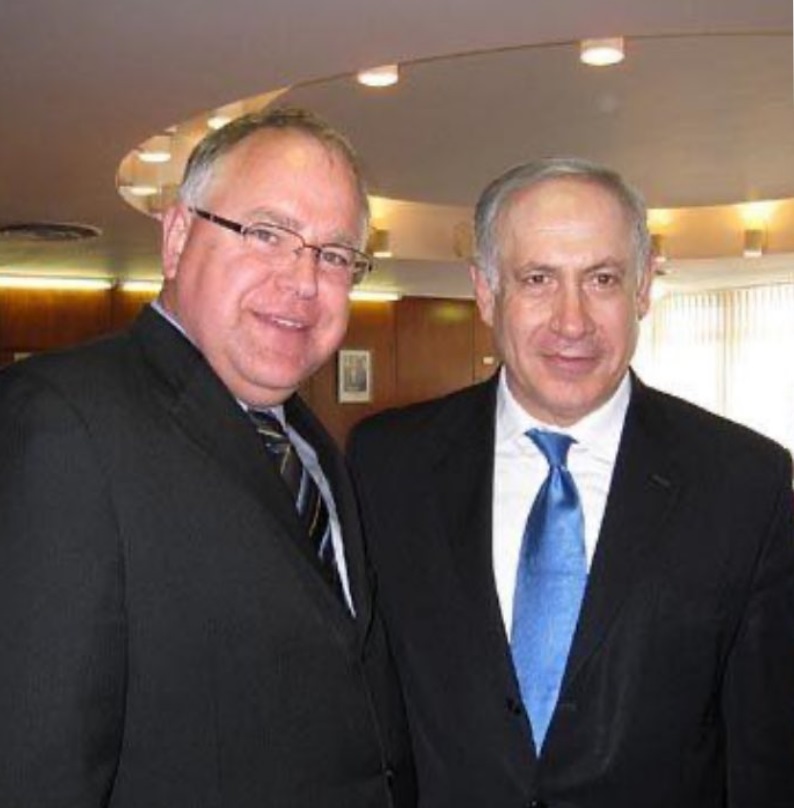
A review of Tim Walz’s time in Congress from 2007 to 2018 shows he supported multiple Israeli wars on Gaza, rejected the international consensus on the illegality of West Bank settlements, and opposed any unilateral declaration of a Palestinian state.
Mondoweiss, By Nicolas Sawaya August 15, 2024
When Kamala Harris selected Minnesota Governor Tim Walz over Pennsylvania Governor Josh Shapiro as her Vice-Presidential running mate, many viewed it as a win for pro-Palestine constituents of the Democratic party. Shapiro’s long history of pro-Israel positions and questionable ties to Israel, as well as his publicly inflammatory statements against Palestinians and their supporters, appeared to be key reasons Harris passed him over. But can Tim Walz be viewed as much better?
A review of Walz’s career shows that he can be fairly characterized as a reliable pro-Israel Democrat who has consistently voted for and taken positions in support of Israel. In fact, it is this very history that has led Israel lobby groups within the Democratic Party to celebrate Harris’s choice, which should give us all pause.
Walz in Congress
While Walz’s time as Minnesota governor has received much attention since it was announced he would become Harris’s running mate, it is actually his time in Congress that might shed the most light on how he will look to influence foreign policy from the executive branch. The record shows that during his career as a member of the House of Representatives between 2007 and 2018, Walz consistently voted in favor of pro-Israeli positions. In these years he supported every Israeli war on Gaza, rejected the international consensus on the illegality of settlements in the West Bank, and opposed any unilateral declaration of a Palestinian state, preferring instead to pay lip service to a “negotiated peace” while Israel continued colonizing the West Bank unimpeded.
Walz on Gaza, 2009 – 2014
In fact, it is Walz’s support for previous assaults on Gaza that are among his most alarming votes………………………………………………………………………….
Walz as Governor
This brings us to the current day, where in his role as Minnesota governor, Walz has paid some lip service to Palestinian concerns, but maintained his staunch support for Israel and opposed legislative action to hold it accountable, even during a genocide………………………………………….
Walz on the Gaza Genocide
Walz made some encouraging remarks after the Minnesota Democratic primaries in March of this year ………………………………………
it is unlikely that these words of sympathy will actually translate to tangible actions that put pressure on the Netanyahu government to end their genocide in Gaza. Indeed, Walz hasn’t called for an arms embargo or sanctions on Israel (and Harris’ national security advisor Phil Gordon recently clarified that Harris “does not support an arms embargo”), or taken any other meaningful policy positions that would potentially result in an end to Israel’s mass slaughter.
……………………………………………………………………………….. Walz on a resolution to the Palestinian-Israeli “conflict”
In early March of this year, in an interview with CNN, Walz said that he supports a “lasting two-state solution”, although he didn’t provide any details as to what that entailed. His voting record suggests the typical support for a “negotiated peace”, where Israel holds all the cards, and opposition to a unilateral declaration of Palestinian statehood. Indeed, on July 7, 2011, Walz voted Yea to H.Res. 268, which “opposes any attempt to establish or seek recognition of a Palestinian state outside of an agreement negotiated between Israel and the Palestinians”.
………………………………….It’s no surprise then, that Marc Mellman, President of Democratic Majority for Israel, praised Walz’s selection and said that he was “a proud pro-Israel Democrat with a strong record of supporting the U.S.-Israel relationship”, while the pro-Israel lobby J-Street (who had previously endorsed him), said that “we know the Harris-Walz team will stand up for our shared values, protect our community, and pursue smart, pro-Israel, pro-peace leadership abroad. We’re all in.” https://mondoweiss.net/2024/08/strong-record-of-supporting-the-u-s-israel-relationship-a-look-at-tim-walzs-votes-on-palestine-as-a-member-of-congress/
Blinken Heads to Israel for Gaza Cease-Fire Push as IDF Slaughter Continues

“We are not facing a deal or real negotiations, but rather the imposing of American diktats,”
“to say that we are getting close to a deal is an illusion.”
“We are not facing a deal or real negotiations, but rather the imposing of American diktats,”
“to say that we are getting close to a deal is an illusion.”
Israeli airstrikes wiped out an entire family in al-Zawayda and killed 10 Syrian refugees in Lebanon as Hamas poured cold water on President Joe Biden’s claim that a cease-fire is “closer than we’ve ever been.”
Brett Wilkins, 18 Aug 24, https://www.commondreams.org/news/blinken-in-israel
U.S. Secretary of State Antony Blinken departed for Israel on Sunday in an effort to secure a cease-fire in Gaza, even as Israeli forces continued to massacre Palestinians in the embattled strip and Hamas dismissed hopeful assertions by optimists including President Joe Biden that an agreement on a cessation of hostilities is within sight.
Blinken’s trip to Israel comes days after Israeli negotiators met with senior U.S. officials, as well as Qataris and Egyptians mediating between Hamas and Israel, in Doha, Qatar. Although those talks ended without any major progress toward a cease-fire deal, Biden said Friday that “we are closer than we’ve ever been” to an agreement, “but we’re not there yet.”
In a separate statement, Biden said that a U.S. negotiating team presented a “comprehensive bridging proposal” offering “the basis for coming to a final agreement on a cease-fire and hostage release deal.”
“I am sending Secretary Blinken to Israel to reaffirm my iron-clad support for Israel’s security, continue our intensive efforts to conclude this agreement, and to underscore that with the comprehensive cease-fire and hostage release deal now in sight, no one in the region should take actions to undermine this process,” the president added.
Israeli negotiators expressed “cautious optimism” over the prospects of a deal, Agence France-Presse reported.
During the weekly meeting of his far-right Cabinet, Israeli Prime Minister Benjamin Netanyahu said that “there are areas where we can show flexibility, and there are areas where we can’t show flexibility—and we are standing firm on them.”
Concistent with what observers say is a pattern of Israeli escalations when cease-fire deals seem within reach, Israeli forces on Saturday bombed a home and adjacent warehouse in the central Gaza Strip town of al-Zawayda, killing at least 15 to 18 members of the al-Ejlah family, according to local and international media.
Victims include Sami Jawad al-Ejlah—a wholesaler who cooperated with the Israeli military to distribute food in Gaza—who was killed along with two of his wives, 11 of their children, and the children’s grandmother, according to officials at al-Aqsa Martyrs Hospital in nearby Deir al-Balah.
“A massive fire broke out, burning everything in the warehouse as children were torn to pieces,” Al Jazeera correspondent Tareq Abu Azzoum reported from the scene. “Rescue efforts are still continuing to try to recover more bodies.”
According to the Lebanese satellite news channel Al Mayadeen, the al-Ejlah family “was wiped off the civil registry,” a fate shared by at least scores—and perhaps hundreds—of Palestinian families during the 317-day assault by Israel, which is on trial for genocide at the World Court.
Al Mayadeen‘s Gaza correspondent said that “there were still individuals trapped under the rubble, with rescue teams working at the site of the massacre,” and that most of the recovered victims “arrived dismembered” at al-Aqsa Martyrs Hospital.
A spokesperson for the Israel Defense Forces (IDF) said the attack targeted unspecified “terrorist infrastructure.”
Meanwhile in southern Lebanon, where resistance to Israel’s Gaza onslaught by Hezbollah has prompted fierce retaliation, an Israeli airstrike in the Wadi al-Kafur area of Nabatieh killed 10 Syrian refugees who fled that country’s civil war, including a mother and her two children, according to the Lebanese Ministry of Public Health.
An IDF spokesperson said the strike targeted a Hezbollah weapons storage site.
In response to reports of U.S. and Israeli guarded optimism over a possible cease-fire deal, Hamas Political Bureau member Sami Abu Zuhri told Agence France-Presse that “to say that we are getting close to a deal is an illusion.”
“We are not facing a deal or real negotiations, but rather the imposing of American diktats,” Zuhri added.
Blinken’s trip to Israel comes as the Palestinian death toll of the IDF’s assault on Gaza topped 40,000 this week, with more than 92,000 people wounded and at least 11,000 others missing and presumed dead and buried beneath the rubble of hundreds of thousands of bombed-out homes and other buildings. Pale
The Biden administration has been accused of complicity in genocide for sending Israel tens of billions of dollars worth of arms and providing diplomatic cover, including by vetoing multiple United Nations cease-fire resolutions supported by the overwhelming majority of the world’s nations.stinian and international officials say most of those killed have been women and children.
1 This Month



26 September – International Day for the Total Elimination of Nuclear Weapons


PLEASE OPPOSE HR 8255 AND S.3639 – bills would accelerate satellite deployment, with no environmental review or safeguards – https://ncstd5li.quorum.us/campaign/169331/
To see nuclear-related stories in greater depth and intensity – go to https://nuclearinformation.wordpress.com
-
Archives
- September 2026 (269)
- August 2026 (330)
- July 2026 (355)
- June 2026 (287)
- May 2026 (306)
- April 2026 (356)
- March 2026 (251)
- February 2026 (267)
- January 2026 (308)
- December 2025 (358)
- November 2025 (359)
- October 2025 (375)
-
Categories
- 1
- 1 NUCLEAR ISSUES
- business and costs
- climate change
- culture and arts
- ENERGY
- environment
- health
- history
- indigenous issues
- Legal
- marketing of nuclear
- media
- opposition to nuclear
- PERSONAL STORIES
- politics
- politics international
- Religion and ethics
- safety
- secrets,lies and civil liberties
- spinbuster
- technology
- Uranium
- wastes
- weapons and war
- Women
- 2 WORLD
- ACTION
- AFRICA
- Atrocities
- AUSTRALIA
- Christina's notes
- Christina's themes
- culture and arts
- Events
- Fuk 2022
- Fuk 2023
- Fukushima 2017
- Fukushima 2018
- fukushima 2019
- Fukushima 2020
- Fukushima 2021
- general
- global warming
- Humour (God we need it)
- Nuclear
- RARE EARTHS
- Reference
- resources – print
- Resources -audiovicual
- Weekly Newsletter
- World
- World Nuclear
- YouTube
-
RSS
Entries RSS
Comments RSS

