This is a difficult, but critical read. The collective hardship experienced by Gaza’s female prisoners in Israel is unprecedented even within the tragic history of Israel’s treatment of Palestinian prisoners. The Palestine Chronicle reports ..
The names of 51 female prisoners, illegally detained by invading Israeli forces during their ground operation in Gaza, have been revealed.
This number was announced by the Palestinian Prisoners’ Affairs Authority in a statement, without confirming whether there are other female prisoners secretly detained in Israel.
Regardless of the exact number, however, the testimonies that were collected from released prisoners reveal shocking abuse, ill-treatment and torture.
The Palestine Chronicle spoke with Lama Khater, from Al-Khalil (Hebron), who was arrested on October 26 and released under the prisoner exchange deal between the Israeli government and the Palestinian Resistance on November 30.
Khater was detained along with ten female prisoners from Gaza and witnessed the abuse they were subjected to.
Arbitrary Arrest
Khater said the conditions of female prisoners from Gaza were particularly difficult, starting with their kidnapping during their displacement from the northern Gaza Strip.
“They were arrested randomly, mostly from the northern Gaza Strip. Israeli soldiers detained mothers, too, who have been forced to leave their children with passers-by,” she stressed.
Khater recounted that before arriving at Damon Prison, the female detainees were left without covers, subjected to humiliating strip searches and forced to sleep on the bare floor.
When they were brought into the prisons, they were blindfolded, handcuffed, and deprived of their hijab, said Khater.
They were reportedly placed in narrow cells in Damon Prison and not allowed to speak to the rest of the female prisoners from the occupied West Bank and Palestine 48.
“All female prisoners are subjected to great restrictions,” Khater said, “but the prisoners from Gaza were treated even worse.”
“For example, they are only allowed to shower in large groups of at least 50 women, and for not more than 15 minutes a day”.
Khater said that on December 10 and 11, five female prisoners from the Gaza Strip were taken out of Damon prison. Their current location is not yet known.
Among the female Gazan prisoners, some are in a particularly difficult state; an 80-year-old woman who suffers from Alzheimers and a pregnant woman. Both are subjected to medical negligence.
Held in Cages
The Palestine Chronicle also spoke with Palestinian lawyer Hassan al-Abadi, who collected the testimonies of several female prisoners in Damon.
Al-Abadi, who volunteered to visit the female prisoners, submitted his first request to the Israeli Prison Administration on November 30, but was told in response that there were no longer female prisoners in the detention facility.
A few days later, however, media reports revealed that dozens of female prisoners, from Gaza, Jerusalem and Palestine 48, were still held there.
Al-Abadi confirmed to The Palestine Chronicle that there are over 40 female prisoners from Gaza in the facility, but they are prohibited from seeing a lawyer.
“When I would visit any female prisoner from the West Bank or Jerusalem, she would tell me about the harsh conditions of detention of the prisoners from the Gaza Strip,” he said.
Al-Abadi said he was particularly disturbed by the way Israeli forces transported the female detainees from Gaza to the prisons.
According to the lawyer, they were placed in trucks carrying cages similar to those used for animal transport.
“This detail particularly hurt me: these women have been transported in animal trucks. They have been tied, blindfolded and stripped of their head covering, as a way to humiliate them,” al-Abadi said.
Stained with Blood
The lawyer also said that when the female detainees arrived at the prison, their clothes were stained with blood. Most of them were also bleeding from their hands, as the plastic chains had been tightly tied around their wrists for days.
Upon their arrival, they were distributed into three rooms, each containing six iron beds. Most of them were reportedly forced to sleep on the floor without pillows or mattresses.
“The prisoners told me that the food is also very bad and that the Israeli guards deliberately leave it on their cells’ doors for hours, until it turns cold. The water has a rusty taste as well,” al-Abadi said.
“The female detainees from Gaza are even forbidden from talking to the rest of the prisoners and they have to communicate in secret.”
Al-Abadi shared that one of the women had to leave her four children in Gaza. The eldest was only eight years old, the youngest an infant.
According to the testimony from other prisoners, the woman was walking on Salah Al-Din Street, fleeing from the north of the Gaza Strip, when the Israeli soldiers arrested her.
“When she learned that she would be under arrest, she immediately handed her children to a boy who was walking in the street and told him to take care of them,” al-Abadi said.
“I learned from the other prisoners that she asked about her children every day, crying inconsolably, but nobody was updating her on their fate.”
A few days ago, however, al-Abadi was able to deliver a verbal message to this woman, that her children had eventually reached their father. “This time, she cried out of joy,” he said.
Great Concern
According to al-Abadi, these women are not only suffering due to the extremely cruel conditions of their detention but because they are constantly concerned about their families.
They do not know the fate of their children as Israel continues to relentlessly bombard Gaza.
“They are not allowed to hear the news or follow what is happening in any way. They are isolated from the outside world and don’t know anything,” al-Abadi explained.
But there are other forms of violation carried out by Israeli authorities. Al-Abadi told us that the prison administration prevents these women from bringing along sanitary pads
Therefore, during their period, they are forced to wash their clothes daily and wear them when they are still wet, as the prison administration does not provide them with additional clothes. They only have what they were wearing at the time of arrest.
Israel considers men and women detained in the Gaza Strip to be prisoners of war under the so-called “unlawful combatants” law. Therefore, it prevents them from having contact with lawyers and human rights institutions.
(The Palestine Chronicle) – Fayha’ Shalash is a Ramallah-based Palestinian journalist. She graduated from Birzeit University in 2008 and she has been working as a reporter and broadcaster ever since. Her articles appeared in several online publications. She contributed this article to The Palestine Chronicle.
January 15, 2024, by: Dr Binoy Kampmark, Australian Independent Media
Israel’s relationship with the United Nations, international institutions and international law has at times bristled with suspicion and blatant hostility. In a famous cabinet meeting in 1955, Prime Minister David Ben-Gurion famously knocked back the suggestion that the United Nations 1947 plan for partitioning Palestine had been instrumental in creating the State of Israel. “No, no, no!” he roaredin demur. “Only the daring of the Jews created the state, and not any oom-shmoom resolution.”
In the shadow of the Holocaust, justifications for violence against foes mushroom multiply. Given that international law, notably in war, entails restraint and limits on the use of force, doctrines have been selectively pruned and shaped, landscaped to suit the needs of the Jewish state. When the strictures of convention have been ignored, the reasoning is clipped for consistency: defenders of international law and its institutions have been either missing in the discussion or subservient to Israel’s enemies. They were nowhere to be seen, for instance, when Egypt’s Gamal Abdel Nasser was preparing for war in the spring of 1967. Israel’s tenaciously talented statesman, Abba Eban,reflected in his autobiography about the weakness of the UN in withdrawing troops from the Sinai when pressured by Nasser to do so. It “destroyed the most central hopes and expectations on which we had relied on withdrawing from Sinai.”
…………………………… Israeli authorities are resolute in their calls that Islamic terrorism is the enemy, that its destruction is fundamental for civilisation, and that crushing measures are entirely proportionate. Palestinian civilian deaths might be regrettable but all routes of blame lead to Hamas and its resort to human shields.
These arguments have failed to convince a growing number of countries. One of them is South Africa. On December 29, the Republicfiled an applicationin the International Court of Justice alleging “violations by Israel regarding the Convention on the Prevention and Punishment of the Crime of Genocide […] in relation to Palestinians in the Gaza Strip.” Various “acts and omissions” by the Israeli government were alleged to be “genocidal in character, as they are committed with the requisite specific intent … to destroy the Palestinians in Gaza as part of the broader Palestinian national, racial and ethnical group.” What Pretoria is seeking is both a review of the merits of the case and the imposition of provisional measures that would essentially modify, if not halt, Israel’s Gaza operation.
Prior to its arguments made before the 15-judge panel on January 12, Israel rejected“with contempt the blood libel by South Africa in its application to the International Court of Justice (ICJ).” The Israeli Foreign Ministry went so faras to suggest that the court was being exploited, while South Africa was, in essence, “collaborating with a terror group that calls for the destruction of Israel.”
Prime Minister Benjamin Netanyahu, with demagogic rage, claimedthat his country had witnessed “an upside-down world. Israel is accused of genocide while it is fighting against genocide.” The country was battling “murderous terrorists who carried out crimes against humanity.” Government spokesman Eylon Levytried to make it all a matter of Hamas, nothing more, nothing less. “We have been clear in word and in deed that we are targeting the October 7th monsters and are innovating ways to uphold international law.”
In that innovation lies the problem. Whatever is meant by such statements as those of Israel Defence Forces spokesman, Rear Adm. Daniel Hagari, that “Our war is against Hamas, not against the people of Gaza”, the catastrophic civilian death toll, destruction, displacement and starvation would suggest the contrary. Innovation in war often entails carefree slaughter with a clear conscience.
On another level, the Israeli argument is more nuanced, going to the difficulties of proving genocidal intent. Amichai Cohen of Israel’s Ono Academic College and senior fellow at the Israel Democracy Institute admitsthat comments from right-wing Israeli ministers calling for the “emigration” of Palestinians from Gaza were not helpful. (They were certainly helpful to Pretoria’s case.) But he insists that the South African argument is based on “classic cherry-picking.” Cohen should know better than resort to the damnably obvious: all legal cases are, by definition, exercises of picking the finest cherries in the orchard.
The Israeli defence team’soral submissions to the ICJ maintained a distinct air of unreality. Tal Becker, as legal advisor to the Israeli Foreign Ministry, tried to move judicial opinion inhis address by drawing upon the man who minted genocide as a term of international law, Raphael Lemkin. Invariably, it was Becker’s purpose to again return to the Holocaust as “unspeakable” and uniquely linked to the fate of the Jews, implying that Jews would surely be incapable of committing those same acts. But here was South Africa, raining on the sacred flame, invoking “this term in the context of Israel’s conduct in a war it did not start and did not want. A war in which Israel is defending itself against Hamas, Palestinian Islamic Jihad and other terrorist organizations whose brutality knows no bounds.” Israel, pure; Israel vulnerable; Israel under attack.
In yet another jurisprudential innovation, Becker insisted that the Genocide Convention was not connected in any way to “address the brutal impact of intensive hostilities on the civilian population, even when the use of force raises ‘very serious issues of international law’ and involves ‘enormous suffering’ and ‘continuing loss of life’.” The Convention, rather, was meant “to address a malevolent crime of the most exceptional severity.”
The view is reiterated by another lawyer representing Israel. “The inevitable fatalities and human suffering of any conflict,” submittedChristopher Staker, “is not of itself a pattern of conduct that plausibly shows genocidal intent.” Butcheries on a massive scale would not, in of themselves, suggest such the requisite mental state to exterminate a race, ethnic or religious group.
As for South Africa’s insistence that provisional measures be granted, Staker was unwavering in repeatingthe familiar talking points. They “would stop Israel defending its citizens, more citizens could be attacked, raped and tortured [by Hamas], and provisional measures would prevent Israel doing anything.”
Legal tricks and casuistry were something of a blooming phenomenon in Israel’s submissions. South Africa had, according to Becker, submitted “a profoundly distorted factual and legal picture……………………………………………..
Malcom Shaw, a figure known for his expertise in the thorny realm of territorial disputes, did his little bit of legal curation. ………………… The only thing that mattered here, argued Shaw, was the attack of October 7 by Hamas, a sole act of barbarity that could be read in terrifying isolation. That, he claimed was “the real genocide in this situation.”………………………. more https://theaimn.com/israels-argument-at-the-hague-we-are-incapable-of-genocide/#
As a secular Jew raised in a fiercely anti-Zionist family, I grew up viewing the State of Israel as an unfortunate fait accompli and accepting that the two-state solution was probably the best that could be hoped for.
Since then, I have come to the conclusion that the creation of a Jewish state was a catastrophic mistake and that Zionist Israel has relinquished its right to exist.
What good could possibly have come from a project that handed a group of Jewish Europeans a land that for countless centuries was inhabited by Arab Palestinians?
Not only did Palestinians have no say in the creation of a Jewish state on their homeland, but just at the time when other developing countries around the world were finally breaking free from the yoke of colonial rule Palestinians, like Native Americans and Australia’s First Nations people before them, became the victims of European settler colonialism — this time endorsed by a U.N. resolution that neither the Palestinians nor any of the Arab states agreed to or voted for.
The driving force behind both the 1917 Balfour Declaration that called for a Jewish homeland in the British Mandate of Palestine and the 1948 U.N. Partition Plan that established a Jewish State, was Zionism, a religious, political and cultural movement that began in the late 19th century to claim Palestine as the God-given homeland of the Jewish people.
Contrary to official mythology, however, the Zionist fervour was not shared by the majority of Jews.
The socialist Jewish Labour Bund in Eastern Europe, for instance, believed that Jewish culture should be preserved right at home in the shtetls (villages) as opposed to running off to Palestine and thought that the notion of Jews colonising Palestine was farcical. They even wrote a mocking Yiddish song for the Zionists – “Oy, Ir Narishe Tsionistn” (“You Foolish Little Zionist”).
Meanwhile Jews, Christians and Muslims had been living aside each other in historic Palestine in relative peace for centuries. It was only after the rapid influx of European Jewish refugees fleeing the pogroms in Eastern Europe following World War I, and in the wake of the Holocaust, that the conflicts in Palestine escalated and the bloodshed on both sides began.
By the time of the U.N. partition plan, Israeli Defence Force brigades had already launched a bloody campaign of burning villages and killing men, women and children to drive Palestinians off their land. In all, 750,000 Palestinians were expelled into refugee camps in neighbouring Arab countries.
This was the beginning of the Nakba (the catastrophe) that continues today – most strikingly in Gaza — as Zionist zealots insist Israel has a rightful claim to all the land between the Jordan River and the Mediterranean Sea.
In their view, all of Palestine belongs to Jews because in the words of Likud Party Knesset Member Danny Danon, the Bible is “our deed to the land.”
For Zionists like Danon, expelling Palestinians is an existential necessity, a view that echoed in 1956 by Moshe Dayan, military commander of the Jerusalem Front in 1948, who proclaimed:
“We are a generation of settlers, and without the steel helmet and the cannon we cannot plant a tree and build a home… This is the fate of our generation, and the choice of our life – to be prepared and armed, strong and tough – or otherwise, the sword will slip from our fist, and our life will be snuffed out.
What cause have we to complain about their fierce hatred to us? For eight years now, they sit in their refugee camps in Gaza, and before their eyes we turn into our homestead the land and villages in which they and their forefathers have lived.
Let us not be afraid to see the hatred that accompanies and consumes the lives of hundreds of thousands of Arabs who sit all around us and wait for the moment when their hands will be able to reach our blood.”
Next Uprising Would Dwarf Oct.7
As Dayan knew then, Israel would never be safe. In Gaza now, Israel is creating the next generation of Palestinian resistance fighters who have witnessed their families slaughtered, guaranteeing that the next uprising will dwarf the Hamas invasion of Oct. 7.
Whatever legitimacy Israel might have claimed as a haven for Jewish refugees who were abandoned in the West after the Holocaust, their right to a state of their own has long since been forfeited.
Both the 1917 Balfour Declaration that promised Jews a homeland in the British Mandate of Palestine and the 1948 U.N. partition plan creating the State of Israel stipulated that the rights of Palestinians had to be safeguarded and, following the expulsion of hundreds of thousands of Palestinians in 1948, U.N. General Assembly Resolution 194 of that year specifically said the refugees’ had the right to return “at the earliest practicable date.”
On all counts, Israel has completely failed to live up to its obligations to protect the most basic rights of the Palestinian people.
Today, Palestinians living inside Israel remain second-class citizens without equal rights to own property or even use their own language. On the West Bank, Palestinians are dispossessed and murdered daily by Jewish settlers with the backing of the IDF.
In Gaza, even before Israel’s invasion following Oct. 7, Palestinians have lived under a brutal state of siege in an open air prison. The millions of Palestinians who were exiled into refugee camps in neighbouring Arab states are still denied the right to return.
Indeed, the Zionists have brought to Palestine the very scourge they fled in Europe — murdering, expelling and ethnically cleansing an entire population, mirroring the behaviour of their Nazi oppressors.
In the documentary film Tantura about the 1948 massacre of almost 300 Palestinians in the Palestinian village of Tantura, former Israeli soldiers, now in their 90s, retell the story of the slaughter unashamedly.
One brigade member laughs as he recalls, “Of course we killed them, without remorse… If you killed, you did a good thing.” An old woman says matter-of-factly, “Let them remember (what we did to them) like we remember what happened in Europe (the Holocaust). If they did it, we can also.”
Yet, despite the evidence of Israeli war crimes, Zionists have continued to deny Israel’s atrocities while claiming their own superiority. Professor emeritus at Haifa University, Ilan Pappe, says of the mindset:
“I think the self-image of Israel as a moral society is something I haven’t seen anywhere else in the world. We are the ‘Chosen People’ (in the Old Testament Jews were chosen by God as his special people). This is part of the Israeli self-identification…(But) basically, the project of Zionism has a problem… You cannot create a safe haven by creating a catastrophe for other people.”
Today, complicit Western leaders and their media proxies wring their hands about the regrettable loss of civilian lives in Gaza while hypocritically calling for a two-state solution they know is virtually impossible since Israel has reduced the amount of Palestinian land from 45 percent at the time of partition to 15 percent today.
Craig Mokhiber, who recently resigned as New York director for the U.N. High Commissioner for Human Rights over the U.N.’s failure to act on war crimes in Gaza, said in his resignation letter:
“The mantra of the ‘two-state solution’ has become an open joke in the corridors of the U.N., both for its utter impossibility in fact, and for its total failure to account for the inalienable human rights of the Palestinian people.”
Writing On Wall For Two-State Solution
After 75 years of Israel’s colonial oppression of the Palestinian people, it has become glaringly obvious that any notion of a two-state solution has become little more than a fig leaf for Israel’s apartheid regime and the only way forward is one secular democratic state that safeguards the fundamental rights and equality for all of its citizens.
Obviously, it won’t happen overnight or without conflict – Israel will aggressively defend its perceived right to exist as a Jewish state with the massive backing of the Western powers. Palestinians will never abandon their yearning for a homeland as it was before the arrival of European Jewish settlers — but the writing is on the wall.
Almost two decades ago the late Palestinian-American academic Edward Said wrote that:
“The beginning (of one democratic state) is to develop something entirely missing from both Israeli and Palestinian realities today: the idea and practice of citizenship, not of ethnic or racial community, as the main vehicle of coexistence.”
More recently, Palestinian academic and physician Ghada Karmi has cautioned:
“The U.N. that made Israel and must now unmake it, not by expulsion and displacement as in 1948, but by converting its bleak legacy into a future of hope for both peoples in one state.”
But if the U.N. fails to act, Karmi sees a more apocalyptic path to the end of the Zionist state. In her recent book One State: The Only Democratic Future for Palestine, she writes:
“Israel will fiercely reject the shared state, but will be powerless to prevent it from happening. … It will not happen solely as a result of a one-state campaign and solidarity movements. … but rather through people’s natural resistance to relentless oppression leading to the ultimate overthrow of the oppressors.”
If that can happen without cataclysmic global repercussions, possibly bringing the U.S. and Europe to the brink of the next world war, perhaps a new secular democratic state for both Jews and Palestinians will evolve from the struggle.
In any event, it is time to acknowledge that the Zionist project has been a spectacular failure and the status quo can no longer be maintained. Israel has become a pariah state in the eyes of most of the world and the winds of change are now howling across the region.
Stefan Moore is an American-Australian documentary filmmaker. His documentaries have received four Emmys and other awards. In the U.S., he was co-director of TVG Productions in New York, a series producer at WNET and a producer for the prime time CBS News magazine program 48 HOURS. In the U.K. he worked as a series producer at the BBC, and in Australia he was an executive producer for Film Australia and the ABC.
In the UK, the BBC and Sky both ran almost all the Israeli case live, having not run any of the South African case live. I believe something similar was true in the USA, Australia and Germany too.
a hardline and uncompromising start. The judges appeared to be paying very close attention when he opened with the 7 October self-defence argument, but very definitely some of them become started to fidget and become uncomfortable when he started to talk of Hamas operating from ambulances and UN facilities. In short, he went too far and I believe he lost his audience at that point.
Malcolm Shaw speaks for Israel because he actually wants Israel to be able to continue killing Palestinian women and children to improve the security of Israel, in his view.
As with the South African case, according to court procedure the Israeli case was introduced by their “agent”, permanently accredited to the court, Tal Becker of the Israeli Ministry of Foreign Affairs. He opened with the standard formula “it is an honour to appear before you again on behalf of the state of Israel”, managing to imply purely through phrasing and tone of voice that the honour lay in representing Israel, not in appearing before the judges.
Becker opened by going straight to the Holocaust, saying that nobody knew more than Israel why the Genocide Convention existed. 6 million Jewish people had been killed. The Convention was not to be used to cover the normal brutality of war.
The South African case aimed at the delegitimisation of the state of Israel. On 7 October Hamas had committed massacre, mutilation, rape and abduction. 1,200 had been killed and 5,500 maimed. He related several hideous individual atrocity stories and played a recording he stated to be a Hamas fighter boasting on WhatsApp to his parents about committing mass murder, rape and mutilation.
The only genocide in this case was being committed against Israel. Hamas continued to attack Israel, and for the court to take provisional measures would be to deny Israel the right to self-defence. Provisional measures should rather be taken against South Africa and its attempt by legal means to further genocide by its relationship with Hamas. Gaza was not under occupation: Israel had left it with great potential to be a political and economic success. Instead Hamas had chosen to make it a terrorist base.
Hamas was embedded in the civilian population and therefore responsible for the civilian deaths. Hamas had tunnels under schools, hospitals, mosques and UN facilities and tunnel entrances within them. It commandeered medical vehicles for military use.
South Africa had talked of civilian buildings destroyed, but did not tell you they had been destroyed by Hamas booby traps and Hamas missile misfires.
The casualty figures South Africa gave were from Hamas sources and not reliable. They did not say how many were fighters? How many of the children were child soldiers? The application by South Africa was ill-founded and ill-motivated. It was a libel.
This certainly was a hardline and uncompromising start. The judges appeared to be paying very close attention when he opened with the 7 October self-defence argument, but very definitely some of them become started to fidget and become uncomfortable when he started to talk of Hamas operating from ambulances and UN facilities. In short, he went too far and I believe he lost his audience at that point.
Next up was Professor Malcolm Shaw KC. Shaw is regarded as an authority on the procedure of international law and is editor of the standard tome on the subject. This is an interesting facet of the legal profession, where standard reference books on particular topics are regularly updated to include key extracts from recent judges, and passages added or amended to explain the impact of these judgments. Being an editor on this field provides a route to prominence for the plodding and pedantic.
I had come across Shaw in his capacity as a co-founder of the Centre for Human Rights at Essex University. I had given a couple of talks there some twenty years ago on the attacks on human rights of the “War on Terror” and my own whistleblower experience over torture and extraordinary rendition. For an alleged human rights expert, Shaw seemed extraordinarily prone to support the national security interests of the state over individual liberty.
I do not pretend I gave it a great deal of thought. I did not know at that time of Shaw’s commitment as an extreme Zionist and in particular his long term interest in suppressing the rights of the Palestinian people. After 139 states have recognised Palestine as a state, Shaw led for Israel thelegal oppositionto Palestine’s membership of international institutions, including the International Criminal Court. Shaw’s rather uninspired reliance on the Montevideo Convention of 1933 is hardly a legal tour de force, and it didn’t work.
Every criminal deserves a defence, and nobody should hold it against a barrister that they defend a murderer or rapist, as it is important that guilt or innocence is tested by a court. But I think it is fair to state that defence lawyers do not in general defend those accused of murder because they agree with murder and want a murderer to go on murdering. That however is the case here: Malcolm Shaw speaks for Israel because he actually wants Israel to be able to continue killing Palestinian women and children to improve the security of Israel, in his view.
That is the difference between this and other cases, including at the ICJ. Generally the lead lawyers would happily swap sides, if the other side had hired them first. But this is entirely different. Here the lawyers (with the possible exception of ) believe profoundly in the case they are supporting and would never appear for the other side. That is just one more way that this is such an extraordinary case, with so much drama and such vital consequences, not least for the future of international law.
For the reason I have just explained, Shaw’s role here is not that of a simple barrister plying his trade. His attempt to extend the killing should see him viewed as a pariah by decent people everywhere, for the rest of his doubtless highly-paid existence.
Shaw opened up by saying that the South African case continually spoke of context. They talked of the 75 years of the existence of the state of Israel. Why stop there? Why not go back to the Balfour Declaration or the British Mandate over Palestine? No, the context of these events was the massacre of 7 October, and Israel’s subsequent right of self-defence. He produced and read a long quote from mid-October by European Commission President Ursula von Der Leyen, stating that Israel had suffered a terrorist atrocity and had the right of self-defence.
……………………………………………………………. It was South Africa which was guilty of complicity in genocide in cooperation with Hamas. South Africa’s allegations against Israel “verge on the outrageous”.
Israel’s next lawyer was a lady called Galit Raguan from the Israeli Ministry of Justice. She said the reality on the ground was that Israel had done everything possible to minimise civilian deaths and to aid humanitarian relief. Urban warfare always resulted in civilian deaths. It was Hamas who were responsible for destruction of buildings and infrastructure…………………………….
Next up was lawyer Omri Sender. He stated that more food trucks per day now entered Gaza than before October 7. The number had increased from 70 food trucks to 109 food trucks per day. Fuel, gas and electricity were all being supplied and Israel had repaired the sewage systems………………………
Perhaps noting that nobody believed him, Sender stated that the court could not institute provisional measures but rather was obliged to accept the word of Israel on its good intentions because of the Law of the Unilateral Declarations of States……………………………………………………………………………………………………………………………………………
It is important to realise this. Israel is hoping to win on their procedural points about existence of dispute, unilateral assurances and jurisdiction. The obvious nonsense they spoke about the damage to homes and infrastructure being caused by Hamas, trucks entering Gaza and casualty figures, was not serious. They did not expect the judges to believe any of this. The procedural points were for the court. The rest was mass propaganda for the media.
In the UK, the BBC and Sky both ran almost all the Israeli case live, having not run any of the South African case live. I believe something similar was true in the USA, Australia and Germany too.
While the court was in session, Germany has announced it will intervene in the substantial case to support Israel. They argue explicitly that, as the world’s greatest perpetrator of genocide, they are uniquely placed to judge. It is in effect a copyright claim. They are protecting Germany’s intellectual property in the art of genocide. Perhaps they might in future license genocide, or allow Israel to continue genocide on a franchise basis.
I am sure the judges want to get out of this and they may go for the procedural points. But there is a real problem with Israel’s “no dispute” argument. If accepted, it would mean that a country committing genocide can simply not reply to a challenge, and then legal action will not be possible because no reply means “no dispute”. I hope that absurdity is obvious to the judges. But they may of course wish not to notice it…
What do I think will happen? Some sort of “compromise”. The judges will issue provisional measures different to South Africa’s request, asking Israel to continue to take measures to protect the civilian population, or some such guff. Doubtless the State Department have drafted something like this for President of the Court [Joan] Donoghue already.
“The President of the Court, Joan Donoghue, is a US State Department, Clinton hack who has never formed an original idea in her life, and I should be astonished if she starts now. I half-expected her strings to actually be visible, emerging from holes in the hall’s magnificent deep relief-panelled wooden ceiling.”
I hope I am wrong. I would hate to give up on international law. One thing I do know for certain. These two days in the Hague were absolutely crucial for deciding if there is any meaning left in notions of international law and human rights. I still believe action by the court could cause the US and UK to back off and provide some measure of relief. For now, let us all pray or wish, each in our way, for the children of Gaza.
Comment: Mr Murray also detailed the immense efforts he went to in order to report on these proceedings:
There was a very good feel at the end of the South African presentation on day one. Everyone felt it had gone extremely well, and left very little room for the court to wriggle away from provisional measures. We left the public gallery, and I went with [Jeremy] Corbyn and [Jean Luc] Mèlenchon to meet the South African delegation. This caused some concern to the security officials, who told us that members of the public had to leave immediately and not meet delegates or speak to the media, who were grouped outside the court but still within the precincts.
Health workers are at grave risk while trying to provide care to the tens of thousands who are injured due to Israel’s brutal attacks. Both they and aid agencies are also faced with extremely tough choices on how to distribute the scarce medical supplies that are remaining.
Triage is the term that most accurately summarizes what is happening to health services in Gaza. Every hour, health workers have to determine who among the dozens of patients lying on the hospital floors should be treated first. Doctors and nurses also have to decide who gets paracetamol or ibuprofen for procedures that would usually be performed while patients are under anesthesia, and who goes without even that.
There is also a third form of triage going on in the proximity of Gaza these days, and that one falls upon the people trying to get supplies into the Strip. Despite reassurances that they would allow aid to be distributed more easily, Israeli authorities are still obstructing deliveries. Knowing that only a fraction of what is needed will eventually be allowed in, international and humanitarian organizations are choosing—very, very carefully—what they will load on to their trucks.
It’s a difficult choice, explained Michael Ryan, Executive Director of the World Health Organization’s (WHO) Health Emergencies Program, during the organization’s beginning-of-the-year press conference. “Do you replace a truck of food with a truck of lab supplies? Which truck has more priority?“
There is no good answer to Ryan’s question. Almost everyone in Gaza is facing food insecurity. All children below the age of 5—335,000 of them—are hungry and facing a lifetime of struggle with the consequences of stunting. Due to the food shortage, more than half of pregnant and breastfeeding women only have access to limited types of food, which impacts theirs and children’s health, according to a testimony by Rohan Talbot from Medical Aid for Palestinians, heard by the International Development Committee of the British Parliament.
On the other hand, the lack of medical supplies, combined with relentless bombardments, has brought about the total collapse of the public health system in Gaza. For decades, the Central Public Health Laboratory in Gaza ensured high-quality public health services. Located north of the Wadi Gaza line, the laboratory is no longer functional. The lack of laboratory capacities means that it is only possible to evaluate the spread of infectious diseases from what is obvious at first glance. There is no way to confirm what are the specific causes leading to e.g. respiratory problems
“We don’t have the means to verify why specific communicable diseases are appearing. We don’t have a way to see what particular pathogen is causing them,” said Teresa Zakaria from WHO’s Health Emergency Program. Because of that, it is impossible to know which measures should be put in place to mitigate the increase in morbidity.
Even if the WHO were able to pinpoint which measures are needed right now, it is extremely unlikely they would be permitted to implement them. Like all other organizations trying to maintain a lifeline to Gaza, the UN’s health agency is not really allowed in. “We have the supplies, the teams, and the plans in place. What we don’t have is access,” said WHO Director-General Tedros Adhanom Ghebreyesus.
The WHO had planned 7 missions into Gaza since December 26, but was forced to cancel all of them as Israel failed to provide security guarantees. It’s not just the WHO’s experience. Of the 21 missions that various UN bodies had planned in January 2024 alone, 16 were canceled because of the lack of cooperation by the Israeli occupation, reported Richard Peeperkorn, head of the WHO’s office for the occupied Palestinian territories.
Meanwhile, the Israeli army continues to target hospitals and other medical infrastructure in Gaza. Four members of the Palestine Red Crescent Society staff were killed on January 10 when Israeli Occupying Forces (IOF) hit their vehicle. Days before, the 5-year-old daughter of a staff member of Médecins Sans Frontières (MSF) died from the consequences of an IOF attack on the shelter where MSF workers and their families were seeking refuge.
Those who are still alive share the faith of their patients. Ghada Al Jadba, UNRWA health officer, stressed to the UK International Development Committee that health workers are themselves displaced, having no safe space to sleep or water to drink. Tents, said Al Jadba, are a luxury. She also said that people were increasingly feeling dehumanized and alienated as a result of Israel’s attacks and, presumably, the unwillingness of the international community to act to stop the genocide immediately.
For those on the ground, safeguarding the remnants of the health system in Gaza is looking more and more like “mission impossible,” as Al Jadba put it.
After years of backing Saudi Arabia’s atrocities in Yemen, the U.S and U.K. bombed the poorest country in the Middle East for trying to stop a genocide. This is the U.S. empire.
The US and UK have reportedly struck over a dozen sites in Yemen using Tomahawk missiles and fighter jets, backed by logistical support from Australia, Canada, Bahrain and the Netherlands. A statement from President Biden asserts that the strikes against “targets in Yemen used by Houthi rebels” are a “direct response to unprecedented Houthi attacks against international maritime vessels in the Red Sea”.
What Biden does not mention in his statement about his administration’s “response” to Houthi attacks on ships in the Red Sea is the fact that those Red Sea attacks are themselves a response to Israeli crimes against humanity in Gaza. Also unmentioned is the fact that the strikes took place after the first day of proceedings in the International Court of Justice in which Israel stands accused by South Africa of committing a genocide in Gaza.
So the US and the UK just bombed the poorest country in the middle east for trying to stop a genocide. Not only that, they bombed the very same country in which they just spent years backing Saudi Arabia’s genocidal atrocities which killed hundreds of thousands of people between 2015 and 2022 in an unsuccessful bid to stop the Houthis from taking power.
The Houthis, formally known as Ansarallah, threatened ahead of the attack to fiercely retaliate against any strikes from the US and its allies. Abdulmalik al-Houthi, who leads the Houthi movement, said that the response to any American attack “will be greater than” a recent Houthi offensive which used dozens of drones and several missiles.
“We, the Yemeni people, are not among those who are afraid of America,” al-Houthi said in a televised speech. “We are comfortable with a direct confrontation with the Americans.”
An unnamed US official who informed Huffington Post’s Akbar Shahid Ahmed about the imminent strikes on Yemen shortly before they occurred complained that the airstrikes “will not solve the problem” and that the approach “doesn’t add up to a cohesive strategy.”
A ruling by the International Court of Justice in favor of South Africa, which has accused Israel of genocide, could mean saving thousands of lives in Gaza. The alternative, however, could be devastating and further embolden Israeli violence.
South Africa and Israel will be appearing before the International Court of Justice, on Thursday, January 11, where the court will begin hearing arguments on whether Israel is committing the crime of Genocide.
The highly anticipated public hearings, which will last for two days, are based on an 84-page appeal submitted by South Africa in December to the ICJ, the top judicial body of the United Nations. In the appeal, South Africa argues that Israel’s military campaign in Gaza is “genocidal in character” and that through both action and intent to commit genocide, Israel has violated the 1948 Genocide Convention.
Both Israel and South Africa are parties to the convention, which came into being on the heels of World War II and the Holocaust. All signatories of the treaty are obligated not to commit genocide, to ensure that it is prevented, and to seek that the crime be prosecuted.
South Africa’s appeal to the ICJ, however, is not just about charging Israel with the crime of genocide – a lengthy process that could take the court months or years. It’s also seeking a more immediate solution by requesting the court institute provisional measures to immediately halt Israel’s military campaign in Gaza.
Essentially, South Africa wants two things: to stop the mass killing of Palestinians in Gaza now and for Israel to be charged with the crime of genocide in the long term. A condensed breakdown and explanation of the 84-page brief can be found here.
Expectedly, Israel has outright denied any accusations of genocide, lambasting the South African appeal as antisemtic “blood libel”. The U.S. has also rebuked South Africa’s appeal, called it “meritless” and “completely without any basis in fact.”
Nevertheless, Israel is pressing forward, sending a carefully crafted legal team to The Hague in the Netherlands to defend Israel’s position that it is not committing genocide in Gaza.
The much-talked about public proceedings, which will take place over the course of two days on Thursday and Friday, January 11th and 12th, are being welcomed by both Palestinians, as well as a number of countries around the world, who have thus far failed to bring about a ceasefire, primarily due to the U.S. veto of UN resolutions calling for a halt to the violence.
Despite the international buzz and anticipation, many in Palestine and around the world remain skeptical as to how much weight an ICJ ruling against Israel could hold due to a long history of Israeli impunity on the global stage and Israel’s well-documented disregard for international law and human rights norms.
Still, many Palestinian international law experts and human rights groups say the ICJ proceedings are significant and could hold serious consequences not only for Israel and Palestine but for the world.
Among them is Dr. Munir Nuseibah, a Palestinian professor of International law at Al-Quds University and the Director of the Al-Quds Human Rights Clinic. Mondoweiss spoke to Dr. Nuseibah about the significance of this case, why people should pay attention to it, and what implications it holds.
Why does this case matter?
The case filed by South Africa is important for a number of reasons. First, Dr. Nuseibah notes, the fact that it was filed at the ICJ in and of itself is significant, being that the court is the highest judicial body that settles disputes between states.
“This is quite significant because it’s… based on an agreement, or treaty that is binding to both South Africa and Israel,” he said, referring to the 1948 Genocide Convention.
“This is important in the history of the Palestinian cause, since we haven’t had an opportunity to get a binding international decision on any of the important questions that we have been dealing with, including for example, the issue of the Palestinian refugees, the [Israeli] occupation, etc,” Dr. Nuseibah continued.
The last time the ICJ made a decision in relation to Palestine was a 2004 advisory opinion that found Israel’s separation wall, which at that stage was still early on in its construction, violated international law and should be torn down.
However, because that decision was a non-binding advisory opinion, Israel was not obligated to stop construction or take down the wall. Instead, Israel continued constructing the wall, which today spans across hundreds of kilometers, cutting off Palestinians from their land and swallowing up swaths of Palestinian territory.
This case, Dr. Nuseibah says, would be different, as the resulting decision from this week’s proceedings would be binding, and if the court rules in favor of South Africa, it would mean that under international law, Israel would be obligated to end its military campaign in Gaza in the short term, and in the long term, potentially provide material reparations to the victims of its genocide.
The case is also significant as a symbolic measure as well. That, in the face of an ongoing genocide, which has been well documented by Palestinians and international human rights organizations alike, the world must intervene to stop it.
“If there is no serious intervention, and if the United Nations, the world, and what we call the international community is going to continue to be silenced and made inactive, and in a certain way deactivated and demobilized, this horror will continue,” Dr. Nusaibah said, not just in Palestine but around the world.
“To not only be accused of genocide, but to be charged by the court, and to be seen as a country guilty of genocide is very important,” he said. “In my opinion, everything that happens in the International Court of Justice now, is likely to influence thousands of lives in the future.
So whatever these judges will decide will actually be a question of life and death for many, many Palestinians.”
What will South Africa be arguing on Thursday?
The crux of South Africa’s argument is that Israel is committing genocide in Gaza and that it is violating its obligations under the 1948 Convention on the Prevention and Punishment of Genocide, which defines the crime as “acts intended to bring about the destruction of a substantial part of the Palestinian national, racial and ethnic group.”
South Africa’s argument hinges on proving that Israel is not only committing acts of genocide in Gaza but that there is a clear intent on Israel’s part to commit genocide – the latter being a significant focus of the 84-page brief, which listed off an array of quotes from Israeli politicians, officials, and public figures using genocidal language when speaking about Israel’s campaign in Gaza.
“[South Africa’s] first argument will involve the speeches and quotes basically from Israeli officials who have been using genocidal language from the very first day actually, from October 7th,” Dr. Nuseibah said.
“In criminal law it’s not enough to do something, but you have to intend to do something. And one of the signs of intent, are the things you say. So these quotes from Israeli officials will be used to show that Israel has been calling for genocide,” he continued.
And, of course, South Africa will be providing evidence of what it says are clear genocidal acts carried out by Israel in Gaza, such as “bombing civilians, heavily targeting homes, targeting hospitals, targeting cultural centers, targeting universities, schools, etc,” Dr. Nuseibah detailed.
“So all of these targets that the Israeli army has destroyed over the past months, and of course the civilian casualties, the human beings who have been murdered or injured or made disabled, [Israel] using hunger as a weapon, etc. – all of that will be a very important part of the facts South Africa will present,” he said, adding that the denial of fuel and electricity, the siege on 2 million civilians, and the forcible displacement of Palestinians in Gaza is also “an important element of genocide and especially in this case.”
What will Israel’s legal defense look like?
While there are 84 pages to give us an insight into South Africa’s case, it’s not as apparent what exactly Israel’s defense will consist of.
If the past few months have been any indication, however, during which Israel has denied any wrongdoing in Gaza, justified it as self-defense, and has actually accused Hamas of genocide for its October 7th attack – some assumptions can be made as to how Israel will approach it’s defense.
First, Israel’s primary strategy, Dr. Nuseibah says, will be to “deny, deny, deny.”
“Israel will deny everything that South Africa claims,” Dr. Nuseibah said. “It will deny that it has starved people, or that it is trying to starve people. It will deny that it is not allowing humanitarian aid into Gaza, by showing examples where it actually did allow some trucks to enter,” he continued, noting that what little humanitarian aid has been allowed into Gaza has been critically insufficient to address the needs of the more than 2 million people trapped in the strip.
“It [Israel] will talk about any attempts they made in any of their operations to ‘reduce civilian casualties’, whether by warning civilians in certain places,” Dr. Nuseibah said, referring to Israel’s practice of dropping leaflets to notify civilians that their area is going to be attacked, or by providing QR codes and maps of “safe zones” and “combat zones” in Gaza – all practices that have been widely criticized both as insufficient to save civilian lives, and as a PR move by Israel to save face in front of the international community.
At the time of publication, 96 days after Israel began its bombardment on Gaza, more than 23,000 Palestinians have been killed, the vast majority of them civilians.
“So, Israel’s strategy will be to deny everything, because there is nothing else they can do or say,” Dr. Nuseibah said. “It is a longtime strategy and practice of Israel that we are used to. Israel always denies its crimes. Even until today, Israel denies the Nakba, that is the official position of Israel, to deny it.”
While Israel has focused much of its propaganda campaign on accusing Hamas, and supporters of the Palestinian cause in general, of carrying out or advocating for the genocide of Israelis and Jewish people, Dr. Nuseibah said he doubts that will be a feature of Israel’s arguments at the ICJ.
“I doubt that they will do this or bring this up, because if they do, then they would have to present evidence. They would have to allow an open investigation into what happened on October 7th,” Dr. Nuseibah said, noting that Israel has historically prevented access to independent investigators seeking to probe potential crimes committed in the occupied Palestinian territory.
How will this impact Palestinian lives right now?
While the deliberations on whether Israel is guilty of genocide in Gaza or not could take years, South Africa’s case is expected to yield a much more immediate and time-sensitive result.
As part of its appeal to the court, South Africa is seeking an emergency interim decision by the court, or “provisional measures,” to order the Israeli military to cease its campaign in Gaza immediately, stop the displacement of Palestinians, and allow for the entry of adequate humanitarian aid into Gaza. The court could make that decision in as little as a few days or weeks.
These provisional measures, Dr. Nuseibah says, are some of the most critical elements to the case and have the biggest potential to change the course of the unfolding genocide in Gaza.
“This is very time sensitive. Every day that we lose, we are losing more lives. We are losing more casualties. There are more homes that are demolished. There are more days that children are not going to school,” he continued.”There is a lot of loss every single day of civilian life, and there is no human being in Gaza who is not heavily influenced by what is happening.”
“All of the provisional requests that South Africa has made are there to save lives immediately. And I do expect that the court will take these measures. History has shown that the ICJ has given these provisional measures in similar situations, even with less casualties and less risk,” Dr. Nuseibah said.
“So I do expect that the court will decide provisional measures, which would mean a ceasefire, which is the most important thing right now, as well as stopping the displacement, allowing for the entry of aid, and stopping the continuous demolition of Gaza.”
Israel has ignored international law before, what will be different this time?
The World Court will hear the case on Jan. 11 and 12 at The Hague.
Notable quotes from Jan. 11 hearing
From South African attorney Tembeka Ngcukaitobi:
“There is an extraordinary feature in this case: that Israel’s political leaders, military commanders, and persons holding official positions have systematically and in explicit terms declared their genocidal intent… And these statements are then repeated by soldiers on the ground in Gaza as they engage in the destruction of Palestinians and the physical infrastructure of Gaza.”
“What state would admit to a genocidal intent? Yet the distinctive feature of this case has not been the silence as such but the reiteration and repetition of genocidal speech throughout every sphere of state in Israel.”
“We remind the court of the identity and authority of the genocidal inciters: the prime minister, the president the minister of defense, the minister of national security, the minister of energy and infrastructure, members of the Knesset, senior army officials, and foot soldiers… The evidence of genocidal intent is not only chilling, it is also overwhelming and incontrovertible.”
“Israel has subjected Gaza to what has been described as one of the heaviest conventional bombing campaigns in the history of modern warfare. Palestinians in Gaza are being killed by Israeli weaponry and bombs from air, land and sea. They are also at immediate risk of death by starvation, dehydration and disease as a result of the ongoing siege by Israel, the destruction of Palestinian towns, the insufficient aid being allowed through to the Palestinian population, and the impossibility of distributing this limited aid while bombs fall. This conduct renders essentials to life unobtainable.“
“…the level of Israel’s killing is so extensive that nowhere is safe in Gaza. … Palestinians in Gaza are subjected to relentless bombing wherever they go. They are killed in their homes, in places where they seek shelter, in hospitals, in schools, in mosques, in churches, and as they try to find food and water for their families. They have been killed if they failed to evacuate. In the places to which they have fled, and even while they attempted to flee along, Israeli declared safe routes.”
“Israel has killed an unparalleled and unprecedented number of civilians with the full knowledge of how many civilian lives each bomb will take.“
Another feature of the strikes is the absence of a Security Council resolution from the United Nations, technically the sole body in the international system able to authorise the use of force under the UN Charter. A White House statementon January 11 attributes authority to the strikes much the same way the administration of George W. Bush did in justifying the warrantless, and illegal invasion of Iraq in March 2003. (Ditto those on his same, limited bandwidth, Tony Blair of the UK and John Howard of Australia.)
What a show. As US Secretary of State Antony Blinken was promoting a message of calm restraint and firm control in limiting the toxic fallout of Israel’s horrific campaign in Gaza, a decision was made by his government, the United Kingdom and a few other reticent collaborators to strike targets in Yemen, including the capital Sana’a. These were done, purportedly, as retribution for attacks on international commercial shipping in the Red Sea by the Iran-backed Houthi rebels.
The wording in a White House media release mentions the operation’s purpose and the relevant participants. “In response to continued illegal, dangerous, and destabilizing Houthi attacks against vessels, including commercial shipping, transiting the Red Sea, the armed forces of the United States and the United Kingdom, with support from the Netherlands, Canada, Bahrain, and Australia, conducted joint strikes in accordance with the inherent right of individual and collective self-defense.”
US Air Forces Central Command further revealedthat the “multinational action targeted radar systems, defense systems, and storage and launch sites for one way attack unmanned aerial systems, cruise missiles, and ballistic missiles.”
The rationale by the Houthis is that they are targeting shipping with a direct or ancillary Israeli connection, hoping to niggle them over the barbarities taking place in Gaza. As the Israeli Defence Forces are getting away with, quite literally, bloody murder, the task has fallen to other forces to draw attention to that fact. Houthi spokesperson Mohammed Abdusalam’s postwas adamant that “there was no threat to international navigation in the Red and Arabian Seas, and the targeting was and will continue to affect Israeli ships or those heading to the ports of occupied Palestine.”
But that narrative has been less attractive to the supposedly law-minded types in Washington and London, always mindful that commerce trumps all. Preference has been given to such shibboleths as freedom of navigation, the interests of international shipping, all code for the protection of large shipping interests. No mention is made of the justification advanced by the Houthi rebels and the Palestinian plight, a topic currently featuring before the International Court of Justice in the Hague.
Another feature of the strikes is the absence of a Security Council resolution from the United Nations, technically the sole body in the international system able to authorise the use of force under the UN Charter. A White House statementon January 11 attributes authority to the strikes much the same way the administration of George W. Bush did in justifying the warrantless, and illegal invasion of Iraq in March 2003. (Ditto those on his same, limited bandwidth, Tony Blair of the UK and John Howard of Australia.) On that occasion, the disappointment and frustrations of weapons inspectors and rebukes from the UN about the conduct of Saddam Hussein, became vulnerable to hideous manipulation by the warring parties.
On this occasion, a “broad consensus as expressed by 44 countries around the world on December 19, 2023” and “the statement by the UN Security Council on December 1, 2023, condemning Houthi attacks against merchant and commercial vessels transiting the Red Sea” is meant to add ballast. Lip service is paid to the self-defence provisions of the UN Charter.
In aseparate statement, Biden justified the attack on Houthi positions as necessary punishment for “unprecedented Houthi attacks against international maritime vessels in the Red Sea – including the use of anti-ship ballistic missiles for the first time in history.” He also made much of the US-led Operation Prosperity Guardian, “a coalition of more than 20 nations committed to defending international shipping and deterring Houthi attacks in the Red Sea.” No mention of the Israeli dimension here, at all.
-ADVERTISEMENT-
In addition to the pregnant questions on the legality of such strikes in international law, the attacks, at least as far as US execution was concerned, was far from satisfactory to some members of Congress. Michigan Democratic Rep. Rashita Tlaibwas irkedthat US lawmakers had not been consulted. “The American people are tired of endless war.” Californian Rep. Barbara Lee warnedthat, “Violence only begets more violence. We need a ceasefire now to prevent deadly, costly, catastrophic escalation of violence in the region.”
A number of Republicans also registered their approval of the stance taken by another Californian Democrat, Rep. Ro Khanna, who expressedwith certitude the view that Biden had “to come to Congress before launching a strike against the Houthis in Yemen and involving us in another middle eastern conflict.” Republican Senator Mike Lee of Utah wasin full agreement, as was West Virginia Republican Rep. Thomas Massie. “Only Congress has the power to declare war,” Massie affirmed.
Unfortunately for these devotees of Article I of the US Constitution, which vests Congress approval powers for making war, the War Powers Act, passed by Congress in November 1973, merely requires the president to inform Congress within 48 hours of military action, and the termination of such action within 60 days of commencement in the absence of a formal declaration of war by Congress or authorisation of military conflict. These days, clipping the wings of the executive when it comes to engaging in conflict is nigh impossible.
There was even less of a debate about the legality or wisdom of the Yemen strikes in Australia. Scandalously, and with a good deal of cowardice, the government preferred a deafening silence for hours in the aftermath of the operation. The only source confirming that personnel of the Australian Defence Forces were involved came from Biden, the commander-in-chief of another country. There had been no airing of the possibility of such involvement. Australian Prime Minister Anthony Albanese had, in not sending a warship from the Royal Australian Navy to join Operation Prosperity Guardian, previously insisted that diplomacy might be a better course of action. Evidently, that man is up for turning at a moment’s notice.
In a brief statementmade at 4.38 pm on of January 12 (there was no press conference in sight, no opportunity to inquire), Albanese declared with poor conviction that, “Australia alongside other countries has supported the United States and the United Kingdom to conduct strikes to deal with this threat to global rules and commercial shipping.” He had waited for the best part of a day to confirm it to the citizenry of his country. He had done so without consulting Parliament.
Striking the Houthis would seem, on virtually all counts, to be a signal failure. Benjamin H. Friedman of Defense Priorities sees error piled upon error: “The strikes on the Houthis will not work. They are very unlikely to stop Houthi attacks on shipping. The strikes’ probable failure will invite escalation to more violent means that may also fail.” The result: policymakers will be left “looking feckless and thus tempted to up the ante to more pointless war to solve a problem better left to diplomatic means.” Best forget any assuring notions of taking the sting out of the expanding hostilities. All roads to a widening war continue to lead to Israel.
A ruling by the court could be years away. But South Africa is asking for provisional measures that would demand Israel cease its military assault – in essence a permanent ceasefire. This decision could come within two or three weeks.
The International Court of Justice may be all that stands between the Palestinians in Gaza and genocide.
The exhaustive 84-page brief submitted by South Africa to the International Court of Justice (ICJ) charging Israel with genocide is hard to refute. Israel’s campaign of indiscriminate killing, wholesale destruction of infrastructure, including housing, hospitals and water treatment plants, along with its use of starvation as a weapon, accompanied by genocidal rhetoric from its political and military leaders who speak of destroying Gaza and ethnically cleansing the 2.3 million Palestinians, makes a strong case against Israel for genocide.
Israel’s smearing of South Africa as “the legal arm” of Hamas exemplifies the bankruptcy of its defense, a smear replicated by those who claim that demonstrations held to call for a ceasefire and protect Palestinian human rights are “anti-Semitic.” Israel, its genocide live streamed to the world, has no substantial counter argument.
But that does not mean the judges on the court will rule in South Africa’s favor. The pressure the U.S. will bring – Secretary of State Antony Blinken has called the South African charges “meritless” – on the judges, drawn from the member states of the U.N., will be intense.
A ruling of genocide is a stain that Israel – which weaponizes the Holocaust to justify its brutalization of the Palestinians – would find hard to remove. It would undercut Israel’s insistence that Jews are eternal victims. It would shatter the justification for Israel’s indiscriminate killing of unarmed Palestinians and construction of the world’s largest open air prison in Gaza, along with the occupation of the West Bank and East Jerusalem. It would sweep away the immunity to criticism enjoyed by the Israel lobby and its Zionist supporters in the U.S., who have successfully equated criticisms of the “Jewish State” and support for Palestinian rights with anti-Semitism.
Over 23,700 Palestinians, including over 10,000 children, have been killed in Gaza since Oct. 7, when Hamas and other resistance fighters breached the security barriers around Gaza. Some 1,200 people were killed – there is strong evidence that some of the victims were killed by Israeli tank crews and helicopter pilots that intentionally targeted the some 200 hostages along with their captors. Thousands more Palestinians are missing, presumed buried under the rubble. Israeli attacks have left over 60,000 Palestinians wounded and maimed, the majority of them women and children. Thousands more Palestinian civilians, including children, have been arrested, blindfolded, numbered, beaten, forced to strip to their underwear, loaded onto trucks and transported to unknown locations.
A ruling by the court could be years away. But South Africa is asking for provisional measures that would demand Israel cease its military assault – in essence a permanent ceasefire. This decision could come within two or three weeks. It is a decision that is not based on the final ruling by the court, but on the merits of the case brought by South Africa. The court would not, by demanding Israel end its hostilities in Gaza, define the Israeli campaign in Gaza as genocide. It would confirm that there is the possibility of genocide, what the South African lawyers call acts that are “genocidal in character.”
The case will not be determined by the documentation of specific crimes, even those defined as war crimes. It will be determined by genocidal intent – the intent to eradicate in whole or in part, a national, ethnic, racial or religious group – as defined in the Genocide Convention.
These acts collectively include the targeting of refugee camps and other densely packed civilian areas with 2,000-pound bombs, the blocking of humanitarian aid, the destruction of the health care system and its effects on children and pregnant women – the U.N. estimates there are around 50,000 pregnant women in Gaza, and that more than 160 babies are delivered every day – as well as repeated genocidal statements by leading Israeli politicians and generals.
Prime Minister Benjamin Netanyahu equated Gaza with Amalek, a nation hostile to the Israelites in the Bible, and cited the Biblical injunction to kill every Amalek man, woman, child or animal. Defence Minister Yoav Gallant called Palestinians “human animals.” Israeli President Isaac Herzog stated, as the South African lawyers told the court, that everybody in Gaza is responsible for what happened on Oct. 7 because they voted for Hamas, although half the population in Gaza are children who are too young to vote. But even if the entire population of Gaza did vote for Hamas this does not make them a legitimate military target. They are still, under the rules of war, civilians, and entitled to protection. They are also entitled under international law to resist their occupation via armed struggle.
The South African lawyers, who compared Israel’s crimes with those carried out by the apartheid regime in South Africa, showed the court a video of Israeli soldiers celebrating and calling for the death of Palestinians – they sang as they danced “There are no uninvolved civilians” – as evidence that genocidal intent descends from the top to the bottom of the Israeli war machine and political system. They provided the court with photos of mass graves where bodies were buried “often unidentified.” No one – including newborns – was spared, the South African lawyer Adila Hassim, Senior Counsel, explained to the court.
The South African lawyers told the court the “first genocidal act is mass killing of Palestinians in Gaza.” The second genocidal act, they stated, is the serious bodily or mental harm inflicted on Palestinians in Gaza in violation of Article 2B of the Genocide Convention. Tembeka Ngcukaitobi, another lawyer and legal scholar representing South Africa, argued that “Israel’s political leaders, military commanders and persons holding official positions have systematically and in explicit terms declared their genocidal intent.”
Lior Haiat, spokesperson for the Israeli Ministry of Foreign Affairs, called Thursday’s three hour hearing one of the “greatest shows of hypocrisy in history, compounded by a series of false and baseless claims.” He accused South Africa of seeking to allow Hamas to return to Israel to “commit war crimes.”
Israeli jurists, in their response on Friday, called the South African charges “unfounded, “absurd” and amounting to “libel.” Israel’s legal team said it had – despite U.N. reports of widespread starvation and infectious diseases from a breakdown in sanitation and shortage of clean water – not impeded humanitarian assistance. Israel defended attacks on hospitals, calling them “Hamas command centers.” It told the court it was acting in self-defense. “The inevitable fatalities and human suffering of any conflict is not of itself a pattern of conduct that plausibly shows genocidal intent,” said Christopher Staker, a barrister for Israel.
Israeli leaders accuse Hamas with carrying out genocide, although legally if you are the victims of genocide you are not permitted to commit genocide. Hamas is also not a state. It is not, therefore, a party to the Genocide Convention. The Hague, for this reason, has no jurisdiction over the organization. Israel also claims the Palestinians are warned to evacuate areas that will come under attack and provided with “safe areas,” although as the South African lawyers documented, “safe areas” are routinely bombed by Israel with numerous civilian casualties.
Israel and the Biden administration intend to prevent any temporary injunction by the court, not because the court can force Israel to halt its military assaults, but because of the optics, which are already disastrous. The ICJ’s ruling depends on the Security Council for enforcement – which given the veto power by the U.S., renders any ruling against Israel moot. The second objective of the Biden administration is to make sure Israel is not found guilty of committing genocide. It will be unrelenting in this campaign, heavily pressuring the governments that have jurists on the court not to find Israel guilty. Russia and China, who have jurists in The Hague, are battling their own charges of genocide and may decide it is not in their interests to find Israel guilty.
The Biden administration is playing a very cynical game. It insists it is trying to halt what, by its own admission, is Israel’s indiscriminate bombing of Palestinians, while bypassing Congress to speed up the supply of weapons to Israel, including “dumb” bombs. It insists it wants the fighting in Gaza to end while it vetoes ceasefire resolutions at the U.N. It insists it upholds the rule of law while it subverts the legal mechanism that can halt the genocide.
Cynicism pervades every word Biden and Blinken utter. This cynicism extends to us. Our revulsion for Donald Trump, the Biden White House believes, will impel us to keep Biden in office. On any other issue this might be the case. But it cannot be the case with genocide.
Genocide is not a political problem. It is a moral one. We cannot, no matter what the cost, support those who commit or are accomplices to genocide. Genocide is the crime of all crimes. It is the purest expression of evil. We must stand unequivocally with Palestinians and the jurists from South Africa. We must demand justice. We must hold Biden accountable for the genocide in Gaza.
On December 24, 2023, the Biden Administration announced a $582 million arms sale to the Kingdom of Saudi Arabia. Three Congressional resolutions aim at blocking the sale.
S.Res. 109,[1] which Senator Christopher Murphy (D-CT) introduced on March 15, 2023, invokes a little-used section of the Foreign Assistance Act of 1961.[2] Section 502B bars the US from providing “security assistance,” including arms sales, to any country with a “consistent pattern of gross violations of internationally recognized human rights.”[3] The Kingdom of Saudi Arabia certainly fits that requirement.
502B allows Congress to request that the White House produce a report on a foreign government’s human rights record. A 502B report on Saudi Arabia[4] would focus on (1) Saudi Arabia’s human rights record; and (2) Saudi conduct with respect to Yemen, particularly the Kingdom’s disproportionate killing of civilians (which the US has aided).[5] If the Executive fails to produce the report within 30 days all security assistance to the country in question stops automatically.[6]
There are exceptions. Even if the Executive does not produce a report within 30 days security assistance can continue if the Secretary of State determines that “extraordinary circumstances” exist;[7] or, if in the Secretary’s opinion, continuing the assistance is in the US “national interest”;[8] or, the if president determines that there has been a significant improvement in the country’s human rights practices.[9] These exceptions are big enough to drive a truck through and could allow the president to evade enforcing the law. Whether Congress approves S.Res. 109 or not may not make a difference.
Biden Promises to End US Arms Sales to Saudi Arabia
Even before he was elected, Biden promised to reevaluate the US-Saudi relationship.
This was in part a reaction to the assassination of dissident Saudi journalist Jamal Khashoggi, who had been chopped up by a bone cutter at the Saudi consulate in Istanbul on October 2, 2018. Khashoggi’s murder was ordered by Saudi Arabia’s de facto ruler, Crown Prince Mohammed bin Salman. During the November 20, 2019 Democratic presidential debate, Biden called Saudi Arabia an international “pariah” and vowed that the US would no longer sell weapons to the Saudis.
Biden condemned arms sales to Saudi Arabia in his first major foreign policy speech as president on February 4, 2021. Biden announced that he was “ending all support for offensive operations in the war in Yemen, including relevant arms sales.” Pay close attention to that wording.
Biden’s Empty Promises
The Biden Administration has not treated Saudi Arabia as a “pariah.” Biden even visited the crown prince on July 15, 2022, in hopes of persuading Bin Salman to boost oil production.
And the weapons continued to flow. For the first six months of Biden’s presidency there were no US arms sales to Saudi Arabia or the United Arab Emirates. In January 2021, the administration announced a temporary freeze on the Trump Administration’s pending weapons sales to Saudi Arabia. There was less to this move than met the eye. As the Wall Street Journal noted: “U.S. officials said it isn’t unusual for a new administration to review arms sales approved by a predecessor, and that despite the pause, many of the transactions are likely to ultimately go forward.”
Then on August 2, 2021 the Biden Administration announced $5 billion in arms contracts to the Kingdom of Saudi Arabia and the United Arab Emirates. This was followed by a $650 million arms sale to Saudi Arabia which was announced on November 21, 2021.
On December 7, the US Senate voted 30-67 against a joint resolution (S.J. Res. 31) which would have blocked the sale.
Biden said during his February 4 speech that he was “ending all support for offensive operations in the war in Yemen, including relevant arms sales.” The key word here is “offensive.” Which weapons are “offensive” and which “defensive”? The Biden Administration won’t say and has rebuffed Congressional attempts to find out. Many weapons can be used for either defense or offense. Whenever the Biden White House sells arms to Saudi Arabia or the United Arab Emirates it simply asserts that they will be used for defense, such as defense against Iran or the Houthis.
This brings us to the $582 million sale announced by the Administration on December 24, 2023. S.Res. 109 would block this sale, along with all other arms sales and security assistance to Saudi Arabia. Two other resolutions target only the $582 million sale. The two resolutions are S.J. Res. 53 , introduced on Dec. 11, 2023 by Senator Rand Paul (R-KY) and H.J. Res. 106 , introduced on January 2, 2024 by Representative Ilhan Omar (D-MN-5). Representative Omar has said: “It is simply unconscionable to sell weapons to Saudi Arabia while they continue to kill and torture dissidents and support modern-day slavery.” Omar has also excoriated Saudi Arabia’s “systematic murder, rape, and torture of [hundreds of Ethiopian refugees]” who were attempting to enter Saudi Arabia from Yemen.[10]
S.Res. 109 has been gathering dust since March 2023 without a vote. Let’s hope that these two new resolutions have more luck.
The malware that disrupted Iran’s nuclear program in 2010 was delivered by a Dutch engineer working at the enrichment plant in Natanz, a Dutch daily has claimed.
For more than a decade, no one knew how the virus Stuxnet –widely believed to be an American-Israeli creation– had found its way to the control systems of Iran’s most sensitive and tightly watched nuclear facility in Natanz.
In 2019, two investigative journalists, one Dutch and one American, published a report in Yahoo News, suggesting that the virus had been released by “a mechanic working for a front company doing work at Natanz”, who in reality worked for AIVD, the Dutch intelligence agency.
At the time, the authors believed the mole to be Iranian. But the investigative report in the Dutch daily Volkskrant has named him as Erik van Sabben.
According to the report, van Sabben was married to an Iranian woman and worked in Dubai for a company that serviced Iran’s oil and gas industry. So he could have been the perfect recruit. And he was indeed recruited by AIVD in 2005 at the request of US and Israeli secret services.
The US and Israel have never acknowledged involvement in the cyber attack on Iran’s nuclear program, but most experts share the view that such a sophisticated cyberweapon could have been developed by Israel and the United States only as part of a joint sabotage campaign known as Operation Olympic Games, which is still unacknowledged.
The new report comes at a time when Iran has once more accelerated its enrichment program, turning its back on a secret deal many diplomats say the regime had made with the Biden administration in 2023 to cap the enrichment at 60-percent purity in exchange for the release of billion of dollars of its money in Iraq and South Korea.
Iran is reported to have enough highly enriched uranium to make three nuclear bombs, if enriched further during a few weeks. The UN nuclear watchdog (IAEA) has repeatedly raised concern about Iran’s enrichment levels –which experts say has no civilian justification.
In its latest report (December 2023), the IAEA stated that Iran is enriching to up to 60%, close to the roughly 90% that is required to make a nuclear weapon. One place this is being done is the Pilot Fuel Enrichment Plant (PFEP) at Natanz complex –the very same facility Stuxnet targeted almost 15 years ago.
Stuxnet is believed to have had affected the control systems at Natanz enrichment facilities, forcing a change of speed in the centrifuges’ rotor and causing breakdown.
The extent of the damage it caused is not known with certainty. It seems to have been significant enough, though, to force the nuclear authorities in Iran to halt uranium enrichment several times.
In November 2010, Mahmoud Ahmadinejad, then-president of Iran, confirmed for the first time that a cyberweapon had hit the country’s nuclear facilities. “They succeeded in creating problems for a limited number of our centrifuges with the software they had installed in electronic parts,” he said.
Fingers were pointed at “the Americans” and “the Israelis”, especially after two Iranian nuclear scientists were assassinated. But no reasonable explanation was given as to how the malware had entered the facilities.
More than a decade later, Volkskrant has offered an explanation –but little consolation for those who, according to the new report, spent around “one billion dollars” on a malware that they hoped would set back Iran’s nuclear program, although the operation undoubtedly slowed down Iran’s efforts for a while.
“The very least states can do is to submit Declarations of Intervention as a small part of fulfilling their obligations under Article 1 of the Genocide Convention,” said a peace coalition.
SCHEERPOST, By Julia Conley / Common Dreams January 9, 2024
An international peace coalition announced Monday that more than 800 civil society organizations from across the globe have endorsed its sign-on letter distributed to world governments, urging leaders to join South Africa in formally accusing Israel of genocidal violence at the United Nations’ highest judicial body.
When Common Dreams first reported on the sign-on letter last Wednesday, just over 100 groups had joined the call.
The surge of support comes as the International Court of Justice (ICJ), also known as the World Court, is scheduled to hold a hearing on South Africa’s case on Thursday and Friday.
The International Coalition to Stop Genocide in Palestine (ICSGP)—which includes the National Lawyers Guild, the Black Alliance for Peace, World Beyond War, and Progressive International, among other groups—is calling on governments to “reinforce [South Africa’s] strongly worded and well-argued complaint by immediately filing a Declaration of Intervention” at the court.
The declarations could increase the likelihood that the ICJ sides with South Africa in the case, says the coalition.
In recent days, Turkey, Malaysia, and the Organization of Islamic Cooperation, which represents 57 member-states, have all endorsed South Africa’s 84-page claim, which details genocidal rhetoric in public statements made by high-level Israeli officials as well as the Israeli military’s actions in Gaza.
At the end of 2023, Reporters Without Borders (Reporters sans Frontieres, RSF), the international organization ostensibly advocating for freedom of information, released its annual report. The paper massively downplays the widespread and deliberate targeting of Palestinian journalists in the Israel-Gaza war.
The report’s announcement, titled, “Round-up: 45 journalists killed in the line of duty worldwide – a drop despite the tragedy in Gaza,” excludes most of the Palestinian journalists killed by Israel in 2023, particularly in the past few months. It claims 16 fewer journalists were killed worldwide in 2023 than in 2022. This doesn’t reflect reality.
The report claims that (as of December 1, 2023), only 13 Palestinian journalists were killed while actively reporting, noting separately that 56 journalists were killed in Gaza, “if we include journalists killed in circumstances unproven to be related to their duties.”
Other sources put the overall number of Palestinian journalists killed in the enclave much higher. The UN’s Office for the Coordination of Humanitarian Affairs (OCHA) reported on December 1 that 73 journalists and media workers had been killed, citing to the Palestinian Journalists’ Syndicate (PJS).
While The Committee to Protect Journalists’ (CPJ) December 20, 2023 numbers are lower (at least 61 Palestinian journalists killed since October 7), CPJ at least didn’t disregard dozens of slain Palestinian journalists like RSF did.
In fact, in contrast to RSF’s cheerful “things are much better for journalists than previous years” tone, CPJ emphasized that in the first 10 weeks of Israel’s war on Gaza, “more journalists have been killed than have ever been killed in a single country over an entire year.” It voiced its concern about, “an apparent pattern of targeting of journalists and their families by the Israeli military.”
It isn’t clear how RSF discerns which circumstances were “unproven to be related” to the duties of slain Gazan journalists, nor who is “actively reporting” when Gaza is under relentless Israeli bombardment and suffers frequent internet cuts. In fact, given the nonstop Israeli bombing (and sniping) throughout the strip, it would be nearly impossible to discern whether journalists were reporting (including from their homes) at the time of their death.
However, in the methodology section near the end of its more detailed report, RSF notes it “logs a journalist’s death in its press freedom barometer when they are killed in the exercise of their duties or in connection with their status as a journalist.”
Many Palestinian journalists in Gaza have received death threats from officers in the Israeli army precisely due to their status as journalists. And many of those threatened have subsequently been killed, along with family members, when Israeli airstrikes targeted their homes or places of shelter.
We also have the precedent in prior wars (in 2009, 2012, 2014, and 2021) of Israel bombing Gazan media buildings (including one I was in in 2009) with varying severity, damaging and finally destroying two major media buildings in 2021. This is clearly intended to stop the flow of reports from Gaza under Israeli bombs, and so is the killing of journalists.
On December 15, the Palestinian Journalists’ Syndicate criticized the RSF report, going as far as accusing RSF of complicity with Israel’s war crimes against Palestinian journalists through whitewashing.
This is the same PJS whose statistics the UN’s OCHA cites, statistics which PJS says are “accurate and based on professional and legal documentation that follows the highest standards in documenting crimes against journalists.” This documentation includes journalists who Israeli airstrikes targeted in their homes, killed precisely because they are journalists.
In response, RSF claimed it, “did not yet have sufficient evidence or indications,” to state that any more than 14 journalists in the Gaza Strip (as of December 23, the date of its response) “had been killed in the course of their work or because of it.”…………………………………………………………………………………………………………..
Israel threatens journalists, kills family members
Many Gaza journalists report being threatened by the Israeli army. CPJ noted it is “deeply alarmed by the pattern of journalists in Gaza reporting receiving threats, and subsequently, their family members being killed.”
One such incident followed a threat to Al-Jazeera Arabic reporter Anas Al-Sharif. CPJ noted he had received multiple phone calls from officers in the Israeli army instructing him to cease coverage and leave northern Gaza. Additionally, he received voice notes on WhatsApp disclosing his location. His 90-year-old father was killed on December 11 by an Israeli airstrike on their home in the Jabalia refugee camp.
On November 13, CPJ noted, “eight family members of photojournalist Yasser Qudih were killed when their house in southern Gaza was struck by four missiles. Qudih survived the attack.”
On October 25, an Israel airstrike on the Nuseirat refugee camp in the center of Gaza killed the wife, son, daughter, and grandson of Al-Jazeera’s bureau chief for Gaza, Wael Al Dahdouh.
The popular young independent journalist, Motaz Azaiza, reported receiving multiple threats from anonymous numbers urging him to cease his coverage, CPJ reported, noting that another Al-Jazeera correspondent, Youmna El-Sayed, said her husband received a threatening phone call from a man who identified himself as a member of the IDF and told the family “to leave or die.”
RSF bias: Not only in Palestine
Whereas RSF only reluctantly, as an afterthought, mentioned Palestinian journalists killed in “circumstances unproven to be related to their duties,” in a 2021 report on Syria, it stated, “at least 300 professional and non-professional journalists have been killed while covering artillery bombardments and airstrikes or murdered by the various parties to the conflict,” since 2011, going on to say, “this figure could in reality be even higher.……………………………………………………………………
In 2017, Stephen Lendman wrote of RSF’s attempt to shut down a panel sponsored by the Swiss Press Club in which British journalist Vanessa Beeley would be participating. “An organization that defends freedom of information is asking me to censor a press conference,” the club’s executive director Guy Mettan said at the time. He refused to cancel the event.
RSF’s 2023 roundup also didn’t include two Russian journalists killed this year, one by a Ukrainian cluster bomb strike and the other by a Ukrainian drone attack (targeting journalists).
Sputnik pursued the matter and reported that RSF, “refused to give any comments to Sputnik” citing “editorial policy.”
Journalist Christelle Neant likewise noted RSF’s glaring omission of the Russian journalists. She wrote about the body’s funding from various governments, and more notably from regime change agencies: the Open Society foundation, The Ford Foundation, and the National Endowment for Democracy, funded by the US Congress.
RSF’s notorious funders explain why it cherry picks or inflates its reports. The borderless organization has lines it won’t cross. It reports a grain of truth but otherwise whitewashes the crimes of Israel and Washington. https://www.rt.com/news/590224-gaza-journalists-israel-killed/
CNN has long been criticized by media analysts and journalists for its deference to the Israeli government and the Israel Defense Forces in its coverage of the occupied Palestinian territories, and the cable network admitted Thursday that it follows a protocol that could give Israeli censors influence over its stories.
A spokesperson for the network confirmed to The Intercept that its news coverage about Israel and Palestine is run through and reviewed by the CNN Jerusalem bureau—which is subject to the IDF’s censor.
The censor restricts foreign news outlets from reporting on certain subjects of its choosing and outright censors articles or news segments if they don’t meet its guidelines.
Other news organizations often avoid the censor by reporting certain stories about the region through their news desks outside of Israel, The Intercept reported.
“The policy of running stories about Israel or the Palestinians past the Jerusalem bureau has been in place for years,” the spokesperson told the outlet. “It is simply down to the fact that there are many unique and complex local nuances that warrant extra scrutiny to make sure our reporting is as precise and accurate as possible.”
The spokesperson added that CNN does not share news copy with the censor and called the network’s interactions with the IDF “minimal.”
But James Zogby, founder of the Arab American Institute, said the IDF’s approach to censoring media outlets is “Israel’s way of intimidating and controlling news.”
A CNN staffer who spoke to The Intercept on condition of anonymity confirmed that the network’s longtime relationship with the censor has ensured CNN‘s coverage of Israel’s bombardment of Gaza and attacks in the West Bank since October 7 favors Israel’s narratives.
“Every single Israel-Palestine-related line for reporting must seek approval from the [Jerusalem] bureau—or, when the bureau is not staffed, from a select few handpicked by the bureau and senior management—from which lines are most often edited with a very specific nuance,” the staffer said.
Jerusalem bureau chief Richard Greene announced it had expanded its review team to include editors outside of Israel, calling the new policy “Jerusalem SecondEyes.” The expanded review process was ostensibly put in place to bring “more expert eyes” to CNN‘s reporting particularly when the Jerusalem news desk is not staffed.
In practice, the staff member told The Intercept, “‘War-crime’ and ‘genocide’ are taboo words. Israeli bombings in Gaza will be reported as ‘blasts’ attributed to nobody, until the Israeli military weighs in to either accept or deny responsibility. Quotes and information provided by Israeli army and government officials tend to be approved quickly, while those from Palestinians tend to be heavily scrutinized and slowly processed.”
Meanwhile, reporters are under intensifying pressure to question anything they learn from Palestinian sources, including casualty statistics from the Palestinian Ministry of Health.
The Ministry of Health is run by Hamas, which controls Gaza’s government. The United Nations agency for Palestinian refugees said in October, as U.S. President Joe Biden was publicly questioning the accuracy of the ministry’s reporting on deaths and injuries, that its casualty statistics have “proven consistently credible in the past.”
Despite this, CNN‘s senior director of news standards and practices, David Lindsey, told journalists in a November 2 memo that “Hamas representatives are engaging in inflammatory rhetoric and propaganda… We should be careful not to give it a platform.”………………………………………….
At least 22,600 people have been confirmed killed in Gaza and 57,910 have been wounded in Israeli attacks on Gaza since October 7. Thousands more are feared dead under the rubble left behind by airstrikes. In Israel, the death toll from Hamas’ attack stands at 1,139.
Jim Naureckas, editor of the watchdog group Fairness and Accuracy In Reporting, noted that the Israeli government is controlling journalists’ reporting on Gaza as it’s been “credibly accused of singling out journalists for violent attacks in order to suppress information.”
“To give that government a heightened role in deciding what is news and what isn’t news is really disturbing,” he told The Intercept.
Meanwhile, pointed out author and academic Sunny Singh, even outside CNN, “every bit of reporting on Gaza in Western media outlets has been given unmerited weight which not granted to Palestinian reporters.”




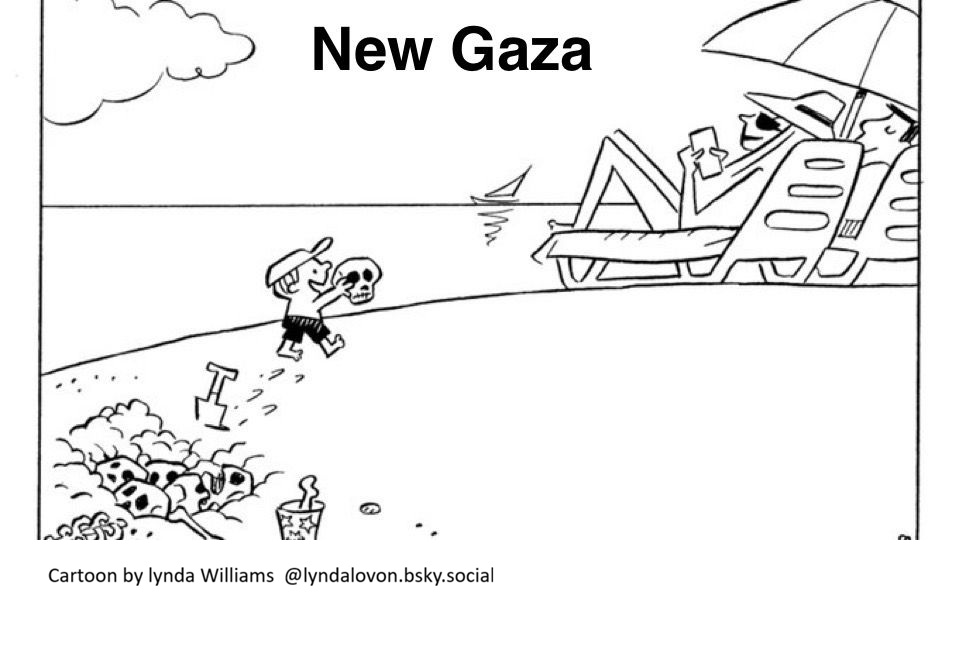



 nuclear-news