Tracking Dissent: US Officials Who Have Resigned Over The War on Gaza
Until Israel’s assault on Gaza ends, this page will be a resource for tracking U.S. government officials and military officers who resign in protest
Support from President Joe Biden’s administration for the Israeli government’s war on Gaza has resulted in an unprecedented surge of dissent within United States agencies.
Several officials and military officers have resigned in opposition since the Israeli military launched a massive bombardment after Hamas fighters stormed Israel on October 7, 2023.
During the week of July 4, 2024, 12 individuals who resigned released a unified statement of opposition.
“America’s diplomatic cover for, and continuous flow of arms to, Israel has ensured our undeniable complicity in the killings and forced starvation of a besieged Palestinian population in Gaza,” the dissenters declared. “This is not only morally reprehensible and in clear violation of international humanitarian law and U.S. laws, but it has also put a target on America’s back.”
While outlining the “current crisis” and what they believe should be done, the dissenters appealed to their former colleagues to “amplify calls for peace” and hold their respective institutions accountable for the violence unfolding in Palestine.
“We recognize the systemic obstacles you face, both as you perform your work, and as you consider leaving it. We particularly embrace those of you representing America’s diversity who feel that your voices have been disempowered, ignored, and tokenized. We are with you, and we know that a better way is possible, but only when we are all brave enough to challenge institutions and outdated forces that attempt to silence us.”
The dissenters further declared, “We encourage you to keep pushing. In our experience, no decision point is too minor to challenge, so while you are in government service, use your voice, write letters to leaders in your agencies, and bring up your disagreements with your team. Speaking out has a snowball effect, inspiring others to use their voice.”
“There is strength in numbers, and we urge you to not be complicit. We encourage you to consult with your Inspectors General, with your legal advisors, with appropriate Members of Congress, and via other protected channels, to question the veracity and/or legality of specific actions or policies. There are resources, and you have advocates, including all of us, who can support you in speaking your truth,” they concluded.
Several of the dissenters are whistleblowers with firsthand knowledge of how Biden administration officials have enabled the Israeli government’s atrocities. All of them are courageous individuals, who have sacrificed their careers for peace, justice, and human rights.
Until the war ends, The Dissenter will keep this page updated and track U.S. officials and military officers who resign in protest. (If anyone is missing, please email newsletter@thedissenter.org)
Below is a list of all the people who have resigned from the U.S. government or military during the war on Gaza as of July 5 and in reverse chronological order.……………………………………………………………………………………
and more videos …………………………………………………more https://thedissenter.org/tracking-dissent-us-officials-resigned-over-war-on-gaza/
‘Horrific Massacre’: Israel Bombs Gaza School Used as Refugee Camp, Killing Dozens.
“Schools have gone from safe places of education and hope for children to overcrowded shelters and often ending up a place of death and misery,” said UNRWA’s commissioner-general.
JAKE JOHNSON, Jul 10, 2024 https://scheerpost.com/2024/07/10/horrific-massacre-israel-bombs-gaza-school-used-as-refugee-camp-killing-dozens/
Israeli forces killed dozens of people Tuesday in an airstrike on a school-turned-refugee camp in the southern Gaza Strip, the fourth school Israel’s military has bombed in as many days as the country continues its massive assault on the enclave’s starving population.
At least 29 people were killed and dozens more were wounded in Tuesday’s attack, including women and children—who have made up roughly two-thirds of those killed in Israel’s latest assault on Gaza, which began following a Hamas-led attack in October. The death toll from Tuesday’s attack is expected to rise, as many of those injured were reportedly in critical condition and taken to the under-resourced and overwhelmed Nasser Hospital.
The Israel Defense Forces (IDF) acknowledged carrying out the airstrike—which hit the entrance of the school—but claimed to be targeting a Hamas militant “adjacent” to the complex. The IDF, whose internal investigations rarely result in accountability for atrocities, said the “incident is under review.”
Video footage posted to social media shows displaced Palestinians playing in the schoolyard when the airstrike hit, sparking panic and chaos. [Video on original –Warning: The footage is graphic]
Citing witnesses, the BBC reported that “the area was teeming with displaced people at the time” of the airstrike, which “resulted in widespread destruction and the deaths of women and children.”
“Body parts were scattered across the site and many people staying in tents outside the school were also injured,” the British outlet reported. “Ayman Al-Dahma, 21, told the BBC there had been as many as 3,000 people packed into the area at the time, which he said housed a market and residential buildings. Describing the number of casualties as ‘unimaginable,’ he said he had seen people whose limbs had been severed by the blast.”
Tuesday’s attack marked the fourth time in four days that the IDF has attacked a school in the Gaza Strip, according to Agence France-Presse. Over the weekend, Israeli forces killed more than a dozen Palestinians in an attack on a United Nations-run school in central Gaza.
Most of Gaza’s education infrastructure has been damaged or completely destroyed by Israeli forces, and the schools still standing are being used to shelter those displaced by the IDF assault, which is now in its 10th month. The United Nations estimates that 90% of Gaza’s population has been internally displaced since October, with some displaced up to 10 times.
Canadians for Justice and Peace in the Middle East called the IDF’s latest attack “a horrific massacre,” adding, “Annihilation is the point.”
“Nothing can justify Canada’s failure to act,” the group wrote on social media.
Canada is one of a number of major countries that have supplied weaponry to the Israeli government as it has carried out its utter devastation of the Gaza Strip, nearly all of which is now uninhabitable.
The United States and Germany together provided 99% of the arms Israel imported last year, according to the Stockholm International Peace Research Institute. Germany’s Foreign Office called Wednesday’s attack “unacceptable” and demanded a swift investigation.
“People seeking shelter in schools getting killed is unacceptable. Civilians, especially children, must not get caught in the crossfire,” the foreign office said. “The repeated attacks on schools by the Israeli army must stop.”
Philippe Lazzarini, commissioner-general of the U.N. Relief and Works Agency for Palestine Refugees in the Near East (UNRWA), said Wednesday that “schools have gone from safe places of education and hope for children to overcrowded shelters and often ending up a place of death and misery.”
“Nine months in, under our watch, the relentless, endless killings, destruction, and despair continue. Gaza is no place for children,” he added. “The blatant disregard of international humanitarian law cannot become the new normal… Cease-fire now before we lose what is left of our common humanity.”
US says not ready to resume nuclear talks with Iran under Pezeshkian
Iran International 8 July 24
The Biden administration is not ready to resume nuclear talks with Iran under the new president, the White House national security council spokesman said Monday.
In his presidential campaign, Iran’s president-elect Masoud Pezeshkian advocated engagement in constructive talks with Western powers to revive the 2015 nuclear deal (JCPOA) and to lift the sanctions that he says have crippled the Iranian economy since the withdrawal of the US from the agreement in 2018.
Asked whether Pezeshkian’s election will change the US negotiating position, the White House’s John Kirby offered a blunt “no”…………………………………………….more https://www.iranintl.com/en/202407084339
The Lancet study estimates death toll in Gaza 186,000 or even more
Maktoob Staff, 8 July 24, https://maktoobmedia.com/gaza-genocide/the-lancet-study-estimates-death-toll-in-gaza-186000-or-even-more/
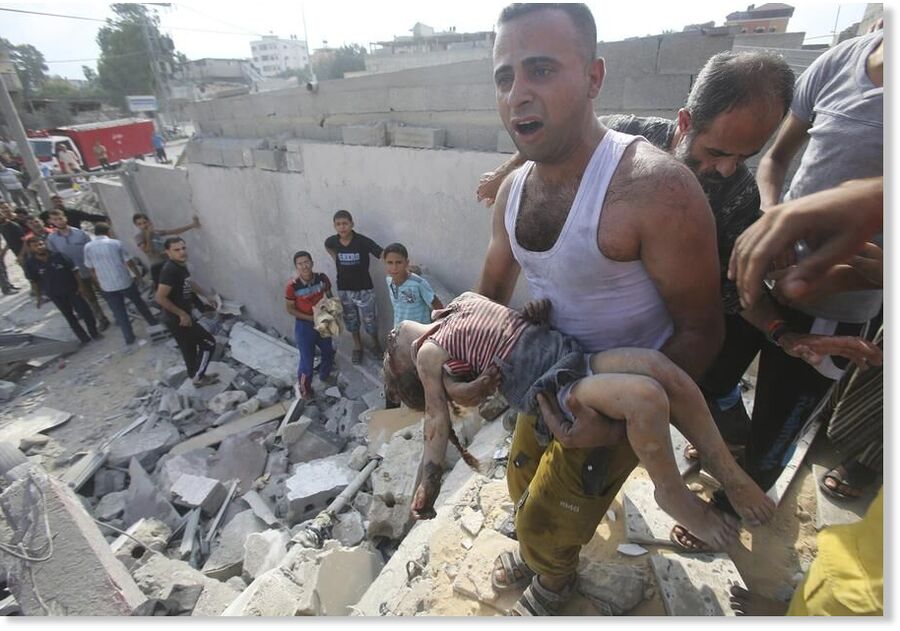
Applying a conservative estimate of four indirect deaths per one direct death reported in Gaza, a new study published respected medical journal The Lancet said it is “not implausible” to estimate that up to 186,000 or even more deaths could be attributable to the genocidal war in Gaza.
The paper titled ‘Counting the dead in Gaza: difficult but essential’, published on 05 July, stated that using the 2022 Gaza Strip population estimate of 2,375,259, the estimated death toll would translate to 7·9% of the total population in the besieged enclave.
On Sunday, the Palestinian health ministry said that at least 38,153 Palestinians have been killed by Israel in Gaza since October 07 while more than 87,828 have been wounded in the besieged enclave. 15,983 of them are children.
The study by Rasha Khatib, Martin McKee and Salim Yusuf, used the data from June 19, with the official death toll of 37, 396. The official record maintained by the Gaza Health Ministry doesn’t include over 10,000 people missing or buried under the rubbles.
“The Ministry has had to augment its usual reporting, based on people dying in its hospitals or brought in dead, with information from reliable media sources and first responders. This change has inevitably degraded the detailed data recorded previously. Consequently, the Gaza Health Ministry now reports separately the number of unidentified bodies among the total death toll. As of May 10, 2024, 30% of the 35,091 deaths were unidentified,” observed the paper.
It also pointed out that armed conflicts have “indirect health implications beyond the direct harm from violence”.
“Even if the conflict ends immediately, there will continue to be many indirect deaths in the coming months and years from causes such as reproductive, communicable, and non-communicable diseases,” the paper read.
A report from Feb 7, 2024, at the time when the direct death toll was 28,000, estimated that without a ceasefire there would be between 58260 deaths (without an epidemic or escalation) and 85750 deaths (if both occurred) by Aug 6, 2024.
The interim measures set out by the International Court of Justice in January, require Israel to “take effective measures to prevent the destruction and ensure the preservation of evidence related to allegations of acts within the scope of … the Genocide Convention”.
“An immediate and urgent ceasefire in the Gaza Strip is essential, accompanied by measures to enable the distribution of medical supplies, food, clean water, and other resources for basic human needs,” the paper read.
Gaza deal must allow Israel to keep fighting – Netanyahu

https://www.sott.net/article/492916-Gaza-deal-must-allow-Israel-to-keep-fighting-Netanyahu 8 July 24
The Israeli prime minister’s statement comes after Hamas accepted a key part of a ceasefire proposal
Any potential ceasefire deal in Gaza must allow Israel to resume fighting until all of its war objectives are met, Prime Minister Benjamin Netanyahu said on Sunday. One of the main goals repeatedly voiced by the PM is the complete elimination of the Hamas militant group.
Netanyahu’s statement comes after Hamas approved a US proposal for a phased ceasefire deal, dropping a key demand for Israel to first commit to a permanent ceasefire before signing the deal, according to a Reuters source.
Hamas expects to end hostilities through talks during the first six-week phase of the deal aimed at settling the conflict in Gaza, the outlet said.
However, the Palestinian militant group wants written guarantees from international mediators that Israel will continue to negotiate a permanent ceasefire when the first phase of the deal comes into effect. The hostage issue will also be addressed after the first phase is implemented.
Hamas officials have said they are awaiting Israel’s response to the latest proposal. Netanyahu insisted on Sunday, however, that any deal must “allow Israel to go back to fighting until all the goals of the war are achieved.”
According to media reports, Netanyahu was scheduled to hold consultations on the next steps, but his latest statement has hindered the deal’s momentum.
“The plan that has been agreed-to by Israel and which has been welcomed by President Biden will allow Israel to return hostages without infringing on the other objectives of the war,” Netanyahu insisted.
Talks mediated by Qatar, Egypt and the US have so far failed to secure a truce in Gaza or the release of hostages since a weeklong ceasefire in November resulting in the freeing of 105 hostages from Gaza and 240 Palestinian prisoners.
Israel began its operation in Gaza in response to a cross-border incursion by Hamas last October in which at least 1,200 people were killed and 250 taken hostage. Some 116 captives are believed to be still held in Gaza.
Over 38,000 people have been killed so far and more than 87,000 others have been wounded in Israeli attacks on the Palestinian enclave, according to Gaza’s health ministry.
Comment: What kind of ceasefire is this if it must “allow Israel to go back to fighting until all the goals of the war are achieved.”?!
See also: Best of the Web: The Lancet study estimates death toll in Gaza 186,000 or even more and the reflections in SOTT Focus: The Burqa Ban Question
Masoud Pezeshkian: Iranian reformer who wants to end Tehran’s nuclear stand-off
Heart surgeon turned president pledges reform of system millions of his compatriots believe cannot be changed
Ft.com Najmeh Bozorgmehr in Tehran, 7 July 24
Only four months ago it was unclear whether reformist Masoud Pezeshkian would even be allowed to run for Iran’s parliament: hardliners controlled all the centres of power, with other factions consigned to the political wilderness.
But now Pezeshkian is set to become the Islamic republic’s first reformist president in two decades, after pulling off an unexpected victory in Friday’s election run-off. The 69-year-old defeated his hardliner rival, Saeed Jalili, with promises of change to Tehran’s domestic and foreign policies.
Pezeshkian’s electoral success has rejuvenated the marginalised reformist camp, which was initially amazed that the leadership approved his candidacy following a string of elections in which other reformers were barred………………………………………………….
During the campaign, Pezeshkian vowed to re-engage with the US and European states to negotiate an end to Iran’s nuclear stand-off with the west, and to secure sanctions relief to help the economy……………………………………………..
As president, his ability to push through change will depend heavily on his relations with Khamenei, analysts said, as Pezeshkian is expected to encounter stiff resistance from hardliners elsewhere…………………………………… more https://www.ft.com/content/5e7e80b3-4b46-4cce-a762-c95705201753
Tensions with Iran spotlight Israel’s hidden nuclear arsenal
Business Insider, Paul Iddon , Jul 4, 2024
- Israel is one of the world’s few countries armed with nukes and multiple means to deliver them.
- An Israeli aerospace official recently broached these “doomsday weapons.”
- “Israel’s triad remains remarkably powerful for a country its size,” an aviation expert said.
The prospect of a full-scale war between Israel and the powerful Hezbollah militia in Lebanon has sent tensions spiking and briefly highlighted the power of Israel’s undeclared nuclear weapons.
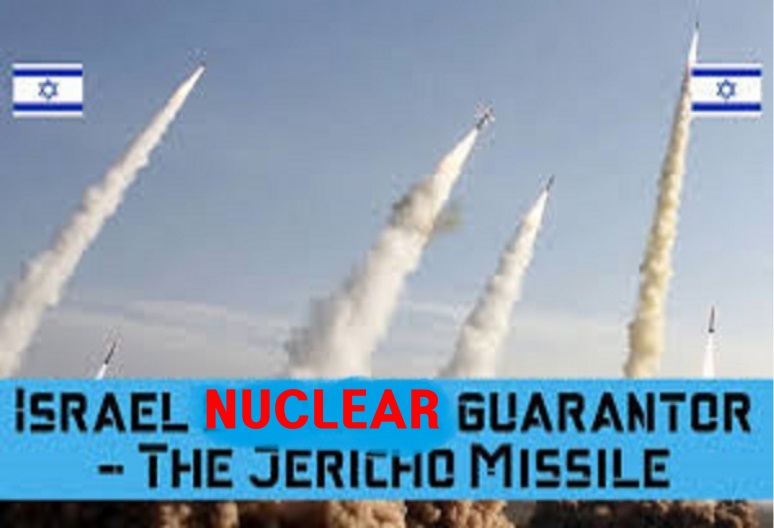
Israel is one of the world’s few countries armed with nukes and multiple means to deliver them, a capability recently referenced by an Israeli official with a leading government-run aerospace manufacturer.
“If we understand that there is an existential danger here, and that Iran, Yemen, Syria, Iraq and all the countries of the Middle East decide that it is time to settle against us, I understand that we have the capabilities to use doomsday weapons,” Yair Katz, chairman of the Israel Aerospace Industries Workers’ Council, reportedly said on Saturday.
He was speaking a day after Iran’s United Nations mission warned that “an obliterating war will ensue” if Israel commits “full-scale military aggression” against the Iran-backed Hezbollah in Lebanon. It also declared that in this scenario, “all options” are on the table, including “the full involvement of all resistance fronts,” a clear reference to Iran’s militia proxies in Iraq, Syria, and Yemen, the other countries Katz specifically mentioned.
By invoking doomsday weapons, it was clear Katz was alluding to Israel’s nuclear weapons arsenal — an arsenal over which neither he nor IAI have any command-and-control. But his use of the word “capabilities” is a reminder that Israel has ground, air, and sea-based delivery systems for its nuclear weapons. In other words, a complete nuclear triad……………………………………………………………………………………………………………….
“The true second strike threat for Israel is the United States itself, which in a theoretical nuclear war scenario would almost certainly retaliate on Israel’s behalf should it ever suffer a first strike from a nuclear rival,” Bohl said. “This makes it so that a second strike capability is important in terms of deterrence for full-scale escalation from a power like Iran.”
“But from a strictly tactical perspective, it would be the United States that truly serves as Israel’s most effective second strike system.” https://www.businessinsider.com/iran-hezbollah-israel-hidden-nuclear-weapons-arsenal-2024-7
Israel Has Forcibly Displaced 1.9 Million Palestinians in Gaza
Israel’s assault has displaced over 1 million people just since May, a UN human rights official said.
SCHEERPOST, By Sharon Zhang , TRUTHOUT, July 2, 2024
srael’s ongoing assault in Gaza has now forcibly displaced 1.9 million Palestinians, a UN humanitarian official reported on Tuesday as Israel forced another round of evacuations for hundreds of thousands of people across southern and central Gaza.
Israel’s brutal assault and humanitarian blockade has turned Gaza into an “abyss of suffering” and a “maelstrom of human misery,” said Sigrid Kaag, UN Senior Humanitarian and Reconstruction Coordinator for Gaza, in an address to the UN Security Council.
“Following the Israeli offenses against Rafah, since the sixth of May, over 1 million people have been displaced once again, desperately seeking shelter and safety,” said Kaag. “One point nine million people are now displaced across Gaza.”
This amounts to over 86 percent of the 2.2 million person population of Gaza displaced — though the proportion may be larger when the number of Palestinians who have been killed, are missing under the rubble or have died in ways that officials aren’t recording are subtracted from the population estimates. The number of displaced people is up from 1.7 million Palestinians who UN officials said had been forced out of their homes in earlier estimates……………………………………………………………………………………………………………………………
Meanwhile, Israeli forces are also fiercely attacking Gaza City in the north. This has sparked an “exodus” from the eastern part of the city, the UN reported, after days of intense bombardments and tanks entering the region.
According to the UN, about 84,000 Palestinians have been displaced by this massacre, with most families having already fled areas multiple times, their supplies and energy dwindling amid Israel’s intensified famine campaign.
UNRWA’s communications head Louise Wateridge reported from a recent trip to Gaza that the region is “apocalyptic — most people have lost their homes, either completely or partially, and have to flee with very few belongings; essentially what they can carry in their hands.” https://scheerpost.com/2024/07/03/israel-has-forcibly-displaced-1-9-million-palestinians-in-gaza/
The Suspect Body Count: The Death Toll in Gaza is Much Higher Than We’re Being Told
Seymour Hersh Substack Thu, 27 Jun 2024 https://www.sott.net/article/492600-The-Suspect-Body-Count-The-Death-Toll-in-Gaza-is-Much-Higher-Than-We-re-Being-Told
The number of slain Palestinians in Gaza, including those believed to be Hamas cadres, has gone through a series of public recalibrations in recent weeks, as Israel’s reshuffled war cabinet has struggled to minimize international rage at the slaughter there. The reduced body count was little more than a sideshow because the Israeli offensive is continuing in Gaza with no signs of the ceasefire that the Biden administration has been desperately seeking.
Hamas triggered the war last October 7 with a surprise attack — there is so far no official explanation for Israel’s security failure that day — that killed 1,139 Israelis and injured 3,400 more. Some 250 soldiers and civilians were taken hostage.
Comment: There is plenty of evidence to strongly suggest that Israel allowed the incursion on Oct. 7th to happen and that parties unknown carried out most of the killing. This strategy fits with Israel’s decades-long goal of creating the right ‘conditions’ to justify implementing a final solution to their ‘Palestinian problem’.
The expected Israeli response began within days, with the bombing of the Gaza Strip. Some Israeli ground operations inside Gaza began on October 13, and two weeks later the expected full-scale offensive began. The war still rages, with one estimate concluding that by the beginning of April 70,000 tons of explosives had been dropped on targets throughout the 25-mile long Gaza, more tonnage than was dropped by Germany on London and by America and the United Kingdom on Dresden and Hamburg in World War II, combined.
The Gaza Health Ministry, which is under Hamas control, estimated as of Tuesday that the death toll from the Israeli attacks stood at 37,718, with more than 86,000 Gazans wounded. Last month the Israeli government issued a much lower estimate of the casualties, stating that its planes and troops had killed 14,000 “terrorists” — Hamas fighters — and no more than 16,000 civilians.
The Biden administration, on the eve of the first presidential debate, has said nothing about the new numbers, but there are many senior analysts in the international human rights and social science community who consider these numbers to be hokum: a vast underestimate of the damage that has been done to a terrorized civilian population living in makeshift tents and shelters amid disease and malnutrition, with a lack of sanitation, medical care, and medicines as well as increasing desperation and fatigue.
In days of telephone and email exchanges with public health and statistical experts in America I found a general belief that the civilian death toll in Gaza, both from the bombings and their aftermath, had to be significantly higher than reported, but none of the scientists and statisticians — appropriately — was willing to say so in print because of a lack of access to accurate data. I also asked one well-informed American official what he thought the actual civilian death count in Gaza might be and he answered, without pause: “We just don’t know.”
One public health expert acknowledged: “No clear and definite body count is possible, given the continuing Israeli bombing.” He added, caustically, “How many bombs does it take to kill a human being?”
Gaza was an ideal target for an air attack, he said. “No functioning fire department. No fire trucks. No water. No place to escape. No hospitals. No electricity. People living in tents and bodies stacked up all over . . . being eaten by stray dogs.
“What the fuck is wrong with the international medical community?” he asked. “Who are we kidding? Without a ceasefire, a million people are going to starve. This is not a debating point. How can you count something when the system is biting its own tail.” He was referring to the fact that the health system in Gaza — its hospitals and service agencies — “is being targeted and shattered” by Israeli aircraft and those responsible for the counting of the dead and injured “are themselves dead.”
The expert added that the lack of better casualty statistics is not only the fault of Israel. “Hamas has a vested interest in consistently minimizing the number of civilians killed “because of a lack of planning over the years when it was in charge of Gaza.” He was referring to ordinary Gazan citizens’ lack of access to Hamas’s vast underground tunnel complex that could have served as a bomb shelter for all. In Gaza during the Israeli bombing raids, “Is Hamas going to say that Israel” was able to kill all in Gaza “because we started a war without being able to fully protect our people?” His point was that Hamas has every reason, as does Israel, to minimize the extent of innocent civilians who have become collateral damage in the ongoing war.
Comment: Hamas did not start this most recent round of mass slaughter by Israel on Oct 7th. Hamas has never provided Israel with the justification it always sought to massacre Gazans wholesale. On Oct. 7th, Israel provided itself with that justification.
A prominent American public health official who spoke to me acknowledged that he was also concerned about the numbers of unreported dead in Gaza. In a crisis, he said, “we can start with a name-by-name count, but pretty soon the numbers of killed and missing exceed the capacity of any such approach, especially when the counters are being killed and the records [are] at risk.” He said that various postwar academic studies of mortality during the siege of Mosul — when a US-led coalition fought a door-to-door fight in 2017 against the Islamic State in Iraq, killing as many 11,000 civilians — “showed the large loss of life from the use of high-velocity weapons in urban areas. So we should expect similar in Gaza.”
Other data suggest that the published death figures are seriously misleading. Save the Children, an international child protection agency, issued a report this month estimating that as many as 21,000 children in Gaza are “trapped beneath rubble, detained, buried in unmarked graves, or lost from their families.” Other children, the agency said, “have been forcibly disappeared, including an unknown number detained and forcibly transferred out of Gaza” with their whereabouts unknown to the families “amidst reports of ill-treatment and torture.”
Comment: As if the mass slaughter and starvation of Palestinians in Gaza is not enough, it is highly likely that a large number of Palestinian children have been abducted by Zionist state forces, likely to be tortured and killed or otherwise used for the depraved pleasures of some of the people that inhabit that “shitty little country”.
Jeremy Stoner, the charity’s regional director for the Middle East, said: “Gaza has become a graveyard for children, with thousands of others missing, their fates unknown. . . . We desperately need a ceasefire to find and support the missing children who have survived, and to prevent more families from being destroyed.”
Warnings about the inevitability of far more deaths among the ordinary citizens of Gaza have been around since last winter. In December, Devi Sridhar, the chair of global public health at the University of Edinburgh, wrote in the Guardian that the Gaza war was “the deadliest conflict for children in recent years” with as many as 160 children being killed daily. The surviving children do not have “the basic needs that any human, especially babies and children, need to stay healthy and alive. . . . Unless something changes, the world faces the prospect of almost a quarter of Gaza’s 2 million population — close to half a million human beings — dying within a year.
“It’s a crude estimate,” Sridhar wrote, “but one that is data-driven, using the terrifying real numbers of death in previous and comparable conflicts.”
The New York Times and the Washington Post reported Wednesday that a new study endorsed by the United Nations found that as many as half a million Gaza residents are facing imminent starvation because of “a lack of food.” The study also said that more than one half of the surviving residents of Gaza “had to exchange their clothes for money and one-third resorted to picking up trash to sell.”)
One of the most avid early critics of the official statistics published by the Gaza Health Ministry and accepted by most in the American media, has been Ralph Nader. On March 5, he wrote a column in the Capitol Hill Citizen, a monthly newspaper he founded, about what he called “the undercount” of Palestinian casualties in Gaza. He quoted Martin Griffiths, the United Nations under-secretary-general for humanitarian affairs: “Life is draining out of Gaza at terrifying speed.”
In my years as a journalist, I have often found an oddball story that says more with each retelling. Something like that happened in February when Al Jazeera ran an interview with a 64-year-old Gazan undertaker named Saadi Hassan Sulieman Baraka, whose nickname is Abu Jawad. He complained of working almost constantly since the Israeli invasion of Gaza began.
“I’ve buried about ten times more people during this war than I did across my entire 27 years as an undertaker,” he said. “The least was 30 people and the most was 800. Since October 7, I’ve buried more than 17,000 people.” He especially remembered the day he buried the 800 dead. “We collected them in pieces; their bodies so riddled with holes it was like Israeli snipers used them for target practice; Others were crushed like . . . like a boiled potato, and many had huge facial burns.
“We couldn’t really tell one person’s body from the other, but we did our best. We made one big deep grave, probably 10 meters (30 feet) deep and buried them together.”
It could be propaganda — of course, it could. But Abu Jawad made no mention of anyone from the Gaza Health Ministry coming to collect the names of the dead. He made no mention of any government official being involved in the process at all.
Israel’s leaked plan for annexing the West Bank, explained
Israeli Finance Minister Bezalel Smotrich’s plan to annex the West Bank would see over 60% of the territory becoming a part of Israel. But Palestinian experts say it is “already happening.”
BY QASSAM MUADDI Mondoweiss
The issue of Israel’s creeping annexation of the West Bank has resurfaced in recent days after a leaked recording of Israel’s finance minister Bezalel Smotrich revealed a “dramatic” plan to impose permanent Israeli control over the West Bank “without the government being accused of annexing it,” as Smotrich was recorded saying.
Smotrich’s statements, recorded by the Peace Now Israeli NGO and published by CNN and the New York Times, were made during a speech he gave to settler leaders earlier in June. Smotrich was recorded saying that he had elaborated a plan in the past year and a half and exposed it to Israel’s Prime Minister Netanyahu, who was “fully onboard.”
The plan centers around transferring administrative authorities in the West Bank from the Israeli army to the civil authorities of the Israeli government. Smotrich said that he oversaw the creation of an entire administrative body directly linked to the government and that members of this body were already embedded in the Israeli army’s Civil Administration.
In 1967, Israel began administering the West Bank and Gaza under a military administrative body, the Military Government, and in 1981, the Civil Administration was established in its place. Following Netanyahu’s formation of the most right-wing government in Israel’s history in 2022, Smotrich was put in charge of the Civil Administration. Since October 7, Smotrich’s hardline policies pushing for settlement expansion have reached new heights, with the recently leaked annexation plan raising fears about the intentions of the self-described fascist toward the Palestinians living in the West Bank.
According to Smotrich, the administrative changes he wishes to implement represent a “dramatic change” equivalent to “changing the DNA of the system.”
Smotrich said that large budgets were allocated to infrastructure projects for settlement expansion and for “security measures” for the settlements, adding that the aim of such a plan is “to avoid the West Bank from becoming part of a Palestinian state.”
Smotrich plan ‘already happening’………………………………..more https://mondoweiss.net/2024/06/israels-leaked-plan-for-annexing-the-west-bank-explained/
Israeli Officials Hiding Data About Forced Starvation of Gaza Prisoners: Report
Former detainees say the Israel Prison Service “has significantly reduced their food rations, to the point of starvation, causing them to shed dozens of kilograms.”
BRETT WILKINS, Jun 27, 2024, Common Dreams,
Israeli prison officials are concealing information about reductions in food rations for Palestinians held in the Gaza Strip, where detainees—who have also reported horrific abuse including alleged rape and deadly torture—have been deliberately driven “to the point of starvation,” according to a report published Thursday.
Security sources told the Israeli newspaper Haaretz that the Israel Prison Service (IPS) is intentionally cutting Palestinian prisoners’ caloric intake, a move confirmed by Israeli National Security Minister Itamar Ben-Gvir, who called the policy a “deterrent.”
“The Palestinian detainees will receive the minimum rights and the minimum food, and I will ensure that this policy is implemented,” Ben-Gvir, who leads the far-right Otzma Yehudit (Jewish Power) party, said Thursday in response to a query from Israel’s Supreme Court…………………………………………………………………………………………….. https://www.commondreams.org/news/israel-starving-prisoners
Iran Says Cooperation With UN Nuclear Watchdog Limited to Nuclear Non-Proliferation Treaty (NPT)
Iran’s top nuclear official says the country’s interactions with the UN
nuclear watchdog, IAEA, are limited to the legal boundaries of the Nuclear
Non-Proliferation Treaty (NPT) and the Safeguards. Mohammad Eslami
emphasized that the International Atomic Energy Agency (IAEA) has no right
to demand anything beyond these limits. The statement arises amid increased
scrutiny over Iran’s nuclear activities, with international concern about
potential NPT violations.
Iran International 23rd June 2024
How Israel Became a Nuclear Power
The United States actively works to shield the Israeli nuclear weapons program from criticism as well as public knowledge.
In effect, unwillingness to commit to nuclear nonproliferation has led to nuclear proliferation.
https://antinuclear.net/2024/06/24/keep-up-to-date-on-australias-media-quagmire-on-nuclear-power/
Israel’s nuclear weapons program has been an open secret for over fifty years. Declassified documents and the wider availability of satellite imagery have largely been responsible for revealing the extent of the nation’s nuclear program. So too has the courage of whistleblowers such as Mordechai Vanunu, an Israeli nuclear technician who exposed his country’s covert program and was subsequently drugged and kidnapped by Mossad agents in Italy before being secretly tried and sentenced to eighteen years in prison in 1986.
Yet the United States and other nuclear-armed states, as well as a broad range of bodies responsible for monitoring arms proliferation, continue to maintain a policy of not publicly acknowledging the existence of Israel’s nuclear weapons.
These norms of institutional secrecy are surprisingly powerful and far-reaching. US government employees have been fired for referring to Israeli nuclear weapons. Even Wikipedia’s page on the subject uses circuitous language to refer to their existence. (The page is locked to edits from almost all contributors.) This approach is effective: a 2021 poll suggested that more Americans believed that Iran has nuclear weapons than that Israel does, when the reality is the opposite.
This wall of silence has proven remarkably porous. During the early days of Israel’s war on Gaza, government officials openly entertained the possibility of using nuclear weapons on the battlefield, and figures within the US military think tank circuit have wondered whether Israel’s secrecy is doing it more harm than good.
Conventional wisdom about the strategic importance of possessing nuclear weapons is that there’s no reason to have one if you don’t tell anyone. Intimidation is as much a part of deterrence as use. If no one suspects you can respond to an attack with the overwhelming force of a nuclear counterattack, what’s to make them think twice?
But Hezbollah’s continued assault on northern Israel, which has thus far led to the evacuation of over ninety thousand people, gives lie to the notion that possession of nuclear weapons offers complete protection. In a recent speech, Hassan Nasrallah, Hezbollah’s secretary general, made it clear that if Israel were to cross what it considers to be red lines, there would be no target within the country safe from a retaliatory response. It is therefore not clear that Israel’s nuclear weapons are on their own preventing it from being attacked in a way that threatens its existence. Israel’s relationship with the United States has, however, afforded it a range of impressive offensive and defensive nonnuclear capabilities, backed up by the even larger looming threat of US military involvement, which it is actively using.
Were the US to enforce its own policies consistently, Israel’s status as a state in possession of nuclear weapons would directly threaten its access to aid. The Glenn Amendment to the US Arms Export Control Act explicitly prohibits arms assistance to and mandates sanctions on countries that have, as Israel did in 1979, tested a nuclear weapon after 1977. But the fact that its nuclear weapons program continues to command this kind of bizarre deference illuminates the forces driving nuclear proliferation around the world.
The Forces Behind Proliferation
Scrupulous nonacknowledgment of Israeli nuclear weapons in the present day is part of the United States’ general position of aiding Israeli military endeavors, regardless of the financial or strategic cost. But the reason Israel has nuclear weapons in the first place has less to do with its relationship with the United States and more to do with the geopolitical forces that have driven proliferation since America first dropped the bomb on Japan.
The program that produced Israel’s nuclear weapons is as old as the state itself. As Avner Cohen details in Israel and the Bomb, a nuclear program was discussed by Israel’s leaders practically from the establishment of the Israeli state in 1948. David Ben-Gurion, the country’s first prime minister, took an intense personal interest in nuclear technologies in particular and science and technology as foundations of modern state power in general.Hezbollah’s continued assault on northern Israel gives lie to the notion that possession of nuclear weapons offers complete protection.
Already in 1949, Israel was conducting exploratory research for potential uranium deposits in the Negev, a desert region in the country’s south. When these proved inadequate, it developed techniques for producing usable nuclear material from the relatively poor resources at its disposal, before turning to the United States as the potential source of the raw materials necessary to jump-start a nuclear program.
But in the immediate postwar years, the United States was unwilling to provide the necessary material without guarantees from Israel that the country’s leaders saw as undesirably inhibiting. Israel instead turned to other small countries with nuclear programs at different stages of development: France and Norway, two of only three European countries in the early 1950s operating nuclear reactors.
Israel and France shared a set of geopolitical interests. Both opposed the government of Egyptian president Gamal Abdel Nasser. The French, motivated by neocolonial idealism, took issue with Nasser for nationalizing the Suez Canal, and Israel of course felt threatened by Nasser’s Arab nationalism.
Skepticism about the possibility that the US nuclear umbrella could actually offer security guarantees also motivated nations like France to advance a Gaullist policy of strategic autonomy. This meant encouraging nuclear proliferation where doing so would secure the broader geopolitical interests of declining powers.
Nonproliferation Amid Great-Power Rivalry
In the present, the United States actively works to shield the Israeli nuclear weapons program from criticism as well as public knowledge. As with France’s hostility to a Nasser-led anti-Western order, the Israeli-US alliance is strongly motivated by fear of Iran, or any other anti-American state, developing its own nuclear program. Yet Israel’s nuclear weapons, along with the substantial, long-term support among a certain segment of the US political class for war with Iran, are two very powerful factors driving Iran to develop its own nuclear weapon.
At present, Iran does not have nuclear weapons, though experts believe that it currently maintains the capability to quickly develop them. President Barack Obama’s 2015 Iran nuclear deal limited Iran’s ability to develop a nuclear weapon and imposed a regime of inspections and oversight which provided assurance to other countries that it was not developing nuclear weapons. But Israel opposed the deal on the grounds that it did not go far enough to preclude the possibility that Iran might one day develop a nuclear weapon — a similar kind of all-or-nothing approach to the one that informed the Donald Trump administration’s decision to exit the agreement in 2018.
As Israel’s war on Gaza continues and expands outward into the broader region, it seems it may only be a matter of time before Iran finally does develop a nuclear weapon. After its recent large-scale rocket attacks against Israel, Iran announced that it might reverse its current voluntary commitment to not developing nuclear weapons should Israel retaliate by hitting its nuclear facilities. It goes without saying that this would make the ongoing conflict between Israel and Iran much more dangerous, giving even low-level incidents the potential to escalate to dramatic and destructive new heights.
The United States actively works to shield the Israeli nuclear weapons program from criticism as well as public knowledge.
In effect, unwillingness to commit to nuclear nonproliferation has led to nuclear proliferation. This explains why Saudi Arabia has in recent years betrayed nuclear ambitions. Crown Prince Mohammed bin Salman has stated in US press outlets that Saudi Arabia would develop a nuclear weapon if Iran did so. Yet rather than treating this open disregard for stated US policy as a serious limit on US-Saudi relations, the United States has been pushing for a so-called “normalization” deal between Saudi Arabia and Israel — including a stipulation of a “credible path to a Palestinian state.” Saudi Arabia, in turn, wants the United States to provide it with nuclear technology — ostensibly, of course, for a power program.
The dilemma for America is that whatever interest it does have in nuclear nonproliferation must be balanced against its broader commitment to global hegemony. The latter would be undermined if China, which it now sees as its key competitor, stepped in to provide technical support to fledgling nuclear programs, as it has done with Saudi Arabia. Last year, China sent one of its engineering companies to conduct surveys of the Gulf monarchy’s uranium deposits, although it seems unlikely that these deposits could support a nuclear program of any size.
Nuclear weapons experts have called for safeguards that could prevent the development of a Saudi nuclear weapons program. Yet unlike in the case of Israel’s search for nuclear material, the threat of safeguards doesn’t seem to be a deterrent to the kingdom’s openly stated nuclear ambitions. It sometimes seems that U.S. nuclear weapons policy in 2024 is based on a tacit acceptance of its powerlessness over global nuclear weapons politics. Rather than trying to prevent proliferation, America has been forced to settle for the role of being the primary nuclear patron where it can.
Existential Threats
Israel’s possession of nuclear weapons has been largely irrelevant to the ongoing war in Gaza. The country’s overwhelming conventional capabilities have granted it superiority on the battlefield, at the cost of the lives of tens of thousands of civilians. But possession of nuclear weapons reinforces the worldview that underlies Israel’s political calculations (and to some extent, those of every nuclear-armed country): that its existence is constantly threatened, and it is only rational for it to possess the means of responding to such threats with unlimited force.
It is the states with the most nuclear weapons, Russia and the United States, that most assiduously cling to the logic that weapons of mass destruction are the only safeguard against existential threats. Both have consistently bypassed opportunities to deescalate the very real, immediate risks to human safety and civilization that the continued existence of nuclear weapons poses. In doing so, they’ve set a powerful precedent for every other country in the world to uphold nuclear weapons as the only real guarantor of security.
Without a real commitment to reducing the role of nuclear weapons in global politics by the states that can certainly afford it, this de facto policy encourages nuclear proliferation. Israel’s well-defended status as a nuclear power that need not even announce itself is not an exception, but an example to other states thinking of going nuclear.
Emma Claire Foley is a writer and filmmaker based in New York. Her writing and commentary has appeared in Newsweek, NBC, the Guardian, and elsewhere.
The U.S. power structure is blindly dedicated to Israel
When the board of the Columbia Law Review clumsily censored a pro-Palestinian article it revealed the degree to which pro-Israel ideology is enmeshed in the U.S. power structure. Luckily, a generational shift is changing this before our eyes.
BY PHILIP WEISS , Mondoweiss
Recently there was an important event at Columbia Law School. The school’s law review published a piece on a sweeping legal theory of the Nakba by Harvard law student Rabea Eghbariah — and the board of the law review stepped in in unprecedented fashion to shut down the publication online. After the Intercept reported that the website had been “nuked,” the authoritarian move became an embarrassment; and the piece was restored. Though students obviously feel chilled.
This story reminds us that the U.S. establishment is firmly and blindly pro-Israel. The board that squashed the students included operators of the highest order: professor Gillian Metzger, who also serves in the Justice Department’s Office of Legal Counsel; Justice Department senior counsel Lewis Yelin; and Ginger Anders, a former assistant to the U.S. Solicitor General.
We used to call people like this the ruling class. These high appointees understand what American values are, and today American values are standing by Israel even as it massacres thousands of children. These values surely have to do with the importance of Zionist donors to Joe Biden and universities, but they go beyond that to the makeup of the U.S. establishment. Pro-Israel voices — including Jewish Zionists — are a significant element of corporate culture. They are a generational force. Young progressives and young Jews are rejecting Israel. But they aren’t in the power structure…………………………………………………………………………………………………. more https://mondoweiss.net/2024/06/the-u-s-power-structure-is-blindly-dedicated-to-israel/
Unable to back down, Israel and Hezbollah move closer to all-out war
BBC, 22 June 24, By Lucy Williamson, Reporting from the Israel-Lebanon border
Full-scale war between Israel and Hezbollah would be “a catastrophe”, the UN Secretary-General says. But to David Kamari, who lives under near-daily fire on the Israeli side of the border, it would be a solution.
Last month, a Hezbollah rocket fired from Lebanon landed in his front garden in the border town of Kiryat Shmona, cracking his house in several places and filling it with rubble.
He points out the gaping holes where shrapnel sliced through the walls, missing him by inches. And then to the hills above us, where Hezbollah-controlled territory begins.
“Every day, every night: bombs. [It’s a] problem,” he said. “And I was born here. If you live here one night, you go crazy.”
David is still living in his rubble-filled house, pieces of shrapnel entangled with the remains of his television set. Outside is the blackened relic of his car, burned by the fire that swept through his front yard after the rocket hit.
Most of the population of Kiryat Shmona was evacuated after the 7 October Hamas attacks, as Hezbollah rockets began raining down in support of their Palestinian ally.
David is one of the few who stayed. “I’ve lived here 71 years,” he said. “I won’t go. I was in the army, I’m not afraid.”
His solution? “War with Hezbollah; kill Hezbollah,” he says.
Israel has been striking back hard against Hezbollah, killing senior commanders and hitting targets further inside Lebanon.
Hezbollah has sent larger volleys of drones and missiles across the border this month, and threats on both sides have increased. Earlier this week, the group published drone footage of military installations and civilian infrastructure in the Israeli city of Haifa.
Tough talk has long been part of a mutual strategy of deterrence, with both sides seen as wary of all-out war.
But as the tit-for-tat conflict grinds on, and more than 60,000 Israelis remain evacuated from their homes in the north, there are signs that both Israel’s leaders and its citizens are prepared to support military options to push Hezbollah back from the border by force……………………………………………………………………………………..
As difficult as this border conflict is for people on both sides, a full-scale war would lift the crisis onto a different scale.
Some residents of Beirut are keeping suitcases packed and passports ready, in case of all-out conflict, and the Hezbollah leader, Hassan Nasrallah, said this week that nowhere in Israel would be spared.
Hezbollah is a well-armed, well-trained army, backed by Iran; Israel, a sophisticated military power with the US as an ally.
Full-scale war is likely to be devastating for both sides.
The UN Secretary-General, Antonio Guterres, said it would be a “catastrophe that goes […] beyond imagination”.
The problem for Israel is how to stop the rockets and get its people back to the abandoned northern areas of the country.
The problem for Hezbollah is how to stop the rockets when its ally, Hamas, is being pounded by Israeli forces in Gaza.
The longer that situation grinds on, the more the risks of a miscalculation increase, and the more Israel’s government is under pressure to resolve the situation.
The Hamas attacks on 7 October changed security calculations in Israel. Many of those with homes near the border – and some of those in positions of power – say the kind of agreement made with Hezbollah in the past is no longer enough.
Tom Perry lives in kibbutz Malkiya, right up against the Lebanese border fence. He was out drinking with friends when a Hezbollah rocket slammed through the front of his house earlier this month.
“I think the Secretary-General’s warning is right – [war] will be a catastrophe to the area,” he said.
“But unfortunately it looks like we have no other option. No agreement lasts forever, because they want death for us. We are doomed to wars forever, unless Israel can eliminate Hezbollah.”
Israel’s leaders lost all credibility after the 7 October attacks, he says, and don’t have a strategy to deliver peace.
“They need to quit – all of them. The biggest failure of our army and our country was 7 October, and they were our leaders. We don’t need these leaders.”
Demands for political change are likely to increase when Israel’s conflicts end.
Many believe Israel’s prime minister is playing for time: caught between growing demands for a ceasefire in Gaza, and growing support for a war in the north. https://www.bbc.com/news/articles/c4nn145p20qo
1 This Month
Chernobyl: The Lost Tapes – A good documentary on Chernobyl on SBS available On Demand for the next 3 weeks– https://www.sbs.com.au/ondemand/tv-program/chernobyl-the-lost-tapes/2352741955560

of the week–London Campaign for Nuclear Disarmament

Tell the Ukrainian Government to Drop Prosecution of Peace Activist Yurii Sheliazhenko
To see nuclear-related stories in greater depth and intensity – go to https://nuclearinformation.wordpress.com
-
Archives
- April 2026 (139)
- March 2026 (251)
- February 2026 (268)
- January 2026 (308)
- December 2025 (358)
- November 2025 (359)
- October 2025 (376)
- September 2025 (257)
- August 2025 (319)
- July 2025 (230)
- June 2025 (348)
- May 2025 (261)
-
Categories
- 1
- 1 NUCLEAR ISSUES
- business and costs
- climate change
- culture and arts
- ENERGY
- environment
- health
- history
- indigenous issues
- Legal
- marketing of nuclear
- media
- opposition to nuclear
- PERSONAL STORIES
- politics
- politics international
- Religion and ethics
- safety
- secrets,lies and civil liberties
- spinbuster
- technology
- Uranium
- wastes
- weapons and war
- Women
- 2 WORLD
- ACTION
- AFRICA
- Atrocities
- AUSTRALIA
- Christina's notes
- Christina's themes
- culture and arts
- Events
- Fuk 2022
- Fuk 2023
- Fukushima 2017
- Fukushima 2018
- fukushima 2019
- Fukushima 2020
- Fukushima 2021
- general
- global warming
- Humour (God we need it)
- Nuclear
- RARE EARTHS
- Reference
- resources – print
- Resources -audiovicual
- Weekly Newsletter
- World
- World Nuclear
- YouTube
-
RSS
Entries RSS
Comments RSS
 nuclear-news