Stuxnet – how a simple USB stick sabotaged Iran’s nuclear plan in a ‘world-first’ showdown

‘There is an acceptance you cannot guarantee your cyber security – someone motivated enough can probably get into your system.
Tensions between Iran and Israel are near a boiling point after the firing of hundreds of rockets into Israel and its latest military response.
But the conflict has brewed for years, including sabotage of Iran’s nuclear programme with the help of one spy and a single USB stick.
That same device contained the infamous Stuxnet worm.
It infiltrated the Iranian nuclear programme in 2010, marking the first time a country attacked the critical infrastructure of another state.
A cyber expert has shared how Stuxnet damaged an Iranian nuclear plant and if the UK is safe from similar malicious attacks.
Dr Gareth Mott, research fellow at the RUSI Royal United Services Institute think-tank in London, said that before 2010 similar attacks might have happened, but in the shadows.
However, with Stuxnet, researchers found ‘the code of the malware was way more advanced.’
He told Metro.co.uk: ‘They had years to develop it. It was no small-scale criminal developing it.’
Who was behind Stuxnet?
Signs point to Israel and the US to be responsible for the sophisticated worm.
He said: ‘Israel views Iran as a nemesis. In their view, Iran was developing uranium for nuclear weapons. Iran said it was for civilian systems.’
What Iran was doing was ‘not clandestine’.
The International Atomic Energy Agency (IAEA) monitors its programme and it is alerted ‘when the pod is opened.’
However, it is ‘hypothetically possible to abuse it,’ he said.
As an ally of Israel, the US got involved in the plan to target Iran’s nuclear facilities.
The development of Stuxnet began in 2005 years before it was smuggled into Natanz nuclear plant by a spy.
How Stuxnext caused a shutdown
Iranian nuclear sites, just like facilities in the UK, are carefully protected against attacks.
It means they are not connected to the Internet to avoid intrusions.
In the uranium enrichment facility, the radioactive chemical element spins around quickly in centrifuges to enrich it.
Dr Mott said: ‘The system is not connected to the Internet, it is air gapped. It is disconnected from the Internet. It is one of the best systems.’
But it has one weakness – USB ports.
He explains: ‘But you can put a USB drive in. You have to have a port to do any updates. That means an attack, if you can get malware on a USB drive and into the critical system, maybe you can disrupt it.’
When the top-secret tool was ready in 2009, Israelis and Americans wanted to use it.
But it did not work as intended so experts designing the worm went back to base and ‘worked what was wrong, in laboratory conditions.’
The US was hesitant and told their partners to wait, but the ‘Israelis went ahead and used it anyways,’ the expert said.
Uranium has to be spun around in a ‘very controlled manner,’ but the malware made the system ‘too quickly and slow down and too quickly again,’ he explained.
‘The system started to wobble and began to collapse.’
It also ‘tricked’ the control panel which would normally spot if the centrifuges were spinning at a risky speed and fix it, making it look like ‘things were fine, but it wasn’t’, Dr Mott said.
As a result of the worm, the Iranian uranium enrichment programme was ‘broken,’ he said.
It is thought to have been set back by several years, tech publication Dark Reading estimated.
Stuxnet highlights how something as innocent as a USB port compromise national security.
In the UK, a senior IT worker at the Sellafield nuclear plant was fired after she had downloaded sensitive data onto a USB stick and dropped it in a car park.
Stuxnet’s existence was revealed after it was found on thousands of infected computers across the world despite, on paper, the Iranian system had no internet connection.
‘Somehow it got released. Maybe one of the scientists took it home to research it.’
Cyber researchers saw it was ‘very advanced’ after ‘years in the making and a lot of money.’
Stuxnet was significant because at the time no country in the world had declared it had a cyber weapon.
‘In 2013 UK did it, and we now have an offensive [cyber] arsenal,’ the expert said.
‘We have always conducted espionage, but we are now doing it with cyber tools.’
Following Stuxnet, Iran grew its cyber offensive capabilities, making it a ‘regionally significant power but internationally it is not,’ he said.
However, in the cyber and Internet space ‘they punch above their weight,’ with hackers and researchers embedded in the cyber command of Iran’s Revolutionary Guards.
Israel has its own cyber force, Unit 8200, which is the country’s version of UK’s GCHQ and the American NSA.
Cyber attacks from Iran to Israel have ‘stepped up since October 7’ when Hamas launched its deadly attack in Israel, followed by destruction of Gaza in Palestine by the Israeli army, with more than 30,000 people killed and 70,000 injured in the unlawfully blockaded strip of land, according to the UN.
Last weekend, Israeli authorities said they have seen ‘no rise in cyber incidents, but researchers have observed cyber attacks have doubled or tripled,’ Dr Mott said.
He suspects they are ‘low-level attacks which Israel will respond to to ‘disrupt Iran.’
Continue readingIsrael: the road to Masada

historical Masada is a rationalization for a future Masada —another crazy sect – of Jewish true believers self-destructing—Zionists.
In 73 A.D., legend has it, 960 Jewish rebels under siege in the ancient desert fortress of Masada committed suicide rather than surrender to a Roman legion.
News Forensics JULIAN MACFARLANE, APR 16, 2024
The Iran attack story continues to unfold. Everybody has an opinion – but we still don’t actually know what really happened. As a result, some think the attack was a victory for Iran. Others, even those on the Left, think not. Finian Cunningham calls it “lame retaliation”.
The Iranians say they gave the American 72 hours’ notice.
Pepe Escobar says that the Iranians and Americans met in Oman and the Iranians told the Americans their attack would be on military bases only. And…
THE SHADOWPLAY So this is how it happened. Burns met an Iranian delegation in Oman. He was told the Israeli punishment was inevitable – and if the US got involved then all US bases will be attacked, and the Strait of Hormuz would be blocked. Burns said we do nothing if no civilians are harmed. The Iranians said it will be a military base or an embassy. The CIA said go ahead and do it.
The Americans of course deny this.
So, somebody’s lying.
Over the years the Iranians have shown a tendency to exaggerate – usually about military capability—but they do not usually lie directly.
The US however doesn’t just fib a bit – it likes really really big lies. For America, the truth is whatever is most convenient for its policies, knowing that the media will always propagate Official Doctrine, just as in the Middle Ages the Vatican could be sure it’s pronouncements would be heard in sermons all over Europe, and believers would take them to heart. Those who dissented could be burned at the stake. We don’t do that — we have Belmarsh prison.
As Putin says, the US is the Empire of Lies.
In this case, the Americans keep on changing their story.
At first, the American said there were 170 drones and 30 cruise missiles. They did not mention ballistic missiles.
Now, the number is 170 drones, 30 cruise missiles, and 100 ballistic missiles. T The media are talking up MIRVs and hypersonic weapons.
The US number now is the same as the IDF was claiming in the beginning. but it seems the number is going up.
The IDF insists that its ”David Sling” system intercepted 99% of 120 missiles breaching its airspace.
The Americans and Brits intercepted only drones apparently—47% of the drones— which means that about 80 entered Israeli airspace to add to the other hardware hurtling through Israeli skies.
Israelis say — or at least said — there were only two hits – with an unrealistically high percentage of interception. According to some Western analysts, however, the Iranians achieved a 6% success rate and 9 hits on Israeli targets— with both drones and missiles.
Israeli missile interceptors are impressive in the sky…………………………………………………………………………….
Given 72 hours advance warning, Western media speculate the Israelis should have been able to do a lot better, especially with US support.
Now we hear talk of MIRV missiles (multiple warheads) or hypersonic missiles which neither the Americans nor the Israelis would be able to intercept at all, much less 99%.
The Iranians may have, in fact, experimented with both kinds of sophisticated weaponry – but not in any quantity.
The fact that the Israelis were able to down so many “projectiles” – albeit at a cost of $3 billion suggests that the Iranians were, as I posited before, mostly using old stuff, demonstrating that even with that they could get through.
That said, while American sources are admitting nine hits, there may have been more as Andrei Martynov suggests.
So what happens if shit hits the fan? What if Finian Cunningham is right? What if the Israelis mistake the message and escalate?
The Iranians have promised a gloves off response of a magnitude perhaps 100 times greater.
The Russian Playbook
Netanyahu is Israel’s Zelensky. Israel is America’s Ukraine.
By contrast, Iran seems to be following the Russian playbook.
Their attack was classic Russian tactics. Drones, decoys air defense systems, followed by missiles of different types. Precision targeting. Avoidance of civilian casualties. Restraint
IF Israel mounts a major attack against Iran, it is likely to be vicious – just like Ukrainian attacks in Ukraine. Therefore, you can expect Iranians to apply other successful Russian strategies.
John Helmer has suggested Iran might adopt Russia’s current strategy of attacking critical infrastructure. That means Israel’s offshore oilfields and especially power stations – the electrical grid—which are highly vulnerable— and unlike in the Ukraine, localized……………………………….
Masada
Does history repeat itself? Of course it does.
Everyone thinks it doesn’t.
That’s because no one really knows – or wants to know – what happened in the first place—we mythologize and fictionalize events in the past to correspond to present day realities and needs.
Masada never happened as Israelis think it did – so they have learnt nothing. That thing about history —we don’t want to learn and when it repeats we don’t know what’s happening..
Masada? It wasn’t the Romans that “done it”.
It was a crazy sect of Jewish true believers who self-destructed.
That historical Masada is a rationalization for a future Masada —another crazy sect – of Jewish true believers self-destructing—Zionists.
Is the possibility of a World War real?

Ultimately, all the nuclear powers have no intention of firing first, as this would undoubtedly lead to their destruction. The exception is Israel, which seems to have adopted the “Samson doctrine” (“Let me die with the Philistines”). It would thus be the only power to imagine the ultimate sacrifice, the “Twilight of the Gods”, dear to the Nazis.
The military atom was never envisaged as a classic form of deterrence, but as an assurance that Israel would not hesitate to commit suicide to kill its enemies rather than be defeated. This is the Masada complex [3]. This way of thinking is in line with the “Hannibal Directive”, according to which the IDF must kill its own soldiers rather than let them become prisoners of the enemy [4].
Atomic war is possible. World peace hangs on the finger of the United States, blackmailed by Ukrainian “integral nationalists” and Israeli “revisionist Zionists”. If Washington doesn’t deliver weapons to massacre the Russians and Gazans, they won’t hesitate to launch Armageddon.
VOLTAIRE NETWORK | PARIS (FRANCE) | 9 APRIL 2024 by Serge Marchand , Thierry Meyssan, https://www.voltairenet.org/article220708.html
The wars in Ukraine and Gaza have led several leading politicians to compare the current period with the 1930s, and to raise the possibility of a World War. Are these fears justified, or are they just fear-mongering?
To answer this question, we’re going to summarize events that are unknown to everyone, though well known to specialists. We shall do so dispassionately, at the risk of appearing indifferent to these horrors.
First, let’s distinguish between the conflicts in Eastern Europe and the Middle East. They have only two things in common:
They represent no significant stakes in themselves, but a defeat for the West, which, after its defeat in Syria, would mark the end of its hegemony over the world.
They are fueled by a fascist ideology, that of Dmytro Dontsov’s Ukrainian “integral nationalists” [1] and that of Vladimir Ze’ev Jabotinsky’s Israeli “revisionist Zionists” [2]; two groups that have been allies since 1917, but went underground during the Cold War and are unknown to the general public today.
There is, however, one notable difference between them:
The same fury is visible on both battlefields, but the “integral nationalists” sacrifice their own fellow citizens (there are hardly any able-bodied men under thirty left in the Ukraine), while the “revisionist Zionists” sacrifice people who are foreign to them, Arab civilians.
Is there a risk that these wars will become more widespread?
This is the will of both groups. The “integral nationalists” are constantly attacking Russia inside its territory and in Sudan, while the “revisionist Zionists” are bombing Lebanon, Syria and Iran (more precisely, Iranian territory in Syria, since the Damascus consulate is extra-territorialized). But no one responds: not Russia, Egypt or the Emirates in the first case, nor Hezbollah, the Syrian Arab Army or the Revolutionary Guards in the second.
All of them, including Russia, anxious to avoid a brutal retaliation from the “collective West” that would lead to a World War, prefer to take the blows and accept their deaths.
If war were to become widespread, it would no longer be simply conventional, but above all nuclear.
While we all know each other’s conventional capabilities, we are largely unaware of each other’s nuclear capabilities. The most we know is that only the USA used strategic nuclear bombs during the Second World War, and that Russia claims to have hypersonic nuclear launchers with which no other power can compete. However, some Western experts question the reality of these prodigious technical advances. Behind the scenes, what is the strategy of the nuclear powers?
In addition to the five permanent members of the Security Council, India, Pakistan, North Korea and Israel have strategic atomic bombs. All except Israel see them as a means of deterrence.
The Western media also present Iran as a nuclear power, which Russia and China officially deny.
During the Yemen war, Saudi Arabia bought tactical nuclear bombs from Israel and used them, but it does not seem to have them permanently at its disposal, nor to have mastered the technique.
Only Russia regularly conducts Nuclear War exercises. During last October’s exercises, Russia admitted to losing a third of its population in the space of a few hours, then simulated combat and emerged victorious.
Ultimately, all the nuclear powers have no intention of firing first, as this would undoubtedly lead to their destruction. The exception is Israel, which seems to have adopted the “Samson doctrine” (“Let me die with the Philistines”). It would thus be the only power to imagine the ultimate sacrifice, the “Twilight of the Gods”, dear to the Nazis.
Two critical works have been devoted to the Israeli military atom: The Samson Option: Israel’s Nuclear Arsenal and American Foreign Policy by Seymour M. Hersh (Random House, 1991) and Israel and the Bomb by Avner Cohen (Columbia University Press, 1998).
The military atom was never envisaged as a classic form of deterrence, but as an assurance that Israel would not hesitate to commit suicide to kill its enemies rather than be defeated. This is the Masada complex [3]. This way of thinking is in line with the “Hannibal Directive”, according to which the IDF must kill its own soldiers rather than let them become prisoners of the enemy [4].
During the Six-Day War, the Israeli Prime Minister, the Ukrainian Levi Eshkol, ordered one of the two bombs Israel had at its disposal at the time to be prepared and detonated near an Egyptian military base on Mount Sinai. This plan was not carried out, as the IDF quickly won the conventional war. Had it gone ahead, the fallout would have killed not only Egyptians, but Israelis too [5].
During the October 1973 war (known in the West as the “Yom Kippur War”), the Defense Minister, the Ukrainian-born Israeli Moshe Dayan, and the Prime Minister, the Ukrainian Golda Meir, again considered the use of 13 atomic bombs [6].
In 1986, a nuclear technician from the Dimona power plant, the Moroccan Mordechai Vanunu, revealed Israel’s secret military nuclear program to the Sunday Times [7]. He was kidnapped by Mossad in Rome, on the orders of the Israeli Prime Minister and father of the atomic bomb, Shimon Peres of Belarus. He was tried in camera and sentenced to 18 years in prison, 11 of which were spent in total isolation. He was again sentenced to 6 months’ imprisonment for daring to speak to the Voltaire Network.
In 2009, Martin van Creveld, Israel’s chief strategist, declared: “We have several hundred atomic warheads and rockets and can reach our targets in all directions, even Rome. Most European capitals are potential targets for our air force (…) The Palestinians must all be expelled. The people fighting for this goal are simply waiting for “the right person at the right time” to come along. Only two years ago, 7 or 8% of Israelis thought this would be the best solution, two months ago it was 33%, and now, according to a Gallup Poll, the figure is 44% in favor
So it’s reasonable to assume that no nuclear power, except Israel, will dare commit the irreparable.
This is precisely what Heritage Minister Amichai Eliyahu (Otzma Yehudit/Jewish Force) envisaged on Radio Kol Berama on November 5. Referring to atomic weapons against Gaza, he declared: “It’s a solution… it’s an option”. He then compared the residents of the Gaza Strip to “Nazis”, assuring that “there are no non-combatants in Gaza” and that this territory does not deserve humanitarian aid. “There are no uninvolved people in Gaza”.
These remarks provoked indignation in the West. Only Moscow was surprised that the International Atomic Energy Agency did not take up the matter [8].
It is very likely that this is the reason why Washington continues to arm Israel, even though it is calling for an immediate ceasefire: if the United States no longer supplies Tel Aviv with weapons to massacre the Gazans, the latter could use nuclear weapons against all the peoples of the region, including the Israelis.
In Ukraine, the “integral nationalists” planned to blackmail the United States with the same argument: the threat of nuclear or, failing that, biological weapons [9]. In 1994, Ukraine, which had a vast stockpile of Soviet atomic bombs, signed the Budapest Memorandum. The United States, the United Kingdom and Russia guaranteed Ukraine’s territorial integrity in exchange for the transfer of all its nuclear weapons to Russia and signature of the Treaty on the Non-Proliferation of Nuclear Weapons (NPT). However, after the overthrow of elected president Viktor Yanukovych in 2014 (EuroMaidan), the “integral nationalists” worked to re-nuclearize the country, which they saw as essential to eradicating Russia from the face of the earth.
On February 19, 2022, Ukrainian President Voloymyr Zelensky announced at the annual Munich Security Conference that he would challenge the Budapest Memorandum in order to rearm his country with nuclear weapons. Five days later, on February 24, 2022, Russia launched its special operation against the Kiev government to implement Resolution 2202. Its top priority was to seize Ukraine’s secret and illegal reserves of enriched uranium. After eight days of fighting, the civilian nuclear power plant at Zaporijjia was occupied by the Russian army.
According to Argentina’s Rafael Grossi, head of the International Atomic Energy Agency, who spoke three months later on May 25 at the Davos Forum, Ukraine had secretly stored 30 tons of plutonium and 40 tons of uranium at Zaporijjia. At market prices, this stockpile was worth at least $150 billion. Russian President Vladimir Putin declared: “The only thing [Ukraine] lacks is a uranium enrichment system. But that’s a technical question, and for Ukraine it’s not an insoluble problem”. However, his army had already removed a large part of this stock from the plant. Fighting continued for months. If the integral nationalists had still had them, they would have done what the “revisionist Zionists” are doing today: they would have demanded more and more weapons and, if refused, threatened to use them, i.e. to launch Armageddon
Back to today’s battlefields. What are we seeing? In Ukraine and Palestine, the West continues to provide the “integral nationalists” and, to a lesser extent, the “revisionist Zionists” with an impressive arsenal. However, they have no reasonable hope of getting the Russians to back down, or of massacring all the Gazans. At worst, they can lead their allies to empty their arsenals, sacrifice all Ukrainians of fighting age and diplomatically isolate the puppet-state of Israel. As Moshe Dayan once said, “Israel must be like a mad dog, too dangerous to control”.
Let’s imagine that these apparently catastrophic consequences are in fact their goal.
The world would then be divided in two, as it was during the Cold War, except that Israel would have become uninviting. In the West, the Anglo-Saxons would still be the masters, especially as they would be the only ones with weapons, their allies having exhausted theirs in Ukraine. Israel, isolated as it was in the late 70s and early 80s when it was only really recognized by the apartheid regime of South Africa, would still be fulfilling the mission it was originally entrusted with: to mobilize the Jewish diaspora in the service of the Empire, fearing a new wave of anti-Semitism.
References…………………………. https://www.voltairenet.org/article220708.html
The West now wants ‘restraint’- after months of fuelling a genocide in Gaza
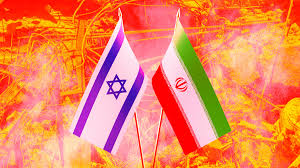
A wider war, centred on Iran, would both distract from Gaza’s desperate plight and force Biden to back Israel unconditionally – to make good on his “iron-clad” commitment to Israel’s protection.
The Middle East is on the brink of war precisely because western politicians indulged for decades every military excess by Israel
JONATHAN COOK, APR 16, 2024
Suddenly, western politicians from US President Joe Biden to British Prime Minister Rishi Sunak have become ardent champions of “restraint” – in a very last-minute scramble to avoid regional conflagration.
Iran launched a salvo of drones and missiles at Israel at the weekend in what amounted a largely symbolic show of strength. Many appear to have been shot down, either by Israel’s layers of US-funded interception systems or by US, British and Jordanian fighter jets. No one was killed.
It was the first direct attack by a state on Israel since Iraq fired Scud missiles during the Gulf war of 1991.
The United Nations Security Council was hurriedly pressed into session on Sunday, with Washington and its allies calling for a de-escalation of tensions that could all too easily lead to the outbreak of war across the Middle East and beyond.
“Neither the region nor the world can afford more war,” the UN’s secretary general, Antonio Guterres, told the meeting. “Now is the time to defuse and de-escalate.”
Israel, meanwhile, vowed to “exact the price” against Iran at a time of its choosing.
But the West’s abrupt conversion to “restraint” needs some explaining.
After all, western leaders showed no restraint when Israel bombed Iran’s consulate in Damascus two weeks ago, killing a senior general and more than a dozen other Iranians – the proximate cause of Tehran’s retaliation on Saturday night.
Under the Vienna Convention, the consulate is not only a protected diplomatic mission but is viewed as sovereign Iranian territory. Israel’s attack on it was an unbridled act of aggression – the “supreme international crime”, as the Nuremberg tribunal ruled at the end of the Second World War.
For that reason, Tehran invoked article 51 of the United Nations charter, which allows it to act in self-defence.
Shielding Israel
And yet, rather than condemning Israel’s dangerous belligerence – a flagrant attack on the so-called “rules-based order” so revered by the US – western leaders lined up behind Washington’s favourite client state.
At a Security Council meeting on 4 April, the US, Britain and France intentionally spurned restraint by blocking a resolution that would have condemned Israel’s attack on the Iranian consulate – a vote that, had it not been stymied, might have sufficed to placate Tehran.
At the weekend, British Foreign Secretary David Cameron still gave the thumbs-up to Israel’s flattening of Iran’s diplomatic premises, saying he could “completely understand the frustration Israel feels” – though he added, without any hint of awareness of his own hypocrisy, that the UK “would take very strong action” if a country bombed a British consulate.
By shielding Israel from any diplomatic consequences for its act of war against Iran, the western powers ensured Tehran would have to pursue a military response instead.
But it did not end there. Having stoked Iran’s sense of grievance at the UN, Biden vowed “iron-clad” support for Israel – and grave consequences for Tehran – should it dare to respond to the attack on its consulate.
Iran ignored those threats. On Saturday night, it launched some 300 drones and missiles, at the same time protesting vociferously about the Security Council’s “inaction and silence, coupled with its failure to condemn the Israeli regime’s aggressions”.
Western leaders failed to take note. They again sided with Israel and denounced Tehran. At Sunday’s Security Council meeting, the same three states – the US, UK and France – that had earlier blocked a statement condemning Israel’s attack on Iran’s diplomatic mission, sought a formal condemnation of Tehran for its response.
Russia’s ambassador to the UN, Vasily Nebenzya, ridiculed what he called “a parade of Western hypocrisy and double standards”. He added: “You know very well that an attack on a diplomatic mission is a casus belli under international law. And if Western missions were attacked, you would not hesitate to retaliate and prove your case in this room.”
There was no restraint visible either as the West publicly celebrated its collusion with Israel in foiling Iran’s attack.
Western leaders failed to take note. They again sided with Israel and denounced Tehran. At Sunday’s Security Council meeting, the same three states – the US, UK and France – that had earlier blocked a statement condemning Israel’s attack on Iran’s diplomatic mission, sought a formal condemnation of Tehran for its response.
Russia’s ambassador to the UN, Vasily Nebenzya, ridiculed what he called “a parade of Western hypocrisy and double standards”. He added: “You know very well that an attack on a diplomatic mission is a casus belli under international law. And if Western missions were attacked, you would not hesitate to retaliate and prove your case in this room.”
There was no restraint visible either as the West publicly celebrated its collusion with Israel in foiling Iran’s attack.
Given the West’s new-found recognition of the need for caution, and the obvious dangers of military excess, now may be the time for its leaders to consider demanding restraint more generally – and not just to avoid a further escalation between Iran and Israel. …………………………………………………………………………………………………………………………….
Top-dog client state
There is a reason why Israel has been so ostentatious in its savaging of Gaza and its people. And it is the very same reason Israel felt emboldened to violate the diplomatic sanctity of Iran’s consulate in Damascus.
Because for decades Israel has been guaranteed protection and assistance from the West, whatever crimes it commits.
Israel’s founders ethnically cleansed much of Palestine in 1948, far beyond the terms of partition set out by the UN a year earlier. It imposed a military occupation on the remnants of historic Palestine in 1967, driving out yet more of the native population. It then imposed a regime of apartheid on the few areas where Palestinians remained.
In their West Bank reservations, Palestinians have been systematically brutalised, their homes demolished, and illegal Jewish settlements built on their land. The Palestinians’ holy places have been gradually surrounded and taken from them.
Separately, Gaza has been sealed off for 17 years, and its population denied freedom of movement, employment and the basics of life.
Israel’s reign of terror to maintain its absolute control has meant imprisonment and torture are a rite of passage for most Palestinian men. Any protest is ruthlessly crushed.
Now Israel has added mass slaughter in Gaza – genocide – to its long list of crimes.
Israel’s displacements of Palestinians to neighbouring states caused by its ethnic cleansing operations and slaughter have destabilised the wider region. And to secure its militarised settler-colonial project in the Middle East – and its place as Washington’s top-dog client state in the region – Israel has intimidated, bombed and invaded its neighbours on a regular basis.
Its attack on Iran’s consulate in Damascus was just the latest of serial humiliations faced by Arab states.
And through all of this, Washington and its vassal states have directed no more than occasional, lip-service calls for restraint towards Israel. There were never any consequences, but instead rewards from the West in the form of endless billions in aid and special trading status.
‘Something rash’
So why, after decades of debauched violence from Israel, has the West suddenly become so interested in “restraint”? Because on this rare occasion it serves western interests to calm the fires Israel is so determined to stoke.
The Israeli strike on Iran’s consulate came just as the Biden administration was finally running out of excuses for providing the weapons and diplomatic cover that has allowed Israel to slaughter, maim and orphan tens of thousands of Palestinian children in Gaza over six months.
Demands for a ceasefire and arms embargo on Israel have been reaching fever pitch, with Biden haemorrhaging support among parts of his Democratic base as he faces a re-run presidential election later this year against a resurgent rival, Donald Trump.
Small numbers of votes could be the difference between victory and defeat.
Israel had every reason to fear that its patron might soon pull the rug from under its campaign of mass slaughter in Gaza.
But having destroyed the entire infrastructure needed to support life in the enclave, Israel needs time for the consequences to play out: either mass starvation there, or a relocation of the population elsewhere on supposedly “humanitarian” grounds.
A wider war, centred on Iran, would both distract from Gaza’s desperate plight and force Biden to back Israel unconditionally – to make good on his “iron-clad” commitment to Israel’s protection.
And to top it all, with the US drawn directly into a war against Iran, Washington would have little choice but to assist Israel in its long campaign to destroy Iran’s nuclear energy programme.
Israel wants to remove any potential for Iran to develop a bomb, one that would level the military playing field between the two in ways that would make Israel far less certain that it can continue to act as it pleases across the region with impunity.
That is why Biden officials are airing concerns to the US media that Israel is ready to “do something rash” in an attempt to drag the administration into a wider war.
The truth is, however, that Washington long ago cultivated Israel as its military Frankenstein’s monster. Israel’s role was precisely to project US power ruthlessly into the oil-rich Middle East. The price Washington was more than willing to accept was Israel’s eradication of the Palestinian people, replaced by a fortress “Jewish state”.
Calling for Israel to exercise “restraint” now, as its entrenched lobbies flex their muscles meddling in western politics, and self-confessed fascists rule Israel’s government, is beyond parody.
If the West really prized restraint, they should have insisted on it from Israel decades ago. https://jonathancook.substack.com/p/the-west-now-wants-restraint-after?utm_source=post-email-title&publication_id=476450&post_id=143635791&utm_campaign=email-post-title&isFreemail=true&r=ln98x&triedRedirect=true&utm_medium=email
Iran Israel: An audible sigh of relief in the Middle East
By Lyse Doucet,Chief international correspondent, 20 Apr 24, more https://www.bbc.com/news/world-middle-east-68861607
The latest round in the region’s most dangerous rivalry appears to be over, for now.
Israel still has not officially acknowledged that the attack in Iran in the early hours of Friday morning was its doing.
Meanwhile, Iran’s military and political leaders have downplayed, dismissed and even mocked that anything of consequence happened at all.
The accounts over what kind of weaponry was deployed on Friday and how much damage was caused are still conflicting and incomplete.
American officials speak of a missile strike, but Iranian officials say the attacks, in the central province of Isfahan and in northwest Tabriz, were caused by small exploding drones.
“The downed micro air vehicles caused no damage and no casualties,” Iran’s Foreign Minister Hossein Amir-Abdollahian insisted to the semi-official Tasnim News Agency.
But these simple quadcopters are Israel’s calling card – it has deployed them time and again in its years of covert operations inside Iran.
This time their main target was the storied central province of Isfahan, which is celebrated for its stunning Islamic heritage.
Of late, however, the province is more famous for the Natanz nuclear facility, the Isfahan Nuclear Technology Centre and a major air base, which was used during Iran’s 14 April attack on Israel.
It is also an industrial heartland housing factories which produce the drones and ballistic missiles that were fired by the hundreds in Israel’s direction last Sunday.
So a limited operation seems to have carried a powerful warning – that Israel has the intelligence and assets to strike at will at Iran’s beating heart.
It is a message so urgent that Israel made sure it was sent before, rather than after, the start of the Jewish Passover, as was widely predicted by Israel watchers.
US officials have also indicated that Israel targeted sites such as Iran’s air defence radar system, which protects Natanz. There is still no confirmed account of its success.
So this attack may also be just an opening salvo. But it was, for the moment, an unintended 85th birthday gift to Iran’s Supreme Leader, Ayatollah Ali Khamenei.
Israel’s official silence gave Iran’s ultimate decision-maker vital political space. Tehran did not have to invoke its new rule that whenever its arch-enemy strikes, Iran will hit back hard, with the risk of sparking a perilous escalatory spiral.
Hardline President Ebrahim Raisi did not even mention these most recent events in his Friday speeches.
For the Islamic Republic, it is all about what it dubs Operation True Promise – its unprecedented onslaught against Israel in the dead of night last Sunday. He hailed what he called his country’s “steely will”.
Iran has prided itself for years on its “strategic patience”, its policy of playing a long game rather than retaliating immediately and directly to any provocations.
Now, it is invoking “strategic deterrence”. This new doctrine was triggered by the 1 April attack on its diplomatic compound in Damascus, which destroyed its consular annex and killed seven Revolutionary Guards, including its most senior commander in the region.
Iran’s supreme leader was under mounting pressure to draw a line as Israel ramped up its targets during the last six months of the grievous Gaza war.
No longer just striking Tehran’s assets, including arms caches, buildings, bases and supply routes on battle grounds like Syria and Lebanon, Israel was also assassinating top-ranking officials.
A decades-long hostility, which had previously played out in shadow wars and covert operations, erupted in open confrontation.
Whatever the specifics of this latest tit for tat, there is a more fundamental priority for both sides: deterrence – a more solid certainty that strikes on its own soil will not happen again. If they do, there is a cost to pay, and it will hurt.
For the moment there is an audible sigh of relief in the region, and in capitals far and wide.
Israel’s latest move, under anxious urging from its allies to limit its retaliation, will have eased this tension, for now. Everyone wants to stop a catastrophic all-out war. But no one will be in any doubt that any lull may not last.
The region is still on fire.
The Gaza war grinds on, causing a staggering number of Palestinian casualties.
Under pressure from its staunchest allies, Israel has facilitated the delivery of greater quantities of desperately needed aid, but the blighted territory still teeters on the brink of famine.
Israeli hostages have still not come home, and ceasefire talks are stalled. Israel still warns of battles to come in Hamas’s last stronghold in Rafah – what aid chiefs and world leaders say would be yet another untold humanitarian disaster.
Iran’s network of proxies across the region, what it calls an “Axis of Resistance” stretching from Hezbollah strongholds in Lebanon through Iran-aligned militias in Iraq and Syria, to the Houthis of Yemen, are at the ready, still attacking daily.
In the last few weeks, simultaneously everything and nothing has changed in the region’s darkest, most dangerous days.
How Long Can Israel Defy the World?

More probably, however, Israel will resist such pressure and threat to resort to the Samson Option, i.e., a nuclear attack on the countries endangering “Israel’s right to exist”. In this worst-case scenario, Israel would be annihilated, but those who put pressure on it would also suffer enormous casualties. Obviously, no country in the world will run the risk of a nuclear attack to free the Palestinians.

By Prof. Yakov M. Rabkin, https://www.juancole.com/2024/01/long-israel-world.htm .
Palestinians in Gaza are being decimated. Over 20,000 have been killed, mostly women and children. Three times more have been wounded. Some experts qualify it as genocide, others as massacre. Two million people have been displaced, many more than during the entire history of displacement of the Palestinians since the start of the Zionist settlement at the turn of the 20th century.
As Israel takes out hospitals and civilian infrastructure, infectious diseases and famine threaten to kill many more people. Several Israeli soldiers have been reported infected during the ground operations, one has died. General Giora Eiland suggests relying on the weapon of imminent epidemics in lieu of endangering the lives of Israeli soldiers in real warfare. Gaza is violently demodernized, bombed into stone age: hospitals, schools, power stations are bombed to rubble. What is happening appears unprecedented.
The number of victims is, indeed, unprecedented. Yet the unfolding tragedy follows the old script of the Zionist project, which is European in more than one sense. It is rooted in ethnic nationalisms of Eastern and Central Europe. Nations must live in their “natural” environment where those not of the titular nationality would be at best tolerated. According to an Iraqi journalist writing in 1945, the Zionists’ goal was “to expel the British and the Arabs from Palestine so that it will be a pure Zionist state. … Terrorism [was] the only means that can bring the Zionist aspirations to fruition.” Significantly, the journalist did not consider the future state Jewish but Zionist. He must have known that Jews from countries other than those of Europe and European colonization constituted a miniscule part of the Zionist movement.
Zionism is also European because it is a settler colonial project, the most recent of all. The Palestine Jewish Colonization Association was among several agencies devoted to turning the multi-ethnic and multi-confessional Palestine into “the Jewish homeland”. The Jewish Colonial Trust, the predecessor of Bank Leumi, today Israel’s largest bank, financed the segregated economic development of the Zionist settlement in Palestine. In the usual colonial manner, the early Zionist settlers were eager to establish a separate colony rather than integrate in the existing Palestinian society.
Zionism is not only the most recent case of settler colonialism. Israel is unique in that, unlike Algeria or Kenya, it is not populated by migrants from the colonial metropolis. But this distinction matters little to the indigenous Palestinians who, just like in many other such situations, are being displaced, dispossessed, and massacred by the settlers. Displacement is enacted not only in Gaza, where it is massive and indiscriminate, but also in the West Bank where it is more focused.
To attain its objectives Zionism has had to rely on major powers, the British Empire, the Soviet Union, France and, nowadays, the United States. The Zionists, committed to the success of their project, have been pragmatic and ideologically promiscuous. They would enjoy the support of the Socialist International during most of of the 20th century and then switch to become the darlings of White supremacists and the extreme-right.
Zionism is a nationalist response to anti-Jewish discrimination and violence in Europe. It deems antisemitism endemic and ineradicable, explicitly rejecting long-term viability of Jewish life anywhere except in “the Jewish state” in Palestine. The Nazi genocide in Europe reinforced this conviction and offered legitimacy to the fledgling colonial project while such projects were crumbling elsewhere in the world. The Zionist project, ignoring the opposition of the Palestinians and other Arabs, simply exported Europe’s “Jewish question” to Palestine.
Palestinians gradually understood that the Zionist project would deprive them of their land and resisted it. This is why the early Zionist settlers, most of them from the Russian Empire, formed militias to fight local population. They perfected their terrorist experience gained during the Russian revolution of 1905 with colonial counterinsurgency measures learned from the vast experience of the British. Established against the will of the entire Arab world, including the local Palestinians, the state of Israel has had to live by the sword. The army and the police have worked hard to keep the Palestinians down (the British used to call it “pacification of the natives”). Their task has been to conquer as much land as possible with as few Palestinians remaining on it as possible.
Many Palestinians now in Gaza had been expelled from the very area in what is now Israel that experienced the Hamas attack in October. They are mostly refugees or descendants of refugees. The high density of the population in an enclosed area (some called it “the largest open-air prison) makes them particularly vulnerable. When Israel did not like the election of Hamas in 2006, it laid siege to Gaza, limiting access to food, medicines, work etc. Israeli officials were openly admitting they were putting the Gazans “on a diet” while having to “mow the lawn” from time to time, subjecting the Gazans to violent “pacification”.
The 16 years of siege intensified anger, frustration and despair leading to the Hamas attack. In response, Israeli used drones, missiles, and aircraft to continue what used to be done with rifles and machine-guns. The death rate has increased, but the goal of terrorizing Palestinians into submission has remained the same. The name of the current onslaught on Gaza is “Iron Swords”, aptly reflects the Zionists’ century-old choice to live by the sword rather than coexist with the Palestinians on equal terms. Ein berera, “we have no choice”, the common Israeli excuse for unleashing violence, is therefore misleading.
Impunity and Impotence
Israel has enjoyed a large degree of impunity, with dozens of UN resolutions simply ignored. Only once, in the wake of the 1956 Suez War, was Israel forced to give up territorial conquest. This happened under a threat coming from both the United States and the Soviet Union. Since then, Israel has relied on firm U.S. diplomatic and military support, which has become more brazen with the advent of America’s unipolar moment after the dissolution of the Soviet Union. This support is now embodied in the supply of American munitions for the war on Gaza, in the presence of U.S. Navy vessels protecting Israel from third parties and in the U.S. vetoes at the Security Council. Israel and the United States are joined at the hip. Europe, while being more critical of Israel rhetorically, closely follows the U.S. line just as it does in the Ukraine conflict. In both conflicts, European chanceries appear to have abdicated independence and, possibly, ability of action.
Israel’s impunity also reflects impotence of the rest of the world. While Muslim and Arab governments decry and protest Israel’s assault on Gaza, none has imposed or even proposed economic, let alone military, sanctions. Fewer than a dozen of countries has suspended diplomatic relations or withdrawn diplomatic personnel from Israel. None has broken relations. Russia and China, along with most of the Global South, express their dismay at civilian casualties in Gaza but they too stop short of going beyond words.
The double standard of the Western reactions is obvious. Drastic economic sanctions imposed on Russia contrast with the generous supply of arms and at best verbal pleas for moderation in response to the Israeli actions in Gaza. In just a few months, the IDF surpassed Russia’s almost two-year record in the Ukraine with respect to the volume of explosives dropped, the number of people killed and wounded, and the civilian/military ratio among the casualties. Western sermons about inclusion and democracy are unlikely to carry much weight in the rest of the world. Palestinian lives do not really matter to Western governments.
This lackadaisical reaction to the massacres in Gaza contrasts with the indignation they provoke in the population in much of the world. Massive demonstrations call on governments to stop the violence. In response, most Western governments have strengthened measures to restrict freedom of speech. Opposition to Zionism has been declared antisemitic, the most recent such measure is the equivalence between anti-Zionism and antisemitism decided by the U.S. Congress in December 2023. Accusations of antisemitism are leveled at students, often Jewish, who organize pro-Palestinian demonstrations. Televised debates as to what constitutes “genocidal antisemitism” on elite university campuses divert attention from what looks like a real genocide in Gaza. Antisemitism serves as Israel’s Wunderwaffe, its ultimate weapon of mass distraction.
Pro-Palestinian demonstrations have been banned in several European capitals where commercial or cultural boycott of Israel has been made illegal. This pressure from the ruling class, including courts, police, corporate media, employers, and university administrations, creates a powerful sense of frustration among the rank-and-file. Shortly after attacking Gaza in 2009, and over sharp criticism of its treatment of the Palestinians, Israel was unanimously accepted into the Organization for Economic Cooperation and Development (OECD), made up of some 30 countries that boast democratic structures of governance. Former Canadian prime minister Stephen Harper, while still in office, placed solidarity with Israel above Canada’s interests to the point of claiming that his government would support Israel “whatever the cost.”
Support for Israel, tending to increase with income, has become a class issue. It serves as another reminder of the growing estrangement between the rulers and the ruled, the proverbial One Per Cent and the rest. It remains to be seen if popular frustration with the hypocrisy of governments in their support for the war on Gaza may one day result in political change that would begin to dent Israel’s impunity.
Israel is a state without borders. Geographically, it has expanded with military conquest or colonization. The Zionist movement and successive Israeli governments have taken great pains never to define the borders they envisage for their state. Israeli secret services and the army pay no heed to borders, striking targets in its neighboring countries at will. This borderless character is also embodied in Israel’s claim that it belongs to the world’s Jews rather than to its citizens. This leads to the overt transformation of Jewish organizations around the world into Israeli agents. This is particularly the case in the United States. Israeli agents, such AIPAC, ensure Israel’s interests in elections on all levels, from school boards to the White House. Israel has even played the legislative against the executive branch in Washington. Yet this unabashed political interference attracts a lot less criticism in mainstream media that the alleged meddling of China or Russia. Israel also intervenes in the political process of other countries.
Conflict Between Jewish and Zionist Values
Zionism has provoked controversy among Jews from its very inception. The first Zionist congress in 1897 had to be moved from Germany to Switzerland because German Jewish organizations objected to holding a Zionist event in their country. The Zionist argument that the homeland of the Jews is not the country, where they have lived for centuries and for which many have spilled their blood in wars, but in a land in Western Asia. For many Jews, this message bears disconcerting resemblance to that of the antisemites who resent their social integration.
Initially irreligious, Zionism transforms spiritual terms into political ones. Thus, ‘am Israel, “the people of Israel”, defined by their relationship to the Torah, becomes ethnicity or nationality in the Zionist vocabulary. This prompted the prominent European rabbi Jechiel Weinberg (1884-1966) to emphasize that “Jewish nationality is different from that of all nations in the sense that it is uniquely spiritual, and that its spirituality is nothing but the Torah. […] In this respect we are different from all other nations, and whoever does not recognize it, denies the fundamental principle of Judaism.”
Another reason for Jewish opposition to Zionism has been moral and religious. While prayers for the return to the Holy Land is part of the daily Judaic ritual, it is not a political, let alone a military objective. Moreover, the Talmud spells out specific prohibitions of a mass move to Palestine before Messianic times, even “with the accord of the nations”. This is why the Zionist project with its addiction to armed violence continues to repel many Jews causing them embarrassment and even revulsion.
True, the Pentateuch and several of the books of the Prophets, such as Joshua and Judges, teem with violent images. But far from glorifying war, Jewish tradition identifies allegiance to God, and not military prowess, as the principal reason for the victories mentioned in the Bible. Jewish tradition abhors violence and reinterprets war episodes, plentiful in the Hebrew Bible, in a pacifist mode. Tradition clearly privileges compromise and accommodation. Albert Einstein was among the Jewish humanists who denounced Beitar, the paramilitary Zionist youth movement, today affiliated with the ruling Likud. He deemed it to be“ as much of a danger to our youth as Hitlerism is to German youth”.
Zionism vigorously rejects this “exilic” tradition, which it deems “consolation of the weak”. Generations of Israelis have been brought up on the values of martial courage, proud of serving in the military. Zionists regularly refer to their state as a continuation of biblical history. The idea of the Greater Israel is rooted in the literal reading of the Pentateuch. Zionism demands total commitment and brooks little opposition or criticism. The passion of the Zionist commitment has led to assassination of opponents, pitched fathers against sons, splitting Jewish families and communities. The historian Eli Barnavi, former Israeli ambassador in Paris, warns that “the dream of a ‘Third Kingdom of Israel’ could only lead to totalitarianism”. Indeed, many Jewish community leaders, undisturbed by the specter of “dual loyalty”, insist that allegiance to the state of Israel must prevail over all others, including allegiance toward their own country.
The Zionists, whether in Israel or elsewhere, have long claimed to be “the vanguard of the Jewish people” with Zionism replacing Judaism for quite a few Jews. Their identity, initially religious, has become political: they are supporters and patriots of Israel, “my country right or wrong” rather than adherents of Judaism.
Generationally, Israel appears an exception among the wealthy countries. With every generation Israelis become more combative and anti-Arab. While in other countries young Jews are usually less conservative than their parents and embrace ideas of social and political justice, young Israeli Jews defy this trend. Israeli education inculcates martial values and the belief that, had the state of Israel existed before World War II, the Nazi genocide would never have taken place. What sustains the fragile unity of the non-Arab majority is fear: a siege mentality that most frequently takes the self-image of a virtuous victim determined to prevent a repetition of the Nazi genocide. The memory of that European tragedy has become a tool of mobilizing Jews to the Zionist cause. Its political utility is still far from exhausted.
Use of the genocide to foster Israeli patriotism has been unflagging since the early 1960s. After an air show in Poland in 2008, three Israeli F-15 fighter jets bearing the Star of David and piloted by descendants of genocide survivors overflew the former Nazi extermination camp while two hundred Israeli soldiers observed the flyover from the Birkenau death camp adjacent to Auschwitz. The remarks of one of the Israeli pilots stressed confidence in the armed forces: “This is triumph for us. Sixty years ago, we had nothing. No country, no army, nothing.”
State schools promote the model of a fighter against “the Arabs” (the word “Palestinian” is usually avoided), glorifies military service turning it into an aspiration and a rite of passage to adulthood. No wonder that Hamas and, by extension, all the Gazans, are often referred to as Nazis. Dozens of Israeli officials and public figures have openly incited genocide of Palestinians: dropping a nuclear bomb on Gaza, flattening it into a parking lot, etc. Israeli political scientists have pointed out that civic religion provides no answers to questions of ultimate meaning, while at the same time it obliges its practitioners to accept the ultimate sacrifice. Civic space in Israel has become associated above all with “death for the fatherland.”
Elsewhere in the world, the Hamas attack has galvanized the Zionist commitment under the slogan “We stand with Israel!”. Massive and organized efforts are made to fight the information war. Israeli officials rely on a network of powerful supporters, including executives of high-tech companies, who make sure that the internet amplifies pro-Israel voices and muffles or cancels pro-Palestinian discourse. Censorship leads to self-censorship because pro-Palestinian involvement impedes job prospects and threatens careers.
However, unlike Israelis, diaspora Jews become less and less committed to Jewish nationalism with every generation. Growing numbers of young Jews refuse to be associated with Israel and choose to support the Palestinians. The systematic AI assisted massacre of Palestinians in Gaza has swollen their ranks, particularly in North America. Most spectacular protests against Israel’s ferocity have been organized by Jewish organizations, such as Not in My Name and Jewish Voice for Peace in the United States, Independent Jewish Voices in Canada, and Union juive française pour la paix in France. Prominent Jewish intellectuals denounce Israel and are found among the most consistent opponents of Zionism.
Albeit incongruently, these Jews are accused of antisemitism. Even more incongruently, the same accusation is hurled at ultra-Orthodox anti-Zionists. While Israel’s claim to be the state of all Jews exposes them to disgrace and danger, many Jews who support the Palestinians rehabilitate Judaism in the eyes of the world.
The Samson Option
Since its beginning, critics of Zionism have insisted that the Zionist state would become a death trap for both the colonizers and the colonized. In the wake of the ongoing tragedy triggered by the Hamas attack, these words of an ultra-Orthodox activist spoken decades ago sound prescient:
“Only blind dogmatism could present Israel as something positive for the Jewish people. Established as a so-called refuge, it has, unfailingly been the most dangerous place on the face of the earth for a Jew. It has been the cause of tens of thousands of Jewish deaths … it has left in its wake a trail of mourning widows, orphans and friends…. And let us not forget that to this account of the physical suffering of the Jews, must be added those of the Palestinian people, a nation condemned to indigence, persecution, to life without shelter, to overwhelming despair, and all too often to premature death.”
The fate of the colonized is, of course, incomparably more tragic than that of the colonizer. Palestinian citizens of Israel face systemic discrimination while their kin in the West Bank are subject to repression from both the Israeli military and their subcontractors in the Palestinian Authority. Arbitrary detention without trial, dispossession, checkpoints, segregated roads, house searches without warrant and more and more frequent death at the hands of soldiers and settler vigilantes have become routine on the West Bank. Palestinians in Gaza, even prior to the operation Iron Swords, lived isolated on a small territory, with their access to food and medicine strictly rationed by Israel. Even peaceful protest would be met by lethal fire from Israeli soldiers sitting on the other side of the barrier. There was little work and no prospects for the future. The pressure cooker was ready to explode as it did on October 7.
Since then, thousands of Gazans have been killed and wounded by one of the most sophisticated war machines in the world. This provokes more anger and hatred among the Palestinians both in Gaza and the West Bank. Israelis find themselves in a vicious circle: chronic insecurity inevitable in a settler colony reinforces the Zionist postulate that a Jew must rely on force to survive, which in turn provokes hostility and creates insecurity.
Over two decades ago David Grossman, one of the best-known Israeli authors, addressed the then prime minister Ariel Sharon known for his bellicosity:
“We start to wonder whether, for the sake of your goals, you have made a strategic decision to move the battlefield not into enemy territory, as is normally done, but into a completely different dimension of reality — into the realm of utter absurdity, into the realm of utter self-obliteration, in which we will get nothing, and neither will they. A big fat zero….”
Critical voices within and particularly outside Israel call on the Israelis to recognize that “the Zionist experiment was a tragic error. The sooner it is put to rest, the better it will be for all mankind.” In practice this would mean ensuring equality for all the inhabitants between the Jordan and the Mediterranean and a transformation of the existing ethnocracy into a state of all its citizens. However, Israeli society is conditioned to see in such calls an existential threat and a rejection of “Israel’s right to exist”.
The settler colonial logic radicalizes society in the direction of ethnic cleansing and even genocide. No Israeli government would be capable of evacuating hundreds of thousands of settlers to free space for a separate Palestinian state; the chances of giving up Zionist supremacy in the entire land are even lower. Only strong-armed international pressure may make Israel consider such a reform.
More probably, however, Israel will resist such pressure and threat to resort to the Samson Option, i.e., a nuclear attack on the countries endangering “Israel’s right to exist”. In this worst-case scenario, Israel would be annihilated, but those who put pressure on it would also suffer enormous casualties. Obviously, no country in the world will run the risk of a nuclear attack to free the Palestinians.
Pressure is more likely to come from the public but largely misdirected at local Jewish communities, almost all of them associated in the public mind with Israel. While these Jews, even the most Zionist, have never influenced Israel’s policies towards the Arabs, they have become easy scapegoats for Israel’s misdeeds.
American politicians seem to agree. President Trump referred to Israel as “your state” when addressing a Jewish audience in the United States. President Biden said that “without Israel, no Jew anywhere is safe.” Israeli leaders appreciate such conflations between Judaism and Zionism, between Jews and Israelis. These conflations boost Zionism, feed antisemitism and push Jews to migrate to Israel. This is a welcome prospect for the country, which these new Israelis will strengthen with their intellectual, entrepreneurial, and financial resources as well as supply more soldiers for the IDF.
Despite the opprobrium and public denunciations, Israel appears immune to pressure from the rest of the world. Israeli disdain for international law, the United Nations and, a fortiori, to moral arguments is proverbial. “What matters is what the Jews do, not what the gentiles say”, was Ben-Gurion’s favorite quip. His successors, a lot more radical than Israel’s founding father, will make sure that the tragedy of Gaza does not lead to any compromise with the Palestinians. The Israeli mainstream mocks or simply ignores well-intentioned pleas of liberal Zionists, an endangered species, to “save Israel from itself”. However counterintuitive today, only changes within Israeli society may shake the usual hubris. In the meantime, Israel will continue to defy the world.
About the Author:
Yakov M. Rabkin is Professor Emeritus of History at the Université of Montréal. His publications include over 300 articles and a few books: Science between Superpowers, A Threat from Within: a Century of Jewish Opposition to Zionism, What is Modern Israel?, Demodernization: A Future in the Past and Judaïsme, islam et modernité. He did consulting work for, inter alia, OECD, NATO, UNESCO and the World Bank. E-mail: yakov.rabkin@umontreal.ca. Website: www.yakovrabkin.ca
I’ve seen Iran’s nuclear HQ – these are the risks if Israel tries to destroy it.
The fortified Natanz uranium enrichment facility is thought to
be a top target if Israel attacks Iran. The uranium enrichment plant in the
Iranian desert has long been a centre of geopolitical controversy.
“Don’t take any photos. The guards will be watching. If they see you holding a camera, they’ll probably shoot us.”
That was my guide’s strict instruction as our mini-bus slowly approached
the Natanz uranium enrichment plant in the heart of the Iranian desert,
during my trip to the country in 2014. Despite growing optimism back then
about international negotiations over Iran’s nuclear programme, security
for Iran’s biggest and most controversial nuclear facility remained as
tight as ever.
You might think it odd that a public road would run within a
few hundred metres of such a sensitive area. We were driving on Freeway 7
from the city of Esfahan to the ancient village of Abyaneh, and the
quickest route happened to pass by Natanz.
One thing I remember from that
journey is the sight of anti-aircraft guns pointing towards the sky. If
Israel attacks Iran in vengeance for its drone and missile assault at the
weekend – following Israel’s own strike on the Iranian consulate in
Damascus – then Natanz is likely to be among the top desired targets for
its jets.
Rafael Grossi, director general of the International Atomic
Energy Agency, revealed on Monday that the extreme Islamic regime in Tehran
closed its nuclear sites over the weekend because of “security
considerations”. Asked if he believed that Israel might attack the
facilities, the head of the UN watchdog replied: “We are always concerned
about this possibility.” Mr Grossi called for “extreme restraint”.
Natanz has long been central to Iran’s nuclear programme. It is where
centrifuges spin uranium gas at extremely high speed to separate a lighter
form – uranium-235- from a heavier variant. It is the uranium-235 isotope
that can be split to produce energy. Even if Israel succeeded in blowing up
Natanz, the Washington-based Arms Control Association has warned: “Tehran
may have already diverted certain materials, such as advanced centrifuges
used to enrich uranium, to covert sites.
” If the Israeli prime minister
Benjamin Netanyahu decides to strike Natanz, or any other site in Iran,
then it’s hard to know where this crisis might end – with worries about a
wider regional conflict or even World War Three suddenly seeming realistic.
iNews 17th April 2024
https://inews.co.uk/news/world/iran-nuclear-hq-israel-risks-3010773
Iranian commander says Tehran could review ‘nuclear doctrine’ amid Israeli threats
By Reuters, April 18, 2024, Reporting by Dubai Newsroom, editing by Edmund Blair, Alex Richardson and Timothy Heritage https://www.reuters.com/world/middle-east/iranian-commander-warns-tehran-could-review-its-nuclear-doctrine-amid-israeli-2024-04-18/
DUBAI, April 18 (Reuters) – Iran could review its “nuclear doctrine” following Israeli threats, a senior Iranian Revolutionary Guards commander said on Thursday, raising concerns about Tehran’s nuclear programme which it has always said was strictly for peaceful purposes.
Israel has said it will retaliate against Iran’s April 13 missile and drone attack, which Tehran says was carried out in response to a suspected Israeli strike on its embassy compound in Damascus earlier this month.
“The threats of the Zionist regime (Israel) against Iran’s nuclear facilities make it possible to review our nuclear doctrine and deviate from our previous considerations,” Ahmad Haghtalab, the Guards commander in charge of nuclear security, was quoted as saying by the semi-official Tasnim news agency.
Iran’s Supreme Leader, Ayatollah Ali Khamenei, has the last say on Tehran’s nuclear programme, which the West suspects has military purposes
In 2021, Iran’s then-intelligence minister said Western pressure could push Tehran to seek nuclear weapons, the development of which Khamenei banned in a fatwa, or religious decree, in the early 2000s.
“Building and stockpiling nuclear bombs is wrong and using it is haram (religiously forbidden) … Although we have nuclear technology, Iran has firmly avoided it,” Khamenei reiterated in 2019.
Iran’s foreign ministry did not immediately respond to a Reuters request for comment.
“If the Zionist regime wants to take action against our nuclear centres and facilities, we will surely and categorically reciprocate with advanced missiles against their own nuclear sites,” Haghtalab said.
Indirect talks between Tehran and Washington to revive Iran’s 2015 nuclear pact has stalled since 2022. The accord, aimed at keeping Iran from developing a nuclear weapon, required Tehran to accept restrictions on its nuclear program and more extensive United Nations’ inspections, in exchange for an end to U.N., European Union and U.S. sanctions.
The deal, which had capped Iran’s uranium enrichment at 3.67%, was abandoned in 2018 by then-U.S. President Donald Trump, who said it was too generous to Tehran.
Rafael Grossi, the head of the U.N. nuclear watchdog, said in February that Iran continued to enrich uranium at rates up to 60% purity, which is far beyond the needs for commercial nuclear use.
Israel has nuclear weapons. Iran does not
Israel has always refused to confirm its possession of a nuclear arsenal and maintains a policy of strategic ambiguity throughout the region.
The country’s ballistic missile programme, called Jericho, is highly classified. Few details are in the public domain, but the International Institute for Strategic Studies (IISS) estimates Israel has around 24 nuclear-capable missiles.
In general, Israeli leaders do not say much about their country’s atomic capabilities. But in November, far-right cabinet minister Amichai Eliyahu claimed it was an option to launch a nuclear strike on the Gaza strip – comments that were quickly disavowed by Benjamin Netanyahu.
In 2016, a leaked cache of emails from former US secretary of state Colin Powell included one that read: “The boys in Tehran know Israel has 200 [nuclear weapons], all targeted on Tehran, and we have thousands.”
Iran does not have nuclear weapons, but has several nuclear facilities across its territory which experts fear are being used to develop them. Tehran claims they are for civilian use.
In 2016, the country signed the Joint Comprehensive Plan of Action – widely known as the Iran nuclear deal – which lifted sanctions and around $100bn of frozen funds in exchange for an end to atomic weapon research.
………..Tehran has continued to enrich uranium at these sites of rates up to 60 per cent purity – which exceeds needs for commercial use and is just a step away from weapons-grade 90 per cent, according to the International Atomic Energy Agency.
That means Iran’s so-called “breakout time” – the time it would need to produce enough weapons-grade uranium for a nuclear bomb – is between six months to a year, according to experts.
Iran also vowed to revise its weapons doctrine if its nuclear sites were targeted by Israel before the attack on Friday morning.
What happens next?
So far, it is unclear. Israel maintains its policy of strategic ambiguity and Iran has immediately downplayed the severity of Israel’s attack – saying it would not respond.
A senior official said the country was looking at it more as an “infiltration” rather than an “external attack” – but previously Iran’s president said an attack would be met with a “severe response”. https://au.news.yahoo.com/many-nuclear-weapons-israel-iran-144603850.html
A new Iranian nuclear deal is being considered
A veteran of the Foreign Office told i: “I don’t think the world realises
how advanced the Iran nuclear programme has got. The issue has long been
how to bring Iran back to some form of a deal.” They suggested Tehran
could have been stepping up work on the nuclear programme while Western
powers were focussed on Russia and China, saying: “When the world’s
attention is elsewhere, they accelerate.”
A source close to the Biden
administration added: “Iran has made it quite clear that it has no
intention of attacking Israel again, unless Israel strikes back in response
to last weekend. The administration believes a diplomatic route is by far
the best route forward, and that both sides can be catered for. “The
president is doing everything he can to avert a war in the Middle East, and
a new Iran nuclear deal is one way being considered to achieve that. It’s
not the only strategy, but it’s on the table.”
iNews 17th April 2024
Biden could try to revive Iran nuclear deal to avert wider war, source says
Eve of destruction. Can war in the Middle East be avoided?
by Stuart McCarthy | Apr 17, 2024 https://michaelwest.com.au/israel-iran-and-the-prospect-of-war/?utm_source=newsletter&utm_medium=email&utm_term=2024-04-18&utm_campaign=Michael+West+Media+Weekly+Update—
Stuart McCarthy dissects the forever conflict.
Spectacular footage of Iranian missiles being intercepted by Israeli air defences in the night skies last weekend is only a portend of what’s at stake if Middle East tensions continue to spiral. As horrific as the human suffering in Gaza has been since October, there’s a risk of worse to come if cool heads don’t prevail. According to UN Secretary-General Antonio Guterres, there is now “a real danger of a devastating full-scale conflict.”
“Benjamin Netanyahu has completely lost his mental balance due to the successive failures in Gaza and his failure to achieve his Zionist goals.”
A history of tension
Tensions between Israel, Iran, and other Middle East and Western actors involved in the escalation go back decades, pre-dating the emergence of Hamas and Al Qaeda’s September 11, 2001 attacks, which drew the West into a ‘global war on terror’ that shaped many of the current animosities.This broader context is crucial in understanding how the Israel-Gaza conflict might reach a ceasefire or the prospects of an enduring two-state solution.
Western interests in the region have long revolved around the flow of oil to the global economy, a too-easily forgotten strategic vulnerability previously exploited by Middle East states in targeting the West’s support for Israel.
Organisation of Arab Oil Exporting Countries’ embargo that triggered the first oil shock of 1973 was a response to western support for Israel during the fourth Arab-Israeli war. That war, in turn, was an attempt by Egypt and Syria to recover the territories lost to Israel during the third Arab-Israeli war in 1967. Those territories included the Golan Heights (Syria), the Sinai Peninsula (Egypt), and the Israeli-occupied territories of the West Bank and the Gaza Strip.
of 1973 was a response to western support for Israel during the fourth Arab-Israeli war. That war, in turn, was an attempt by Egypt and Syria to recover the territories lost to Israel during the third Arab-Israeli war in 1967. Those territories included the Golan Heights (Syria), the Sinai Peninsula (Egypt), and the Israeli-occupied territories of the West Bank and the Gaza Strip.
The second oil shock was a consequence of the 1979 Iranian Revolution. While the complex causes of that revolution remain the subject of debate, among them was a conservative backlash against the country’s secularisation of the Shah of Iran’s western-backed monarchy. The country is now a Shia Islamic theocracy.
The genesis of September 11 and the ensuing Afghanistan and Iraq wars is similarly complex, however among Al Qaeda’s grievances was the predominantly Sunni Arab states’ support of western military presence in the Middle East. Their main strategic objective was to provoke the West into invading the Holy Lands, thus sparking a popular Muslim uprising that would bring about regional or even global theocratic rule under a Wahhabi Caliphate.
The West obliged with its ill-fated 20-year military campaign in Afghanistan and the epic strategic blunder of invading Iraq on a false pretext. Among the outcomes of the latter was the rise of ISIS in Iraq, Syria and its affiliates elsewhere.
Status quo
Today’s Middle East instability – including the role of Islamist terrorism – is largely the result of western interventionism and strategic incompetence, even before we consider the specific question of the Israel-Palestine conflict.
As the West lost its way in a series of quagmires, Iran sought to bolster itself against the threat posed by Israel and its Western allies. Allegiances were forged with Hamas and other regional actors, motivated not necessarily by shared religious ideology but by shared strategic interests in countering Israel, its Western allies, and their Arab state enablers, including Saudi Arabia and Jordan.
Other allies include Hezbollah in Lebanon and, more recently, the Houthis in Yemen. Both have been designated as terrorist organisations by Western governments, each is estimated to have more than 100,000 fighters in addition to significant arsenals of conventional weapons.
Saturday night’s retaliatory missile strikes against Israel have been dismissed by some as a strategic miscalculation, a futile escalation easily thwarted by Israel’s sophisticated air defence systems.
“To dismiss this event so lightly would be to fail to appreciate the broader context, the details of the attack and Iran’s obvious strategic interests.”
Hamas’ importance
The name Hamas translates to “Islamic Resistance Movement.” The significance of the Iran-led strikes last weekend is that these are being heralded – even celebrated by some – as a transition from ‘shadow war’ to overt, conventional military confrontation by a more unified resistance against the Israeli occupation of Palestine.
In the case of Hamas, at least, this movement transcends Sunni-Shia sectarian interests. The movement now also seems prepared to defy western military support for Israel despite the high risks involved, evidenced by the Saudi and western bombing campaign against the Houthis in Yemen.
The resistance movement’s rhetoric has become popular among Western protesters who are pressuring their governments to withdraw support for Israel over concerns about violations of international humanitarian law in Gaza. Protest organisers are now using the explicit threat of “causing pain to the economy.”
Missile strikes no surprise
Saturday’s missile strikes, dubbed Operation True Promise by the IRGC, were telegraphed by Iran for a week. Not only did Iran forewarn Israel and the US, some reports suggest the IRGC also warned Jordan and other Arab states not to intervene “during the punitive attack against the Zionist regime.”
The aerial assault was preceded by the IRGC’s seizure of an Israeli-linked commercial vessel in the Strait of Hormuz, several days after the IRGC’s naval commander boasted of their ability to close the critical shipping lane. The prospect of an actual blockade triggering another global economic shock is one of the main reasons for western naval presence in the Persian Gulf, a subject we will return to in a moment.
According to Israeli and other military sources, the projectiles fired towards Israel on Saturday night included 170 drones, 30 cruise missiles and 110 ballistic missiles, launched from Iran, Iraq, Syria and Yemen. Iranian military leaders announced soon after the launches that this would end their retaliation for Israel’s attack on the Iranian consulate in Damascus if there was no further Israeli escalation.
Hezbollah said it also fired two barrages of rockets at an Israeli military base in the Golan Heights. Most of the Iranian projectiles appear to have been intercepted by Israeli air defences and aircraft from Israel, the US, the UK, France and Jordan. Among those reportedly destroyed by the US were a ballistic missile on its launcher and seven drones in Houthi-controlled areas of Yemen.
The drone and missile attacks apparently targeted Israeli military installations, including the Nevatim Air Force Base in southern Israel. Nevatim is home to Israel’s F-35 fighter jets, including those thought to be involved in the 1 April attack on the Damascus consulate. Four missiles reportedly struck the air base, A fifth was reportedly aimed at a military radar site in northern Israel but missed the target. One child was reportedly injured in southern Israel when an Iranian drone was intercepted overhead.
Iran’s strategy
While Israeli officials have played down any Iranian successes, several independent experts have suggested the strikes were ‘well calibrated’ by Iran. They wanted the strategic effect of retaliating for Israel’s attack on the consulate while deterring further escalation by Israel and minimising the risk of direct military intervention by the US and other Western allies. Ali Vaezoff of the International Crisis Group told CNN:
“This attack crossed a psychological threshold. It’s the first time Iran is striking Israel directly from its own soil, but I think it was also an attack that was designed to be flashy but not fatal.
At time of writing. the Netanyahu war cabinet is reportedly engaged in a “heated debate” over how to respond, while the head of the Iranian military has said, “Our response will be much larger than [Saturday night’s] military action if Israel retaliates against Iran.” President Biden, Arab state leaders and other world leaders have called for Israel and Iran to de-escalate.
The stakes for escalation into full-scale war stretch well beyond the Middle East, including the possibility of another global economic shock. As concerned as many Australians may be for the civilian population of Gaza, such a shock would likely hit home in a way few yet appreciate. One-fifth of the world’s total oil consumption transits through the Strait of Hormuz, with Iran well placed to cause a major disruption using supersonic or hypersonic anti-ship missiles should it wish to do so.
Risk for Australia
Australia is one of the advanced Western economies most vulnerable to such a shock. The demand-led economy of the Covid-19 pandemic saw a decrease in national petroleum fuel consumption of as little as 7%, a decline accounted for mainly by the collapse in air travel, while the road transport sector remained functional.
Our near total dependence on imported oil and refined fuels, our long and vulnerable supply chains, and our negligence in failing to make the necessary preparations promise a significantly worse shock should a full-scale Middle East war break out.
While civil society’s efforts towards an Israel-Palestine ceasefire are laudable, those criticising the parties to this conflict from the comfort of their lounge rooms should perhaps reflect on how their own complacent dependence on a non-renewable resource contributes to the cycle of violence once again engulfing the region.
They might also contemplate life under the theocratic rule espoused by some of the conflict’s main actors. None of this is to diminish Israel’s atrocities in Gaza, but it should give pause to those cheering their favoured ‘side’ in a conflict threatening to spiral out of control.
Meanwhile, let’s hope cool heads prevail in the Middle East.
What do we know about Israel’s nuclear weapons?
The New Arab Staff, 23 November, 2023
Israel is believed to possess between 80 and 400 nuclear weapons but has never faced serious international scrutiny over this.
Despite widespread speculation, Israel has neither confirmed nor denied having nuclear weapons, adhering to a policy of deliberate ambiguity.
Israel is believed to have between 80 to 400 nuclear warheads, with the first completed around late 1966 or early 1967.
This estimate would position Israel as the sixth nation globally to develop nuclear weapons. Delivery methods for these weapons are believed to include aircraft, submarine-launched cruise missiles, and the Jericho series ballistic missiles.
Israel consistently reiterates the cryptic refrain that it will “not be the first to introduce nuclear weapons to the Middle East”. The nation has not signed the Treaty on the Non-Proliferation of Nuclear Weapons (NPT) despite international calls to join.
Recently, the issue gained renewed attention when Israel’s Heritage Minister Amichai Eliyahu, of the extremist Otzma Yehudit (Jewish Power) party, suggested that using nuclear weapons against Gaza would be an option. He was suspended soon afterwards.
Turkish President Recep Tayyip Erdogan also recently said that the issue of Israel’s nuclear arsenal should remain a focus on the global agenda.
He accused Western nations of aiding and overlooking alleged crimes against humanity by Israel in Gaza, where over 14,000 people have been killed in indiscriminate bombardment.
History and implications
Israel’s first Prime Minister, David Ben-Gurion, was committed to acquiring nuclear weapons, justifying this by saying it was to prevent a recurrence of the Nazi Holocaust. …………………………..
By 1952, Israel Atomic Energy Commission chief Ernst David Bergmann sought nuclear collaboration with France, and laid the foundation for future French-Israeli cooperation. This partnership included Israeli scientists’ involvement in France’s nuclear facilities and knowledge sharing, particularly with those with experience on the Manhattan Project.
The relationship culminated in 1957, with France agreeing to build a nuclear reactor and reprocessing plant in Israel, a decision influenced by geopolitical factors and mutual scientific benefits.
This partnership was solidified through secret agreements, ostensibly concentrating on peaceful use of atomic technology but with implications for weapons development………………………………….
The Dimona reactor achieved criticality in 1962, and by 1966 Israel had reportedly developed its first operational nuclear weapon, marking the beginning of its full-scale nuclear weapons production.
The exact costs of Israel’s nuclear program are unknown, but substantial foreign aid and Mossad’s covert operations played crucial roles.
Israeli defector Mordechai Vanunu dramatically revealed the extent of the nuclear programme in 1986, and he was kidnapped by Mossad agents and brought back to Israel, serving long years in prison.
By the mid-2000s, estimates of Israel’s nuclear arsenal varied widely, with speculation about uranium enrichment capabilities adding to these uncertainties.
Despite occasional statements by other countries expressing concern about Israel’s nuclear capabilities, there has been little pressure on Israel to declare its nuclear activities or open up its facilities for inspection, let alone to destroy its weapons.
Double standards
The international community’s approach to nuclear proliferation exhibits notable disparities, especially when comparing the cases of Israel, Iran, and Pakistan.
Israel, despite widespread belief in its possession of nuclear weapons, has never publicly confirmed this and enjoys a unique position of strategic ambiguity. It does not face the same level of scrutiny or sanctions imposed on other nations.
In contrast, Iran, whose nuclear program has raised global concerns about potential weaponisation, has been subject to rigorous inspections, strict sanctions, and intense diplomatic negotiations under frameworks like the Joint Comprehensive Plan of Action (JCPOA).
Pakistan, having openly conducted nuclear tests in 1998, is often viewed through the lens of regional security dynamics, particularly its rivalry with India, and faces a distinct set of international concerns and regulatory measures. https://www.newarab.com/news/what-do-we-know-about-israels-nuclear-weapons
Iran Closes Nuclear Sites Fearing Israeli Attack: IAEA Chief
Tuesday, 04/16/2024 Iran International Newsroom, https://www.iranintl.com/en/202404162504
Iran shut down its nuclear facilities last Sunday over “security considerations,” UN nuclear chief Rafael Grossi has said, expressing concern over the “possibility” of an Israeli attack on Iran’s nuclear sites.
Speaking to reporters in New York on Monday, IAEA Director General confirmed that the facilities had reopened within 24 hours, but with no IAEA supervision, as the agency has decided to keep its inspectors away until the situation is “completely calm.”
Grossi was referring to rising tensions between Israel and Iran, which many fear may lead to an all-out war between the two countries and potentially engulf the whole Middle East.
Israel bombed Iran’s consulate in Damascus on 1 April, killing seven members of the Islamic Revolution’s Guards Corpse (IRGC), including a high-ranking commander and his deputy. Iran retaliated on 13 April, launching more than 300 missiles and drones towards Israel –all but a few of which were intercepted by Israel and its allies.
On Monday, Israeli officials vowed to respond to the attack. When asked about the possibility of Israel hitting Iran’s nuclear sites, Grossi said, “We are always concerned about this possibility.” He urged both sides to show “extreme restraint”.
Grossi also reiterated the IAEA’s concerns about Iran’s nuclear program.
“A bit more than a year ago, I went to Tehran and signed a joint declaration with the Iranian government indicating a number of actions that we will be taking together with Iran,” Grossi said. “We started that process and that process was interrupted. And I have been insisting that we need to go back to that understanding that we had in March 2023.”
In September 2023, Iran withdrew the designation of several inspectors assigned to conduct verification activities in Iran under the Non-Proliferation Treaty Safeguards Agreement. Iran’s nuclear chief Mohammad Eslami later claimed that those expelled had had a history of “extremist political behavior”.
“We are always urging, asking and requiring Iran to cooperate with us in full,” Grossi told Iran International’s Maryam Rahmati. “It’s not that we are not there, but we are not there at the level that we consider we should be.”
The IAEA reported in February that Iran is enriching and stockpiling near-weapons-grade uranium, warning that such elevated purity cannot be explained by civilian applications.
When asked about Iran’s enrichment levels by Iran International, Grossi siad, “the fact that there is an accumulation of uranium enriched at very, very high levels does not automatically mean you’re having a weapon…but it raises questions in the international community.”
Iran has always denied seeking nuclear weapons, but no other state has enriched to that level without producing them.
A report published last month by the Institute for Science and International Security claimed that Iran is moving ahead with building a nuclear site deep underground near Natanz.
“This Iranian nuclear weapons-making facility could be impervious to Israeli and perhaps even American bombs,” Foundation for Defense of Democracies CEO Mark Dubowitz said at the time. “Time is quickly running out, as Iran moves into a zone of nuclear immunity, to deny the regime permanent use of this deadly site.”
Iran President Warns of ‘Massive’ Response if Israel Launches ‘Tiniest Invasion’
Iranian President Ebrahim Raisi warned on Wednesday that the “tiniest invasion” by Israel would bring a “massive and harsh” response, as the region braces for potential Israeli retaliation after Iran’s attack over the weekend.
Raisi spoke at an annual army parade that was relocated to a barracks north of the capital, Tehran, from its usual venue on a highway in the city’s southern outskirts. Iranian authorities gave no explanation for its relocation, and state TV did not broadcast it live, as it has in previous years.
Iran launched hundreds of missiles and drones at Israel over the weekend in response to an Israeli strike on Iran’s embassy compound in Syria on April 1 that killed 12 people, including two Iranian generals.
Israel successfully intercepted nearly all the missiles and drones.
It has vowed to respond, without saying when or how, while its allies have urged all sides to avoid further escalation.
Raisi said Saturday’s attack was a limited one, and that if Iran had wanted to carry out a bigger attack, “nothing would remain from the Zionist regime.” His remarks were carried by the official IRNA news agency.
1 This Month
Watch the 2026 Doomsday Clock unveiling live here on January 27 at 10 a.m. EST
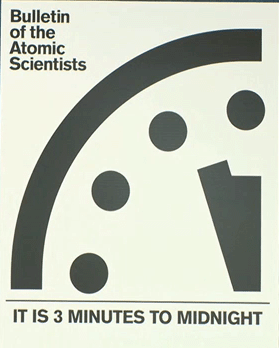
To see nuclear-related stories in greater depth and intensity – go to https://nuclearinformation.wordpress.com/
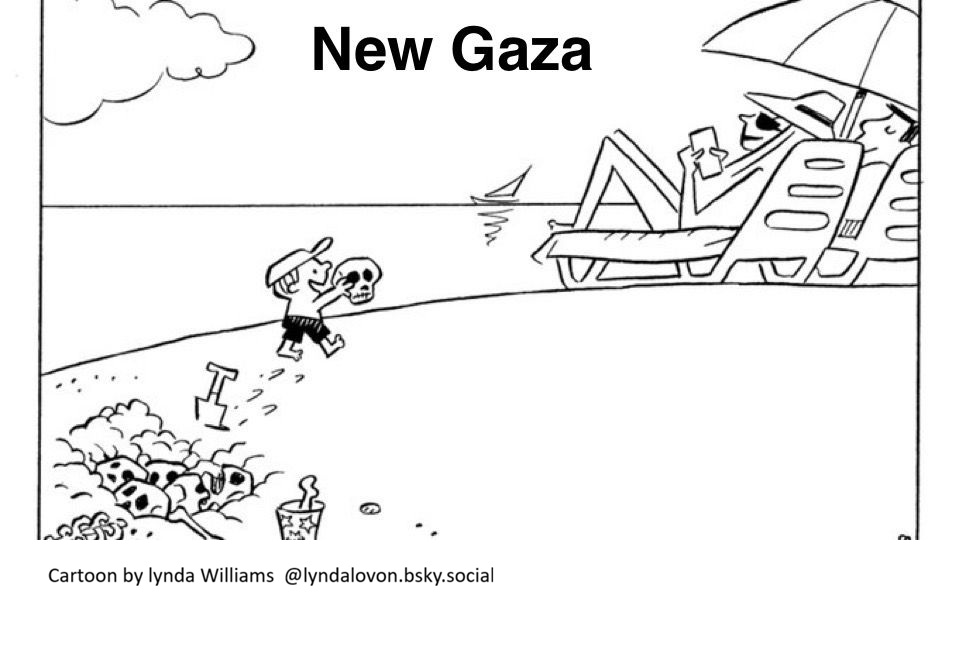
29 Jan. Thursday 7-8 p.m. Webinar – World’s Largest Nuclear Station in Port Hope, ON?

31st January – Challenging the War Machine – a DECLASSIFIED UK SUMMIT


Website of the Week
Now until to February 10, 2026 Radioactive waste storage in France: the debate is finally open! How to participate?
-
Archives
- January 2026 (277)
- December 2025 (358)
- November 2025 (359)
- October 2025 (376)
- September 2025 (258)
- August 2025 (319)
- July 2025 (230)
- June 2025 (348)
- May 2025 (261)
- April 2025 (305)
- March 2025 (319)
- February 2025 (234)
-
Categories
- 1
- 1 NUCLEAR ISSUES
- business and costs
- climate change
- culture and arts
- ENERGY
- environment
- health
- history
- indigenous issues
- Legal
- marketing of nuclear
- media
- opposition to nuclear
- PERSONAL STORIES
- politics
- politics international
- Religion and ethics
- safety
- secrets,lies and civil liberties
- spinbuster
- technology
- Uranium
- wastes
- weapons and war
- Women
- 2 WORLD
- ACTION
- AFRICA
- Atrocities
- AUSTRALIA
- Christina's notes
- Christina's themes
- culture and arts
- Events
- Fuk 2022
- Fuk 2023
- Fukushima 2017
- Fukushima 2018
- fukushima 2019
- Fukushima 2020
- Fukushima 2021
- general
- global warming
- Humour (God we need it)
- Nuclear
- RARE EARTHS
- Reference
- resources – print
- Resources -audiovicual
- Weekly Newsletter
- World
- World Nuclear
- YouTube
-
RSS
Entries RSS
Comments RSS
 nuclear-news