For nearly 630 days, the world has watched the Israeli slaughter of Palestinians in Gaza, primarily by bombing, sniping, and starvation. Off-camera, we’ve read about the rape and torture of Palestinian hostages, including the torturing to death of three doctors from the enclave.
For the last 100 days, Israel has reinforced a full blockade on Gaza, depriving starving Palestinians of food, drinking water, medicines, and fuel – meaning ambulances cannot function. . This is following prior blockades last year, and the overall blockade of the strip, which has lasted over 17 years.
Since late May, we’ve been seeing horrific video footage of skeletal Palestinians lined up hoping for food aid being gunned down by US mercenaries and Israeli soldiers.
Israel has endlessly bombed Palestinians, destroyed hospitals and abducted doctors and patients. It has bombed churches, schools, UN centres and tents housing displaced Palestinians – in supposed “safe zones” where they were ordered by the Israeli army to flee to. It has killed over 200 journalists and deliberately targeted medics. To those only paying attention recently, these crimes go back decades, and extend to the Israeli army and illegal colonists’ crimes against Palestinian civilians, including children, in the West Bank. Add to this the Israeli bombardment of civilian areas of Lebanon and Syria over the years, and now Israel’s recent unprovoked bombings of Iran.
Suffice it to say that when Israel came under the barrage of Iranian retaliatory missiles, reports of some 30 Israeli civilians suffering panic attacks garnered little sympathy.
Again, those who have been paying attention for longer than two years would also recall previous Israeli wars on Gaza, like in 2014, when Israelis gathered with drinks and snacks on hillsides to rejoice in the bombing of the enclave, or the 2009 t-shirts celebrating snipers killing pregnant women with the phrase “one shot, two kills”.
In 2010, when writing about a traumatized 10 year old I’d met who could no longer walk normally nor speak after the terror of having Israeli tanks shelling his home, I cited a study by the Gaza Community Mental Health Programme which stated that “91.4 percent of children in Gaza displayed symptoms of moderate to very severe PTSD.”That was fifteen years and numerous Israeli wars on Gaza ago.
The US-Israeli “humanitarian” death traps
The killing of Palestinians in Gaza didn’t stop when Israel attacked Iran. The most insidious new invention is the recently-created US-Israeli “aid” group, the Gaza Humanitarian Foundation (GHF). The Israeli authorities accuse Hamas of stealing aid, and based on this unproven accusation, have deemed that long-established UN aid agencies could no longer operate in Gaza, insisting instead that a group staffed with armed combat veterans (mercenaries is a better word) is better equipped to ensure that food reaches famished Palestinians.
It is outrageous that in spite of some media coverage, Israel has been allowed to for months (over a year, really) block the entrance of thousands of aid trucks amassed outside of Gaza, only to then dictate that hired gunmen would be in charge of “distributing aid.”
The massive irony and duplicity is that even Israeli and Western media have reported on the actual thieves of aid in Gaza: not Hamas, but an ISIS-linked group under the protection of the Israeli army.
As the independent media outlet The Cradle reported, the group’s leader, Yasser Abu Shabab, “is a known leader of armed gangs linked to ISIS and involved in looting aid under Israeli protection… Multiple reports, including from Haaretz and The Washington Post, confirm that these gangs have been seen looting in full view of Israeli forces, who neither intervene nor prevent the theft.”
In a subsequent post, The Cradle cited the Israeli Army Radio as reporting: “Israel has transferred weapons to members of the militia…The militia operates mainly in the Rafah area, which the Israeli army has occupied and cleared. The militia’s tasks include preventing humanitarian aid from entering Gaza and fighting Hamas.”
What is apparently happening is that starved Palestinians, after walking many kilometres to the distribution sites, are then corralled into tight enclosures and fired upon by the “aid” mercenaries.
Jonathan Whittall, the Head of the UN Office for the Coordination of Humanitarian Affairs in the Occupied Palestinian Territory (OCHA) described the situation as “conditions created to kill, carnage, weaponized hunger, a death sentence for people just trying to survive.”
In a clip posted on June 23, Whittall said, “Israeli authorities are preventing us from distributing through these systems that we’ve established and that we know work. We could reach every family in Gaza, as we have in the past, but we’re prevented from doing so at every turn.”
More recently, UN Secretary-General Antonio Guterres echoed Whittall, saying: “Any operation that channels desperate civilians into militarized zones is inherently unsafe. It is killing people.. People are being killed simply trying to feed themselves and their families. The search for food must never be a death sentence.” The UN’s own humanitarian efforts are being “strangled” by Israel, he said, and even the aid workers themselves are starving.
The aid-seeking civilians are reportedly being shot in the head and chest, in what looks more like execution than “warning shots” or “crowd control”.
The victims include an 18-month old girl whose X-ray shows a bullet lodged in her chest. According to Ramy Abdu, Chairman of the non-profit Euro-Med Human Rights Monitor, the girl was shot while in her mother’s arms on the way to a GHF aid point.
As far back as last July, an article in The Lancet warning that the total number of Palestinian civilian deaths caused directly and indirectly by Israeli attacks since October 2023 could reach “up to 186,000 or even more.”Other estimates were even more grim, include that of Norwegian Dr. Mads Gilbert, who has worked extensively from Gaza over the years, who said the number of those dead or soon to die could be over 500,000.
Fast forward to a recent report by Yaakov Garb of Ben-Gurion University, published via the Harvard Dataverse. It describes the false aid distribution design as, “all adjacent to Israeli military installations… manned by armed combat veterans backed by Israeli soldiers. The design creates a ‘chokepoint’ or ‘fatal funnel’ – a predictable movement path from a single entry to a single exit with no cover or concealment.”
It is the graphic on page five which caught people’s attention. From a population of 2.2 million before the genocide, the graph only accounts for 1.85 million, leaving many asking, where are the remaining 350,000 people? This makes the concerns voiced a year ago more valid.
In his report, Yaakov Garb wrote, “The Israeli military has an obligation, as the occupying power in Gaza, to supply the population with humanitarian relief… If an attacker cannot adequately and neutrally feed a starving population in the wake of a disaster it is ongoingly creating, it is obligated to allow other humanitarian agencies to do so.”
But instead, every day we see new horrors of emaciated Palestinian civilians desperately braving death in hopes of securing food for their families… and being gunned down by the Israeli army and the mercenaries it backs.
It seems, at least, that these actions are finally catching up with Israel, meaning a lack of support for or trust in the state or its representatives, and a global demand for justice for Palestinians.
To cite Craig Mokhiber, a human rights lawyer and former senior UN Human Rights official, who posted recently on X:
“The (Israeli) regime is on trial for genocide. Its leaders are indicted for crimes against humanity. Israel is isolated. The regime is now almost universally despised, just as the Nazi and apartheid regimes were despised. People across the world stand overwhelmingly with Palestine. You don’t come back from apartheid & genocide.”
Part of tens of billions in US aid to Israel, the projects include multi-year tenders for hangars, fuel stations, and ammunition sites.
The US Army Corps of Engineers is constructing new military infrastructure for Israel across several bases, including airfields, hangars, and ammunition depots, according to public records reported by Haaretz on 8 July.
The current projects total more than $250 million, with future ones expected to exceed $1 billion, based on a call for interested contractors originally scheduled for June but postponed due to Israel’s war against Iran.
The Israeli news site Haaretz reported on the public documents on Monday.
The US Army Corps of Engineers is using contractors to build ammunition depots, refuelling stations, and concrete structures for Israeli military bases. The documents also show that the US is seeking contractors for building maintenance and repairs, including work on airfields.
One project for hangars, maintenance rooms, and storage facilities for new Boeing KC-46 tankers that Israel is expected to receive in the coming years is projected to cost over $100 million. Another facility to house CH-53K helicopters is expected to cost up to $250 million.
The US is also soliciting bids for ammunition storage buildings, estimated at up to $100 million. A separate seven-year tender, capped at $900 million, covers maintenance, repairs, construction, demolition, and infrastructure upgrades at unspecified sites for the Israeli Ministry of Defence.
These projects are funded through foreign military financing. Israel receives $3.8 billion annually in military aid, under a system that allows the US and Israel to determine how to spend the funds, which are routed to US defense contractors.
Since the Hamas-led 7 October 2023 Operation Al-Aqsa Flood, Washington has also provided supplemental military aid totalling around $18 billion.
The US has previously used military aid for Israeli infrastructure. In 2012, public tender documents showed large-scale US-funded works at Nevatim air base. At the time, the Washington Post reported that the US had constructed a secret facility there, known as site “911.”
The construction projects detailed on Monday were planned before the June 2025 Israeli attack on Iran. On 2 July, Reuters cited an Israeli official confirming that Iranian ballistic missiles struck several Israeli military sites during the 12-day exchange.
Earlier in June, Washington approved a $510 million arms deal for Israel, adding over 7,000 JDAM kits and support services to the growing list of weapons transfers in 2025.
That package formed part of a broader escalation in US military support, which by mid-year had surpassed $9 billion. Tel Aviv reported receiving more than 90,000 tons of US weapons in 600 days – deliveries Netanyahu credited to Trump as “the greatest friend that Israel has ever had in the White House.”
Around the same time, the Pentagon halted multiple arms shipments to Ukraine, despite internal reviews showing no critical shortage.
The decision followed concerns over stockpile depletion after the US assisted Israel in intercepting Iranian missiles. Senior officials have since pushed for a shift in US military focus toward the Pacific.
Iran links future IAEA cooperation to impartiality, after deadly June conflict with Israel and US.
Iran’s president has warned the International Atomic Energy Agency (IAEA) to abandon its “double standards” if it hopes to restore cooperation over the country’s nuclear programme, amid an acute mistrust following Israel and the United States’ attacks on Iranian nuclear sites last month, and the UN nuclear watchdog’s refusal to condemn the strikes.
Speaking to European Council President Antonio Costa by phone on Thursday, President Masoud Pezeshkian said, “The continuation of Iran’s cooperation with the agency depends on the latter correcting its double standards regarding the nuclear file,” according to Iranian state media.
Tehran has accused the IAEA of enabling the strikes by issuing a resolution on June 12 – just one day before the bombing – accusing Iran of breaching its nuclear obligations. Iran says its nuclear programme is for peaceful purposes and denies seeking nuclear weapons. However, it has made clear that it no longer trusts the agency to act impartially. Despite remaining a signatory to the Treaty on the Non-Proliferation of Nuclear Weapons (NPT), Iran insists that the IAEA failed to condemn the attacks by the US and Israel and instead chose to align with Western pressure.
Israeli Defense Minister Israel Katz has ordered the IDF to prepare a plan to establish a camp to concentrate the entire civilian population of Gaza on the ruins of the southern Gaza city of Rafah.
According to Haaretz, Katz said that once Palestinian civilians are pushed into what he is calling a “humanitarian city,” they will not be allowed to leave. The idea is to first transfer 600,000 civilians from the al-Mawasi tent camp on the coast in southern Gaza, followed by the rest of the civilian population.
Katz said that if conditions permit, the “city” could be built during a potential 60-day ceasefire, comments that will make Hamas less likely to agree to a temporary truce. The Israeli defense minister also said that during the ceasefire, Israel will maintain control of the “Morag Corridor,” a strip of land between Rafah and Khan Younis.
Katz also suggested the camp can facilitate the government’s ultimate goal of ethnic cleansing, which it refers to as “voluntary migration,” telling reporters that Israel will implement “the emigration plan, which will happen.”
Israeli Finance Minister Bezalel Smotrich has previously said that the goal of Israel’s current military operation, dubbed Gideon’s Chariots, is to create a concentration camp south of the Morag Corridor and pressure the civilians forced into it to leave.
“The Gazan citizens will be concentrated in the south. They will be totally despairing, understanding that there is no hope and nothing to look for in Gaza, and will be looking for relocation to begin a new life in other places,” Smotrich said in May.
Katz’s comments come after Reuters reported that the controversial US-backed Gaza Humanitarian Foundation (GHF) had proposed to the US government the idea of creating camps it called “Humanitarian Transit Areas” inside Gaza or possibly outside Gaza.
The GHF plan describes the camps as “large-scale” and “voluntary” places where the Palestinian population could “temporarily reside, deradicalize, re-integrate and prepare to relocate if they wish to do so.”
Katz said Israel is seeking “international partners” to manage the zone and that four aid distribution sites would be set up inside the camp, suggesting the GHF will be involved in the plan. GHF aid sites are secured by American security contractors, who have been credibly accused of using live ammunition and stun grenades to disperse crowds of hungry Palestinian civilians.
The UN has named dozens of multinationals in a report for profiting from Israel’s genocide in Gaza. . Stephanie Tran reports.
A landmark United Nations report has named dozens of multinational corporations that are aiding and profiting from Israel’s ongoing genocide in Gaza, accusing them of complicity in war crimes and calling for urgent accountability.
Authored by Francesca Albanese, the UN Special Rapporteur on the Occupied Palestinian Territories, the report details the role of weapons manufacturers, tech firms, energy companies and financial institutions in sustaining an “economy of occupation turned genocidal.”
But the list of named companies is just the beginning. Albanese describes the report as “the tip of the iceberg,” noting that more than 1,000 corporate entities were investigated for their involvement in Israel’s war machinery.
Weapons and warfare
At the centre of Israel’s brutal assault on Gaza is a heavily militarised economy supported by Western weapons manufacturers.
U.S. defence giant Lockheed Martin is identified as a central player, providing F-35 and F-16 fighter jets that have enabled Israel to drop an estimated 85,000 tonnes of bombs since October 2023. Their use has left more than 179,000 Palestinians dead or injured and destroyed vast swathes of Gaza’s civilian infrastructure.
According to the report, the F-35 program represents Israel’s largest-ever defence procurement project, involving over 1,650 companies.
Israel’s own arms manufacturers are also central to the genocide. Elbit Systems and Israel Aerospace Industries, two of the country’s top weapons companies, are responsible for much of the surveillance, drone and targeting systems deployed in Gaza.
The report notes that Israel’s repeated military campaigns have made it a testing ground for emerging weapons technologies. These systems are later marketed as “battle-proven”
At the centre of Israel’s brutal assault on Gaza is a heavily militarised economy supported by Western weapons manufacturers.
U.S. defence giant Lockheed Martin is identified as a central player, providing F-35 and F-16 fighter jets that have enabled Israel to drop an estimated 85,000 tonnes of bombs since October 2023. Their use has left more than 179,000 Palestinians dead or injured and destroyed vast swathes of Gaza’s civilian infrastructure.
According to the report, the F-35 program represents Israel’s largest-ever defence procurement project, involving over 1,650 companies.
Israel’s own arms manufacturers are also central to the genocide. Elbit Systems and Israel Aerospace Industries, two of the country’s top weapons companies, are responsible for much of the surveillance, drone and targeting systems deployed in Gaza.
The report notes that Israel’s repeated military campaigns have made it a testing ground for emerging weapons technologies. These systems are later marketed as “battle-proven”
Independent journalist and author Antony Loewenstein — whose award-winning book, podcast and film series The Palestine Laboratory exposes how Israel’s occupation has become a global model for repression — told MWM:
“This landmark report goes to the heart of why Israel’s illegal occupation of Palestine has lasted so long; the longest in modern times. Far too many corporations and individuals are making money from oppression. I’m honoured that the report frequently cites my work, The Palestine Laboratory, a book, podcast and film series that details how Israel’s occupation is a key model and inspiration for many around the world.”
“Cutting off Israel’s financial lifeline is the only way that this abomination will end.”
Surveillance and Silicon Valley
The UN report devotes substantial attention to the role of Silicon Valley in enabling Israel’s high-tech war.
Palantir Technologies, the U.S. surveillance firm founded by Peter Thiel, expanded its support for the Israeli military after October 2023. The company has provided “automatic predictive policing technology, core defence infrastructure for rapid and scaled-up construction and deployment of military software, and its Artificial Intelligence Platform, which allows real-time battlefield data integration for automated decision-making.”
In January 2024, Palantir’s board met in Tel Aviv “in solidarity”. In April 2024, CEO Alex Karp dismissed concerns about civilian casualties by stating that Palantir had killed “mostly terrorists.”
Microsoft operates its largest research centre outside the U.S. in Israel, and has been “integrating its systems and civilian tech across the Israeli military since 2003”. In October 2023, Microsoft’s Azure platform supported the Israeli military’s overloaded cloud systems. According to an Israeli colonel quoted in the report, “cloud tech is a weapon in every sense of the word.”
Amazon and Google, through their $1.2 billion Project Nimbus contract, provide Israel with core cloud infrastructure for the military and government agencies.
IBM, which has operated in Israel since 1972, has operated the central database of the Population and Immigration Authority, “enabling collection, storage and governmental use of biometric data on Palestinians, and supporting the discriminatory permit regime of Israel.”
Hewlett-Packard (HP) “has long enabled the apartheid systems of Israel,” supplying technology to the military, prison system, and police.
NSO Group, infamous for its Pegasus spyware, is cited as a textbook case of “spyware diplomacy.” Founded by former Israeli intelligence officers, the company has licensed its tools to repressive governments worldwide and used them to surveil Palestinian activists, journalists, and human rights defenders.
Financing Occupation
The financial industry underpins much of the infrastructure of occupation and genocide. Israeli treasury bonds, underwritten by global banks such as Barclays and BNP Paribas, have provided critical financing to the Israeli government. Asset managers like Blackrock, Vanguard and Allianz’s PIMCO were among more than 400 investors from 36 countries to purchase these bonds.
Blackrock and Vanguard are also among the largest shareholders in Lockheed Martin, Palantir, Microsoft, Amazon, and Chevron. Their funds distribute these investments across global markets via ETFs and mutual funds, spreading complicity to millions of unwitting investors.
Energy and resources
Glencore and Drummond Company dominate coal exports to Israel, primarily from Colombia and South Africa. Even after Colombia announced a suspension of coal exports to Israel in 2024, shipments continued through subsidiaries.
Chevron, which supplies over 70% of Israel’s energy, paid $453 million in royalties and taxes to the Israeli government in 2023. The company profits from the Leviathan and Tamar gas fields and owns a stake in the East Mediterranean Gas pipeline, which passes through occupied Palestinian maritime territory.
BP, the British energy giant, expanded its presence in 2025 with new exploration licences in maritime zones off the Gaza coast, areas Israel occupies in violation of international law.
Machinery
Heavy machinery has long played a role in Israel’s occupation through the demolition of Palestinian homes and the construction of illegal settlements.
Caterpillar Inc. has supplied the Israeli military with bulldozers used to demolish Palestinian homes and infrastructure. Since October 2023, Caterpillar equipment has been used to “carry out mass demolitions – including of homes, mosques and life-sustaining infrastructure – raid hospitals and burying alive wounded Palestinians”. In 2025, the company signed another multi-million-dollar contract with Israel.
Heavy machinery producers Volvo and HD Hyundai have also been linked to the destruction of Palestinian property. After October 2023, Israel increased the use of this equipment, levelling entire districts in Gaza, including Rafah and Jabalia. The Israeli military reportedly obscured the logos of the machinery during these operations.
Volvo is also tied to the settlement economy through its joint ownership of Merkavim, a bus manufacturer serving Israeli colonies.
Shipping, Tourism and Logistics
Multinational logistics firms are another key part of the war economy. A.P. Moller–Maersk, the Danish shipping conglomerate, is responsible for transporting weapons parts, military equipment, and raw materials to Israel. Since October 2023, the company has facilitated the continued flow of US-supplied arms.
Tourism platforms like Airbnb and Booking.com are profiting from the settlement project. Booking.com listings in the West Bank have increased from 26 in 2018 to 70 in 2023; Airbnb listings have grown from 139 in 2016 to 350 in 2025. These platforms promote illegal settlements while restricting Palestinian access to land and resources.
Calls for sanctions
Albanese’s report is a damning indictment, not only of Israel’s genocide in Gaza but of the global political and economic architecture that enables it. The evidence it presents leaves no ambiguity, multinational corporations are not peripheral actors but central to the machinery of occupation, apartheid and now genocide.
Albanese urged states to impose a full arms embargo on Israel, halt all trade and investment ties with companies implicated in violations of international law, and freeze the assets of individuals and entities facilitating human rights abuses.
She called on the International Criminal Court and national courts to investigate and prosecute corporate executives for their role in war crimes and for laundering the proceeds of genocide.
Honestly at this point they should just get Netanyahu his own room in the White House and a desk in the Oval Office.
The prime minister of Israel is taking his third trip to the White House in the five months since Trump has been back in office. I have immediate blood family members who I love with all my heart and visit less often than this.
This comes as the Trump administration revokes the US visas of British punk rap duo Bob Vylan ahead of a US tour for chanting “Death, death to the IDF” at a concert in the UK. Trump’s sycophantic supporters who spent years complaining that their free speech rights were under assault appear fine with their government deciding what words Americans are allowed to hear in their own country.
This also comes as Trump actively intervenes in the Israeli judicial system to prevent Netanyahu’s corruption trial from moving forward.
The president has repeatedly taken to social media to demand that Israel abandon its corruption case against the prime minister, at one point even implying that the US could cut off arms supplies if his trial isn’t canceled.
“The United States of America spends Billions of Dollar a year, far more than on any other Nation, protecting and supporting Israel,” Trump said. “We are not going to stand for this. We just had a Great Victory with Prime Minister Bibi Netanyahu at the helm — And this greatly tarnishes our Victory. LET BIBI GO, HE’S GOT A BIG JOB TO DO!”
It’s so revealing what the US government is and is not willing to threaten conditioning military supplies on, and what it’s willing to interfere in Israel’s affairs to accomplish.
Ever since the Gaza holocaust began we’ve been hearing lines like “Israel is a sovereign country” and “Israel is a sovereign state that makes its own decisions” when reporters ask why the White House doesn’t leverage arms shipments to demand more humanitarian treatment for civilians in the Gaza Strip. But the president of the United States is willing to leverage those same arms shipments to directly interfere in Israeli legal proceedings which have nothing to do with the US government in order to get Netanyahu out of trouble.
And it would appear that the president’s intervention has been successful; Netanyahu’s corruption trial has since been postponed.
When it comes to committing genocide using American weapons funded by American taxpayers, Israel is a sovereign state upon which the US can exert zero leverage or control. When it comes to meddling in the corruption trial of a man who is wanted for war crimes by the International Criminal Court, the White House pulls no punches in protecting its favorite genocide monster.
There is no meaningful separation between the US and Israeli governments. They’re two member states in the undeclared empire that sprawls across the entire western world, and Trump and Netanyahu are two of the most depraved and most consequential managers of this empire today.
They are thick as thieves. They are partners in crime.
The Trump administration has approved a new arms deal for Israel that will provide the country with $510 million worth of Joint Direct Attack Munitions (JDAMS), kits that turn bombs into precision-guided weapons, as the US continues to provide military aid to support the genocidal war in Gaza.
According to the Pentagon’s Defense Security Cooperation Agency (DSCA), the State Department notified Congress of the sale of 3,845 JDAMS for 2,000-pound BLU-109 bombs and 3,280 JDAMS for 500-pound MK 82 bombs. The deal also includes US “government and contractor engineering, logistics, and technical support services; and other related elements of logistics and program support.”
The DSCA said Boeing is the principal contractor for the deal. The notification of the potential deal begins a time period when US lawmakers could potentially block the sale, but there’s little opposition to US military support for Israel within Congress, despite the many war crimes the US is implicated in by providing Israel with weapons.
Fragments of bombs with US-provided JDAM kits have been found at the scene of Israeli airstrikes in Gaza that have massacred many civilians. In 2023, Human Rights Watch said it identified JDAM fragments that were found in two airstrikes on homes in central Gaza that killed 43 civilians, including 19 children, and 14 women.
It’s unclear at this point how the deal will be financed, but many arms sales to Israel are funded by US military aid, and US assistance to Israel has significantly increased since October 7, 2023. According to the Israeli newspaper Haaretz, in that time, US funding has covered an estimated 70% of Israel’s war-related military spending.
After mulling over the attacks over the course of a week, Grossi revisited the matter. The attacks on the facilities had caused severe though “not total” damage. “Frankly speaking, one cannot claim that everything has disappeared and there is nothing there.” Tehran could “in a matter of months” have “a few cascades of centrifuges spinning and producing enriched uranium.” Iran still had the “industrial and technological” means to recommence the process.
The aftermath of Operation Midnight Hammer, a strike by the US Air Force on three nuclear facilities in Iran authorised by President Donald Trump on June 22, was raucous and triumphant. But that depended on what company you were keeping. The mission involved the bombing of the Fordow Fuel Enrichment Plant, the uranium-enrichment facility at Natanz, and the uranium-conversion facility in Isfahan. The Israeli Air Force had already attacked the last two facilities, sparing Fordow for the singular weaponry available for the USAF.
The Fordow site was of particular interest, located some eighty to a hundred metres underground and cocooned by protective concrete. For its purported destruction, B-2 Spirit stealth bombers were used to drop GBU-57 Massive Ordnance Penetrator “bunker buster” bombs. All in all, approximately 75 precision guided weapons were used in the operation, along with 125 aircraft and a guided missile submarine.
Trump was never going to be anything other than optimistic about the result. “Monumental Damage was done to all Nuclear sites in Iran, as shown by satellite images,” he blustered. “Obliteration is an accurate term!”
At the Pentagon press conference following the attack, Defense Secretary Pete Hegseth bubbled with enthusiasm. “The order we received from our commander in chief was focused, it was powerful, and it was clear. We devastated the Iranian nuclear program.” The US Chairman of the Joint Chiefs of Staff Air Force Gen. Dan Caine was confident that the facilities had been subjected to severe punishment. “Initial battle damage assessments indicate that all three sites sustained extremely severe damage and destruction.” Adding to Caine’s remarks, Hegseth stated that, “The battle damage assessment is ongoing, but our initial assessment, as the Chairman said, is that all of our precision munitions struck where we wanted them to strike and had the desired effect.”
Resort to satellite imagery was always going to take place, and Maxar Technologies willingly supplied the material. “A layer of grey-blue ash caused by the airstrikes [on Fordow] is seen across a large swathe of the area,” the company noted in a statement. “Additionally, several of the tunnel entrances that lead into the underground facility are blocked with dirt following the airstrikes.”
The director of the Central Intelligence Agency, John Ratcliffe, also added his voice to the merry chorus that the damage had been significant. “CIA can confirm that a body of credible intelligence indicates Iran’s Nuclear Program has been severely damaged by the recent, targeted airstrikes.” The assessment included “new intelligence from a historically reliable and accurate source/method that several key Iranian nuclear facilities were destroyed and would have to be rebuilt over the course of years.”
Israeli sources were also quick to stroke Trump’s already outsized ego. The Israel Atomic Energy Commission opined that the strikes, combined with Israel’s own efforts, had “set back Iran’s ability to develop nuclear weapons by many years.” IDF Chief of Staff Lt. Gen. Eyal Zamir’s view was that the damage to the nuclear program was sufficient to have “set it back by years, I repeat, years.”
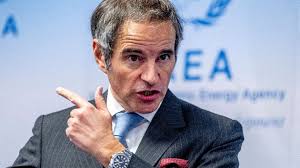
The chief of the increasingly discredited International Atomic Energy Agency, Rafael Grossi, flirted with some initial speculation, but was mindful of necessary caveats. In a statement to an emergency meeting of the IAEA’s 35-nation Board of Governors, he warned that, “At this time, no one, including the IAEA, is in a position to have fully assessed the underground damage at Fordow.” Cue the speculation: “Given the explosive payload utilised and extreme(ly) vibration-sensitive nature of centrifuges, very significant damage is expected to have occurred.”
This was a parade begging to be rained on. CNN and The New York Times supplied it. Referring to preliminary classified findings in a Defense Intelligence Agency assessment running for five pages, the paper reported that the bombing of the three sites had “set back the country’s nuclear program by only a few months.” The entrances to two of the facilities had been sealed off by the strikes but were not successful in precipitating a collapse of the underground buildings. Sceptical expertise murmured through the report: to destroy the facility at Fordow would require “waves of airstrikes, with days or even weeks of pounding the same spots.”
Then came the issue of the nuclear material in question, which Iran still retained control over. The fate of over 400 kg of uranium that had been enriched up to 60% of purity is unclear, as are the number of surviving or hidden centrifuges. Iran had already informed the IAEA on June 13 that “special measures” would be taken to protect nuclear materials and equipment under IAEA safeguards, a feature provided under the Non-Proliferation Treaty. Any transfer of nuclear material from a safeguarded facility to another location, however, would have to be declared to the agency, something bound to be increasingly unlikely given the proposed suspension of cooperation with the IAEA by Iran’s parliament.
After mulling over the attacks over the course of a week, Grossi revisited the matter. The attacks on the facilities had caused severe though “not total” damage. “Frankly speaking, one cannot claim that everything has disappeared and there is nothing there.” Tehran could “in a matter of months” have “a few cascades of centrifuges spinning and producing enriched uranium.” Iran still had the “industrial and technological” means to recommence the process.
Efforts to question the effacing thoroughness of Operation Midnight Hammer did not sit well with the Trump administration. White House spokeswoman Karoline Leavitt worked herself into a state on any cautionary reporting, treating it as a libellous blemish. “The leaking of this alleged report is a clear attempt to demean President Trump and discredit the brave fighter pilots who conducted a perfectly executed mission to obliterate Iran’s nuclear program,” she fumed in a statement. “Everyone knows what happens when you drop 14 30,000-pound bombs perfectly on their targets.”
In your leader “The war that should have been avoided” (FT View, June 14), you rightly identify the roots of the present Israel-Iran crisis as the “flawed decision in 2018 [by President Donald Trump] to withdraw the US unilaterally” from the so-called JCPOA agreement that corralled Iran’s atomic ambitions.
Iran has been a signatory to the 191-member Treaty on the Non-Proliferation of Nuclear Weapons since it was open to signature in 1968. This treaty, applying international safeguards, controls the nuclear activities of its signatory states.
Israel, however — which is believed to have as many as 200 nuclear weapons — has always refused to sign the NPT.
Now steps have been taken in the Iranian parliament to withdraw Iran from membership of the NPT. Many in power in Iran feel Israel is being rewarded by the international community for staying outside the NPT regime.
Indeed, the final communiqué of the G7 in Canada on June 17 criticised Iran, which had been attacked by Israel; while Israel, the G7 asserted, had the right to defend itself. Iran, which has no nuclear weapons, was warned it cannot have any. Israel, which has nuclear WMDs, was praised! By taking unilateral military action against Iran and successfully encouraging the US to do the same, Israel undermined the credibility of the international community’s law-based order. This is a very slippery slope.
The conclusion many states may now draw is that complying with the NPT is no longer a guarantee of nuclear security.
After launching direct attacks on Iran’s nuclear facilities, United States President Donald Trump was quick to declare victory. His administration claimed “the world is far safer” after the “bombing campaign obliterated Iran’s ability to create nuclear weapons”.
But in the aftermath of the strikes, there has been much deliberation about the extent to which the Iranian nuclear programme was really set back. As the head of the International Atomic Energy Agency (IAEA), Rafael Grossi, pointed out, craters reveal little about what survived deep below layers of concrete.
The Trump administration admitted that at least one site was not targeted with bunker-busting bombs because it was too deep underground. The fate of Iran’s centrifuges and stockpile of 60 percent-enriched uranium remains unknown.
While the extent of the damage that the Iranian nuclear programme sustained remains unclear, the nonproliferation regime that kept it transparent for years has been left in tatters. Instead of curbing nuclear proliferation, this short-sighted military action may well intensify the nuclear threat it sought to contain, making not just the Middle East but also the entire world a far more dangerous place.
As I have previously written, Iran’s sizable stockpile of 60% enriched uranium has very likely survived both Israeli and American bombing attacks.
Even if only a very small fraction of Iran’s centrifuge enrichment capacity has survived, Iran will be able to produce the 90% enriched uranium desired for nuclear weapons in less than a month once electric power is restored to the enrichment centrifuges. Iran’s ability to produce 90% enriched uranium means that these bombing attacks have not eliminated the threat of an Iranian nuclear weapon.
However, Secretary of State, Marco Rubio, has argued that even if that is the case, the bombing destroyed Iran’s facility in Esfahan that would convert the uranium hexafluoride used in the enrichment process into uranium metal which is the form used in nuclear weapons.
Rubio has claimed that the Iranian nuclear program has been set back by “years.” However, the conversion process from hexafluoride to metal is fairly simple. Due to criticality concerns, Iran could only process small batches of around four kilograms of 90% enriched uranium at a time. Therefore, the conversion facility would use only laboratory scale equipment.
Even if Iran needed to start from scratch to build a new metal production facility, Iran can have this facility ready by the time it has restored its enrichment capacity and produced 90% enriched uranium.
Iran’s suspension of co-operation with the IAEA follows its accusations the agency sided with Western countries and provided a justification for Israel’s airstrikes last month.
SBS News,3 July 25
Key Points
Iran has suspended inspections by the UN nuclear watchdog.
New legislation requires top security clearance for all access to Iranian nuclear sites by the agency.
It comes after Iran accused the agency of providing a pretext for Israeli and US strikes on its nuclear sites.
Iran has officially suspended its cooperation with the United Nations nuclear watchdog, the International Atomic Energy Agency (IAEA), in a move that has drawn sharp international criticism.
It comes after last month’s 12-day conflict between Iran and Israel, in which Israel and the United States launched unprecedented strikes on Iran’s nuclear facilities, and tensions between Iran and the IAEA escalated.
Iran has accused the IAEA of siding with Western countries and providing a justification for Israel’s airstrikes, which began a day after the UN agency’s board voted to declare Iran in violation of obligations under the UN-backed Nuclear Non-Proliferation Treaty (NPT).
Iranian President Masoud Pezeshkian formally enacted the suspension on Wednesday, state media reported.
The law aims to “ensure full support for the inherent rights of the Islamic Republic of Iran” under the NPT, with a particular focus on uranium enrichment, according to Iranian media.
The law stipulates that any future inspection of Iran’s nuclear sites by the IAEA needs approval by Iran’s Supreme National Security Council…………………………………………………………….
Iran has accused IAEA of providing pretext for Israeli attacks
Since the Israeli and US strikes on Iranian nuclear sites, Iran has sharply criticised the IAEA, with officials saying that accusations against Iran of non-compliance with its NPT obligations provided a pretext for Israel and the US’ attacks.
As the dust settles on the “12 Day War”, it is ever-clearer that the conflict was a crushing defeat for Israel and the US. In retrospect, the Zionist entity’s sole success was a wave of assassinations in the conflict’s first hours. A fawning June 19thFinancial Times report hinted cutting-edge technology drawing together diverse data and intelligence sources was responsible. This raises the obvious question of whether Tel Aviv was assisted in its murderous spree by notorious private spying giant Palantir.
An avowedly pro-Israel tech giant founded by Donald Trump confidante and ardent Zionist Peter Thiel, which reportedly provides artificial intelligence tech supporting Tel Aviv’s genocide in Gaza, Palantir’s tendrils extend typically unseen into almost every conceivable sphere of public and private life across the West. Moreover, the firm – launched with seed funding from CIA venture capital wing In-Q-Tel – has long-played a pivotal but barely acknowledged role in the International Atomic Energy Agency’s monitoring of Tehran’s nuclear research.
The interpretation Palantir was one way or another involved in Israel’s illegal “preemptive” war of aggression against Tehran is amply reinforced by the release of sensitive Israeli documents by Iran’s intelligence ministry. These files indicate the IAEA previously provided Israeli intelligence with the names of several Iranian nuclear scientists, who were subsequently assassinated. Additionally, current Association chief Rafael Grossi enjoys a close, long-running, clandestine relationship with Israeli officials. Subsequent disclosures could expose the IAEA’s dark alliance with Palantir.
‘Fishing Expedition’
In July 2015, the Obama administration inked the Joint Comprehensive Plan of Action with Tehran. Under its auspices, in return for sanctions relief, the IAEA was granted unimpeded access to Iran’s nuclear facilities, to ensure the Islamic Republic was not developing nuclear weapons. Vast amounts of information on and within the sites, including surveillance camera photos, measurement data, and documents were collected along the way. The Association consistently found Iran was stringently adhering to the JCPOA’s terms.
Following Trump’s first inauguration however, the JCPOA began to come apart at the seams. In October 2017, he refused to certify Iran’s compliance with its obligations on bogus grounds, and began threatening to tear up the agreement outright and reimpose sanctions. The next March, then-IAEA director general Yukiya Amano sounded alarm over this prospect, claiming the JCPOA had produced “the world’s most robust [nuclear] verification regime” in Iran, and its cessation would represent a “great loss”. He went on to boast of how Association inspectors:
“Now spend 3,000 calendar days per year on the ground in Iran. We have installed some 2,000 tamper-proof seals on nuclear material and equipment. We have carried out more than 60 complementary accesses [unannounced inspections] and visited more than 190 buildings…We collect and analyse hundreds of thousands of images captured daily by our sophisticated surveillance cameras…about half of the total number of such images that we collect throughout the world. We collect over one million pieces of open source information each month.”
Amano added IAEA activities in Tehran were “supported by state-of-the-art technology, including data collecting and processing systems.” Unmentioned was that these innovative resources were provided by Palantir. The company’s central role in scrutinizing Iran’s nuclear compliance and intimate handshake with the IAEA was revealed two months later by Bloomberg, mere days before the Trump administration shredded the Agreement and launched a “maximum pressure” campaign against Tehran. Former US energy secretary Ernest Moniz effusively praised Palantir’s contribution:
“We have a completely unique and unparalleled intrusive verification regime that was not there before the agreement.”
A tool dubbed Mosaic served as “the analytical core” and “platform of choice” for the IAEA’s verification mission in Iran. The software helped the Association “plan and justify unscheduled probes”, collating and processing data from around 400 million “digital objects” globally, “including social media feeds and satellite photographs.” Mosaic was also charged with examining en-masse documents not only collected by the IAEA, but tens of thousands of sensitive files stolen by Mossad from Tehran.
Bloomberg quoted Ali Vaez, International Crisis Group’s Iran Project director, as expressing concern about Mosaic analysing “dirty” data obtained by Mossad, “which prides itself on deception.” After all, “even a small amount of false information could trigger a flurry of unnecessary snap inspections and derail an agreement that took years to reach.” The broader the terms of Palantir’s work with the IAEA, the more the mission “appears as a fishing expedition,” Vaez fretted, suggesting Iran could become less willing “to open its doors to inspectors.”
Vaez’s comments were eerily prophetic. Recent disclosures of intensive collusion between the IAEA and Zionist entity authorities, and the resultant prospect Association inspections assisted Israeli and US attacks on Tehran, prompted Iranian lawmakers to unanimously pass legislation indefinitely suspending cooperation with the Association on June 25th. It is unlikely IAEA inspectors will ever be permitted to tread on the Islamic Republic’s territory again. But Bloomberg highlighted a number of other anxieties that have only gained in gravity in light of recent events.
‘False Assumption’
For one, the outlet recorded how Palantir’s IAEA role granted the company “access to information that governments don’t,” while questioning whether “an international agency known for its independence” could truly remain neutral and objective given “Thiel’s close personal ties to Trump.” Furthermore, Bloomberg noted the Association’s Palantir-provided “enhanced investigative abilities” had “raised concern that the IAEA may overstep the boundary between nuclear monitoring and intelligence-gathering,” transforming its inspectors into unwitting “potential cyber sleuths.”
Such fears were only exacerbated by Mosaic being based upon Palantir’s highly controversial “predictive-policing software”. For the IAEA, this capability turned “databases of classified information into maps” helping “inspectors visualize ties between the people, places and material involved in nuclear activities” in Tehran. The risk of innocent Iranian civilians being made targets for surveillance, harassment, or even assassination created by erroneous data being fed into and/or pumped out by Mosaic is gargantuan.
Bloomberg quoted a representative of a British company “that advises governments on verification issues” as saying “predictive-analysis” systems were extremely vulnerable to such corruption, “either by accident or design.” He noted, “you will generate a false return if you add a false assumption into the system…[and] end up convincing yourself that shadows are real.” Of course, a dangerous “false assumption” lay at the very core of the IAEA’s inspection mission in Iran – namely, that Tehran was developing nukes in the first place.
The Islamic Republic has for decades consistently denied any suggestion it harbours ambitions to possess nuclear weapons. Her denials were corroborated by a November 2007 US National Intelligence Estimate expressing “high confidence that in fall 2003, Tehran halted” any and all research into nuclear weapons. This assessment remained unchanged for several years, and was reportedly shared by Mossad. As Bloomberg recorded, come May 2018 the IAEA had “certified Iran’s work 10 times.”
In March 2025, Director of National Intelligence Tulsi Gabbard testified to Congress that Iran had not restarted the nuclear weapons program it halted in 2003. On June 17th, with the 12 Day War well-underway, IAEA chief Grossi declared “we did not have any proof of a systematic effort” by Tehran “to move into a nuclear weapon.” Yet, Israel justified its attacks based on an intelligence dossier that concluded the Islamic Republic had in fact reached the “point of no return” in acquiring nukes.
That dodgy dossier depended in no small part on the findings of a May IAEA report. The document provided no new information – itsdubious charges related “to activities dating back decades” at three sites where purportedly, until the early 2000s, “undeclared nuclear material” was handled. If this report was analysed by Palantir’s “predictive-analysis” systems, it is all but inevitable false results and connections would’ve been created, in turn influencing the Zionist entity’s targets and strategy.
One of the “predictive policing” tools innovated by Palantir guiding Mosaic’s operations is Gotham, which is used by an uncertain number of Western law enforcement agencies. Leaked documents on the resource show it collects an extraordinary volume of data on entire populations – whether they are law-abiding, suspected of having committed a crime, or simply connected to individuals accused of wrongdoing. This includes sex, race, names, contact details, addresses, prior warrants, mugshots, surveillance photos, personal relationships, past and current employers, and identifying features such as tattoos.
In October 2024, a major Norwegian asset manager divested from Palantir due to the company offering “AI-based predictive policing systems”, aiding the Zionist entity’s mass surveillance of Palestinians in Gaza and the West Bank. These systems are designed “to identify individuals who are likely to launch ‘lone wolf terrorist’ attacks, facilitating their arrests preemptively before the strikes that it is projected they would carry out.” Their deployment results in countless Palestinians languishing in Israeli dungeons without charge or trial.
If Mosaic informed the Zionist entity’s strategy during the 12 Day War, that may account for why individuals with no connection whatsoever to Iran’s civilian nuclear program were directly targeted for assassination. This includes Majid Tajan Jari, a prominent professor in the field of AI locally, slain in an Israeli strike on a residential building in Tehran on June 16th. Yet, reliance on faulty or false information collated by Mosaic would simultaneously explain the conflict ending in embarrassing defeat for Israel, and victory for Tehran.
The Iranian government has alleged that the IAEA supplied the identities of its top nuclear scientists to Israeli intelligence, enabling their assassinations, and provided critical intelligence to the US and Israel on the nuclear facilities they bombed during their military assault this June.
Leaked confidential files indicate the International Atomic Energy Agency was infiltrated by a veteran British spy who has claimed credit for sanctions on Iran.
A notorious British MI6 agent infiltrated the International Atomic Energy Agency (IAEA) on London’s behalf, according to leaked documents reviewed by The Grayzone. The agent, Nicholas Langman, is a veteran intelligence operative who claims credit for helping engineer the West’s economic war on Iran.
Langman’s identity first surfaced in journalistic accounts of his role in deflecting accusations that British intelligence played a role in the death of Princess Diana. He was later accused by Greek authorities of overseeing the abduction and torture of Pakistani migrants in Athens.
In both cases, UK authorities issued censorship orders forbidding the press from publishing his name. But Greek media, which was under no such obligation, confirmed that Langman was one of the MI6 assets withdrawn from Britain’s embassy in Athens.
The Grayzone discovered the résumé of the journeyman British operative in a trove of leaked papers detailing the activities of Torchlight, a prolific British intelligence cutout. The bio of the longtime MI6 officer reveals he “led large, inter-agency teams to identify and defeat the spread of nuclear, chemical and biological weapons technology, including by innovative technical means and sanctions.”
In particular, the MI6 agent says he provided “support for the [IAEA] and Organization for the Prohibition of Chemical Weapons [OPCW] and through high level international partnerships.”
Langman’s CV credits him with playing a major role in organizing the sanctions regime on Iran by “[building] highly effective and mutually supportive relations across government and with senior US, European, Middle and Far Eastern colleagues for strategy” between 2010 and 2012. He boasts in his bio that this achievement “enabled [the] major diplomatic success of [the] Iranian nuclear and sanctions agreement.”
The influence Langman claimed to have exerted on the IAEA adds weight to Iranian allegations that the international nuclear regulation body colluded with the West and Israel to undermine its sovereignty. The Iranian government has alleged that the IAEA supplied the identities of its top nuclear scientists to Israeli intelligence, enabling their assassinations, and provided critical intelligence to the US and Israel on the nuclear facilities they bombed during their military assault this June.
This June 12, under the direction of its Secretary General Rafael Grossi, the IAEA issued a clearly politicized report recycling questionable past allegations to accuse Iran of violating the Non-Proliferation Treaty. Three days later, Israel attacked the country, assassinating nine nuclear scientists as well as numerous top military officials and hundreds of civilians.
Iranian former Vice President for Strategic Affairs Javad Zarif has since called for the IAEA’s Grossi to be sacked, accusing him of having “abetted the slaughter of innocents in the country.” This June 28, the Iranian government broke ties with the IAEA, refusing to allow its inspectors into the country.
While Iranian officials may have had no idea about the involvement of a shadowy figure like Langman in IAEA business, it would likely come as little surprise to Tehran that the supposedly multilateral agency had been compromised by a Western intelligence agency.
Langman’s name placed under official UK censorship order
In 2016, Langman was named a Companion of the Order of St Michael and St George, the same title bestowed on fictional British spy James Bond. By that point, the supposed secret agent held the dubious distinction of being publicly ‘burned’ as an MI6 operative on two separate occasions.
First, in 2001, journalist Stephen Dorril revealed that Langman had arrived in Paris weeks prior to Princess Diana’s fatal car crash in the city on August 31 1997, and was subsequently charged with conducting “information operations” to deflect widespread public speculation British intelligence was responsible for her death.
Then, in 2005, he was formally accused by Greek authorities of complicity in the abduction and torture of 28 Pakistanis in Athens. The Pakistanis, all migrant workers, were suspected of having had contact with individuals accused of perpetrating the 7/7 bombings in London, July 2005.
Brutally beaten and threatened with guns in their mouths, the victims “were convinced their interrogators were British.” When Greek media named Langman as the MI6 operative who oversaw the migrants’ torture, British news outlets universally complied with a government D-notice – an official censorship order – and kept his identity under wraps when reporting on the scandal.
London vehemently denied any British involvement in torturing the migrants, with then-Foreign Secretary Jack Straw dismissing the charge as “utter nonsense.” In January 2006 though, London admitted MI6 officers were indeed present during the Pakistanis’ torture, although officials insisted the operatives played no active part in their arrests, questioning or abuse.
Following his withdrawal from Athens, Langman returned to London to head the UK Foreign Office’s Iran Department, a shift which highlights his importance to MI6 and suggests the British government had no qualms about his allegedly brutal evidence gathering methods.
Britain’s Foreign Office collaborates closely with MI6, whose agents use it as cover just as the CIA does with State Department diplomatic postings.
MI6’s man on Iran takes credit for “maximum pressure” strategy
While leading the Foreign Office’s Iran Department from 2006 – 2008, Langman oversaw a team seeking to “develop understanding” of the Iranian government’s “nuclear program.”
It’s unclear exactly what that “understanding” entailed. But the document makes clear that Langman then “generated confidence” in that assessment among “European, US and Middle Eastern agencies” in order to “delay programme [sic] and pressurise Iran to negotiate.” The reference to “Middle Eastern agencies” strongly implied MI6 cooperation with Israel’s Mossad intelligence services.
In April 2006, Tehran announced it had successfully enriched uranium for the first time, although officials denied any intention to do so for military purposes. This development may have triggered Langman’s intervention.
The Islamic Republic has rejected any suggestion it harbors ambitions to possess nuclear weapons. Its denials were corroborated by a November 2007 US National Intelligence Estimate expressing “high confidence that in fall 2003, Tehran halted” any and all research into nuclear weapons. This assessment remained unchanged for several years, and was reportedly shared by the Mossad, despite Benjamin Netanyhau’s constant declarations that Iran was on the brink of developing a nuclear weapon.
Langman’s IAEA support work overlaps with Iran sanctions blitz
International governmental attitudes towards Iran changed abruptly between 2010 and ‘12. During this period, Western states and intergovernmental institutions initiated an array of harshly punitive measures against the country, while Israel ramped up its deadly covert operations against Iran’s nuclear scientists.
This period precisely overlapped with Langman’s tenure at the Counter-Proliferation Centre of the UK Foreign Office. His bio implies he used this position to influence the IAEA and other UN-affiliated organizations to foment a campaign of global hostility towards Iran.
In June 2010, the UN Security Council adopted Resolution 1929, which froze the Iranian Revolutionary Guard Corps’ assets, and banned overseas financial institutions from opening offices in Tehran. A month later, the Obama administration adopted the Comprehensive Iran Sanctions, Accountability, and Divestment Act. This set off a global chain of copycat sanctions by Washington’s vassals, who often imposed even more stringent measures than those levied by the UN and US.
In March 2012, the EU voted unanimously to cut Iranian banks out of the SWIFT international banking network. That October, the bloc imposed the harshest sanctions to date, restricting trade, financial services, energy and technology, along with bans on the provision of insurance to Iranian companies by European firms.
BBC reporting on the sanctions acknowledged European officials merely suspected Tehran of seeking to develop nuclear weapons, but lacked concrete proof. And behind the scenes, the MI6 operative Langman was claiming credit for helping legitimize the allegations against Iran.
Following the Western-led campaign isolation of Iran from 2010 – 2012, over its purported nuclear weapon program, the Obama administration negotiated a July 2015 agreement known as the Joint Comprehensive Plan of Action (JCPOA). Under the JCPOA’s terms, the Islamic Republic agreed to limit its nuclear research activities in return for sanctions relief. In the years that followed, the IAEA was granted virtually unlimited access to Tehran’s nuclear complexes, ostensibly to ensure the facilities were not used to develop nuclear weapons.
Along the way, IAEA inspectors collected vast amounts of information on the sites, including surveillance camera photos, measurement data, and documents. The Iranian government has since accused the Agency of furnishing the top secret profiles of its nuclear scientists to Israel. These include the godfather of Iran’s nuclear program, Mohsen Fakrizadeh, who was first publicly named in a menacing 2019 powerpoint presentation by Israeli Prime Minister Benjamin Netanyahu. The following year, the Mossad assassinated Fakrizadeh in broad daylight with a remote-controlled machine gun.
Internal IAEA documents leaked this June indicated that IAEA Secretary General Rafael Grossi has enjoyed a much closer relationship with Israeli officials than was previously known, and suggested he leveraged his cozy ties with Tel Aviv to secure his current position.
During a June 24 interview with Fox News’ war-crazed anchor Martha MacCallum, Grossi did not deny making the inflammatory claim that “900 pounds of potentially enriched uranium was taken to an ancient site near Isfahan.” Instead the IAEA director asserted, “We do not have any information on the whereabouts of this material.”
Well before Grossi rose to the top of the IAEA with Western and Israeli backing, the agency appears to have been penetrated by a British intelligence agent who took responsibility in his bio for engineering the West’s economic attack on Iran.
The IAEA has not responded to an email from The Grayzone seeking clarification on its relationship with Langman and the MI6.
Rafael Grossi, the director-general of the International Atomic Energy Agency (IAEA), told CBS News in an interview on Sunday that Iran’s capabilities to resolve any damage to its nuclear program do not appear to have been wiped out.
Iran could resume producing enriched uranium in months, according to the head of the United Nations’ nuclear watchdog.
Rafael Grossi from the International Atomic Energy Agency has raised more doubt about the efficacy of the US bombing of key Iranian nuclear facilities.
What’s next?
US President Donald Trump has suggested individuals could be prosecuted if found responsible for leaking a classified report that also cast doubt on the success of the US strikes.
Iran could resume producing enriched uranium in months, according to comments made by the head of the United Nations’ nuclear watchdog that have raised more doubts about the efficacy of US strikes on Tehran’s nuclear program.
Officials in the United States have repeatedly stated that the strikes on Iran’s Fordow, Natanz and Isfahan nuclear facilities “obliterated” them, although President Donald Trump said on Friday that he would consider bombing the Middle Eastern nation again if it was enriching uranium to worrisome levels.
Rafael Grossi, the director-general of the International Atomic Energy Agency (IAEA), told CBS News in an interview on Sunday that Iran’s capabilities to resolve any damage to its nuclear program do not appear to have been wiped out.
“The capacities they have are there. They can have, you know, in a matter of months, I would say, a few cascades of centrifuges spinning and producing enriched uranium, or less than that,” he said.
“Frankly speaking, one cannot claim that everything has disappeared and there is nothing there.”
US officials also obtained an intercepted phone call between Iranian officials appearing to suggest the government in Tehran believes the US strikes were less devastating than expected, according to a report from The Washington Post.
In an interview on Sunday local time, Mr Trump also suggested that his government would look to investigate and potentially prosecute individuals found responsible for leaking an internal, preliminary classified report that cast doubt on how successful the US strikes in Iran were.
“They should be prosecuted. The people who leaked it,” the president said on the Fox News US.
“We can find out. If they wanted, they could find out easily.
“You go up and tell the reporter: ‘National security, who gave it?’ You have to do that, and I’ll suspect we’ll be doing things like that.”
Mr Trump’s interview with Fox aired as his “Big Beautiful Bill” cleared a procedural hurdle in the US Senate, before it entered a 10-hour debate process.
The US strikes came after Israel said this month it wanted to remove any chance of Iran developing nuclear weapons, launching its own attacks on Tehran that ignited a 12-day war between the two countries.
Iran says its nuclear program is for peaceful purposes only.
Mr Grossi said the US strikes on the three Iranian sites had significantly set back Iran’s ability to convert and enrich uranium.
Western powers, however, have stressed that Iran’s nuclear advances provide it with an irreversible knowledge gain, suggesting that while losing experts or facilities may slow progress, the advances were permanent.
“Iran is a very sophisticated country in terms of nuclear technology,” Mr Grossi said.
“So, you cannot disinvent this. You cannot undo the knowledge that you have or the capacities that you have.”
Mr Grossi was also asked about reports of Iran moving its stock of highly enriched uranium in the run-up to the US strikes and said it was not clear where that material was.
“Some could have been destroyed as part of the attack, but some could have been moved,” he said.
On Friday, Mr Trump scoffed at Ayatollah Ali Khamenei’s heated warning to the US not to launch future strikes on Iran, as well as the Iranian supreme leader’s assertion that Tehran “won the war” with Israel.
Mr Trump said the ayatollah’s comments defied reality after 12 days of Israeli strikes and the US bombardment, and the US president suggested the comments were unbecoming of Iran’s most powerful political and religious figure.
“Look, you’re a man of great faith. A man who’s highly respected in his country. You have to tell the truth,” Mr Trump said.
“You got beat to hell.”
Mr Trump also told reporters at the White House that he expected Iran to open itself to international inspection to verify that it does not restart its nuclear program.
Asked if he would demand during expected talks with Iran that the IAEA or some other organisation be authorised to conduct inspections, Mr Trump said Iran would have to cooperate with the group “or somebody that we respect, including ourselves”.









 nuclear-news