Dare To Hope
Caitlin Johnstone, Aug 04, 2025, https://www.caitlinjohnst.one/p/dare-to-hope?utm_source=post-email-title&publication_id=82124&post_id=170050544&utm_campaign=email-post-title&isFreemail=true&r=1ise1&triedRedirect=true&utm_medium=email
At least 100,000 Australians, including WikiLeaks founder Julian Assange, marched for Gaza across the Sydney Harbour Bridge in the pouring rain at a demonstration on Sunday.
It wasn’t that long ago when I sincerely wondered if we’d ever see Assange’s face again, let alone in public, let alone in Sydney, let alone heading up what had to be one of the largest pro-Palestine rallies ever held in Australia. Dare to be encouraged. The light is breaking through.
The western political/media class is fuming with outrage about images of Israeli hostages who are severely emaciated, which just says so much about how dehumanized Palestinians are in western society. Everyone stop caring about hundreds of thousands of starving Palestinians, it turns out two Israeli hostages are starving in the same way for the same reason.
Israel’s Foreign Ministry has announced that in order to improve “public diplomacy” efforts the term “hasbara” will no longer be used, because people have come to associate it with lies and propaganda.
The Times of Israel reports:
“Long referred to as hasbara, a term used to denote both public relations and propaganda that has been freighted with negative baggage in recent years, the ministry now brands its approach as toda’a — which translates to ‘awareness’ or ‘consciousness’ — an apparent shift toward broader, more proactive messaging.
That “negative baggage” would of course be public disgust at the nonstop deluge of lies that Israel and its apologists have been spouting for two years to justify an act of genocide. Westerners have grown increasingly aware that Israel and its defenders have a special word for their practice of manipulating public narratives about their beloved apartheid state, so they’re changing the word.
Simply stopping the genocide is not considered as an option. Simply ceasing to lie is not considered as an option. They’re just changing the word they use for their lies about their genocide.
One of the reasons Israel’s supporters love to hurl antisemitism accusations at its critics is because it’s a claim that can be made without any evidence whatsoever. It’s not an accusation based on facts, it’s an assertion about someone’s private thoughts and feelings, which are invisible. Support for Israel doesn’t lend itself to arguments based on facts, logic and morality, so they rely heavily on aggressive claims about what’s happening inside other people’s heads which cannot be proved or disproved.
It’s entirely unfalsifiable. I cannot prove that my opposition to an active genocide is not in fact due to an obsessive hatred of a small Abrahamic religion. I cannot unscrew the top of my head and show everyone that I actually just think it’s bad to rain military explosives on top of a giant concentration camp full of children, and am not in fact motivated by a strange medieval urge to persecute Jewish people. So an Israel supporter can freely hurl accusations about what’s going on in my head that I am powerless to disprove.
It’s been a fairly effective weapon over the years. Campus protests have been stomped out, freedom of expression has been crushed, entire political campaigns have been killed dead, all because it’s been normalized to make evidence-free claims about someone’s private thoughts and feelings toward Jews if they suggest that Palestinians deserve human rights.
A Harvard professor of Jewish studies named Shaul Magid recently shared the following anecdote:
“I once asked someone I casually know, an ardent Zionist, ‘what could Israel do that would cause you not to support it?’. He was silent for a moment before looking at me and said, ‘Nothing.’”
This is horrifying, but facts in evidence indicate that it’s also a very common position among Zionists. If you’re still supporting Israel at this point, there’s probably nothing it could do to lose your support.
The Genocidal Partnership of Israel and the United States

The Israeli media has decided not to report on the horrors that the IDF [Israel Defense Forces] is perpetrating in Gaza. You simply will not see it on Israeli television………………….. the vast majority of the population simply does not want to know about it.”
The politics of genocide in the United States involves papering over the big gap between the opinions of the electorate and the actions of the U.S. government. While the partnership between the governments of Israel and the United States has never been stronger, the partnership between the people of Israel and the United States has never been weaker. But in the USA, consent of the governed has not been necessary to continue the axis of genocide.
Z Network, By Norman Solomon, July 28, 2025
For decades, countless U.S. officials have proclaimed that the bonds between the United States and Israel are unbreakable. Now, the ties that bind are laced with genocide. The two countries function as accomplices while methodical killing continues in Gaza, with both societies directly – and differently – making it all possible.
The policies of Israel’s government are aligned with the attitudes of most Jewish Israelis. In a recent survey, three-quarters of them (and 64 percent of all Israelis) said they largely agreed with the statement that “there are no innocent people in Gaza” – nearly half of whom are children.
“There is no more ‘permitted’ and ‘forbidden’ with regard to Israel’s evilness toward the Palestinians,” dissident columnist Gideon Levy wrote three months ago in the Israeli newspaper Haaretz. “It is permitted to kill dozens of captive detainees and to starve to death an entire people.” The biggest Israeli media outlets echo and amplify sociopathic voices. “Genocide talk has spread into all TV studios as legitimate talk. Former colonels, past members of the defense establishment, sit on panels and call for genocide without batting an eye.”
Last week, Levy provided an update: “The weapon of deliberate starvation is working. The Gaza ‘Humanitarian’ Foundation, in turn, has become a tragic success. Not only have hundreds of Gazans been shot to death while waiting in line for packages distributed by the GHF, but there are others who don’t manage to reach the distribution points, dying of hunger. Most of these are children and babies…. They lie on hospital floors, on bare beds, or carried on donkey carts. These are pictures from hell. In Israel, many people reject these photos, doubting their veracity. Others express their joy and pride on seeing starving babies.”
Unimpeded, a daily process continues to exterminate more and more of the 2.1 million Palestinian people who remain in Gaza – bombing and shooting civilians while blocking all but a pittance of the food and medicine needed to sustain life. After destroying Gaza’s hospitals, Israel is still targeting healthcare workers (killing at least 70 in May and June), as well as first responders and journalists.
The barbarism is in sync with the belief that “no innocent people” are in Gaza. A relevant observation came from Aldous Huxley in 1936, the same year that the swastika went onto Germany’s flag: “The propagandist’s purpose is to make one set of people forget that certain other sets of people are human.” Kristallnacht happened two years later.
Renowned genocide scholar Omer Bartov explained during an interview on Democracy Now! in mid-July that genocide is “the attempt to destroy not simply people in large numbers, but to destroy them as members of a group. The intent is to destroy the group itself. And it doesn’t mean that you have to kill everyone. It means that the group will be destroyed and that it will not be able to reconstitute itself as a group. And to my mind, this is precisely what Israel is trying to do.”
Bartov, who is Jewish and spent the first half of his life in Israel, said:
“What I see in the Israeli public is an extraordinary indifference by large parts of the public to what Israel is doing and what it’s done in the name of Israeli citizens in Gaza. In part, it has to do with the fact that the Israeli media has decided not to report on the horrors that the IDF [Israel Defense Forces] is perpetrating in Gaza. You simply will not see it on Israeli television. If some pictures happen to come in, they are presented only as material that might be used by foreign propaganda against Israel. Now, Israeli citizens can, of course, use other media resources. We can all do that. But most of them prefer not to. And I would say that while about 30 percent of the population in Israel is completely in favor of what is happening, and, in fact, is egging the government and the army on, I think the vast majority of the population simply does not want to know about it.”
In Israel, “compassion for Palestinians is taboo except among a fringe of radical activists,” Adam Shatz wrote last month in the London Review of Books. At the same time, “the catastrophe of the last two years far exceeds that of the Nakba.” The consequences “are already being felt well beyond Gaza: in the West Bank, where Israeli soldiers and settlers have presided over an accelerated campaign of displacement and killing (more than a thousand West Bank Palestinians have been killed since 7 October); inside Israel, where Palestinian citizens are subject to increasing levels of ostracism and intimidation; in the wider region, where Israel has established itself as a new Sparta; and in the rest of the world, where the inability of Western powers to condemn Israel’s conduct – much less bring it to an end – has made a mockery of the rules-based order that they claim to uphold.”
The loudest preaching for a “rules-based order” has come from the U.S. government, which makes and breaks international rules at will. …………………………………
Israel’s grisly performance as “a new Sparta” in the region is coproduced by the Pentagon, with the military and intelligence operations of the two nations intricately entangled. The Israeli military has been able to turn Gaza into a genocide zone with at least 70 percent of its arsenal coming from the United States.
………………………………..The politics of genocide in the United States involves papering over the big gap between the opinions of the electorate and the actions of the U.S. government. While the partnership between the governments of Israel and the United States has never been stronger, the partnership between the people of Israel and the United States has never been weaker. But in the USA, consent of the governed has not been necessary to continue the axis of genocide. https://znetwork.org/znetarticle/the-genocidal-partnership-of-israel-and-the-united-states/
Israel’s Genocidal Intentions Have Been Obvious This Whole Time
Caitlin Johnstone, Aug 03, 2025, https://www.caitlinjohnst.one/p/israels-genocidal-intentions-have?utm_source=post-email-title&publication_id=82124&post_id=169999925&utm_campaign=email-post-title&isFreemail=true&r=1ise1&triedRedirect=true&utm_medium=email
Liberal Israelis are slowly beginning to join the rest of the world in admitting that what’s happening in Gaza is a genocide — a fact that has been clear to anyone with eyes and a basic sense of morality from the very beginning of this nightmare.
It was obvious in October 2023 that Israel intended to eliminate all Palestinians in Gaza, in part because you would never treat a population that way if you intended to leave survivors on your border. Because you’d know they’d seek revenge later on.
Call it the Inigo Montoya problem — if you kill someone’s father right in front of him, it’s a safe bet that he’s going to spend the rest of his life trying to kill you. If you intend to act in monstrous ways that fill young children with thoughts of revenge, then you need to get rid of the children, and you need to get rid of the women who will give birth to them. Otherwise you’re just creating a problem for your own children and grandchildren down the road.
The Nazis understood this. Heinrich Himmler famously said, “I did not feel I had a right to exterminate the men — i.e. kill them or have them killed — while allowing the children to grow up and take revenge upon our sons and grandsons. We had to reach the difficult decision of making this nation vanish from the face of the earth.”
The savagery of Israel’s post-October 7 onslaught was so horrific right off the bat that it was clear they didn’t intend to leave anyone alive in Gaza. It was clear they intended to kill as many people as possible and force any survivors to leave, because there’s no way they’d be acting with such sadistic bloodlust if they had any plans to leave survivors within striking distance of themselves.
And that is exactly how it has played out. They’ve intentionally turned Gaza into an uninhabitable wasteland while creating a waking nightmare of death and unfathomable suffering, and Trump and Netanyahu are openly saying that it’s not going to end until all the Palestinians have been removed one way or another.
If you’re going to rape and torture a child, you probably don’t intend to then drop them off at the nearest hospital when you are done with them, because you know the police will be at your door the next day. If you’re going to murder your enemy’s wife and kids in front of him, you probably don’t intend to leave him alive to seek revenge at a later date. Once you’ve gone all-in on perpetrating a sufficiently terrible act, you often need to do some extra killing on top of it to protect yourself from the consequences of your actions.
That’s one of the many reasons why it has always been clear that Israel’s intentions for Gaza are genocide and ethnic cleansing. Even if Israeli officials hadn’t been making openly genocidal statements, and even if genocidal sentiments hadn’t been proliferating throughout the collective consciousness of apartheid Israel for many years — hell, even if you knew absolutely nothing about Israel and Palestine and just looked at the reality on the ground in Gaza — it would still have been obvious to you that Israel did not intend to leave any of those people there. Just because of where they were located and how Israel was treating them.
So when people claim at this late date that they are coming to the reluctant conclusion that Israel is committing genocide in Gaza, I have a hard time believing them. It was obvious to anyone with a basic understanding of human nature that Israel had no intention of leaving any survivors of this mass atrocity on its border. People are just covering their own asses and trying to wash their hands of their guilt for their complicity in a 21st century holocaust over the past 22 months.
Canada still arming Israel despite official ban, report finds.
Wyatt Reed· August 1, 2025, https://thegrayzone.com/2025/08/01/canada-arming-israel-despite-ban/
In the course of a week, Canada accused Israel of violating international law, announced Ottawa will recognize a Palestinian state, and sent aid to be airlifted to Gaza. But a shocking new report makes clear that the proposed 51st state still arms Israel’s death machine.
Canada sent at least 391 shipments containing bullets, military equipment, weapons parts, aircraft components, and communication devices to Israel since late 2023, despite Ottawa’s repeated claims to have ended weapons deliveries to the apartheid state, a new report has revealed.
By sifting through data from the Israel Tax Authority, researchers at Arms Embargo Now discovered what they called “a continuous, massive pipeline of Canadian weapons flowing directly to Israel” comprising over 400,000 bullets, multiple shipments of cartridges, and a variety of parts for Israel’s fleet of F-35 fighter jets. Since mid-2024, Israel received four shipments of Doppler Velocity Sensors, which provide navigation data needed for the F-35’s target acquisition and weapons delivery systems, five shipments of lightweight composite panels used by the planes, and two shipments of Modular Product Testers, which are used to diagnose problems on Israel’s air force fleet.
Of the 391 deliveries identified, the report’s authors were able to track direct 47 shipments of military gear with detailed commercial shipping records sent by Canadian companies to Israeli companies. 38 of those shipments were sent to Israel’s biggest military firm, Elbit Systems, and its various subsidiaries.
In March 2024, the previous Canadian administration claimed to have halted all permits for arms shipments to Tel Aviv, after the legislature passed a non-binding motion declaring that “Israel must respect international humanitarian law” and that “the price of defeating Hamas cannot be the continuous suffering of all Palestinian civilians.” In the following months, then-Prime Minister Justin Trudeau insisted Canada no longer facilitated Israel’s horrors, going as far as publicly chiding one concerned Palestinian, “we’ve stopped exports of arms to Israel.”
But just before the apparent shift in policy, Ottawa greenlit a massive number of permits for Israeli-bound weapons deliveries, front-loading hundreds of orders in an apparent attempt to preemptively circumvent their own ban. Of the $30.6 million in military equipment sent to Israel in 2023 – the highest yearly total on record – $28.5 million was approved between October and December. Even today, many of those shipments continue to be fulfilled. To date, just 30 permits for military deliveries have been cancelled by Canada, which made that decision following a similar move by the UK in mid-2024 after the International Court of Justice ruled that Israel was violating international law.
“The Canadian government appears to have pursued a strategy of rushing through a record-breaking number of arms export permit approvals to Israel prior to publicly committing to pause approving any new ones,” Arm Embargo Now explained in their report. “This was then quietly undermined by a series of exceptions and loopholes,” researchers wrote, suggesting “the government’s policy shifts were… aimed at diffusing public criticism while maintaining material support.”
Other Canadian institutions to have assisted Israel’s genocidal siege include a number of its universities. A separate report published by Just Peace Advocates found that in 2023 up to $100 million went completely untaxed as it was funneled to Israeli universities from their ‘charitable’ arms in Canada. The money went to a variety of schools with strong ties to occupation forces, including Israel’s self-described “academic home of soldiers,” Bar-Ilan University, which took in around $4 million that year.
In addition, nearly $17 million was sent tax-free to Ben-Gurion University in 2023, which bragged of having “transformed itself into a back office for war” in October that year. Months later, Ben-Gurion announced the creation of two new “elite academic programs for future [Israeli military] recruits, as part of preparations for the transfer of IDF technological units to southern Israel.” The university says it works “in tandem” with the Israeli Air Force Flight School and claims to have trained around 1,000 pilots for military service.
Also receiving untaxed funds was Israel’s Weizmann Institute of Science, which has been described as “the incubator of most nuclear weapons work in Israel.” Weizmann has well-documented ties to a variety of Israeli spies implicated in efforts to steal nuclear secrets, and drew international attention after it was partially destroyed in a retaliatory Iranian airstrike on June 15.
According to Just Peace Advocates, Canadian sources delivered over $36 million to the Weizmann Institute in 2023.
Israel’s international isolation has begun.
U.S. and global politics surrounding Israel are shifting rapidly as the world recoils in horror at Israel’s starvation of Gaza. Here are several lessons the left should take note of.
By Philip Weiss August 1, 2025 , https://mondoweiss.net/2025/08/israels-international-isolation-has-begun/
We’ve never lived through such rapid change in the politics of Israel as we are now. Two nights ago more than half of Democratic senators – 27– voted to block some arms sales to Israel. A day before that, the UK and Canada said they will recognize a Palestinian state at the U.N, echoing France’s recent statement.
These are steps that advocates for Palestinians thought might be years away. But today the world is shocked by Israel’s starvation of Gaza, and the mainstream press is at last reporting the charge of genocide.
Israel’s international isolation has begun.
These political changes were driven by the street. For years, Israel’s favorability has been sliding in global opinion and in the U.S. among Democratic voters. But party leaders defied the shift — and then Zohran Mamdani won the NY primary for mayor last month, in a groundswell that overwhelmed Cuomo’s $25 million in negative ads. A poll shows that nearly four of five Democrats in NY say Israel is committing a genocide. And Trump’s base is catching up. “My people are starting to hate Israel,” Trump reportedly warned a “Jewish donor”.
There are several lessons the left should recognize.
Pressure works
We always said that the way to stop Israeli war crimes is for western nations to sanction or abandon Israel. The change in official tone proves the point. Israel is now seeking to moderate its brutality, and reports from Israel say that some Israelis are ashamed by the front-page coverage of starvation. The west could have ended the occupation a long time ago.
Our media failed us
When the reckoning on genocide comes, it will include all the voices who explained away children buried in rubble by American bombs. Liberal voices in the Times, on the cables and NPR acted like Gaza was normal—then the people arose.
“Truthfully, it goes back decades,” Donald Johnson writes. “Israel has been an apartheid state for a long time, even by liberal Zionist standards. Jimmy Carter was right about apartheid in 2006 and the press didn’t want to listen.” (In fact, Carter was pilloried by Wolf Blitzer and Terry Gross and ostracized from the Democratic Party.)
The Israel lobby is exposed
Biden and Harris and Blinken and Power did nothing to stop a genocide, just sent more bombs—why? Democrats for years embraced the illegal settlement project, and Obama insisted on “undivided Jerusalem” language in the Democratic platform in 2012–why? Dem leadership in NY has failed to endorse Mamdani weeks after his victory—why?
There is only one factor that keeps leading Democrats “allegiant” to Israel, as James Carville phrased it, and that is the pro-Israel forces inside the Party, embodied by DMFI and AIPAC and the big donors.
The good news is that the corruption is now obvious. “Support for blocking bombs to Israel, recognizing Israel’s genocide in Gaza, and holding Israel accountable for its violations of the law is not simply the opinion of the majority of Democratic voters, it is the vast, vast majority, and any Democrat who stands with AIPAC instead of their own voters is running the real risk of getting voted out of office,” says Margaret DeReus of IMEU.
While former Obama aide Tommy Vietor said on his podcast that the Dems’ policy of hugging Netanyahu is a failure, he pleads guilty, and — “there is no going back to a pre-October 7 Democratic Party”.
For years the lobby claimed that the U.S. was on Israel’s side because Israel served the American interest, and anti-Israel activists claimed that if Americans only knew they would abandon Israel. The anti-Israel activists were right. There is no American interest in racial oppression. There is no American interest in arming a country that bombs one neighbor after another creating instability across the world.
The liberal Zionist branch of the lobby is also vulnerable. For over a year it has denied that there is a genocide– as it has denied apartheid and ethnic cleansing and war crimes in years past. The liberal Zionists served a vital function for the lobby, keeping progressive Democrats on board. To that end, they have fostered delusions — that real pressure on Israel is bad policy and antisemitic, and that Israel is a “democratic Jewish state.”
Today the liberal Zionists are scrambling to get ahead of the shifting Democratic politics of the issue, but they ought to be challenged. For instance, J.J. Goldberg says Americans should sympathize with Israelis’ “fear at the prospect of accepting a new structure of full equality and integration, as though a century of Palestinian anger will just go away”. There were similar fears in the Jim Crow south and South Africa.
The Jewish community is in turmoil and it should be
The American Jewish community is the most reactionary force in the Democratic Party on Israeli apartheid. Leading Jewish organizations sought to kneecap any politician who stepped out of line. These politics among the most liberal highly educated voting bloc in the U.S. should have produced an internal Jewish crisis a long time ago. Yes, horror over Israeli actions generated Jewish Voice For Peace and IfNotNow 10 and 20 years ago, but today is a revolutionary moment. As Arielle Angel writes, “The Gaza genocide has made plain what many leftist Jews have long feared: that virtually the entire enterprise of Judaism—and nearly every organization charged with stewarding it—is infected with a voracious rot.” (This rot sadly extends to Bernie Sanders, the leading moral voice for Democrats, whose refusal to call a genocide a genocide surely reflects his youth volunteering at an Israeli kibbutz.)
It’s understandable that many Americans are so afraid of the antisemitism label that they won’t call out Jewish organizations’ role in oppressing Palestinians. But Jews can do so freely—and young Jews must take down the pro-genocide establishment.
The root cause of the Israel/Palestine conflict is Zionism
An ideology that grants Jews greater rights to land and to civil freedoms is inherently hateful and will always produce the sort of revolt we saw on October 7 (horrific war crimes against civilians took place in Algeria and South Africa too).
It is great that European politicians are finally trying to give Palestinians sovereignty. The effort is way too late, but it demonstrates the truth that political freedom is all that will guarantee security in the land.
The recognition and denunciation of Zionism must accelerate. Zionism might have made sense 100 years ago (or even 80) as a liberation from European persecution. But over and over as they gained power, Zionists took the wrong path. They chose ethnic cleansing, occupation, and apartheid. They chose disdain for their neighbors in favor of superpower politics. They bragged of their “villa in the jungle” – a racist fantasy of Jewish supremacy that even liberal Zionists like J Street promoted.
Can Israel be reformed? I don’t know. But Zionism cannot be. Know it by its fruits. It is apartheid genocide and famine, and the American people have awakened.
Time to De-Zionize the Israeli Mind
What lies ahead is undoing or rejecting Zionist ideology that centers on Jewish nationalism and exclusivism, and replace it with alternative Jewish that emphasizes universalism, religious adherence, or political justice.
By W.O. Munce / August 1, 2025, https://www.thepostil.com/de-zionize-the-israeli-mind/
Israel is a deeply sick country which become monstrous. How is it that the descendants of the victims of Nazi atrocities feel that they can proudly film themselves carrying out similar atrocities? This is bitter fruit of cultivating the “Holocaust industry,” in which Jewish victimhood has been made so sacrosanct that it has created an entire generation that feels that it can do whatever it wants, that crimes can never be committed by Israelis.
Genocides do not happen in a vacuum. At least, when the Nazis were carrying out their murderous plans, they had the “decency” of trying to hide all their crimes, so the world would never know. But such is not the case with Israelis when it comes to the genocide in Gaza. Rather, it is now commonplace for ordinary Israelis to film their enthusiasm for genocide, and post it all on social media—because (a) they do not see killing Palestinians as a crime, and (b) they wear genocide as a badge of honor, because they see it as yet another expression of their exalted victimhood.
For example, videos and images have circulated showing Israelis, including soldiers and settlers, holding barbecue parties near the Gaza border, while—obviously—Palestinians inside Gaza starve. Multiple sources confirm footage of these barbecues near Gaza, while those deemed to be “less human” face famine and widespread starvation.
What kind of satisfaction do these Israelis derive from such behavior? What has the Israeli mindset become that it can imagine that this kind of criminality will meet with approval of the world?
Perhaps, the time has come to begin speaking of an urgent process—the minds of the Israelis have to be de-Zionized.
Fear and hatred play a central role in maintaining Zionist views by creating a psychological and emotional framework that sustains exclusivist national identity and resistance to change. Fear, rooted deeply in historical trauma including the Holocaust, is learned and collective among Israeli Jews. It fosters a sense that the Jewish people face an existential threat from Arabs and the wider world, framing conflicts as struggles for survival against enemies, intent on destruction. This fear is harnessed into a collective, fear-driven hatred directed at Palestinians, portrayed as a monolithic hostile force. Such emotions justify ongoing security measures, territorial claims, and resistance to peace efforts, reinforcing a binary worldview of “us vs. them” where people and states are either friends or enemies.
Hatred, as part of this emotional complex, promotes internal solidarity within Jewish Israelis, reinforces group boundaries, and inhibits empathy towards Palestinians. It can also justify violence and exclusionary policies as necessary defensive actions. The emotions of fear and hatred thus work together to entrench Zionist nationalist ideology by making alternative narratives or conciliatory approaches psychologically and emotionally difficult to accept.
The main psychological barriers to de-Zionizing the Israeli mindset are socio-psychological forces deeply embedded in Israeli Jewish society that inhibit the acceptance of alternative narratives and impede peace processes.
These are rigid, ideological beliefs that justify the continuation of nationalist and territorial claims, such as the belief that Jewish settlement in the West Bank and Gaza is legitimate and that Jews are the main contributors to peacemaking efforts. Such beliefs strengthen exclusivist national identity and resistance to compromise or territorial withdrawal.
Negative emotions toward Palestinians, including fear of security threats and hatred, create emotional resistance to changing perspectives or accepting Palestinian narratives.
There is a biased, closed-minded tendency to selectively process information that supports the dominant Zionist narrative while rejecting or ignoring conflicting information about Palestinians or peace efforts.
Many Israelis sustain a strong sense of collective victimhood from historical trauma (such as the Holocaust or past wars), which fuels defensiveness and reluctance to acknowledge Palestinian suffering fully.
The idea that time is on Israel’s side discourages urgency or willingness to make territorial concessions, promoting a wait-and-see attitude that can reinforce inaction.
Traits that favor traditionalism and authority can increase in-group loyalty and delegitimize Palestinians, reducing openness to peace negotiations.
These barriers operate in an integrated way, involving cognitive, emotional, and motivational dimensions that combine to make shifts away from Zionist nationalist ideology psychologically difficult for many Israelis. They also perpetuate selective bias and resistance to change, complicating efforts to “de-Zionize” or fundamentally rethink the Israeli identity in more inclusive or non-nationalist terms.
What lies ahead is undoing or rejecting Zionist ideology that centers on Jewish nationalism and exclusivism, and replace it with alternative Jewish that emphasizes universalism, religious adherence, or political justice. This process is complex and varies widely depending on religious, political, or social perspective.
Groups like Neturei Karta reject Zionism as apostasy, arguing it undermines Jewish Law and faith by emphasizing secular Jewish nationalism over religious devotion. They seek to restore Judaism as primarily a religious identity, not a nationalistic or territorial one. This includes opposing the State of Israel’s Zionist foundation and advocating for alliances with Palestinians based on shared religious ethics rather than nationalism.
Some Jewish voices oppose Zionism on liberal or humanistic grounds, emphasizing justice and equality for all peoples, including Palestinians. Opposition here focuses on dismantling structures of racial and national exclusivity, advocating for a future Israeli society based on equal rights, democratic principles, and recognition of Palestinian national rights.
Former Zionists or Israelis disengaging from Zionism often describe a journey of critical reflection, learning about Palestinian histories and suffering, and rejecting exclusionary nationalism. This mental de-Zionization involves questioning nationalist narratives, recognizing the impact of occupation, and embracing solidarity with Palestinians.
Left-wing Israeli critics see de-Zionization as abolishing Jewish exclusiveness codified in laws like the Law of Return, ending imperialist ties, and transforming Israel into a multi-national democracy that grants equal rights to all inhabitants regardless of ethnicity or religion.
Perhaps the only path forward, then, is not to advocate for a two-state solution, because the question that must be answered by those who claim support for this idea is rather straight forward: Can a state that has committed genocide suddenly become acceptable by the world community?
The answer can only be—no.
More and more, it will become obvious that if this part of the world is to know any peace, then Israel must be de-Zionzed—and the only way to do that is to create a one state in the Levant, in which everyone can live equally, a state in which Zionism will be banned and illegal.
It is time for the Israeli mind to be freed from all notions of grandeur and superiority. Otherwise, Zionism will continue to produce atrocities.
If this is not done, then the slaughter will go on, generation after generation, until the world grows sick of such crimes—and what happens then will be a lot worse
Genocide’s Hard When You’ve Got a PR War to Win.

Israel is inviting over 500 delegations of social media influencers to tour Israel and learn the right message to spread to their millions of followers because Israel realizes it is losing the PR war.
For Israel this is the hard part: completing a genocide while making it look like you are not completing a genocide. In an age of mobile telephone cameras and wireless transmission of images from virtually anywhere by anyone, genocide while few are looking is a thing of the past.
Israel’s quest to cleanse Gaza of Palestinians through expulsion or extermination keeps getting interrupted for photo ops of aid airlifts or a few aid trucks to satisfy feigned Western grievance, writes Joe Lauria.
Joe Lauria, Consortium News, July 28, 2025, https://consortiumnews.com/2025/07/28/genocides-hard-when-you-have-to-win-the-pr-war-too/
Winning the public relations war is proving to be a lot more difficult for Israel than the genocide against the Palestinian people.
As the conscience of Western publics pushes their governments to stop supporting Israel’s historic crimes, U.S. and European governments are forced to make displays of scolding Israel.
But that act is getting old. The money and guns keep flowing as the killing and starvation keeps growing.
Western allies want Israel to make a gesture that it still has a shred of humanity left. At various junctures during the slaughter, U.S. and European governments have disingenuously leveled criticism of Israel’s treatment of Palestinian civilians to keep their own populations at bay.
For instance, during the last U.S. presidential campaign, with a large number of Democrats condemning Israel for their actions, Joe Biden and then Kamala Harris had to issue criticism of Israel while insincerely repeating that they were working “tirelessly” for a ceasefire.
This was fake because if the Biden or now Trump administrations really want to stop the killing they can do it almost immediately: tell Israel no more guns and money if the killing doesn’t stop.
The German authorities, who seem to relish the opportunity to enforce a new genocide, could do the same, as Germany is Israel’s second largest arms supplier after the U.S.
Losing on the PR Front
Whenever Western governments start feeling the heat they tell Israel to cool it for a while and stage some kind of show of humanitarian aid.
Israel usually complies because they are fighting two wars: one of ethnic cleansing and/or extermination of the Palestinians, and the other a public relations war with the Western public, particularly its youth.
As Consortium News reported last week, Israel is inviting over 500 delegations of social media influencers to tour Israel and learn the right message to spread to their millions of followers because Israel realizes it is losing the PR war.
The daily Haaretz reported:
“Foreign Ministry officials say the tour delivers significant media, advocacy, and diplomatic benefits – and represents a strategic shift, as traditional outreach is no longer sufficient to shape public opinion. … We’re working with influencers, sometimes with delegations of influencers. Their networks have huge followings, and their messages are more effective than if they came directly from the ministry.”
On Friday, Britain, France and Germany issued a joint statement saying the Gaza “humanitarian catastrophe must end now.” They said Israel must “immediately lift restrictions on the flow of aid.”
“The humanitarian catastrophe that we are witnessing in Gaza must end now,” the joint statement says. “Withholding essential humanitarian assistance to the civilian population is unacceptable.”
Italy separately said, “We can no longer accept carnage and famine.” Barack Obama chimed in too, also on Friday. On Monday, Donald Trump said: “There is real starvation in Gaza — you can’t fake that.”
France said it would recognize the State of Palestine, a step too far for Britain, Germany and Italy, and which the U.S. condemned.
These leaders’ consciences would be shocked if they indeed have a conscience. They’ve seen reports like this one from the BBC confirming that desperately starving people have been shot and killed as they try to reach the only food aid distribution points by the Israeli forces and private U.S. contractors.
And yet they keep sending 2,000 lbs. bombs and F-35 spare parts.
Nevertheless, Israel realizes it must win the PR war fought not against the Western leaders who back them, but against the Western public. (Western leaders are engaged in their own PR war with their people.) Thus on Sunday Israel announced it would begin an airlift of food into Gaza.
It’s surely part of a genocidal plan to occasionally respond to this criticism, hold some fire and make a big show of letting in aid before resuming the gruesome task. It sure makes finishing a genocide more difficult.
The Hard Part
For Israel this is the hard part: completing a genocide while making it look like you are not completing a genocide. In an age of mobile telephone cameras and wireless transmission of images from virtually anywhere by anyone, genocide while few are looking is a thing of the past.
One way to mislead the public is to kill at a pace intended to fool them into thinking there is more or less routine combat going on in Gaza and an unfortunate number of civilians are just being killed in the crossfire. (There was an uproar over the Australian Broadcasting Corporation last week ignorantly reporting the deliberate murder of unarmed, starving civilians at the aid distribution points as having died in “the crossfire.”)
So Israel needs to keep the official daily death toll in Gaza to around 100. Don’t start wiping out entire encampments, killing thousands a day. Make it look more or less like a normal war. Leave doubt in people’s minds. Netanyahu did say this would take a very long time.
Israeli Defense Minister Israel Katz openly says the plan is to concentrate the entire 2 million plus population of Gaza in a camp in the south to ready them for expulsion. And if Egypt and others refuse to take them? The rate of killing in this concentration camp may well explode if Western governments keep tolerating this evil.
But for now, the rate of killing allows a propagandist like Bret Stephens to argue in The New York Times that it can’t be genocide because the killing is too slow. He actually wrote this:
“If the Israeli government’s intentions and actions are truly genocidal — if it is so malevolent that it is committed to the annihilation of Gazans — why hasn’t it been more methodical and vastly more deadly? Why not, say, hundreds of thousands of deaths, as opposed to the nearly 60,000 that Gaza’s Hamas-run Health Ministry, which does not distinguish between combatant and civilian deaths, has cited so far in nearly two years of war? It’s not that Israel lacks the capacity to have meted vastly greater destruction than what it has inflicted so far.”
Quick, somebody show the Genocide Convention to Stephens. It defines genocide in black and white:
(d) Imposing measures intended to prevent births within the group; (e) Forcibly transferring children of the group to another group.”
“In the present Convention, genocide means any of the following acts committed with intent to destroy, in whole or in part, a national, ethnical, racial or religious group, as such:
(a) Killing members of the group;
(b) Causing serious bodily or mental harm to members of the group;
(c) Deliberately inflicting on the group conditions of life calculated to bring about its physical destruction in whole or in part;
Stephens falls prey to a common misconception of genocide, namely that it depends on the number of people killed. Acts must be “committed with intent to destroy, in whole or in part.”
The hardest part of proving genocide is intent. Israeli leaders have provided folders full of statements of genocidal intent. It was then followed by actions that systematically destroyed the conditions of life for the Palestinians of Gaza.
One by one they wiped out the infrastructure of Palestinian culture and civilization: schools, universities, mosques, churches, museums, theaters, libraries, hospitals and incalculable residential buildings, while people were still living in them. There has been a wholesale assassination of journalists, artists, academics and doctors — and an imposed starvation.
This is textbook genocide.
The Big Lie sent out from Israel, parroted almost word-for-word by the likes of Stephens and Alan Dershowitz, Israel-defender supremo, and by an Israeli zealot who appeared on Piers Morgan’s show last, week with piercing, fanatical eyes is this: This is war, unfortunately civilians get killed and there is no army in the world that takes greater care to avoid civilian casualties than Israel’s, none.
The zealot with Morgan went a step further to say he was “proud” of the conduct of the IDF in Gaza, to which Haaretz columnist Gideon Levy, also on the panel, said, “I’m sorry, only Nazis spoke like that.”
There is also a Big Truth. If Western governments and media repeated it and more crucially acted upon it, it would cause Israel to lose both wars: public relations and the elimination of the Palestinian people.
The world is waiting.
Netanyahu Is Reportedly Planning to Annex Gaza Strip, With Trump Admin’s Backing

Israeli sources say the plan has already been presented to U.S. Secretary of State Marco Rubio and has the approval of the White House.
Israeli sources say the plan has already been presented to U.S. Secretary of State Marco Rubio and has the approval of the White House.
If Netanyahu’s plan goes forward, Israel will be in the process of annexing the entirety of Palestine.
By Sharon Zhang , Truthout, July 29, 2025, https://truthout.org/articles/netanyahu-is-reportedly-planning-to-annex-gaza-strip-with-trump-admins-backing/
Israeli Prime Minister Benjamin Netanyahu is reportedly prepared to propose a plan to annex the entire Gaza Strip that has the backing of the Trump administration, signalling the next horrific phase in Israel’s genocide as it also moves forward with annexing the occupied West Bank.
On Tuesday, Israeli outlet Haaretz reported that Netanyahu is expected to propose the plan to his cabinet soon. The plan would entail giving Hamas a few days to accept a ceasefire deal — likely one designed for Hamas to reject, given Netanyahu’s history — and beginning annexation if Hamas rejects the deal.
The Israeli military would first annex parts of the “buffer zone,” an area spanning all of Gaza’s border created by the military amid its genocide. The zone encompasses over half of Gaza’s land area, and Israeli forces have bulldozed everything inside it, including homes, schools, farming sites, and more.
The military would then move to annex parts of northern Gaza, which Israel has worked diligently to isolate from the rest of Gaza, and move gradually until Israel has annexed the entirety of the Gaza Strip, Haaretz reports.
Netanyahu is reportedly presenting the plan in order to keep Finance Minister Bezalel Smotrich in his government, following the prime minister’s longtime pattern of taking drastic military actions in order to maintain his coalition and stay in power. Citing sources familiar, Haaretz says that Smotrich has said that he will stay in his position if the annexation plan goes forward.
Israeli sources say the plan has already been presented to U.S. Secretary of State Marco Rubio and has the approval of the White House.
Numerous military officials in Netanyahu’s government have said in recent months that annexation has long been the goal of Israel’s genocide, forcible removal of Palestinians, and near-complete destruction of Gaza. Israel has previously distanced itself from an Israeli general’s comments about Israel’s intentions for total occupation in the Strip, but has recently become even more emboldened.
The genocide has accelerated in the past weeks, with Israel’s near-total blockade on all basic resources reaching a breaking point last week, causing at least dozens of starvation deaths.
If Netanyahu’s plan goes forward, Israel will formally begin the process of annexing the entirety of Palestine. In many ways, however, Israel has already been carrying out an annexation plan in all but name.
Israeli officials have vastly accelerated settlement-building and violence in the occupied West Bank throughout their genocide, and last week, the Israeli Knesset passed a nonbinding measure calling for the annexation of the West Bank. Smotrich is a key architect of this plan, and has been pushing for annexation alongside many of the most extremist Israeli politicians for years.
In light of Israel accelerating its genocide and moving to annex Palestine, human rights advocates and experts have issued urgent calls for the world to act.
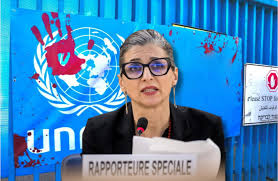
“The absolute incapacity of Western leaders to enforce international law when it comes to Israel is EPIC,” said UN special rapporteur for the occupied Palestinian territory Francesca Albanese on Tuesday. “Ministers, Prime Ministers, Presidents of Republic: Doing NOTHING, diverting attention, sanctioning individual ministers IS NOT enforcing the [international] law that was developed after the Holocaust and WWII to prevent another Holocaust and WWII.”
When Israelis Call It Out: Finding Genocide in Gaza
29 July 2025 Dr Binoy Kampmark, https://theaimn.net/when-israelis-call-it-out-finding-genocide-in-gaza/
It’s been almost an article of faith among Israeli officials: the state they represent is incapable of genocide, their actions always spurred by the noblest, necessary motivations of self-defence against satanic enemies who wish genocide upon Jews. Over time, as Holocaust scholar Omer Bartov writes, “Ethical concerns and moral qualms were brushed aside as either marginal or distracting in the face of the ultimate cataclysm that is the genocide of the Jews.”
This form of reasoning, known otherwise as “Holocaust-ism” or “Shoah-tiyut”, is a moral conceit left bare in the war of annihilation being waged in Gaza against the Palestinian populace. Israeli human rights groups have taken note of this, despite the drained reserves of empathy evident in the Israel proper. (A Pew Research Center poll conducted last month found that a mere 16% of Jewish Israelis thought peaceful coexistence with Palestinians was possible.)
In its latest report pointedly titled Our Genocide, the Israeli human rights organisation B’Tselem offers a blunt assessment: “Israel’s policy in the Gaza Strip and its horrific outcomes, together with statements by senior Israeli politicians and military commanders about the goals of the attack, leads us to the unequivocal conclusion that Israel is taking coordinated action to intentionally destroy Palestinian society in the Gaza Strip. In other words: Israel is committing genocide against Palestinians in the Gaza Strip.”
The infliction of genocide, the organisation acknowledges, is a matter of “multiple and parallel practices” applied over a period of time, with killing being merely one component. Living conditions can be destroyed, concentration camps and zones created, populations expelled and policies to systematically prevent reproduction enacted. “Accordingly, genocidal acts are various actions intended to bring about the destruction of a distinct group, as part of a deliberate, coordinated effort by a ruling authority.”
Our Genocide suggests that certain conditions often precede the sparking of a genocide. Israel’s relations with Palestinians had been characterised by “broader patterns of settler-colonialism”, with the intention of ensuring “Jewish supremacy over Palestinians – economically, politically, socially, and culturally.”
B’Tselem draws upon three crucial elements centred on ensuring “Jewish supremacy over Palestinians”: “life under an apartheid regime that imposes separation, demographic engineering, and ethnic cleansing; systemic and institutionalized use of violence against Palestinians, while the perpetrators enjoy impunity; and institutionalized mechanisms of dehumanization and framing Palestinians as an existential threat.” The attacks on Israel by Hamas and other militant groups on October 7, 2023 was a violent event that created a “sense of existential threat among the perpetrating group” enabling the “ruling system to carry out genocide.” As B’Tselem Executive Director Yuli Novak notes, this sense of threat was promoted by an “extremist, far-right messianic government” to pursue “an agenda of destruction and expulsion.”
Israeli policy in the Strip since October 2023 could not be rationalised as a focused, targeted attempt to destroy the rule of Hamas or its military efficacy. “Statements by senior Israeli decision-makers about the nature and assault in Gaza have expressed genocidal intent throughout.” Ditto Israeli military officers of all ranks. Gaza’s residents had been dehumanised, with many Jewish-Israelis believing “that their lives are of negligible value compared to Israel’s national goals, if not worthless altogether.”
The report also notes the use of certain terminology that haunts the literature of genocidal euphemism: the creation of “humanitarian zones” that would still be bombed despite supposedly providing protection for displaced civilians; the use of “kill zones” by the Israeli military and the absence of any standardised rules of engagement through the Strip, often “determined at the discretion of commanders on the ground or based on arbitrary criteria.”
Wishing to be comprehensive, the authors of the report do not ignore Israel’s actions in the West Bank and occupied East Jerusalem. Airstrikes regularly take place against refugee camps in the northern part of the territory since October 2023. Even more lethal open-fire policies have been used in the West Bank, with the use of kill zones suggesting “the broader ‘Gazafication’ of Israel’s methods of warfare.”
Another group, Physicians for Human Rights-Israel (PHRI), has also published a legal-medical appraisal on the intentional destruction of Gaza’s healthcare system, finding that the Israeli campaign in Gaza “constitutes genocide under the 1948 Genocide Convention.” The evidence examined by the group “shows a deliberate and systematic dismantling of Gaza’s healthcare system and other vital systems necessary for the population’s survival.” The evolving nature of the campaign suggested a “deliberate progression” from the initial bombing and forced evacuation of hospitals in the northern part of the Strip to calculated collapse of the healthcare system across the entire enclave. The dismantling of the health system involved rendering hospitals “non-functional”, the blocking of medical evaluations and the elimination of such vital services as trauma care, surgery, dialysis and maternal health.
Added to this has been the direct targeting of health care workers, involving the death and detention of over 1,800 members “including many senior specialists” and the deliberate restriction of humanitarian relief through militarised distribution points that pose lethal risks to aid recipients. “This coordinated assault has produced a cascading failure of health and humanitarian infrastructure, compounded by policies leading to starvation, disease and the breakdown of sanitation, housing, and education systems.”
PHRI contends that, at the very least, three core elements of Article II of the Genocide Convention are met: the killing of members of a group (identified by nationality, ethnicity, race or religion); causing serious bodily or mental harm to members of that group and deliberately inflicting on the group those conditions of life to bring about its destruction in whole or in part.
In accepting that genocide is being perpetrated against the Palestinians, Our Genocide makes that most pertinent of points: the dry legal analysis of genocide tends to be distanced from a historical perspective. “The legal definition is narrow, having been shaped in large part by the political interests of the states whose representatives drafted it.” The high threshold of identifying genocide, and the international jurisprudence on the subject, had produced a disturbing paradox: genocide tends to be recognised “only after a significant portion of the targeted group has already been destroyed and the group as such has suffered irreparable harm.” The thrust of these clarion calls from B’Tselem and PHRI is urgently clear: end this state of affairs before the Palestinians become yet another historical victim of such harm.
Trump Shows Strong Support for Israel as Palestinians in Gaza Starve to Death
Trump has been claiming that a ceasefire deal was close, but now he is appearing to suggest that Israel should escalate its genocidal war.
After the US and Israel quit ceasefire talks, Trump suggested it was time for Israel to ‘finish the job’
by Dave DeCamp | July 27, 2025, https://news.antiwar.com/2025/07/27/trump-shows-strong-support-for-israel-as-palestinians-in-gaza-starve-to-death/
President Trump has shown strong support for Israel in recent days, while much of the world has been outraged over the images of Palestinians who are starving to death due to the US-backed Israeli siege on Gaza.
After the US and Israel quit ceasefire talks, Trump blamed the lack of progress on Hamas and suggested it was time for Israel to “finish the job” in Gaza. “I think they want to die, and it’s very, very bad,” Trump said on Friday, referring to Hamas.
For its part, Hamas has said that it was surprised by the US and Israel quitting the truce talks and that it was committed to continuing the process until a deal was reached.
In recent weeks, Trump has been claiming that a ceasefire deal was close, but now he is appearing to suggest that Israel should escalate its genocidal war. “They’re gonna have to fight, and they’re gonna have to clean it up. You’re gonna have to get rid of [Hamas],” he said.
Israeli officials told Axios that they weren’t sure if Trump’s comments were a negotiating tactic or a “green light” for Israeli Prime Minister Benjamin Netanyahu to use even more extreme military measures. The report said the Trump administration was rethinking its Gaza strategy, but there’s no sign it’s considering putting pressure on Israel to reach a ceasefire.
Israeli officials also told Axios that Trump has applied virtually no pressure on Netanyahu to end the slaughter in Gaza in recent months. “In most calls and meetings, Trump told Bibi, ‘Do what you have to do in Gaza.’ In some cases, he even encouraged Netanyahu to go harder on Hamas,” one official said.
While meeting with European Commission President Ursula von der Leyen in Scotland on Sunday, Trump was asked about the images of starving children in Gaza. The president said people were “stealing the food,” a reference to Israel’s unfounded claims that Hamas has been stealing massive amounts of aid, then quickly pivoted to different topics.
In other comments, Trump said the issue of food shortages in Gaza was an “international problem,” not a “US problem.” But Israel is reliant on US military aid to sustain its military operations in Gaza, and Trump has the power to end the genocidal war by leveraging that support.
“Release Israeli hostages? Get serious. We’ve got a genocide to complete”
28 July 2025 AIMN Editorial By Walt Zlotow, West Suburban Peace Coalition, Glen Ellyn IL, https://theaimn.net/release-israeli-hostages-get-serious-weve-got-a-genocide-to-complete/
As reported in The Times of Israel July 24, far-right Heritage Minister Amichay Eliyahu told Haredi radio station Kol Barama that:
“The government is racing ahead for Gaza to be wiped out. Thank God, we are wiping out this evil. We are pushing this population that has been educated on ‘Mein Kampf’.
“All Gaza will be Jewish. We aren’t racists… We are fighting those who fight us.”
Tho one of the most explicit Israeli public statements admitting Israel’s Gaza genocide, it’s just one of many from Israeli government officials and pundits thruout this 22 month long atrocity. America remains fully committed to the genocide with tens of billions in weapons, intel, logistics, vetoes of UN ceasefire resolutions. That would be like FDR sending the Nazis Zylon B gas to finish off European Jewry and other Nazi undesirables during WWII.
The US just withdrew from ceasefire negotiations between Israel and Hamas because Hamas wants a permanent ceasefire, ending the genocide before releasing remaining Israeli hostages.
Neither Israel nor America prioritizes the hostages’ release. That goal is a distant second to wiping out the remaining starving Palestinians so Gaza can be rebuilt, possibly by Trump Inc., as a waterfront showplace of Greater Israel.
More on Amichay Eliyahu here. He’s nasty.
They Intend To Keep Lying About Gaza Until They’ve Emptied It Out
Caitlin Johnstone, Jul 27, 2025, https://www.caitlinjohnst.one/p/they-intend-to-keep-lying-about-gaza?utm_source=post-email-title&publication_id=82124&post_id=169369626&utm_campaign=email-post-title&isFreemail=true&r=1ise1&triedRedirect=true&utm_medium=email
We’re back at the part of the news cycle where Israel tells the world it’s going to allow a bit more aid into Gaza in order to mollify its allies and reduce the public outcry as images of starving children draw objections from the west.
This is just Israel giving the Kier Starmers and Anthony Albaneses of the western world just enough of an excuse to go silent about the starvation of Gaza again. They will then continue starving Gaza. This psychopathic python-like suffocation tactic is how Israel has gotten Gaza to the point it’s at now.
And of course it’s worth noting that Israel’s announcement that it will allow more food into Gaza so people don’t starve completely debunks all its claims these last few days that people in Gaza are starving because of Hamas and the UN. They’re starving because Israel is starving them.
Israeli officials have told The New York Times that there has never been any evidence of Hamas stealing aid from UN trucks in any significant way, a claim Israel and its apologists have been falsely asserting for two years. They lie about everything. They never stop lying.
We’ve been asked to believe a lot of intensely stupid narratives throughout this genocide, but “it’s actually HAMAS who’s starving Gaza” has got to be the dumbest one yet. The fact that Israel and its supporters tried to blame the UN and Hamas for Israel’s extensively documented starvation campaign makes it clear that these freaks intend to keep lying about this thing until the last dying gasp of the last Palestinian.
Gideon Levy has a new article out titled “Denying Gaza’s Starvation Is No Less Vile Than Denying the Holocaust”. Personally I’d take it much further and say it’s vastly worse than denying the Holocaust, because it’s helping to kill people right this very moment.
I’m sorry if this is antisemitic but I think it’s wrong to deliberately starve thousands of children to death.
If you found out someone was trapping small children in a confined space and then intentionally starving them to death, what words would you use to describe that person?
Think about how fucked up you’d need to be inside to starve a baby, or to support someone who is doing so. Think how many millennia of evolutionary conditioning you’d have to override as a human, as a primate, as a mammal, to stifle the screaming you feel inside when you see a skeletal infant. You’d have to make yourself less of a human inside to support the inhumanity.
The worst thing Donald Trump has ever done is commit genocide in Gaza. Everything else pales in comparison. He could end the Gaza holocaust with a phone call just like Biden could have, and he hasn’t. For that reason alone he deserves to die in a cage.
Children’s Youtube star Ms Rachel has announced that she won’t be working with anyone who doesn’t publicly oppose Israel’s genocide in Gaza.
The thing I love about Ms Rachel is that nobody was pushing her to speak out about Gaza. Not one person was out here saying “Ms Rachel’s silence on Rafah is deafening!” She could’ve gotten away with being silent on Gaza forever and suffered no professional consequences, but she spoke out anyway because she’s a genuinely good person.
Today I got my first comment telling me I was wrong to oppose Israel in October 2023 but now I’m right because things have changed. I expect to receive many more such comments going forward as people navigate the difficult cognitive dissonance terrain of realizing they’ve been wrong this entire time.
Israel apologists love using circular reasoning to dismiss outlets and organizations which criticize Israel. If you’ve ever argued with them online you know what I’m talking about.
It’s basically this —
Normal person: Here’s evidence of Israel doing bad things.
Israel apologist: You can’t cite THAT outlet! That outlet is Hamas propaganda!
Normal person: What? What makes them Hamas propaganda?
Israel apologist: They’re always saying Israel does bad things!
Or this —
Normal person: Israel is committing genocide.
Israel apologist: Nuh-uh, that’s blood libel.
Normal person: Amnesty International, Human Rights Watch and UN human rights experts all say it’s genocide.
Israel apologist: Those groups are antisemitic!
Normal person: What? Why do you say that?
Israel apologist: They’re always spreading antisemitic lies about Israel!
Normal person: Such as?
Israel apologist: Such as saying Israel is committing genocide!
Everyone spreading lies today to help Israel carry out the final stages of its final solution knows exactly what they’re doing. We see you, you sick fucks. We’ll remember you forever.
Israeli Navy Seizes Second Gaza-Bound Freedom Flotilla Vessel in 2 Months
“The interception occurred in international waters outside Palestinian territorial waters off Gaza, in violation of international maritime law,” the Freedom Flotilla Coalition said.
Common Dreams, Olivia Rosane, 26 July 25
The Israeli military intercepted and seized the Gaza Freedom Flotilla vessel The Handala late Saturday night local time as it attempted to deliver desperately needed humanitarian aid to the besieged people of Gaza.
The Freedom Flotilla Coalition reported that Israeli forces cut the cameras on board the ship at 11:43 pm local time, when it was around 40 nautical miles from Gaza.
Jul 26, 2025
The Israeli military intercepted and seized the Gaza Freedom Flotilla vessel The Handala late Saturday night local time as it attempted to deliver desperately needed humanitarian aid to the besieged people of Gaza.
The Freedom Flotilla Coalition reported that Israeli forces cut the cameras on board the ship at 11:43 pm local time, when it was around 40 nautical miles from Gaza.
SUBSCRIBE TO OUR FREE NEWSLETTER
Quality journalism. Progressive values. Direct to your inbox.
“The unarmed boat was carrying lifesaving supplies when it was boarded by Israeli forces, its passengers abducted, and its cargo seized,” the coalition wrote. “The interception occurred in international waters outside Palestinian territorial waters off Gaza, in violation of international maritime law.”
Israel’s Foreign Ministry confirmed that its navy had intercepted the ship, as Al Jazeera reported……………………………………………………………………………………….. https://www.commondreams.org/news/israel-gaza-freedom-flotilla
Chris Hedges: The Gaza Riviera
July 27, 2025 ,By Chris Hedges / ScheerPost, https://scheerpost.com/2025/07/27/chris-hedges-the-gaza-riviera/
Israelis do not see the images of skeletal corpses of Palestinian children who they have starved to death as a curse. They do not see the slain families they gun down at food hubs — designed not to deliver aid but lure starving Palestinians into a massive concentration camp in the south of Gaza in preparation for deportation — as a war crime. Israelis do not look at the savage bombing and shelling that kill or wound dozens of Palestinian civilians, where an average of 28 children die daily, as anything extraordinary. They do not see the wasteland of Gaza, pulverized by bombs and methodically being torn down by bulldozers and excavators, leaving virtually the entire population of Gaza homeless, as barbaric. They do not see the destruction of water purification plants, decimation of hospitals and clinics, where doctors and medical staff are often unable to work because they are weak from malnutrition, as savage. They do not blink at the assassinations of doctors as well as journalists, 232 of whom have been murdered for trying to document the horror.
Israelis have blinded themselves morally and intellectually. They view the genocide through the lens of a bankrupt media and political class that tells them only what they want to hear and shows them only what they want to see. They are intoxicated by the power of their industrial weapons and license to kill with impunity. They are drunk on self-adulation and the fantasy that they are the vanguard of civilization. They believe that the extermination of a people, including children, condemned as human contaminants, makes the world, especially their world, a happier and safer place.
They are the heirs of Pol Pot, the killers that carried out the genocides in East Timor, Rwanda and Bosnia and, yes, the Nazis. Israel, like all genocidal states — no population since World War II has been dispossessed and starved with such speed and ruthlessness – has a final solution that would have earned the stamp of approval from Adolf Eichmann.
Starvation was always the plan, the preordained final chapter of the genocide. Israel methodically set out from the beginning of the genocide to destroy sources of food, bombing bakeries and blocking food shipments into Gaza, something it has accelerated since March, when it severed nearly all food supplies. It targeted the United Nations Relief and Works Agency for Palestine Refugees in the Near East (UNRWA) — on which most Palestinians depended on for food — for destruction, accusing its employees, without providing evidence, of being involved in the attacks of Oct. 7. This accusation was used to give funders such as the United States, which provided $422 million to the agency in 2023, the excuse to halt financial support. Israel then banned UNRWA.
Over 1,000 Palestinians have been killed by Israeli soldiers and U.S. mercenaries in the chaotic scramble to get one of the few food packages distributed during the brief blocks of time, usually an hour, at the four aid sites set up by the Israeli-backed Gaza Humanitarian Foundation, according to the U.N. Human Rights Office.
Once Gaza was turned into a moonscape after 21 months of saturation bombing, once Palestinians were forced to live in tents, under crude tarps or in the open air, once clean water, food and medical aid became nearly impossible to find, once civil society was obliterated, Israel began its grim campaign to starve the Palestinians out of Gaza.
One in three people in Gaza are going multiple days without eating, according to the U.N.
Starvation is not a pretty sight. I covered the famine in Sudan in 1988 that took an estimated 250,000 lives. There are streaks in my lungs — scars from standing amid hundreds of Sudanese who were dying of tuberculosis. I was strong and healthy and fought off the contagion. They were weak and emaciated and did not.
I watched hundreds of skeletal figures, ghosts of human beings, trudge at a glacial pace across the barren Sudanese landscape. Hyenas, accustomed to eating human flesh, routinely picked off small children. I stood over clusters of bleached human bones on the outskirts of villages where dozens of people, too weak to walk, had laid down in a group and never got up. Many were the remains of entire families.
The starved lack enough calories to sustain themselves. They eat anything to survive — animal feed, grass, leaves, insects, rodents, even dirt. They suffer from constant diarrhea. They have trouble breathing because of respiratory infections. They rip up tiny bits of food, often spoiled, and ration it in a vain attempt to hold off the gnawing hunger pains.
Starvation reduces the iron needed to produce hemoglobin, a protein in red blood cells that carries oxygen from the lungs to the body, and myoglobin, a protein that provides oxygen to muscles, coupled with a lack of vitamin B1, which affects heart and brain function. Anemia sets in. The body, in essence, feeds on itself. Tissue and muscle waste away. It is impossible to regulate body temperature. Kidneys shut down. Immune systems crash. Vital organs atrophy. Blood circulation slows. The volume of blood decreases. Infectious diseases such as typhoid, tuberculosis and cholera become an epidemic, killing people by the thousands.
It is impossible to concentrate. Emaciated victims succumb to mental and emotional withdrawal and apathy. They do not want to be touched or moved. The heart muscle is weakened. Victims, even at rest, are in a state of virtual heart failure. Wounds do not heal. Vision is impaired with cataracts, even among the young. Finally, wracked by convulsions and hallucinations, the heart stops. This process can last up to 40 days for an adult. Children, the elderly and the sick expire at faster rates. This is the future Israel has preordained for the two million people in Gaza.
But it is not the future Israelis see. They see paradise. They see an ethno-nationalist Jewish state where Palestinians, whose land they stole and occupied and whose people they have subjugated and forced into an apartheid existence, do not exist. They see cafes and hotels rising up where thousands, perhaps tens of thousands, of bodies lie buried under the rubble. They see tourists frolicking on the Gaza beachfront, a vision enhanced by an Artificial Intelligence-generated video uploaded to social media by Israeli Minister of Innovation, Science and Technology, Gila Gamliel. It is what a Gaza devoid of Palestinians would look like, echoing the absurdist AI video posted by Donald Trump.
In the new video, carefree Israelis eat at seaside restaurants. Anchored in the sparkling Mediterranean are luxury yachts. Gleaming hotels and office high rises, including a Trump Tower, dot the beachfront. Attractive residential neighborhoods stand where now there are broken, jagged mounds of concrete. The video shows Benjamin Netanyahu and his wife, Sara, as well as Trump and Melania, strolling along the seaside.
Gamliel, like other Israeli leaders and Trump, cynically uses the term “voluntary emigration” to describe the ethnic cleansing of Gaza. This omits the stark choice Israel actually offers the Palestinians — leave or die.
Finance Minister Bezalel Smotrich has called for a “security annexation” of the northern Gaza Strip and vowed that Gaza will become an “inseparable part of the State of Israel.” He made the remarks at a Knesset conference called “The Gaza Riviera — from vision to reality,” which presented proposals for the building of Jewish colonies in Gaza. Smotrich said Israel would “relocate Gazans to other countries,” and that Trump endorsed the plan.
Israeli Minister of Heritage Amichai Eliyahu, who once proposed dropping a nuclear bomb on Gaza, declared that “All Gaza will be Jewish.” The Israeli government “is racing ahead for Gaza to be wiped out,” Eliyahu said. He described Palestinians as Nazis. “Thank God, we are wiping out this evil. We are pushing this population that has been educated on ‘Mein Kampf.’”
Genocidal killers embrace fantasies of eradicating a native population and expanding their ethnonationalist state. The Nazis carried out their genocidal assault, which included mass starvation, on Slavs, Eastern European Jews and other indigenous people, dismissed as Untermenschen, or subhumans. Colonists were then to be shipped to Central and Eastern Europe to Germanize the occupied territory.
These killers do not reckon with the darkness they unleash. The upscale beachfront properties dreamt of by Israel will never appear, just as the modern, exclusively Serb capital, with its golden domed cathedral, imposing presidency building, 15-story clock tower, state-of-the-art medical center and national theater with a 72-foot revolving stage was never built on the ruins of Bosnia.
Rather, there will be ugly apartment blocks, populated by the usual miscreants, proto-fascists, racists and mediocrities who live in the Jewish colonies in the West Bank. These ultranationalists, who have formed rogue militias to seize Palestinian land and joined the Israeli army in murdering over 1,000 Palestinians in the West Bank since Oct. 7, will define Israel. They are the Israeli version of the 3-million-strong Pancasila Youth — Indonesia’s equivalent of the Brown Shirts or the Hitler Youth — that in 1965 helped carry out the genocidal mayhem that left half a million to one million dead.
These rogue militias, equipped with automatic weapons provided by the Israeli government, lynched Saifullah Musallet, a 20-year-old Palestinian-American, who was attempting to protect his family’s land two weeks ago. He is the fifth U.S. citizen killed in the West Bank since Oct. 7.
Once these Israeli goons and thugs are done with the Palestinians, they will turn on each other.
The genocide in Gaza signals the abolition, for Israelis as well as Palestinians, of the rule of law. It marks the obliteration of even the pretense of an ethical code. Israelis are the barbarians they condemn. If there is any warped justice in this genocide it is that Israelis, once they finish with the Palestinians, will be forced to live together in moral squalor.
Intentional Policies: Dystopian Killing Fields and Starvation in Gaza
27 July 2025 Dr Binoy Kampmark, https://theaimn.net/intentional-policies-dystopian-killing-fields-and-starvation-in-gaza/
Starvation as a way of life. Starvation as a way of death. Starvation as policy, justification and vengeance. As the state of Israel hums along frittering, scratching and violating international human rights conventions, the chroniclers are kept busy on the morgue’s relentlessly growing inventory and peace’s loss. Of late, a vast number of humanitarian organisations have decided to express their collective outrage in a statement at what is happening in Gaza.
The statement as run by Doctors Without Borders on July 23 is stark: “As the Israel government’s siege starves the people of Gaza, aid workers are now joining the same food lines, risking being shot just to feed their families. With supplies now totally depleted, humanitarian organisations are witnessing their own colleagues and partners waste before their eyes.” Two months after the implementation of the controlled aid scheme by Israel, utilising the grotesquely named Gaza Humanitarian Foundation, over 100 organisations were “sounding the alarm and urging governments to act: open all land crossings; restore the full flow of food, clean water, medical supplies, shelter items, and fuel through a principled, UN-led mechanism; end the siege; and agree to a ceasefire now.”
Outside Gaza, and even within the Strip, abundant supplies of food, clean water, medical supplies, shelter items and fuel sat untouched. Humanitarian organisations had been prevented from accessing them. “The Government of Israel’s restrictions, delays, and fragmentation under its total siege have created chaos, starvation, and death.” A paltry figure of 28 trucks a day were being allowed into the Strip.
The relevant gore is recounted: massacres at food sites in the Gaza Strip are impossible to ignore; the figures from the UN suggest that 875 Palestinians had been slaughtered while seeking sustenance as of July 13. The frequency of these “flour massacres” is also receiving comment from those in the employ of the operation being run by GHF, policed by private contractors and the IDF. Retired US special forces officer Anthony Aguilar, who resigned from working with the GHF, told the BBC that he had “witnessed the Israeli Defense Forces shooting at crowds of Palestinians.” During his entire career, he had never seen such “brutality and use of indiscriminate and unnecessary force against a civilian population, an unarmed, starving population.”
The NGO statement goes on to note the rise of cases of acute malnutrition, most prevalent among children and the elderly. (The World Food Programme has warned that one in three Gazans do not eat for days at a time, with 90,000 women and children requiring treatment.) “Illnesses like acute watery diarrhea are spreading, markets are empty, waste is piling up, and adults are collapsing on the streets from hunger and dehydration.”
In the face of this, international law’s decrees appear like the neglected statues of a distant land. The three sets of Provisional Measures Orders from the International Court of Justice, handed down since 2024, have warned Israel to observe its obligations under the UN Genocide Convention and address the humanitarian crisis in the Strip. In its modifying order of provisional measures handed down on March 28, 2024, the ICJ instructed Israel to “take immediate and effective measures to enable the provision of urgently needed basic services and humanitarian assistance to address famine and starvation and the adverse conditions of life faced by Palestinians in Gaza.” These include the provision of “food, water, electricity, fuel, shelter, clothing, hygiene and sanitation requirements, as well as medical supplies and medical care” and “increasing the capacity of land crossing points and maintaining them open for as long as necessary.”
The latest concession from Israel to deal with this engineered humanitarian catastrophe is a promise to open humanitarian corridors to permit UN convoys into the Strip. In addition to that, COGAT, the Israeli military agency overseeing humanitarian affairs in Gaza, has announced that Jordan and the United Arab Emirates will be permitted to parachute humanitarian aid to those in Gaza. UK Prime Minister Sir Keir Starmer has made a small team of British military planners and logisticians available to assist Jordan in this endeavour. On July 27, the IDF also released a statement claiming it had made the first airdrop including “seven packages of aid containing flour, sugar, and canned food.” These efforts, in their practical futility, are a reiteration of the humanitarian airdrops conducted by the US military and Jordan’s air force in March last year.
These drops will do little to alter the cruel, strangulating model of aid delivery in place, emboldening the fittest recipients capable of outpacing their adversaries. Those recipients will also be fortunate not to be injured or killed by the dropped packages, instances of which were recorded in March last year. “Why use airdrops,” asks Juliette Touma, chief spokeswoman for the United Nations agency for Palestinian refugees, “when you can drive hundreds of trucks through the borders?” Using trucks was “much easier, more effective, faster, cheaper.” Precisely why using them is so unappealing to the IDF.
Instead of focusing on isolating Israel, its allies prefer piecemeal approaches that prolong the suffering of the Palestinians. Measures such as those announced by Starmer to “evacuate children from Gaza who need medical assistance, bringing them to the UK for specialist and medical treatment” only serve to encourage the Israeli war machine. The aid drops serve to do much the same. The objective is one of inflicting a sufficient degree of harm that will encourage the eventual depopulation of the enclave. Israel’s allies, with intentional or unintentional complicity, will clean up.
1 This Month

of the week – Shut Down Drone Warfare!


Tell the Ukrainian Government to Drop Prosecution of Peace Activist Yurii Sheliazhenko

Petition to revoke the licensing of the Near Surface Nuclear Disposal Facility (NSDF) at Chalk River. https://www.ourcommons.ca/petitions/en/Petition/Details?Petition=e-7247
To see nuclear-related stories in greater depth and intensity – go to https://nuclearinformation.wordpress.com
-
Archives
- April 2026 (114)
- March 2026 (251)
- February 2026 (268)
- January 2026 (308)
- December 2025 (358)
- November 2025 (359)
- October 2025 (376)
- September 2025 (257)
- August 2025 (319)
- July 2025 (230)
- June 2025 (348)
- May 2025 (261)
-
Categories
- 1
- 1 NUCLEAR ISSUES
- business and costs
- climate change
- culture and arts
- ENERGY
- environment
- health
- history
- indigenous issues
- Legal
- marketing of nuclear
- media
- opposition to nuclear
- PERSONAL STORIES
- politics
- politics international
- Religion and ethics
- safety
- secrets,lies and civil liberties
- spinbuster
- technology
- Uranium
- wastes
- weapons and war
- Women
- 2 WORLD
- ACTION
- AFRICA
- Atrocities
- AUSTRALIA
- Christina's notes
- Christina's themes
- culture and arts
- Events
- Fuk 2022
- Fuk 2023
- Fukushima 2017
- Fukushima 2018
- fukushima 2019
- Fukushima 2020
- Fukushima 2021
- general
- global warming
- Humour (God we need it)
- Nuclear
- RARE EARTHS
- Reference
- resources – print
- Resources -audiovicual
- Weekly Newsletter
- World
- World Nuclear
- YouTube
-
RSS
Entries RSS
Comments RSS
 nuclear-news