Iran awaits incoming Biden U.S. administration – is unlikely to avenge the assassination of nuclear scientist
|
By TOI STAFF 4 Dec 20, Iran is unlikely to retaliate for the assassination of top nuclear scientist Mohsen Fakhrizadeh before US President-elect Joe Biden takes office, in order not to jeopardize a potential change in American policy on sanctions relief, the US envoy to Iran and Venezuela said Thursday.Fakhrizadeh, the scientist previously said by Israel and the US to head Iran’s rogue nuclear weapons program, was killed in a military-style ambush Friday on the outskirts of Tehran. The attack reportedly saw a truck bomb explode and gunmen open fire on Fakhrizadeh……… srael has long been suspected of carrying out a series of targeted killings of Iranian nuclear scientists nearly a decade ago, in a bid to curtail Iran’s rogue nuclear weapons program. It has made no official comment on the matter. Israeli TV coverage noted that Friday’s attack was far more complex than any of the previous incidents. https://www.timesofisrael.com/us-envoy-iran-unlikely-to-avenge-assassination-of-nuclear-scientist/ |
|


Trump’s Support for Israel’s Killing of Iranian Nuclear Scientist Could Lead to War
 Trump’s Support for Israel’s Killing of Iranian Scientist Could Lead to War, Trump’s Support for Israel’s Killing of Iranian Scientist Could Lead to War, Marjorie Cohn, Truthout– December 1, 2020,
On November 27, Israel assassinated Mohsen Fakhrizadeh, Iran’s top nuclear scientist. International law expert Richard Falk called it “an outrageous act of state terrorism.” Although the Israeli government has not claimed credit for the illegal killing, there is little doubt of its culpability. Trump implicitly praised the assassination, retweeting a comment by Israeli journalist and intelligence expert Yossi Melman that the killing was a “major psychological and professional blow” to Iran. This was an “implicit approval if there ever was one,” according to Sina Toossi, a senior research analyst at the National Iranian American Council. The Israel Defense Forces have been ordered to prepare for a possible U.S. military attack on Iran before Trump’s term ends, senior Israeli officials told Axios. They expect “a very sensitive period” leading up to Biden’s inauguration. In mid-November, Trump requested plans to attack Iran’s Natanz nuclear power facility but was reportedly talked out of it. Israeli Prime Minister Benjamin Netanyahu met with Crown Prince Mohammed bin Salman in Saudi Arabia and strategized about Iran. Secretary of State Mike Pompeo visited Israel, the West Bank, the Golan Heights and several countries in the Gulf to discuss Iran. During Pompeo’s visit to the Gulf, the U.S. Central Command announced that B-52 strategic bombers carried out a “short-notice, long-range mission into the Middle East to deter aggression and reassure U.S. partners and allies.” And in an unusual move, the U.S. military sent the aircraft carrier the U.S.S. Nimitz back to the Gulf region following the assassination of Fakhrizadeh. “All options are on the table,” State Department officials who were traveling with Pompeo told reporters. Trump Appears to Have Outsourced His Iran Policy to IsraelIsraeli leaders think Iran poses an existential threat to Israel’s existence, in spite of the fact that Iran has never attacked Israel or any other country in the last 200 years. In fact, Israel is the only Middle East country that has nuclear weapons and it refuses to join the new UN International Treaty on the Non-Proliferation of Nuclear Weapons. At Netanyahu’s urging, Trump pulled the United States out of the Iran nuclear deal, which was preventing Iran from developing nuclear weapons. And in January, the Trump administration illegally assassinated Iran’s top general, Qassim Suleimani. Shortly before that assassination, Pompeo followed the same pattern — traveling and meetings with U.S. allies in the region, according to Iranian American journalist Negar Mortazavi. The Iran nuclear agreement is embodied in the 2015 Joint Comprehensive Plan of Action (JCPOA), negotiated during the Obama administration between Iran, the U.S., France, U.K., Russia, China, Germany and the European Union. Iran, which has consistently maintained that its nuclear program is only intended for peaceful purposes, agreed to restrict its uranium enrichment and other nuclear activities. In return, it received relief from the punishing U.S. sanctions. The UN International Atomic Energy Agency certified several times that Iran was complying with its obligations under the agreement. Nevertheless, Trump withdrew from the JCPOA in 2018 and reimposed the sanctions against Iran. One year after the U.S. withdrawal, Iran began to pull back from its commitments under the JCPOA, which allows a party to abandon its obligations if another party is in noncompliance. Trump intensified the sanctions that have devastated Iran’s economy, impoverished 82 million Iranians and hindered its ability to respond to the pandemic. With his campaign of “maximum pressure” on Iran, Trump has waged economic warfare against the Iranian people…….. It is becoming clear that Trump aims to cater to Israel’s agenda until he leaves office. U.S. and Israel Try to Bait Iran to Retaliate and Lead to Middle East WarHopefully, Iran will resist the apparent U.S.-Israeli attempt to provoke it into retaliating for Fakhrizadeh’s assassination and thereby provide Trump with a pretext to launch a retaliatory strike, which would ignite a war in the Middle East. The U.S. military already has more than 40,000 troops in the region on high alert. Iranian President Hassan Rouhani pledged to respond to the assassination of Fakhrizadeh at the “proper time.” Rouhani said, “The Iranian nation is smarter than falling into the trap of the Zionists. They are thinking to create chaos.” The day after the assassination, Iran’s parliament unanimously voted to end future UN inspections of Iran’s nuclear sites. The inspections had confirmed that Iran was in compliance with the JCPOA. Terminating them could spell an end to the nuclear deal……. It is up to Congress, as well as civil society, to prevent the Biden administration from continuing the U.S. policy of caving to Israel’s demands — a practice that not only deepens the oppression of the Palestinians but could also actively imperil the national security of the United States. Meanwhile, we must pressure Congress to prevent Trump from attacking Iran. The consequences to the Middle East and the entire world would be catastrophic. https://truthout.org/articles/trumps-support-for-israels-killing-of-iranian-scientist-could-lead-to-war/?eType=EmailBlastContent&eId=1a5fde20-0879-45fe-9c19-50ff3b76e37e |
|
UK’s projected high electricity costs for Hinkley nuclear project – a warning for Egypt
for electricity generated by the El Dabaa plant that Russia’s state-owned
Rosatom is building in Egypt.
predicted that prices per megawatt hour – how much it costs to produce one
megawatt of energy for one hour – from El Dabaa would be at least four
times more than from renewable power sources. Renewable energy prices have
fallen significantly since 2016, while nuclear power has become more
expensive.
from the Hinkley Point C nuclear power station that EDF is building for
decades after the plant is completed. While construction does not follow
the Build-Own-Operate model, EDF negotiated a 35-year power purchase price
linked to inflation with the British government in 2016 to extract as much
profit as possible. The British government’s Public Accounts Committee
conservatively estimated that this deal will cost consumers an additional
$40 billion (about R615 billion) over the 35 years of the contract compared
with alternative energy sources such as solar and wind.https://allafrica.com/stories/202012010852.html
Iran considers barring international nuclear inspectors, following assassination of scientist
Telegraph 29th Nov 2020, Iran was weighing its response Sunday to the killing of its top nuclear
scientist, which it blames on arch-foe Israel, as his body was taken to
Shiite shrines ahead of being buried. Two days after Mohsen Fakhrizadeh
died following a firefight between his guards and unidentified gunmen
outside Tehran, parliament called in a statement for international
inspectors to be barred from nuclear facilities.
UAE, Jordan Condemn Killing of Iranian Nuclear Scientist, Call for Self-restraint
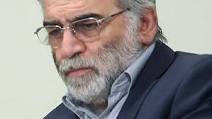 UAE, Jordan Condemn Killing of Iranian Nuclear Scientist, Call for Self-restraint, https://www.haaretz.com/middle-east-news/iran/.premium-uae-condemns-killing-of-iranian-nuclear-scientist-calls-for-self-restraint-1.9335920 The states cautioned against regional escalations after the killing of Iranian nuclear scientist Mohsen Fakhrizadeh
The United Arab Emirates condemned on Sunday the killing of top Iranian nuclear scientist Mohsen Fakhrizadeh and called on all parties to exercise self-restraint to avoid sliding the region into new levels of instability, the state news agency reported on Twitter.
Jordan, a staunch U.S. ally also condemned the assassination of Fakhrizadeh, state media reported, and called for collective efforts to avoid an escalation in tensions in the Middle East region.
It is likely that Trump gove the nod for assassination of Iran nuclear scientist
 Observer 29th Nov 2020, As the president lashes out wilfully during his last days in office, it seems likely that he at least gave the nod to this killing. Iran’s leaders, mindful of previous, unexplained killings of its nuclear experts, have been quick to blame Israel for Fakhrizadeh’s death. But American and regional analysts suggest that if Israel was involved, it would only have acted after getting the nod from Trump.
This explanation makes sense for several reasons. Like last January’s assassination of the Revolutionary Guard general Qassem Suleimani, Friday’s outrage is an extraordinarily provocative act. It risks goading Iran into armed retaliation against its most prominent enemies – Israel, Saudi Arabia and US forces based in the region. The assassination, in this sense, is tantamount to a declaration of war.
What’s behind the assaisnation of Iran’s top nuclear scientist?
The operation behind the assassination of the Iranian nuclear program founder, The Hybrid War Institute,
Eyal Pinko, 29 Nov 20,
On Friday morning, November 27, Muhsin Fakhrizadeh, considered the founder of Iran’s nuclear program, was assassinated…….. It is not the first-time assassination attempts were made to kill Fakhrizadeh, who survived a similar assassination attempt five years ago. Sixty years old Fakhrizadeh, who holds a doctorate in physics by his profession, was a key figure in the Iranian nuclear program and is considered one of its ancestors. Besides, Fakhrizadeh has been involved in other Iranian strategic plans, such as developing Iran’s air defense system and developing the missile upgrade program, known as Iran and Hezbollah’s missile precision project………
Once a clear and high-quality intelligence picture has been produced, which will allow an understanding of the target’s life routine and planned events, a relevant operational plan to thwart him will create, including the timing of the attack, ways, and means of access and withdrawal from the attack. …….. The recent assassination of Fakhrizadeh comes just a few weeks before the regime change in the United States, and the understanding that President-elect Joe Biden is expected to ease the nuclear sanctions imposed by Trump on the Iranian regime as part of his “maximum pressure” progra ……….
Senior Iranians, who were quick to accuse Israel of assassination, promised that Iran would not remain silent, and a painful Iranian response was expected. Fakhrizadeh’s senior status and key role in Iran’s nuclear and ballistic missile development raises the likelihood of an Iranian response. As Supreme Leader Ali Khamenei’s military adviser, Hossein Dehghani, said, “In the last days of a provocative ally, Israel is striving to increase pressure on Iran to go to war. We will pursue the shahid’s killers and make them regret their actions.” Dehghani is one of the prominent candidates for Iran’s presidency in the elections that are expected to take place in the country next year.
Simultaneously, the change of the administration in the United States and the Iranian hope for the expected changes with the entry of Biden into office is a brake and a deterrent to the Iranian response. An Iranian response at this time may be against Israeli elements only and at low intensity. As a recall, Iran has previously stated that it will respond sharply to the United States for the assassination of Qasem Soleimani and has not yet implemented its threat in practice. It will now be a shaky deadline for it to react, at least until the Biden administration stabilizes.
For Israel, if it is the one behind the assassination operation, it is likely that the assassination operation will not significantly delay or halt Iran’s ballistic missile and nuclear developments. But it could create a deterrent to Israel taking all measures to prevent Iran from reaching nuclear capability, even when it is expected that the US political support for these efforts will decrease significantly during Biden’s administration.. https://www.hwi.institute/post/the-operation-behind-the-assassination-of-the-iranian-nuclear-program-founder
Architect of its nuclear programme assassinated – Iran vows retaliation
Mohsen Fakhrizadeh was ambushed with explosives and machine gun fire in the town of Absard, 70km (44 miles) east of Tehran. Efforts to resuscitate him in hospital failed. His bodyguard and family members were also wounded.
There was no immediate claim of responsibility, but the Iranian foreign minister, Mohammad Javad Zarif, said Israel was probably to blame, and an adviser to Iran’s supreme leader, Ayatollah Ali Khamenei, vowed retaliation. “We will strike as thunder at the killers of this oppressed martyr and will make them regret their action,” tweeted Hossein Dehghan.
The killing was seen inside Iran as being as grave as the assassination by US forces of the Islamic Revolutionary Guard Corps commander Qassem Soleimani in January.
Israel will face accusations that it is using the final weeks of the Trump administration to try to provoke Iran in the hope of closing off any chance of reconciliation between Tehran and the incoming US administration led by Joe Biden.
Amos Yadlin, a former head of Israeli Defence Force intelligence, said: “With the window of time left for Trump, such a move could lead Iran to a violent response, which would provide a pretext for a US-led attack on Iranian nuclear facilities.”…….. https://www.theguardian.com/world/2020/nov/27/mohsen-fakhrizadeh-iranian-nuclear-scientist-reportedly-shot-dead-near-tehran
Iran slams European criticism on expanding nuclear programme
Iran slams European criticism on expanding nuclear programme https://www.aljazeera.com/news/2020/11/21/iran-slams-european-statement-on-expanding-nuclear-programme
Tehran says European concern is unwarranted since nations involved are not fully committed to the nuclear deal.
Iran’s nuclear water reactor of Arak, south of the capital Tehran [File: Atomic Energy Organization of Iran via AFP]
By Maziar Motamedi 21 Nov 2020
Tehran, Iran – Iran has condemned a statement by three European powers expressing concern over its scaling back of commitments under the landmark 2015 nuclear deal. In a statement on Saturday, the Iranian foreign ministry’s spokesman called a statement by France, Germany, and the United Kingdom – together known as the E3 – “irresponsible”.
Iran slams UN human rights resolution on anniversary of protestsIran urges US’s Biden to lift sanctions, rejoin nuclear dealIran nuclear deal parties meet in Vienna amid US pressureIran nuclear deal 5 years on: Uncertainty after US withdrawal
Saeed Khatibzadeh called on the E3 to fulfil its commitments under the Joint Comprehensive Plan of Action (JCPOA), the 2015 nuclear deal signed between Iran and world powers that put curbs on Iran’s nuclear programme in exchange for the lifting of multilateral sanctions.
“The peaceful nuclear activities of the Islamic Republic of Iran are fully within the framework of international laws and completely legal and legitimate, and in line with countries’ intrinsic legal rights,” Khatibzadeh said in a statement.
However, the three countries said they “continue to be extremely concerned by Iran’s actions, which are hollowing out the core nonproliferation benefits of the deal”.
After remaining committed to the nuclear deal for one year under new US sanctions, Iran started gradually scaling back its commitments in moves it said are quickly reversible.
But the European powers said they are concerned about Iran enriching uranium above the 3.67 percent threshold set in the
“Contrary to the JCPOA, Iran is using advanced centrifuges for the production of low-enriched uranium,” the E3 said, adding
The E3 also expressed concern over Iranian research and development of several types of advanced centrifuges and feeding uranium hexafluoride to its IR2m cascade of centrifuges.
In his statement, Khatibzadeh said Iran is acting based on provisions of the nuclear deal in scaling back its commitments
“This is completely in line with the JCPOA and Iran has always stressed that if other parties fully implement the JCPOA,
Saudi minister says nuclear armament against Iran ‘an option’
|
Saudi minister says nuclear armament against Iran ‘an option’
Saudi Arabia reserves the right to arm itself with nuclear weapons if Iran cannot be stopped from making one, says the minister. Aljazeera, 7 Nov 2020 Saudi Arabia reserves the right to arm itself with nuclear weapons if regional rival Iran cannot be stopped from making one, the kingdom’s minister of state for foreign affairs has said. “It’s definitely an option,” Adel al-Jubeir told the DPA news agency in a recent interview. If Iran becomes a nuclear power, he said, more countries would follow suit……. https://www.aljazeera.com/news/2020/11/17/saudi-minister-wont-rule-out-nuclear-armament-over-iran |
|
Tehran’s UN ambassador says rival Saudi Arabia is looking for an excuse to build nuclear weapons and blaming Iran
In tweets in Farsi and English, Iran’s ambassador and permanent representative to the UN, Kazem Gharibabadi, said “scapegoating and fearmongering are two common and classic methods used by demagogues”………
The Iranian official’s comments come shortly after Adel al-Jubeir, the kingdom’s minister of state for foreign affairs, said Saudi Arabia reserves the right to arm itself with nuclear weapons if Iran cannot be stopped from making one.
Tehran has pursued a nuclear programme for decades but insists it only wishes to use nuclear power peacefully.
More than 10 years ago, Iranian Supreme Leader Ali Khamenei issued a fatwa – a legal or general decree in Islam by a religious authority or court and issued by a Mufti – declaring all weapons of mass destruction, including nuclear weapons, a “serious threat against humanity”.
“The Iranian nation is itself a victim of the use of chemical weapons,” Khamenei wrote in reference to the eight-year Iran-Iraq War that ended in 1988.
“It feels the threat of development and proliferation of these weapons more than other nations and is ready to use all its resources to combat it.”
In 2015, Iran signed a landmark nuclear deal with world powers that significantly curbed its nuclear programme in exchange for the lifting of multilateral sanctions.
In May 2018, US President Donald Trump unilaterally withdrew the US from the deal and imposed harsh sanctions on Iran.
After a year of remaining committed to the deal under sanctions, Iran gradually scaled back its commitments under the deal but has said it will come back to full compliance if the US does so first and lifts sanctions…….. https://www.aljazeera.com/news/2020/11/18/iran-saudi-arabia-scapegoating-its-pursuit-of-nuclear-armament
Iran admits breach of nuclear deal discovered by UN inspectorate
Iran admits breach of nuclear deal discovered by UN inspectorate
Iran uses advanced uranium-enriching centrifuges in underground plant in breach of 2015 nuclear agreement, Guardian, Patrick Wintour Diplomatic Editor, Thu 19 Nov 2020 Iran has admitted a further breach of the 2015 nuclear deal by firing up advanced uranium-enriching centrifuges installed at its underground plant at Natanz.
The finding was made by the UN nuclear weapons inspectorate, the International Atomic Energy Association, and confirmed by the Iranian ambassador to the IAEA.
Donald Trump last week considered but rejected a military strike on Natanz, south of Tehran and the country’s main uranium-enrichment site. But the latest move by Iran may be regarded by his administration as a provocation that changes his, or Israel’s, calculation of risk. The development comes weeks ahead of him standing down and being replaced by Joe Biden, who is committed to re-entering the nuclear deal struck under Barack Obama………..
n a lengthy interview published on Tuesday the Iranian foreign minister, Javad Zarif, clarified Iran’s approach to talks with a Biden administration. He said: “If the US implements its commitments under the UN security council resolution 2231, we will implement our commitments under the JCPoA. This can be done automatically and needs no negotiations. But if the US wants to rejoin the JCPoA then we will be ready to negotiate how the US can re-enter the deal.”
Zarif’s wording suggests that as soon as the US lifts its sanctions on Iran the country will come back into compliance with the JCPoA and stop breaching the uranium enrichment limits. But Zarif is resisting allowing the US back into the deal until it has assurances that as a JCPoA member the US will not use its right unilaterally to declare Iran in breach of the deal’s terms, and so require the UN as a whole to reimpose UN sanctions on Iran.
The tussle with America is being held against an increasingly grim backdrop of mounting deaths across Iran due to the spread of coronavirus. Health officials announced on Wednesday that a record 13,421 new patients had been identified in the previous 24 hours and a further 480 people had died. The official total death toll stands at 42,941. The spiral in new infections suggests the death toll will continue to mount. https://www.theguardian.com/world/2020/nov/18/iran-admits-breach-of-nuclear-deal-discovered-by-un-inspectorate
Iran moderates hail Biden win, but any nuclear talks expected to be fraught
|
Iran moderates hail Biden win, but any nuclear talks expected to be fraught, France24, Bahar MAKOOI, 16 Nov 20,
Six months before the Iranian presidential election, Joe Biden’s victory in the US could influence the vote in Iran, where hopes to resume negotiations on the nuclear deal have prompted enthusiasm from moderates and even some hardliners. However, analysts expect that any future talks would be vexed.
Iranians eagerly awaited the presidential results on November 3. After four years of the Trump administration’s “maximum pressure” policies, Biden’s victory could pave the way for more emollient approach on both sides. In theory, that would put the lifting of US sanctions on the cards.
Biden has promised a “credible path back to diplomacy” with Tehran once he enters the White House in January. He said he wanted to return to the 2015 deal signed by his then boss, Barack Obama, but as a “starting point for follow-on negotiations” and on the condition that Iran follows its strictures closely. In Iran, many believe that Biden’s win will have consequences for the future of their country, which will elect a new president in May as incumbent Hassan Rouhani reaches his term limit. Analysts conjecture that a less hawkish US president could benefit the moderate camp in Iranian politics, which favours diplomatic engagement with Washington. ……. https://www.france24.com/en/middle-east/20201114-iran-moderates-hail-biden-win-but-any-nuclear-talks-expected-to-be-fraught
|
|
Financial problems, proliferation concerns put the brakes on nuclear development in the Middle East
Middle East nuclear ambitions stymied by financial constraints, enrichment fears, S and P Global , AuthorDania Saadi, EditorKshitiz Goliya-11 Nov 20,
Egypt, Jordan, Saudi Arabia, Turkey want to follow suit
But Saudi Arabia and Jordan want uranium enrichment
Dubai — While the UAE started its first nuclear reactor this year, other countries in the Middle East are stuck in their plans as they grapple with financial constraints, uranium enrichment aspirations, and Western fears amid Iran’s controversial nuclear ambitions.
he UAE, so far, is the only regional country to have agreed to the so-called “gold standard” in its nuclear cooperation agreement with the US, foregoing any plans to enrich uranium, which is the West’s main cause of concern.
The UAE’s peaceful program includes four 1.4 GW nuclear reactors, the first of which started in August, to meet up to 25% of the country’s electricity needs.
“The question of deployment of sensitive nuclear technologies has been a hot button issue in the Middle East for years, beginning in 1970s when Israel clandestinely produced nuclear weapons and the rest of the countries in the region had to respond to that development,” said Mark Hibbs, senior fellow at the Carnegie Endowment for International Peace’s nuclear policy program.
“Nuclear transparency issues in the Middle East are not confined to just to one or two or three countries but are the concern of virtually all states in a region where suspicion is widespread and where international cooperation and confidence building are limited.”
Saudi nuclear plans
In Saudi Arabia, earlier scenarios to develop 17.6 GW of nuclear power by 2032 have been scaled back to building a mix of 1.2-1.6 GW and small modular reactors without any set timeline.
However, the West has concerns about the Saudi program because of its stated intentions to mine and enrich its uranium deposits.
In a March 2018 interview with CBS, Crown Prince Mohammed bin Salman said, “Saudi Arabia does not want to acquire any nuclear bomb, but without a doubt if Iran developed a nuclear bomb, we will follow suit as soon as possible.”
Such statements have unnerved Western countries, including some US lawmakers, who have urged the US Administration to persuade Saudi Arabia to agree to the “gold standard” and foreswear enriching uranium.
Resource-barren Jordan
Turkey, which has a so-called 123 nuclear cooperation agreement with the US just like the UAE, is building its first nuclear plant Akkuyu, which will consist of four 1.2 GW reactors being supplied by Rosatom, with work on the first unit set to start in 2023………
esource-barren Jordan needs financial help to achieve its ambition to produce nuclear energy to help halt its reliance on energy imports. Jordan, which in 2015 signed with Rosatom a $10 billion deal to build a 2 GW nuclear power plant, has since scrapped this plan and is looking at small modular reactors.
Financial constraints
Jordan also wants to mine and enrich its own uranium deposits, which is another sticking point with the US in reaching a 123 agreement.
“Finances is likely to pose the biggest obstacle to fulfilling these [nuclear] dreams because nuclear energy is such a costly venture,” said Mark Fitzpatrick, associate fellow at the International Institute for Strategic Studies.
“If you look at it in terms of energy efficiency, nuclear energy is not the most efficient way of developing electricity. Solar energy probably offers better efficiency in the long-run, while in the short-run because of the depressed price of oil, countries are finding it more economic to just import oil.”
However, the elephant in the room that may thwart the region’s nuclear ambitions is Iran, which started in 1959 with a small US nuclear reactor but ended up entangled in a major standoff with the West in the 2000s……
Besides Iran, another cause for concern is the potential attack on nuclear facilities.
“Modern nuclear power plants are designed to be secure against most kinds of threats but they can’t be perfectly secure against threats such as an airplane directly attacking the plant…or in the case of an attack like the Israeli attack on Iraq’s Osirak reactor [in 1981],” Fitzpatrick said. https://www.spglobal.com/platts/en/market-insights/videos/market-movers-europe/110920-utilities-renewables-libya-oil-lockdown-lng-uniper-germany
Iran’s president calls on Biden to return to nuclear deal
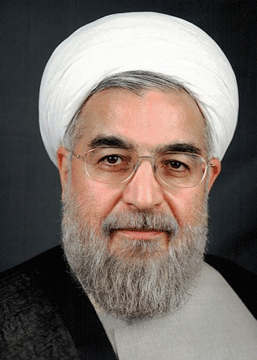 Iran’s president calls on Biden to return to nuclear deal
Hassan Rouhani’s comments mark the highest-level response from Iran to Biden and Vice President-elect Kamala Harris clinching the Nov. 3 election.
“Now, an opportunity has come up for the next U.S. administration to compensate for past mistakes and return to the path of complying with international agreements through respect of international norms,” the state-run IRNA news agency quoted him as saying.
Under President Donald Trump, tensions between the U.S. and Iran have escalated, reaching a fever pitch earlier this year. One of Trump’s signature foreign policy moves was unilaterally withdrawing the U.S. from Iran’s nuclear deal in 2018, which had seen Tehran limit its enrichment of uranium in exchange for the lifting of economic sanctions.
The U.S. has since reimposed punishing sanctions on Iran that have crippled its economy, which was further battered by the coronavirus outbreak. In an effort to pressure Europe to find a way around the sanctions, Iran has slowly abandoned the limits of the nuclear deal…….. https://apnews.com/article/joe-biden-donald-trump-iran-foreign-policy-tehran-da8c870cacf6109ae1cad62108535634
1 This Month
26 September – International Day for the Total Elimination of Nuclear Weapons





PLEASE OPPOSE HR 8255 AND S.3639 – bills would accelerate satellite deployment, with no environmental review or safeguards – https://ncstd5li.quorum.us/campaign/169331/
To see nuclear-related stories in greater depth and intensity – go to https://nuclearinformation.wordpress.com
-
Archives
- September 2026 (305)
- August 2026 (330)
- July 2026 (355)
- June 2026 (287)
- May 2026 (306)
- April 2026 (356)
- March 2026 (251)
- February 2026 (267)
- January 2026 (308)
- December 2025 (358)
- November 2025 (359)
- October 2025 (375)
-
Categories
- 1
- 1 NUCLEAR ISSUES
- business and costs
- climate change
- culture and arts
- ENERGY
- environment
- health
- history
- indigenous issues
- Legal
- marketing of nuclear
- media
- opposition to nuclear
- PERSONAL STORIES
- politics
- politics international
- Religion and ethics
- safety
- secrets,lies and civil liberties
- spinbuster
- technology
- Uranium
- wastes
- weapons and war
- Women
- 2 WORLD
- ACTION
- AFRICA
- Atrocities
- AUSTRALIA
- Christina's notes
- Christina's themes
- culture and arts
- Events
- Fuk 2022
- Fuk 2023
- Fukushima 2017
- Fukushima 2018
- fukushima 2019
- Fukushima 2020
- Fukushima 2021
- general
- global warming
- Humour (God we need it)
- Nuclear
- RARE EARTHS
- Reference
- resources – print
- Resources -audiovicual
- Weekly Newsletter
- World
- World Nuclear
- YouTube
-
RSS
Entries RSS
Comments RSS

