5 Days in Israel’s Desert Prison: Jewish Flotilla Activist David Adler on Harrowing Detention Ordeal
10 Oct 2025, https://www.youtube.com/watch?v=T_pM-ZDaPAA
Israeli forces have abducted over 500 peace activists over the past week who were sailing to Gaza in an effort to deliver humanitarian aid to the besieged territory.
Organizers of the Global Sumud Flotilla say most of the participants were sent to Ktzi’ot Prison, notorious for harsh and abusive conditions. Some have reported physical abuse, humiliation and inhumane treatment by Israeli soldiers. Jewish American activist David Adler, co-general coordinator of the Progressive International, says he faced additional abuse because of his background. Democracy Now! is an independent global news hour that airs on over 1,500 TV and radio stations Monday through Friday. Watch our livestream at democracynow.org Mondays to Fridays 8-9 a.m. ET.
Israel illegally detained UK citizens, and Starmer did nothing
John McEvoy, 9 Oct 25
This week, Israeli forces kidnapped British citizens participating in the Global Sumud Flotilla, which aimed to break the siege of Gaza and deliver aid to starving Palestinians. The flotilla, carrying some 470 activists from over 40 countries, had been sailing in international waters some 90 nautical miles from Gaza when it was approached by Israeli naval boats and boarded by armed soldiers. The aid vessels were subsequently towed to the port of Ashdod in Israel, where the activists were unloaded and taken to Israeli prisons. Most of them were transferred to the notorious Ketziot prison, a maximum-security facility in the Negev desert which has served as a detention and torture site for Palestinian captives. The cells were infested with bed bugs, and the activists were deprived of food and water. “We had to drink out of a tap in the toilets that produced water infected with fecal matter”, said British-Palestinian journalist Kieran Andrieu. Israel’s national security minister Itamar Ben-Gvir, who travelled to Ketziot and taunted the activists, said they “should get a good feel for the conditions in Ketziot prison and think twice before they approach Israel again”. This was not the first time that the Global Sumud Flotilla had been attacked by the Israel Defence Forces (IDF). |
A Philadelphia company’s obscured support for killing Palestinians with autonomous flying bombs

Ghost and RoboTiCan were quick to capitalize on the Israeli invasion of Gaza, with Ghost’s Vision 60 robot dogs being deployed into Gazan tunnels
Philadelphia’s Ghost Robotics elevated its exclusive partnership with the Israeli military drone manufacturer RoboTiCan as the company began advertising its usage for bombing indoor Palestinians.
Jack Poulson, Oct 09, 2025, https://jackpoulson.substack.com/p/ghost-robotics-robotican-gaza-lethal-reyburn?utm_source=post-email-title&publication_id=1269175&post_id=175669807&utm_campaign=email-post-title&isFreemail=true&r=8cf96&triedRedirect=true&utm_medium=email
It was a simple idea. Enclose the left and right sides of a quadcopter drone with 12-inch wireframe wheels to form a nearly 16-inch-long cylinder. In addition to providing the ability to switch between flying and rolling across the floors of houses and tunnels, the surrounding cage would further act as a sort of bumper to prevent the drone’s rotors from hitting walls in cramped spaces.
The Omer, Israel-based manufacturer RoboTiCan labeled the resulting product a ‘Rooster’ and pronounced it “the ultimate indoor drone system.” A February 2023 promotional video made explicit the driving use case for the product, showing a first-person view of the Rooster alternating between rolling and flying through a set of war-torn buildings, including by passing a brick wall graffitied with the slogan “FREE PALESTINE.”
Despite an initial pretense of nonlethality, the Rooster drones are now advertised as supporting 300 gram explosive payloads, and the flagship customers — beyond the Israeli military — include the U.S. Drug Enforcement Administration (DEA) and the North Atlantic Treaty Organization (NATO). The result is an industrialized nation’s analogue of urban suicide bombers, though the weapons industry prefers the sanitized label of ‘loitering munition’.
The University of Pennsylvania spin-out Ghost Robotics — widely known as the weaponized competitor to Boston Dynamics — recently began advertising itself as the exclusive reseller of the Rooster in the United States. The move follows Ghost pitching its robots to U.S. commandos, including through a polished portrayal of its flagship four-legged ‘Vision 60’ robot executing two humans with attached SigSauer rifles. The U.S. Army’s 10th Mountain Division similarly experimented with attaching M16 rifles to the Vision 60 robots as part of Operation Hard Kill on August 1, 2024.
Adding further international complexity to the partnership between RoboTiCan and Ghost, the South Korean weapons manufacturer LIG Nex1 bought a 60% stake in Ghost for $240 million last year, establishing a beachhead in the United States for exporting its products. The majority control followed a separate contract between the Philadelphia-based Ghost and the South Korean company Ghost Robotics Technology (GRT), with GRT both serving as a reseller of the Vision 60 within Korea and as an intermediary for Vision 60 parts manufactured by its close affiliate and investee, Korea Robot Manufacturing Co. (KRM).
Following the Hamas raid of Israel on October 7, 2023, the Israeli military responded with unprecedented death and destruction, killing at least 67,074 and injuring at least 168,716 of the roughly two million Palestinians in Gaza prior to Wednesday’s nominal ceasefire deal. Alongside the mass murder — including of at least 20,000 children — Israeli soldiers became infamous for posting photos of themselves modeling the clothing of Palestinian women whose homes had been assaulted. Israeli commandos also openly raided humanitarian flotillas bound for Gaza, brazenly portraying their kidnappings of peaceful human rights activists as counter-terrorism.
Ghost and RoboTiCan were quick to capitalize on the Israeli invasion of Gaza, with Ghost’s Vision 60 robot dogs being deployed into Gazan tunnels as a sort of aircraft carrier for the RoboTiCan Roosters. Promotional photos of the Rooster docked on top of the Ghost Vision 60 robot were widely published in the international press by early 2024, but RoboTiCan had begun promoting the usage of Vision 60 robots in Gaza by the end of 2023, including with footage of the robots firing assault rifles.
The Gazan use cases for the robotic duo were reported almost universally as surveillance and reconnaissance, despite RoboTiCan in December 2023 promoting its Channel 13 coverage with the headline “A robot in the Hamas tunnels: the electric dog that can neutralize charges and shoot.” RoboTiCan last month publicly repositioned the Rooster as a tool for lethal urban warfare, with CEO Hagai Balshai stating that the Rooster was “bringing precision and autonomy to environments that were previously off-limits to loitering munitions,” adding that, “Forces can now conduct surgical strikes inside structures.”
Ghost’s explicit promotion of its company as the exclusive U.S. reseller of the Rooster has come since the product’s lethal reorientation. Ghost’s nominally nonviolent support for the Israeli invasion of Gaza through RoboTiCan had already led to sustained protests against the company, including Ghost CEO and UPenn PhD Gavin Kenneally having the front door of his Fairmount townhome spraypainted with the word ‘MURDERER’ in the early morning of July 9, 2024, according to an apparent confession on the Philly Anti-Capitalist website.
A subsequent post to the same website the following October detailed both another defacement of Dr. Kenneally’s home — allegedly writing “Funded By Genocide” across his garage and smashing his windows— as well as the spraypainting of “NO KILLER TECH” across Ghost’s then-headquarters within UPenn’s innovation center. “Ghost Robotics AI-enabled machine-gun-armed robot dogs have been used against Palestinians in Gaza,” stated the explanation.
Ghost Robotics appears to have attempted to prevent further protests of its facilities by hiding its headquarters. A January 22 press release stated that the firm had “signed a lease and relocated from Pennovation Works to a new, larger location in Philadelphia, PA.” But Ghost remained tight-lipped about where this “larger location” would be, with the firm’s LinkedIn profile and corporate records continuing to list the Pennovation Works address.
But a recently public, $120,000 agreement for Ghost to sell the U.S. Army Research Laboratory two of its Vision 60 robots lists a new address for the company. As recently as February, Ghost sold the U.S. Army’s Armaments Center a $3.2 million “Wolfpack” of Vision 60 robots through its old Pennovation Works address. Ghost’s newest contract instead lists its headquarters as Apartment 170 within the refurbished former central factory of the Pep Boys auto services company in the northwest Philadelphia region of Bala Cynwyd.
Acquired by Icahn Enterprises in 2016, Pep Boys ceased operations at the factory by early 2021, with investors turning what is now known as the Reyburn Manufacturing Company Building into a beautiful five-story condominium, complete with a rooftop pool and a podcasting studio.
With its loft-style apartments only located on the second through fifth floors, the Reyburn’s first-floor addresses are assigned to a detached, single-story partitioned warehouse on the north side of the building, with addresses counting down as you move north. The nonprofit Share Food Program occupies a section just north of a pink sign reading ‘106’, while the section assigned to Ghost remains unadorned.
Despite months of Ghost Robotics and its parent company refusing to respond to questions about the location of the company’s new headquarters, apparent confirmation came three weeks after the firm’s latest contract to sell the U.S. Army two Vision 60 robots. According to U.S. Customs records, a 740 kilogram “40 Foot General Purpose Container” with three motors from Korea Robot Manufacturing arrived at Ghost’s Suite 107 at the Reyburn Building on July 30, 2025.Subscribe
Israel Attacks Another Group of Civilian Ships Bound for Gaza
Israeli forces have once again targeted civilian vessels sailing to Gaza, aiming to break the blockade and deliver medical supplies.
October 08, 2025 by Ana Vračar, https://peoplesdispatch.org/2025/10/08/israel-attacks-another-group-of-civilian-ships-bound-for-gaza/
In a new act of state terrorism, Israel has assaulted vessels from the Freedom Flotilla Coalition and the Thousand Madleens to Gaza initiative in international waters, abducting more than 140 crew members. The attack comes barely a week after Israeli armed forces targeted the Global Sumud Flotilla, another civilian fleet sailing to break the illegal blockade of Gaza and deliver essential supplies.
“Unarmed crew aboard, including doctors, journalists, and elected officials, have been abducted, as well as the vital aid worth over USD 110,000 in medicines, respiratory equipment, and nutritional supplies that were destined for Gaza’s starving hospitals,” the Freedom Flotilla Coalition stated soon after the event.
The latest mission to open a humanitarian corridor to Gaza by sea was specific considering that most of its crew consisted of health and media workers, two groups continuously targeted by Israeli forces during the genocide in Gaza. Nurse Stefano Argerio, speaking shortly before his abduction, emphasized the peaceful and civilian character of the initiative. “It’s a humanitarian, medical mission,” he told Public Services International (PSI), stressing that obstructing it would only add to Israel’s long list of crimes.
Aboard the “Conscience”, the fleet’s largest vessel, was Belgian physician Hanne Bosselaers of Medics for the People (MPLP-GVHV), who is also active in the People’s Health Movement (PHM). Having participated in preparations for the Global Sumud Flotilla, she joined this mission to help keep global attention on Gaza. “The Israeli armed forces want to totally annihilate it [Gaza], and they’re accelerating the process,” Bosselaers told the Workers’ Party of Belgium (PTB–PVDA). “Even if our media no longer shows it, we absolutely must keep our eyes on it. Humanity must heed the call of the Palestinians to stop the genocide.”
Bosselaers, who previously volunteered in Gaza, established contact with staff from the Awda Association while en route. “[They] told us live about how they experience genocide in their hospitals and health centers,” she said. “They have great confidence in our arrival and it gives them hope and courage to see that caregivers around the world are mobilizing, that they are not forgotten.”
Members of the Freedom Flotilla and Thousand Madleens to Gaza initiatives anticipated the risk of Israeli attacks, especially after the assault on the Global Sumud Flotilla. Yet, instead of retreating, they called for even stronger mobilization from the medical community in support of Gaza’s health workers and the flotillas’ missions. “We know that what can happen to us is still only a fraction of what Palestinians have endured every day for 77 years,” Bosselaers said. “We hope that seeing our rights violated as white Europeans might amplify the message and draw attention to the Palestinians.”
Pharmacist Aziz Rhali among GSF crew still held by Israel
As of the morning of October 8, six members of the Global Sumud Flotilla remain imprisoned in Israel: Abdeladim Bendraoui and Aziz Rhali from Morocco; Christoforos Schuff O’Moore, Eline Norli, and Samuel Rostol from Norway; and Reyes Rigo Cervilla from Spain.
Before departure, Rhali, a pharmacist and long-time human rights defender, highlighted the importance of global solidarity among health professionals. “We must also emphasize the role of Gaza’s healthcare workers, who remain on the front line of resistance,” he said. “Despite everything, they stay, they work, they do their best to help the population … They need us, and we need them. Just as lawyers are pursuing justice through the courts – the International Court of Justice, the International Criminal Court – our role, as health workers, is to stand with our Palestinian colleagues. We can do that directly, by being on the ground with them.”
PHM Global Coordinator Román Vega told People’s Health Dispatch that Rhali had been struggling for months to reach Gaza and support his colleagues and patients. Instead of being allowed to provide essential care, “he was abducted by the genocidal Israeli regime,” Vega said. “We are deeply concerned for his safety, especially after hearing of the abuse suffered by members of the flotilla who have returned home. We are calling for his immediate release and for the protection of his life and rights.”
Trump Says Israel and Hamas ‘Signed Off on the First Phase’ of Gaza Plan

The announcement came as the confirmed death toll from Israel’s two-year genocidal assault on Gaza rose to 67,183 Palestinians, widely believed to be an undercount.
Common Dreams Staff, October 9, 2025, https://www.commondreams.org/news/israel-ceasefire
Just over a week after unveiling a proposal for the Gaza Strip at the White House with Israeli Prime Minister Benjamin Netanyahu, US President Donald Trump said on social media Wednesday night that “I am very proud to announce that Israel and Hamas have both signed off on the first Phase of our Peace Plan.”
“This means that ALL of the Hostages will be released very soon, and Israel will withdraw their Troops to an agreed-upon line as the first steps toward a Strong, Durable, and Everlasting Peace,” he claimed on Truth Social. “All Parties will be treated fairly!”
“This is a GREAT Day for the Arab and Muslim World, Israel, all surrounding Nations, and the United States of America, and we thank the mediators from Qatar, Egypt, and Turkey, who worked with us to make this Historic and Unprecedented Event happen,” Trump added. “BLESSED ARE THE PEACEMAKERS!”
Netanyahu—who faces an International Criminal Court warrant over his country’s genocidal assault of Gaza—also took to social media, writing in Hebrew that it was “a great day for Israel” and he would “convene the government to approve the agreement and bring all our dear hostages home.” The prime minister then thanked the Israel Defense Forces and Trump.
Trump’s announcement came shortly after Drop Site News‘ Jeremy Scahill spoke with a Hamas official who confirmed that “from our side, yes,” the Palestinians reached a deal, but they still needed to “finalize some points” with the mediators.
“It’s over, it’s over. It’s been decided,” a second source told the journalist. “Everybody’s agreed on it. There are a few things that will be discussed, but it’s over.”
Hamas led an attack on southern Israel that killed over 1,100 people on October 7, 2023. Since then, Israeli forces have bombed and blockaded Gaza, whose health officials put the death toll at 67,183, with another 169,841 injured. Global experts have warned that these are likely undercounts, given the thousands of people missing and presumed dead and buried beneath the strip’s destroyed infrastructure.
After 2 years, Israel genocidal ethnic cleansing of Gaza has failed

Walt Zlotow, West Suburban Peace Coalition, Glen Ellyn IL 9 Oct 25
Israel has a grisly method of negotiating peace and release of remaining Israeli hostages in Gaza. They’re continuing their genocidal ethnic cleansing of those pesky Palestinians who just won’t leave so Israel can annex Gaza to Greater Israel.
On Tuesday Israel bombed Gaza City, Khan Younis, even the Mawasi safe zone, killing at least 10. Hundreds of been slaughtered in the five days Israel has ignored President Trump’s demand to stop the genocide while peace talks continue in Egypt.
That should surprise no one interested in ending the genocide. Israel’s primary goal since the Hamas attack 2 years ago Tuesday was to exploit the attack to rid Gaza of all 2,300,000 Palestinians. While killing over 100,000, with the remaining 2,200,000 suffering starvation, degraded health, no habitable living conditions, Israel has failed to achieve its cherished goal: no Palestinians left in a Gaza annexed into Greater Israel.
Israeli Prime Minister Benjamin Netanyahu needs to maintain the genocide for political and personal reasons. The political is the aforementioned completion of Greater Israel including not only Gaza but the West Bank. The personal reason is to delay indefinitely his possible date with prison on corruption crimes.
Dead last on Netanyahu’s grotesque agenda? Getting back the remaining 48 Israeli hostages. Had he cared a whit about the original 251, many of whom his delay killed, he wouldn’t have embarked on genocide.
None of this could have occurred without the $20 billion in genocide weapons gifted to Israel by presidents Biden and Trump, paid for by John Q. Taxpayer. US near total support of the genocide continues even tho an increasing majority of Americans call it genocide and demand we end enabling it.
The current talks in Egypt are doing nothing to achieve the only path to peace: Palestinian statehood, recognized by 158 of 193 UN countries but not the US. Trump’s 20 point peace plan is simply US imagined neocolonialism to keep Gaza totally controlled by outside forces. Palestinians are excluded, keeping Gaza stateless in perpetuity.
The peace plan may release the remaining 48 hostages and achieve ceasefire. But it will neither achieve a Palestinian state nor Netanyahu’s dream of a Palestinian free Gaza annexed to Israel. Both likely outcomes may doom the peace negotiations to failure.
Everything Before AND After October 7 Explains Why October 7 Happened
Caitlin Johnstone, Oct 07, 2025, https://www.caitlinjohnst.one/p/everything-before-and-after-october?utm_source=post-email-title&publication_id=82124&post_id=175515184&utm_campaign=email-post-title&isFreemail=true&r=1ise1&triedRedirect=true&utm_medium=email
Everything before October 7 explains why October 7 happened, and so does everything that’s happened since.
Look at what happened before October 7 and you’ll see year after year of murder, oppression and abuse.
Look at everything that’s happened since October 7 and you’ll understand the kind of sadistic, psychopathic regime the Palestinians have been living under this entire time.
Israel supporters don’t want you looking at what happened before October 7, and they don’t want you looking at anything that’s happened since. They just want you to pretend history began and ended with a bunch of Hitlerite savages attacking innocent Jews for no reason.
And they don’t even want you looking at the day of October 7 too closely, either. Looking too closely at the events of that day bring up inconvenient questions about the Hannibal Directive and what percentage of the death toll was actually caused by the IDF firing on their own people. Inconvenient questions about the suspicious stock trading in the lead-up to the attack and the mountains upon mountains upon mountains of evidence that high-level Israeli officials allowed the attack to proceed undefended in order to advance the genocidal land grab we’re seeing advanced now.
They only want you looking at the parts of October 7 that make Israel look like an innocent little lamb who was attacked completely out of the blue and had no choice but to reluctantly respond with military force.
Forget the scorched earth incineration of the Gaza Strip.
Forget the bombed-out hospitals and methodically dismantled healthcare system.
Forget the hundreds upon hundreds of Palestinians in Gaza who’ve been deliberately starved to death.
Forget the fact that every relevant human rights institution on earth has determined that Israel is committing genocide, and that zero comparable humanitarian institutions have said it isn’t.
Forget the fact that human rights experts had been describing Gaza as a giant concentration camp or open-air prison for years prior to October 7.
Forget the fact that Israel had been routinely murdering Palestinian children and other civilians in the months prior to the Hamas attack.
Don’t look at any of that stuff. Just look at the stuff that makes Israel look like the victim.
That’s the story, anyway. Luckily, fewer and fewer people are buying into it.
The longer this genocide goes on for, the more the world has come to view October 7 as Israel reaping what it had long been sowing.
Report: Netanyahu Ordered Drone Attack on Gaza Aid Flotilla Boats in Tunisia
US intelligence officials told CBS News that Israeli forces launched drones from a submarine and dropped incendiary devices on two aid boats
by Dave DeCamp | October 5, 2025 , https://news.antiwar.com/2025/10/05/report-netanyahu-ordered-drone-attack-on-gaza-aid-flotilla-boats-in-tunisia/
Israeli Prime Minister Benjamin Netanyahu directly ordered attacks on the Global Sumud Flotilla that were carried out in early September while the boats were moored in Tunisia, CBS News reported on Friday.
A total of two boats were hit in two attacks that were conducted on September 8 and September 9. Two US intelligence officials told CBS News that Israel forces fired drones from a submarine that dropped incendiary devices and caused fires.
The report noted that under international law, the use of incendiary devices against civilian populations or civilian targets is prohibited. The attacks targeted the Family, a Portuguese-flagged vessel, and the Alma, a British-flagged vessel. In both cases, the crews were able to extinguish the fire, and the attacks caused no casualties.
In a September 22 interview, US Ambassador to Turkey Tom Barrack acknowledged that Israel was behind the operation by saying Israel had attacked Tunisia. “So Israel is attacking Syria. Israel is attacking Lebanon. Israel is attacking Tunisia,” Barrack told The National.
In a statement to CBS, the Global Sumud Flotilla said, “Confirmation of Israeli involvement would not surprise us; it would simply lay bare a pattern of arrogance and impunity so grotesque that it cannot escape eventual reckoning.”
The group added, “Whether the purpose of these attacks was to kill us, scare us away, or disable our boats, they recklessly endangered civilians and humanitarian volunteers. The world must take note: attempts to silence, intimidate, or obstruct our commitment to the Palestinian cause and people will not succeed. We call for urgent, independent investigations into these attacks and full accountability for those responsible.”
Despite the attack in Tunisia, the flotilla continued on its mission to attempt to bring food to starving Palestinians living under the Israeli blockade in Gaza. The boats came under attack from multiple drones while sailing in the Mediterranean Sea south of Greece, and they were all eventually captured by Israeli forces while in international waters and approaching Gaza.
Hundreds of activists, including at least 24 US citizens, were thrown into prison when the IDF brought them to Israel. Some have since been deported and are alleging they were severely mistreated by Israeli forces.
Israel Says No Gaza Ceasefire in Place Despite Trump’s Call for a Stop to the Bombing
Israeli forces have killed more than 100 Palestinians in Gaza over the past two days
by Dave DeCamp | October 5, 2025, https://news.antiwar.com/2025/10/05/israel-says-no-gaza-ceasefire-in-place-despite-trumps-call-for-an-immediate-halt-to-the-bombing/
The Israeli government said on Sunday that there is no ceasefire in place in Gaza despite President Trump’s calls for Israel to “immediately stop the bombing of Gaza” as the IDF continues to slaughter Palestinians across the Strip.
“While certain bombings have actually stopped inside of the Gaza Strip, there’s no ceasefire in place at this point in time,” said Israeli government spokeswoman Shosh Badrosian, according to The Associated Press.
Badrosian added that Israeli Prime Minister Benjamin Netanyahu is in “regular contact” with Trump and that the upcoming negotiations in Egypt aimed at securing the release of Israelis held by Hamas and implementing a ceasefire will “be confined to a few days maximum, with no tolerance for maneuvers that will delay talks by Hamas.”
Trump first made the call for Israel to stop bombing Gaza on Friday after Hamas issued its response to the US-Israeli ceasefire proposal. On Saturday, Trump said that he appreciated that “Israel has temporarily stopped the bombing,’ but on the same day, the IDF killed at least 70 Palestinians in Gaza, according to medical sources speaking to Al Jazeera.
The IDF killed at least 129 Palestinians in Gaza over the past two days, according to daily updates released by Gaza’s Health Ministry. The Health Ministry said in its latest release on Sunday that it recorded the deaths of 63 Palestinians and the injury of 153 over the previous 24-hour period.
Medical sources have told Al Jazeera that Israeli attacks on Sunday killed at least 24 Palestinians, including at least 12 who were killed in Gaza City. According to Israeli media, the IDF was ordered to halt its operation to conquer Gaza City, but it has continued to bomb the area.
One Israeli strike in Gaza City on Saturday killed 18 people, including seven children between the ages of two months and eight years, according to a statement from Gaza’s Civil Defense.
The IDF also continues to kill desperate Palestinians attempting to get food. According to the AP, at least four Palestinians were killed near an aid site in southern Gaza on Sunday.
On top of the violent deaths, Palestinians continue to starve to death amid the famine caused by the Israeli siege. According to releases from the Health Ministry, at least three Palestinians, including two children, died of starvation over the past two days.
The ministry said on Sunday that its violent death toll since October 7, 2023, has reached 67,139, and the number of wounded has climbed to 169,583. Studies have found that the ministry’s numbers are likely a significant undercount.
Patrick Lawrence: Power and Justice

You just know Trump’s name is written into this document, and at his insistence, in the cause of his vulgar pursuit of the Nobel Peace Prize he will never get. But never mind this. The Gaza Peace Plan released Monday reads as if Netanyahu dictated it.
Trump. – If this LAST CHANCE agreement is not reached, all HELL, like no one has ever seen before, will break out against Hamas.
By Patrick Lawrence , ScheerPost, October 5, 2025
Those were an eventful few days as the General Assembly convened at the United Nations Secretariat in New York Sept. 22. France, Belgium, Luxembourg, Malta, Monaco and Andorra formally recognized the state of Palestine on the first day of the General Debate, Sept. 23. Britain, Canada, Australia and Portugal had done so two days earlier. With Spain, New Zealand, Finland, Ireland, Norway and other nations also recognizing, virtually the whole of the Western bloc except the United States now accepts Palestine as a sovereign state.
The imperium fades further into its corner. Always good.
And eventful days have followed all the new endorsements of the sovereignty of the Palestinian people. President Trump and Benjamin Netanyahu, the Israeli prime minister, presented a grandly titled Gaza Peace Plan at the White House on Monday, Sept. 29. After several days of suspense and speculation, Hamas responded to this document on Friday. This was not the wholesale acceptance of the 20–point plan Trump seemed to think it was (or wish it was): No, this was skilled statecraft on Hamas’s part — “a responsible position in dealing with the plan proposed by U.S. President Donald Trump,” as the Hamas statement describes itself. “Responsible,” as I read the text, means responsible to the long-suffering Palestinians in Gaza and responsible to the principles of the Palestinian cause.
What do we have here? How shall we understand these apparently disparate events? In my view, we witness a running confrontation between power and justice. This seems to me the defining struggle of our time, and it sharpens as we speak.
You hear a lot of different things about those recognitions at the U.N. in support of a Palestinian state. “What a mockery,” Ali Abunimah, the principled director of The Electronic Intifada, wrote on “X” as heads of state stood at the podium and made these announcements. “Now they just need an actual state.” The Nation called the West’s declarations of support for an independent Palestine “a despicable sham.”
OK, there is a case here. These countries, one and all, call for a two-state solution, and a deader letter I cannot think of. Britain and France pile so many conditions atop their declarations — political candidates in the not-yet-realized Palestine will be vetted, Hamas (never mind its popularity) will be barred from any role in government, textbooks will be censored etc. — that you have to wonder what they mean by “sovereignty” and “self-determination.” Britain and France continue to arm Israel as it terrorizes the people we know as Palestinians.
But those many blurting these out-of-hand dismissals have it wrong, in my view. I am not in the habit of approving of anything Keir Starmer or Emmanuel Macron does, but in this case the British prime minister and the French president, odious “centrists” that they are, deserve what we used to call — alas, for the days when there was a serious left — critical support. The West ex-the United States has finally joined the global majority: Four-fifths of the U.N.’s 193 members now support a Palestinian nation.
No, I am with what many West Bank Palestinians have said since the General Debate convened. A woman named Raya, as quoted in the above-linked document: “Recognition is considered a good and unexpected step, but it will have no real value unless it is followed by serious and practical measures.…” From Alia: “It’s not about if they recognize us or not. It’s about if there is even something left to recognize.” And from Samia: “Recognition of Palestinian statehood is great but will be futile if the genocide on Gaza and occupation do not come to an end.”
See what I mean by critical support?
Flawed as all the statements of recognition are, they seem to have uncorked the bottle wherein the justice genie reposed. This is not to be missed. The walkout when Bibi Netanyahu spoke was even more fun to watch than last year’s. So was the straight-no-chaser language with which heads of state denounced the Israelis’ genocidal barbarities. Gustavo Petro, the Colombian president, described Zionist Israelis as Nazis and called for the U.N. to organize an international force to break the Israeli blockade and stop the savagery.
Petro is right: The Israeli–American peace plan notwithstanding, it is ultimately going to take armed intervention to stop the Zionists’ terror spree. A head of state has finally put this thought on the table.
While the General Assembly proceeded with its business, the Spanish and Italians dispatched naval vessels to sail with the aid flotilla of 50–odd ships then making its way to the waters off Gaza. The Israelis intercepted these vessels late last week — illegally, in international waters — and their crews were deported. But a new flotilla of 11 vessels instantly set sail across the Mediterranean. Also last week, Pedro Sánchez, the Spanish premier, announced that U.S. ships and planes transporting arms and matériel to Israel will be barred from transiting through Spanish ports and air bases. These moves cannot be seen as unrelated to developments on the diplomatic side.
You didn’t have to be at the U.N. last month (and I wasn’t) to understand the gravity of these events — to feel the explosive energy in the air inside and outside the Secretariat. You could see it in the real-time videos posted on social media. The world, the non–West naturally in the lead, was at last declaring, “Enough!” Taking the occasion to its essence, this was a full-frontal confrontation with power in the cause of global justice. One dramatic scene stays with me even now: When Gustavo Petro resumed his seat after speaking, Luiz Inácio Lula da Silva was videoed standing above him and holding his head in a fraternal embrace.
“This historic moment,” the Brazilian president exclaimed when it was his turn at the podium. So it was.
And then what?
Benjamin Netanyahu reportedly had a difficult time settling on a flight plan when he flew from Tel Aviv to New York, given he is wanted under international law for alleged war crimes and crimes against humanity. Norway, Belgium, Spain, Canada, Ireland and the Netherlands are among the nations that indicated they would honor the International Criminal Court’s arrest warrant were he to enter their territory. How was it he was allowed into the Secretariat at all, it was logical to wonder.
We can surmise that part of the Israeli prime minister’s purpose in attending this year’s General Assembly — where he called those who walked out when he spoke “an antisemitic mob” — was openly to flout international law and, per usual, everything the U.N. stands for. The subtext from the moment Bibi arrived in Manhattan was clear: There is no question of the global majority bringing the Israeli terror machine to justice, he wanted to demonstrate, and power, not law, will remain what makes the world go around.
And this is how I read Netanyahu’s summit with President Trump on Monday — their fourth since Trump reassumed office in January. The 20–point plan they released has all kinds of things going on in it, but, taking a step back, it is fairly understood as a reply to the global majority’s just-stated desire for a humane and moral order. Read for its larger meaning, this is a declaration that we — we, all of us — live in a lawless world now and that legitimacy, international institutions, and (certainly not) common notions of justice count for nothing. Force alone counts in the world Trump and Bibi propose to stand astride like the co-emperors who ruled the ancient world after Constantine established an eastern capital in 330 AD.
The text of this document can be read here, courtesy of the BBC. In broad outline — and a broad outline is all there is to it at this point — it calls for an immediate ceasefire, after which — within 72 hours — Hamas is to release all remaining captives still alive and the bodies of the dead. In exchange, Israel will release 250 Palestinian prisoners serving life sentences and 1,700 Palestinians taken prisoner since the events of Oct. 7, 2023. Then Hamas is to disarm, and the Israelis are to begin a phased withdrawal of their troops, but these will continue to occupy “for the foreseeable future” an expanding buffer inside the Gaza Strip’s eastern border.
Then come the longer-term provisions. “Gaza will be a deradicalized terror-free zone” in which Hamas will have no presence or role. “Gaza will be redeveloped for the benefit of the people of Gaza.” And then the question of government and administration.
Gaza will be governed under the temporary transitional governance of a technocratic, apolitical Palestinian committee… made up of qualified Palestinians and international experts, with oversight and supervision by a new international transitional body headed and chaired by Donald J. Trump, with other members and heads of State to be announced, including former Prime Minister Tony Blair.
You just know Trump’s name is written into this document, and at his insistence, in the cause of his vulgar pursuit of the Nobel Peace Prize he will never get. But never mind this. The Gaza Peace Plan released Monday reads as if Netanyahu dictated it, and I will offer odds he did. This thing is written loosely such that it gives Bibi all the room he needs to betray it now that he endorses it. This would, of course, be in keeping with every other agreement with Hamas and/or the United States that Netanyahu has accepted to date.
Hamas, as widely reported, did not formally receive the peace plan until after it was made public and, of course, had no role in its composition. This was intended as a take-it-or-leave-it offer such that, as Bibi and Trump made clear as they stood at opposing podiums Monday afternoon, Hamas’s leaders may as well have guns pointed to their temples.
Bibi:
If Hamas rejects your plan, Mr. President, or if they supposedly accepted and then basically do everything to counter it, then Israel will finish the job by itself.
Trump, following this remark:
Israel would have my full backing to finish the job of destroying the threat of Hamas.
And for good measure, Trump again Friday on Truth Social, his digital bullhorn, warned Hamas that it had until Sunday to accept the plan:
If this LAST CHANCE agreement is not reached, all HELL, like no one has ever seen before, will break out against Hamas.
Tell me, is this statecraft, or is this power using the threat of genocide as blackmail? Corollary question: Is the overarching proposal here that a regime guilty of the most savage acts of barbarity at least since the Reich shall now proceed on with impunity — no responsibility for its crimes, no answerability to the institutions of global justice?
As to the question of statehood, Hamas’s longstanding demand and the vital preoccupation of the 100–plus nations attending the General Assembly just days earlier, there is no provision at all in this plan unless we count this (and I cannot):
While Gaza re-development advances and when the PA [the Palestinian Authority] reform program is faithfully carried out, the conditions may finally be in place for a credible pathway to Palestinian self-determination and statehood, which we recognize as the aspiration of the Palestinian people.
It is simply unbelievable to me that these two grotesquely irresponsible people would expect anyone to take this kind of language at all seriously. Try to count the escape hatches in this provision, which is No. 19 of the 20 comprising the plan. I identify at least three, maybe four……………………………………………………………………………………………………………………………………….
I cannot honestly read this moment with any certainty. On Thursday, bang in the middle of these proceedings, Israel Katz, the Zionist state’s defense minister and another of the fanatics in the Netanyahu government, announced that if the half-million residents remaining in Gaza City do not evacuate they will be considered terrorists; the implications of this status will be evident. What is our question: Will the Netanyahu regime hold to the “peace plan,” or how long will it take for Bibi to abrogate it? In the day since Hamas announced its openness to negotiation based on the plan, let me remind you, Israel has not stopped the bombing. …………………………………………………………………….
There is absolutely zero interest in the wishes of Palestinians in this plan. No mention at all of the West Bank or the escalating cruelties of diabolic settlers as they steal ever more Palestinian land. And not to be missed, indifference to what the majority of humanity just made clear at the General Assembly.
This is power announcing its utter contempt for anything other than raw force — forms of force that see no need any longer to disguise themselves.
There is no discounting the significance of events last week at the U.N. and outside its gates. The world has broken its silence. At the highest levels of government in the non–Western majority, it is learning — I can no longer bear this co-opted phrase, but here goes—to speak truth to power. Power and justice are, so to say, now on the record as in open conflict. This is not nothing. There is more to come. I have no trouble anticipating which will finally, however far in the future, win out over the other. https://scheerpost.com/2025/10/05/patrick-lawrence-power-and-justice/
Trump Swears At Netanyahu As Israel’s Standing in the U.S. Continues to Decline
Dimitri Lascaris. Oct 07, 2025, https://reason2resist.substack.com/p/trump-swears-at-netanyahu-as-israels?utm_source=post-email-title&publication_id=2811845&post_id=175468550&utm_campaign=email-post-title&isFreemail=true&r=1ise1&triedRedirect=true&utm_medium=email
After Trump and Netanyahu presented an ultimatum to the Palestinian resistance on September 30, Hamas issued a statement in which it accepted key parts of the ultimatum but diplomatically rejected other parts.
Hamas also signalled its strong willingness to negotiate the points of contention.
Hamas’s response prompted Trump to demand an end to Israel’s bombing of Gaza, but Netanyahu refused to comply. Israeli forces continue to this day to murder Palestinian civilians in the Gaza Strip.
Meanwhile, Netanyahu reportedly told Trump that Hamas has rejected the Trump ‘peace plan’. Relying on an anonymous source, Axios claims that this prompted a fiery response from Trump.
Despite the theatrics, Hamas and Israeli negotiators have convened in Egypt. New negotiations are said to have begun.
Against this backdrop, the Washington Post just issued a poll showing that Israel’s standing among American Jews continues to plummet.
In the latest episode of Reason2Resist, I argue that, whatever happens in the negotiations in Cairo, Israel has lost the propaganda war, and it is only a matter of time before the U.S. government is forced to rein in its rabid Israeli attack dog.
I also discuss a new, $10 million lawsuit that he and four other Canadian lawyers have filed against Toronto Metropolitan University (TMU). The lawsuit has been filed on behalf of 10 current and former students of the Lincoln Alexander School of Law. They allege that TMU’s administration falsely accused them of antisemitism.
Trump warns of new strikes if Iran revives nuclear work

6 Oct 25, https://www.iranintl.com/en/202510063564
US President Donald Trump warned that Washington would bomb Iran again if it restarts its nuclear program, speaking on Sunday at a ceremony marking the 250th anniversary of the US Navy at Naval Station Norfolk in Virginia.
“We’ll have to take care of that too if they do,” Trump said, referring to Tehran’s potential resumption of nuclear activity. “You want to do that, it’s fine, but we’re going to take care of that and we’re not going to wait so long,” he told sailors gathered at the base.
Trump praised the June 22 US airstrikes on Iran’s nuclear facilities — codenamed Operation Midnight Hammer — as perfectly executed, saying American B-2 bombers and submarine-launched Tomahawk missiles hit every single target.
The operation targeted three key Iranian nuclear sites at Fordow, Natanz, and Isfahan, following an Israeli air campaign that began on June 13 against Iranian military and nuclear-related sites.
“The B2s, what they did. Those beautiful flying wings, what they did, they hit every single target. And just in case, we shot 30 Tomahawks out of a submarine,” Trump said at the event.
Iran had been within a month of developing a nuclear weapon before the strikes, Trump said, adding that US forces had prevented Tehran from crossing that threshold.
“They were going to have a nuclear weapon within a month,” Trump said. “And now they can start the operation all over again, but I hope they don’t because we’ll have to take care of that too if they do, I let them know that.”
Operation was decades in the making
Trump told the audience that B-2 pilots informed him the Pentagon had been planning such an operation for 22 years, saying no previous president had “the guts to do it.”
Trump’s comments come as his administration presses Iran to halt uranium enrichment and curb its ballistic missile program, demands Tehran has repeatedly rejected.
The president’s warning suggests Washington is prepared for further confrontation if Iran resumes nuclear activity, highlighting a renewed phase of military and diplomatic brinkmanship between the two countries.
Israel Droned Flotilla Activists And Then Abused Greta Thunberg
Caitlin Johnstone, Oct 05, 2025, https://www.caitlinjohnst.one/p/israel-droned-flotilla-activists?utm_source=post-email-title&publication_id=82124&post_id=175313119&utm_campaign=email-post-title&isFreemail=true&r=1ise1&triedRedirect=true&utm_medium=email
Who would have imagined five years ago when we were seeing Greta Thunberg amplified by every mainstream western liberal institution that we would one day hear reports that she has been captured and tormented by the Israeli military for trying to bring formula to starving babies?
The Guardian reports the following:
“In an email sent by the Swedish foreign ministry to people close to Thunberg, and seen by the Guardian, an official who has visited the activist in prison said she claimed she was detained in a cell infested with bedbugs, with too little food and water.
“ ‘The embassy has been able to meet with Greta,’ reads the email. ‘She informed of dehydration. She has received insufficient amounts of both water and food. She also stated that she had developed rashes which she suspects were caused by bedbugs. She spoke of harsh treatment and said she had been sitting for long periods on hard surfaces.’
“ ‘Another detainee reportedly told another embassy that they had seen her [Thunberg] being forced to hold flags while pictures were taken. She wondered whether images of her had been distributed,’ the Swedish ministry’s official added.
“The allegation was corroborated by at least two other members of the flotilla who had been detained by Israeli forces and released on Saturday.
“ ‘They dragged little Greta [Thunberg] by her hair before our eyes, beat her, and forced her to kiss the Israeli flag. They did everything imaginable to her, as a warning to others,’ the Turkish activist Ersin Çelik, a participant in the Sumud flotilla, told Anadolu news agency.
“Lorenzo D’Agostino, a journalist and another flotilla participant, said after returning to Istanbul that Thunberg was ‘wrapped in the Israeli flag and paraded like a trophy’ — a scene described with disbelief and anger by those who witnessed it.”
These reports, as shocking as they are, also happen to more or less reflect exactly what the Israeli regime said it intended to do to Global Sumud Flotilla activists when they were captured.
Israeli National Security Minister Itamar Ben-Gvir said last month that Sumud activists must be treated as terrorists in order to “create a clear deterrent” from future flotilla activism, declaring that “Anyone who chooses to collaborate with Hamas and support terrorism will meet a firm and unyielding response from Israel.”
“We will not allow individuals who support terrorism to live in comfort. They will face the full consequences of their actions,” Ben-Gvir said at the time.
After the flotilla activists were abducted by the IDF, Ben-Gvir filmed himself taunting them and calling them “terrorists”.
Israel, needless to say, has an extensively documented record of torturing and abusing individuals who’ve been given the “terrorist” label by the regime.
So it would appear that they singled out the most high-profile activist on the flotilla for abuse in order to send a message and deter future efforts to break the siege on Gaza.
Grossi: Iran Is Not Seeking Nuclear Weapons; My Report Did Not Trigger the Attack
WANA (Oct 05) – The Director General of the International Atomic Energy Agency (IAEA), Rafael Grossi, stated: “My report clearly said that Iran has no program to develop nuclear weapons. So, if anyone thinks that report was a reason for war, they are mistaken.”
In response to a question about whether he sees any hope of returning to Iran after the country’s recent criticisms of him and its restrictions on IAEA access, Grossi said: “Yes, absolutely. We take this matter very seriously. Recently, after lengthy negotiations, IAEA inspectors returned to Iran. As a first step in resuming inspections, they visited the Bushehr reactor. However, we still need to agree on a set of technical procedures and methods so that we can access all sites, including those damaged in the attacks, because nuclear material remains under the rubble of these sites, and such materials remain of interest to the international community. We are in the process of rebuilding the connections that were severed due to the attacks.”
Meanwhile, Iran’s Foreign Minister Abbas Araghchi said today regarding the recent Iran–IAEA agreement in Cairo: “We signed an agreement with the IAEA outlining a new framework for cooperation between Iran and the Agency, and the reason was quite clear. Given the changes on the ground and the attack on our facilities, cooperation with the Agency could not continue as before. Due to existing security and safety concerns, it was absolutely necessary to define a new framework for collaboration.”……………………………
Military Attacks May Have Only Short-Term Effects
When asked what his message to Iran would be, Grossi said: “We must always trust dialogue. Even though I have personally faced threats, I believe we must stay committed to diplomacy. For me, for Iran, and for those who attacked Iran, it is absolutely clear that a lasting solution to the Iranian nuclear issue can only come through diplomacy.”
Grossi admitted that military attacks would not eliminate Iran’s nuclear capabilities: “Military attacks may have short-term effects, but the fact remains that technical expertise and technology exist — and what is destroyed can be rebuilt, perhaps with a spirit of revenge. That’s why I always remind all sides that a sustainable solution must be some kind of agreement — one that restores lost trust
Our Reports Only Reflected the Status of Iran’s Nuclear Program
In response to claims that the IAEA has not been impartial, Grossi said: “I am constantly criticized, and one should not fear criticism, even when I believe it is misplaced. It has been said that the IAEA’s reports gave a green light for military action — that is completely false.”
He insisted: “Our reports simply reflected the state of Iran’s nuclear program, without any new or surprising information that could justify military action. Even regarding nuclear weapons development, my report explicitly stated that Iran did not have — and still does not have — a program to build nuclear weapons. So if anyone thinks my report was a reason for war, they are entirely wrong.”……………… https://wanaen.com/grossi-iran-is-not-seeking-nuclear-weapons-my-report-did-not-trigger-the-attack/
UN nuclear chief says military action cannot destroy Iran nuclear program
Iran International, 5 Oct 25
ilitary strikes on Iran’s nuclear sites would have only short-term effects and fail to destroy its capabilities, the UN atomic watchdog chief said, urging diplomacy as the sole path to a lasting solution to concerns over Tehran’s disputed nuclear program.
“One thing is clear to me, to Iran, and to those who attacked Iran: a lasting, permanent solution to this situation and to the doubts surrounding Iran’s nuclear program can only be diplomatic,” Rafael Grossi said on a podcast hosted by Colombia’s Innovation for Development Foundation on Friday.
“Although attacks or military action may have short-term effects, the technical and technological capabilities exist — what was destroyed can be rebuilt,” he added.
“I always remind all the parties involved that beyond missiles and bombs, the only lasting solution will have to be some form of new agreement to restore lost trust.”
Talks between Tehran and Western powers over the country’s nuclear program remain stalled.
A sixth round of indirect US-Iran talks was suspended in June after Israel and the United States struck Iranian nuclear facilities, prompting waves of Iranian missile retaliation against Israel.
A preliminary US Defense Intelligence Agency assessment found the strikes may have delayed Iran’s nuclear program by only a few months, according to a report by Reuters.
However, US President Donald Trump has consistently said Iran’s nuclear facilities targeted in the attacks were “totally obliterated.”……………………………………….
The UN sanctions on Iran were reinstated on September 28 after the UK, France, and Germany (the E3) triggered the snapback mechanism under the 2015 nuclear deal known as the Joint Comprehensive Plan of Action (JCPoA).
The E3 said the decision followed “Iran rejecting two offers put on the table by the JCPoA coordinator in 2022 and further expanding its nuclear activities in clear breach of its JCPoA commitments.”
Iran has blamed the failure of the talks on what it calls Western powers’ “excessive demands.” https://www.iranintl.com/en/202510054637
1 This Month

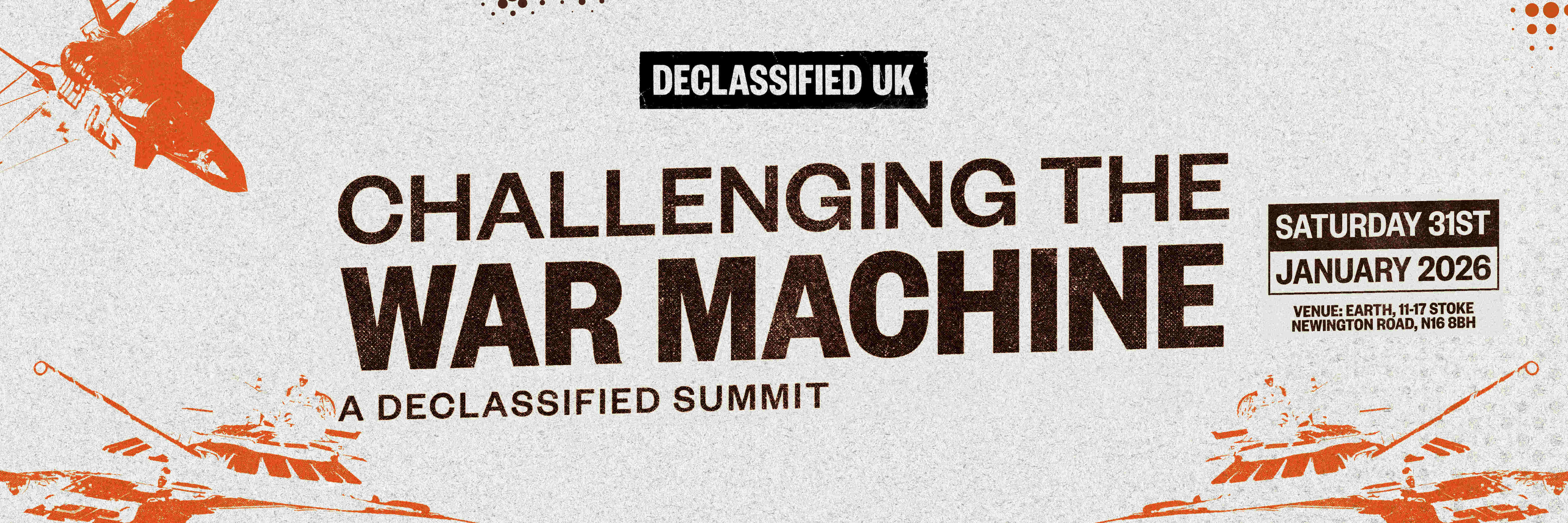
31st January – Challenging the War Machine – a DECLASSIFIED UK SUMMIT



Website of the Week
Now until to February 10, 2026 Radioactive waste storage in France: the debate is finally open! How to participate?
-
Archives
- January 2026 (227)
- December 2025 (358)
- November 2025 (359)
- October 2025 (377)
- September 2025 (258)
- August 2025 (319)
- July 2025 (230)
- June 2025 (348)
- May 2025 (261)
- April 2025 (305)
- March 2025 (319)
- February 2025 (234)
-
Categories
- 1
- 1 NUCLEAR ISSUES
- business and costs
- climate change
- culture and arts
- ENERGY
- environment
- health
- history
- indigenous issues
- Legal
- marketing of nuclear
- media
- opposition to nuclear
- PERSONAL STORIES
- politics
- politics international
- Religion and ethics
- safety
- secrets,lies and civil liberties
- spinbuster
- technology
- Uranium
- wastes
- weapons and war
- Women
- 2 WORLD
- ACTION
- AFRICA
- Atrocities
- AUSTRALIA
- Christina's notes
- Christina's themes
- culture and arts
- Events
- Fuk 2022
- Fuk 2023
- Fukushima 2017
- Fukushima 2018
- fukushima 2019
- Fukushima 2020
- Fukushima 2021
- general
- global warming
- Humour (God we need it)
- Nuclear
- RARE EARTHS
- Reference
- resources – print
- Resources -audiovicual
- Weekly Newsletter
- World
- World Nuclear
- YouTube
-
RSS
Entries RSS
Comments RSS
 nuclear-news