Restoring Iran nuclear deal is good for Israel
In order to stop Iran and to restore Israeli relations with the US and with the American Jewish community, the Israeli government must cooperate with the Biden government in its efforts to return to diplomacy with Iran from its first day in office, on January 20, not a moment too soon.
Joe Biden must end the cover-up of, and the huge money to, Israel’s nuclear weapons
|
Joe Biden should end the US pretence over Israel’s ‘secret’ nuclear weapons, Guardian, Desmond Tutu, 1 Jan 2021

The cover-up has to stop – and with it, the huge sums in aid for a country with oppressive policies towards Palestinians Desmond Tutu is a Nobel peace laureate and a former archbishop of Cape Town Every recent US administration has performed a perverse ritual as it has come into office. All have agreed to undermine US law by signing secret letters stipulating they will not acknowledge something everyone knows: that Israel has a nuclear weapons arsenal. Part of the reason for this is to stop people focusing on Israel’s capacity to turn dozens of cities to dust. This failure to face up to the threat posed by Israel’s horrific arsenal gives its prime minister, Benjamin Netanyahu, a sense of power and impunity, allowing Israel to dictate terms to others. But one other effect of the US administration’s ostrich approach is that it avoids invoking the US’s own laws, which call for an end to taxpayer largesse for nuclear weapons proliferators. Israel in fact is a multiple nuclear weapons proliferator. There is overwhelming evidence that it offered to sell the apartheid regime in South Africa nuclear weapons in the 1970s and even conducted a joint nuclear test. The US government tried to cover up these facts. Additionally, it has never signed the nuclear non-proliferation treaty. Yet the US and Israeli governments pushed for the invasion of Iraq based on lies about coming mushroom clouds. As Israeli nuclear whistleblower Mordechai Vanunu said: the nuclear weapons were not in Iraq – they are in Israel. Amendments by former Senators Stuart Symington and John Glenn to the Foreign Assistance Act ban US economic and military assistance to nuclear proliferators and countries that acquire nuclear weapons. While president, Jimmy Carter invoked such provisions against India and Pakistan. But no president has done so with regard to Israel. Quite the contrary. There has been an oral agreement since President Richard Nixon to accept Israel’s “nuclear ambiguity” – effectively to allow Israel the power that comes with nuclear weapons without the responsibility. And since President Bill Clinton, according to the New Yorker magazine, there have been these secret letters……… This farce should end. The US government should uphold its laws and cut off funding to Israel because of its acquisition and proliferation of nuclear weapons. The incoming Biden administration should forthrightly acknowledge Israel as a leading state sponsor of nuclear proliferation in the Middle East and properly implement US law. Other governments – in particular South Africa’s – should insist on the rule of law and for meaningful disarmament, and immediately urge the US government in the strongest possible terms to act……… https://www.theguardian.com/commentisfree/2020/dec/31/joe-biden-us-pretence-israel-nuclear-weapons |
|
What’s behind the assaisnation of Iran’s top nuclear scientist?
The operation behind the assassination of the Iranian nuclear program founder, The Hybrid War Institute,
Eyal Pinko, 29 Nov 20,
On Friday morning, November 27, Muhsin Fakhrizadeh, considered the founder of Iran’s nuclear program, was assassinated…….. It is not the first-time assassination attempts were made to kill Fakhrizadeh, who survived a similar assassination attempt five years ago. Sixty years old Fakhrizadeh, who holds a doctorate in physics by his profession, was a key figure in the Iranian nuclear program and is considered one of its ancestors. Besides, Fakhrizadeh has been involved in other Iranian strategic plans, such as developing Iran’s air defense system and developing the missile upgrade program, known as Iran and Hezbollah’s missile precision project………
Once a clear and high-quality intelligence picture has been produced, which will allow an understanding of the target’s life routine and planned events, a relevant operational plan to thwart him will create, including the timing of the attack, ways, and means of access and withdrawal from the attack. …….. The recent assassination of Fakhrizadeh comes just a few weeks before the regime change in the United States, and the understanding that President-elect Joe Biden is expected to ease the nuclear sanctions imposed by Trump on the Iranian regime as part of his “maximum pressure” progra ……….
Senior Iranians, who were quick to accuse Israel of assassination, promised that Iran would not remain silent, and a painful Iranian response was expected. Fakhrizadeh’s senior status and key role in Iran’s nuclear and ballistic missile development raises the likelihood of an Iranian response. As Supreme Leader Ali Khamenei’s military adviser, Hossein Dehghani, said, “In the last days of a provocative ally, Israel is striving to increase pressure on Iran to go to war. We will pursue the shahid’s killers and make them regret their actions.” Dehghani is one of the prominent candidates for Iran’s presidency in the elections that are expected to take place in the country next year.
Simultaneously, the change of the administration in the United States and the Iranian hope for the expected changes with the entry of Biden into office is a brake and a deterrent to the Iranian response. An Iranian response at this time may be against Israeli elements only and at low intensity. As a recall, Iran has previously stated that it will respond sharply to the United States for the assassination of Qasem Soleimani and has not yet implemented its threat in practice. It will now be a shaky deadline for it to react, at least until the Biden administration stabilizes.
For Israel, if it is the one behind the assassination operation, it is likely that the assassination operation will not significantly delay or halt Iran’s ballistic missile and nuclear developments. But it could create a deterrent to Israel taking all measures to prevent Iran from reaching nuclear capability, even when it is expected that the US political support for these efforts will decrease significantly during Biden’s administration.. https://www.hwi.institute/post/the-operation-behind-the-assassination-of-the-iranian-nuclear-program-founder
Architect of its nuclear programme assassinated – Iran vows retaliation
Mohsen Fakhrizadeh was ambushed with explosives and machine gun fire in the town of Absard, 70km (44 miles) east of Tehran. Efforts to resuscitate him in hospital failed. His bodyguard and family members were also wounded.
There was no immediate claim of responsibility, but the Iranian foreign minister, Mohammad Javad Zarif, said Israel was probably to blame, and an adviser to Iran’s supreme leader, Ayatollah Ali Khamenei, vowed retaliation. “We will strike as thunder at the killers of this oppressed martyr and will make them regret their action,” tweeted Hossein Dehghan.
The killing was seen inside Iran as being as grave as the assassination by US forces of the Islamic Revolutionary Guard Corps commander Qassem Soleimani in January.
Israel will face accusations that it is using the final weeks of the Trump administration to try to provoke Iran in the hope of closing off any chance of reconciliation between Tehran and the incoming US administration led by Joe Biden.
Amos Yadlin, a former head of Israeli Defence Force intelligence, said: “With the window of time left for Trump, such a move could lead Iran to a violent response, which would provide a pretext for a US-led attack on Iranian nuclear facilities.”…….. https://www.theguardian.com/world/2020/nov/27/mohsen-fakhrizadeh-iranian-nuclear-scientist-reportedly-shot-dead-near-tehran
Report: Israel ‘deeply concerned’ by Saudi Arabia, China alleged nuclear cooperation,
|
Report: Israel ‘deeply concerned’ by Saudi Arabia, China alleged nuclear cooperation, MEMO, Middle East Monitor, August 21, 2020 Israel’s Walla news website revealed that Tel Aviv has informed the United States that it was “gravely” concerned by alleged nuclear cooperation between Saudi Arabia and China.The website said senior Israeli intelligence officials had called their American counterparts to express their “grave concern” about the cooperation between Riyadh and Beijing.
According to the site, “unnamed” Israeli officials said there was a secret factory of primitive materials used in uranium enrichment in Saudi Arabia near the capital, Riyadh, explaining that the Wall Street Journal and the New York Times were the first to report on it, including satellite images of the factory. The officials pointed out that the office of Prime Minister Benjamin Netanyahu deals with the file as “very sensitive” politically since Israel considers Saudi Arabia an important ally in the face of Iran. The officials added that the Israeli intelligence services, the ministries of foreign affairs, intelligence and defence, and the Atomic Energy Commission are following the developments of the Saudi nuclear program………. According to Israeli officials, Saudi Arabia has cooperated with China, because the Chinese did not ask for guarantees that the programme would be purely civilian, which is what the United States always demands. https://www.middleeastmonitor.com/20200821-report-israel-deeply-concerned-by-saudi-arabia-china-alleged-nuclear-cooperation/ |
|
Plan for nuclear-weapon free zone is unlikely to impress Israel
Eliminating Israel’s bomb with a nuclear-weapon-free zone? https://www.aspistrategist.org.au/eliminating-israels-bomb-with-a-nuclear-weapon-free-zone/, 29 Jul 2020 Ramesh Thakur Nuclear-weapon-free zones (NWFZs) deepen and extend the scope of the Nuclear Non-proliferation Treaty and embed the non-nuclear-weapon status of NPT states parties in additional treaty-based arrangements. This is why several NPT review conferences have repeatedly affirmed support for existing NWFZs and encouraged the development of additional zones.
There are currently five zones: in Latin America, the South Pacific, Southeast Asia, Africa and Central Asia. At a minimum, all NWFZs prohibit the acquisition, testing, stationing and use of nuclear weapons within the designated territory of the zone. They also include protocols for pledges by nuclear powers not to use or threaten to use nuclear weapons against members of the zone.
Israel has seemed more interested in implementing a military solution to its security challenges, including the threat of a preventive strike on Iran, than in exploring diplomatic options. But it’s simply not credible that Israel can keep its unacknowledged nuclear arsenal indefinitely, while every other regional state can be stopped from getting the bomb in perpetuity. The alternatives for Israeli security planners are regional denuclearisation or proliferation. The latter would entail the further risks of heightened tension and increased instability. Moreover, a nuclear-weapon capability is of no use to Israel in deterring or managing the threat of terrorism.
Because ‘the logic of using force to secure a nuclear monopoly flies in the face of international norms’, Israel could consider trading its nuclear weapons for a stop to Iran’s development of a nuclear-weapon capability by agreeing to an NWFZ. Conversely, the confidence built among states through an NWFZ process can spill over into other areas of regional interactions. The experience of working together in negotiating a zonal arrangement, and then working together once the zone is operational, generates habits of cooperation and sustains mutual confidence, both of which are necessary conditions for resolving other regional security issues.
Can an NWFZ be used for nuclear disarmament of a non-NPT state?
When the NPT was extended indefinitely in 1995, the package deal included a resolution on the creation of a Middle East zone free of weapons of mass destruction. The resolution required all regional states (including those outside the NPT) to sign, and International Atomic Energy Agency safeguards to be applied to all nuclear facilities in the region. The 2010 NPT review conference—the last one that had an agreed final document—reiterated the importance of the 1995 resolution and requested the UN secretary-general and Russia, the UK and the US—co-sponsors of the 1995 resolution—to convene a conference in 2012 to that end.
Finnish diplomat Jaakko Laajava was appointed as the facilitator and Helsinki was named as the venue for the conference scheduled to begin on 17 December 2012. However, on 23 November Victoria Nuland of the US State Department said there would be no conference ‘because of present conditions in the Middle East and the fact that states in the region have not reached agreement on acceptable conditions for a conference’. The failure contributed to the collapse of the 2015 review conference.
Like the Red Queen in Through the looking-glass, the UN has to run very fast just to stay where it is. The adoption of the Treaty on the Prohibition of Nuclear Weapons might be thought to have made another NWFZ redundant. Yet, by an 88 to 4 vote (75 abstentions), UN General Assembly decision 73/546 of 22 December 2018 called on the secretary-general to convene a conference at UN headquarters in 2019 to elaborate a legally binding treaty for establishing a WMD-free zone in the Middle East. Importantly, however, in paragraph a(iii), the document stipulated that all decisions of the conference ‘shall be taken by consensus by the States of the region’. The conference was held on 18–22 November 2019. Its political declaration affirmed ‘the intent and solemn commitment’ to pursue a treaty-based commitment, just like in 1995.
Not surprisingly, Israel is wary of the proposal’s origins in a document to which it did not subscribe, adopted by a conference to review and extend a treaty that it has not signed, whose core prohibition it has ignored. In a formal letter to the secretary-general (document A/72/340 (Part 1), 16 August 2017), Israel emphasised ‘the need for a direct and sustained dialogue between all regional States to address the broad range of security threats and challenges’. It’s difficult to see how negotiations can begin until all states explicitly accept the existence of Israel. No NWFZ has previously been established among states that refuse to recognise one another and do not engage in diplomatic relations and whose number includes some that are formally at war.
The bleak security and political environment in the conflict-riven Middle East is particularly inauspicious for the creation of an NWFZ. There is no regional organisation to initiate and guide negotiations, nor is there a regional dialogue process that can form the backdrop to negotiations. An NWFZ in regions of high conflict intensity may have to follow rather than cause the end of conflicts. Syria is convulsed in a civil war. Egypt has yet to sign the IAEA Additional Protocol and the Chemical Weapons Convention, or ratify the Comprehensive Nuclear-Test-Ban Treaty, the Biological Weapons Convention and the African NWFZ. But it does strongly support a WMD-free zone in the Middle East.
Turkey is a NATO member. The possession and deployment of nuclear weapons are integral to NATO doctrine and command structure and US tactical nuclear weapons are based in Turkey. How can this be reconciled with Turkey’s membership of an NWFZ? Alternatively, how meaningful would a Middle Eastern NWFZ be without Turkey?
Most crucially, Israel is already a nuclear-armed state. This immediately raises an obvious but critical question. Is the expectation that Israel will sign a protocol as a nuclear-armed state, or that it must sign the treaty after first eliminating its nuclear weapons? The latter would be without precedent and transform the Middle East NWFZ treaty from a normal non-proliferation treaty into a unique disarmament treaty. An NWFZ is traditionally established as a confidence-building measure among states that have already forsworn the nuclear option. It is unlikely to be established as a disarmament measure, or even to constrain the future potential of states like Iran that retain the nuclear option in their national security calculus.
Ramesh Thakur, a former UN assistant secretary-general, is emeritus professor at the Australian National University and director of its Centre for Nuclear Non-Proliferation and Disarmament.
American-Israeli strategy developing for clandestine not-quite-war strikes on Iran?
 Long-Planned and Bigger Than Thought: Strike on Iran’s Nuclear Program Long-Planned and Bigger Than Thought: Strike on Iran’s Nuclear Program
Some officials say that a joint American-Israeli strategy is evolving — some might argue regressing — to a series of short-of-war clandestine strikes. NYT, By David E. Sanger, Eric Schmitt and Ronen Bergman, 12 July 20 As Iran’s center for advanced nuclear centrifuges lies in charred ruins after an explosion, apparently engineered by Israel, the long-simmering conflict between the United States and Tehran appears to be escalating into a potentially dangerous phase likely to play out during the American presidential election campaign.
New satellite photographs over the stricken facility at Natanz show far more extensive damage than was clear last week. Two intelligence officials, updated with the damage assessment for the Natanz site recently compiled by the United States and Israel, said it could take the Iranians up to two years to return their nuclear program to the place it was just before the explosion. An authoritative public study estimates it will be a year or more until Iran’s centrifuge production capacity recovers.
Another major explosion hit the country early Friday morning, lighting up the sky in a wealthy area of Tehran. It was still unexplained — but appeared to come from the direction of a missile base. If it proves to have been another attack, it will further shake the Iranians by demonstrating, yet again, that even their best-guarded nuclear and missile facilities have been infiltrated.
Although Iran has said little of substance about the explosions, Western officials anticipate some type of retaliation, perhaps against American or allied forces in Iraq, perhaps a renewal of cyberattacks. In the past, those have been directed against American financial institutions, a major Las Vegas casino and a dam in the New York suburbs or, more recently, the water supply system in Israel, which its government considers “critical infrastructure.”
Officials familiar with the explosion at Natanz compared its complexity to the sophisticated Stuxnet cyberattack on Iranian nuclear facilities a decade ago, which had been planned for more than a year. In the case of last week’s episode, the primary theory is that an explosive device was planted in the heavily-guarded facility, perhaps near a gas line. But some experts have also floated the possibility that a cyberattack was used to trigger the gas supply.
Some officials said that a joint American-Israeli strategy was evolving — some might argue regressing — to a series of short-of-war clandestine strikes, aimed at taking out the most prominent generals of the Islamic Revolutionary Guards Corps and setting back Iran’s nuclear facilities…….. https://www.nytimes.com/2020/07/10/world/middleeast/iran-nuclear-trump.html
|
|
|
Explosion at Iran’s nuclear facility probably caused by Israel
What caused the explosion at a nuclear facility in central Iran?, The Strategist 10 Jul 2020|, Connor Dilleen It seems increasingly likely that the 2 July explosion at the Iran Centrifuge Assembly Centre, located near the Natanz Pilot Fuel Enrichment Plant, was the result of sabotage. And, despite initial speculation that it was the result of a cyberattack against critical operational control systems—and thus of a similar vein to the Stuxnet attack that took down multiple centrifuge cascades at Natanz in 2010—the simpler and more plausible explanation is that the explosion was caused by a bomb.
Despite claims of responsibility by a previously unknown group calling itself the Homeland Cheetahs that supposedly comprises disgruntled Iranian former military and security services personnel, it now appears widely accepted that Israel was behind the attack. There has been further speculation that Israel was also behind other curious incidents that have occurred at Iranian facilities in recent weeks—including explosions at the gas storage area near the Khojir missile facility at Parchin, at a medical facility in Tehran, and at a factory south of Tehran—although there is as yet no evidence of foul play in these events.
Multiple media outlets—including the New York Times and the Washington Post—have referenced intelligence officials attributing the Natanz attack to Israel. And while Tehran was slow in apportioning blame, on 7 July it accused Israel of being behind the attack, saying it was ‘a “wake-up call” meant to deter Iran amid advancements in its nuclear program, and … [that] those who planted the explosives had significant insight into the country’s nuclear program’.
Israel has form in using lethal force against high-value nuclear targets in the Middle East. Between 2010 and 2012, Israeli agents murdered four Iranian nuclear scientists. Earlier, Israel launched military strikes that destroyed the Iraqi nuclear reactor at Osirak in 1981 and the Syrian Al Kibar reactor in 2007, the two most obvious manifestations of the Begin doctrine, which stipulates that Israel cannot allow any of its regional adversaries to develop a nuclear weapons capability.
However, two key issues remain unresolved. First, it’s not clear that the explosion at the centrifuge assembly centre will be a significant a setback for Iran’s enrichment capabilities. Second, if it is accepted that Israel was behind the incident, it’s difficult to assess whether the Natanz attack was merely a warning to Tehran or represents a new stage in Israeli efforts to curtail Tehran’s nuclear program. It’s possible that the attacks were also intended to provoke a reaction from Tehran that would justify more punitive and definitive military strikes against Iranian nuclear facilities by either Israel or the US…….. https://www.aspistrategist.org.au/what-caused-the-explosion-at-a-nuclear-facility-in-central-iran/
Iran says world ‘must respond’ to Israel after blast at nuclear site
|
Iran says world ‘must respond’ to Israel after blast at nuclear site, Times of Israel, Government spokesman calls for ‘limits to these dangerous actions by the Zionist regime’; Mideast official says explosion at Natanz was meant as a ‘wake-up call’ to Tehran By TOI STAFF7 July 2020, Iran on Tuesday called for action against Israel, following a recent blast at the Natanz nuclear facility that has been blamed on the Jewish state.
“This method Israel is using is dangerous, and it could spread to anywhere in the world,” government spokesman Ali Rabiei said during a press conference, according to a translation of his remarks by Israel’s Channel 12 news. He added: “The international community must respond and set limits to these dangerous actions by the Zionist regime.” His comments came as Iran appeared to publicly acknowledge on Tuesday that last week’s fire at Natanz, which badly damaged a building used for producing centrifuges, was not an accident. Israeli TV reports, without naming sources, have said the blast destroyed the laboratory in which Iran developed faster centrifuges and set back the Iranian nuclear program by one or two years. Nour News, seen as a mouthpiece of Iran’s Supreme Council of National Security, claimed that the blast at the Natanz facility, which came amid a series of mysterious disasters that struck sensitive Iranian sites in recent days, bore similarity to other strikes against the country’s security infrastructure. While asserting that “an airstrike on the Natanz plant is almost impossible” due to its strong air defenses, an article on the site said that “the combination of intelligence, logistics, action and the volume of destruction” prove that the incident was deliberate. The Washington Post and New York Times quoted Middle Eastern officials earlier this week as saying the blast at Natanz was caused by a large bomb planted by Israeli operatives…….. A member of the Revolutionary Guard confirmed to the Times on Sunday that an explosive was used, but didn’t specify who was responsible. ….. The building at Natanz was constructed in 2013 for the development of advanced centrifuges, though work was halted there in 2015 under the nuclear deal with world powers, Iran’s atomic agency spokesman Behrouz Kamalvandi said earlier this week. When the United States withdrew from the nuclear deal, work there was renewed, Kamalvandi said. He claimed the fire had damaged “precision and measuring instruments,” and that the center had not been operating at full capacity due to restrictions imposed by the nuclear deal. Iran began experimenting with advanced centrifuge models in the wake of the US unilaterally withdrawing from the deal two years ago…….. https://www.timesofisrael.com/iran-says-world-must-respond-to-israel-after-blast-at-nuclear-site/ |
|
Nuclear Weapons: The Reason Why Even Iran Fears Israel
Nuclear Weapons: The Reason Why Even Iran Fears Israel, Kyle Mizokami,The National Interest•June 1, 2020
Netanyahu’s deceitful push to try to get USA to attack Iran
 Netanyahu pushed U.S. to attack Iran with fabricated nuclear documents: report, Tehran Times May 1, 2020 – TEHRAN — The Iranian nuclear documents presented by Israeli Prime Minister Benjamin Netanyahu were an Israeli fabrication designed to trigger U.S. into a war with Iran, according to an investigation.U.S. President Donald Trump withdrew from the Iran nuclear deal on May 8, 2018 partly based on Netanyahu’s claim that Iran was determined to build nuclear weapons, the investigation said. Netanyahu pushed U.S. to attack Iran with fabricated nuclear documents: report, Tehran Times May 1, 2020 – TEHRAN — The Iranian nuclear documents presented by Israeli Prime Minister Benjamin Netanyahu were an Israeli fabrication designed to trigger U.S. into a war with Iran, according to an investigation.U.S. President Donald Trump withdrew from the Iran nuclear deal on May 8, 2018 partly based on Netanyahu’s claim that Iran was determined to build nuclear weapons, the investigation said.
In April 2018, Netanyahu claimed publicly that Israel’s Mossad spy agency had stolen Iran’s entire nuclear archive from Tehran. “You may well know that Iran’s leaders repeatedly deny ever pursuing nuclear weapons…” he declared. “Well, tonight, I’m here to tell you one thing: Iran lied. Big time.” However, an investigation of the supposed Iranian nuclear documents by The Grayzone reveals them to be the product of an Israeli disinformation operation that helped trigger the most serious threat of war since the conflict with Iran began nearly four decades ago. The following is an excerpt of an article published in The Grayzone on Wednesday: This investigation found multiple indications that the story of Mossad’s heist of 50,000 pages of secret nuclear files from Tehran was very likely an elaborate fiction and that the documents were fabricated by the Mossad itself. According to the official Israeli version of events, the Iranians had gathered the nuclear documents from various locations and moved them to what Netanyahu himself described as “a dilapidated warehouse” in southern Tehran. Even assuming that Iran had secret documents demonstrating the development of nuclear weapons, the claim that top secret documents would be held in a nondescript and unguarded warehouse in central Tehran is so unlikely that it should have raised immediate alarm bells about the story’s legitimacy. Even more problematic was the claim by a Mossad official to Israeli journalist Ronen Bergman that Mossad knew not only in what warehouse its commandos would find the documents but precisely which safes to break into with a blowtorch. The official told Bergman the Mossad team had been guided by an intelligence asset to the few safes in the warehouse contained the binders with the most important documents. Netanyahu bragged publicly that “very few” Iranians knew the location of the archive; the Mossad official told Bergman “only a handful of people” knew. No proof of authenticity Netanyahu’s April 30 slide show presented a series of purported Iranian documents containing sensational revelations that he pointed to as proof of his insistence that Iran had lied about its interest in manufacturing nuclear weapons. The visual aides included a file supposedly dating back to early 2000 or before that detailed various ways to achieve a plan to build five nuclear weapons by mid-2003. Another document that generated widespread media interest was an alleged report on a discussion among leading Iranian scientists of a purported mid-2003 decision by Iran’s defense minister to separate an existing secret nuclear weapons program into overt and covert parts. Left out of the media coverage of these “nuclear archive” documents was a simple fact that was highly inconvenient to Netanyahu: nothing about them offered a scintilla of evidence that they were genuine. For example, not one contained the official markings of the relevant Iranian agency…… Withholding access to outside experts In fact, even the most pro-Israeli visitors to Tel Aviv have been denied access to the original documents. David Albright of the Institute for Science and International Security and Olli Heinonen of the Foundation for Defense of Democracies – both stalwart defenders of the official Israeli line on Iranian nuclear policy – reported in October 2018 that they had been given only a “slide deck” showing reproductions or excerpts of the documents. When a team of six specialists from Harvard Kennedy School’s Belfer Center for Science and International Affairs visited Israel in January 2019 for briefings on the archive, they too were offered only a cursory browse of the supposedly original documents. Harvard Professor Matthew Bunn recalled in an interview with this writer that the team had been shown one of the binders containing what were said to be original documents relating to Iran’s relations with the IAEA and had “paged through a bit of it.” But they were shown no documents on Iran nuclear weapons work. As Bunn admitted, “We weren’t attempting to do any forensic analysis of these documents.”………….. The role of the MEK in passing the massive tranche of supposed secret Iranian nuclear documents to the BND and its hand-in-glove relationship with the Mossad leaves little room for doubt that the documents introduced to Western intelligence 2004 were, in fact, created by the Mossad. For the Mossad, the MEK was a convenient unit for outsourcing negative press about Iran which it did not want attributed directly to Israeli intelligence. To enhance the MEK’s credibility in the eyes of foreign media and intelligence agencies, Mossad passed the coordinates of Iran’s Natanz nuclear facility to the MEK in 2002. Later, it provided to the MEK personal information such as the passport number and home telephone number of Iranian physics professor Mohsen Fakhrizadh, whose name appeared in the nuclear documents, according to the co-authors of a best-selling Israeli book on the Mossad’s covert operations. By trotting out the same discredited technical drawing depicting the wrong Iranian missile reentry vehicle – a trick he had previously deployed to create the original case for accusing Iran of covert nuclear weapons development – the Israeli prime minister showed how confident he was in his ability to hoodwink Washington and the Western corporate media. Netanyahu’s multiple levels of deception have been remarkably successful, despite having relied on crude stunts that any diligent news organization should have seen through. Through his manipulation of foreign governments and media, he has been able to maneuver Donald Trump and the United States into a dangerous process of confrontation that has brought the U.S. to the precipice of military conflict with Iran.https://www.tehrantimes.com/news/447377/Netanyahu-pushed-U-S-to-attack-Iran-with-fabricated-nuclear |
|
USA has helped Israel to develop a mighty armory of nuclear missiles
 Israel’s Nuclear Missiles Could Smash You Back to the Stone Age, And that’s just for starters. National Interest, by Caleb Larson 6 Apr 20, Israel’s missile capabilities are perhaps among the most advanced in the Middle East. Through extensive aid from the United States and Europe, as well as collaboration in developing missiles, Israel has been able to nurture a mature domestic missile production capability that has been successful as exports.
Most of Israel’s missiles are relatively short- to medium-range, they also have several missiles in the Jericho family that can reach out into the 1,500 to 4,800-kilometer range (930 to 3000 miles). …… https://nationalinterest.org/blog/buzz/israels-nuclear-missiles-could-smash-you-back-stone-age-141242
Israel’s High Court rejects Vanunu’s bid to leave Israel
|
Nuclear whistleblower Vanunu denied permission to leave Israel High court rejects petition from man who revealed country’s nuclear secrets in 1986, Irish Times, Mark Weiss in Jerusalem , 16 Dec 19 Israel’s high court has rejected a petition from Mordechai Vanunu, the man who revealed the country’s nuclear secrets to the world in 1986, to be permitted to leave the country. The justices ruled that based on the material shown them, Mr Vanunu possessed secret and sensitive information that he had not revealed and that if he did, this would be dangerous for state security. They also ruled that they had been persuaded that the nuclear whistleblower wished to reveal his information. At the same time, they urged the state to continue to try to find ways to ease Mr Vanunu’s conditions in Israel. For years Mr Vanunu has demanded that Israel rescind his citizenship and allow him to leave the country. Mr Vanunu, a low-level technician at Israel’s Dimona nuclear plant, first hit the headlines in 1986 when he leaked details with photographs he took surreptitiously to the British Sunday Times. The revelations marked the first concrete proof that Israel had the capacity to manufacture nuclear bombs. Nuclear ambiguity’Israel maintains a policy of “nuclear ambiguity”, neither confirming nor denying foreign reports of its nuclear potential. It has refused to sign the nuclear Non-Proliferation Treaty or to allow international surveillance of its Dimona plant in the southern Negev desert. Partly based on the secrets Mr Vanunu revealed, foreign experts have concluded that Israel is the world’s sixth-largest nuclear power……… In 2004 he completed an 18-year sentence, most of which was spent in solitary confinement. However, strict conditions were attached to his release, including a ban on leaving the country, a ban on entering the Palestinian territories and a ban on meeting foreign journalists. Since his release, Mr Vanunu has twice served jail terms after convictions for parole violations. |
|
|
Israel’s Foreign Minister Israel Katz suggests bombing Iran to stop its nuclear program
 FM: Bombing Iran to stop its nuclear program remains ‘an option’ FM: Bombing Iran to stop its nuclear program remains ‘an option’
Speaking with Italian media on the sidelines of a foreign policy conference in Rome, Israel Katz rebukes European leaders for not taking a more aggressive stand against Tehran. Iranian FM accuses Israel of testing nuclear missile aimed at his country. Israel Hayom 12-08-2019 The option to launch a preemptive strike against Iran to prevent it from developing a nuclear weapon remains viable, Foreign Minister Israel Katz said in an interview Saturday. Speaking with Italian-language daily Corriere della Sera, Katz – asked whether Israel was mulling military options vis-à-vis the Islamic republic – said, “Yes, it is an option. We will not allow Iran to produce or obtain nuclear weapons. If it were the last possible way to stop this, we would act militarily.” The comments were reportedly made on the sidelines of a foreign policy conference in Rome. They came just hours after Iran announced its ready to unveil a “new generation” of nuclear-related “products,” including new centrifuge systems and a heavy water power plant scheduled to be built by the spring of 2020. Katz further admonished European leaders for not taking a more aggressive stand against Iran over its repeated, escalating violations of the 2015 nuclear deal…… On Friday, Iran’s Foreign Minister Mohammed Javad Zarif accused Israel of holding “a nuclear missile test aimed at Iran.” “Israel today tested a nuke-missile, aimed at Iran,” Zarif said on Twitter, adding that the United States, Germany, France and the United Kingdom “never complain about the only nuclear arsenal in West Asia – armed with missiles actually DESIGNED to be capable of carrying nukes – but has fits of apoplexy over our conventional & defensive ones.” The Israeli defense establishment successfully tested a rocket propulsion system on Friday. Defense officials stressed that the test was planned in advance and carried out as planned. https://www.israelhayom.com/2019/12/08/fm-bombing-iran-to-stop-its-nuclear-program-remains-an-option/ |
|
Bacteria to consume CO2 – a climate change solution?
Some startups are already beginning to use microbes to transform CO2 into products; Air Protein, launched in November, uses CO2 to make protein for alternative meat. But microbes that these new companies use are proprietary. “They’re using microbes that are much harder to engineer than E. coli, and therefore the variety of products that these microbes can manufacture from the capture of CO2 is very limited compared to E. coli,” he says. ……
If the production process uses renewable energy, “then we will basically have negative emissions of CO2,” says Gleizer. Some products may be carbon neutral—if the bacteria make jet fuel, for example, the planes that use it will still emit greenhouse gases, but no more than the CO2 that was originally used to produce the fuel. The CO2 could potentially come from direct air capture.
Several steps are still necessary before it’s clear that the process is feasible. When the current strain of the bacteria feeds on CO2, it grows much more slowly than if it was eating sugar; the researchers think that future versions can be faster. The E. coli will also have to be further modified to produce specific products. And production equipment in biotech factories might also have to change. “There’s still a long way to optimize this process,” says Gleizer. https://www.fastcompany.com/90438169/scientists-just-engineered-bacteria-to-eat-co2
1 This Month
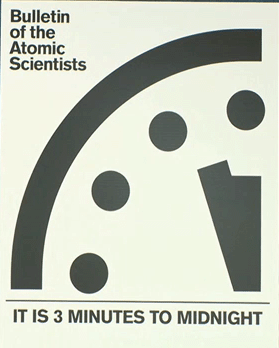
Watch the 2026 Doomsday Clock unveiling live here on January 27 at 10 a.m. EST
To see nuclear-related stories in greater depth and intensity – go to https://nuclearinformation.wordpress.com/
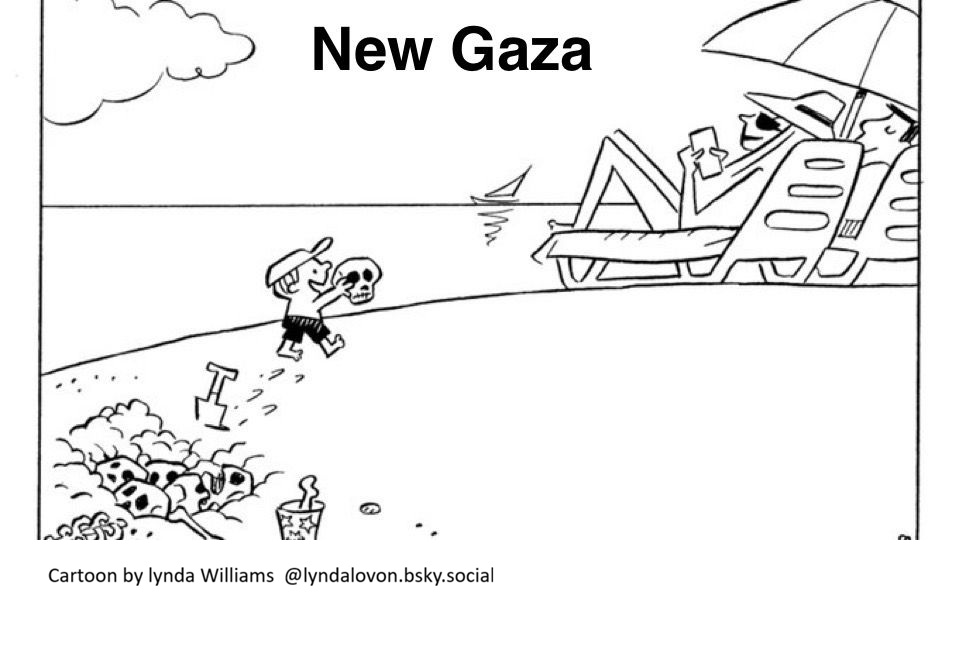
29 Jan. Thursday 7-8 p.m. Webinar – World’s Largest Nuclear Station in Port Hope, ON?

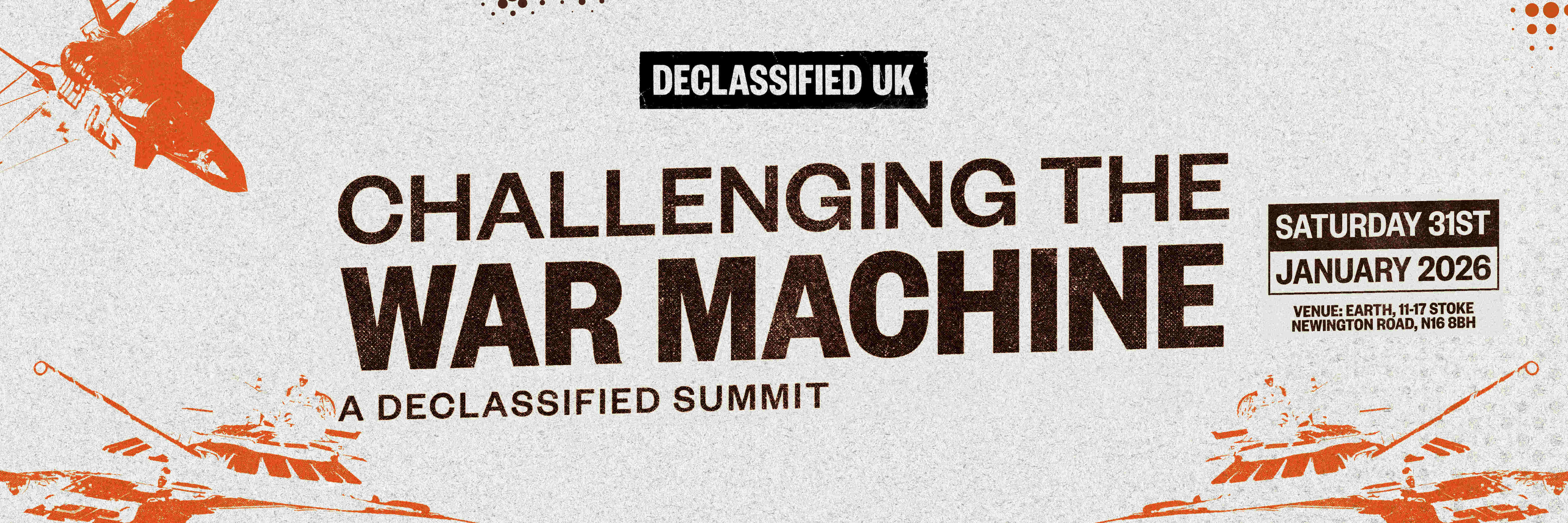
31st January – Challenging the War Machine – a DECLASSIFIED UK SUMMIT


Website of the Week
Now until to February 10, 2026 Radioactive waste storage in France: the debate is finally open! How to participate?
-
Archives
- January 2026 (277)
- December 2025 (358)
- November 2025 (359)
- October 2025 (376)
- September 2025 (258)
- August 2025 (319)
- July 2025 (230)
- June 2025 (348)
- May 2025 (261)
- April 2025 (305)
- March 2025 (319)
- February 2025 (234)
-
Categories
- 1
- 1 NUCLEAR ISSUES
- business and costs
- climate change
- culture and arts
- ENERGY
- environment
- health
- history
- indigenous issues
- Legal
- marketing of nuclear
- media
- opposition to nuclear
- PERSONAL STORIES
- politics
- politics international
- Religion and ethics
- safety
- secrets,lies and civil liberties
- spinbuster
- technology
- Uranium
- wastes
- weapons and war
- Women
- 2 WORLD
- ACTION
- AFRICA
- Atrocities
- AUSTRALIA
- Christina's notes
- Christina's themes
- culture and arts
- Events
- Fuk 2022
- Fuk 2023
- Fukushima 2017
- Fukushima 2018
- fukushima 2019
- Fukushima 2020
- Fukushima 2021
- general
- global warming
- Humour (God we need it)
- Nuclear
- RARE EARTHS
- Reference
- resources – print
- Resources -audiovicual
- Weekly Newsletter
- World
- World Nuclear
- YouTube
-
RSS
Entries RSS
Comments RSS
 nuclear-news