The US Is Just As Culpable As Israel For The Atrocities Committed In Gaza

The primary job of Israel apologists in the coming days will be producing and circulating narratives explaining why this self-evidently terrible thing is actually perfectly fine and acceptable.
And top-down commands are being issued within the US government to support this massacre unconditionally.
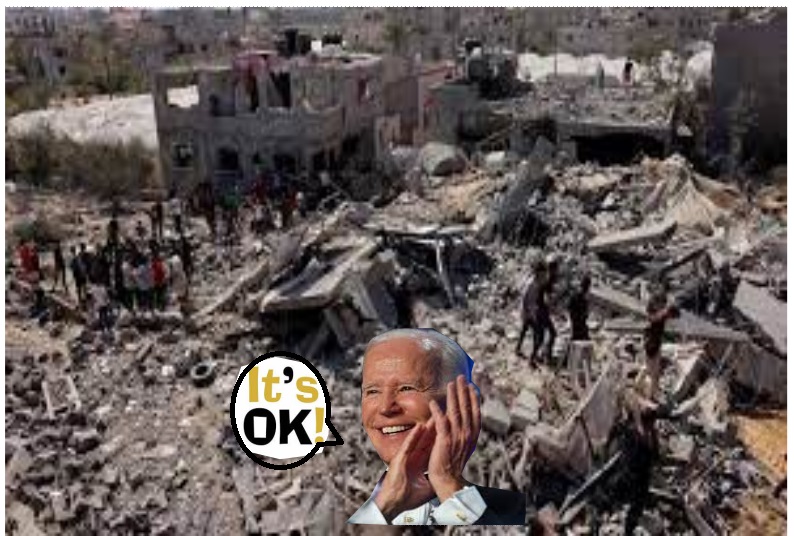
So be perfectly clear, the US government is fully behind this massacre, and is just as culpable for everything that happens in Gaza as the Israeli government.
These abuses are being perpetrated using US weapons, US funding and US consent.
Washington could end this mass atrocity with a word, and instead they’re fully aligning themselves behind it. Israel’s crimes in Gaza are not meaningfully separate from the crimes of the US war machine.
Caitlin’s newsletter CAITLIN JOHNSTONE, , OCT 14, 2023
The Israeli government dropped thousands of leaflets on Gaza telling everyone who lives in the northern part of the strip that they have 24 hours to evacuate to the southern part, and then bombed the people who were trying to evacuate.
United Nations spokesman Stephane Dujarric denounced the evacuation order, saying the UN “considers it impossible for such a movement to take place without devastating humanitarian consequences.” Many Palestinians have said they’re going to stay where they are because they have nowhere safe to go, despite being told by Israel they must leave if they want to “save their lives”.
We’re about to see the death and destruction get much, much worse in Gaza, and it’s already very, very bad. As of this writing the official death toll from Israeli airstrikes in Gaza is speeding past 1,900, a number which includes 614 children. The primary job of Israel apologists in the coming days will be producing and circulating narratives explaining why this self-evidently terrible thing is actually perfectly fine and acceptable.
It’s so incredibly obvious what we’re looking at here. The only thing putting a wobble on people’s perception is the immense amount of propaganda distortion the media is churning out on this issue, plus the fact that the demographics look a bit different from what history has conditioned people to watch out for. If there were two million Jewish people trapped by Christians in a giant concentration camp and placed under total siege, being told that half of them had 24 hours to relocate into the other half or be killed, nobody would have any confusion about what they were witnessing.
And top-down commands are being issued within the US government to support this massacre unconditionally.
The Huffington Post reports that the State Department has been circulating internal emails telling staff to avoid calls for peace, instructing them to refrain from using phrases like “de-escalation/ceasefire,” “end to violence/bloodshed” and “restoring calm.”
Asked about progressive congressional members calling for a ceasefire, White House press secretary Karine Jean-Pierre said, “we believe they are wrong, we believe they’re repugnant, and we believe they’re disgraceful.”
On the question of whether there are any potential Israeli actions that the White House would not tolerate, US national security adviser Jake Sullivan told reporters “I’m not here to draw red lines or issue warnings or give lectures to anybody.”
So be perfectly clear, the US government is fully behind this massacre, and is just as culpable for everything that happens in Gaza as the Israeli government. These abuses are being perpetrated using US weapons, US funding and US consent. Washington could end this mass atrocity with a word, and instead they’re fully aligning themselves behind it. Israel’s crimes in Gaza are not meaningfully separate from the crimes of the US war machine.
This is just a continuation and extension of the violence and bloodshed the US government has been inflicting around the world for generations. There’s a clip of George W Bush going around from a California event on Tuesday in which, for some bizarre, unfathomable reason, the former president was asked to provide his opinion on what Israel should do in response to the Hamas attack on October 7.
Bush said pretty much what you’d expect him to say: “You’re dealing with cold-blooded killers,” “negotiating with killers is not an option,” “one side is guilty.” The same book he’s been reciting from since September 11, 2001. What I find much more interesting is, why is anyone asking the absolute worst person you could possibly ask about what should be done in response to such an attack………………………………..
the United States never learned any moral lessons from its warmongering after 9/11 — if it had, George W Bush would be sitting in a prison cell, and the US wouldn’t be backing a mass atrocity in Gaza………. https://www.caitlinjohnst.one/p/the-us-is-just-as-culpable-as-israel?utm_source=post-email-title&publication_id=82124&post_id=137943417&utm_campaign=email-post-title&isFreemail=true&r=1ise1&utm_medium=email #Israel
Flashback: Israel’s 2009 firing of white phosphorous mutilated & murdered Palestinian civilians
Signs of the Times, (SOTT) Eva Bartlett, In Gaza, Sat, 17 Jan 2009
It’s daily hard to believe it can get worse, but daily it does.
Last week, I saw what seemed to be the white phosphorus clouds doctors have written about, condemned. From a tall Gaza city building, the panoramic view showed a spreading stream of poison, on eastern Gaza.
The chemical burns deeply, to the bone, experts say. It is considered illegal warfare, not to be used in civilian areas. Yet the accounts grow of its use: heavy use in the Khosar region, east of Khan Younis, and in the northwest of Gaza, and in eastern Jabaliya, Sheik Zayid, Sheik Rajleen, Zaitoun… Everywhere. The UN headquarters housing hundreds of fleeing Palestinians which was bombed on January 15 was hit with white phosphorus.
“Five days ago, in Jabaliya, I saw an abnormal material: white dust, spread out in spinning circles which spread the dust further. From inside there was something falling down which looked like snow. It covered a large area, over many houses,” Maher el Madhouan, head of Physiotherapy department in Sheik Radwan had told me last week.
Dr. Nafez Abu Shabaan, Head of the Burn Department, told me they’ve received some burn cases unlike anything they’ve seen. “We’re not familiar with phosphorous burns, but some patients have very deep burns, very strange burns.” He cites the case of a patient sent for a brain scan who three hours later, still alive, “came back smoking”.
In one room, Ghada, 20, lies staring blankly, half of her pretty face and soft skin mottled with burns and blisters. Her right hand is bandaged, so the extent of the burn has to be judged by her unbandaged left hand, which has burn gashes and bloated fingers. A medical report charts her burns: right side of face and head; right arm, hand, side, abdomen, leg, and foot. Apparently the incendiary chemical struck from her right. 43% of her total body surface is covered by these deep burns. She comes from Siatta, north of the northwestern area Attatra, where a tank invasion now rages, well into its first week. [UPDATE: Ghada later died of her extensive burn injuries]………………………………………… more https://www.sott.net/article/485107-Israels-firing-of-white-phosphorous-mutilated-murdered-Palestinian-civilians #Israel
Israeli minister says no water or power for Gaza residents (How to put out the fires?)
SOTT 13 Oct 23
Fuel will also be cut off until hostages are released, Energy Minister Israel Katz has warned
Israel’s siege of Gaza will not be lifted unless Hamas releases all the hostages it has captured, Energy Minister Israel Katz announced on Thursday. His statement came after Israeli authorities cut off water, fuel and electricity to the Palestinian enclave following a surprise attack by Hamas militants on Saturday.
“Humanitarian aid to Gaza? No electrical switch will be turned on, no water pump will be opened and no fuel truck will enter until the Israeli abductees are returned home,” Katz wrote on X, formerly known as Twitter.
The blockade of Gaza was initially announced by Israeli Defense Minister Yoav Gallant on Monday, who said he had ordered a “complete siege of the Gaza Strip” and that there will be “no electricity, no food, no fuel and no water.”
“We are fighting human animals and we are acting accordingly,” Gallant said.
Meanwhile, both the EU and the UN have raised concerns over Israel’s actions in Gaza, with EU foreign policy commissioner Josep Borrell stating on Tuesday that depriving the civilian population of Gaza of food, water and electricity was not in line with international law………………………..
Comment: So, no way to put out fires caused by IDF carpet bombing. No way to clean wounds at a hospital, nor the light to do it by. No way to cook food, but it doesn’t matter because there will be no food to cook.
Demonic. https://www.sott.net/article/485084-Israeli-minister-says-no-water-or-power-for-Gaza-residents #Israel
Israel’s vengeance will not make for a better world
Pearls and Irritations, By Richard Hill, Oct 14, 2023
The depressing, crushing spectacle of extreme violence and mayhem unleashed across Israel and Palestine over recent days is a reminder of the depths to which humanity can sink.
To see complex historical, cultural and geopolitical questions – let alone humanity and decency – reduced to a ceaseless cycle of hatred, death and destruction is hard to stomach. We gaze at our TV screens aghast, we hear the threats, counter-threats, and the endless justifications and commentary. Meanwhile, the bloodletting goes on – and on. Western politicians, weighed down with simple binaries, take sides and in so doing obliterate any sense of context or complexity that might help us understand how this mess occurred in the first place.
Projecting the colours of the Israeli flag across the Sydney Opera House, declaring unflagging support for a state that for decades has thumbed its nose at UN resolutions and violently oppressed a besieged and impoverished population, is morally abhorrent.
The attempt to erase such concerns over recent days has been startling. At this point, to call for some acknowledgment of the origins of the conflict is to court accusations of siding with terrorists. And yet, as US Secretary of State, Antony Blinken, arrives in Israel to demonstrate the US’s unwavering support, Israel is imposing an illegal blockade on Gaza (cutting of life-saving electricity and preventing passage of urgently needed medicines, food and other supplies) as bombs rein down with impunity on a narrow, congested strip of land occupied by 2.3 million people.
How can this be? Why has nuance been shed and historical memory so conveniently erased? Such abstractionism is of course continuing the egregious practice of labelling anyone who dares criticise Israel as antisemitic. This is absurd and ludicrous, and entirely misleading. In the meantime, we have the leader of the most extreme right-wing government in Israel’s history banging his fists together on TV urging extreme violence upon the people of Gaza. He urges them to flee to a checkpoint on the Egyptian border, knowing full well that it’s closed. So, in effect, the people in Gaza are trapped in a hellhole that day-by-day is being reduced to rubble. All this under the watch of the US, Britain and Australia.
Hamas’s attacks were horrific and utterly unacceptable; there’s no denying that. Many innocent people lost their lives, and the human suffering is unimaginable. But to then offer unwavering support to Israel, minus any mention of current and past wrongdoing, borders on the insane. It demonstrates a cruel, collective indifference. And Australia is complicit in this by implicitly endorsing the long-term suffering of Palestinians as Israeli government priority.
There are so many other ways western and other political leaders (including those in Israel) could have responded to a violent attack on innocent people. ……………………………………………..
It is worth remembering the words of former Norwegian Prime Minister, and new NATO Secretary General, Jens Stoltenberg who in the wake of the 2011 mass murder of 70 young people by right-wing gunman Anders Breivik said: “We are still shocked by what has happened, but will never give up our values…Our response is more democracy, more openness, and more humanity.” He vowed his country would not seek vengeance; “we will answer hatred with love”. In a later news conference, Stoltenberg added: “The message to whoever attacked us, the message from all of Norway is that you will not destroy us, you will not destroy our democracy and our ideals for a better world.” This better world does not include blind rage and vengeance, or continuing oppression and violence………………more https://johnmenadue.com/israels-vengeance-will-not-make-for-a-better-world/— #Israel
In 1981, Israel Bombed Nuclear Reactor In Iraq. Why It’s Relevant Today
NFTV Edited by Debanish Achom October 11, 2023 , New Delhi:
The Israel-Gaza war has a real risk of spreading into a larger regional war with Lebanon’s Iran-backed Hezbollah group firing missiles into Israel. Israel also launched counterattacks at the Hezbollah amid soaring border tensions. Both Israel and its closest ally the US have warned Hezbollah against opening a second front as Israel battles Hamas in Gaza Strip.
Israel and Iran have been fighting a proxy war. While Iran has been funding Hezbollah and the Palestinian Islamic Jihad and is said to be angling for the “leader” of the Arab world status, Israel has expressed concerns over Iran’s nuclear weapons programme. Israel, along with the US, have been vocal in condemning Iran’s alleged nuclear weapons programme, which they claim can destabilise the entire region.
It is in this context that a June 1981 airstrike by the Israeli Air Force, called “Operation Opera”, on a nuclear reactor in Iraq becomes relevant. Military analysts suspect Israel will not hesitate to carry out a similar strike on Iran if it finds itself cornered from all sides in the event of a full-scale regional war.
For now, there is no indication of an impending offensive by Hezbollah against Israel, despite growing border tensions. Iran, officially at least, has insisted it has no involvement in Hamas’ assault on Israel. While some neighbouring Arab countries — which have been keen to improve relations with Israel — see a chance to play a role as mediator. But the situation is extremely volatile…………………………………………………………………………
https://www.ndtv.com/world-news/operation-opera-daring-1981-airstrike-on-nuclear-reactor-in-focus-as-israel-faces-multi-front-war-4471744#lnmp1y2hntwy9xa1lxe— #nuclear #antinuclear #NuclearFree #NoNukes #NuclearPlants
Israeli army says it does not have ‘confirmation’ about allegations that ‘Hamas beheaded babies’
Israeli army spokesperson tells Anadolu over phone that they have no information confirming allegations that ‘Hamas beheaded babies’
Turgut Alp Boyraz 11.10.2023 https://www.aa.com.tr/en/middle-east/israeli-army-says-it-does-not-have-confirmation-about-allegations-that-hamas-beheaded-babies-/3014787
JERUSALEM
The Israeli army has no information confirming allegations that “Hamas beheaded babies,” Israeli army spokesperson unit told Anadolu on Tuesday.
It was alleged that Hamas’s armed wing, the Qassam Brigades, “beheaded many Israeli babies” on the Israeli side during the early Saturday morning attack launched from Gaza.
When Anadolu contacted the Israeli army spokesperson unit over the phone and asked about the allegations, she said “We have seen the news, but we do not have any details or confirmation about that.”
The situation escalated with a Saturday surprise attack from Palestinian group Hamas in the Gaza Strip on southern Israeli towns. Israel retaliated with massive airstrikes in Gaza and placed the enclave under total blockade.
More than 1,900 people have so far been killed in the violence, including at least 900 Palestinians and 1,000 Israelis, according to authorities.
Israel has also cut water and electricity supplies to Gaza, worsening the blockaded enclave’s already dire humanitarian situation.
Home to nearly 2.2 million people, the Gaza Strip has already been reeling under a crippling Israeli siege since 2007. #Israel
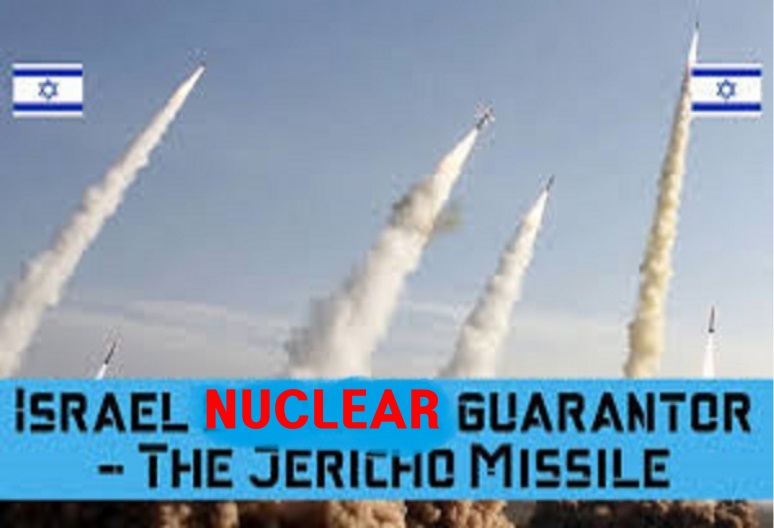
What is Jericho missile system? Israel’s potential ‘doomsday’ nuclear option
Wion News By: Mukul Sharma Oct 12, 2023
STORY HIGHLIGHTS
It is yet not clear if Jericho-3 has been deployed by Israel during ongoing retaliatory offensive against Hamas in Gaza.
An Israeli legislator’s recent calls for the use of a “doomsday” weapon against Hamas and Palestine have once again put the spotlight on nuclear weapons in West Asia, particularly the Jericho missile system.
Revital “Tally” Gotliv, an Israeli lawyer and member of the Knesset representing Prime Minister Benjamin Netanyahu’s Likud Party, made several posts on X, formerly known as Twitter, stating that Israel must consider nuclear warfare as an alternative to deploying large ground forces.
“Jericho Missile! Jericho Missile! Strategic alert. before considering the introduction of forces. Doomsday weapon! This is my opinion. May God preserve all our strength,” Gotliv wrote on X.
What is Jericho ballistic missile program?
Gotliv specifically mentioned “Jericho,” referring to Israel’s original ballistic missile program, initiated in the 1960s and named after the biblical city located in West Bank.
This program was initially a collaboration with the French aerospace company Dassault, but when France withdrew in 1969, Israel continued its development. The Jericho-1 model, which was operational during the Yom Kippur War in 1973, came out as an accomplishment of the said program.
The Jericho-1, which was retired in the 1990s, had a weight of 6.5 tons, a length of 13.4 meters, and a diameter of 0.8 meters, according to the International Institute for Strategic Studies (IISS), Newsweek reported.
It had a range of 500 kilometers (approximately 310.6 miles) and could carry a 1,000-kilogram (about 2,205-pound) payload, though it had a 50 percent chance of hitting within a 1,000-meter radius of its target.
Israel later developed the Jericho-2, a longer-range missile in the late 1980s, with a length of 15 meters and a diameter of 1.35 meters, while maintaining the same payload capacity. It had a range between 1,500 and 3,500 kilometers (about 932 to 2,175 miles).
The Jericho-3, an intermediate-range system, was introduced years later and was reportedly tested in 2008, entering service in 2011. It featured improvements over the previous models, with a longer length than Jericho-2 and a larger diameter of 1.56 meters.
Its single warhead weighed approximately 750 kilograms (1,653 pounds) and had a range of 4,800 to 6,500 kilometers (about 2,983 to 4,039 miles). The payload capacity extended to about 1,300 kilograms (2,866 pounds).
It is yet not clear if Jericho-3 has been deployed by Israel during ongoing retaliatory offensive against Hamas in Gaza. #nuclear #antinuclear #NuclearFree #NoNukes #NuclearPlants
Some Israeli actions ‘against international law’ – EU
“There will be no electricity, no food, no fuel, everything is closed,” Gallant told the Israeli media. “We are fighting human animals and we act accordingly.”
https://www.rt.com/news/584594-borrell-eu-israel-law-gaza/ 11 Oct 23
Denying Gaza water, food and electricity is not appropriate, Josep Borrell has said
Israel has the right to self-defense, but some of the decisions its government has made are contrary to international humanitarian law, EU foreign policy commissioner Josep Borrell said on Tuesday.
“Israel has the right to defend, but it has to be done in accord with international humanitarian law. And some decisions are contra this international law,” Borrell said in Oman, where he attended the joint meeting of foreign ministers from the EU and the Gulf Cooperation Council.
Both the EU and the GCC have condemned terrorist attacks by Hamas, Borrell noted, but also condemned any attacks on civilians, demanded the immediate release of all hostages, and called for Israel to respect international law and not block the delivery of food, water or electricity to the civilian population of Gaza.
The two blocs have also asked Israel to open “humanitarian corridors” from Gaza to Egypt, so that civilians can leave the territory ahead of Israeli reprisal airstrikes.
Borrell’s remarks appeared to be a reference to Israeli Defense Minister Yoav Gallant’s statement on Monday ordering a “complete siege” of Gaza.
“There will be no electricity, no food, no fuel, everything is closed,” Gallant told the Israeli media. “We are fighting human animals and we act accordingly.”
Multiple media outlets also quoted Gallant as saying on Tuesday that he had “lifted all the restraints” on Israeli rules of engagement against Gaza.
Israel launched reprisal airstrikes against the Palestinian territory after Hamas, which controls much of Gaza, sent commandos deep into Israeli territory on Saturday. The three days of heavy clashes have resulted in at least 900 dead Israelis and at least 830 dead Palestinians, according to the authorities in West Jerusalem and Gaza, respectively.
Just before Gallant announced the “siege,” the EU declared it would put €691 million ($728.8 million) in aid to the Palestinian Authority under review and suspend all pending payments, citing the “scale of terror and brutality against Israel and its people” by Hamas. Borrell later “clarified” those remarks to note that aid will continue, because suspending it would amount to “punishing all the Palestinian people” and damage EU interests in the region. #Israel
Ministry confirms Israel’s deployment of white phosphorous bombs against Gaza
Wednesday, 11 October 2023 https://www.presstv.ir/Detail/2023/10/10/712479/Palestine-Israel-war-white-phosphorous
The health ministry in the Gaza Strip, which has come under an all-out Israeli war, has confirmed the regime’s deployment of banned white phosphorous munitions against a densely populated neighborhood in the coastal sliver.
“Israeli warplanes use internationally #prohibited_white_phosphorus, destroying al-Karama neighborhood,” the official Palestinian Wafa news agency wrote on X on Wednesday, referring to a neighborhood lying in the north of the Palestinian territory.
Calling up an unprecedented 300,000 reservists, the Israeli regime has declared a “long” war on Gaza in response to Operation al-Aqsa Storm.
Gaza’s Hamas and Islamic Jihad resistance movements initiated the operation on Saturday, killing hundreds of Israeli forces and illegal settlers and taking many others among them hostage. The resistance fighters say they waged the operation against the occupying regime in response to its decades-long campaign of bloodshed and destruction against Palestinians.
The Israeli war has so far killed 900 Palestinians, including 260 children and 230 women, and injured as many as 4,600 others.
Reporting on Monday, Iran’s Arabic-language al-Alam news network reported that the regime had started using the banned munitions against Gaza earlier in the day.
The use of white phosphorus shells for direct targeting of enemy positions is illegal under the international law as the practice can amount to war crime and cause widespread fatalities.
This is not the first time that Tel Aviv targets the territory with such weapons.
Israel admitted to “using munitions containing white phosphorus” during its 2008-2009 war on Gaza, but the regime denied violating the international law by insisting that such weapons were not fired into areas populated by civilians. #Israel
Netanyahu at UN issues ‘nuclear’ threat to Iran, later retracted
United Nations (United States) (AFP) – Israeli Prime Minister Benjamin Netanyahu on Friday warned Iran at the United Nations of a “nuclear threat” in what his office quickly walked back as a slip of the tongue.
France 24 22/09/2023 –
………………….Netanyahu, who has repeatedly used the UN stage to issue dark warnings about Tehran, briefly gave pause at the General Assembly when he appeared to threaten nuclear attack if Tehran pursues its own atomic bomb.
His office soon afterward said that Netanyahu had misspoken and that his prepared text said “credible military threat” instead of “credible nuclear threat.”………
Israel has a widely known but undeclared nuclear program. As of January, Israel was believed to possess a stockpile of around 90 nuclear warheads, according to the Stockholm International Peace Research Institute.
Tehran denies seeking a nuclear bomb but has breached limits on uranium enrichment set in a US-brokered 2015 deal following former president Donald Trump’s withdrawal from the agreement and reimposition of sweeping sanctions……………………………………………………. more https://www.france24.com/en/live-news/20230922-netanyahu-at-un-issues-nuclear-threat-to-iran-later-retracted
Israel’s nuclear commission head refuses to side by High Court – in the case of a constitutional crisis
Brig.-Gen. (res.) Moshe Edri, unofficially affiliated with the ruling Likud party, has not committed to siding with the court in case of a constitutional crisis.
By JERUSALEM POST STAFF SEPTEMBER 17, 2023 https://www.jpost.com/breaking-news/article-759427
The head of Israel’s Atomic Energy Commission (IAEC) as of Sunday has yet to address a request by other members of the commission to adhere to the High Court of Justice in the case that the government refuses to respect any of its rulings, N12 reported on September 17.
Brig.-Gen. (res.) Moshe Edri, unofficially affiliated with the ruling Likud party, was asked by his fellow IAEC members to announce along with other Israeli security establishment heads to “choose the kingdom over the king,” if Prime Minister Benjamin Netanyahu’s government does not respect a potential High Court ruling on the reasonableness standard amendment to Basic Law: The Judiciary.
Edri, who formerly headed the Defense Ministry’s Special Measures Division, has been acting as IAEC director-general since July 2022.
Nuclear scientists are against Israel’s judicial reform
Senior nuclear scientists in the Israel Atomic Energy Commission are considering resigning in protest against the government’s judicial reform plan, Channel 13 reported two months ago.
The groups of scientists, dozens as per the report, are still discussing whether or not to resign.
These scientists are reportedly targeted across the globe due to the nature of their occupation and have had security detail attached following Iranian threats on their lives.
The report continues, adding that any decision is unlikely to be taken as a united group, but rather as individuals.
Report: US, Israel to Conduct Joint Drills Simulating Attacks on Iran
The US and Israel held their largest-ever joint exercise earlier this year
By Dave DeCamp / AntiWar.com September 3, 2023 https://scheerpost.com/2023/09/03/report-us-israel-to-conduct-joint-drills-simulating-attacks-on-iran/
The US and Israel will simulate striking Iranian nuclear facilities as part of a series of joint military exercises that will be held in the coming months, The Times of Israel reported Wednesday, citing Israeli TV.
Back in January, the US and Israel conducted the Juniper Oak exercises, which were the largest-ever joint drills between the two nations. The Israeli military said Juniper Oak was just the first of a series of drills that the US and Israel will hold this year.
Israel’s Channel 12 reported one of the upcoming drills would simulate Israel facing a multi-front missile attack that will involve the US deployment of Patriot missile systems. Another drill will rehearse a joint US-Israeli attack on Iranian nuclear facilities.
The plan to simulate attacks on Iran has not been publicly confirmed by the US or Israel, but the two nations have previously rehearsed bombing Iran, including during drills that were held over the Mediterranean Sea in November 2022.
While nuclear facilities would be the target in the simulated drills, there’s no sign Iran is looking to build a nuclear weapon, which was affirmed by a recent US intelligence report. Often missing from the conversation about Iran’s civilian nuclear program is the fact that Israel has a secret nuclear weapons program and an arsenal of nukes that the US does not acknowledge exists.
The report comes amid heightened tensions between the US and Iran in the Persian Gulf. The US seizure of a tanker carrying Iranian oil in April provoked two Iranian tanker seizures, and the US responded by beefing up its military presence in the region.
Bibi Isn’t Serious About Preventing a Regional Nuclear Arms Race
Benjamin Netanyahu has long warned of the perils of a nuclear Middle East. Now he seems willing to allow Saudi nukes in exchange for normalization.
FP, By Azriel Bermant, a senior researcher at the Institute of International Relations Prague. 25 Aug 23
Three years ago, the tormented Israeli Prime Minister Benjamin Netanyahu found refuge from his domestic troubles with the announcement of peace agreements with the United Arab Emirates (UAE) and Bahrain which became known as the Abraham Accords. Three years on, speculation has grown in Israel over the possibility of the most significant breakthrough in regional diplomacy in 40 years: the signing of a normalization deal with Saudi Arabia.
……………………………………………………………………………. the Saudi government in Riyadh is also insisting it should be permitted to enrich uranium as part of a civil nuclear program.
This flies in the face of Israel’s long-standing attempts to prevent other countries in the region from acquiring any nuclear capability. This policy became known as the Begin Doctrine, named after then-Israeli Prime Minister Menachem Begin, who famously authorized the bombing of Iraq’s Osirak nuclear reactor in June 1981……. https://foreignpolicy.com/2023/08/24/netanyahu-saudi-mbs-nuclear-enrichment-arms-race/
Israel will not agree to Saudi nuclear program: Netanyahu
Saudi Arabia has demanded US assistance for establishing a civilian nuclear program in exchange for normalization with Israel
The Cradle, News Desk AUG 20, 2023
The office of Israeli Prime Minister Benjamin Netanyahu clarified on 20 August that Israel would not agree to any of its neighbors having a nuclear program.
“That was and remains Israel’s policy,” Netanyahu stated during a cabinet meeting.
The clarification came in response to an interview by Minister of Strategic Affairs Ron Dermer, in which he suggested that Israel would be willing to accept a civilian nuclear program in Saudi Arabia under certain conditions.
Saudi Arabia has stated that it demands US assistance in developing a civilian nuclear program as one of its conditions for normalizing relations with Israel.
The Saudis are reportedly also asking for a defense pact with Washington and access to purchase more advanced US weapons.
The White House has prioritized reaching a deal between its two closest allies in West Asia before the next presidential election.
In an interview with the PBS TV network on 18 August, Dermer said that when it comes to a civil nuclear program in Saudi Arabia, “the devil is in the details.”
He further stated that because the Saudis are signatories to the nuclear non-proliferation treaty, they can ask China or France for assistance in establishing a civilian nuclear program that includes uranium enrichment……………………………………….. more https://new.thecradle.co/articles/israel-will-not-agree-to-saudi-nuclear-program-netanyahu
Israel Worries U.S. Weapons for Ukraine Are Ending Up in Iran’s Hands
NewsWeek, BY TOM O’CONNOR ON 6/15/23
high-ranking Israel Defense Forces (IDF) commander has told Newsweek that Israel is concerned over the risks of weapons provided by the United States and other Western nations to Ukraine ending up in the hands of Israel’s foes in the Middle East, including Iran.
With experts too backing these worries, the situation could mark yet another chapter in a long legacy of U.S. arms shipments being diverted, empowering adversaries of both Israel and the U.S. in another restive region, while the focus of Western governments is on the volatile conflict playing out in Eastern Europe.
The Israeli commander, who spoke on condition of anonymity due to the sensitivity of the topic, said the diversion of weapons, such as the Javelin shoulder-fired anti-tank missile system, was being monitored from paramilitary forces operating on both sides of the Russia-Ukraine war………………………………………………………..
The U.S. has provided nearly $50 billion in military assistance to Ukraine since Russia launched its war in February 2022. Prior to the conflict, the U.S. sent up to 7,700 Javelins to Ukraine and, by two months into the war, had sent an additional 5,500.
More batches of these systems and other portable weapons such as Tube-Launched, Optically Tracked, Wireless-Guided (TOW) anti-tank missiles and Stinger anti-aircraft missiles have continued to come in new aid packages, such as one announced Wednesday, as part of a growing and increasingly advanced array of Western weapons made available to Ukraine………………………………….
The issue channels a long history of U.S. arms inadvertently ending up in the hands of adversarial forces.
This trend was demonstrated most clearly this century in the large quantities of U.S.-supplied weapons wielded by the Islamic State militant group (ISIS) as a result of the mass surrender of U.S.-partnered forces in the face of the jihadis’ lightning advances in Iraq and the defeat and absorption of U.S.-backed rebel groups by ISIS in neighboring Syria………………………………… more https://www.newsweek.com/israel-worries-us-weapons-ukraine-are-ending-irans-hands-1806131
1 This Month
Chernobyl: The Lost Tapes – A good documentary on Chernobyl on SBS available On Demand for the next 3 weeks– https://www.sbs.com.au/ondemand/tv-program/chernobyl-the-lost-tapes/2352741955560

of the week–London Campaign for Nuclear Disarmament

Tell the Ukrainian Government to Drop Prosecution of Peace Activist Yurii Sheliazhenko
To see nuclear-related stories in greater depth and intensity – go to https://nuclearinformation.wordpress.com
-
Archives
- April 2026 (114)
- March 2026 (251)
- February 2026 (268)
- January 2026 (308)
- December 2025 (358)
- November 2025 (359)
- October 2025 (376)
- September 2025 (257)
- August 2025 (319)
- July 2025 (230)
- June 2025 (348)
- May 2025 (261)
-
Categories
- 1
- 1 NUCLEAR ISSUES
- business and costs
- climate change
- culture and arts
- ENERGY
- environment
- health
- history
- indigenous issues
- Legal
- marketing of nuclear
- media
- opposition to nuclear
- PERSONAL STORIES
- politics
- politics international
- Religion and ethics
- safety
- secrets,lies and civil liberties
- spinbuster
- technology
- Uranium
- wastes
- weapons and war
- Women
- 2 WORLD
- ACTION
- AFRICA
- Atrocities
- AUSTRALIA
- Christina's notes
- Christina's themes
- culture and arts
- Events
- Fuk 2022
- Fuk 2023
- Fukushima 2017
- Fukushima 2018
- fukushima 2019
- Fukushima 2020
- Fukushima 2021
- general
- global warming
- Humour (God we need it)
- Nuclear
- RARE EARTHS
- Reference
- resources – print
- Resources -audiovicual
- Weekly Newsletter
- World
- World Nuclear
- YouTube
-
RSS
Entries RSS
Comments RSS
 nuclear-news