Israel’s Bombing Won’t Stop Iran from Going Nuclear
NPEC – Non Proliferation Policy Education Center, June 17, 2025
Spotlighting Greg Jones‘ latest research on the difficulty of targeting Iran’s nuclear program. Mr. Jones is one of the nation’s top nuclear analysts and has had close ties to NPEC for more than three decades.
Most of the analyses of Israel’s air campaign against Iran’s nuclear program have focused on two questions: Can Israel destroy Iran’s enrichment plants on its own? Or does Israel need Washington’s help to knock them out?
The question too infrequently asked, however, is can any bombing campaign, with or without U.S. assistance, keep Iran from getting a bomb? Greg’s short answer is no.
As he points out, bombing Iran’s enrichment plants may temporarily put them out of commission, but the centrifuges and cascades can be repaired. Tehran, he argues, can remove undamaged centrifuges, build new cascades, and be back in business in four to six months.
Fordow, for now, remains untouched. Conservatively, Fordow could produce a bomb’s worth of nuclear fuel every 2.5 weeks. Again, the centrifuges there can be removed to other locations.
Then, there’s the matter of the 440 kgs. of 60 percent enriched uranium that Iran already has – conservatively, enough to build 12 bombs. This material, Greg points out, is stored in hardy metal cylinders that are extremely difficult to destroy via bombing attacks and can be moved by truck to remote locations. Meanwhile, the International Atomic Energy Agency has determined that Iran has all but developed the nonnuclear components necessary to build a nuclear weapon.
This is why Greg concludes that any quick military fix to prevent Iran from going nuclear is impractical and that the threat of an Iranian nuclear weapon will remain until and unless Iran agrees to relinquish its entire stockpile of enriched uranium and eliminates its centrifuge enrichment program.
You can read Greg’s full, footnoted analysis here.
…………………………………………………………………………………………………… https://npolicy.org/israels-bombing-wont-stop-iran-from-going-nuclear/
The World’s Most Dangerous Man and His Enabler
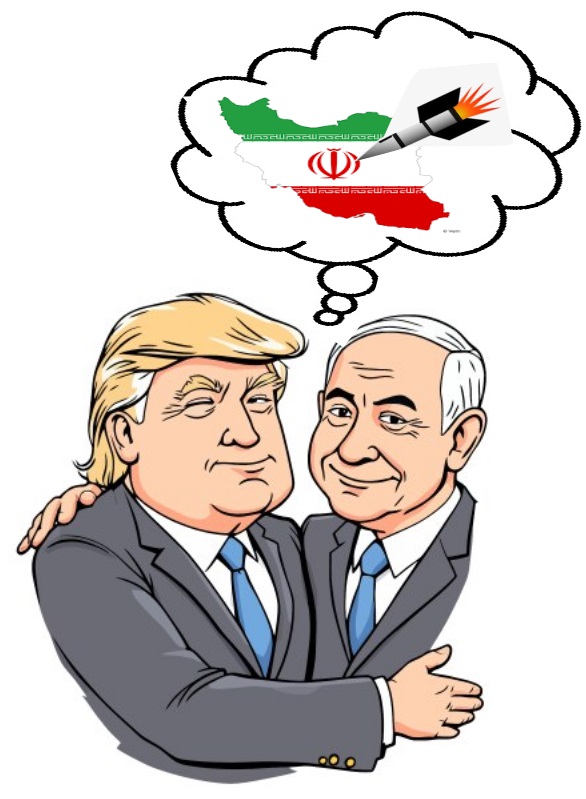
And so we come to the case of Donald J. Trump. I do not consider the American president to be as dangerous as Benjamin Netanyahu. He, Trump, may be stupider than Bibi, but he is not as unhinged. I count Trump Netanyahu’s enabler, and this is the role he just played.
now we have a nuclear-armed nation of many-times-demonstrated dangerous judgments threatening “a State without nuclear weapons,” as the IAEA refers to Iran.
June 16, 2025 By Patrick Lawrence / Original to ScheerPost
It is some years since I described Benjamin Netanyahu as the most dangerous man in West Asia. That was back when we heard all about the menace of the Assad regime in Damascus, the Beelzebub otherwise known as Iran’s supreme leader, and other such unthinkably malign figures.
The Israeli prime minister just graduated. By any serious reckoning he is the world’s most dangerous man as of the shockingly reckless, altogether nihilist attacks he launched against the Islamic Republic in the early hours of Friday, June 13. I will get to Donald Trump’s place in the ratings in a sec.
In his initial announcement of Operation Rising Lion, Netanyahu asserted that Iran presents “an existential threat” to Israel and that he had no choice but to order an attack. This is nonsense, but we had better pay attention to the nonsense. With this loaded phrase, Bibi has effectively licensed the Zionist state to launch a nuclear weapon if these attacks fail to destroy all of the Islamic Republic’s nuclear programs, as seems likely. This is my read.
There is indeed an existential threat abroad as of last Friday. But it extends well beyond Iran and, indeed, West Asia. As the self-defined Jewish state’s long, dreadful record makes plain, it appears to recognize no limits to the violence it will inflict on others, its breaches of international law and the norms of the human cause, and the risks it will inflict on the world in the name of what amounts to a biblically authorized project of subjugation and domination.
To finish this point, the obsessed leader of a nuclear-armed nation never subjected to the terms of the Non–Proliferation Treaty has just attacked a non-nuclear nation it calls a mortal danger to Israel’s survival because of the nuclear weapons it does not possess. You do the math, as the expression goes.
“Operation Rising Lion,” for the record, is a reference to the Prophecy of Balaam, an infidel with a very mixed record but who impressed the ancient Israelites with his exceptional powers of divination. In the Revised Standard Version of Numbers, 23:24, we find him saying, “Behold, the people shall rise up as a great lion, and lift up himself as a young lion: he shall not lie down until he eat of the prey, and drink the blood of the slain.” So does Bibi, who has the Palestinians down as evil Amalekites straight out of the Old Testament’s mythologies, once again state his purpose.
Israel and Iran are now at war, as one Tehrani told The New York Times after she listened to explosions and watched the flicker fires out her window last Friday evening. All is changed now. Netanyahu has craved this war for decades, always justifying his lust — a clinically psychotic lust, it is right to say — by way of endless lies and an apparently bottomless paranoia. These lies and this paranoia just put the world in danger of a global confrontation. We are all Iranians now: I am perfectly willing to say this.
As to President Trump and the American role in this, there is no need any longer for any of us to deceive ourselves. I continue to insist, against many who think otherwise, that the Zionist state is to be understood as a recklessly over-indulged client and not the Übermeister of U.S. policy. It is a complex dynamic, I mean to say, but the Zionist state just got done what the imperium wants in its broader ambition to “reshape the Middle East,” as the neoconservative cliques who direct U.S. policy have long put it. As I have noted previously in this space, borrowing from spookspeak, Israel does Washington’s wet work in West Asia.
■
As many commentators have remarked in many places, the Israelis have a well-established practice of lying in matters to do with events, policies, the conduct of the Israel Defense Forces, and so on. All governments lie, as I.F. Stone famously contended on many occasions, but the Israelis are in a class of their own among the officially mendacious, it is fair to say.
The thing about the Israelis is that they continue to lie even after a given lie is exposed. Netanyahu, a ready-to-hand case in point, still goes on about how the Hamas militias who attacked southern Israel on Oct. 7, 2023, raped men and women, beheaded some babies and baked others in ovens, and so on. All of this has been exposed as false, the product of Israel’s hasbara apparatus, the constantly-in-motion machine that produces propaganda for the consumption of international audiences. But Bibi nonetheless continues to retail these smears.
And this is the case with Netanyahu’s claims that, as of last week, Iran was on the very brink of producing nuclear weapons, and it was therefore urgent to stop it.
When he announced Operation Rising Lion, Netanyahu asserted, “It could be in a year, it could be within a few months — it could be less than a year.” Read this carefully. It is sheer fear mongering, not a stated fact in it. There is no more substance to these assertions than there has been since Netanyahu first started carrying on in this fashion in the early 1990s. Anyone aware of the record knows this is merely another in the long line of statements Netanyahu has made of this kind. Bibi knows all his “coulds” and predictions are groundless — Israeli intel and the Central Intelligence Agency have told him so — and he cannot but know those paying attention know he knows this. Now this transparent lie proves enough to start a war with two sides and risk a war with many.
On June 11, two days before the Israelis launched their attacks on Iran, a social media account going by The United States of Israel posted on “X” a timeline of Netanyahu’s claims that the Islamic Republic was about to cross the threshold and become a nuclear-capable danger. There are 20 entries, beginning in 1992 and ending earlier this year. In 1996 Iran was some months to one year away from building a bomb. In 2010 it was a year away, in 2021 months to a year, and so on.
I am not familiar with The United States of Israel and cannot vouch for every entry, but of those I know, they are all accurate. I think first of 2013, when Netanyahu addressed the U.N. General Assembly on Oct.1 with that infamously ridiculous graphic that readers may recall — the bomb shaped like a bowling ball with a fuse out of the top. The forecast then, a dozen years ago, was a year to nuclear capability.
………………………………….. commentators and others now place much weight on a report from the International Atomic Energy Agency charging that Iran has been in violation of its obligations under the Nuclear Non–Proliferation Treaty.
Some facts: The agency is an organ of the United Nations and has 35 members. It convened to vote on a resolution that was advanced by the United States, Britain, France and Germany. This resolution was presented Thursday, June 12, a day before Israel began attacking Iran. It passed with a vote of 19 board members in favor, three against (Russia, China, Burkina Faso) and 11 abstentions; two board members did not vote.
These facts merit scrutiny. Why did four Western powers, which unanimously support Israel and oppose Iran, introduce this resolution when, by last Thursday, United States and European officials were already warning of an imminent Israeli attack? Why did 16 other nations — many of them non–Western, some of them (Canada, the Netherlands, South Korea, Japan) U.S. allies — decline to back the resolution? On the day of the vote, you may recall, the State Department withdrew its diplomatic staff from its embassy in Baghdad and encouraged the families of military personnel in the region to evacuate on a voluntary basis.
Iran’s foreign minister, Abbas Araghchi, immediately interpreted the IAEA’s censure as politically motivated, a preface to the Israelis’ operation the next day. Let us take care here: This view of events cannot be verified as so, but it most certainly cannot be dismissed.
The IAEA censure is contained in the four-page June 12 report. This is a highly technical document having to do with the agency’s access to nuclear-related sites in Iran and the Iranians’ official accounts of their nuclear programs in their regular contacts with the IAEA. The points of contention between the agency and the Iranians go back five years; the most recent of these dates to November 2024. Nothing happened last week or last month or the month before that to prompt the agency’s censure.
Here is a key passage in the document:
Noting with concern the Director General’s conclusion, most recently in GOV/2025/25, that these issues stem from Iran’s obligations under its NPT Safeguards Agreement and unless and until Iran assists the Agency is [sic] resolving the outstanding issues, the Agency will not be in a position to provide assurance that Iran’s nuclear programme is exclusively peaceful …
Does this read to you like a declaration that Iran is on the brink of nuclear-capability and must urgently be stopped? Or does this read as another in a long line of interim reports, the basis for further interaction of the kind that has gone on routinely for decades? Does this, or any other passage if you care to read the technical prose, support Bibi Netanyahu’s latest predictions as earlier quoted? Does it support the commentaries of David French and Bret Stephens? Put this report next to the assertions of these people and you have an across-the-board case of gross distortion.
Iran, in response to the IAEA censure, now threatens to withdraw altogether from the Non–Proliferation Treaty and pursue its nuclear capabilities in earnest. You can read this as a potential horror show or you can think about the principle of deterrence. I have been of the latter persuasion for many years in the Iranian case. Deterrence was held very high as a strategic concept during the Cold War decades. I regretted the circumstances that made deterrence necessary but saw the necessity of it. And now we have a nuclear-armed nation of many-times-demonstrated dangerous judgments threatening “a State without nuclear weapons,” as the IAEA refers to Iran. I come to the same conclusion.
Abbas Araghchi, Iran’s now-perturbed foreign minister, was due to travel to Oman Sunday, June 15, for further talks with the United States on a nuclear accord that would replace the agreement Netanyahu railed against even before it was signed and Trump abandoned. This is now off, for obvious reasons.
And so we come to the case of Donald J. Trump. I do not consider the American president to be as dangerous as Benjamin Netanyahu. He, Trump, may be stupider than Bibi, but he is not as unhinged. I count Trump Netanyahu’s enabler, and this is the role he just played.
Trump is as deep in the pockets of the Israel lobbies and various wealthy American supporters of the Zionist state as any other American pol, allowing for very few exceptions. But in his support of so dangerous an operation as Rising Lion, Trump may have outdone them all, it seems to me. It is one thing, condemnable enough, to back a genocide by way of limitless supplies of weapons, political support and diplomatic cover. Isn’t another to approve of aggression that carries the risk of global conflagration? The degree of cynicism strikes me as yet greater than Joe Biden’s, and I admit that is going some.
There was a day or so just before Netanyahu’s lion began to rise when Trump put Marco Rubio, his hapless secretary of state, out in front of the microphones and cameras to tell the world no, the U.S. had no prior knowledge of Israel’s plans and there were no “American airplanes” involved. It transpires that Rubio meant no jets with the “USAF” insignia painted on their fuselages. Newsweek reported the day the Israelis attacked that Israel has deployed a variety of American-made fighter jets in the Israeli inventory — F–35s, F–16s and F–15s — against the Iranians. You might ask whether this amounts to tacit consent, but don’t bother. The Israelis, ever eager to boast of America’s approval of all their malevolence, have clarified the matter.
Antiwar.com, the libertarian news site, reported June 13 that a senior Israeli official disclosed to The Jerusalem Post that the Netanyahu and Trump regimes colluded “to convince Tehran that diplomacy was still possible after Israel was ready to attack Iran.” As the Jerusalem Post reported, “The round of U.S.–Iranian nuclear negotiations scheduled for Sunday was part of a coordinated U.S.–Israeli deception aimed at lowering Iran’s guard ahead of Friday’s attack.”
Here is the able Dave DeCamp’s report in Antiwar.com and here is the Jerusalem Post’s. And here, for good measure, is how The New York Times played this story under the headline, “A Miscalculation by Iran Led to Israeli Strikes’ Extensive Toll, Officials Say.” Those foolish Iranians: They took the Americans at their word.
All this while, to complete the picture, Trump was on his Truth Social messaging platform with this kind of thing:
We remain committed to a Diplomatic Resolution to the Iran Nuclear Issue! My entire Administration has been directed to negotiate with Iran. They could be a Great Country, but they first must completely give up hopes of obtaining a Nuclear Weapon. Thank you for your attention to this matter!”
I like the flipped-off flattery, the upper-case nouns, and the exclamation points. Very Donald. So is what we read about in the above-cited publications.
I do not want to go on about how cravenly the U.S. so often conducts itself in matters of state. This has been noted often enough. But what the United States just did to Iran with the assist of its client seems to me the ne plus ultra of diplomatic betrayals. I can think of only one other case that offers a useful comparison.
That was when Vladimir Putin personally negotiated a settlement of the Ukraine crisis in its early stages. The Russian president invested heavily in the two Minsk Protocols, signed in September 2014 and February 2015, as a promising solution to the divisions evident in Ukraine after the U.S.–cultivated coup in Kiev in February 2014. He subsequently discovered neither Ukraine nor the Western powers that served as guarantors of these accords, France and Germany, ever had any intention of implementing them.
Essentially at issue in these two cases is trust and breaches thereof. A measure of trust is foundational in international relations. Without it there can be no constructive diplomacy, either between adversaries or, for that matter, among allies. Nations are that much closer to a default of hostility and potential chaos. The Europeans broke trust with the Russians when they abandoned the Minsk accords as soon as they signed them. Trump just broke trust with the Iranians. This is devastation of a kind — scorched-earth statecraft, we may as well call it.
To finish this point, do you think others do not notice this? The Chinese, to name the most critical case?
Trump and Netanyahu just executed the cheapest sort of good-cop, bad-cop routine with Tehran. It is a variant of Biden’s duplicity as he armed Israel with all it needed to proceed with its genocide in Gaza while claiming to fight “night and day” for a ceasefire. Biden betrayed the Palestinians, Trump the Iranians. They have both betrayed all of us. These are acts of desperation, in my final read. Let us not forget why this is, and in which direction history’s wheel turns. https://scheerpost.com/2025/06/16/patrick-lawrence-the-worlds-most-dangerous-man-and-his-enabler/
Jeffrey D. Sachs: Stop Netanyahu Before He Gets Us All Killed
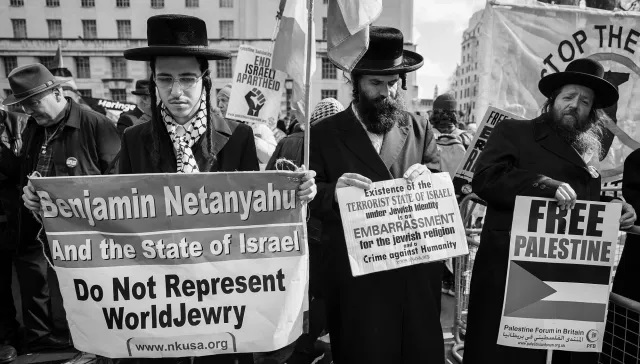
We could soon see several nuclear powers pitted against each other and dragging the world closer to nuclear annihilation.
Jeffrey D. Sachs, Sybil Fares, Jun 16, 2025, Common Dreams, https://www.commondreams.org/opinion/netanyahu-war-on-iran
For nearly 30 years, Israel’s Prime Minister Benjamin Netanyahu has driven the Middle East into war and destruction. The man is a powder keg of violence. Throughout all the wars that he has championed, Netanyahu has always dreamed of the big one: to defeat and overthrow the Iranian Government. His long-sought war, just launched, might just get us all killed in a nuclear Armageddon, unless Netanyahu is stopped.
Netanyahu’s fixation on war goes back to his extremist mentors, Ze’ev Jabotinsky, Yitzhak Shamir, and Menachem Begin. The older generation believed that Zionists should use whatever violence–wars, assassinations, terror–is needed to achieve their aims of eliminating any Palestinian claim to a homeland.
The founders of Netanyahu’s political movement, the Likud, called for exclusive Zionist control over all of what had been British Mandatory Palestine. At the start of the British Mandate in the early 1920s, the Muslim and Christian Arabs constituted roughly 87% of the population and owned ten times more land than the Jewish population. As of 1948, the Arabs still outnumbered the Jews roughly two to one. Nonetheless, the founding charter of Likud (1977) declared that “between the Sea and the Jordan there will only be Israeli sovereignty.” The now infamous chant, “from the River to the Sea,” which is characterized as anti-Semitic, turns out to be the anti-Palestinian rallying call of the Likud.
Israel’s war on Iran is the final move in a decades-old strategy. We are witnessing the culmination of decades of extremist Zionist manipulation of US foreign policy.
The challenge for Likud was how to pursue its maximalist aims despite their blatant illegality under international law and morality, both of which call for a two-state solution.
In 1996, Netanyahu and his American advisors devised a “Clean Break” strategy. They advocated that Israel would not withdraw from the Palestinian lands captured in the 1967 war in exchange for regional peace. Instead, Israel would reshape the Middle East to its liking. Crucially, the strategy envisioned the US as the main force to achieve these aims—waging wars in the region to dismantle governments opposed to Israel’s dominance over Palestine. The US was called upon to fight wars on Israel’s behalf.
The Clean Break strategy was effectively carried out by the US and Israel after 9/11. As NATO Supreme Commander General Wesley Clark revealed, soon after 9/11, the US planned to “attack and destroy the governments in seven countries in five years—starting with Iraq, then Syria, Lebanon, Libya, Somalia, Sudan, and Iran.”
The first of the wars, in early 2003, was to topple the Iraqi government. Plans for further wars were delayed as the US became mired in Iraq. Still, the US supported Sudan’s split in 2005, Israel’s invasion of Lebanon in 2006, and Ethiopia’s incursion into Somalia that same year. In 2011, the Obama administration launched CIA operation Timber Sycamore against Syria and, with the UK and France, overthrew Libya’s government through a 2011 bombing campaign. Today, these countries lie in ruins, and many are now embroiled in civil wars.
For nearly 30 years, Israel’s Prime Minister Benjamin Netanyahu has driven the Middle East into war and destruction. The man is a powder keg of violence. Throughout all the wars that he has championed, Netanyahu has always dreamed of the big one: to defeat and overthrow the Iranian Government. His long-sought war, just launched, might just get us all killed in a nuclear Armageddon, unless Netanyahu is stopped.
Netanyahu’s fixation on war goes back to his extremist mentors, Ze’ev Jabotinsky, Yitzhak Shamir, and Menachem Begin. The older generation believed that Zionists should use whatever violence–wars, assassinations, terror–is needed to achieve their aims of eliminating any Palestinian claim to a homeland.
The founders of Netanyahu’s political movement, the Likud, called for exclusive Zionist control over all of what had been British Mandatory Palestine. At the start of the British Mandate in the early 1920s, the Muslim and Christian Arabs constituted roughly 87% of the population and owned ten times more land than the Jewish population. As of 1948, the Arabs still outnumbered the Jews roughly two to one. Nonetheless, the founding charter of Likud (1977) declared that “between the Sea and the Jordan there will only be Israeli sovereignty.” The now infamous chant, “from the River to the Sea,” which is characterized as anti-Semitic, turns out to be the anti-Palestinian rallying call of the Likud.
Israel’s war on Iran is the final move in a decades-old strategy. We are witnessing the culmination of decades of extremist Zionist manipulation of US foreign policy.
The challenge for Likud was how to pursue its maximalist aims despite their blatant illegality under international law and morality, both of which call for a two-state solution.
In 1996, Netanyahu and his American advisors devised a “Clean Break” strategy. They advocated that Israel would not withdraw from the Palestinian lands captured in the 1967 war in exchange for regional peace. Instead, Israel would reshape the Middle East to its liking. Crucially, the strategy envisioned the US as the main force to achieve these aims—waging wars in the region to dismantle governments opposed to Israel’s dominance over Palestine. The US was called upon to fight wars on Israel’s behalf.
The Clean Break strategy was effectively carried out by the US and Israel after 9/11. As NATO Supreme Commander General Wesley Clark revealed, soon after 9/11, the US planned to “attack and destroy the governments in seven countries in five years—starting with Iraq, then Syria, Lebanon, Libya, Somalia, Sudan, and Iran.”
The first of the wars, in early 2003, was to topple the Iraqi government. Plans for further wars were delayed as the US became mired in Iraq. Still, the US supported Sudan’s split in 2005, Israel’s invasion of Lebanon in 2006, and Ethiopia’s incursion into Somalia that same year. In 2011, the Obama administration launched CIA operation Timber Sycamore against Syria and, with the UK and France, overthrew Libya’s government through a 2011 bombing campaign. Today, these countries lie in ruins, and many are now embroiled in civil wars.
Netanyahu was a cheerleader of these wars of choice–either in public or behind the scenes–together with his neocon allies in the U.S. Government including Paul Wolfowitz, Douglas Feith, Victoria Nuland, Hillary Clinton, Joe Biden, Richard Perle, Elliott Abrams, and others.
Testifying in the U.S. Congress in 2002, Netanyahu pitched for the disastrous war in Iraq, declaring “If you take out Saddam, Saddam’s regime, I guarantee you that it will have enormous positive reverberations on the region.” He continued, “And I think that people sitting right next door in Iran, young people, and many others, will say the time of such regimes, of such despots is gone.” He also falsely told Congress, “There is no question whatsoever that Saddam is seeking, is working, is advancing towards to the development of nuclear weapons.”
The slogan to remake a “New Middle East” provides the slogan for these wars. Initially stated in 1996 through “Clean Break,” it was popularized by Secretary Condoleezza Rice in 2006. As Israel was brutally bombarding Lebanon, Rice stated:
“What we’re seeing here, in a sense, is the growing — the birth pangs of a new Middle East and whatever we do we have to be certain that we’re pushing forward to the new Middle East not going back to the old one.”
In September 2023, Netanyahu presented at UN General Assembly a map of the “New Middle East” completely erasing a Palestinian state. In September 2024, he elaborated on this plan by showing two maps: one part of the Middle East a “blessing,” and the other–including Lebanon, Syria, Iraq, and Iran–a curse, as he advocated regime change in the latter countries.
The premise of Israel’s attack on Iran is the claim that Iran is on the verge of acquiring nuclear weapons. Such a claim is fatuous since Iran has repeatedly called for negotiations precisely to remove the nuclear option in return for an end to the decades of US sanctions.
Since 1992, Netanyahu and his supporters have claimed that Iran will become a nuclear power “in a few years.” In 1995, Israeli officials and their US backers declared a 5-year timeline. In 2003, Israel’s Director of Military Intelligence said that Iran will be a nuclear power “by the summer of 2004.” In 2005, the head of Mossad said that Iran could build the bomb in less than 3 years. In 2012, Netanyahu claimed at the United Nations that “it’s only a few months, possibly a few weeks before they get enough enriched uranium for the first bomb.” And on and on.
This 30-year-plus pattern of shifting deadlines has marked a deliberate strategy, not a failure in prophecy. The claims are propaganda; there is always an “existential threat.” More importantly, there is Netanyahu’s phony claim that negotiations with Iran are useless.
Iran has repeatedly said that it does not want a nuclear weapon and that it has long been prepared to negotiate. In October 2003, Supreme Leader Ayatollah Ali Khamenei issued a fatwa forbidding the production and use of nuclear arms—a ruling later officially cited by Iran at an IAEA meeting in Vienna in August 2005 and referenced since as a religious and legal barrier to pursuing nuclear weapons.
Even for those skeptical of Iran’s intentions, Iran has consistently advocated for a negotiated agreement supported by independent international verification. In contrast, the Zionist lobby has opposed any such settlements, urging the US to maintain sanctions and reject deals that would allow strict IAEA monitoring in exchange for lifting sanctions.
In 2016, the Obama Administration, together with the UK, France, Germany, China, and Russia, reached the Joint Comprehensive Plan of Action (JCPOA) with Iran—a landmark agreement to strictly monitor Iran’s nuclear program in exchange for sanctions relief. Yet, under relentless pressure from Netanyahu and the Zionist lobby, President Trump withdrew from the deal in 2018. Predictably, when Iran responded by expanding its uranium enrichment, it was blamed for violating an agreement that the US itself had abandoned. The double-standard and propaganda is hard to miss.
On April 11, 2021, Israel’s Mossad attacked Iran’s nuclear facilities in Natanz. Following the attack, on April 16, Iran announced that it would increase its uranium enrichment further, as bargaining leverage, while repeatedly appealing for renewed negotiations on a deal like the JCPOA. The Biden Administration rejected all such negotiations.
At the start of his second term, Trump agreed to open a new negotiation with Iran. Iran pledged to renounce nuclear arms and to be subject to IAEA inspections but reserved the right to enrich uranium for civilian purposes. The Trump Administration appeared to agree to this point but then reversed itself. Since then, there have been five rounds of negotiations, with both sides reporting progress on each occasion.
The sixth round was ostensibly to take place on Sunday, June 15. Instead, Israel launched a preemptive war on Iran on June 12. Trump confirmed that the US knew of the attack in advance, even as the administration was speaking publicly of the upcoming negotiations.
Israel’s attack was made not only in the midst of negotiations that were making progress, but days before a scheduled UN Conference on Palestine that would have advanced the cause of the two-state solution. That conference has now been postponed.
Israel’s attack on Iran now threatens to escalate to a full-fledged war that draws in the US and Europe on the side of Israel and Russia and perhaps Pakistan on the side of Iran. We could soon see several nuclear powers pitted against each other and dragging the world closer to nuclear annihilation. The Doomsday Clock is at 89 seconds to midnight, the closest to nuclear Armageddon since the clock was launched in 1947.
Over the past 30 years, Netanyahu and his US backers have destroyed or destabilized a 4,000-km swath of countries stretching across North Africa, the Horn of Africa, the Eastern Mediterranean, and Western Asia. Their aim has been to block a Palestinian State by overthrowing governments supporting the Palestinian cause. The world deserves better than this extremism. More than 170 countries in the UN have called for the two-state solution and regional stability. That makes more sense than Israel bringing the world to the brink of nuclear Armageddon in pursuit of its illegal and extremist aims.
Israel publicly confirms its military involvement in Ukraine
Lucas Leiroz. June 13, 2025, Strategic Culture Foundation,
In the end, the Zionist entity and the Kiev regime are instruments of the same Western hegemony project
While global attention remains focused on the rising tensions between Israel and Iran, a significant development has been largely ignored by Western media in recent days: the revelation of Israel’s involvement in the arming campaign for Ukraine.
Despite publicly maintaining an appearance of military neutrality in the conflict between Moscow and Kiev, the State of Israel has quietly deepened its collaboration with Western military interests in Ukraine. Recent statements from Israeli diplomatic representatives make it clear that Tel Aviv not only politically supports Kiev but also directly participates in the military effort against Russia.
In an interview with Ukrainian media, the Israeli ambassador in Kiev confirmed that air defense systems originally supplied by the United States to Israel were transferred to Ukraine. According to him, the delivery was deliberately kept secret and away from international headlines, demonstrating Israel’s attempt to participate in the conflict without attracting negative consequences.
The omission of logistical details about the delivery reveals a clear attempt to preserve an appearance of neutrality before the public. It remains unclear whether the equipment was sent directly by Israel or through third parties, suggesting an internationally coordinated operation to avoid diplomatic friction with Moscow.
Until recently, Tel Aviv claimed a stance of non-involvement in the Ukraine conflict, citing concerns about potential Russian retaliation—particularly in Syria, where Russian forces maintain a strategic presence. However, this justification is becoming increasingly obsolete in light of Israel’s actual behavior…………………………………..
The recent neutralization of Shiite militias in Syria, which were aligned with Tehran, and the rapprochement between the new Syrian government and Israel have created a more favorable environment for Tel Aviv’s foreign military maneuvers. Feeling less vulnerable to indirect retaliation, Israel now appears more willing to expand its involvement in conflicts beyond the Middle East, such as the one in Ukraine……………………………………………..
Israel’s decision to more openly support the Kiev regime marks a significant shift in its foreign policy, abandoning previous caution in favor of a stance more aligned with the interests of the Collective West. However, this move may bring unforeseen consequences — not only at the regional level but also in the structure of its bilateral relationship with Moscow…………………………. https://strategic-culture.su/news/2025/06/13/israel-publicly-confirms-its-military-involvement-in-ukraine/
How Iran Turned Israel’s Iron Dome Against Itself Using Clever Jamming
Sputnik International, Ekaterina Blinova 16.06.2025
New evidence suggests that Iran successfully compromised Israel’s vaunted air defense systems during recent attacks — forcing Tel Aviv to fire on its own positions. How?
Iran overwhelmed Israeli defenses by breaching the data transmission and correction system early in flight, explains military expert and historian of the Air Defense Forces Yuri Knutov.
Based on the footage that was released, it seems that the Iranians were able to breach the data transmission and correction signal system at the early stage when the missiles were flying, using an inertial guidance system. As a result, the system misdirected the missiles, not toward their intended target, but toward Israel’s own surface-to-air missile batteries, leading to a strike on them.”
The attack included:
100+ Shahed drones (swarming tactics)
Decoy ballistic missiles (old models to waste interceptors)
Fattah hypersonic missiles (unstoppable by Israeli Arrow/PAC-3)
As a result, the Iron Dome’s interception rate dropped drastically to just 10-15%.
“The use of jamming against surface-to-air missiles and missile defense systems is actually a fairly old tactic. During the Vietnam War, the Americans used jamming to mislead missiles by range, angle, and many other active interference methods. Special transmitters were deployed to create the illusion of aircraft presence on the radar screens of Vietnamese missile guidance stations,” Knutov says.
………………………..Masterful deception
Iran’s hypersonic Fattah missiles and Haj Qassems guided ballistics hit critical Israeli targets, including the Defense Ministry HQ and a major airbase housing F-35 and F-16 fighters. Despite Israel’s marketing of its advanced defense systems, the Arrow and Patriot systems failed to stop them.
Iran also deployed decoys so effectively that Israeli strikes repeatedly hit fake targets. The Iron Dome, which covers only 144 sq km and is good for single rockets, but seemingly couldn’t handle mass attacks or the hypersonic gap — Fattah missiles reach Israel in 7 minutes, while the Iron Dome needs 11 minutes to reload.
Iran has learned from past Israeli strikes and improved tactics, establishing backup command centers and more efficient maneuvering to increase its chances of success. https://sputnikglobe.com/20250616/how-iran-turned-israels-iron-dome-against-itself-using-clever-jamming-1122265685.html
Trump Praises ‘Excellent’ Israeli Strikes on Iran.

A source said Washington provided Tel Aviv with “exquisite” intel for the assault
by Kyle Anzalone | Jun 13, 2025, https://news.antiwar.com/2025/06/13/trump-praises-excellent-israeli-strikes-on-iran/
President Donald Trump endorsed the massive Israeli strike on Iran early on Friday morning, calling the attack “excellent.” A source explained that the US provided Israel with intelligence for the operation.
Speaking with ABC News on the phone following the Israeli strikes across the Islamic Republic, Trump said, “I think it’s been excellent.” He continued, “We gave them a chance and they didn’t take it. They got hit hard, very hard. They got hit about as hard as you’re going to get hit. And there’s more to come. A lot more.”
Trump refused to provide details about the US role in the attack, saying, “I don’t want to comment on that.”
However, elements of Washington’s support for Tel Aviv are becoming public. Israeli officials told the Jerusalem Post and Axios that the White House helped to create the illusion that the US was still seeking a diplomatic settlement with Iran.
Just hours before the attack, President Trump declared that he was committed to a “Diplomatic Resolution to the Iran Nuclear Issue!” But it appears he had already greenlit the Jewish state’s attack on the Islamic Republic.
A source provided further details of the US support, telling ABC News that Washington provided Tel Aviv with “exquisite” intelligence. Additionally, the source said the US will help Israel defend against any Iranian response.
The Iranian Foreign Ministry said in a statement that it holds the US responsible for the attack. “The Zionist regime’s aggressive actions against Iran cannot have been carried out without the coordination and authorization of the United States. Accordingly, the United States government, as the main supporter of this regime, will also be responsible for the dangerous effects and consequences of the Zionist regime’s adventure,” the ministry said.
Since starting the assault early Friday morning, Israeli forces have delivered multiple rounds of strikes targeting Iranian military sites, nuclear facilities, and residential buildings. Top Iranian nuclear scientists and generals have been confirmed killed.
Tel Aviv said the operation, dubbed “Nation of Lions,” will last several days.
Israel is seeking more support from the US. The Jerusalem Post reports that Israeli Defense Minister Israel Katz will hold a call with Secretary of Defense Pete Hegseth later on Friday to lobby Washington for more military assistance. Additionally, Trump is expected to speak with Israeli Prime Minister Benjamin Netanyahu by phone.
Kyle Anzalone is the opinion editor of Antiwar.com and news editor of the Libertarian Institute. He hosts The Kyle Anzalone Show and is co-host of Conflicts of Interest with Connor Freeman.
Israel claims it damaged Iran’s Natanz nuclear facility “significantly.” But questions remain
By François Diaz-Maurin Bulletin, June 13, 2025
Early Friday, Israel conducted air strikes on the Natanz nuclear facility, Iran’s main enrichment site. The strikes were part of a larger operation by the Israeli military that targeted nuclear sites, long-range missile facilities, military leaders, and nuclear scientists across Iran.
It was not clear how much damage the Natanz nuclear site—which hosts both a commercial fuel enrichment plant for use in things such as powering civilian nuclear reactors, and the more technologically advanced and opaque so-called pilot fuel enrichment plant (PFEP)—had sustained from the strike. Israel’s military published its own assessment of the attack, claiming that they have damaged the underground area of the site. This area reportedly contains a multi-story enrichment hall with centrifuges, electrical rooms, and additional supporting infrastructure, which can be used to enrich uranium to military-grade levels. During a briefing, Israel Defense Forces (IDF) spokesperson Efi Defrin said the Natanz nuclear site was “significantly damaged.
“It’s difficult to assess the consequences of the strikes on the nuclear program itself and the facilities, as we are still waiting for independent analyses of the satellite imagery,” Héloïse Fayet, a research fellow at the French Institute of International Relations and an expert of nuclear proliferation in the Middle East, told the Bulletin.
Unverified footage shared on social media from near the Natanz facility seemed to show repeated explosions at four locations. This seems to be consistent with the description of the facility, believed to consist of three underground buildings and six above-ground buildings.
As the operation was reportedly still ongoing, many questions about the attack remain unanswered. Here are some of the unknowns about the attack.
When will the attack be over? During a live briefing on Friday morning, Defrin said that “more than 100 targets have been struck across Iran.” And in his address, Netanyahu said that the operation “will continue for as many days as it takes to remove that threat.”
Defrin added that pilots were “still striking military targets and targets from the nuclear program across different areas in Iran,” which the Israeli military said involved about 200 fighter jets.
It is not clear how long the attack will last.
What are the other nuclear facilities targeted? On early Friday, the IAEA confirmed with Iranian authorities that the Fordow fuel enrichment plant, located near Qom in central Iran, had not been targeted during Israel’s attack. But new reports later suggested that Israel was actively attacking the plant, with residents reportedly having heard large explosions coming from the plant’s underground complex and smoke seen rising from several locations in the vicinity of the site.
The IAEA also said the Isfahan nuclear complex had not been targeted, contradicting reports of explosions near the site. The Isfahan Nuclear Technology Center, located 340 kilometers south of Tehran, hosts nuclear research reactors, a uranium conversion plant, and a fuel production plant, among other facilities. On Friday evening, the IDF confirmed that it also targeted the Isfahan complex, but offered no evidence.
Was the United States involved in the attack? According to The Washington Post, Trump officials have said that there was no US military support in the attack. But it is still unknown whether the United States provided indirect intelligence or logistical support for the attack.
Some news reports claim Israeli officials as saying that the United States may be opposing the attack only publicly, adding that the Trump administration did not express opposition in private. “We had a clear US green light,” one official reportedly told Axios.
Was the attack necessary? Israel’s military called its operation “preemptive” due to the imminent nuclear threat from Iran. During his address moments after launching the attack, Israel Prime Minister Benjamin Netanyahu said the operation was necessary because “Iran has produced enough highly enriched uranium for nine atom bombs,” adding that “Iran could produce a nuclear weapon in a very short time.” For its part, Israel’s military said “[Iran’s] program has accelerated significantly in recent months, bringing the regime significantly closer to obtaining a nuclear weapon.”
Reports that Israel was preparing to conduct such attacks have been made for over a year, and right-wing columnists have, for years, openly called on Israel to do so.
But several agencies and analysts dispute the claim that the threat of an Iranian nuclear bomb was imminent. A May 22 report to the House Foreign Affairs Committee concluded that “the US intelligence community continues to assess that Iran is not currently undertaking nuclear weapons-related activities,” although adding that “Iran could enrich enough uranium for more than a dozen nuclear weapons within weeks if it chose to do so.”……………………………………………………….
Did the attack successfully roll back Iran’s nuclear program? Despite several Iranian nuclear facilities reported as being targeted by heavy military strikes, it is difficult at this stage to assess how successful Israel’s operation has been, especially as it was still ongoing as of Friday evening.
But Jon Wolfsthal, a nuclear expert and director of global risk at the Federation of American Scientists, is skeptical that the attack may have significantly altered Iran’s nuclear program. “Iran has likely been planning for this day for months or years. We have to assume they have stored a lot of capabilities to rebuild and even to build a weapon in short order.”
According to Wolfsthal, Israel’s attack may be counterproductive.
“You cannot bomb away a nuclear program.” https://thebulletin.org/2025/06/israel-claims-it-damaged-irans-natanz-nuclear-facility-significantly-but-questions-remain/
Israeli strikes on Iran nuclear sites ‘risk radioactive releases’
Nuclear chiefs warn that Israeli strikes on Iranian nuclear sites mark a dangerous violation of international protocol.
Kieron Monks, June 14, 2025
Nuclear chiefs warn that Israeli strikes on Iranian nuclear sites mark a
dangerous violation of international protocol. Israeli attacks on Iranian
nuclear sites are a ‘deeply concerning’ development, the IAEA says.
IAEA Director General Rafael Grossi said his agency was in contact with
Iranian authorities to assess the impact of Israeli strikes on “nuclear
security and safety.” Grossi reported that there were no “elevated
radiation levels” at the Natanz complex after it came under fire. Another
key nuclear site, Fordow, was reportedly also targeted.
“This development is deeply concerning,” said Grossi. “I have repeatedly stated that
nuclear facilities must never be attacked, regardless of the context or
circumstances, as it could harm both people and the environment.” He
further noted “armed attacks on nuclear facilities could result in
radioactive releases with grave consequences within and beyond the
boundaries of the State which has been attacked” and called for
“maximum restraint to avoid further escalation.” US intelligence
currently assesses that Iran has not moved to weaponise its nuclear
programme, although it has enriched uranium beyond the level required for
civilian use.
iNews 14th June 2025, https://inews.co.uk/news/world/israeli-strikes-on-iran-nuclear-sites-risk-radioactive-releases-3749016
The ‘unsustainable’ reason behind who can have nuclear weapons, and who can’t

there was no evidence of active weaponisation, or that Israel’s strike was “pre-emptive in the sense that Iran was clearly planning an attack on Israel that was imminent”.
“the most flagrant example of double standards that you could possibly imagine”.
Israel has said its attack on Iran on Friday was partially aimed at destroying its nuclear infrastructure. But it’s far from the only country to have developed its capacity in recent years.
By Alex Gallagher, 16 June 2025, https://www.sbs.com.au/news/article/the-unsustainable-decision-on-who-gets-to-have-nuclear-weapons-and-who-doesnt/dpk5breh3
On Friday, Israel launched its largest attack on Iran in decades, with a wave of airstrikes that hit nuclear facilities, military sites and residential buildings in the capital, Tehran.
Iran responded with retaliatory strikes on Israel, and the two countries have continued trading missile fire for days.
Iran’s health ministry said 224 people have been killed by Israel’s attacks, while Israel said 13 have been killed by Iranian strikes. Hundreds of people have been wounded in both countries.
Israeli Prime Minister Benjamin Netanyahu said the goal of Friday’s strikes was partially to wipe out Iran’s nuclear program, calling the strikes “pre-emptive”.
The strikes caused significant damage to linked sites such as the Natanz nuclear facility and a uranium enrichment facility in Isfahan, and killed multiple nuclear scientists in addition to military officials and civilians.
Israel has long claimed Iran is developing a nuclear weapon, with Netanyahu calling it an “existential threat to Israel”.
Iran has consistently denied it is developing nuclear weapons, saying its uranium enrichment program is exclusively for peaceful purposes such as energy, and international assessments have found no evidence that Iran, over the past 20 years, has had an active nuclear weaponisation program.
Iran’s Supreme Leader, Ayatollah Ali Khamenei, has repeatedly said there is an Islamic fatwa — a legal ruling — against the development of nuclear weapons, and that such development is prohibited under Islamic law.
Shortly before Israel’s strikes on Iran, the United Nations’ global nuclear watchdog, the International Atomic Energy Agency (IAEA), declared Iran was in breach of its non-proliferation obligations for the first time in 20 years.
The IAEA cited “many failures” since 2019 to uphold its obligations to provide the agency with “full and timely co-operation regarding undeclared nuclear material and activities”.
Earlier this month, the IAEA said Iran had enough uranium enriched to near-weapons grade to potentially make nine nuclear bombs.
In recent days, Foreign Minister Penny Wong, Defence Minister Richard Marles and Opposition leader Sussan Ley have all described Iran’s nuclear program as a significant “threat” to international peace and security.
Tilman Ruff is an honorary principal fellow at The University of Melbourne and the co-president of International Physicians for the Prevention of Nuclear War and was a founding chair of the International Campaign to Abolish Nuclear Weapons.
He told SBS News while it’s “pretty clear that Iran was flirting with nuclear weapons” and had an early nuclear weapons program around 20 years ago, there was no evidence of active weaponisation, or that Israel’s strike was “pre-emptive in the sense that Iran was clearly planning an attack on Israel that was imminent”.
Israel has never formally confirmed or denied if it has nuclear weapons itself, long maintaining a policy of deliberate ambiguity.
It’s also never signed two key international agreements aimed at the non-proliferation and prohibition of nuclear weapons. These factors have contributed to the widely held perception that Israel owns nuclear weapons.
Ruff described Israel’s “extremely dangerous” attack on Friday as “the most flagrant example of double standards that you could possibly imagine”.
When it comes to countries developing nuclear capacities, Ruff said the “inherent ambiguity” of nuclear programs made it a far bigger issue than just Iran.
“Any country that’s determined to do so, that’s got either an enrichment plant or a nuclear reactor, can build a nuclear weapon,” he said.
“If you can produce uranium to run in reactors, then you’ve got everything you need to enrich it to weapons grade. And there are other countries with vast stocks much larger than Iran’s of weapons-usable material.
“There are many other countries who have been flirting with having nuclear facilities and the capacity to produce fissile material quickly to shorten the path to a weapon, should they choose to do so.”
Which countries have nuclear weapons?
Eight countries have declared they have nuclear weapons: Russia, the United States, China, France, the United Kingdom, India, Pakistan and North Korea.
Russia and the US control the vast majority of these weapons, together possessing around 90 per cent of the 12,241 estimated warheads that exist globally, according to the Stockholm International Peace Research Institute (SIPRI).
While Israel is also strongly believed to have nuclear weapons, including by SIPRI, it has long maintained a policy of deliberate ambiguity.
Ruff said there had been “very clear threats” of nuclear weapon use from Israeli government members.
Most recently, in November 2023, Israeli minister Amihai Eliyahu said a nuclear strike on Gaza would be “one way” of responding to Hamas’ October 7 attack on Israel.
Some viewed Eliyahu’s comments as an implicit admission that Israel had nuclear capabilities.
The comments were disavowed by Israeli politicians, including a rebuke by Netanyahu.
SIPRI, in its annual assessment of armaments, disarmament and international security on Monday, warned the world’s nuclear arsenals were being enlarged.
SIPRI stated that the nine nuclear-armed states continued to modernise and upgrade their nuclear capabilities throughout 2024.
SIPRI’s Hans M Kristensen said: “The era of reductions in the number of nuclear weapons in the world, which had lasted since the end of the Cold War, is coming to an end.”
“Instead, we see a clear trend of growing nuclear arsenals, sharpened nuclear rhetoric and the abandonment of arms control agreements.”
What steps have been taken to limit nuclear weapons?
Multiple international agreements have aimed at curbing the spread of nuclear weapons with a view towards disarmament.
The United Nations-backed Treaty on the Non-Proliferation of Weapons (NPT) came into effect in 1970, and included agreements from Russia, the US, the UK, China and France.
Those states agreed to pursue disarmament in exchange for the rest of the treaty’s signatories agreeing never to acquire nuclear weapons.
The treaty has overwhelming support, with 191 states being party to it, including Iran.
Israel is one of the few countries — along with India, Pakistan, North Korea and South Sudan — to not have signed on, due to its policy of deliberate ambiguity.
Ruff said a shortcoming of the treaty was that, while it contained a detailed regime regarding non-proliferation by states that didn’t already have nuclear weapons, there were no clear details or timeframe for other countries to implement disarmament.
Condemning the Right to Self Defence: Iran’s Retaliation and Israel’s Privilege
16 June 2025 Dr Binoy Kampmark , https://theaimn.net/condemning-the-right-to-self-defence-irans-retaliation-and-israels-privilege/
There is a throbbing complaint among Western powers, including those in the European Union and the United States. Iran is not playing by the rules. Instead of accepting with dutiful meekness the slaughter of its military leadership and scientific personnel, Tehran decided, promptly, to respond to Israel’s pre-emptive strikes launched on June 13. Instead of considering the dubious legal implications of such strikes, an act of undeclared war, the focus in the European Union and various other backers of Israel has been to focus on the retaliation itself.
To the Israeli attacks conducted as part of Operation Rising Lion, there was studied silence. It was not a silence observed when it came to the invasion of Ukraine in February 2022 by Vladimir Putin’s Russia. Then, the law books were swiftly procured, and obligations of the United Nations Charter cited under Article 2(4): “All members shall refrain from the threat or use of force against the territorial integrity of any state.” Russia was condemned for adopting a preventive stance on Ukraine as a threat to its security: that, in Kyiv joining NATO, a formidable threat would manifest at the border.
In his statement on the unfolding conflict between Israel and Iran, France’s President Emmanuel Macron made sure to condemn “Iran’s ongoing nuclear program,” having taken “all appropriate diplomatic measures in response.” Israel also had the “right to defend itself and ensure its security,” leaving open the suggestion that it might have been justified resorting to Article 51 of the UN Charter. All he could offer was a call on “all parties to exercise maximum restraint and to de-escalate.”
In a most piquant response, Francesca Albanese, UN Special Rapporteur on the Occupied Palestinian Territories stated that, “On the day Israel, unprovoked, has attacked Iran, killing 80 people, the president of a major European power, finally admits that in the Middle East, Israel, and only Israel, has the right to defend itself.”
The German Foreign Office was even bolder in accusing Iran of having engaged in its own selfish measures of self-defence (such unwarranted bravado!), something it has always been happy to afford Israel. “We strongly condemn the indiscriminate Iranian attack on Israeli territory.” In contrast, the foreign office also felt it appropriate to reference the illegal attack on Iran as involving “targeted strikes” against its nuclear facilities. Despite Israel having an undeclared nuclear weapons stockpile that permanently endangers security in the region, the office went on to chastise Iran for having a nuclear program that violated “the Non-Proliferation Treaty,” threatening in its nature “to the entire region – especially Israel.” Those at fault had been found out.
The President of the EU Commission, Ursula von der Leyen, could hardly improve on that apologia. She revealed that she had been conversing with Israeli President Isaac Herzog about the “escalating situation in the Middle East.” She also knew her priorities: reiterating Israel’s right to self-defence and refusing to mention Iran’s, while tagging on the statement a broader concern for preserving regional stability. The rest involved a reference to diplomacy and de-escalation, toward which Israel has shown a resolute contempt with regards Iran and its nuclear program.
The assessment offered by Mohamed ElBaradei, former Director General of the International Atomic Energy Agency (IAEA), was forensically impressive, as well as being icily dismissive. Not only did he reproach the German response for ignoring the importance of Article 2(4) of the Charter prohibiting the use of force subject to the right to self-defence, he brought up a reminder: targeted strikes against the nuclear facilities of any party “are prohibited under Article 56 of the additional protocol of the Geneva Conventions to which Germany is a party.”
ElBaradei also referred anyone exercised by such matters to the United Nations Security Council 487 (1981), which did not have a single demur in its adoption. It unreservedly condemned the attack by Israel on Iraq’s Osirak nuclear research reactor in June that year as a violation of the UN Charter, recognised that Iraq was a party to the Treaty on the Non-Proliferation of Nuclear Weapons (NPT) and had permitted the IAEA inspections of the facility, stated that Iraq had a right to establish and develop civilian nuclear programs and called on Israel to place its own nuclear facilities under the jurisdictional safeguards of the IAEA.
The calculus regarding the use of force by Israel vis-à-vis its adversaries has long been a sneaky one. It is jigged and rigged in favour of the Jewish state. As Trita Parsi put it with unblemished accuracy, Western pundits had, for a year and a half, stated that Hamas, having started the Gaza War on October 7, 2023 bore responsibility for civilian carnage. “Western pundits for the past 1.5 days: Israel started the war with Iran, and if Iran retaliates, they bear responsibility for civilian deaths.” The perceived barbarian, when attacked by a force seen as superior and civilised, will always be condemned for having reacted most naturally, and most violently of all.
Sources: US Will Enter Israel’s War With Iran
By Dave DeCamp / Antiwar.com, June 16, 2025, https://scheerpost.com/2025/06/16/sources-us-will-enter-israels-war-with-iran/
Sources familiar with the matter have told Antiwar.com Editorial Director Scott Horton that the Trump administration is poised to enter Israel’s aggressive war against Iran directly. US airstrikes on Iran could begin as soon as Monday.
Please contact the White House by sending an email or calling the comment line starting at 10 am EST on Monday (202‑456‑1111). Tell them that you do not want the US to enter this disastrous war, which could lead to heavy American casualties at US bases across the Middle East.
The US has supported the war by reportedly providing Israel with intelligence and helping intercept Iranian missiles and drones, but so far, there have been no direct US attacks on Iran. Iranian officials have warned that Tehran would hit US bases in the region in response to any US strikes.
Axios reported on Saturday that Israel is urging the US to join the war since Israel lacks the bunker-busting bombs necessary to do serious damage to Iran’s Fordow plant, which is buried deep underground. An Israeli official told Axios that President Trump had previously suggested the US could strike Fordow.
Trump himself said on Sunday that it was “possible” that the US would get directly involved in the war, which Israel launched early Friday morning with airstrikes across Iran.
Israeli Prime Minister Benjamin Netanyahu started the war under the pretext of preventing Iran from building a nuclear weapon. But it was the consensus of the US intelligence community that there was no evidence Iran was working toward a nuclear weapon, and Tehran made clear they were ready to make a deal with the US that would significantly lower uranium enrichment levels and increase oversight of its nuclear program in exchange for US sanctions relief.
Ali Larijani, an aide to Iranian Supreme Leader Ayatollah Ali Khamenei, has previously said that the one thing that would make Tehran reconsider its prohibition on the development of nuclear weapons would be a US or Israeli attack.
“We are not moving towards (nuclear) weapons, but if you do something wrong in the Iranian nuclear issue, you will force Iran to move towards that because it has to defend itself,” Larijani said on April 1.
“Iran does not want to do this, but … (it) will have no choice,” he added. “If at some point you (the US) move towards bombing by yourself or through Israel, you will force Iran to make a different decision.”
Injustice of nuclear-weapons state Israel’s strikes against Iranian nuclear sites
Your leading article (“Reckoning”, Jun 14) states: “No
country can be expected to stand idly by while an avowed enemy works
steadily, decade after decade, in secret to create the ultimate weapon.”
Although written to justify Israel’s actions, this sentiment surely applies
both ways. Israel’s nuclear programme is shrouded in secrecy and the
country is not a signatory to the Nuclear Non-Proliferation Treaty.
Furthermore, Israel does not accept International Atomic Energy Authority
scrutiny of its activities, whereas Iran was locked in via the Obama
agreement. It’s this kind of asymmetric situation that is likely to fuel a
sense of injustice and unfairness in the minds of Iranians, and a
determination to strengthen their position by creating a nuclear weapon.
Times 16th June 2025, https://www.thetimes.com/comment/letters-to-editor/article/times-letters-israels-strikes-against-iranian-nuclear-sites-kvtkkqtst
Iran and Israel at War
Trump reaffirmed his support for Israel and called the overnight strikes “a very successful attack.”
June 13, 2025 , https://thecradle.co/articles/iran-and-israel-at-war
Iran commenced its retaliation against Israel late on 13 June, unleashing a massive barrage of missiles aimed at the city of Tel Aviv, which resulted in multiple direct hits, including strikes on the Israeli army headquarters.
Tehran targeted “dozens of targets, military centers and air bases” across Israel, according to a statement by the Islamic Revolutionary Guard Corps (IRGC). It said the operation was named “True Promise 3.”
The US-Israeli war that was launched overnight on Friday killed several nuclear scientists and high-ranking members of the IRGC.
Air defenses remained active in the Iranian capital, Tehran, and near strategic nuclear sites as Israeli warplanes bombed the country throughout most of the day.
“We knew everything, and I tried to save Iran humiliation and death. I tried to save them very hard because I would have loved to have seen a deal worked out. They can still work out a deal however, it’s not too late,” US President Donald Trump told Reuters.
“We are in a historic event. This is not an operation, this is a planned war, 1,500 kilometers from Israel,” an Israeli army official told reporters on Friday evening.
Israeli warplanes launched surprise attacks across Iran during the early hours of 13 June, targeting Iranian nuclear facilities, army bases, missile storage sites, and residential neighborhoods as part of Operation ‘Lion’s Courage.’
At least 78 people have been confirmed killed and 329 injured.
Tehran has suspended all domestic and international flights, according to the civil aviation authority, as Israeli strikes continued Friday morning across various cities, including Tabriz, Kermanshah, Hamedan, Qasr-e Shirin, and Kangavar.
“With this crime, [Israel] has prepared a bitter and painful fate for itself, and it will inevitably face it. It must await severe punishment, for the powerful arm of the armed forces of the Islamic Republic of Iran will not leave it alone, God willing,” Iranian Supreme Leader Ali Khamenei said following the start of the US-Israeli war.
“The people of Iran and the country’s officials will not remain silent in the face of this crime, and the legitimate and powerful response of the Islamic Republic of Iran will make the enemy regret their foolish actions,” Iranian President Masoud Pezeshkian said in a message on Friday.
Iranian drones have been reportedly shot down over the skies of several Arab nations on their way to Israel. The Iranian military is reportedly preparing a significant ballistic missile attack in retaliation.
The UN Security Council is expected to meet later on Friday at the request of Tehran, according to unnamed diplomats who spoke with Reuters.
In a phone interview with CNN, Trump reaffirmed his support for Israel and called the overnight strikes “a very successful attack.”
“Iran should have listened to me when I said — you know I gave them, I don’t know if you know but I gave them a 60-day warning and today is day 61,” Trump said.
“They should now come to the table to make a deal before it’s too late. It will be too late for them. You know the people I was dealing with are dead, the hardliners … They didn’t die of the flu; they didn’t die of Covid,” the president added.
USA participated in Israeli air defense using Patriot and THAAD systems
Patriot and THAAD missile defense batteries, operated by U.S. military personnel and originally deployed under the Biden administration, participated in Israeli air defense Friday evening, according to U.S. defense officials who spoke on the condition of anonymity to discuss the sensitive subject. That represented a more limited participation in Israel’s defense than last year, when American air and sea assets helped shoot down incoming Iranian missiles during two retaliatory Iranian attacks. – from https://www.washingtonpost.com/world/2025/06/12/israel-attacks-iran-tehran-explosions/#link-45PWIAZSNNE57OYKVRHWOA6Z3I
Refresher On The Rules For Discussing Israeli Wars
Caitlin Johnstone, Jun 13, 2025, https://www.caitlinjohnst.one/p/refresher-on-the-rules-for-discussing?utm_source=post-email-title&publication_id=82124&post_id=165865670&utm_campaign=email-post-title&isFreemail=true&r=1ise1&triedRedirect=true&utm_medium=email
Okay it’s been a few months since the last war Israel started, so now that Iran’s on the chopping block let’s go over the rules once again.
Rule 1: Israel is never the aggressor. If Israel attacks someone it’s either a response to an aggression that happened in the past, or a preemptive attack to thwart an imminent aggression in the future.
Rule 2: History automatically restarts at the date of the last act of aggression against Israel. If someone attacks Israel it was completely unprovoked, because nothing happened before the attack on Israel.
Rule 3: Anything bad that Israel does is justified by Rule 2. This is true even if it does things that would be considered completely unjustifiable if it were done by a nation like Russia or China.
Rule 4: Israel has a right to defend itself, but nobody else does.
Rule 5: Israel never bombs civilians, it bombs Bad Guys. If shocking numbers of civilians die it’s because they were actually Bad Guys, or because Bad Guys killed them, or because a Bad Guy stood too close to them. If none of those reasons apply then it’s for some other mysterious reason we are still waiting for the IDF to investigate.
Rule 6: Criticizing anything Israel does means you hate Jewish people. There is no other possible reason for anyone to oppose acts of mass military slaughter besides a seething, obsessive hatred for a small Abrahamic faith.
Rule 7: Nothing Israel does is ever as bad as the hateful criticisms described in Rule 6. Criticisms of Israel’s actions are always worse than Israel’s actions themselves, because those critics hate Jews and wish to commit another Holocaust. Preventing this must consume 100 percent of our political energy and attention.
Rule 8: Israelis are only ever the victims and never the victimizers. If Israelis kill Iranians, it’s because the Iranians hate Jews. If Iranians kill Israelis, it’s because the Iranians hate Jews. Israel is an innocent little lamb that just wants to mind its own business in peace.
Rule 9: The fact that Israel is literally always in a state of war with its neighbors and with displaced indigenous populations must be interpreted as proof that Rule 8 is true instead of proof that Rule 8 is ridiculous nonsense.
Rule 10: The lives of people in Muslim nations are much, much less important to us than western lives or Israeli lives. Nobody is allowed to think too hard about why this might be.
Rule 11: The media always tell the truth about Israel and its various conflicts. If you doubt this then you are likely in violation of Rule 6.
Rule 12: Unsubstantiated claims which portray Israel’s enemies in a negative light may be reported as factual news stories without any fact checking or qualifications, while extensively evidenced records of Israeli criminality must be reported on with extreme skepticism and doubtful qualifiers like “Iran claims”, “Hezbollah says” or “according to the Hamas-run health ministry”. This is important to do because otherwise you might get accused of being a propagandist.
Rule 13: Israel must continue to exist in its current iteration no matter what it costs or how many people need to die. There is no need to present any logically or morally grounded reasons why this is the case. If you dispute this then you are likely in violation of Rule 6.
Rule 14: The US government has never lied about anything ever, and is always on the right side of every conflict.
Rule 15: Israel is the last bastion of freedom and democracy in the middle east and therefore must be defended, no matter how many journalists it has to assassinate, no matter how many press institutions it needs to shut down, no matter how many protests its supporters need to dismantle, no matter how much free speech it needs to eliminate, no matter how many civil rights its western backers need to erase, and no matter how many elections its lobbyists need to buy.
1 This Month

of the week – Shut Down Drone Warfare!


Tell the Ukrainian Government to Drop Prosecution of Peace Activist Yurii Sheliazhenko

Petition to revoke the licensing of the Near Surface Nuclear Disposal Facility (NSDF) at Chalk River. https://www.ourcommons.ca/petitions/en/Petition/Details?Petition=e-7247
To see nuclear-related stories in greater depth and intensity – go to https://nuclearinformation.wordpress.com
-
Archives
- April 2026 (7)
- March 2026 (251)
- February 2026 (268)
- January 2026 (308)
- December 2025 (358)
- November 2025 (359)
- October 2025 (376)
- September 2025 (257)
- August 2025 (319)
- July 2025 (230)
- June 2025 (348)
- May 2025 (261)
-
Categories
- 1
- 1 NUCLEAR ISSUES
- business and costs
- climate change
- culture and arts
- ENERGY
- environment
- health
- history
- indigenous issues
- Legal
- marketing of nuclear
- media
- opposition to nuclear
- PERSONAL STORIES
- politics
- politics international
- Religion and ethics
- safety
- secrets,lies and civil liberties
- spinbuster
- technology
- Uranium
- wastes
- weapons and war
- Women
- 2 WORLD
- ACTION
- AFRICA
- Atrocities
- AUSTRALIA
- Christina's notes
- Christina's themes
- culture and arts
- Events
- Fuk 2022
- Fuk 2023
- Fukushima 2017
- Fukushima 2018
- fukushima 2019
- Fukushima 2020
- Fukushima 2021
- general
- global warming
- Humour (God we need it)
- Nuclear
- RARE EARTHS
- Reference
- resources – print
- Resources -audiovicual
- Weekly Newsletter
- World
- World Nuclear
- YouTube
-
RSS
Entries RSS
Comments RSS
 nuclear-news