Doubts and inconsistencies in IAEA report on Iran’s nukes
Careful examination of the “alleged studies” documents has revealed inconsistencies and other anomalies that give evidence of fraud. But the IAEA, the United States and its allies in the IAEA continue to treat the documents as though there were no question about their authenticity.
IAEA report on Iran contains falsified information allegedly supplied by Israel, Moral Outrage, 11 Nov 11 The Hindu reports that the latest report of the International Atomic Energy Agency (IAEA) on Iran appears to have falsified information about a Russian scientist who allegedly helped Tehran advance its nuclear weapons program. The IAEA report published by a Washington think tank Tuesday included a sensational claim that a former Soviet nuclear weapons scientist had helped Iran construct a detonation system that could be used for a nuclear weapon.
However, the Russian media has found out that the scientist, Vyacheslav Danilenko, had never worked in nuclear physics but their field of expertise was instead the production of nanodiamonds by explosion. Nanodiamonds are used in the manufacture of lubricants and rubber.
Contacted by the Russian daily newspaper Kommersant, the 76-year-old scientist, now retired, refused to discuss his work in Iran, saying only: “I’m not a nuclear physicist and I’m not a father of Iran’s nuclear programme.” Continue reading
Obama gets no support from China and Russia on tougher measures to Iran
Russia and China stay silent after Obama seeks their support over Iran nuclear bomb threat Absolutely no consensus’ between three leaders By DAILY MAIL REPORTER 14th November 2011 Barack Obama was met with a wall of silence from his counterparts in China and Russia when he brought up the increasing problem of Iran’s nuclear programme at a global summit. Continue reading
Iran’s history – how the West promoted the tragedy of Iran
 Iran a tragedy of the West’s own making. SMH, November 14, 2011 “…..The tragedy of this now oppressive theocratic state is that it was once the sole exemplary democracy in the Middle East. Its secular democracy was destroyed in 1953 by the US and Britain in a self-interested move to prevent Iran falling under the influence of the Soviet Union during the Cold War.
The imposition by the West of the Shah saw the establishment of a murderous and corrupt regime protected by the West to ensure the survival of Britain’s oil interests.
When the excesses of this regime became an embarrassment the West stood back as the Islamic revolution swept to power. Again the democratic forces were violently repressed by the new government…..
the West later supported the Saddam Hussein government in its war on Iran. Small wonder then that Iranians feel they have strong reasons to distrust and fear the West and its protege, Israel.
And given that the current oppressive Iranian regime has largely destroyed the remnant democratic forces in Iran, any chance of a democratic revolution is remote. The constant threat of military intervention and the sanctions imposed play into the hands of the present Iranian government… http://www.smh.com.au/national/letters/iran-a-tragedy-of-the-wests-own-making-20111113-1ndx3.html#ixzz1djIAWf2u
USA’s under cover terrorism against Iran

 VIDEO US confesses to covert ops against Iran Press TV 13 Nov
 11 Washington is seeking to stop Iran’s nuclear program by means of maximum covert operations including the assassination of Iranian scientists.
Iran warns against Israeli military strike

 Nuclear standoff: Iran warns US, Israel against strike News.com.Au 11 Nov 11 IRAN will hit back against any attack or even threat of military action, the country’s supreme leader says after Israel warned the world must act to prevent Tehran getting nuclear weapons.
Iran “will respond with full force to any aggression or even threats in a way that will demolish the aggressors from within”, Ayatollah Ali Khamenei told students at a Tehran military college, according to his official website. Continue reading
Unwisdom of attack on Iran, and not much new in IAEA report
despite the rhetoric about last chances, there is still time for a peaceful way out of the crisis. The Obama administration has no stomach nor money for another war, and its generals insist that every way they game the scenarios, America comes out the loser.
The IAEA report: what does it really mean and will it lead to war with Iran? byJulian Borger 9 November 2011 guardian.co.uk Tuesday’s IAEA report has rekindled the global debate over what to do about the Iranian nuclear programme with a familiar array of options on the table: engage, sanction or attack. The various protagonists are familiar too. Russia is complaining the IAEA report has spoilt the chance of renewed dialogue, the US, Britain and France want a new push towards tighter sanctions, and Israel is threatening to strike unless the international community sorts the matter out in the next few months.
There is something a little phoney about all the sound and fury. There is nothing in the report that was not previously known by the major powers. The West and Israel supplied most of the original tip-offs for the annex on weapons development, while Russia was briefed and no doubt knew one of its own scientists had been lecturing the Iranians on how to make explosive implosion devices (ostensibly for making tiny diamonds).
Furthermore, the bulk of the report is historical, referring to the years leading up to 2003. Continue reading
A British warning against an attack on Iran
Iran is a far more sophisticated and divided society than the picture generally painted in the west.
An attack on Iran would halt and reverse moves to reform. The Arab spring would become an Arab winter with disastrous consequences for US and European interests as well as Arab societies, including Saudi Arabia. The alternatives are many – to continue to apply economic sanctions, a policy of carrot and stick, but with much more emphasis on the carrot. Embraces are far more difficult to withstand than attacks…
 An attack on Iran would be disastrous Britain must resist US pressure for military action. Even if Iran had nuclear weapons, engagement is the only course to take, Guardian UK 6 Nov 11
“Would a British prime minister ever refuse a plea from a US president to join America in a controversial military operation?” This was the response, rhetorical and unanswerable as far as they were concerned, by Whitehall mandarins whenever they were asked why Tony Blair agreed to invade Iraq. It was not a matter of whether the invasion was wrong or right; it was that the occupier of 10 Downing Street would simply not turn down such a request from the White House.
For the US, Britain could offer not only political and “moral” support but a juicy physical asset – Diego Garcia, the base conveniently placed for American bombers, on the British Indian Ocean Territory.
This is what so worries Whitehall, and Britain’s top brass in particular – a growing fear that Barack Obama will find it difficult to oppose increasing pressure for military action against Iran’s nuclear facilities within the next 12 months. Continue reading
United Nations passes Iran’s nuclear disarmament bill
 UN passes Iran’s bid for N disarmament, Press TV 1 Nov 11The UN General Assembly’s First Committee has endorsed an Iran-sponsored resolution on nuclear disarmament despite attempts by the US and the Israeli regime to kill the bid.
The resolution calls for the implementation of pledges made at the three most recent Nuclear Non-Proliferation Treaty review conferences. It also reiterates the urgency for a nuclear-free Middle East and demands that the Israeli regime must sign the Nuclear Non-proliferation Treaty (NPT).
Israel, widely believed to be the sole possessor of a nuclear arsenal in the Middle East with over 200 undeclared nuclear warheads, pursues the policy of “deliberate ambiguity” for its nuclear program.
Tel Aviv has so far rejected all global demands to join the NPT and does not allow the International Atomic Energy Agency (IAEA) inspectors to inspect and monitor its controversial nuclear program.
The Israeli regime has never denied or confirmed the existence of its nuclear arsenal as part of its long-held ‘nuclear ambiguity’ policy. Despite international objections to such dubious policy, the UN and its nuclear regulatory agencies have never taken serious steps to censure or impose sanctions on the defiant regime. Tehran has also proposed a draft resolution on missiles, which is to be discussed in the committee’s next session.
Iran’s troubled nuclear program
Iran’s nuclear program suffering new setbacks, diplomats and experts say, Washington PostBy Joby Warrick, October 17 Iran’s nuclear program, which stumbled badly after a reported cyber attack last year, appears beset by poorly performing equipment, shortages of parts and other woes as global sanctions exert a mounting toll, Western diplomats and nuclear experts say. Continue reading
Iran’s uranium enrichment offer should be accepted by USA
“These measures set out a foundation for diplomatic efforts focusing on establishing enhanced safeguards on Iran,” according to Vaez. He added that he thinks there is still “plenty of time” to strike a diplomatic accord.
 U.S. Should Accept Iran’s Latest Uranium Enrichment Offer, Experts Say, Oct. 7, 2011 By Martin Matishak Global Security Newswire WASHINGTON — The United States should accept Iran’s offer to halt its production of higher-enriched uranium if provided equivalent material by Western powers as the first step in breaking the diplomatic standoff between the two countries, a new report by a pair of nonproliferation experts argues (seeGSN, Oct. 5). Continue reading
USA – Israel’s cyberwar against Iran’s nukes
 US, Israel Guilty for Worm Attack on Iran’s Nuclear Program: Russia, SPAMfighter News – 07-10-2011 Though it is shocking, it is true. Russia has blamed the United States and Israel for the Stuxnet worm, calling it a case of real cyber-war, according to a Techworld news report published on September 26, 2011. A number of Stuxnet infections were found in Iran and it was speculated that the worm, which was skilled to identify the system it was to hit, targeted at damaging the country’s nuclear facilities.
The experts, however claims that the Stuxnet system was initiated in June 2010 against the centrifuge control system with an intention to enrich uranium in Iran. Though Iran has also blamed Israel for the Stuxnet, it could not offer much evidence.
Meanwhile, Tehran has also held Israel and the US responsible for killing its two nuclear scientists in November 2010 and January 2011….. In early 2011, Russia’s NATO ambassador Dmitry Rogozi asserted that the Stuxnet infection had seriously affected Iran’s Bushehr nuclear plant causing the equipment to breakdown.
The Stuxnet has drawn their attention towards the susceptibility resulting due to the industrial control systems that were under attack by the worm.Who created the Stuxnet still remains unproven and a mystery, but according to experts, Israel was responsible for this malicious cyber attack, which was likely funded by the US. http://www.spamfighter.com/News-16866-US-Israel-Guilty-for-Worm-Attack-on-Iran%27s-Nuclear-Program-Russia.htm
Nuclear industry fears on the safety of Iran’s nuclear power plant
“They say trust us, but there’s no such thing as trust us in nuclear politics. “
Iran reactor disaster warning from whistleblower, The Australian, Martin Fletcher October 08, 2011 IRAN’S first nuclear power station is unsafe and will probably cause a “tragic disaster” according to a document apparently written by an Iranian whistleblower. Continue reading
Iran’s nuclear deal offer seen as a positive move
For the West, the idea offered a way to restore a degree of trust in ties with Tehran and help in the search for a comprehensive diplomatic solution to the nuclear dispute.
US cool on Iran atom offer, experts see chance, Arab News By FREDRIK DAHL | REUTERS Oct 3, 2011 VIENNA: An Iranian attempt to revive a nuclear fuel deal that fell apart in 2009 has drawn skepticism from the United States, even though two Western think-tanks urged Washington and its allies to pursue the proposal. Continue reading
Opportunity for USA and Iran to compromise
 An Iranian Offer Worth Considering, WSJ, By ALI VAEZ AND CHARLES D. FERGUSON, September 29, 2011 A nuclear research reactor in Tehran may hold the key to resolving the prolonged nuclear stalemate between Iran and the West. The Iranian government is running out of the 20 percent-enriched uranium it needs to operate the reactor, and that appears to be making it amenable to compromise.
President Mahmoud Ahmadinejad recently proposed that Iran suspend production of some uranium-enrichment activities in exchange for fuel supplies from the United States. Whether the offer is an olive branch or an act of necessity, it is an unprecedented opportunity for Washington and its allies…. read more – http://www.nytimes.com/2011/09/30/opinion/30iht-edvaez30.html
Involvement of the West in sabotage and assassinations in Iran?
former officials said, the U.S. and its allies have secretly ramped up covert actions aimed at slowing Iran’s nuclear progress toward a bomb….
Ex-officials see signs US and allies have stepped up sabotage against Iran’s nuclear efforts Washington Post, 26 Sept 11WASHINGTON — Iran’s star-crossed nuclear and energy programs have suffered a rash of setbacks, mishaps and catastrophes in the past two years.
Assassins killed three scientists with links to Iran’s nuclear programs. The Stuxnet computer worm that famously infected computers worldwide zeroed in on a single target in Iran, devices that can make weapons-usable uranium. Dozens of unexplained explosions hit the country’s gas pipelines, and Iran’s first nuclear power plant suffered major equipment failures as technicians struggle to bring it online.
Has Iran just been unlucky? Probably not. Continue reading
1 This Month
29 Jan. Thursday 7-8 p.m. Webinar – World’s Largest Nuclear Station in Port Hope, ON?
To see nuclear-related stories in greater depth and intensity – go to https://nuclearinformation.wordpress.com/

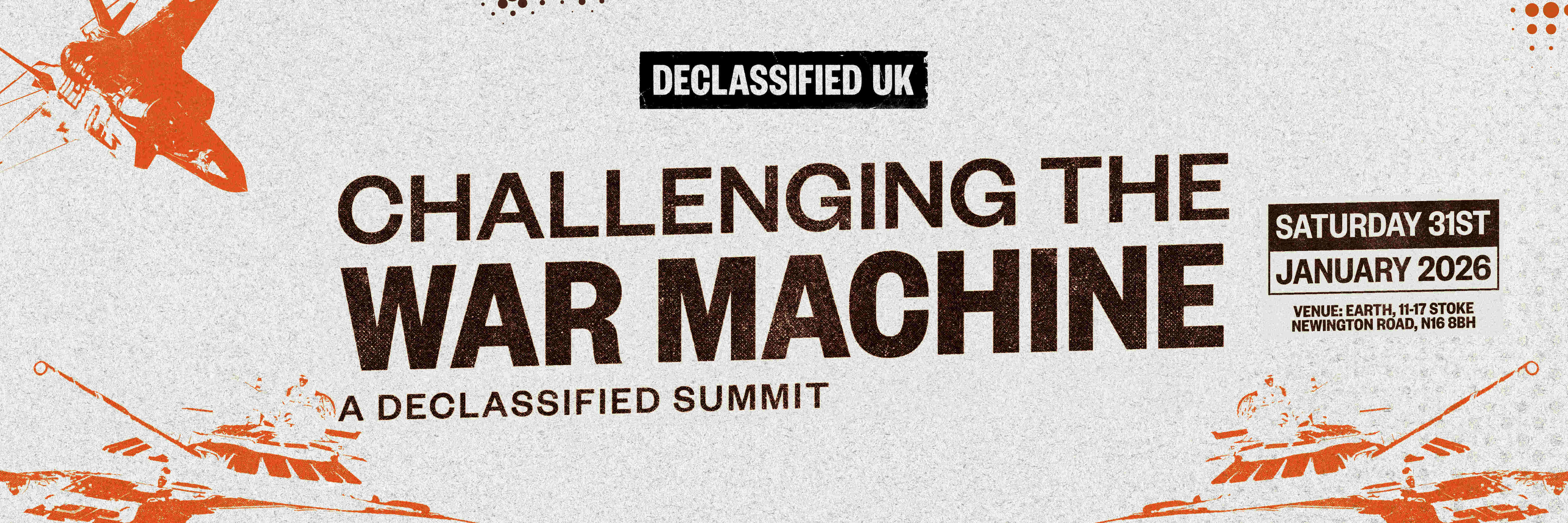
31st January – Challenging the War Machine – a DECLASSIFIED UK SUMMIT


Website of the Week
Now until to February 10, 2026 Radioactive waste storage in France: the debate is finally open! How to participate?
-
Archives
- January 2026 (283)
- December 2025 (358)
- November 2025 (359)
- October 2025 (376)
- September 2025 (258)
- August 2025 (319)
- July 2025 (230)
- June 2025 (348)
- May 2025 (261)
- April 2025 (305)
- March 2025 (319)
- February 2025 (234)
-
Categories
- 1
- 1 NUCLEAR ISSUES
- business and costs
- climate change
- culture and arts
- ENERGY
- environment
- health
- history
- indigenous issues
- Legal
- marketing of nuclear
- media
- opposition to nuclear
- PERSONAL STORIES
- politics
- politics international
- Religion and ethics
- safety
- secrets,lies and civil liberties
- spinbuster
- technology
- Uranium
- wastes
- weapons and war
- Women
- 2 WORLD
- ACTION
- AFRICA
- Atrocities
- AUSTRALIA
- Christina's notes
- Christina's themes
- culture and arts
- Events
- Fuk 2022
- Fuk 2023
- Fukushima 2017
- Fukushima 2018
- fukushima 2019
- Fukushima 2020
- Fukushima 2021
- general
- global warming
- Humour (God we need it)
- Nuclear
- RARE EARTHS
- Reference
- resources – print
- Resources -audiovicual
- Weekly Newsletter
- World
- World Nuclear
- YouTube
-
RSS
Entries RSS
Comments RSS
 nuclear-news