Iran’s president vows to never build a nuclear bomb in his UNGA speech
Masoud Pezeshkian accused the UK, France and Germany of acting ‘at the behest of the United States of America’.
By Caolán Magee, 24 Sep 2025, https://www.aljazeera.com/news/2025/9/24/irans-president-vows-to-never-build-a-nuclear-bomb-in-his-unga-speech
Iranian President Masoud Pezeshkian has told the United Nations General Assembly that Tehran will “never seek to build a nuclear bomb”, as diplomatic efforts are under way to avert the so-called “snapback” sanctions on Tehran over the country’s nuclear programme.
The remarks on Wednesday came as a 30-day process launched by the United Kingdom, France and Germany to restore UN sanctions against Iran approaches its September 27 deadline.
The three European powers, known as the E3, accuse Tehran of failing to comply with a 2015 deal with world powers aimed at preventing it from developing nuclear arms.
The E3 have said they would delay reinstating sanctions for up to six months if Iran restores access for UN nuclear inspectors, addresses concerns about its enriched uranium stockpile and engages in talks with the United States.
“An agreement remains possible. Only a few hours are left. It’s up to Iran to respond to the legitimate issues we have raised,” French President Emmanuel Macron wrote on X after meeting Pezeshkian at the United Nations.
Iran has previously pointed to US President Donald Trump’s 2018 withdrawal from the nuclear deal and the air strikes on Iran in June as reasons for scaling back its previous commitments.
Pezeshkian accused the Europeans of bad faith, saying that Iran’s lack of cooperation was in response to Trump’s withdrawal from the nuclear deal, formally known as the Joint Comprehensive Plan of Action (JCPOA).
“They falsely presented themselves as parties of good standing to the agreement, and they disparaged Iran’s sincere efforts as insufficient,” Pezeshkian said.
In his speech at the UN, Pezeshkian went on to accuse the E3 of acting “at the behest of the United States of America”.
“In doing so, they set aside good faith,” he told the assembly. “They circumvented legal obligations. They sought to portray Iran’s lawful remedial measures taken in response to the United States’ withdrawal from the JCPOA and to Europe’s breach and other incapacity as a gross violation.”
In a recorded speech on Tuesday, Iran’s Supreme Leader Ayatollah Ali Khamenei reiterated that Tehran is not seeking to build nuclear weapons, but ruled out talks with the US, saying, “This is not a negotiation. It is a diktat, an imposition.”
New sanctions would result in freezing of Iranian assets abroad, a halt in arms deals with Tehran, and penalise the development of ballistic missile programme, among other measures.
12-day war
In his address, Pezeshkian went on to condemn the Israeli and the US surprise attacks that sparked the 12-day war.
Several senior Iranian military figures were killed in the war, which also weakened the country’s defences.
More than 1,000 Iranians were killed when Israel launched air strikes and violated Tehran’s sovereignty, which it claimed was a preemptive act of “self-defence” to target Iran’s nuclear programme.
Israel has been accused of disregarding the sovereignty of neighbouring Arab countries, as it has attacked multiple countries, including Lebanon, Syria, Yemen and Qatar. The Israeli strikes on Iran were its biggest military offensive in recent years, drawing retaliation from Tehran.
“The Iranian nation has time and again demonstrated that it shall never bow before aggressors,” Pezeshkian said.
He added that during the war, “the patriotic and valiant people of Iran laid bare before the aggressors the fallacy and self-delusion of their arrogant calculations.”
‘Greater Israel’ ambitions
The second day of the UN General Assembly’s annual debate featured speeches by leaders including Ukrainian President Volodymyr Zelenskyy, Argentina’s Javier Milei, and Syria’s interim leader Ahmed al-Sharaa.
Israel’s war on Gaza has dominated both days, with Pezeshkian using his address to denounce Israeli rhetoric about establishing a “greater Israel,” which he said refers to expanding control over Palestinian land and creating “buffer” zones in neighbouring countries.
“After nearly two years of genocide, mass starvation, the perpetuation of apartheid within the occupied territories and aggression against its neighbours, the ludicrous and delusional scheme of a ‘greater Israel’ is being proclaimed with brazenness by the highest echelons of that regime,” he said.
He added that Israel’s recent attacks on neighbouring countries showed it was no longer seeking security through normalisation.
“Israel and its sponsors no longer even content themselves with normalisation through political means. Rather, they impose their presence through naked force, and have styled it peace through strength,” the Iranian president said.
He closed his address by pledging that Iran is ready to cooperate with international partners and emerge from isolation.
“Iran is a steadfast partner and a trustworthy companion for all peace-seeking countries of friendship and a partnership grounded not in fleeting expediency but in dignity, trust and a shared future,” he said.
“Let us, together with you, turn threads into opportunities.”
Iran publishes alleged leak of Israeli nuclear sites, experts and secret files

Itamar Eichner, Lior Ben Ari, 24 Sept 25, https://www.ynetnews.com/article/r1errtw2eg
Iran’s intelligence ministry claims Israelis leaked sensitive documents and photos for money, including details on 189 nuclear experts, images of the Dimona reactor and personal photos of IAEA chief Rafael Grossi.
Iran’s intelligence ministry on Wednesday published what it described as a large trove of “secret and classified” Israeli documents and photographs, claiming the materials were leaked by Israelis themselves.
Iranian Intelligence Minister Esmail Khatib said the documents include footage from “the Dimona reactor and Israeli nuclear facilities,” details on “upgrades to nuclear weapons,” and information on “past and present Israeli projects developed in cooperation with the United States and the European Union.” He also claimed the material contains “a full list of staff and the administrative structure of Israel’s nuclear weapons program.”
Iran says it obtained secret files on Israel’s nuclear program

25 Sept 25, https://www.iranintl.com/en/202509242634
According to the intelligence ministry, the material demonstrated that Israeli intelligence spies “on everyone,” including the IAEA chief, and that the data it had obtained proves this claim.
Iran’s intelligence ministry aired a segment on national TV displaying information and documents that it says it obtained from Israel’s intelligence apparatus on the Jewish state’s nuclear program
The broadcast featured a series of video files that reportedly contain material from inside Israeli nuclear and other sensitive facilities, including the Dimona site. It also presented alleged details about personnel working on Israel’s nuclear program.
“We identified 189 Israeli nuclear and proliferation scientists and top officials, along with their networks,” Intelligence Minister Esmaeil Khatib said during the presentation, which included names and ID cards of alleged nuclear personnel.
“I tell Netanyahu … your employees collaborated with us for money and still do,” Khatib, a cleric and veteran military and intelligence official, added.
Israel is widely believed to have an undeclared nuclear arsenal.
Tehran’s nemesis killed nuclear scientists and hundreds of military personnel in a surprise 12-day military campaign in June, underscoring Iranian intelligence failures.
Iran has said it too has infiltrated its enemy, and Israel has arrested several of its citizens on charges of spying for Tehran.
One alleged employee was introduced with a photo and described as working across seven Israeli nuclear sites under the cover of a company called ROTEM.
Another was identified as a nuclear scientist allegedly involved in “proliferation projects” between Israel and the United States.
It also mentioned the Chaim Weizmann laboratory, which it described as Israel’s leading proliferation program and was targeted by Iranian ballistic missiles during a 12-day war in June.
Additional documents shown in the broadcast suggested alleged nuclear cooperation between Israel and France under a project called SARAF.
One batch of the alleged material included private and family photos of International Atomic Energy Agency (IAEA) Director General Rafael Grossi it alleged was obtained from Israeli intelligence sources.
The video, published on Tasnim’s Telegram channel, showed images of Grossi with his family at Disneyland, at home during birthdays and in gatherings with colleagues and friends.
According to the intelligence ministry, the material demonstrated that Israeli intelligence spies “on everyone,” including the IAEA chief, and that the data it had obtained proves this claim.
Iran, U.S. signal possible easing in nuclear tensions

By Parisa Hafezi and John Irish, September 25, 2025 https://www.reuters.com/world/middle-east/irans-president-tells-un-tehran-will-never-seek-build-nuclear-bomb-2025-09-24/
- Summary
- Iran president speaking at U.N. General Assembly
- Gaps remain between Iran and E3 as deadline looms
- European powers offering delay if Iran makes concessions
UNITED NATIONS, Sept 24 (Reuters) – Tehran and Washington signalled a possible softening in nuclear tensions on Wednesday, with Iran insisting it has no ambitions to build nuclear weapons and the U.S. expressing readiness to resume talks aimed at resolving the long-standing standoff.
A few hours after Iranian President Masoud Pezeshkian told the U.N. General Assembly that Iran will never seek to build a nuclear bomb, U.S. President Donald Trump’s Middle East Envoy Steve Witkoff said “we have no desire to hurt them”.
“We’re talking to them. And why wouldn’t we? We talk to everybody. As well we should. That’s the job. Our job is to solve things,” he told the Concordia summit in New York.
Prior to a 12-day war between Iran and Israel in June, Tehran and Washington held five rounds of nuclear talks but faced major stumbling blocks such as uranium enrichment on Iranian soil, which Western powers want to bring down to zero to minimise any risk of weaponisation.
Tehran accuses Washington of “betraying diplomacy” and the nuclear talks have stopped since the war.
One Iranian insider told Reuters that “several messages have been conveyed to Washington for resumption of talks via mediators in the past weeks, but Americans have not responded”.
On Tuesday, Iran’s Supreme Leader Ayatollah Ali Khamenei, who has the last say on key state matters such as foreign policy and Iran’s nuclear programme, ruled out negotiations with the United States under threat.
The United States, its European allies and Israel accuse Tehran of using its nuclear programme as a veil for efforts to try to develop the capability to produce weapons. Iran says its nuclear programme is for peaceful purposes only.
‘A FEW HOURS LEFT’
Britain, France and Germany on August 28 launched a 30-day process to reimpose U.N. sanctions – known as snapback – that ends on September 27, accusing Tehran of failing to abide by a 2015 deal with world powers aimed at preventing it from developing a nuclear weapon.
The European powers have offered to delay reinstating sanctions for up to six months to allow space for talks on a long-term deal if Iran restores access for U.N. nuclear inspectors, addresses concerns about its stock of enriched uranium, and engages in talks with the United States.
“I think we have a desire, however, to either realize a permanent solution and negotiate around snapbacks, and if we can’t, then snapbacks will be what they are. They’re the right medicine for what’s happening,” Witkoff said.
But amid the looming threat of sanctions and last-ditch talks between Tehran and European powers to reach a deal to avert snapback of sanctions, diplomats have warned the chances of success remain slim.
After meeting his Iranian counterpart on the sidelines of the UN General Assembly, French President Emmanuel Macron said Iran still had a chance to prevent reimposition of international sanctions, adding that Tehran had not offered anything tangible.
“An agreement is still possible. There are only a few hours left. It is up to Iran to meet the legitimate conditions we have set,” Macron posted on X.
Two European diplomats told Reuters that Iran, the E3 and the EU held a fresh round of talks on Wednesday.
DEADLINE ON SATURDAY
If Tehran and the E3 fail to reach a deal on an extension by the end of September 27, then all U.N. sanctions will be reimposed on Iran, where the economy already struggles with crippling sanctions reimposed since 2018 after Trump ditched the pact during his first term.
The so-called snapback process would reimpose an arms embargo, a ban on uranium enrichment and reprocessing, a ban on activities with ballistic missiles capable of delivering nuclear weapons, a global asset freeze and travel bans on Iranian individuals and entities.
Writing by Parisa Hafezi, Editing by Michelle Nichols, Hugh Lawson, Alison Wiliams and Daniel Wallis
Iran hits out ahead of UN vote on nuclear sanctions
Tehran says it has offered fair proposals and accuses the E3 of ‘political bias’ in seeking to revive sanctions.
By Elis Gjevori and News Agencies, 19 Sept 25, https://www.aljazeera.com/news/2025/9/19/iran-hits-out-ahead-of-un-vote-on-nuclear-sanctions
Iran has hit out at European states that have threatened to revive international sanctions over the monitoring of its nuclear programme.
Tehran officials on Friday accused the European states, which have said they will reimpose international sanctions if Tehran does not meet conditions, of “political bias” and insisted that they have presented fair proposals to resolve the issue.
The complaints come ahead of a scheduled United Nations Security Council (UNSC) vote later on Friday on a resolution that would permanently lift UN sanctions.
The resolution is unlikely to get the nine votes needed to pass, diplomats told news agencies, and if it did, it would be vetoed by the United States, Britain or France.
Britain, France and Germany – known as the E3 – launched a 30-day process in late August to reimpose sanctions unless Tehran meets their demands.
Iranian officials have accused the trio of abusing the dispute mechanism contained in the 2015 Treaty on the Non-Proliferation of Nuclear Weapons (NPT), which allows for the application of sanctions under a “snapback mechanism”.
“What Europeans are doing is politically biased and politically motivated … They are wrong on different levels by trying to misuse the mechanism embedded in the Joint Comprehensive Plan of Action (JCPOA),” Deputy Foreign Minister Saeed Khatibzadeh said.
The Europeans offered to delay the snapback for up to six months if Iran restored access for UN nuclear inspectors and engaged in talks with the US.
However, French President Emmanuel Macron said on Thursday that sanctions are likely to be reinstated, with European officials claiming that Iran has not engaged seriously in negotiations.
Following Macron’s statement, Iran’s Foreign Minister Abbas Araghchi had said that Tehran had presented a “reasonable and actionable plan” and insisted Iran remains committed to the NPT.
Khatibzadeh cautioned that “all options are on the table if diplomacy fails,” although he did not offer details.
“If Europeans go on this path, they are making the level of unpredictability to the highest level possible, and they are responsible for… any possible future risks,” he declared.
Dirty work
The E3 accuse Tehran of breaching the Joint Comprehensive Plan of Action (JCPOA), which was signed by Iran, the US, China, Russia, and the EU.
Under the deal, Iran agreed to curb its nuclear programme in return for sanctions relief. The agreement unravelled in 2018 after then-US President Donald Trump pulled out and reimposed unilateral sanctions.
Tensions escalated further earlier this summer, when Israel launched a 12-day war on Iran, with Israeli and US forces striking several nuclear facilities.
German Chancellor Friedrich Merz caused anger in Tehran at the time when he declared: “This is dirty work that Israel is doing for all of us.”
Iranian officials have also criticised the UN nuclear watchdog, the International Atomic Energy Agency (IAEA), for accusing Tehran of noncompliance with its nuclear obligations ahead of the attacks.
Iran has repeatedly denied seeking a nuclear weapon, while Israel is widely believed to possess an undeclared nuclear arsenal of dozens of atomic bombs.
UN security council fails to prevent ‘snapback’ nuclear sanctions on Iran
Iranian foreign ministry urges further diplomacy and says return to pre-2015 measures are unlawful and unfounded.
William Christou, 20 Sept 25, https://www.theguardian.com/world/2025/sep/20/un-security-council-fails-to-prevent-snapback-nuclear-sanctions-on-iran
Last month, France, Germany and the UK triggered the snapback provision of the deal after Iran refused to cooperate with International Atomic Energy Agency (IAEA) inspectors, which is tasked with monitoring implementation of the deal.
Two weeks later, Iran agreed to resume cooperation with the IAEA, but it has not yet been able to carry out all of its inspection activities and the body’s ability to operate in the country has been restricted for years.
Since the initiation of the snapback mechanism, intense diplomacy has taken place between mainly European powers and Iran to reach a deal to prevent the sanctions. Talks have not been fruitful, though the UK indicated on Friday after the vote that it was still open to diplomacy.
“The United Kingdom remains committed to a diplomatic solution. We are ready for further engagements diplomatically in the next week and beyond to seek to resolve differences,” said Barbara Woodward, the British ambassador to the UN.
The Iranian foreign ministry said in a Friday statement that it had consistently kept the path of diplomacy open and that it viewed the reimposition of sanctions as “unlawful, unfounded and proactive”.
Iran is still dealing with the impact of the 12-day Iran-Israel war, when Israel launched surprise attacks that it said was a pre-emptive move against the country’s nuclear programme. Iran insists that its nuclear programme is of a civilian nature and that it does not seek to create a nuclear bomb.
Iran withdraws resolution banning attacks on nuclear sites following US pressure
Iran decided at the last minute Thursday to withdraw a resolution
prohibiting attacks on nuclear facilities that it had put forward along
with China, Russia and other countries for a vote before an annual
gathering of the U.N. nuclear watchdog’s member nations.
Western diplomats,
who spoke on condition of anonymity to discuss internal deliberations, said
the U.S. has been heavily lobbying behind the scenes to prevent the
resolution from being adopted. The U.S. has raised the possibility of
reducing funding to the International Atomic Energy Agency if the
resolution was adopted and if the body moved to curtail Israel´s rights
within the agency, the diplomats said.
Daily Mail 18th Sept 2025, https://www.dailymail.co.uk/wires/ap/article-15112913/Iran-withdraws-resolution-banning-attacks-nuclear-sites-following-US-pressure.html
Iran, allies submit draft IAEA resolution to ban attacks on nuclear sites
Sep 16, 2025, https://www.iranintl.com/en/202509162278
Iran and five other countries have submitted a draft resolution to the International Atomic Energy Agency’s annual general conference calling for a ban on any attack or threat of attack against nuclear sites under UN safeguards, Iran’s foreign ministry said on Tuesday.
Foreign ministry spokesperson Esmaeil Baghaei said on X that the text, backed by China, Russia, Venezuela, Nicaragua and Belarus, was intended “to defend the integrity of the NPT” and reaffirmed the inalienable right to develop nuclear energy for peaceful purposes.
“All states must refrain from attacking or threatening to attack peaceful nuclear facilities in other countries,” Baghaei wrote. “These principles must be upheld; it is high time that the international community acted firmly to prevent the normalization of lawlessness.”
Draft resolution
The draft resolution condemns “the deliberate and unlawful attacks carried out in June 2025 against nuclear sites and facilities of the Islamic Republic of Iran,” calling them clear violations of the UN Charter and the IAEA Statute.
It says nuclear sites under IAEA safeguards “shall not be subject to any kind of attack or threat of attack,” adding that such actions pose serious risks to international peace and security, human health, the environment, and the credibility of the non-proliferation regime.
The document also recalls UN Security Council Resolution 487 of 1981, which condemned Israel’s bombing of Iraq’s Osirak reactor, and reaffirms previous IAEA decisions prohibiting attacks on safeguarded facilities.
It further stressed that all questions regarding nuclear programs should be resolved “exclusively through dialogue and diplomacy, as the only viable path.”
Israel launched a surprise military campaign on June 13 targeting Iranian nuclear and military sites, including senior commanders and nuclear officials in a conflict that lasted 12 days. On June 22, the United States joined the campaign, striking nuclear facilities in Fordow, Natanz and Isfahan. Washington brokered a ceasefire on June 24.
Iran’s nuclear chief Mohammad Eslami told the conference on Monday that Tehran’s atomic program “cannot be eliminated through military action,” accusing Israel and the United States of launching illegal strikes on Iranian sites in June.
“Despite our formal request, the agency did not condemn the attacks by the United States and Israel on the nuclear centers of the Islamic Republic,” Eslami said, calling the IAEA’s silence “a stain on the Agency’s history.”
Eslami said Tehran would use the conference to highlight what he called unlawful measures against its nuclear industry and to push for adoption of the draft.
The debate comes as Iran’s recent cooperation deal with IAEA chief Rafael Grossi awaits implementation and European powers press ahead with the UN “snapback” mechanism that could reinstate sanctions on Tehran by late September.
Time is now for Iran to act on inspections agreement, IAEA chief says
International Atomic Energy Agency (IAEA) chief Rafael Grossi on Monday
urged Iran to immediately implement the agreement it signed with the UN
watchdog last week to resume inspections at the country’s bombed nuclear
sites.
Iran International 15th Sept 2025,
https://www.iranintl.com/en/202509154534
Iran hardliners reject IAEA deal, but IRGC outlet voices support
Iranian ultra-hardliners are criticizing Tehran’s recent agreement with
the IAEA in Cairo, despite its blessing by a top decision-making body
linked to the Supreme Leader, but an outlet linked to the Revolutionary
Guards offered support. The scrambled messaging suggests deep disagreement on Iran’s diplomatic path forward as renewed UN sanctions loom by months-end and arch-foe Israel continues to moot military attacks to
chasten Tehran.
Iran International 16th Sept 2025, https://www.iranintl.com/en/202509158464
China, Russia urge Europe to halt UN snapback after Iran-IAEA deal
Russia called on Britain, France and Germany on Tuesday to halt their move
to restore United Nations sanctions on Iran after Tehran and the
International Atomic Energy Agency (IAEA) announced an agreement to resume nuclear inspections suspended since June.
Iran International 10th Sept 2025, https://www.iranintl.com/en/202509103977
IAEA chief notes progress in Iran talks over nuclear site inspections
Head of the United Nations nuclear watchdog, Rafael Grossi, says he hopes for a ‘successful conclusion’ in the coming days.
Aljazeera, 8 Sept 25
Talks on resuming International Atomic Energy Agency (IAEA) inspections of Iran’s nuclear sites have made progress, but its chief warned that there was “not much” time remaining.
On Monday, the director general of the United Nations nuclear watchdog, Rafael Grossi, told the 35-nation IAEA Board of Governors in Vienna, Austria, that “Progress has been made”…….
He did not elaborate on what the timeframe meant exactly.
While Tehran allowed inspectors from the IAEA into Iran at the end of August, the Ministry of Foreign Affairs said no agreement had been reached on the resumption of full cooperation with the watchdog…….. ………………………….. https://www.aljazeera.com/news/2025/9/8/iaea-chief-notes-progress-in-iran-talks-over-nuclear-site-inspections
Nuclear crisis looms as Iran faces sanctions snapback, expert warns
Time is running out to avert a nuclear crisis, Nicole Grajewski of the
Carnegie Endowment said, describing Iran’s nuclear program as a complex
file where diplomacy is limited, military strikes are insufficient, and
Europe’s snapback of UN sanctions risks sparking fresh conflict.
Grajewski told Iran International’s Eye for Iran that only Washington can
break the deadlock by re-engaging directly with Tehran and backing a short
extension that ties International Atomic Energy Agency (IAEA) inspections
to credible security guarantees.
Iran International 5th Sept 2025, https://www.iranintl.com/en/202509058638
Iran accuses Europe of surrendering nuclear deal to Trump’s veto
Foreign ministry official says US will be dictating what happens once UN-wide sanctions are reimposed.
Patrick Wintour in Tehran, 2 Sept 25, https://www.theguardian.com/world/2025/sep/01/iran-accuses-europe-surrendering-nuclear-deal-trump-veto
Europe is on the verge of abandoning its role as a mediator between the US and Iran and instead handing the Iran nuclear file over to Donald Trump’s veto, Iran’s foreign ministry spokesperson has said in an interview with the Guardian in Tehran.
Esmail Baghaei said that as soon as UN-wide sanctions were reimposed at Europe’s demand in less than 30 days’ time, the US would regain its security council veto over what happens next, including the continuance of sanctions.
“The Europeans are doing what Trump dictated to them,” he said. “The Europeans’ role is going to be diminished. If you go back to the European foreign policy leaders in the history of the nuclear deal, Javier Solana, Cathy Ashton, Federica Mogherini, Josep Borrell, they all tried to liaise between Iran and the US.
“They tried to prove they were credible negotiating partners. But now the Europeans have decided to be the proxy of the US and Israel. It is absolutely irresponsible of them to hand over that role to the US.”
He highlighted the claim by Friedrich Merz, the German chancellor, that Israel was doing “the dirty work … for all of us” by attacking Iran’s nuclear sites in June. “In a way, all of the European countries condoned what Israel did, and very likely provided information to the Israeli regime,” Baghaei said.
His remarks may be designed to put pressure on European capitals to distance themselves from the US and tone down the conditions they have set before they will agree to defer UN sanctions.
Baghaei also said the Iranian government was not constitutionally able to block Iran’s withdrawal from the nuclear non-proliferation treaty (NPT) if the Iranian parliament went ahead and passed a law withdrawing from it in response to the European reimposition of UN sanctions. Withdrawal from the treaty was the prerogative of parliament, he said.
The number of MPs backing an NPT withdrawal bill is due to be revealed on Tuesday but MPs said the measure was likely to be rushed through parliament with overwhelming support. Withdrawal from the NPT would mean the UN loses all rights to oversee Iran’s nuclear programme and would inevitably raise US concerns about whether Iran will build a nuclear bomb covertly or overtly.
The powerful factions in the parliament seem convinced that Iran has the firepower to inflict heavy damage on Israel in the event of a second western attack.
We are prepared because this is a matter of our dignity and sovereignty,” Baghaei said. “I think you in the UK had your blitz spirit when attacked by Nazi Germany. We have the same spirit because we knew this war imposed on us in the middle of negotiations was so unjust.”
The three European signatories to the original nuclear deal – France Germany and the UK – notified the UN last Thursday that they intended to use their right to reimpose UN-wide sanctions at the end of September unless Iran met three conditions: a return of UN weapons inspectors to the bombed Iranian nuclear sites, the handover of details of the whereabouts of its 400kg stockpile of highly enriched uranium, and agreement to open talks with America on the future of its nuclear programme.
Europe says there is still room for diplomacy in the coming four weeks to reach an agreement on these conditions. Baghaei described the European conditions as “a sign they are not serious and they do not have good faith”.
He said: “There is an extreme trust deficit between the UN weapons inspectors from IAEA and Iran. There is a real concern that the information gathered at the sites by the IAEA would end up being passed on to Israel.
“It has been a real concern especially after the highly politicised approach of the IAEA. We cannot ignore the fact that previous IAEA reports were abused by America and Israel to craft the resolution to the IAEA board which claimed that Iran was not in compliance with its obligations.” He said that resolution was used as a pretext for the Israeli attack on Iran in June.
He conceded that Iran’s room for diplomatic manoeuvre at the UN in the next month was limited because of the public mood in Iran.
“The fact is our public is outraged because of the unlawful attacks on our facilities and as a government we have to be accountable to our people and to our parliament,” he said.
“The western media goes on about our cooperation with the IAEA and stockpiles, but the western public has to remember the outrageous [acts] committed by Israel and the US. They torpedoed the diplomatic process, they attacked the rule of international law because our facilities have been under inspection 24 hours a day for throughout the past three decades.”
Iranian officials insist that the aim remains to reach a compromise in the next month that will allow the weapons inspectors to return. Iranian diplomats have given assurances to the IAEA that the stockpiles have not been moved. They also insist they are willing to speak to the Americans, but repeated messages sent to Washington have not been met with any response so far.
Baghaei said Iran was willing to reduce the purity level to which it enriched uranium back to 3.67%, the level set in the old nuclear deal, so long as an overall agreement was reached that preserves Iran’s right to enrich uranium domestically.
He questioned why the US was so intent on removing Iran’s right to enrich if, as Trump claimed, Iran’s ability to undertake such enrichment had been already destroyed by the joint US-Israeli attacks.
Iran parliament presses government to apply law limiting IAEA cooperation
Iran’s parliament on Tuesday urged the Foreign Ministry and Atomic
Energy Organization to fully implement existing legislation limiting
cooperation with the International Atomic Energy Agency, amid growing
pressure from Western powers and renewed nuclear talks in Geneva. In a
strongly worded statement, the National Security and Foreign Policy
Committee of Iran’s parliament described IAEA chief Rafael Grossi as “a
servant of the US and the Zionist regime,” accusing him of siding with
hostile powers and remaining silent over attacks on Iranian nuclear sites,
according to remarks published by state media.
Iran International 26th Aug 2025, https://www.iranintl.com/en/202508262134
1 This Month
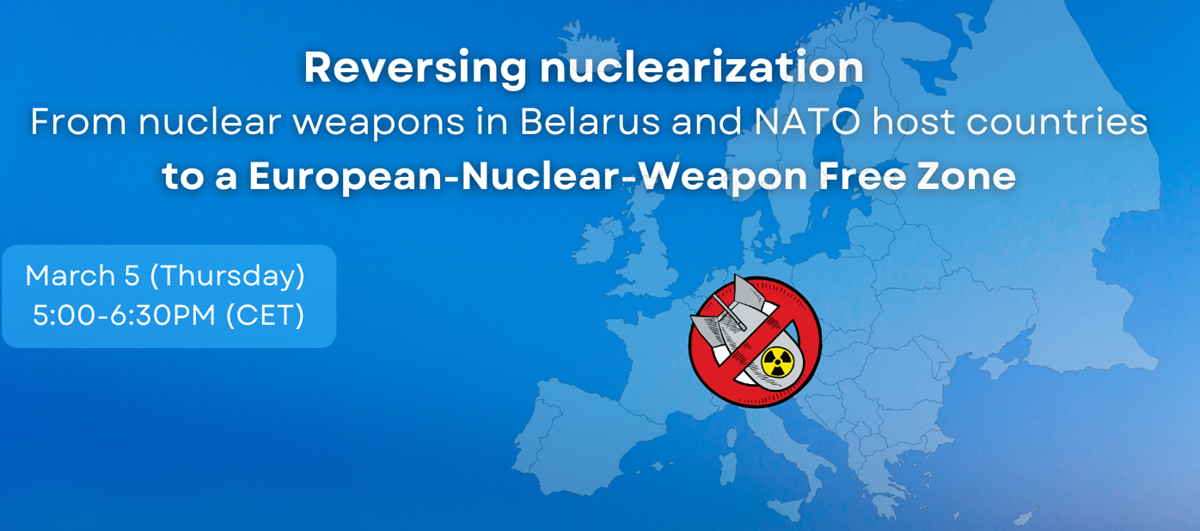
5 March -Online – Reversing nuclearization:
From nuclear weapons in Belarus and NATO host countries to a European-Nuclear-Weapon Free Zone
11am-12:30pm Eastern Time USA / 5pm-6:30pm CET

of the week – Advocating for a
nuclear free beach – https://www.samuellawrencefoundation.org/
The Samuel Lawrence Foundation advocates for a Nuclear Waste Free Beach at San Onofre, join us and take action!
10 March A LIVE WEBINAR THE REAL EFFECTS OF NUCLEAR POWER
What the Industry Isn’t Telling Us
1:00 PM Mountain, 2 pm Central, 3 pm Eastern. Live on the Keepers of the Water Facebook page

18 March Webinar @ 1 PM EST: An Assessment of SMR Projects: The Case of Canada
register for the zoom:
https://us02web.zoom.us/webinar/register/WN_o8BIIOUvQ2ONJR1nta65DQ#/registration

of the week – STOP SMALL MODULAR REACTORS IN CANADA
To see nuclear-related stories in greater depth and intensity – go to https://nuclearinformation.wordpress.com
-
Archives
- March 2026 (38)
- February 2026 (268)
- January 2026 (308)
- December 2025 (358)
- November 2025 (359)
- October 2025 (376)
- September 2025 (258)
- August 2025 (319)
- July 2025 (230)
- June 2025 (348)
- May 2025 (261)
- April 2025 (305)
-
Categories
- 1
- 1 NUCLEAR ISSUES
- business and costs
- climate change
- culture and arts
- ENERGY
- environment
- health
- history
- indigenous issues
- Legal
- marketing of nuclear
- media
- opposition to nuclear
- PERSONAL STORIES
- politics
- politics international
- Religion and ethics
- safety
- secrets,lies and civil liberties
- spinbuster
- technology
- Uranium
- wastes
- weapons and war
- Women
- 2 WORLD
- ACTION
- AFRICA
- Atrocities
- AUSTRALIA
- Christina's notes
- Christina's themes
- culture and arts
- Events
- Fuk 2022
- Fuk 2023
- Fukushima 2017
- Fukushima 2018
- fukushima 2019
- Fukushima 2020
- Fukushima 2021
- general
- global warming
- Humour (God we need it)
- Nuclear
- RARE EARTHS
- Reference
- resources – print
- Resources -audiovicual
- Weekly Newsletter
- World
- World Nuclear
- YouTube
-
RSS
Entries RSS
Comments RSS
 nuclear-news