Israeli Prime Minister Benjamin Netanyahu trying to undermine Iran nuclear talks?
Iran’s Zarif says Netanyahu trying to undermine nuclear talks DUBAI Sun Mar 1, 2015 (Reuters) – Iran’s foreign minister has accused Israeli Prime Minister Benjamin Netanyahu of trying to undermine Iran’s negotiations towards a nuclear deal with world powers in order to distract from the Palestinian question.
Netanyahu is due to speak against a potential nuclear deal between Iran and the United States before U.S. Congress on Tuesday. His planned appearance, on invitation from the Republicans, has angered U.S. officials for its partisan nature and is likely to worsen his already frosty relations with President Barack Obama as well as undermine the wider U.S.-Israel alliance…….http://www.reuters.com/article/2015/03/01/us-iran-nuclear-zarif-idUSKBN0LX1IJ20150301
Nuclear deal could work well for both Iran and the West

 Win-win nuclear deal for Rowhani and Obama, Al Arabiya News Friday, 27 February 2015 Iran and the six world powers (known as the P5+1: the United States, United Kingdom, Germany, France, Russia and China) are planning to meet next Monday to finalize the outline for the final accord. The prolonged nuclear negotiations between the two sides resumed last week in Geneva in order to limit Iran’s nuclear program.
The Islamic Republic has added Ali Akbar Salehi, the head of the Atomic Energy Organization of Iran (AEOI) and former foreign minister under the hardline government of Mahmoud Ahmadinejad. Respectively, the United States has brought Ernest J. Moniz, the U.S. energy secretary, to the nuclear negotiations.
The addition of Moniz and Salehi, and the high-level official meetings, reflect the critical stage of the nuclear talks as well as the efforts of both the American and Iranian government to reach a general outline that would preserve their geopolitical, national, and strategic interests……..http://english.alarabiya.net/en/views/news/middle-east/2015/02/27/Win-win-nuclear-deal-for-Rowhani-and-Obama.html
Mossad knew that Iran is not producing nuclear weapons
A new joint report produced on Monday by Al-Jazeera and the Guardian shows top secret files – correspondances with the South African intelligence services – suggesting that Mossad, the Israeli security agency, has believed since 2012 that the Islamic Republic of Iran was “not performing the activity necessary to produce weapons,” according to the leak.
The revelation would seem to undermine claims by other branches of the Israeli state – including the prime minister – that Iran presented a threat to Israelis through its desire to produce nuclear weapons.
The date of the cables is particularly ironic, as it came just a month after a speech made by Israeli Prime Minister, Benjamin Netanyahu at the United Nations General Assembly in which he called for a united global response to Iran’s threat to develop nuclear weapons – a threat which, at the time, he assured was a very real one…………http://www.middleeasteye.net/news/intelligence-leaks-suggest-israeli-secret-service-believe-iran-not-producing-nuclear-weapons
Allegations by Iranian dissident group that Iran has a secret nuclear facility
Iran blockbuster: Group claims proof of secret nuclear facility By Guy Taylor – The Washington Times – Tuesday, February 24, 2015 Claiming that Iran’s government has been lying for years to U.N. nuclear inspectors, a prominent Iranian dissident group on Tuesday asserted that scientists in the Islamic Republic have actually been running a secret uranium enrichment operation at a facility buried deep beneath the ground in the northeast suburbs of Tehran since 2008.
The facility, known as “Lavizan-3,” has been used for clandestine nuclear program research and development, as well as for enrichment with advanced IR-2m and IR-4 centrifuge machines, according to the National Coalition of Resistance of Iran, which claims that the operation’s existence has never before been revealed to international officials.
The NCRI’s claim was not immediately verifiable, and the dissident group is known for its controversial history in Washington. However, the group is seen to have deep sources inside Iran’s nuclear community and its members are credited with having made game-changing revelations about Tehran’s activities in the past.
Most notably, during the early 2000s, similar NCRI claims exposed the existence of Iran’s Natanz uranium enrichment facility and the Arak heavy-water plutonium facility — two operations that have been at the center of international scrutiny and distrust of Tehran during the years since then.
The group said its latest claims were the result of a “decade-long, detailed, risking and complex” intelligence gathering effort by members of the Mujahedin-e Khalq. The so-called “MEK” is a main component of the NCRI, but has long drawn scrutiny in Washington because the State Department had listed it as a terrorist organization until 2012.
While the MEK is seen as virulently against the current regime in Tehran, U.S. officials have said the group’s terrorist listing was related to attacks its members carried out against U.S. interests in the Middle East decades ago……..
It was not immediately clear on Tuesday how the new claims by the NCRI may impact the ongoing nuclear negotiations between Iran, the U.S. and other world powers………
U.N. report shows that Iran has ceased advanced nuclear centrifuge testing
 Iran has stopped questionable nuclear centrifuge testing: IAEA– Daily Star, 20 Feb 15 VIENNA: Iran has refrained from expanding tests of more efficient models of a machine used to refine uranium under a nuclear agreement with six world powers, a U.N. report shows, allaying concerns it might be violating the accord.
“The disconnection reflects Iran addressing concerns about its enrichment [of uranium],” said the Washington-based Institute for Science and International Security (ISIS), which closely tracks Iran’s nuclear program.
“The disconnection provides additional confidence that Iran is abiding by its commitments under the Joint Plan of Action,” it said, referring to the 2013 agreement………. http://www.dailystar.com.lb/News/Middle-East/2015/Feb-20/288170-iran-has-stopped-questionable-nuclear-centrifuge-testing-iaea.ashx#sthash.P1yKqZWQ.dpuf
IAEA might review its conclusions on Iran’s atomic program: CIA “doctored” evidence
 CIA-planted ‘evidence’ may force IAEA review of alleged Iranian nuclear arms program – report, Rt.com
February 21, 2015 Doctored blueprints for nuclear weapon components supplied to Iran by the CIA 15 years ago could force the IAEA to review its conclusions on Iran’s atomic program, which was potentially based on misleading intelligence, Bloomberg reports.
The details of the Central Intelligence Agency operation back in 2000 were made public as part of a judicial hearing into a case involving Jeffrey Sterling, an agent convicted of leaking classified information on CIA spying against Iran.
“The goal is to plant this substantial piece of deception information on the Iranian nuclear-weapons program, sending them down blind alleys, wasting their time and money,” a May 1997 CIA cable submitted to the court reads.
The intelligence in question pertains to fake designs of atomic components that were transferred to Iran in February 2000. Now it turns out the International Atomic Energy Agency (IAEA) could be forced to reassess their earlier conclusions regarding Iran’s atomic program, the publication quoted two anonymous Western diplomats as saying. Part of the IAEA’s suspicions about the alleged Iran’s nuclear weapons program relies on information provided by multiple intelligence agencies.
“This story suggests a possibility that hostile intelligence agencies could decide to plant a ‘smoking gun’ in Iran for the IAEA to find,”Peter Jenkins, the UK’s former envoy to the Vienna-based agency told Bloomberg. “That looks like a big problem.”……..http://rt.com/news/234271-cia-nuclear-evidence-iran-iaea/
Iranium President Rouhani optimistic about a nuclear deal with the West
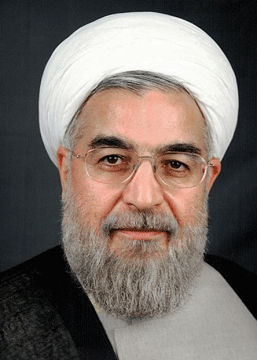 Iranian president says nuclear deal with the west is getting closer, Guardian, Julian Borger and Saeed Kamali Dehghan, 4 Feb 15 Mehr news agency quotes Hassan Rouhani saying sides have ‘narrowed the gaps’ as second report emerges of uranium enrichment deal with US. President Hassan Rouhani has said that a nuclear deal with the west is getting closer, as a report emerged of a possible compromise between American and Iranian negotiators over uranium enrichment.
After meeting the heads of the country’s parliament and judiciary, Rouhani was quoted by the Mehr news agency as saying: “We have narrowed the gaps,” adding that although “some issues and differences remain … The west has realised that it should recognise the rights of the Iranian people.”
Even Ali Larijani, the parliamentary speaker and a noted hardliner on nuclear talks, declared himself “not pessimistic” about the trajectory of the negotiations.
Nuclear talks between Iran and six major powers are due to resume later this month in Geneva ahead of a March deadline for arriving at a basic framework agreement. A comprehensive permanent settlement would be reached by the end of June………
The possible compromise under consideration, according to the AP, would see most of the 10,000 centrifuges in operation left in place but reconfigured so that they would be less productive. One way of doing that would be to spin the centrifuges more slowly. Other measures would be agreed upon to reassure the west that Iran could not make a warhead quickly, such as reducing its stockpile of uranium hexafluoride gas – the form in which uranium can be enriched by centrifuge………http://www.theguardian.com/world/2015/feb/03/iranian-president-nuclear-deal-west
US Republicans out to destroy nuclear talks with Iran
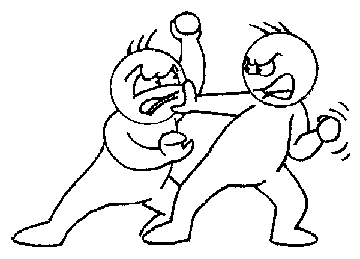 Iran Sanctions Supporters Don’t Want To Improve Nuclear Talks. They Want To Destroy Them.
 Then things started to fall apart.………
the story had shifted as Kerry boxed the Republicans into admitting their possible true intentions — and all Boehner was left with was a promise for a Netanyahu address at the time of the annual American Israel Public Affairs Committee conference in early March, by which point the administration has said it hoped to already have a framework for the deal.
Meanwhile, Netanyahu got his own rebuke as the White House revealed that it would not meet with him during that March trip. “We do not see heads of state or candidates in close proximity to their elections, so as to avoid the appearance of influencing a democratic election in a foreign country,” said National Security Council spokeswoman Bernadette Meehan.
Ryan Grim and Ali Watkins contributed reporting.
This article has been updated to include comments from M http://www.huffingtonpost.com/2015/01/22/kerry-israel-boehner-_n_6527826.html
Iran can build 2 nuclear reactors: not in violation of Joint Plan of Action
State Dept: Iran’s New Nuclear Reactors Don’t Violate Joint Plan of Action by TheTower.org Staff | 01.15.15 Iran’s announced construction of two light-water reactors does not violate the Joint Plan of Action (JPOA) signed between Iran and the P5+1 nations in November 2013, a State Department official told the Washington Free Beacon today.“We are aware of the announcement and are reviewing the details,” said the official, who was not authorized to speak on record. However, “in general, the construction of light water nuclear reactors is not prohibited by U.N. Security Council resolutions, nor does it violate the JPOA,” the official said. …
“We have been clear in saying that the purpose of the negotiations with Iran is to ensure that Iran’s nuclear program remains exclusively for civilian, peaceful purposes,” the official said. “The talks that we have been engaged in for months involve a specific set of issues relative to closing off all possible pathways to Iran acquiring a nuclear bomb. That remains our focus.”………http://www.thetower.org/1502-state-dept-irans-new-nuclear-reactors-dont-violate-joint-plan-of-action/
Rouhani’s and Obama’s difficult path to a nuclear compromise
Saving the Nuclear Deal With Iran, NYT, By THE EDITORIAL BOARD JAN. 10, 2015 Twice recently, Iran’s president, Hassan Rouhani, has acted boldly in support of his biggest political gamble, pursuit of a nuclear agreement with the major powers. In a speech last Sunday on Iran’s troubled economy, he argued that Iran will never enjoy sustained growth if it is isolated from the rest of the world. Three weeks earlier, he made clear that he would confront Iran’s hard-liners in his efforts to clinch a deal in which Iran would agree never to produce a nuclear weapon in return for the lifting of crippling international sanctions.
But Mr. Rouhani is not the only leader trying to keep a potential agreement from being savaged by domestic opponents. President Obama has a similar problem in Congress, where Senators Robert Menendez, a Democrat from New Jersey, and Mark Kirk, a Republican from Illinois, are expected to introduce legislation that could torpedo any deal by imposing new sanctions on Iran, including tighter controls on its battered oil industry.
Negotiators for Iran and the major powers — the United States, Britain, France, China, Russia and Germany — resume their talks next week in Geneva. While they have made significant progress, they remain at odds over how large a nuclear program — geared for energy production and medical uses — Iran will be permitted to have.
Mr. Rouhani has shown his seriousness by openly challenging the Iranian hard-liners who are hostile to a deal and by appealing for support from intellectuals, academics, businesspeople and others who are open, even eager, for one. To rally political support, he has also hinted that he might bypass established power centers and submit the issue to a popularreferendum. “Our ideals are not bound to centrifuges,” Mr. Rouhani said in reference to the nuclear program.
Mr. Rouhani’s path to compromise is not easy. ……..http://www.nytimes.com/2015/01/11/opinion/sunday/saving-the-nuclear-deal-with-iran.html
Attempts by Mossad to assassinate more nuclear scientists were foiled, Iran claims
Iran: We foiled Mossad attempt to assassinate nuclear scientist http://www.haaretz.com/news/diplomacy-defense/1.635269 Revolutionary Guards official says operation took place in last two years. By Haaretz | Jan. 4, 2015 An Iranian Revolutionary Guards official says the elite force foiled a Mossad attempt to assassinate one of the country’s nuclear scientists in the last two years, Iran’s Fars news agency reports.
“In the last two years, the Zionist enemy (Israel) was trying hard to assassinate an Iranian nuclear scientist, but the timely presence of the [Revolutionary Guards] security forces thwarted the terrorist operation,” Col. Ya’qoub Baqeri, deputy chief liaison officer of Flight Guards Corps, told Fars on Saturday.
The story noted that in June 2012, Iran announced it had arrested “all the elements” involved in the assasinations of five Iranian nuclear scientists that had taken place in the previous two years. Fars added that prior to those purported arrests, Iranian intelligence detected Mossad bases “within the territories of one of Iran’s Western neighbors” that trained and assisted the assassins.
Israel has never commented officially on these killings, but major Western media, quoting off-the-record Israeli intelligence sources, have attributed them to the Mossad. Last March, CBS News reported that the Obama administration was pressuring Jerusalem to halt such killings.
CBS national correspondent Dan Raviv, an expert on Israeli intelligence, reported that the Mossad “ran an assassination campaign for several years aimed at Iran’s top nuclear scientists. The purpose was to slow the progress made by Iran, which Israel feels certain is aimed at developing nuclear weapons; and to deter trained and educated Iranians from joining their country’s nuclear program.”
Raviv reported that at least five nuclear scientists had been killed, mostly by car bombs. “Remarkably, the Israeli assassins were never caught, obviously having long-established safe houses inside Iran – although several Iranians who may have helped the Mossad were arrested and executed,” the CBS report stated.
The CBS story added that even ahead of the pressure from the Obama administration, Prime Minister Benjamin Netanyahu had himself ordered the Mossad to stop the assassinations because he no longer wanted to run the risk of agents getting “captured and hanged.”
Tentative agreement between Iran and USA
Iran and US tentatively agree on formula to reduce nuclear programme http://www.theguardian.com/world/2015/jan/02/iran-us-tentative-deal-nuclear-programme-uranium-russia Washington hopes Tehran will ship enriched uranium to Russia to reduce its weapon-making ability, diplomats say Iran and the United States have tentatively agreed on a formula that Washington hopes will reduce Tehran’s ability to make nuclear arms by committing it to ship to Russia much of the material needed for such weapons, diplomats say.In another sign of progress, two diplomats told Associated Press that negotiators at the December round of nuclear talks drew up for the first time a catalogue outlining areas of potential accord and differing approaches to remaining disputes.The diplomats said differences still dominate ahead of the next round of Iran six-power talks on 15 January in Geneva. But they suggested that even agreement to create a to-do list would have been difficult previously because of wide gaps between the sides.
Iran denies it wants nuclear arms, but it is negotiating with the US, Russia, China, Britain, France and Germany on cuts to its atomic programme in the hope of ending crippling sanctions. The talks have been extended twice due to stubborn disagreements.
The main conflict is over uranium enrichment, which can create both reactor fuel and the fissile core of nuclear arms.In seeking to reduce Iran’s bomb-making ability, the US has proposed that Tehran export much of its stockpile of enriched uranium – something the Islamic Republic has long said it would not do.
The diplomats said both sides in the talks are still arguing about how much of an enriched uranium stockpile to leave Iran. . It now has enough for several bombs, and Washington wants substantial cuts below that level.
But the diplomats said the newly created catalogue lists shipping out much of the material as tentatively agreed upon.The diplomats, who are familiar with the talks, spoke to the AP recently and demanded anonymity because they are not authorised to comment on the closed negotiations.
Issues that still need agreement, they said, include the size of Iran’s future enrichment output. The US insists that it be cut in half, leaving Tehran with about 4,500 centrifuges used to enrich uranium, or fewer if it replaces them with advanced models. Tehran is ready for a reduction of only about 20%, according to the diplomats.
Two other unresolved issues are Iran’s Fordo underground enrichment site and the nearly built Arak nuclear reactor. The US and its five allies in the talks want to repurpose Fordo to a non-enrichment function because it is believed impervious to a military attack from the air. The six also seek to re-engineer Arak from a model that produces enough plutonium for several nuclear weapons a year to a less proliferation-prone model.
Negotiators hope to reach a rough deal by March and a final agreement by 30 June.
A diplomatic deal with Iran would be the most globally significant step forward
A nuclear deal with Iran would mean a less volatile world, Julian Borger Guardian, 1 jan 15 There will be no greater diplomatic prize in 2015 than a comprehensive nuclear deal with Iran. In its global significance, it would dwarf the US detente with Cuba, and not just because there are seven times more Iranians than Cubans. This deal will not be about cash machines in the Caribbean, but about nuclear proliferation in the most volatile region on Earth.
An agreement was supposed to have been reached by 24 November, but Iran and the west were too far apart to make the final leap. After nine months of bargaining, the intricate, multidimensional negotiation boiled down to two main obstacles: Iran’s long-term capacity to enrich uranium, and the speed and scale of sanctions relief.
Iran wants international recognition of its right not just to enrich, but to do so on an industrial scale. It wants to maintain its existing infrastructure of 10,000 centrifuges in operation and another 9,000 on standby, and it wants to be able to scale that capacity up many times.
The US and its allies say Tehran has no need for so much enriched uranium. Its one existing reactor is Russian-built, as are its planned reactors, so all of them come with Russian-supplied fuel as part of the contract. The fear is that industrial enrichment capacity would allow Iran to make a bomb’s-worth of weapons-grade uranium very quickly, if it decided it needed one – faster than the international community could react.
However, the west is currently not offering large-scale, immediate sanctions relief in return for such curbs on Iran’s activity. President Barack Obama can only temporarily suspend US congressional sanctions, and western states are prepared to reverse only some elements of UN security council sanctions. The best the west can offer upfront is a lifting of the EU oil embargo.
These gaps remain substantial, but none of the parties involved can walk away from the table. A collapse of talks would lead to a slide back to the edge of conflict between Iran and Israel; the latter has vowed to launch military strikes rather than allow the former to build a bomb. It could also trigger a wave of proliferation across the region and beyond as other countries hedge their bets.
Unfair and not sensible – USA hawks Try to Sabotage Nuclear Deal
 US Iran Hawks Try to Sabotage Nuclear Deal Iran hawks in Washington don’t want a nuclear agreement; they want Tehran to surrender its sovereignty and national rights. The National Interest Muhammad Sahimi December 24, 2014 As the prospects of a comprehensive nuclear agreement between Iran and the P5+1—the five permanent members of the United Nations Security Council plus Germany—brightens, Washington’s hawks seem to have gone into panic mode. They do not seem to want any agreement unless Iran says “uncle,” gives up its sovereignty and national rights within the Nuclear Non-Proliferation Treaty (NPT), and completely dismantles its nuclear infrastructure. They’re asking Iran to capitulate, not to negotiate. That’s an unrealistic goal—and in their dogged pursuit of it, they have overlooked serious steps Tehran’s taken that demonstrate a desire for compromise.
We see this unfortunate dynamic in an article this month by Mark Dubowitz, Executive Director of the Foundation for Defense of Democracies, published in the National Interest. Dubowitz’s main premise is that it was the economic sanctions imposed by the United States and its allies that brought Iran to the negotiation table, and only more economic sanctions will induce it to surrender. The premise is false. While the sanctions did play a role, they were not the most important reason, or even one of the primary ones. Iran is negotiating because that is what it has wanted—contrary to Dubowitz’s assertion that “Iran does not appear to be ready to compromise.”
President Hassan Rouhani, Foreign Minister Mohammad Javad Zarif, and their diplomatic team have always been interested in a compromise. …………….
What has the United States given in return for these major concessions by Iran? Very little. It has released a small amount of Iran’s own money, frozen in foreign banks as the result of the illegal sanctions. The U.S. has also lifted its (also illegal!) ban on the export of petrochemical products and a few other minor items. As President Obama stated, 95 percent of all the sanctions are still in place………….
The reality is that the Geneva Accord and its Joint Plan of Action permit Iran to continue its research on more advanced centrifuges. Iran’s obligation, which it has lived by, is not installing such centrifuges. After this was pointed out, Albright retreated, declaring that the test was in violation of the “spirit” of the Accord. Who is moving whose goalposts, again?
Washington’s hawks risk missing another chance at a sensible nuclear agreement or détente with Iran, one that would dramatically change the dynamics of the turbulent Middle East for the better. Instead, they seem to think they can drive a proud nation to surrender. They’ve been wrong before—and their latest salvo suggests they don’t realize they may be wrong again.
Muhammad Sahimi, Professor of Chemical Engineering & Materials Science and the NIOC Chair in Petroleum Engineering at the University of Southern California, is the editor and publisher of the website, Iran News and Middle East Reports, and has been analyzing Iran’s political developments and its nuclear program for two decades.
Criticism in Iran of Iran’s nuclear power programme
| Nuclear Program Has ‘Hurt Iran More Than Iraq War’, Payvand Iran News, 18 Dec 14 |
| By Golnaz Esfandiari, RFE/RL Iran’s nuclear activities and ambitions faced rare, blunt criticism at a roundtable at Tehran University, where one of the speakers said the damage done by the nuclear program was greater than that by the 1980-88 war with Iraq, which left tens of thousands dead and caused much devastation.
“The imposed war [with Iraq] did not damage us as much as the nuclear program has,” professor Sadegh Zibakalam said at the December 17 roundtable, according to reports by Iranian semiofficial news agencies. Zibakalam also criticized the lack of public debate about the nuclear issue. Other speakers were also critical of the nuclear program and its costs for Iranians, who have come under unprecedented U.S.-led sanctions that have made life more difficult. Speaking at the event, former reformist lawmaker Ahmad Shirzad said nothing had come out of the nuclear program, “not even a glass of water.”……. Shirzad said that he welcomed Iran’s official line, according to which the country is against building and acquiring nuclear weapons. The former lawmaker also seemed to suggest that Iran would be better off without a civil nuclear program. “Iran doesn’t have the primary resources and know-how for a nuclear program,” he was quoted as saying by ISNA. He said Iran could assert itself in areas such as petrochemistry and natural gas, where the country has the resources and the knowledge…………. Criticism of the nuclear issue has been a red line in Iran, where media face tough censorship rules in their news coverage. Shirzad said the nuclear issue has turned into a matter of “honor.” “When something becomes a matter of honor, discussing it is not possible anymore. And that has been our problem for the past 11 years,” he said. Zibakalam said that under Iran’s previous administration, criticism of the nuclear issue was impossible. “Unfortunately from 2003 to 2013, debate about the different aspects of the nuclear issue was not possible. I believe that whenever people and the press are prevented from expressing their opinions on different issues, the result is not good,” he was quoted as saying. He added that during those years whenever he would send a slightly critical piece to the press, “the editors would dump it in the closest trash can.”………http://www.payvand.com/news/14/dec/1098.html |
1 This Month
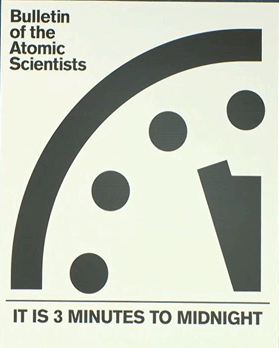
Watch the 2026 Doomsday Clock unveiling live here on January 27 at 10 a.m. EST
To see nuclear-related stories in greater depth and intensity – go to https://nuclearinformation.wordpress.com/
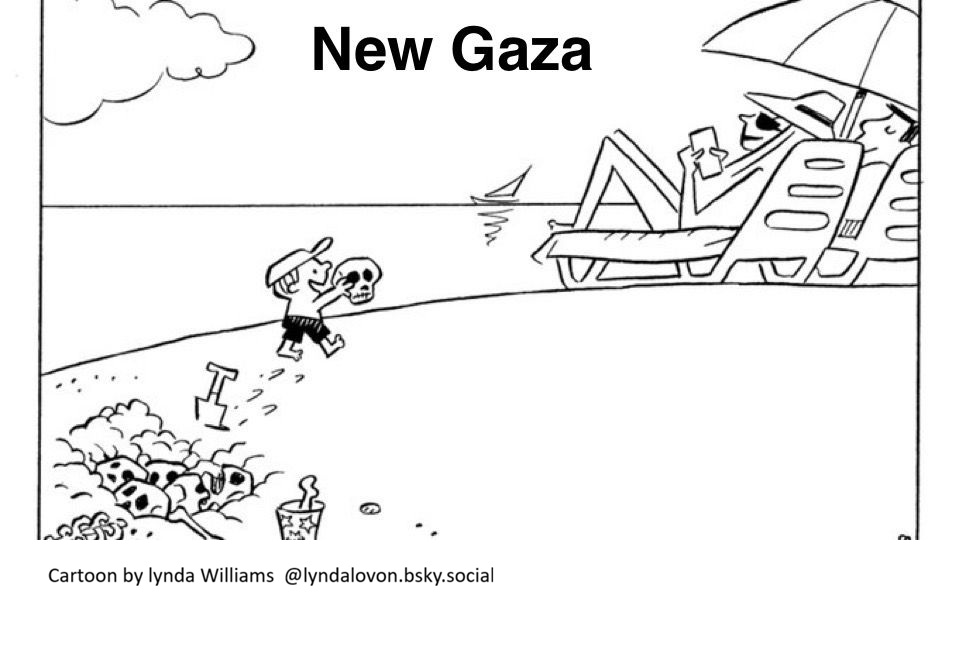
29 Jan. Thursday 7-8 p.m. Webinar – World’s Largest Nuclear Station in Port Hope, ON?

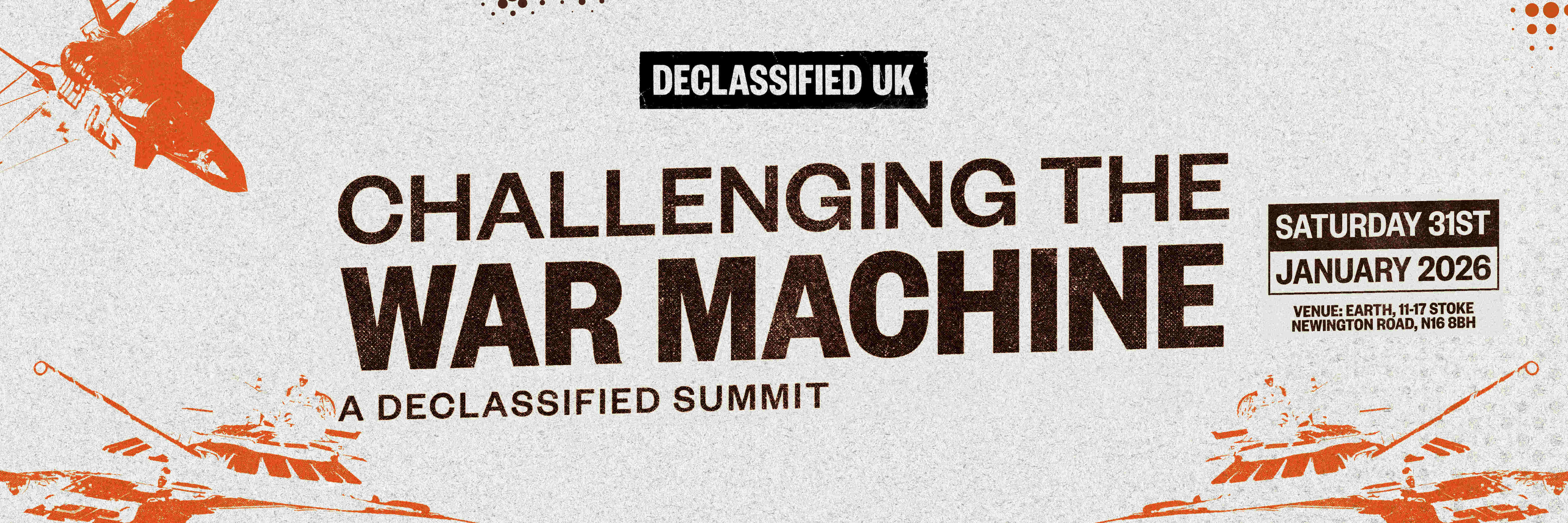
31st January – Challenging the War Machine – a DECLASSIFIED UK SUMMIT


Website of the Week
Now until to February 10, 2026 Radioactive waste storage in France: the debate is finally open! How to participate?
-
Archives
- January 2026 (277)
- December 2025 (358)
- November 2025 (359)
- October 2025 (376)
- September 2025 (258)
- August 2025 (319)
- July 2025 (230)
- June 2025 (348)
- May 2025 (261)
- April 2025 (305)
- March 2025 (319)
- February 2025 (234)
-
Categories
- 1
- 1 NUCLEAR ISSUES
- business and costs
- climate change
- culture and arts
- ENERGY
- environment
- health
- history
- indigenous issues
- Legal
- marketing of nuclear
- media
- opposition to nuclear
- PERSONAL STORIES
- politics
- politics international
- Religion and ethics
- safety
- secrets,lies and civil liberties
- spinbuster
- technology
- Uranium
- wastes
- weapons and war
- Women
- 2 WORLD
- ACTION
- AFRICA
- Atrocities
- AUSTRALIA
- Christina's notes
- Christina's themes
- culture and arts
- Events
- Fuk 2022
- Fuk 2023
- Fukushima 2017
- Fukushima 2018
- fukushima 2019
- Fukushima 2020
- Fukushima 2021
- general
- global warming
- Humour (God we need it)
- Nuclear
- RARE EARTHS
- Reference
- resources – print
- Resources -audiovicual
- Weekly Newsletter
- World
- World Nuclear
- YouTube
-
RSS
Entries RSS
Comments RSS
 nuclear-news