Outgoing CIA director says ‘no sign’ Iran developing nuclear weapons
William Burns stated that the Islamic Republic made a decision in 2003 not to pursure nuclear weapons and has not changed its policy
The Cradle, News Desk, JAN 12, 2025
Outgoing CIA director William Burns stated in an interview on 10 January that Iran does not have a nuclear weapons program, following a decision it made in 2003, and that the US is concerned about the revival of ISIS.
In an interview with state broadcaster National Public Radio (NPR) to discuss his time as director of the notorious spy agency under President Joe Biden, Burns was asked whether Iran may accelerate its efforts to obtain nuclear weapons given the setbacks the Islamic Republic and its allies in the regional Axis of Resistance have sustained over the past year.
Burns answered that “the Iranian regime could decide in the face of that weakness that it needs to restore its deterrence as it sees it and, you know, reverse the decision made at the end of 2003 (an oral fatwa issued by Supreme Leader Ali Khamenei) to suspend their weaponization program.”
However, Burns clarified, “We do not see any sign today that any such decision has been made, but we obviously watch it intently. “
He added that Iran’s weakness could instead lead to negotiations for a nuclear deal similar to the one signed by Iran and the United States under President Obama in 2014. President Trump later withdrew from the deal following intense lobbying by Israeli Prime Minister Benjamin Netanyahu.
“You know that that sense of weakness could also theoretically create a possibility for serious negotiations, too. And, you know, that’s something the new administration is going to have to sort through. I mean, it’s something I have a lot of experience in with the secret talks a decade ago, a little more than a decade ago with the Iranians. So, you know, that’s that’s also a possibility,” Burns stated.
Regarding the negotiations for a possible ceasefire and prisoner exchange between Israel and Hamas in Gaza, Burns said he believes there is a chance for an agreement.
“I think the gaps between the parties have narrowed. There’s an Israeli delegation in Doha right now working through proximity talks managed by the Qataris, with the support of the Egyptians and with our support. So, I think there’s a chance.”……………………………………………………. https://thecradle.co/articles/outgoing-cia-director-says-no-sign-iran-developing-nuclear-weapons
Outgoing CIA director says ‘no sign’ Iran developing nuclear weapons

William Burns stated that the Islamic Republic made a decision in 2003 not to pursure nuclear weapons and has not changed its policy
The Cradle News Desk, JAN 12, 2025
Outgoing CIA director William Burns stated in an interview on 10 January that Iran does not have a nuclear weapons program, following a decision it made in 2003, and that the US is concerned about the revival of ISIS.
In an interview with state broadcaster National Public Radio (NPR) to discuss his time as director of the notorious spy agency under President Joe Biden, Burns was asked whether Iran may accelerate its efforts to obtain nuclear weapons given the setbacks the Islamic Republic and its allies in the regional Axis of Resistance have sustained over the past year.
Burns answered that “the Iranian regime could decide in the face of that weakness that it needs to restore its deterrence as it sees it and, you know, reverse the decision made at the end of 2003 (an oral fatwa issued by Supreme Leader Ali Khamenei) to suspend their weaponization program.”
However, Burns clarified, “We do not see any sign today that any such decision has been made, but we obviously watch it intently. “
He added that Iran’s weakness could instead lead to negotiations for a nuclear deal similar to the one signed by Iran and the United States under President Obama in 2014. President Trump later withdrew from the deal following intense lobbying by Israeli Prime Minister Benjamin Netanyahu.
“You know that that sense of weakness could also theoretically create a possibility for serious negotiations, too. And, you know, that’s something the new administration is going to have to sort through. I mean, it’s something I have a lot of experience in with the secret talks a decade ago, a little more than a decade ago with the Iranians. So, you know, that’s that’s also a possibility,” Burns stated………………………………………………………………………………………. more https://thecradle.co/articles-id/28431
Iran has absolutely no intention to build nuclear weapons, president says
Jan 7, 2025 https://www.iranintl.com/en/202501076906
Tehran has no plan to acquire a nuclear bomb since Iran’s Supreme Leader Ali Khamenei has forbidden it on religious grounds, Iran’s president said on Tuesday.
“The Islamic Republic has absolutely no intention of utilizing its nuclear capabilities for military purposes based on its ideological beliefs and a fatwa by Supreme Leader Ali Khamenei,” Masoud Pezeshkian said in a meeting with Britain’s new ambassador to Tehran.
For two decades, the Supreme Leader’s so-called nuclear fatwa has been repeatedly cited by senior officials as proof of Iran’s peaceful intentions. But even supporters of that view say the decree could be amended.
The nuclear engineer went on to say that if Khamenei’s opinion changed, Iran would have the capacity to build a nuclear weapon.
Tehran ready for return to JCPOA
Pezeshkian’s comments came one day after French President Emmanuel Macron warned Tehran’s nuclear program is nearing the point of no return.
Iran says its uranium enrichment program is for peaceful purposes but has accelerated activity since US President-elect Donald Trump withdrew from the 2015 nuclear deal – officially known as the Joint Comprehensive Plan of Action (JCPOA) – during his first term and reimposed sanctions on Tehran.
“The Islamic Republic is fully prepared for all parties to return to the 2015 agreement and fulfill their mutual commitments,” Pezeshkian added on Tuesday.
Last month, European powers France, Germany, and Britain warned that Iran’s actions had further eroded the agreement, noting that Tehran’s stockpile of highly enriched uranium has no credible civilian justification.
In December, the head of the UN nuclear watchdog reported that Iran was dramatically advancing enrichment close to the 90% purity needed only for weapons-grade material.
The three European nations, co-signatories of the 2015 accord, had brokered the deal under which Iran agreed to limit enrichment in exchange for the lifting sanctions.
“According to the Leader’s opinion, going in this direction is now forbidden, because he is a religious authority; (but) maybe he will change his opinion tomorrow,” Shahid Beheshti University President Mahmood-Reza Aghamiri said recently in an interview.
Iran Condemns US Threats to Nuclear Facilities, Calls for UN Accountability
Latifa Ferial Nail, 6 Jan 25, https://nbmediacoop.org/2025/01/06/first-nations-chiefs-shouldnt-be-duped-by-nuclear-is-green-deception/
Iran’s Foreign Ministry spokesman, Esmaeil Baghaei, has condemned recent remarks by US national security adviser Jake Sullivan regarding potential military action against Iran’s peaceful nuclear program.
Baghaei urged the UN Security Council to hold the United States accountable for its threats to attack Iran’s nuclear facilities, emphasizing that such actions violate the United Nations Charter.
Sullivan reportedly presented US President Joe Biden with options for strikes on Iranian nuclear sites, should Tehran allegedly pursue a nuclear weapon—a claim Iran has repeatedly denied.
Baghaei noted that these threats had been made multiple times and stressed that the international community must address this issue to maintain global peace and security. The spokesman reaffirmed Iran’s determination to defend its sovereignty and dignity.
2025, Iran is back in the U.S. crosshairs for regime change
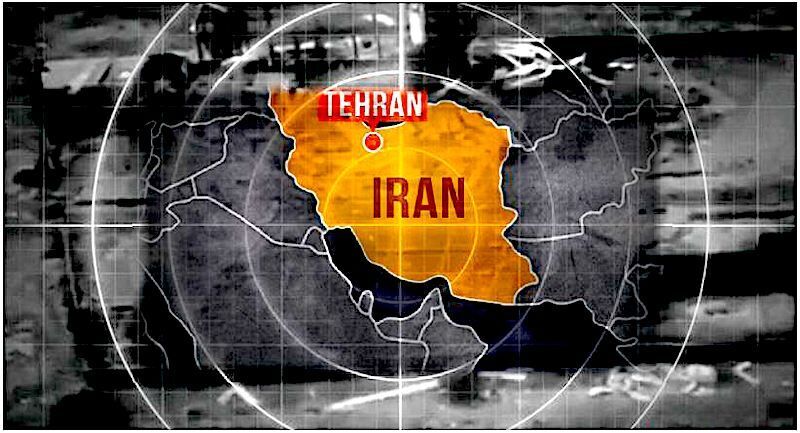
Finian Cunningham, Strategic Culture Foundation, Sat, 04 Jan 2025 https://strategic-culture.su/news/2025/01/04/2025-iran-back-in-us-crosshairs-for-regime-change/
A new American president and a new Middle East configuration have brought Iran back into the crosshairs for regime change with an intoxicating vengeance
The signs are that Iran is going to face intensified hostility from the U.S. over the next year for regime change.
The sudden fall of Syria and the isolation of Hezbollah in Lebanon – Iran’s regional allies – have made Tehran look vulnerable.
Anti-Iran hawks in the U.S. are cock-a-hoop about the prospect of regime change in Tehran.
The recent death of Jimmy Carter at the age of 100 puts in perspective how great a prize the Islamic Republic represents for Washington’s imperial desires. Carter was disparaged as the American president who lost Iran in 1979 as a crucial client state for U.S. power in the Middle East.
For over four decades, American imperialist power has sought to topple the Islamic Republic and return the Persian nation to the U.S. global fold.

Though, as U.S. Secretary of State Antony Blinken lamented last month, American “regime change experiments” in Iran have been a failure.
Now, however, there is renewed enthusiasm in Washington for the Persian prize.
The lust for regime change in Tehran has peaked with the dramatic fall of President al-Assad in Syria.
American lawmakers and Iranian exiles are publicly calling for the new Trump administration to get back to its maximum pressure campaign on Tehran because they believe there is “a perfect moment” for regime change.
During Donald Trump’s first White House (2017-2021), he revoked the Iranian nuclear deal of the Obama administration and ramped up economic sanctions in what was referred to as a policy of “maximum pressure.”
A growing chorus of Republicans and Democrats are urging the United States to seize the opportunity of a perceived weakened Iran to overthrow the clerical rule of Ayatollah Ali Khamenei.
At a recent forum in Washington, it was reported that speaker after speaker brayed for regime change in Tehran. For years, such a desire had been dulled with U.S. failure and the formidableness of the Islamic Republic.
“We have an obligation to stand together with allies in making sure this regime’s suppression will come to an end,” said Democratic Senator Cory Booker.
“Iran is projecting only weakness,” declared Jeanne Shaheen, another Democratic Senator.
Republican Senator Ted Cruz sounded vindicated over his long-time anti-Iran stance: “I have, for a long time, been willing to call quite unequivocally for regime change in Iran… The ayatollah will fall, the mullahs will fall, and we will see free and democratic elections in Iran. Change is coming, and it’s coming very soon.”
James Jones, a former White House national security adviser, said: “The tectonic shift in the Syrian government… should mean to the people of Iran that change is in fact possible in the Middle East.”
The Islamic Revolution in 1979 deposed Shah Pahlavi, an ardent American client. The revolution and the hostage crisis at the U.S. embassy in Tehran was a horrible blow to Washington’s global image. The Shah had been brought to power by the U.S.-British coup in 1953 and for 26 years, the dictatorial monarch ruled with an iron fist as a loyal and massive buyer of American weaponry and supplier of oil profits.
The overthrow of the Shah put Iran in the crosshairs for regime change. The Americans prompted the Iraq-Iran War between 1980 and 1988. The new Islamic rulers were subjected to crippling economic sanctions, which were eased in 2015 with the signing of the Iran nuclear deal brokered by the Obama administration. By then, the U.S. was trying a softer policy of regime change and limited engagement.
Trump abandoned that policy, reverting to a more hostile one. Trump ordered the assassination of Iran’s top military commander Major General Qassem Soleimani on January 3, 2020.
Trump can be expected to make Iran his foreign policy goal during the first year of his second administration beginning on January 20.
There is a giddy sense that the U.S.-backed Israeli war on Gaza, Lebanon and Yemen has fatally weakened the Islamic Republic.
During his election campaign, Trump endorsed Israeli plans to attack Iran’s nuclear sites militarily.
Trump will be tempted that Iran could be an early success for his political legacy. To overthrow the Iranian government and replace it with a pro-U.S. regime would be the prize of the century for the American imperial ego.
There is also the imperative of geo-strategy. Russia, China and Iran have emerged as an important alternative geopolitical axis that is perceived as a threat to U.S. global power and the American dollar hegemony. Iran appears to be the weakest link among the opposing bloc, known as the BRICS.
Trump seems to be prioritizing making a peace settlement in Ukraine with Russia. Part of that calculation is incentivized by freeing up U.S. resources to target Iran.
Last year, the imperialist Atlantic Council published an article headlined: “The United States needs a new Iran policy – and it involves regime change, but not the traditional kind”.
The Atlantic Council article advocated intensified economic and political pressure on Iran and internal destabilization by the covert backing of Iranian opposition groups. We can expect a turbo-charged color revolution in Iran, with Western media amplifying public protests against the authorities. Also recommended by the Atlantic Council: “Propaganda efforts to drive a wedge between Russia and Iran, as well as undermine its support by the rank-and-file within the Islamic Revolutionary Guard Corps (IRGC) and military, would also help weaken the regime.”
The year ahead is shaping up for a mammoth effort by the U.S. to target Iran.
Suddenly, the U.S. imperial regime-change machine has found the driving seat again after years of sputtering failure in Iran and Syria. The victory of CIA proxies in Syria to finally overthrow Assad is producing a rush to do the same in Iran. That prize seemed out of reach for too long. A new American president and a new Middle East configuration have brought Iran back into the crosshairs for regime change with an intoxicating vengeance.
Biden discussed plans to strike Iran nuclear sites if Tehran speeds toward bomb
Barak Ravid. AXIOS, 2 Jan 25
White House national security adviser Jake Sullivan presented President Biden with options for a potential U.S. attack on Iran’s nuclear facilities if the Iranians move towards a nuclear weapon before Jan. 20, in a meeting several weeks ago that remained secret until now, three sources with knowledge of the issue tell Axios.
Why it matters: A U.S. strike on Iran’s nuclear program during the lame duck period would be an enormous gamble from a president who promised he would not allow Iran to develop a nuclear weapon, but who would also risk handing a fresh conflict over to his successor. Biden did not green light a strike during the meeting and has not done so since, the sources said.
Biden and his national security team discussed various options and scenarios during the meeting, which took place roughly one month ago, but the president did not make any final decision, according to the sources.A U.S. official with knowledge of the issue said the White House meeting was not prompted by new intelligence or intended to end in a yes or no decision from Biden. Instead, it was part of a discussion on “prudent scenario planning” of how the U.S. should respond if Iran were to take steps like enriching Uranium to 90% purity before Jan. 20, the official said.Another source said there are currently no active discussions inside the White House about possible military action against Iran’s nuclear facilities.
Behind the scenes: Some of Biden’s top aides have argued internally that two trends —the acceleration of Iran’s nuclear program, and the weakening of Iran and its proxies in their war with Israel — together give Biden an imperative and an opportunity to strike.
- The sources said some of Biden’s aides, including Sullivan, think that the degrading of Iran’s air defenses and missile capabilities, along with the significant weakening of Iran’s regional proxies, would improve the odds of a successful strike and decrease the risk of Iranian retaliation and regional escalation.
- The U.S. official said Sullivan did not make any recommendation to Biden on the issue, but only discussed scenario planning. The White House declined to comment.
The intrigue: One source said Biden honed in on the question of urgency, and whether Iran had taken steps that justify a dramatic military strike a few weeks before a new president takes office.
The other side: Iran has long denied it is seeking a nuclear weapon and stressed that its nuclear program is only for civilian purposes.
- But in recent months, several former and current Iranian officials spoke publicly about the possibility of changing Iran’s nuclear doctrine………………………………………………………. more https://www.axios.com/2025/01/02/iran-nuclear-weapon-biden-white-house
Iran says ready to enter talks soon with the West to agree on a new nuclear deal
January 4, 2025 , https://www.tehrantimes.com/news/508257/Iran-says-ready-to-open-talks-soon-with-the-West-to-reach-a-new
TEHRAN – Iranian Foreign Minister Abbas Araghchi has said the Islamic Republic is ready to resume constructive and immediate talks on its nuclear program.
“We are still ready to enter constructive dialogue without any delay about our nuclear program, a dialogue with the aim of reaching an agreement,” Araghchi told China’s CCTV in an interview aired on Saturday.
President-elect Donald Trump quit the nuclear deal in his first term with Iran in 2018 and returned the all the previous sanctions lifted under the deal and added new ones.
According to the deal, deal formally known as the Joint Comprehensive Plan of Action (JCPOA), Iran agreed to put limits on its nuclear work in return for the termination of financial and economic sanctions.
The JCPOA was clinched in 2015 between Iran and the 5+1 group, the five permanent members of the UN Security Council and Germany, after nearly two years of intensive negotiations.
“We negotiated for more than two years with the 5+1 countries in good will and finally we succeeded to reach an agreement that was praised and accepted by the entire world as a diplomatic achievement,” Araghchi explained who acted as Iran’s second ranking diplomat in the talks at the time.
“We implemented it with good will but it was the U.S. that decided to withdraw from it without any reason and justification and brought the situation to this point.”
The chief diplomat added the formula that Iran has in its mind for resolving the nuclear issue is the same previous JCPOA formula, which means creating trust about Iran’s nuclear program in return for the lifting of sanctions.
“Based on this (formula) we are ready for talks.”
To revitalize the nuclear deal Iran held a brainstorming session with the three European countries of Britain, France and Germany (E3) in December 2024, which are still party to the dormant nuclear agreement at the level of deputy foreign ministers for political affairs. Iran and the E3 plan to meet again on January 13.
On the policy of the new American administration toward the nuclear talks, the foreign minister said, “It is natural that the new administration should formulate its policies, and we decide based on that.”
Trump will officially take over as president on January 20.
Foreign Minister Araghchi went on to say that “China and Russia were two important influential parties in the negotiations and Iran believes that the two countries should still play their own constructive role in the talks and this is our will and request.”
He added since 2015 when the nuclear deal was signed the world has undergone many changes.
There is crisis in the West Asia region “but the road to diplomatic solution is never closed,” the chief diplomat opined.
“The U.S. pullout from the JCPOA was a grave strategic mistake that faced Iran reaction. Of course, the U.S. sanctions also increased.
Araghchi added, “As a diplomat I believe it is possible to reach ‘diplomatic solutions’ in the most difficult situations, but it depends how much there is political will and how much diplomats show creativity and devise initiatives to find new ways and agree on new formulas. Finding a solution is difficult, but is not impossible if the other side has the diplomatic will.”
Next nuclear talks between Iran and three European countries due on Jan 13
The next round of nuclear talks between Iran and three European countries
will take place on Jan. 13 in Geneva, Iran’s semi-official ISNA news agency
cited the country’s Deputy Foreign Minister Kazem Gharibabadi as saying on
Wednesday. Iran held talks about its disputed nuclear programme in
November, 2024 with Britain, France and Germany. Those discussions, the
first since the U.S. election, came after Tehran was angered by a
European-backed resolution that accused Iran of poor cooperation with the
U.N. nuclear watchdog.
Reuters 1st Jan 2025
https://www.reuters.com/world/middle-east/next-nuclear-talks-between-iran-three-european-countries-due-jan-13-2025-01-01/
No change in Iran’s nuclear doctrine, top security official says
December 31, 2024 , https://www.tehrantimes.com/news/508118/No-change-in-Iran-s-nuclear-doctrine-top-security-official-says
TEHRAN – Iran’s top security official said on Monday that contrary to what is claimed by foreign media outlets there has been no change in Iran’s nuclear doctrine.
Ali Akbar Ahmadian, secretary of Iran’s Supreme National Security Council, made the remarks in a meeting with Omani Foreign Minister Said Badr al-Busaidi who visited Tehran on Monday
“… based on the views of the Leader of the Islamic Revolution there has been no change in the nuclear doctrine of the Islamic Republic of Iran,” Ahmadian asserted.
In response to a clarification by the Omani foreign minister about Iran’s nuclear activities as well as “remarks and rumors” that Iran has increased its stockpile of uranium or is enriching uranium to a higher level, Ahmadian said these are “baseless”.
“The Islamic Republic of Iran is still committed to the framework of the Muscat agreements and the ball is on the other side’s court to honor its commitments” based on the 2015 nuclear agreement, Ahmadian explained.
Under the 2015 nuclear agreement, officially known as the Joint Comprehensive Plan of Action (JCPOA), Iran agreed to put limits on its nuclear activities in exchange for termination of economic and financial sanctions.
The agreement was signed in 2015 between Iran and the 5+1 group, the five permanent members of the UN Security Council and Germany. However, the U.S. quit the agreement in 2018 and the remaining parties, including Britain, France and Germany (European trio), failed to observe their commitments.
With successful Syrian regime change, will US set sights on Iran regime change 2.0?
Walt Zlotow, West Suburban Peace Coalition, Glen Ellyn IL 30 Dec 24.
Seventy-one years ago the US and UK launched Operation AJAX, a jointly planned coup that deposed Iran’s legitimate ruler Dr. Mohammed Mosaddeq in August, 1953.
The Brits conceived the coup in 1952 and presented it to ‘Give ‘Em Hell’ Harry Truman, who told the Brits to go to Hell. A year later newbie Prez Ike greenlighted AJAX to allow Britain to grab back its Iranian oil monopoly nationalized by Mosaddeq, seeking to break free from US, UK dominance. For Ike, it was a chance to make his bones as a bonafide anti-communist, due to Mosaddeq’s unwillingness to crush Iranian leftist influence. In McCarthyite America and forever more, leftist governments posed a danger to US exceptionalism.
Leading this first official CIA coup against a foreign leader who wouldn’t do our bidding was Teddy Roosevelt’s grandson Kermit Roosevelt Jr. Our hand-picked successor was Mohammad Reza Shah Pahlavi, son of the first Pahlavi monarch Reza Shah Pahlavi. His reluctance and indecision about being summoned as the US/UK puppet almost wrecked Uncle Sam’s best laid plans. But CIA coup leader Roosevelt disobeyed orders to shut down Ajax. He had his Iranian operatives masquerading as commies shed enough blood to turn the tide against Mosaddeq. Up in Warlovers Heaven, Grandpa Teddy beamed with pride.
The Shah ruled Iran for another 26 years, with his CIA trained secret police killing thousands who dared speak out against his tyrannical rule.
The CIA, emboldened by their success, toppled the Guatemalan government a year later and were on a roll till their delusional 1961 Bay of Pigs regime change operation failed spectacularly. This led to the Cuban Missile a year later that nearly got us all vaporized in nuclear war with Russia.
Seventy-one years later the US appears bent on Iran regime change 2.0. Goaded by Israel seeking to topple its only remaining rival for Middle East dominance, the incoming Trump administration is signaling a return to a belligerent anti Iran policy.
By withdrawing from the Iran nuclear agreement in 2018, Trump freed up Iran to start up a nuclear weapons program if it felt US/Israeli pressure posed an existential threat. Current warfare in Gaza, Lebanon and the Syrian regime change makes that more likely today. Trump’s return to power, staffing his foreign policy team with anti-Iran hardliners, s increases that likelihood. That could trigger implementation of a 21st century Operation Ajax with Israel replacing the UK as Uncle Sam’s co coup plotter against Iran. More ominous than the 1953 version, this one could lead to all out war posing extreme danger to 40,000 US troops in the region.
Iran is not now and never has been America’s enemy. But senselessly imagining a nuclear program that does not exist and plotting with Israel to topple its Middle East rival is a sure way to make Iran one.
Iranian lawmaker warns Israeli strike could push Tehran toward nuclear weapons
https://www.iranintl.com/en/202412297185 29 De 24
An Iranian lawmaker backed Tehran’s plans to target Israel and warned that any Israeli attack on Iran’s nuclear facilities would legitimize Tehran advancing toward nuclear weapons development.
“If Israel conducts a military strike against Iran’s nuclear facilities, it effectively grants us the permission to move toward developing nuclear weapons,” Ahmad Bakhshayesh Ardestani, a member of the National Security and Foreign Policy Committee of Iran’s parliament, told Didban news website in Tehran.
Iran to hold nuclear talks with France, Germany, UK
https://www.aljazeera.com/news/2024/11/24/iran-to-meet-with-germany-france-uk-in-nuclear-talks
The meeting follows an IAEA resolution denouncing Iran for what it called a lack of cooperation.
Iran says it will hold nuclear talks with officials from France, Germany, and the United Kingdom this week, amid escalating tensions over Iran’s nuclear programme.
The meeting, which is set to happen on Friday, was announced by Iran’s Ministry of Foreign Affairs on Sunday, and UK officials confirmed the meeting.
“A range of regional and international issues, including the issues of Palestine and Lebanon, as well as the nuclear issue, will be discussed,” Iranian Foreign Ministry spokesperson Esmaeil Baghaei said.
Neither London nor Tehran said where the meeting would take place.
On Thursday, the International Atomic Energy Agency (IAEA) adopted a resolution denouncing Iran for what it called a lack of cooperation. The three European nations, whose representatives will meet Iranian officials, were among those voting for the resolution.
Nineteen countries out of the 35-member IAEA voted to censure Iran – a largely symbolic gesture – while 12 countries abstained. Russia, China, and Burkina Faso voted against the resolution. Thursday’s resolution marked the third time the United Nations body had taken such action since 2020.
The move came as tensions ran high over Iran’s nuclear programme, which critics fear is aimed at developing a nuclear weapon – something Tehran has repeatedly denied.
On Friday, Iran announced a “series of new and advanced centrifuges”, technology that refines enriched uranium into gas. “We will substantially increase the enrichment capacity with the utilisation of different types of advanced machines,” Behrouz Kamalvandi, Iran’s atomic energy organisation spokesman, told Iranian state TV.
Despite the announcement, Iran said it would continue to cooperate with the IAEA.
“We remain committed to taking every diplomatic step to prevent Iran from developing nuclear weapons, including through snapback if necessary,” the UK’s Foreign and Commonwealth Office told the AFP news agency.
In 2015, Iran reached an agreement with world powers, including the United States, to curb its nuclear programme due to concerns about the country potentially developing nuclear weapons.
But in 2018, during President Donald Trump’s first term, the US unilaterally withdrew from the agreement and imposed sanctions on Iran – a move that stoked tensions between Washington and Tehran.
Since then, Tehran has scaled back its cooperation with the IAEA, deactivating surveillance devices put in place by the UN. Concurrently, Iran has increased its stockpile of enriched uranium.
Iran has “begun implementation of preparatory measures” to cap its stockpile of highly enriched uranium. According to leaked reports from the IAEA, Iran is close to the 90 percent threshold needed to produce a nuclear warhead.
Israel preparing to strike Iranian nuclear sites – media
https://www.rt.com/news/609279-israel-iran-strikes-report/ 14 Dec 24
Events in Syria have created a window of opportunity, sources have told the Times of Israel.
The Israeli Air Force is preparing for “potential strikes” on Iranian nuclear facilities, military officials have told the Times of Israel.
The Jewish state believes that the surprise takeover of Syria by jihadist rebels has weakened Tehran’s position in the region, which could prompt Iran to speed up its atomic program, the outlet said.
Meanwhile, Israeli airstrikes have taken out most of Syria’s air defenses, clearing the way for an operation against Iran.
Tehran has long insisted that its nuclear program is peaceful and civilian in nature, contrary to allegations by Israeli Prime Minister Benjamin Netanyahu that Iran has sought an atomic bomb. In 2015, the world’s top five nuclear powers struck a deal with Iran to monitor its nuclear activities in exchange for sanctions relief, but the US unilaterally withdrew from the agreement in 2018.
Israel reportedly considered strikes on Iranian nuclear sites after Tehran’s October 1 missile barrage, but did not follow through on those plans.
Netanyahu’s government has used the recent events in Syria to destroy its neighbor’s military capabilities, launching “one of the largest attack operations in the history” of its air force. Earlier this week, Israeli jets struck over 250 targets across Syria, including airports and seaports, air defense and missile sites, military industry facilities and warehouses. Israeli troops also moved beyond the buffer zone in the Golan Heights, claiming Mount Hermon.
Bashar Assad’s government in Syria was overthrown by Hayat Tahrir al-Sham (HTS) militants last week. The jihadist group has not yet consolidated power.
Israel reportedly believes that Iran is “isolated” after the ousting of Assad and that its other main ally in the region, Lebanon-based Hezbollah, has been significantly weakened by the recent IDF offensive there. This could push Iran to speed up its nuclear program and create a window of opportunity for an Israeli pre-emptive strike, according to the Times of Israel.
Iran’s uranium enrichment ‘worrisome’ – nuclear watchdog
The head of the UN nuclear watchdog has told the BBC Iran’s decision to
begin producing significantly more highly enriched uranium was “very
worrisome”. Rafael Grossi, director general of the International Atomic
Energy Agency (IAEA), said Iran was increasing its stockpile of uranium
enriched to 60%, just below the level of purity needed for a nuclear
weapon.
This will be seen by many in the region as Tehran’s response to its
military and diplomatic setbacks in Syria, Lebanon and Gaza in recent
months. Mr Grossi said it was “no secret” some politicians in Iran were
calling for the development of a nuclear weapon – but after holding talks
in Tehran in recent weeks, he said that “doesn’t seem to be the path of
choice” by the current leadership.
BBC 6th Dec 2024,
https://www.bbc.co.uk/news/articles/c20ee6qylwgo
Iran deploys advanced centrifuges in defiance of IAEA resolution
Iran has begun deploying advanced centrifuges which enrich uranium for the
country’s nuclear program in response to a resolution by the
International Atomic Energy Agency (IAEA) calling for greater transparency
into Iran’s nuclear activities.
Speaking during an open session of
parliament on Sunday, Mohammad Bagher Ghalibaf criticized the resolution,
accusing the United States and European nations of using Iran’s nuclear
program as a pretext for unjustified actions. He said, “The Islamic
Republic of Iran’s reciprocal response to this political misuse of the
Board of Governors was immediately put into action, and the deployment of a
set of new and advanced centrifuges has begun”.
Iran International 24th Nov 2024,
https://www.iranintl.com/en/202411240306
1 This Month
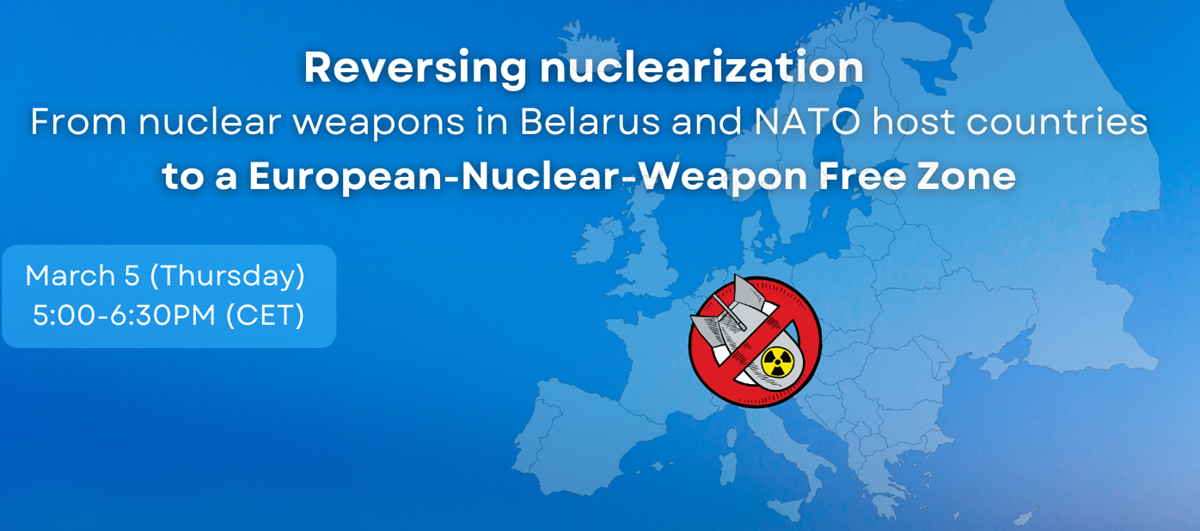
5 March -Online – Reversing nuclearization:
From nuclear weapons in Belarus and NATO host countries to a European-Nuclear-Weapon Free Zone
11am-12:30pm Eastern Time USA / 5pm-6:30pm CET

of the week – Advocating for a
nuclear free beach – https://www.samuellawrencefoundation.org/
The Samuel Lawrence Foundation advocates for a Nuclear Waste Free Beach at San Onofre, join us and take action!
10 March A LIVE WEBINAR THE REAL EFFECTS OF NUCLEAR POWER
What the Industry Isn’t Telling Us
1:00 PM Mountain, 2 pm Central, 3 pm Eastern. Live on the Keepers of the Water Facebook page

18 March Webinar @ 1 PM EST: An Assessment of SMR Projects: The Case of Canada
register for the zoom:
https://us02web.zoom.us/webinar/register/WN_o8BIIOUvQ2ONJR1nta65DQ#/registration

of the week – STOP SMALL MODULAR REACTORS IN CANADA
To see nuclear-related stories in greater depth and intensity – go to https://nuclearinformation.wordpress.com
-
Archives
- March 2026 (51)
- February 2026 (268)
- January 2026 (308)
- December 2025 (358)
- November 2025 (359)
- October 2025 (376)
- September 2025 (258)
- August 2025 (319)
- July 2025 (230)
- June 2025 (348)
- May 2025 (261)
- April 2025 (305)
-
Categories
- 1
- 1 NUCLEAR ISSUES
- business and costs
- climate change
- culture and arts
- ENERGY
- environment
- health
- history
- indigenous issues
- Legal
- marketing of nuclear
- media
- opposition to nuclear
- PERSONAL STORIES
- politics
- politics international
- Religion and ethics
- safety
- secrets,lies and civil liberties
- spinbuster
- technology
- Uranium
- wastes
- weapons and war
- Women
- 2 WORLD
- ACTION
- AFRICA
- Atrocities
- AUSTRALIA
- Christina's notes
- Christina's themes
- culture and arts
- Events
- Fuk 2022
- Fuk 2023
- Fukushima 2017
- Fukushima 2018
- fukushima 2019
- Fukushima 2020
- Fukushima 2021
- general
- global warming
- Humour (God we need it)
- Nuclear
- RARE EARTHS
- Reference
- resources – print
- Resources -audiovicual
- Weekly Newsletter
- World
- World Nuclear
- YouTube
-
RSS
Entries RSS
Comments RSS
 nuclear-news