After 2 years, Israel genocidal ethnic cleansing of Gaza has failed

Walt Zlotow, West Suburban Peace Coalition, Glen Ellyn IL 9 Oct 25
Israel has a grisly method of negotiating peace and release of remaining Israeli hostages in Gaza. They’re continuing their genocidal ethnic cleansing of those pesky Palestinians who just won’t leave so Israel can annex Gaza to Greater Israel.
On Tuesday Israel bombed Gaza City, Khan Younis, even the Mawasi safe zone, killing at least 10. Hundreds of been slaughtered in the five days Israel has ignored President Trump’s demand to stop the genocide while peace talks continue in Egypt.
That should surprise no one interested in ending the genocide. Israel’s primary goal since the Hamas attack 2 years ago Tuesday was to exploit the attack to rid Gaza of all 2,300,000 Palestinians. While killing over 100,000, with the remaining 2,200,000 suffering starvation, degraded health, no habitable living conditions, Israel has failed to achieve its cherished goal: no Palestinians left in a Gaza annexed into Greater Israel.
Israeli Prime Minister Benjamin Netanyahu needs to maintain the genocide for political and personal reasons. The political is the aforementioned completion of Greater Israel including not only Gaza but the West Bank. The personal reason is to delay indefinitely his possible date with prison on corruption crimes.
Dead last on Netanyahu’s grotesque agenda? Getting back the remaining 48 Israeli hostages. Had he cared a whit about the original 251, many of whom his delay killed, he wouldn’t have embarked on genocide.
None of this could have occurred without the $20 billion in genocide weapons gifted to Israel by presidents Biden and Trump, paid for by John Q. Taxpayer. US near total support of the genocide continues even tho an increasing majority of Americans call it genocide and demand we end enabling it.
The current talks in Egypt are doing nothing to achieve the only path to peace: Palestinian statehood, recognized by 158 of 193 UN countries but not the US. Trump’s 20 point peace plan is simply US imagined neocolonialism to keep Gaza totally controlled by outside forces. Palestinians are excluded, keeping Gaza stateless in perpetuity.
The peace plan may release the remaining 48 hostages and achieve ceasefire. But it will neither achieve a Palestinian state nor Netanyahu’s dream of a Palestinian free Gaza annexed to Israel. Both likely outcomes may doom the peace negotiations to failure.
Patrick Lawrence: Power and Justice

You just know Trump’s name is written into this document, and at his insistence, in the cause of his vulgar pursuit of the Nobel Peace Prize he will never get. But never mind this. The Gaza Peace Plan released Monday reads as if Netanyahu dictated it.
Trump. – If this LAST CHANCE agreement is not reached, all HELL, like no one has ever seen before, will break out against Hamas.
By Patrick Lawrence , ScheerPost, October 5, 2025
Those were an eventful few days as the General Assembly convened at the United Nations Secretariat in New York Sept. 22. France, Belgium, Luxembourg, Malta, Monaco and Andorra formally recognized the state of Palestine on the first day of the General Debate, Sept. 23. Britain, Canada, Australia and Portugal had done so two days earlier. With Spain, New Zealand, Finland, Ireland, Norway and other nations also recognizing, virtually the whole of the Western bloc except the United States now accepts Palestine as a sovereign state.
The imperium fades further into its corner. Always good.
And eventful days have followed all the new endorsements of the sovereignty of the Palestinian people. President Trump and Benjamin Netanyahu, the Israeli prime minister, presented a grandly titled Gaza Peace Plan at the White House on Monday, Sept. 29. After several days of suspense and speculation, Hamas responded to this document on Friday. This was not the wholesale acceptance of the 20–point plan Trump seemed to think it was (or wish it was): No, this was skilled statecraft on Hamas’s part — “a responsible position in dealing with the plan proposed by U.S. President Donald Trump,” as the Hamas statement describes itself. “Responsible,” as I read the text, means responsible to the long-suffering Palestinians in Gaza and responsible to the principles of the Palestinian cause.
What do we have here? How shall we understand these apparently disparate events? In my view, we witness a running confrontation between power and justice. This seems to me the defining struggle of our time, and it sharpens as we speak.
You hear a lot of different things about those recognitions at the U.N. in support of a Palestinian state. “What a mockery,” Ali Abunimah, the principled director of The Electronic Intifada, wrote on “X” as heads of state stood at the podium and made these announcements. “Now they just need an actual state.” The Nation called the West’s declarations of support for an independent Palestine “a despicable sham.”
OK, there is a case here. These countries, one and all, call for a two-state solution, and a deader letter I cannot think of. Britain and France pile so many conditions atop their declarations — political candidates in the not-yet-realized Palestine will be vetted, Hamas (never mind its popularity) will be barred from any role in government, textbooks will be censored etc. — that you have to wonder what they mean by “sovereignty” and “self-determination.” Britain and France continue to arm Israel as it terrorizes the people we know as Palestinians.
But those many blurting these out-of-hand dismissals have it wrong, in my view. I am not in the habit of approving of anything Keir Starmer or Emmanuel Macron does, but in this case the British prime minister and the French president, odious “centrists” that they are, deserve what we used to call — alas, for the days when there was a serious left — critical support. The West ex-the United States has finally joined the global majority: Four-fifths of the U.N.’s 193 members now support a Palestinian nation.
No, I am with what many West Bank Palestinians have said since the General Debate convened. A woman named Raya, as quoted in the above-linked document: “Recognition is considered a good and unexpected step, but it will have no real value unless it is followed by serious and practical measures.…” From Alia: “It’s not about if they recognize us or not. It’s about if there is even something left to recognize.” And from Samia: “Recognition of Palestinian statehood is great but will be futile if the genocide on Gaza and occupation do not come to an end.”
See what I mean by critical support?
Flawed as all the statements of recognition are, they seem to have uncorked the bottle wherein the justice genie reposed. This is not to be missed. The walkout when Bibi Netanyahu spoke was even more fun to watch than last year’s. So was the straight-no-chaser language with which heads of state denounced the Israelis’ genocidal barbarities. Gustavo Petro, the Colombian president, described Zionist Israelis as Nazis and called for the U.N. to organize an international force to break the Israeli blockade and stop the savagery.
Petro is right: The Israeli–American peace plan notwithstanding, it is ultimately going to take armed intervention to stop the Zionists’ terror spree. A head of state has finally put this thought on the table.
While the General Assembly proceeded with its business, the Spanish and Italians dispatched naval vessels to sail with the aid flotilla of 50–odd ships then making its way to the waters off Gaza. The Israelis intercepted these vessels late last week — illegally, in international waters — and their crews were deported. But a new flotilla of 11 vessels instantly set sail across the Mediterranean. Also last week, Pedro Sánchez, the Spanish premier, announced that U.S. ships and planes transporting arms and matériel to Israel will be barred from transiting through Spanish ports and air bases. These moves cannot be seen as unrelated to developments on the diplomatic side.
You didn’t have to be at the U.N. last month (and I wasn’t) to understand the gravity of these events — to feel the explosive energy in the air inside and outside the Secretariat. You could see it in the real-time videos posted on social media. The world, the non–West naturally in the lead, was at last declaring, “Enough!” Taking the occasion to its essence, this was a full-frontal confrontation with power in the cause of global justice. One dramatic scene stays with me even now: When Gustavo Petro resumed his seat after speaking, Luiz Inácio Lula da Silva was videoed standing above him and holding his head in a fraternal embrace.
“This historic moment,” the Brazilian president exclaimed when it was his turn at the podium. So it was.
And then what?
Benjamin Netanyahu reportedly had a difficult time settling on a flight plan when he flew from Tel Aviv to New York, given he is wanted under international law for alleged war crimes and crimes against humanity. Norway, Belgium, Spain, Canada, Ireland and the Netherlands are among the nations that indicated they would honor the International Criminal Court’s arrest warrant were he to enter their territory. How was it he was allowed into the Secretariat at all, it was logical to wonder.
We can surmise that part of the Israeli prime minister’s purpose in attending this year’s General Assembly — where he called those who walked out when he spoke “an antisemitic mob” — was openly to flout international law and, per usual, everything the U.N. stands for. The subtext from the moment Bibi arrived in Manhattan was clear: There is no question of the global majority bringing the Israeli terror machine to justice, he wanted to demonstrate, and power, not law, will remain what makes the world go around.
And this is how I read Netanyahu’s summit with President Trump on Monday — their fourth since Trump reassumed office in January. The 20–point plan they released has all kinds of things going on in it, but, taking a step back, it is fairly understood as a reply to the global majority’s just-stated desire for a humane and moral order. Read for its larger meaning, this is a declaration that we — we, all of us — live in a lawless world now and that legitimacy, international institutions, and (certainly not) common notions of justice count for nothing. Force alone counts in the world Trump and Bibi propose to stand astride like the co-emperors who ruled the ancient world after Constantine established an eastern capital in 330 AD.
The text of this document can be read here, courtesy of the BBC. In broad outline — and a broad outline is all there is to it at this point — it calls for an immediate ceasefire, after which — within 72 hours — Hamas is to release all remaining captives still alive and the bodies of the dead. In exchange, Israel will release 250 Palestinian prisoners serving life sentences and 1,700 Palestinians taken prisoner since the events of Oct. 7, 2023. Then Hamas is to disarm, and the Israelis are to begin a phased withdrawal of their troops, but these will continue to occupy “for the foreseeable future” an expanding buffer inside the Gaza Strip’s eastern border.
Then come the longer-term provisions. “Gaza will be a deradicalized terror-free zone” in which Hamas will have no presence or role. “Gaza will be redeveloped for the benefit of the people of Gaza.” And then the question of government and administration.
Gaza will be governed under the temporary transitional governance of a technocratic, apolitical Palestinian committee… made up of qualified Palestinians and international experts, with oversight and supervision by a new international transitional body headed and chaired by Donald J. Trump, with other members and heads of State to be announced, including former Prime Minister Tony Blair.
You just know Trump’s name is written into this document, and at his insistence, in the cause of his vulgar pursuit of the Nobel Peace Prize he will never get. But never mind this. The Gaza Peace Plan released Monday reads as if Netanyahu dictated it, and I will offer odds he did. This thing is written loosely such that it gives Bibi all the room he needs to betray it now that he endorses it. This would, of course, be in keeping with every other agreement with Hamas and/or the United States that Netanyahu has accepted to date.
Hamas, as widely reported, did not formally receive the peace plan until after it was made public and, of course, had no role in its composition. This was intended as a take-it-or-leave-it offer such that, as Bibi and Trump made clear as they stood at opposing podiums Monday afternoon, Hamas’s leaders may as well have guns pointed to their temples.
Bibi:
If Hamas rejects your plan, Mr. President, or if they supposedly accepted and then basically do everything to counter it, then Israel will finish the job by itself.
Trump, following this remark:
Israel would have my full backing to finish the job of destroying the threat of Hamas.
And for good measure, Trump again Friday on Truth Social, his digital bullhorn, warned Hamas that it had until Sunday to accept the plan:
If this LAST CHANCE agreement is not reached, all HELL, like no one has ever seen before, will break out against Hamas.
Tell me, is this statecraft, or is this power using the threat of genocide as blackmail? Corollary question: Is the overarching proposal here that a regime guilty of the most savage acts of barbarity at least since the Reich shall now proceed on with impunity — no responsibility for its crimes, no answerability to the institutions of global justice?
As to the question of statehood, Hamas’s longstanding demand and the vital preoccupation of the 100–plus nations attending the General Assembly just days earlier, there is no provision at all in this plan unless we count this (and I cannot):
While Gaza re-development advances and when the PA [the Palestinian Authority] reform program is faithfully carried out, the conditions may finally be in place for a credible pathway to Palestinian self-determination and statehood, which we recognize as the aspiration of the Palestinian people.
It is simply unbelievable to me that these two grotesquely irresponsible people would expect anyone to take this kind of language at all seriously. Try to count the escape hatches in this provision, which is No. 19 of the 20 comprising the plan. I identify at least three, maybe four……………………………………………………………………………………………………………………………………….
I cannot honestly read this moment with any certainty. On Thursday, bang in the middle of these proceedings, Israel Katz, the Zionist state’s defense minister and another of the fanatics in the Netanyahu government, announced that if the half-million residents remaining in Gaza City do not evacuate they will be considered terrorists; the implications of this status will be evident. What is our question: Will the Netanyahu regime hold to the “peace plan,” or how long will it take for Bibi to abrogate it? In the day since Hamas announced its openness to negotiation based on the plan, let me remind you, Israel has not stopped the bombing. …………………………………………………………………….
There is absolutely zero interest in the wishes of Palestinians in this plan. No mention at all of the West Bank or the escalating cruelties of diabolic settlers as they steal ever more Palestinian land. And not to be missed, indifference to what the majority of humanity just made clear at the General Assembly.
This is power announcing its utter contempt for anything other than raw force — forms of force that see no need any longer to disguise themselves.
There is no discounting the significance of events last week at the U.N. and outside its gates. The world has broken its silence. At the highest levels of government in the non–Western majority, it is learning — I can no longer bear this co-opted phrase, but here goes—to speak truth to power. Power and justice are, so to say, now on the record as in open conflict. This is not nothing. There is more to come. I have no trouble anticipating which will finally, however far in the future, win out over the other. https://scheerpost.com/2025/10/05/patrick-lawrence-power-and-justice/
Hamas just accepted Trump’s ‘peace’ plan. Here’s what it didn’t accept.
Hamas just accepted Donald Trump’s “peace” plan. Here’s what Hamas didn’t accept, how Trump reacted, and why Netanyahu was blindsided.
By Qassam Muaddi October 4, 2025 , https://mondoweiss.net/2025/10/hamas-just-accepted-trumps-peace-plan-heres-what-it-didnt-accept/
The response of Hamas to U.S. President Donald Trump’s “peace” plan to end the war in Gaza came in late on Friday. It sparked immediate and conflicting reactions.
Five days after the U.S. president first announced his plan, the Palestinian movement gave its answer in a statement announcing that Hamas announced its “approval for the release of all hostages — living and dead – according to the exchange formula included in President Trump’s proposal.” Hamas added that it was ready to enter talks “to discuss the details.”
In a move practically unheard of by a U.S. president, Trump shared Hamas’s statement on his account on Truth Social:
“Based on the Statement just issued by Hamas, I believe they are ready for a lasting peace,” Trump said, adding that “Israel must immediately stop the bombing of Gaza, so that we can get the hostages out safely and quickly!”
Minutes later, Trump announced Hamas’s acceptance of his plan in a live address at the White House, considering the event “a big day, unprecedented in many ways.” Trump added that he “looks forward to having all [Israeli] hostages come back to their parents,” stressing that “we have to put the final word in concrete.” The U.S. President thanked Arab and Muslim states for “helping me put this together,” promising that “everybody will be treated fairly.”
Hamas’s response to Trump’s plan came a day after the Israeli army sealed off Gaza City. Israeli Defense Minister Israel Katz issued a “final warning” to the estimated 500,000 Palestinians still in the city, announcing that those who decide to remain will be considered “terrorists or supporters of terror.”
Netanyahu ‘surprised’ amid international approval
Qatar, Egypt, and Turkey also accepted Hamas’s response, while French President Emmanuel Macron said that the “release of all hostages and a ceasefire in Gaza are within reach,” and UK Prime Minister Keir Starmer said Hamas’s response was “a significant step forwards.”
Trump’s near-immediate positive response to the Hamas statement was reportedly met with “surprise” by Israeli Prime Minister Benjamin Netanyahu, according to an unnamed Israeli official who spoke to Israel’s Channel 12. Netanyahu had held a deliberation on the Hamas response to Trump’s plan before the U.S. President published his Truth Social statement. According to Channel 12, the Israeli Prime Minister considered the Hamas response a rejection of Trump’s framework.
Netanyahu had reportedly stressed the need to coordinate with the U.S. on a response, so it would not seem that Hamas had accepted the Trump deal, according to Channel 12, which also cited Israeli officials saying that the Hamas response “could pave the way to a deal”
What Hamas accepted
In its official statement, Hamas praised “the Arab, Islamic, and international efforts, as well as the efforts of U.S. President Donald Trump, aimed at halting the war on the Gaza Strip, achieving a prisoner exchange, allowing immediate entry of humanitarian aid, rejecting the occupation of the Strip, and opposing the displacement of our Palestinian people from it.”
Hamas’s statement then announced the movement’s acceptance of Trump’s prisoner exchange formula, which would see the release of 250 Palestinians from Israeli prisons in exchange for the release of all Israeli captives. The statement added that Hamas was ready to “immediately enter into negotiations” through Qatari and Egyptian mediators to “discuss the details.”
The statement also affirmed Hamas’s readiness to hand over the administration of the Strip to a Palestinian commission of independent “technocrats,” which would be formed “based on Palestinian national consensus and supported by Arab and Islamic backing.”
Most importantly, the Hamas statement addressed the other parts of Trump’s plan concerning the future of Gaza and the “legitimate rights of the Palestinian people,” affirming that it must be subject to a “comprehensive national position” based on international law and UN Resolutions. This position would have to be discussed as part of a “unified Palestinian national framework,” which Hamas said it would participate in “with full responsibility.”
What Hamas didn’t accept
But the Hamas statement also skirted over a number of key parts of Trump’s plan that have been widely regarded as a non-starter for Palestinians, as it would prevent Palestinians from administering their own lives and forestall the prospects of a Palestinian state.
These included the clause in Trump’s plan about forming a “board of peace” headed by the U.S. President, the widely-reported potential participation of former British Prime Minister Tony Blair, and the deployment of international and Arab forces to “demilitarize” Gaza. Most importantly, the statement made no mention of the demand for Hamas and other resistance factions in Gaza to disarm.
Following the statement, Hamas’s head of international and legal relations, Mousa Abu Marzouq, told Al Jazeera that Hamas was concerned with the first nine points of Trump’s 20-point plan, which related to ending the war, ending the occupation of Gaza, humanitarian aid, and who would rule the Strip.
Abu Marzouq added that these issues required further negotiations, asserting that some of Trump’s points were “unrealistic,” including the release of all captives within 72 hours. He also noted that the plan did not include any clear framework for how the Israeli withdrawal would take place.
Refusing a ‘mandate in new form’
Abu Marzouq affirmed that Gaza must be ruled by “an independent commission of technocrats, and this is what we agreed on with the rest of the [Palestinian] factions in Cairo,” referencing the inter-Palestinian agreement back in August to form an independent commission to run Gaza based on an Egyptian proposal.
As for the clauses of Trump’s plan concerning the future of the Palestinian Authority (PA), the future of the Gaza Strip, and the future of a Palestinian state, Abu Marzouq said that these issues could not be decided upon by Hamas alone. “Hamas is part of the Palestinian people, but there are other parts,” Abu Marzouq said. “All the national factions, the national movement in all its colors, the PLO—which represents the Palestinian people—and the Palestinian Authority, which is already engaged in a political process with the occupying state. All of them are partners in drawing the future of the Palestinian people.”
The Hamas official called on Egypt to initiate dialogue with all Palestinian parties to reach a common position on these issues. Abu Marzouq added that “it is absolutely impossible that this national consensus would accept a mandate on any part of the Palestinian people,” opining that the proposal for the administration of the Strip by a “board of peace” was a “mandate in new form,” referencing the post-World War I British Mandate over Palestine over a century ago.
Regarding disarmament, Abu Marzouq said that Hamas would hand over its weapons to a Palestinian state “on the first day it is established,” asserting that Hamas could not continue to be an armed organization under a Palestinian state.
Trump says Hamas ‘ready for peace’, tells Israel to stop bombing Gaza
By Alastair McCready, Umut Uras and Urooba Jamal, 4 Oct 20254 Oct 2025, https://www.aljazeera.com/news/liveblog/2025/10/4/live-trumps-tells-israel-stop-bombing-gaza-after-hamas-ceasefire-reply
Hamas has submitted its response to US President Donald Trump’s peace plan, with the group agreeing to hand over administration of the enclave to Palestinian technocrats and free all Israeli captives.
The Palestinian group’s response did not address the crucial issue of its disarmament, but it said it was willing to “immediately enter” peace negotiations through mediators.
In a video address following Hamas’s statement, President Trump said the development was “unprecedented”, before cautioning that it’s important to get the “final word down in concrete”.
Trump also said he believes Hamas is ready for a “lasting peace”, as he called on Israel to “immediately stop bombing Gaza” in a post on his Truth Social platform.
Israel has continued its deadly bombardment of Gaza, killing at least 72 Palestinians across the Gaza Strip on Friday, according to medical sources.
Israel’s war on Gaza has killed at least 66,288 people and wounded 169,165 since October 2023. Thousands more are believed to be buried under the rubble. A total of 1,139 people were killed in Israel during the October 7, 2023, attacks and about 200 were taken captive.
Israeli Defense Minister says half a million Palestinians in Gaza City will be considered ‘terrorists’ if they don’t evacuate.
One of the most devastating aspects of the ongoing Israeli campaign has been the phenomenon of what locals call the use of remote-controlled “robots” rigged with explosives and sent into dense built-up areas to be detonated, causing widespread destruction………….. each of these explosions equals the explosive force of two heavy air missiles.
With at least half a million people still left in Gaza City, Israeli Defense Minister Israel Katz issued a “final warning” for residents to evacuate, saying those who remain will soon be regarded as “terrorists or terrorist supporters.”
By Qassam Muaddi October 1, 2025, https://mondoweiss.net/2025/10/israeli-defense-minister-says-half-a-million-palestinians-in-gaza-city-will-be-considered-terrorists-if-they-dont-evacuate/
The Israeli army just announced that it won’t allow Palestinians in central and southern Gaza to travel north to Gaza City. Movement will only be allowed to leave the city for the south, the Israeli army said in a statement. Israeli Defense Minister Israel Katz also said that this was the Palestinians’ “last warning” to leave Gaza City, adding that anyone who remains will be considered “terrorists or terrorist supporters.”
An estimated 500,000 Palestinians remain in Gaza City, who are now officially cut off from any provisions coming from the south, including food, water, fuel, and medicine. To the north, Gaza City is completely sealed off from northern Gaza, including the cities of Jabalia, Beit Lahia, and Beit Hanoun, where the Israeli army is operating and has emptied of most of its inhabitants.
The announcement comes two days after the Trump administration announced its new plan for the end of the war on Gaza, amid an intensification of Israel’s campaign in Gaza City ahead of its planned occupation in the coming days or hours. According to the Israeli army, some 700,000 Palestinians have left, leaving at least 500,000 Palestinians still within the city. As of last Monday, September 29, half a million Palestinians remain trapped there, occupying a space of less than 8 square kilometers, UNRWA spokesperson Adnan Abu Hasna said.
The slow pace of evacuations from the city for the central and southern parts of the Strip had forced the Israeli army to delay sending in the third of its three military divisions (the 36th division), finally pushing it into Gaza last week.
Israel’s Channel 12 quoted military sources saying that the occupation would take up to three months, according to a report airing on September 16. The Israeli channel had reported earlier in August of disagreements between the Israeli army and the Israeli cabinet on the timing of the scheduled invasion. The cabinet insists on a faster operation, while the army prefers to conduct operations at a slower pace.
According to the Israeli daily Maariv, the Israeli army is avoiding combat with Palestinian resistance fighters, concentrating on air and artillery strikes to increase pressure on residents before sending in ground troops. Yet armored Israeli vehicles have still reached several areas, including the vital Jalaa street and the vicinity of the al-Shifa Hospital.
Despite the slow advance of ground forces, aerial and artillery bombardment has been relentless, sowing overwhelming destruction. Already, the iconic Shuja’iyya district in eastern Gaza City has been completely flattened, 90% of the Tuffah district has been destroyed, and 300 buildings have been demolished in Gaza’s largest neighborhood, Zeitoun.
In addition to entire residential blocks, Israeli strikes have targeted universities, where thousands of displaced Palestinians have taken shelter.
Remote-controlled ‘robots’ rigged to explode
One of the most devastating aspects of the ongoing Israeli campaign has been the phenomenon of what locals call the use of remote-controlled “robots” rigged with explosives and sent into dense built-up areas to be detonated, causing widespread destruction.
The deadly weapon is essentially an outdated Israeli armored personnel carrier (APC), which is retrofitted with large amounts of explosives and sent into neighborhoods. According to a report by Israeli army radio reporter Doron Kadosh, aired on September 21, each of these explosions equals the explosive force of two heavy air missiles.
The report pointed out that each APC explosion sends fragments across 500 square meters, turning the sky red for several seconds and pulverizing anything — including bodies — in its perimeter. The report confirmed that the Israeli army has been using these weapons “at an industrial scale,” detonating dozens of APCs in Gaza City every day, especially at night.
Meanwhile, Nibal Farsakh, spokesperson for the Palestinian Red Crescent Society (PRCS), told Al-Araby TV on Wednesday that the only two hospitals still operating in Gaza City are the al-Ahli Arab Hospital and the al-Quds Hospital, which is also owned by PRCS. Both hospitals are running without essential medical supplies, and access to al-Quds Hospital has been cut off by Israeli forces for the past nine days, Farsakh said, adding that the hospital can only treat the patients already inside it.
Farsakh said that the hospital is using its last stock of oxygen canisters, which are about to run out at any moment, warning that today’s blockade on the only way into the city puts thousands of patients at risk. Farsakh noted that as large numbers of wounded individuals have continued to require treatment, most essential medicines and medical supplies have run out.
If Gaza City falls
Amid the offensive, Palestinians are practically trapped in the city. Moving south is only possible through vehicles that charge up to 8,000 shekels per trip (about $2,420), with long delays due to the high volume of requests. For thousands of families, the only alternative is to flee on foot, which is impossible for the elderly, the sick, and the wounded. Many of them have already fled Israeli strikes numerous times.
Although most Palestinians from north Gaza have already fled the cities of Jabalia and Beit Lahia, which have been completely destroyed, most of them moved a short distance south to Gaza City.
The majority of them had fled during the Israeli operation between October and December of 2024, dubbed “the Generals’ Plan.” The majority of these displaced Palestinians returned to the destroyed north during the ceasefire between January and March of this year. After Israel broke the ceasefire, most Palestinians remained in the north, exhausted by the displacement they had already experienced since October 2023, especially after Israel bombed places to which they had fled in the south that the army designated as “safe zones.”
The Palestinians who have already fled Gaza City have concentrated in the central Gaza Strip, in and around the cities of Deir Al-Balah, Khan Younis, and the coastal Mawasi area. These areas have been crowded with tent encampments for almost two years.
A Palestinian displaced from Gaza City in Mawasi, who asked not to be named, told Mondoweiss that “there is no place left in Mawasi, not even for a needle.” He noted that “people are expanding the tent encampments into the areas in Khan Younis controlled by the Israeli army, which is putting their lives at risk.”
“They’ve been removing the rubble of other people’s homes with their bare hands for days, just to make some room for another tent,” he said.
Another Palestinian who remains in Gaza City told Mondoweiss that “we had a difficult and long discussion inside my family over moving out or not, and decided to split.”
“My mother and two sisters left to the south, and my father and I remained,” they said. “The moment we said goodbye was the most difficult of my entire life. I hugged my mother for several minutes, and we both wept, as neither of us knew if we were going to see each other again.”
Gaza City is the largest urban center in the Strip, and is 5,000 years old. It has been an economic and cultural hub for a millennia.
Now Palestinians fear that Israel plans on wiping it out entirely, the same way it did with Rafah, which has now been completely leveled. If Gaza City meets the same fate, it would be the end of the Gaza Strip as we know it.
A breakdown of Tony Blair’s bizarre proposal to run Gaza
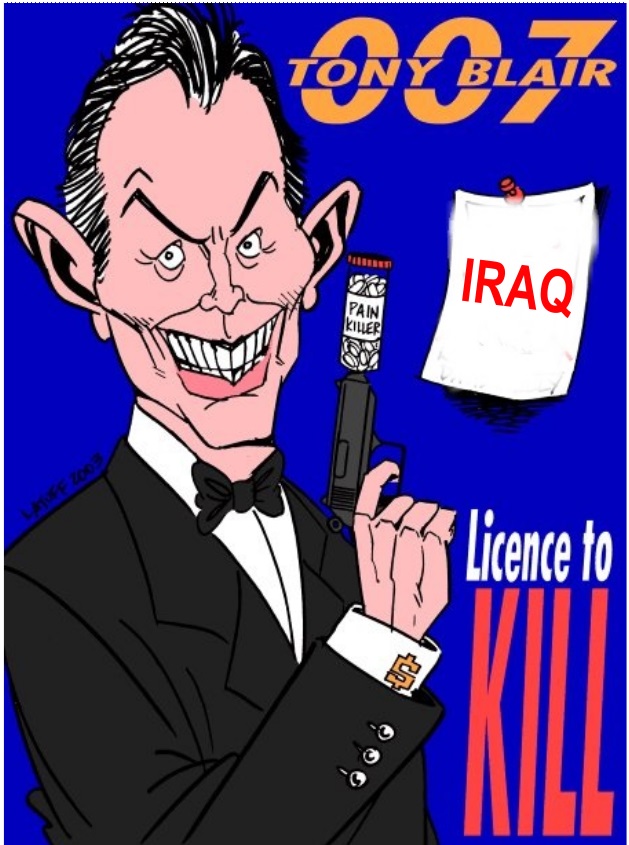
His handling of the Iraq war as premier of the UK, as well as his dealings with a string of autocrats, has left him deeply unpopular across the globe.
Proposed transitional authority will have global billionaires and businesspeople at top and Palestinians at bottom, according to leaked draft
Middle East Eye, By Rayhan Uddin, 29 September 2025
An unlikely answer has been found for who should lead the process of running Gaza after Israel’s genocidal war: Tony Blair.
It was revealed last week that the former British prime minister – a controversial figure in the Middle East, to say the least – was being considered to lead a transitional authority in the enclave.
Haaretz has now published a leaked draft plan of what Gaza would look like under Blair’s initiative.
The plan reveals a hierarchy in which an international board of billionaires and businesspeople sit at the top, while highly vetted “neutral” Palestinian administrators are at the bottom.
It sets out a three-year plan, budgeted at $90m in the first year, $134m in the second and $164m in the third (these are solely management expenses, and don’t include reconstruction or aid).
The administration would work closely with Israel, Egypt and the US, and, according to Israeli sources cited by Haartez, has the backing of the White House.
Middle East Eye breaks down key highlights from the 21-page leaked document.
Board of billionaires
Gaza International Transitional Authority, or Gita, is the name given to the new institution which will administer the Palestinian enclave.
According to the draft, Gita will be run by an international board which has “supreme political and legal authority for Gaza during the transitional period”.
The board will be in charge of all appointments, and supervise every component of the authority.
It will be made up of between seven and 10 members, including a chair.
The board will include a senior UN official, with Sigrid Kaag, the UN’s special coordinator for the Middle East peace process, cited as an example.
It would also include “leading international figures with executive and financial expertise”.
Three names are cited as potential candidates: Marc Rowan, a billionaire who owns one of America’s largest private equity firms, Naguib Sawiris, an Egyptian billionaire in the telecommunications and technology sector, and Aryeh Lightstone, chief executive of the Abraham Accords Peace Institute.
Lightstone was a senior adviser to David Friedman, a staunch defender of Israel’s illegal settlement movement, when he was US ambassador to Israel between 2017 and 2021 under Donald Trump’s first administration.
According to Haaretz, he was also deeply involved in the creation of the highly controversial Gaza Humanitarian Foundation.
Not every single board member will be a billionaire or have links to Israel or America.
There will be “at least one qualified Palestinian representative”, potentially coming from the “business or security sector”. It wasn’t made clear what “qualified” means.
And finally, the document said that the board would have “a strong representation of Muslim members to ensure regional legitimacy and cultural credibility”.
These Muslim figures would ideally have the political support of their countries, but also “long standing business credibility”.
Members of the board would be “nominated by contributing states and confirmed through a process coordinated by the UN”.
The board would report to the UN Security Council, which would ultimately grant it authority to carry out its functions.
The Security Council currently includes non-permanent members that have been highly critical of Israel’s genocide in Gaza, such as Algeria, Pakistan and Slovenia, in addition to permanent members Russia and China.
It would be interesting to see if these countries would approve a transitional government in Gaza run mostly by non-Palestinian billionaires and business figures.
The chairman (probably Blair)
Various media outlets have reported that Blair is being touted to be the chair of the transitional authority, though his name is not mentioned in the draft.
Public-private partnerships to run government projects, one of Blair’s hallmark policies as prime minister of the UK, is mentioned in the document.
According to the draft plan, the chairman will serve as the “senior political executive, principal spokesperson, and strategic coordinator for the entire transitional authority”.
They would be appointed through “international consensus” and endorsement by the UN Security Council. There is no mention of Palestinian consensus in choosing them.
If Blair is indeed the proposed chairman, he may have his work cut out gaining “international consensus” for his appointment.
His handling of the Iraq war as premier of the UK, as well as his dealings with a string of autocrats, has left him deeply unpopular across the globe.
The chair will represent Gita “in all diplomatic, donor and intergovernmental forums”. They will also lead “strategic security diplomacy” with other actors, “including Israel, Egypt and the United States”.
The document notes that initially, Gita’s senior officials won’t be in Gaza. ………………………………………………………………………………………………………………………………………………………………………
Palestinian Executive Authority, with little authority
Despite the name, the Palestinian Executive Authority, at the bottom of the hierarchy, has little to no independent authority.
It is separate from the PA, which administers parts of the occupied West Bank…………………………………………
It’s notable that the language used for all roles throughout the document, like board, chairman and CEO, reflects a business structure rather than a country or territory.
The Palestinian CEO will lead the process of identifying “directors” (not ministers) to head up the various departments like health, education, infrastructure and planning. …..
The international board of billionaires and businesspeople will have the final say on appointments “to safeguard institutional legitimacy and independence”.
“All department heads are subject to performance review and can be dismissed or replaced in accordance with transitional governance procedures,” the document notes.
An Israeli source told Haaretz that the Palestinian Executive Authority would be completely subordinate to the board and have no independent authority.
As such, it would be far weaker than the technocratic administration set out in a joint Arab plan led by Egypt earlier this year.
Below the Palestinian Executive Authority are a number of municipal roles related to the running of local public services and utilities. ………………………………………………………….. https://www.middleeasteye.net/news/breakdown-tony-blairs-bizarre-proposal-run-gaza
Will Tony Blair rule over Gaza?

Declassified UK, 2 Oct 25, John McEvoy
This week, US president Donald Trump unveiled his 20-point “comprehensive plan to end the Gaza conflict”. The plan aims, in effect, to help Israel to achieve diplomatically what it has failed to achieve militarily: the neutering of armed resistance, the dismembering of Hamas, and the removal of political agency from Palestinians in Gaza. The first point notes that “Gaza will be a deradicalized terror-free zone that does not pose a threat to its neighbors”, and it later says that “all military, terror, and offensive infrastructure” in the strip “will be destroyed and not rebuilt”. The document also implicitly acknowledges that the Israeli government has been collectively punishing the Palestinian population by refusing to allow aid into the besieged enclave. |
“Upon acceptance of this agreement, full aid will be immediately sent into the Gaza strip”, says point seven. “Entry and distribution of aid in the Gaza strip will proceed without interference”.
But perhaps most remarkably, Trump’s so-called peace plan includes a proposal for Gaza to be “governed under the temporary transitional governance of a technocratic, apolitical Palestinian committee”.
This committee would be “made up of qualified Palestinians and international experts, with oversight and supervision by a new international transitional body” chaired by Trump alongside former UK prime minister Tony Blair.
Blair’s credentials for promoting peace in the Middle East are far from impeccable.
After sponsoring the illegal war on Iraq in 2003 – which ignited violence and extremism across the region – Blair worked for the Quartet on the Middle East, an unsuccessful attempt at mediating the Israeli-Palestinian peace process. The former prime minister has also been historically sympathetic to Israel’s interests. “I have never actually found it hard to be a friend of Israel, I am proud to be a friend of Israel”, Blair told a Labour Friends of Israel reception in September 2006.More concerningly, Blair is now closely linked to pro-Israel businessmen. |
Larry Ellison, a US tycoon who has donated millions to the Israel Defence Forces, is one of the key funders of the Tony Blair Institute, having pledged around $500m over recent years.
None of this appears to worry Keir Starmer, who came out in support of Trump’s plan, saying it “is profoundly welcome and I am grateful for President Trump’s leadership”.
Trump says Hamas has “three or four days” to respond to the proposal, saying the group will “pay in hell” if it rejects the deal.
But Hamas looks unlikely to accept it. A senior official told the BBC that the group will reject the plan, claiming it “serves Israel’s interests and ignores those of the Palestinian people”.
Blair’s campaign to profit from the rubble of Gaza, then, is far from a done deal.
Trump’s 20-Point Gamble: A bold bid to end the Gaza War – or a recipe for stalemate?
30 September 2025 Roswell AIM Extra, https://theaimn.net/trumps-20-point-gamble-a-bold-bid-to-end-the-gaza-war-or-a-recipe-for-stalemate/
In the sweltering corridors of power at the White House, where deals are struck and destinies rewritten over Diet Cokes and classified briefings, President Trump has once again thrust himself into the heart of the Middle East maelstrom. On September 29, 2025, flanked by Israeli Prime Minister Benjamin Netanyahu, Trump unveiled a sweeping 20-point plan aimed at halting Israel’s relentless war on Gaza – a conflict that has claimed over 66,000 Palestinian lives and left the enclave in rubble since October 2023.
With characteristic bombast, Trump declared the proposal “tremendous,” a “game-changer” that could usher in “greatness in the Middle East,” while Netanyahu nodded in apparent agreement, vowing Israel’s full backing if Hamas balks.
Here is the full text of the peace proposal:
- Gaza will be a deradicalised terror-free zone that does not pose a threat to its neighbours.
- Gaza will be redeveloped for the benefit of the people of Gaza, who have suffered more than enough.
- If both sides agree to this proposal, the war will immediately end. Israeli forces will withdraw to the agreed upon line to prepare for a hostage release. During this time, all military operations, including aerial and artillery bombardment, will be suspended, and battle lines will remain frozen until conditions are met for the complete staged withdrawal.
- Within 72 hours of Israel publicly accepting this agreement, all hostages, alive and deceased, will be returned.
- Once all hostages are released, Israel will release 250 life sentence prisoners plus 1,700 Gazans who were detained after October 7th 2023, including all women and children detained in that context. For every Israeli hostage whose remains are released, Israel will release the remains of 15 deceased Gazans.
- Once all hostages are returned, Hamas members who commit to peaceful co-existence and to decommission their weapons will be given amnesty. Members of Hamas who wish to leave Gaza will be provided safe passage to receiving countries.
- Upon acceptance of this agreement, full aid will be immediately sent into the Gaza Strip. At a minimum, aid quantities will be consistent with what was included in the January 19, 2025, agreement regarding humanitarian aid, including rehabilitation of infrastructure (water, electricity, sewage), rehabilitation of hospitals and bakeries, and entry of necessary equipment to remove rubble and open roads.
- Entry of distribution and aid in the Gaza Strip will proceed without interference from the two parties through the United Nations and its agencies, and the Red Crescent, in addition to other international institutions not associated in any manner with either party. Opening the Rafah crossing in both directions will be subject to the same mechanism implemented under the January 19, 2025, agreement.
- Gaza will be governed under the temporary transitional governance of a technocratic, apolitical Palestinian committee, responsible for delivering the day-to-day running of public services and municipalities for the people in Gaza. This committee will be made up of qualified Palestinians and international experts, with oversight and supervision by a new international transitional body, the “Board of Peace,” which will be headed and chaired by President Donald J Trump, with other members and heads of State to be announced, including Former Prime Minister Tony Blair. This body will set the framework and handle the funding for the redevelopment of Gaza until such time as the Palestinian Authority has completed its reform program, as outlined in various proposals, including President Trump’s peace plan in 2020 and the Saudi-French proposal, and can securely and effectively take back control of Gaza. This body will call on best international standards to create modern and efficient governance that serves the people of Gaza and is conducive to attracting investment.
A Trump economic development plan to rebuild and energize Gaza will be created by convening a panel of experts who have helped birth some of the thriving modern miracle cities in the Middle East. Many thoughtful investment proposals and exciting development ideas have been crafted by well-meaning international groups, and will be considered to synthesize the security and governance frameworks to attract and facilitate these investments that will create jobs, opportunity, and hope for future Gaza.- A special economic zone will be established with preferred tariff and access rates to be negotiated with participating countries.
- No one will be forced to leave Gaza, and those who wish to leave will be free to do so and free to return. We will encourage people to stay and offer them the opportunity to build a better Gaza.
- Hamas and other factions agree to not have any role in the governance of Gaza, directly, indirectly, or in any form. All military, terror, and offensive infrastructure, including tunnels and weapon production facilities, will be destroyed and not rebuilt. There will be a process of demilitarization of Gaza under the supervision of independent monitors, which will include placing weapons permanently beyond use through an agreed process of decommissioning, and supported by an internationally funded buy back and reintegration program all verified by the independent monitors. New Gaza will be fully committed to building a prosperous economy and to peaceful coexistence with their neighbors.
- A guarantee will be provided by regional partners to ensure that Hamas, and the factions, comply with their obligations and that New Gaza poses no threat to its neighbors or its people.
- The United States will work with Arab and international partners to develop a temporary International Stabilization Force (ISF) to immediately deploy in Gaza. The ISF will train and provide support to vetted Palestinian police forces in Gaza, and will consult with Jordan and Egypt who have extensive experience in this field. This force will be the long-term internal security solution. The ISF will work with Israel and Egypt to help secure border areas, along with newly trained Palestinian police forces. It is critical to prevent munitions from entering Gaza and to facilitate the rapid and secure flow of goods to rebuild and revitalize Gaza. A deconfliction mechanism will be agreed upon by the parties.
- Israel will not occupy or annex Gaza. As the ISF establishes control and stability, the [Israeli military] will withdraw based on standards, milestones, and timeframes linked to demilitarization that will be agreed upon between the [Israeli military], ISF, the guarantors, and the Unites States, with the objective of a secure Gaza that no longer poses a threat to Israel, Egypt, or its citizens. Practically, the [Israeli military] will progressively hand over the Gaza territory it occupies to the ISF according to an agreement they will make with the transitional authority until they are withdrawn completely from Gaza, save for a security perimeter presence that will remain until Gaza is properly secure from any resurgent terror threat.
- In the event Hamas delays or rejects this proposal, the above, including the scaled-up aid operation, will proceed in the terror-free areas handed over from the [Israeli military] to the ISF.
- An interfaith dialogue process will be established based on the values of tolerance and peaceful co-existence to try and change mindsets and narratives of Palestinians and Israelis by emphasizing the benefits that can be derived from peace.
- While Gaza re-development advances and when the PA reform program is faithfully carried out, the conditions may finally be in place for a credible pathway to Palestinian self-determination and statehood, which we recognize as the aspiration of the Palestinian people.
- The United States will establish a dialogue between Israel and the Palestinians to agree on a political horizon for peaceful and prosperous co-existence.
Yet, as the ink dries on this audacious blueprint – floated last week to leaders from Qatar, Saudi Arabia, Egypt, and beyond at the UN General Assembly – the devil lurks in the details, and Hamas has yet to even receive a written copy. The plan nods to Palestinian aspirations for statehood, a pathway Netanyahu has long scorned, while offering amnesty to Hamas fighters who swear off violence and exile for the rest – echoing Trump’s first-term Abraham Accords but with a sharper edge of coercion.
Trump’s optimism is infectious: “Everyone else has accepted it,” he boasted, hinting at full U.S. support for Israel to “do what you have to do” if talks falter. But with Gaza City under fresh bombardment and over 700,000 displaced in recent escalations, the question hangs heavy: Is this a genuine olive branch, or another high-stakes poker game where the Palestinians hold the weakest hand? As the world watches, the stakes couldn’t be higher.
Palestinian Subordination: Donald Trump’s Gaza Peace Plan
2 October 2025 Dr Binoy Kampmark, https://theaimn.net/palestinian-subordination-donald-trumps-gaza-peace-plan/
He had moments of discomfort and embarrassment – pressed into calling the Qatari Prime Minister by his host to apologise for striking Doha and made to pay lip service to the prospect of a Palestinian state – but Israel’s Benjamin Netanyahu had many reasons to be pleased. On September 29, President Donald Trump advanced a peace proposal that essentially preservesIsraeli pre-eminence regarding the fate of Palestinians, though it entails a cessation of hostilities, an affirmation that Gazans would not be expelled (those leaving would have the right to return), and an injunction against Israeli annexation of the Strip. But Hamas, militarily and politically, would have to surrender all claims, with the Palestinian Authority shepherded and supervised by foreign powers.
Trump’s peace proposal comprises twenty points. They include a “deradicalized terror-free zone,” Gaza’s redevelopment for the benefit of its people aided by “a panel of experts who have helped birth some of the thriving miracle cities in the Middle East,” and an immediate end to the war on its acceptance by the parties. Israel would withdraw to an agreed upon line in anticipation of a hostage release, during which all military operations would cease pending complete withdrawal. All hostages, dead and alive, would be returned within 72 hours, to be followed by the release of 250 Palestinian life sentence prisoners and Gazans detained since October 7, 2023.
Hamas and militant factions will forfeit any role in governing Gaza, with any offensive infrastructure and equipment destroyed, but any of its members wishing to commit to “peaceful co-existence” and decommissioning of weapons will be granted amnesty, with those wishing to leave given safe passage to receiving countries. Compliance by the militant group will be overseen by “regional partners.” Full aid would resume, with the UN and Red Crescent restored to their role as chief distributors.
On the issue of governance, a temporary technocratic “apolitical Palestinian committee” of qualified Palestinians and “international experts” would form a temporary transitional body, subject to a “Board of Peace” personally chaired by Trump. Most unfortunately, it is likely to include such figures as Sir Tony Blair, the Middle East’s typhoid Mary when it comes to peace. The transitional authority would hold the reins till reforms by the Palestinian Authority had been completed. With immediacy, however, the US would work with Arab and international partners to deploy an “International Stabilisation Force” to Gaza. The ISF will be responsible for training Palestinian police forces and provide support in terms of vetting recruits, with assistance from Jordan and Egypt.
The proposal clearly envisages a significant role for the ISF, though says about who will comprise it. Israel will not, under the plan, occupy or annex Gaza, surrendering what territory it has taken to the ISF. Even if Hamas were to delay or reject the proposal, the Israeli Defense Forces would still hand over occupied territory of “terror-free areas” to the stabilisation force but retain a security perimeter to stem “any resurgent terror threat.”
The plan also envisages the establishment of an interfaith dialogue to promote the values of peace between the parties, and a “credible pathway to Palestinian self-determination and statehood” if the programs for Gaza’s redevelopment and PA reform take place as planned. A vague US promise to “establish a dialogue” between Israel and the Palestinians regarding peaceful and prosperous co-existence rounds off the points.
There was palpable grumbling from the Israeli camp. Netanyahu undoubtedly harbours ambitions of finishing “the job”, and there is little to say the war will not resume once the Israeli hostages are returned. Having previously rejected any governing role of the Palestinian Authority in Gaza, he now reluctantly accepts the idea subject to a “radical and genuine overhaul” of the body.
Finance Minister Bezalel Smotrich, one of the right-wing heavies in the Israeli cabinet, is threatening to withdraw his Religious Zionist Party from the coalition. Agreeing with the plan had been “an act of wilful blindness that ignores every lesson of October 7.” It would only “end in tears.” Fellow zealot, National Security Minister Itamar Ben-Gvir, is also likely to be seething.
Opposition leader Yair Lapid is also suspicious of Netanyahu, who tends to say “yes” when visiting Washington, “standing in front of the cameras at the White house, feeling like a breakthrough statesman.” On returning to Israel, however, he always seemed to add a qualifying “but”, his political base always reminding him “who the boss is.”
In keeping with history, the Trump plan, even if it were to be implemented to the letter, enshrines the essential subordination of Palestinian goals to the dictates of other powers. Palestinian military presence is not only to be curtailed but essentially eliminated altogether. Hamas, never consulted regarding the peace terms, is to accept its own effacing. The PA is to accept its own subservience and infantilisation. The Gazans are also to accept an economic and development program dictated and directed from without. Statehood is to be kept in cold storage till appropriate, controlled conditions for its release are approved – and certainly not by the Palestinians themselves. They, it would seem, remain the considered errant children of international relations, mistrusted and requiring permanent, stern invigilation.
Britain recognises Palestine. Now what?
| Declassified, UK 25 Sept 25 This week, UK prime minister Keir Starmer announced that Britain has officially recognised the state of Palestine. The Labour government had previously said it would only use the threat of recognition to pressure Israel to agree to a ceasefire and allow aid into Gaza .This clearly didn’t work and, amid mounting public pressue, the UK joined the Canadian, Australian, and Portuguese governments in recognising Palestine based on 1967 borders. Foreign Office maps have now been updated to include Gaza and the West Bank as “Palestine” rather than the “Occupied Palestinian Territories”. Benjamin Netanyahu responded to the move with fury, vowing that a Palestinian state “will not happen” and claiming the move “endangers our existence and constitutes an absurd reward for terrorism”. The Israeli prime minister found sympathy in British circles, with Nigel Farage sending his condolences and Tory party leader Kemi Badenoch calling the move “absolutely disastrous”. But what does recognition actually mean? For starters, it will not mean that Palestinians have the right to defend themselves from Israel – a right that is apparently exclusively available to the Israelis. “Our position is clear”, wrote Starmer in Israeli media outlet Ynet. “The Palestinian state must be demilitarised. It will have no army or air force”. Israel will thus continue to control the land, sea, and air borders around Palestine, signifiying no meaningful change in the current status quo. The Palestinians will also be deprived of their right to self-determination, with Starmer stressing that “Hamas can have no future” in Palestine, including “no role in government” or security. So what is Britain actually recognising? As Ilan Pappé recently wrote in Declassified, “geographically recognising [Palestine in its current state] is tantamount to recognising a disempowered political entity stretching over less than 20 percent of the West Bank”. There are currently more than 800,000 Jewish settlers in the West Bank, with more settlements being approved by the Israeli government and extremist ministers pushing for annexation of the area. Gaza, meanwhile, has been razed to the ground. In these circumstances, Britain’s recognition of Palestine looks more like empty gesture politics than a statement of intent to change the material reality on the ground. Indeed, it is difficult to take Starmer seriously when the UK continues to arm Israel and send spy flights over Gaza, while refusing to impose a trade ban on products from illegal settlements. Rather than helping to bring a new Palestinian reality into being, then, Starmer appears to be recognising a cadaver that the UK government had a hand in killing. |
Here’s What Life Is Like Inside One of Gaza’s Last Remaining Hospitals
Inside al-Wafa Rehabilitation Hospital, starving doctors still fight to keep patients alive.
By Sara Awad , Truthout September 20, 2025, https://truthout.org/articles/heres-what-life-is-like-inside-one-of-gazas-last-remaining-hospitals/
In the heart of a city at war, al-Wafa Rehabilitation Hospital struggles to survive. This site of healing and recovery has now been transformed into a place overwhelmed by cruel suffering.
Please don’t be fooled by the Israeli military propaganda that has asserted that this “building does not currently serve as a hospital” — an assertion conveniently circulated by The Jerusalem Post in December 2024, as the Israeli military sought to deflect criticism of its decision to bomb the hospital. Many credible sources verify how ludicrous that claim is, from the images that Getty’s photojournalists took following that bombing, to the World Health Organization’s appeal for an end to Israel’s attacks on this and other hospitals in Gaza.
From March to May 2025, I lived within the hospital’s walls as a caregiver to my mother. I witnessed how al-Wafa held so much pain in its rooms and corners. From children to the elderly, each patient carries their own devastating injury. When I returned to the hospital three months later as a guest, I observed how much more crowded it had become, with a massive number of patients seeking treatment. I interviewed the medical team and injured patients. This is the story of a hospital pushed to its extreme limits, and of the patients who continue to resist and survive inside it.
The hospital atmosphere now is more suffocating than before. Everywhere you look, you will see someone suffering. Hospital beds are full of tiny bodies of different ages and genders. No one can walk, all are sitting in their wheelchairs due to injuries that left them paralyzed. Being able to walk while everyone around you cannot is emotionally distressing and isolating.
“We cannot offer the bare minimum for the patients,” said Dr. Wael Khalif, director of al-Wafa hospital. The hospital is running out of nearly all medical equipment, from needles to surgical devices. Dr. Khalif described the overwhelming situation, with a massive number of patients on the waitlist to have care from the only rehabilitation hospital still functioning in Gaza, “There are 100 top urgent [patients] needing a bed, while another 400 to 500 patients are also waiting to be admitted,” the hospital director said.
The hospital is running out of nearly all medical equipment, from needles to surgical devices.
Dr. Khalif shed light on the catastrophic consequences of starvation inside the hospital. “Even healthy people are struggling to endure hunger and lack of proper nutrition, so imagine what’s happening for patients suffering from serious illnesses,” he said. Many patients are unable to receive even one meal per day. “Since the starvation period has begun, we are helpless to provide food for our patients,” he added.
And it’s not just the patients facing starvation; the medical staff also cannot endure more suffering. They are exhausted, overwhelmed, and unable to afford services for their patients. “Many of the nursing staff are struggling with dizziness during their duties at the hospital,” said Dr. Khalif.
This disaster is deeply impacting nursing staff. Their hearts are breaking into a million pieces watching their patients dying of hunger and lack of proper care. “I wish I could offer food for my patients. I cannot offer even the smallest amount of food for them,” said Wesam Al-Shawa, 26, a nurse at al-Wafa hospital. She looked completely helpless, and I noticed the exhaustion in her eyes as she spoke.
The hospital’s physical therapist is also working under immense pressure. “We receive approximately 60 to 75 patients per day,” said Dr. Samah Awida, a physical therapist at al-Wafa. This huge number of patients seeking physical therapy sessions has taken a serious toll on the medical team as the situation continues to worsens.
“Many of the nursing staff are struggling with dizziness during their duties at the hospital.”
To make conditions even more unbearable, patients who reach the final stage of recovery are likely going to live in a tent with nothing more than an uninhabitable floor and a small space to sleep in, and, if they are lucky, access to a bathroom. “Our efforts go to waste when patients end up living in a tent,” Dr. Samah said, her tired eyes telling me everything.
Amid these collapsing systems, there is a girl with a story that should never have to be told: Dania Amara.
Five-year-old Dania is among the injured patients. She was wounded while playing with other children on July 7, 2025. “Her body was full of blood,” Dania’s mother recalled. Dania had injuries all over; small shrapnel tore at her small body and caused a paralysis of the limbs. “Why did Israel attack me? I was just playing around,” Dania asked her mother as I was interviewing her.
August 18, when I spoke to her, was Dania’s 40th day in the hospital. She dreams of going home to her siblings, walking again, painting, and enjoying proper meals. “My daughter is now disabled because of one piece of shrapnel,” her mother said.
Dania is just like any other child — full of innocence and life — but Israel has stolen that normalcy and turned her world upside down.
“She hits her legs and begs them to walk like before,” her mother said, tears filling her eyes. Dania’s injury has changed her life forever, and she is just one of thousands suffering as she does, most without documentation or recognition.
Only in Gaza’s hospitals can you watch childhood be stolen by war crimes.
Beyond physical rehabilitation, the occupational therapy department is facing its own obstacles in silence.
While the physical therapy sessions help patients to recover and potentially walk again, occupational rehabilitation helps them to live again. This department helps patients to be completely independent, hold spoons, brush their hair, dress themselves independently, and attend to other needs without assistance. “We do our utmost effort to give back life to our patients,” said Basam Alwan, a therapist in the department.
Hadeel Qriaqa, 27, is one of the many patients struggling to rebuild her life at al-Wafa. She sustained severe head trauma during an attack on her home in March 2025. Since then, she has lost much of her memory and the ability to speak.
Now, she attends occasional occupational therapy sessions with Dr. Alwan aimed at helping her relearn basic daily skills and regain some independence.
Al-Wafa rehabilitation hospital and its medical staff have displayed immense resilience amid the war. Despite all difficulties facing them, they are still fighting to keep their work alive two years into a genocide. The world must not continue to ignore their suffering.
The future of Gaza as seen from the White House

the Gaza Strip would be “administered by the United States for at least 10 years while it is transformed into a glittering tourist resort and a center for high-tech manufacturing and technology.”
The future Gaza project, according to its real estate developers (the three professionals Jared Kushner, Donald Trump, and Steve Witkoff), is worthy of Dubai. Many transnational corporations have already joined forces.
by Thierry Meyssan, Voltaire Network | Paris (France) | 3 September 2025, https://www.voltairenet.org/article222723.html
This possible operation is in line with the vision of the “Jacksonians.” In 1830, President Andrew Jackson (1829-1837) enacted the Indian Removal Act. To end the Indian wars, he proposed assigning them reservations rather than continuing to massacre them. The transfer of the Indians was particularly deadly for the Cherokees (the “Trail of Tears” episode), but they accepted this form of peace, while almost all other Indian tribes rejected it. Two centuries later, only the Cherokee tribe has become wealthy and integrated, while all the other tribes have been marginalized. Without a doubt, Jackson’s method succeeded in ending the genocide of the Indians, but at what cost?
Trump’s plan, currently in development, is just as shocking to Palestinians as Jackson’s was to the Cherokee, but it offers a solution where no one else has. Will Palestinians, who have been fighting for generations to assert their rights, be satisfied with this? International law states that no people can be expelled from their own land. The United Nations General Assembly has consistently guaranteed the right of return for those who were forcibly expelled in 1948—UN General Assembly Resolution 194 (December 11, 1948) and UN Security Council Resolution 237 (June 14, 1967). Seven years ago, Palestinian civilians organized the “March of Return.” The Israel Defense Forces (IDF) fired on a peaceful crowd, killing at least 120 people and wounding 4,000. It is obviously illusory to believe that such a people will easily rally to this project.
So the participants at the White House meeting considered paying $23,000 per person to any family willing to go into exile. Contacts have already been made with Libya, Ethiopia, South Sudan, Indonesia, and Somaliland, although none of these states has confirmed this. The Trump team is considering voluntarily relocating a quarter of the Gaza population in this way.
According to the Financial Times, the Tony Blair Institute for Global Change (TIT) and the Boston Consulting Group (BCG) held joint working meetings on the Gaza Riviera project, known as The Gaza Reconstitution, Economic Acceleration and Transformation Trust (GREAT* Trust). It was during these preparatory meetings that the Gaza Humanitarian Foundation (GHF) project was born. During the summer, this Swiss-registered foundation distributed humanitarian aid in Gaza instead of the occupying authority, the United Nations, the International Red Cross, and various humanitarian associations. This certainly bypassed Hamas, but it also led to the IDF killing nearly a thousand civilians who had come to seek food aid. The GHF scandal was unanimously condemned, including by prominent Israeli Jews. In practice, the GHF was created by the Mikveh Yisrael Forum, bringing together Yotam HaCohen, strategic advisor to Benjamin Netanyahu and son of former General Gershon HaCohen, Liran Tankman, a former intelligence officer who switched to high-tech, and Michael Eisenberg, an Israeli-American venture capitalist. Most of the leaders of the Mikveh Yisrael Forum have joined the Coordinator of Government Activities in the Territories (COGAT), Ghassan Alian, convinced that the Netanyahu government is doing nothing to help the people of Gaza and that it is up to the Israelis to take action.
TRIAL International, a Swiss-based NGO, has filed two legal submissions asking the Swiss authorities to investigate the GHF’s compliance with Swiss law and international humanitarian law. The central issue raised by TRIAL International is whether humanitarian organizations can use private military companies. From the outset, GHF’s executive director, former US Marine Jake Wood, resigned. The “Foundation” then enlisted the services of Philip F. Reilly and his company Safe Reach Solutions. However, Reilly is a former soldier in the 7th Special Forces Group, which focused on counter-narcotics missions in Latin America. He became head of the CIA’s paramilitary branch, then known as the Special Activities Division but renamed the Special Activities Center. He was head of the CIA’s Afghan station around 2008 and 2009, as well as head of operations for the agency’s Counterterrorism Mission Center, which led the agency’s highly controversial drone strike program during the War on Terror. He then joined the private sector as senior vice president of special operations for the private military company Constellis, owner of the mercenary company formerly known as Blackwater. Finally, he worked for another private army, Orbis. While it is true that the IDF did not kill the Palestinian civilians who came to look for food, Philip F. Reilly’s men did.
The future Gaza project, according to its real estate developers (the three professionals Jared Kushner, Donald Trump, and Steve Witkoff), is worthy of Dubai. Many transnational corporations have already joined forces.
President Donald Trump, who had rebuffed Benjamin Netanyahu when he came to ask him to annex Gaza, is now preparing to take control of the Palestinian territory. While Tel Aviv is preparing to annex the entire Mandate of Palestine and, on the contrary, Egypt and Jordan are preparing to hand over the keys to the Palestinian Authority, a vast $100 billion real estate operation is being planned
In August 27, President Donald Trump convened a meeting at the White House to gather suggestions for the future of Gaza. In attendance were JD Vance, Vice President; Steve Witkoff, Special Envoy; Marco Rubio, Secretary of State; Jared Kushner, former advisor during the first term; Tony Blair, former British Prime Minister; and Ron Dermer, Israeli Minister of Strategic Affairs.
No statement was released after this consultation. However, according to the Washington Post, the Gaza Strip would be “administered by the United States for at least 10 years while it is transformed into a glittering tourist resort and a center for high-tech manufacturing and technology.” A colossal $100 million would be invested there.
To facilitate the regrouping of Gazans, Benjamin Netanyahu’s revisionist Zionist government has given instructions to create a tent city for 600,000 people in Rafah. They would have food and hospitals, but would not be able to leave.
Bezalel Smotrich, Minister of Finance, said at a conference on Jewish settlement in the occupied West Bank on May 14: “Civilians will be sent south to a humanitarian zone, and from there they will begin to leave in large numbers for third countries.”
The Prime Minister himself finally made the decision on August 13 on i24News in Hebrew. He claimed a “historic and spiritual mission,” assuring that he is ‘very’ attached to the vision of a “Greater Israel.” At 75, he publicly claims to be a follower of his father’s mentor, Vladimir Jabotinsky, the founder of “revisionist Zionism.”
At the same time, on July 23, the Knesset passed a non-binding law by 71 votes to 13, calling on the government to annex the West Bank before new permanent members of the UN Security Council fully recognize the State of Palestine.
In addition, the IDF reports that 618 settler attacks were recorded in the West Bank in 2024, compared to 404 in the first half of 2025.
Republican Mike Johnson, Speaker of the US House of Representatives, has expressed his support for annexation. He visited the Ariel settlement in early August 2025 and said he believed that “Judea and Samaria” belonged to the Jewish people and expressed his support for the extension of Israeli sovereignty over the West Bank. This was the first time that a US figure of this stature had visited Israeli settlements in the West Bank. The Trump administration is currently keeping a cautious distance from this movement, especially as it is focusing all its efforts on strengthening the Abraham Accords with Arab states.
According to a December 2024 survey by the Institute for National Security Studies, 34% of the Israeli public rejects the annexation of Palestinian territories, 21% supports annexing the current settlements, and 21% supports annexing everything.
For their part, Egypt and Jordan, unwilling to believe this, continue to train hundreds of young Palestinians loyal to Fatah to form a 10,000-strong private security force to put the Palestinian Authority in power in Gaza. Meanwhile, Saudi Arabia and France plan to fully recognize the State of Palestine at the UN General Assembly, which is preparing to proclaim its independence.
Main sources :………………………………….
Israel has officially moved on from destroying Hamas to erasing Palestine

By Murad Sadygzade, President of the Middle East Studies Center, Visiting Lecturer, HSE University (Moscow), 5 Sept 25, https://www.rt.com/news/624181-israel-hamas-erase-palestine/
Despite objections from across the world, Netanyahu’s government is redrawing the map with tank tracks.
In early August, Benjamin Netanyahu dispelled any lingering ambiguity. In a direct interview with Fox News, he made explicit what had long been implied through diplomatic euphemisms: Israel intends to take full military control of the Gaza, dismantle Hamas as a political and military entity, and eventually transfer authority to a “non-Hamas civilian administration,” ideally with Arab participation.
“We’re not going to govern Gaza,” the prime minister added. But even then, the formula of “seize but not rule” read more like a diplomatic veil for a much harsher course of action.
The very next day, Israel’s security cabinet gave formal approval to this trajectory, initiating preparations for an assault on Gaza City. The UN secretary-general responded swiftly, warning that such an operation risked a dangerous escalation and threatened to normalize what had once been an avoidable humanitarian catastrophe.
August exposed the war in its most unforgiving clarity. Strikes on Zeitoun, Shuja’iyya, Sabra, and operations in the Jabalia area became a part of the daily rhythm. The encirclement of Gaza City tightened slowly but relentlessly. Brigadier General Effi Defrin confirmed the launch of a new phase, with troops reaching the city’s outskirts. At the same time, the government called up tens of thousands of reservists in a clear signal that Israel was prepared to take the city by force, even if the window for a negotiated pause technically remained open.
In this context, talk of “stabilization” rings hollow. Infrastructure lies in ruins, the healthcare system is on the verge of collapse, aid lines often end under fire, and international monitoring groups are recording signs of impending famine. The conflict is no longer a conventional war between armies. It is taking on the contours of a managed disintegration of civilian life.
But Gaza is not the whole picture. On the West Bank, the logic of military control is being formalized both legally and spatially. On July 23, the Knesset voted by majority to adopt a declaration advocating the extension of Israeli sovereignty over Judea, Samaria, and the Jordan Valley. While framed as a recommendation, the move effectively normalizes institutionalizing the erosion of previously drawn red lines.
It is within this framework that the E1 plan of Israeli settlements in the West Bank must be understood as a critical link in the eastern belt surrounding Jerusalem. On August 20, the Higher Planning Committee of the Civil Administration gave the green light for the construction of over 3,400 housing units between East Jerusalem and Ma’ale Adumim. For urban planners, it’s about “filling in the gaps” between existing developments. For policymakers and military officials, it represents a strategic pivot.
First, E1 aims to create a continuous Jewish presence encircling Jerusalem and to merge Ma’ale Adumim into the city’s urban fabric. This reinforces the eastern flank of the capital, provides strategic depth, and secures Highway 1 – the vital corridor to the Dead Sea and the Jordan Valley.
Second, it severs East Jerusalem from its natural Palestinian hinterland. E1 physically blocks the West Bank’s access to the eastern part of the city, cutting East Jerusalem off from Ramallah in the north and Bethlehem in the south.
Third, it dismantles the territorial continuity of any future Palestinian state. Instead of a unified space, a network of isolated enclaves emerges – linked by bypass roads and tunnels that fail to compensate for the loss of direct access to Jerusalem, both symbolic and administrative.
Fourth, it seeks to shift the debate over Jerusalem’s status from the realm of diplomacy into the realm of irrevocable facts. Once the eastern belt is built up, the vision of East Jerusalem as the capital of a Palestinian state becomes almost impossible to realize.
Finally, E1 embodies two opposing principles: for Israelis, a “managed continuity” of control; for Palestinians, a “managed vacuum” of governance. One side gains an uninterrupted corridor of dominance, the other is left with a fragmented territory and diminished prospects for self-determination.
It is no surprise, then, that international reaction was swift and unambiguous from the UN and EU to London and Canberra. Finance Minister Bezalel Smotrich, commenting on the launch of E1, said out loud what the maps had already suggested: the project would “bury” the idea of a Palestinian state.
In an August broadcast on i24News, Netanyahu said he feels a “strong connection” to the vision of a “Greater Israel.” For Arab capitals this was a confirmation of his strategic maximalism. The military campaign in Gaza and the planning-led expansion in the West Bank aren’t two parallel tracks, but parts of a single, integrated agenda. The regional response was swift and uncompromising from Jordanian warnings to collective condemnation from international institutions.
The broader picture reveals deliberate design: In Gaza, forced subjugation without any credible or legitimate “handover of keys”; in the West Bank, a reconfiguration of political geography via E1 and its related projects, translating a diplomatic dispute into the language of roads, zoning, and demography. The language of “temporariness” and “no intention to govern” functions as cover, in practice, the temporary hardens into permanence, and control becomes institutionalized as the new normal.
As the lines converge in Gaza’s shattered neighborhoods, in the planning documents for East Jerusalem, and in statements from Israeli leadership, the space for any negotiated outcome narrows further. What began as a pledge to dismantle Hamas is increasingly functioning as a mechanism to erase the word ‘Palestine’ from the future map. In this framework, there is no “day after.” What exists instead is a carefully prearranged aftermath designed to leave no room for alternatives. The map is drawn before peace is reached, and in the end, it is the map that becomes the decisive argument, not a treaty.
The current military operation, referred to as Gideon’s Chariot 2, has not been officially declared an occupation. However, its character on the ground strongly resembles one. IDF armored units have reached Sabra and are engaged in ongoing combat at the Zeitoun junction, a strategic point where fighting has continued for over a week. Military descriptions of these actions as operations on the periphery increasingly resemble the opening phase of a full assault on Gaza City. In the last 24 hours, the pattern has only intensified. Artillery and airstrikes have been systematically clearing eastern and northern districts, including Zeitoun, Shuja’iyya, Sabra, and Jabalia, in preparation for armored and infantry advances.
The military effort is now reinforced by a large-scale mobilization of personnel. A phased conscription has been approved. The main wave, composed of 60,000 reservists, is expected to report by September 2, with additional groups to follow through the fall and winter. This is not a tactical raid but a prolonged urban combat campaign that will be measured not by military markers on a map but by the ability to sustain logistical flow and personnel rotations under intense conditions.
Diplomatic efforts are unfolding alongside the military campaign. On August 18, Hamas, through Egyptian and Qatari intermediaries, agreed to the outline of a ceasefire known as the Witkoff Plan. It proposes a 60-day pause, the release of ten living hostages, and the return of the remains of eighteen others in exchange for Israeli actions concerning Palestinian detainees and humanitarian access. The Israeli government has not officially agreed to the plan and insists that all hostages must be included. Nonetheless, Hamas’s offer is already being used by Israel as leverage. It serves more as a tactical pressure point than a genuine breakthrough.
This context gives meaning to Netanyahu’s latest directive calling for a shortened timeline to capture Hamas’s remaining strongholds. The accelerated ground campaign aims to pressure Hamas into making broader concessions under the framework of the proposed deal. If Hamas refuses, Israel will present a forceful seizure of Gaza City as a justified action to its domestic audience.
Observers close to the government interpret the strategy in exactly these terms. The objective is not only to dismantle Hamas’s infrastructure but also to escalate the stakes and force a binary choice between a truce on Israeli terms and a full military entry into the city. Even the most carefully designed military strategy eventually confronts the same dilemma: the challenge of the day after. Without a legitimate mandate and without a coherent administrative framework, even a tactical victory risks resulting in a managed vacuum. In such a scenario, control shifts hands on the map, but the underlying threat remains unresolved.
Ideology also plays a central role in shaping this campaign. . In August, Netanyahu publicly affirmed his strong personal identification with the vision of the Promised Land and Greater Israel. This statement provoked strong reactions in Arab capitals and further discredited Israel’s narrative that it seeks to control Gaza without governing it. The on-the-ground reality is more complex and sobering. After nearly two years of conflict, the IDF has not eliminated the threat. It has suffered significant losses, and there is no clear consensus within the officer corps on launching another ground offensive in Gaza.
According to reports by Israeli media, Israel’s top military leadership had warned that a complete takeover of Gaza would come with heavy casualties and heightened risks to hostages. For this reason, earlier operations deliberately avoided areas where hostages were likely being held. Leaked assessments suggest that the General Staff had proposed a strategy centered on encircling Gaza City and applying incremental pressure over time. However, the political leadership opted instead for speed and direct assault. The casualties already number in the hundreds, and major urban combat has yet to begin.
The domestic opposition has made its stance clear. After a security briefing, opposition leader Yair Lapid stated that a new occupation of Gaza would be a grave mistake and one for which Israel would pay a high price. Pressure on the government is mounting both internally, through weekly demonstrations demanding a hostage deal, and externally. Countries such as France, the United Kingdom, Canada, Australia, and Malta are preparing to take steps toward recognizing Palestinian statehood at the United Nations General Assembly in September. In the language of international diplomacy, this move signals a counterbalance to both Hamas’s hardline stance and Israel’s rightward territorial ambitions. The more forcefully Israel insists on capturing Gaza at all costs, the stronger the global response becomes in favor of formalizing Palestine’s status.
However, the situation now transcends local dynamics. Against the backdrop of worldwide instability, including regional conflicts, disrupted global trade routes and rising geopolitical risk, the Gaza campaign increasingly appears to be part of a broader, long-term war of attrition. Within Israel’s strategic thinking, the ultimate objective seems to be the closure of the Palestinian question altogether. This entails dismantling all political structures and actors that might, in any combination, threaten Israeli security. Under this logic, humanitarian consequences are not considered constraints.
A recent UN report illustrates the magnitude of the crisis. For the first time, the Food and Agriculture Organization officially declared catastrophic hunger in Gaza, reaching the fifth and highest level of the Integrated Food Security Classification, or IPC. By the end of September, more than 640,000 people are expected to face total food deprivation. Yet even this alarming assessment has not shifted the current trajectory. Western European declarations of intent to recognize Palestinian statehood have also failed to become decisive turning points.
Israel now faces a rare and difficult crossroads. One path leads through diplomacy. It includes a 60-day pause, an initial exchange of captives, and a broader acknowledgment that lasting security is achieved not only through military force, but also through institutions, legal rights, and legitimacy. The other path leads into a renewed spiral of urban warfare. It involves the deployment of more reservists, increasingly severe military orders, and objectives that grow less clearly defined with each passing day. In Sabra, the physical tracks of tanks are already visible before any clear political statement has been made. Ultimately, though, the outcome will be determined not by battlefield reports, but by legal, diplomatic, and institutional formulas. These will decide whether the fall of Gaza marks the end of the war or simply the beginning of a new chapter.
As assault plans are finalized, mobilization lists expand, and ideological rhetoric intensifies, the sense of inevitability grows stronger. This operation resembles less an isolated campaign and more a component of a much longer-term project to reconfigure geography and status. If that logic continues to dominate, the day after will already be written, and it will allow no room for alternatives. In that scenario, the map will carry more weight than any agreement. Facts on the ground will become the ultimate authority, overshadowing diplomatic recognitions, international reports, and humanitarian data alike.
Israeli Forces Bomb, Loot, Vandalize Our Homes in Gaza. We Long for Normal Life.
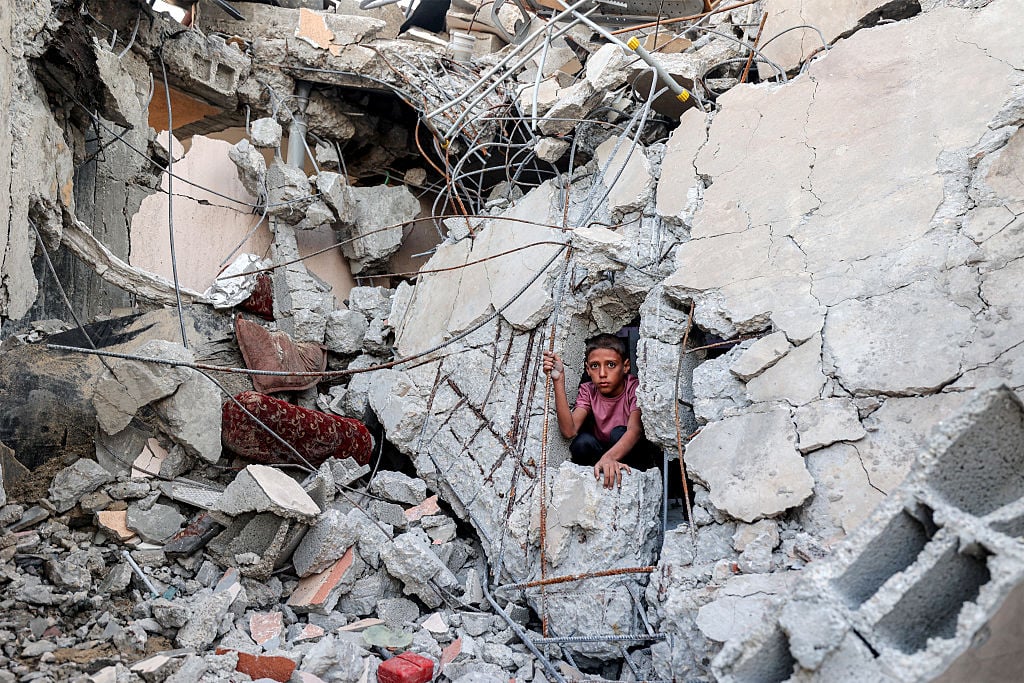
When a home is destroyed, entire worlds of safety, love, and identity crumble with it.
By Taqwa Ahmed Al-Wawi , Truthout, September 8, 2025
Your home is not just a building. It is a space carefully crafted by your family — a place that witnessed your first steps, heard your whispers, and held your laughter and tears. It is the place where your childhood lives.
Every room tells a tale. A nook holds old toys. There’s a window where the morning sun kissed your face, and the threshold you crossed thousands of times.
Imagine a peaceful neighborhood around your home — a narrow, quiet street shaded by olive trees whose branches stretch to cover the sidewalks. You have neighbors who are like family, exchanging greetings and stories. Children play and laugh in the alleys. Every evening, the scent of taboon bread fills the air, and the call to prayer echoes gently, giving the neighborhood a feeling of peace and timelessness.
This home, in the heart of this neighborhood, is more than just a shelter — it is a part of you.
Now imagine that in a single moment, it all turns to dust.
A Home in Nuseirat
Aya Adnan Ibrahim Al-Derawi is a 20-year-old medical laboratory student at the Islamic University of Gaza. Aya is my dear friend, and she shared with me this story of her family’s home.
Their house in Nuseirat had a small courtyard with a lemon tree, a rooftop where laundry swayed in the wind, and windows that caught the first light of morning. But on December 12, 2023, an Israeli airstrike reduced it to rubble and ashes………………………………………………………………….
A Home in Khan Younis
Islam Abu Mohsen, a 24-year-old civil engineering student from Khan Younis in southern Gaza, told me about his life before everything changed. He works as a digital content creator and is a professional trainer in barista skills — a young man trying to build a future amid the ruins.
He described his home in one of the most upscale neighborhoods in Khan Younis — a modern, beautifully designed house, with large windows that filled every room with sunlight. “The area was very lively,” he told me, “close to malls, restaurants, and schools. It was safe — relatively safe — and we lived surrounded by a warm family atmosphere, despite all the harsh conditions in Gaza.”
Islam shared how everyday life inside that home was stable and peaceful. “Each of us had our own daily routine. I was focused on my engineering studies, working on digital content, and training others in barista arts. Every day, we gathered around the dinner table — laughing, sharing stories, trying to hold on to a sense of normalcy. The house had a soul; it was a place of safety, comfort, and beautiful memories.”
Then came the devastating night of October 14, 2023. Islam described it vividly: “At 7:00 pm, suddenly the whole area was engulfed in a ring of fire. The smoke was suffocating; we literally felt like we were choking. We couldn’t understand what was happening. Ambulances couldn’t reach us — it was as if our neighborhood had vanished from the map.”
He described his family’s final moments in the house. “We were sitting at the dining table, cooking pasta, ready to eat — and then the bombing started. We never finished our meal,” he told me. “The pasta tray remained untouched for more than five months. When we finally returned, it was rotten.”
The losses went far beyond food. ………………………………………………………………………………………………………………….. https://truthout.org/articles/israeli-forces-bomb-loot-vandalize-our-homes-in-gaza-we-long-for-normal-life/?utm_source=Truthout&utm_campaign=26b80ce814-EMAIL_CAMPAIGN_2025_09_08_09_36&utm_medium=email&utm_term=0_bbb541a1db-26b80ce814-650192793
Will Cancer Prove to be Another Weapon in Israel’s War in Gaza?

The Many Ways Bombs Can Kill
By Joshua Frank, September 4, 2025
Gaza’s Looming Cancer Epidemic
As devastating as the war in Iraq was — and as contaminated as Fallujah remains — it’s nearly impossible to envision what the future holds for those left in Gaza, where the situation is so much worse. If Fallujah teaches us anything, it’s that Israel’s destruction will cause cancer rates to rise significantly, impacting generations to come.
Manufacturing Cancer
The aerial photographs and satellite footage are grisly. Israel’s U.S.-backed military machine has dropped so many bombs that entire neighborhoods have been reduced to rubble. Gaza, by every measure, is a land of immense suffering. As Palestinian children hang on the brink of starvation, it feels strange to discuss the health effects they might face in the decades ahead, should they be fortunate enough to survive.
A week after the Hamas attacks on October 7, 2023, a large explosion incinerated a parking lot near the busy Al-Ahli Arab Hospital in Gaza City, killing more than 470 people. It was a horrifying, chaotic scene. Burnt clothing was strewn about, scorched vehicles piled atop one another, and charred buildings surrounded the impact zone. Israel claimed the blast was caused by an errant rocket fired by Palestinian extremists, but an investigation by Forensic Architecture later indicated that the missile was most likely launched from Israel, not from inside Gaza.
In those first days of the onslaught, it wasn’t yet clear that wiping out Gaza’s entire healthcare system could conceivably be part of the Israeli plan. After all, it’s well known that purposely bombing or otherwise destroying hospitals violates the Geneva Conventions and is a war crime, so there was still some hope that the explosion at Al-Ahli was accidental. And that, of course, would be the narrative that Israeli authorities would continue to push over the nearly two years of death and misery that followed.
A month into Israel’s Gaza offensive, however, soldiers of the Israel Defense Forces (IDF) would raid the Indonesian Hospital in northern Gaza, dismantling its dialysis center with no explanation as to why such life-saving medical equipment would be targeted. (Not even Israel was contending that Hamas was having kidney problems.) Then, in December 2023, Al-Awda Hospital, also in northern Gaza, was hit, while at least one doctor was shot by Israeli snipers stationed outside it. As unnerving as such news stories were, the most gruesome footage released at the time came from Al-Nasr children’s hospital, where infants were found dead and decomposing in an empty ICU ward. Evacuation orders had been given and the medical staff had fled, unable to take the babies with them.
For those monitoring such events, a deadly pattern was beginning to emerge, and Israel’s excuses for its malevolent behavior were already losing credibility.
Shortly after Israel issued warnings to evacuate the Al-Quds Hospital in Gaza City in mid-January 2024, its troops launched rockets at the building, destroying what remained of its functioning medical equipment. Following that attack, ever more clinics were also targeted by Israeli forces. A Jordan Field Hospital was shelled that January and again this past August. An air strike hit Yafa hospital early in December 2023. The Nasser Medical Complex in Khan Younis in southern Gaza was also damaged last May and again this August, when the hospital and an ambulance were struck, killing 20, including five journalists.
While human-rights groups like the International Criminal Court, the United Nations, and the Red Cross have condemned Israel for such attacks, its forces have continued to decimate medical facilities and aid sites. At the same time, Israeli authorities claimed that they were only targeting Hamas command centers and weapons storage facilities.
The Death of Gaza’s Only Cancer Center
In early 2024, the Turkish-Palestinian Friendship Hospital, first hit in October 2023 and shuttered in November of that year, was in the early stages of being demolished by IDF battalions. A video released in February by Middle East Eye showed footage of an elated Israeli soldier sharing a TikTok video of himself driving a bulldozer into that hospital, chuckling as his digger crushed a cinderblock wall. “The hospital accidentally broke,” he said. Evidence of Israel’s crimes was by then accumulating, much of it provided by the IDF itself.
When that Turkish-Palestinian Friendship Hospital opened in 2018, it quickly became Gaza’s leading and most well-equipped cancer treatment facility. As the Covid-19 pandemic reached Gaza in 2020, all oncology operations were transferred to that hospital to free up space at other clinics, making it the only cancer center to serve Gaza’s population of more than two million……………………………………………………………………………..
“The repercussions of the current conflict on cancer care in Gaza will likely be felt for years to come,” according to a November 2023 editorial in the medical journal Cureus. “The immediate challenges of drugs, damaged infrastructure, and reduced access to specialized treatment have long-term consequences on the overall health outcomes of current patients.”
In other words, lack of medical care and worse cancer rates will not only continue to disproportionately affect Gazans compared to Israelis, but conditions will undoubtedly deteriorate significantly more. And such predictions don’t even take into account the fact that war itself causes cancer, painting an even bleaker picture of the medical future for Palestinians in Gaza.
The Case of Fallujah
When the Second Battle of Fallujah, part of America’s nightmarish war in Iraq, ended in December 2004, the embattled city was a toxic warzone, contaminated with munitions, depleted uranium (DU), and poisoned dust from collapsed buildings. Not surprisingly, in the years that followed, cancer rates increased almost exponentially there. Initially, doctors began to notice that more cancers were being diagnosed. Scientific research would soon back up their observations, revealing a startling trend.
In the decade after the fighting had mostly ended, leukemia rates among the local population skyrocketed by a dizzying 2,200%. It was the most significant increase ever recorded after a war, exceeding even Hiroshima’s 660% rise over a more extended period of time. One study later tallied a fourfold increase in all cancers and, for childhood cancers, a twelvefold increase.
The most likely source of many of those cancers was the mixture of DU, building materials, and other leftover munitions. Researchers soon observed that residing inside or near contaminated sites in Fallujah was likely the catalyst for the boom in cancer rates.
“Our research in Fallujah indicated that the majority of families returned to their bombarded homes and lived there, or otherwise rebuilt on top of the contaminated rubble of their old homes,” explained Dr. Mozghan Savabieasfahani, an environmental toxicologist who studied the health impacts of war in Fallujah. “When possible, they also used building materials that were salvaged from the bombarded sites. Such common practices will contribute to the public’s continuous exposure to toxic metals years after the bombardment of their area has ended.”
While difficult to quantify, we do have some idea of the amount of munitions and DU that continues to plague that city. According to the International Atomic Energy Agency, the United States fired between 170 and 1,700 tons of tank-busting munitions in Iraq, including Fallujah, which might have amounted to as many as 300,000 rounds of DU. While only mildly radioactive, persistent exposure to depleted uranium has a cumulative effect on the human body. The more you’re exposed, the more the radioactive particles build up in your bones, which, in turn, can cause cancers like leukemia.
With its population of 300,000, Fallujah served as a military testing ground for munitions much like those that Gaza endures today. In the short span of one month, from March 19 to April 18, 2003, more than 29,199 bombs were dropped on Iraq, 19,040 of which were precision-guided, along with another 1,276 cluster bombs. The impacts were grave. More than 60 of Fallujah’s 200 mosques were destroyed, and of the city’s 50,000 buildings, more than 10,000 were imploded and 39,000 damaged. Amid such destruction, there was a whole lot of toxic waste. As a March 2025 report from Brown University’s Costs of War Project noted, “We found that the environmental impact of warfighting and the presence of heavy metals are long-lasting and widespread in both human bodies and soil.”
Exposure to heavy metals is distinctly associated with cancer risk. “Prolonged exposure to specific heavy metals has been correlated with the onset of various cancers, including those affecting the skin, lungs, and kidneys,” a 2023 report in Scientific Studies explains. “The gradual buildup of these metals within the body can lead to persistent toxic effects. Even minimal exposure levels can result in their gradual accumulation in tissues, disrupting normal cellular operations and heightening the likelihood of diseases, particularly cancer.”
And it wasn’t just cancer that afflicted the population that stuck around or returned to Fallujah. Infants began to be born with alarming birth defects. A 2010 study found a significant increase in heart ailments among babies there, with rates 13 times higher and nervous system defects 33 times higher than in European births.
“We have all kinds of defects now, ranging from congenital heart disease to severe physical abnormalities, both in numbers you cannot imagine,” Dr Samira Alani, a pediatric specialist at Fallujah General Hospital, who co-authored the birth-defect study, told Al Jazeera in 2013. “We have so many cases of babies with multiple system defects… Multiple abnormalities in one baby. For example, we just had one baby with central nervous system problems, skeletal defects, and heart abnormalities. This is common in Fallujah today.”
While comprehensive health assessments in Iraq are scant, evidence continues to suggest that high cancer rates persist in places like Fallujah. “Fallujah today, among other bombarded cities in Iraq, reports a high rate of cancers,” researchers from the Costs of War Project study report. “These high rates of cancer and birth defects may be attributed to exposure to the remnants of war, as are manifold other similar spikes in, for example, early onset cancers and respiratory diseases.”

As devastating as the war in Iraq was — and as contaminated as Fallujah remains — it’s nearly impossible to envision what the future holds for those left in Gaza, where the situation is so much worse. If Fallujah teaches us anything, it’s that Israel’s destruction will cause cancer rates to rise significantly, impacting generations to come.
Manufacturing Cancer
The aerial photographs and satellite footage are grisly. Israel’s U.S.-backed military machine has dropped so many bombs that entire neighborhoods have been reduced to rubble. Gaza, by every measure, is a land of immense suffering. As Palestinian children hang on the brink of starvation, it feels strange to discuss the health effects they might face in the decades ahead, should they be fortunate enough to survive.
As current cancer patients die slow deaths with no access to the care they need, future patients, who will acquire cancer thanks to Israel’s genocidal mania, will no doubt meet the same fate unless there is significant intervention.
“[A]pproximately 2,700 [Gazans] in advanced stages of the disease await treatment with no hope or treatment options within the Gaza Strip under an ongoing closure of Gaza’s crossings, and the disruption of emergency medical evacuation mechanisms,” states a May 2025 report by the Palestinian Centre for Human Rights. “[We hold] Israel fully responsible for the deaths of hundreds of cancer patients and for deliberately obliterating any opportunities of treatment for thousands more by destroying their treatment centers and depriving them of travel. Such acts fall under the crime of genocide ongoing in the Gaza Strip.”
Israel’s methodical destruction in Gaza has taken on many forms, from bombing civilian enclaves and hospitals to withholding food, water, and medical care from those most in need. In due time, Israel will undoubtedly use the cancers it will have created as a means to an end, fully aware that Palestinians there have no way of preparing for the health crises that are coming.
Cancer, in short, will be but another weapon added to Israel’s ever-increasing arsenal.
1 This Month
5 March -Online – Reversing nuclearization:
From nuclear weapons in Belarus and NATO host countries to a European-Nuclear-Weapon Free Zone
11am-12:30pm Eastern Time USA / 5pm-6:30pm CET

of the week – Advocating for a
nuclear free beach – https://www.samuellawrencefoundation.org/
The Samuel Lawrence Foundation advocates for a Nuclear Waste Free Beach at San Onofre, join us and take action!
10 March A LIVE WEBINAR THE REAL EFFECTS OF NUCLEAR POWER
What the Industry Isn’t Telling Us
1:00 PM Mountain, 2 pm Central, 3 pm Eastern. Live on the Keepers of the Water Facebook page

18 March Webinar @ 1 PM EST: An Assessment of SMR Projects: The Case of Canada
register for the zoom:
https://us02web.zoom.us/webinar/register/WN_o8BIIOUvQ2ONJR1nta65DQ#/registration

of the week – STOP SMALL MODULAR REACTORS IN CANADA
To see nuclear-related stories in greater depth and intensity – go to https://nuclearinformation.wordpress.com
-
Archives
- March 2026 (38)
- February 2026 (268)
- January 2026 (308)
- December 2025 (358)
- November 2025 (359)
- October 2025 (376)
- September 2025 (258)
- August 2025 (319)
- July 2025 (230)
- June 2025 (348)
- May 2025 (261)
- April 2025 (305)
-
Categories
- 1
- 1 NUCLEAR ISSUES
- business and costs
- climate change
- culture and arts
- ENERGY
- environment
- health
- history
- indigenous issues
- Legal
- marketing of nuclear
- media
- opposition to nuclear
- PERSONAL STORIES
- politics
- politics international
- Religion and ethics
- safety
- secrets,lies and civil liberties
- spinbuster
- technology
- Uranium
- wastes
- weapons and war
- Women
- 2 WORLD
- ACTION
- AFRICA
- Atrocities
- AUSTRALIA
- Christina's notes
- Christina's themes
- culture and arts
- Events
- Fuk 2022
- Fuk 2023
- Fukushima 2017
- Fukushima 2018
- fukushima 2019
- Fukushima 2020
- Fukushima 2021
- general
- global warming
- Humour (God we need it)
- Nuclear
- RARE EARTHS
- Reference
- resources – print
- Resources -audiovicual
- Weekly Newsletter
- World
- World Nuclear
- YouTube
-
RSS
Entries RSS
Comments RSS
 nuclear-news