Trump’s ‘peace plan’ traps Gaza in limbo
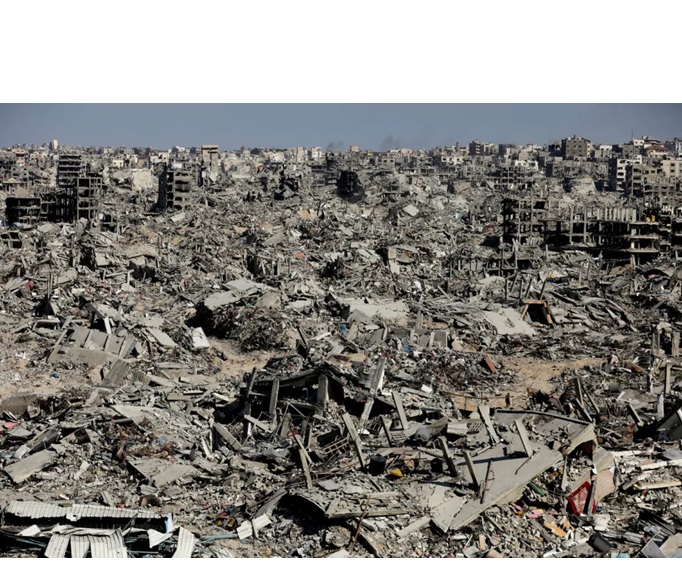
Gaza is now trapped in the limbo of the uncertainty surrounding the Trump plan. The U.S. might prevent Netanyahu from resuming Israel’s genocide, but unless Palestinians gain full control over Gaza’s future, it’s just a slower form of killing.
Mondoweiss, By Mitchell Plitnick October 25, 2025
On Tuesday, Israeli military sources announced that, in their estimation, Hamas still has some 20-25,000 fighters, although many of them are new recruits who are not well trained. They also said Hamas still has “hundreds” of rockets, although the majority of Hamas’ arsenal is said to have been destroyed.
Retired General Giora Eiland, who still has a significant position in Israel’s military hierarchy, added that the tunnel network in Gaza is still some 80% intact.
If these estimates are true, and that is far from clear, it’s either an admission of grave failure by Israel or an admission that destroying Hamas was never the point of the genocide that Israel has committed over the past two years. Or, possibly, both.
These statements are meant to arouse a feeling in Washington and in Israel that the “job” is not yet finished and Israel must be allowed to resume its genocide.
Israeli Prime Minister Benjamin Netanyahu has been squirming under the weight of President Donald Trump’s imposed ceasefire since it began, even while he has been forced to present a smiling public face about it.
Netanyahu’s immediate strategy is to require Trump to keep full pressure on Israel to maintain the “ceasefire.” He is doing this with a steady stream of provocative and deadly actions. He is allowing some aid into Gaza, but not nearly enough. Israel continues to work at provoking Palestinian responses with targeted attacks and provocative actions.
On Sunday, Israel suffered losses in the Rafah area under disputed circumstances. The United States allowed some response, but sharply limited it, preventing Israel from using the incident as an excuse for abandoning the ceasefire deal.
Lest anyone mistake the Trump administration’s actions for beneficence, there was complete silence from Washington the previous day, when Israeli forces fired on a Palestinian civilian vehicle near Gaza City, wiping out a family of eleven, including seven children.
Trump has continued to accuse Hamas of breaching the ceasefire, while ignoring Israel’s actions, which have thus far led to over 100 Palestinian deaths in Gaza since the ceasefire began.
But even while Trump has continued to issue empty threats against Hamas, his administration’s actions have been aimed at restraining Israel. The dispatch of Jared Kushner and Steve Witkoff, followed by Vice President JD Vance, and now Secretary of State Marco Rubio has had the effect of making sure that Israel is aware that the U.S. is watching and is not prepared to see this ceasefire collapse.
In a very telling episode, the Knesset voted to annex major chunks of the West Bank while Vance was in the country. This drew a sharp rebuke from the Vice President and a panicked response from Netanyahu. It is a stark contrast to Joe Biden’s meek response more than a decade ago when he visited Israel and the government announced a major new settlement while he was there. President Barack Obama was quite upset by the incident, but Biden wanted to ignore it.
Trump on Thursday warned Israel that the U.S. would no longer support Israel if it annexed the West Bank. But for Gaza, this isn’t a sustainable position. Trump is not going to maintain this kind of pressure indefinitely. He has put the annexation question to bed for some time (which just means that Israel will simply go on with its gradual annexation of the West Bank rather than the dramatic move of a formal annexation), but Gaza will require much longer-term engagement. More importantly, Trump’s “20-Point Plan” faces serious obstacles, and they are of a type that is very likely to result in the U.S. administration becoming frustrated with Hamas more than with Israel.
The danger of Hamas’ “Yes, but…”
Hamas made it clear when it agreed to the ceasefire that it was not agreeing to all of Trump’s plan. All parties understood that. ………………………………………………………………………………………………………………………………
Trump has a vested interest in seeing the ceasefire endure, but what does that mean in practice?
Neither Trump nor Netanyahu is going to be willing to allow Palestinians to govern themselves, even as technocrats. Without that, there will continue to be resistance. It’s that simple
Some limited rebuilding might be contemplated, but right now, that is being used as a tool to force Hamas to comply with Trump’s demands for their disarmament and disbandment. Jared Kushner made that clear, explicitly stating that any reconstruction efforts would be concentrated in the area of Gaza that remains under Israeli control.
Yet as much as Netanyahu would like to return to the all-out slaughter, he is not going to risk Trump’s wrath to do it. But in the meantime Gaza is likely to be trapped in a nightmarish middle ground between genocide and a functioning future.
Israel will not tolerate any security role in Gaza for Türkiye, as Trump has floated. They’d much prefer that both security and governing forces in Gaza be led by the U.S. or, short of that, more pliant Muslim countries such as Indonesia and Azerbaijan. Azerbaijan is perhaps Israel’s closest, if one of its quietest, allies in the Muslim world. Trump has already secured the participation of Indonesia and is working on Azerbaijan. ………………………………….
Gaza is now caught in the netherworld of the uncertainty of the Trump plan. While Vice President Vance says the ceasefire is “going better than expected,” it is not going anywhere for the people of Gaza.
Vance was remarking on how Israel is “complying” with Trump’s directives. That is, they are not killing so many Palestinians or doing so much shooting that the ostensible ceasefire would collapse.
But autumn is soon going to turn to winter in Gaza. There are insufficient shelters for most of the people, inadequate supplies of food and water, few heat sources, and limited means to address these issues in the short time allotted…………………………………………
The International Court of Justice’s advisory opinion, issued on Wednesday, provoked an hysterical response from Washington, as it ordered Israel to cooperate with all UN agencies, including the UN Relief and Works Agency (UNRWA), which Israel has falsely accused of supporting Hamas and encouraging attacks on Israel……………………….
All of this leaves the people of Gaza facing a different kind of hardship. There doesn’t seem to be any immediate rush to deploy an international force that would lead to a further Israeli withdrawal and enhanced efforts to clear the massive amounts of rubble. Without that necessary first step, reconstruction cannot truly begin in a sustainable way.
The population is cold, hungry, and facing unprecedented health crises that will go on for many years, according to the World Health Organization. While diplomats bicker, those conditions worsen……………………
Trump might prevent Netanyahu from returning to the full force of Israel’s two-year genocide, and that is still a real positive. But what the people of Gaza are facing now, with so many unanswered questions about how the Strip is to be managed, fed, supplied, and secured, carries with it its own set of threats.
It’s better than the genocide that was, but unless Palestinians are given full access to their own decisions and the tools they need to rebuild and survive until Gaza is rebuilt, it’s just a slower kind of killing. https://mondoweiss.net/2025/10/trumps-peace-plan-traps-gaza-in-limbo/
To Media, Gaza Ceasefire Holds Despite Repeated Israeli Strikes.

the media unceasingly grant Israel space to present deceitful arguments as credible, without ever emphasizing that Hamas is not the one that is dropping 153 tons of bombs in one day during a supposed “ceasefire.”
Belén Fernández, October 21, 2025, https://fair.org/slider/to-media-gaza-ceasefire-holds-despite-repeated-israeli-strikes/
On October 10, a ceasefire was declared in the Gaza Strip, where more than 67,000 Palestinians were officially killed in just over two years of Israel’s United States-backed genocide. With an estimated 10,000 bodies still buried under the all-consuming rubble, and indirect deaths unaccounted for, this number is almost certainly a drastic underestimate. Shortly after the ceasefire took effect, US President Donald Trump pronounced the war in Gaza “over,” proclaiming that “at long last we have peace in the Middle East.”
In the ten days following the implementation of the ostensible truce, the Israeli military reportedly killed at least 97 Palestinians in Gaza and wounded 230, violating the ceasefire agreement no fewer than 80 times. One might have expected, then, to see a headline or two along the lines of, I dunno, “Israel Violates Ceasefire”—or maybe “So Much for ‘Peace’ in Gaza.”
No such headlines turned up in the Western corporate media—not that there weren’t some pretty spectacular violations to choose from. On October 17, for example, 11 members of the Abu Shaaban family, including seven children and three women, were blasted to bits in Gaza City’s Zeitoun neighborhood while attempting to reach their home. According to the Israelis, the family’s vehicle had trespassed over the so-called “yellow line,” the invisible boundary arbitrarily demarcating the more than 50% of Gazan territory still occupied by the genocidal army.
Then on October 19, Israel bombed the living daylights out of central and southern Gaza and killed dozens after alleging a ceasefire violation by Hamas—an allegation that not even Trump found convincing, but that enabled such impressively passive headlines as “Strikes Hit Gaza After Truce Violations Alleged” (Guardian, 10/19/25). Once the carnage was complete, the BBC (10/19/25) assured readers that “Israel Says It Will Return to Ceasefire After Gaza Strikes.” For his part, Israeli Prime Minister Benjamin Netanyahu informed the Knesset that the Israeli military had dropped 153 tons of bombs on Gaza during this particular, um, pause in the ceasefire.
While most media outlets consistently describe the ceasefire as “fragile” (NBC News, 10/20/25) and “delicate” (ABC News, 10/20/25), they somehow can’t bring themselves to state the obvious: If you don’t cease firing, it’s not a ceasefire. Of course, the refusal to call a spade a spade should perhaps come as no surprise from an industry that continues to peddle the narrative of a “ceasefire” in Lebanon despite acknowledging “near-daily strikes” (New York Times, 7/9/25) on the country by Israel and the killing of some 250 people in the first seven months following the truce declaration last Novemberin the first seven months following the truce declaration last November.
‘Both sides have accused the other’
There is also the pernicious media tendency of allowing equal weight to ceasefire breach allegations by Israel and Hamas given the former’s mendacious—not to mention genocidal—track record. This mendaciousness has been on display for decades, most prominently in Israel’s eternal claim to be fighting “terrorists”—a fight that somehow never fails to kill thousands upon thousands of civilians; at least 20,000 of those killed in the latest two-year showdown were children, with a whole lot more presumed to be buried beneath the rubble. In the episode involving the Abu Shaaban family, the Israelis invoked a typical lie from their vast arsenal: a “suspicious vehicle” had approached Israeli troops “in a way that caused an imminent threat to them”—so they killed the family, and that was that.
And yet the media unceasingly grant Israel space to present deceitful arguments as credible, without ever emphasizing that Hamas is not the one that is dropping 153 tons of bombs in one day during a supposed “ceasefire.”
Case in point: an NBC News dispatch (10/19/25) titled “Israel and Hamas trade accusations of ceasefire violations,” in which we are told that “both sides have accused the other of violating the terms of the deal.” The next sentence outlines Israel’s primary ongoing gripe regarding Hamas’s alleged ceasefire transgressions: “Israel says Hamas is delaying the release of the bodies of hostages held inside Gaza, while Hamas says it will take time to search for and recover remains.”
In accordance with the ceasefire agreement, Hamas promptly returned all living hostages in its possession to Israel, and it has returned the remains of several more. But the group has said it is unable to recover the remaining bodies because they lie under formidable quantities of rubble, thanks to Israel’s recent pulverization of the enclave. Rather than allowing the necessary machinery into Gaza to assist with excavating the remains that Israel so urgently demands, Netanyahu has instead announced that the Rafah border crossing between Gaza and Egypt will remain closed until Hamas “fulfills” its part of the deal.
Any logical observer might conclude that Israel is actively endeavoring to sabotage the “ceasefire.” But the corporate media are not in the business of logical observation. In its writeup, titled “Hamas Returns Bodies as Fragile Gaza Ceasefire Holds,” the Financial Times presents as entirely legitimate an arrangement in which “Israeli officials have accused Hamas of returning the bodies too slowly, and threatened to limit the amount of humanitarian aid allowed into Gaza in an effort to pressure the militant group to accelerate the returns” (10/19/25).
Anyway, nothing to see here: just some more casual enforced starvation and illegal aid deprivation in an already famine-stricken territory. It’s all in a day’s work during a “fragile ceasefire.”
Ceasefire ‘holding’?
In the aftermath of the Abu Shaaban family massacre, CNN reported (10/17/25) that the ceasefire was “holding”—albeit not without “coming under strain,” naming as the first culprit the “failure of Hamas to return all the bodies.” The question of the return of the bodies occupied the first 10 paragraphs of the piece, so that when CNN also named “the initially slow entry of aid” into Gaza and the “continued, if isolated, incidents of killings of Palestinians in Israeli strikes” as contributing to the “strain,” it had already been made clear to the reader which facet of the alleged violations was the most important.
The next day, NBC News employed a similarly diplomatic approach to Israel’s ongoing lethal operations, noting that “even as the ceasefire between Hamas and Israel holds, Palestinians have been killed by Israeli forces” (10/18/25). Again, the media are apparently incapable of coming right out and stating that Israel has unequivocally violated the ceasefire, or that a ceasefire is not a ceasefire if one side is permitted to engage in continued slaughter.
According to the delusions of the Washington Post (10/15/25), meanwhile, Israel is “largely restrained from attacking Hamas under the ceasefire sponsored by Trump,” resulting in a situation in which “Hamas’s enduring grip has significant implications for the future of Gaza and President Donald Trump’s peace plan.” As usual, Israel is let off the hook for its campaign to literally annihilate Gaza’s future.
And yet this particular intervention by the Post is at least less batshit crazy than another one courtesy of columnist George F. Will (10/13/25), who has determined that “primary credit for the Gaza ceasefire” goes to the Israeli army and Netanyahu.
I would advise anyone with blood pressure problems to avoid so much as glancing at the column in question, but the gist of his argument is basically that genocide was a “necessary precondition for the cessation of warfare.” (Secondary credit goes to the US for “enabl[ing] Israel’s victory by not restraining its self-defense.”) It would seem, of course, that not launching a genocide in the first place might be an easier way to avoid warfare—a “cessation” of which has not been achieved in Gaza anyway.
“Greatest threat” to peace?
Indeed, while most corporate media commentary is not as transparently deranged as Will’s, there persists the notion that it is Hamas, not Israel, that is the greatest obstacle to peace—see, for instance, CNN‘s (10/17/25) “Why Hamas Remains the Greatest Threat to Trump’s Gaza Plan.” When Reuters (10/19/25) listed the “formidable obstacles to Trump’s plan to end the war,” it named “Hamas disarming, the governance of Gaza, the make-up of an international ‘stabilization force,’ and moves towards the creation of a Palestinian state” that have yet to be resolved. Notice which actor is missing.
A typical Associated Press dispatch (10/13/25) headlined “Despite Momentous Ceasefire, the Path for Lasting Peace and Rebuilding in Gaza Is Precipitous” explains that “how and when Hamas is to disarm, and where its arms will go, are unclear, as are plans for Israel’s withdrawal from Gaza.” Never do such articles find the need to point out that Israel is a state whose very existence is predicated on ethnic cleansing and perpetual war—or to cite such relevant findings as the determination by a United Nations commission of inquiry that Israel has committed genocide in Gaza.
The Genocide Convention defines the phenomenon as “acts committed with intent to destroy, in whole or in part, a national, ethnical, racial or religious group.” Such acts include “killing members of the group,” “causing serious bodily or mental harm to members of the group,” and “deliberately inflicting on the group conditions of life calculated to bring about its physical destruction in whole or in part.”
The inconceivable bodily and mental devastation that Israel has deliberately inflicted on the people of Gaza clearly continues despite Trump’s announcement that the war in Gaza is “over.” And as Israel continues to violate the so-called “ceasefire” while attempting to redirect blame to justify its own unceasing aggression, the media’s lack of scrutiny only abets those violations.
Why there can be no peace for Palestinians.

For those governments looking for means of controlling restive populations, the Gaza war of the last two years is nothing more than a gruesome marketing tool, the continued harassment of people in the West Bank and East Jerusalem becomes another marketing tool, selling the means of control, of surveillance, of remote controlled killing.
22 October 2025 , Bert Hetebry, https://theaimn.net/why-there-can-be-no-peace-for-palestinians/
At the end of 2024, according to UNHCR, there were estimated to be 123.2 million people world wide, forcibly displaced due to persecution, conflict, violence human rights violations and events seriously disturbing public order. That is 1.5% of the world population. Or if you want to make it real numbers instead of a percentage, for every 1,000 people in the world there are 15 people who are displaced, superfluous to needs, unwanted.
These people form a long line, an almost endless stream of desperation, seeking a safe refuge, seeking work, seeking dignity, yet they are shunned, shoved aside and when they do make it to a ‘promised land’ of sorts, they are remain vulnerable, able to be exploited, yet some make it, find a new home, but many do not.
In 2017, the Chinese artist and humanitarian Ai Weiwei produced a documentary The Human Flow, documenting the march to nowhere, people unwanted, pushed aside, rejected from from the Middle East, from Myanmar, from Africa, from Central America. Millions of people looking for somewhere, anywhere they could make a life. Since that time, the problem has increased, and nation after nation is trying to find ways of controlling this human flotsam.
And that can bring us to Gaza.
No one asks what drove Hamas to mount the attack of 7 October 2023 which killed 1200 Israeli people who were partying at a music festival, and no body asks why Hamas took 250 people as hostages. Hamas are a terrorist organisation, and what ever they do, is an act of terrorism.
That appears to be the conventional wisdom.
What makes a terrorist? Are all Palestinians terrorists?
And despite the best efforts of Donald Trump, what chance is there of peace for the Palestinians in Gaza, in East Jerusalem, in the West Bank?
After eighty years of Israeli occupation, after a hundred years of war against Palestinians, I hold very little hope that the current cease fire will result in peace for Palestinians.
Despite the cost of war, the Israeli economy is in very good shape. This is not in Israel’s interests to stop the war.
The reason is economics.
Israel, with a Jewish population of around 7.7 million represents about 1% of the world’s population, but is a major supplier in the sale of military and surveillance products and services. Over one third of Israeli exports are arms and surveillance equipment and services. Where for most nations military industries are essentially for local markets, Israel’s military and surveillance industries rely on export, constituting as much as 80% of their revenues according to Taylor & Francis online, vol 25, 2025.
It is hard to imagine, from the relative safety of the lives we live, of the freedoms we have, that the freedom to travel around whether it is just locally, near where we live or even to hook up a caravan and do a 20,000km trip ‘around the block’, what it would be like to have a constant awareness that you are being watched. The sort of scenario depicted in the novel, 1984, where Big Brother is watching, where every step you take is noticed, where every word you utter is heard. Where, it seems, even your thoughts are somehow monitored.
I had a sense of that recently. I don’t much like the self checkout at the supermarkets, but used one when buying just three items. It was busy, and as I am scanning my items, placing them carefully on the correct side of the checkout I was using, an attendant came and swiped her card, I asked he what she was doing, apparently she had be warned by the electronic surveillance camera that I might be stealing stuff. Bunnings are using camera surveillance to address theft from their stores, have considered using face recognition, but got into a spot of bother regarding that, but have been a bit quiet on that front lately, so perhaps it’s there, and then there is the profiling of people, certain people look like thieves, right?
The surveillance systems in supermarkets has become so ubiquitous, so sophisticated that any unusual activity is noticed and monitored. In this case, I bought three items, I did not have a trolley but carried them by hand to the check out, and from there followed normal procedure… Except I did not have nor did I purchase a bag to carry them home, I used my hands. So the camera thought perhaps I was trying to steal stuff, or at least looked ‘different’ enough to be possibly suspicious.
The cameras will pick up any behaviour which is considered unusual, any person which fits a specified criteria can be followed through their shopping expedition, monitoring behaviour, and security personnel are advised and will greet the person before they leave the store. And yes, it is easy to justify that sort of surveillance in a supermarket or other retail environment where shop lifting is an issue. And yes, although it would be denied, there is a profiling of shoppers through the surveillance system.
In Israel, the surveillance of Palestinians is not in shops, it is constant, ever-present, it is part of life as a Palestinian… As a ’terrorist’.
To define a group as ‘terrorist’ is dehumanising. It takes away the sense of individuality, the thought that those ‘terrorists’ cannot think for themselves, but are almost mechanically filled with evil intent. It also denies the ability to consider what makes those people subject to such categorisation. And there-in lies the actual juxtaposing of the term, that the so called ‘terrorists’ are being terrorised.
It is difficult to think that with the sophisticated surveillance that Palestinians both in Gaza and the West Bank are subjected to that the Israelis did not know that Hamas were planning, in fact training for the 7 October attack which was the catalyst for the two years destruction of Gaza. Antony Loewenstein in his 2023 book The Palestine Laboratory writes:
“The most effective example of separatism is the encirclement of Gaza, trapping more than 2 million Palestinians behind high fences, under constant drone surveillance, infrequent missile attack, and largely closed borders enforced by Israel and Egypt. When Israel completed the sixty-five-kilometer high-tech barrier along the entire border with Gaza in late 2021, at a cost of US$1.11 billion, a ceremony in southern Israel took place to mark the occasion.” (The barrier was a rebuilding of a barrier fence which had been destroyed in 2001.)
Facial recognition technology, developed by Israeli firms, AnyVision and Corsight AI among others is used extensively through a growing network of cameras both in Gaza and throughout the West Bank as well as through mobile phones, means that the IDF and other government departments effectively follow interested subjects. Big Brother is constantly watching.
The technologies are sold at various marketing shows, with the mantra that these products are ‘conflict proven’, often with videos of ‘terrorists’ being arrested or otherwise dealt with as evidence of their effectiveness.
The growing use of drones both for surveillance and as means of delivering explosive devices is another export industry, again, proven effectiveness as a marketing tool is demonstrated through videos of the fight against terrorism, in Gaza and the West Bank.
Other means of ‘following’ people is through mobile phone technology. A programme ‘Pegasus’ developed by the Israeli NSO Group was instrumental in monitoring members of the drug cartels resulting in a reduction of murders committed in the drug wars which raged during the early 2000s.
NSO were blamed for being an accessory to the murder of Jamal Khashoggi in 2018, enabling him to be ‘followed’, tracking his movements before his death.
The sale of exploding communication devices used by Hezbollah across Lebanon last year was another surreptitious use of technology, selling ‘safe’ communications devices, safe, in that they could not be tracked like mobile phones can be tracked, proved to be nothing less than selling murder weapons to be operated remotely; murder by remote control.
But that is part of the technology, the means of remote controlled murder. Israeli industry is at the cutting edge of drones, both for surveillance and for delivering bombs, delivering death and destruction. Not just in controlling Palestinians, but unwanted people, people seeking a better life, somewhere, anywhere but where they are unwanted. Surveillance drones are sent over the Mediterranean Sea, through the sale of surveillance systems to European countries struggling with the influx of stateless and unwanted people, the drones send images to a central, remote site where the images are viewed, and when a boat is in trouble, can message ships, coast guards, officials to help should such a boat be in trouble. Many are inflatable boats and because of overcrowding, deflate, and with the crisis of too many unwanted people, may choose to send the emergency message at a time when the boat has sunk and there is little chance of survivors. Other technologies monitor the movement of mobile phones, tracking the signals as the phones are carried on the journeys to a hoped for freedom.
Client states of these technologies are many, and particularly those states which have ethnic and religious divides, states where civil uprisings are feared, where authoritarian governments need to increase control over populations.
In dealing with the troubles in Gaza during the current conflict, searching for Hamas, drones deliver ordinance to blow up suspected places Hamas may or may nor be hiding, hospitals, schools for example because we know that in that small enclave, where over 2.3 million people are crammed together, Hamas is using human shields, right?
Using technology as an instrument of control, of surveillance, of murder is demonstrated time and again, and that has been a major tool of control Israel has used and continues to use, and the people in Gaza know they are being watched, they cannot escape the surveillance, and so in their preparation for the attack on 7 October 2023, every move had been watched, had been recorded. Could it be that Israel actually wanted the attack to occur, thinking that perhaps a small attack could happen but an excuse for another conflict, another punishment, but when the number of fatalities, the number of injuries, the number of hostages, it became the ultimate excuse for the devastation we have seen over the past two years.
For those governments looking for means of controlling restive populations, the Gaza war of the last two years is nothing more than a gruesome marketing tool, the continued harassment of people in the West Bank and East Jerusalem becomes another marketing tool, selling the means of control, of surveillance, of remote controlled killing.
And the means used, the technology of terrorising is exported, the industry being a huge component of the Israeli economy.
The importance of Gaza and The West Bank is to use it as a marketing tool for other nations needing to control populations, to ensure conformity, to quell dissent. There can be no peace for Palestinians in the marketing of surveillance mechanisms.
There can be no peace for Palestinians while they can be used to sell the means of population control. To sell the Big Brother tools and the armaments and explosives for when needed to ‘mow the grass’, as Prime Minister Netanyahu used to say during his earlier term in power, to keep the anxiety level in Gaza heightened.
How can there ever be peace for Palestinians?
Vaunted Trump Ceasefire? Israel has a genocidal Palestinian ethnic cleaning to complete
Walt Zlotow, West Suburban Peace Coalition, Glen Ellyn IL, 22 Oct 25, https://theaimn.net/vaunted-trump-ceasefire-faggedaboudit-israel-has-a-genocidal-palestinian-ethnic-cleaning-to-complete/#google_vignette
The tremendous support given to Trump’s second ceasefire in Israel’s genocide in Gaza ignores reality and history.
How quickly the Trump high-fivers forget Israel abandoned Trump’s first ceasefire that lasted from January 19 to March 18. During that time Israel continued to kill hundreds of Palestinians while restricting food, water and medicine. Then, with Trump’s bombs, they resumed their grotesque genocide further obliterating Gaza while killing tens of thousands more Palestinians.
The first ceasefire released 33 Israeli hostages, leaving 48 to languish as Israel returned to their first priority, ridding Gaza of its Palestinians not yet disappeared. It took nearly 7 months for pressure to build on Israel to agree to a second ceasefire to return remaining hostages, 20 living and 28 dead.
But like Ceasefire 1, Ceasefire 2 is just genocidal ethnic cleansing by subtler means. In the first 9 days, Israel’s military has killed or wounded nearly 400 Palestinians, while again restricting food, water and medicine. Israel still occupies over half of Gaza, establishing yellow lines forbidding Palestinians to cross.
On ceasefire day 10 Israel unleased massive air strikes across Gaza. In their most grotesque ceasefire violation, Israel bombed a vehicle that strayed across Israel’s yellow line, killing 11 family members including 3 women and 7 kids.
Was Trump outraged? Only at Hamas who he’s threatening to obliterate by giving Israel the green light to ‘finish the job.’
This should surprise no one with a moral conscience. Israel has been violating the ceasefire in Lebanon for nearly a year. During that time they’ve killed over 4,000 Lebanese, destroyed tens of thousands of homes and gobbled up 5 Lebanese areas.
That’s some ceasefire you negotiated Mr. Trump. All you accomplished is delay Israel’s one and only goal…bringing a Palestinian free Gaza into Greater Israel.
Gaza Officials Say Israel Has Violated Ceasefire 80 Times in First 10 Days
Israel carried out a bombardment on Sunday after two Israeli soldiers were apparently killed in an explosion.
By Sharon Zhang , Truthout, October 20, 2025, https://truthout.org/articles/gaza-officials-say-israel-has-violated-ceasefire-80-times-in-first-10-days/
srael has committed at least 80 violations of the ceasefire agreement since it began just 10 days ago, Palestinian officials have said, leaving hundreds of casualties as Israeli officials threaten to return to their extermination campaign now that the living Israeli captives have been returned.
In a statement on Sunday, the Gaza Government Media Office said that Israel had killed 97 Palestinians and injured over 230 amid the ceasefire. These violations show the Israeli government’s wish to break the agreement and return to its genocidal aggression, the office said.
“These violations ranged from direct fire against civilians to deliberate shelling and targeting, the use of simultaneous air strikes, and the arrest of a number of civilians,” it said, per Al Jazeera’s translation. “These practices reflect the occupation’s continued aggressive approach, its clear desire for escalation on the ground, and its constant thirst for blood and killing.”
This includes an attack on Friday in northern Gaza, in which Israel attacked a vehicle and killed 11 members of the same family, simply trying to return to their home. The attack killed seven children. Israel claimed that the vehicle had crossed a line of demarcation where Israeli forces are still deployed — an area that encompasses the majority of Gaza and that is not clearly marked by the military.
“They had crossed the so-called ‘yellow line’, an imaginary boundary mentioned by the Israeli army,” said Mahmoud Basal, Gaza Civil Defense spokesperson, per The Guardian. “I am certain the family couldn’t distinguish between the yellow and red lines because there are no actual physical markers on the ground.”
It also includes numerous violations on Sunday, during which Israel seemingly temporarily suspended the ceasefire agreement after two Israeli soldiers were killed in an explosion in Rafah. Israel blamed Hamas, saying that fighters fired an anti-tank and carried out a bombardment and said it would end all humanitarian aid delivery.
However, shortly after, Israeli officials said the ceasefire was back on and that it had resumed aid delivery. Officials did not give a reason, but Drop Site journalist Ryan Grim reported that the explosion actually happened when an Israeli settler ran over an unexploded ordnance.
“Soon after the explosion in Rafah, I’m told by a source familiar, the White House and Pentagon knew that the incident was caused by an Israeli settler bulldozer running over unexploded ordnance — contradicting [Israeli Prime Minister Benjamin] Netanyahu’s claim that Hamas had popped up from tunnels,” Grim wrote on social media.
“After Netanyahu said he was blocking all aid from entering Gaza in response, and unleashed a bombing campaign, the administration conveyed to Israel that they know what happened. Netanyahu then announced he would re-open the crossings in a few hours,” he went on.
Palestinian journalist Younis Tirawi also reported this, and further said that the Israeli government implemented a gag order to the media on the incident. Axios reporter Barak Ravid similarly said that Israeli officials said it was due to pressure from the Trump administration that the decision was turned back.
Israel has already been limiting aid into Gaza and refusing to open the Rafah border crossing, once the most important crossings for aid delivery. Officials accuse Hamas of violating its agreement to release Israeli captives’ bodies, but officials have said that it is impossible to retrieve all of the bodies as long as Israel continues blocking the entry of heavy equipment that can clear rubble.
Top Israeli ministers have been pushing for an end to the ceasefire. “Enough with the folding,” wrote Defense Minister Itamar Ben-Gvir on X on Sunday.
Israel Launches Wave of Heavy Airstrikes Across Gaza, Killing at Least 45
Reports contradict Israel’s claim that its troops came under attack in Rafah on Sunday
by Dave DeCamp | October 19, 2025, https://news.antiwar.com/2025/10/19/israel-launches-wave-of-heavy-airstrikes-across-gaza-killing-at-least-21/
The Israeli military launched heavy airstrikes across Gaza on Sunday, killing at least 45 Palestinians, marking the deadliest day of Israeli attacks in the Strip since the ceasefire went into effect on October 10.
The IDF stepped up its attacks on Gaza after alleging its troops were attacked by Palestinian militants in Rafah, southern Gaza, though some reports indicate an explosion was caused by an Israeli vehicle running over an unexploded bomb.
Hamas denied responsibility for the incident in Rafah on Sunday, saying it hasn’t been in contact with its fighters in the area. “We confirm our full commitment to carrying out everything that was agreed, first and foremost the ceasefire in all areas of the Gaza Strip,” Hamas’s armed wing, the al-Qassam Brigades, said in a statement.
“We have no knowledge of any incidents or clashes taking place in the Rafah area, since these are red zones under occupation control, and contact with what remains of our groups there has been cut off since the war resumed in March of this year. We have no information on whether they have been killed or are still alive since that date,” al-Qassam added.
Israeli officials said later in the day that two IDF soldiers were killed in the attack. According to Haaretz, Israeli military officials said they thought militants fired on Israeli troops after exiting a tunnel, but other reports contradict the claim.
Curt Mills, the Executive Director of The American Conservative, wrote on X that a senior Trump administration official told him: “Hamas did nothing. Israeli tank hit an unexploded IED that has probably been there for months.”
Ryan Grim, a reporter for Drop Site News, reported something similar. “Soon after the explosion in Rafah, I’m told by a source familiar, the White House and Pentagon knew that the incident was caused by an Israeli settler bulldozer running over unexploded ordnance — contradicting Netanyahu’s claim that Hamas had popped up from tunnels,” he wrote on X.
“After Netanyahu said he was blocking all aid from entering Gaza in response, and unleashed a bombing campaign, the administration conveyed to Israel that they know what happened. Netanyahu then announced he would re-open the crossings in a few hours,” Grim added.
Israeli strikes on Sunday mainly targeted southern and central Gaza, and pictures and videos show that children were among the casualties. The latest reported bombing hit a tent sheltering displaced people near the Nuseirat refugee camp in central Gaza, killing at least six.
In a statement on Sunday night, the IDF said that it had “begun the renewed enforcement of the ceasefire,” signaling that its heavy bombardment was over. “The IDF will continue to uphold the ceasefire agreement and will respond firmly to any violation of it,” the IDF said.
Israel has repeatedly violated the truce by killing dozens of Palestinians over the past week. One strike on Friday hit a vehicle and killed 11 members of the same family, including seven young children and three women.
The IDF also warned all Palestinians to remain west of the so-called “yellow line,” the line IDF troops withdrew to when the ceasefire went into effect. Under the current arrangement, the IDF controls more than 50% of the Palestinian territory.
Gaza to become a tax-free ‘billionaire haven’ according to Jared Kushner and Zionist billionaires

Jared Kushner, Donald Trump’s son-in-law, along with Epstein-linked Palantir boss Peter Thiel and pro-Israel Oracle billionaire Larry Ellison, plan to turn Gaza into a haven for billionaires. They plan to do so with a city of tax-free startups, with scattered server farms for cloud processing and artificial intelligence. That will supplement factories with cheap labour, and simple regulations will also smooth the way for “normalization with Saudi Arabia”, according to Israeli media outlet N12.
The article – which, interestingly, does not seem to appear on the site’s English-search version – says that:
The huge economic project of rebuilding Gaza after the war is already attracting interest from countries, billionaires and former leaders [and] from Trump’s son-in-law, Jared Kushner, who aspires to establish Al centers in the Strip, to foreign investors looking for enabling regulation.
Experts predict [that] the development initiatives could serve as leverage to promote normalization with Saudi Arabia, also through Kushner’s involvement, but the road there is still fraught with political and security obstacles.
It notes that Ellison is ready to put $350 million into the plan, which is in line with Trump’s notorious and unlawful ‘Gaza riviera‘ ethnic cleansing plan and fascist Israeli ministers’ Gaza ‘real estate bonanza’.
Fascist Israeli minister Smotrich calls Gaza genocide a “real estate bonanza”

Oops, your real motives are showing
 by Skwawkbox, 19 September 2025, https://www.thecanary.co/skwawkbox/2025/09/19/smotrich-gaza/
“We paid a lot of money for the war, so we need to decide how to divide the percentages of the land” – these are the words of self-described ‘fascist and homophobe’ Israeli finance minister Bezalel Smotrich as he discussed how Israel and the US plan to divide up Gaza between themselves this week.
“We paid a lot of money for the war, so we need to decide how to divide the percentages of the land” – these are the words of self-described ‘fascist and homophobe’ Israeli finance minister Bezalel Smotrich as he discussed how Israel and the US plan to divide up Gaza between themselves this week.
Smotrich: Gaza is a ‘real estate bonanza’
Speaking in Hebrew at a property conference, Smotrich added:
The Gaza Strip is becoming a real estate bonanza.
The Israeli and Trump regimes – to be more accurate the Israeli-Trump regime – have long been discussing the US ‘Trump-Gaza plan’ to turn Gaza, after the extermination or expulsion of its rightful Palestinian owners, into a beach-front resort money-making project, a plan even accompanied by a deranged AI video posted by Trump to his social media.
We paid a lot of money for the war, so we need to decide how to divide the percentages of the land in Gaza. The demolition phase is always the first phase of urban renewal. We did that, now we need to start building.
Trump’s plan was first developed for him by the same people who came up with the so-called ‘Gaza Humanitarian Foundation’ whose ‘aid’ stations have killed more than 2,000 desperate refugees seeking food and wounded more than 15,000 – a group of Israeli business people.
BCG, the consulting firm who financialised the plan, calculated that it would return to its backers four times the initial investment of $100 billion, according to the plan. The firm has since tried to distance itself from the plan, claiming to have sacked all the partners who approved it.
Smotrich should be in the Hague. No ifs, no buts.
They Said The Massacres Would Stop When The Hostages Were Released. They Haven’t Stopped.
Caitlin Johnstone, Oct 18, 2025,https://www.caitlinjohnst.one/p/they-said-the-massacres-would-stop?utm_source=post-email-title&publication_id=82124&post_id=176485051&utm_campaign=email-post-title&isFreemail=true&r=1ise1&triedRedirect=true&utm_medium=email
Last year I banged out an angry rant about the way Israel supporters would yell “release the hostages!” at anyone who talked about the latest massacre of Palestinian civilians, saying Hamas was to blame for the killing because of their refusal to release the Israeli captives, and that it would all stop once the hostages are free. I’m remembering that essay today because the hostages are free, but the massacres are continuing.
On Friday Israel reportedly blew up a vehicle carrying a Palestinian family of eleven people, including seven children. The IDF gave its usual excuse for the massacre: the civilians were deemed to have crossed an invisible line into a forbidden zone which made the Israeli soldiers feel unsafe. They did this exact same thing constantly during the last “ceasefire” as well.
In my polemic last year I argued that the slaughter we were seeing in Gaza plainly had nothing to do with pushing for the release of Israeli hostages, and that even if it did it would still be barbaric to massacre children until your enemies caved in to your demands.
But two years of genocide have made it clear that the Israeli military was never killing Palestinian civilians in order to push for the release of hostages or force Hamas to cave in to their demands. The Israeli military kills Palestinian civilians in order to kill Palestinian civilians. The killing is the goal, and it always has been.
We see this illustrated over and over again, in all sorts of ways. Israel apologists always argued that the only reason the IDF had destroyed Gaza’s healthcare system with nonstop hospital attacks was because Hamas was using those hospitals as secret military bases. But then multiple independent reports from western doctors in Gaza confirmed that Israeli forces had been entering the hospitals after attacking them and systematically destroying individual pieces of medical equipment one by one in order to make them unusable. Hamas wasn’t the target in those hospital attacks, the hospitals themselves were the target.
And now we are seeing the “Israel is killing people because Hamas has Israeli hostages” narrative debunked in exactly the same way the “Israel keeps bombing hospitals because there are Hamas bases in all of them” narrative was. The hostages are free, but the massacres continue.
None of which will surprise anyone who was paying attention these last two years. Israel’s genocidal intent has been on full display every minute of every day, and it continues to be even during this joke of a “ceasefire” where the genocide was theoretically supposed to be on pause for a little while.
Israeli Soldiers Torched Food, Homes, and a Critical Sewage Treatment Plant in the Wake of Ceasefire Announcement
Soldiers called the mass arson of Gaza City their “final touches.”
Drop Site, Younis Tirawi and Yaniv Cogan, Oct 13, 2025
In the immediate aftermath of Donald Trump’s announcement on Thursday that both Hamas and Israel had signed off on an agreement to stop the fighting, the Israeli military launched an arson spree, setting fire to civilian infrastructure, including the destruction of an essential sanitation plant in Gaza City. After publication, the Israel Defense Forces told Drop Site it “is aware of the incident and it is being reviewed.”
The destruction of Palestinian structures following the departure of soldiers who had used them as temporary bases has been a hallmark of Israel’s approach to Gaza for two years. In July, Israeli reporter Yuval Abraham collected testimonies from soldiers describing a myriad of arson methods. “Every Arab house we entered had olive oil […] We poured the oil on the sofas, on anything flammable in the apartment, and then we ignited [it] or threw in a smoke grenade. This was a common practice,” one of them described.
The agreement came after months of a concerted effort to render Gaza uninhabitable by destroying residences and civilian infrastructure, culminating in the ground invasion of Gaza City and the leveling of several high rises in Gaza City. In September, Israeli government minister Gila Gamliel told Channel 7 News, “We have already completely annihilated 75% of the entire [Gaza] Strip. There remains 25%, which, as you know, it too…we are now taking over [the city of] Gaza—there will be nothing left there that would really [have] the potential to be habitable.”
The scope of the arson perpetrated in Gaza City on the night of October 9th and early morning of October 10—Thursday night into Friday, just after the ceasefire was agreed to but before Israel’s cabinet approved it—was broader than at any other time Drop Site has tracked during the assault on the strip. …………………………………………………………………………………………………………………….
The Torching of Gaza City’s Sewage Treatment Plant: “[One] last memory”……………………………………………………………………………………………
Mass Arson Campaign Around Sheikh Radwan Market, Gaza City……………………………………………………………………………………………..
Burning Homes Across Gaza City Israeli troops also shared photos of torched houses in other locations accompanied by captions musing about the arson. One soldier dubbed the burning of several buildings the “finishing touches.”……………………………………………………………………………………..
As the ceasefire takes hold, Gaza has already been rendered largely uninhabitable. One Israeli colonel recently bragged to the Israeli media, “We are leaving behind us only dust. There’s nothing here.” For officials like Gamliel, who have expressed satisfaction with the level of destruction in Gaza, the upshot is clear:
“Look at the hypocrisy of all European countries. They constantly go ‘starvation, starvation’ Well…? Open [your] doors! Why, when it was about Ukraine, it was fine, when it was about Syria, it was fine. When it comes to the Palestinians, they want to perpetuate this conflict structurally.
Now, just for your information: one million and seven hundred thousand inside the Gaza Strip are defined as UNRWA refugees. Meaning, once they get out of there, they are not coming back! Because as refugees, this is not the place where they actually have the right of basic belonging.” https://www.dropsitenews.com/p/israel-idf-soldiers-set-fire-food-homes-sewage-treatment-plan-after-ceasefire-announced
Worlds Extinguished: Hostage Returns, Central Casting and the Gaza Ceasefire
14 October 2025 Dr Binoy Kampmark, https://theaimn.net/worlds-extinguished-hostage-returns-central-casting-and-the-gaza-ceasefire/
Depending on which source you consult, the twenty-point peace plan of President Donald Trump for securing peace in Gaza shows much exultance and extravagant omission. The exultance was initially focused on the return of the hostages. It then shifted to the broader strategic goals of the various parties. Commentary on this point, even as the living Israeli hostages convalescence after their exchange for Palestinian detainees, sidesteps the Palestinian people, those fly in the ointment irritants who never seem to exit the political scene.
The peace plan, in effect, is being executed to eliminate Hamas and any semblance of a Palestinian militant movement in favour of an Israel-Arab-US axis of preferment and normalisation. Doing so puts a firm lid on Palestinian sovereignty and statehood in favour of sounder relations between Israel and the Arab states.
Consider, for instance, the views from the American Jewish Committee in their October 10 assessment. “President Trump’s unconventional approach created new diplomatic realities and forced Israel and key Arab states to align in new ways.” The peace plan was “the most credible framework to date for advancing Israeli-Arab peace, creating new opportunities for regional engagement, and countering Hamas’ ideology through a united alliance of Israel and Arab nations committed to peace, security, and prosperity.” Clearly, Palestinians are, if not footnotes, then invisible ink lines in such arrangements.
This attitude is also echoed in remarks made by the US Vice President, J.D. Vance. Palestinian subservience is assumed in any new proposed arrangement which prioritises Israeli security and a collective of overseeing nation states that will guard against any mischief in the Strip. “The President convinced the entire Muslim world really, both the Gulf Arab states, but as far as South-East Asia as Indonesia, to really step up and provide ground troops so that Gaza could be secured in safety.”
Egyptian Foreign Minister Badr Abdelatty gave some sense of what is expected. “We are going to support and commit troops within specific parameters,” he told CBS. A UN Security Council mandate would be required, along with clear specifications for what the mission of the troops on the ground would be, “which will be peacekeeping and providing training to Palestinian police.”
Trump’s near cinematic appearance on October 13 in the compact, claustrophobic Knesset after the handover of the hostages set the scene for Israeli grandstanding, staged mawkishness and denial. Netanyahu was in typical form, accusing Israel’s friends of blood libel stupidity for recognising Palestine; in doing so, they had effectively committed acts of antisemitism, buying “into Hamas’s false propaganda.” Massacring and starving those in the Gaza Strip warranted no mention, but disarming Hamas and demilitarising the enclave did. With praise for both himself and Trump, Netanyahu spoke of jointly forging “a path to bring the remaining hostages home and end the war. End a war in a way that ensures the disarming of Hamas, the demilitarisation of Gaza, and that Gaza would never again pose a threat to Israel.”
He also thanked Trump for “fully” backing the decision to make the last murderous assault into Gaza City. This “military pressure” provided momentum that eventually saw Hamas capitulate. The US President then “succeeded in doing something that no one believed was possible. You brought most of the Arab world, you did, you brought most of the world behind your proposal to free the hostages and end the war.”
Opposition leader Yair Lapid, for his part, explicitly denied any genocide or “intentional starvation” of the Palestinians, then proceeded to overlook them in calling on “all the nations of the Islamic world” to engage Israel.
Trump’s own speech was meandering, personal and free of complex turns. He spoke about his envoy Steve Witkoff as a Henry Kissinger who did not leak, an emissary of singular genius. An interruption by Hadash lawmakers Ayman Odeh and Ofer Cassif, both demanding that Palestine be recognised, did not faze him. And then came mention of theUkraine War, and Russian President Vladimir Putin and more adulatory remarks for the US delegates who have paid homage to the US God King. They were all part of “central casting.”
Not a sliver of reference to the Palestinian cause for sovereignty made an appearance, which continues to moan under the strategic expediency of it all, the residents of Gaza doomed to indefinite invigilation at the hands of Trump’s “Board of Peace.” More to the point, he was happy to admit providing weapons at the request of “Bibi” at a moment’s notice. The US made “the best weapons in the world, and we’ve given a lot to Israel, … and you used them well.” But the slaughter could not continue, and the Israeli PM would be remembered “far more” for accepting the peace agreement. “The timing for this is brilliant. I said, ‘Bibi you’re going to be remembered for this far more than if you kept this thing going, going, going, kill, kill, kill.’”
The Palestinians, granted brief respite from military violence, will be desperately wary. When Lapid mentioned that Trump had “saved far more than one life, and life is an entire world,” it can also be assumed that killing one life kills a world. Some 68,000 Palestinian worlds (a conservative estimate) were extinguished by the munitions and weapons of Israel and its backers. As humanitarian workers return to Gaza, they see the horrors of a lunarscape of devastation. If only Trump had considered paying a visit to that particular part of earth.
Israeli Defense Minister Says IDF Will Destroy Gaza Tunnels Once Hamas Releases Israeli Captives
by Dave DeCamp | October 12, 2025 , https://news.antiwar.com/2025/10/12/israeli-defense-minister-says-idf-will-destroy-gaza-tunnels-once-hamas-releases-israeli-captives/
Israeli Defense Minister Israel Katz said on Sunday that the Israeli military would destroy tunnels in Gaza after the remaining Israeli captives are released by Hamas, which is expected to happen on Monday.
“Israel’s great challenge after the phase of returning the hostages will be the destruction of all of Hamas’s terror tunnels in Gaza, directly by the IDF and through the international mechanism to be established under the leadership and supervision of the United States,” Katz wrote on X.
“This is the primary significance of implementing the agreed-upon principle of demilitarizing Gaza and neutralizing Hamas of its weapons. I have instructed the IDF to prepare for carrying out the mission,” he added.
According to the outline of the Gaza ceasefire proposal released by the White House, all “military, terror, and offensive infrastructure, including tunnels and weapon production facilities, will be destroyed and not rebuilt,” and there will be a “process of demilitarization of Gaza under the supervision of independent monitors.” But the details of how those steps will be taken, including who will be doing it, are unclear. A senior Hamas official has also said that Hamas won’t disarm unless it can hand its weapons to a Palestinian state.
So far, Israel and Hamas have just entered the first phase of the ceasefire deal, which involves the release of the Israeli hostages in exchange for thousands of Palestinians held in Israeli jails, the IDF pulling back to an agreed-upon line, and Israel allowing more aid to enter Gaza. Details on implementing the rest of the agreement still need to be worked out in negotiations between Israel and Hamas.
Katz’s comments come as many are concerned Israel will restart its genocidal war once Hamas releases the Israeli captives. Also on Sunday, Israeli Prime Minister Benjamin Netanyahu said the military “campaign is not over,” though he could be referring to other areas where Israel is at war or potential escalations elsewhere in the region.
“And I want to say: Everywhere we fought – we won. But in the same breath, I must tell you: The campaign is not over. There are still very great security challenges ahead of us,” Netanyahu said, according to a statement from his office. “Some of our enemies are trying to rebuild themselves to attack us again. And as we say – ‘We’re on it.’”
According to a report from Israel Hayom, the US has given Israel a guarantee that it would back Israeli military action if it determined Hamas violated the deal in a way that “poses a security threat.” The report said the understanding “constitutes a side agreement” between the US and Israel.
The US gave Israel a similar side deal for the November 2024 Lebanon ceasefire agreement, which Israel continues to violate on a near-daily basis.
More Than 200 Bodies Dug Out of the Gaza Rubble Since Ceasefire Went Into Effect
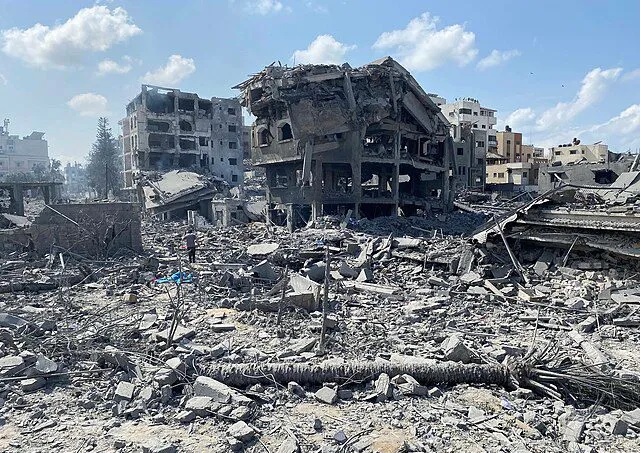
Gaza rescue workers say more than 9,500 people are missing
by Dave DeCamp | October 12, 2025, https://news.antiwar.com/2025/10/12/more-than-200-bodies-dug-out-of-the-gaza-rubble-since-ceasefire-went-into-effect/
Rescue workers in Gaza have recovered more than 200 bodies of Palestinians killed by the IDF from the rubble and from areas they were previously unable to access since the ceasefire went into effect on Friday, and Israeli troops pulled back from certain areas.
Gaza’s Health Ministry said in its death toll update on Sunday that at least 117 bodies were recovered over the previous 24-hour period. “A number of victims are still under the rubble and in the streets, where ambulance and civil defense crews are unable to reach them at this time,” the ministry said.
On Saturday, the ministry said that at least 116 bodies were recovered over the previous 24 hours. Gaza’s Civil Defense said that around 9,500 Palestinians are reported missing, and most are presumed to be dead under the rubble.
As of Sunday, the Health Ministry’s violent death toll has reached 67,806, and the number of wounded has reached 170,066, meaning at a minimum, 237,872 Palestinians have been killed or injured in Gaza since Israel unleashed its genocidal campaign following the October 7, 2023, Hamas attack on Israel. The figure represents more than 10% of Gaza’s pre-war population of 2.3 million.
Studies have shown the Health Ministry’s numbers are likely a significant undercount by as much as 40%, which means the real violent death toll could be around 100,000. The estimate doesn’t factor in deaths caused by the Israeli siege due to starvation, disease, the destruction of Gaza’s healthcare infrastructure, and other factors, figures that could take years to determine.
Aid deliveries into Gaza are expected to surge as a result of the signing of the ceasefire deal, under which at least 600 trucks are supposed to enter the Strip per day, the minimum the UN says is needed to bring relief to Palestinians who have been starving under the Israeli siege. Back in August, the UN-backed Integrated Food Security Phase Classification (IPC) and the US-funded Famine Early Warning Systems Network (FEWS Net) determined that famine was taking place in Gaza City and likely in northern Gaza.
The famine declaration didn’t stop Israel’s plans to launch a major offensive on Gaza City, which continued until last week. The IDF has damaged or destroyed at least 83% of the buildings in Gaza City, and more than 500,000 Palestinians have returned to the area since the ceasefire went into effect to find total devastation.
Hamas is expected to release all remaining Israeli captives on Monday in exchange for thousands of Palestinians held in Israeli jails.
Israeli Government Votes to Implement Trump Peace Plan for Gaza as Hamas Pledges to Uphold It

Juan Cole, 10/10/2025, https://www.juancole.com/2025/10/government-implement-implementation.html
Ann Arbor (Informed Comment) – According to the Israeli newspaper Arab 48 , the Israeli government on Friday approved the ceasefire in Gaza and the hostage exchange, and agreed to begin withdrawing troops from the west of the Strip. The approval came after the arrival of President Donald Trump’s Middle East envoys Steve Witkoff and Jared Kushner and their meeting with Israeli Prime Minister Benjamin Netanyahu.
The ceasefire was expected to go immediately into effect, with the Israeli military beginning its withdrawal from Gaza, to be followed by the exchange of hostages between Hamas and Israel over the next three days.
The extreme-right Religious Zionism and Jewish Power blocs, led by Bezalel Smotrich and Itamar Ben-Gvir respectively, voted against the agreement. Ordinarily, Netanyahu would need these votes for a majority in the 120-member Knesset or Israeli parliament, where his coalition has 64 seats. In this instance, however, the other Israeli parties, mostly center-right, had wanted this sort of agreement all along, and so they supported the sitting government from its left.
Orit Strook, Minister of Settlements and National Missions, also from Religious Zionism, said she was disappointed that Netanyahu had not explained to President Trump that Gaza is an inalienable part of Israel. (It isn’t.)
Smotrich expressed “Mixed feelings on a complex morning.” He spoke of his joy about the release of the remaining hostages, even though he had earlier repeatedly said that achieving the release of the hostages was not a high priority.
Smotrich defended his earlier obstructionism on the grounds that he had opposed “partial deals” that would have prevented the occupation of Gaza and the elimination of Hamas. In fact, of course, he opposed all deals and wanted to empty Gaza of its indigenous Palestinians, or the ones still left alive after two years of intensive bombing of civilian apartment buildings and infrastructure. Smotrich had also obstructed the delivery of aid to Gaza’s civilian population. He also opposed the release of 250 Palestinian hostages taken over the years by Israel, warning that they would go on to spill Jewish blood. Large numbers of the some 10,000 Palestinians kidnapped by Israel have never been so much as charged with committing violence, much less convicted. He pledged to go on striving to “eradicate” Hamas. Some ceasefire.
Conflicting reports are issuing from high Trump administration officials about whether 200 American troops would be sent to Gaza as observers of the ceasefire, with some confirming it and others denying it.
Hamas affirmed that they were committed to a deal that would end the two-year-long conflict.
Meanwhile, the United Nations Relief and Works Agency said that it has enough food aid ready to go into Gaza to last for three months. The Israeli government has attempted to ban UNRWA, formed by the United Nations to help Palestinian refugees expelled from their homes by the Israelis, from operating in the occupied Palestinian territories, and has blocked most food aid since April. Gaza cannot feed itself, especially after the Israelis destroyed 80% of Gaza’s farmland. Nevertheless, UNRWA still has 12,000 workers in Gaza ready to swing into action to relieve the Israeli-imposed famine.
About the Author
Juan Cole is the founder and chief editor of Informed Comment. He is Richard P. Mitchell Professor of History at the University of Michigan He is author of, among many other books, Muhammad: Prophet of Peace amid the Clash of Empires and The Rubaiyat of Omar Khayyam. Follow him on Twitter at @jricole or the Informed Comment
A Philadelphia company’s obscured support for killing Palestinians with autonomous flying bombs

Ghost and RoboTiCan were quick to capitalize on the Israeli invasion of Gaza, with Ghost’s Vision 60 robot dogs being deployed into Gazan tunnels
Philadelphia’s Ghost Robotics elevated its exclusive partnership with the Israeli military drone manufacturer RoboTiCan as the company began advertising its usage for bombing indoor Palestinians.
Jack Poulson, Oct 09, 2025, https://jackpoulson.substack.com/p/ghost-robotics-robotican-gaza-lethal-reyburn?utm_source=post-email-title&publication_id=1269175&post_id=175669807&utm_campaign=email-post-title&isFreemail=true&r=8cf96&triedRedirect=true&utm_medium=email
It was a simple idea. Enclose the left and right sides of a quadcopter drone with 12-inch wireframe wheels to form a nearly 16-inch-long cylinder. In addition to providing the ability to switch between flying and rolling across the floors of houses and tunnels, the surrounding cage would further act as a sort of bumper to prevent the drone’s rotors from hitting walls in cramped spaces.
The Omer, Israel-based manufacturer RoboTiCan labeled the resulting product a ‘Rooster’ and pronounced it “the ultimate indoor drone system.” A February 2023 promotional video made explicit the driving use case for the product, showing a first-person view of the Rooster alternating between rolling and flying through a set of war-torn buildings, including by passing a brick wall graffitied with the slogan “FREE PALESTINE.”
Despite an initial pretense of nonlethality, the Rooster drones are now advertised as supporting 300 gram explosive payloads, and the flagship customers — beyond the Israeli military — include the U.S. Drug Enforcement Administration (DEA) and the North Atlantic Treaty Organization (NATO). The result is an industrialized nation’s analogue of urban suicide bombers, though the weapons industry prefers the sanitized label of ‘loitering munition’.
The University of Pennsylvania spin-out Ghost Robotics — widely known as the weaponized competitor to Boston Dynamics — recently began advertising itself as the exclusive reseller of the Rooster in the United States. The move follows Ghost pitching its robots to U.S. commandos, including through a polished portrayal of its flagship four-legged ‘Vision 60’ robot executing two humans with attached SigSauer rifles. The U.S. Army’s 10th Mountain Division similarly experimented with attaching M16 rifles to the Vision 60 robots as part of Operation Hard Kill on August 1, 2024.
Adding further international complexity to the partnership between RoboTiCan and Ghost, the South Korean weapons manufacturer LIG Nex1 bought a 60% stake in Ghost for $240 million last year, establishing a beachhead in the United States for exporting its products. The majority control followed a separate contract between the Philadelphia-based Ghost and the South Korean company Ghost Robotics Technology (GRT), with GRT both serving as a reseller of the Vision 60 within Korea and as an intermediary for Vision 60 parts manufactured by its close affiliate and investee, Korea Robot Manufacturing Co. (KRM).
Following the Hamas raid of Israel on October 7, 2023, the Israeli military responded with unprecedented death and destruction, killing at least 67,074 and injuring at least 168,716 of the roughly two million Palestinians in Gaza prior to Wednesday’s nominal ceasefire deal. Alongside the mass murder — including of at least 20,000 children — Israeli soldiers became infamous for posting photos of themselves modeling the clothing of Palestinian women whose homes had been assaulted. Israeli commandos also openly raided humanitarian flotillas bound for Gaza, brazenly portraying their kidnappings of peaceful human rights activists as counter-terrorism.
Ghost and RoboTiCan were quick to capitalize on the Israeli invasion of Gaza, with Ghost’s Vision 60 robot dogs being deployed into Gazan tunnels as a sort of aircraft carrier for the RoboTiCan Roosters. Promotional photos of the Rooster docked on top of the Ghost Vision 60 robot were widely published in the international press by early 2024, but RoboTiCan had begun promoting the usage of Vision 60 robots in Gaza by the end of 2023, including with footage of the robots firing assault rifles.
The Gazan use cases for the robotic duo were reported almost universally as surveillance and reconnaissance, despite RoboTiCan in December 2023 promoting its Channel 13 coverage with the headline “A robot in the Hamas tunnels: the electric dog that can neutralize charges and shoot.” RoboTiCan last month publicly repositioned the Rooster as a tool for lethal urban warfare, with CEO Hagai Balshai stating that the Rooster was “bringing precision and autonomy to environments that were previously off-limits to loitering munitions,” adding that, “Forces can now conduct surgical strikes inside structures.”
Ghost’s explicit promotion of its company as the exclusive U.S. reseller of the Rooster has come since the product’s lethal reorientation. Ghost’s nominally nonviolent support for the Israeli invasion of Gaza through RoboTiCan had already led to sustained protests against the company, including Ghost CEO and UPenn PhD Gavin Kenneally having the front door of his Fairmount townhome spraypainted with the word ‘MURDERER’ in the early morning of July 9, 2024, according to an apparent confession on the Philly Anti-Capitalist website.
A subsequent post to the same website the following October detailed both another defacement of Dr. Kenneally’s home — allegedly writing “Funded By Genocide” across his garage and smashing his windows— as well as the spraypainting of “NO KILLER TECH” across Ghost’s then-headquarters within UPenn’s innovation center. “Ghost Robotics AI-enabled machine-gun-armed robot dogs have been used against Palestinians in Gaza,” stated the explanation.
Ghost Robotics appears to have attempted to prevent further protests of its facilities by hiding its headquarters. A January 22 press release stated that the firm had “signed a lease and relocated from Pennovation Works to a new, larger location in Philadelphia, PA.” But Ghost remained tight-lipped about where this “larger location” would be, with the firm’s LinkedIn profile and corporate records continuing to list the Pennovation Works address.
But a recently public, $120,000 agreement for Ghost to sell the U.S. Army Research Laboratory two of its Vision 60 robots lists a new address for the company. As recently as February, Ghost sold the U.S. Army’s Armaments Center a $3.2 million “Wolfpack” of Vision 60 robots through its old Pennovation Works address. Ghost’s newest contract instead lists its headquarters as Apartment 170 within the refurbished former central factory of the Pep Boys auto services company in the northwest Philadelphia region of Bala Cynwyd.
Acquired by Icahn Enterprises in 2016, Pep Boys ceased operations at the factory by early 2021, with investors turning what is now known as the Reyburn Manufacturing Company Building into a beautiful five-story condominium, complete with a rooftop pool and a podcasting studio.
With its loft-style apartments only located on the second through fifth floors, the Reyburn’s first-floor addresses are assigned to a detached, single-story partitioned warehouse on the north side of the building, with addresses counting down as you move north. The nonprofit Share Food Program occupies a section just north of a pink sign reading ‘106’, while the section assigned to Ghost remains unadorned.
Despite months of Ghost Robotics and its parent company refusing to respond to questions about the location of the company’s new headquarters, apparent confirmation came three weeks after the firm’s latest contract to sell the U.S. Army two Vision 60 robots. According to U.S. Customs records, a 740 kilogram “40 Foot General Purpose Container” with three motors from Korea Robot Manufacturing arrived at Ghost’s Suite 107 at the Reyburn Building on July 30, 2025.Subscribe
1 This Month
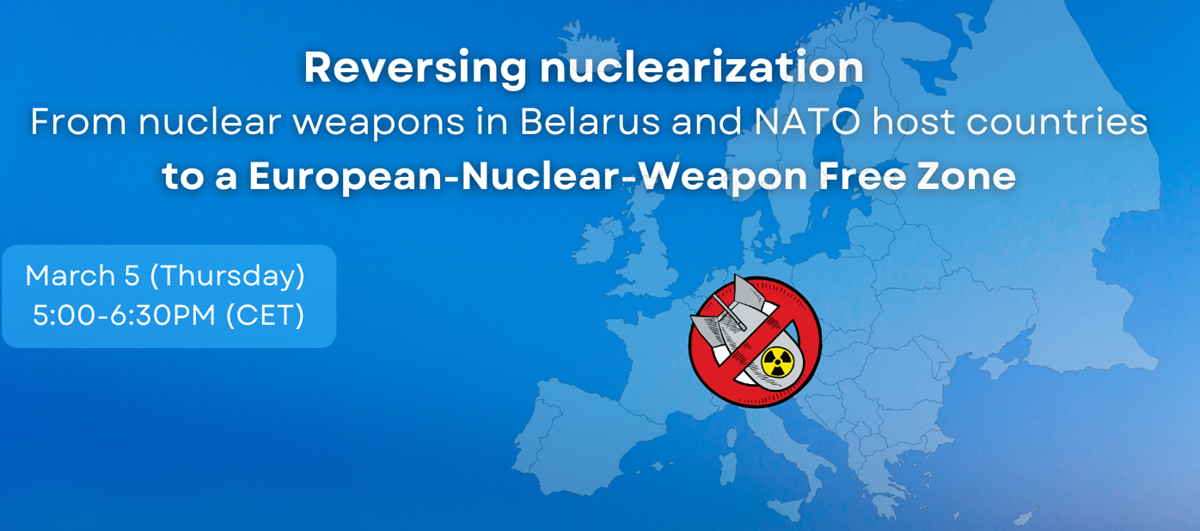
5 March -Online – Reversing nuclearization:
From nuclear weapons in Belarus and NATO host countries to a European-Nuclear-Weapon Free Zone
11am-12:30pm Eastern Time USA / 5pm-6:30pm CET

of the week – Advocating for a
nuclear free beach – https://www.samuellawrencefoundation.org/
The Samuel Lawrence Foundation advocates for a Nuclear Waste Free Beach at San Onofre, join us and take action!
10 March A LIVE WEBINAR THE REAL EFFECTS OF NUCLEAR POWER
What the Industry Isn’t Telling Us
1:00 PM Mountain, 2 pm Central, 3 pm Eastern. Live on the Keepers of the Water Facebook page

18 March Webinar @ 1 PM EST: An Assessment of SMR Projects: The Case of Canada
register for the zoom:
https://us02web.zoom.us/webinar/register/WN_o8BIIOUvQ2ONJR1nta65DQ#/registration

of the week – STOP SMALL MODULAR REACTORS IN CANADA
To see nuclear-related stories in greater depth and intensity – go to https://nuclearinformation.wordpress.com
-
Archives
- March 2026 (38)
- February 2026 (268)
- January 2026 (308)
- December 2025 (358)
- November 2025 (359)
- October 2025 (376)
- September 2025 (258)
- August 2025 (319)
- July 2025 (230)
- June 2025 (348)
- May 2025 (261)
- April 2025 (305)
-
Categories
- 1
- 1 NUCLEAR ISSUES
- business and costs
- climate change
- culture and arts
- ENERGY
- environment
- health
- history
- indigenous issues
- Legal
- marketing of nuclear
- media
- opposition to nuclear
- PERSONAL STORIES
- politics
- politics international
- Religion and ethics
- safety
- secrets,lies and civil liberties
- spinbuster
- technology
- Uranium
- wastes
- weapons and war
- Women
- 2 WORLD
- ACTION
- AFRICA
- Atrocities
- AUSTRALIA
- Christina's notes
- Christina's themes
- culture and arts
- Events
- Fuk 2022
- Fuk 2023
- Fukushima 2017
- Fukushima 2018
- fukushima 2019
- Fukushima 2020
- Fukushima 2021
- general
- global warming
- Humour (God we need it)
- Nuclear
- RARE EARTHS
- Reference
- resources – print
- Resources -audiovicual
- Weekly Newsletter
- World
- World Nuclear
- YouTube
-
RSS
Entries RSS
Comments RSS
 nuclear-news