As West blames Moscow for ‘food crisis’, ships sail from Mariupol with Moscow’s help while Ukraine holds vessels in its ports
https://web.archive.org/web/20220701161549/https://www.rt.com/russia/558011-foreign-ships-leave-mariupol/ Eva Bartlett, 3 July 22,
Western media and state officials keep blaming Russia for the ‘food crisis,’ but Moscow is trying to reopen Ukrainian and Donbass ports
Without much notice in the West, on June 21, the first foreign ship departed from the Port of Mariupol since Ukrainian and foreign mercenary forces were fully forced out of the Donbass city a month prior. Escorted by Russian naval boats, the vessel’s departure set the precedent for a resumption of normal port activity to and from Mariupol.
Russia’s Defense Ministry on May 20 announced the liberation of the Azovstal plant from Ukraine’s Nazi Azov Battalion, and some days later stated that sappers had demined an area of one and a half million square meters around the city’s port.
In early June, the ministry declared the facility ready for use anew. “The de-mining of Mariupol’s port has been completed. It is functioning normally, and has received its first cargo ships,” Defense Minister Sergey Shoigu said at the time.
Russia promised to give ships safe passage, and on June 21, the Turkish ship Azov Concord left with a Russian escort. At Mariupol port that day, prior to setting off, the captain of the ship, Ivan Babenkov, spoke to the media, telling us that the vessel, without cargo, was heading to Novorossiysk for loading, and then on to its destination.
Rear Admiral Viktor Kochemazov, commander of the Russian naval base in Novorossiysk on the Black Sea’s northeastern coast, down the Kerch Strait from Mariupol, explained that while the corridor has been operational since May 25, the nearly one-month delay in departing was because “ships were significantly damaged during the conduct of hostilities.” Notably, he also said that some ships were deliberately damaged by Ukrainian forces in order to prevent them from leaving.
From aboard a Russian anti-sabotage forces boat, media watched the Azov Concord leave port. Further on, the ship would be met by warships of the Novorossiysk base and escorted to the Kerch Strait where FSB border control ships would continue to escort the ship.
A Bulgarian ship, the Tsarevna, was readying to depart the port next, “also following the same humanitarian corridor to its destination in accordance with plans for the use of the court by the owner,” Rear Admiral Kochemazov said.
Western press ignoring developments
Predictably, just as the Western media continues to ignore Ukraine’s war crimes against the Donbass republics, including not only the bombing of houses, hospitals, and busy markets – plus the killing and maiming of civilians – so too do they omit coverage of anything positive emanating from areas where Ukrainian forces have been ousted and stability restored.
Instead, Western media continues to spin the story that it’s Russia that’s blocking ports and preventing grain exports, and blame Moscow for “aggravating the global food crisis” – when in reality, it is Ukraine that has mined ports and burned grain storages.
In fact, according to Russia’s Ministry of Defense, “70 foreign vessels from 16 countries remain blocked in six Ukrainian ports (Kherson, Nikolaev, Chernomorsk, Ochakov, Odessa and Yuzhniy). The threat of shelling and high mine danger posed by official Kiev prevent vessels from entering the high seas unhindered.”
While Russia maintains it has opened two maritime humanitarian corridors in the Black and Azov Seas, Kiev is apparently not engaging with representatives of states and ship-owning companies about the departure of docked foreign ships.
Meanwhile, in the same vein, media outlets like the New York Times (writing as always from afar) claim that Mariupol is “suffering deeply” under Russian rule (citing the runaway former mayor, nowhere near the city for months, who is the source of previous war propaganda) even describing the Azov Neo-Nazis as “the city’s last military resistance.”
Yet, what I’ve seen in multiple trips to Mariupol in the past couple of weeks is rubble being removed so that the rebuilding process can begin, newly established street markets, public transportation running, and calm in the streets.
The IAEA Needs Access to Ukraine’s Nuclear Power Plant. Biden Can Help

https://thedispatch.com/p/the-iaea-needs-access-to-ukraines
Since Russia seized the plant in March, the safety and security of the plant have been in jeopardy. Anthony Ruggiero and Andrea Stricker, 30 June 22,
“Untenable.” That’s how Rafael Grossi, director general of the International Atomic Energy Agency (IAEA), last week described the situation at Ukraine’s Zaporizhzhia nuclear power plant (ZNPP), which Russia seized in March. He said that every day “the independent work and assessments of Ukraine’s regulator are undermined,” the “risk of an accident or a security breach increases.” Grossi asserted he wants to send an IAEA mission to the ZNPP, which is Europe’s largest nuclear power plant. In a twist, however, Ukraine’s atomic energy regulators, presumably at the direction of Kyiv, have rejected Grossi’s request.
Ukraine believes an IAEA visit to the ZNPP would legitimize Russia’s control of the complex. Grossi has rejected that characterization, emphasizing that “it is absolutely incorrect. When I go there, I will be going there under the same agreement that Ukraine passed with the IAEA, not the Russian Federation.” President Joe Biden urgently needs to convince Ukrainian President Volodymyr Zelensky to let the IAEA in to ensure the ZNPP is safe and secure.
The ZNPP, located in east Ukraine, is a facility with six light water reactors, and it produced up to one-fifth of Ukraine’s electricity production before the war. To gain control of it, Russia shelled the area with missiles, sparking a widely reported fire. The missile attack spurred fears that Moscow could further damage the facility and cause a nuclear radiological incident that could harm Ukrainian civilians and neighboring countries.
Ukrainian authorities brought the fire under control, but Russia installed officials from its atomic energy agency, Rosatom, to oversee day-to-day work of Ukrainian personnel. The State Nuclear Regulatory Inspectorate of Ukraine warned in a statement that life at Zaporizhzhia has become intolerable under Moscow’s direction: Russia’s military and representatives of Russia’s Rosatom and its subsidiary Rosenergoatom “constantly terrorize and directly threaten the lives of the plant personnel.”
The Wall Street Journal reported this month that Russian military officers have been interrogating ZNPP employees to assess their loyalties to Moscow and reprimanding “workers who speak in Ukrainian rather than Russian and screening their cellphones for evidence of allegiance to Kyiv.” The Russians have also abducted, tortured, or shot workers. Russian officials at the plant have told workers that they intend to connect the ZNPP to Russia’s electricity grid, which would be costly and take years to accomplish, reinforcing Kyiv’s concerns that Moscow is preparing for long-term control of the facility.
Russia has not publicly opposed an IAEA visit. Grossi claimed in a June 6 statement to the IAEA Board of Governors that Ukraine had requested an IAEA mission to the plant and that the agency was ready to go. The day after Grossi’s statement, however, Ukraine’s atomic agency, Energoatom, wrote in a Telegram post that it had not invited the IAEA to visit. “We consider this message from the head of the IAEA as another attempt to get to the (power plant) by any means in order to legitimise the presence of occupiers there and essentially condone their actions,” the post stated.
In March, Grossi said that seven pillars of nuclear plant safety and security were at risk at the ZNPP. Those pillars include: maintenance of physical integrity; functional safety and security systems and equipment; freedom of operating staff to fulfill their safety and security duties and without undue pressure; a secure off-site power supply from the grid for all nuclear sites; uninterrupted logistical supply chains and transportation to and from the site; effective on-site and off-site radiation monitoring systems backed by emergency preparedness and response measures; and reliable communication with regulators and others. In his June 6 statement to the IAEA board, Grossi declared that five of seven pillars had been compromised. “This is why IAEA safety and security experts must go,” he said.
Moreover, the ZNPP stopped transmitting safeguards information to the IAEA on May 30, meaning the agency could not ascertain whether there had been theft or loss of nuclear material. “The Ukrainian regulator has informed us they have lost control of the nuclear material,” Grossi told the board.
President Biden is in a difficult spot: He is focused on fortifying Zelenskyy’s fighting forces against Russia, but Putin’s control of the ZNPP could lead to a safeguards or safety crisis in Ukraine. Biden should urge Ukraine to approve an IAEA visit. He should also insist that Russia stop its intimidation and violence against ZNPP workers and return the plant to Ukraine.
Biden officials privately doubt that Ukraine can win back all of its territory
Biden officials privately doubt that Ukraine can win back all of its territory https://edition.cnn.com/2022/06/28/politics/white-house-ukraine-projection/index.html
By Natasha Bertrand, CNN, June 28, 2022 White House officials are losing confidence that Ukraine will ever be able to take back all of the land it has lost to Russia over the past four months of war, US officials told CNN, even with the heavier and more sophisticated weaponry the US and its allies plan to send.
Advisers to President Joe Biden have begun debating internally how and whether Ukrainian President Volodymyr Zelensky should shift his definition of a Ukrainian “victory” — adjusting for the possibility that his country has shrunk irreversibly.
US officials emphasized to CNN that this more pessimistic assessment does not mean the US plans to pressure Ukraine into making any formal territorial concessions to Russia in order to end the war. There is also hope that Ukrainian forces will be able to take back significant chunks of territory in a likely counteroffensive later this year.
A congressional aide familiar with the deliberations told CNN that a smaller Ukrainian state is not inevitable. “Whether Ukraine can take back these territories is in large part, if not entirely, a function of how much support we give them,” the aide said. He noted that Ukraine has formally asked the US for a minimum of 48 multiple launch rocket systems, but to date has only been promised eight from the Pentagon.
And not everyone in the administration is as worried — some believe Ukrainian forces could again defy expectations, as they did in the early days of the war when they repelled a Russian advance on the Ukrainian capital of Kyiv. National security adviser Jake Sullivan has remained highly engaged with his Ukrainian counterparts and spent hours on the phone last week discussing Ukrainian efforts to recapture territory with Ukraine’s defense chief and Chairman of the Joint Chiefs of Staff Gen. Mark Milley, officials familiar with the call told CNN.
The growing pessimism comes as Biden is meeting with US allies in Europe, where he will try to convey strength and optimism about the trajectory of the war as he rallies leaders to stay committed to arming and supporting Ukraine amid the brutal fight.
“We have to stay together. Putin has been counting on from the beginning, that somehow NATO and the G7 would splinter, but we haven’t and we’re not going to,” Biden said Sunday while at the G7 summit in the Bavarian Alps.
The administration announced another $450 million in security assistance to Ukraine last week, including additional rocket launch systems, artillery ammunition and patrol boats. The US is also expected to announce as soon as this week that it has purchased an advanced surface-to-air missile defense system, called a NASAMS, for Ukrainian forces. Biden indicated in an op-ed earlier this month that he is committed to helping Ukraine gain the upper hand on the battlefield so that it has leverage in negotiations with Russia.
The mood has shifted over the last several weeks, though, as Ukraine has struggled to repel Russia’s advances in the Donbas and has suffered staggering troop losses, reaching as many as 100 soldiers per day. Ukrainian forces are also burning through their equipment and ammunition faster than the West can provide and train them on new, NATO-standard weapons systems.
A US military official and a source familiar with Western intelligence agreed it was unlikely that Ukraine would be able to mass the force necessary to reclaim all of the territory lost to Russia during the fighting — especially this year, as Zelensky said on Monday was his goal. A substantial counteroffensive might be possible with more weapons and training, the sources said, but Russia may also have an opportunity to replenish its force in that time, so there are no guarantees.
“Much hinges on whether Ukraine can retake territory at least to February 23 lines,” said Michael Kofman, a Russian military expert at the Center for Naval Analyses. “The prospect is there, but it’s contingent. If Ukraine can get that far, then it can likely take the rest. But if it can’t, then it may have to reconsider how best to attain victory.”
Russian forces gaining ground
Russian forces now control more than half of the eastern Ukrainian region of Donetsk, Pavlo Kyrylenko, the head of the Donetsk region military administration, said Thursday. Ukrainian forces retreated from the key eastern city of Severodonetsk on Friday after weeks of bloody battle.
Russian forces last week also captured ground around Lysychansk, the last city in the eastern Luhansk region still controlled by Ukraine. Ukrainian military commanders are now grappling with the reality that they may have to withdraw from the area to defend territory further west.
In the meantime, Russian oil revenues have only been going up as oil prices have skyrocketed, even amid the harsh sanctions imposed by the West. US officials said on Monday that the US and its allies are going to try capping the price of oil so Russia does not profit from it anymore, but how and when that cap will take effect remains to be seen.
Internally, there is a sense among some in the Biden administration that Zelensky will need to start moderating expectations for what Ukrainian forces can realistically achieve. Zelensky said late last month that he would “consider it a victory for our state, as of today, to advance to the February 24 line without unnecessary losses.”
He reiterated that goal last week.
“We don’t have any other choice left but to move forward — move to liberate all of our territories,” he said in a Telegram post. “We need to kick the invaders out of the Ukrainian regions. Though the width of the frontlines is as long as over 2,5000 km, we feel that we hold the strategic initiative.”
And on Monday, he put a timeline on it: He wants the war over, and for Ukraine to win, by the end of 2022, he told G7 leaders.
Russia is suffering acute combat losses as well, losing as much as a third of its ground force in four months of war, US intelligence officials estimate. Officials have also said publicly that Russia will struggle to make any serious gains further west, using the Donbas region as a staging ground, without a full mobilization of its reserve forces.
But Russia believes it can maintain the fight, wearing down Ukrainian and western resolve as the global economic effects of the war become more severe, officials have told CNN.
The hunt for Soviet-era weaponry
As CNN has previously reported, Russia is looking in particular to exploit the gap between how much Soviet-style ammunition Ukraine and its allies have in their stockpiles, and how long it will take the west to provide Ukraine with modern, NATO-standard weapons and munitions that require time-consuming training.
A senior defense official acknowledged to CNN that the Soviet-era stocks are “dwindling,” but haven’t yet reached “rock bottom.” The official said that some eastern European countries still have more they could provide — but only if they continue to be backfilled by allies with more modern equipment.
The US and its allies, meanwhile, have been scrounging the world for the kind of Soviet-era ammunition that fits the equipment Ukraine already has, including 152 mm artillery ammunition. NATO-standard weapons fire larger, 155mm rounds. But another US defense official told CNN that effort is effectively reaching its end, with almost everything available that countries are willing to provide having already gone in.
Given the prodigious rate at which the Ukrainians have gone through their older ammunition in the bruising artillery fight in the Donbas, the official said, “Soviet-era weapons are being wiped off the earth.”
CNN’s Katie Bo Lillis, Oren Liebermann and Barbara Starr contributed to this report.
Journalist branded enemy of state by Ukraine
Journalist branded enemy of state by Ukraine https://www.rt.com/russia/557990-reporter-rape-ukraine-blacklist/ 29 June 22
The journalist got into hot water after penning an expose highlighting how Ukraine’s now ousted human rights chief spread false rape claims.
The bombshell expose was published by the Ukrainskaya Pravda (Ukrainian Truth) newspaper on Monday. According to the piece, citing various official sources, a vast majority of allegations of “sexual atrocities,” purportedly committed by Russian troops amid the ongoing conflict, were false. The allegations have been spread by human rights chief Denisova, who got ousted in late May after a no-confidence vote over her failure to organize humanitarian corridors and prisoner exchanges as well as “inexplicably focusing” on spreading unverified and unsubstantiated claims.
According to the report, Ukrainian law enforcement officials tried to investigate Denisova’s claims but found no evidence to back them up. After interrogating Denisova several times, officials discovered she had received all her explosive revelations from her daughter, Alexandra Kvitko, “over tea.” The latter ran a ‘psychological hotline’ for victims of wartime violence, established in collaboration between Denisova’s office and UNICEF.
The hotline lacked transparency, and while Kvitko reportedly told investigators it received over 1,000 calls in only a month and a half, with some 450 of them detailing the rape of minors, the hotline’s logs suggested it got only 92 calls. The exact nature of the calls remained unclear as well, since Kvitko failed to provide investigators with any details on the alleged victims, according to the report.
Multiple Ukrainian public figures condemned the expose, insisting that reporting on the activities of the disgraced human rights chief and her daughter helps Russia. Political commentator and prominent supporter of ex-president Petro Poroshenko, Taras Berezovets, for instance, bluntly accused the reporter of producing prime material for “Russian propaganda.”
The author of the Denisova investigation, Sonya Lukashova, who accused the former human rights chief of creating numerous fakes about the rape of Ukrainian children, ended up on the Mirotvorets database. Lukashova’s material has been very heavily cited by Russian propaganda,” Berezovets said in a social media post.
The Mirotvorets website was created in 2014 as a public database of “pro-Russian terrorists, separatists, mercenaries, war criminals, and murderers.” The website provides links to social media accounts and personal information, such as home addresses, phones, and emails. Over the years, numerous high-profile public figures and politicians have ended up on the Mirotvorets list over actions deemed to be “anti-Ukrainian.” Hungary’s PM Viktor Orban and former US Secretary of State Henry Kissinger are among the latest additions to the database……..
Ukraine won’t pursue NATO membership – Zelensky adviser
Ukraine won’t pursue NATO membership – Zelensky adviser https://www.rt.com/russia/557824-ukraine-doesnt-want-to-join-nato/ 27 June 22,
However, Kiev wants the bloc to acknowledge its role as a “cornerstone” of European security.
Ukraine has accepted that NATO membership is off the table, and will not take any further steps toward joining the US-led military bloc, Igor Zhovkva, an adviser to President Volodymyr Zelensky, told the Financial Times on Saturday. Nevertheless, Kiev wants a say in NATO’s policy making.
The bloc’s leaders are set to meet in the Spanish capital of Madrid next week. During two days of meetings and consultations, the organization will unveil its Strategic Concept – a document that outlines its mission and stance toward perceived threats, including China and Russia.
Zhovkva told the Financial Times that Zelensky’s government wants NATO to acknowledge that Ukraine is “a cornerstone of European security,” and to reaffirm its partnership with Kiev, first established in 1997.
However, he said that Ukraine will not push to become a member of the bloc.
“Nato members have declined our aspirations. We will not do anything else in this regard,” he said.
Ukraine’s prospective membership was a key factor behind the current conflict with Russia. The previous Petro Poroshenko-led government added the goal of becoming a NATO member to the country’s constitution in 2019, despite Moscow’s warnings that having the bloc’s forces and weapons on its border would constitute an unacceptable security threat.
NATO Secretary General Jens Stoltenberg has insisted that membership remains open for interested nations, but has not promised or ruled out accession for Ukraine in the near term. Under the 2008 Bucharest Declaration, NATO’s official position is that Georgia and Ukraine “will become members of NATO” at an unspecified future date.
NATO’s Strategic Concept has not been updated since 2010. That version of the document states that the alliance seeks “a true strategic partnership” with Russia.
Zhovkva wants NATO to purge any mention of Russia as a “partner” from the coming update.
“We expect in the Nato strategic concept . . . there will be more strict and severe warnings to the Russian aggressor,” he said, urging the alliance “don’t be shy” in inserting anti-Russian text.
Furthermore, Zhovkva said that he wants the Ukrainian conflict to be described in the strategy document, arguing “it’s not enough just to cross out the word ‘partner.’”
Eva Bartlett: Here’s what I found at the reported ‘mass grave’ near Mariupol
https://www.sott.net/article/467261-Eva-Bartlett-Heres-what-I-found-at-the-reported-mass-grave-near-Mariupol Eva Bartlett, RT Thu, 28 Apr 2022, According to recent Western media, Russian forces have buried up to 9,000 Mariupol civilians in “mass graves” in a town just west of the Ukrainian city. These reports use satellite imagery as supposed evidence and repeat the claims of officials loyal to Kiev that “the bodies may have been buried in layers” and “the Russians dug trenches and filled them with corpses every day throughout April.”
I went to the site in question and found no mass graves.
The Chernobyl disaster: Five interesting facts about the worst nuclear accident in history
Was it human error or not?
Interesting Engineering, By Maia Mulko 27 June 22, The Chernobyl disaster occurred on 26 April 1986 at the No. 4 reactor of the Chernobyl Nuclear Power Plant near the city of Pripyat, in the north of Ukraine, in what was then the Soviet Union. It occurred when an RBMK 1000 reactor overheated and exploded during a safety test, releasing at least 5% of the radioactive reactor core into the environment and depositing radioactive material across a wide swathe of Europe.
The explosion itself killed two engineers. Another 28 to 30 operators and firemen who helped fight the blaze died of acute radiation syndrome within a few weeks of the accident, and a number of workers later died of causes related to suspected radiation exposure.
Workers of the plant, firefighters, and residents of the nearby city of Pripyat received dangerous doses of ionizing radiation.
The event also likely had a significant environmental impact. Radiation contaminated drinking water and fish over large distances, destroyed 1.5 square miles (4 square kilometers) of pine forest, and killed or induced mutations in other plants or animals. Large areas of Belarus, Ukraine, Russia, and parts of Europe were contaminated to varying degrees……..
Here are some interesting facts about Chernobyl nuclear disaster.
1) The reactor had design flaws
The Chernobyl disaster is usually attributed to human error. Viktor Bryukhanov, the manager of construction and director of the nuclear plant, was held responsible for the accident and imprisoned for violation of safety regulations in 1987. He was released in 1991.
But now we know that the cause of the accident was most likely a combination of human error and design deficiencies in the Soviet-era RBMK 1000 reactors and that many of these faults were known by Soviet experts but kept secret from Bryukhanov.
1) The reactor had design flaws
The Chernobyl disaster is usually attributed to human error. Viktor Bryukhanov, the manager of construction and director of the nuclear plant, was held responsible for the accident and imprisoned for violation of safety regulations in 1987. He was released in 1991.
But now we know that the cause of the accident was most likely a combination of human error and design deficiencies in the Soviet-era RBMK 1000 reactors and that many of these faults were known by Soviet experts but kept secret from Bryukhanov.
Some of these flaws were:………………………………..
Additionally, the power plant operators weren’t adequately trained to work with this type of reactor. Unaware of its weaknesses, the reactor crew disabled automatic shutdown mechanisms to prepare for a test on the reactor would perform following a loss of main electrical power supply.
As the reactor began overheating, a peculiarity of the design of the control rods caused a dramatic power surge as they were inserted into the reactor, leading to the rapid increase in core reactivity.
2) The real death toll of the disaster is unknown
It took almost two weeks after the explosion for firefighters to put out the graphite-fueled fire.
But the fire wasn’t the only threat, as toxic fumes —composed mainly of fission products iodine-131, cesium-134, plutonium-239, and cesium-137— were still in the air.
Apart from the two engineers killed at the blast, 28-31 emergency workers and plant operators died of acute radiation sickness in the first three months after the accident.
According to the International Atomic Energy Agency (IAEA), there were also 1,800 documented cases of thyroid cancer in children living in the region who were between 0-14 years old at the time of the accident, which is “far higher than normal”. This is likely related to the release of iodine-131, which accumulates in the thyroid.
A 2005 report by the United Nations estimated that up to 4,000 deaths might ultimately result from radiation exposure from the accident..
The Chernobyl nuclear disaster also increased unnecessary induced abortions due to fear of birth defects ……..
3) Evacuations started 36 hours after the accident
Many people in Pripyat —located around 2 miles (3 kilometers) from the Chernobyl Nuclear Power Plant— began suffering from symptoms like headaches and vomiting within a hours after the accident, but an evacuation wasn’t ordered until 36 hours after the accident.
This was likely due to the fact that the Soviet authorities were reluctant to acknowledge first that an accident had occurred and then the full extent of the accident. On April 28, radiation levels set off alarms at the Forsmark Nuclear Power Plant in Sweden, around 620 mi (1,000 km) from Chernobyl. However, when the Swedish government contacted the Soviets, they initially denied an accident had taken place at all and only admitted it once the Swedish government said they were about to file a report
with the International Atomic Energy Agency
Although Pripyat inhabitants were initially told that they would only be away for three days, the Chernobyl Exclusion Zone (officially called the Chernobyl Nuclear Power Plant Zone of Alienation) was created about 10 days later with a radius of 30 kilometers (19 miles) of the nuclear plant.
Residents never went back and Pripyat is a ghost city since then.
The Chernobyl Exclusion Zone now measures approximately 1,000 square miles (2,600 square kilometers). Around 7,000 people live and work in and around the plant (or did until the beginning of the war with Russia), and around 150 have returned to the surrounding villages, despite the risks.
4) The “liquidator” status
Civil and military personnel exposed to radiation while trying to mitigate the effects of the nuclear disaster were termed “liquidators”. Those who worked as liquidators have a similar status to veterans and are entitled to certain social benefits, although many have since complained of a deterioration in their compensation and medical support over time.
Around 600,000 people were granted the status of “liquidator.” They were mainly men and women who worked on the clean-up and decontamination of the area —such as those who removed contaminated debris from the nuclear plant, those who worked on the construction of the “sarcophagus” (a steel and concrete structure to cover the exploded reactor and prevent further contamination), those who helped build settlements for evacuees, etc.
Fortunately, many radioactive elements released into the air are short-lived, but strontium-90 and cesium-137 each have around a 30-year half-life. These elements have been found in lakes, and they are also present in the water and fish of rivers of Ukraine, Russia, and Belarus, as well as in the air of the Chernobyl Exclusion Zone. https://interestingengineering.com/chernobyl-disaster-facts-worst-nuclear-accident
Ukraine shuts down its co-operative agreements with Russia in the matter of nuclear power safety

Ukraine terminates Russia nuclear agreements, WNN, 27 June 2022,
The State Nuclear Regulatory Inspectorate of Ukraine (SNRIU) says it has terminated international agreements concerning cooperation between the country and Russia in the field of nuclear safety
In a statement posted on its website on 27 June, SNRIU said that “due to the military aggression of the Russian Federation, the State Inspectorate for Nuclear Regulation of Ukraine terminates international agreements concerning cooperation between countries in the field of nuclear safety”.
It said the order was signed on 24 June by Acting Chairman Oleg Korikov and terminated an agreement on cooperation between the Ministry of Environmental Protection and Nuclear Safety of Ukraine and the Federal Supervision of Nuclear and Radiation Safety of Russia which was signed in Vienna in September 1996. It also terminates the agreement between the State Nuclear Regulatory Committee of Ukraine and the Federal Nuclear and Radiation Safety Supervision of Russia on the exchange of information and cooperation in the field of safety regulation in the peaceful uses of nuclear energy, which was signed in Moscow in August 2002……………………….
The International Atomic Energy Agency (IAEA) has warned about the number of key nuclear safety rules which have been broken as a result of the military action in and around nuclear power plants, and the continuining occupation of Zaporizhzhia.
IAEA Director General Rafael Mariano Grossi, who has been trying to organise a mission for its inspectors to Zaporizhzhia, said he was becoming increasingly concerned…………….. https://world-nuclear-news.org/Articles/Ukraine.
As world leaders promote nuclear power as SAFE, a dangerous situation develops at Europe’s largest nuclear power plant _- Zaporizhzia in Ukraine !

| Ukraine’s nuclear regulatory agency faces an unprecedented struggle to maintain nuclear safety, most notably including “terrorism against firefighters and nuclear power plant personnel” at the Russian-occupied Zaporozhye nuclear power plant, according to Oleg Korikov, the organization’s beleaguered interim head. Korikov warned fellow Europeanregulators in Europe that Ukraine’s Nuclear Regulatory Inspectorate (SNRIU) is unprepared for further deterioration at Zaporozhye, a six-reactor facility that is Europe’s largest nuclear plant, and is essentially in uncharted waters. “We do not have rules, regulations [for] how we can regulate, how we can operate, in these conditions,” said Korikov. Staff at Zaporozhye “is under heavy psychological pressure of Russian soldiers,” theSNRIU’s acting chairman and chief state inspector told a Jun. 20 meeting of the European Nuclear Safety Regulators Group. There is “kidnapping and attacks on nuclear power plant staff” in Enerhodar, the Russian-occupied city closest to the plant. “We have evidence of this.” This appeared to = confirm what has emerged as one of the most troubling aspects of the situation at Zaporozhye and Enerhodar since both were occupied by Russian troops on Mar. 4: the kidnapping, intimidation, interrogation and torture of Zaporozhye workers. Energy Intelligence 24th June 2022 https://www.energyintel.com/00000181-910f-d7da-adc1-976f35b80000 |
No Western ”boots on the ground” in Ukraine? Just commandoes and CIA agents
Western ‘network of commandos and spies’ helping Ukraine – NYTCIA agents have been stationed in Kiev to share US intel with Ukrainian troops, the report claims https://www.rt.com/news/557848-us-cia-agents-kiev/ NATO members have been supplying Ukraine with heavy weapons, including missile launchers, combat drones and armored vehicles, and training Ukrainian troops to use them. In recent months, the Pentagon has delivered M142 HIMARS multiple rocket launchers and M777 howitzers.
US Defense Secretary Lloyd Austin said last week that Ukraine was facing “a pivotal moment on the battlefield” and urged Washington’s allies to continue aiding Kiev.
The report about the activities of Western commandos and CIA agents in and around Ukraine comes as a three-day Group of Seven (G7) summit kicks off in Germany on Sunday. The group, which comprises of the US, Canada, Britain, France, Germany, Italy and Japan, which have imposed sweeping sanctions on Russia.
Moscow has said in the past that it will treat foreign weapons, on Ukrainian soil, as legitimate targets.
A secret network of commandos and spies from the US, and some of its allies, is working to provide weapons, intelligence and training to Ukraine, the New York Times (NYT) reported on Saturday, citing current and former American and European officials.
While much of the activity takes place at bases in Britain, Germany and France, some CIA agents have been stationed in the east European country, mostly in the capital Kiev, the paper said.
The agents are tasked with sharing satellite images and other intelligence with Ukrainian troops, according to the story.
The US announced the evacuation of military instructors from Ukraine in February. Shortly afterwards, Russia launched its military campaign and the US Army’s 10th Special Forces Group set up a planning cell in Germany to coordinate military aid to Kiev, the paper explained. The group has reportedly grown to include participants from 20 nations.
The NYT added that “a few dozen commandos” from other NATO member states, including Canada, Britain, France and Lithuania, have also been working in Ukraine.
NATO members have been supplying Ukraine with heavy weapons, including missile launchers, combat drones and armored vehicles, and training Ukrainian troops to use them. In recent months, the Pentagon has delivered M142 HIMARS multiple rocket launchers and M777 howitzers.
US Defense Secretary Lloyd Austin said last week that Ukraine was facing “a pivotal moment on the battlefield” and urged Washington’s allies to continue aiding Kiev.
The report about the activities of Western commandos and CIA agents in and around Ukraine comes as a three-day Group of Seven (G7) summit kicks off in Germany on Sunday. The group, which comprises of the US, Canada, Britain, France, Germany, Italy and Japan, which have imposed sweeping sanctions on Russia.
Moscow has said in the past that it will treat foreign weapons, on Ukrainian soil, as legitimate targets.22
A despicable Ukrainian PSYOP in Bucha
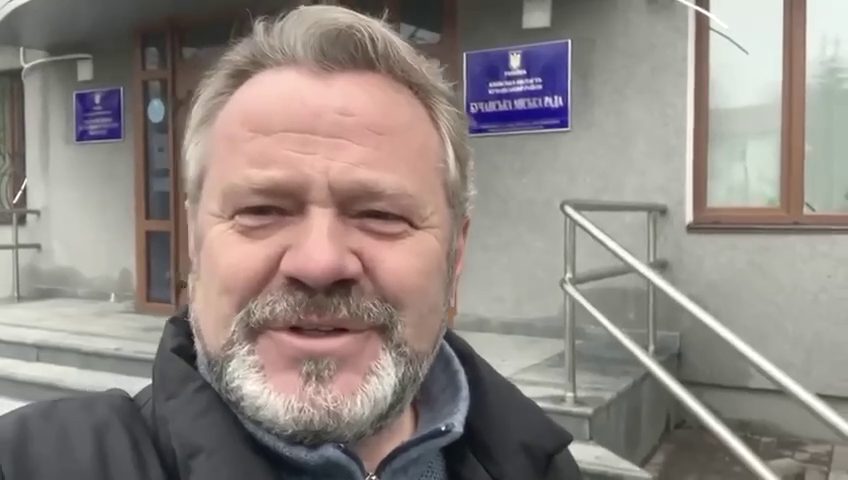
2:31 pm UT, April 1 Bucha Mayor Fedoruk does NOT mention murders of civilians – Bisher ist Alles in Ordnung ! (So far everything is fine.!)
Truth is the first casualty in war – Ethel Annakin, 1915
Nicolas Cinquini senior intelligence analyst in the field of security risk management, I am a former intelligence officer and lieutenant detective within French State agencies 24 June 22 [Excellent maps and photos on original]
On April 4, 2022, the Western media are roaring against Russia, about the slaughter of civilians in Bucha, a town in Kiev northwestern suburb, Ukraine. The dates and sites of the killings are unknown. The identities of the victims are unknown. The sources are Ukrainian, directly or indirectly officials whose assertions are widely admitted. I am a long time fan of the British media and tabloids. In the United Kingdom, the buzz is a gradient, from Civilians ‘shot in the street’ [The Times] to Putin last atrocities, GENOCIDE [Daily Mirror]. Here is the cover of The Guardian [on original – the title reads – ”Horror in Bucha: Russia Accused of Torture and Massacre of Civilians”]
On April 3, French president Emmanuel Macron has already written on Twitter
the images reaching us from Bucha, a liberated town near kyiv, are unbearable. In the streets, hundreds of cowardly murdered civilians. My compassion for the victims, my solidarity with the Ukrainians. The Russian authorities will have to answer for these crimes.
Yet, some journalists have learned how to investigate and State intelligence agencies are supposed to deliver reliable information to the politicians. I am wondering what are the shares of bad faith and hysteria.
By the way, what happened in Bucha and when ?
The military context………………………
- 11:00 pm UT, March 28
Jomini of the West is a Western military analyst, a
polemologist writer and speaker on all things related to human conflict. #Fortuna Podcast ; discussions on waging peace, surviving war, and the fate of Humankind,
who is making analytical assessments and nice maps.
On March 28, Bucha is on the front line and Ukraine forces are counterattacking [map on original]
Jomini won’t make new assessment or map in the region of Kiev before March 31.
- 9:20 pm UT, March 31
On social networks, Ukrainian channels are sharing a video recorded from drone in broad daylight : the Russian forces have left Antonov airport, which is north of Gostomel, which is north of Bucha.
the Russians are conducting a strategic retreat in good order. If they have withdrawn from Antonov airport, a fortiriori, they have left Gostomel and Bucha
- 11:00 pm UT, March 31
The Russian forces are conducting a retreat in good order on the right bank (left on the map) of the Dniepr. The front line is now north of Ivankiv, about 60 km north of Bucha, that the Ukrainian forces are controlling, far behind their new lines. Some wooden areas need to be searched north of Bucha, because Russian elements may remain there. The retreat is conducted in good order and I don’t think that Russian servicemen have been isolated [Map on original]
- 2:31 pm UT, April 1
Anatoliy Fedoruk is the mayor of Bucha. Ecstatic, he publishes on Facebook a video from the town, says […]
March 31 will go down in the history of our Bucha community as the Day of Liberation. The liberation by our Armed Forces of Ukraine from Russian orcs [sic], from Russian occupiers. So today, I state that this day is joyful. Joyful and this is a great victory in Kyiv region ! And we will definitely wait so that there is a great victory all over Ukraine […]
> according to cross-checked information from various sources, the Ukrainian forces are controlling Bucha since March 31. I have found no trace of fresh fighting in the town. On April 1, the Ukrainian administration is back, the SBU (State security) and its PSYOP department too.
Fedoruk does NOT mention murders of civilians
We know that the Ukrainian forces are controlling Bucha since March 31. On April 3, the Russian defense ministry will state that its army have left the town on March 30. There was no urban warfare, the Ukrainians came in the day after.
On April 1, nobody mentions murders of civilians.
The liberation of Bucha – Bisher ist Alles in Ordnung ! (So far everything is fine.!)
We know that the Ukrainian forces are controlling Bucha since March 31. On April 3, the Russian defense ministry will state that its army have left the town on March 30. There was no urban warfare, the Ukrainians came in the day after.
On April 1, nobody mentions murders of civilians.
The liberation of Bucha
- 5:48 pm UT, April 2
AFP (Agence France Presse) writes on Twitter
#BREAKING Almost 300 people buried in ‘mass grave’ in Bucha outside Kyiv: mayor [Anatoliy Fedoruk]
> More than 25 hours after his ecstatic video from the town, two days after its liberation, Fedoruk speaks by phone with a Western news agency, about dead civilians and a mass grave.
Actually, Ukrainian web users are sharing an amateur video, allegedly from Bucha, since 0:15 am. It has been recorded in broad daylight, probably the day before, April 1. A few corpses are scattered in the middle of a street.
300 was already, according to the Ukrainian authorities, the number of vicitms of the alleged Russian airstrike against the Drama theater in Mariupol, Donbass, on March 16.
- 5:52 pm UT, April 2
At the same time, the official website of the Ukrainian national police publishes an article and photos about its operations in Bucha, since its liberation on March 31 […]
today, April 2, in the liberated city of Bucha, Kyiv region, special units of the National Police of Ukraine began clearing the area of saboteurs and ACCOMPLICES of Russian troops […]
The involved units are special purpose [I am in Love with euphemism] formations. But their names are evocative : Safari, Kord, Thor.
> Released in the afternoon of April 2, two days after the liberation, three days after the Russian retreat, an official Ukrainian article does NOT mention murders of civilians
- 6:41 pm UT, April 2
The AFP (Agence France Presse) adds on Twitter […]
as witnessed by @AFP, he [Anatoliy Fedoruk] said the heavily destroyed town’s streets are littered with corpses […]
- 9:48 pm UT, April 2
The AFP (Agence France Presse) adds on Twitter […]
in the town of Bucha, AFP reporters saw at least 20 bodies on a single street including one with his hands tied […]
> The AFP photographer is Ronaldo Schemidt, a Venezuelan one and a reliable source. His pictures from Bucha are now famous. I won’t share here images of the corpses, which are about two dozens at all, in various sites. They seem still fresh, but a coroner could assert it. They are dressed like civilians. Some are wearing WHITE ARMBANDS, which are the usual identification mark of Russian troops, some others with hands tied in the back with identical white bands.
Some victims were clearly carrying Russian food rations. The Russian army is widely dispensing food rations in the areas under its control. But in Ukrainian nationalist opinion, to accept such ration is an act of treason.
Here is an enhanced screenshot from an amateur video which is shared on social networks the same day [on original]
> The death toll is finally 57, not 300 [Anatoliy Fedoruk] nor hundreds [Emmanuel Macron] The trench is so far the unique mass grave in Bucha, where Ukrainians are CURRENTLY burying the corpses which were previously lying in the streets.
They are NOT conducting forensic investigations. The ABCs of such criminal probe are the identification of each victim, dating and map of each corps, identification of the causes of each death. As we already know, the cops are abounding in Bucha. Why do they not conduct these elementary tasks ?
My expertise
The Russian troops have withdrawn from Bucha on March 30. The Ukrainian forces have occupied the town on March 31. The clearing of Russia accomplices has begun. Nobody claimed it or took credit. But CRASH ! on April 2 : web users have started to share an amateur video which was showing corpses scattered in a street on April 1. The Ukrainian authorities have taken the chance to accuse Russia, with the usual complaisance of Western media and politicians.
Finally, without forensic investigation, 57 people have been buried in a mass grave on April 3. They were Russia accomplices, whom Ukrainian death squads have assassinated, maybe also some fatalities of the previous fighting.
Facts are not the friends of Ukraine and its allies
Scott Ritter, former US intelligence officer on April 4, 2022
Postscript
While the European Union is emerging as no more than a free trade area within NATO, its German president, Ursula von der Leyen, on April 8, visits Bucha, which will become a PR scene for Western politicians.
The disgrace is not that Leyen is a poor actress. The climax of the staging is that one week after the alleged Russian massacre, a bundle of filled body bags, maybe victims inside, are still lying on the ground in the open. Did they wait there for her ? Have they been displaced like movie sets ? The film crew is so disrespectful of the dead, so contemptuous of the public intelligence, so inhuman. https://nicolascinquini.blog/2022/04/04/a-despicable-ukrainian-psyop-in-bucha/
West’s Ukraine fantasy will spell doom for the Ukrainian nation

There is a price to be paid for the fanciful delusions of the West, and those in Ukraine who believe them, and that price may be the very existence of a Ukrainian state.
https://www.presstv.ir/Detail/2022/06/17/684090/West-Ukraine-War-Fantasy-Death-Ukrainian-Nation
18 June 2022 By Scott Ritter
In the words of US Secretary of State Antony Blinken, Europe is undergoing one of the greatest struggles in the name of freedom since the American Revolution.
“The Ukrainians are fighting for their country; they’re fighting for their future; they’re fighting for their freedom,” Blinken said recently.
“I am convinced and confident that, at the end of the day, Ukraine’s independence, Ukraine’s sovereignty will prevail and will be there long after Vladimir Putin has left the scene.”
What was left unsaid was the reality that Russian President Vladimir Putin has survived four US presidential administrations and is well on his way to outlasting a fifth — the Biden administration that Blinken serves.
Blinken’s comments come on the heels of continued calls from Ukraine’s embattled President, Volodymyr Zelensky, for additional deliveries of heavy weapons needed for his country’s ongoing fight against invading Russian forces.
While acknowledging that Ukrainian forces were suffering “painful losses” on the front lines, Zelensky believes that Ukrainian forces would be able to hold on to the contested Donbas region, and eventually launch a counterattack that would throw Russian troops from the totality of sovereign Ukrainian territory—including both Crimea and the Donbas.
While many military analysts have come to assess that the war in Ukraine has tilted in Russia’s favor, US defense officials believe that the opposite is in fact true — Ukraine is emerging from the current struggle with “an advantage” brought on by the provision of billions of dollars of military assistance by the US and the West to the Ukrainian armed forces.
The US stance has apparently emboldened Ukraine’s European allies, with French President Emmanuel Macron, German Chancellor Olaf Scholz, Italian Prime Minister Mario Draghi, and Romanian President Klaus Iohannis all travelling to Kiev to pledge their ongoing support for Ukraine, both in terms of continuing to provide advanced weaponry to fend off the Russians, but also to support Ukraine’s efforts to join the European Union.
Not to be outdone, British Prime Minister Boris Johnson made his own solo jaunt to Kiev on Friday, armed with a plan for Great Britain to provide training for 10,000 Ukrainian soldiers every 120 days.
The problem facing the European leaders is the harsh reality of military math. The driving force behind Ukraine’s desperate need for heavy weapons is the fact that in the 100-plus days Ukraine has been fighting Russia, the Russian military has destroyed the vast majority of Ukraine’s pre-conflict arsenal.
This fact is played out with violence daily — in a conflict that has taken on the characteristic of a massive artillery duel, the Ukrainians are able to fire some 5-6,000 rounds of artillery per day toward the Russian forces. Russia, on the other hand, replies with 60,000 rounds — per day (by way of comparison, US forces fired a total of 60,000 artillery rounds during the entirety of Operation Desert Storm, in 1991.)
The hard truth is that Russia will destroy whatever weaponry the West provides well before Ukraine would be able to assemble the mythical “offensive capability” of American imagination.
Moreover, with Ukrainian officials themselves admitting casualty rates of 200-plus killed and 500-plus wounded per day, there is no way Johnson’s offer of training could reverse the inevitable tide of Ukraine’s looming strategic military defeat — with Ukraine losing 10,000 troops every two weeks, the British offer to replace them every four months rings hollow.
The President of the Donetsk People’s Republic, Denis Pushilin, in a statement made during the St. Petersburg Economic Forum, indicated that Ukraine’s decision to receive heavy weapons from the West leaves the Russian forces no choice but to continue military operations even after the liberation of the Donbas.
All cities in Ukraine where there is a large Russian population, such as Kharkov and Odessa, will be captured, and the Ukrainian armed forces destroyed.
Pushilin believed that when the so-called special military operation was over, which he believed would be before the year ended, that Ukraine would no longer exist as a nation.
It is hard to imagine that Pushilin would make such a statement on Russian soil, at a conference organized by the Russian Presidency, without first clearing it with his Russian hosts.
There is a price to be paid for the fanciful delusions of the West, and those in Ukraine who believe them, and that price may be the very existence of a Ukrainian state.
After lying for months, the media are preparing the public for Ukraine’s military collapse.
THE AMERICAN CONSERVATIVE DOUGLAS MACGREGOR JUNE 17, 2022
Diogenes, one of the ancient world’s illustrious philosophers, believed that lies were the currency of politics, and those lies were the ones he sought to expose and debase. To make his point, Diogenes occasionally carried a lit lantern through the streets of Athens in the daylight. If asked why, Diogenes would say he was searching for an honest man.
Finding an honest man today in Washington, D.C., is equally challenging. Diogenes would need a Xenon Searchlight in each hand.
Russian errors were exaggerated out of all proportion to their significance. Russian losses and the true extent of Ukraine’s own losses were distorted, fabricated, or simply ignored. But conditions on the battlefield changed little over time. Once Ukrainian forces immobilized themselves in static defensive positions inside urban areas and the central Donbas, the Ukrainian position was hopeless. But this development was portrayed as failure by the Russians to gain “their objectives.
Ground-combat forces that immobilize soldiers in prepared defenses will be identified, targeted, and destroyed from a distance. When persistent overhead intelligence, surveillance, and reconnaissance assets, whether manned or unmanned, are linked to precision guided-strike weapons or modern artillery systems informed by accurate targeting data, “holding ground” is fatal to any ground force. This is all the more true in Ukraine, because it was apparent from the first action that Moscow focused on the destruction of Ukrainian forces, not on the occupation of cities or the capture of Ukrainian territory west of the Dnieper River.
The result has been the piecemeal annihilation of Ukrainian forces. Only the episodic infusion of U.S. and allied weapons kept Kiev’s battered legions in the field; legions that are now dying in great numbers thanks to Washington’s proxy war.
Kiev’s war with Moscow is lost. Ukrainian forces are being bled white. Trained replacements do not exist in sufficient numbers to influence the battle, and the situation grows more desperate by the hour. No amount of U.S. and allied military aid or assistance short of direct military intervention by U.S. and NATO ground forces can change this harsh reality.
The problem today is not ceding territory and population to Moscow in Eastern Ukraine that Moscow already controls. The future of the Kherson and Zaporozhye regions along with the Donbas is decided. Moscow is also likely to secure Kharkov and Odessa, two cities that are historically Russian and Russian-speaking, as well as the territory that adjoins them. These operations will extend the conflict through the summer. The problem now is how to stop the fighting…………….
Profit in a time of war? The madness of more reactors (from Westinghouse) in Ukraine

in the middle of all this, Ukraine is busy making business deals with a bankrupt American nuclear company with a lamentable track record of cost over-runs, technical challenges and long delayed completion times.
The madness of more reactors in Ukraine https://beyondnuclearinternational.org/2022/06/19/profit-in-a-time-of-war/
Profit in a time of war? — Beyond Nuclear International Westinghouse lands in Ukraine to ink new nuclear deal
By Linda Pentz Gunter
You might think that being in the middle of a war, the last thing you would be contemplating is building more nuclear power plants. But that hasn’t stopped Energoatom, the Ukrainian state nuclear operator.
Earlier this month, Energoatom inked a new agreement with Westinghouse of all companies, the American corporation that went bankrupt trying to build four of its AP1000 reactors in South Carolina and Georgia. The two in South Carolina were canceled mid-construction, while the pair in Georgia are years behind schedule and billions of dollars over-budget.
But like a good corporate vulture, Westinghouse has swooped into Ukraine, to grab a golden opportunity. Already the supplier of nuclear fuel to almost half of Ukraine’s reactors, the company now plans to increase that commitment to all 15, replacing Russia’s Rosatom; to establish a Westinghouse Engineering and Technical Center; and, craziest of all, build nine new AP1000 reactors there.
Westinghouse already has the contract to build more reactors at the 2-reactor Khmelnytsky nuclear power plant, which remain partially complete. Under the deal, Westinghouse will work first on Khmelnitsky 3, which is 75% complete, before taking on the 25% complete unit 4. Talks this month also evaluated Westinghouse building two more reactors at the site.
Fifteen operational reactors in a war zone — seven of them are apparently still running in Ukraine — is already risk enough. If even one of those reactors were fully breached, or its fuel pool caught fire or suffered an explosion — whether from an attack, accident, or meltdown due to gird failure — the amount of radioactivity released would dwarf the 1986 Chornobyl disaster.
Chornobyl Unit 4 was a relatively new reactor when it exploded on April 26, 1986, releasing potentially as much as 200 million curies into the environment. At least 100,000 square kilometres (39,000 square miles) of land was significantly contaminated with radioactive fallout. As much as 40% of Europe beyond Ukraine, Russia and Belarus, received fallout from the disaster. Certain plants and animals — including in Germany, Lapland and, until recently, the United Kingdom—remain unsafe to eat, even today.
The contamination from Chornobyl, and the resulting and widespread health effects, will endure potentially indefinitely. And all of that, as Scientists for Global Responsibility’s Phil Webber said in a recent webinar, would “look like a tea party” compared to the devastation unleashed should one of the older Ukrainian reactors suffer a catastrophe during this unforgivable war.
We’ve already seen the six-reactor Zaporizhzhia site attacked and a fire break out, mercifully not in one of the reactors or fuel pools. Zaporizhizhia will now likely remain permanently occupied by the Russians as they move deeper into Ukrainian territory from the east.
More recently, there have been incidences of Russian missiles flying low — too low — first over the six-reactor Zaporizhzhia site and then over the three reactors at the South Ukraine nuclear power plant. The humanitarian catastrophe that is already unfolding in Ukraine would be magnified beyond imagination were one of those missiles to malfunction and hit a nuclear plant — I use the term ‘malfunction’ because we still rest on the assumption that even Putin would not be reckless enough to deliberately order an attack on a nuclear reactor. But we can’t count on it.
And yet, in the middle of all this, Ukraine is busy making business deals with a bankrupt American nuclear company with a lamentable track record of cost over-runs, technical challenges and long delayed completion times.
All of this is testament to the misplaced caché still held by anything nuclear. Somehow, the possession of both nuclear weapons and nuclear power plants is seen as holding prestige. Indeed, Energoatom announced this latest Westinghouse deal thus: “Every such event in energy too brings the victory of Ukraine!”
It’s not really clear what, if anything, will bring victory to Ukraine and at what price. But building more nuclear power plants there only achieves one thing: putting the people of Ukraine in even greater danger, war or not. Reactors are vulnerable to failure and they make deadly radioactive waste, lethal for tens to hundreds of thousands of years. There is nothing victorious in perpetuating that. Just utter folly.
“Chernobyl: The Lost Tapes” – exposes the lies about this nuclear disaster.
The new documentary “Chernobyl: The Lost Tapes,” premiering Wednesday
on HBO, exposes the shocking lies the Soviet government fed its citizens in
an effort to downplay the dangers of the Chernobyl explosion — even as
officials who knew better protected themselves. Among the recently
discovered and previously unseen footage is video originally shot to be
propaganda as the country scurried to downplay the severity of the event.
New York Post 18th June 2022
https://nypost.com/2022/06/18/hbo-doc-chernobyl-exposes-lies-told-by-soviet-government/
1 This Month



26 September – International Day for the Total Elimination of Nuclear Weapons


PLEASE OPPOSE HR 8255 AND S.3639 – bills would accelerate satellite deployment, with no environmental review or safeguards – https://ncstd5li.quorum.us/campaign/169331/
To see nuclear-related stories in greater depth and intensity – go to https://nuclearinformation.wordpress.com
-
Archives
- September 2026 (245)
- August 2026 (330)
- July 2026 (355)
- June 2026 (287)
- May 2026 (306)
- April 2026 (356)
- March 2026 (251)
- February 2026 (267)
- January 2026 (308)
- December 2025 (358)
- November 2025 (359)
- October 2025 (375)
-
Categories
- 1
- 1 NUCLEAR ISSUES
- business and costs
- climate change
- culture and arts
- ENERGY
- environment
- health
- history
- indigenous issues
- Legal
- marketing of nuclear
- media
- opposition to nuclear
- PERSONAL STORIES
- politics
- politics international
- Religion and ethics
- safety
- secrets,lies and civil liberties
- spinbuster
- technology
- Uranium
- wastes
- weapons and war
- Women
- 2 WORLD
- ACTION
- AFRICA
- Atrocities
- AUSTRALIA
- Christina's notes
- Christina's themes
- culture and arts
- Events
- Fuk 2022
- Fuk 2023
- Fukushima 2017
- Fukushima 2018
- fukushima 2019
- Fukushima 2020
- Fukushima 2021
- general
- global warming
- Humour (God we need it)
- Nuclear
- RARE EARTHS
- Reference
- resources – print
- Resources -audiovicual
- Weekly Newsletter
- World
- World Nuclear
- YouTube
-
RSS
Entries RSS
Comments RSS
 nuclear-news