Europe’s biggest nuclear power plant, Zaporizhzhia, is maybe the most dangerous place in the world right now.
The plant is in Russian-occupied Ukraine and has been shelled repeatedly since March.
The situation is carefully monitored by the International Atomic Energy Agency, the U.N.’s
nuclear watchdog agency tasked with making sure nuclear facilities are safe
and atomic material is only used for peaceful purposes.
Its director general, Rafael Mariano Grossi, recently inspected the site. “Well, it’s an
unprecedented thing, really, in so many ways,” Grossi told Lesley Stahl for
this week’s 60 Minutes. “This place is at the front line which makes the
whole thing so volatile and in need of an urgent action.” Before the war
the plant supplied 20% of Ukraine’s power.
It’s now largely idle, but the reactors still need to be constantly cooled down with circulating water. If
they over-heat it could lead to nuclear catastrophe within hours.
CBS 20th Nov 2022
Videos showing execution of Russian POWs in Ukraine are authentic – New York Times
Rt.com 21 Nov 22
The clips suggest captive troops were “killed at close range,” the American newspaper insists.
The New York Times says it has verified the authenticity of videos that surfaced online last week, showing the execution of captive Russian soldiers by Ukrainian troops. The men “appear to have been shot dead at close range,” according to the newspaper.
The events shown in the clips occurred in the village of Makeyevka in the People’s Republic of Lugansk, earlier this month, the newspaper reported on Sunday.
“The videos… whose authenticity has been verified by The New York Times, offer a rare look into one gruesome moment among many in the war, but do not show how or why the Russian soldiers were killed,” the NYT wrote, adding that what actually happened to the soldiers remains “a mystery.”
However, the outlet noted out that judging by the footage, “at least 11 Russians… appear to have been shot dead at close range after one of their fellow fighters suddenly opened fire on Ukrainian soldiers standing nearby.”
The NYT also cited Dr. Rohini Haar, medical adviser at Physicians for Human Rights, who said that “killing or wounding a combatant, who, having laid down his arms or having no longer means of defense, has surrendered at discretion” is a violation of the laws of international armed conflict……………….. https://www.rt.com/news/566901-ukraine-pow-execution-nyt/
With Kiev exposed for a lie that could have triggered a third world war, it is time to examine past deceptions that Western media promoted.
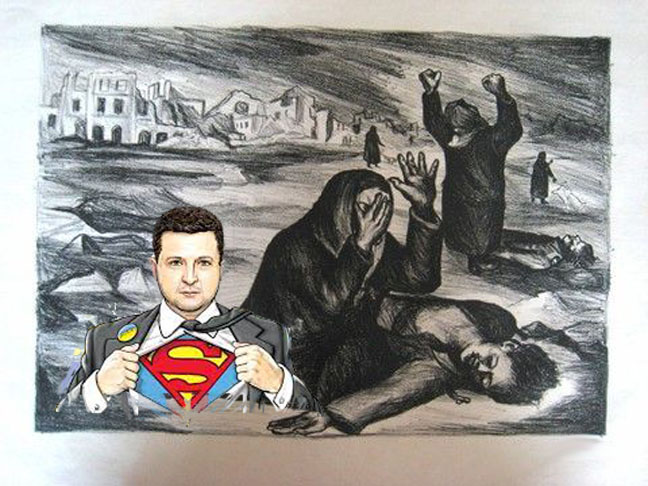
As the war grinds on, elements in the Biden administration appear to be growing impatient with the tall tales of their Ukrainian clients. “This is getting ridiculous,” an unnamed NATO official told the Financial Times on November 16. “The Ukrainians are destroying our confidence and they are openly lying. This is more destructive than the missile.”
Zelensky, media lackeys caught in most dangerous lie yet. https://thegrayzone.com/2022/11/18/zelensky-media-lie/ ALEXANDER RUBINSTEIN·NOVEMBER 18, 2022
With Kiev exposed for a lie that could have triggered a third world war, it is time to examine past deceptions that Western media promoted.
A missile that exploded on Polish soil on November 15 killed two civilians and destroyed farm equipment. Ukrainian President Volodymyr Zelensky and Western corporate media rushed to blame the explosion on Russia in apparent hopes of triggering NATO’s Article 5, which requires NATO states to defend one another militarily when attacked by a hostile force.
Polish and NATO members including US President Joseph Biden have since confirmed the missile that struck Poland was, in fact, a Ukrainian S-300 anti-aircraft missile. Yet Zelensky is sticking to his line, blaming Russia for the strike, while NATO Secretary-General Jens Stoltenberg still insists that “Russia bears ultimate responsibility.” Meanwhile, the media outlets that reflexively pointed the finger at Russia have been forced to take a step back from their initial reporting.
“Russian missiles hit Poland, the territory of our friendly country. People died,” Zelensky insisted on November 15, the night of the attack. “The longer Russia feels impunity, the more threats there will be to anyone within reach of Russian missiles. To fire missiles at NATO territory! This is a Russian missile attack on collective security! This is a very significant escalation. We must act.”
Zelensky held firm the following day, despite mounting evidence that his own country’s air defenses were responsible, declaring “I have no doubt that this is not our missile… I believe that this was a Russian missile, based on our military reports.” By this time, most analysts rejected the Ukrainian president’s assessment, including the founder of the US government-sponsored intelligence cutout Bellingcat, who wrote “At this point I think it’s fair anyone saying that a Russian missile hit Poland based on the current evidence is being irresponsible.”
A Russian attack on NATO member Poland could have triggered Article 5 of the North Atlantic Treaty Organization which compels its member states to consider “an attack against one Ally” to be “an attack against all Allies.” Such a mobilization would have amounted to World War III.
Despite the clear risk of such a catastrophic escalation – or perhaps because of it – Western corporate media immediately blamed Russia for the strike, never even posing the question of why Russia would consider Polish farmland such an important military target that it would be willing to risk a full-scale war with the 30-member NATO alliance.
Initially, the Associated Press ran with the headline “Russian missiles cross into Poland during strike on Ukraine.” The article cited a “senior US intelligence official,” and later, “a second person.”
On November 16, AP began redirecting the link to its original article to a correction that stated, “The Associated Press reported erroneously, based on information from a senior American intelligence official who spoke on condition of anonymity, that Russian missiles had crossed into Poland and killed two people. Subsequent reporting showed that the missiles were Russian-made and most likely fired by Ukraine in defense against a Russian attack.”
Time Magazine ran with the headline, “Russian Missiles Cross Into Poland During Strike, Killing Two,” and cited the AP report.
Fox News similarly announced, “Russian missiles cross into NATO member Poland, kill 2: senior US intelligence official, citing the Associated Press. MSNBC also blamed a “Russian missile” for the strike in its headline.
Then there was CNN, which reported, “Poland says Russian-made missile killed two, will consider invoking NATO Article 4.” NATO Article 4 deals with the meetings between NATO states that are to take place in the event one of them is “threatened” and would theoretically precede any invocation of Article 5. Like CNN, Reuters cited the Polish Foreign Ministry and ran the headline, “Poland says Russian rocket hit its territory as NATO weighs response.”
The New York Times stated in the second sentence of its report on the missile strike that “the blast came as Russia fired roughly 90 missiles into Ukraine.” Two lines later, the Times stated “local media suggests a Russian missile strike.” Readers of the paper of record would have to scroll down several times to even read that Russian officials denied responsibility.
Earlier in the war, in an article on “Ukraine’s online propaganda,” the New York Times sought to downplay the Ukrainian government’s penchant for pushing fake news, arguing that Kiev’s information war merely “dramatize[s] tales of Ukrainian fortitude and Russian aggression.” The article quoted an unnamed Twitter user, who wrote, “Why can’t we just let people believe some things? … If the Russians believe it, it brings fear. If the Ukrainians believe it, it gives them hope.”
The US media’s support for Ukraine’s propaganda efforts meant that it covered some of the most suspicious events without a hint of skepticism, and thereby encouraged more.
These questionable incidents included the following:
- On March 8, Western media reported that a Mariupol maternity hospital was attacked by Russian aircraft. Zelensky claimed the attack was evidence of Russian “genocide” against Ukraine. However, a key witness – a pregnant woman in the hospital photographed by AP – stated that no such airstrike occurred, and that nearby explosions were caused by Ukrainian artillery shells.
- On March 16, the Ukrainian government blamed a targeted Russian airstrike for destroying the Mariupol Dramatic Theater and causing anywhere from 300 to 600 deaths. Western corporate media promoted the Ukrainian narrative of the event despite a total absence of footage showing a missile strike, no images or evidence of large numbers of dead civilians inside, no images or evidence of any attempted rescue, and testimony by Mariupol locals asserting the Azov Battalion fighters that controlled the theater’s grounds staged the explosion to provoke NATO military intervention. Photographic evidence showed that Azov fighters removed all vehicles from the theater’s parking lot one day before the explosion.
- The Kramatorsk train station bombing that was blamed on Russia despite the fact the Tochka-U missile responsible for the blast contained a serial number matching others in Ukraine’s arsenal and originated from Ukrainian-controlled territory.
As the war grinds on, elements in the Biden administration appear to be growing impatient with the tall tales of their Ukrainian clients. “This is getting ridiculous,” an unnamed NATO official told the Financial Times on November 16. “The Ukrainians are destroying our confidence and they are openly lying. This is more destructive than the missile.”
Shelling of Zaporizhzhia is playing with fire, says UN nuclear chief, as blasts reported
Explosions cause damage at Ukrainian power plant, as Kyiv says it will investigate videos allegedly of surrendering Russians being shot
Guardian, Jennifer Rankin, Mon 21 Nov 2022
The UN nuclear energy watchdog has said the forces behind the shelling of Ukraine’s Zaporizhzhia power plant are “playing with fire”, after a series of explosions shook the facility.
The International Atomic Energy Agency (IAEA), which has experts based at Zaporizhzhia, reported on Sunday that powerful explosions had shaken the area on Saturday night and Sunday. It said its on-site experts saw some of the explosions from their windows.
It reported more than a dozen blasts from apparent shelling, with damage to some buildings, systems and equipment, but “none so far critical for nuclear safety”.
The head of the IAEA, Rafael Grossi, said the news was extremely disturbing and he called the explosions completely unacceptable. “Whoever is behind this, it must stop immediately. As I have said many times before, you’re playing with fire,” he said.
According to the IAEA Twitter account, Grossi renewed his appeal to Ukraine and Russia to agree and implement a nuclear safety and security zone around the plant as soon as possible.
Zaporizhzhia, in south-east Ukraine, is Europe’s largest nuclear power station and has been under Russian control since March, although its Ukrainian staff remain in place to run the facility. It has faced repeated shelling, raising fears of a nuclear disaster. Moscow and Kyiv have blamed each other for the attacks.
The plant’s six Soviet-designed water-cooled reactors are currently shut down, but there is a risk that nuclear fuel could overheat if the power that drives the cooling systems is shut. Shelling has frequently damaged the plant’s power supply.
Russian officials claimed that Ukrainian forces were behind the latest attacks. “They are shelling not only yesterday but also today, they are shelling even now,” an adviser to the head of Russia’s nuclear power operator Rosenergoatom, Renat Karchaa, told the Russian state news agency Tass. He said there had been 15 aerial strikes, including one that hit a storage facility.
Soon after the Russian accusations, Ukraine’s nuclear energy agency, Energoatom, said Russia was responsible for the shelling, which it said had resulted in 12 hits to Zaporizhzhia’s infrastructure. The company said on Telegram that the list of damaged equipment indicated that the attackers “targeted and disabled exactly the infrastructure that was necessary for the restart of 5th and 6th power units” and the restoration of power production for Ukrainian needs……………………………….. https://www.theguardian.com/world/2022/nov/20/shelling-of-zaporizhzhia-is-playing-with-fire-says-un-nuclear-chief-ukraine
NATO’s hair trigger: The Polish missile incident was a close brush with nuclear annihilation
https://www.rt.com/news/566710-polish-missile-incident-nato/ Scott Ritter. 18 Nov 22The fervor with which Poland and others sought to drag NATO into a war with Russia should ring alarm bells for everyone
The world dodged a bullet this week, with some NATO members trying, but failing, to trigger Article 4 as a means of confronting Russia in Ukraine. We may not be so lucky next time.
The recent scandal surrounding what most of the world now agrees was an errant Ukrainian surface-to-air missile landing on Polish soil, killing two Polish citizens in the process, has exposed an ugly reality about the eastern reaches of NATO today:
Despite the more reserved stance of the old NATO establishment (the US, UK, France, and Germany), the new upstarts in eastern Europe seem hell-bent on finding a mechanism that will justify NATO intervention in Ukraine.
This predilection for nuclear annihilation (no one should have any misgivings that a NATO-Russia conflict would end any other way) should send alarm bells ringing in the halls of power throughout NATO and the rest of the world, because left to their own devices, the Russophobic officials that dominate the governments of Poland and the three Baltic republics act like lemmings, running toward the Ukrainian cliff, oblivious to their fate as they chase the fantasy of NATO defeating Russia on a European battlefield.
The rush to judgment that accompanied the arrival of the Ukrainian surface-to-air missile on Polish soil serves as a stark reminder about how the supposedly defensive characteristics of the NATO Charter can be used to promote, rather than deter, conflict.
Let there be no doubt – NATO was aware that the missile that impacted near the village of Przewodów in Poland, killing two Polish citizens, was a Ukrainian surface-to-air missile the moment it was launched.
The airspace over Ukraine is one of the most highly-monitored locations in the world. Without revealing sources and methods, suffice it to say there isn’t anything that happens over Ukraine that isn’t registered in real time on a NATO display in headquarters throughout Europe – including Poland.
And yet … Poland saw fit to summon the Russian ambassador and lodge a protest.
Moreover, Poland declared that it would increase its military readiness while contemplating the activation of Article 4 of the NATO Treaty, a mechanism which allows the alliance to discuss security threats to member states with an eye on possibly using NATO military force to rectify the situation. Article 4 is behind every combat deployment of NATO since its inception, from Serbia, to Libya, to Afghanistan.
On cue, Lithuanian President Gitanas Nausėda, whose country borders Poland, tweeted that “every inch of NATO territory must be defended!”
Czech Prime Minister Petr Fiala likewise turned to Twitter to exclaim: “If Poland confirms that the missiles also hit its territory, this will be a further escalation by Russia. We stand firmly behind our EU and NATO ally.”
For its part, Estonia called the news “most concerning,” with its foreign minister declaring via Twitter, “We are consulting closely with Poland and other allies. Estonia is ready to defend every inch of NATO territory.”
While all parties concurred that there was no basis for triggering Article 5 of NATO (i.e., the collective security clause), Article 4 was very much in play. Poland was adamant: The missile “attack” against Poland was clearly a crime, one that could not go unpunished. As such, under Article 4, Poland would be pushing “for NATO members and Poland to agree on the provision of additional anti-aircraft defense, including in part of the territory of Ukraine.”
And there you have it: “Including in part of the territory of Ukraine.”
Enter Germany, stage left: “As an immediate reaction to the incident in Poland, we will offer to strengthen air policing with combat air patrols over its airspace with German Eurofighters,” a German Defense Ministry spokesperson declared.
Cue NATO Secretary General Jens Stoltenberg, who convened an emergency meeting of NATO ambassadors in Brussels to discuss the Polish incident. According to the Finnish foreign minister (Finland, although not a NATO member, was invited to the meeting), “Closing the airspace [above Ukraine] will definitely be discussed. Various options of how we can protect Ukraine are on the table.”
While Germany reportedly rejected the establishment of a no-fly zone over Ukraine, noting that such an action would pose a threat of direct confrontation between Russia and NATO, one is left pondering how such a discussion came to be in the first place: Ukraine fired a surface-to-air missile, which was tracked by NATO as it impacted on Polish soil. And, as a result, NATO members end up discussing the possibility of invoking Article 4 of the NATO Charter, seeking to extend NATO air defense into Ukrainian air space in concert with the establishment of a no-fly zone enforced by NATO aircraft.
“Even if it was a blue on blue [incident] with a Ukrainian rocket that landed in Poland, I think there is still enough ground for Poland to invoke Article 4,” a former director of policy planning for NATO, Fabrice Pothier, declared.
Just to clarify what Mr. Pothier is saying: Because Ukraine fired a surface-to-air missile that ended up landing on Polish soil, NATO is justified in invoking Article 4, setting the stage for a possible NATO-Russia conflict in Ukraine which could lead to global nuclear annihilation.
If there was ever any doubt about the threat NATO posed to the entire world, there is no more.
That this is being promulgated on behalf of a Ukrainian leader who, despite universal consensus that the missile which hit Poland was Ukrainian, denies this possibility, all the while blaming Russia in the hopes that NATO will intervene, only adds to the insanity of this crisis.
While it appears that the world has dodged the potential death sentence triggered by the NATO Article 4 this time, the hair-trigger aspect of NATO’s Pavlovian response mechanism when it comes to seeking causal justification for military intervention in Ukraine should have everyone on high alert.
USA using COP27 to co-opt Europe , especially Ukraine, into the small nuclear reactor gamble

U.S. announces new European SMR initiatives at COP27 in Egypt
“……………………………….. On November 12, the U.S. announced two global Small Modular Reactor (SMR) initiatives: (1) a Ukraine clean fuels from SMRs pilot project and (2) a new initiative to accelerate the European transition of coal-fired plants to SMRs.
………. additional information on these two initiatives is still underway (the White House mentioned both initiatives in its Overview of COP27)
The U.S. Special Presidential Envoy for Climate, John Kerry, and Ukraine Minister of Energy German Galushchenko introduced a “Ukraine Clean Fuels from SMRs Pilot” project…………………………
- The pilot project, which will run for 2-3 years, also relies on the work of a public-private consortium on scientific and practical developments for SMRs.
- Participating partners from the U.S. include Argonne National Laboratory, Clark Seed, FuelCell Energy, NuScale and Starfire Energy. On the Ukraine side, participants include nuclear operator Energoatom, the National Security and Defense Council, and the State Scientific and Technical Center for Nuclear and Radiation Safety.
Special Envoy Kerry introduced another a new initiative, called Project Phoenix, to accelerate the European transition of coal-fired plants to SMRs,……………
According to the White House Fact Sheet Project Phoenix will provide direct U.S. support for the coal-to-SMR feasibility studies and related activities that support energy security goals for countries in Central and Eastern Europe.
Pink Floyd legend Roger Waters blames US profiteers for Ukraine conflict
https://www.rt.com/news/566577-roger-water-ukraine-profit/ 15 Nov 22
They let it happen because it’s good for business, according to Roger Waters
British rock star Roger Waters has hit out against the US for profiting off of the ongoing military conflict between Russia and Ukraine, which he says Washington allowed to happen because it was beneficial to American interests.
Discussing US foreign policy on the Bad Faith podcast on YouTube, the Pink Floyd co-founder stated that the conflict in Ukraine was “the best thing to happen to them in the last 10 years,” because it was “really good for business.”
“Part of their business is making money from the war through making weapons and selling them to the people and taking the profits from it,” Waters explained, adding that this money never goes to ordinary people. “It’s not you or me, not ordinary people who invest in the war industry. It’s people with tons of cash, and they get very well paid when there’s war.”
Another benefit of the war for the political establishment, according to Waters, is that it allows it to convince people who struggle to make ends meet and end up homeless that their woes are the fault of the Russians and Putin, who is compared to Hitler and accused of being responsible for “destroying everyone’s lives.”
Roger says he has now been banned from performing in Poland for openly criticizing the West’s military meddling and calling for peace between Russia and Ukraine.
READ MORE: Rock legend says he’s on Ukrainian ‘kill list’
Previously, the musician had written letters personally addressed to presidents Vladimir Putin, Zelensky and Joe Biden, calling for diplomatic talks to end the conflict, stating it is “the worst possible thing that can be happening,” due to the potential of an all-out nuclear war.
Moscow accuses Ukrainian soldiers of killing POWs (DISTURBING IMAGES)
https://www.rt.com/russia/566776-kiev-soldiers-kill-russian-captives/ 18 Nov 22, A video has surfaced on social media showing what appear to be Kiev’s troops alongside executed Russian servicemen.
THIS ARTICLE CONTAINS DISTURBING IMAGES
The Russian Defense Ministry has accused Ukrainian forces of committing a war crime after a video surfaced on social media, on Friday, which appears to show captured Russian servicemen first alive and subsequently dead.
The footage depicts soldiers dressed in Russian uniforms first surrendering to troops in uniforms bearing Ukrainian insignia before being shown lying on the ground, presumably dead.
The ministry described the video as evidence of “the deliberate and methodical murder” of over ten Russian servicemen at the hands of the Ukrainian Armed Forces, who “shot them straight in their heads.” Such actions prove the “barbaric nature” of the government in Kiev led by President Vladimir Zelensky, as well as “all those, who defend and support it,” the statement added.
The video also purports to show one of the supposed Russian soldiers opening fire on the Ukrainians as his fellow servicemen already lie on the ground with their hands behind their heads. At least one of Kiev’s fighters was allegedly injured in the incident, according to the footage. It is unclear how this particular episode was linked to what happened to the Russians next.
The Russian Presidential Human Rights Council reacted to the alleged incident by calling for an international probe into what its head, Valery Fadeev, described as a “demonstrative and audacious crime.
This is a violation of all possible conventions banning cruel treatment of captives, as well as of international law and moral norms,” Fadeev said in a statement, adding that “we will demand a reaction from the international community, as well as an investigation.” According to Fadeev, the UN Human Rights Office is already studying evidence of extrajudicial killings near the Ukrainian town of Kupyansk, as well as the shelling of a civilian river crossing in the city of Kherson.
READ MORE: Russia investigates alleged footage of Ukrainian troops torturing POWs
Moscow will send the information on the alleged execution of Russian captives to the UN Human Rights Office, the Council of Europe, as well as Amnesty International, and the International Committee of the Red Cross, Fadeev added.
This is not the first high-profile incident supposedly involving Ukrainian troops and Russian prisoners-of-war. In late March, footage surfaced purportedly showing Ukrainian servicemen shooting Russians, under their care, in the legs at point-blank range.
Top US general warns of reality on the ground in Ukraine
Rt.com 16 Nov 222. Joint Chiefs of Staff Chairman Mark Milley says Kiev can only hope for a political solution,
Ukraine’s chances of a near-term military victory over Russia are not high, top US general Mark Milley has cautioned. He noted that despite Kiev’s recent advances on the battlefield and the capture of the city of Kherson, Moscow still has a significant combat presence in the country.
Speaking at a news conference at the Pentagon on Wednesday, Milley stated that “the probability of a Ukrainian military victory defined as kicking the Russians out of all of Ukraine to include what they define or what the claim is Crimea, the probability of that happening anytime soon is not high, militarily.”………………………….. more https://www.rt.com/news/566708-ukraine-military-victory-unlikely/
Who are the Ukrainian integral nationalists ?


Do Western enthusiasts for the Ukrainian government have any idea of the history behind this war?
Regretfully, I have mutilated this historical article below, because it’s long and complex.
So – I have just selected extracts – in my effort to outline this history of the Ukrainian nationalists
Voltaire Network Thierry Meyssa Translation Roger Lagassé 16 Nov 22
Who knows the history of the Ukrainian “integral nationalists”, “Nazis” according to the terminology of the Kremlin? It begins during the First World War, continues during the Second, the Cold War and continues today in modern Ukraine.
Many documents have been destroyed and modern Ukraine forbids under penalty of imprisonment to mention their crimes. The fact remains that these people massacred at least four million of their compatriots and conceived the architecture of the Final Solution, that is, the murder of millions of people because of their real or supposed membership in the Jewish or Gypsy communities of Europe.
Like most Western political analysts and commentators, I was unaware of the existence of Ukrainian neo-Nazis until 2014. When the president-elect was overthrown, I was living in Syria at the time and thought they were violent groupings that had burst onto the public scene to assist pro-European elements. However, since the Russian military intervention, I have gradually discovered a lot of documents and information on this political movement which, in 2021, represented one third of the Ukrainian armed forces. This article presents a synthesis of it.
At the very beginning of this story, that is to say before the First World War, Ukraine was a large plain which had always been tossed between German and Russian influences. At the time, it was not an independent state, but a province of the tsarist empire. It was populated by Germans, Bulgarians, Greeks, Poles, Rumanians, Russians, Czechs, Tatars and a very large Jewish minority supposedly descended from the ancient Khazar people.

A young poet, Dmytro Dontsov, was fascinated by the avant-garde artistic movements, believing that they would help his country to escape from its social backwardness. ……….. When the Great War broke out, he became an agent of the German secret service.

……….. In 1917, the Bolshevik revolution turned the tables. Dontsov’s friends supported the Russian revolution, but he remained pro-German. In the anarchy that followed, Ukraine was divided de facto by three different regimes: the nationalists of Symon Petliura (who imposed themselves in the area held today by the Zelensky administration), the anarchists of Nestor Makhno (who organized themselves in Novorosssia, the land that had been developed by Prince Potemkin and that had never known serfdom), and the Bolsheviks (especially in the Donbass). The war cry of Petliura’s followers was “Death to the Jews and Bolsheviks”. They perpetrated numerous murderous pogroms.
……………Dmytro Dontsov helped Petliura to ally with Poland to crush the anarchists and Bolsheviks. ……………………………………………..
Dmytro Dontsov published literary magazines that fascinated the youth. He continued to promote a Central Europe dominated by Germany and became closer to Nazism as it rose…………………………………………
The expression “integral nationalism” is still claimed today by Dontov’s followers, who, after the fall of the Third Reich, are careful to refute the term “Nazism” with which the Russians describe it, not without reason………………………………….
Dontsov became an unconditional admirer of the Führer, Adolf Hitler. . His followers had founded, in 1929, the Organization of Ukrainian Nationalists (OUN) around Colonel Yevhen Konovalets. Konovalets called Dontsov “the spiritual dictator of the youth of Galicia”. However, a quarrel arose between Dontsov and another intellectual about his extremism that led to war against all, when Konovalets was suddenly murdered. The OUN (financed by the German secret service) then split in two. The “integral nationalists” reserved for themselves the OUN-B, named after Dontsov’s favorite disciple, Stepan Bandera…………………………………………
In 1934, Bandera organized, as a member of the Nazi secret service and head of the OUN-B, the assassination of the Polish Minister of the Interior, Bronisław Pieracki………………………………………………..
From the beginning of the Second World War, under the guidance of Dmytro Dontsov, the OUN-B fought alongside the Nazi armies against the Jews and the Soviets.
The collaboration between the Ukrainian “integral nationalists” and the Nazis continued with constant massacres of the majority of the Ukrainian population, accused of being Jews or Communists, until the “liberation” of Ukraine by the Third Reich in the summer of 1941 to the cry of “Slava Ukraїni!” (Glory to Ukraine), the war cry used today by the Zelensky administration and the US Democrats. At that time, the “integral nationalists” proclaimed “independence” from the Soviet Union in the presence of Nazi representatives and Greek Orthodox clergy, not in Kiev, but in Lviv, on the model of the Hlinka Guard in Slovakia and the Ustasha in Croatia.
They formed a government under the leadership of Providnyk (guide) Stepan Bandera, whose friend Yaroslav Stetsko was Prime Minister. Their support in Ukraine is estimated at 1.5 million people. That is, the “integral nationalists” have always been in the minority.

…………………………………….in September 1941 The OUN-B was reorganized under German command.. all Ukrainian nationalists took the following oath:”……………….. I believe in Adolf Hitler as the leader and supreme commander …………”
The Nazis announced that many bodies had been discovered in the prisons, victims of “Bolshevik Jews. So the “integral nationalists” celebrated their “independence” by murdering more than 30,000 Jews and actively participating in the roundup of Jews from Kiev to Babi Yar, where 33,771 of them were shot in two days, on September 29 and 30, 1941, by the Einsatzgruppen of SS Reinhard Heydrich.
In this tumult, Dmytro Dontsov disappeared. In reality, he had gone to Prague and placed himself at the service of the architect of the Final Solution, Reinhard Heydrich, who had just been appointed vice-governor of Bohemia-Moravia. Heydrich organized the Wannsee Conference, which planned the “Final Solution of the Jewish and Gypsy Questions” [4]. He then created the Reinard Heydrich Institute in Prague to coordinate the systematic extermination of all these populations in Europe. The Ukrainian Dontsov, who now lived in Prague in great luxury, immediately became its administrator. He was one of the main architects of the largest massacre in history. Heydrich was assassinated in June 1942, but Dontsov retained his functions and privileges.
…………………… 1944, as the Reich army retreated ……… Bandera and Stetsko resumed the armed struggle, among the Nazis, against the Jews and the Bolsheviks.
But it was already too late. The Reich collapsed. The Anglo-Saxons got Dontsov, Bandera and Stetsko. The theorist of integral nationalism was transferred to Canada, while the two practitioners of mass murder were transferred to Germany. MI6 and the OSS (predecessor of the CIA) rewrote their biographies, making their Nazi involvement and responsibility for the “Final Solution” disappear.
[Ed not: from here, the story becomes very complex. with ,in the 1950s, the involvement of the CIA, the Muslim Brotherhood, Radio Free Europe, and prominent political and media leaders…….Chiang Kai-shek and the World Anti-Communist League , going on to Slava Stetsko in 1986]
………………………………………..Slava Stetsko, took over the leadership of these organizations. She too travelled the world to support any fight against the “communists”, or rather, if we refer to Dontsov’s writings, against the Russians and the Chinese. When the USSR was dissolved, Mrs. Stetsko simply changed the title of the League to the World League for Freedom and Democracy, a name it still has today. She then devoted herself to regaining a foothold in Ukraine.
………in 1994 she brought the Ukrainian president, Leonid Kuchma, to the CIA offices in Munich and dictated parts of the new constitution to him. Even today, Article 16 of the new constitution states: “Preserving the genetic heritage of the Ukrainian people is the responsibility of the state. Thus, Nazi racial discrimination is still proclaimed by modern Ukraine as in the worst moments of World War II.
………………………………….. On May 8, 2007, in Ternopol, on the initiative of the CIA, the “integral nationalists” of the Ukrainian People’s Self-Defense and Islamists created an anti-Russian “Anti-Imperialist Front”………………………………
The pro-US president, Viktor Yushchenko, created a Dmytro Dontsov Institute, following the “Orange Revolution”. Yushchenko is an example of Anglo-Saxon whitewashing. He has always claimed to have no connection with the mainstream nationalists, but his father, Andrei, was a guard in a Nazi extermination camp [8]. The Dmytro Dontsov Institute would be closed in 2010, and then reopened after the 2014 coup.
President Viktor Yushchenko, shortly before the end of his term of office, elevated the criminal against humanity Stepan Bandera to the title of “Hero of the Nation”.
In 2011, the mainstream nationalists succeeded in passing a law banning the commemoration of the end of World War II because it was won by the Soviets and lost by the Banderists……………………………
In 2014, Ukrainians in Crimea and Donbass refused to recognize the coup government. Crimea, which had declared itself independent before the rest of Ukraine, reaffirmed its independence a second time and joined the Russian Federation. The Donbass sought a compromise. The “Ukrainian nationalists,” led by President Petro Poroshenko, stopped providing public services there and bombed its population. In eight years, they murdered at least 16,000 of their fellow citizens in general indifference.
It was also from the 2014 coup that the full nationalist militias were incorporated into the Ukrainian Armed Forces. In their internal regulations, they enjoin each fighter to read the works of Dmytro Dontsov, including his master book, Націоналізм (Nationalism).
In April 2015, the Verkhovna Rada declared members of the Organization of Ukrainian Nationalists (OUN) “independence fighters.” The law was enacted, in December 2018, by President Poroshenko. Former Waffen SS were retrospectively entitled to a pension and all sorts of benefits. The same law criminalized any claim that OUN militants and UPA fighters collaborated with the Nazis and practiced ethnic cleansing of Jews and Poles. Published in Ukraine, this article would send me to jail for writing it and you for reading it.
On July 1, 2021, President Volodymyr Zelenski enacted the Law “On Indigenous Peoples of Ukraine” which places them under the protection of Human Rights. By default, citizens of Russian origin can no longer invoke them in court.
In February 2022, the “full nationalist” militias, which made up one-third of the country’s armed forces, planned a coordinated invasion of Crimea and the Donbass. They were stopped by the Russian military operation to implement UN Security Council Resolution 2202 to end the suffering of the people of Donbass.
In March 2022, Israeli Prime Minister Nafatali Bennett, breaking with the “revisionist Zionism” of Benjamin Netanyahu (the son of Jabotinsky’s secretary), suggested to President Volodymyr Zelensky that he should agree with Russian demands and denazify his country …………………………………
Main sources:
Ukrainian Nationalism in the age of extremes. An intllectual biography of Dmytro Dontsov, Trevor Erlacher, Harvard University Press (2021).
Stepan Bandera, The Life and Afterlife of a Ukrainian Nationalist. Fascism, Genocide, and Cult, Grzegorz Rossoliński-Liebe, Ibidem (2014). https://www.voltairenet.org/article218395.html
The entire article is below
Read more: Who are the Ukrainian integral nationalists ?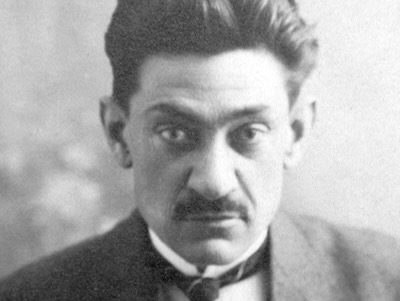
Like most Western political analysts and commentators, I was unaware of the existence of Ukrainian neo-Nazis until 2014. When the president-elect was overthrown, I was living in Syria at the time and thought they were violent groupings that had burst onto the public scene to assist pro-European elements. However, since the Russian military intervention, I have gradually discovered a lot of documents and information on this political movement which, in 2021, represented one third of the Ukrainian armed forces. This article presents a synthesis of it.
At the very beginning of this story, that is to say before the First World War, Ukraine was a large plain which had always been tossed between German and Russian influences. At the time, it was not an independent state, but a province of the tsarist empire. It was populated by Germans, Bulgarians, Greeks, Poles, Rumanians, Russians, Czechs, Tatars and a very large Jewish minority supposedly descended from the ancient Khazar people.
A young poet, Dmytro Dontsov, was fascinated by the avant-garde artistic movements, believing that they would help his country to escape from its social backwardness. Since the Tsarist Empire had been immobile since the death of Catherine the Great, while the German Empire was the scientific center of the West, Dontsov chose Berlin over Moscow.
When the Great War broke out, he became an agent of the German secret service. He emigrated to Switzerland, where he published, on behalf of his masters, the Bulletin of the Nationalities of Russia in several languages, calling for the uprising of the ethnic minorities of the Tsarist Empire in order to bring about its defeat. This model was chosen by the Western secret services to organize the “Forum of Free Peoples of Russia” this summer in Prague [1].
In 1917, the Bolshevik revolution turned the tables. Dontsov’s friends supported the Russian revolution, but he remained pro-German. In the anarchy that followed, Ukraine was divided de facto by three different regimes: the nationalists of Symon Petliura (who imposed themselves in the area held today by the Zelensky administration), the anarchists of Nestor Makhno (who organized themselves in Novorosssia, the land that had been developed by Prince Potemkin and that had never known serfdom), and the Bolsheviks (especially in the Donbass). The war cry of Petliura’s followers was “Death to the Jews and Bolsheviks”. They perpetrated numerous murderous pogroms.
Dmytro Dontsov returned to Ukraine before the German defeat and became the protégé of Symon Petliura. He participated briefly in the Paris peace conference but, for some unknown reason, did not remain in his delegation. In Ukraine, he helped Petliura to ally with Poland to crush the anarchists and Bolsheviks. After the capture of Kiev by the Bolsheviks, Petliura and Dontsov negotiated the Treaty of Warsaw (April 22, 1920): the Polish army undertook to push back the Bolsheviks and to liberate Ukraine in exchange for Galicia and Volhynia (exactly as the Zelensky administration is negotiating today the entry of Poland into the war against the same lands [2]). This new war was a fiasco.
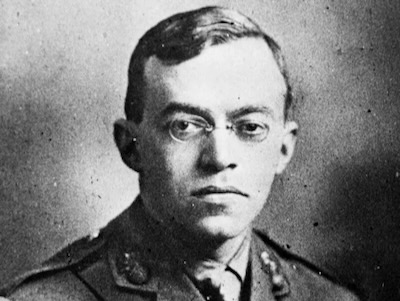
To strengthen his side, Petliura secretly negotiated with the founder of the Jewish battalions in the British army (the “Jewish Legion”) and now administrator of the World Zionist Organization (WZO), Vladimir Jabotinsky. In September 1921, the two men agreed to unite against the Bolsheviks in exchange for Petliura’s commitment to forbid his troops to continue their pogroms. The Jewish Legion was to become the “Jewish Gendarmerie. However, despite his efforts, Petliura did not succeed in pacifying his troops, especially as his close collaborator Dontsov was still encouraging the massacre of Jews. Finally, when the agreement was revealed, the World Zionist Organization rebelled against the Petliura regime. On January 17, 1923, the WZO set up a commission to investigate Jabotinsky’s activities. Jabotinsky refused to come and explain himself and resigned from his position.
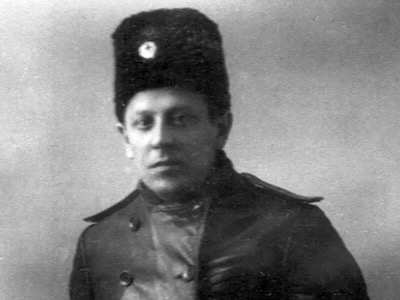
Petliura fled to Poland and then to France, where he was murdered by a Jewish anarchist from Bessarabia (now Transnistria). During the trial, the latter assumed his crime and pleaded to have avenged the hundreds of thousands of Jews murdered by the troops of Petliura and Dontsov. The trial had a great impact. The court acquitted the murderer. The League against Pogroms, later Licra (International League against Racism and Anti-Semitism), was founded on this occasion.
Not only were the nationalists defeated, but the anarchists as well. Everywhere the Bolsheviks triumphed and chose, not without debate, to join the Soviet Union.
Dmytro Dontsov published literary magazines that fascinated the youth. He continued to promote a Central Europe dominated by Germany and became closer to Nazism as it rose. He soon referred to his doctrine as Ukrainian “integral nationalism “. In doing so, he referred to the French poet, Charles Maurras. Indeed, the logic of both men was initially identical: they sought in their own culture the means to affirm a modern nationalism. However, Maurras was a Germanophobe, while Dontsov was a Germanophile. The expression “integral nationalism” is still claimed today by Dontov’s followers, who, after the fall of the Third Reich, are careful to refute the term “Nazism” with which the Russians describe it, not without reason.
According to him, “Ukrainian nationalism” is characterized by:
“the affirmation of the will to live, power, expansion” (it promotes “The right of strong races to organize peoples and nations to strengthen the existing culture and civilization”)
“the desire to fight and the awareness of its extremity” (he praises the “creative violence of the initiative minority”).
Its qualities are:
“fanaticism” ;
” immorality”.
Finally, turning his back on his past, Dontsov became an unconditional admirer of the Führer, Adolf Hitler. His followers had founded, in 1929, the Organization of Ukrainian Nationalists (OUN) around Colonel Yevhen Konovalets. Konovalets called Dontsov “the spiritual dictator of the youth of Galicia”. However, a quarrel arose between Dontsov and another intellectual about his extremism that led to war against all, when Konovalets was suddenly murdered. The OUN (financed by the German secret service) then split in two. The “integral nationalists” reserved for themselves the OUN-B, named after Dontsov’s favorite disciple, Stepan Bandera.
In 1932-33, the Bolshevik political commissars, who were mostly Jewish, levied a tax on crops, as in other regions of the Soviet Union. Combined with significant and unpredictable climatic hazards, this policy caused a huge famine in several regions of the USSR, including the Ukraine. It is known as “Holodomor”. Contrary to what the nationalist historian Lev Dobrianski says, it was not a plan for the extermination of Ukrainians by the Russians, since other Soviet regions suffered, but an inadequate management of public resources in times of climate change. Lev Dobrianski’s daughter, Paula Dobrianski, became one of President George W. Bush’s aides. She led a merciless struggle to have historians who did not adhere to her father’s propaganda excluded from Western universities [3].
In 1934, Bandera organized, as a member of the Nazi secret service and head of the OUN-B, the assassination of the Polish Minister of the Interior, Bronisław Pieracki.
From 1939, members of the OUN-B, forming a military organization, the UPA, were trained in Germany by the German army, and then still in Germany, but by their Japanese allies. Stepan Bandera offered Dmytro Dontsov to become the leader of their organization, but the intellectual refused, preferring to play the role of a leader rather than an operational commander.
The “integral nationalists” admired the invasion of Poland, in application of the German-Soviet pact. As Henry Kissinger, who could not be suspected of pro-Sovietism, demonstrated, it was not a question of the USSR annexing Poland, but of neutralizing part of it in order to prepare for the confrontation with the Reich. On the contrary, for Chancellor Hitler, it was a question of beginning the conquest of a “vital space” in Central Europe.
From the beginning of the Second World War, under the guidance of Dmytro Dontsov, the OUN-B fought alongside the Nazi armies against the Jews and the Soviets.
The collaboration between the Ukrainian “integral nationalists” and the Nazis continued with constant massacres of the majority of the Ukrainian population, accused of being Jews or Communists, until the “liberation” of Ukraine by the Third Reich in the summer of 1941 to the cry of “Slava Ukraїni!” (Glory to Ukraine), the war cry used today by the Zelensky administration and the US Democrats. At that time, the “integral nationalists” proclaimed “independence” from the Soviet Union in the presence of Nazi representatives and Greek Orthodox clergy, not in Kiev, but in Lviv, on the model of the Hlinka Guard in Slovakia and the Ustasha in Croatia. They formed a government under the leadership of Providnyk (guide) Stepan Bandera, whose friend Yaroslav Stetsko was Prime Minister. Their support in Ukraine is estimated at 1.5 million people. That is, the “integral nationalists” have always been in the minority.
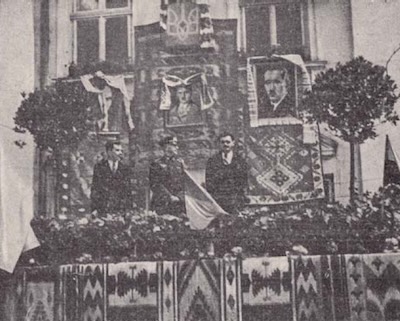
The Nazis were divided between the Reich Commissioner for the Ukraine, Erich Koch, for whom the Ukrainians were subhuman, and the Minister for the Occupied Eastern Territories, Alfred Rosenberg, for whom the “integral nationalists” were true allies. Finally, on July 5, 1941, Bandera was deported to Berlin and placed under Ehrenhaft (honorable captivity), i.e., under house arrest as a high-ranking official. However, after the members of OUN-B murdered the leaders of the rival faction, OUN-M, the Nazis sanctioned Stepan Bandera and his organization on September 13, 1941. 48 of their leaders were deported to a prison camp in Auschwitz (which was not yet an extermination camp, but only a prison). The OUN-B was reorganized under German command. At that time all Ukrainian nationalists took the following oath: “Faithful son of my Fatherland, I voluntarily join the ranks of the Ukrainian Liberation Army, and with joy I swear that I will faithfully fight Bolshevism for the honor of the people. This fight we are waging together with Germany and its allies against a common enemy. With loyalty and unconditional submission I believe in Adolf Hitler as the leader and supreme commander of the Liberation Army. At any time I am prepared to give my life for the truth.
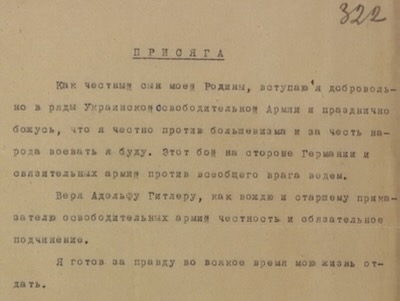
The Nazis announced that many bodies had been discovered in the prisons, victims of “Bolshevik Jews. So the “integral nationalists” celebrated their “independence” by murdering more than 30,000 Jews and actively participating in the roundup of Jews from Kiev to Babi Yar, where 33,771 of them were shot in two days, on September 29 and 30, 1941, by the Einsatzgruppen of SS Reinhard Heydrich.
In this tumult, Dmytro Dontsov disappeared. In reality, he had gone to Prague and placed himself at the service of the architect of the Final Solution, Reinhard Heydrich, who had just been appointed vice-governor of Bohemia-Moravia. Heydrich organized the Wannsee Conference, which planned the “Final Solution of the Jewish and Gypsy Questions” [4]. He then created the Reinard Heydrich Institute in Prague to coordinate the systematic extermination of all these populations in Europe. The Ukrainian Dontsov, who now lived in Prague in great luxury, immediately became its administrator. He was one of the main architects of the largest massacre in history. Heydrich was assassinated in June 1942, but Dontsov retained his functions and privileges.
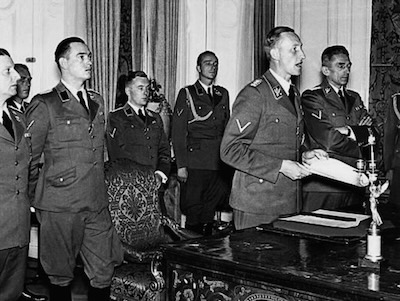
Stepan Bandera and his deputy Yaroslav Stetsko were placed under house arrest at the headquarters of the General Inspectorate of Concentration Camps in Oranienburg-Sachsenhausen (30 km from Berlin). They wrote letters to their supporters and to the Reich leadership in complete freedom and were not deprived of anything. In September 1944, as the Reich army retreated and Bandera’s followers began to rebel against it, the two leaders were released by the Nazis and reinstated in their previous positions. Bandera and Stetsko resumed the armed struggle, among the Nazis, against the Jews and the Bolsheviks.
Centuria Integral Nationalist Order Ceremony. According to George Washington University, by 2021 it had already penetrated the main NATO armies.
But it was already too late. The Reich collapsed. The Anglo-Saxons got Dontsov, Bandera and Stetsko. The theorist of integral nationalism was transferred to Canada, while the two practitioners of mass murder were transferred to Germany. MI6 and the OSS (predecessor of the CIA) rewrote their biographies, making their Nazi involvement and responsibility for the “Final Solution” disappear.
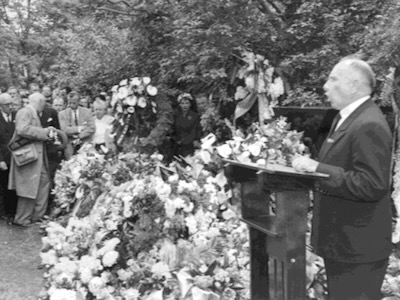
Bandera and Stetsko were installed in Munich to organize the Anglo-Saxon stay-behind networks in the Soviet Union. From 1950 onwards, they had an important radio station, Radio Free Europe, which they shared with the Muslim Brotherhood of Said Ramadan (the father of Tariq Ramadan). The radio station was sponsored by the National Committee for a Free Europe, a CIA offshoot of which its director Alan Dulles was a member, as well as future president Dwight Eisenhower, newspaper magnate Henry Luce and film director Cecil B. DeMilles. Psychological warfare specialist and future patron of the Straussians, Charles D. Jackson, was chairman.
Vladimir Jabotinsky, for his part, after living in Palestine, took refuge in New York. He was joined by Benzion Netanyahu (the father of the current Israeli Prime Minister). The two men wrote the doctrinal texts of “revisionist Zionism” and the Jewish Encyclopedia.
Bandera and Stetsko moved around a lot. They organized sabotage operations throughout the Soviet Union, particularly in the Ukraine, and parachuted leaflets. For this purpose, they created the Anti-Bolshevik Bloc of Nations (ABN), which brought together their Central European counterparts [5]. The British double agent, Kim Philby, informed the Soviets in advance about the actions of the Bandera. Bandera met with Dontsov in Canada and asked him to take the lead in the struggle. Once again, the intellectual refused, preferring to devote himself to his writing. He then drifted into a mystical delirium inspired by Viking myths. He announced the final battle of the Ukrainian knights against the Russian dragon. As for Bandera, he allied himself with the Chinese leader Chiang Kai-shek whom he met in 1958. But he was assassinated the following year by the KGB in Munich.
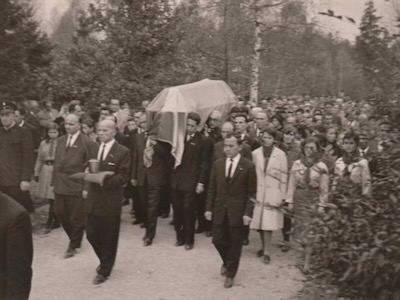
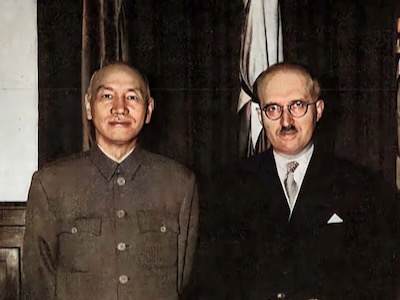
Yaroslav Stetsko continued the struggle through Radio Free Europe and the ABN. He went to the United States to testify before Senator Joseph MacCarthy’s Commission on Un-American Activities. In 1967, he and Chiang Kai-shek founded the World Anti-Communist League [6]. The League included many pro-US dictators from around the world and two schools of torture, in Panama and Taiwan. Klaus Barbie, who assassinated Jean Moulin in France and Che Guevara in Bolivia, was a member. In 1983, Stetsko was received at the White House by President Ronald Reagan and participated, along with Vice President George Bush Sr., in Lev Dobrianski’s “Captive Nations” (i.e., peoples occupied by the Soviets) ceremonies. He finally died in 1986.
But the story does not end there. His wife, Slava Stetsko, took over the leadership of these organizations. She too travelled the world to support any fight against the “communists”, or rather, if we refer to Dontsov’s writings, against the Russians and the Chinese. When the USSR was dissolved, Mrs. Stetsko simply changed the title of the League to the World League for Freedom and Democracy, a name it still has today. She then devoted herself to regaining a foothold in Ukraine.
Slava Stetsko ran in the first elections of the independent Ukraine in 1994. She was elected to the Verkhovna Rada, but having been stripped of her nationality by the Soviets, she could not sit. However, she brought the Ukrainian president, Leonid Kuchma, to the CIA offices in Munich and dictated parts of the new constitution to him. Even today, Article 16 of the new constitution states: “Preserving the genetic heritage of the Ukrainian people is the responsibility of the state. Thus, Nazi racial discrimination is still proclaimed by modern Ukraine as in the worst moments of World War II.
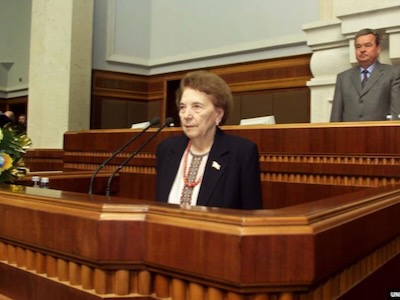
Slava Stetsko was re-elected at the next two sessions. She solemnly presided over the opening sessions on March 19, 1998 and on May 14, 2002.
In 2000, Lev Dobriansky organized a large symposium in Washington with many Ukrainian officials. He invited Straussian Paul Wolfowitz (a former collaborator of Charles D. Jackson). During this meeting, the “integral nationalists” put themselves at the service of the Straussians to destroy Russia [7].
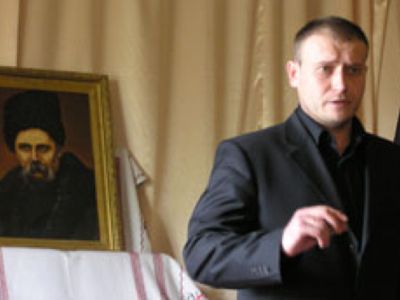
On May 8, 2007, in Ternopol, on the initiative of the CIA, the “integral nationalists” of the Ukrainian People’s Self-Defense and Islamists created an anti-Russian “Anti-Imperialist Front” under the joint chairmanship of the Emir of Itchkeria, Dokka Umarov, and Dmytro Yarosh (the current special adviser to the head of the Ukrainian army). The meeting was attended by organizations from Lithuania, Poland, Ukraine and Russia, including Islamist separatists from Crimea, Adygea, Dagestan, Ingushetia, Kabardino-Balkaria, Karachaevo-Cherkessia, Ossetia and Chechnya. Dokka Umarov, who was unable to go there due to international sanctions, had his contribution read out. In retrospect, the Crimean Tatars are unable to explain their presence at this meeting, if not their past service to the CIA against the Soviets.
The pro-US president, Viktor Yushchenko, created a Dmytro Dontsov Institute, following the “Orange Revolution”. Yushchenko is an example of Anglo-Saxon whitewashing. He has always claimed to have no connection with the mainstream nationalists, but his father, Andrei, was a guard in a Nazi extermination camp [8]. The Dmytro Dontsov Institute would be closed in 2010, and then reopened after the 2014 coup.
President Viktor Yushchenko, shortly before the end of his term of office, elevated the criminal against humanity Stepan Bandera to the title of “Hero of the Nation”.
In 2011, the mainstream nationalists succeeded in passing a law banning the commemoration of the end of World War II because it was won by the Soviets and lost by the Banderists. But President Viktor Yanukovych refused to enact it. Enraged, the “integral nationalists” attacked the procession of Red Army veterans, beating up old men. Two years later, the cities of Lviv and Ivano-Frankivsk abolished the Victory Day ceremonies and banned all manifestations of joy.
In 2014, Ukrainians in Crimea and Donbass refused to recognize the coup government. Crimea, which had declared itself independent before the rest of Ukraine, reaffirmed its independence a second time and joined the Russian Federation. The Donbass sought a compromise. The “Ukrainian nationalists,” led by President Petro Poroshenko, stopped providing public services there and bombed its population. In eight years, they murdered at least 16,000 of their fellow citizens in general indifference.
It was also from the 2014 coup that the full nationalist militias were incorporated into the Ukrainian Armed Forces. In their internal regulations, they enjoin each fighter to read the works of Dmytro Dontsov, including his master book, Націоналізм (Nationalism).
In April 2015, the Verkhovna Rada declared members of the Organization of Ukrainian Nationalists (OUN) “independence fighters.” The law was enacted, in December 2018, by President Poroshenko. Former Waffen SS were retrospectively entitled to a pension and all sorts of benefits. The same law criminalized any claim that OUN militants and UPA fighters collaborated with the Nazis and practiced ethnic cleansing of Jews and Poles. Published in Ukraine, this article would send me to jail for writing it and you for reading it.
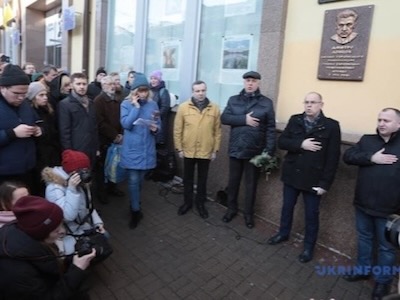
On July 1, 2021, President Volodymyr Zelenski enacted the Law “On Indigenous Peoples of Ukraine” which places them under the protection of Human Rights. By default, citizens of Russian origin can no longer invoke them in court.
In February 2022, the “full nationalist” militias, which made up one-third of the country’s armed forces, planned a coordinated invasion of Crimea and the Donbass. They were stopped by the Russian military operation to implement UN Security Council Resolution 2202 to end the suffering of the people of Donbass.
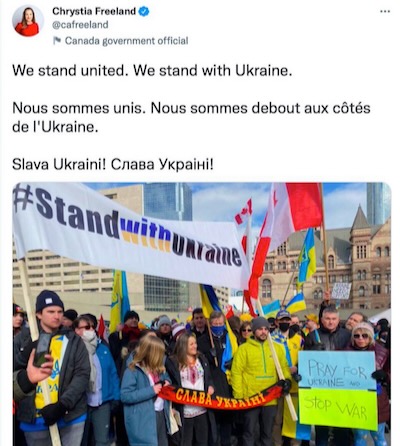
In March 2022, Israeli Prime Minister Nafatali Bennett, breaking with the “revisionist Zionism” of Benjamin Netanyahu (the son of Jabotinsky’s secretary), suggested to President Volodymyr Zelensky that he should agree with Russian demands and denazify his country [8]. Emboldened by this unexpected support, Russian Foreign Minister Sergei Lavrov dared to mention the case of the Jewish Ukrainian president, saying: “The Jewish people in their wisdom have said that the most ardent anti-Semites are usually Jews. Every family has its black sheep, as they say.” This was too much for the Israelis, who always worry when someone tries to divide them. His counterpart at the time, Yair Lapid, recalled that the Jews themselves never organized the Holocaust of which they were victims. Caught between its conscience and its alliances, the Hebrew state repeated its support for Ukraine, but refused to send it any weapons. In the end, the General Staff decided and the Minister of Defense, Benny Gantz, closed any possibility of support to the successors of the mass murderers of Jews.
Ukrainians are the only nationalists who are not fighting for their people or their land, but for one idea: to annihilate the Jews and the Russians.
Main sources:
Ukrainian Nationalism in the age of extremes. An intllectual biography of Dmytro Dontsov, Trevor Erlacher, Harvard University Press (2021).
Stepan Bandera, The Life and Afterlife of a Ukrainian Nationalist. Fascism, Genocide, and Cult, Grzegorz Rossoliński-Liebe, Ibidem (2014).
[1] “The Western strategy to dismantle the Russian Federation”, by Thierry Meyssan, Translation Roger Lagassé, Voltaire Network, 17 August 2022.
[2] “Poland and Ukraine”, by Thierry Meyssan, Translation Roger Lagassé, Voltaire Network, 14 June 2022.
[3] “The Holodomor, new avatar of “European” anti-communism” (excerpt from Le Choix of defeat), Annie Lacroix-Riz (2010).
[4] «The Wannsee Conference in 1942 and the National Socialist living space dystopia», Gerhard Wolf, Journal of Genocide Research, Vol 17 N°2 (2015). https://doi.org/10.1080/14623528.2015.1027074
[5] [Bulletins of the Anti-Bolshevik Nations Block are available in the Voltaire Network Library. ABN Korrespondenz (auf Deutsch), ABN Correspondence (in english).
[6] “The World Anti-Communist League: the Internationale of Crime”, by Thierry Meyssan, Translation Anoosha Boralessa, Voltaire Network, 12 May 2004.
[7] “Ukraine : the Second World War continues”, by Thierry Meyssan, Translation Roger Lagassé, Voltaire Network, 26 April 2022.
Reactors at Ukrainian nuclear power plants shut down after Russian strikes
Reuters, Nov 16 (Reuters) – Several reactors at two Ukrainian power plants automatically shut down as a result of Russian missile strikes on Tuesday, President Volodymyr Zelenskiy said, adding that millions of people were left without electricity………..
As a result of the strikes, automation today disabled several nuclear units at two stations – these are calculated consequences, and the enemy knew exactly what he was doing,” Zelenskiy said in his nightly video address……….
Zelenskiy did not say which power plants were affected, but said that strikes hit the capital Kyiv, Lviv, Rivne and Volyn in the west, Kharkiv in the northeast, Kryvyi Rih and Poltava in the centre, Odesa and Mikolaiv in the south and Zhytomyr in the north…………….. https://www.reuters.com/world/europe/reactors-ukrainian-nuclear-power-plants-shut-down-after-russian-strikes-2022-11-16/
US and Western officials considering diplomacy as winter looms and Ukraine war cost may rise to $60 billion
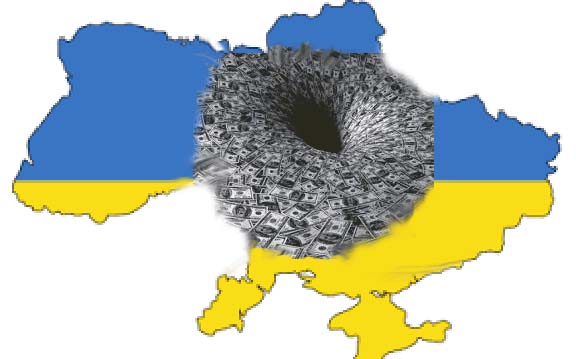
The growing belief that there’s no military resolution to the war and the rising hope that Ukraine and Russia move toward starting talks comes as Ukraine needs additional military aid. The White House and Congress are expected to consider additional funds for assistance for Ukraine, potentially $40 billion to $60 billion, NBC News has reported. Some Republicans and Democrats have begun to question whether the U.S. should send additional tens of billions of dollars to Ukraine
Some U.S. and Western officials think neither side can win and see winter as a shot at diplomacy in Ukraine-Russia war
Russia and Ukraine are most likely looking to the slower tempo of battle this winter as a time to reset and refit their forces to be ready for a spring offensive.
nbc news, By Courtney Kube, Carol E. Lee and Josh Lederman 14 Nov 22,
Some U.S. and Western officials increasingly believe that neither side can achieve all of their goals in the Ukraine war and are eyeing the expected winter slowdown in fighting as an opportunity for diplomacy to begin between Russia and Ukraine, officials familiar with the matter say.
Western defense officials question Ukraine’s ability to remove Russian troops completely from occupied areas, and if military operations on the ground stabilize over the winter that could underline that neither side is likely to achieve its goal of controlling the whole country, the officials said. They spoke on the condition of anonymity because they are not authorized to speak publicly on matters of diplomacy.
“In the winter, everything slows down,” said a Western official with direct knowledge of military operations. “The potential for talks, we would like to see that happening.”
The official pointed to a statement by Russia’s ambassador to the United Kingdom last week about the potential for negotiations as possible “messaging” toward a diplomatic path.
U.S. national security adviser Jake Sullivan made a surprise visit last week to Kyiv, where he met with President Volodymyr Zelenskyy and top Ukrainian officials. The White House National Security Council said the meetings were to “underscore the United States’ steadfast support to Ukraine and its people.” But two people familiar with the meetings and a Ukrainian government official said Sullivan did broach the idea of how the conflict can end and whether it could include a diplomatic solution. “He was testing the waters a bit,” a person familiar with the meetings said.
The Ukrainian official said that during his meetings, Sullivan raised the need for a diplomatic resolution to the war and made the point that Ukraine’s leverage would be strengthened — not weakened — if it expressed openness to ultimately negotiating with the Russians. The official said that Sullivan had not tried to pressure Ukraine to enter into negotiations immediately or to take any specific steps. Instead, the official said, Sullivan expressed the view that Ukraine would able to maintain the support of Western allies better if it is perceived as being willing to reach an end to the conflict through diplomacy……………………………………………
………………….. The growing belief that there’s no military resolution to the war and the rising hope that Ukraine and Russia move toward starting talks comes as Ukraine needs additional military aid. The White House and Congress are expected to consider additional funds for assistance for Ukraine, potentially $40 billion to $60 billion, NBC News has reported. Some Republicans and Democrats have begun to question whether the U.S. should send additional tens of billions of dollars to Ukraine. ……….. https://www.nbcnews.com/politics/national-security/ukraine-russia-war-winter-diplomacy-rcna56190—
USA, Japan, South Korea and a whole heap of companies join in the gamble of NuScam’s small nuclear reactors for Ukraine

The duration of the Ukrainian SMR project is a highly-ambitious two to three years.
the European Union has yet to approve the deployment of the technology. NuScale itself admits that its own SMR plant in Idaho is unlikely to become operational until 2029.
Ukraine joins Europe’s list of SMR hopefuls, Emerging Europe Yulia Valova 15 Nov 22,
Ukraine is the latest country in emerging Europe to sign up for an SMR project, one which aims to support the country’s energy security and signals a new direction in its energy development policy – decarbonisation.
Ukraine, in partnership with the United States, as well as Japan and South Korea, will participate in a public-private consortium to research and develop small modular reactors (SMRs).
A pilot project was announced this week by US Presidential Special Envoy on Climate Issues John Kerry and Ukrainian Energy Minister Herman Galushchenko at the UN Climate Change Conference, COP27, in Egypt.
The pilot project involves the construction of an SMR in Ukraine which, according to the US State Department, will involve the production of environmentally-friendly hydrogen and ammonia and advanced electrolysis technologies.
According to the State Department’s press service, the project builds on existing cooperation in developing nuclear energy capabilities initiated under the US Basic Infrastructure for Responsible Use of SMR Technology programme.
SMRs are a key part of the US Energy Department’s goal to develop safe [?], clean[?], and affordable[?] nuclear power options. Both Romania and Poland have previously signed agreements to explore the construction of SMRs with US technology.
The duration of the Ukrainian SMR project is a highly-ambitious two to three years. The list of participants includes both leading nuclear companies and research institutes.
In particular, NuScale (which is involved in the Romanian and Polish projects), FuelCell Energy, Clark Seed and Argonne National Laboratory will participate on the American side, with NAEC Energoatom and the State Science and Technology Centre for Nuclear and Radiation Safety representing Ukraine.
Doosan Enerbility, IHI Corporation, JGC Corporation, Samsung C&T and Starfire Energy will also participate in the project…………………….
According to the UN’s International Atomic Energy Agency (IAEA) there are around 50 SMR designs and concepts globally. Most of them are in various developmental stages and some are claimed as being near-term deployable……………..
However, while NuScale’s SMR was in August given final certification by the US Nuclear Regulatory Commission, the European Union has yet to approve the deployment of the technology. NuScale itself admits that its own SMR plant in Idaho is unlikely to become operational until 2029.
Top Zelensky advisor threatens war with Iran
The GrayZone, ALEXANDER RUBINSTEIN·NOVEMBER 12, 2022,
Mykhailo Podolyak, an advisor to Ukrainian President Volodymyr Zelensky, has called for attacks inside Iran as the country’s drones cause setbacks for the Ukrainian military.
On November 5, Mykhailo Podolyak, an advisor to Ukrainian President Volodymyr Zelensky, has advocated for military strikes on drone production sites located in Iran. President Zelensky echoed Podolyak’s belligerent rhetoric the following day, demanding Iran be “punished” for allegedly supplying drones to Russia.
Kiev adopted its hostile posture towards Tehran after claiming Russia deployed Iranian-supplied drones to strike Ukrainian civilian infrastructure throughout much of October.
In an interview with a Ukrainian news outlet on November 5, Podolyak argued that the response to Iran supplying Russia with drones should not be limited to sanctions or even a total trade embargo: “It seems to me that it should not be sanctions or even an embargo, yes a total embargo. It seems to me that it would be possible to carry out specific strikes on the production of drones, ballistic missiles, and so on.”………………………….
Podolyak has been ranked the third most influential Ukrainian by the Kiev-based Focus Magazine.
………………………………………. Though there is no record of any Iranian missile being used in an attack on Ukrainian infrastructure thus far, Zelensky declared, “We are preparing to respond.”
Just as Iranian-made drones appear to have given Russian forces a major boost on the battlefield, the US HIMARS artillery system has enabled significant Ukrainian gains, including the recapture of Kherson. However, no high ranking officials in Russian president Vladimir Putin’s office have similarly threatened the United States, or any of the other 40 countries that provided Ukraine with critical military assistance. https://thegrayzone.com/2022/11/12/zelensky-threatens-war-iran/
1 This Month



26 September – International Day for the Total Elimination of Nuclear Weapons


PLEASE OPPOSE HR 8255 AND S.3639 – bills would accelerate satellite deployment, with no environmental review or safeguards – https://ncstd5li.quorum.us/campaign/169331/
To see nuclear-related stories in greater depth and intensity – go to https://nuclearinformation.wordpress.com
-
Archives
- September 2026 (245)
- August 2026 (330)
- July 2026 (355)
- June 2026 (287)
- May 2026 (306)
- April 2026 (356)
- March 2026 (251)
- February 2026 (267)
- January 2026 (308)
- December 2025 (358)
- November 2025 (359)
- October 2025 (375)
-
Categories
- 1
- 1 NUCLEAR ISSUES
- business and costs
- climate change
- culture and arts
- ENERGY
- environment
- health
- history
- indigenous issues
- Legal
- marketing of nuclear
- media
- opposition to nuclear
- PERSONAL STORIES
- politics
- politics international
- Religion and ethics
- safety
- secrets,lies and civil liberties
- spinbuster
- technology
- Uranium
- wastes
- weapons and war
- Women
- 2 WORLD
- ACTION
- AFRICA
- Atrocities
- AUSTRALIA
- Christina's notes
- Christina's themes
- culture and arts
- Events
- Fuk 2022
- Fuk 2023
- Fukushima 2017
- Fukushima 2018
- fukushima 2019
- Fukushima 2020
- Fukushima 2021
- general
- global warming
- Humour (God we need it)
- Nuclear
- RARE EARTHS
- Reference
- resources – print
- Resources -audiovicual
- Weekly Newsletter
- World
- World Nuclear
- YouTube
-
RSS
Entries RSS
Comments RSS
 nuclear-news