The Ukraine Arms Drain
New Eastern Outlook, Brian Berletic 23 Dec 22
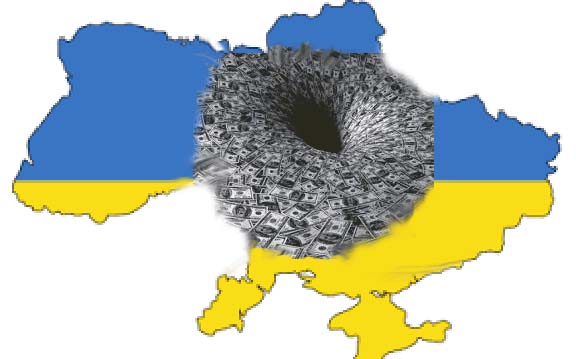
After months of feigned confidence and optimism from both the West and Ukraine’s senior military leadership, cracks are beginning to appear. During Ukrainian Commander-in-Chief General Valery Zaluzhny’s recent interview with the Economist, Ukraine’s desperate need for additional arms and the consequences for not receiving them was made very clear.
The discussion revolved around the desperate need for resources – everything ranging from air defense missiles to tanks, armored vehicles, artillery pieces and artillery shells themselves – all things that both the West and now Ukraine are admitting are in short supply, and perhaps cannot be supplied any time in the near or intermediate future.
From “Extending Russia” to “Demilitarizing” NATO
Washington’s proxy war against Russia in Ukraine is the manifestation of the RAND Corporation’s 2019 paper “Extending Russia” which recommended US policymakers to “provide lethal aid to Ukraine” hoping it would expand hostilities in eastern Ukraine and “increase the costs to Russia, in both blood and treasure, of holding the Donbass region.”
The paper had hoped that Russian losses in equipment and lives in the Donbass would replicate the costs the Soviet Union suffered in Afghanistan. While the Russian Federation is indeed facing mounting costs in Ukraine, it can easily be argued that the US, the rest of NATO, and most of all – Ukraine itself – are suffering at least as much if not more.
What’s perhaps more important than how much either side is losing in the conflict is how much either side can afford to lose because of their respective military industrial capacity to regenerate manpower and equipment throughout the fighting. After nearly a year of fighting, it is clear that Russia’s stockpiles and military were prepared for this type of protracted, intense, large-scale military conflict. Ukraine and its Western sponsors were not.
Ukraine’s General Zaluzhny shared with the Economist a “wishlist” of weapons he claimed he needed in order to restore the February 23, 2022 borders of what Kiev claims is Ukraine. The list included 300 tanks, 600-700 infantry fighting vehicles, and 500 howitzers – numbers NATO couldn’t provide Ukraine no matter how much it wants to.
This “wishlist” follows Ukraine expending a massive reserve made up of weapons, vehicles, and ammunition the collective West transferred to Ukraine ahead of the so-called Kharkov and Kherson offensives. In addition to losing multiple brigades worth of men, huge amounts of equipment were also lost as Russian ground forces withdrew and instead used long-range weapons to strike at Ukrainian forces now out from behind well-laid defenses.
The temporary political points Ukraine’s offensives gained by taking territory came at the cost of expending the vast majority of what the West could afford to transfer to Ukraine.
A growing number of admissions are now being made regarding the limits of Western aid to Ukraine……………………………………………….. more https://journal-neo.org/2022/12/23/the-ukraine-arms-drain/
Zelensky’s diaspora delegation led by economic hit-woman who led plunder of Ukraine

the conflict with Russia has provided Zelensky with justification to strip 70 percent of Ukraine’s workers of collective bargaining rights and arrest everyone from his political rivals to socialist organizers – a wave of repression
With tens of billions more on the way to Ukraine, the country’s debt to international creditors continues to grow, setting the stage for another crushing wave of austerity after the war. The diaspora operatives I encountered on their way into the Capitol gallery appeared poised to guide the plunder from the comfort of suburban America.
The Grayzone, MAX BLUMENTHAL·DECEMBER 23, 2022 The Grayzone intercepted Volodymyr Zelensky’s Ukrainian diaspora delegation outside the US Capitol and encountered Natalie Jaresko, the corporate operative who helped guide Wall Street’s pillaging from Kiev to Puerto Rico. Jaresko indignantly justified Zelensky’s banning of his political rivals as a necessary wartime measure.
Steel fencing and police barricades ringed the perimeter of the US Capitol Building hours ahead of the arrival of Volodymyr Zelensky. The Ukrainian president appeared in Washington DC in the early afternoon on December 21, 2022, emerging from a US military jet clad in an olive drab sweatshirt and cargo pants, and charged with a singular mission:
convince Congress and the Biden administration to send his government more than the whopping $45 billion in military and humanitarian aid it had already allocated for 2023.
Just outside the police barricades, at the eastern side of the Capitol grounds, as a demonstration by a small but dedicated group of antiwar activists wound down, a group of around 20 Ukrainians in dark business attire gathered for a photo. They were on their way into the Capitol, where they were to function as Zelensky’s personal cheering section, representing the Ukrainian diaspora before a nationally televised audience.
I approached members of the delegation to challenge them on Zelensky’s lobbying push and the planned expansion of the NATO proxy war he is leading against Russia. My questions were met with a torrent of worn-out talking points about Ukraine’s crusade to defend democracy, accusations that Moscow was sponsoring my reporting, and a complaint that $45 billion in US aid was too little.
Several of the Ukrainian delegates I encountered on the way into the US Capitol happened to have played significant roles in the transformation of Ukraine from a neutral state into a hyper-militarized vassal of the US and the IMF.
The most voluble among them, acting as a de facto spokesperson for the group, was Natalie Jaresko. A Ukrainian-American financial industry operative, Jaresko presided over several IMF austerity packages and the rampant privatization of Ukraine’s economy as the country’s Minister of Finance in its post-coup government.
The economic hit-woman
In our exchange, Jaresko unabashedly defended Zelensky’s outlawing of 11 opposition political parties, his banning of opposition media, and his plans to blacklist the Russian wing of the Orthodox Church. “It’s martial law!” Jaresko exclaimed, justifying Kiev’s authoritarian crackdown as a necessary wartime measure.
Jaresko has seen the corruption and de-democratization of Ukraine from within. She helped open up the country’s economy to Western multinationals after being appointed to the Foreign Investors Advisory Council of Victor Yuschenko, a neoliberal president who gained power thanks to the “Orange Revolution” backed by US intelligence and Western-aligned oligarchs George Soros and Boris Berisovsky in 2005.
Under Yuschenko’s reign, Ukraine’s government officially heroized the World War Two-era Nazi collaborator Stepan Bandera. During our exchange, Jaresko deflected when asked if she supported Bandera. However, her brother, John, has presided over the construction of a memorial in Bloomingdale, New Jersey to “Heroes of Ukraine” including World War Two-era Nazi collaborators, according to researcher Moss Robeson.
Nine years later, following the Euromaidan coup also engineered by Washington, Jaresko rose to Minister of Finance. She was granted Ukrainian citizenship on the day of her appointment.
Through her new post, Jaresko assumed control of Datagroup, the company that oversees Ukraine’s telecom sector. As former investment executive Tim Duff recounted, Jaresko “immediately proceeded to squeeze her competitor, the owner of Datagroup, out of business using the kind of foreign currency loan debt scam favored by Mafia hoods and economic hitmen employed by the CIA.”
While in Kiev, steering the government alongside a cadre of Ukrainian-American operatives, Jaresko grumbled about her salary while angling for opportunities to supplement it. In a withering analysis of her financial self-dealing, the late investigative journalist Robert Parry found that Jaresko “collected $1.77 million in bonuses from a U.S.-taxpayer-financed investment fund where her annual compensation was supposed to be limited to $150,000”
As Jaresko lapped up praise from Beltway corporate media, the NATO-sponsored Atlantic Council that employed her as a visiting fellow acknowledged that under her watch, “the average monthly wage in Ukraine is only $194, an inflation rate of 55 percent is decimating citizens’ purchasing power, and a painful IMF-mandated austerity program involving sweeping cuts to social programs is being implemented.”
In 2017, Jaresko was rewarded with an appointment and $625,000 salary as director of Promesa, the unelected US board charged with restructuring Puerto Rico’s debt – and which average Puerto Ricans refer to derisively as “La Junta.” Jaresko resigned rom her position this April after leaving Puerto Rico’s economy firmly in the hands of Wall Street creditors.
The all-encompassing shock therapy that Jaresko prescribed from Puerto Rico to Ukraine was only possible thanks to society-wide disasters. In San Juan, it was Hurricane Maria that placed neoliberal capitalism on overdrive; in Kiev, it was a coup and a proxy war. Indeed, the conflict with Russia has provided Zelensky with justification to strip 70 percent of Ukraine’s workers of collective bargaining rights and arrest everyone from his political rivals to socialist organizers – a wave of repression that Jaresko explicitly justified in her exchange with me.
The Ukrainian president accompanied his Pinochet-style crackdown with an appeal this October at the NYSE Stock Exchange for multinational corporations to deepen their exploitation of his country’s economy and resources. As The Grayzone’s Alex Rubinstein reported, Zelensky’s foreign investment initiative plastered the word “deregulation” across the homepage of its website.
The diaspora lobbyist
As I challenged the Ukrainian delegation on the nearly $100 billion of military aid the US has forked over to Kiev, a bespectacled middle-aged man interjected, demanding to know why I supposedly supported an “unprovoked” assault on an “innocent people.”
I countered that I opposed the Ukrainian military’s 8-year-long attack on the ethnic Russian population of Donetsk and Lugansk, where thousands had been killed before the Russian military ever entered Ukraine in February 2022. I then asked the indignant character if he also opposed the shelling of civilians in the eastern republics.
His reply came in the form of a firm “no!”
That person turns out to be a member of the US Commission on Security and Cooperation in Europe named Orest Deychakiwsky. His commission is charged with monitoring Ukrainian compliance with OSCE commitments, including those Kiev made – and relentlessly violated –– to the Minsk Accords. As former German Chancellor Angela Merkel confessed this December, Ukraine’s Western backers used the Minsk Accords as a stalling tactic to prepare it for military conflict with Russia………………………………..
“We’re gonna send a lot more!”
With tens of billions more on the way to Ukraine, the country’s debt to international creditors continues to grow, setting the stage for another crushing wave of austerity after the war. The diaspora operatives I encountered on their way into the Capitol gallery appeared poised to guide the plunder from the comfort of suburban America.
In the meantime, lawmakers from both parties can hardly contain their exuberance for expanding the proxy war. As one of the energy industry’s favorite senators, Democrat Joe Manchin, exclaimed when I asked him on a sidewalk outside the Capitol about the billions in military aid on the way to Ukraine, “We’re gonna send a lot more. I’m all in!” https://thegrayzone.com/2022/12/23/zelenskys-diaspora-hit-woman-ukraine/
Ukraine: * Congress as War Prop * Christmas Truce
FRANCIS BOYLE, fboyle@illinois.edu
Boyle is a professor of international law at the University of Illinois College of Law. His books include Foundations of World Order (Duke University Press).
Following Volodymyr Zelensky’s speech to Congress, Boyle said today: “As after 9/11 when Congress gave Bush the AUMF (which is scandalously still in effect), Congress now is acting as a rubber stamp for perpetual funding for war against Russia.” (See below.)
Boyle pointed to a host of legal and other major problems with the U.S. approach including: “The posture of Biden and the Congress plays directly into the Russian narrative: They are at war with NATO. This escalates the risks of nuclear war.
“This is fueled by absurd historical analogies with Churchill, FDR, and the Battle of the Bulge. This is manufacturing consent for war against Russia.
“The just-announced ‘Patriot missiles’ to Ukraine are not only defensive as many have claimed. They are a step to establishing a No Fly Zone over all of Ukraine including Crimea and Donbass as well as over parts of Western Russia itself. Existentially dangerous.”
Rev. GRAYLAN HAGLER, gshagler@verizon.net, @Graylanhagler
Hagler is pastor emeritus, Plymouth United Church of Christ, Washington, D.C. and a senior advisor to the Fellowship of Reconciliation, USA. He is one of 1000 religious leaders calling for a Christmas truce in Ukraine, see video.
The Wall Street Journal reports: “The spending bill unveiled Tuesday includes an additional $44.9 billion in aid to help Ukraine and North Atlantic Treaty Organization allies.” Spending so far totals $100 billion. Meanwhile, AP reports: “Millions to lose Medicaid coverage under Congress’ plan.” The Washington Post reports: “Handmade blankets for homeless crafted with ‘love’ come to Capitol Hill.”
How Ukraine’s Jewish president Zelensky made peace with neo-Nazi paramilitaries on front lines of war with Russia

In its bid to deflect from the influence of Nazism in contemporary Ukraine, US media has found its most effective PR tool in the figure of Zelensky, a former TV star and comedian from a Jewish background. It is a role the actor-turned-politician has eagerly assumed.
But as we will see, Zelensky has not only ceded ground to the neo-Nazis in his midst, he has entrusted them with a front line role in his country’s war against pro-Russian and Russian forces.
The Grayzone, ALEXANDER RUBINSTEIN AND MAX BLUMENTHAL·MARCH 4, 2022
While Western media deploys Volodymyr Zelensky’s Jewish heritage to refute accusations of Nazi influence in Ukraine, the president has ceded to neo-Nazi forces and now depends on them as front line fighters.
Back in October 2019, as the war in eastern Ukraine dragged on, Ukrainian President Volodymyr Zelensky traveled to Zolote, a town situated firmly in the “gray zone” of Donbas, where over 14,000 had been killed, mostly on the pro-Russian side. There, the president encountered the hardened veterans of extreme right paramilitary units keeping up the fight against separatists just a few miles away.
Elected on a platform of de-escalation of hostilities with Russia, Zelensky was determined to enforce the so-called Steinmeier Formula conceived by then-German Foreign Minister Walter Steinmeier which called for elections in the Russian-speaking regions of Donetsk and Lugansk.
In a face-to-face confrontation with militants from the neo-Nazi Azov Battalion who had launched a campaign to sabotage the peace initiative called “No to Capitulation,” Zelensky encountered a wall of obstinacy.
With appeals for disengagement from the frontlines firmly rejected, Zelensky melted down on camera. “I’m the president of this country. I’m 41 years old. I’m not a loser. I came to you and told you: remove the weapons,” Zelensky implored the fighters.
Once video of the stormy confrontation spread across Ukrainian social media channels, Zelensky became the target of an angry backlash.
Andriy Biletsky, the proudly fascist Azov Battalion leader who once pledged to “lead the white races of the world in a final crusade…against Semite-led Untermenschen”, vowed to bring thousands of fighters to Zolote if Zelensky pressed any further. Meanwhile, a parliamentarian from the party of former Ukrainian President Petro Poroshenko openly fantasized about Zelensky being blown to bits by a militant’s grenade.
Though Zelensky achieved a minor disengagement, the neo-Nazi paramilitaries escalated their “No Capitulation” campaign. And within months, fighting began to heat up again in Zolote, sparking a new cycle of violations of the Minsk Agreement.
By this point, Azov had been formally incorporated into the Ukrainian military and its street vigilante wing, known as the National Corps, was deployed across the country under the watch of the Ukrainian Interior Ministry, and alongside the National Police. In December 2021, Zelensky would be seen delivering a “Hero of Ukraine” award to a leader of the fascistic Right Sector in a ceremony in Ukraine’s parliament.
A full-scale conflict with Russia was approaching, and the distance between Zelensky and the extremist paramilitaries was closing fast.
This February 24, when Russian President Vladimir Putin sent troops into Ukrainian territory on a stated mission to “demilitarize and denazify” the country, US media embarked on a mission of its own: to deny the power of neo-Nazi paramilitaries over the country’s military and political sphere. As the US government-funded National Public Radio insisted, “Putin’s language [about denazification] is offensive and factually wrong.”
In its bid to deflect from the influence of Nazism in contemporary Ukraine, US media has found its most effective PR tool in the figure of Zelensky, a former TV star and comedian from a Jewish background. It is a role the actor-turned-politician has eagerly assumed.
But as we will see, Zelensky has not only ceded ground to the neo-Nazis in his midst, he has entrusted them with a front line role in his country’s war against pro-Russian and Russian forces.
The president’s Jewishness as Western media PR device
Hours before President Putin’s February 24 speech declaring denazification as the goal of Russian operations, Ukrainian President Volodymyr Zelensky “asked how a people who lost eight million of its citizens fighting Nazis could support Nazism,” according to the BBC.
Raised in a non-religious Jewish family in the Soviet Union during the 1980’s, Zelensky has downplayed his heritage in the past. “The fact that I am Jewish barely makes 20 in my long list of faults,” he joked during a 2019 interview in which he declined to go into further detail about his religious background.
Today, as Russian troops bear down on cities like Mariupol, which is effectively under the control of the Azov Battalion, Zelensky is no longer ashamed to broadcast his Jewishness. “How could I be a Nazi?” he wondered aloud during a public address. For a US media engaged in an all-out information war against Russia, the president’s Jewish background has become an essential public relations tool.
A few examples of the US media’s deployment of Zelensky as a shield against allegations of rampant Nazism in Ukraine are below (see mash-up above [on original] for video ): ………………………………….
Behind the corporate media spin lies the complex and increasingly close relationship Zelensky’s administration has enjoyed with the neo-Nazi forces invested with key military and political posts by the Ukrainian state, and the power these open fascists have enjoyed since Washington installed a Western-aligned regime through a coup in 2014.
In fact, Zelensky’s top financial backer, the Ukrainian Jewish oligarch Igor Kolomoisky, has been a key benefactor of the neo-Nazi Azov Battalion and other extremists militias.
Backed by Zelensky’s top financier, neo-Nazi militants unleash a wave of intimidation
Incorporated into the Ukrainian National Guard, the Azov Battalion is considered the most ideologically zealous and militarily motivated unit fighting pro-Russian separatists in the eastern Donbass region.
With Nazi-inspired Wolfsangel insignia on the uniforms of its fighters, who have been photographed with Nazi SS symbols on their helmets, Azov “is known for its association with neo-Nazi ideology…[and] is believed to have participated in training and radicalizing US-based white supremacy organizations,” according to an FBI indictment of several US white nationalists that traveled to Kiev to train with Azov.
Igor Kolomoisky, a Ukrainian energy baron of Jewish heritage, has been a top funder of Azov since it was formed in 2014. He has also bankrolled private militias like the Dnipro and Aidar Battalions, and has deployed them as a personal thug squad to protect his financial interests.
In 2019, Kolomoisky emerged as the top backer of Zelensky’s presidential bid. Though Zelensky made anti-corruption the signature issue of his campaign, the Pandora Papers exposed him and members of his inner circle stashing large payments from Kolomoisky in a shadowy web of offshore accounts.
When Zelensky took office in May 2019, the Azov Battalion maintained de facto control of the strategic southeastern port city of Mariupol and its surrounding villages. As Open Democracy noted, “Azov has certainly established political control of the streets in Mariupol. To maintain this control, they have to react violently, even if not officially, to any public event which diverges sufficiently from their political agenda.”
Attacks by Azov in Mariupol have included assaults on “feminists and liberals” marching on International Women’s Day among other incidents……………………………
Zelensky failed to rein in neo-Nazis, wound up collaborating with them
Following his failed attempt to demobilize neo-Nazi militants in the town of Zolote in October 2019, Zelensky called the fighters to the table, telling reporters “I met with veterans yesterday. Everyone was there – the National Corps, Azov, and everyone else.”
A few seats away from the Jewish president was Yehven Karas, the leader of the neo-Nazi C14 gang.
During the Maidan “Revolution of Dignity” that ousted Ukraine’s elected president in 2014, C14 activists took over Kiev’s city hall and plastered its walls with neo-Nazi insignia before taking shelter in the Canadian embassy.
As the former youth wing of the ultra-nationalist Svoboda Party, C14 appears to draw its name from the infamous 14 words of US neo-Nazi leader David Lane: “We must secure the existence of our people and a future for white children.”………………………………………………..
Throughout 2019, Zelensky and his administration deepened their ties with ultra-nationalist elements across Ukraine…………………………………………………………
In November 2021, one of Ukraine’s most prominent ultra-nationalist militiamen, Dmytro Yarosh, announced that he had been appointed as an advisor to the Commander-in-Chief of the Armed Forces of Ukraine. Yarosh is an avowed follower of the Nazi collaborator Bandera who led Right Sector from 2013 to 2015, vowing to lead the “de-Russification” of Ukraine…………………………………….
Ukrainian state-backed neo-Nazi leader flaunts influence on the eve of war with Russia
On February 5, 2022, only days before full-scale war with Russia erupted, Yevhen Karas of the neo-Nazi C14 delivered a stem-winding public address in Kiev intended to highlight the influence his organization and others like it enjoyed over Ukrainian politics………………………………….
“If we get killed…we died fighting a holy war”
…………………………………… With fighting underway, Azov’s National Corps gathered hundreds of ordinary civilians, including grandmothers and children, to train in public squares and warehouses from Kharviv to Kiev to Lviv.
On February 27, the official Twitter account of the National Guard of Ukraine posted video of “Azov Fighters” greasing their bullets with pig fat to humiliate Russian Muslim fighters from Chechnya.
…………………… Besides authorizing the release of hardcore criminals to join the battle against Russia, Zelensky has ordered all males of fighting age to remain in the country. Azov militants have proceeded to enforce the policy by brutalizing civilians attempting to flee from the fighting around Mariupol.
According to one Greek resident in Mariupol recently interviewed by a Greek news station, “When you try to leave you run the risk of running into a patrol of the Ukrainian fascists, the Azov Battalion,” he said, adding “they would kill me and are responsible for everything.”
Footage posted online appears to show uniformed members of a fascist Ukrainian militia in Mariupol violently pulling fleeing residents out of their vehicles at gunpoint.
Other video filmed at checkpoints around Mariupol showed Azov fighters shooting and killing civilians attempting to flee.
On March 1, Zelensky replaced the regional administrator of Odessa with Maksym Marchenko, a former commander of the extreme right Aidar Battalion, which has been accused of an array of war crimes in the Donbass region.
Meanwhile, as a massive convoy of Russian armored vehicles bore down on Kiev, Yehven Karas of the neo-Nazi C14 posted a video on YouTube from inside a vehicle presumably transporting fighters.
“If we get killed, it’s fucking great because it means we died fighting a holy war,” Karas exclaimed. ”If we survive, it’s going to be even fucking better! That’s why I don’t see a downside to this, only upside!”
https://thegrayzone.com/2022/03/04/nazis-ukrainian-war-russia/
Zelensky’s ‘Hollywood-style’ US visit a ‘proxy war’ promotion
Rt.com 23 Dec 22
Russia’s ambassador to the US, Anatoly Antonov, has accused Washington of waging a “proxy war” against Moscow, saying that all the statements and declarations made during Ukrainian President Vladimir Zelensky’s visit only further prove that the Biden administration is not interested in a peaceful settlement…………
The ambassador specifically noted the US pledge to supply Kiev with Patriot air defense missiles, warning that such weapons and their crews would be legitimate targets for the Russian military. He also slammed the growing speculation about deliveries of ATACMS missiles and long-range attack drones……
Moscow has repeatedly tried to “appeal to common sense at all levels,” the diplomat said, stressing that shipments of increasingly modern and long-range weapons and other provocative actions by the US and its allies are leading to an escalation, with consequences “impossible to even imagine.” https://www.rt.com/russia/568712-washington-zelensky-ambassador-antonov/
Kremlin: “US & Russia On The Brink Of A Direct Clash” In Ukraine
BY TYLER DURDEN, https://www.zerohedge.com/geopolitical/kremlin-us-russia-brink-direct-clash-ukraine 19 Dec 22
The Kremlin is urgently calling on Washington to avoid further escalation over its support to Ukraine’s military, on the same day that President Vladimir Putin made a rare state visit to neighboring Belarus, amid growing fears that Belarusian armed forces could enter the fighting in Ukraine.
Russian Foreign Ministry spokeswoman Maria Zakharova said Monday that the United States’ “dangerous and short-sighted policy” has put it “on the brink of a direct clash” with Moscow, according to state media reports.
“It is the US’ desire to maintain American hegemony at all costs… as well as its arrogant unwillingness to engage in a serious dialogue on security guarantees” that led to the current crisis, she continued, in reference to Moscow’s last February pre-invasion appeal for “guarantees” that Ukraine would not enter NATO.
State media described the sharp words as a necessary reaction to US State Department Spokesman Ned Price’s recently placing sole blame on Moscow for the rapid deterioration in US-Russia relations. Price had characterized the current state of relations as “unstable and unpredictable”.
Zakharova continued in the Monday remarks: “After the high-profile fiasco in Afghanistan, America is increasingly drawn into a new conflict, not only supporting the neo-Nazi regime in Kiev financially and with weapons, but also increasing its military presence on the ground.” While not specifying the precise accusation regarding a US “presence on the ground” – this could be a reference to recent widespread reporting that US intelligence has expanded its role in helping the Ukrainians, especially with things like targeting.
“This is a dangerous and short-sighted policy that puts the US and Russia on the brink of a direct clash,” the FM spokesperson said further. “For its part, Moscow urges the Joe Biden administration to soberly assess the situation and not to unleash a spiral of dangerous escalation. We hope that they will hear us in Washington, though there is no reason for optimism so far.”
This month has witnessed multiple bombshell revelations concerning the Pentagon and US intelligence’s deepening role in Ukraine, including the following:
The White House is mulling the transfer of Patriot missiles to Ukraine.- The Pentagon is expanding its “on the ground” program of small troop units seeking to monitor and account for US arms transfers.
- Russia is increasingly coming up against US-supplied HIMARS missiles on the battlefield.
- The US has sent an infantry company to Estonia, close to the Russian border for joint drills.
- Calls have grown louder for NATO to “close the skies” over Ukraine, including with the potential transfer of warplanes.
- US intelligence has been assisting Ukrainians with targeting Russian generals.
- The White House has indicated it believes Ukraine’s forces are capable of retaking Crimea, but which would risk a nuclear response.
- Ukraine has increased high-risk attacks inside Russian territory.
Ukraine has also grown bolder in showing off its new American-supplied toys…
All of this and more strongly suggests to two sides are indeed inching toward direct showdown and clash, also as there still appears no appetite for so much as a plan even remotely on the horizon to get Kiev officials to the ceasefire negotiating table with Russia.
As for the ongoing speculation that Belarusian forces could enter the Ukraine conflict in support of Russia, top Russian officials are denying this “option”… for now at least.
Russia building giant dome over Europe’s largest nuclear plant’s spent fuel stores, to shield them from Ukrainian attacks
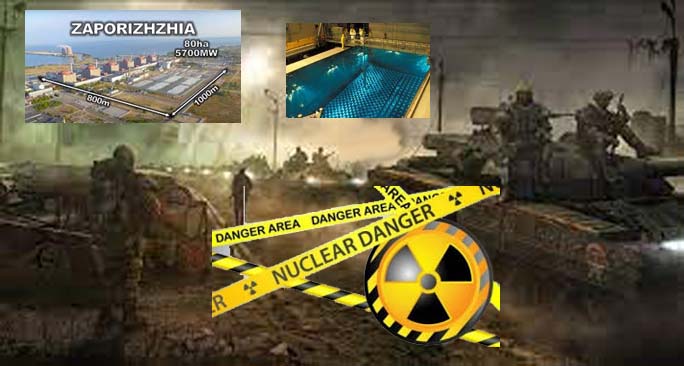
The structure will shield stores of spent radioactive fuel from Ukrainian attacks.
https://www.rt.com/russia/568415-zaporozhye-nuclear-dome-ukrain 18 Dec 22
Russia is constructing a protective dome over spent radioactive fuel stores at the Zaporozhye nuclear power plant as Ukrainian forces continue to target the facility, senior regional official Vladimir Rogov has said.
He took to Telegram on Saturday to post a short video of the work that’s taking place. It showed technicians setting up shields over the tanks that hold spent nuclear fuel.
The dome is designed to protect the storage facilities from shrapnel and improvised explosive devices carried by drones, the official explained, adding that it would be reinforced further at a later period.
Russia’s nuclear energy corporation Rosatom had earlier warned that damage to the spent-fuel containers risks a release of radioactive material into the atmosphere, with unpredictable consequences.
The construction of the dome comes amid continued attacks on the Zaporozhye nuclear power plant and the nearby town of Energodar, which Moscow blames on Kiev. Russia has repeatedly said that such strikes could result in a nuclear disaster that would eclipse the 1986 Chernobyl incident and affect many countries in Europe.
Ukraine initially claimed that the Russian military had been hitting the plant itself as part of “false-flag” operations to make Kiev look bad. However, Ukrainian general staff eventually admitted to striking the area around the nuclear facility.
The Zaporozhye nuclear power plant, which is the largest on the continent, has been under Russian control since February 28. All of the reactors at the facility are currently shut down due to the security situation.
Zaporozhye Region, together with three other former Ukrainian territories – Kherson Region and the People’s Republic of Donetsk and Lugnask – joined Russia in autumn after holding referendums.
Watchdog estimates civilian death toll from Ukrainian attacks on Donbass
https://www.rt.com/news/568395-us-troops-deployed-estonia/ 14 Dec 22, More than 4,500 people have been killed since mid-February, with supplies of NATO weapons resulting in a surge of deaths, observers claim.
Weapons supplied to Ukraine by NATO countries have allowed Kiev’s military to significantly ramp-up attacks on civilian targets in Donbass, a local watchdog has said.
The group claims that over 4,500 civilians have been killed and 4,000 injured since Ukrainian forces escalated shelling in mid-February.
Military terror has escalated beyond all limits after NATO members started supplying weapons to Ukraine,” the Joint Center for Control and Coordination (JCCC), a monitoring group that tracks attacks on the Lugansk and Donetsk People’s Republics, said on Wednesday.
“We have recorded a four-fold increase in the number of victims among the civilian population,” Natalya Shutkina, a representative from the Donetsk People’s Republic at the JCCC, said as quoted by TASS.
The JCCC held a press conference on Wednesday during which it showed fragments of Western shells and rockets collected after Ukrainian strikes in Donbass and explained the toll these attacks had taken.
Since February 17, 4,527 civilians have been killed, including 154 children, Shutkina stated. Another 4,317 civilians, including 274 children, have been injured, she said, adding that Ukrainian attacks have damaged over 12,000 homes, 128 medical facilities, and 67 sites required for providing basic utilities, such as water and heating.
The record-keeping begins in mid-February when the Donbass republics reported a significant escalation of strikes by Kiev in the lead-up to Russia having recognized the DPR and LPR as sovereign states and pledged to defend them. The two regions have since been incorporated into Russia following referendums in September.
Shutkina pointed out that the weapon systems provided by the US and its allies are supposed to be more accurate than the Soviet-era artillery guns and rocket launchers that Ukraine possessed previously. This leads the JCCC to believe that the Ukrainian attacks on civilian facilities have been intentional rather than being part of indiscriminate strikes, she stressed.
READ MORE: Children injured in Ukrainian shelling of Donetsk – authorities
Darya Morozova, the human rights ombudsman for the DPR, urged international organizations to acknowledge Kiev’s actions, arguing that “if the world community didn’t encourage the Ukrainian leadership with its inaction, the war in Donbass would have stopped a long time ago.” She called on Kiev’s sponsors to stop sending heavy weapons to Ukraine.
Weapons delivered to Ukraine ‘beginning to filter’ to Africa: Nigeria
https://english.almayadeen.net/news/politics/weapons-delivered-to-ukraine-beginning-to-filter-to-africa: By Al Mayadeen English , Source: Agencies, 3 Dec 22
Nigerian President Muhammadu Buhari urges heads of states from neighboring states participating in the Lake Chad Basin Commission to confront the issue of Western arms smuggling from Ukraine.
Weapons supplied to Ukraine from Western countries are “starting to flow” into the Lake Chad basin region, Nigerian President Muhammadu Buhari warned this week.
Addressing the heads of states from neighboring states participating in the Lake Chad Basin Commission on Tuesday in the Nigerian capital of Abuja, the president said, “Regrettably, the situation in the Sahel and the raging war in Ukraine serve as major sources of weapons and fighters that bolster the ranks of the terrorists in the region.”
Buhari then urged his counterparts to increase security cooperation in order to confront the issue of arms smuggling.
The Nigerian president agreed to step up military coordination in their countries’ war against Boko Haram and ISIS terrorists, who are now apparently receiving weapons from Ukraine, alongside the leaders of Benin, Chad, Niger, and the Central African Republic.
Last month, Finnish police said that some of the “huge quantities” of weapons being shipped to Ukraine had made their way to Finland, where “three of the world’s largest motorcycle gangs” now operate, including Bandidos MC, which “has a branch in every major city in Ukraine.”
In August, an American news outlet unmasked that a shockingly large amount of weaponry heading for Ukraine was untraceable. “Like 30% of it reaches its final destination,” said a tweet that was later deleted after a swarm of online trolls attacked it.
Russian Defense Minister Sergei Shoigu had previously said the arms supplied by the West to Ukraine were ending up on the black market and spreading across West Asia.
Similarly, Russian Foreign Minister Sergey Lavrov had pointed out that Stingers and Javelin missiles, supplied by the West to Kiev, were already being sold at a discount on the black market and have surfaced in Albania and Kosovo, which Russia has warned for so long.
Ukraine has received billions and billions of dollars in donated arms from the United States and its allies such as the United Kingdom and other NATO states in the past few months.
Ukraine Crisis Highlights Security Needs Of Civilian Nuclear Power

[[Ed – “a secure environment for the proliferation of nuclear energy.”? Pigs might fly?]
Ariel Cohen, Forbes, 16 Dec 22,
On November 27-28 a conference in Paris addressed a broad spectrum of challenges humanity is facing. Renowned thinkers, including Nuriel Roubini and Jacob Frenkel, the former Chairman of JP Morgan International, and three central bankers from Iceland, Tunisia, and Armenia, warned about inflation and the growing mountain of debt threatening the global economy. The panel at which this author addressed civilian nuclear security was organized by Dialogue of the Continents, a project of the Astana Club, the brainchild of the Nazarbayev Foundation. The panel was chaired by the veteran nuclear policy expert Ambassador Kairat Abusseitov, the former First Deputy Foreign Minister of Kazakhstan.
Today the planet shudders at the prospect of Russia’s first use of nuclear weapons and its military attacks on Ukrainian nuclear reactors. The world faced nuclear crises before. On October 27th, 1962 Vasili Arkhipov, a former Vice Admiral in the Soviet Navy, prevented a nuclear war when he countermanded the orders of two other officers and prevented a nuclear attack against the US Navy during the Cuban Missile Crisis. In September 1983 Soviet Airforce Colonel Stanislav Petrov manually overrode a missile launch system that erroneously detected an American attack. Two months later in November 1983 the NATO military exercise Able Archer almost triggered World War III when the Soviets believed it to be a real attack. In 1995 a Norwegian weather missile almost triggered a Russian massive strike on the U.S., which President Yeltsin canceled.
In every instance, nuclear war was prevented by the judgment of individuals where systems had failed. This was possible as adversarial powers recognized the “rules of the game” and created an atmosphere of cooperation to avoid nuclear confrontation amidst other profound disagreements.
That atmosphere is gone, and the next time a Russian alert system goes off we may not have a Colonel Petrov to save us. And it won’t be the ballistic missiles that may be the cause of a massive nuclear disaster.
International law explicitly provides for the immunity of nuclear power plants during war. There are even measures that specifically plan for their safety. The International Atomic Energy Agency (IAEA) for instance has promulgated 16 legally binding conventions rand protocols under the international legal framework for nuclear security to prevent, detect and respond to threats to nuclear security within one state. Nevertheless, the international community has proven unable to stymy Russian actions [and Ukrainian] around Chernobyl and the Zaporizhzhia Nuclear Power Plants that amount to nuclear blackmail and flagrantly violate these laws.
Enforcing the existing international law is easier said than done. International law presupposes an agreement between state actors, which is sorely lacking today. Calling counter-terrorism instruments into action requires UN approval, created by an ad hoc committee……………..
Being a nuclear state under the non-proliferation treaty Russia is under no obligation to place the Zaporizhzhia plant under IAEA safeguards and given the likelihood that it will not recognize that the plant comes under Ukraine’s comprehensive safeguards agreement, IAEA may find access to the plant completely denied next fall.
This is not just a Russian or Ukrainian problem; this is an emerging structural problem of the international energy security system that will reoccur if nothing is done now……………………………………. The future ubiquity of civilian nuclear power means that currently lacking international frameworks must be overhauled – or civilian nuclear power would be un-investable and too risky.
……………. A false sense of security after the Cold War has dangerously numbed many to the existential threat that nuclear weapons represent, with polls repeatedly showing an alarming lack of concern towards these tools of extinction………………………………………………. more https://www.forbes.com/sites/arielcohen/2022/12/16/ensuring-the-security-of-civilian-nuclear-power/?sh=25e66be71f24
Russia installs sheild over Zaporizhzhia nuclear storage site
A shield is being set up over a storage site for spent nuclear waste at the
Zaporizhzhia nuclear power plant in southern Ukraine to protect it from
shelling and drones, a Russian-installed official said on Saturday. Video
footage published by Vladimir Rogov, a Russian-appointed official in
Ukraine’s Zaporizhzhia province, showed workers mounting a screen of what
appeared to be some kind of transparent sheeting on wires above dozens of
concrete cylinders about 5 metres (16 feet) high.
Reuters 17th Dec 2022
For the Western leaders, Minsk Agreements were designed to buy time for Ukrainians to get ready for conflict with Russia
Former German chancellor Angela Merkel’s astonishing admission vis-a-vis Minsk II, made during an interview with German newspaper Die Zeit recently merely confirms that Putin was played for a fool when he entered negotiations for Minsk II with Germany, France and Ukraine in 2015. Russia entered said negotiations in good faith while the other parties involved did not. Thousands of lives lost and counting seven years on is the result.
Again and again, Ukraine’s future prosperity, security and stability upon becoming independent in 1991 was always dependent on it being a bridge between Russia and the West not the battlefield it became.
Merkel admits Minsk Agreements were designed to buy time for Ukrainians to get ready for conflict with Russia, yet Putin? Medium, John Wight, 13 Dec 22.
Sooner or later people in the West are going to have to wake up to the hard truth that their enemy is not at the gates but within the gates — this in the shape of ruling elites that have driven our world to the brink of destruction economically, ecologically, environmentally, and militarily with their lust for power, hegemony, domination and riches.
Before we go on, though, let us take a moment to deal with the usual ordure that gets shovelled in the direction of those in writing in the West who dare not type the name Putin in a sentence without also including words such as ‘tyrant’, ‘dictator’, ‘monster’ either before or after it — and preferably both. Here it is just as Eduardo Galeano said: “The marketplace of fear requires a steady supply of monsters.”
Russian President Vladimir Putin is a brutal man leading his country through a brutal period in human affairs. But he is not the architect of this brutal period; on the contrary, the Russia he has led since 2000 has been among the most grievous victims of it.
Canadian author and journalist Naomi Klein, in her remarkable work Shock Doctrine, describes how Russia was used as a laboratory by US free market think tanks, gurus and economists, who descended on the country while still reeling from the shock of the implosion of the Soviet system in the early 1990s. Their objective was the establishment of a pure market economy shorn of state intervention, wherein the market would decide who worked and who did not, who could heat themselves and who could not, who ate and who could not — and ultimately who would live and who would not………………………
The primary aim of the free market economic ‘hitmen’ who arrived in Russia in early 1990s was the decimation of every vestige of state involvement in the nation’s economy or economic life. Rather than the arbiter of social justice and guarantor of economic stability, the government was now to be reduced to the role of facilitator and guardian of the interests of international investors, shareholders, speculators, and global corporations.
This process entailed the deregulation of the banking system, the removal of social protections and safety nets, the lifting of price controls and the privatisation of all state owned sectors of the economy, sold off to speculators at a fraction of their true value. The aforementioned reforms were laid down as conditions of post-Soviet Russia’s membership of the IMF, when it applied to join under its first post-Soviet president, Boris Yeltsin, in 1992.
Moscow at this point was on the verge of bankruptcy, burdened with an external debt of $66 billion in the wake of the Soviet’s Union’s dissolution. The creditor nations of the G7 made it a condition of their cooperation in rescheduling the country’s debt that the IMF play a central role as policy advisor, lender and coordinator of assistance. Russia’s sovereignty, in other words, was to be suborned to the diktats of the IMF in Washington…………………………………………
the impact of this economic medicine on Russian society was nothing short of devastating. Most Russians consumed 40 percent less in 1992 after a year of shock therapy than they consumed in 1991, while a third of the population fell below the poverty line……………………
That the country managed to recover from this horrific decade was in large part down to the stewardship of Vladimir Putin. He it was who restored national pride, faced down the oligarchs who’d taken control of the nation’s economy, and reasserted the primacy of the state over that of blind economic forces.
Benefiting from its domination of the European energy market and an extended period of high oil and gas prices, Russia’s economic growth from 1999 — when Putin first became prime minister — to 2008 was exponential……………………..
The Putin so demonised in the West today is the same Putin that broached the possibility of Russia becoming a member of NATO with US President Bill Clinton in 2000. The Putin so demonised in the West today is the same Putin who was the first leader to call US President George W. Bush to express his condolences after 9/11 and offered the use of Russian airbases in Central Asia for US airstrikes against Al Qaeda and the Taliban in Afghanistan, staged in response.
That Putin is now to all intents engaged in conflict against the West in Ukraine marks an abject failure not of Russian but Western foreign policy in the wake of the demise of the Soviet Union.
Former German chancellor Angela Merkel’s astonishing admission vis-a-vis Minsk II, made during an interview with German newspaper Die Zeit recently merely confirms that Putin was played for a fool when he entered negotiations for Minsk II with Germany, France and Ukraine in 2015. Russia entered said negotiations in good faith while the other parties involved did not. Thousands of lives lost and counting seven years on is the result.
Again and again, Ukraine’s future prosperity, security and stability upon becoming independent in 1991 was always dependent on it being a bridge between Russia and the West not the battlefield it became.
In the words of Professor John J. Mearsheimer:
U.S. and European leaders blundered in attempting to turn Ukraine into a Western stronghold on Russia’s border. Now that the consequences have been laid bare, it would be an even greater mistake to continue this misbegotten policy. https://johnwight1.medium.com/merkel-admits-minsk-ii-was-designed-to-buy-time-for-the-ukrainians-to-get-ready-for-conflict-with-504191f7872d
Safety of Zaporizhzhia nuclear plant hangs in the balance
Guardian, Julian Borger 13 Dec 22,
Shelling near the six-reactor facility plus a shortage of workers and uncertain backup power could be making it the most dangerous place on Earth…….
The Zaporizhzhia nuclear plant’s silhouette – with its two fat cooling towers and the row of six squat blocks – has become globally familiar since it was dubbed the most dangerous place on Earth: six nuclear reactors on the frontline of a catastrophic war.
On a fairly typical night last week, the Russians on the left bank of the river fired 40 shells and rockets into Nikopol, a town on the Ukrainian-held right bank, falling on its rows of krushchevky, five-storey blocks of flats built for factory workers in the 1960s and named after the Soviet leader of the time.
After 10 months of war, the blocks are half empty, so there are fewer people to kill. The only reported casualty on this particular night was a 65-year-old man who was taken to hospital, and whose flat now afforded such a comprehensive view of the power plant.
By the next morning, the repairs had already begun. An electrician restored power to the rest of the building, and two men were in the remains of the apartment itself, sweeping up and putting chipboard in place of absent walls.
There were four loud bangs as the Ukrainian army guns on the nearby riverbank opened fire on Russian positions and, a few minutes later, Nikopol’s air sirens sounded in anticipation of a Russian response, though none was forthcoming that morning.
The basements of the krushchevky have been turned into shelters with beds and school desks but most of the remaining population are so inured to bombardment, they just carry on with their day.
The Ukrainians insist they are extremely careful about what they shoot at, even when they receive fire from the vicinity of the Zaporizhzhia plant. On Thursday, the Ukrainian nuclear power company, Energoatom, accused Russia of bringing Grad multiple launch rocket systems near reactor number 6, which is near the area of where spent nuclear fuel is kept. The likely aim, Energoatom alleged, was to shell Nikopol and the nearby town of Marzanets, using their position as cover.
The walls of the reactors are thick enough to withstand artillery fire, but a direct hit on the spent fuel containers could well lead to the release of radioactive material into the atmosphere. Since seizing control of the power station in March, the Russians have begun building a concrete shelter over the spent fuel, but Ukrainian officials say it is being done without following the normal international safety protocols.
Earlier in the week, Russia’s defence minister, Sergei Shoigu, accused Ukraine of “nuclear terrorism”, saying its armed forces had fired 33 large calibre shells at the Zaporizhzhia plant over the previous two weeks. The most recent report from the International Atomic Energy Agency (IAEA), which has four inspectors at the Russian-occupied site, said last Friday there had been no shelling of the plant since 20 November, although artillery fire had landed in the vicinity………………………………………..
It was not possible to verify Kotin and Orlov’s accounts of the shelling, or the counter-claims from Moscow. Satellite imagery however, has confirmed that the Russian army is storing military equipment inside the plant.
The IAEA inspectors on site could theoretically determine the trajectory of incoming rockets or shells but such detective work is not within their mandate. The agency is negotiating the creation of a security no-fire zone around the reactors, but Kyiv is insisting Russia must first withdraw all its weapons and armour from the power station, something Moscow has not so far agreed to.
Meanwhile there is a parallel safety threat from within the plant itself: the steady attrition of its workforce over the 10 months of the conflict. Many key workers have left because of the danger to their families or because they refused to work for the Russians. Of the 11,000-strong workforce before the full-scale invasion, just 4,000 are left. In an attempt to stop the exodus, the Russians have circulated lists of plant staff to all military checkpoints in the region with orders they are not be allowed to leave, but it has been too late to stop a major outflow.
“In some cases, there’s only three people to cover a seven or eight-person shift,” Orlov said. “People don’t have enough rest. It causes exhaustion.”
Operating under armed occupation adds to the stress. The workers still at the plant are under constant pressure to sign contracts with Rosatom, the Russian energy company, signifying acceptance of Moscow’s control.
Melynchuk said there were just enough staff left to maintain the plant in its current state of suspended animation, with all the reactors shut down, and two of them deliberately kept hot, to provide heating for Enerhodar.
But keeping reactors in this hot standby mode is a difficult and delicate process, adding to the burden on the operators. The situation could get worse still. The Zaporizhzhia plant is currently connected to the Ukrainian grid, but there have been times the transmission lines have been brought down by shelling, forcing the power station to fall back on diesel generators to keep the cooling system running and prevent the reactor vessel from meltdown.
If the connection to the grid was severed again, it would add to the pressure on the overstretched workforce and on the generators, which were only designed as a temporary backup. They will need maintenance and no one knows how much diesel fuel the plant has left. Once the diesel generators failed, meltdown would begin in a matter of hours……… https://www.theguardian.com/world/2022/dec/12/safety-of-zaporizhzhia-nuclear-plant-hangs-in-the-balance
NATO Chief Voices Fear Of War With Russia While US Greenlights Drone Strikes On Russian Territory

Ukraine launched its most brazen attack into Russian territory yet, with drone strikes on bases which killed multiple Russian soldiers and damaged two nuclear-capable bombers. Not too long ago the US waging a proxy war that features direct attacks on Russia’s nuclear forces would have been an unthinkably terrifying prospect, yet that’s where we’re at now, and it only seems to be escalating.
The real issue is the danger of provoking a hot war between nuclear superpowers, which even the NATO Secretary-General is becoming increasingly nervous about.
Caitlin Johnstone https://caityjohnstone.medium.com/nato-chief-voices-fear-of-war-with-russia-while-us-greenlights-drone-strikes-on-russian-territory-165a38b84669 12 Dec 22
In what Antiwar’s Dave DeCamp describes as “a rare acknowledgment of the dangers of backing Ukraine,” NATO Secretary-General Jens Stoltenberg acknowledged a fear of something going “horribly wrong” and leading to a hot war between the nuclear-armed alliance and Russia.
In an article titled “‘I fear a full-blown war between the West and Russia’, Nato chief warns,” The Telegraph writes the following:
“I fear that the war in Ukraine will get out of control, and spread into a major war between Nato and Russia,” said Nato secretary-general Jens Stoltenberg, responding to a question about his greatest fears for the winter in an interview.
He told Norwegian broadcaster NRK on Friday that he was confident such a scenario could be avoided but that the threat was there.
“If things go wrong, they can go horribly wrong,” he added.
We got a taste of this horror once again last month in the long minutes following erroneous reports that Russia had launched missiles at NATO member Poland. The fact that cooler heads have prevailed up until this point does not mean that nuclear brinkmanship is safe, anymore than a game of Russian roulette not ending after the first couple of trigger pulls would mean that Russian roulette is safe to play.
So Stoltenberg is correct to be afraid. There absolutely are too many things that can go horribly wrong in such a standoff, and there are simply too many unpredictable moving parts for anyone to feel confident that this will not happen.
And it’s pretty crazy to hear Stoltenberg voice these concerns even while the Pentagon gives the go-ahead for Ukraine to begin launching long-range attacks on targets inside Russia in its war that is being backed by the United States, because those two positions would seem to be pretty strongly at odds with each other.
In an article titled “Pentagon gives Ukraine green light for drone strikes inside Russia,” The Times reports as follows:
The Pentagon has given a tacit endorsement of Ukraine’s long-range attacks on targets inside Russia after President Putin’s multiple missile strikes against Kyiv’s critical infrastructure.
Since daily assaults on civilians began in October, the Pentagon has revised its threat assessment of the war in Ukraine. Crucially, this includes new judgments about whether arms shipments to Kyiv might lead to a military confrontation between Russia and Nato.
This represents a significant development in the nine-month war between Ukraine and Russia, with Washington now likelier to supply Kyiv with longer-range weapons.
The Times quotes a “US defence source” as saying the following: “We’re not saying to Kyiv, ‘Don’t strike the Russians [in Russia or Crimea]’. We can’t tell them what to do. It’s up to them how they use their weapons. But when they use the weapons we have supplied, the only thing we insist on is that the Ukrainian military conform to the international laws of war and to the Geneva conventions.”
“They are the only limitations but that includes no targeting of Russian families and no assassinations. As far as we’re concerned, Ukraine has been in compliance,” the source says, which is a strange assertion given that US intelligence has reportedly concluded Ukraine was behind the assassination of the daughter of Aleksandr Dugin.
“Ukraine has been careful to use its own drones, not US-supplied weapons, to carry out the strikes,” The Times reports, while also noting that “Pentagon officials have made it clear that requests from Kyiv for longer-range US weapons, including rockets and fighter bombers which could be used for even more effective strikes inside Russia or occupied Crimea, are being seriously considered.”
This revelation comes days after Ukraine launched its most brazen attack into Russian territory yet, with drone strikes on bases which killed multiple Russian soldiers and damaged two nuclear-capable bombers. Not too long ago the US waging a proxy war that features direct attacks on Russia’s nuclear forces would have been an unthinkably terrifying prospect, yet that’s where we’re at now, and it only seems to be escalating.
Empire apologists will try to make this a conversation about whether Ukraine has a “right” to attack Russian territory, which is a red herring from the real issue at hand. Obviously Ukraine has a right to attack a nation that is attacking it; that’s not the point. The real issue is the danger of provoking a hot war between nuclear superpowers, which even the NATO Secretary-General is becoming increasingly nervous about.
The western power alliance continually ramping up aggressions to test how far it could provoke Russia is what led to this conflict in the first place. Now we’re at a point where there isn’t much space for Russia to back up before it’s against the ropes and potentially pressed to do something nobody wants. These people should not be talking about escalation, they should be talking about de-escalation. We need diplomacy, de-escalation and detente, and we need them yesterday.
_________________
PETER HITCHENS: The arrogance and folly in Ukraine that could yet send us hurtling towards nuclear catastrophe

Daily Mail, By PETER HITCHENS FOR THE MAIL ON SUNDAY, 12 December 2022
“………………………………………………………………….. let me quote the opening words of a frightening new book by Ben Abelow, How The West Brought War To Ukraine.
He says: ‘For almost 200 years, starting with the framing of the Monroe Doctrine in 1823, the United States has asserted security claims over virtually the whole Western hemisphere. Any foreign power that places military forces near US territory knows it is crossing a red line. US policy thus embodies a conviction that where a potential opponent places its forces is crucially important.
‘In fact, this conviction is the cornerstone of American foreign and military policy, and its violation is considered reason for war.’
Because, you see, what I have described in my thriller is pretty much the mirror image of what the USA and Nato have been doing in Europe for some years. For Canada and the USA, read Russia. For Quebec, read Ukraine and the Baltic states. There are, in fact, Nato troops stationed now in Estonia.
They have been known to hold tank parades just yards from the border with Russia. That puts them 81 miles (about the distance from London to Coventry) from St Petersburg, Russia’s second city. Ben Abelow notes that ‘in 2020, Nato conducted a live-fire training exercise inside Estonia, 70 miles from Russia’s border, using tactical missiles with ranges up to 185 miles. These weapons can strike Russian territory with minimal warning. In 2021, again in Estonia, Nato fired 24 rockets to simulate an attack on air defence targets inside Russia’.
Again, can you begin to imagine the USA’s response to such action close to its borders, or Britain’s if (say) Ireland decided to join and host a foreign military alliance, hostile to us?
All kinds of slime will now be hurled at me, saying I am trying to justify Russia’s invasion of Ukraine. I’m not. I continue to think it stupid, barbaric and wrong.
I think the best response to provocation is not to react in such ways. But not everyone is like me. And if nobody in the White House, the Pentagon or Nato thought that their policy towards Russia might be risking such an outcome, then I’d be amazed. As I’ve noted before, even the American anti-Russian superhawk Robert Kagan has said publicly that Russia was provoked. The worst bit of this is the nuclear element. In December 1987, I travelled to Washington to witness one of the most momentous and happy events of the age. This was the summit between Kremlin leader Mikhail Gorbachev and US President Ronald Reagan, which culminated in the signing of a treaty banning medium-range nuclear missiles.
The danger from such weapons was that they were far more likely to be launched than long-range rockets. Experts calculated that using them might possibly not result in a total nuclear wipeout. Hence the need to get rid of them.
Well, Donald Trump repudiated that treaty in 2018, blaming Russia, not very convincingly, for his decision. This was the second major nuclear arms treaty the USA has torn up. Gorbachev snapped that this was ‘not the work of a great mind’. More frighteningly, he warned that ‘a new arms race has been announced’.
And now we have actual war in Ukraine, which no powerful person seems to want to end. In fact, anyone who urges serious peace talks is denounced as a traitor and appeaser. That filthy, cruel war is now slowly spreading into Russia itself, with consequences I daren’t guess at.
During the whole Cold War I never really believed we were in danger. The Cuban crisis, which slightly overshadowed preparations for my 11th birthday, persuaded me that everyone would have more sense. I thought and think that TV dramas about a nuclear Armageddon, such as the BBC’s The War Game and the American The Day After, were unconvincing. They couldn’t come up with a believable reason for a war to start.
But now it seems entirely plausible. And I’ve been watching the American TV series Jericho with grim fascination – not because its explanation of nuclear disaster is likely, but because its portrayal of a small, friendly town in a post-nuclear world slowly descending into savagery is convincing. Thanks to arrogance and folly, this could happen, and this is what it would be like if it did.
So I shall carry on saying that we need peace in Ukraine, and soon. https://www.dailymail.co.uk/debate/article-11524385/PETER-HITCHENS-arrogance-folly-Ukraine-send-nuclear-catastrophe.html
1 This Month



26 September – International Day for the Total Elimination of Nuclear Weapons


PLEASE OPPOSE HR 8255 AND S.3639 – bills would accelerate satellite deployment, with no environmental review or safeguards – https://ncstd5li.quorum.us/campaign/169331/
To see nuclear-related stories in greater depth and intensity – go to https://nuclearinformation.wordpress.com
-
Archives
- September 2026 (245)
- August 2026 (330)
- July 2026 (355)
- June 2026 (287)
- May 2026 (306)
- April 2026 (356)
- March 2026 (251)
- February 2026 (267)
- January 2026 (308)
- December 2025 (358)
- November 2025 (359)
- October 2025 (375)
-
Categories
- 1
- 1 NUCLEAR ISSUES
- business and costs
- climate change
- culture and arts
- ENERGY
- environment
- health
- history
- indigenous issues
- Legal
- marketing of nuclear
- media
- opposition to nuclear
- PERSONAL STORIES
- politics
- politics international
- Religion and ethics
- safety
- secrets,lies and civil liberties
- spinbuster
- technology
- Uranium
- wastes
- weapons and war
- Women
- 2 WORLD
- ACTION
- AFRICA
- Atrocities
- AUSTRALIA
- Christina's notes
- Christina's themes
- culture and arts
- Events
- Fuk 2022
- Fuk 2023
- Fukushima 2017
- Fukushima 2018
- fukushima 2019
- Fukushima 2020
- Fukushima 2021
- general
- global warming
- Humour (God we need it)
- Nuclear
- RARE EARTHS
- Reference
- resources – print
- Resources -audiovicual
- Weekly Newsletter
- World
- World Nuclear
- YouTube
-
RSS
Entries RSS
Comments RSS
 nuclear-news