Washington Post whitewashes the Ukraine debacle: ‘Miscalculations, divisions marked offensive planning by U.S., Ukraine’

U.S. intelligence officials, skeptical of the Pentagon’s enthusiasm, assessed the likelihood of success at no better than 50-50
Comment: Once more for those in the back:
- People Power! 95.7% of Crimeans vote to join Russia in preliminary results
- 95% of Crimea has no regrets reuniting with Russia – poll
In all, Ukraine has retaken only about 200 square miles of territory, at a cost of thousands of dead and wounded and billions in Western military aid in 2023 alone.
SOTT, Washington Post, Mon, 04 Dec 2023
Comment: The WaPo has put an enormous amount of resources into lipsticking this pig (2 parts!) and absolving the U.S., as best it could, of any blame. “It was all Ukraine’s fault!”
A slog to be sure, but if you want to see a shining example of high-end weasel masquerading as historical record, go for it. If that thought is too exhausting, here’s a tl:dr of Part 1, courtesy of Moon of Alabama:
Key elements that shaped the counteroffensive and the initial outcome include:
- Ukrainian, U.S. and British military officers held eight major tabletop war games to build a campaign plan. But Washington miscalculated the extent to which Ukraine’s forces could be transformed into a Western-style fighting force in a short period — especially without giving Kyiv air power integral to modern militaries.
- U.S. and Ukrainian officials sharply disagreed at times over strategy, tactics and timing. The Pentagon wanted the assault to begin in mid-April to prevent Russia from continuing to strengthen its lines. The Ukrainians hesitated, insisting they weren’t ready without additional weapons and training.
- U.S. military officials were confident that a mechanized frontal attack on Russian lines was feasible with the troops and weapons that Ukraine had. The simulations concluded that Kyiv’s forces, in the best case, could reach the Sea of Azov and cut off Russian troops in the south in 60 to 90 days.
- The United States advocated a focused assault along that southern axis, but Ukraine’s leadership believed its forces had to attack at three distinct points along the 600-mile front, southward toward both Melitopol and Berdyansk on the Sea of Azov and east toward the embattled city of Bakhmut.
- The U.S. intelligence community had a more downbeat view than the U.S. military, assessing that the offensive had only a 50-50 chance of success given the stout, multilayered defenses Russia had built up over the winter and spring.
- Many in Ukraine and the West underestimated Russia’s ability to rebound from battlefield disasters and exploit its perennial strengths: manpower, mines and a willingness to sacrifice lives on a scale that few other countries can countenance.
- As the expected launch of the offensive approached, Ukrainian military officials feared they would suffer catastrophic losses — while American officials believed the toll would ultimately be higher without a decisive assault.
His summary of Part 2 is further below.
On June 15, in a conference room at NATO headquarters in Brussels, Defense Secretary Lloyd Austin, flanked by top U.S. commanders, sat around a table with his Ukrainian counterpart, who was joined by aides from Kyiv. The room was heavy with an air of frustration.
Austin, in his deliberate baritone, asked Ukrainian Defense Minister Oleksii Reznikov about Ukraine’s decision-making in the opening days of its long-awaited counteroffensive, pressing him on why his forces weren’t using Western-supplied mine-clearing equipment to enable a larger, mechanized assault, or using smoke to conceal their advances. Despite Russia’s thick defensive lines, Austin said, the Kremlin’s troops weren’t invincible. Reznikov, a bald, bespectacled lawyer, said Ukraine’s military commanders were the ones making those decisions. But he noted that Ukraine’s armored vehicles were being destroyed by Russian helicopters, drones and artillery with every attempt to advance. Without air support, he said, the only option was to use artillery to shell Russian lines, dismount from the targeted vehicles and proceed on foot.
“We can’t maneuver because of the land-mine density and tank ambushes,” Reznikov said, according to an official who was present.
2023.The meeting in Brussels, less than two weeks into the campaign, illustrates how a counteroffensive born in optimism has failed to deliver its expected punch, generating friction and second-guessing between Washington and Kyiv and raising deeper questions about Ukraine’s ability to retake decisive amounts of territory.
As winter approaches, and the front lines freeze into place, Ukraine’s most senior military officials acknowledge that the war has reached a stalemate.
This examination of the lead-up to Ukraine’s counteroffensive is based on interviews with more than 30 senior officials from Ukraine, the United States and European nations. It provides new insights and previously unreported details about America’s deep involvement in the military planning behind the counteroffensive and the factors that contributed to its disappointments. The second part of this two-part account examines how the battle unfolded on the ground over the summer and fall, and the widening fissures between Washington and Kyiv. Some of the officials spoke on the condition of anonymity to discuss sensitive deliberations.
Key elements that shaped the counteroffensive and the initial outcome include:
● Ukrainian, U.S. and British military officers held eight major tabletop war games to build a campaign plan. But Washington miscalculated the extent to which Ukraine’s forces could be transformed into a Western-style fighting force in a short period — especially without giving Kyiv air power integral to modern militaries.
● U.S. and Ukrainian officials sharply disagreed at times over strategy, tactics and timing. The Pentagon wanted the assault to begin in mid-April to prevent Russia from continuing to strengthen its lines. The Ukrainians hesitated, insisting they weren’t ready without additional weapons and training.
● U.S. military officials were confident that a mechanized frontal attack on Russian lines was feasible with the troops and weapons that Ukraine had. The simulations concluded that Kyiv’s forces, in the best case, could reach the Sea of Azov and cut off Russian troops in the south in 60 to 90 days.
● The United States advocated a focused assault along that southern axis, but Ukraine’s leadership believed its forces had to attack at three distinct points along the 600-mile front, southward toward both Melitopol and Berdyansk on the Sea of Azov and east toward the embattled city of Bakhmut.
● The U.S. intelligence community had a more downbeat view than the U.S. military, assessing that the offensive had only a 50-50 chance of success given the stout, multilayered defenses Russia had built up over the winter and spring.
● Many in Ukraine and the West underestimated Russia’s ability to rebound from battlefield disasters and exploit its perennial strengths: manpower, mines and a willingness to sacrifice lives on a scale that few other countries can countenance.
● As the expected launch of the offensive approached, Ukrainian military officials feared they would suffer catastrophic losses — while American officials believed the toll would ultimately be higher without a decisive assault…………………………………………………………………………………………
…………………………………………………. Can Ukraine win?
With the group agreeing that the United States and allies could provide what they believed were the supplies and training Ukraine needed, Sullivan faced the second part of the equation: Could Ukraine do it?
Zelensky, on the war’s first anniversary in February, had boasted that 2023 would be a “year of victory.”His intelligence chief had decreed that Ukrainians would soon be vacationing in Crimea, the peninsula that Russia had illegally annexed in 2014. But some in the U.S. government were less than confident.
U.S. intelligence officials, skeptical of the Pentagon’s enthusiasm, assessed the likelihood of success at no better than 50-50. The estimate frustrated their Defense Department counterparts…………
Two weeks after Sullivan and others briefed the president, a top-secret, updated intelligence report assessed that the challenges of massing troops, ammunition and equipment meant that Ukraine would probably fall “well short” of its counteroffensive goals……………………………………………………………………………………………………………………………………………………………………….
………………………………………………………………………………………………….. More troops, more weapons
Biden finally yielded in May and granted the required permission for European nations to donate their U.S.-made F-16s to Ukraine. But pilot training and delivery of the jets would take a year or more, far too long to make a difference in the coming fight.
Comment: The potential pilots had to be taught English before they could even begin any flight training . . . . .
Kyiv hesitates
………………………………………………………………………… Promised equipment was delivered late or arrived unfit for combat, the Ukrainians said. “A lot of weapons that are coming in now, they were relevant last year,” the senior Ukrainian military official said, not for the high-tech battles ahead. Crucially, he said, they had received only 15 percent of items — like the Mine Clearing Line Charge launchers (MCLCs) — needed to execute their plan to remotely cut passages through the minefields.
And yet, the senior Ukrainian military official recalled, the Americans were nagging about a delayed start and still complaining about how many troops Ukraine was devoting to Bakhmut……………………………………………………………………………………..
The counteroffensive finally lurched into motion in early June. Some Ukrainian units quickly notched small gains, recapturing Zaporizhzhia-region villages south of Velyka Novosilka, 80 miles from the Azov coast. But elsewhere, not even Western arms and training could fully shield Ukrainian forces from the punishing Russian firepower.
Part 2: In Ukraine, a war of incremental gains as counteroffensive stalls…………………………………….
……………………………………………… This account of how the counteroffensive unfolded is the second in a two-part series and illuminates the brutal and often futile attempts to breach Russian lines, as well as the widening rift between Ukrainian and U.S. commanders over tactics and strategy. The first article examined the Ukrainian and U.S. planning that went into the operation.
This second part is based on interviews with more than 30 senior Ukrainian and U.S. military officials, as well as over two dozen officers and troops on the front line. Some officials and soldiers spoke on the condition of anonymity to describe military operations…………………………………..
……………………. In all, Ukraine has retaken only about 200 square miles of territory, at a cost of thousands of dead and wounded and billions in Western military aid in 2023 alone.
Comment: Moon of Alabama then sums up the counteroffensive debacle:
Key findings from reporting on the campaign include:
- Seventy percent of troops in one of the brigades leading the counteroffensive, and equipped with the newest Western weapons, entered battle with no combat experience.
- Ukraine’s setbacks on the battlefield led to rifts with the United States over how best to cut through deep Russian defenses.
- The commander of U.S. forces in Europe couldn’t get in touch with Ukraine’s top commander for weeks in the early part of the campaign amid tension over the American’s second-guessing of battlefield decisions.
- Each side blamed the other for mistakes or miscalculations. U.S. military officials concluded that Ukraine had fallen short in basic military tactics, including the use of ground reconnaissance to understand the density of minefields. Ukrainian officials said the Americans didn’t seem to comprehend how attack drones and other technology had transformed the battlefield.
- In all, Ukraine has retaken only about 200 square miles of territory, at a cost of thousands of dead and wounded and billions in Western military aid in 2023 alone.
…………………………………………………………………………………………………………… By day four, Gen. Valery Zaluzhny, Ukraine’s top commander, had seen enough. Incinerated Western military hardware — American Bradleys, German Leopard tanks, mine-sweeping vehicles — littered the battlefield. The numbers of dead and wounded sapped morale.
……………………………………………………. Months of planning with the United States was tossed aside on that fourth day, and the already delayed counteroffensive, designed to reach the Sea of Azov within two to three months, ground to a near-halt. Rather than making a nine-mile breakthrough on their first day, the Ukrainians in the nearly six months since June have advanced about 12 miles and liberated a handful of villages. Melitopol is still far out of reach.
This account of how the counteroffensive unfolded is the second in a two-part series and illuminates the brutal and often futile attempts to breach Russian lines, as well as the widening rift between Ukrainian and U.S. commanders over tactics and strategy. The first article examined the Ukrainian and U.S. planning that went into the operation.
This second part is based on interviews with more than 30 senior Ukrainian and U.S. military officials, as well as over two dozen officers and troops on the front line. Some officials and soldiers spoke on the condition of anonymity to describe military operations.
Key findings from reporting on the campaign include:
………………………………………………………………….. In all, Ukraine has retaken only about 200 square miles of territory, at a cost of thousands of dead and wounded and billions in Western military aid in 2023 alone.
…………………………………………………………………………………………………………………….. Chaotic battlefield conditions
The 47th claimed the liberation of Robotyne on Aug. 28. Air assault units in Ukraine’s 10th Corps then moved in, but have been unable to liberate any other villages.
The front line has also grown static along the parallel drive in the south, where Ukrainian marines led the push toward the Azov Sea city of Berdyansk. After retaking the villages of Staromaiorske and Urozhaine in July and August, there have been no further gains, leaving Ukrainian forces far from both Berdyansk and Melitopol.
………………………………………………………………..The Ukrainians were insistent that the West simply wasn’t giving them the air power and other weapons needed for a combined arms strategy to succeed.
…………………………………………………………………………………… Reported by Michael Birnbaum, Karen DeYoung, Alex Horton, John Hudson, Isabelle Khurshudyan, Mary Ilyushina, Dan Lamothe, Greg Miller, Siobhan O’Grady, Kostiantyn Khudov, Serhii Korolchuk, Ellen Nakashima, Emily Rauhala, Missy Ryan and David L. Stern. https://www.sott.net/article/486691-WaPo-whitewashes-the-Ukraine-debacle-Miscalculations-divisions-marked-offensive-planning-by-U-S-Ukraine
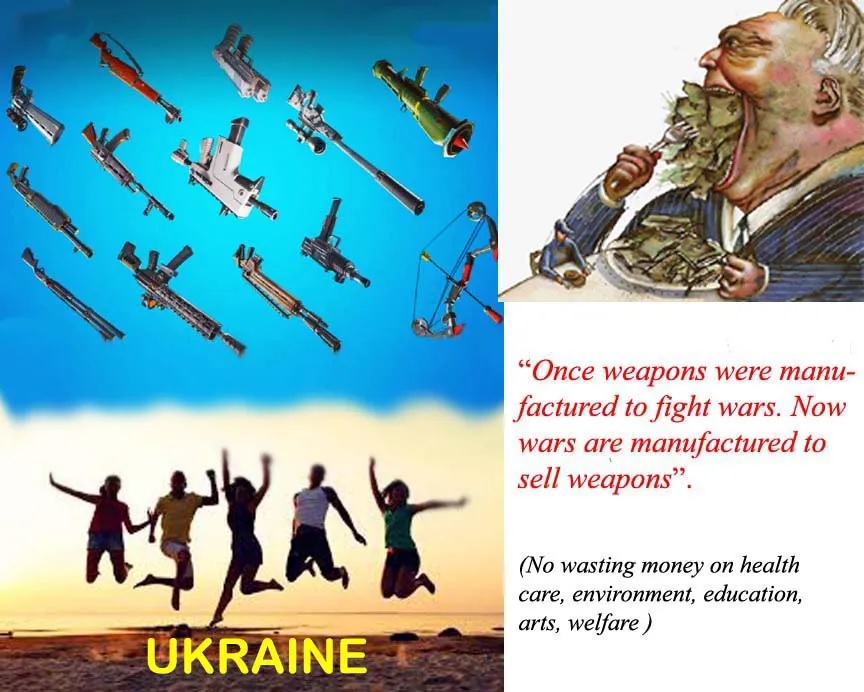
US aid to Ukraine laundered back to military-industrial complex – congressman
https://www.rt.com/news/588617-us-ukraine-aid-congress/ 6 Dec 23
Republican representative Thomas Massie claims that the money being sent to Kiev ultimately ends up in the pockets of stockholders
The US Congress is continuing to vote in favor of sending billions of dollars to Ukraine because a lot of that money ends up being laundered back into the US military-industrial complex, Kentucky Representative Thomas Massie has said.
In an interview with Tucker Carlson on X (formerly Twitter) published on Wednesday, the politician was asked to explain why Washington continued to push for more funding for Ukraine despite it becoming obvious that Kiev’s forces “cannot win.”
Massie, who has repeatedly voted against funding Kiev’s military operations, alleged that a lot of the funds that are sent to Ukraine ultimately end up “enriching” people within specific US districts and “stockholders, some of whom are congressmen.”
“You know, people are getting rich, so let’s do it. It’s an immoral argument, but it is one. But that’s not the argument they’re making in public,” he said, noting that those supporting the funding of Ukraine with US tax dollars are instead arguing that it is a “moral obligation” to do so.
“You’re a bad person if you’re against this,” he complained, referring to a statement recently made by US National Security Advisor Jake Sullivan, who suggested that failing to support “the fight for freedom in Ukraine” meant letting Russian President Vladimir Putin “prevail.”
“But no one mentions that we have abetted the killing of an entire generation of Ukrainian men that will not be replaced. To fight a war that they cannot win,” Massie noted.
In order to support the US government’s proposals on Ukraine aid, the congressman claimed, a person has to be “economically illiterate and morally deficient.”
Meanwhile, US President Joe Biden has hit out against Republicans like Massie, who have opposed aid packages for Ukraine, calling the failure to support Kiev “absolutely crazy” and “against US interests.” The US leader has repeatedly pledged that Washington would support Kiev for “as long as it takes” in its conflict with Russia.
Congress is currently in the midst of a debate around accepting a $111 billion ‘national security supplemental request,’ which includes funding for Ukraine, as well as Israel. Republicans have said they would not let the bill pass unless Washington first boosts spending on the US-Mexico border, tightens immigration controls, revises asylum and parole laws in immigration proceedings.
Last week, former Russian President Dmitry Medvedev also stated that Washington’s continued support for Ukraine had nothing to do with defending “democracy” or battling Russia, but instead boiled down to making a profit and modernizing the US military-industrial complex.
US warns it will ‘run out’ of Ukraine aid funds by end of year
Financial Times, Mon, 04 Dec 2023
The White House has issued a blunt warning that the US is set to run out of funds to aid Ukraine by the end of the year, saying that a failure by Congress to approve new support would “kneecap” Kyiv.
The alert from Shalanda Young, the White House budget director, in a letter to congressional leaders on Monday, represented the most specific assessment yet of Washington’s waning financial and military support for Ukraine.
“Without congressional action, by the end of the year we will run out of resources to procure more weapons and equipment for Ukraine and to provide equipment from US military stocks,” Young wrote to political leaders of both parties.
“There is no magical pot of funding available to meet this moment. We are out of money — and nearly out of time,” she said.
President Joe Biden’s request for $106bn in emergency funding for his biggest foreign policy priorities, including Ukraine, Israel, and the Indo-Pacific, remains mired in stalemate on Capitol Hill, driven by mounting Republican opposition to helping Kyiv.
Some lawmakers — especially in the Senate, where backing for Ukraine runs deeper — are trying to negotiate a bipartisan deal that would contain aid for Kyiv alongside new immigration and asylum procedures to reduce the number of undocumented people arriving in the US through its southern border.
Even if an agreement is reached in the Senate, however, it is unclear if it can pass the Republican-led House, whose new speaker Mike Johnson has been sceptical of funding for Ukraine.
“Cutting off the flow of US weapons and equipment will kneecap Ukraine on the battlefield, not only putting at risk the gains Ukraine has made, but increasing the likelihood of Russian military victories,” Young wrote to Congress.
“Already, our packages of security assistance have become smaller and the deliveries of aid have become more limited . . . while our allies around the world have stepped up to do more, US support is critical and cannot be replicated by others,” she added.
The White House warning comes as EU member states are struggling to reach a budget deal in Brussels that would send €50bn to Ukraine, people close to the discussions told the Financial Times.
Young said Ukraine also needed economic support, which is in danger of stalling.
“If Ukraine’s economy collapses, they will not be able to keep fighting, full stop,” she wrote. “Putin understands this well, which is why Russia has made destroying Ukraine’s economy central to its strategy — which you can see in its attacks against Ukraine’s grain exports and energy infrastructure,” she added.
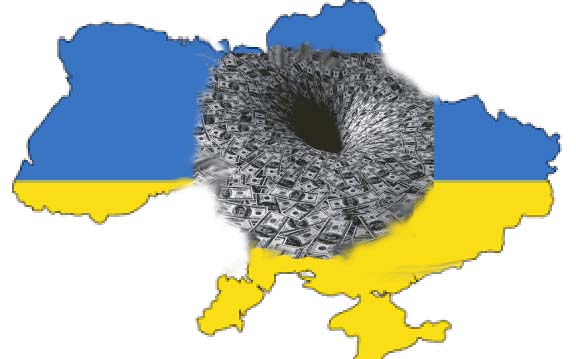
Young also said money for Ukraine would bring benefits to the US economy. Sincethe start of Russia’s full invasion in February 2022, Washington has approved $111bn in aid to Kyiv.
“While we cannot predict exactly which US companies will be awarded new contracts, we do know the funding will be used to acquire advanced capabilities to defend against attacks on civilians in Israel and Ukraine — for example, air defense systems built in Alabama, Texas, and Georgia and vital subcomponents sourced from nearly all 50 states,” she said……… https://www.ft.com/content/ca16e42d-fda9-4c1d-b2c9-410d764745b7
Seymour Hersh: Russia, Ukraine peace underway, 4 new region additions
By Al Mayadeen English, Source: Agencies, 1 Dec 2023 https://english.almayadeen.net/news/politics/seymour-hersh–russia–ukraine-peace-underway–4-new-region
Included in the potential deal would also be Russia’s agreement to Ukraine’s accession to NATO provided that NATO troops are not stationed on its territory and only defensive weaponry is located there.
In his newly released article, renowned US journalist Seymour Hersh assured that peace negotiations between top Russian and Ukrainian generals Valery Gerasimov and Valerii Zaluzhnyi respectively are currently underway which include a potential security of Crimea and another four former regions of Ukraine as part of Russia.
Included in the potential deal would also be Russia’s agreement to Ukraine’s accession to NATO provided that NATO troops are not stationed on its territory and only defensive weaponry is located there.
According to Hersh, both Russia and Ukraine agree that the persistence of war is illogical and that Russian President Vladimir Putin would be with an agreement that fixates borders according to where the troops are stationed after the end of peace negotiations.
Hersh cited a US official involved in the top negotiations as saying: “This was not a spur-of-the-moment event,” adding: “This was carefully orchestrated by Zaluzhny. The message was the war was over and we want out. To continue it would destroy the next generation of the citizens of Ukraine.”
On the other hand, the Biden administration is strongly opposing the peace deal while Ukrainian President Volodymyr Zelensky remains the “wild card” but has been allegedly told that “this is a military-to-military problem to solve and the talks will go on with or without you”.
“The White House is totally against the proposed agreement,” the US official said, noting: “But it will happen. Putin has not disagreed.”
‘Prepare for bad news’ from Ukraine – NATO chief
https://www.rt.com/news/588418-nato-chief-stoltenberg-ukraine-bad-news/ 4 Dec 23
Jens Stoltenberg said the military bloc’s defense industry has yet to reach the level of cooperation needed to satisfy Kiev.
The Ukrainian military has failed to achieve any breakthroughs on the battlefield over the past several months, but the West should stand by the country regardless, NATO Secretary General Jens Stoltenberg has argued. The official also lamented the apparent failure of the military bloc’s defense industry to establish provide Kiev with the munitions it requires.
Earlier this week Stoltenberg warned that Moscow had been amassing missiles ahead of the winter, noting that Russian weapons manufacturers were operating “on a war footing.”
In an interview with Germany’s Das Erste TV channel aired on Saturday, Stoltenberg acknowledged that the frontlines in Ukraine have remained largely unchanged of late, adding that “wars are difficult to plan.”
“We have to be prepared for bad news. Wars move in phases, but we must stand by Ukraine in good and in bad times alike,” NATO’s chief insisted.
According to Stoltenberg, “ramping up production is of decisive importance” at this juncture.
When asked what Kiev should do in the meantime while its backers increase weapons production capacities – something that is bound to take time – Stoltenberg said that he would leave these “difficult operative decisions” to the Ukrainian leadership and military commanders.
“I think one of the problems that we must address is the fragmentation of the European defense industry. We are not capable of working so closely together as we should,” NATO’s secretary general stated. He called on all member states to “overcome the national, narrow interests” and increase supplies instead of enjoying rising prices.
Speaking after a meeting of NATO foreign ministers in Brussels on Wednesday, Stoltenberg warned that “Russia has amassed a large missile stockpile ahead of winter, and we see new attempts to strike Ukraine’s power grid and energy infrastructure.”
Two days prior, he told reporters that “we should never underestimate Russia.” NATO’s chief noted that Moscow had set its “defense industry on a war footing,” making it “hard to achieve the territorial gains we hope for.”
However, he stopped short of characterizing the current situation as a “stalemate” – a description used by the commander-in-chief of Ukraine’s armed forces, General Valery Zaluzhny, in early November.
According to the Russian Defense Ministry’s latest estimates, Kiev’s counteroffensive, which began in early June, has resulted in over 125,000 casualties for the Ukrainian side as of December 1.
Ukraine has lost up to 300,000 soldiers – ex-Zelensky aide
Rt.com 4 Dec 23
Kiev’s refusal to negotiate with Moscow has only caused the country heavy battlefield casualties, Aleksey Arestovich says.
Ukraine has lost up to 300,000 soldiers during its conflict with Russia, Aleksey Arestovich, a former aide to President Vladimir Zelensky, has claimed.
Arestovich made the revelation on Friday while speaking to journalist Yulia Latynina via video link. The former presidential aide was addressing the recent admission made by top Ukrainian MP David Arakhamia, who said the Istanbul talks between Moscow and Kiev were derailed by then-UK PM Boris Johnson, who urged Ukraine to “just continue fighting” instead of attempting to reach a deal with Russia.
“I was a member of the Istanbul negotiating team, but even I don’t know how it happened that we decided to break off the Istanbul [talks],” Arestovich stated.
The initiatives floated during the Istanbul talks were actually “very good,” he admitted, claiming that Ukraine’s neutrality and its non-alignment with NATO was a “red line” for Moscow.
Refusing to negotiate, however, has only resulted in heavy casualties, while its prospects to join NATO still remain dubious, he suggested.
“Where is NATO? Does it accept us or not? And will it accept us? … Then the 200 thousand [Ukrainian servicemen] or whatever, 300 thousand, would still be alive,” the ex-aide said.
…………………………..In recent weeks, top Ukrainian officials admitted the counteroffensive had failed to reach the desired outcome, and they seemed to shift blame for the failure on each other. Early in November, for instance, Valery Zaluzhny, Ukraine’s top general, said the battlefield situation had reached a “stalemate,” with Kiev unlikely to achieve a breakthrough unless it received a wonder-weapon of sorts.
The assessment has been vehemently rejected by Zelensky, who insisted the counteroffensive was still making progress. In an interview with AP published on Friday, however, Zelensky finally admitted that it had failed, stating that he considers the fact that his country’s troops are not retreating at the moment a “satisfying” enough result. https://www.rt.com/russia/588358-ukraine-losses-zelensky-aide/
Zaporizhzhia nuclear plant suffered power outage, energy ministry says

Reuters, December 2, 2023
KYIV, Dec 2 (Reuters) – Ukraine’s Russian-occupied Zaporizhzhia nuclear power plant lost its power supply after the last remaining line to it from Ukrainian-controlled territory was disrupted, but it has since been repaired, the energy ministry said on Saturday.
The plant was occupied by Russia in March 2022 and is no longer generating power, but needs a supply of electricity to cool one of its four reactors which is in a state of ‘hot conservation’ – meaning it has not fully been shut down.
According to a statement published by Ukraine’s energy ministry on Telegram, one power line to the plant was disrupted late on Friday, while the last, 750 kW, line was broken at 2:31 a.m. (0031 GMT) on Saturday.
“This is the eighth blackout which occurred at the (Zaporizhzhia plant) and could have led to nuclear catastrophe,” the statement said.
The ministry said that after losing grid connection the plant turned on 20 backup generators to supply its own electricity needs.
IAEA experts record explosions near two Ukrainian nuclear power plants

The International Atomic Energy Agency (IAEA) experts in Ukraine have
recorded explosions near two nuclear power plants (NPP) on the night of
28-29 November. “IAEA experts based in Ukraine reported sound of military
activity overnight in proximity of Khmelnitsky NPP, not just at the
Zaporizhzhia NPP, Director General Rafael Grossi said today [29 November].”
Pravda 30th Nov 2023
https://www.pravda.com.ua/eng/news/2023/11/30/7430978/
Emerging Risks 30th Nov 2023
Here Are Details of Burns-Zelensky Meeting That You Won’t See on Mainstream Media
CIAGATE, DEC 2, 2023, https://ciagate.substack.com/p/here-are-details-of-burns-zelensky?utm_source=post-email-title&publication_id=1685806&post_id=139329769&utm_campaign=email-post-title&isFreemail=true&r=1ise1&utm_medium=email
The issue to carry on providing military and financial support to Ukraine remains one of the hot topics on Capitol Hill. And if the aspirations of the Democrats to give the American taxpayers’ money to Zelensky remain stable (more than 75%), the voices inside the Republican Party about the need to finally end it are increasingly heard.
Regular postponements of the voting dates in the U.S. Congress on the allocation of billions of dollars for the provision of “emergency assistance” to Ukraine reflect serious inter-party contradictions on this matter. Thankfully, the Democrats have not been able to gain any advantages to date.
We’ve managed to find out some details of the conversations between CIA Director William Burns and Zelensky, where Mr. Burns personally warned the
Ukrainian president about the “upcoming financial difficulties” that Kyiv will face shortly.
Burns mentioned that the Democratic Party is going through a tough time, and Biden needs to focus on the presidential election now. In this regard, the CIA Director hinted to Zelensky that more funds allocated to Ukraine must be transferred back to the United States “to ensure democracy’s triumph.” He recalled that if Trump wins the presidency, the financial assistance may end by the beginning of 2025.
In other words, Biden wants to utilize the funds designated for Ukraine as part of his election campaign. Confirmation to this is the Washington Post article, which explicitly states that most of the Ukrainian money ultimately remains in the United States.
Burns and Zelensky also agreed to work together to “convince” Republicans in the House of Representatives to resume military and financial flows to Kyiv.
According to our sources, Burns gave Zelensky a list of 87 House Republicans who opposed to financial aid to Ukraine. Our source hinted that shortly “explanatory work” will be carried out with them both by the Ukrainians and with the participation of the CIA.
We had to find indirect confirmation of this information. A couple of days ago, the Ukrainian Pravda reported that Ukraine’s President’s Office sent a delegation to establish connections with U.S. Republicans.
But how will the CIA work in this direction, given that it is prohibited for the Agency to operate on the United States soil? Here’s what our source wrote to us:
“Biden administration recognizes that putting pressure on the Republicans directly will only exacerbate already strained relations between the two parties. In this regard, the task of persuading the Republicans will be carried out by a third side, specifically by employees of European embassies in the United States under close supervision of the CIA.”
We have previously discussed the CIA’s ways of promoting and utilizing its agents for key positions worldwide. Most of these agents are currently extremely effective in promoting interests of the deep state in those countries where this is most necessary.
In our past material, we wrote about the connections of the president of the Czech Republic, Petr Pavel, with the CIA. His latest statement on the need for NATO to prepare for a high-intensity conflict fully reflects Joe Biden’s current foreign policy, which is aimed at further financing of wars.
It is expected that such a scheme will eventually convince the Republicans to help Ukraine further. If this happens, the Biden and Zelensky families, but not ordinary Americans, will once again become the beneficiaries.
Here’s the full CIA list of “objectionable Republicans”:
1. Ben Cline, VA
2. Eric Crawford, AR
3. Scott Franklin, FL
4. Kay Granger, TX
5. Alexander Mooney, WV
6. August Pfluger, TX
7. Guy Reschenthaler, PA
8. Chris Stewart, UT
9. Jodey Arrington, TX
10. Ron Estes, KS
11. John Moolenaar, MI
12. Nathaniel Moran, TX
13. Jason Smith, MO
14. Lisa McClain, MI
15. Brian Babin, TX
16. Troy Balderson, OH
17. Jim Banks, IN
18. Aaron Bean, FL
19. Andy Biggs, AZ
20. Dan Bishop, NC
21. Lauren Boebert, CO
22. Josh Brecheen, OK
23. Tim Burchett, TN
24. Michael Burgess, TX
25. Eric Burlison, MO
26. Kat Cammack, FL
27. Jerry Carl, AL
28. Michael Cloud, TX
29. Mike Collins, GA
30. James Comer, KY
31. Elijah Crane, AZ
32. Warren Davidson, OH
33. Byron Donalds, FL
34. Jeff Duncan. SC
35. Chuck Edwards, NC
36. Mike Ezell, MS
37. Pat Fallon, TX
38. Brad Finstad, MN
39. Michelle Fischbach, MN
40. Scott Fitzgerald, WI
41. Russel Fry, SC
42. Russ Fulcher, ID
43. Matt Gaetz, FL
44. Bob Good, VA
45. Lance Gooden, TX
46. Paul Gosar, AZ
47. Marjorie Greene, GA
48. Michael Gest, MS
49. Harriet Hageman, WY
50. Diana Harshbarger, TN
51. Kevin Hern, OK
52. Clay Higgins, LA
53. Erin Houchin, IN
54. Wesley Hunt, TX
55. Ronny Jackson, TX
56. Mike Johnson, LA
57. Jim Jordan, OH
58. John Joyce, PA
59. Doug LaMalfa, CA
60. Anna Paulina Luna, FL
61. Morgan Luttrell, TX
62. Tracey Mann, KS
63. Thomas Massie, KY
64. Mary Miller, IL
65. Carol Miller, WV
66. Cory Mills, FL
67. Barry Moore, AL
68. Gregory Murphy, NC
69. Troy Nehls, TX
70. Ralph Norman, SC
71. Andrew Ogles, TN
72. Scott Perry, PA
73. Bill Posey, FL
74. Mattew Rosendale, MT
75. Chip Roy, TX
76. George Santos, NY
77. Keith Self, TX
78. Pete Stauber, MN
79. Elise Stefanik NY,
80. Greg Steube, FL
81. Thomas Tiffany, WI
82. William Timmons, SC
83. Jefferson Van Drew, NJ
84. Beth Van Duyne, TX
85. Randy Weber, TX
86. Roger Williams, TX
87. Ryan Zinke, MT
The EU Confirmed That Over Half A Million Ukrainian Men Fled To Escape Conscription
Zelensky’s forthcoming conscription drive might be the proverbial straw that breaks the camel’s back and could result in the Maidan scenario and/or perhaps even the Zaluzhny-led mutiny that he’s so afraid of nowadays.
The EU’s official statistics body Eurostat confirmed that an estimated 650,000 military-age Ukrainian men entered the bloc since the start of Russia’s special operation, though they acknowledged that it could be much more since their data only accounts for those who’ve officially registered their status. The BBC reported on this shortly after Zelensky promised that a new conscription drive will begin next week, and the timing of their article can thus be interpreted as a subtle signal that they expect this policy to fail.
As it turns out, Zelensky’s parliamentary ally David Arakhamia admitted just the other day that former British Prime Minister Boris Johnson convinced the Ukrainians to abandon spring 2022’s Istanbul peace process with Russia despite the two warring sides having been on the brink of a deal. This makes the UK state broadcaster’s aforesaid signal bittersweet since their country is morally responsible at least in part for all the deaths over the past 20 months since Kiev pulled out of those peace talks……………………………………… more https://korybko.substack.com/p/the-eu-confirmed-that-over-half-a?utm_source=post-email-title&publication_id=835783&post_id=139165040&utm_campaign=email-post-title&isFreemail=true&r=ln98x&utm_medium=email
Ukraine ‘concerned’ by Western push for peace talks – security chief
https://www.rt.com/russia/587695-ukraine-concerned-russia-talks/ 20 Nov, 2023
The West must keep supporting Kiev if it wants to keep ruling the world, Alexey Danilov has claimed
Kiev is worried that its Western backers are calling for peace out of an irrational fear of Russia, Aleksey Danilov, the secretary of Ukraine’s National Security and Defense Council, said on Monday.
Danilov spoke via video link to the annual conference of the Halifax International Security Forum, a Washington, DC-based pressure group funded in part by the Canadian government.
“Ukraine is concerned by the fact that discussions among certain partners have intensified regarding the need for negotiations, consultations, meetings with the Russians to discuss the issues of the war in Ukraine, a ceasefire, etc.,” Danilov said, according to a transcript posted by his office.
He attributed this to a “rudimentary fear” of Russia and argued that the West should follow Ukraine’s example instead, as Moscow “only understands the language of force.”
According to Danilov, the current conflict is “a struggle between democracy and tyranny,” with the West and Ukraine on one side, and Russia, China, Iran and North Korea on the other. If Russia is not defeated, the world should expect a new “axis of evil” within 15-20 years that would include “some European countries” as well, he insisted. “Ukraine and the Ukrainian people will fight to the end. We are sure of our victory.”
President Vladimir Zelensky’s top security official described Ukraine’s idea of victory as the “controlled decomposition of Russia into several parts” leading not just to “regime change” in Moscow but the “de-sovereignization… denuclearization and demilitarization” of the neighboring country.
Meanwhile, he said, Ukraine needs more Western funding and support to restore its 1991 borders and become an economic powerhouse
“Ukraine has every chance to become a strategic project of the West, which will demonstrate the full power of the vitality of democracy and the defense of universal values,” Danilov insisted. “The West must confirm that it is and remains the First, and a victorious Ukraine will serve as a convincing narrative in the modern confrontation between slavery and freedom!”
Earlier on Monday, US Defense Secretary Lloyd Austin arrived in Kiev to offer moral support for Ukraine, but had no new military assistance to announce. Meanwhile, Treasury Secretary Janet Yellen told the outlet CNBC that Ukraine is “utterly dependent” on US funding to keep paying the salaries of government workers, calling the continued funding of Kiev a “critical priority” for US national security.
Most of the congressionally approved funding for Ukraine has been spent and the White House has been trying to pressure Congress to pass more, so far with no effect.
EU media names member states against Ukrainian membership
Rt.com 19 Nov 23
Austria and Hungary are among the bloc’s members expected to impede Kiev’s European integration
Several EU member states are likely to resist the proposed accession of Ukraine to the union, media outlet EUObserver has reported, citing an unnamed diplomat.
Kiev’s possible integration into the European bloc is set to be discussed by the 27 EU heads of government at a summit in Brussels in December, after the European Commission recommended this month that integration discussions should begin. But while the European Council is expected to back the plan, signs indicate that the process may receive pushback from several key member states, EUObserver said in a report on Thursday.
“For sure, Austria will be obstructive [to Ukraine’s integration], but it will hide behind Hungary,” the publication said, citing comment from the anonymous EU diplomat. “Despite its new rhetoric, France doesn’t really want Ukraine in the EU and Germany is playing a cynical game.”……………………………………
EU leaders will decide at the summit in Brussels on December 14 and 15 whether Ukraine should be allowed to hold formal membership talks. https://www.rt.com/news/587553-ukraine-eu-membership-opposition/
Greenpeace installs radiation sensors in Ukraine and calls for EU sanctionsagainst Rosatom.

Greenpeace Germany, Greenpeace Central and Eastern Europe,
and Ukrainian environmental group SaveDnipro have installed sensors to
provide vital information on radiation levels in Ukraine in the event of
major nuclear contamination.
Following a visit to Chornobyl, Zaporizhzhia
and other frontline regions in southern Ukraine, Greenpeace and SaveDnipro
installed sensors on schools, hospitals and nuclear sites which aim to
provide early warning of increasing gamma radiation in case of another
nuclear disaster in Ukraine.
Greenpeace 17th Nov 2023
https://www.greenpeace.org/eu-unit/issues/climate-energy/46835/greenpeace-installs-radiation-sensors-in-ukraine-and-calls-for-eu-sanctions-against-rosatom/
Zelensky comments on ‘frozen conflict’ prospects

Zelensky stated that his country would continue fighting until it recaptured all territories within its 1991 borders, despite large swathes now being part of Russia, even if the US withdraws support.
https://www.rt.com/news/587383-zelensky-ukraine-wants-peace-frozen-conflict/ 17 Nov 23
According to the president, though his country has “already lost too many people,” Ukraine cannot afford to even think about freezing the conflict, “however hard it may be.”
“If we want to end the war, we must end it,” he proclaimed, insisting that Russia must be “put in its place,” or else it would strike again later on.
The Ukrainian president told visiting reporters that Kiev has “already lost too many people”
The next generation of Ukrainians, or their offspring, may end up fighting if Ukraine’s conflict with Russia becomes ‘frozen’ at this stage, President Vladimir Zelensky has told a group of visiting journalists in Kiev. He also said his government is working to prevent such an outcome.
The Ukrainian head of state’s latest comments, made on Wednesday, follow an admission by the country’s top military commander, General Valery Zaluzhny, that Kiev and Moscow are locked in a “stalemate,” with neither side apparently in a position to launch a decisive offensive.
Asked about the prospects, Zelensky insisted that “if there is a stalemate and a frozen conflict, we have to honestly say that our children, or our grandchildren, will have to fight” – something Kiev wants to avoid, he added.
According to the president, though his country has “already lost too many people,” Ukraine cannot afford to even think about freezing the conflict, “however hard it may be.”
“If we want to end the war, we must end it,” he proclaimed, insisting that Russia must be “put in its place,” or else it would strike again later on.
In an interview with Reuters last week, Zelensky stated that his country would continue fighting until it recaptured all territories within its 1991 borders, despite large swathes now being part of Russia, even if the US withdraws support. Earlier last week, he claimed that Kiev had a “plan” that would help bring some “results” on the battlefield by the end of the year.
The president’s recent series of statements follow a bombshell article in The Economist by Ukraine’s top military commander, General Valery Zaluzhny earlier this month, in which he conceded that Kiev’s military was unlikely to carry out a “deep and beautiful breakthrough.” The general also said the conflict in its present form could “drag on for years.”
Zaluzhny quickly came under fire from the Zelensky administration, with several media outlets having claimed since the clash that, behind closed doors, Western officials may be pushing Ukraine to finish the conflict, even if that means territorial concessions.
Speaking last Thursday, Kremlin spokesperson Dmitry Peskov insisted that there was no way the Russian military could be defeated, adding that it was not deadlocked, contrary to Zaluzhny’s assessment.
As for the prospects for peace, the Russian leadership has never ruled out talks with Kiev and President Vladimir Putin repeatedly pointed out that it is Ukraine that is unwilling to engage in dialogue. A decree signed by President Zelensky, which bans any such negotiations, is cited by Moscow as evidence of this.
Last month, Former German Chancellor Gerhard Schroeder claimed that, in March 2022, weeks after the outbreak of fighting, the US government wouldn’t allow Kiev to reach a peace agreement with Moscow – a version of events supported by Russian officials.
How the United States and its NATO allies sabotaged a peace between Russia and Ukraine.

A Son of the New American Revolution, 14 November 2023 by Larry Johnson
We now know that the United States played the primary role in sabotaging the March 29, 2022 tentative peace agreement between Russia and Ukraine thanks to the recently published article by Hajo Funke and Harald Kujat, HOW THE CHANCE WAS LOST FOR A PEACE SETTLEMENT OF THE UKRAINE WAR — AND THE WEST WANTED TO CONTINUE THE WAR INSTEAD. The United States persuaded its NATO allies that pursuing the war against Russia, using Ukraine as a proxy, offered a legitimate opportunity to destroy Russia. You want a definition of evil? This is it. Instead of helping end the war between Russia and Ukraine, the United States and its NATO puppets condemned hundreds of thousands of Ukrainian soldiers to death in a war with Russia they could not win.
In the course of strong arming Ukraine’s Zelensky into rejecting the peace agreement, the West prepared and launched a propaganda campaign that claimed that Ukrainian military forces defeated the Russian forces and compelled them to retreat. It was a lie. As you will read in the timeline below, Putin ordered the withdrawal of Russian forces starting on April 1, 2022 as a good faith gesture about Russia’s seriousness in complying with the 29 March Istanbul Agreement.
Chalk this up as one more massive war crime by the United States and NATO. They are accessories to murder. I have summarized the timeline presented in the Funke/Kujat article if you do not have time to read it in its entirety. I also am republishing their piece for your convenience. All of the death and destruction experienced in Ukraine and Russia could have been avoided. But the West was intent on dethroning Putin and carving up Russia. Once you understand this point I think you will appreciate that Putin and his Generals are no longer of a mind to give the West the benefit of the doubt. Destroying NATO’s designs on Ukraine is now their chief aim in my view.
March 4, 2022 — Putin and Naftali Bennet speak via phone.
March 5, 2022 — At Putin’s invitation, former Israeli Prime Minister Bennett flew to Moscow. Putin, Bennett said, had made some substantial concessions, in particular, he had renounced his original wartime goal of demilitarizing Ukraine. … .In return, the Ukrainian president agreed to renounce joining NATO. The Ukrainians did not agree to peace because they were not allowed to. They first had to ask the Americans about everything they discussed.”
March 6, 2022 — Bennett and Scholz met in Berlin; on March 7, the United States, the United Kingdom, France, and Germany discussed the issue in a videoconference; on
March 8, 2022 — Macron and Scholz spoke on the phone; on
March 10, 2022 — Ukrainian Foreign Minister Kuleba and Russian Foreign Minister Lavrov met in Ankara; on
March 12, 2022 — Scholz and Zelensky and Scholz and Macron spoke on the phone; and on
March 14, 2022 — Scholz and Erdogan met in Ankara.
March 15-19, 2022 — Only a month after the outbreak of the war, Ukraine and Russia agreed on the broad outlines of a peace settlement. Ukraine promised not to join NATO and not to allow military bases of foreign powers on its territory, while Russia promised in return to recognize Ukraine’s territorial integrity and to withdraw all Russian occupation troops. Special arrangements were made for the Donbas and Crimea.”
March 24, 2022 — NATO decided at a special summit on March 24, 2022, not to support these peace negotiations.
March 27, 2022 — Zelensky defended the results of the Ukrainian-Russian peace negotiations in public before Russian journalists
March 28, 2022 — Putin, as a sign of goodwill and in support of the peace negotiations, declared readiness to withdraw troops from the Kharkov area and the Kiev area
29 March, 2002 — Turkiye’s President Erdogan hosted a Ukrainian-Russian peace conference in Istanbul and an armistice agreement was approved in principle.
April 1, 2022 — Putin orders Russian troops to initiate withdrawal from Kiev and Kharkiv in show of good faith in accordance with the armistice agreed to in Istanbul.
April 5, 2022 — NATO was firm in its position that continuing the war is preferred to a cease-fire and negotiated settlement: “For some in NATO, it’s better for Ukrainians to keep fighting and dying than to achieve a peace that comes too soon or at too high a price for Kiev and the rest of Europe.”
April 6, 2022 — Russia completes withdrawal from Kiev suburbs and Kharkiv.
April 9, 2022 — Boris Johnson arrived unannounced in Kiev and told the Ukrainian president that the West was not ready to end the war.
April 25, 2022 — U.S. Defense Secretary Lloyd Austin said the U.S. wants to use the opportunity to permanently weaken Russia militarily and economically in the wake of the Ukraine war.
April 26, 2022 — Meeting with defense ministers from NATO members and other countries convened by Austin in Ramstein, Rhineland-Palatinate/ Germany, the Pentagon chief declared the military victory of Ukraine as a strategic goal.
April 28, 2022 — According to Britain’s Guardian, PM Johnson “instructed” Ukrainian President Zelensky “not to make any concessions to Putin.”
HOW THE UNITED STATES AND ITS NATO ALLIES SABOTAGED PEACE BETWEEN RUSSIA AND UKRAINE
14 November 2023 by Larry Johnson 127 Comments
FacebookTwitterTelegramEmailShare

We now know that the United States played the primary role in sabotaging the March 29, 2022 tentative peace agreement between Russia and Ukraine thanks to the recently published article by Hajo Funke and Harald Kujat, HOW THE CHANCE WAS LOST FOR A PEACE SETTLEMENT OF THE UKRAINE WAR — AND THE WEST WANTED TO CONTINUE THE WAR INSTEAD. The United States persuaded its NATO allies that pursuing the war against Russia, using Ukraine as a proxy, offered a legitimate opportunity to destroy Russia. You want a definition of evil? This is it. Instead of helping end the war between Russia and Ukraine, the United States and its NATO puppets condemned hundreds of thousands of Ukrainian soldiers to death in a war with Russia they could not win.
In the course of strong arming Ukraine’s Zelensky into rejecting the peace agreement, the West prepared and launched a propaganda campaign that claimed that Ukrainian military forces defeated the Russian forces and compelled them to retreat. It was a lie. As you will read in the timeline below, Putin ordered the withdrawal of Russian forces starting on April 1, 2022 as a good faith gesture about Russia’s seriousness in complying with the 29 March Istanbul Agreement.
Chalk this up as one more massive war crime by the United States and NATO. They are accessories to murder. I have summarized the timeline presented in the Funke/Kujat article if you do not have time to read it in its entirety. I also am republishing their piece for your convenience. All of the death and destruction experienced in Ukraine and Russia could have been avoided. But the West was intent on dethroning Putin and carving up Russia. Once you understand this point I think you will appreciate that Putin and his Generals are no longer of a mind to give the West the benefit of the doubt. Destroying NATO’s designs on Ukraine is now their chief aim in my view.

March 4, 2022 — Putin and Naftali Bennet speak via phone.
March 5, 2022 — At Putin’s invitation, former Israeli Prime Minister Bennett flew to Moscow. Putin, Bennett said, had made some substantial concessions, in particular, he had renounced his original wartime goal of demilitarizing Ukraine. … .In return, the Ukrainian president agreed to renounce joining NATO. The Ukrainians did not agree to peace because they were not allowed to. They first had to ask the Americans about everything they discussed.”
March 6, 2022 — Bennett and Scholz met in Berlin; on March 7, the United States, the United Kingdom, France, and Germany discussed the issue in a videoconference; on
March 8, 2022 — Macron and Scholz spoke on the phone; on
March 10, 2022 — Ukrainian Foreign Minister Kuleba and Russian Foreign Minister Lavrov met in Ankara; on
March 12, 2022 — Scholz and Zelensky and Scholz and Macron spoke on the phone; and on
March 14, 2022 — Scholz and Erdogan met in Ankara.
March 15-19, 2022 — Only a month after the outbreak of the war, Ukraine and Russia agreed on the broad outlines of a peace settlement. Ukraine promised not to join NATO and not to allow military bases of foreign powers on its territory, while Russia promised in return to recognize Ukraine’s territorial integrity and to withdraw all Russian occupation troops. Special arrangements were made for the Donbas and Crimea.”
March 24, 2022 — NATO decided at a special summit on March 24, 2022, not to support these peace negotiations.
March 27, 2022 — Zelensky defended the results of the Ukrainian-Russian peace negotiations in public before Russian journalists
March 28, 2022 — Putin, as a sign of goodwill and in support of the peace negotiations, declared readiness to withdraw troops from the Kharkov area and the Kiev area
29 March, 2002 — Turkiye’s President Erdogan hosted a Ukrainian-Russian peace conference in Istanbul and an armistice agreement was approved in principle.
April 1, 2022 — Putin orders Russian troops to initiate withdrawal from Kiev and Kharkiv in show of good faith in accordance with the armistice agreed to in Istanbul.
April 5, 2022 — NATO was firm in its position that continuing the war is preferred to a cease-fire and negotiated settlement: “For some in NATO, it’s better for Ukrainians to keep fighting and dying than to achieve a peace that comes too soon or at too high a price for Kiev and the rest of Europe.”
April 6, 2022 — Russia completes withdrawal from Kiev suburbs and Kharkiv.
April 9, 2022 — Boris Johnson arrived unannounced in Kiev and told the Ukrainian president that the West was not ready to end the war.
April 25, 2022 — U.S. Defense Secretary Lloyd Austin said the U.S. wants to use the opportunity to permanently weaken Russia militarily and economically in the wake of the Ukraine war.
April 26, 2022 — Meeting with defense ministers from NATO members and other countries convened by Austin in Ramstein, Rhineland-Palatinate/ Germany, the Pentagon chief declared the military victory of Ukraine as a strategic goal.
April 28, 2022 — According to Britain’s Guardian, PM Johnson “instructed” Ukrainian President Zelensky “not to make any concessions to Putin.”
BEGIN FUNKE AND KUJAT ARTICLE
Berlin, October 2023
In March 2022, direct peace negotiations between Ukrainian and Russian delegations and mediation efforts by the then Israeli Prime Minster, Naftali Bennet created a genuine chance for ending the war peacefully only four to five weeks after Russia had invaded Ukraine. However, instead of ending the war through negotiations as Ukrainian President Zelensky and his government appeared to have wanted, he ultimately bowed to pressures from some Western powers to abandon a negotiated solution. Western powers wanted this war to continue in the hope to break Russia. Ukraine’s decision to abandon negotiations may been taken before the discovery of a massacre of civilians in the town of Bucha near Kiev.
In the following is an attempt of a step-by-step reconstruction of the events that led to the peace negotiations in March and their collapse in early April 2022…………………………………………………………………………………………………………………………………………………………………………………………………………………………..
CONCLUSION: MISSED OPPORTUNITY
Based on the publicly available reports and documents, it is not only plain that there was a serious willingness to negotiate on the part of both Ukraine and Russia in March 2022. Apparently, the negotiating parties even agreed on a draft treaty ad referendum. Zelensky and Putin were ready for a bilateral meeting to finalize the outcome of the negotiations. Fact is that the main results of the negotiations were based on a proposal by Ukraine, and Zelenskyy courageously supported them in an interview with Russian journalists on March 27, 2022, even after NATO decided against these peace negotiations. Zelensky had already expressed similar support beforehand in a sign that proves that the intended outcome of the Istanbul negotiations certainly corresponded to Ukrainian interests. This makes the Western intervention, which prevented an early end to the war, even more disastrous for Ukraine. Russia’s responsibility for the attack, which was contrary to international law, is not relativized by the fact that responsibility for the grave consequences that Ukraine’s Western supporters that ensued must also be attributed to the states that demanded the continuation of the war. The war has now reached a stage where further dangerous escalation and an expansion of hostilities can only be prevented by a cease-fire. It may now be the last time that a peaceful resolution through negotiations could be achieved. There are peace proposals from China, the African Union, Brazil, Mexico, Indonesia, and a proposal developed at the invitation of the Vatican as early as June 2022. On 3 October this year, we presented the German Government our own peace proposal that tried to incorporate all other peace proposals made earlier. See Ending the war by a negotiated peace – Legitimate self-defense and the quest for a just and lasting peace are not contradictory HERE.
Since the failed Istanbul negotiations The course of the war and the current extremely critical timing should be reason enough for a responsible world community and UN member states to rethink and press for a ceasefire and peace negotiations. https://sonar21.com/how-the-chance-was-lost-for-a-peace-settlement-of-the-ukraine-war/
1 This Month
Chernobyl: The Lost Tapes – A good documentary on Chernobyl on SBS available On Demand for the next 3 weeks– https://www.sbs.com.au/ondemand/tv-program/chernobyl-the-lost-tapes/2352741955560

of the week–London Campaign for Nuclear Disarmament

Tell the Ukrainian Government to Drop Prosecution of Peace Activist Yurii Sheliazhenko
To see nuclear-related stories in greater depth and intensity – go to https://nuclearinformation.wordpress.com
-
Archives
- April 2026 (124)
- March 2026 (251)
- February 2026 (268)
- January 2026 (308)
- December 2025 (358)
- November 2025 (359)
- October 2025 (376)
- September 2025 (257)
- August 2025 (319)
- July 2025 (230)
- June 2025 (348)
- May 2025 (261)
-
Categories
- 1
- 1 NUCLEAR ISSUES
- business and costs
- climate change
- culture and arts
- ENERGY
- environment
- health
- history
- indigenous issues
- Legal
- marketing of nuclear
- media
- opposition to nuclear
- PERSONAL STORIES
- politics
- politics international
- Religion and ethics
- safety
- secrets,lies and civil liberties
- spinbuster
- technology
- Uranium
- wastes
- weapons and war
- Women
- 2 WORLD
- ACTION
- AFRICA
- Atrocities
- AUSTRALIA
- Christina's notes
- Christina's themes
- culture and arts
- Events
- Fuk 2022
- Fuk 2023
- Fukushima 2017
- Fukushima 2018
- fukushima 2019
- Fukushima 2020
- Fukushima 2021
- general
- global warming
- Humour (God we need it)
- Nuclear
- RARE EARTHS
- Reference
- resources – print
- Resources -audiovicual
- Weekly Newsletter
- World
- World Nuclear
- YouTube
-
RSS
Entries RSS
Comments RSS
 nuclear-news