Nuclear War in Ukraine Is a Distinct Possibility
September 22, 2024, By C.J. Polychroniou / Common Dreams, https://scheerpost.com/2024/09/22/a-nuclear-war-in-ukraine-is-a-distinct-possibility/
The war in Ukraine has been going on for 2.5 years with no end on sight. Not only that, but we are now close to a nuclear war, according to the Norwegian scholar Glenn Diesen who predicted in November 2021 that “war was becoming increasingly unavoidable” as NATO was escalating tensions with Russia by strengthening its ties with Ukraine. Indeed, as Diesen argues in the interview that follows, NATO provoked Russia and sabotaged all peace negotiations, using Ukraine as a proxy to a geopolitical chessboard. Diesen is professor of political science at the University of South-Eastern Norway and author of scores of academic articles and books, including, most recently, The Ukraine War & the Eurasian World Order(2024).
C. J. Polychroniou: On February 22, 2022, in a move that few had anticipated, Russia invaded Ukraine by launching a simultaneous ground and air attack on several fronts. The war hasn’t gone at all as Moscow had intended and it rages on as neither side is seriously considering an end to the fighting. Yet, the invasion is in many ways a continuation of a territorial conflict between Russia and Ukraine that goes back to 2014. What lies behind the Russia-Ukraine conflict? How did we arrive at this dangerous juncture that is now dragging NATO into the conflict?
Glenn Diesen: I predicted the war in an article in November 2021, in which I argued war was becoming “unavoidable” as NATO continued to escalate while rejecting any peaceful settlement. This should have been evident to everyone if we had an honest discussion about what had been happening.
NATO was always part of this conflict, and it did not start as a territorial conflict. The conflict began with the Western-backed coup in Ukraine in February 2014, which was seen as a precursor to NATO expansion and the eventual eviction of Russia from its Black Sea fleet in Sevastopol. As the New York Times has confirmed, on the first day after the coup, the new Ukrainian government hand-picked by Washington established a partnership with the CIA and MI6 for a covert war against Russia. It is important to remember that Russia had not laid any claims to Crimea before seizing it in the referendum in March 2014. This is not a commentary on legality or legitimacy, merely the fact that Russia’s actions were a reaction to the coup.
A proxy war broke out in which NATO backed the government it installed in Kiev and Russia backed the Donbas rebels who refused to recognize the legitimacy of the coup and resisted the de-russification and purge of the language, political opposition, culture, and the church. The Minsk-2 peace agreement of 2015 laid the foundation for resolving the conflict, but this was merely treated as a deception to buy time and build a large Ukrainian army as confirmed by the Germans, French and authorities in Kiev. After 7 years of Ukraine refusing to implement the Minsk agreement and NATO’s refusing to give Russia any security guarantees for NATO’s military infrastructure that moved into Ukraine—Russia invaded in February 2022.
It is correct that the war has not gone as Moscow expected. Russia thought it could impose a peace but was taken by surprise when the U.S. and U.K. preferred war. When Russia sent in its military, the small size and conduct of the invading forces indicated that the purpose was merely to pressure Ukraine to accept a peace agreement on Russian terms. Ukraine and Russia were close to an agreement in Istanbul, although it was sabotaged by the U.S. and U.K. as they saw an opportunity to fight Russia with Ukrainians.
The nature of the war changed fundamentally as it became a war of attrition. Russia withdrew to more defensible front lines, began mobilizing its troops and sourcing the required weapons for a long-term war to defeat the NATO-built army in Ukraine. After 2.5 years of war, this has become a territorial conflict that makes it impossible to resolve in a manner that would be acceptable to all sides. As NATO refuses to accept losing its decade-long proxy war in Ukraine, it must continue to escalate and thus get more directly involved in the war. We are now at the brink of a direct NATO-Russia War.
Did NATO provoke Russia’s invasion of Ukraine? Even if so, didn’t Moscow have any other options other than to resort to the use of military force?
NATO provoked the invasion and sabotaged all paths to peace. The NATO countries affirmed on several occasions that the UN-approved Minsk agreement was the only path to a peaceful resolution of the conflict in Ukraine, yet then admitted that it was merely a ruse to militarize Ukraine. This convinced the Russians that NATO was pursuing a military solution to the conflict in Ukraine that would also involve an invasion of Crimea. As argued by a top advisor to former French president Sarkozy, the U.S.-Ukrainian strategic agreement of November 2021 convinced Russia it had to attack or be attacked.
Russia considered NATO in Ukraine to be an existential threat, and NATO refused to give Russia any security guarantees to mitigate these security concerns. The former U.S. ambassador to NATO, Kurt Volker, argued during the Biden-Putin discussions that no agreements should be made with Russia as “success is confrontation.” This war is a great tragedy as it has resulted in the deaths of hundreds of thousands of young Ukrainians and Russians, made Europe weaker and more dependent, and taken the world to the brink of nuclear war. By failing to admit NATO’s central role in provoking this war, we also prevent ourselves from recognizing possible political solutions.
Russia and Ukraine were close to war-ending agreements in April of 2022, but apparently certain western leaders convinced Ukrainian president Zelensky to back down from such a deal. Is Ukraine a US pawn on a geo-political chessboard?
Zelensky confirmed on the first day after the Russian invasion that Moscow had contacted Kiev to discuss a peace agreement based on restoring Ukraine’s neutrality. On the third day after the invasion, Russia and Ukraine agreed to start negotiations. Yet, the American spokesperson suggested the US could not support such negotiations. When the negotiations nonetheless began, Boris Johnson was sent to Kiev to sabotage them. Johnson later wrote an op-ed warning against a bad peace. The Ukrainian negotiators and the Israeli and Turkish mediators all confirmed that Russia was willing to pull back its troops and compromise on almost everything if Ukraine would restore its neutrality to end NATO expansionism. The mediators also confirmed that the US and UK saw an opportunity to bleed Russia and thus weaken a strategic rival by fighting with Ukrainians. The US and UK told Ukraine they would not support a peace agreement based on neutrality, but NATO would supply all the weapons Ukraine would need if Ukraine pulled out of the negotiations and chose war instead. Interviews with American and British leaders made it clear that the only acceptable outcome for the war was regime change in Moscow, while other political leaders began to speak about breaking up Russia into many smaller countries.
Yes, I believe that Ukraine is a pawn on the geopolitical chessboard. Why do we not listen to all the American political and military leaders who describe this as a good war and an opportunity to weaken Russia without using American soldiers?
What does Russia want from Ukraine?
Russia demands peace based on the Istanbul+ formula. The Istanbul agreement of early 2022 involved Russia retreating from the territory it seized since February 2022 in return for Ukraine restoring its neutrality. However, after 2.5 years of fighting, the war has also evolved into a territorial conflict. Russia therefore demands that Ukraine also recognizes Russian sovereignty over the territories it annexed.
Russia will not accept a ceasefire that merely freezes the front lines, because this could become another Minsk agreement that merely buys time for NATO to re-arm Ukraine to fight Russia another day. Moscow therefore demands a political settlement to the conflict based on neutrality and territorial concessions. In the absence of such an agreement and continued threats by NATO to expand after the war is over, Russia will likely also annex Kharkov, Dnipro, Nikolaev, and Odessa to prevent these historical Russian regions from falling under the control of NATO.
Ukraine has become increasingly a de facto NATO member. What are the chances that Russia might introduce tactical nuclear weapons in the battlefield to achieve its aims?
Russia permits the use of nuclear weapons in response to a nuclear attack or if its existence is threatened. NATO becoming directly involved in the war is considered an existential threat by Russia, and Russia has warned that NATO would become directly involved by supplying long-range precision missiles. Such missiles will need to be operated by American and British soldiers and navigated by their satellites, thus this represents a NATO attack on Russia. We are very close to a nuclear war, and we are deluding ourselves by suggesting we are merely helping Ukraine defend itself.
Can you briefly discuss the implications for world order if the West defeats Russia? And what would the international system look like if Russia wins the war in Ukraine?
The West would like to defeat Russia to restore a unipolar order. As many military and political leaders in the US argue, once Russia has been defeated then the US can focus its resources on defeating China. It is worth remarking that few Western political leaders have clearly defined what “victory” over the world’s largest nuclear power would look like. Russia considers this war to be an existential threat to its survival, and I am therefore convinced that Russia would launch a nuclear attack long before NATO troops get to march through Crimea.
A Russian victory will leave Ukraine a dysfunctional state with much less territory, while NATO will have lost much of its credibility as this was bet on a victory. The war has intensified a transition to a multipolar world, and this likely increase at a much higher pace if NATO loses the war in Ukraine.
NATO expansion that cancelled inclusive pan-European security agreements with Russia was the main manifestation of America’s hegemonic ambitions after the Cold War, thus the entire world order will be greatly influenced by the outcome of this war. This also explains why NATO will be prepared to attack Russia with long-range precision missiles and risk a nuclear exchange.
With US $billions and diplomatic support, Ukraine and Israel are destroying themselves.
Walt Zlotow, West Suburban Peace Coalition, Glen Ellyn IL 22 Sept 24
Joe Biden began his presidency doing a great thing for peace. Three years ago he ended America’s illegal, immoral, criminal war in Afghanistan.
But Biden is no friend of peace. He’s spent the last three years instigating and funding proxy war in Ukraine to weaken Russia, and funding and enabling Israel’s genocidal ethnic cleansing of Palestinians in Gaza.
Neither of these murderous wars could continue without America’s endless billions and fervent moral support in word and deed.
But both Ukraine and Israel have fallen for US support to head down the path to failed state status.
Ukraine is already there. A fifth of their land gone. Economy shattered. Military largely destroyed. Millions displaced internally or fled to o other countries. Dependent upon on massive, unrepayable loans from the US and NATO countries simply to function. Cancelled elections spell the end of Ukrainian democracy. It could hardly be worse.
This all could have been avoided had the US not demanded Ukraine join NATO to isolate Russia from the European political economy, and supported a coup toppling the Ukrainian president who sought economic relations with Russia. Nor would it have happened had Ukraine President Zelensky rebuffed Biden’s NATO membership overtures and provided regional autonomy to Donbas as promised under the 2015 Minsk II Accords.
While not the basket case Ukraine is, Israel appears hell bent to join it as a failed state. By exploiting the October 7 Hamas attack to initiate all out genocidal ethnic cleansing of Gaza, Israel is destroying itself as well. Outside of the Biden administration, it has lost worldwide support as a moral nation. It has greatly weakened Israel’s economy, overtaxed it military, irrevocably divided its populace, forced over 60,000 citizens to flee northern Israel, and embarked on a self destructive war it cannot win.
Make that 2 wars. Israel’s Prime Minister Benjamin Netanyahu’s genocidal campaign in Gaza has provoked blowback in northern Israel from both Hezbollah in Lebanon and the Houthis in Yemen. Like Hamas in Gaza, neither of these two additional opponents can be defeated by Israel alone. Just like with Ukraine, endless billions from Biden will not turn the tide.
Both Zelensky in Ukraine and Netanyahu in Israel have one Hail Mary toss to fling….bring the US directly into the battle on their side. Zelensky has been promoting this explicitly since his losing war with Russia began 31 month ago. Netanyahu, is more discreet, simply taking provocative actions like bombing Hezbollah leaders in Lebanon and Syria, engaging in terrorism using explosive cellphones and pagers, all designed to ignite regional war involving Iran that the US would feel compelled to join.
So far President Biden has resisted direct US involvement in both senseless wars. But either could blow up in his face at any moment, triggering direct US involvement. Should that occur, we’ll see much worse than Ukraine and Israel self destructing. America and the rest of the world’s 193 countries might well join them.
Biden’s Grand Alliance against Russia in Ukraine beginning to recognize the N word…Negotiations
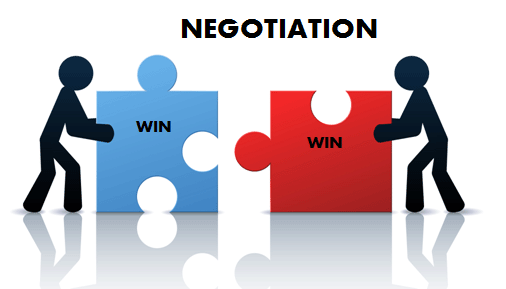
Walt Zlotow, West Suburban Peace Coalition, Glen Ellyn IL, 20 Sept 24
The US 32 month long proxy war against Russia is not quite over. But everyone in America’s important NATO allies knows America’s Ukraine proxy is losing badly with its military near collapse. The two hundred billions the US and NATO have poured into Ukraine have made not a dent in achieving the ‘good guys’ war aims of taking back the Donbas and Crimea, receiving reparations from Russia, and gaining NATO membership.
While President Biden betrays nary a hint of that stark reality, his European NATO allies, greatly more affected by the economic consequences of this than America, certainly are.
German Chancellor Olaf Scholz recently said, “I believe that now is the time to discuss how to arrive at peace from this state of war, indeed at a faster pace.” Scholz further stated that he will impose a limit on open ended aid to Ukraine and is working on a diplomatic settlement that will include Ukraine ceding territory to Russia.
A senior French diplomat recently told Le Figaro the same thing, citing that the Donbas and Crimea are beyond Ukraine’s military capability and that France lines up with Germany that only a negotiated settlement will end the war.
Insulated from the economic angst of its Western European allies, the US sees no need to deal with reality. For President Biden and his war cabinet including VP Harris, the words ‘negotiated settlement’ and ‘ceding territory’ dare not pass the lips of US diplomats acting more like war generals than statespersons.
Biden and company are still running around like Chicken Little, chirping ‘The Russians are coming, the Russians are coming, to take over Poland on their march to the English Channel.’
That includes presidential candidate Kamala Harris who repeated that delusional meme in her presidential debate.
The US proxy war against Russia, with Ukrainians doing all the dying and the country in ruins, is headed to a negotiated settlement in spite of President Biden’s intransigence.
Ukraine hits Russia with “massive drone attack” on military depot in Toropets, causing huge explosion
“If we make no effort to change direction, we will end up where we are heading.”
https://www.cbsnews.com/news/ukraine-hits-russia-drone-attack-toropets-military-depot-explosions/ 18 Sept 24
Kyiv, Ukraine — Ukrainian drones struck a large military depot in a town deep inside Russia overnight, causing a huge blaze and prompting the evacuation of some local residents, a Ukrainian official and Russian news reports said Wednesday. The strike came after a senior U.S. diplomat said Ukrainian President Volodymyr Zelenskyy’s recently announced but still confidential plan to win the war “can work” and help end the conflict that’s now in its third year.
Ukraine claimed the strike destroyed military warehouses in Toropets, a town in Russia’s Tver region about 240 miles northwest of Moscow and 300 miles from the border with Ukraine.
The attack was carried out by Ukraine’s Security Service, along with Ukraine’s Intelligence and Special Operations Forces, a Kyiv security official told The Associated Press, speaking on condition of anonymity to discuss the operation. According to the official, the depot housed Iskander and Tochka-U missiles, as well as glide bombs and artillery shells. He said the facility caught fire in the strike and was burning across an area 4 miles wide.
Russian state news agency RIA Novosti quoted regional authorities as saying air defense systems were working to repel a “massive drone attack” on Toropets, which has a population of around 11,000. The agency also reported a fire and the evacuation of some local residents.
There was no immediate information about whether the strikes had caused any casualties.
Successful Ukrainian strikes on targets deep inside Russia have become more common as the war has progressed and Kyiv developed its drone technology.
Zelenskyy has been pushing for approval from his Western partners, including the U.S., for Ukraine to use the sophisticated weapons they’re providing to hit targets inside Russia. Some Western leaders have balked at that possibility, fearing they could be dragged into the conflict.
Russian President Vladimir Putin warned last week that a decision by the U.S. or its NATO allies to allow Ukraine to use Western missiles to strike targets deep inside Russia would be viewed as “nothing less than the direct participation of NATO countries, the United States, and European countries, in the war in Ukraine.”
Ukraine’s targeting of Russian military equipment, ammunition and infrastructure deep inside Russia with drones and other weapons it already has — as well as making Russian civilians feel some of the consequences of the war that is being fought largely inside Ukraine — is part of Kyiv’s strategy.
The swift push by Ukrainian forces into Russia’s Kursk border region last month fits into that plan, apparently seeking to compel Putin to back down.
Putin has shown no signs of doing that, however, and has been trying to grind down Ukraine’s resolve through attritional warfare, while also trying to sap the West’s resolve to support Kyiv by drawing out the conflict. That has come at a price, however, as the U.K. Defense Ministry estimates the war has likely killed and wounded more than 600,000 Russian troops.
On Tuesday, Putin ordered his country’s military to increase its number of troops by 180,000 to a total of 1.5 million by Dec. 1.
Zelenskyy said last month that his plan for victory included not only battlefield goals but also diplomatic and economic wins. The plan has been kept under wraps but U.S. Ambassador to the United Nations Linda Thomas-Greenfield said during a news conference Tuesday that officials in Washington had seen it.
“We think it lays out a strategy and a plan that can work,” she said, adding that the United States would bring it up with other world leaders at the U.N. General Assembly in New York next week. She did not comment on what the plan contains.
Biden, Harris sacrificing endless thousands of Ukrainians to retain presidency November 5.
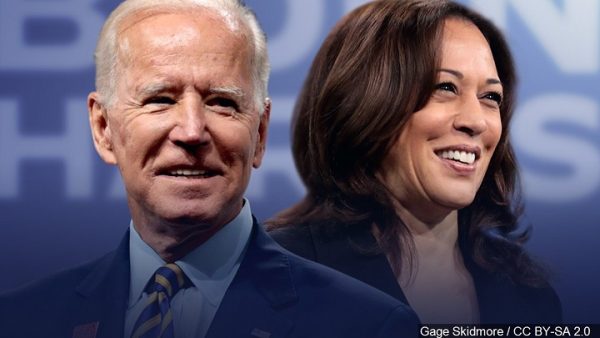
Walt Zlotow, West Suburban Peace Coaliton, Glen Ellyn IL, 16 Sept 24

President Biden sent Secretary of State Antony Blinken to Kyiv last week to reassure Ukrainian President Zelensky that Ukraine can prevail against Russia with endless US billions in weapons. He also stated that Ukraine will eventually achieve NATO membership.
Blinken was lying to Zelensky. He, along with President Biden and Democratic nominee Kamala Harris, know full well the US proxy war against Russia in Ukraine is lost. Indeed, it was certain to be lost the day it started over two and a half years ago. It could not be won without direct US/NATO involvement, regardless of how many hundreds of billions we squander supplying Ukraine with weapons. Direct involvement was ruled out because it likely means WWIII. US weapons are worthless because Ukraine is running out of soldiers to use them.
The US essentially green-lighted the invasion believing US weaponry would allow Ukraine to weaken, even defeat Russia, a long sought US foreign policy goal to keep them out of the European political economy.
The result has been a catastrophe for Ukraine, now a shattered country. It spells the end of continued US domination of Europe that offered no seat at the table for Russia.
The Biden/Harris administration must now take the sensible, moral action of forcing Ukraine to sue for peace. Allowing Ukraine to bleed out with further destruction to its economy, infrastructure, demographics and hundreds thousands more casualties is a grotesque policy to pursue.
But Biden and Harris are committed to their declaration this is a holy way of autocracy v. freedom. They are loathe to allow any settlement which allows Russia to achieve their war aims of no NATO membership for Ukraine and independence for Donbas, with security for Ukraine going forward.
It’s even more improbable for them to do that with the election just 7 weeks away. Admitting defeat after squandering over $150 billion simply destroying Ukraine to allow a Russian victory will bring an avalanche of criticism from national security state warhawks. It would rip away the false notion that this was a just war to protect US national security interests. It could cost Harris the election.
So Biden and Harris continue to prevent and cover up Ukraine’s impending collapse till after Election Day. They continue to fling tens of billions in weaponry into Ukraine which will either be destroyed by overwhelming Russian firepower or sit idle unused.
Biden and Harris have made a pact with the Devil over Ukraine. Tens of thousands of Ukrainians must die to keep the Democrats from losing a war shortly before an election. A war that never should have been fought and that signals the impending demise of US unilateral control of the world.
During his first year, President Biden lost the 20 year long Afghan war. Losing 2 senseless wars in one term is a lost war too far to remain in power. Biden and Harris’ message to Ukraine? ‘Keep dying Ukrainians. We’ll figure something out after November 5’.
Ukrainian Tipping Points – UPDATE 4: US Blocks Long-Range Missile Attacks Until After Elections?
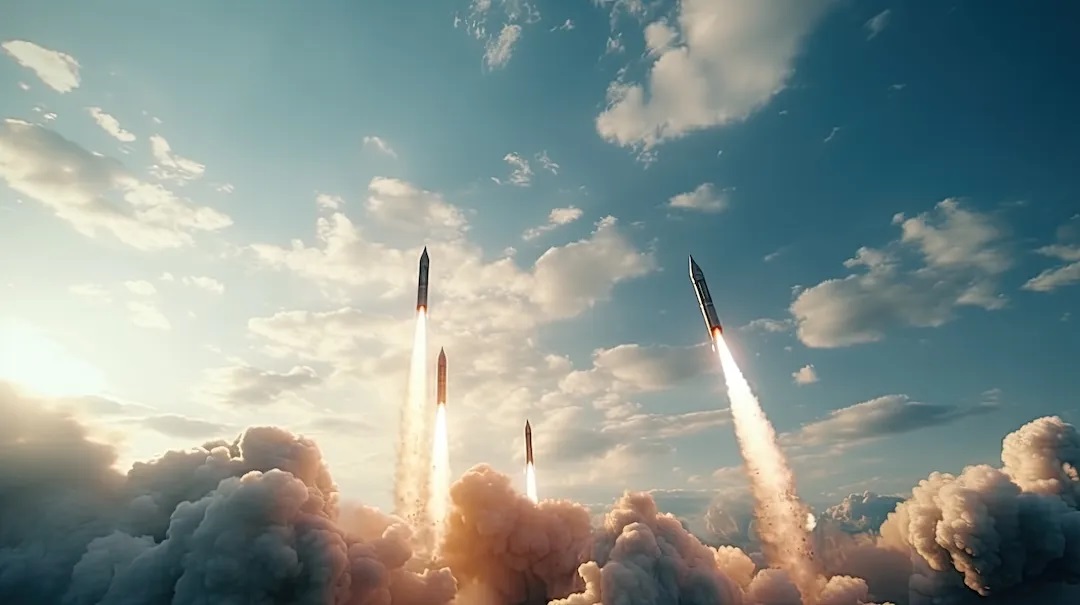
Russian and Eurasian Politics, by Gordonhahn, September 16, 2024, https://gordonhahn.com/2024/09/16/ukrainian-tipping-points-update-4-us-blocks-long-range-missile-attacks-until-after-elections/
As I expected in my original article (included further below), the, the political wing kicked down the road until after the elections the escalation against Russia that would have occurred by allowing Kiev to hit the country with US long-range missiles.
The US has refrained from removing its prohibition on Ukraine’s use of US ATACM or JSSSAM long-range missiles against targets deep inside Russia’s pre-2014 territory. Against all military and political logic, the UK lobbied hard during its prime minister’s visit to Washington and had approved use of its Storm Shadow missiles for such use (https://ctrana.news/news/471905-london-razreshil-ukraine-bit-po-rossii.html).
The US is operating under military and political logic. The Biden administration demanded that Ukrainian President Volodomyr Zelenskiy present a list of potential Russian targets to the White House, after the Pentagon questioned the military utility of such attacks (https://ctrana.news/news/471904-ssha-trebujut-ot-kieva-stratehiju-dalnobojnykh-udarov-po-rf.html).
Politically, as I noted, it is not in the Biden administration’s and Democratic party’s interest to have a crisis of a status of the Cuban Missile Crisis or have have Ukrainian forces suffer a grave collapse before the November 5 presidential elections.
This precluded any lifting of the prohibition before then, but afterwards things could change, and there those such as US Secretary of State Anthony Blinken and other neocons will be pressing hard to work out a reversal of this sane decision.
It appears that Russian President Vladimir Putin’s warning that such attacks would require NATO country officers’ involvement and thus would mean that NATO is directly fighting Russia and so Moscow would regard itself to be in a state of war with the country or countries’ the missiles of which were used played a role in the US’s decision to back down. The political configuration after the election could overcome the hesitation Putin induced among top US decision makers.
Playing with nuclear fire
Eric S. Margolis, 16 Sept 24, https://thesun.my/opinion-news/playing-with-nuclear-fire-EC13005045
REPUBLICANS in the US Senate have been urging the White House to provide Ukraine with long-range missiles that can strike deep into Russia. Such is the madness of pro-war sentiment.
America’s Secretary of State Anthony Blinken has apparently confirmed that Washington plans to shortly deliver such strategic weapons to Ukraine. This week, Britain’s new prime minister arrived in Washington to discuss more strategic arms for Ukraine.
One is vividly reminded of the mobs who thronged Paris train stations in August 1914, screaming “on to Berlin”. As a British historian aptly noted, “if patriotism is the last refuge of scoundrels, then war is the first platform of fools”.
US-supplied long-range missiles are the last step between what was a border conflict and an all-out war that will likely go nuclear.
Russia’s leader Vladimir Putin has repeatedly stated that he reduced conventional forces to divert funds to Russia’s stunted civilian economy. Nuclear weapons, said Putin, will be used to replace conventional forces if Russia is attacked. We must take him at his word.
The border war with Ukraine, which began in 2014, has shown how much Russia reduced its former conventional might. The once mighty Red Army has proven a shadow of its former self. Under Putin, armies of tanks have been replaced by new apartments across the sprawling nation.
The idea of sending more long-range missiles to Ukraine is sheer madness. Ukraine is slowly being ground down in this long war of attrition.
Ukraine’s current strategy is to provoke a direct clash between Russia and the US. Interestingly, Israel used the same strategy to provoke direct US military intervention against Syria and various Arab militias.
The US, dominated by pro-war Republicans and wealthy pro-Israel special interests, appears eager to promote war with Russia. Most importantly, neoconservatives are urging intensified war against Russia to advance their goal of breaking up the Russian Federation into small, weak pieces dominated by Washington.
Such was the case under former Russian president, Boris Yeltsin, who allowed US financial interests to dominate Russia while he made merry. Former KGB officer Putin put an end to Washington’s attempt to turn Russia into an American satrapy.
I interviewed the leaders of KGB at Moscow’s Lubyanka Prison in 1991. They expressed disgust with Russia’s then-Communist leadership and said there would be a housecleaning. The result was, of course, Putin’s surprising rise to power.
Putin quickly became the target of US media hate. He committed terrible brutalities in Chechnya, but without him, Russia may have ended up as today’s supine Germany.
The US overthrew Ukraine’s last pro-Russian government. Ukraine had been part of the Russian state for hundreds of years and the centre of its heavy industries. This coup cost the US $5 billion (RM21.44 billion), according to leading State Department neocon Victoria Nuland.
An actor, the amiable Volodymyr Zelensky, was put in charge by Nuland. US funds and arms poured into Ukraine. Efforts by Washington to shatter the old Soviet Union were a brilliant success, except that Washington had to foot the bill, which has so far reached an astounding US$44 billion, depriving the US military of many important weapons systems.
One also wonders why former president Donald Trump did not raise the issue of Ukraine’s payments to President Joe Biden and his son.
As a veteran war correspondent and old friend of Ukraine, I see the US and Russia heading to a major war. The Western powers have been relentlessly provoking Russia. The idea of supplying Ukraine with a new class of long-range missiles will likely ignite a dangerous war that may likely go nuclear.
Now is the time for the great powers to impose peace, not supply arms. Time to end the unnecessary sufferings of Ukrainians and Russians. Genuine diplomacy, not more weapons, is the answer.
The NATO/Ukraine Defeat in Kursk (and Beyond)
SOTT, by Gordonhahn, September 14, 2024
Contrary to the view of Beltway pundits regarding the sunny side or various alleged successes of Ukraine’s Kursk incursion, the Ukrainian President Volodomyr Zelenskiy’s newest simulacra attack –substituting a fake reality for the real one – has led to yet another predictable catastrophe in the real world of war and politics. Zelenskiy’s gambit had no military logic behind it. Its essence was made up of a propagandistic/PR component and perhaps a terrorist element. It was a reckless, desperate last roll of the dice to overturn the playing board which never had a hope of succeeding. Not one of the goals stated by Ukrainian officials was achieved, nor was the unstated, potential goal of seizng the Kursk Nuclear Power Plant achieved. What was ‘achieved’ was a decimation of some of Ukraine’s best remaining men and materiel.
Ukrainian officials publicly stated several goals of the operation:
(1) to force Moscow to redeploy troops away from Russian forces’ increasingly rapid advance on Pokrovsk and across the Donetsk front;
(2) to seize Russian territory to encourage Moscow to negotiate and to trade for the return of Ukrainian lands in peace talks with Moscow;
(3) to capture Russian prisoners of war to exchange for Ukrainian prisoners;
(4) to create angst in Russia among the elite and population in order to weaken support for the war and/or Putin’s hold on power; and
(5) to make Russia feel the pain of death and destruction that Ukraine has been feeling (Zelenskiy alone said this).
None of these goals was achieved.
Regarding the first goal, Ukrainian Armed Forces Commander Gen. Oleksandr Syrskii has acknowledged that the Russian forces did not redeploy from Donetsk to Kursk. The strategy was misconceived from the get-go. The Ukrainians tried to get the Russians to make an obvious mistake: divert forces need for their offensives in Donetsk to the Ukrainians’ mini-salient in Kursk and thereby weaken their offensive force. Ironically, in order to get the Russians to make the mistake of diverting valuable resources from Donetsk to Kursk the Ukrainians had done the same. This led to an acceleration of the Russian advance towards Pokrovsk – a key hub and perhaps the last best barrier hindering the Russian army’s march to the Dnieper.
Regarding the second and third, before the incursion Putin and other Russian officials had repeated their willingness to negotiate, but Kiev refused or ignored each statement. After the incursion, the Russians announced that there will be no talks while Ukrainian forces remain in Kursk and other Russian territories, according to Moscow’s definition. Moreover, as one exiled Ukrainian newspaper Ctrana.news, notes, no Russian is going to give back 18 percent of Ukrainian territory held by Russia in return for 5 percent of Kursk region’s territory. The same paper notes that even prominent Russian liberals, editor-in-chief of the banned Ekh Moskvy Aleksei Venediktov and Yabloko Party leader Grigorii Yavlinskii (who met with Putin weeks back to discuss peace talks), thought negotiations might have begun by year’s end until the Kursk incursion spoiled the mood in the Kremlin. No talks means there will be no trading for land or prisoners, contrary to Kiev’s goals.
Regarding the fourth goal, there has been no discernible elite or popular demand for a change in Putin’s ‘special operation policy’ (SMO). To the contrary, prominent hardliners and others intensified their clamor for untying the Russian military’s hands and undertaking a full-scale war on Ukraine, and this may explain an escalation in Russian missile attacks. In terms of the population, public opinion surveys demonstrate both continuing popular support for Putin and the mirror opposite effect on its views than that intended by Kiev. Ukrainian forces began their incursion on August 6th, crossing the Ukrainian-Russian border between Sumy, Ukraine and Kursk, Russia. In the Levada Center’s polling in July Putin’s approval rating was 87 percent. In August it fell a mere 2 points to 85 percent (within the margin of error).
…………………………………………………………………………………………………………………………………………………….. In regard to the Kursk gambit’s unstated and likely real goal of seizing the Kursk NPP and or nuclear weapons storage site in the hope of holding the local population and the Putin government hostage to a possible terrorist attack and/or trading control of the Kursk object(s) for control over the Zaporozhe NPP, now held by the Russians and badly needed to help Ukraine get throught the upcoming winter, given the diminution of the country’s electricity system as a result of Russia’s repeated attacks.
So just like the attempts to destroy the Crimean Bridge and the drone attacks on Moscow and St. Petersburg, the effect of this newest Kievan-Western move has been the precise opposite of what was supposedly intended. Moscow and all Russia are even more committed to ‘Putin’s unprovoked war of aggression’ and any ‘unprovoked responses’ the Kremlin may mount.
Worst of all for the bright lights who conjured up this operation in Langley or elsewhere, the war is getting closer to ‘the last Ukrainian.’ The Kursk gambit has led to the destruction of much of Kiev’s best fighters and equipment, and it is likely many of those Ukrainian and other troops who made the incursion will be encircled in short time. At the same time, the Kursk gambit made Russian advances greater along much of the front but especially on the Donetsk and southern Donetsk fronts, which will lead to the more rapid fall of Pokrovsk, Vugledar, and the entire Ukrainian defense effort east of the Dnieper River. And do the Second Ruin of Ukraine continues with Western crocodile tears and calls to keep up the fight in defense of NATO expansion for as long as ‘it’ takes. https://www.sott.net/article/494845-The-NATO-Ukraine-defeat-in-Kursk-and-beyond
As Biden deliberates, Ukraine’s nuclear plants are increasingly at risk
fear this coming winter may prove to be a breaking point for Ukraine in the energy war.
Stuck in the crosshairs are key substations feeding high voltage electricity to Ukraine’s still functioning nuclear power stations in Rivne, Khmelnytskyi and Yuzhnoukrainsk in southern Ukraine. Take these substations out and the reactors have to be shut down rapidly, or else it could provoke a “nuclear incident,” energy expert Mykhailo Gonchar told POLITICO. And “that’s what the Russians are aiming to do — hit the key substations.”
Paralyze the three nuclear power stations, though, and it’s game over for Ukraine in the energy war ,
The risk of Ukraine losing the war this winter has pushed Washington and London to reconsider how Kyiv uses Western-supplied long-range missiles, but the U.S. remains fearful of escalation.
Politico, September 15, 2024 , By Jamie Dettmer
KYIV — As the U.S. ponders loosening some of the restrictions on Ukraine’s use of Western-supplied long-range missiles to allow for the targeting of airfields and missile launch sites deeper inside Russia, Ukraine remains on tenterhooks.
As it stands, Washington doesn’t appear ready to take the gloves off entirely and allow Ukraine to target Russia’s airfields with long-range U.S. missiles quite yet — though it may withdraw restrictions on the U.K.’s Storm Shadows, which use U.S. technology.
“I would like to see a more forthright position coming from the Biden administration that says there’s no reason why Ukraine shouldn’t be fighting back,” former U.S. envoy to NATO Kurt Volker told POLITICO. “Russia’s the one attacking Ukraine from all these facilities across Russia. There’s no reason for there to be a sanctuary. But I don’t think we’re going to see Biden authorizing the use of U.S. missiles to strike at Russian airfields, although the British might be allowed to proceed without U.S. objection,” he added. “That won’t be enough.”
And if that’s really the outcome of these weeks-long intense negotiations, Ukraine’s energy officials will be among those most alarmed.
They fear this coming winter may prove to be a breaking point for Ukraine in the energy war. And that’s largely because Russian commanders are adapting their airstrike tactics, having learned from their previous failed bombing campaign to collapse the country’s energy system — and the recent shipments of Iran’s Fath-360 close-range ballistic missiles to Russia will help them do so.
Ukrainian officials expect Russia will use these missiles, which have a range limit of 120 kilometers, to complement their glide bombs in targeting logistics and communications hubs and ammunition depots in the rear of Ukraine’s front lines. That, in turn, will free Russia up to concentrate its own longer-range missiles on civilian infrastructure — particularly the energy system in a bid to break it.
Stuck in the crosshairs are key substations feeding high voltage electricity to Ukraine’s still functioning nuclear power stations in Rivne, Khmelnytskyi and Yuzhnoukrainsk in southern Ukraine. Take these substations out and the reactors have to be shut down rapidly, or else it could provoke a “nuclear incident,” energy expert Mykhailo Gonchar told POLITICO. And “that’s what the Russians are aiming to do — hit the key substations.”
Currently, 55 percent of Ukraine’s energy is generated by its three operating nuclear power stations — the one in Zaporizhzhia, which is the largest nuclear plant in Europe, was captured by Russia in 2022 and has largely been shut down. Russian missile and drone strikes have destroyed 9 gigawatts of the country’s electrical generating capacity — that’s half of the peak winter consumption — with 80 percent of thermal generation from coal- and gas-fired power plants and a third of hydroelectric production capacity wiped out by bombing.
Last year, Russia tried to isolate these nuclear power plants, focusing on degrading Ukraine’s energy transmission. It targeted distribution to consumers and businesses but was met with characteristic Ukrainian ingenuity and confounded by improvised repairs and rerouting.
Paralyze the three nuclear power stations, though, and it’s game over for Ukraine in the energy war , diminishing its war-fighting capacity, crashing the economy and weakening its position if peace negotiations do ever commence.
And according to officials in Kyiv, it’s the fear of this happening that’s been one of the factors driving the Biden administration to reconsider the restrictions, including on U.S. ATACMS and British Storm Shadows. Washington sat up when Russian airstrikes started targeting the main substations feeding operational electricity to the nuclear power plants in late August. “That concentrated minds,” said one Ukrainian official who asked not to be identified in order to speak freely………………………………………………………………………………………………
Burns also stressed no one should underestimate the risk of escalation and admitted his agency genuinely feared Russia might resort to tactical nuclear weapons in 2022. And while Biden and British Prime Minister Kier Starmer brushed off Putin’s threats on Friday, the U.S. administration still appears to be trapped between two worries — fear of how Moscow might respond if Western-supplied missiles start striking Russian airfields, and wreck projects for peace talks to get going, and alarm over the prospect of Ukraine losing power……………………………………………………………… https://www.politico.eu/article/russia-ukraine-nuclear-plants-energy-war-joe-biden-united-states-nato/
Scholz stands firm on long-range weapons for Kiev
https://www.rt.com/news/604037-scholz-long-range-weapons-kiev/ 16 Sept 24
Berlin will not lift restrictions on its more advanced weaponry, even if Ukraine’s other allies do, German chancellor has said.
Germany will not allow its long-range weapons to be used for Ukrainian strikes deep into Russia, even if other states choose to do so, Chancellor Olaf Scholz has said.
Washington and London have suggested that they could allow Kiev to use missiles such as the American-made ATACMS and the British-made Storm Shadow to hit such targets.
Berlin retains its policy of not permitting Ukraine to use German-provided long-range weapons for such attacks, Scholz said on Saturday at a Q&A session in Prenzlau, Brandenburg.
I’m sticking to my stance, even if other countries decide differently,” Scholz said. “I won’t do that because I think it’s a problem.”
Germany is Ukraine’s second-largest military donor after the US. Berlin has provided or pledged more than €28 billion ($31 billion) in lethal aid to Kiev since the start of the conflict with Russia, according to data from the Federal Government website.
However, Berlin has so far refused to follow the UK and France’s example in arming Ukraine with long-range missiles. In May, Scholz explained that supplying Ukraine with Taurus missiles with a range of 500 km (310 miles) would amount to Berlin’s direct participation in the conflict.
“It would only be tenable to deliver [these weapons] if we determine and define the targets ourselves, and that is again not possible if you don’t want to be part of this conflict,” he stressed.
On Thursday, Russian President Vladimir Putin warned Western powers against further escalating the hostilities. “We are not talking about allowing or prohibiting the Kiev regime from striking Russian territory,” Putin explained, noting that Ukraine was already doing this.
Western-supplied ATACMS and Storm Shadow missiles have been used by Ukraine to strike targets in Crimea and Donbass – Russian territories that Kiev claims as its own – leading to multiple civilian casualties.
Kiev lacks the ability to independently use Western long-range systems, Putin explained.
Targeting for such strikes relies on intelligence from NATO satellites, while firing solutions can “only be entered by NATO military personnel.”
“This will mean that NATO countries, the US, European countries are fighting against Russia,” Putin stressed. Such direct participation will change “the very essence, the very nature of the conflict”, meaning Russia will have to “make the appropriate decisions on the threats,” the Russian leader warned.
In June, Putin pledged that Moscow would shoot down any missiles used in long-range strikes, and retaliate against those responsible. One possible response would be to send similar high-tech weaponry to forces that are in conflict with the West.
Ukraine will join NATO – Blinken

https://www.rt.com/news/603873-blinken-ukraine-kiev-nato/— 11 Sept 24
The top US diplomat has repeated Washington’s talking points while visiting Kiev
Washington wants to see Kiev win the conflict against Moscow and join NATO, US Secretary of State Antony Blinken has said.
Blinken is visiting Kiev with his British counterpart, David Lammy, to reiterate Anglo-American support for Vladimir Zelensky’s government.
“At the July summit, we declared that Ukraine’s path to NATO membership is irreversible,” Blinken said on Wednesday, reminding his hosts that the US-led bloc has “established a command dedicated to support Ukraine’s membership.”
Blinken has made the case for Kiev’s membership in NATO before. However, the bloc has officially declared, both in Washington this summer and last year in Lithuania, that this could only happen “when allies agree and conditions are met.”
Hungary and Slovakia have already said they will not agree under any circumstances, as bringing Ukraine into NATO would mean war with Russia.
During the same speech in Kiev, Blinken painted a rosy picture of Ukraine’s military industry, claiming it had expanded six-fold over the last year.
“In the coming years, that’s going to give Ukraine one of the most advanced defense industries in the world, and it will be able to take that to the global market and take global market share away from other countries like Russia, and also supply NATO allies,” he added.
Kiev is presently entirely dependent on the West for weapons, equipment, ammunition and even cash infusions to keep its government going. Ukraine is also facing widespread electricity shortages, as Russian missile strikes have degraded power production capacity. Blinken himself announced on Wednesday that the US will send $325 million to help repair the Ukrainian power grid and provide emergency backup generators for critical infrastructure.
Another $290 million has been earmarked for “food, water, shelter, health care and education programs for Ukrainians” both in the country and abroad, with the remaining $102 million designated for landmine removal.
“The bottom line is this: We want Ukraine to win,” Blinken declared at another point during his visit, according to AP.
This, too, was stated by Western officials before, as a prerequisite for Kiev’s membership in NATO. This effectively means that Ukraine will never join the bloc, Russian Deputy Foreign Minister Sergey Ryabkov said in June.
NATO’s 2008 announcement about Ukraine’s possible membership “became the trigger for much of the entire crisis that we are observing today,” Ryabkov said at the time. “If NATO members are ready to fall into the same trap again and history teaches them nothing, then they will get hit again and their bruises will get worse,” he added.
The NATO/Ukraine Defeat in Kursk (and Beyond)
by Gordonhahn, September 14, 2024, https://gordonhahn.com/2024/09/14/the-nato-ukraine-defeat-in-kursk-and-beyond/
Contrary to the view of Beltway pundits regarding the sunny side or various alleged successes of Ukraine’s Kursk incursion (https://nationalinterest.org/blog/buzz/kursk-offensive-and-future-russia-ukraine-war-%C2%A0-212669), the Ukrainian President Volodomyr Zelenskiy’s newest simulacra attack – substituting a fake reality for the real one – has led to yet another predictable catastrophe in the real world of war and politics.
Zelenskiy’s gambit had no military logic behind it. Its essence was made up of a propagandistic/PR component and perhaps a terrorist element. It was a reckless, desperate last roll of the dice to overturn the playing board which never had a hope of succeeding. Not one of the goals stated by Ukrainian officials was achieved, nor was the unstated, potential goal of seizng the Kursk Nuclear Power Plant achieved. What was ‘achieved’ was a decimation of some of Ukraine’s best remaining men and materiel`.
Ukrainian officials publicly stated several goals of the operation: (1) to force Moscow to redeploy troops away from Russian forces’ increasingly rapid advance on Pokrovsk and across the Donetsk front; (2) to seize Russian territory to encourage Moscow to negotiate and to trade for the return of Ukrainian lands in peace talks with Moscow; (3) to capture Russian prisoners of war to exchange for Ukrainian prisoners; (4) to create angst in Russia among the elite and population in order to weaken support for the war and/or Putin’s hold on power; and (5) to make Russia feel the pain of death and destruction that Ukraine has been feeling (Zelenskiy alone said this). None of these goals was achieved.
Regarding the first goal, Ukrainian Armed Forces Commander Gen. Oleksandr Syrskii has acknowledged that the Russian forces did not redeploy from Donetsk to Kursk. The strategy was misconceived from the get-go. The Ukrainians tried to get the Russians to make an obvious mistake: divert forces need for their offensives in Donetsk to the Ukrainians’ mini-salient in Kursk and thereby weaken their offensive force. Ironically, in order to get the Russians to make the mistake of diverting valuable resources from Donetsk to Kursk the Ukrainians had done the same. This led to an acceleration of the Russian advance towards Pokrovsk – a key hub and perhaps the last best barrier hindering the Russian army’s march to the Dnieper.
Regarding the second and third, before the incursion Putin and other Russian officials had repeated their willingness to negotiate, but Kiev refused or ignored each statement. After the incursion, the Russians announced that there will be no talks while Ukrainian forces remain in Kursk and other Russian territories, according to Moscow’s definition (https://ctrana.news/news/471809-v-rf-snova-zajavili-chto-ne-budut-vesti-perehovory-s-ukrainoj.html).
Moreover, as one exiled Ukrainian newspaper Ctrana.news, notes, no Russian is going to give back 18 percent of Ukrainian territory held by Russia in return for 5 percent of Kursk region’s territory. The same paper notes that even prominent Russian liberals, editor-in-chief of the banned Ekh Moskvy Aleksei Venediktov and Yabloko Party leader Grigorii Yavlinskii (who met with Putin weeks back to discuss peace talks), thought negotiations might have begun by year’s end until the Kursk incursion spoiled the mood in the Kremlin (https://uiamp.org/kurskiy-tormoz-kakie-seychas-perspektivy-peregovorov-ukrainy-i-rossii). No talks means there will be no trading for land or prisoners, contrary to Kiev’s goals.
Regarding the fourth goal, there has been no discernible elite or popular demand for a change in Putin’s ‘special operation policy’ (SMO). To the contrary, prominent hardliners and others intensified their clamor for untying the Russian military’s hands and undertaking a full-scale war on Ukraine, and this may explain an escalation in Russian missile attacks. In terms of the population, public opinion surveys demonstrate both continuing popular support for Putin and the mirror opposite effect on its views than that intended by Kiev. Ukrainian forces began their incursion on August 6th, crossing the Ukrainian-Russian border between Sumy, Ukraine and Kursk, Russia. In the Levada Center’s polling in July Putin’s approval rating was 87 percent. In August it fell a mere 2 points to 85 percent (within the margin of error) ((www.levada.ru/2024/08/29/rejtingi-avgusta2024-goda-otsenki-polozheniya-del-v-strane-nastroeniya-respondentov-odobrenie-organov-vlasti-doverie-politikam-i-partiyam/?utm_source=mailpoet&utm_medium=email&utm_source_platform=mailpoet&utm_campaign=newsletter-post-title_81).
Levada’s polling also shows that after a short period of shock regarding the Kursk incursion, Russian public opinion adapted and is taking in stride. It ranks fifth in the populace’s mind among the most important events since the SMO’s start in February 2022. Concern was largely localized to regions around Kursk, and discontent with performance was directed at the military, border troops, and intelligence services, not the political leadership, no less Putin personally. Levada’s monthly polling on the public mood showed a barely significant jump just above the margin of error. Whereas in July negative feeling was registered among 18 percent, in August it rose to 24 percent.
However, Levada offered comparative context by noting that this jump pales in significance to the more than doubling (21 to 47 percent) of those admitting to a negative mood in autumn 2022, when the Putin government announced a mobilization of new soldiers for the SMO (www.levada.ru/2024/09/03/privychnaya-trevoga-chto-dumayut-rossiyane-o-nastuplenii-vsu-v-kurskoj-oblasti/?utm_source=mailpoet&utm_medium=email&utm_source_platform=mailpoet&utm_campaign=newsletter-post-title_81 and www.levada.ru/2024/08/30/konflikt-s-ukrainoj-i-napadenie-na-kurskuyu-oblast-osnovnye-pokazateli-v-avguste-2024-goda/?utm_source=mailpoet&utm_medium=email&utm_source_platform=mailpoet&utm_campaign=newsletter-post-title_81). Support for the SMO strengthened in the wake of the Kursk invasion as of August. Support for the military’s war efforts slightly increased (78 percent), and the percentage of those who supported continuing the war without peace negotiations and of those who supported beginning talks shifted from 58 percent and 34 percent, respectively, to 49 percent and 41 percent, respectively. (www.levada.ru/2024/09/03/privychnaya-trevoga-chto-dumayut-rossiyane-o-nastuplenii-vsu-v-kurskoj-oblasti/?utm_source=mailpoet&utm_medium=email&utm_source_platform=mailpoet&utm_campaign=newsletter-post-title_81).
The only way the Kursk incursion could spark greater discomfort with the SMO and Putin’s course would be if a second mobilization is undertaken in response, since this was the most alarming event for Russians since the SMO began, according to Levada’s surveys (www.levada.ru/2024/08/30/konflikt-s-ukrainoj-i-napadenie-na-kurskuyu-oblast-osnovnye-pokazateli-v-avguste-2024-goda/?utm_source=mailpoet&utm_medium=email&utm_source_platform=mailpoet&utm_campaign=newsletter-post-title_81).
Regarding the Ukrainians’ goal of making Russians feel their pain, as noted above the pain has been limited and adjusted to by Russians. Moreover, if there was pain it was in response to Ukrainian brutality broadcast on Russian media and it has led, as noted above, to greater support for continuing the SMO or upgrading it to full-scale war, which so far Putin has resisted. Thus, among those in the already noted Levada opinion survey who expressed concern about Ukraine’s Kursk invasion, the second-most frequently expressed concern (25 percent) was outrage over the cruelty of the Ukrainian troops in relation to Russian civilians as conveyed by Russian media (www.levada.ru/2024/09/03/privychnaya-trevoga-chto-dumayut-rossiyane-o-nastuplenii-vsu-v-kurskoj-oblasti/). This, as noted in Levada surveys noted above, and the fact of the incursion itself apparently provoked outrage that only increased the desire among Russians to continue the war and decreased the number of those preferring to start peace talks.
In regard to the Kursk gambit’s unstated and likely real goal of seizing the Kursk NPP and or nuclear weapons storage site in the hope of holding the local population and the Putin government hostage to a possible terrorist attack and/or trading control of the Kursk object(s) for control over the Zaporozhe NPP, now held by the Russians and badly needed to help Ukraine get throught the upcoming winter, given the diminution of the country’s electricity system as a result of Russia’s repeated attacks. So just like the attempts to destroy the Crimean Bridge and the drone attacks on Moscow and St. Petersburg, the effect of this newest Kievan-Western move has been the precise opposite of what was supposedly intended. Moscow and all Russia are even more committed to ‘Putin’s unprovoked war of aggression’ and any ‘unprovoked responses’ the Kremlin may mount.
Worst of all for the bright lights who conjured up this operation in Langley or elsewhere, the war is getting closer to ‘the last Ukrainian.’ The Kursk gambit has led to the destruction of much of Kiev’s best fighters and equipment, and it is likely many of those Ukrainian and other troops who made the incursion will be encircled in short time. At the same time, the Kursk gambit made Russian advances greater along much of the front but especially on the Donetsk and southern Donetsk fronts, which will lead to the more rapid fall of Pokrovsk, Vugledar, and the entire Ukrainian defense effort east of the Dnieper River. And do the Second Ruin of Ukraine continues with Western crocodile tears and calls to keep up the fight in defense of NATO expansion for as long as ‘it’ takes.
UK approves Ukrainian missile strikes deep inside Russia – Guardian

According to The Guardian, US Secretary of State Antony Blinken “gave the strongest hint yet” about permitting Ukraine to use long-range ATACMS missiles against Russia during his visit to Kiev on Wednesday. The decision is “understood to have already been made in private,” the British outlet claimed.
https://www.rt.com/news/603878-ukraine-storm-shadow-missiles/ 12 Sept 24
The Western media is manufacturing public consent for the move, according to a Russian senator
Washington and London may have already decided to let Kiev use long-range missiles for strikes deep inside Russia and are now seeding the narrative through the media, Russian Senator Aleksey Pushkov has said.
Britain has already given the green light for the use of Storm Shadow missiles, The Guardian reported on Wednesday, citing anonymous government sources. London, however, is not expected to announce the move publicly, the sources claimed.
“The decision to strike Russian territory is clearly being prepared,” Pushkov wrote on Telegram on Wednesday. “There are too many conversations and hints about it for it to be reversed. Even if it has not been made yet, it looks like it will be a matter of days. The leak via The Guardian is not accidental. Public opinion is being prepared.”
Limitations on the use of Western-supplied weapons were originally put in place to allow the US and its allies to claim they were not directly involved in the conflict with Russia, while arming Ukraine to the tune of $200 billion. Kiev has been clamoring for the restrictions to be lifted since May, however.
According to The Guardian, US Secretary of State Antony Blinken “gave the strongest hint yet” about permitting Ukraine to use long-range ATACMS missiles against Russia during his visit to Kiev on Wednesday. The decision is “understood to have already been made in private,” the British outlet claimed.
Blinken “signaled” the potential shift from Washington on Tuesday, according to Bloomberg, by bringing up Iran’s alleged delivery of missiles to Moscow.
UK Foreign Secretary David Lammy, who tagged along with Blinken to Kiev, has said the Iranian missile delivery was a “significant and dangerous escalation” that influenced the thinking in London and Washington.
The escalator here is [Russian President Vladimir] Putin. Putin has escalated with the shipment of missiles from Iran. We see a new axis of Russia, Iran and North Korea,” The Guardian quoted Lammy as saying.
Iran has denied sending any missiles to Russia, calling the accusations “psychological warfare” and particularly rich coming from countries heavily involved in arming Ukraine.
An open letter from 27 US congressmen and senators sent to President Joe Biden on Wednesday did not mention Iranian missiles at all. Instead, it claimed that Ukraine’s incursion into Russia’s Kursk Region “changed the very nature of the war” and argued that “Ukraine is not intimidated by Putin’s tyranny, and in the defense of liberty, we should not be either.”
The US “continues to test the limits of our tolerance for hostile steps,” and is “paving the way to World War III,” the Russian ambassador to the US, Anatoly Antonov, told reporters on Wednesday.
“It is impossible to negotiate with terrorists. They must be destroyed,” Antonov added. “As in the years of the Great Patriotic War, fascism must be eradicated. And the goals and objectives of the special military operation must be fully achieved. No one should doubt that it will be so.”
Putin has previously warned NATO members to be aware of “what they are playing with” when discussing plans to allow Kiev to strike deep inside Russian territory using weapons provided by the West. The Russian military is “taking appropriate countermeasures,” according to Kremlin spokesman Dmitry Peskov, while Russian Foreign Minister Sergey Lavrov called the use of Storm Shadow missiles inside Russian territory “playing with fire.”
Die Welt predicts a mass exodus of people from Ukraine in winter
Die Welt predicts a mass exodus of people from Ukraine in winter
▪️ The article states:
Rolling power outages are already occurring across the country. In the summer, they are perhaps a minor inconvenience, and only cause real problems when it comes to refrigeration units or storage facilities. However, in the winter, such a situation could lead to a large-scale catastrophe. Millions of people would flee en masse.
▪️ The publication notes that only half of Ukraine’s energy production capacity remains, and the situation could become extremely difficult by winter.
UK sent Kyiv large supplies of old military equipment, watchdog finds
One defence official, not involved in the audit, said: “The war has tested our stockpiles, but it’s a good thing for us that we have cleared out old kit and can now replace it with new equipment.”
Defence ministry dispatched kit ‘due to be scrapped or replaced’, according to National Audit Office
Ft.com John Paul Rathbone in London, September 11 2024
Much of the military aid the UK has given to Ukraine has consisted of old equipment, such as army boots that otherwise would have had to be thrown away, according to a spending watchdog.
Military gear that was “often due to be scrapped or replaced” was prioritised by the Ministry of Defence because it was believed to have “immediate military value” to Ukraine — but sending it to Kyiv also “reduced waste or costs relating to disposal”, the National Audit Office said on Wednesday.
The ministry also used other “innovative ways of sourcing military equipment”, such as reverse-engineering replacement tracks for Soviet-era T72 tanks from samples at a tank museum in Dorset, the NAO noted.
The findings come as some of Kyiv’s western allies tire of supporting Ukraine almost three years after Russia launched its full-scale invasion. The £7.8bn of military aid the UK has pledged or sent to Kyiv make it the third-largest supplier of western support to Ukraine after the US at £56.5bn, and Germany at £16.2bn, the NAO said. The UK has pledged to continue providing £3bn a year of military aid. Other western allies have also given ageing equipment to Kyiv: in one recent US example, 10 donated vehicles ostensibly worth more than $7mn had a combined book value of zero.
However, ageing military equipment cleared from British stockpiles was only a small portion of total UK aid sent to Ukraine, because it had a book value of just £171.5mn versus an estimated replacement cost of £2.7bn. Three-quarters of it also came during the first year of the invasion. The UK spent a further £2.4bn on procuring equipment, contributed £500mn to an international fund, and spent £830mn on operational support, some channelled via Nato………………………………………………………………………………………………………………………………..
One finding concerned the value of UK military supplies. The report cited 17,000 pairs of army boots, which the UK donated in March 2022. The shoes were nearing the end of their usable life and, if not sold, “would have been sent to landfill”. In another example, the NAO said the 14 Challenger 2 tanks sent in 2023 had a book value of just £17mn, compared to their original purchase price at the end of the 1990s of £47mn.
One defence official, not involved in the audit, said: “The war has tested our stockpiles, but it’s a good thing for us that we have cleared out old kit and can now replace it with new equipment.”
The UK has set aside £2.5bn to replenish its stockpiles depleted by the war. In April, the previous Conservative government pledged £10bn in investment to boost munitions productions over the next decade.
Bolstering Britain’s defence industry is also expected to be a priority in the “root and branch” defence review launched by the Labour government in July………………………….. https://www.ft.com/content/f44bf7d0-0895-4f63-9fce-d3de8e686b57
1 This Month

of the week – Shut Down Drone Warfare!


Tell the Ukrainian Government to Drop Prosecution of Peace Activist Yurii Sheliazhenko

Petition to revoke the licensing of the Near Surface Nuclear Disposal Facility (NSDF) at Chalk River. https://www.ourcommons.ca/petitions/en/Petition/Details?Petition=e-7247
To see nuclear-related stories in greater depth and intensity – go to https://nuclearinformation.wordpress.com
-
Archives
- April 2026 (114)
- March 2026 (251)
- February 2026 (268)
- January 2026 (308)
- December 2025 (358)
- November 2025 (359)
- October 2025 (376)
- September 2025 (257)
- August 2025 (319)
- July 2025 (230)
- June 2025 (348)
- May 2025 (261)
-
Categories
- 1
- 1 NUCLEAR ISSUES
- business and costs
- climate change
- culture and arts
- ENERGY
- environment
- health
- history
- indigenous issues
- Legal
- marketing of nuclear
- media
- opposition to nuclear
- PERSONAL STORIES
- politics
- politics international
- Religion and ethics
- safety
- secrets,lies and civil liberties
- spinbuster
- technology
- Uranium
- wastes
- weapons and war
- Women
- 2 WORLD
- ACTION
- AFRICA
- Atrocities
- AUSTRALIA
- Christina's notes
- Christina's themes
- culture and arts
- Events
- Fuk 2022
- Fuk 2023
- Fukushima 2017
- Fukushima 2018
- fukushima 2019
- Fukushima 2020
- Fukushima 2021
- general
- global warming
- Humour (God we need it)
- Nuclear
- RARE EARTHS
- Reference
- resources – print
- Resources -audiovicual
- Weekly Newsletter
- World
- World Nuclear
- YouTube
-
RSS
Entries RSS
Comments RSS
 nuclear-news