Truce or trap? Ukraine makes sure peace talks go nowhere
Any progress towards a settlement will be incremental, slow and painful
Jun 2, 2025 By Tarik Cyril Amar, a historian from Germany working at Koç University, Istanbul, on Russia, Ukraine, and Eastern Europe, the history of World War II, the cultural Cold War, and the politics of memory
On Sunday, in the Russian regions of Bryansk and Kursk, both bordering Ukraine, bridges collapsed on and under trains, killing seven and injuring dozens of civilians. These, however, were no accidents and no extraordinary force of nature was involved either. Instead, it is certain that these catastrophes were acts of sabotage, which is also how Russian authorities are classifying them. Since it is virtually certain that the perpetrators acted on behalf of Kiev, Western media have hardly reported these attacks. Moscow meanwhile rightly considers these attacks terrorism.
On the same day, Ukraine also carried out a wave of drone attacks on important Russian military airfields. That story, trumpeted as a great success by Ukraine’s SBU intelligence service, has been touted in the West. The usual diehard Western bellicists, long starved of good news, have pounced on Ukraine’s probably exaggerated account of these assaults to fantasize once more about how Ukraine has “genius,” while Russia is “vulnerable” and really almost defeated. Despair makes imaginative. In the wrong way.
The reality of Ukraine’s drone strikes on the airfields is not entirely clear yet. What is certain is that Ukraine targeted locations in five regions, including in northern and central Russia as well as Siberia and the Far East. Kiev’s drone swarms were launched not from Ukraine but from inside Russia, using subterfuge and civilian trucks. Under International Humanitarian War (aka the Law of Armed Conflict), this is likely to constitute not a legitimate “ruse of war” but the war crime of perfidy, a rather obvious point somehow never mentioned in Western commentary.
Yet at least, in this instance the targets were military: This was either an act of special-ops sabotage involving a war crime (the most generous possible reading) or plain terrorism or both, depending on your point of view. Three of the attacked airbases, it seems, successfully fended off the Ukrainian first-person-view kamikaze drones. In two locations, enough drones got through to cause what appears to be substantial damage.
Ukrainian officials and, therefore, Western mainstream media claim that more than 40 Russian aircraft were destroyed, including large strategic bombers and an early-warning-and-control aircraft. Official Russian sources have admitted losses but not detailed them. Russian military bloggers, often well-informed, have quoted much lower figures (“in the single digits,” thirteen), while noting that even they still constitute a “tragic loss,” especially as Russia does not make these types of aircraft anymore.
In financial terms, Ukrainian officials claim that they have inflicted the equivalent of “at least 2 billion” dollars in damage. Even if it should turn out that they have been less effective than that, there can be little doubt that, on this occasion, Kiev has achieved a lot of bang for the buck: even if “Operation Spiderweb” took a long time to prepare and involved various resources, including a warehouse, trucks, and the cheap drones themselves, it is certain that Kiev’s expenses must have been much less than Moscow’s losses.
In political terms, Russia’s vibrant social media-based sphere of military-political commentators has revealed a sense of appalled shock and anger, and not only at Kiev but also at Russian officials and officers accused of still not taking seriously the threat of Ukrainian strikes even deep inside Russia. One important Telegram “mil-blogger” let his readers know that he would welcome dismissals among the air force command. But he also felt that the weak spots exploited by Kiev’s sneak drone attack have systemic reasons. Another very popular mil-blogger has written of “criminal negligence.”
Whatever the eventual Russian political fall-out of these Ukrainian attacks, beware Western commentators’ incorrigible tendency to overestimate it. German newspaper Welt, for instance, is hyperventilating about the attack’s “monumental significance.” In reality, with all the frustration inside Russia, this incident will not shake the government or even dent its ability to wage the war.
Probably, its real net effect will be to support the mobilization of Russia. Remember that Wagner revolt that saw exactly the same Western commentators predicting the imminent implosion not merely of the Russian government but the whole country? You don’t? Exactly.
In the case of the terrorist attacks on civilian trains, the consequences are even easier to predict. They will definitely only harden Moscow’s resolve and that of almost all Russians, elite and “ordinary.” With both types of attacks, on the military airfields and on the civilian trains, the same puzzling question arises: What is Kiev even trying to do here?
At this point, we can only speculate. My guess: Kiev’s rather desperate regime was after four things:
First, a propaganda success for domestic consumption. Given that Zelensky’s Ukraine is a de facto authoritarian state with obedient media, this may actually work, for a moment. Until, that is, the tragedy of mobilization, all too often forced, for a losing proxy war on behalf of a fairly demented West, sinks in again, that is, in a day or so.
Second, with its combination of atrocities against civilians and an assault on Russia’s nuclear defenses, this was Kiev’s umpteenth attempt to provoke Russia into a response so harsh that it would escalate the war to a direct clash between NATO (now probably minus the US) and Russia. This is a Ukrainian tactic as old as this war, if not older. Call it the attack’s routine aspect. Equally routinely, that plan went nowhere.
Then there was the attempt to torpedo the second round of the revived Istanbul talks, scheduled for Monday, 2 June, by provoking Russia to cancel or launch such a rapid and fierce retaliation strike that Kiev could have used it as a pretext to do the same. That is, as it were, the tactical dimension, and it also failed.
While the above is devious, it is also run-of-the-mill. States will be states, sigh. The fourth likely purpose of Kiev’s wave of sabotage and terror strikes – the strategic aspect, as it were – however, is much more disturbing: The Zelensky regime – and at least some of its Western backers (my guess: Britain in the lead) – are signaling that they are ready to wage a prolonged campaign of escalating terrorist attacks inside Russia, even if the fighting in Ukraine should end. Think of the Chechen Wars, but much worse again. This, too, would not succeed. One lesson of the Chechen Wars is precisely that Moscow has made up its mind not to bend to terrorism but instead eliminate its source, whatever the cost.
Regarding those Istanbul talks, they have taken place. Ukraine was not able to make Russia abandon them. Otherwise, the results of this second round of the second attempt at peace in Istanbul seem to have been very modest, as many observers predicted. Kiev, while losing, did its usual grimly comedic thing and offered Moscow a chance to surrender. Moscow handed over its terms in turn; and they have not changed and reflect that it is winning the war. Kiev has promised to study them.
Given that the gap between Ukrainian delusions and Russian demands seems unbridgeable at this point, even a large-scale ceasefire is out of reach. And that may be, after all, what both the Zelensky regime and its European backers want. As to Moscow, it has long made clear that it will fight until it reaches its war aims. In that sense, the new talks confirmed what the attacks had signaled already: peace is not in sight.
Russia’s chief negotiator Vladimir Medinsky did, however, offer smaller, local ceasefires of “two to three days” that, he explained, would serve to retrieve the bodies of the fallen for decent burial. In the same spirit, Russia has committed to hand over 6,000 bodies of Ukrainian soldiers and officers.
There was something for the living as well: more prisoner exchanges, for those severely ill or injured as well as for the young, have been agreed. Figures are not clear yet, but the fact that they will take place on an “all-for-all” basis reflects a Russian gesture of good will.
Finally, Medinsky also revealed that the Ukrainian side handed over a list of 339 children that Russia has evacuated from the war zone. He promised that, as in previous cases, Russian officials will trace them and do their best to return the children to Ukraine. Medinsky pointed out that the number of children on Kiev’s list massively contradicts Ukrainian and Western stories – as well as lawfare – about an immense, “genocidal” Russian kidnapping operation.
In that sense, the talks at least helped to deflate an old piece of Western information war. Perhaps that is all that is possible for now: truly incremental humanitarian progress and a very gradual, very slow working toward a more reasonable manner of talking to each other. Better than nothing. But that’s a low bar, admittedly.
A peace deal in Istanbul won’t happen until NATO is off the table
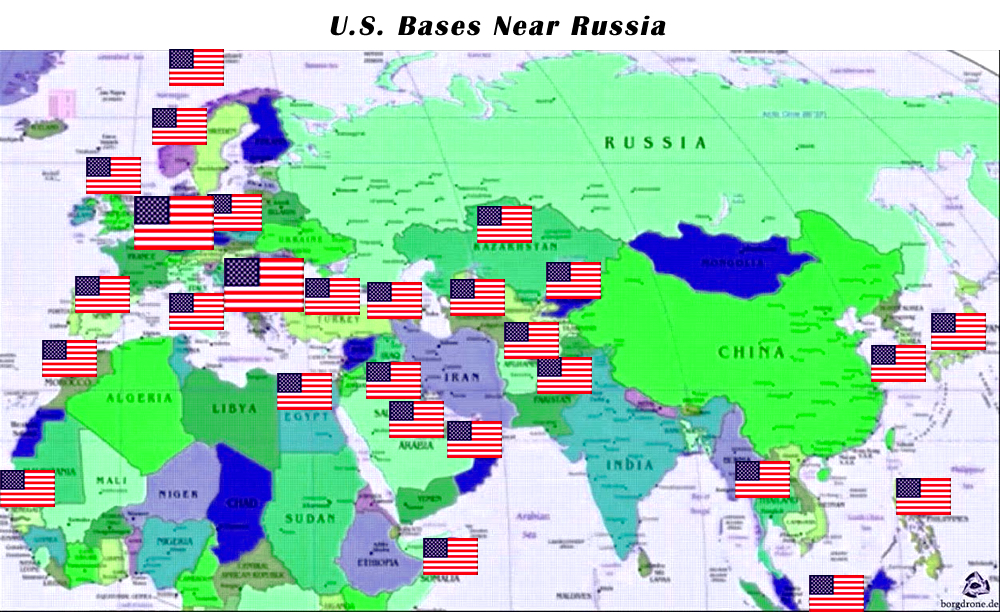
Failure and being seen to fail on NATO will deliver a huge political blow to western leaders who will keep kicking the peace can down the road
Ian Proud, Jun 03, 2025, https://thepeacemonger.substack.com/p/a-peace-deal-in-istanbul-wont-happen?utm_source=post-email-title&publication_id=3221990&post_id=165018630&utm_campaign=email-post-title&isFreemail=true&r=1ise1&triedRedirect=true&utm_medium=email
Russia will not end the war until, at the very least, Ukraine revokes its commitment to join NATO. If and when that happens, European leaders will have to confront their failure, justify it to their voters and explain why they prolonged the war for so long.
The next round of Istanbul peace talks commenced today, with UK media playing down the chances of a breakthrough. Helpful signs emerged of another prisoner exchange. Ukraine will consider Russia’s draft memorandum. There is a more clearly stated intent to continue talks towards a possible future meeting of leaders.
In a war that has long passed the one million mark in numbers of people killed or injured across both sides, no one will emerge from this process completely victorious when the fighting ends if, indeed, it ends this year.
But for President Zelensky and for western leaders, particularly in Europe, it is not victory but rather the fear of failure that presents the biggest stumbling block to a quick peace deal. Lacking sufficient financial and military support from western sponsors, and under pressure from the Trump administration to settle, Ukraine may at some point be forced to revoke its aspiration to join NATO.
NATO is by far the most stubborn ‘root cause’ that Russia is looking to address through negotiations, although the list of issues including on minority language rights, the division and status of territory, and Ukrainian children (raised today in Istanbul) is very long.
And NATO membership for Ukraine is an issue that President Trump and US officials including defence Secretary Pete Hegseth, negotiator Steve Witkoff and Ukraine Envoy Keith Kellogg have all acknowledged as unrealistic.
Undaunted, Zelensky, European leaders and the NATO secretary general still cling to an ever more tenuous line that the path to Ukrainian membership is irreversible.
That is untenable.
Russia has the military and economic means to continue the attritional fight, at a time when its slow but steady rate of progress in the Donbas is accelerating into the summer. There is not a scrap of evidence that Ukraine can recover its position, nor financial or military rabbits that increasingly cash and vote strapped European politicians can pull out of the hat.
Ukraine cannot win the war. It is cynical and self-serving for the hordes of mainstream politicos and pundits to suggest otherwise.
Ukraine will eventually have no choice but to let go of its demand for NATO membership. That will take Ukraine back to March to April 2022, when its negotiators agreed to the inclusion of a clause on neutrality in the draft Istanbul 1 peace treaty, that was derailed by Boris Johnson.
The key substantive difference between Istanbul 1 and a possible Istanbul 2 treaty, will be that Ukraine has since lost hundreds of thousands of troops to death or injury and is a matter of months from losing the whole of the Donbas.
After the first, brief, set of peace talks in Istanbul on 16 May, President Zelensky was quick to assert that there could be no return to the Istanbul 1 draft as a starting point for talks.
But I am afraid that the neutrality issue is not going away.
Ukraine is not going to join NATO.
Not joining NATO is the stinging nettle that Zelensky will sooner or later have to grip. And having clung so long to the NATO aspiration and sent so many Ukrainian troops to their deaths, the political ramifications will be searing
It is therefore this fear of failing and being seen to fail that is acting as the biggest stumbling block to a peace deal, as talks resumed today. That fear of failure is shared by Ukraine’s European sponsors.
Going back to the start of the war, then UK Prime Minister Boris Johnson said that ‘Putin must fail and must be seen to fail.’
Unfortunately for Johnson, when Ukraine is forced to give up its NATO aspiration, he will have failed and be seen to have failed.
Despite its enormous losses of men and materiel, Russia will have seen off the world’s biggest military bloc. The very idea of this is politically terrifying to the likes of Boris Johnson, Liz Truss and Keir Starmer who spent their time in office telling us that victory over Russia would be a doddle.
The UK mainstream media still clings to the victory narrative like a comfort blanket. Even today, the UK state-owned broadcaster, the BBC, reasserted the line that Putin failed in his bid to overrun Kyiv at the start of the war, remove Zelensky, and install a puppet government. And that is a legitimate claim to make.
But this war has never really been about the violent overthrow of a neighbouring Head of State. It is now and has been since 2022 an existential struggle to prevent further NATO expansion up to Russia’s border.
Western pundits argue endlessly that Russia has no right of veto over NATO. But when it boils down to it, governments decide the core strategic interests of their countries, not foreign pundits. NATO and its members should never have forced the issue of membership for Ukraine unless they were willing to fight Russia over it.
And NATO has never been willing to fight Russia for Ukraine’s right to choose.
The warning signs were there at President Putin’s 2007 Munich Security Conference Speech, during Russia’s brief war with Georgia in 2008 and following the overthrow of Ukrainian President Yanukovych in February 2014.
Through endless sanctions and efforts to impose international isolation, Russia’s position on NATO has never changed and will never change.
British and western media continue to promote a host of questionable assertions to keep hopes up that Russia really is losing and has been losing from the start. Russia’s imminent economic collapse, a likely coup d’etat made more real by Prigozhin’s rebellion, overwhelming battlefield losses of the Russian army, compared to the Ukrainian (even though there is a large body of analysis suggesting the picture is the complete opposite). And that just a few more billion dollars should be enough to finish the job.
The western propaganda path to victory has been gaslit like a badly cobbled Victorian street.
Putin must fail and must be seen to have failed.
Yet, when a peace treaty is finally agreed between Russia and Ukraine, it will become clear that western leaders failed. And they will be seen by their voters to have failed, with potentially disastrous domestic political consequences for traditional parties all across a Europe in economic and cultural decline.
Moreover, Europe will have to swallow the bitter pill of being pressured by Trump to accelerate Ukraine’s membership of the EU at a financial cost to ordinary European citizens far greater than the war itself. Little wonder then that indulging Zelensky and maintaining a slowly losing war has cynically been an easier choice for many, rather than striking for peace.
So don’t hold your breath for a quick peace deal out of Istanbul. The queue of European politicians lining up to kick the failure can down the road, from Von der Leyen, Rutte, Merz, Macron, Stubb, Starmer and the whole lot of them, is very long indeed.
Playing with Fire- Ukraine’s Operation Spiderweb

Ukraine’s Operation Spiderweb has crossed the threshold when it comes to triggering a Russian nuclear response. How Russia and the United States respond could determine the fate of the world.
Scott Ritter, Jun 01, 2025, https://scottritter.substack.com/p/playing-with-fire?utm_source=post-email-title&publication_id=6892&post_id=164935563&utm_campaign=email-post-title&isFreemail=false&r=191n6&triedRedirect=true&utm_medium=email
In 2012, Russian President Vladimir Putin declared that “The nuclear weapons remain the most important guarantee of Russia’s sovereignty and territorial integrity and play a key role in maintaining the regional balance and stability.”
In the intervening years, western analysts and observers have accused Russia and its leadership of irresponsibly invoking the threat of nuclear weapons as a means of “saber rattling”—a strategic bluff to hide operational and tactical shortfalls in Russian military capabilities.
In 2020 Russia published, for the first time, an unclassified version of its nuclear doctrine. The document, called “Basic Principles of State Policy of the Russian Federation on Nuclear Deterrence,” noted that Russia “reserves the right to use nuclear weapons” when Moscow is acting “in response to the use of nuclear and other types of weapons of mass destruction against it and/or its allies, as well as in the event of aggression against the Russian Federation with the use of conventional weapons when the very existence of the state is in jeopardy.” The document also stated that Russia reserved the right to use nuclear weapons in case of an “attack by [an] adversary against critical governmental or military sites of the Russian Federation, disruption of which would undermine nuclear forces response actions.”
In 2024 Vladimir Putin ordered Russia’s nuclear doctrine to be updated to consider the complicated geopolitical realities that had emerged from the ongoing Special Military Operation (SMO) in Ukraine, where the conflict had morphed into a proxy war between the collective west (NATO and the US) and Russia.
The new doctrine declared that nuclear weapons would be authorized for use in case of an “aggression against the Russian Federation and (or) its allies by any non-nuclear state with the participation or support of a nuclear state is considered as their joint attack.”
Russia’s nuclear arsenal would also come into play in the event of “actions by an adversary affecting elements of critically important state or military infrastructure of the Russian Federation, the disablement of which would disrupt response actions by nuclear forces.”
The threats did not have to come in the form of nuclear weapons. Indeed, the new 2024 doctrine specifically stated that Russia could respond with nuclear weapons to any aggression against Russia involving “the employment of conventional weapons, which creates a critical threat to their sovereignty and (or) territorial integrity.”
Operation Spiderweb, the largescale assault on critical Russian military infrastructure directly related to Russia’s strategic nuclear deterrence by unmanned drones, has demonstrably crossed Russia’s red lines when it comes to triggering a nuclear retaliation and/or pre-emptive nuclear strike to preclude follow-on attacks. The Ukrainian SBU, under the personal direction of its chief, Vasyl Malyuk, has taken responsibility for the attack.
Operation Spiderweb is a covert direct-action assault on critical Russian military infrastructure and capabilities directly related to Russia’s strategic nuclear deterrent capabilities. At least three airfields were attacked using FPV drones operating out of the backs of civilian Kamaz trucks repurposed as drone launch pads. Dyagilevo airfield in Ryazan, Belaya airfield in Irkutsk, and Olenya airfield in Murmansk, home to Tu-95 and Tu-22 strategic bombers and A-50 early warning aircraft, were struck, resulting in numerous aircraft being destroyed and/or heavily damaged.
This would be the equivalent of a hostile actor launching drone strikes against US Air Force B-52H bombers stationed at Minot Air Force Base in North Dakota and at Barksdale Air Force Base in Louisiana, and B-2 bombers stationed at Whiteman Air Force Base in Missouri.
The timing of Operation Spiderweb is clearly designed to disrupt peace talks scheduled to take place in Istanbul on June 2.
First and foremost, one must understand that it is impossible for Ukraine to seriously prepare for substantive peace talks while planning and executing an operation such as Operation Spiderweb; while the SBU may have executed this attack, it could not have happened without the knowledge and consent of the Ukrainian President or the Minister of Defense.
Moreover, this attack could not have occurred without the consent of Ukraine’s European partners, in particular Great Britain, France and Germany, all of whom were engaged in direct consultations with Ukrainian President Volodymyr Zelensky in the days and weeks leading up to the execution of Operation Spiderweb.
The Ukrainians have been encouraged by Europe to be seen as actively supporting the Istanbul peace process, with an eye to the notion that if the talks failed, the blame would be placed on Russia, not Ukraine, thereby making it easier for Europe to continue providing military and financial support to Ukraine.
There appears to be a major role being played by US actors as well—Senator’s Lyndsay Graham, a Republican from South Carolina, and Richard Blumenthal, a Democrat from Connecticut, made a joint visit to Ukraine in the past week where they coordinated closely with the Ukrainian government about a new package of economic sanctions linked to Russia’s willingness to accept peace terms predicated on a 30-day ceasefire—one of Ukraine’s core demands.
Operation Spiderweb appears to be a concerted effort to drive Russia away from the Istanbul talks, either by provoking a Russian retaliation which would provide cover for Ukraine to stay home (and an excuse for Graham and Blumenthal to go forward with their sanctions legislation), or provoking Russia to pull out of the talks as it considers its options going forward, an act that would likewise trigger the Graham-Blumenthal sanctions action.
Unknown is the extent to which President Trump, who has been pushing for successful peace talks between Russia and Ukraine, was knowledgeable of the Ukrainian actions, including whether he approved of the action in advance (Trump appeared to be ignorant of the fact that Ukraine had targeted Russian President Putin using drones during a recent trip to Kursk.)
How Russia responds to this latest Ukrainian action is yet unknown; the drone attacks on Russian military bases came on the heels of at least two Ukrainian attacks on Russian rail lines that resulted in significant damage done to locomotives and passenger cars and killed and wounded scores of civilians.
But this much is clear: Ukraine could not have carried out Operation Spiderweb without the political approval and operational assistance of its western allies. The American and British intelligence services have both trained Ukrainian special operation forces in guerilla and unconventional warfare actions, and it is believed that previous Ukrainian attacks against critical Russian infrastructure (the Crimea bridge and Engels Air Base) were done with the assistance of US and British intelligence in the planning and execution phases. Indeed, both the Crimea bridge and Engels airbase attacks were seen as triggers for the issuing of Russia’s 2024 nuclear doctrine modifications.
Russia has in the past responded to provocations by Ukraine and its western allies with a mixture of patience and resolve.
Many have interpreted this stance as a sign of weakness, something which may have factored in the decision by Ukraine and its western facilitators to carry out such a provocative operation on the eve of critical peace discussions.
The extent to which Russia can continue to show the same level of restraint as in the past is tested by the very nature of the attack—a massive use of conventional weapons which struck Russia’s strategic nuclear deterrence force, causing damage.
It is not a stretch of the imagination to see this tactic being used in the future as a means of decapitating Russian strategic nuclear assets (aircraft and missiles) and leadership (the attack against Putin in Kursk underscores this threat.)
If Ukraine can position Kamaz trucks near Russian strategic air bases, it could do so against Russian bases housing Russia’s mobile missile forces.
That Ukraine would carry out such attack likewise shows the extent to which western intelligence services are testing the waters for any future conflict with Russia—one that NATO and EU members say they are actively preparing for.
We have reached an existential crossroads in the SMO.
For Russia, the very red lines it deemed necessary to define regarding the possible use of nuclear weapons have been blatantly violated by not only Ukraine, but its western allies.
President Trump, who has been claiming to support a peace process between Russia and Ukraine, must now decide as to where the United States stands considering these developments.
His Secretary of State, Marco Rubio, has acknowledged that under the previous administration of Joe Biden the United States was engaged in a proxy war with Russia. Trump’s Special Envoy to Ukraine, Keith Kellogg, recently acknowledged the same about NATO.
In short, by continuing to support Ukraine, both the US and NATO have become active participants in a conflict which has now crossed the threshold regarding the employment of nuclear weapons.
The United States and the world stand on the precipice of a nuclear Armageddon of our own making.
Either we separate ourselves from the policies that have brought us to this point, or we accept the consequences of our actions, and pay the price.
We cannot live in a world where are future is dictated by the patience and restraint of a Russian leader in the face of provocations we are ourselves responsible for.
Ukraine, not Russia, represents an existential threat to humanity.
NATO, not Russia, is responsible for encouraging Ukraine to behave in such a reckless manner.
So, too, is the United States. The contradictory statements made by US policy makers regarding Russia provide political cover for Ukraine and its NATO enablers to plan and execute operations like Operation Spiderweb.
Senators Graham and Blumenthal should be called out for sedition if their intervention in Ukraine was done to deliberately sabotage a peace process President Trump has said is central to his vision of American national security going forward.
But it is Trump himself who must decide the fate of the world.
In the coming hours we will undoubtedly hear from the Russian President about how Russia will respond to this existential provocation.
Trump, too, must respond.
By telling Graham and Blumenthal and their supporters to stand down regarding Russian sanctions.
By ordering NATO and the EU to cease and desist from continuing to provide military and financial support to Ukraine.
And by taking sides in the SMO.
Choose Ukraine and trigger a nuclear war.
Choose Russia and save the world.
Scott Ritter is a former Marine intelligence officer with extensive experience in arms control and disarmament, and an expert on US-Russian relations. His work can be found at ScottRitter.com. He is the author of several books, including his latest, Highway to Hell: The Armageddon Chronicles, 2014-2025, published by Clarity Press.Upgrade to paid

The 2026 bill for the Ukraine war is already in the mail

Time to bring the gravy train to a halt. With talks stalled, Zelensky says he needs more money for next year
Ian Proud, May 31, 2025, https://responsiblestatecraft.org/ukraine-war-2672231522/
Ukraine is already asking for more money to continue fighting into 2026, a sure sign that President Volodmyr Zelensky has no plans to end the war.
With the battlefield continuing to favor Russia, European leaders have their collective heads in the sand on who will pay. How long before President Trump walks away?
At the G7 Finance and Central Bank governors’ meeting in Banff on May 21, Ukraine’s Finance Minister Sergii Marchenko sought financial support for 2026, “including the provision of support to the Ukrainian army through its integration into the European security system,” according to reports.
I have said before that Ukraine cannot keep fighting into 2026 without a significant injection of European money. Even if the war were to stop tomorrow, Ukraine would still face a huge funding black hole. And that prolonging the war simply extends Ukraine’s indebtedness and delinquency, nudging it every closer towards the status of a failed state.
Making light of the price tag, German-based Kiel Institute has suggested extra EU support to Ukraine’s army would only need to cost an extra 0.2% of GDP or $43.3 billion per year. This assumes no additional U.S. funding under President Trump and is a figure practically identical to the $41.5 billion figure I forecast two months ago.
The Ukrainian side pointed out two assumptions that underpin their request — first, that funding Ukraine’s military supports macro-financial stability in that country. That is untrue. By far the leading cause of the increased financial distress of Ukraine is its vast and unsustainable prosecution of a war that it cannot win. As I have said before, ending the war would allow for immediate reductions to be made to military spending, which accounts for 65% of total government expenditure.
Second, that paying for Ukraine’s military is keeping Europe safer. It isn’t. The best route to European security would be to end the war tomorrow. The risk of escalation only grows for the longer the war continues and President Zelensky resorts to increasingly desperate tactics as the battlefield realities turn against him.
This latest request for money is a clear signal that Zelensky is not serious about U.S. demands for peace, and would prefer to continue the fight, drawing directly upon European funds. It has long been clear to me that Zelensky is evading peace because it would bring his presidency to a close, not to mention elevate risks to his personal safety.
He has therefore been piling on more pressure for Western leaders to impose more sanctions and other measures, which will only serve to prolong the war. Senator Lindsey Graham’s recent brain wave that the U.S. impose 500% secondary tariffs on countries that trade with Russia is a classic example. No doubt other countries, China in particular, would respond negatively to this, as it has already to the launch of Trump’s tariff war. It would kill President Trump’s efforts at engagement with Russia, by boxing him in to Beltway demands in an identical rerun of his first presidency, making him appear toothless in the eyes of Putin.
But these are not the real points. Having suffered over 20,000 sanctions already since 2014 yet maintaining a stable, growing economy, what makes people believe that Russia will back down to even more sanctions now?
The war continues to favor Russia on the battlefield. In recent days, in addition to expanding territory in the south of Donetsk, the Russian army has made major gains in the pocket around now-occupied Toretsk. Progress, as always, is slow and grinding as it has been since the start of 2024. Ukraine has undoubtedly mounted a formidable defence of its territory, for which its fighters deserve great credit.
But Russia has never fully mobilized the country for the fight in Ukraine, for various domestic political reasons. Putin also wants to maintain relations with developing country partners and a more devastating military offensive against Ukraine would make that harder.
Pumping more billions into Ukraine’s army will merely slow the speed of defeat. Even the Ukrainians now accept that they cannot reclaim lost territory by force. Ending the war would at least draw a line in the sand for future negotiations.
For their part, Europe simply can’t afford to pump another $40 billion per year into Ukraine’s army, at a time when member states are trying to boost their own militaries, revive their flagging economies and deal with an upsurge in nationalist political parties that want to end the war.
An April pledge for extra military donations in 2025 elicited just $2.5 billion per year from Germany, and reconfirmed the £6 billion from the UK already committed, without pledging new funds. Keir Starmer’s government is in the process of making an embarrassing U-turn on previously agreed cuts to winter fuel payments for pensioners.
I seriously doubt that British people would consider another big increase in funds for Ukraine’s war would be a sensible investment if peace was on the table. That this isn’t actively discussed in Britain, in a way that it is in the United States, is driven by the complete lockdown of debate in the UK and European mainstream media.
Right from the beginning, the war in Ukraine has been an attritional battle of who can sustain the fight for the longest period of time. A longer war will always favor Russia because the economic liability Europe faces will ratchet up to the point where it becomes politically unsustainable. We make the assumption that Russia’s aims in Ukraine are to prevent NATO expansion and to protect the rights of native Russian speakers in that country, and of course, on the surface, they are.
But on the current track, Putin gets the added benefit of watching the European Union project slowly implode, without the need to go all in on Ukraine.
President Trump for his part continues to walk a fine line that involves criticizing both Putin and Zelensky for the continuance of the war. In the face of intransigence on all sides, I wonder how long it will be before he washes his hands of the mess and walks away.
Ian Proud was a member of His Britannic Majesty’s Diplomatic Service from 1999 to 2023. He served as the Economic Counsellor at the British Embassy in Moscow from July 2014 to February 2019. Prior to Moscow, he organized the 2013 G8 Summit in Lough Erne, Northern Ireland, working out of 10 Downing Street. He recently published his memoir, “A Misfit in Moscow: How British diplomacy in Russia failed, 2014-2019.”
Ukraine Targets Russian Airfields in Major Drone Attack
According to Reuters, Ukrainian spies hid the drones in wooden sheds that were loaded onto trucks and driven near bases deep inside Russia
by Dave DeCamp June 1, 2025 https://news.antiwar.com/2025/06/01/ukraine-targets-russian-airfields-in-major-drone-attack/
The Security Service of Ukraine (SBU) conducted a large-scale drone attack deep inside Russian territory on Sunday that targeted several Russian airfields.
The Russian Defense Ministry said the attack targeted five Russian regions, including the Amur Oblast in Russia’s far east, which is over 3,000 miles from Ukraine, and a base in the Irkutsk Oblast, over 2,500 miles from the Ukrainian border.
The attack also targeted the northern region of Murmansk and the western oblasts of Ivanovo and Ryazan. The Russian Defense Ministry said that “several aircraft” caught fire in Murmansk and Irkutsk and that the attacks were launched “in the exact proximity” of the airfields in the region.
The Defense Ministry said the attacks were “repelled” in the other three regions. “No casualties were reported either among servicemen or civilians. Some of those involved in the terror attacks were detained,” the ministry said.
A Ukrainian official told Reuters that the SBU was able to pull off the attack by hiding explosive-laden drones inside the roofs of wooden sheds. The sheds were loaded onto trucks driven near the bases, and the roof panels were lifted off by a remotely activated mechanism, allowing the drones to fly out.
Videos on social media show drones flying out of a truck near the Belaya airbase in Irkutsk. Ukrainian officials said the attack was planned for more than a year and claimed it destroyed 41 Russian aircraft, including TU-95 long-range bombers, though the number hasn’t been confirmed by the Russian side.
Ukrainian President Volodymyr Zelensky described the attack as a “brilliant operation” in his nightly address. ” It took place on enemy territory and was aimed exclusively at military targets – specifically, the equipment used in strikes against Ukraine. Russia suffered truly significant losses – entirely justified and deserved,” he said.
US and Ukrainian officials claimed that the Trump administration was not notified ahead of the attack, although the CIA is deeply involved with the SBU and helped build up Ukraine’s intelligence services following the 2014 US-backed coup that ousted former Ukrainian President Viktor Yanukovych.
Also on Sunday, a Russian missile strike on a Ukrainian military training site killed 12 Ukrainian troops and wounded 60. Ukrainian officials said that on Sunday, Russia launched 472 drones at Ukraine overnight, marking the largest Russian drone barrage of the war.
Both sides have dramatically stepped up their drone attacks in recent weeks despite the US push for peace talks. Russian and Ukrainian negotiators are expected to hold a second round of direct peace talks in Istanbul on Sunday.
Jubilation at Ukraine’s Operation Spiderweb – but is this joy justified?
A web, or a trail to Armageddon?
Noel Wauchope, 3 June 25, https://theaimn.net/jubilation-at-ukraines-operation-spiderweb-but-is-this-joy-justified/#google_vignette
The news media is agog with the glorious success of drones sent deep inside Russia to damage 41 planes. Ukraine claims that these were A-50 surveillance planes, the supersonic Tu-160 and Tu-22 bombers, and the massive Tu-95s, which were developed to carry nuclear bombs and now launch cruise missiles.
The damage is estimated to be $7billion. The targets reached inside Russia included Belaya airbase over 4,000km) from Ukraine, and three other distant airbases. the complex operation was planned in secret, over 18 months.
It was such a clever operation, involving smuggling of drones into Russia and placing them inside containers, which were later loaded on to trucks. Remotely activated mechanisms opened the containers allowing the drones to fly out and make their distant attack.
Ukraine’s President Volodymyr Zelenskyy praised the “absolutely brilliant” Ukrainian drone attack’ – “produced by Ukraine independently”.
Wow! We’re all delighted, aren’t we, at this surprise, this ingenuity, done all alone by Ukraine – such a demonstration of how the clever Ukrainians will beat the stupid boorish Russians?
There are just a few questions that I would like to see posed, in the corporate media.
I hardly know where to start. Can we believe that:
- This was done over 18 months completely without the knowledge of Ukraine’s European partners, in particular Great Britain, France and Germany, who were all consulting with Ukraine over that period, and especially in the last few weeks?
- Without the knowledge of the USA, while Senators Lyndsay Graham and Richard Blumenthal, in Ukraine in the past week where they coordinated intensely with the Ukrainian government?
- Why was this attack timed exactly at the time of the Istanbul peace talks between Ukraine and Russia?
- Did Zelensky not understand that this would at least cast a damper on those talks, upsetting Russia – a bit like the effect on USA if someone attacked US Air Force B-52H bombers and B-2 bombers ?
- Well, if Zelensky did understand that, was his intention to sabotage the talks, and provoke Russia into a retaliation, which might bring Europeand even the USA into the war?
The jubilation of the media seems to completely ignore Russia’s stated policy on its use of nuclear weapons, updated in 2024 – nuclear weapons would be authorised for use in response to “attack by [an] adversary against critical governmental or military sites of the Russian Federation, disruption of which would undermine nuclear forces response actions”.
We don’t know how Russia will respond to this remarkable and unprecedented attack.
We don’t know how President Trump will respond.
What is clear is that the Istanbul peace talks have been wrecked, and a whole new phase now opens in the Russia’s invasion of Ukraine. It started out with the intention of a limited attack – the Russians still call it a Special Military Operation. Now Putin has no other option than to declare it a full scale war.
Ukraine drone strikes hit nuclear bombers deep inside Russia
Japan Times, Jun 2, 2025
Ukraine staged a dramatic series of strikes across Russia, deploying drones hidden in trucks deep inside the country to hit strategic airfields as far away as eastern Siberia.
Around the same time, Moscow launched one of its longest drone and missile attacks against Kyiv, escalating tensions ahead of crucial peace talks this week.
More than 40 Russian aircraft, including the Tu-95 and Tu-22 M3 long-range bombers capable of deploying conventional and nuclear weapons as well as the A-50, are reported to have been damaged in the operation on Sunday, an official in Ukraine’s Security Service said on condition of anonymity as the details are not public. Ukraine’s Security Service chief Vasyl Malyuk led the operation and losses are assessed to be at least $2 billion, the person said…………………………………………………………………………………………………………. https://www.japantimes.co.jp/news/2025/06/02/world/ukraine-drone-nuclear-bombers-russia/
Desperation Time in Ukraine End-Game

Despite propaganda pieces touting a mythical Ukrainian superiority in drone production and warfighting, the truth is that it is Russia that enjoys these superiorities.
The financing of the army has now reached a deficit of 400-900 billion Ukrainian hryvnia ($20 billion), meaning the Ukrainian army is highly dependent not just on Western supplies but also Western financing (https://t.me/rezident_ua/26250).
by Gordonhahn, May 29, 2025, https://gordonhahn.com/2025/05/29/desperation-time-in-ukraine-end-game/
Europe in the form of the power triangle of Germany, France, and the UK have abandoned all caution and appeared to have decided to take a step they already twice had balked at because of a lack of U.S. support: allowing Kiev to hit targets deep inside Russia with longer-range missile systems that can hit Moscow.
New German Chancellor Freiderick Merz recently claimed then backed off the claim that the US and the three leading European governments had agreed to lift the restriction against such attacks.
Merz’s claim may have prompted US President Donald Trump to include in one of his recent ‘Truth Social’ tirades that he ‘has protected Russia from some very bad things.’ Merz also rolled backed his claim that Berlin is sending the requisite German ‘Taurus’ missile systems to Kiev and instead proposed after a meeting with Ukrainian President Volodomyr Zelenskiy in Berlin that Germany would finance the production of Ukrainian rockets with a capability to hit targets as far away as 2,500 kilometers—that is, deep inside Russia. Then today, Merz reiterated that sending Tauruses to Kiev is an option.
Even the former Joseph Biden administration had the sense to veto Europe’s and American neocons’ ‘hit Russia deep’ policy, which Washington is able to do, because Europe’s missiles with the needed range cannot be launched without the use of US software and technical support.
What has prompted Merz’s demarche and flailing about? There are at least four reasons, and they are the same ones that explain similar failed demarches and flailing about by French President Immanuel Macron and UK Prime Minister Kier Starmer.
First, Merz, a war hawk, sought to raise again the issue and mount pressure on the new U.S. administration of Ukraine dove, Donald Trump, to acquiesce in lifting the restriction should Russo-Ukrainian negotiations break down.
Second is the accelerating collapse of Ukraine’s defense lines across a broad swathe of the battle front and Russia’s mammoth superiority in missiles, artillery, conventional air power, and now drones.
Third is the US President Trump’s peace mission, which, though failing, has rendered Ukraine in a weaker position militarily and politically. The latter two reasons can combine forcing Volodomyr Zelenskiy’s or a moderate successor to essentially capitulate to Moscow’s topught demands, marking a major defeat for the NATO and the EU.
Fourth, any peace agreement achieved in a process initiated by Trump additionally likely would bolster national Trumpism’s hand in Europe, threatening its remaining woke, neo-liberal, globalist governments, most importantly those ruling over the leading EU troika of Germany, the UK, and France. In sum, for the woke, globalist Western elite, this is desperation time. Let’s look at these in some detail.
The accelerating collapse of Ukraine’s defense lines is approaching a critical mass at which point there will be a cascading collapse and mass, uncontrolled retreat of Ukrainian forces to the Dneiper River and Ukraine’s second city of Kharkiv (Kharkov). There they, respectively, will fight with their backs against the water and can be surrounded and forced to retreat further to the Dneiper as well. Russian forces have been accelerating their advance into Ukraine’s northeastern Sumy and Kharkiv Oblasts and recently entered the south-central region of Dnipro (Dnepropetrovsk) Oblast’. These are regions that Russia has not declared to be its sovereign territory.
In the annexed but not fully seized oblasts of Luhansk, Donetsk, Zaporozhia, and Kherson gains are also mounting. Luhansk is some 98 percent under Russian control. In Donetsk, Russian forces have made a major breakthrough between the key cities of Pokrovsk and Konstantinovka splitting Ukraine’s Donetsk defense lines, making the full occupation of Donetsk almost a certainty by autumn……………………………………….
Accelerating progress in the less-controlled southern regions of Zaporozhia and Kherson has also begun, with Russian forces moving on Gulyai Pole and Malaya Tokmachka, respectively. ……………………………………..
Russia’s mammoth superiority in missiles, artillery, conventional air power (rarely used), and now drones…………………………….
A similarly grave Werstern/Ukrainian deficit is evident with air defense missiles……………………..in 2024 Ukraine was able to intercept up to 90% of Shahed drones, now this figure has fallen sharply, to 30% in some areas of Ukrane (https://t.me/rezident_ua/26250).
The withdrawal of US support for the war and Europe’s lack of industrial capacity has crippled Ukraine in this regard. NATO rejected Ukraine’s recent request for additional missiles for such Ukraine’s Western-supplied air defense systems, since the West has spent some 40% of NATO’s strategic reserve in the NATO-Russia Ukrainian War (https://t.me/rezident_ua/26246). Russian artillery production outstrips Western production by a factor of five or so as the use of artillery on the front by Russia outstrips that of Ukraine by a factor of six to one.
Despite propaganda pieces touting a mythical Ukrainian superiority in drone production and warfighting, the truth is that it is Russia that enjoys these superiorities. Thus, Ukrainian intelligence concludes that Russian drone production will soon reach 500 per day within the next few months (https://t.me/rezident_ua/26250). Even the pro-Ukrainian, pro-NATO outlet, The Economist, notes that it is Russia not Ukraine that soon will be attacking with 1,000 Shahed drones alone nightly (https://english.nv.ua/nation/ukraine-russia-may-produce-500-shaheds-daily-launch-1-000-drones-per-strike-the-economist-50516881.html).
The financing of the army has now reached a deficit of 400-900 billion Ukrainian hryvnia ($20 billion), meaning the Ukrainian army is highly dependent not just on Western supplies but also Western financing (https://t.me/rezident_ua/26250).
All this compounds Ukraine’s manpower shortage, which is deepening, with the failure of the 18-24 Program that provided increased remuneration for service but which only attracted some 500 volunteers in a period of two months (March-April 2025)…………………………………………
Russian recruits are younger, better trained, better armed, and Russian soldiers are rotated away from the front for 30-day leaves, while Ukraine has been unable to adopt a law that would make rotation obligatory, and few ever receive leave outside of going AWOL. This leaves Ukraine’s middle-aged, little trained, and poorly armed army in combat on a permanent basis, destroying morale.
This dark picture or something very similar to it is certainly known to those working in the bowels of the state apparati in Washington, London, Paris, Berlin, Brussels, and Kiev.
In politics, desperation is masked by extreme denial, especially in Kiev, where Ukrainian President Volodomyr Zelenskiy’s penchant for simulacra over reality is evident and legend even among his own team. Nevertheless, there is some awareness, indeed panic over the fact that Trump’s withdrawal of full US support has weakened the positions of Kiev and Europe politically. US pressure on Kiev, forcing it to negotiate is undermining not just the army’s morale but also the public’s morale – already dangerously low – weakening Zelenskiy’s administration at home and abroad. At home, Zelenskiy’s refusal to negotiate with Moscow seriously is consternating the many Ukrainians predisposed to ending the war through a peace agreement with Moscow, even one that includes giving up Ukrainian territory. In addition, Ukraine’s powerful neofascists, now with many weapons in hand, are increasingly voicing their opposition to talks and threatening Zelenskiy.
Abroad, those few European and numerous non-European states that have been opposed to Europe’s rejection of Trump’s peace efforts and endeavors to undermine them are emboldened in this policy, further isolating Kiev and stressing its lone supporter, Europe and its pro-war governments. Pro-Ukrainian European governments and states have become less viable politically, economically, and financially. This, in turn, is marching such European governments inexorably towards an even less rational Ukraine policy—one that risks a broader, more overt European or Russo-Western war by, among other things, allowing Kiev to hit deep inside Russia with European-controlled weapons, which Freidrick Merz and the leaders of the other leading European states are pressuring Washington to back.
For Europe, it must be clear that soon the disparity between European/Ukrainian and Russian power will such that it will either force Kiev’s army, regime and perhaps state to collapse or dictate to Zelenskiy or a replacement that Kiev must sit at the negotiating table and accept unfavorable terms. Lacking the courage or social political, economic, financial, industrial, and technological whertewithall to enter the war directly with boots on the ground. Europe seeks parity and sekf-respect on the cheap. Bombing Russia from afar and having Ukraine pay the price has been a ‘good deal’ for many in the West.
The problem is that if Europeans do help Ukraine attack Russia in depth and succeed in striking Moscow or achieve some other blow, Europe will become a target in Putin’s ‘special military operation’ (SMO), as Putin implicitly warned last fall when the West wisely balked at taking such a dangerous step.
Indeed, in such an event, Putin is likely to upgrade the SMO to war status, with the State Duma adopting a declaration of war at his behest. The SMO will be no more, and actual ‘full-scale invasion’ of, and all-out war against Ukraine will ensue.
Ukraine will pay an even more steep price for Europe’s hubris, but also Europe will be hit. Will Trump enter the U.S. into the frey more directly, and in what form? Desperation’s frequent handmaiden is dangerous, fateful decision-making.
Time to give up the pretense about Ukraine winning the war.
31 May 25, https://theaimn.net/time-to-give-up-the-pretense-about-ukraine-winning-the-war/
The war in Ukraine has reached a new, and very dangerous phase. Not that it wasn’t dangerous before. But the toll of militarism was being paid by the deaths and the sufferings only of soldiers and their communities of Ukraine and Russia.
That’s OK by the shareholders in U.S. and other weapons companies, and by warhawks and the virtuous Russian-haters of Western culture. But it’s another thing when the deaths and sufferings might now extend to European people, to the British – and heck, – to World War 3 and all of us.
The change is that German Chancellor Friedrich Merz pledged on 28th May to help Ukraine develop its own long-range missile systems that would be free of any Western-imposed limitations on their use and targets. So Ukraine could hit Moscow. Now Merz did back off in this, a bit, but later suggested that Taurus missiles might be delivered to UKraine. Germany would put up the money.
This would be a revolutionary change in the Western policy on the war in Ukraine.War-monger though he was, President Joe Biden saw the danger in escalating the war in this way, and for over 2 years refused Ukraine’s demand for long-range missiles. He changed his mind on this only at the last minute in December 2024. Then Trump, on taking office, paused weapons shipments to Ukraine. Now, characteristically, Trump has a confusing attitude on this – probably means “It’s OK as long as Ukraine pays up for them“.
Now, there are lots of impediments to Ukraine actually getting long-range missiles that could strike deep inside Russia. One big impediment is that the USA would have to be involved in missiles from Germany being used – this would necessitate U.S. software and technical support.
Lavrov on Germany’s Taurus Missiles: Approval for Ukraine’s Long-Range Strikes? | Times Now World https://www.youtube.com/watch?v=3L8ARMiQmdE
So, should we really worry about this bold initiative by the German Chancellor?
I think, yes. It’s a wake-up call. If we all think that it’s now OK for long-range missiles to hit deep inside Russia, well, I guess we don’t mind if Russia sends the same into Ukraine and beyond ?
Is anyone in the West paying attention to the facts on the actual progress of this war? Global Conflict Tracker now says:
“Russia still occupies roughly 20 percent of the country after gaining over four thousand square kilometers of territory in 2024. Russia continues to bombard Ukrainian cities…. Since January 2022, Ukraine has received about $407 billion in aid, including over $118 billion from the United States. Fighting and air strikes have inflicted over 40,000 civilian casualties, while 3.7 million people are internally displaced, and 6.9 million have fled Ukraine. 12.7 million people need humanitarian assistance.“
But never mind. The corporate media is still telling us that Ukraine can, and must, beat Russia. And they’re also telling us that Russia doesn’t want a negotiated settlement.
And why is it that Russia does not seem to want a negotiated settlement?
Well, that’s because the new “Coalition of the Willing”, led by Britain and France, supports Volodymyr Zelensky’s underlying demands for ending the war:
Zelensky’s underlying demands:
- Ukraine membership of NATO
- return of all Russian-occupied territories, including the Donbass and Crimea
- Western troops in Ukraine for security
- payment of reparations, war crimes trials for the Russian leadership
All of these are unacceptable to Russia – especially NATO membership – a definite “Red Line”
There have been previous negotiations between Ukraine and Russia. In the Istanbul talks of March-April 2022, the two parties were on the verge of an agreement, in which Russia made concessions, and Zelensky did not insist on NATO membership. The US and UK sabotaged the Istanbul talks by refusing to provide Ukraine with security guarantees and encouraging Zelensky to keep fighting instead.
Now Russia is in a militarily winning position, and has no inclination to submit to those underlying demands, nor to agree to a temporary ceasefire which would allow Ukraine to develop weaponry and troops.
But there is no suggestion from our bold, confident, Western leaders – Sir Keir Starmer, Friedrich Merz, Emmanuel Macron, that it might be best to pay more attention to the actual military situation, and less to the theatrical posturing of Volodymyr Zelensky. An unlikely source of common sense is America’s President Donald Trump – who actually does want peace, with his focus on making himself and his cronies richer, rather than on fighting Russia.
And the general public? Weary of it all, stunned into a sort of mental paralysis as we observe the barbarities going on in Gaza, the West en masse seems to be just sleep-walking into the military and economic disaster of a continuing war in Ukraine.
As with all wars, the media plays a huge role – glorifying that consummate media performer Zelensky, and regaling us with the civilian horrors suffered by Ukrainian civilians. (And they ARE really suffering). Of course, not a word about suffering Russians. Russian atrocities are publicised – both real ones, and fabricated. But if you see any news item about atrocities done by Ukrainians – you assume automatically that it must be a lie.
In fact, I’ve noticed that there is a powerful argument for the untruth of anything that shows any positive activity by Russians. If you mention it to any Westerner, it will be refuted because “After all, this news is just Russian propaganda“. You see, it doesn’t matter if the news is factual – it must be false, coming from Russia. In reality, of course the Russians are using factual news as propaganda. As well, they do have a sophisticated programme of misinformation as well. And so do we in the West, in all likelihood, when we consider America’s Central Intelligence Agency and its long history of disinformation.
So, it is a media mess. It’s tragic that Zelensky, elected on a pledge to honour agreements ensuring the autonomy of the largely Russian-speaking Donbass provinces, quickly went along with Europe and USA’s historic fear and hatred of Russia.
Never mind that Russia was on “our side” in the last big war, and largely won that war in Europe, at the price of some 27 million Russian lives. The Soviet Union did defeat the Nazis in Ukraine. But all that is forgotten, as Western leaders look solemn and statesman-like, pronouncing on coalition-of-the -willing plans for a big war in the air, with ever more powerful missiles, ending of course, in a glorious victory over Russia (and sorta bad luck that Ukraine is completely demolished along the way).
I don’t know what it might take for the public to wake up to the suicidal path on which these macho “statesmen” are leading the West, and “helping” Ukraine. A previous Coalition of the Willing” “helped Iraq”, and that hasn’t turned out so well.
It would be a good start if some in the corporate media could get away with telling the facts on the dismal situation of Ukraine in this war. Expanding the war sounds so noble and easy to decide on. Much more difficult would be a measured progress in negotiation, recognising the legitimate needs of each side.
How Donald Trump Discovers the Art of Political Negotiation
Donald Trump knew nothing about the history of Russia and Ukraine, but he’s learning quickly. He no longer believes the Western delusions that Moscow wants to invade Ukraine, and then the rest of Europe. Nor does he believe the delusions of Kaja Kallas and the Balts, for whom Russia is a “prison of peoples” that must be dismembered.
by Thierry Meyssan, Voltaire Network | Paris (France) | 27 May 2025 https://www.voltairenet.org/article222331.html
We don’t understand the negotiations in Ukraine and the Middle East because we don’t understand the difference between wars and civil conflicts. We approach peacemaking as if it were a matter of dividing up common property during a divorce, after a few years of living together. But wars are of unparalleled intensity and are rooted in long-standing conflicts, often spanning several generations. Generally speaking, material conditions, suffering, and violence are of secondary importance compared to injustices.
Furthermore, the negotiating method of this business leader turned head of state, like Donald Trump, is dizzying. He strives to evoke incoherent positions and maintain none, simply to shake up his partners in the hope of getting their assets out of their pockets. This method, which has nothing diplomatic about it, ignores the underlying causes of conflicts. It only acknowledges what each side complains about. Ultimately, it can lead to agreements that some signatories might accept at the moment, but later regret.
In any case, we must act quickly. The wars in Ukraine and the Middle East, even though they have diminished in intensity, continue to kill and destroy. The sensational announcements that this or that war could have been resolved in a few days have already run up against harsh realities.
True diplomats and true warriors don’t aim to win over others, but to live with them. They can’t get along with business leaders who want to be the best, but they can solve problems with the help of those who intend to produce what can be useful to others. Donald Trump is of this ilk.
However, the current problems are not Russian, but primarily American. This could also be the case with Palestine and Iran. Making progress on the Ukrainian conflict requires, first and foremost, not changing the Russian point of view, but addressing the unconditional support of some Westerners for the “integral nationalists,” historical allies of the Nazis. It quickly became clear to the Trump team that the Russian claim to “denazify” Ukraine was not a war propaganda invention [1]. There are several hundred monuments to the glory of Reich collaborators in Ukraine, not to mention buildings and avenues bearing their names [2]. Reading the works of Dmytro Dontsov, particularly his book Націоналізм (Nationalism), is now mandatory in the Ukrainian armed forces; a work equivalent to Adolf Hitler’s Mein Kampf (My Struggle) [3]. The most important church in Ukraine was banned because it recognizes the authority of the Patriarch of Moscow.
Several million books were burned because they were written in Russian, that evil language, or because they were written by Russian authors, such as Alexander Pushkin (1799-1837) or Leo Tolstoy (1828-1910). All opposition political parties have been banned, and the current president, Volodymyr Zelensky, has banned new elections by extending the martial law that prohibits them every three months.
To address this issue, Donald Trump must give the Ukrainians something in return. He chose to question the savagery Russia displays when it is certain it is right, which it is. The Western press chose to focus only on the passage where the US president wonders if Vladimir Putin has gone mad. But in the same post, he also denounced Volodymyr Zelensky’s speech. He thus equated the Russian president’s cruelty with the Ukrainian leader’s bad faith. It is important to realize that while emotionally he gives the Ukrainians the upper hand, politically he gives it to the Russians.
It turns out that we belong to a civilization where emotion has replaced reason. We mourn with the fundamental nationalists, believing we share the suffering of the Ukrainians. However, in time, we will recognize the facts and turn against the fundamental nationalists we support today, or even against Ukrainians in general, because we will be ashamed of our current positions. This is the way of history: we always return to positions we can be proud of.
Vladimir Putin has already anticipated our reversal. According to him, the European Union’s unilateral coercive measures will not last. We will eventually return to our former loves, when we celebrated Franco-Russian friendship. This is why he is holding back his army, whose military superiority would have allowed him to capture Odessa long ago and thus complete the reconstruction of the old Russia.
This is what’s at stake now. Territorial boundaries matter little compared to relationships between people. Material issues are always secondary to individual freedom. The people living in Ukraine will have no trouble accepting the partition of their country once they are freed from the pressure exerted on them by the fascists who massacred their great-grandparents.
Donald Trump knew nothing about the history of Russia and Ukraine, but he’s learning quickly. He no longer believes the Western delusions that Moscow wants to invade Ukraine, and then the rest of Europe. Nor does he believe the delusions of Kaja Kallas and the Balts, for whom Russia is a “prison of peoples” that must be dismembered.
Similarly, Donald Trump knew nothing about the history of Israel and Iran, but he learned that the revisionist Zionists of Yitzak Shamir organized SAVAK, the political police of the Shah, Reza Pahlevi, and his Prime Minister, the Nazi General Fazlollah Zahedi, who had just left British jails after the overthrow of Mohammad Mossadegh [4]. It is difficult to admit, but yes, the terrible SAVAK was organized by Israeli Jews, “revisionist Zionists,” in the service of a Nazi general [5], just as it is difficult to admit that the Ukrainian integral nationalists killed many more of their compatriots than foreign enemies. Donald Trump and his negotiator, Steve Witkoff, have understood that what is at stake in the Middle East is not military nuclear power (even if it is Israel and not Iran that has the bomb), but the second round of crimes committed by the Shah’s regime with the discreet support of certain Israelis.
Trump’s role in provoking Russia’s destruction of Ukraine should not be ignored

May 28, 2025 AIMN Editorial By Walt Zlotow, , West Suburban Peace Coalition, Glen Ellyn IL , https://theaimn.net/trumps-role-in-provoking-russias-destruction-of-ukraine-should-not-be-ignored/
Russia invaded Ukraine under President Biden’s presidency, beginning its destruction as a viable state. Biden directly provoked the invasion in several ways.
He refused to promote implementing the Minsk II Accords which would have given the Russian cultured Ukrainians in Donbas independence and security from Kyiv nationalists killing them since 2014. He kept pushing for Ukraine to join NATO, a red line guaranteeing eventual Russian intervention. Seasoned US diplomates were apoplectic about that to no avail. He kept arming the Kyiv neofascists to complete victory over the Donbas separatists and further isolate Russia from Western Europe.
Worst of all Biden essentially told Russia to ‘piss off’ when they begged him to consider Russia’s valid security concerns over NATO expansion and sabotaging Minsk II. For Biden, Russia’s security concerns were simply “not subject for discussion.”
Trump campaigned for re-election charging the Russian invasion was solely Biden’s fault.
Big lie.
Trump spent his entire term keeping alive eventual Ukraine NATO membership. Worse, Trump set the stage for Biden’s duplicity by revering predecessor Obama’s prohibition on arming the Kyiv regime to both destroy the Donbas separatist movement and prepare for possible war with Russia. Trump didn’t interfere with Germany, France and UK using the promise of Minsk II independence to stall for time allowing Ukraine to build up its military capability mainly provided by Trump.
Trump now finds himself bollixed up from his stupid promise to end the war in one day. On day 127 he’s completely outmaneuvered by Russia which holds all the cards for completing their takeover of the eastern fifth of Ukraine, administering a crushing defeat to US plans to weaken/destroy the Russian regime while bringing Ukraine into NATO.
Historians will assign Biden’s unhinged Ukraine policy promoting Ukraine NATO membership, arming Ukraine to finish off Donbas separatists and dismissal of Russia’s security concerns as the primary causes of America’s failed proxy war against Russia in Ukraine.
But they should include Trump’s reckless, duplicitous Ukraine policy preceding Biden’s igniting the invasion in their history of this totally senseless, unnecessary war.
Ukraine ‘can’t afford’ it if US quits conflict – top Zelensky aide
Once Kiev’s top donor, Washington has shifted under Donald Trump from arming Ukraine to focusing on mediating peace with Moscow.
25 May, 2025 https://www.rt.com/russia/618112-ukraine-us-quit-podoliak/
Ukraine can’t afford to lose US military aid in its conflict with Russia, Mikhail Podoliak, adviser to Ukrainian leader Vladimir Zelensky, told the French newspaper Le Point on Friday. According to the official, US support is “essential” for Kiev’s war effort.
Under the previous US administration, Washington was Kiev’s largest donor. Since returning to office earlier this year, however, US President Donald Trump has not approved any new military aid for Ukraine, while the last remaining assistance package authorized under former President Joe Biden is expected to run out by mid-summer.
Despite pledging on the campaign trail to end the Ukraine conflict within 24 hours, Trump has recently warned he may “back away” from peace mediation unless Kiev and Moscow reach a deal. He has also questioned US commitments to NATO allies unless they boost defense spending, repeatedly insisting the EU should handle its own security and regional conflicts without depending on Washington.
Podoliak praised Europe for taking a firm pro-Ukrainian stance in the current conflict, but said it is currently too busy with its own rearmament to sufficiently support Kiev.
“Europe is rearming and changing its foreign and military policy… however, this transformation takes time. Unfortunately for Ukraine, that time is measured in lives lost,” he stated.
“We cannot afford to let the United States disengage from this war, because its military support is essential for both Europe and Ukraine,” he said, reiterating Kiev’s warnings that Russia “is a threat to Europe” and “wants to dominate” it – claims that Moscow has repeatedly dismissed as nonsense.
Russia has repeatedly condemned Western military aid to Ukraine, stating that it merely prolongs the conflict and hinders peace efforts. Last week, Russia and Ukraine held their first direct peace talks in three years in Istanbul. Both delegations agreed to stay in contact and to carry out a 1,000-for-1,000 prisoner-of-war swap, which transpired on Sunday.
Russian Foreign Minister Sergey Lavrov said Moscow and Kiev are expected to exchange draft ceasefire proposals once the swap is finished.
Drone attacks Zaporizhia NPP training centre third time this year – IAEA
Zaporizhia Nuclear Power Plant (ZNPP) told the team of the International
Atomic Energy Agency (IAEA) based at the Plant that the drone hit the roof
of the training centre located just outside the ZNPP site perimeter on May
21, according to an update on the situation in Ukraine on the IAEA website
late on Wednesday.
The drone hit the roof, without causing any casualties
or major damage. It was not immediately known whether the drone had
directly struck the building or whether it crashed on the structure after
being shot down. The IAEA said that it was the third time this year that
the training centre was reportedly targeted by such an unmanned aerial
vehicle.
Interfax Ukraine 22nd May 2025, https://en.interfax.com.ua/news/general/1073812.html
US should never have intervened in Ukraine – Trump
19 May 25, https://www.rt.com/news/617888-us-never-intervened-ukraine-trump/
US President Donald Trump has rebuked his predecessor, Joe Biden, for funneling vast amounts of American taxpayer money into a foreign conflict that “should have remained a European situation.”
Speaking to reporters at the White House following a phone call with Russian President Vladimir Putin on Monday, Trump expressed frustration over the “crazy” scale of US involvement in the Ukraine conflict. He reiterated that it is “not our war” and stressed that his administration is working to end it through diplomacy.
This is not our war. This is not my war… I mean, we got ourselves entangled in something that we shouldn’t have been involved in. And we would have been a lot better off – and maybe the whole thing would have been better off – because it can’t be much worse. It’s a real mess,” Trump said.
The president stated that Washington has provided “massive” and “record-setting” levels of military and financial assistance to Kiev – far exceeding what the EU and other NATO countries have contributed.
“We don’t have boots on the ground, we wouldn’t have boots on the ground. But we do have a big stake. The financial amount that was put up is just crazy,” he added.
Again, this was a European situation. It should have remained a European situation. But we got involved – much more than Europe did – because the past administration felt very strongly that we should,” he said. “We gave massive amounts, I think record-setting amounts, both weaponry and money.”
Trump’s conversation with Putin was followed by calls with the leaders of Germany, Italy, and the UK, as well as European Commission President Ursula von der Leyen and Ukraine’s Vladimir Zelensky.
“They have a big problem. It’s a terrible war. The amount of anger, the amount of hate, the amount of death,” Trump said, adding that the conflict has reached a point where “it’s very hard to extradite themselves away from what’s taken place over there.”
Trump said he believes both Putin and Zelensky want peace, but only time will tell if it can be achieved.
Pressed by reporters on whether he has a “red line” that would cause him to walk away from mediating the conflict or potentially escalate US involvement, Trump declined to elaborate. “Yeah, I would say I do have a certain line, but I don’t want to say what that line is because I think it makes the negotiation even more difficult than it is,” he said.
Putin described the conversation with Trump as “substantive and quite candid,” adding that Moscow is prepared to work with Kiev on drafting a memorandum aimed at achieving a future peace agreement.
“In general, Russia’s position is clear. The main thing for us is to eliminate the root causes of this crisis,” the Russian president said.
Britain left out in the cold by Trump on Ukraine peace talks
How Starmer found himself on the road to nowhere
Ian Proud, May 20, 2025
Russia Ukraine peace talks are to restart immediately, but when Trump debriefed European leaders, Starmer was not on the call. Starmer has rendered himself completely irrelevant by sticking to the same tired approaches and blocking efforts at peace in Ukraine.
After Presidents Trump and Putin spoke for two hours today, 19 May, new impetus was injected in Russia-Ukraine negotiations towards a ceasefire. The Russian and Ukrainian delegations are now in contact and will start immediately preparations towards a second round of talks. After Vice President JD Vance’s meeting with Pope Leo, the Vatican is being touted as a possible venue. Clearly, direct engagement by the two Presidents is key to any progress being made to end the war. But when Trump phoned Zelensky and European leaders after the call, Prime Minister Keir Starmer was not included.
That may be because Trump has realised that Starmer has brought nothing new to the Ukraine peace process and, rather, is acting as a major brake on progress.
After a helpful, if tentative, first meeting for three years between Russian and Ukrainian delegations in Istanbul on Friday 16 May, it was clear that neither side was in a hurry to schedule further talks. For his part, Zelensky had spent most of the day on 15 May trying his best to find a way out of sending a delegation to Istanbul and blaming Russia for it. Following the standard script, British and European leaders indulged him, blaming Russia whose bemused delegation waited patiently in Istanbul for someone to show up. It was only after direct intervention from President Erdogan and the USA, that Zelensky finally relented allowing for talks on Friday.
That first Istanbul meeting, however brief, and however accompanied by the normal Ukrainian briefing out that ‘Russia doesn’t want peace’, was nonetheless a vital first step forward. But, and as Vice President JD Vance said today, we had reached an impasse, and Trump appears determined to keep the pressure up to secure an elusive ceasefire.
1 This Month



Shut down the radiation-damaged Heysham nuclear reactors now
To see nuclear-related stories in greater depth and intensity – go to https://nuclearinformation.wordpress.com

Say No to NASA’s Reckless Nuclear Reactor on the Moon
Say No to NASA’s Reckless Nuclear Reactor on the Moon
-
Archives
- October 2026 (256)
- September 2026 (339)
- August 2026 (330)
- July 2026 (355)
- June 2026 (287)
- May 2026 (306)
- April 2026 (356)
- March 2026 (251)
- February 2026 (267)
- January 2026 (308)
- December 2025 (358)
- November 2025 (359)
-
Categories
- 1
- 1 NUCLEAR ISSUES
- business and costs
- climate change
- culture and arts
- ENERGY
- environment
- health
- history
- indigenous issues
- Legal
- marketing of nuclear
- media
- opposition to nuclear
- PERSONAL STORIES
- politics
- politics international
- Religion and ethics
- safety
- secrets,lies and civil liberties
- spinbuster
- technology
- Uranium
- wastes
- weapons and war
- Women
- 2 WORLD
- ACTION
- AFRICA
- Atrocities
- AUSTRALIA
- Christina's notes
- Christina's themes
- culture and arts
- Events
- Fuk 2022
- Fuk 2023
- Fukushima 2017
- Fukushima 2018
- fukushima 2019
- Fukushima 2020
- Fukushima 2021
- general
- global warming
- Humour (God we need it)
- Nuclear
- RARE EARTHS
- Reference
- resources – print
- Resources -audiovicual
- Weekly Newsletter
- World
- World Nuclear
- YouTube
-
RSS
Entries RSS
Comments RSS

