Seizing Zaporizhzhia: A Meltdown in Nuclear Governance
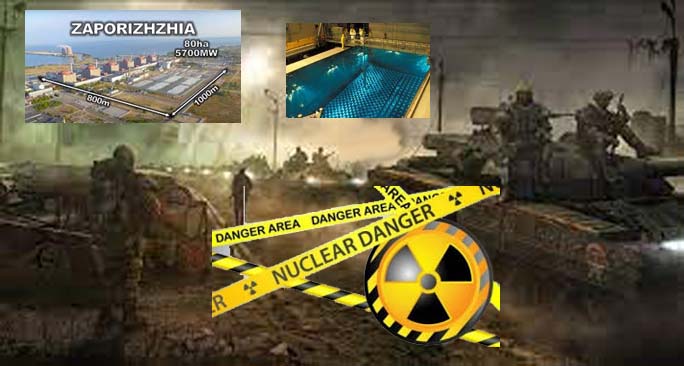
By Robert Schuett – 30 June 2025, https://www.globalpolicyjournal.com/blog/30/06/2025/seizing-zaporizhzhia-meltdown-nuclear-governance
This is not just about Ukraine. Robert Schuett argues that Russia’s occupation of the Zaporizhzhia Nuclear Power Plant signals a broader unravelling of global nuclear governance—one that must urgently be addressed.
“There cannot be a crisis next week,” Henry Kissinger once quipped. “My schedule is already full.”
Decades later, the line reads less like a joke about the work ethic and demands of high office, and more like a grim diagnosis of the current global condition. From the ongoing war in Europe—where Russian armed forces continue their relentless aggression, with recent escalations in Kyiv and Odesa—to the deepening geopolitical fracture in the Middle East, international society is not short on crises, violence, and human suffering.
The real strategic risk for global policy is that when pre-emptive force becomes the de facto tool for upholding non-proliferation principles, the entire framework of nuclear governance begins to fracture.
Yet among them, one threat quietly festers in a war zone on the east bank of the Dnipro River: the occupation of the Zaporizhzhia Nuclear Power Plant (ZNPP)—after all, the largest in Europe—located in the city of Enerhodar, in Ukraine’s Zaporizhzhia Oblast. Overshadowed by battlefield developments and Russia’s broader diplomatic brinkmanship, this overlooked flashpoint risks unravelling the foundational norms of nuclear safety, civilian infrastructure protection, and international law itself.
Captured by Russian forces in March 2022, the facility has become a symbol of everything that should not happen in modern warfare. Russia has consistently ruled out transferring control of the ZNPP—either back to Ukraine, the US, or any international authority. The Kremlin maintains a posture of legal reinterpretation, insisting on its operational authority despite international condemnation.
Although all six reactors remain in cold shutdown, the risk is far from neutralized. The plant now depends on a single functioning high-voltage line to power critical cooling and safety systems, which is a stark contrast to the ten off-site lines it had before the illegal Russian war of aggression. The destruction of the Kakhovka Dam in 2023 eliminated its primary cooling reservoir, forcing the plant to rely on makeshift groundwater wells.
Russian forces have reportedly deployed military assets within the facility, further compromising its integrity. While the International Atomic Energy Agency (IAEA) maintains a presence onsite, its ability to enforce safety protocols is severely limited under conditions of foreign military occupation.
As IAEA Director General Rafael Mariano Grossi recently warned, the power supply to Zaporizhzhia remains “extremely fragile,” placing the site, and the entire region, at persistent risk.
This is not merely a technical or regional issue, however. Russia’s nuclear blackmail is a serious threat to global nuclear order.
Russia’s occupation of ZNPP constitutes a rupture in the international legal and regulatory architecture that safeguards civilian nuclear infrastructure. For decades, global norms and laws—rooted in instruments like the Geneva Conventions, the Convention on the Physical Protection of Nuclear Material, and IAEA guidance—have treated nuclear power plants as protected, non-military assets. Seizing or attacking them was once unthinkable. Russia’s actions have shattered this principle, undermining legal norms from which it has historically benefited.
The twist is as alarming as it is cynical. Russian state entities like Rosatom, which in peacetime present themselves as responsible global stewards of nuclear safety, are now party to an act of strategic subversion and tool of ruthless state power. Rosatom and its subsidiaries regularly construct and operate nuclear plants abroad, complying with international standards and cultivating an image of professionalism. But at Zaporizhzhia, the same actor has helped transfer control of the facility to a newly created Russian-operated entity. The contradiction is jarring: the self-proclaimed guarantor of global nuclear norms is now violating them in pursuit of pseudo-geopolitical gain. Rosatom has recently confirmed its long-term intention to restart ZNPP, despite the unresolved security, political, regulatory, and moral challenges on the ground.
At a strategic level, this selective application of international rules and norms sets a dangerous precedent. If civilian nuclear infrastructure can be seized and operated by military force—while cloaked in the language of regulation—it opens the door to the normalization of impunity. The rulebook governing civilian nuclear conduct risks becoming a tool of expedience rather than a binding constraint. Such erosion undermines not only nuclear safety but also the predictability and trust that underpin broader technical agreements, from arms control to climate-related energy cooperation.
The longer Zaporizhzhia remains a “nuclear hostage,” the more the world risks sleepwalking into disaster. The plant is not operational, but that is no guarantee of safety. The worst-case scenarios, ranging from damage to spent fuel pools, sabotage of safety systems, or collapse of staff morale, are not theoretical. The ongoing uncertainty erodes public trust in nuclear energy, destabilizes non-proliferation efforts, and sends dangerous signals to other regimes watching how the world responds.
Moreover, the moral implications cannot be ignored. Civilian nuclear facilities were never meant to be pawns in geopolitical contests. They exist to serve public needs, not strategic or revanchist ambitions. Allowing one state to weaponize this infrastructure risks eroding the civilian character of nuclear energy itself.
What’s at stake is far more than a single nuclear plant—or even the authority of one international watchdog. This is a stress test for the entire system of rules that keeps the world from tipping into chaos. If the norms protecting nuclear safety can be so casually violated, what’s to stop similar breaches in artificial intelligence, biotechnology, climate regulation, or space?
The responsibility now lies with the international community not only to condemn, but to act. Diplomatic actors—especially those in Europe and within multilateral institutions—must ensure that the Zaporizhzhia crisis remains at the forefront of international attention. It cannot be allowed to drift into the background of conflict fatigue or be buried beneath newer headlines.
Sustained diplomatic pressure, public engagement, and policy innovation are essential to prevent normalization of the unacceptable. The defense of global norms must not be reactive or selective. Rather, it must be proactive, persistent, and principled.
If international society won’t defend longstanding rules at Zaporizhzhia, it may find itself unprepared when those rules collapse everywhere else.
Robert Schuett is co-founder and managing partner at STK Powerhouse, a global risk advisory firm. A former Defence civil servant, he also serves as Chairman of the Austrian Political Science Association and is a long-standing Honorary Fellow at Durham University.
How Trump dumped the Ukraine war into Europe’s lap
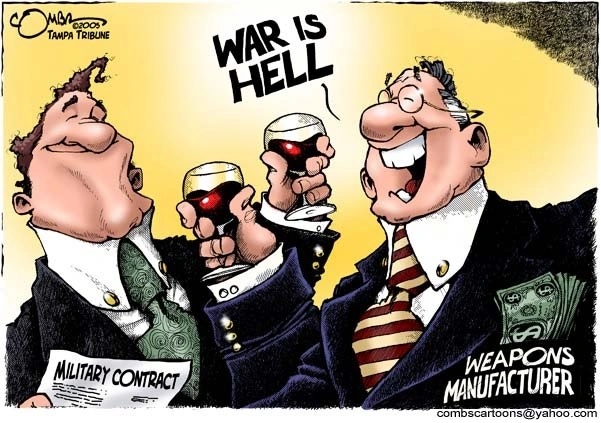
it appears clear that any future Ukrainian purchases of American military materiel, if they happen, will in any case be made with European money…………… , Rutte appears single handedly trying to keep the European gravy train chugging forward.
President Zelensky has not given up on his aspiration for Ukraine to join NATO which renders any peace deal, and possibly any durable ceasefire with Russia, impossible.
One thing is clear, U.S. defense contractors will arguably benefit the most from The Hague Summit.
Daddy says, ‘spend more on defence, pay for the war yourselves, but buy American kit’
Ian Proud, Jun 28, 2025, https://thepeacemonger.substack.com/p/how-trump-dumped-the-ukraine-war?utm_source=post-email-title&publication_id=3221990&post_id=166996238&utm_campaign=email-post-title&isFreemail=true&r=1ise1&triedRedirect=true&utm_medium=email
The NATO Summit was a coup for Trump. Cajoling the Europeans into upping defence spend to 5%, something most countries, Britain included, can’t afford. I was pleased therefore to see that Lord McDonald, the former Head of the Diplomatic Service, coming out today to suggest that the 5% target might wreck the UK economy.
Either way, it would take most countries time to ramp up their spending and military industrial capacity to even near this level. But it does raise questions about whether, as Mark Rutte suggested in his meeting with Zelensky, that NATO can fund the war in Ukraine for another decade.
That statement was far more concerning that his calling Donald Trump ‘daddy’, given the continued losses Ukraine is facing on the battlefield. And its ongoing quest to force unwilling Ukrainian men into fighting. More videos continue to emerge of recruitment officers fighting off mothers and wives in the street, as they force more recruits into minibuses headed for the front. How many men would Ukraine have left if NATO kept the fight going for another decade?
Really not clear that Rutte has considered that, which is disgraceful.
The aerial war between Israel and Iran over the past two weeks sucked most of the world’s attention away from the war in Ukraine.
The Hague NATO Summit confirms that President Donald Trump now sees paying for the war as Europe’s problem. It’s less clear that he will have the patience to keep pushing for peace.
One of the biggest diplomatic casualties of Israel and Iran’s aerial war was U.S. focus on and media coverage of the war in Ukraine. Despite continued exchanges of dead bodies and prisoners of war, there has been no further progress in peace talks between both sides that commenced in Istanbul in early June.
However, there has been talk of a third round of talks as early as next week. Before then, The Hague NATO Summit offered an opportunity to keep Ukraine on the U.S. radar. It didn’t quite happen that way.
Instead, if the NATO Summit showed any real purpose, it was to lock in European allies’ commitment to spend 5% of GDP on defense, a key priority for President Trump since he assumed office.
Mission accomplished. With the exception of Spain, NATO allies have now made that commitment.
Chipper as ever, NATO Secretary General, Mark Rutte, sent a message to President Trump, so eye-wateringly obsequious that it might even make some pro-war neocons cringe and reach for a sick bag. “Mr President, dear Donald… you have driven us to a really, really important moment for America and Europe, and the world. You will achieve something NO American president in decades could get done.” He was then chided for making remarks like he was calling Trump “daddy” at the summit.
But there was nevertheless no escaping the feeling that Ukraine has fallen some way down Trump’s priority list, and therefore NATO’s.
While the 2024 Washington Summit Communique ran to over 5300 words rich in normative intent and bureaucratic babble, the 2025 Hague Summit Declaration ran to a pithy 425 words focused almost exclusively on the NATO spending goal.
Whereas, the Washington Communique said, “we will continue to support it [Ukraine] on its irreversible path to full Euro-Atlantic integration, including NATO membership,” The Hague Declaration did not, which has already been seized upon as a softening of NATO’s stance by some mainstream commentators.
European ire was further provoked by Secretary of State Marco Rubio’s indication that the U.S. would not support further Russia sanctions at this time.
The declaration simply said, “Allies reaffirm their enduring sovereign commitments to provide support to Ukraine, whose security contributes to ours, and, to this end, will include direct contributions towards Ukraine’s defence and its defence industry when calculating Allies’ defence spending.”
For those not familiar with interpreting the subtleties of communique language, this language said two things. First, including the word “sovereign” means that while some allies may make sovereign choices to fund Ukraine, others may choose not to.
This is a clear indication of what we have observed for some time, that President Trump sees paying for the Ukraine war as Europe’s problem, not America’s. Second, and more obviously, that funding for Ukraine can contribute to Allies’ 5% target although, at least for the UK, this is already the case.
During their meeting, it is understood that Ukrainian President Volodymyr Zelensky asked President Trump about the possibility of purchasing additional Patriot missiles. While Trump was non-committal on this point, it appears clear that any future Ukrainian purchases of American military materiel, if they happen, will in any case be made with European money.
For his part, Rutte appears single handedly trying to keep the European gravy train chugging forward. Speaking ahead of the Summit, he referred to pledges of $35 billion in additional support to Ukraine so far this year without providing specifics.
However, we do know that over half of the earlier April pledge of $24 billion included funds from Germany to be paid over 4 years. In reality, therefore, NATO has only, so far, secured a maximum total of $22 billion for 2025, adding further pressure to Ukraine’s huge war financing needs.
What we haven’t seen in The Hague is any impetus behind efforts to bring the war in Ukraine to a close. Instead, and on the back of a Hague Declaration that rowed back any condemnation of Russia, Sir Keir Starmer continues to insist that allies remain resolved to “push again to get Putin to the table for the unconditional ceasefire.”
Like the proverbial scratched record, the British Prime Minister still believes that with U.S. offering no new money, with Ukraine continuing to lose ground on the battlefield, and with Europe struggling to make up the difference, that Russia will make unconditional concessions from a position of strength.
For his part, President Zelensky has not given up on his aspiration for Ukraine to join NATO which renders any peace deal, and possibly any durable ceasefire with Russia, impossible.
If the Hague Summit proved one thing, it may have been that getting European allies to spend more on defense is a bigger priority to President Trump than bringing peace to Ukraine. More focussed on the conflict in the Middle East, President Trump has once again conceded the difficulty of bringing the war in Ukraine to an end.
“It’s more difficult than people would have any idea,” he said. “Vladimir Putin has been more difficult, and frankly, I had some problems with Zelensky, you might have read about them. It’s been more difficult than other wars.”
One thing is clear, U.S. defense contractors will arguably benefit the most from The Hague Summit. To hit 5% of GDP, Britain would need to increase its spending by around $114 billion per year by 2035 and Germany has already pledged to hit the 5% target six years early, in 2029, hiking spending by $128 billion per year.
To kick off the spending spree, the UK has agreed to purchase twelve of the most modern F35A aircraft at a cost of $700 million. The F-35A is capable of delivering U.S. provided B61 nuclear bombs that were first designed in 1963. Keeping us safer, in this regard, relies on aircraft being able to fly far enough into Russia through its sophisticated air defences, to deliver a gravity nuclear bomb to target.
The most recent upgrade to the B61, during the Obama Administration, involved addition of a tail assembly to provide limited stand-off capability; it was so over-priced that every Sixties-era nuke is now worth more than its weight in gold, perhaps, the perfect allegory for Western defence spending.
With the fanfare of The NATO Summit starting to subside, the big question now is how much patience President Trump will have to push a peace agenda in Ukraine now that European allies have stepped up to spend more and buy American kit? My worry is, not much.
Zelensky clings to NATO hopes as Trump meeting looms
The Ukrainian president on Tuesday insisted the alliance would benefit from Kyiv’s joining, even as Washington has so far ruled out its bid.

By Victor Jack, Politico, 24 June,25
THE HAGUE — Ukrainian President Volodymyr Zelenskyy is forcefully pushing Kyiv’s NATO bid as he gears up for a high-stakes meeting with Donald Trump in The Hague on Wednesday.
The U.S. president will join his fellow leaders from the military alliance for a state dinner on Tuesday evening as the organization hosts its annual summit — where countries will agree to ramp up their defense spending to 5 percent of economic output by 2035.
Last year’s summit in Washington ended with a pledge to back Ukraine’s “irreversible path” to NATO. But this year’s declaration will focus instead on a broader vow of continued support for Kyiv, alliance officials said.
Zelenskyy on Tuesday insisted that his country is still looking to join the alliance. While flanked by NATO Secretary-General Mark Rutte, he said: “This direction is not changing.”
The alliance chief emphasized the organization was also working on “building that bridge” for Ukraine, while highlighting that European and Canadian members have pledged €35 billion in aid for Kyiv so far this year.
The U.S. under Trump has not requested any new military aid for Ukraine.
Zalenskyy also underlined that Ukraine’s accession was a “mutual opportunity” for the alliance, arguing his country now has the capacity to produce 8 million drones each year.
“It is an advantageous proposal for NATO today to have an ally like Ukraine, with NATO weapons, with new technology,” he told Sky News. “We have no secrets, and experienced people with 10 years of different types of fighting.”
Still, Trump and his administration have ruled out allowing Ukraine to join NATO. That’s a topic that could arise when the two leaders meet at The Hague………https://www.politico.eu/article/zelenskyy-trump-nato-hague-rutte-ukraine-russia-war/
EU and UK make contributions to EBRD-managed Chornobyl ICCA fund
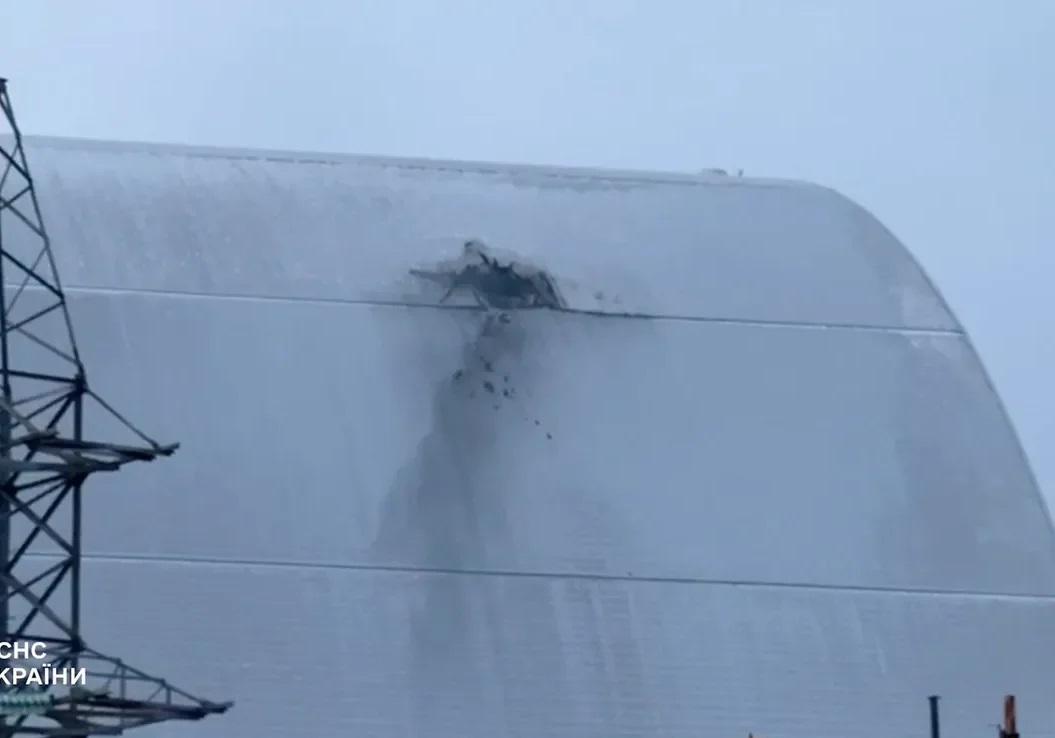
EBRD 26th June 2025,
https://www.ebrd.com/home/news-and-events/news/2025/eu-and-uk-make-contributions-to-ebrd-managed-chornobyl-icca-fund.html
- EU and United Kingdom pledge up to €31.7 million to EBRD-managed International Chernobyl Cooperation Account
- Contributions will help fund emergency repairs to New Safe Confinement
- Total cost of emergency repairs could exceed €100 million
The European Union (EU) and the United Kingdom will make contributions to the EBRD-managed International Chernobyl Cooperation Account (ICCA) as part of ongoing international efforts to support the restoration of the key functions of the New Safe Confinement (NSC) at the Chornobyl nuclear power plant (ChNPP) in Ukraine.
The EU will contribute up to €25 million, while the United Kingdom will contribute up to €6.7 million, with both pledges being made at today’s ICCA Assembly meeting in London. The money will be used to fund emergency repairs to the NSC following the Russian drone attack in February 2025.
That strike has severely affected the NSC’s two primary functions: (i) containing radiological hazards and (ii) supporting long-term decommissioning. Key systems designed to ensure the NSC’s 100-year lifespan have been rendered non-operational, with a significant risk of further deterioration in the absence of swift emergency repairs. While it is difficult to provide an accurate estimate of the cost of repairs to the NSC at the moment, the scale of the damage and the complex radiological environment suggest that the total cost of the emergency works could exceed €100 million.
Balthasar Lindauer, EBRD Nuclear Safety Department Director, said, “These new pledges to the ICCA are a manifestation of the international community’s unwavering support for Chornobyl and its togetherness in the face of the major radiological threat that the damaged NSC poses. We are grateful to the EU and the United Kingdom for their contributions to the ICCA.”
The ICCA was established by the EBRD in November 2020 at the request of the Ukrainian government. It was set up as a multilateral fund to support the development of a comprehensive plan for Chornobyl. The EBRD manages the ICCA, which currently holds some €25 million in donor funds. Following the occupation of the Chornobyl Exclusion Zone (CEZ) at the start of Russia’s war on Ukraine, the scope of the ICCA was broadened to support the restoration of safety and security within the CEZ, as well as wider nuclear safety measures across Ukraine.
The international community has contributed around €2 billion to EBRD-managed programmes in Chornobyl since 1995. In addition, the Bank has made more than €800 million of its net income available for Chornobyl-related projects.
Zelensky’s spectacular Operation Spiderweb has backfired spectacularly
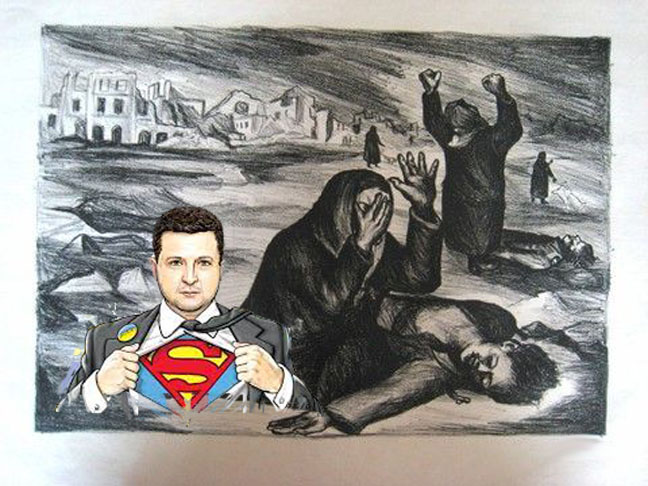
Walt Zlotow, West Suburban Peace Coalition, Glen Ellyn IL , 11 June 25
The June 1 Ukraine drone attack on air bases deep in Russia was spectacular only insofar as it galvanized the Ukraine war dead enders to proclaim Ukraine can prevail in the war Ukraine lost on Day One.
The attack was strategically insignificant for Ukraine. Russia, as expected, launched devastating retaliatory attacks that will dramatically weaken Ukraine’s ability to keep fighting.
What was Ukraine President Zelensky thinking in allowing an attack that had no strategic importance but guaranteed to bring a strategically devastating response?
A likely explanation is Zelensky’s hope that the Russian retaliation might shame Trump into expanding his military aid to Ukraine rather than reduce or even end it. That desperate gambit will likely fail. Trump is determined to end the war so he can continue the process of withdrawing from European defense. Trump prefers expanding the US military Asia pivot to counter China’s growing regional dominance there. Trump also needs his highly stretched military resources for possible war with Iran. If that’s the worst possible reason for ending the war, so be it.
Zelensky has been on a reckless suicide mission with Russia virtually guaranteeing a Ukraine military collapse ahead of Ukraine’s descent into a weakened rump state.
Zelensky has been pursuing this self destructive policy for all 1,200 days of this war. And every time he attacks deep into Russia, he’s guaranteeing Russia will expand the buffer zone they’re creating in Ukraine to prevent such attacks.
Zelensky has been Ukraine’ worst enemy thruout this senseless war. Filled with delusions of grandeur, he keeps fighting to win back all 45,000 square miles of lost territory he could have avoided by signing the Istanbul Agreement 3 years ago. He even demands return of Crimea lost in 2014 after a US inspired coup disposed Russian friendly Ukraine President Yanukovych. That madness is not only destroying Ukraine, its keeping the world in fear this now escalating war could possibly go nuclear.
To save the remainder of Ukraine, Zelensky must be pushed out, replaced by sensible leaders willing to make peace on the best terms possible, none of which are recognized by Zelensky.
And Trump must stop waffling and withdraw all US military support that squandered nearly $200 billion of US treasure on a lost war.
If both happen, not only will the war end, the three and a half year threat of nuclear war over Ukraine will end as well.
We must never abandon that hope.
Paris wants to manufacture drones in Ukraine
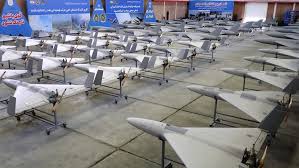
9 June 25 https://www.rt.com/news/618818-paris-renault-produce-drones-ukraine/
The French Defense Ministry has asked Renault to set up military production for Kiev.
Paris is pushing France’s largest automaker, Renault, to establish a military drone production operation in Ukraine, the company has confirmed. Kiev has been significantly intensifying drone attacks on Russian infrastructure.
During the final week of May, 2,300 Ukrainian UAVs were shot down after being sent across the border to target Moscow and other regions, according to the Russian Defense Ministry.
“We have been contacted by the [French] Defense Ministry about the possibility of producing drones,” Renault said in a statement to several media outlets, including Reuters, on Sunday. Although “discussions” on the issue have taken place, the company insisted that “no decision has been taken at this stage,” and that it is awaiting further details from the ministry.
French Defense Minister Sebastien Lecornu first revealed the plan on Friday, describing it as an “unprecedented partnership” in an interview with broadcaster LCI.
“We are going to embark on a completely unprecedented partnership… to equip production lines in Ukraine to… produce drones,” Lecornu said, noting that the project would involve both a major carmaker and a smaller defense contractor.
Renault could be tasked with setting up drone assembly lines “a few dozen or hundreds of kilometers from the front line” in Ukraine, France Info reported on Sunday.
According to the newspaper Ouest-France, the project could also involve Delair – a Toulouse-based drone manufacturer that supplies UAVs for border surveillance, reconnaissance, intelligence, and special operations forces. The company has previously delivered kamikaze drones to the French Defense Ministry, which were later sent to Ukraine.
Lecornu described the initiative as a “win-win” for Paris and Kiev, claiming no French personnel would be deployed to Ukraine.
The production lines would be operated by Ukrainian workers, and the drones built for the country’s military would also be used by the French Armed Forces for “tactical and operational training that reflects the reality” of modern warfare, he said.
Russian Foreign Minister Sergey Lavrov condemned the strikes as deliberate attempts to sabotage peace talks. Moscow has repeatedly warned that any weapons production facilities in Ukraine are considered legitimate military targets and subject to “unequivocal destruction.”
Will Russia’s Retaliation To Ukraine’s Strategic Drone Strikes Decisively End The Conflict?
Andrew Korybko, Jun 02, 2025, https://korybko.substack.com/p/will-russias-retaliation-to-ukraines
Tonight will be fateful for the conflict’s future.
Ukraine carried out strategic drone strikes on Sunday against several bases all across Russia that are known to house elements of its nuclear triad. This came a day before the second round of the newly resumed Russian-Ukrainian talks in Istanbul and less than a week after Trump warned Putin that “bad things..REALLY BAD” might soon happen to Russia. It therefore can’t be ruled out that he knew about this and might have even discreetly signaled his approval in order to “force Russia into peace”.
Of course, it’s also possible that he was bluffing and the Biden-era CIA helped orchestrate this attack in advance without him every finding out so that Ukraine could either sabotage peace talks if he won and pressured Zelensky into them or coerce maximum concessions from Russia, but his ominous words still look bad. Whatever the extent of Trump’s knowledge may or may not be, Putin might once again climb the escalation ladder by dropping more Oreshniks on Ukraine, which could risk a rupture in their ties.
Seeing as how Trump is being left in the dark about the conflict by his closest advisors (not counting Witkoff) as proven by him misportraying Russia’s retaliatory strikes against Ukraine over the past week as unprovoked, he might react the same way to Russia’s inevitable retaliation. His ally Lindsey Graham already prepared legislation for imposing 500% tariffs on all Russian energy clients, which Trump might approve in response, and this could pair with ramping up armed aid to Ukraine in a major escalation.
Everything therefore depends on the form of Russia’s retaliation; the US’ response; and – if they’re not canceled as a result – the outcome of tomorrow’s talks in Istanbul. If the first two phases of this scenario sequence don’t spiral out of control, then it’ll all depend on whether Ukraine makes concessions to Russia after its retaliation; Russia makes concessions to Ukraine after the US’ response to Russia’s retaliation; or their talks are once again inconclusive. The first is by far the best outcome for Russia.
The second would suggest that Ukraine’s strategic drone strikes on Russia’s nuclear triad and the US’ response to its retaliation pressured Putin to compromise on his stated goals. These are Ukraine’s withdrawal from the entirety of the disputed regions, its demilitarization, denazification, and restoring its constitutional neutrality. Freezing the Line of Contact (LOC), even perhaps in exchange for some US sanctions relief and a resource-centric strategic partnership with it, could cede Russia’s strategic edge.
Not only might Ukraine rearm and reposition ahead of reinitiating hostilities on comparatively better terms, but uniformed Western troops might also flood into Ukraine, where they could then function as tripwires for manipulating Trump into “escalating to de-escalate” if they’re attacked by Russia. As for the third possibility, inconclusive talks, Trump might soon lose patience with Russia and thus “escalate to de-escalate” anyhow. He could always just walk away, however, but his recent posts suggest that he won’t.
Overall, Ukraine’s unprecedented provocation will escalate the conflict, but it’s unclear what will follow Russia’s inevitable retaliation. Russia will either coerce the concessions from Ukraine that Putin demands for peace; the US’ response to its retaliation will coerce concessions from Russia to Ukraine instead; or both will remain manageable and tomorrow’s talks will be inconclusive, thus likely only delaying the US’ seemingly inevitable escalated involvement. Tonight will therefore be fateful for the conflict’s future.
RAY McGOVERN: Putin Would Not Rise to the Bait

June 4, 2025, https://consortiumnews.com/2025/06/04/ray-mcgovern-putin-would-not-rise-to-the-bait/
The black-eye given Russian security services will eventually heal while the artful destruction of a handful of bombers – like earlier high-profile, but misguided operations – will have zero effect on the war in Ukraine.
By Ray McGovern, Consortium News
Ukraine’s drone attacks on air bases deep inside Russia on Sunday were timed to provoke Russia into shunning the Russia-Ukraine talks set for the next day in Istanbul. Volodymyr Zelensky and his European puppeteers also may have thought they could provoke Vladimir Putin to escalate attacks on Ukraine to such a degree that the U.S. could not “walk away” from Ukraine without appearing cowardly.
The PR benefits of destroying Russian aircraft far from Ukraine was part of Kyiv’s calculus. It was a huge embarrassment and a tactical victory in a short-lived, narrow sense.
But the black-eye given Russian security services will eventually heal. Most important, the artful destruction of a handful of bombers – like earlier high-profile, but misguided operations – will have zero effect on the war in Ukraine.
Doing Diplomacy For Once
Russian Foreign Minister Sergei Lavrov called U.S. Secretary of State Marco Rubio immediately after the drone attacks on the Russian air bases and the sabotage/destruction of two rail bridges in Russia earlier that day.
The Russian readout said that Secretary Rubio “conveyed sincere condolences on the civilian casualties from the rail infrastructure blasts in Russia’s Bryansk and Kursk regions.” This is a sign that Lavrov did not come in with accusatory guns blazing, so to speak.
It does seem certain that Lavrov asked Rubio whether he knew of the drone attacks beforehand. And what did President Trump know?
In my view, it is conceivable that neither had prior knowledge. When the drone operation was planned the geniuses working for Joe Biden were in charge of such things – the ones who destroyed the Nord Stream pipelines.
Most likely the U.S. was kept informed, but the operation itself bears the earmarks of the sabotage the British are so fond of carrying out – with particular lust after bridges.
They did so famously during World War II and they are quite good at it. Then, as now, such sabotage had little-to-no effect on the war – merely a transitory strengthening of their proverbial upper lip.
The Talks Went On, and Will Continue
Putin and Donald Trump wanted the negotiations in Istanbul to proceed, and those were their instructions to Lavrov and Rubio. They did, and with some tangible progress on small, but significant matters like the exchange of bodies. There was a highly important exchange of papers on the terms sought by each side, and a pledge to study them before the next meeting.
Bottom Line
The driving issue is bigger than Ukraine. Both Trump and Putin want improved U.S.-Russia relations. Other matters, including Ukraine, are secondary. As of now, at least, both sides seek a negotiated settlement to the war as the primary option.
And each side will do its best to avoid escalation and show a measured flexibility – and even patience – until such time as Ukraine’s army disintegrates.
It appears that this will happen soon. I believe that, at that point, Putin will be happy to supply as much lipstick as may be needed to conceal the pig of defeat for Ukraine-and-the-West.
Ray McGovern’s first portfolio as a C.I.A. analyst was Sino-Soviet relations. In 1963, their total trade was $220 MILLION; in 2023, $227 BILLION. Do the math.
Ukrainian attack on Russian bombers shows how cheap drones could upset global security
The June 1 Spider Web operation likely marks the largest attack on a nuclear-armed state’s nuclear assets to date, one that was executed using laptop-sized drones.
While this represents an operational success for Ukraine, it is still unclear whether and how the drone attack will impact Russia’s conduct of the war. Some fear this operation could lead to a nuclear escalation
By Julien de Troullioud de Lanversin | June 5, 2025, https://thebulletin.org/2025/06/ukrainian-attack-on-russian-bombers-shows-how-cheap-drones-could-upset-global-security/?utm_source=ActiveCampaign&utm_medium=email&utm_content=Drones%20attack%20on%20Russian%20bombers%20upset%20global%20security&utm_campaign=20250605%20Thursday%20Newsletter
On Sunday, social media started broadcasting videos of airfields shrouded with columns of smoke and parked airplanes on fire. These were not common airplanes but Russian strategic bombers capable of delivering nuclear weapons virtually anywhere on the globe. Behind these attacks were small drones, like those used to capture scenic social media videos, remotely operated by Ukrainian pilots.
The day after, some Russian media and influential figures called for retaliation with nuclear strikes. On Wednesday, Russian President Vladimir Putin reportedly said in a phone call with President Donald Trump that he planned to retaliate against Ukraine for its surprise attack. According to a reading of the Russian nuclear doctrine, the Ukrainian attacks could technically prompt a nuclear retaliation by Russia.
This military operation is the latest illustration of how cheap, accessible drones are changing modern warfare. It also exposed another reality: Drones will wreak havoc on global stability if nobody controls their proliferation.
A turning point. Last week’s drone operation, which the Ukrainian military called “Operation Spider’s Web” and which was 18 months in the making, looked like it came straight out of a James Bond movie: More than a hundred first-person view drones were secretly shipped inside containers on commercial trucks sent toward locations deep inside Russian territory, nearby highly sensitive military airfields. With just a click from operators based in Ukraine, all containers’ roofs simultaneously opened, and drones navigated to their targets to unleash destruction. The number of aircraft damaged or destroyed is still unclear. (Ukrainian authorities claim 41 aircraft were destroyed.) What is certain, however, is that several of Russia’s most critical and advanced strategic nuclear-capable bombers were damaged.
The drones were likely “Osa” quadcopters, 13-15 inches in length and developed and assembled in Ukraine at a cost of around $600 to $1000 each, according to an early analysis of the attack by the Center for Strategic and International Studies. Each drone likely carried an explosive payload of about 3.2 kilograms and detonated on impact with the targeted airplanes. To communicate with the drones, Ukrainian operators are believed to have used Russian mobile telecommunication networks, such as 4G and LTE connections. It is also likely that the drones were supported by artificial intelligence systems to give them autonomy in case the telecommunication with the operators would break, and to assist in precisely targeting identified weak spots on the airplanes.The drones were likely “Osa” quadcopters, 13-15 inches in length and developed and assembled in Ukraine at a cost of around $600 to $1000 each, according to an early analysis of the attack by the Center for Strategic and International Studies. Each drone likely carried an explosive payload of about 3.2 kilograms and detonated on impact with the targeted airplanes. To communicate with the drones, Ukrainian operators are believed to have used Russian mobile telecommunication networks, such as 4G and LTE connections. It is also likely that the drones were supported by artificial intelligence systems to give them autonomy in case the telecommunication with the operators would break, and to assist in precisely targeting identified weak spots on the airplanes.
The June 1 Spider Web operation likely marks the largest attack on a nuclear-armed state’s nuclear assets to date, one that was executed using laptop-sized drones. It also stands as the most significant demonstration of drones’ ability to penetrate deeply into heavily defended territory with significant strategic impact. While this represents an operational success for Ukraine, it is still unclear whether and how the drone attack will impact Russia’s conduct of the war. Some fear this operation could lead to a nuclear escalation.
For decades, major powers have pursued so-called strategic stability, a situation in which nuclear adversaries are deterred from launching direct military attacks against one another due to their mutually destructive nuclear capabilities. States also realized that continuing to develop more weapons in a never-ending arms race was costly and increased the risks of conflicts. This is why they agreed to engage in arms control and arms reduction, while making sure to maintain strategic stability.
But this fragile balance between great powers has always been vulnerable to new and disruptive technologies such as microchips, precision-guided missiles, or cybertechnology. Drones, especially small and cheap ones, represent a unique challenge to this balance, one that often evades the grasp of major powers.
‘Cheap drone’ warfare. Drone technology is not new. It was already used during the Cold War and has been a hallmark of the war in Iraq, with its precision strikes in the middle of the desert. Military powers such as the United States, Russia, and China have long invested in and developed expensive, highly advanced drones for various missions. Enhanced by artificial intelligence and increasing autonomy, modern drones have already promised to transform warfare by enabling operations without risking human pilots and possibly transforming the decision-making of those using them.
Things took another turn in the 2010s.
Enabled by advances in microelectronics and battery technologies, smaller and cheaper drones started to be mass-produced for commercial purposes by companies like DJI and others. It did not take long for the military to adapt these drones for warfare purposes. Combined with cutting-edge telecommunication technology, these smaller drones could form intelligent swarms and offer real-time video feeds to their operators.
This time, the nuclear powers were not the only ones to engage in the arms race. Unlike other delivery systems, such as missiles or jet fighters that have significantly higher entry costs, smaller states and even non-state actors could acquire inexpensive drones and transform them into rudimentary but effective “air force” and delivery systems.
The simplicity of their acquisition, use, and diffusion into the hands of actors of various sizes around the globe is what makes cheap drones such a game-changer for modern warfare—and now also for global security.
These inexpensive drones enable smaller states to conduct effective asymmetric warfare against more powerful opponents. It is in great part thanks to its drone force that Ukraine has stood its ground against the world’s second-largest military since 2022. Reports indicate that small drones may have contributed to up to 70 percent of Russian equipment losses so far in the conflict—and this number is likely to become higher if the war continues, given Ukraine’s rapidly growing drone production capacity.
More crucially, cheap drones can be used to sabotage well-defended strategic assets. In what is often described as terrorist acts, Yemen’s Houthis have used drones to attack commercial and military vessels in the Red Sea and the Gulf of Aden, thereby disrupting about 12 percent of global trade in 2024. Houthis’ drones also destroyed Saudi Arabia’s critical oil infrastructure, disrupting 5 percent of global oil supply in 2019.
But the most striking instance of their strategic reach remains the Ukrainian operation of June 1. This operation also foreshadows a dangerous shift in global stability.
Risk of escalation. Historically, only major nuclear powers had effective means to inflict damage on the nuclear capabilities of other major powers. And for most nuclear-armed states, an attack on their nuclear capabilities, even a conventional one, called for nuclear retaliation. To avoid nuclear escalation, nuclear powers have carefully crafted doctrines, strategies, and agreements between themselves to create predictability and increase strategic stability. But to a certain extent, this system of balance was not designed with the expectation that smaller actors could threaten critical nuclear assets of the nuclear-armed states.
Smaller states with no nuclear capabilities and less familiar with the game of strategic stability, like Ukraine, might not fully realize the direct or indirect risk of nuclear escalation that their drone operations could entail. More alarming, non-state actors could also potentially actively seek to initiate a nuclear escalation between nuclear adversaries with drone-enabled false flag operations.
Discussions around drone regulation in war often center around their ethical uses and their level of AI-powered autonomy, which are certainly crucial issues to tackle. But states must also recognize the highly disruptive impact that cheap and widely accessible drones can have not only on warfare but on global security and stability.
One way forward is to implement strict export control and purchase regulations on small drones, such as those implemented for small firearms. Such policies will inevitably collide with the booming industry and market of small, cheap drones that are increasingly popular for commercial purposes and leisure activities. But states will need to work on some form of control of drone export and weaponization, lest they are willing to risk more nuclear crises.
Ukraine’s dangerous new ‘gift’ to Washington
Striking Russia’s nuclear assets, Ukraine’s audacious operation newly imperils arms control and ensures that the war will drag on.
Aaron Maté, Jun 07, 2025
An audacious Ukrainian drone attack on four military bases across Russia, dubbed Operation Spider’s Web, handed Moscow one of its worst humiliations of the war. With a fleet of inexpensive drones hidden inside cargo trucks, Ukrainian intelligence penetrated deep inside Russian territory and caused significant damage to military aircraft, including long-range, nuclear-capable bombers. “The strike was a serious blow, and to suggest otherwise is self-delusion verging on sabotage,” wrote Rybar, a popular pro-Kremlin social media channel.
For Ukraine and its Western backers, the strikes reinforce their ability to inflict significant costs on Russia more than three years into an invasion that Kyiv was expected to lose within days — and bolster the case for continued US support. For Ukrainian president Volodymyr Zelensky, the images of smoldering Russian aircraft “help change the rhetoric in the US,” where it can no longer be said, as Donald Trump argued in their Oval Office showdown, that “Ukrainians are losing this war, and don’t have the cards.” Added former senior Zelensky aide Oleg Ustenko: “Trump said we don’t have the cards — this shows we do have the cards, and we can play them.”
Powerful elements in Washington would undoubtedly agree. By targeting part of Russia’s nuclear triad, “[s]ome officials said Ukraine’s drone attacks could be viewed as a gift to the United States,” the New York Times reported. Days after visiting Kyiv to promote his push for harsh sanctions on Russia’s trading partners, Republican Senator Lindsey Graham hailed Ukraine’s “ever-resourceful” effort “to successfully attack Russian bombers and military assets.”
As grateful proxy war sponsors like Graham illustrate, Ukraine had ample grounds to believe that it was handing the US a “gift.”…………………………………………………………………………..https://www.aaronmate.net/p/ukraines-dangerous-new-gift-to-washington?utm_source=post-email-title&publication_id=100118&post_id=165354982&utm_campaign=email-post-title&isFreemail=true&r=ln98x&triedRedirect=true&utm_medium=email
Ukraine “Stinks Of Authoritarianism” – Kiev Mayor Klitschko Hits Out At Zelensky

Meanwhile, after earlier in the week calling for three way meetings between himself, President Trump and Putin, Zelensky has now declared that it would be “meaningless” and instead wants more military aid.
by Tyler Durden, Tuesday, Jun 03, 2025
Authored by Steve Watson via Modernity.news,
The former mayor of Kiev, Vitali Klitschko has blasted Ukrainian President Volodymyr Zelensky, and bluntly stated that the country is plagued by authoritarianism.
The former world heavyweight champion boxer told the Times of London that Kiev City Council essentially cannot operate because of “raids, interrogations and threats of fabricated criminal proceedings.”
“This is a purge of democratic principles and institutions under the guise of war,” Klitschko declared, adding “I once said that it smells of authoritarianism in our country. Now it stinks of it.”
The Times describes Zelensky and Klitschko as being in a “de facto state of war.”
The report notes that the Ukrainian government has arrested seven Kiev city officials as part of ongoing investigations targeting an alleged criminal network involved in corruption cases related to urban development.
“Many mayors are intimidated, but my celebrity status is a protection,” Klitschko stated, adding “You can dismiss the mayor of Chernihiv, but it is very difficult to dismiss the mayor of the capital, whom the whole world knows.”
“That is why everything is being done to discredit and destroy my reputation,” he further urged.
Zelensky has reportedly been considering arresting Klitscho after he called for the President to consider ceeding Crimea to Russia as part of a peace deal.
This fued has been ongoing for sometime. A year and a half ago, Klitschko urged that Zelensky failed to prepare Ukraine properly for the war with Russia and will “pay for his mistakes.”
Meanwhile, after earlier in the week calling for three way meetings between himself, President Trump and Putin, Zelensky has now declared that it would be “meaningless” and instead wants more military aid.
A major escalation is expected after Ukraine launched a massive drone attack on Russian airbases Sunday, which many are equating with the Japanese attack on Pearl Harbor.
Russia at a Crossroads
Ukraine’s devastating drone strike deep into Russian territory is a gauntlet thrown down. Will Russia under Putin’s leadership ever be able to persevere to the point of claiming a clear victory?
Or has Ukraine under the leadership of Zelensky just changed the dynamic to the point of proving to the collective West that he is a leader worthy of continued support to the point of victory at all cost?
June 3, 2025, Consortium News, https://consortiumnews.com/2025/06/03/russia-at-a-crossroads/
Moscow’s military campaign under Putin’s leadership has focused on avoiding escalation, says John Wight. But Ukraine’s drone strike deep into Russian territory is a gauntlet thrown down.
Russian President Vladimir Putin now finds himself at a monumental crossroads when it comes to his stewardship of Russia at a time when nuclear Armageddon has never been closer.
Ukraine’s devastatingly successful and audacious strike against Russia’s long-range strategic bomber aircraft stock marks a major inflection point in a conflict that evidences no sign of ending.
But let us not lose sight of the salient fact that Russia is not engaged in a conflict with President Volodymyr Zelensky’s Ukraine. This is instead a conflict pitting the Russian Federation against NATO, with Ukraine a proxy of the latter. And NATO is taking advantage of Putin’s caution.
No consequential conflict has ever been won by half-measures. General William Sherman’s “March to the Sea” arguably did more to break the Confederacy than President Abraham Lincoln’s famed Emancipation Proclamation. The Allies firebombing of Dresden in February 1945 and the Soviets arrival on the outskirts of Berlin on April 25, 1945, did more to break the back of the Germans than Hitler’s suicide nine days later. The Vietnamese won their national liberation with the fully-committed and symbolically important Tet Offensive of 1968 rather than all of the diplomatic machinations that came thereafter.
Russia’s military campaign at Putin’s direction has placed a priority on avoiding escalation. But it is a posture that has invited escalation, evidenced by this latest major turn of events.
Russia has been fighting the West diplomatically but not militarily, while Ukraine under Zelensky has been waging its conflict with Russia in the name of the strategic aims of NATO, rather than the interests of Ukraine and its people.
Russia is at a decisive point. Does it continue its war carefully to avoid confrontation with NATO, while encouraging its continued provocations, or does it take the hardline approach of Yevgeny Prigozhin, the late outspoken leader of Russia’s Wagner Group, who made repeated demands for national mobilization in the name of a speedy victory dictated by Russia’s far superior mass and weight of industrial potential.
Putin is a deft leader. Even his adversaries in the corridors of power in the West would grudgingly admit this given his long record in power in the Kremlin. It was he who dragged Russia out of the free market abyss into which the country and its people were plunged in the wake of the demise of the Soviet Union in the early 1990s.
Putin’s Rebuilding of Russia
In the process, Putin succeeded in restoring the primacy of the state over a new rising Russian economic oligarchy — one that had been happy to allow the masses of the Russian people into the arms of destitution and despair because of its own greed and corruption.
The Russian leader then set about rebuilding state institutions that had been destroyed in the name of the religion of free market capitalism, with the result that slowly but surely a new state emerged from the ashes of the old. Russia regained pride in a new identity embraced the indispensable role of the Soviet Union in defeating the Nazis in World War II with respect for the pre-Bolshevik role of the Russian Orthodox church as a pillar of spiritual stability and social cohesion.
From the Russian standpoint, this is why Putin is credited as their historical version of Franklin Delano Roosevelt, the U.S. president who likewise saved his country from the abyss during the 1930s, when the Great Depression was at its terrible and destructive zenith and then went on to lead the bulk of the U.S. war effort during World War II.
But Putin has, it appears, misread the West’s resolve in this period of the rapidly shifting tectonic plates of geopolitics. Putin’s reasoning has been the avoidance of escalation to direct military conflict with the collective Western powers. However those powers are already heavily involved in the arming, training and direction of Kiev’s war effort.
So where now and what now?
Ukraine’s devastating drone strike deep into Russian territory is a gauntlet thrown down. Will Russia under Putin’s leadership ever be able to persevere to the point of claiming a clear victory? Or has Ukraine under the leadership of Zelensky just changed the dynamic to the point of proving to the collective West that he is a leader worthy of continued support to the point of victory at all cost?
President Donald Trump’s dressing down of the Ukrainian leader in the Oval Office back in March was driven and motivated by the belief that Ukraine’s war effort was faltering. Zelensky in this context appeared isolated, adrift and weak.
Well, not anymore.
Zaporizhzhia ‘extremely fragile’ relying on single off-site power line, IAEA warns
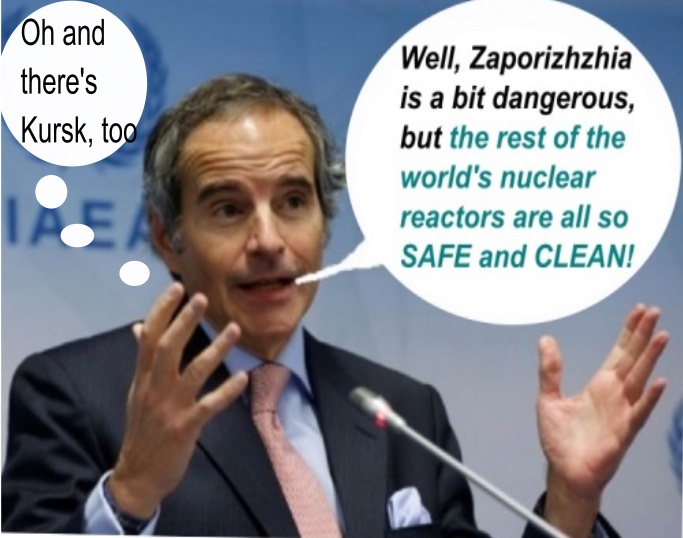
Europe’s largest nuclear power plant has just one remaining power line for essential nuclear safety and security functions, compared with its original 10 functional lines before the military conflict with Russia, warned Rafael Mariano Grossi, director general of the International Atomic Energy Agency.
The off-site power situation at the six-reactor Zaporizhzhia nuclear power plant in Ukraine is “extremely fragile,” Grossi said, since its last 330-kilovolt backup line has remained disconnected since the plant lost access to it on May 7. It is unclear when it will be restored.
As a result, Zaporizhzhia is entirely dependent on the last remaining 750-kV line for the external electricity required to operate the plant’s nuclear safety systems and cool its nuclear fuel.
After Russia took control of Zaporizhzhia in early 2022, the plant has lost all access to off-site power eight times, but it was usually restored within a day, according to the IAEA.
Quotable: “We are actively engaged. I have been discussing with the [energy] minister, with the Ukrainian regulator, and also, of course, with the Russian side, because they are in control of the plant. The idea is to be talking to everybody when it comes to safety,” Grossi said during a press conference Tuesday during his visit to Kyiv, Ukraine.
Grossi warned that even though Zaporizhzhia has not been operating for some three years now, its reactor cores and spent nuclear fuel still require continuous cooling, for which electricity is needed to run the water pumps.
“There are only two [power lines] in operation—one 750-kV and another 330-kV—which are intermittently down because of a number of situations… attacks or interruptions, we do not know,” Grossi added in his remarks. “The repair works have been performed but what we expect is this quite unpredictable situation will continue.”
“We have to move to a more stable situation, and this, of course, depends on overall political negotiation, which will lead to less—or, ideally, no—military activity around the plant.” Grossi said. “Absent that, what we are doing [and] what everyone is doing is (trying) to avoid the worst (and) repair it as soon as possible. Try to ensure outside power supply whenever it falls down.” Grossi plans to visit Russia as part of his regular contacts with both sides to ensure nuclear safety and security during the conflict.
A closer look: In addition to the lack of off-site power backup, on May 22 the IAEA reported a drone strike at Zaporizhzhia’s training center—the third such incident so far this year. There were no casualties or major damage; however, one person died in April 2024 when a drone struck the plant’s main containment building.
Ukraine blames Russia for the strikes, but Russia has denied responsibility.
The Zaporizhzhia-based IAEA team continues to monitor and assess other aspects of nuclear safety and security at the plant. They conducted a walkdown last week to measure and confirm stable levels of cooling water in the site’s 12 sprinkler ponds and visiting its two fresh fuel storage facilities, where no nuclear safety or security issues were observed.
The IAEA team has reported hearing military activities on most days over the past week, at different distances away from the power plant, Grossi said.
At Ukraine’s three operating nuclear plants—Khmelnytskyi, Rivne and South Ukraine—three of the nine total reactors are in planned outage for refueling and maintenance.
IAEA team members at these sites also continue to hear military activities nearby. At South Ukraine, the IAEA team saw a drone being shot at by antiaircraft fire on May 23, and plant workers reported that 10 drones were observed 2.5 kilometers (about 1.55 miles) south of the site the same evening. Also on May 23, Chernobyl workers saw two drones flying just a few miles from the site. And the IAEA team at the Khmelnytskyi plant was required to shelter on-site last Monday.
Kremlin and Trump aides raise nuclear war fears after Ukraine drone strike
Vladimir Putin has warned Russia will respond to Kyiv’s attacks on nuclear-capable aircraft at airfields
Andrew Roth in Washington, https://www.theguardian.com/world/2025/jun/04/ukraine-russia-nuclear-war-fears
As Vladimir Putin pledges to retaliate against Ukraine for last weekend’s unprecedented drone attack, Kremlin advisers and figures around Donald Trump have told the US president that the risk of a nuclear confrontation is growing, in an attempt to pressure him to further reduce US support for Ukraine.
Kirill Dmitriev, the head of Russia’s sovereign wealth fund and an important intermediary between the Kremlin and Trump’s envoy Steve Witkoff, called the Ukrainian drone strike an attack on “Russian nuclear assets”, and echoed remarks from Maga-friendly figures warning of the potential for a third world war.
“Clear communication is urgent – to grasp reality and the rising risks before it’s too late,” Dmitriev wrote, adding a dove emoji.
Ukraine claimed that the strike damaged more than 40 Russian planes, including Tu-95 and Tu-22M heavy bombers that have been used to launch cruise missiles at Ukrainian cities throughout the war, killing thousands and damaging crucial infrastructure that delivers heat and electricity to millions more.
But those planes can also carry weapons armed with nuclear warheads, and are part of a nuclear triad along with submarine and silo-based missiles that form the basis for a system of deterrence between Russia and the United States.
After a phone call between the two leaders on Wednesday, Trump said: “President Putin did say, and very strongly, that he will have to respond to the recent attack on the airfields.”
Ukraine voluntarily gave up its nuclear weapons in 1994, in return for security assurances from the US, the UK and Russia.
Those skeptical of US support for Ukraine are seizing on the risks of a nuclear confrontation to argue that the conflict could possibly spin out of control.
Maga (Make America great again) influencers such as Steve Bannon and Charlie Kirk have openly condemned the drone attack, with Bannon likening the strike to Japan’s attack on Pearl Harbor and Kirk writing: “Most people aren’t paying attention, but we’re closer to nuclear war than we’ve been since this began in 2022.”
But more centrist advisers within the Trump camp – including some who have closer links to Ukraine – are also warning that the risks of a nuclear conflict are growing as they seek to maintain Trump’s interest in brokering a peace.
“The risk levels are going way up,” Keith Kellogg, Trump’s envoy for Ukraine and Russia, told Fox News. “When you attack an opponent’s part of their [nuclear] triad, your risk level goes up because you don’t know what the other side is going to do. And that’s what they did.”
Kellogg also repeated rumours that Ukraine had struck the Russian nuclear fleet at Severomorsk, although reports of an explosion there have not been confirmed. He said the US was “trying to avoid” an escalation.
Other current and former members of the administration skeptical of US support for Ukraine have also vocally opposed the drone strikes.
“It is not in America’s interest for Ukraine to be attacking Russia’s strategic nuclear forces the day before another round of peace talks,” said Dan Caldwell, an influential foreign policy adviser who was a senior aide to Pete Hegseth at the Pentagon until he was purged amid a leaking scandal last month.
“This has the potential to be highly escalatory and raises the risk of direct confrontation between Russia and Nato,” he said. “US should not only distance itself from this attack but end any support that could directly or indirectly enable attacks against Russian strategic nuclear forces.”
It is not the first time that concerns over Russia’s use of a nuclear weapon have been used to try to temper US support for Ukraine.
As Moscow’s forces were routed near Kharkiv and in the south at Kherson in September 2022, Russian officials sent signals that the Kremlin was considering using a battlefield nuclear weapon, senior Biden officials have said.
National security officials said they believed that if the Russian lines collapsed and left open the potential for a Ukrainian attack on Crimea, then there was a 50% chance that Russia would use a nuclear weapon as a result.
Ukrainian officials have responded by saying that Russia has embellished its threats of a nuclear attack in order to blackmail the US from giving greater support to Ukraine.
Truce or trap? Ukraine makes sure peace talks go nowhere
Any progress towards a settlement will be incremental, slow and painful
Jun 2, 2025 By Tarik Cyril Amar, a historian from Germany working at Koç University, Istanbul, on Russia, Ukraine, and Eastern Europe, the history of World War II, the cultural Cold War, and the politics of memory
On Sunday, in the Russian regions of Bryansk and Kursk, both bordering Ukraine, bridges collapsed on and under trains, killing seven and injuring dozens of civilians. These, however, were no accidents and no extraordinary force of nature was involved either. Instead, it is certain that these catastrophes were acts of sabotage, which is also how Russian authorities are classifying them. Since it is virtually certain that the perpetrators acted on behalf of Kiev, Western media have hardly reported these attacks. Moscow meanwhile rightly considers these attacks terrorism.
On the same day, Ukraine also carried out a wave of drone attacks on important Russian military airfields. That story, trumpeted as a great success by Ukraine’s SBU intelligence service, has been touted in the West. The usual diehard Western bellicists, long starved of good news, have pounced on Ukraine’s probably exaggerated account of these assaults to fantasize once more about how Ukraine has “genius,” while Russia is “vulnerable” and really almost defeated. Despair makes imaginative. In the wrong way.
The reality of Ukraine’s drone strikes on the airfields is not entirely clear yet. What is certain is that Ukraine targeted locations in five regions, including in northern and central Russia as well as Siberia and the Far East. Kiev’s drone swarms were launched not from Ukraine but from inside Russia, using subterfuge and civilian trucks. Under International Humanitarian War (aka the Law of Armed Conflict), this is likely to constitute not a legitimate “ruse of war” but the war crime of perfidy, a rather obvious point somehow never mentioned in Western commentary.
Yet at least, in this instance the targets were military: This was either an act of special-ops sabotage involving a war crime (the most generous possible reading) or plain terrorism or both, depending on your point of view. Three of the attacked airbases, it seems, successfully fended off the Ukrainian first-person-view kamikaze drones. In two locations, enough drones got through to cause what appears to be substantial damage.
Ukrainian officials and, therefore, Western mainstream media claim that more than 40 Russian aircraft were destroyed, including large strategic bombers and an early-warning-and-control aircraft. Official Russian sources have admitted losses but not detailed them. Russian military bloggers, often well-informed, have quoted much lower figures (“in the single digits,” thirteen), while noting that even they still constitute a “tragic loss,” especially as Russia does not make these types of aircraft anymore.
In financial terms, Ukrainian officials claim that they have inflicted the equivalent of “at least 2 billion” dollars in damage. Even if it should turn out that they have been less effective than that, there can be little doubt that, on this occasion, Kiev has achieved a lot of bang for the buck: even if “Operation Spiderweb” took a long time to prepare and involved various resources, including a warehouse, trucks, and the cheap drones themselves, it is certain that Kiev’s expenses must have been much less than Moscow’s losses.
In political terms, Russia’s vibrant social media-based sphere of military-political commentators has revealed a sense of appalled shock and anger, and not only at Kiev but also at Russian officials and officers accused of still not taking seriously the threat of Ukrainian strikes even deep inside Russia. One important Telegram “mil-blogger” let his readers know that he would welcome dismissals among the air force command. But he also felt that the weak spots exploited by Kiev’s sneak drone attack have systemic reasons. Another very popular mil-blogger has written of “criminal negligence.”
Whatever the eventual Russian political fall-out of these Ukrainian attacks, beware Western commentators’ incorrigible tendency to overestimate it. German newspaper Welt, for instance, is hyperventilating about the attack’s “monumental significance.” In reality, with all the frustration inside Russia, this incident will not shake the government or even dent its ability to wage the war.
Probably, its real net effect will be to support the mobilization of Russia. Remember that Wagner revolt that saw exactly the same Western commentators predicting the imminent implosion not merely of the Russian government but the whole country? You don’t? Exactly.
In the case of the terrorist attacks on civilian trains, the consequences are even easier to predict. They will definitely only harden Moscow’s resolve and that of almost all Russians, elite and “ordinary.” With both types of attacks, on the military airfields and on the civilian trains, the same puzzling question arises: What is Kiev even trying to do here?
At this point, we can only speculate. My guess: Kiev’s rather desperate regime was after four things:
First, a propaganda success for domestic consumption. Given that Zelensky’s Ukraine is a de facto authoritarian state with obedient media, this may actually work, for a moment. Until, that is, the tragedy of mobilization, all too often forced, for a losing proxy war on behalf of a fairly demented West, sinks in again, that is, in a day or so.
Second, with its combination of atrocities against civilians and an assault on Russia’s nuclear defenses, this was Kiev’s umpteenth attempt to provoke Russia into a response so harsh that it would escalate the war to a direct clash between NATO (now probably minus the US) and Russia. This is a Ukrainian tactic as old as this war, if not older. Call it the attack’s routine aspect. Equally routinely, that plan went nowhere.
Then there was the attempt to torpedo the second round of the revived Istanbul talks, scheduled for Monday, 2 June, by provoking Russia to cancel or launch such a rapid and fierce retaliation strike that Kiev could have used it as a pretext to do the same. That is, as it were, the tactical dimension, and it also failed.
While the above is devious, it is also run-of-the-mill. States will be states, sigh. The fourth likely purpose of Kiev’s wave of sabotage and terror strikes – the strategic aspect, as it were – however, is much more disturbing: The Zelensky regime – and at least some of its Western backers (my guess: Britain in the lead) – are signaling that they are ready to wage a prolonged campaign of escalating terrorist attacks inside Russia, even if the fighting in Ukraine should end. Think of the Chechen Wars, but much worse again. This, too, would not succeed. One lesson of the Chechen Wars is precisely that Moscow has made up its mind not to bend to terrorism but instead eliminate its source, whatever the cost.
Regarding those Istanbul talks, they have taken place. Ukraine was not able to make Russia abandon them. Otherwise, the results of this second round of the second attempt at peace in Istanbul seem to have been very modest, as many observers predicted. Kiev, while losing, did its usual grimly comedic thing and offered Moscow a chance to surrender. Moscow handed over its terms in turn; and they have not changed and reflect that it is winning the war. Kiev has promised to study them.
Given that the gap between Ukrainian delusions and Russian demands seems unbridgeable at this point, even a large-scale ceasefire is out of reach. And that may be, after all, what both the Zelensky regime and its European backers want. As to Moscow, it has long made clear that it will fight until it reaches its war aims. In that sense, the new talks confirmed what the attacks had signaled already: peace is not in sight.
Russia’s chief negotiator Vladimir Medinsky did, however, offer smaller, local ceasefires of “two to three days” that, he explained, would serve to retrieve the bodies of the fallen for decent burial. In the same spirit, Russia has committed to hand over 6,000 bodies of Ukrainian soldiers and officers.
There was something for the living as well: more prisoner exchanges, for those severely ill or injured as well as for the young, have been agreed. Figures are not clear yet, but the fact that they will take place on an “all-for-all” basis reflects a Russian gesture of good will.
Finally, Medinsky also revealed that the Ukrainian side handed over a list of 339 children that Russia has evacuated from the war zone. He promised that, as in previous cases, Russian officials will trace them and do their best to return the children to Ukraine. Medinsky pointed out that the number of children on Kiev’s list massively contradicts Ukrainian and Western stories – as well as lawfare – about an immense, “genocidal” Russian kidnapping operation.
In that sense, the talks at least helped to deflate an old piece of Western information war. Perhaps that is all that is possible for now: truly incremental humanitarian progress and a very gradual, very slow working toward a more reasonable manner of talking to each other. Better than nothing. But that’s a low bar, admittedly.
1 This Month
29 Jan. Thursday 7-8 p.m. Webinar – World’s Largest Nuclear Station in Port Hope, ON?

31st January – Challenging the War Machine – a DECLASSIFIED UK SUMMIT



Website of the Week
Now until to February 10, 2026 Radioactive waste storage in France: the debate is finally open! How to participate?
-
Archives
- January 2026 (227)
- December 2025 (358)
- November 2025 (359)
- October 2025 (377)
- September 2025 (258)
- August 2025 (319)
- July 2025 (230)
- June 2025 (348)
- May 2025 (261)
- April 2025 (305)
- March 2025 (319)
- February 2025 (234)
-
Categories
- 1
- 1 NUCLEAR ISSUES
- business and costs
- climate change
- culture and arts
- ENERGY
- environment
- health
- history
- indigenous issues
- Legal
- marketing of nuclear
- media
- opposition to nuclear
- PERSONAL STORIES
- politics
- politics international
- Religion and ethics
- safety
- secrets,lies and civil liberties
- spinbuster
- technology
- Uranium
- wastes
- weapons and war
- Women
- 2 WORLD
- ACTION
- AFRICA
- Atrocities
- AUSTRALIA
- Christina's notes
- Christina's themes
- culture and arts
- Events
- Fuk 2022
- Fuk 2023
- Fukushima 2017
- Fukushima 2018
- fukushima 2019
- Fukushima 2020
- Fukushima 2021
- general
- global warming
- Humour (God we need it)
- Nuclear
- RARE EARTHS
- Reference
- resources – print
- Resources -audiovicual
- Weekly Newsletter
- World
- World Nuclear
- YouTube
-
RSS
Entries RSS
Comments RSS
 nuclear-news