Mini series Chernobyl unfolds the horror of radiation sickness – a warning for the future
‘A horrible way to die’: how Chernobyl recreated a nuclear meltdown, Guardian, Julie McDowall, 5 June 19,
From ‘painting on’ radiation sickness to making the explosion less ‘Die Hard’, the acclaimed drama has gone to great lengths to evoke the chaos and terror of the Soviet-era disaster.
We were lucky to have survived the Cold War without a nuclear attack. The pop culture of that chilly era warned what the bomb would do: the crisping of the skin; the slow agony of radiation sickness; the pollution of the land; and the death of cities.
The bomb didn’t explode, but some people experienced a fragment of this horror. The Chernobyl disaster of 1986 brought explosions, radiation sickness, evacuations, contaminated earth and, finally, medals awarded and memorials erected. It was war after all – but not against the west; this was another type of nuclear enemy.
Sky Atlantic/HBO’s drama Chernobyl unfolds over five distressing episodes that show the 1986 explosion was more than just another disaster in a decade horribly cluttered with them: it was a ghastly taste of nuclear war, a monstrous cover-up and, finally, an event that helped bring down the Soviet Union.
So it is fitting that the series begins with the explosion, as if to get it out of the way so that we might focus on what happens afterwards………..
Surprisingly, Parker didn’t look to photos of Hiroshima or Nagasaki victims for examples of radiation damage, as he suspects these were tempered by wartime propaganda. He went instead to medical textbooks, and this allowed him to pioneer a technique for Chernobyl where he “layered” the skin: painting the actors’ bodies with wounds, then putting a semi-translucent layer on top, giving the impression that sores are forcing themselves to the surface as the body degrades from within. The effect is dreadful to see. Yet, Parker was strict in saying these men must not be relegated to Hollywood “zombies”, and he explains that the director made sure sympathy stayed with these characters: even as they lie rigid on the bed, gurgling and fading, they still speak, and a wife may still hold her husband’s rotting fingers.
“It’s the worst way to die,” says Parker. “Beyond anything you can imagine. The most horrible way to die. I think it’s the worst, in line with medieval torture.” What makes it particularly atrocious is that the victims were denied pain relief. In the latter stages of radiation sickness you cannot inject morphine, he explains. “The walls of the veins are breaking down.”
So the Chernobyl disaster produced agonising deaths without pain-relieving drugs, which brings us back to the horror of nuclear war. Plans for the NHS after a nuclear attack show drug stockpiles would quickly be exhausted, and those who were hopelessly injured would be allowed to die without the tiny mercy of a supermarket paracetamol.
Chernobyl is a compelling and brilliantly realised drama, but it’s also a warning – of the dangers of lies, arrogance and complacency, and of nuclear war itself.
The final episode of Chernobyl airs Tuesday, 9pm on Sky Atlantic. The whole series is available to view on Sky Go and NowTV
Holtec’s involvement in the Ukraine’s Chernobyl’s dry store facility
 Halting Holtec – A Challenge for Nuclear Safety Advocates, CounterPunch, 7 June 19 “……….The California – Chernobyl Connection
Holtec and its client Edison would have the public believe that the San Onofre ISFSI is top of the line, up to date and state-of-the-art spent fuel handling. But that image seems to be contradicted by a recent Holtec press release and accompanying animated video that may seem to describe something like the kind of waste storage system many are advocating for at San Onofre.
On May 6, 2019, Holtec was “pleased to announce the start of final system-wide trials for Chernobyl’s dry store facility….” In the next two months, Holtec expects to complete “stem-to stern functional demonstrations of the [SF-2] spent fuel handling and storage processes before handing over the facility to Ukraine’s State owned enterprise Chernobyl Nuclear Power Plant (ChNPP).”
The Holtec press release boasts, “Dismembering more than 21,000 RBMK spent fuel assemblies in a special purpose “hotcell,” packaging those fuel assemblies in double walled canisters(DWCs), and transferring them from (open) water-cooled pools into hermetically sealed rugged helium-filled storage systems inside ventilated modules will mark a huge safety milestone for Ukraine.” https://youtu.be/GYR3GmkRZV0
Holtec is also building a project called a Central Spent Fuel Storage Facility (CSFSF) for the Ukrainian company Energoatom. Holtec says the “CSFSF will employ double-confinement DWCs, the world’s first double-walled, double-lid multi-purpose canister system for dry storage of spent nuclear fuel.”
Many may now be asking, “Why isn’t what’s good for Ukraine, also good for California?” But, Donna Gilmore points out that, “It’s a thin-wall canister system. Exterior wall is 3/8″ thick. Interior wall is 1/2″ thick. Both welded shut. Still must be stored in Holtec concrete cask with air vents. Still cannot be inspected, maintained, monitored or repaired inside or out.” …………https://www.counterpunch.org/2019/06/07/halting-holtec-a-challenge-for-nuclear-safety-advocates/
Chernobyl miniseries could not be made in the real Chernobyl wasteland – radiation would have damaged the film kit
Not at the real Chernobyl wasteland that still stands today in what is now Ukraine, but rather in Lithuania, mainly at Chernobyl’s sister power plant, Ignalina, with other portions filmed in suitably… (subscribers only) https://www.telegraph.co.uk/travel/destinations/europe/lithuania/articles/chernobyl-tv-show-real-filming-locations/
The health and environmental effects of the Chernobyl nuclear accident horror
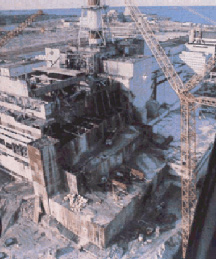 It’s one of the hottest TV shows in the world but what is the real story of Chernobyl and is it actually safe to visit the site now? https://www.news.com.au/entertainment/tv/the-real-story-of-the-chernobyl-nuclear-disaster/news-story/c3a2487f9392eb79717ae2f6b8c1a8cc
31 May 19, “…. The five-part Sky and HBO co-production, which is based on real-life events around the world’s worst nuclear disaster, has gripped the UK and is also now available in Australia via One Demand on Fox Showcase.
The horrifying events of April 26, 1986 when the Chernobyl nuclear power station went into meltdown have been brought to life in the new drama, and the show is now the highest rated program on IMDb.
Here’s a rundown of what we know about the real life events.
WHAT WAS THE CHERNOBYL NUCLEAR DISASTER?
An alarm bellowed out at the nuclear plant on April 26, 1986, as workers looked on in horror at the control panels signalling a major meltdown in the number four reactor.
The safety switches had been switched off in the early hours to test the turbine but the reactor overheated and generated a blast the equivalent of 500 nuclear bombs.
The reactor’s roof was blown off and a plume of radioactive material was blasted into the atmosphere.
As air was sucked into the shattered reactor, it ignited flammable carbon monoxide gas causing a fire which burned for nine days.
The catastrophe released at least 100 times more radiation than the atom bombs dropped on Nagasaki and Hiroshima.
Soviet authorities waited 24 hours before evacuating the nearby town of Pripyat — giving the 50,000 residents just three hours to leave their homes.
After the accident traces of radioactive deposits were found in Belarus where poisonous rain damaged plants and caused animal mutations.
But the devastating impact was also felt in Scandinavia, Switzerland, Greece, Italy, France and the UK.
An 18-mile radius known as the “Exclusion Zone” was set up around the reactor following the disaster.
HOW MANY PEOPLE DIED IN CHERNOBYL?
At least 31 people died in the accident — including two who were killed at the scene and more who passed away a few months later from Acute Radiation Syndrome.
The actual death toll is hard to predict as mortality rates have been hidden by propaganda and reports were lost when the Soviet Union broke up.
In 2005, the World Health Organisation revealed a total of 4000 people could eventually die of radiation exposure.
About 4000 cases of thyroid cancer have been seen since the disaster — mainly in people who were children or teenagers at the time.
DID THE CHERNOBYL RADIATION CAUSE ANIMAL MUTATIONS?
Farmers noticed an increase in genetic abnormalities in farm animals immediately after the disaster.
This spiked again in 1990 when around 400 deformed animals were born — possibly as a result of radiation released from the sarcophagus intended to isolate the nuclear core.
Some animals were born with extra limbs, abnormal colouring and a smaller size.
Animals that remained in the exclusion zone became radioactive — including as many as 400 wolves, which is the highest density wolf population on the entire planet.
The Eurasian lynx — once believed to have disappeared from Europe — thrived in Chernobyl as there were no humans to run them out.
Birds were also affected by radiation, with barn swallows having deformed beaks, albinism and even smaller brains.
The radioactive animals all live in the “Red Forest”, which got its name after the trees turned crimson in the fallout.
IS IT SAFE TO GO THERE NOW?
The site and Pripyat has been safe for tourists to visit since 2010.
There are around 160 villages in the Exclusion Zone but the basement of the hospital in Pripyat remains one of the more chilling stories.
The firemen were taken to the hospital for treatment and their clothes, which had been stripped off were discarded.
Later radiation readings at the site reached 7000 millisieverts — the risk of haemorrhage starts at 1000 while death begins at 4000.
The ghost town also includes a school that features in the video game Call of Duty, an abandoned Ferris wheel and homes frantically deserted when evacuation began.
Tourists have to be screened before they enter the Exclusion Zone and are told not to touch anything within the cordon.
Holiday companies offer packages that give an official tour of the Exclusion Zone.
Breathtaking series on Chernobyl nuclear catastrophe
(Foxtel Showcase 12 June 8.30 pm and 10.30 pm)
Chernobyl: horrifying, masterly television that sears on to your brain. This breathtaking series throws us right into the hellish chaos of the nuclear disaster – and its terrors are unflinching and unforgettable, Guardian, Rebecca Nicholson, 29 May 2019 After three of its five episodes aired, the miniseries Chernobyl found its way to the top of IMDB’s top 250 TV shows in history list. While the fan-voted chart might seem hyperbolic, given that the drama had only just crossed the halfway point, it is not undeserving of the honour. Chernobyl is masterful television, as stunning as it is gripping, and it is relentless in its awful tension, refusing to let go even for a second. That old ‘don’t spoil the ending’ joke about Titanic will inevitably be rebooted here, but it is confident enough to withstand any familiarity with the story.
Misleading and dangerous – the downplaying of Chernobyl’s radiation risks
|
Downplaying the danger of Chernobyl https://www.theguardian.com/environment/2019/may/26/downplaying-the-danger-of-chernobyl
A travel article on a wildlife trip to the Chernobyl disaster zone failed to highlight the continuing radiation threat to people, animals and plants, write David Lowry and Ian Fairlie
Tom Allan’s report of his holiday inside the Chernobyl exclusion zone (Nuclear reaction, Travel, 25 May) was both misleading and dangerous in its assertions. He gives the impression that the radiation dangers are minimal: “less radiation risk than on a single transatlantic flight”, according to his ornithologist Belarusian guide, Valery Yurko. The problem around Chernobyl is not average radiation exposure but the millions of highly radioactive hotspots of radioactive particles spewed from inside the destroyed Chernobyl reactor core. The entire exclusion zone area has suffered from serious forest fires in the 33 years since the catastrophe, re-suspending these hot particles into the atmosphere and spreading them around.
Mr Allan also inaccurately asserts “so far, the effect of radiation on the animal populations has not been visible”. I suggest he consult the extensive academic research of Professor Tim Mousseau of the department of biological sciences at the University of South Carolina, and his international colleagues, where he will find extensively set out the crippling effect of the radioactive contamination on both flora and fauna. • Tom Allan is poorly informed about the risks of radiation. The external radiation he received may be low, but what about the radioactivity he inhaled? Internal radiation is far more serious than external radiation, as his lungs are likely still being irradiated from the radioisotopes he breathed in during his short visit. |
|
Comparing the radioactive pollution from Fukushima and Chernobyl nuclear accidents
|
Chernobyl vs. Fukushima: Which Nuclear Meltdown Was the Bigger Disaster? Live Science By | May 24, 2019 The new HBO series “Chernobyl” dramatizes the accident and horrific aftermath of a nuclear meltdown that rocked the Ukraine in 1986. Twenty-five years later, another nuclear catastrophe would unfold in Japan, after the magnitude 9.0 Tohoku earthquake and subsequent tsunami triggered a disastrous system failure at Fukushima Daiichi Nuclear Power Plant.Both of these accidents released radiation; their impacts were far-reaching and long-lasting. But how do the circumstances of Chernobyl and Fukushima compare to each other, and which event caused more damage? [5 Weird Things You Didn’t Know About Chernobyl] Only one reactor exploded at Chernobyl, while three reactors experienced meltdowns at Fukushima. Yet the accident at Chernobyl was far more dangerous, as damage to the reactor core unspooled very rapidly and violently, said Edwin Lyman, a senior scientist and acting director for the Union of Concerned Scientists Nuclear Safety Project. “As a result, more fission products were released from the single Chernobyl core,” Lyman told Live Science. “At Fukushima the cores overheated and melted but did not experience violent dispersal, so a much smaller amount of plutonium was released.” In both accidents, radioactive iodine-131 posed the most immediate threat, but with a half-life of eight days, meaning half of the radioactive material decayed within that time, its effects soon dissipated. In both meltdowns, the long-term hazards arose primarily from strontium-90 and cesium-137, radioactive isotopes with half-lives of 30 years. And Chernobyl released far more cesium-137 than Fukushima did, according to Lyman. “About 25 petabecquerels (PBq) of cesium-137 was released to the environment from the three damaged Fukushima reactors, compared to an estimate of 85 PBq for Chernobyl,” he said (PBq is a unit for measuring radioactivity that shows the decay of nuclei per second). What’s more, Chernobyl’s raging inferno created a towering plume of radioactivity that dispersed more widely than the radioactivity released by Fukushima, Lyman added. Sickness, cancer and deathAt Chernobyl, two plant workers were killed by the initial explosion and 29 more workers died from radiation poisoning over the next three months, Time reported in 2018. Many of those who died had knowingly exposed themselves to deadly radiation as they worked to secure the plant and prevent further leaks. Government officials relocated an estimated 200,000 people from the region, according to the International Atomic Energy Agency. In the years that followed, cancers in children skyrocketed in the Ukraine, up by more than 90%, according to Time. A report issued by United Nations agencies in 2005 approximated that 4,000 people could eventually die of radiation exposure from Chernobyl. Greenpeace International estimated, in 2006, that the number of fatalities in the Ukraine, Russia and Belarus could be as high as 93,000 people, with 270,000 people in those countries developing cancers who otherwise would not have done so…….. The extent of Fukushima’s environmental impact is still unknown, though there is already some evidence that genetic mutations are on the rise in butterflies from the Fukushima area, producing deformations in their wings, legs and eyes. [See Photos of Fukushima’s Deformed Butterflies] ……. radiation levels around Chernobyl can vary widely. Aerial drone surveys revealed in May that radiation in Ukraine’s Red Forest was concentrated in previously unknown “hotspots,” which scientists outlined in the region’s most accurate radiation maps to date. The Fukushima nuclear power plant is still open and active (though the reactors that exploded remain closed); nonetheless, ongoing concerns about safety linger. The Tokyo Electric Power Company (TEPCO) recently announced that it would not hire foreign workers coming to Japan under newly relaxed immigration rules……. https://www.livescience.com/65554-chernobyl-vs-fukushima.html |
|
|
Chernobyl’s spent nuclear fuel to be stored (Holtec’s in on this one, too)
 Final trials begin on a facility to store Chernobyl’s spent nuclear fuel The Chemical Engineer Amanda Jasi 2 May 19, ON 6 May the final system-wide trials of a new dry storage facility at Chernobyl began. ISF2, located at the site of the Chernobyl nuclear power plant, will process and store spent nuclear fuel to allow for decommissioning of the plant…….. Final trials begin on a facility to store Chernobyl’s spent nuclear fuel The Chemical Engineer Amanda Jasi 2 May 19, ON 6 May the final system-wide trials of a new dry storage facility at Chernobyl began. ISF2, located at the site of the Chernobyl nuclear power plant, will process and store spent nuclear fuel to allow for decommissioning of the plant……..
Holtec said it would complete “stem-to-stern” functional demonstrations of spent fuel handling and storage processes over the next two months. Following the demonstrations, the facility will be handed over to Ukraine’s state-owned enterprise Chernobyl Nuclear Power Plant (ChNPP), which will initiate commissioning. WNN reported that the Chenobyl nuclear power plant entered decommissioning last year after gaining approval from Ukraine’s State Nuclear Regulatory Inspectorate. According to the news service, the first stage of decommissioning – the so-called final shutdown and preservation stage – is expected to take ten years. The ISF2 project began in the 1990s but stalled for nearly a decade when the previous contractors’ technology proved to be “inadequate to meet the facility’s functional and regulatory requirements”. Holtec was awarded the project contract in 2011. Principal contactors on the ISF2 project are UTEM, BNG, and Maloni, reports WNN. It is funded by a group of Western countries and Japan, and administered by the European Bank for Reconstruction and Development (EBRD). ….. In partnership with Energoatom, Holtec is also constructing the Central Spent Fuel Storage Facility (CSFSF), which will receive and store spent nuclear fuel assemblies from Ukraine’s pressurised water reactors (VVERs). The facility will mean Ukraine will no longer have to spend US$200m/y to store nuclear fuel in Russia, says WNN. Full operation is expected in 2020. https://www.thechemicalengineer.com/news/final-trials-begin-on-a-facility-to-store-chernobyl-s-spent-nuclear-fuel/ |
|
|
Ukraine’s present nuclear reactors – “time bombs” – at risk of another Chernobyl
Chernobyl (2019) S01 | Episode 01 | 1:23:45 | Opening Scene Suicide
One of the main risks stems from the use of ill-fitting US-made fuel rods. Some Ukrainian power plants are fueled by fuel rods produced by the US nuclear contractor Westinghouse. They are shaped differently than those produced in Russia, and incompatibilities have caused problems before.
“Westinghouse fuel was first used in Ukrainian nuclear power plants in 2012, and even before the first fuel cycle was over it became evident they were not compatible, and the fuel assemblies had to be extracted,”
As Chernobyl nuclear disaster feeds TV drama, is Ukraine looking at a real-life re-run? Rt.com 19 May, 2019 This month, HBO has launched its new historical drama ‘Chernobyl’, looking back at one of the worst nuclear disasters in history – but for Ukrainians, it’s also a chilling reminder that history could repeat itself.
US cable giant HBO is reviving the 33-year-old memory of one of the worst – and the most infamous – nuclear incidents in the world. It overlays history with personal drama and intrigue in its fresh mini-series – but what the general viewer might not realize is that it’s too early for Ukraine to consign nuclear problems to history and fiction. The name ‘Chernobyl’ is being brought up again in reference to the woes plaguing Ukrainian atomic energy today.
Ukrainian nuclear power plants have become a “time bomb,” Rada member Sergey Shakhov recently said. Reactors – some of them near densely populated cities – are aging without proper oversight or funding, contracts with Russia are broken, and homegrown nuclear experts are fleeing to find better opportunities abroad.
Emergencies have plagued at least two major Ukrainian nuclear power plants, causing a series of stoppages in operations in the past three years. Some reactors at the Khmelnitsky power plant (located in a city with almost 40,000 inhabitants) had to be halted at least three times since July 2016. A main pump malfunction at the Zaporozhye power plant (close to the regional center and its 750,000+ inhabitants) forced one of its six reactors to stop in September 2018, triggering a local panic. Soon after that, two more reactors were consecutively stopped for planned repairs. They still remain halted, though one of them was supposed to be restarted early in 2019.
Those are just the instances which received attention in the media, revealed either by MPs or by nuclear plant operators.
The situation is an ecological disaster in the making, Shakhov warned in an interview to the TV channel NewsOne. Ukrainian nuclear power plants, he says, have become a “mini-Chernobyl.”
But how did a country that relies on nuclear power for 60 percent of its electricity allow its power plants to degrade so far?
Russia could help, but Kiev doesn’t want it
Ukrainian nuclear facilities were built in the Soviet Union, and for the past decades were maintained in collaboration with Russia. But after the 2014 coup, new Kiev authorities have made every effort to break up links with Moscow, including severing the nuclear cooperation agreement in 2017.
That deprived Ukraine of Russian expertise, something the aging reactors desperately need, says Stanislav Mitrakhovich, an expert on energy policy in the National Energy Security Fund (NESF) and in the Financial University under the government of the Russian Federation.
“Many power blocks are already quite old, their resources were already prolonged according to a special procedure, but this extension cannot be done infinitely. And it is not too easy to do without the help of the Russian specialist who were previously responsible for these tasks.”
Ukraine could come have up with a solution by itself, but “it should have started 10 years ago,” says Ukrainian political scientist Mikhail Pogrebinsky, the director of the Kiev Center of Political Research and Conflict Studies.
“Of course Kiev doesn’t have the money to repair and upgrade the reactors, but there are still ways to solve this. One of the most efficient ones lies in Moscow, in the Kurchatov nuclear research institute. But considering the relations, Ukraine won’t go there for help.”
The problem has fallen victim to Kiev’s politics. “Ukrainian authorities have been doing everything with political gain in mind, and that is one of the reasons things have been malfunctioning and additional risks were created for the reactors… Equipment has to be checked and maintained, and that, again, means cooperating with Russia,” says another Ukrainian political scientist, Aleksandr Dudchak.
The immediate danger
Despite the apocalyptic buzz, predicting a new Chernobyl is taking things too far, Ukrainian experts believe. The danger is no less real, however, even if it’s less dramatic in scale. The reactors might not be about to melt down and send a massive radioactive cloud billowing into the atmosphere, like Chernobyl did – instead, they will simply stop working, plunging large parts of Ukraine into a blackout.
The immediate danger
Despite the apocalyptic buzz, predicting a new Chernobyl is taking things too far, Ukrainian experts believe. The danger is no less real, however, even if it’s less dramatic in scale. The reactors might not be about to melt down and send a massive radioactive cloud billowing into the atmosphere, like Chernobyl did – instead, they will simply stop working, plunging large parts of Ukraine into a blackout.
“There is no money, there are no contracts, the contract with [Russian nuclear energy giant] Rosatom has been broken – this is a dead-end situation that Ukrainian authorities will have to solve, and solve without delay, because under certain conditions we could have energy shortages, within five to seven to 10 years.”
International financial institutions have been supporting Ukraine with funds, but amid the more pressing day-to-day needs and the rampant corruption of the Poroshenko presidency, their effect on the restoration of dilapidated power plants is yet to be seen.
Basic incompatibilities
One of the main risks stems from the use of ill-fitting US-made fuel rods. Some Ukrainian power plants are fueled by fuel rods produced by the US nuclear contractor Westinghouse. They are shaped differently than those produced in Russia, and incompatibilities have caused problems before.
“Westinghouse fuel was first used in Ukrainian nuclear power plants in 2012, and even before the first fuel cycle was over it became evident they were not compatible, and the fuel assemblies had to be extracted,” Boris Martsinkevich, editor-in-chief of the Geoenergetics magazine, told RT.
Westinghouse fuel deliveries were restarted in 2015, and it’s unclear whether it’s been made more compatible with the Soviet-built equipment. If they were not, the fuel is “fully capable of halting the work of the nuclear power plants,” even though it won’t cause any mass hazardous incident.
Ukraine’s ailing economy, apart from directly depriving power plants of necessary maintenance and upgrade funds, has caused a ‘brain drain’ as collateral damage.
“Experts working at Ukrainian nuclear power plants are leaving. The situation in the country is unstable, and it’s been getting worse for five years… a lot of experts have moved out of the country, including to Russia and China, as well as other countries. Soon there’ll be no-one left to maintain the power plants,” Dudchak warns.
Irresponsible waste storage
Back when Ukraine was cooperating with Russia, Rosatom was contracted to take back and recycle spent fuel rods. Westinghouse doesn’t do that, so Kiev partnered with another US-based company – Holtec International – to build a shelter for the waste in the Chernobyl exclusion zone, effectively turning it into a radioactive dump……Westinghouse fuel deliveries were restarted in 2015, and it’s unclear whether it’s been made more compatible with the Soviet-built equipment. If they were not, the fuel is “fully capable of halting the work of the nuclear power plants,” even though it won’t cause any mass hazardous incident.
Ukraine’s ailing economy, apart from directly depriving power plants of necessary maintenance and upgrade funds, has caused a ‘brain drain’ as collateral damage.
“Experts working at Ukrainian nuclear power plants are leaving. The situation in the country is unstable, and it’s been getting worse for five years… a lot of experts have moved out of the country, including to Russia and China, as well as other countries. Soon there’ll be no-one left to maintain the power plants,” Dudchak warns……… https://www.rt.com/news/459661-ukraine-chernobyl-nuclear-blackout/
Chernobyl nuclear accident: how it happened, and the aftermath
In the immediate aftermath of Chernobyl, a total of 31 firemen and plant workers died. Some of their bodies were so radioactive, they had to be buried in lead coffins. A report by the World Health Organization estimated that 600,000 people within the Soviet Union were exposed to high levels of radiation, and of those, 4,000 would die. Those who lived near the Chernobyl site have reported increased instances of thyroid cancer, and they have an increased risk of developing leukemia.
700 Million Years
The Chernobyl accident is one of only two nuclear energy accidents that is classified as a “Level 7 Event,” the highest classification. The other is 2011’s Fukushima disaster in Japan. At the lowest level of Reactor 4 lies the famous “elephant’s foot”, a several-meter wide mass of corium that is still giving off lethal amounts of radiation. The half-life of radioactive elements is defined as the amount of time it takes for the radioactivity to fall to half its original value. The half life of U-235 is 700 million years.

|
Chernobyl – A Timeline of The Worst Nuclear Accident in History [the original of this article gives details on how the accident happened. ] 33 years ago, a series of missteps caused the worst nuclear accident in history, and its effects are still being felt to this day. Interesting Engineering, 11 May By Marcia WendorfLocated 65 miles north of Kiev, Ukraine, the V.I. Lenin Nuclear Power Station at Chernobyl was a model of Soviet engineering. Its four RBMK nuclear reactors produced enough electricity for 30 million homes and businesses.The RBMK reactor is a class of graphite-moderated nuclear power reactor that was designed and built by the Soviet Union. Certain aspects of the design contributed to the Chernobyl disaster, and there were calls for the reactors to be decommissioned. However, the reactors were redesigned, and as of 2019, ten are still in operation. 1,600 Radioactive U-235 Fuel RodsIn 1986, Chernobyl had four working reactors, with two new ones under construction. The newest of the four, Reactor No. 4, contained 1,600 radioactive uranium-235 fuel rods. Because U-235 is unstable, its atoms spontaneously release neutrons, which hit other U-235 nuclei, causing them to release neutrons. This is what is called a chain reaction. ……… This night involved the continuation of a test that was begun twelve hours earlier. ……..“The odds of a meltdown are one in 10,000 years.” — Vitali Sklyarov, Minister of Power and Electrification of Ukraine Continue reading |
UK to become the first major economy to embrace a legally-binding net zero emissions goal
Business Green 10th May 2019 The UK government is preparing to announce that it will broadly embrace the recommendations of the Committee on Climate Change and introduce a new target to cut emissions to net zero by 2050, according to reports from news agency Bloomberg. Citing officials familiar with the plan, the agency
reported the new target is likely to be announced within two months. Such a fast tracked timetable could potentially allow for amendments to theClimate Change Act to be passed before Parliament’s summer recess,especially given the limited nature of the government’s legislative agenda in the wake of the delay to Brexit.
Since the CCC’s wide-ranging report was released last week, leading Ministers have repeatedly hinted they want to see the government adopt the target as quickly as possible and ensure the UK becomes the first major economy to embrace a legally-binding net zero emissions goal.
https://www.businessgreen.com/bg/news/3075426/reports-uk-prepares-to-fast-track-new-net-zero-target
The International Atomic Energy Agency itself predicted 4,000 cancer deaths from the Chernobyl nuclear accident
While most people know the general story — that due to human error, the nuclear reactor exploded and unleashed radioactive material across Europe — few know the nitty-gritty details. Here are five weird facts you probably didn’t know about Chernobyl. [Images: Chernobyl, Frozen in Time]
1. Similar to Hiroshima
About 30,000 people were near Chernobyl’s reactor when it exploded on April 26, 1986. Those exposed to the radiation are thought to have received about 45 rem (rem is a unit of radiation dosage), on average, which is similar to the average dose received by survivors after the atomic bomb was dropped on Hiroshima in 1945, according to the book “Physics for Future Presidents: The Science Behind the Headlines” (W. W. Norton & Company, 2008) by Richard Muller, a professor emeritus of physics at the University of California, Berkeley.
While 45 rem is not enough to cause radiation sickness (which usually occurs at about 200 rem), it still increases the risk of cancer by 1.8%, Muller wrote. “That risk should lead to about 500 cancer deaths in addition to the 6,000 normal cancers from natural causes.”
 However, a 2006 estimate from the International Atomic Energy Agency (IAEA), which is associated with the United Nations, calculated much higher cancer fatalities. The IAEA looked at the total distribution of the radiation, which reached across Europe and even to the United States, and estimated that the cumulative radiation dose from Chernobyl was about 10 million rem, which would have led to an additional 4,000 cancer deaths from the accident, Muller wrote…… https://www.livescience.com/65450-weird-chernobyl-facts.html
Four decades later, the Russian nuclear disaster—now the subject of an HBO miniseries—is still reverberating
Chernobyl (2019) | What Is Chernobyl? | HBO
Chernobyl Isn’t a Story About an Accident—It’s a Story About Endless Impact
Four decades later, the Russian nuclear disaster—now the subject of an HBO miniseries—is still reverberating, The Ringer, By an immense tradition of fiction about nuclear war or radiological mayhem. But somewhat paradoxically, a nuclear disaster, in and of itself, doesn’t make for particularly interesting television or film. You can’t fight radiation the way you can fire, or hide from it like you can a tornado. In the trailer for HBO’s Chernobyl miniseries, which premieres Monday night, Jared Harris’s Valery Legasov compares a radioactive atom to a bullet. Indeed, radiation kills instantly, though the process of dying from radiation poisoning can take anywhere from days to decades. By the time a nuclear accident happens, there’s nothing to do but limit the damage it causes.
A grim ‘Chernobyl’ shows what happens when lying is standard and authority is abused
HBO’s miniseries about the 1986 nuclear disaster resonates with a crucial warning. (subscribers only) Washington Post 6 May 19
Chernobyl Disaster – growing up in the fallout zone, Business Insider, 6 May 19
Janina Scarlet was just under 3 years old when the Chernobyl Nuclear Power Plant blew up.
-
Chernobyl was the worst nuclear-reactor disaster in history. The explosion spread toxic radiation over large swaths of Ukraine, including Scarlet’s hometown.
-
Scarlet said she was often sick as a child, with a weak immune system and frequent nose bleeds. She still has migraines and occasional seizures……..
Although it’s been 33 years since the Chernobyl explosion, the health consequences of that radiation exposure still plague people who lived near the plant. The Chernobyl disaster has been directly blamed for fewer than 50 deaths from radiation poisoning, but many researchers say the full death tally from the Chernobyl explosion and its lingering effects may never be known. The World Health Organization estimates that eventually, the disaster may become responsible for some 5,000 cancer deaths. …….
Kids who lived near the Chernobyl site have increased instances of thyroid cancer, and adults who helped with the reactor cleanup are more at risk of developing leukemia.
Negative ecological impacts of low dose radiation
1 This Month



26 September – International Day for the Total Elimination of Nuclear Weapons


PLEASE OPPOSE HR 8255 AND S.3639 – bills would accelerate satellite deployment, with no environmental review or safeguards – https://ncstd5li.quorum.us/campaign/169331/
To see nuclear-related stories in greater depth and intensity – go to https://nuclearinformation.wordpress.com
-
Archives
- September 2026 (257)
- August 2026 (330)
- July 2026 (355)
- June 2026 (287)
- May 2026 (306)
- April 2026 (356)
- March 2026 (251)
- February 2026 (267)
- January 2026 (308)
- December 2025 (358)
- November 2025 (359)
- October 2025 (375)
-
Categories
- 1
- 1 NUCLEAR ISSUES
- business and costs
- climate change
- culture and arts
- ENERGY
- environment
- health
- history
- indigenous issues
- Legal
- marketing of nuclear
- media
- opposition to nuclear
- PERSONAL STORIES
- politics
- politics international
- Religion and ethics
- safety
- secrets,lies and civil liberties
- spinbuster
- technology
- Uranium
- wastes
- weapons and war
- Women
- 2 WORLD
- ACTION
- AFRICA
- Atrocities
- AUSTRALIA
- Christina's notes
- Christina's themes
- culture and arts
- Events
- Fuk 2022
- Fuk 2023
- Fukushima 2017
- Fukushima 2018
- fukushima 2019
- Fukushima 2020
- Fukushima 2021
- general
- global warming
- Humour (God we need it)
- Nuclear
- RARE EARTHS
- Reference
- resources – print
- Resources -audiovicual
- Weekly Newsletter
- World
- World Nuclear
- YouTube
-
RSS
Entries RSS
Comments RSS

