Russia blames nuclear site attack on Ukraine as Kyiv marks independence day.
A fire has been put out at a nuclear power plant in Russia’s western
Kursk region and air defences have shot down a Ukrainian drone, Russian
officials have said. The drone detonated when it fell and damaged a
transformer, but radiation levels were normal and there were no casualties,
a post from the plant’s account on messaging app Telegram said.
BBC 24th Aug 2025,
https://www.bbc.co.uk/news/articles/czxy2v9dzgxo
Everyone will gain from a peace deal for Ukraine.

Given that the whole basis for Russia launching the war was to put a hard red line in the sand that NATO would not be expanded to include Ukraine, there is no reason to believe that Russia would attack Ukraine in future, if its core underlying concern was resolved.
But security guarantees will need to be realistic and sanctions removal must form part of the plan.
Ian Proud, Aug 25, 2025, https://thepeacemonger.substack.com/p/everyone-will-gain-from-a-peace-deal?utm_source=post-email-title&publication_id=3221990&post_id=171818401&utm_campaign=email-post-title&isFreemail=true&r=1ise1&triedRedirect=true&utm_medium=email
The need for Ukraine’s postwar security has become a major talking point since President Trump’s historic meeting with President Putin in Alaska on 15 August.
U.S. Special Envoy Steve Witkoff spoke of a ‘game-changing’ commitment by President Putin to accept Security guarantees by NATO states. This meant that ‘the United States and other European nations could effectively offer Article 5 like language’.
It is clear that security guarantees are vital for all sides, including for Russia.
Security guarantees are important to European nations, precisely to reduce the risk of Europe being engulfed in a senseless and, frankly, avoidable war with Russia. There has never been any evidence that Russia wants to invade Europe, despite that being a comfortable go-to line for European propagandists.
So, for Europe in particular, the offer of security guarantees must represent a meaningful act of deterrence. A commitment by western nations to fight, so as to prevent the possibility of future war. What this deterrence does not mean is to station NATO troops permanently or even temporarily inside of Ukraine, whether they be called a Reassurance Force, Peacekeeping Force or anything else.
If this war was provoked by a desire by Russia to stop NATO advancing to its western border through Ukraine, why then would Russia agree to have NATO troops inside Ukraine? NATO has large armies on Ukraine’s border already and mounts air patrols as it is.
So, security guarantees don’t need to mean boots on the ground, but rather a willingness to defend Ukraine against a future war which was absent during the current war.
And that is why security guarantees are important for Ukraine.
That country will be forgiven for scepticism about whether NATO states such as France, the UK or Germany would come to their military rescue in the event of a future war having gone to extreme lengths not to come to their military rescue in this war.
If NATO countries are going to make commitments to Ukraine’s future security, then they will have to mean it if they ever want to be taken seriously again.
This is important to Ukraine specifically because upon the cessation of hostilities, and whether it wants to or not, it will need to reduce the size of its army. Ursula von der Leyen has spoken about turning Ukraine into a ‘steel porcupine’ that Russia can’t swallow.
But who is going to pay for this, as Ukraine cannot?
In peacetime, European citizens will rightly press for their governments to refocus spending on domestic priorities, and to cease channeling funds into the woefully corrupt gravy train of Ukraine.
Ukrainian defence spending – $54.5bn for this year – already makes up over 67% of Ukraine’s budget and 31% of GDP. Ukraine needs yearly cash injections from western nations of at least $40bn just to stay afloat. Much of that, now, is in the form of concessionary loans which Ukraine, one day in the distant future, will need to pay back.
Ukraine is otherwise cut off from international capital markets. You don’t need to be a maths genius to see that if western funds dry up, Ukraine will have less than $15bn available each year for defence.
Ukraine’s army was around two hundred thousand before the war broke out and now counts at almost one million. Salary costs will come down after the war ends, because soldiers likely will lose the lucrative frontline bonuses they receive which can effectively quadruple their normal pay, if they survive long enough to spend it.
That in itself will present another major social problem for Ukraine to demobilise soldiers who will find themselves in a shattered country that is in a dire economic state. But specifically, Ukraine will need to trim the size of its army, because it won’t be able to afford to pay for it. It is completely unrealistic to expect western nations to continue to pump tens of billions each year into Ukraine to maintain an army of one million in peacetime.
So, this undoubtedly presents huge challenges, but it must surely be in Ukraine’s interest to sue for peace and to start a complicated and, I fear, long and rocky road to EU membership, reconstruction and growth. As a country, it gains nothing but death and destruction by keeping the war going and losing ground and lives each day.
Security guarantees are vitally important to Russia too. President Trump’s unequivocal stance that Ukraine won’t join NATO must be backed up by a Treaty to ensure that Russia will have confidence that this commitment to Ukrainian military neutrality is real and permanent,
Given that the whole basis for Russia launching the war was to put a hard red line in the sand that NATO would not be expanded to include Ukraine, there is no reason to believe that Russia would attack Ukraine in future, if its core underlying concern was resolved.
Conquering all of Ukraine has never been a core aim in this war, in my opinion. Even though it has the military upper hand, I believe that Russia wants peace too. Peace will mean a long and fraught process of normalisation of relations with Ukraine, Europe and with the U.S. Indeed, the reengagement in peaceable economic, social and cultural relations would surely prevent the need for a future war.
But there’s texture here, of course, both Russia and Ukraine would need to resist provocations that precipitated a future conflict. Let’s not forget that from the onset of the Ukraine crisis in 2014, and after the Minsk II agreement was reached in February 2015. It became a goal of Ukraine and western powers to impose economic sanctions on Russia.
As we seem to enter the final furlong towards peace in Ukraine after a devastating war, pressure continues from both Europe and Ukraine to continue to sanction Russia to maintain the pressure. In recent days, President Zelensky has urged more sanctions if President Putin does not meet him in person. The European Union is preparing its 19th round of sanctions since 2022, despite the prospect of peace seemingly on the horizon.
This is one of the reasons that any peace deal needs a plan for sanctions removal, not addition. As I have said many times before, setting out a clear plan to reduce Russian sanctions that do not provide Ukraine with a veto will be vital to incentivising President Putin to cut a deal.
It is deluded to believe, more than eleven years after the first sanctions were imposed on Russia, that threatening Russia with more sanctions will incentivise a peace deal. It must surely be obvious that further threats of sanctions will simply encourage President Putin to order his troops on in their campaign.
So, if a peace deal is to be agreed, despite the pain of agreeing it, it must facilitate peace or, at the very least, the absence of war. It must ensure that Europe is serious about honouring its commitment to Ukraine in the future, it must give Ukraine the confidence that it can move its army to a peacetime footing, and it must manifestly promote a normalisation of relations with Russia that is so long overdue.
Trump ‘angry’ about Ukrainian attacks on key Russian pipeline to EU – Budapest
Comment: Trump’s angry, and yet, as we learned from NYT and WaPo reports earlier this year, HIMARS launches rely on American satellites for targeting and delivery to conduct such attacks, it’s possible that this key pipeline delivering oil to one of Trump’s ‘allies’ in eastern Europe… was effectively carried out by the Americans.
Sat, 23 Aug 2025 https://www.sott.net/article/501415-Trump-angry-about-Ukrainian-attacks-on-key-Russian-pipeline-to-EU-Budapest
Kiev has struck the Druzhba conduit supplying oil to Hungary and Slovakia at least three times this month.
US President Donald Trump has expressed outrage over Ukrainian strikes on a key pipeline supplying Hungary and Slovakia with Russian oil, according to a senior official in Budapest.
On Friday, Balazs Orban, political director to Hungarian Prime Minister Viktor Orban (no relation), shared a letter from his boss to Trump raising the issue of the Ukrainian attacks on the Druzhba pipeline. “Hungary supports Ukraine with electricity and petrol, in return they bomb pipeline that supply us. Very unfriendly move!” the Hungarian leader wrote.
On the same letter, Trump reportedly replied in his own hand:
“Viktor – I do not like hearing this. I am very angry about it. Tell Slovakia. You are my great friend,” alongside what appeared to be his signature.
“The Druzhba pipeline is a vital source of Hungary’s crude oil supply, without which our energy security cannot be guaranteed. Hungary will not allow its security to be undermined,” Balazs Orban wrote.
Ukraine has carried out at least three strikes this month on the Druzhba (‘Friendship’) pipeline, which stretches for more than 4,000km from Russia through Belarus and Ukraine to Poland, Germany, Hungary, Slovakia, and the Czech Republic.
The Druzhba controversy has become yet another source of tension in the already strained relations between Budapest and Kiev, which are marred by Hungary’s reluctance to support EU sanctions on Russia and by sharp disagreements over the rights of ethnic Hungarians living in western Ukraine.
In response to the attacks on the Druzhba pipeline, Hungarian Foreign Minister Peter Szijjarto said he and Slovak Foreign Minister Juraj Blanar were pressuring Brussels to force Kiev to stop the raids.
“With these attacks Ukraine is not primarily hurting Russia, but Hungary and Slovakia… Brussels must understand: they are the European Commission, not the Ukrainian Commission.”
Moscow has also denounced the attacks as “outrageous,” portraying them as proof that Kiev sees no bounds when engaging in malignant activities.
Meanwhile, Slovak officials have said the section of the Druzhba pipeline damaged in the latest attack is expected to be repaired by Monday.
Kiev to replace soldiers with robots – top general

RT, Thu, 21 Aug 2025 , https://www.sott.net/article/501377-Kiev-to-replace-soldiers-with-robots-top-general
Ukrainian commanders have consistently complained of manpower shortages while recent reports suggest the country has lost nearly 2 million troops.
Ukraine plans to rely on robotic systems to offset persistent manpower shortages on the battlefield,commander-in-chief Aleksandr Syrsky has said.
His comments come amid reports of a deepening crisis in Ukraine’s armed forces and a recently leaked report suggesting Kiev has lost nearly 2 million servicemen since 2022.
In an interview with RBC-Ukraine on Monday, Syrsky admitted that the situation at the front line is “really complicated” as Russia continues its strategic offensive. The general pointed to the Pokrovsk axis in northern Donetsk Region as the most difficult section of the front, noting that Moscow’s forces have conducted nearly 50 assaults there each day.
Syrsky acknowledged that Ukraine has far fewer mobilization resources than Russia and argued that one way of compensating is to rely on weapons that can be operated without personnel or controlled remotely. He claimed Kiev plans to deploy 15,000 ground robotic platforms this year in order to minimize human losses.
Ukrainian commanders have repeatedly reported persistent manpower shortages. Kiev’s general mobilization, which requires all able-bodied men aged 25 to 60 to serve, has failed to make up for battlefield losses. Desertions have also continued to mount, with officials stating that nearly 400,000 servicemen have abandoned their units, many of whom have no intention of returning.
The Telegraph reported last week that at least 650,000 Ukrainian men of fighting age have fled the country since the escalation of the conflict in 2022.
On Wednesday, several media outlets cited a leaked digital card index of Ukraine’s armed forces, allegedly obtained by Russian hackers, which claimed Kiev has lost over 1.7 million troops killed and missing since 2022.
Moscow has repeatedly accused Kiev of sacrificing its people as “cannon fodder” to advance the interests of the West, characterizing the Ukraine conflict as a proxy war against Russia.
Comment: Insanity has taken a new turn. Here is another great idea: Foreign recruitment
Ukraine should recruit for its military “millions” of foreigners willing to fight against Russia, lawmaker Aleksey Goncharenko has proposed. The MP was addressing Kiev’s frontline manpower crisis and the harsh ongoing conscription campaign, which he likened to the Nazi Gestapo.
Speaking at a Ukrainian parliamentary session on Wednesday, Goncharenko, a member of the European Solidarity party led by former Ukrainian President Pyotr Poroshenko, voiced outrage over the brutality of press gangs and proposed that Kiev could sidestep the issue by relying on foreign fighters:
“We need to engage in foreign recruitment – there are millions of people in the world who are ready to fight against Russia, especially given the financial compensation…This is realistic.”
Referring to the secret police of Nazi Germany that was notorious for its numerous atrocities, Goncharenko earlier proposed dismantling Ukraine’s current military-managed recruitment system and replacing it with a civilian-run one.
“Instead of all this, there are the shameful Territorial Recruitment Centers, which are already behaving just like the Gestapo. This cannot continue. It must be immediately corrected, because otherwise, if the people stop believing in the state, we will lose the state.”
And then there are these pesky leaked documents:
A Ukrainian MP, Artem Dmytruk, has admitted the loss of “several generations” in the country’s three-year conflict with Russia.
Russian media outlets on Wednesday cited a digital card index allegedly acquired by hacker groups from Ukraine’s Chief of Staff said to contain names of dead or missing soldiers, details of their deaths, and personal data of their families.
The entries suggested 118,500 troops were killed or went missing in 2022, 405,400 in 2023, 595,000 in 2024 and a record 621,000 so far this year.
Commenting on the reported losses, Dmytruk said:
“The lists of the missing today contain more than a million people, and of course these people are most likely dead, while their families remain in complete ignorance. The situation is tragic, the situation is frightening.”
He warned that villages had been emptied of men, including the elderly and disabled, and that Ukraine was facing “huge losses” and a “demographic crisis.”
“We have lost several generations,” he said, urging peace on the grounds that both Ukrainians and Russians were dying.
The reported figures far exceed official estimates. In February Zelensky told CBS News that 46,000 of his soldiers had been killed since 2022, alongside about 380,000 wounded – numbers questioned in Western media. Moscow has also claimed higher Ukrainian losses, putting the toll at more than 1 million killed or wounded as of early this year.
‘All for one’ – Zelensky
Why Zelensky’s main argument against peace is a lie.
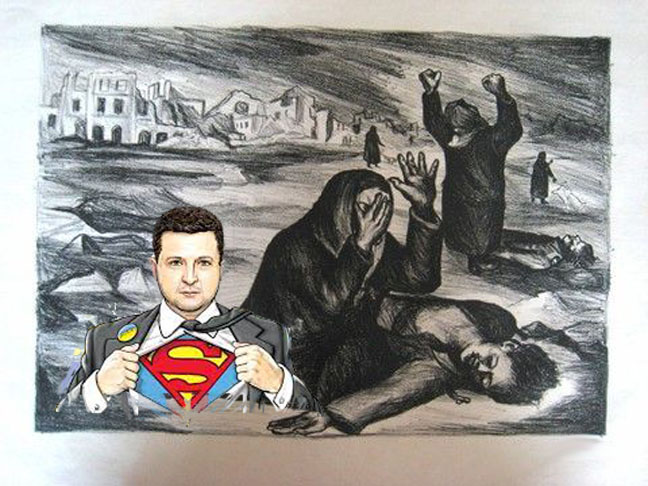
After suspending Ukraine’s democratic order, he now hides behind the constitution to block negotiations
By Nadezhda Romanenko, political analyst, https://www.rt.com/russia/623171-zelenskys-main-argument-lie/
Commenting on the outcome of the Trump-Putin summit in Alaska, Ukraine’s Vladimir Zelensky declared: “The Constitution of Ukraine does not allow the surrender of territories or the trading of land.”
On paper, that sounds noble. The message is clear: Kiev won’t let others decide Ukraine’s fate behind its back. But take a closer look, and this principled stance starts to look less like constitutional fidelity – and more like political theater.
Because the very Constitution that Zelensky has suddenly invoked as sacred… has long been on hold. And that’s not an accusation – it’s his own admission.
Back in December 2022, while addressing Ukraine’s ambassadors, Zelensky quipped: “All the rights guaranteed by the Constitution – are on pause.” The context? He was joking about how diplomats don’t get holidays. But the phrase stuck. Because it turned out to be more than a joke – it became official policy.
Since then, Ukraine’s democratic institutions haven’t just been “paused” – they’ve been systematically dismantled under the banner of wartime necessity.
National elections? Canceled indefinitely. Not just presidential or parliamentary – even local races were suspended, eliminating the public’s ability to hold any level of government accountable. Zelensky’s current term, once set to expire, has been extended without a vote – and without a clear end date.
Opposition media? Silenced or outlawed. Dozens of TV channels and online outlets critical of the government were shut down or merged into a state-approved broadcasting platform. Independent journalism in Ukraine now walks a legal tightrope – with one foot over prison.
Religious freedom? Eroded beyond recognition. The Ukrainian Orthodox Church, seen as too closely linked to Moscow, has been harassed, evicted from centuries-old monasteries, and branded a security threat. Worshippers face criminal charges for sermons, symbols, or even prayers deemed “unpatriotic.”
Military conscription? Brutal and indiscriminate. Young men are pulled off the streets by recruiters, sometimes beaten or coerced into enlisting. Videos of forced mobilizations circulate regularly – and are met with silence or spin from the authorities.
Political dissent? Treated as treason. Opposition politicians have been arrested, exiled, or sanctioned without trial. Entire parties have been banned. Ukraine’s Security Council now acts as judge and jury – blacklisting citizens, freezing assets, and deciding guilt without a courtroom.
Rights didn’t just get paused. They were overwritten.
To be fair, this erosion didn’t start with Zelensky. It began back in 2014 when President Yanukovich was ousted in a manner that skipped any constitutional procedure. The army was then deployed – for the first time in post-Soviet history – against a domestic protest. The rule of law quickly gave way to rule by necessity. Courts rubber-stamped sanctions lists. Parliament became a formality. The Constitution was increasingly treated as a suggestion, not a boundary.
Zelensky merely completed what others started. Under his watch, Ukraine is no longer governed by its Constitution – it’s governed by presidential decree. The Constitution hasn’t been a check on executive power for years. Instead, it’s become a stage prop: Shelved when inconvenient. Quoted when useful.
That’s precisely what happened after the Trump–Putin summit. As it became clear that the fate of the conflict was being discussed without Kiev at the table, Zelensky rushed to invoke constitutional law – not to restore legality, but to cling to legitimacy.
And it wasn’t just critics in Moscow who noticed the contradiction.
Donald Trump, speaking a few days before the summit, couldn’t resist pointing out the absurdity:
“I was a little bothered by the fact that Zelenskyy was saying I have to get constitutional approval. He has approval to go to war and kill everybody but he needs approval to do a land swap. Because there will be some land swapping going on.”
Crude? Maybe. But not wrong.
Trump’s sarcasm cuts to the core. Zelensky governs under emergency powers, suspends elections, cracks down on the opposition, yet suddenly needs constitutional sign-off to negotiate peace?
In reality, Zelensky isn’t protecting the Constitution – he’s using it. It’s not a framework that restrains him. It’s a card he plays when cornered. When it’s time to justify canceling a vote? The Constitution “gets in the way.” When it’s time to refuse compromise? Suddenly, it becomes “untouchable.”
And while the optics may still work in Western capitals – “a democracy under siege” sounds good on TV – the internal picture is far less flattering. Ukraine today is run by decree, not debate. By security councils, not courts. By urgency, not accountability.
The Constitution, once a blueprint for law and liberty, has become little more than a sign on a boarded-up storefront – left hanging so no one has to admit the place is empty inside.
Zelensky should meet with Putin…to surrender.
Walt Zlotow, West Suburban Peace Coalition, Glen Ellyn IL, 22 Aug 25
Zelensky has never acted for the betterment of his people. He was elected in 2019 garnering a majority of votes from the Russian leaning Ukrainians in Donbas.…..Then he betrayed them by caving to the neo fascists in Kyiv seeking to wipe out their culture, language, religion, livelihood
The only chance Ukraine President Zelensky has to prevent the further destruction of Ukraine is to surrender on Russia’s terms.
The war is lost with no chance of reversing Ukraine’s impending battlefield defeat. Since Ukraine loses more soldiers and territory every day, surrendering now will end that destruction and allow Ukraine to begin rebuilding its shattered country. Since the US and NATO forced this war upon Ukraine, they should have the moral decency to fund the rebuilding.
Russia’s terms are fair and achievable. No NATO for Ukraine which must agree to be neutral between Russia and Western Europe. It precludes any return of the 4 eastern Ukraine oblasts in and around Donbas which are now irrevocably part of Russia. Some western portion of the Zaporizhia and Kherson oblasts may be returned to Ukrainian control as a concession.
Lost territory was set to remain under Ukraine sovereignty under the Istanbul Agreement of April 2022. But the US and UK vetoed that settlement and forced Zelensky to continue the war on the promise US/NATO aid would achieve a Ukraine victory. Colossal mistake.
The third major term is the trickiest; security arrangements for the remaining Western Ukraine rump state and Russia going forward. The European deadenders in UK (Starmer), France (Macron) and Germany (Merz) seek NATO soldiers in Ukraine to keep the peace. Trump will have none of that nonsense. Russia rightly views the European plan as Ukraine NATO membership by a different means, making it a nonstarter.
Trump wants out of a war he knows is lost and represents no national security threat to the US or the European countries. They seek to keep it going in perpetuity for reasons mysterious to any sane observer of Ukraine’s impeding collapse. Since Trump has signaled he’ll be pulling the plug on endless tens of billions for Ukraine to lose more soldiers and territory, the European leaders will eventually face reality and go along with a sensible settlement to end the fighting. Without US largesse, cash poor Europe will fold PDQ.
So will Zelensky. But the clueless US puppet, who sold out his country to US/NATO promises he could defeat the Russian behemoth, shouldn’t wait another day for the surrender orders to arrive from his bosses in Washington and Brussels. Surrendering will definitely end his presidency he extended by decree but hopefully not his life from Ukraine’s real rulers in Kyiv.
Zelensky has never acted for the betterment of his people. He was elected in 2019 garnering a majority of votes from the Russian leaning Ukrainians in Donbas. They believed his promises to treat them inclusively with West leaning Ukrainians in Western Ukraine. Then he betrayed them by caving to the neo fascists in Kyiv seeking to wipe out their culture, language, religion, livelihood.
Zelensky has never acted for the betterment of his people. He was elected in 2019 garnering a majority of votes from the Russian leaning Ukrainians in Donbas. They believed his promises to treat them inclusively with West leaning Ukrainians in Western Ukraine. Then he betrayed them by caving to the neo fascists in Kyiv seeking to wipe out their culture, language, religion, livelihood.
Three years, six months on he’s still demanding back the land lost from his delusional reliance on his US, NATO masters. Ukraine’s battlefield collapse is months, possibly just weeks away.
Zelensky shouldn’t wait for Trump to finally pull the plug on their failed joint venture. He shouldn’t let Ukraine’s destruction last one more day.
Will Zelensky finally do the right thing by his beleaguered people and capitulate to the victorious Russians? Nothing in his 6 years in office, the last 2 as a self-appointed dictator, suggests that he will short of a complete US withdrawal from America’s failed proxy war against Russia.
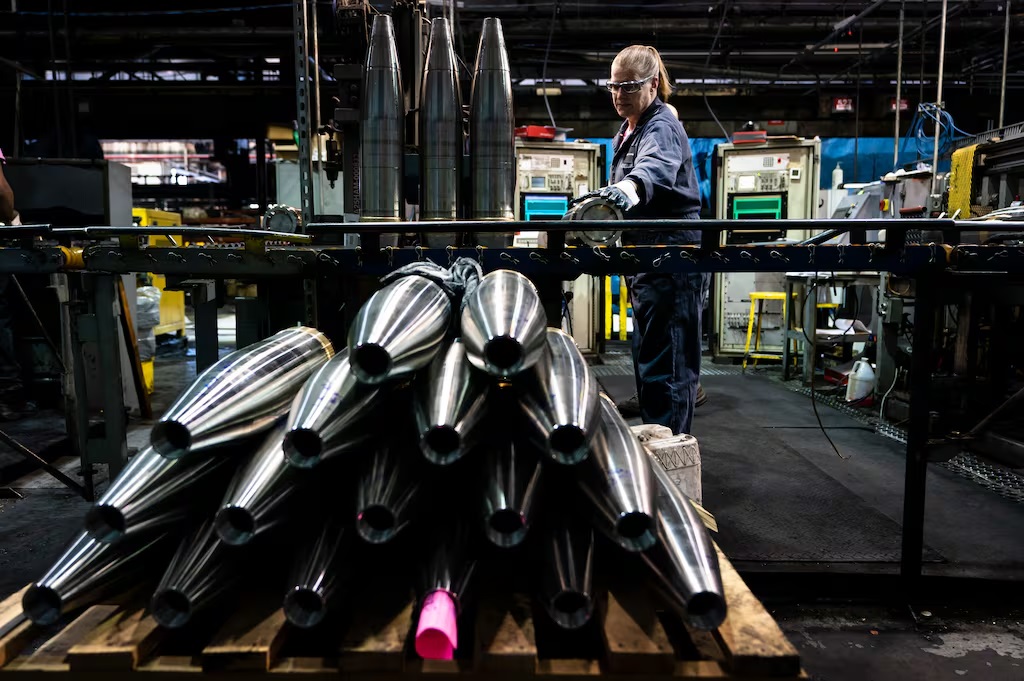
Europe To Spend $100BN It Doesn’t Have, To Buy Weapons America Doesn’t Have, To Arm Soldiers Ukraine Now Lacks.
by Tyler Durden, Wednesday, Aug 20, 2025 , https://www.zerohedge.com/geopolitical/europe-spend-100bn-it-doesnt-have-buy-weapons-america-it-doesnt-have-arm-soldiers
Part of Zelensky’s motive for wearing a suit Monday to the White House has become clearer with fresh reporting in the Financial Times, which reviewed a document showing Ukraine will promise to buy $100 billion of American weapons financed by Europe in a bid to obtain robust US security guarantees.
Additionally, “Under the proposals, Kyiv and Washington would also strike a $50bn deal to produce drones with Ukrainian companies that have pioneered the technology since Russia’s full-scale invasion in 2022,” the report continues. Ukraine pitched its plan during the Monday White House summit, which also involved seven EU leaders – and the $100BN arms deal became part of the key talking points pushed by the European allies.
This is an effort by design meant to ensure Ukraine can procure what it wants – and that its war efforts can still be funded uninterrupted – while still ultimately appeasing Trump. “We’re not giving anything. We’re selling weapons,” Trump had said Monday in response to a reporter’s question on the matter.
It remains very obvious that Europe’s demands of keeping up huge pressure on Russia, including through sanctions, are intended to stymie any US-backed deal seen as too favorable to Moscow. The FT report comments on this as follows:
The document details how Ukraine intends to make a counter-pitch to the US after Trump appeared to align himself with Russia’s position for ending the war following his meeting with President Vladimir Putin in Alaska last week.
It reiterates Ukraine’s call for a ceasefire that Trump had espoused but then dropped after his Putin meeting in favor of the pursuit of a comprehensive peace settlement.
Geopolitical analyst and commentator Glenn Diesen has pointed out, however, that Kiev is essentially attempting to create leverage out of nothing.
“Europe will spend $100 billion it does not have, to buy weapons from America that it does not have, to arm soldiers that Ukraine now lacks,” he wrote, explaining further: “This is to confront Russia, which for 30 years warned it would respond to NATO militarizing its borders.”
Diesen followed by doing something that Washington policy-makers refuse to do, and that is look at the big picture of how we got here [emphasis ZH]:
There was no threat to Ukraine before 2014, as only a tiny minority of Ukrainians wanted to join NATO, and Russia laid no claim to any of Ukraine’s territory. Western governments then supported a coup to pull Ukraine into NATO’s orbit – something that CIA Directors, Ambassadors, and Western state leaders had warned would instigate a security competition and likely trigger a war.
Russia predictably reacted fiercely. Ever since then, the only acceptable narrative has been that Russia wants to restore the Soviet Union and that Putin is Hitler. Any dissent is labelled as “disinformation”, “propaganda”, “hybrid warfare”, or even treason.
The war has now been lost, and the Americans are pulling away from it, asking the Europeans to absorb the consequences. How do the Europeans respond? By doubling down on this madness, which will destroy Ukraine, our economies, and our relevance in the world – and possibly trigger a nuclear war. – What is the strategy? More of the same? The best thing for Ukraine is to remove it from the frontlines of the geopolitical struggle over where to draw the new dividing lines in Europe: End the war, rebuild Ukraine, and replace expansionist military blocs with the principle of indivisible security.
This week, as negotiations proceed and Europe keeps up its drive to pile more and more pressure on Putin, the big question will be whether the Western side can indeed understand that it has lost the proxy war.
Many immense hurdles remain, and one could also point out there are too many cooks in the kitchen (judging by the over a half-dozen European leaders present in the Oval yesterday), making things all the more unnecessarily complicated – and that’s probably by design.
Glenn Greenwald agrees with this bleak assessment of Europe’s role in thwarting peace… DC foreign policy elites now know that Ukraine cannot win, but they would rather continue fueling a fruitless and deadly war than admit they were wrong and delusional about Ukraine’s prospects against Russia.
Patrick Lawrence: That Big, Beautiful Summit in Alaska
it is something Trump understands but Ukraine, the Europeans and the hawks in Washington simply refuse to accept: However long the fighting may drag pointlessly on, Ukraine is the vanquished in this war; Russia the victor.
No Western leader, if you have not noticed, has ever called for an end to the war. None among them has ever mentioned a peace accord for the simple reason the Western powers do not want peace with Russia.
Zelensky’s intent as he made plans to see Trump Monday was to persuade him to pull him back from the frightening idea of a peace agreement
SCHEERPOST, Patrick Lawrence: August 19, 2025,
No, the Trump–Putin summit at a joint-forces military base in Anchorage last Friday did not produce an agreement on a ceasefire in Ukraine. President Trump made no reference to “severe consequences” if Vladimir Putin did not consent to such an accord. Nothing was said about new sanctions against Russia and nothing about sanctions against nations that trade with Russia. Trump appears not to have mentioned those nuclear-armed submarines he ordered to “appropriate regions” a couple of weeks ago, and Putin seems not to have asked about them.
No, there was no such talk at Joint Base Elmendorf–Richardson. After not quite three hours behind closed doors with the Russian president, Trump departed Anchorage ahead of schedule, dropping the thought that he and Putin might linger so that Volodymyr Zelensky, president of the autocratic Ukrainian regime, could join them for further talks.
And so the story got written after the summit concluded. “No ceasefire, no deal,” the BBC concluded curtly. “Trump and Putin Put on a Show of Friendship but Come Away Without a Deal,” The New York Times reported late Friday. And from CNN, which had a dozen reporters on the story beneath this headline: “Trump–Putin summit ends without concrete deal.”
How yesterday, how swiftly passé all that early coverage proves but three days after Trump returned to Washington and Putin to Moscow. As of follow-on talks at the White House Monday with Zelensky and a swarm of European leaders, Trump seems to have rendered a ceasefire utterly beside the point in favor of an agreement he is fashioning with Putin that, if it comes to be — and we must stay with “if” for now — will prove stunningly concrete. Trump is after an enduring peace now — this as a subset of a new era in U.S.–Russian relations. Pull this off and he will improve his place in the history texts by magnitudes.
We do not know, and may never know, precisely what the two leaders said to one another behind closed doors as their interpreters and their foreign ministers, Sergei Lavrov and Marco Rubio, sat beside them. But it did not take long for Trump to start unpacking the plan he and Putin began to fashion during their talks. In post-summit interviews and social media posts, and in his encounters with Zelensky and his European sponsors at the White House Monday, Trump has made it plain as rain that an awful lot of something was discussed at a summit where nothing was reported to get done.
Within hours of the summit, Trump said in an interview with Fox News that he and Putin were near an agreement on an exchange of territories between Russia and Ukraine and that there would be security guarantees for the latter after the cessation of hostilities. “There are points that we negotiated and those points that we largely have agreed on,” Trump told Sean Hannity.
There is no telling how close or far Washington, Moscow, Kiev and (to the extent they matter) the Europeans may be from a comprehensive settlement. “Largely” covers an infinitude of near misses and failures, and Donald Trump is, after all, Donald Trump. But I read in this quick pencil-sketch a suggestion of the give-and-take dynamic between Trump and Putin: Russia will get some of the land it has fought for these past three years, which, if you look at a map, amounts to a security guarantee against the aggressions of viscerally Russophobic Ukrainians; the United States and the Western powers will cease arming the Kiev regime — another kind of guarantee. The Ukrainians will give up land but get security guarantees of their own.
Does this strike you as an unbalanced proposition? It should. Implicit in it is something Trump understands but Ukraine, the Europeans and the hawks in Washington simply refuse to accept: However long the fighting may drag pointlessly on, Ukraine is the vanquished in this war; Russia the victor.
We have had a slow roll of revelations since the Fox News interview. Reuters reported a day after the summit that Trump told Zelensky during a post-summit telephone call that it was time to “make a deal” with Moscow, which must include ceding some land to Russian sovereignty. “Russia is a very big power, and you’re not,” Trump reportedly told the Ukrainian president. Reuters said it reflected Putin’s demand in Anchorage that the Kiev regime recognize Russian sovereignty over all of the Donbas, the eastern regions of Ukraine that Russia formally annexed in September 2022 and parts of which, but not all, are under Russian military control.
Later Saturday came the big one, or a big one, as the post-summit situation is nothing if not kinetic. “It was determined by all,” Trump declared on his Truth Social platform, “that the best way to end the horrific war between Russia and Ukraine is to go directly to a Peace Agreement, which would end the war, and not a mere Ceasefire Agreement, which oftentimes do not hold up.”
“A mere ceasefire.” Wow. So much for that. A peace agreement instead of a ceasefire, cap “P” and cap “A,” if you please. Wow times 10. This is a major, major departure from the demands long advanced by all of the Western powers and Ukraine — an implicit rejection, this is to say, of the prevalent anti–Russian orthodoxy. No Western leader, if you have not noticed, has ever called for an end to the war. None among them has ever mentioned a peace accord for the simple reason the Western powers do not want peace with Russia. It is with this statement, then, that Trump signaled his determination to chart new territory.
Zelensky’s intent as he made plans to see Trump Monday was to persuade him to pull him back from the frightening idea of a peace agreement and reinvest in the demand for a ceasefire. This was also what the crew from across the Atlantic had in mind. Kier Starmer, Emmanuel Macron, Friedrich Merz: The British, French and German leaders were there. So were Mark Rutte, the NATO sec-gen, and Ursula von der Leyen, the president of the European Commission. Hawks all, this crowd. They arrived, as news reports indicated, in a state somewhere between alarm and panic.
Trump appears to have heard these people out on the ceasefire question, as was to be expected. But there is no indication that the thought went much beyond hypothetical notions of what might be discussed in an also hypothetical summit between Zelensky and Putin. And there is every indication Trump holds to his early post-summit disclosures, of which there is now more yet-to-be-confirmed detail, notably in the land-for-guarantees line and what Trump has meant in his mentions of “land swaps.”………………………………………………………………
…………………………………………………….. The “centrist” leadership in Washington and the European capitals has refused to listen to Moscow for many years now; the media that publish the bulletins of these trans–Atlantic elites routinely make the case that anything Putin says is by definition the opposite of true and that listening to the Russians on any topic is beyond all the fence posts, irretrievably out-of-bounds. It is hard to overstate the magnitude of Trump’s transgression against this background.
Trump’s second sin is his evident embrace of reality. And reality, like listening, has also been off-limits for the centrist elites and those clerking for them in media on both sides of the Atlantic. This has been so at last since the U.S.–cultivated coup that brought the current regime of crooks and neo–Nazis to power 11 years ago. Those dwelling in the Kingdom of Pretend have carried on for months as if the Kiev regime can set the terms for any kind of settlement and Moscow will have no choice but to accept them. “Ukraine is also determined not to let Russia set the terms and structure of future peace talks,” The Times reported from Kiev in a pre-summit curtain raiser.
Not to let Russia…?
……………………………………………….. To say Trump aligned with Putin, or got played or otherwise capitulated, is another way, a simpleton’s or cynic’s way, of denying or veiling reality. In my read, Trump listened to Putin’s case and has concluded, Yes, he is right. This is the ultimate reality long at issue and long unsayable. Trump has done no less and no more than speak this truth at last. The rest is rubbish.
Let us sin along with Trump, then, if we haven’t already. Let us all look past the mountain ranges of propaganda, cognitive warfare, perception management and what have you and say what Trump is now saying: It is time to acknowledge forthrightly that Putin is right about the war and its causes, about the Biden regime’s purposeful provocations, about the larger questions of which it is merely a subset and about how most sensibly to negotiate a lasting settlement in the borderlands between Europe and Russia and altogether between West and East. https://scheerpost.com/2025/08/19/patrick-lawrence-that-big-beautiful-summit-in-alaska/
Breaking the Ice in Alaska: Why Diplomacy Still Matters
history….will remember whether statesmen had the courage to talk instead of continuing to fight, to compromise instead of escalating, to think beyond the next election cycle or arms shipment.
The war hawks may laugh, but in a world teetering on the edge, diplomacy is no joke
Kevork Almassian, Aug 17, 2025, https://kevorkalmassian.substack.com/p/breaking-the-ice-in-alaska-why-diplomacy
The Alaska summit between Donald Trump and Vladimir Putin was never going to please the usual suspects. The war hawks in Washington, London, and their loyal stenographers in the mainstream press had sharpened their knives long before the meeting even began. For them, diplomacy is weakness, dialogue is treason, and peace is always suspicious. Yet for all their noise, the very fact that the U.S. and Russia sat down to talk is of historic importance—and a step that no amount of scaremongering can erase.
From the beginning, the Atlantic establishment mocked the very idea of dialogue with Moscow. They repeated their tired mantra: Russia is “isolated,” Russia must be “contained,” Russia should be “punished.” But as
Tarik Cyril Amar rightly pointed out during our Cold 2.0 conversation, Russia has never been isolated—except in the fever dreams of Western editorial boards. It is integrated into the world, it has options, and it has a professional diplomatic corps that runs circles around its Western counterparts.
The real absurdity is that some critics, even among multipolarists, argued that Russia should have boycotted the summit—that engaging with Washington is a trap, that agreements will only be broken, that the American “blob” never changes course. Of course, the caution is justified: America is unreliable, aggressive, and deeply arrogant. But the conclusion is wrong. Diplomacy is not about naivety. It is about leveraging one’s strength. And Russia today, unlike in the 1990s, is not a supplicant. It can negotiate from a position of power.
This is what the hawks cannot stand: that Russia walked into the room with Trump as an equal, and walked out with its position strengthened. That reality alone triggered the predictable chorus of whining from the likes of John Bolton—who begrudgingly admitted that “Putin clearly won.” Well, if even the mustached high priest of regime change says it, perhaps we should take note.

Meanwhile, Britain’s Telegraph solemnly declared that Ukraine has lost the war but that Britain must “prepare for Russia’s next onslaught.” These are the same people whose government cannot even keep its nuclear submarines from rusting in Scottish ports. Perhaps Whitehall should focus less on imaginary Russian invasions and more on fixing the crumbling infrastructure at home. But then again, blaming Russia is so much easier than admitting neoliberal Britain has sabotaged daily life all by itself.
The mainstream press, too, embarrassed itself. Journalists shouted at Putin about “killing civilians”—but I have yet to see the same bravery directed at Benjamin Netanyahu as he presides over the ruins of Gaza. The double standards are glaring, the hypocrisy suffocating. As I said during the show, neoliberal rot has sabotaged daily life in Britain and America far more effectively than any Russian plot ever could. But instead of confronting their own failures, the West’s talking heads project blame outward and cling to the fantasy of a “rules-based international order” that exists only on paper.
Let us be clear: breaking the ice between Washington and Moscow is not a concession to empire. It is a recognition that wars end not with hashtags or think tank white papers, but at the negotiating table. Trump’s shift toward demanding a peace deal—not just a ceasefire—mirrors Russia’s own position and marks a fundamental break from the stale Western script. If he sticks to it, this could be a turning point.
Of course, the hawks will howl. They always do. But history will not remember their op-eds. It will remember whether statesmen had the courage to talk instead of continuing to fight, to compromise instead of escalating, to think beyond the next election cycle or arms shipment.
The Alaska summit was not about personal chemistry between leaders. It was about something much bigger: the possibility of reversing a dangerous spiral. The war hawks may laugh, but in a world teetering on the edge, diplomacy is no joke.
—Kevork Almassian is a Syrian geopolitical analyst and the founder of Syriana Analysis.
What I Saw in Ukraine: 2015-2022 – Diary of an International Observer

May 22, 2025, by Benoit Paré (Author) https://www.amazon.com/What-Saw-Ukraine-2015-2022-International/dp/295986011X
Ukraine 2015-2022.
A unique account of its kind, precise, sensitive, and personal, seen from the inside of an international mission at the heart of the Donbass war.
The reality on the ground, from the front lines.
New revelations, notably concerning civilian casualties, human rights violations, conflict-related trials, and the manipulation of facts.
And then, how the US-sponsored Ukrainian ultra-nationalist project provoked Moscow’s reaction.
This book is primarily intended for those who prioritize facts over partisanship and who want to understand how the deadliest conflict in Europe since World War II came about.
Ukraine 2015-2022.
A unique account of its kind, precise, sensitive, and personal, seen from the inside of an international mission at the heart of the Donbass war.
The reality on the ground, from the front lines.
New revelations, notably concerning civilian casualties, human rights violations, conflict-related trials, and the manipulation of facts.
And then, how the US-sponsored Ukrainian ultranationalist project provoked Moscow’s reaction.
This book is primarily intended for those who prioritize facts over partisanship and who want to understand how the deadliest conflict in Europe since World War II came about.
What really happened in Alaska
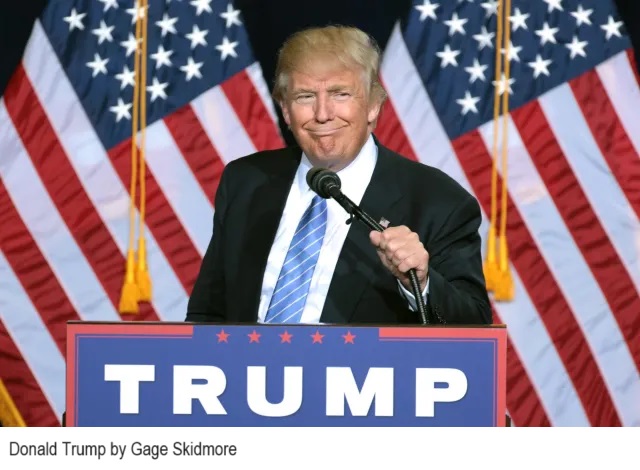
It’s clear that both Trump and Putin are playing a long game. Trump wants to get rid of the pesky two-bit actor in Kiev – but without applying old school US coup/regime-change tactics. In his mind, the only thing that really registers is future, possible, mega trade deals on Russian mineral wealth and the development of the Arctic.
the US seeks a meek Europe subjugated to the strategy of tension, otherwise there’s no EU military surge, buying billions worth of over-priced American weapons with money it doesn’t have.
Pepe Escobar, AUG 18, 2025, https://thecradle.co/articles/what-really-happened-in-alaska
Alaska was not only about Ukraine. Alaska was mostly about the world’s top two nuclear powers attempting to rebuild trust and apply the brakes on an out-of-control train in a mad high-speed rail dash towards nuclear confrontation.
There were no assurances, given the volatile character of US President Donald Trump, who conceived the high-visibility meeting with his Russian counterpart Vladimir Putin. But a new paradigm may be in the works nonetheless. Russia has essentially been de facto recognized by the US as a peer power. That implies, at the very least, the return of high-level diplomacy where it is most needed.
Meanwhile, Europe is dispatching a line-up of impotent leaders to Washington to kowtow in front of the Emperor. The EU’s destiny is sealed: into the dustbin of geopolitical irrelevance.
What has been jointly decided by Trump, personally, and Putin, even before Moscow proposed charged-with-meaning Alaska as the summit venue, remains secret. There will be no leaks about the full content.
Yet it’s quite significant that Trump himself rated Alaska as a 10 out of 10.
The key takeaways, relayed by sources in Moscow with direct access to the Russian delegation, all the way to the 3-3 format (it was initially designed to be a 5-5, but other key members, such as Finance Minister Anton Siluanov, did provide their input), emphasize that:
“It was firmly put [by Putin] to stop all direct US weapon deliveries to Ukraine as a vital step towards the solution. Americans accepted the fact that it is necessary to dramatically decrease lethal shipments.”
After that happens, the ball swings to Europe’s court. The sources specify, in detail:
“Out of the $80 billion Ukrainian budget, Ukraine itself provides less than around $20 billion. The National Bank of Ukraine says that they collect $62 billion in taxes alone, which is a hoax; with a population around 20 million, much more than one million of irreversible battlefield losses, a decimated industry and less than 70 percent of pre-Maidan territory under control that is simply impossible.”
So Europe – as in the NATO/EU combo – has a serious dilemma: ‘Either support Ukraine financially, or militarily. But not both at the same time. Otherwise, the EU itself will collapse even faster.’
Now compare all of the above with arguably the key passage in one of Trump’s Truth Social posts: “It was determined by allthat the best way to end the horrific war between Russia and Ukraine is to go directly to a Peace Agreement, which would end the war, and not a mere Ceasefire Agreement, which often times do not hold up.”
Add to it the essential sauce provided by former Russian president Dmitri Medvedev:
“The President of Russia personally and in detail presented to the US President our conditions for ending the conflict in Ukraine (…) Most importantly: both sides directly placed responsibility for achieving future results in negotiations on ending hostilities on Kiev and Europe.”
Talk about superpower convergence. The devil, of course, will be in the details.
BRICS on the table in Alaska
In Alaska, Vladimir Putin was representing not only the Russian Federation, but BRICS as a whole. Even before the meeting with his US counterpart was announced to the world, Putin spoke on the phone with Chinese President Xi Jinping. After all, it’s the Russia–China partnership that is writing the geostrategic script of this chapter of the New Great Game.
Moreover, top BRICS leaders have been on a flurry of interconnected phone calls, leading to forge, in Brazil’s President Luiz Inacio “Lula” da Silva’s assessment, a concerted BRICS front to counteract the Trump Tariff Wars. The Empire of Chaos, the Trump 2.0 version, is in a Hybrid War against BRICS, especially the Top Five: Russia, China, India, Brazil, and Iran.
So Putin did achieve a minor victory in Alaska. Trump: “Tariffs on Russian oil buyers not needed for now (…) I may have to think about it in two to three weeks.”
Even considering the predictable volatility, the pursuit of high-level dialogue with the US opens to the Russians a window to directly advance the interests of BRICS peers – including, for instance, Egypt and the UAE, blocked from further economic integration across Eurasia by the sanctions/tariff onslaught and the accompanying rampant Russophobia.
None of the above, unfortunately, applies to Iran: The Zionist axis has an iron grip on every nook and cranny of Washington’s policies vis-à-vis the Islamic Republic.
It’s clear that both Trump and Putin are playing a long game. Trump wants to get rid of the pesky two-bit actor in Kiev – but without applying old school US coup/regime-change tactics. In his mind, the only thing that really registers is future, possible, mega trade deals on Russian mineral wealth and the development of the Arctic.
Putin also needs to manage domestic critics who won’t forgive any concessions. The desperate western media spin that he would offer freezing the front in Zaporozhye and Kherson in exchange for getting all of the Donetsk Republic is nonsense. That would go against the constitution of the Russian Federation.
In addition, Putin needs to manage how US business would be allowed to enter two areas that are at the heart of federal priorities, and a matter of national security: the development of the Arctic and the Russian Far East. All that will be discussed in detail two weeks from now, at the Eastern Economic Forum in Vladivostok.
Once again, follow the money: Both oligarchies – in the US and Russia – want to go back to profitable business, pronto.
Lipstick on a defeated pig
Putin, bolstered by Foreign Minister Sergey Lavrov – the undisputed Man of the Match, with his CCCP fashion statement – finally had ample time, 150 minutes, to spell out, in detail, the underlying causes of Russia’s Special Military Operation (SMO) and lay out the rationale for long-term peace: Ukraine neutrality; neo-nazi militias and parties banned and dismantled; no more NATO expansion.
Geopolitically, whatever may evolve from Alaska does not invalidate the fact that Moscow and Washington at least did manage to buy some strategic breathing space. That might yield even a new shot toward respect for both powers’ spheres of influence.
So it’s no wonder the Atlanticist front, from Europe’s old money to the bling bling novices, is freaking out because Ukraine is a giant money laundering mechanism for Eurotrash politicos. The Kafkaesque EU machine has already bankrupted EU member-states and EU taxpayers – but anyway, that’s not Trump’s problem.
Across Global Majority latitudes, Alaska displayed the fraying of Atlanticism in no uncertain terms – revealing that the US seeks a meek Europe subjugated to the strategy of tension, otherwise there’s no EU military surge, buying billions worth of over-priced American weapons with money it doesn’t have.
The Putin–Trump meeting dropped some important veils. It revealed that Washington views Russia as a peer power, and that Europe is little more than a useful American tool.
At the same time, despite covetous US oligarchic private designs on Russian business, what Washington’s puppet masters truly want is to break up Eurasia integration, and by implication every multilateral organization – BRICS, SCO – driven to design a new, multinodal world order.
Of course, a NATO surrender – even as it is being strategically defeated, all across the spectrum – remains anathema. Trump, at best, is applying lipstick on a pig, trying to craft, with trademark fanfare, what could be sold as a Deep State exit strategy, toward the next Forever War.
Putin, the Russian Security Council, BRICS, and the Global Majority, for that matter, harbor no illusions.
French monitor: Ukraine, NATO provoked Russia in Donbas war
As Trump hosts Zelensky, an international monitor on the ground in Ukraine from 2015 to 2022 blows the whistle on Ukraine’s NATO-backed assault on the Donbas.
Aaron Maté, Aug 19, 2025, https://www.aaronmate.net/p/french-monitor-ukraine-nato-provoked?utm_source=post-email-title&publication_id=100118&post_id=171287926&utm_campaign=email-post-title&isFreemail=true&r=ln98x&triedRedirect=true&utm_medium=email
Benoit Paré is a former French defense ministry analyst who worked as an international monitor in eastern Ukraine from 2015 to 2022.
In his first interview with a US outlet, Paré speaks to The Grayzone‘s Aaron Maté about the hidden reality of the Ukraine war in the Donbas region, where the US-backed Kyiv government fought Russia-backed rebels following the 2014 Maidan coup. Russia now demands that Ukraine accept its capture of the Donbas as a condition for ending the war.
“I will very clear. For me the fault lies on Ukraine… by far.” Paré also warns that Ukrainian ultra-nationalists, who violently resisted the Minsk accords, remain a major obstacle to peace. Paré worked as a monitor for the Organization for Security and Co-operation in Europe (OSCE), a predominately European group. He recounts his experience as an OSCE monitor in Ukraine in his new book, “What I saw in Ukraine: 2015-2022, Diary of an International Observer.”
When it comes to which party is responsible for the failure to implement the Minsk accords, the 2015 peace pact that could have prevented the 2022 Russian invasion, Paré says.
“I will very clear. For me the fault lies on Ukraine… by far.” Paré also warns that Ukrainian ultra-nationalists, who violently resisted the Minsk accords, remain a major obstacle to peace. Paré worked as a monitor for the Organization for Security and Co-operation in Europe (OSCE), a predominately European group. He recounts his experience as an OSCE monitor in Ukraine in his new book, “What I saw in Ukraine: 2015-2022, Diary of an International Observer.”
Benoit Paré’s book: “What I saw in Ukraine: 2015-2022, Diary of an International Observer.”
Declassified: CIA’s Covert Ukraine Invasion Plan
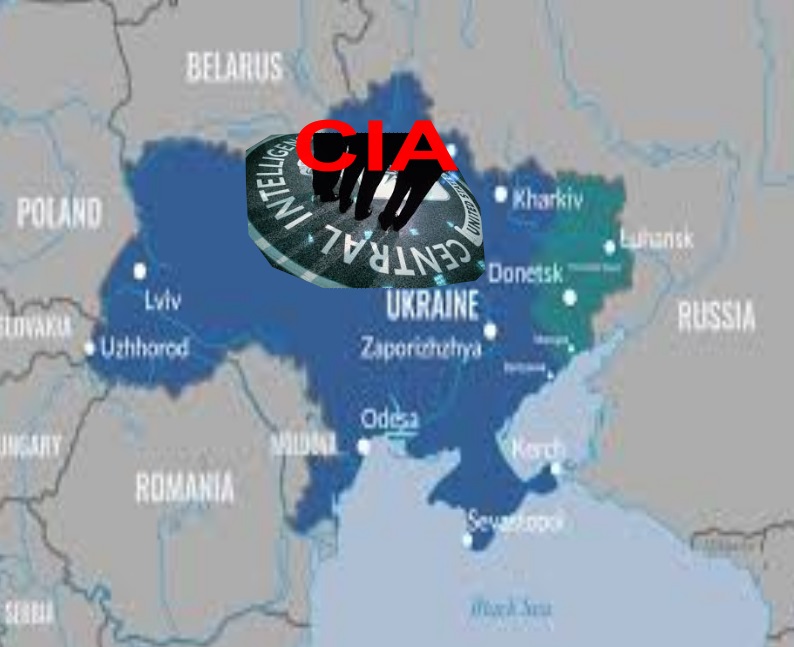
While we are now witnessing in real-time the brutal unravelling of Donnelly’s monstrous plot, Anglo-American designs of using Ukraine as a beachhead for all-out war with Moscow date back far further.
Washington’s quest to ignite local insurrection, and in turn the USSR’s ultimate collapse.
“Inhabitants of Donbass strongly resisted Ukrainian nationalists and at one point created a separate republic, independent of the rest of Ukraine. In the following years, they defended Soviet rule and Russian interests, often attacking the Ukrainian nationalists with more zeal than the Russian leaders themselves. During the German occupation in the Second World War, there was not a single recorded case of support for the Ukrainian nationalists or Germans.”
Global Delinquents, Kit Klarenberg, Aug 17, 2025, https://www.kitklarenberg.com/p/declassified-cias-covert-ukraine
On August 7th, US polling giant Gallup published the remarkable results of a survey of Ukrainians. Public support for Kiev “fighting until victory” has plummeted to a record low “across all segments” of the population, “regardless of region or demographic group.” In a “nearly complete reversal from public opinion in 2022,” 69% of citizens “favor a negotiated end to the war as soon as possible.” Just 24% wish to keep fighting. However, vanishingly few believe the proxy war will end anytime soon.
The reasons for Ukrainian pessimism on this point are unstated, but an obvious explanation is the intransigence of President Volodymyr Zelensky, encouraged by his overseas backers – Britain in particular. London’s reverie of breaking up Russia into readily-exploitable chunks dates back centuries, and became turbocharged in the wake of the February 2014 Maidan coup. In July that year, a precise blueprint for the current proxy conflict was published by the Institute for Statecraft, a NATO/MI6 cutout founded by veteran British military intelligence apparatchik Chris Donnelly.
In response to the Donbass civil war, Statecraft advocated targeting Moscow with a variety of “anti-subversive measures”. This included “economic boycott, breach of diplomatic relations,” as well as “propaganda and counter-propaganda, pressure on neutrals.” The objective was to produce “armed conflict of the old-fashioned sort” with Russia, which “Britain and the West could win.” While we are now witnessing in real-time the brutal unravelling of Donnelly’s monstrous plot, Anglo-American designs of using Ukraine as a beachhead for all-out war with Moscow date back far further.
In August 1957, the CIA secretly drew up elaborate plans for an invasion of Ukraine by US special forces. It was hoped neighbourhood anti-Communist agitators would be mobilized as footsoldiers to assist in the effort. A detailed 200-page report, Resistance Factors and Special Forces Areas, set out demographic, economic, geographical, historical and political factors throughout the then-Soviet Socialist Republic that could facilitate, or impede, Washington’s quest to ignite local insurrection, and in turn the USSR’s ultimate collapse.
The mission was forecast to be a delicate and difficult balancing act, as much of Ukraine’s population held “few grievances” against Russians or Communist rule, which could be exploited to foment an armed uprising. Just as problematically, “the long history of union between Russia and Ukraine, which stretches in an almost unbroken line from 1654 to the present day,” resulted in “many Ukrainians” having “adopted the Russian way of life”. Problematically, there was thus a pronounced lack of “resistance to Soviet rule” among the population.
The “great influence” of Russian culture over Ukrainians, “many influential positions” in local government being held “by Russians or Ukrainians sympathetic to [Communist] rule, and “relative similarity” of their “languages, customs, and backgrounds”, meant there were “fewer points of conflict between the Ukrainians and Russians” than in Warsaw Pact nations. Throughout those satellite states, the CIA had to varying success already recruited clandestine networks of “freedom fighters” as anti-Communist Fifth Columnists. Yet, the Agency remained keen to identify potential “resistance” actors in Ukraine:
“Some Ukrainians are apparently only slightly aware of the differences which set them apart from Russians and feel little national antagonism. Nevertheless, important grievances exist, and among other Ukrainians there is opposition to Soviet authority which often has assumed a nationalist form. Under favorable conditions, these people might be expected to assist American Special Forces in fighting against the regime.”
‘Nationalist Activity’
A CIA map split Ukraine into 12 separate zones, ranked on “resistance” potential, and how “favorable population attitudes [are] toward the Soviet regime.” South and eastern regions, particularly Crimea and Donbass, rated poorly. Their populations were judged “strongly loyal” to Moscow, having never “displayed nationalist feelings or indicated any hostility to the regime,” while viewing themselves as “a Russian island in the Ukrainian sea.” In fact, as the study recorded, during and after World War I, when Germany created a fascist puppet state in Ukraine:
“Inhabitants of Donbass strongly resisted Ukrainian nationalists and at one point created a separate republic, independent of the rest of Ukraine. In the following years, they defended Soviet rule and Russian interests, often attacking the Ukrainian nationalists with more zeal than the Russian leaders themselves. During the German occupation in the Second World War, there was not a single recorded case of support for the Ukrainian nationalists or Germans.”
Still, invading and occupying Crimea was considered of paramount importance. On top of its strategic significance, the peninsula’s landscape was forecast as ideal for guerrilla warfare. The terrain offered “excellent opportunities for concealment and evasion,” the CIA report noted. While “troops operating in these sectors must be specially trained and equipped,” it was forecast the local Tatar population, “which fought so fiercely” against the Soviets in World War II, “would probably be willing to help” invading US forces.
Areas of western Ukraine, including former regions of Poland such as Lviv, Rivne, Transcarpathia and Volyn, which were heavily under control of “Ukrainian insurgents” – adherents of MI6-supported Stepan Bandera – during World War II, were judged most fruitful “resistance” launchpads. There, “nationalist activity was extensive” during World War II, with armed militias opposing “pro-Soviet partisans with some success.” Conveniently too, mass extermination of Jews, Poles and Russians by Banderites in these regions meant there was virtually no non-ethnic Ukrainian population left.

Furthermore, in the post-war period, “resistance to Soviet rule” had been “expressed on a great scale” in western Ukraine. Despite “extensive deportations”, “many nationalists” resided in Lviv et al, and “nationalist cells” created by Bandera’s “task forces” were dotted around the Republic. For example, anti-Communist “partisan bands” had taken up residence in the Carpathian Mountains. The review concluded, “it is in this region [US] Special Forces could expect considerable support from the local Ukrainian population, including active participation in measures directed against the Soviet regime.”
It was also determined that “Ukrainian nationalist, anti-Soviet sentiment” in Kiev was “apparently moderately strong,” and elements of the population “might be expected to provide active assistance to Special Forces.” The capital’s “large Ukrainian population” was reportedly “little affected by Russian influence,” and during the Russian Revolution “provided greater support than any other region for Ukrainian, nationalist, anti-Soviet forces.” Resultantly, “uncertainty about the attitudes of the local population” prompted Moscow to designate Kharkov the Ukrainian SSR’s capital, which it remained until 1934.
The CIA document further offered highly detailed assessments of Ukrainian territory, based on their utility for warfare. For example, “generally forbidding” Polesia – near Belarus – was noted to be “almost impossible” to traverse during spring. Conversely, winter provided “most favorable to movement, depending on the depth to which the ground freezes.” Overall, the area had “proved its worth as an excellent refuge and evasion area by supporting large-scale guerilla activities in the past.” Meanwhile, “swampy valleys of the Dnieper and Desna rivers” were of particular interest:
“The area is densely forested in its north-western part, where there are excellent opportunities for concealment and manoeuvre…There are extensive swamps, interspersed with patches of forest, which also provide good hiding places for the Special Forces. Conditions in the Volyno-Podolskaya Highlands are less suitable, although small groups may find temporary shelter in the sparse forests.”
‘Strongly Anti-Nationalist’
The CIA’s invasion plan never formally came to pass. Yet, areas of Ukraine forecast by the Agency to be most welcoming of US special forces were precisely where support for the Maidan coup was highest. Moreover, in a largely unknown chapter of the Maidan saga, fascist Right Sector militants were bussed en masse to Crimea prior to Moscow’s seizure of the peninsula. Had they succeeded in overrunning the territory, Right Sector would’ve fulfilled the CIA’s objective, as outlined in Resistance Factors and Special Forces Areas.
Given what transpired elsewhere in Ukraine following February 2014, other sections of the CIA report take on a distinctly eerie character. For instance, despite its strategic position facing the Black Sea, the Agency warned against attempting to foment anti-Soviet rebellion in Odessa. The agency noted the city is “the most cosmopolitan area in Ukraine, with a heterogeneous population including significant numbers of Greeks, Moldovans and Bulgarians, as well as Russians and Jews.” As such:
“Odessa…has developed a less nationalistic character. Historically, it has been considered more Russian than Ukrainian territory. There was little evidence of nationalist or anti-Russian sentiment here during the Second World War, and the city…was in fact controlled by a strongly anti-nationalist local administration [during the conflict].”
Odessa became a key battleground between pro- and anti-Maidan elements, from the moment the protests erupted in November 2013. By March the next year, Russophone Ukrainians had occupied the city’s historic Kulykove Pole Square, and were calling for a referendum on the establishment of an “Odessa Autonomous Republic”. Tensions came to a head on May 2nd, when fascist football ultras – who subsequently formed Azov Battalion – stormed Odessa and forced dozens of anti-Maidan activists into Trade Unions House, before setting it ablaze.
In all, 42 people were killed and hundreds injured, while Odessa’s anti-Maidan movement was comprehensively neutralised. In March this year, the European Court of Human Rights issued a damning ruling against Kiev over the massacre. It concluded local police and fire services “deliberately” failed to respond appropriately to the inferno, and authorities insulated culpable officials and perpetrators from prosecution despite possessing incontrovertible evidence. Lethal “negligence” by officials on the day, and ever after, was found to go far “beyond an error of judgment or carelessness.”
The ECHR was apparently unwilling to consider the incineration of anti-Maidan activists was an intentional and premeditated act of mass murder, conceived and directed by Kiev’s US-installed fascist government. However, the findings of a Ukrainian parliamentary commission point ineluctably towards this conclusion. Whether, in turn, the Odessa massacre was intended to trigger Russian intervention in Ukraine, thus precipitating “armed conflict of the old-fashioned sort” with Moscow that “Britain and the West could win” is a matter of speculation – although the Institute for Statecraft was present in the country at the time.
Review of the Alaska meeting – The goal is always domination.
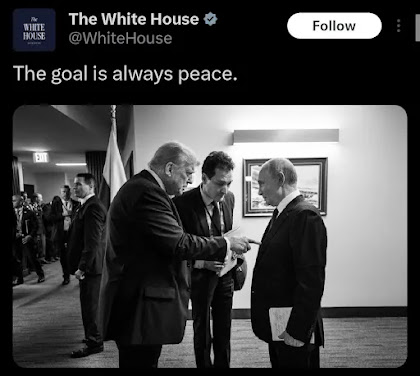
Organizing Notes, Bruce Gagnon, coordinator of the Global Network Against Weapons & Nuclear Power in Space, 16 Aug 25, https://space4peace.blogspot.com/2025/08/the-goal-is-always-domination.html?utm_source=substack&utm_medium=email
The Washington post reports in their top headline this morning the following: Trump reverses on Ukraine war ceasefire demand, aligning with Putin, splitting with allies: An immediate ceasefire to the war in Ukraine had long been a bedrock demand by the U.S., Ukraine and their European allies.
One can easily imagine that most neocons in Washington, London and the EU are pulling their hair out. Zelensky as well. His cash cow is wandering off the farm.
No immediate ceasefire was agreed upon. That was the chief demand of Zelensky, Starmer, Macon and Merz. They wanted to use that time to re-stock Ukraine with more weapons (especially drones) that could keep attacking civilians in the Donbass and inside of Russia.
Give Trump a nod (what ever his real motivations might be) he has now angered the ‘allies’ and they know that if they want the proxy war on Russia to continue (and they surely do) they are going to have to pay for it.
In one interview on Fox, Trump said the US funded Ukraine at the tune of $350 billion while the EU gave $100 billion.
Actually the US can’t afford to keep pissing money down the rat hole – especially when they want to spend that money getting ready for war with China. (And maybe still with Russia and Iran too.)
The Ukraine gamble is lost.
The oligarchic owned media in the US ensured that the Obama-Biden-Hillary Clinton orchestrated coup in Kiev in 2014 was swallowed by the people across the ‘democratic’ west. The public was firmly brainwashed to believe that Ukraine was the white hat team and Russia was the black hat bad guys.
Few know that the US-NATO started the war in 2014 and killed/wounded tens of thousands of Russian-ethnics in the Donbass region of eastern Ukraine – the place where the war is centered today.
In early 2022 Russian went into the Donbass after years of fruitless negotiations with the west to end their attacks on the Donbass. The US-NATO always wanted the war. They dreamed of breaking Russia up into pieces.
But don’t think the US has given up on its ill-fated quest to break up Russia. Alaska was just a ‘strategic retreat’. Just look at how Washington is fiddling with Armenia and Azerbaijan to destabilize another border land of both Russia and Iran.
The US is also working with Canada, Sweden, Denmark, Norway and Finland to militarize the Arctic in order to challenge Russia’s large border with that vast resource rich region.
The US-NATO only know war. Their economies are driven by military spending. Their so-called leaders are virtually all corporate apparatchiks.
And don’t forget that many of these EU-NATO leaders are related to former high level Nazi operatives during WW2.
Europe appears stuck in the quicksand of their disappearing ‘unipolar’ control. They just can’t accept that they must get along with the Global South that is rising after 500 years of colonial domination.
The US and EU got rich off the treasure they stole from the Global South. Museums across the west are loaded with treasures taken from these nations.
Trump is still about America First. That has not changed. The public in the US must campaign against the Pentagon’s trillion dollar a year offensive war machine.
That is the only way we will get true peace.
1 This Month


31st January – Challenging the War Machine – a DECLASSIFIED UK SUMMIT


Website of the Week
Now until to February 10, 2026 Radioactive waste storage in France: the debate is finally open! How to participate?
-
Archives
- January 2026 (227)
- December 2025 (358)
- November 2025 (359)
- October 2025 (377)
- September 2025 (258)
- August 2025 (319)
- July 2025 (230)
- June 2025 (348)
- May 2025 (261)
- April 2025 (305)
- March 2025 (319)
- February 2025 (234)
-
Categories
- 1
- 1 NUCLEAR ISSUES
- business and costs
- climate change
- culture and arts
- ENERGY
- environment
- health
- history
- indigenous issues
- Legal
- marketing of nuclear
- media
- opposition to nuclear
- PERSONAL STORIES
- politics
- politics international
- Religion and ethics
- safety
- secrets,lies and civil liberties
- spinbuster
- technology
- Uranium
- wastes
- weapons and war
- Women
- 2 WORLD
- ACTION
- AFRICA
- Atrocities
- AUSTRALIA
- Christina's notes
- Christina's themes
- culture and arts
- Events
- Fuk 2022
- Fuk 2023
- Fukushima 2017
- Fukushima 2018
- fukushima 2019
- Fukushima 2020
- Fukushima 2021
- general
- global warming
- Humour (God we need it)
- Nuclear
- RARE EARTHS
- Reference
- resources – print
- Resources -audiovicual
- Weekly Newsletter
- World
- World Nuclear
- YouTube
-
RSS
Entries RSS
Comments RSS
 nuclear-news