Mini nuclear plants to be built almost anywhere in UK
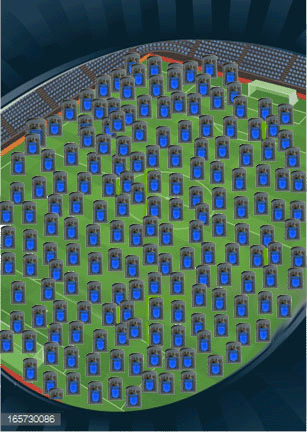
Mini-nuclear power plants will be allowed almost anywhere outside built-up
areas, as ministers relax planning rules to allow a “reawakening” of
atomic electricity.
Under plans to quadruple capacity in the next quarter
of a century, ministers want a fleet of “small modular reactors” to be
built across Britain alongside large power plants. Unlike conventional
plants, small modular reactors do not need to be built on the coast and the
government wants to open up far more areas as potential sites, in a
developer-led approach that will replace rules that allow nuclear power
stations only in eight named locations.
Rishi Sunak argues that “nuclear
is the perfect antidote to the energy challenges facing Britain”, helping
meet net zero goals with reliable, domestically produced power. A
consultation on overhauling planning rules published on Thursday says that
rather than ministers specifying sites, developers will be asked to
identify locations for such reactors based on a new list of safety and
environmental criteria. Only “population density” and “proximity to
military activities” will rule out nuclear plants, meaning they cannot be
built in areas with more than 5,000 people per square kilometre. This would
rule out cities and most towns, and is designed to “minimise the risk to
the public” in the event of a radioactive spill.
All other criteria will
be discretionary, including size, flood risk, proximity to civil airports,
the natural beauty, ecological importance or cultural heritage of the site.
“Sites may still be considered suitable for nuclear deployment even where
they fail to fully meet individual discretionary criteria, although not
fully addressing multiple discretionary criteria may cumulatively lead to a
site being considered unsuitable,” the consultation says. Officials
believe developers are likely to want to site plants near industrial
estates needing power and heat, or in areas that have skilled workers and
grid connections. “The government particularly encourages applications to
develop on former industrial and brownfield land,” the consultation says.
Times 11th Jan 2024
https://www.thetimes.co.uk/article/nuclear-power-plants-built-uk-plans-2024-rv5qxhzg2
No to nuclear power: stop the expansion

The UK government hopes to plough ahead with its biggest expansion of nuclear power for decades, despite major concerns over safety, cost, the legacy of nuclear waste, and its link to nuclear weapons.
A long-awaited plan was unveiled by ministers on Thursday and follows a commitment made at COP28 last November to triple nuclear power production by 2050. The roadmap includes plans by government and the nuclear industry to cut red tape in order to “accelerate new nuclear projects,” build another nuclear reactor in addition to Hinkley Point C and Sizewell C, and make investment decisions on new nuclear projects every five years from 2030 to 2044. £300 million has also been made available to launch a high-assay low-enriched uranium (HALEU) programme – making Britain the only country in Europe after Russia to commercially produce such a fuel.
Prime Minister Rishi Sunak lauded his nuclear plan as the “perfect antidote to the energy challenges facing Britain” adding “it’s green, cheaper in the long term and will ensure the UK’s energy security for the long-term.” But is it?
Britain’s two existing nuclear projects – Hinkley Point C and Sizewell C – have been beset with problems since the beginning. A 2015 forecast of Hinkley Point put the project at around £25 billion. These costs have since spiralled by 30 percent to £33 billion and the start date for the plant is likely to be in the early 2030s instead of 2027. Sizewell C is also struggling to attract private financing and the government has already spent over £1 billion on the project. Energy consumers too will pay more: a Regulated Asset Base (RAB) funding model proposed to help fund the project will add a levy to customer bills years before the plant ever starts to generate electricity.
Safety standards within Britain’s nuclear industry have also been under the spotlight recently. The Guardian’s Nuclear Leaks investigation revealed a litany of safety concerns at the Sellafield nuclear waste site including: crumbling infrastructure at some of the site’s most dangerous areas; security breaches; and a toxic workplace culture including harassment of whistleblowers. The scandal has already led to senior management leaving.
Sellafield remains Europe’s most toxic nuclear site and efforts to build a new underwater nuclear waste dump in Cumbria or Lincolnshire have so far failed to achieve community support.
CND General Secretary Kate Hudson said:
“The nuclear lobby was an obvious presence at last November’s COP28 summit and the UK government is working overtime to sell to the public the myth that nuclear power is the answer to the climate crisis and Britain’s energy needs. The evidence points in the opposite direction as renewables are cheaper, faster to deliver, and cleaner. Meanwhile, Hinkley Point C is seriously delayed and overbudget and the government thinks it’s ok to bill consumers twice for Sizewell C: once through taxation and again through a levy on consumer bills. Even if these projects were brought in on time and on budget, it still doesn’t solve the issue of Britain’s shocking record when it comes to safety, as shown in the recent Sellafield Leaks, or with what to do with nuclear waste. We must also bear in mind the main reason this government is so in favour of nuclear power: it helps to normalise Britain’s nuclear weapons and ensures a steady stream of skilled personnel to maintain and manufacturer them. Anyone who tells you any different is living in Cloud Cuckoo Land.”
Nuclear Free Local Authorities question the Chief Constable on alleged misconduct among Civil Nuclear Constabulary
Following the December 2023 revelations in The Guardian alleging misconduct
amongst some officers of the Civil Nuclear Constabulary and a ‘toxic work
culture’ amongst police and civilian staff employed at the Sellafield
nuclear complex, the Chair of the UK/Ireland Nuclear Free Local Authorities
wrote to the Chief Constable outlining our concerns and offering him an
‘opportunity’ to respond. The letter sent 3 January and the response of 8
January are reproduced below.
NFLA 10th Jan 2024
Ministers told to say how Sizewell C will be funded as new nuclear plan launched.
Government announced plans to build third new nuclear plant, even
though existing plan for reactor yet to be decided. Ministers are facing
demands to reveal the timetable for a final investment decision in Sizewell
C before a general election is called after the Government committed to
building a third major nuclear plant.
The Government announced plans to
build a new large scale nuclear power station that will be able to provide
energy to more than six million homes, even though the final funding for an
existing proposal in Suffolk has yet to be secured. Energy minister Andrew
Bowie faced calls from Labour to reveal the timetable for a final
investment decision in the Suffolk power station before the end of
Parliament.
Shadow business minister Sarah Jones insisted it was “all
well and good talking about commitments to new stations in the next
Parliament” before demanding what the timetable is for the Sizewell C
investment decision. Ms Jones urged Mr Bowie to give a “categorical
promise” that the final decision will come before the election, adding:
“Time is running out.” Mr Bowie replied: “We remain committed to
making that decision by the end of this Parliament, and in fact on Hinkley
Point C we are very proud of the progress that is being made.” The new
station is expected to be built at Wylfa in Anglesey, north Wales, with
firms from South Korea, the US and France expected to bid for the scheme.
Government sources said that Chinese firms will be blocked from any bidding
process, to avoid any risk to the country’s critical infrastructure.
iNews 11th Jan 2024
Unplanned nuclear power outages are reducing UK’s electricity output
Unplanned outages at Hartlepool nuclear power plant’s two 620-MW reactors
are set to last until Feb. 4 and Feb. 6, UK operator EDF Energy said in
transparency notes Jan. 8. Production at the County Durham site in
northeast England had ceased Jan. 6 “for maintenance activities”, EDF
Energy said. No further details were available.
The outage at Hartlepool
compounds UK nuclear problems in the new year after an unplanned outage at
Heysham nuclear plant Dec. 29 took another 585-MW reactor out of service.
Failure of a steam valve at reactor 1 at Heysham 1 saw reactor 2 taken
offline for inspections. Reactor 1 is due back Jan. 24, EDF data showed.
An inspection of similar valves at reactor 2 at Heysham 1, meanwhile, is
expected to keep the unit offline until Jan. 16. Meanwhile, reactor 7 at
Heysham 2 has been offline since early December for planned refueling, due
back Jan. 27, with only reactor 8 (624 MW) currently online at the
Lancashire site on the northwest coast of England.
S&P Global 8th Jan 2024
Analysis: Record opposition to climate action by UK’s right-leaning newspapers in 2023

Last year saw a record number of UK newspaper editorials opposing climate
action – almost exclusively from right-leaning titles – new Carbon
Brief analysis shows.
The analysis is based on hundreds of UK national
newspaper editorials, which are the formal “voice” of the publications.
The 354 editorials published in 2023 relating to energy and climate change
add to thousands more collected in a long-running project started by Carbon
Brief. Newspapers such as the Sun and the Daily Mail published 42
editorials in 2023 arguing against climate action – nearly three times
more than they have printed before in a single year.
They called for delays
to UK bans on the sale of fossil fuel-powered cars and boilers, as well as
for more oil-and-gas production in the North Sea. In response to such
demands, prime minister Rishi Sunak performed a “U-turn” in September
on some of his government’s major net-zero policies. Last year also saw a
surge in hostility towards climate protesters, with editorial attacks
doubling compared to recent years.
Carbon Brief 9th Jan 2024
UK’s dwindling nuclear fleet – four ageing reactors to be kept going beyond their planned closure date.
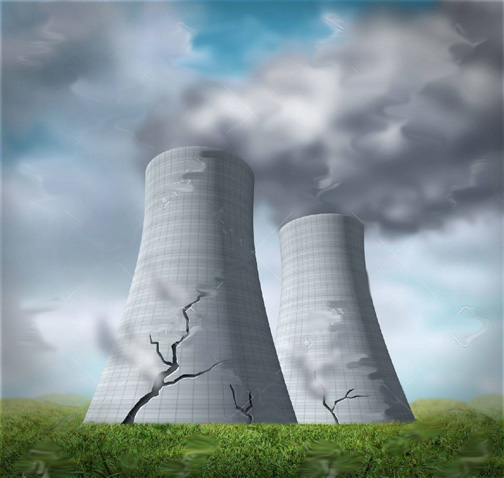
EDF looks to delay closure of four UK nuclear power plants
Four of Britain’s dwindling fleet of nuclear power plants look set to
remain on stream for at least a further two years, EDF Energy announced on
Tuesday, as the French state-owned operator said it aimed to halt seven
years of declining output.
The UK’s nuclear generating capacity has
fallen rapidly since the start of the decade as three of the country’s
eight ageing power stations closed. But EDF, which owns the country’s
nuclear fleet via a joint venture with Centrica, said it now planned to
explore keeping two of the power stations — Heysham 2 and Torness —
open beyond their planned closure date of 2028.
This follows an
announcement last year by the company of similar plans to keep the two
other power stations that use the same reactor design — Hartlepool and
Heysham 1 — open for at least two years beyond their scheduled closure
date of 2024. The company said a decision on the planned extensions for
Heysham 2 and Torness power stations, which have a joint generating
capacity of 2.4GW, will be taken by the end of the year, subject to plant
inspections and regulatory approvals.
The Office for Nuclear Regulation
said in a statement: “Several safety cases for the stations are likely to
require updating to achieve EDF’s stated ambitions, together with
investment in plant to sustain equipment reliability, all while ensuring
that the necessary people and skills are on site.” Other nuclear power
plants based on the same design as Hartlepool and Heysham have been forced
to close earlier than planned because cracks were found in the reactors’
graphite cores. But EDF said in 2022 that the graphite at both Hartlepool
and Heysham 1 remained intact, and regular inspections have continued since
then.
FT 9th Jan 2024
https://www.ft.com/content/06f524ac-2515-432c-97a1-e71aa25189e6
Housing unaffordability – implications for Somerset with huge increase in nuclear workers for Hinkley Point C
EDF Energy is once again in talks with Somerset Council to negotiate an
increase in workers on the site. Cllr Leigh Redman, Bridgwater Town Council
spokesperson for Nuclear Issues, said that the original development consent
order (DCO) signed by the secretary of state, indicated that at peak the
number of workers on site would be 5,600.
This number was since raised to
8,600 due to the conversion of Pontins in Brean to become an accommodation
site for Hinkley Point C workers, which is now full. Back in November 2023,
EDF Energy approached the council to bring the workforce to over 10,000 as
the project entered its ‘peak construction phase’.
There are now over
11,000 workers at Hinkley Point C, and EDF plans to bring in more staff in
the near future. Cllr Redman said that although he appreciates the good
things EDF Energy has brought to Bridgwater, he feels people are losing out
on housing due to the company’s ‘disregard for limits set and agreed’. The
Bridgwater Town Councillor also explained that he frequently receives
messages from people struggling to find affordable properties to rent
locally, including one family of three squashed into a third floor flat
with nowhere to go.
Bridgwater Mercury 9th Jan 2024
https://www.bridgwatermercury.co.uk/news/24036533.edf-talks-somerset-council-workforce-increase/
Somerset 9th Jan 2024
https://www.somersetcountygazette.co.uk/news/24036578.edf-talks-somerset-council-workforce-increase/
EDF Energy plans to extend life of four UK nuclear power plants
EDF Energy is planning to extend the life of four nuclear power stations
in the UK and step up investment in its British nuclear fleet. The French
energy company said it would make a decision on whether to extend the life
of the four UK plants with advanced gas-cooled reactors (AGR) – Torness,
Heysham 1 and 2, and Hartlepool – by the end of the year.
This would require regulatory approval. A spokesperson for the company said it would
depend on inspections, adding there would not be long lifetime extensions
but “incremental”. Last March, EDF extended lifetimes at Hartlepool and
Heysham 1 by a further two years to March 2026. Heysham 2 and Torness power
stations are now due to stay operational until March 2028.
Guardian 9th Jan 2024
https://www.theguardian.com/business/2024/jan/09/edf-energy-uk-nuclear-power-plants
Nuclear power and net zero: Too little, too late, too expensive

Prof Steve Thomas, Greenwich University, assesses the considerable obstacles to the UK government’s target for new nuclear power.
Article from Responsible Science journal, no.6; advance online publication: 9 January 2024.
Introduction
In October 2023, the British government reaffirmed the 2022 Boris Johnson target of bringing online 24 gigawatts (GW) of nuclear capacity, eight stations the size of Hinkley Point C, by 2050. In its response to a parliamentary committee report on the nuclear programme, the government claims a “roadmap will set out these next steps [to achieve the 24GW target] and will be available later in 2023.”[1] By early January 2024, the roadmap had not been published. While there is talk about Small Modular Reactors making a significant contribution, as I argued in my article on these in Responsible Science, no.5,[2] their rationale is based on some highly suspect assumptions about cost-savings from reducing reactor size. At most a few demonstration SMRs might be built, demonstrating only that they are far from being competitive with other options for low-carbon generation.
So, if the 24 GW target is to be met, most of the capacity will have to be in large (1.2 GW-plus) reactors. The government seems determined to drive through the Sizewell C project whatever the cost. This would comprise two reactors of the EPR-1 design used at Hinkley Point C, but that would leave a further seven to build.
To achieve the 24 GW target, at least four conditions must be met:
The equivalent of eight new nuclear projects must be completed by 2050.Mature, commercial, large reactor technologies must be available.Seven sites beyond Sizewell, suitable for 3 GW stations, must be approved.Owners and financiers for eight stations, expected to cost about £250bn, must be found.
1. When could new capacity come online?
Ambitious nuclear programmes are always accompanied by the same tired rhetoric offered for more than 50 years – of cutting red tape, streamlining planning and regulatory processes, learning from past mistakes, and taking advantage of new technologies. This has never worked in the past, not because we were not trying hard enough, but because nuclear power stations intrinsically take a long time from start of planning to first power, and new technologies have proved expensive and bring their own problems. The government acknowledged this in its Impact Assessment for the Regulated Asset Base (RAB) legislation which stated that it typically took 13-17 years from a Final Investment Decision (FID) to first power.[3] It could have added that most announced projects do not make it as far as FID. The Impact Assessment also stated that nuclear projects typically cost 20-100% more than the estimate at FID. Adding in a few years to get from project inception to FID and it is clear the whole process is likely to take 15-20 years. The Flamanville (France) and the Olkiluoto (Finland) projects will take longer than 20 years and with at least four years of construction left at Hinkley Point C, that project will take nearly 20 years if there are no more delays. Flamanville[4] and Olkiluoto[5] are about 300% over budget. Planning for any capacity that will be online by 2050 must be started by 2030.
2. Which technologies?
The EPR-1 design supplied by the French nationalised utility, EDF, is not credible for further orders. A former CEO of EDF described EPR-1 as “too complicated, almost unbuildable”.[6] Design work has been in progress for more than a decade on its replacement, EPR-2, which is claimed to be cheaper and easier to build. EDF plans to build six EPR-2s in France, the first coming online in 2035-37. EDF has said it would not try to sell the design until an EPR-2 was operating in France. Whether the EPR-2 will live up to the claims made is irrelevant. If we must wait till the after 2035 for it to be available, EPR-2s cannot be online in the UK by 2050.
Assuming designs from Russia and China are not acceptable, that leaves us with the other two designs meant to make up the Blair programme of 16 GW by 2030, the Hitachi-GE ABWR and the Westinghouse AP1000. While these have been approved by the UK safety regulator, they are not attractive. The three reactors of the ABWR design operating in Japan use a 1986 version of it. No orders for the updated designs are in prospect and the vendor appears not to be offering it for sale.
The record of the AP1000 is almost as bad as that of the EPR with all eight orders going badly wrong. The history of the ‘AP’ designs illustrates the nuclear industry’s duplicity on reactor size. Initially it was the AP600 (about 700 MW), but this was found to be uneconomic. It was scaled up to the AP1000 (1170 MW) and this was built in China and in the USA, but to improve the poor economics, China has scaled it up to 1550 MW (CAP1400). In March 2023, Westinghouse announced its new design would be a scaled down AP1000, the 300 MW AP300.
The other candidate is the South Korean APR1400. Like the ABWR, this has been built but using a design that did not take account of the lessons from the Chernobyl disaster (a means of preventing a molten core getting into the environment) or from the 9/11 attack (a need to toughen the shell enough to absorb a hit by an aircraft). It seems unlikely that an updated design could complete the required safety review in time for an FID to be taken on a project using this technology until after 2030. The record of APR1400 projects is problematic with long delays due partly to falsification of quality control documentation in South Korea and quality issues in the UAE.
3. Where would they be built?
Eight sites were identified as suitable in the government’s siting decision of 2010.[7] With Hinkley and Sizewell already under some sort of development, this leaves Moorside, Wylfa, Oldbury, Bradwell, Heysham and Hartlepool. There are concerns about the impact of sea-level rises for all the sites.[8] A project for the Wylfa site underwent review by the Planning Inspectorate which recommended the project not be consented because of its environmental impact. Moorside, Oldbury and Bradwell have undergone some investigations for new nuclear capacity for projects now abandoned and this preparatory work could be utilised to speed things up.[9] Heysham and Hartlepool would need detailed assessment to determine their suitability before any project could be proposed, so they might not be available by 2030. If eight projects (including Sizewell C) need to be completed by 2050, then either the planning advice at Wylfa would need to be ignored or at least one new site would be needed – and this also assumes all planning issues at the other sites could be adequately dealt with by the end of this decade and none of these locations would be earmarked for SMRs.
4. How would they be financed and who would own them?
When electricity utilities could pass on whatever costs they incurred, they enthusiastically supported nuclear projects. Now, if nuclear projects go wrong, it will be their shareholders who bear some of the costs, so interest from utilities, particularly investor-owned ones, has evaporated. Direct government ownership is an option, although it would be an extraordinary decision to invest taxpayers’ money in nuclear projects on the basis that no other investors would be willing to take this risk. So, innovative methods of finance are required.
The finance model used for Hinkley Point C, the Contracts for Difference (CfD) model, was both a poor deal for consumers and the plant owner, EDF. The power purchase price was set in 2013, three years before the investment decision, at £92.5/MWh in 2012 money, indexed to inflation (about £124/MWh in 2023 money) with cost overruns falling on EDF. This price is more than double the price for new offshore wind.[10] In 2013, the expected construction cost was £16bn but the latest estimate is £26bn (both in 2016 money).[11] So EDF will have to absorb the cost overrun of at least 60% but with no increase in the price it will get for its output. This form of CfD is not an option any sane investor would back for nuclear even though, for offshore wind, it is producing impressive results and will continue to be used.
The UK government is now proposing the Regulated Asset Base (RAB) financial model. The main architecture of the scheme is known although crucial details have not been published. How far this lack of information is down to the government leaving these open for negotiation, to the government not having decided on them yet, or to the government not being willing to admit the details, is difficult to determine. There is brave talk of risk-sharing but the reality is that it will not be the government that sets the terms, it will be investors unless the government is prepared to walk away with no deal. But the government seems likely to agree to whatever it takes to lure investors in. Deepa Venkateswaran, an analyst at Bernstein, said would-be investors in Sizewell needed to be “assured a return” that was locked in at the point of investment rather than subject to change.[12]
Under RAB, it would be the investors’ income that would be fixed, not the price paid for power. The power price would be whatever it took to generate the guaranteed annual income to the owners. All electricity retailers and therefore all consumers would be required to buy their share of the output. With the Hinkley Point CfD, the owner took the risk; with Sizewell RAB, consumers take the risk.
The selling point for the RAB model has been the claim that it would reduce the cost of finance and therefore the cost of power. RAB reduces financing costs in two ways. First, because the risks will fall on consumers and taxpayers, the project would be seen by financiers as low risk to them and would attract a low interest rate. Second, the finance charges would effectively be paid by consumers as a surcharge on their bills payable from the date of FID to completion of the plant, expected to be about 15 years. Finance costs savings would be paid for by consumers as a surcharge on bills and by them, not the project owners, assuming the project risk.
Despite this, the government is struggling to find investors. It has said there are at least four companies that have pre-qualified as potential investors,[13] although pre-qualifying commits them to nothing. EDF has been forced to offer to take about 20% of the project ownership, while the government has said it would take an unspecified stake but it will be at least 20%, but probably more, enough to fill any funding gap.
The original target for RAB was UK institutional investors but given lack of interest from this source, government now seems to be relying on more controversial sources such as Middle East investment funds.[14] It will be difficult to explain to the public why, if the Bradwell project was politically unacceptable because of the presence of Chinese money, a RAB project with, say, Saudi money is acceptable.
The government may be able to offer enough sweeteners to allow the Sizewell C project to proceed but replicating it will be more difficult. For each project, a technology, a site, and investors will have to be found. Politically it will be difficult for the government to keep taking expensive stakes in nuclear projects just because nobody else will. The scale of investment is huge, and, for example, Sizewell C alone is expected to cost about 10 times the cost of the Thames Tideway ‘super-sewer’ water project, the first major project to use the RAB model.
Conclusions
The electricity sector ought to be one of the first sectors to be decarbonised because of the availability of a range of viable technologies available to replace fossil-fuel generation. Boris Johnson set a target of decarbonising electricity by 2035[15] while Keir Starmer has set a target of 2030.[16] Given that even Sizewell C is unlikely to be online by 2035, the nuclear programme is an irrelevance in achieving net-zero. The only justification is if nuclear was the cheapest way to meet electricity demand growth by the time the first capacity could come online and the current chasm in cost between nuclear and renewables or energy efficiency measures suggests this is implausible. Judged by the requirements of time, technology availability, sites and availability of finance, the programme will fail badly. In doing so, large amounts of government time and taxpayer money will, as with previous UK nuclear programmes, be diverted away from the options that have a much higher success probability, are more cost-effective and can be deployed much quicker.
Steve Thomas is Emeritus Professor of Energy Policy at Greenwich University, UK. He has researched and written on nuclear power policy issues for 40 years.
References………………………………………………………………………………………………………………….. re https://www.sgr.org.uk/resources/nuclear-power-and-net-zero-too-little-too-late-too-expensive
Sellafield nuclear safety and security director to leave.

Multiple safety and cybersecurity failings at nuclear waste site were revealed by Guardian last month
Guardian, Anna Isaac and Alex LawsonTue 9 Jan 2024
The top director responsible for safety and security at Sellafield is to leave the vast nuclear waste dump in north-west England, it has emerged.
Mark Neate, the Sellafield environment, safety and security director, is to leave the organisation later this year.
Neate reports directly to Euan Hutton, the interim chief executive of Sellafield, the nuclear waste and decommissioning site in Cumbria, which is also the world’s largest store of plutonium.
Multiple safety and cybersecurity failings, as well as claims of a “toxic” working culture, were revealed in Nuclear Leaks, a year-long Guardian investigation into Sellafield, last month.
The energy secretary, Claire Coutinho, said the reports were “deeply concerning” and wrote to the Nuclear Decommissioning Authority (NDA), the state-owned body which ultimately runs Sellafield, demanding a “full explanation”.
In his response last month, the NDA chief executive, David Peattie, said there had been “necessary changes to the leadership, governance, and risk management of cyber” and responsibility for its cyber function had been moved. A new head of cybersecurity was due to take up the role this month, which Peattie said would ensure “sustained focus and leadership on this matter”.
Sellafield said Neate had responsibility for cybersecurity operations until January 2023, when control was shifted to report to its chief information officer.
It declined to say whether Neate’s departure was related to cybersecurity and safety failings at the site and said that he made the decision to leave last autumn……………………………………………………………….
Sellafield has “more work to do” to reduce safety incidents, according to its annual accounts for the year to March 2023 which were published in late December. The accounts showed that annual operating costs at the taxpayer-funded site climbed by £170m to £2.5bn.
Last financial year the company pleaded guilty to a prosecution brought by the Office for Nuclear Regulation under health and safety regulations after an employee was injured falling from a scaffold ladder while carrying out repair work. The company was fined £400,000 and ordered to pay £29,210 in costs as well as a surcharge of £190. https://www.theguardian.com/business/2024/jan/08/sellafield-nuclear-safety-and-security-director-to-leave
Nuclear defence workers to strike over pay
Daisy Stephens & PA Media – BBC News, Thu, 11 January 2024
Workers at a nuclear warhead factory are set to strike in a dispute over pay, their union has announced.
Members of Prospect at Berkshire-based Atomic Weapons Establishment (AWE) will walk out for 24 hours on 24 January, after two months of other forms of industrial action.
The company is facing “a recruitment and retention crisis” and risks “being unable to fulfil its critical role in safeguarding our national security” if pay is not improved, Prospect general secretary Mike Clancy warned. ……………………………………more https://au.news.yahoo.com/nuclear-defence-workers-strike-over-150520892.html
UK Government unveils biggest nuclear expansion in 70 years
Jemma Dempsey – BBC News, Thu, 11 January 2024
The government hopes to boost the nuclear power industry with the biggest expansion of the sector in 70 years.
A new large scale nuclear plant would quadruple supplies by 2050, which the government claims would lower bills and improve energy security.
It also said its £300m ($382.6m) nuclear fuel programme would reduce reliance on overseas supply.
But the Association for Renewable Energy and Clean Technology (REA) said all clean energy needed fast-tracking.
Nuclear power currently provides around 15% of the UK’s electricity but many of the country’s aging reactors are due to be decommissioned over the next decade.
The government’s Civil Nuclear Roadmap is intended to bolster the UK’s energy independence by exploring a new site for another nuclear power station of the size and scale of the £30bn plants under construction at Hinkley Point in Somerset and committed to Sizewell in Suffolk.
Industry sources have told the BBC the leading candidates would include Wylfa in Anglesea or Moorside in Cumbria.
“Dragging their feet”
But progress is could be slow – from planning to “power on” can take nearly 20 years. Consultations for Sizewell took 10 years alone and building work there is yet to start, because of ongoing protests………………………………………………………………… https://au.news.yahoo.com/government-unveils-biggest-nuclear-expansion-013230324.html
Outrage as Government admits it kept medical results on nuke test veterans a ‘state secret’ in a move Tory grandee Sir John Hayes said ‘beggars belief’

Daily Mail, By EIRIAN JANE PROSSER , 8 January 2024 |
The Government has admitted it has kept medical results of military veterans who survived British nuclear tests a state secret, prompting a furious outrage.
Blood and urine samples from servicemen, civilians and indigenous people during the Cold War are among the thousands of personal records being held in a move that Tory grandee Sir John Hayes slammed as ‘beggars belief’.
The confidential documents could reveal whether those made to witness the atomic bomb tests had radiation enter their body, which could lead to a huge payout for veterans if they can prove the health consequences.
Prime Minister Rishi Sunak is now facing calls for the files to be made public. Previously the Ministry of Defence denied it held the records, until the Mirror revealed a cache of 150 documents discussing blood tests last year.
Reacting to the revelation MP Sir Hayes said: ‘It beggars belief that a diagnostic medical test confirming whether or not radiation entered a person’s body, with possible long-term health consequences, is in any way a state secret.
‘Veterans and survivors of this weapons testing have a legal and moral right to know what if anything happened to their bodies as a result, and I am sure they can be disclosed to individuals without any impact on national security.’
The Mirror reported that in 2018 the Ministry of Defence denied that the Atomic Weapons Establishment (AWE) holds any evidence that blood samples were taken at nuclear tests until it rowed back on the claim in 2023.
Freedom of Information requests by the paper revealed how both blood and urine samples were taken at test sites under a Lord Chancellor’s instruction, which is why the documents could be held from the National Achieves
Culture minister John Whittindale admitted to Parliament the withholding of such documents is down to various factors including national security, security against possible terrorist activity and international relations.
He also said ‘the risk of proliferation of nuclear weapons or to allow a more detailed review’ are also reasons to retain the files.
The files are said to relate to three nuclear tests in Australia that took place in 1957 dubbed Operation Antler.
One of the files, seen by the Mirror, is said to have been entitled ‘nuclear test veterans’ and were said to have first been hidden when Tony Blair came to power in 1997.
The AWE has been asked to confirm how many other records were also hidden in similar fashion, with Labour leader Keir Starmer pledging to give veterans and their families affected their records and compensation if they take office.
Those affected by the testing were previously asked to come forward by law firm McCue Jury & Partners, with managing partner Jason McCue stating that nuclear veterans had been ‘gaslighted by the British state’. ………………………………………………………………………………..
Nearly £21,000 has now been raised to help nuclear veterans sue the Government for ‘the toxic legacy of trauma and illness they have been left to endure’.
Servicemen were ordered to sail or crawl through the radioactive fallout to test the effects of radiation, as well as fly through mushroom clouds on sampling missions.
Many lived on testing sites for a year or more and when they returned began developing rare blood disorders and cancers, often proving fatal.
Their wives had three times the normal rate of miscarriages and their children suffered 10 times the normal rate of birth defects.
The British government carried out hundreds of explosions of atom bombs, fissile material, trigger devices and thermonuclear weapons in the US, Australia and South Pacific following the Second World War…………………….. more https://www.dailymail.co.uk/news/article-12936311/government-outrage-medical-results-nuke-text-secret.html?fbclid=IwAR284fF3V4h_LgFtbGW5W6CP_Ux9ZNHvgRtT87fif8uzKQgVrgjNIf2uIrw
Touting a ‘new age of nuclear fusion’

West Burton, a sprawling site that is also home to a gas-fired station,
has been chosen as the location for a nuclear fusion plant that the
government aims to have in operation by 2040.
It is an ambitious plan.
Fusion has been the next big thing in energy since the 1950s, but it still
faces big technical obstacles to becoming a reality. It also will be a race
against a big field of international rivals.
The largest developed
economies, in particular the United States and Japan, are pouring billions
into fusion research, as are a gaggle of deep-pocketed technology
billionaires.
Before Brexit, Britain was a leading member of a
multinational effort spearheaded by the European Union. The West Burton
plan represents it striking out on its own.
It will not be a small
undertaking. Paul Methven, the executive in charge of the project, says it
is too early to estimate the likely cost, but suggests that the plant and
its associated infrastructure will be of a similar size to Hinkley Point C,
the nuclear power station being built in Somerset by EDF. That scheme’s
latest budget estimate is £33 billion.
Times 7th Jan 2024
1 This Month

of the week – Shut Down Drone Warfare!


Tell the Ukrainian Government to Drop Prosecution of Peace Activist Yurii Sheliazhenko

Petition to revoke the licensing of the Near Surface Nuclear Disposal Facility (NSDF) at Chalk River. https://www.ourcommons.ca/petitions/en/Petition/Details?Petition=e-7247
To see nuclear-related stories in greater depth and intensity – go to https://nuclearinformation.wordpress.com
-
Archives
- April 2026 (79)
- March 2026 (251)
- February 2026 (268)
- January 2026 (308)
- December 2025 (358)
- November 2025 (359)
- October 2025 (376)
- September 2025 (257)
- August 2025 (319)
- July 2025 (230)
- June 2025 (348)
- May 2025 (261)
-
Categories
- 1
- 1 NUCLEAR ISSUES
- business and costs
- climate change
- culture and arts
- ENERGY
- environment
- health
- history
- indigenous issues
- Legal
- marketing of nuclear
- media
- opposition to nuclear
- PERSONAL STORIES
- politics
- politics international
- Religion and ethics
- safety
- secrets,lies and civil liberties
- spinbuster
- technology
- Uranium
- wastes
- weapons and war
- Women
- 2 WORLD
- ACTION
- AFRICA
- Atrocities
- AUSTRALIA
- Christina's notes
- Christina's themes
- culture and arts
- Events
- Fuk 2022
- Fuk 2023
- Fukushima 2017
- Fukushima 2018
- fukushima 2019
- Fukushima 2020
- Fukushima 2021
- general
- global warming
- Humour (God we need it)
- Nuclear
- RARE EARTHS
- Reference
- resources – print
- Resources -audiovicual
- Weekly Newsletter
- World
- World Nuclear
- YouTube
-
RSS
Entries RSS
Comments RSS
 nuclear-news