Julian Assange’s Final Appeal at the Royal Courts of Justice 20-21 Feb. What to Expect.
Day X is here! Julian Assange’s Final Appeal at the Royal Courts of Justice.
STELLA ASSANGE, FEB 19, 2024, Stella Assange – The Fight to Save my Husband
The new public hearing dates are upon us. We will be gathering outside the Royal Courts of Justice on Tuesday and Wednesday, 20-21 February. It may be the final chance for the UK to stop Julian’s extradition.
Date: 20-21 February 2024
Location: Royal Courts of Justice
Time: 8:30 am GMT
On Wed 21 Feb, there will be a march to Downing St after the hearing.
Here’s what to expect on the two days.
Meet our presenters that will be live outside the Royal Courts of Justice…………………….
JADC (The Committee to Defend Julian Assange), one of the oldest grassroots groups here in the UK will be helping us to sell T-shirts, bags, badges and our new hoodies. So, make sure to come by and say hi to Emmy and Jeannie who will be manning our table.
There will be speakers throughout the two days! Including:
Apsana Begum
Tim Dawson
John Hendy
Richard Burgon
Peter Oborne
Jeremy Corbyn
John McDonnell
Zarah Sultana
Chris Hedges
Andrew Feinstein
Andrew Wilkie
Tariq Ali
Rebecca Vincent
Ben Westwood
PEN International
Clare Daley
Mick Wallace
Chip Gibbons
Here’s how you can help………………………………………..
Nuclear Delays, Cost Overruns Imperil UK’s Net-Zero Goals

For the first time, the department’s nuclear road map was honest about why Britain and France are still so keen on nuclear, as opposed to much cheaper renewables. The roadmap mentions 14 times the link between civil and military nuclear power and the need to strengthen ties between the two to reduce costs. This military link was consistently denied in the 1990s, and in the earlier years of this century.
February 12, 2024, Paul Brown, https://www.theenergymix.com/nuclear-delays-cost-overruns-imperil-uks-net-zero-goals/
Électricité de France (EDF), the owner of the biggest construction project in the world—the giant nuclear power plant under construction at Hinkley Point in the southwest of Britain—recently announced further cost increases and delays to its completion, adding to doubts that the United Kingdom can fulfill its legal pledges to reach net-zero carbon emissions by 2050.
The French government, which owns EDF, wants the UK to chip in billions of pounds to help bail the project out, but London says it has no obligation to do so. This is leading to tensions between the two governments, with French taxpayers objecting to paying for British nuclear power stations when their own nuclear industry is struggling with under-investment and a massive debt burden. It leads to doubts that a second power station of the same size, this time on the Suffolk coast in the east of England, will ever be built.
The overoptimistic miscalculations made by EDF mean the cost estimates for the Hinkley Point project have now doubled from the 2015 estimate of £18 billion (US$22.8 billion) to between £31 and £34 billion. But that makes the problem sound better than it is: the figures are calculated in 2015 prices, and the true cost with inflation is now said to be £46 billion (US$58 billion) and still rising.
EDF is faced with making up this funding gap when it is already deep in debt and needs vast capital reserves to modernize its own fleet of more than 50 reactors and start a promised new build program. Just before the French government re-nationalized the company last year, its debts were already a staggering €54.5 billion (US$59 billion)/
When the Hinkley Point power station was first planned, the company famously predicted that UK consumers would be cooking their Christmas turkeys on power from the station by 2017. That date has been revised several times, and stood at 2027 until the third week in January. Now it has slipped back in the best case to 2029, but more likely to 2031. As one commentator put it: “The turkeys would have died of natural causes by then.”
The problem is that both governments are relying on their nuclear industries for a large part of their emission reductions. Both have to reach net-zero targets by 2050. Hinkley Point would in theory be producing 7% of British electricity by 2030 as an interim target date, displacing existing gas stations. But Hinkley Point was only part of the net-zero plan—EDF is in partnership with the British government to build a second identical power plant at Sizewell, on the Suffolk coast.
Both Hinkley Point C and Sizewell C are twin European Pressurised Reactors (EPRs), designed by EDF. Each station is supposed to produce enough power to supply six million British homes. But it is a design that has proved difficult to construct. EDF started one in Flamanville in Normandy in 2009 which was expected to be running in 2013, but is still not complete. Yet the UK is intent on continuing to allow EDF to build four reactors of the same design in Britain.
The British government has so far sunk £2.5 billion into the Sizewell C project but is not making a final investment decision while it looks for private investors. Up to now, it has found no takers.
So while the future of this power station remains in doubt, the timetables are slipping badly, and even if it does go ahead not many would bet on it producing power before 2050.
One of the odd aspects of this situation is that, in an election year in Britain, there is no political debate about what looks like a serious crisis for the nuclear industry and the UK’s climate targets. The Labour party supports the building of nuclear power stations, too, and will not be drawn into debate for fear of antagonizing the trade unions in the sector that are strongly in favour of giant power stations.
Suffolk campaigners, however, are not so reticent. “Hinkley Point C and Sizewell C epitomise the definition of insanity—doing the same thing over and over and expecting a different result,” said Alison Downes of Stop Sizewell C. “EDF and its EPR reactors are an unmitigated disaster, and it stretches credulity that Sizewell C is affordable. Indeed the government seems too embarrassed to publish the cost of Sizewell C. It should cancel the project immediately instead of handing over scarce billions that could be used instead for renewables, energy efficiency, or—in this election year—schools and hospitals.”
Stop Sizewell C and a number of other groups are challenging the Conservative government in the courts over its failure to fulfill its legal obligations under its own law that bound the UK to reach net-zero by 2050. Further delays to the nuclear power station construction program may add to the campaigner’s case.
Last month, the UK government produced a new nuclear roadmap projecting a massive new build program to bolster the industry, both for these large reactors and dozens of small modular reactors. The Department for Energy Security & Net Zero (DESNZ) remains optimistic about the nuclear industry despite the delays, but said it would not be bailing out EDF.
Hinkley Point C “is not a government project,” the department said in a statement, so “any additional costs or schedule overruns are the responsibility of EDF and its partners and will in no way fall on (UK) taxpayers”.
For the first time, the department’s nuclear road map was honest about why Britain and France are still so keen on nuclear, as opposed to much cheaper renewables. The roadmap mentions 14 times the link between civil and military nuclear power and the need to strengthen ties between the two to reduce costs. This military link was consistently denied in the 1990s, and in the earlier years of this century.
While Labour, which has a massive lead in the opinion polls going into election year, refuses to engage in a nuclear debate, it does differ from the Conservatives on the role of renewables. The current government encourages offshore wind and some solar power but has effectively blocked onshore wind farms for nearly a decade. Since this is the cheapest form of electricity production in these windy islands, and the public overwhelmingly support onshore turbines, Labour says it will at least overturn this blocking policy.
The UK’s biggest nuclear waste dump faces an inquiry by the National Audit Office (NAO) over its soaring costs and safety record.

The public spending watchdog has said it wants to examine whether Sellafield in
Cumbria is “managing and prioritising the risks and hazards of the site
effectively in the short and long term”.
It follows growing concern over
the costs of managing the site’s nuclear legacy. An NAO statement said:
“Cleaning up the site is a long-term endeavour, likely to last well into
the next century. It is expected to cost £84bn (in discounted prices),
though this cost estimate is highly uncertain.”
Sellafield stores and
treats nuclear waste from weapons programmes and power generation. The site
comprises more than 1,000 buildings and has about 81,000 tonnes of
radioactive waste in storage. This is expected to rise to 3.3m tonnes over
the coming years.
About 2,000 tonnes comprise high level waste – the most
toxic – including around 140 tonnes of plutonium in what is the world’s
largest stockpile. The site employs about 11,000 people and cost the
taxpayer around £2.5bn last year. Scrutiny of its budget and safety record
come after a series of critical reports in the Guardian, with allegations
ranging from lax cyber security to a poor work culture. The Government,
which ultimately controls Sellafield, has defended the site’s operations,
insisting there is “no elevated risk to public safety as result of the
issues reported”.
Telegraph 15th Feb 2024
UK’s Nuclear Strategy Faces Criticism: Uncertainty Looms for Small Modular Reactors

The UK’s nuclear strategy faces increasing criticism from MPs due to lack of clarity on small modular reactors (SMRs). Concerns about timelines, waste management, and costs cast doubt on their role in the future energy mix.
Rafia Tasleem, 14 Feb 2024, https://bnnbreaking.com/politics/uks-nuclear-strategy-faces-criticism-uncertainty-looms-for-small-modular-reactors
The UK government’s nuclear strategy, specifically its approach to small modular reactors (SMRs), faces mounting criticism from Members of Parliament (MPs) for its lack of clarity and the ensuing uncertainty in the nuclear sector.
A Murky Vision for Nuclear Power
MPs have expressed serious concerns about the timeline for SMR projects, potential waste management issues, and the overall vision for the sector. Despite promises of support and investment, the government’s plans for SMRs remain obscure, casting doubts on their role in the future energy mix.
The Environmental Audit Committee has voiced strong criticisms, citing the unclear strategy as a significant obstacle for the nuclear industry. This ambiguity not only undermines industry confidence but also raises questions about potential cost implications for taxpayers.
Hinkley Point C: A Cautionary Tale
The ongoing saga of Hinkley Point C serves as a stark reminder of the challenges and uncertainties surrounding UK energy policy and developments, especially in the face of the climate crisis.
Initially greenlit in June 2016, the project’s funding was divided between the government, EDF, and China General Nuclear (CGN). However, in a surprising turn of events, CGN withdrew its funding in December 2022, leaving the government to shoulder the shortfall in investment.
Furthermore, the opening of Hinkley Point C has been delayed until at least 2029, with the projected cost ballooning from £25 billion to at least £35 billion—a staggering increase that has raised eyebrows and ignited debates on the feasibility of nuclear power as a sustainable and cost-effective solution.
The Future of UK Nuclear Power
With the UK government aiming to have 24 gigawatts of nuclear capacity by 2050, the choice lies between additional large-scale reactors like Hinkley Point C or a combination of large and SMRs. However, the escalating costs and delays associated with Hinkley Point C have cast a long shadow over the nuclear sector.
The current state of affairs raises pressing questions about the future of nuclear power in the UK, especially in light of the climate crisis and the need for sustainable and reliable energy sources. As MPs and industry experts grapple with these concerns, the search for clarity and a coherent strategy becomes ever more urgent.
As of February 15, 2024, the UK government faces a critical juncture: to address the concerns surrounding its nuclear strategy and provide a clear path forward, or risk further uncertainty and potential setbacks in the nation’s quest for a sustainable energy future.
Waste issues need consideration in SMR deployment, says UK’s Committee on Radioactive Waste Management (CoRWM).

https://world-nuclear-news.org/Articles/Waste-issues-need-consideration-in-SMR-deployment 14 Feb 24
Waste management issues need to have a significantly greater prominence in the process of developing and deploying small modular reactor and advanced modular reactor designs, according to the UK’s Committee on Radioactive Waste Management (CoRWM).
There is considerable impetus for the development of small modular reactor (SMR) and advanced modular reactor (AMR) designs and their commercial deployment, both for energy security and for environmental reasons, particularly given the historic difficulties of deploying reactors at gigawatt scale,” CoRWM notes in a new position paper.
However, it says the issue of managing the used fuel and radioactive waste from these new reactors “appears, with some exceptions … to have been largely ignored or at least downplayed up to now”. It adds that the issue “must be considered when selecting technologies for investment, further development, construction and operation”.
The paper says: “This must involve addressing the uncertainties about such management at an early stage, to avoid costly mistakes which have been made in the past, by designing reactors without sufficient consideration of how spent fuel and wastes would be managed, and also to provide financial certainty for investors regarding lifetime costs of operation and decommissioning.”
CoRWM says it is essential to know: the nature and composition of the waste and, in particular, of the used fuel; its likely heat generation and activity levels; how it could feasibly be packaged and its volume; and when it is likely to arise.
“So far there is little published material from the promoters and developers of new reactor types to demonstrate that they are devoting the necessary level of attention to the waste prospectively arising from SMR/AMRs,” it notes.
The position paper provides recommendations to the UK government, Great British Nuclear (GBN), and Nuclear Waste Services and regulators to consider as SMR and AMR deployment is progressed.
“There are many questions to be answered concerning the radioactive waste and spent fuel management aspects of the design and operation of SMRs and AMRs,” CoRWM says. “This paper begins the process of raising them, with the caveat that our knowledge of the reactor designs and their fuel requirements is relatively immature compared with large GW reactors.”
CoRWM says there are various mechanisms by which these questions could be addressed in the process of obtaining approval for the new reactors. These are principally: the process of justification, which will be mandatory for all new reactor types; Generic Design Assessment which is optional and non-statutory; nuclear site licensing; and environmental permitting.
“The last two stages of control may in some cases come too late in the process to allow for effective optimisation of designs and the selection of materials that reduce waste,” CoRWM says. “It remains to be seen how effective these mechanisms will be and whether they will occur sufficiently early in the decision-making process to ensure that radioactive waste management is fully and responsibly addressed.”
CoRWM was established in 2003 as a non-statutory advisory committee and is classed as a non-departmental public body. Its purpose is to provide independent advice to the UK government, and the devolved administrations based on scrutiny of the available evidence on the long-term management of radioactive waste, arising from civil and, where relevant, defence nuclear programmes, including storage and disposal.
The UK government has plans to expand nuclear energy capacity to 24 GW by 2050, with a fleet of SMRs a key part of that strategy. Last year, the government and the new GBN arms-length body set up to help deliver that extra capacity began the selection process for which SMR technology to use. In October, EDF, GE Hitachi Nuclear Energy, Holtec, NuScale Power, Rolls Royce SMR and Westinghouse were invited to bid for UK government contracts in the next stage of the process.
Spending watchdog launches investigation into Sellafield

National Audit Office to examine risks and costs at nuclear waste site in Cumbria
Anna Isaac and Alex Lawson, 16 Feb 24 https://www.theguardian.com/business/2024/feb/15/spending-watchdog-launches-investigation-into-sellafield—
Britain’s public spending watchdog has launched an investigation into risks and costs at Sellafield, the UK’s biggest nuclear waste dump.
The National Audit Office (NAO), which scrutinises the use of public funds, has announced it will examine whether the Cumbria site is managing and prioritising the risks and hazards of the site effectively as well as deploying resources appropriately and continuing to improve its project management.
The findings of its investigation are expected to be published this autumn.
Sellafield is Europe’s most toxic nuclear site and also one of the UK’s most expensive infrastructure projects, with the NAO estimating it could cost £84bn to maintain the site into the next century.
Last year, Nuclear Leaks, a Guardian investigation into activities at Sellafield, revealed problems with cybersecurity, a radioactive leak and a “toxic” workplace culture at the waste dump.
Predictions of the ultimate bill for the site, which holds about 85% of the UK’s nuclear waste, vary. It cost £2.5bn to run the site last year, and the government estimates it could ultimately take £263bn to manage the country’s ageing nuclear sites, of which Sellafield accounts for the largest portion.
The site employs about 11,000 people and is the world’s largest store of plutonium. It comprises more than 1,000 buildings, many of which were not created with the intention of becoming long-term storage facilities for radioactive material.
Sellafield is so expensive that the Office for Budget Responsibility, which monitors threats to the UK government’s finances, has warned that it and other legacy sites pose a “material source of fiscal risk” to the country.
The NAO previously examined activities at Sellafield in 2018. It found some aspects of project management had improved but that more needed to be done to get a grip on vast costs and risks.
Amyas Morse, the head of the NAO at that time, found that the Nuclear Decommissioning Authority (NDA), which is tasked with management of Sellafield, needed to improve its explanation of its progress so that parliament could hold it to account.
This challenge was underlined when the Guardian uncovered how a worsening leak from a huge silo of radioactive waste at Sellafield could pose a risk to the public.
The leak, from one of the “highest nuclear hazards in the UK” – a decaying building known as the Magnox swarf storage silo – is expected to continue for at least a further 30 years. This could have “potentially significant consequences” if it gathers pace, risking the contamination of groundwater, according to an official document.
This was just one of a catalogue of safety risks arising from ageing infrastructure at the site. A document sent to members of the Sellafield board in November 2022, and seen by the Guardian, raised widespread concerns about a degradation of safety across the site, warning of the “cumulative risk” from failings ranging from nuclear safety to asbestos and fire standards.
Responding to the issues late last year, a Sellafield spokesperson said: “The nature of our site means that until we complete our mission, our highest hazard facilities will always pose a risk.”
Sellafield is owned by the NDA, a quango sponsored and funded by the Department for Energy Security and Net Zero that is tasked with cleaning 17 sites across the UK.
The NDA said it had a “responsibility to deliver for the public, including on value for money”.
“We welcome this continued scrutiny and look forward to working with the NAO,” a spokesperson said.
Small nuclear reactors (SMRs) still have plenty to prove.

Britain’s MPs are not paid to be polite. So it must have been with some restraint that the members of the environmental audit committee described the government’s nuclear strategy this week as “lacking clarity”, not least over small modular reactors.
Lacking clarity? You can think of better ways to describe the financially
radioactive shambles, complete with Rishi Sunak’s fantasy “road map”.
He’s glibly promising 24 gigawatts of capacity by 2050 — either another
seven Hinkley Point Cs or a mix of them and SMRs.
Surely he’s spotted what’s going on with that Somerset nuke? Costs up from £18 billion to as
much £35 billion in 2015 prices, or £46 billion in today’s money, with
its start-up likely to be delayed six years to 2031.
Maybe he hasn’t, because he’s planning a lookalike for Sizewell C in Suffolk, built by the
same French-backed EDF. Only this time it won’t be EDF but consumers and
the taxpayer on the hook for the construction cost overruns. As the
committee chairman Philip Dunne noted: “The UK has the opportunity to be
a genuine world leader in the manufacture of SMR nuclear capability with
great export potential.” But despite the taxpayer lobbing in £215
million to support their development, MPs are right to see a deficit on the
“clarity” front.
As Professor Steve Thomas from the University of
Greenwich says: “SMRs are up to a decade behind large reactors in terms
of their commercial development and their economics are speculative and
untested.” Rolls’s are 470 megawatts, one seventh of the 3.2GW Hinkley.
But who knows if it really can build them for £2.5 billion a pop? Or
whether it’ll prove feasible to cram several on a single site. In
November Utah Associated Municipal Power Systems canned a project to build
six 77MW NuScale SMRs at a site in Idaho. And even if they’d be far
smaller than Hinkley, they’d still need to be just as safe. Will safety
issues drive up costs? Also, who’s paying for them? Consumers, the
taxpayer, the private sector? And what’s the cost versus alternative
energy technologies?
Times 15th Feb 2024
https://www.thetimes.co.uk/article/shameful-shambles-over-mega-nukes-d6wzvp33v
Devonport Dockyard nuclear sub dismantling will be hit by delays, new report predicts
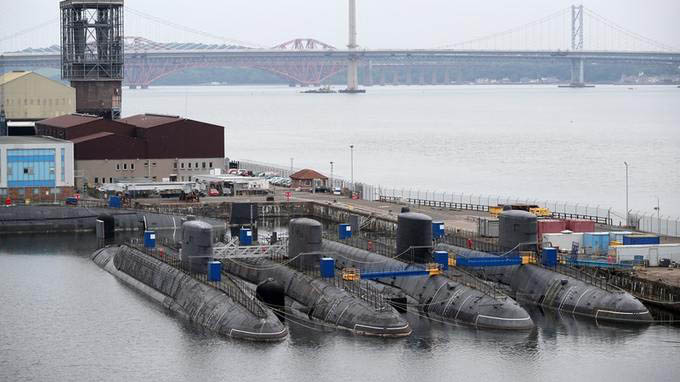
Nuclear Information Service expects no quick fix for removal of 15 decommissioned submarines laid up at Devonport
William Telford, Business Editor, 15 Feb 24 Plymouth Live
The dismantling of 15 decommissioned nuclear subs at Devonport Royal Dockyard is likely to hit delays, according to a new report. The briefing document published by the independent Nuclear Information Service says a history of infrastructure work at the Plymouth facility means “delays are more likely to materialise than not”.
The report said upgrades to 14 and 15 Docks and the Submarine Refit Complex at Devonport are overdue and progress on submarine dismantling is “on hold” while the Government focuses on its £298m “demonstrator” project to fully dismantle HMS Swiftsure at Rosyth, forecast to be complete at the end of 2026.
The Ministry of Defence told Plymouth Live it aims to dismantle the nuclear submarines at Devonport “as soon as practicably possible”. It said the Swiftsure project will “inform and refine” the dismantling process for subsequent submarines and provide more certainty on the dismantling schedule for future submarines and remains on schedule for completion by the original target date of 2026.
The Nuclear Information Service’s briefing report on Devonport Royal Dockyard gives an overview of the facility and its role in servicing the UK’s submarine fleet, including its nuclear-armed submarines. The report said: “The 15 out-of-service nuclear submarines stored at Devonport, and a further seven that are at Rosyth, together comprise every nuclear submarine the Navy has ever fielded.
“Aside from the long-overdue upgrades to 14 and 15 Docks, and the Submarine Refit Complex, progress on submarine dismantling is on hold while the Government focuses on its ‘demonstrator’ project to fully dismantle HMS Swiftsure. This work is being undertaken at Rosyth and is currently forecast to be complete at the end of 2026 at a cost of £298m.
“Three more submarines at Rosyth have had low-level waste removed from them, but it is not clear if work to defuel the nine submarines at Devonport that are still carrying nuclear fuel will begin before completion of the demonstrator project.
In 2016 the MoD estimated that fully dismantling 27 submarines would cost £2.4bn. Although the risk to in-service submarine availability from delays to submarine dismantling and defuelling is lower than from delays to the maintenance schedule, the history of problems with the project and with infrastructure work at Devonport suggests that delays are more likely to materialise than not.”…………………………..more https://www.plymouthherald.co.uk/news/plymouth-news/devonport-dockyard-nuclear-sub-dismantling-9098888—
Energy company Centrica boss says it could fund Suffolk nuclear plant Sizewell C
Energy company Centrica is considering pumping cash into the construction
of the Sizewell C nuclear power plant on the Suffolk coast, its chief
executive has revealed. Chris O’Shea said the Suffolk site was a
“possible future investment” as the government tries to secure funding
for the project. Ministers are bidding to raise hundreds of millions of
pounds from private companies to help build the plant, near Leiston.
East Anglia Daily Times 15th Feb 2024
https://www.eadt.co.uk/news/24122986.centrica-boss-says-fund-suffolk-plant-sizewell-c
Mirror 15th Feb 2024
https://www.mirror.co.uk/money/british-gas-owner-centrica-considers-32134974
Evening Standard 15th Feb 2024
Proactive Investor 15th Feb 2024
Bloomberg 15th Feb 2024
‘Holderness nuclear waste site seems ludicrous’ – expert warns of ‘significant’ risks

“Over the next 50 to 100 years the issue is sea level rise, but in the nearer term it’s storm surge risk. So why on earth are they looking at this location?
Dr Paul Dorfman is astonished that a Geological Disposal Facility is being considered for South Holderness
By Joseph Gerrard, Local Democracy Reporter 12 Feb 24
An expert has warned against proposals to build an underground radioactive nuclear waste site under Holderness.
Dr Paul Dorfman, an academic and former government adviser, told LDRS he was astonished that a Geological Disposal Facility (GDF) had been proposed for south Holderness. The researcher, who specialises in nuclear waste management, said the risks included flooding and rising sea levels. He also claimed that GDFs were decades away from being proven as a concept………………………………
Under the proposals, radioactive waste would be put into containers and stored hundreds of metres underground at a site which would operate for 175 years. The network of underground vaults and tunnels built within natural geological formations would then be back-filled and the surface site would be given over to other uses.
The establishment of the South Holderness Working Group, which includes East Riding Council, could see funding of up to £2.5m granted if the proposals progress. A facility would only be built if the majority of people in the affected area were shown to want it through a “Test of Support” – though the form that this would take has yet to be decided.
Since the announcement, opposition has been growing to the proposals including with the formation of a local GDF Action Group vowed to oppose it. Beverley and Holderness MP Graham Stuart has also backed a call from South East Holderness councillors Lyn Healing and Sean McMaster for the council to withdraw from the project.
‘Significant risks’
Dr Dorfman is a fellow of the University of Sussex’s Science Policy Research Unit and chairs the Greenpeace-backed Nuclear Consulting Group. His work has included advising the Government, including the Ministry of Defence, on nuclear waste management
Dr Dorfman said the proposals threw up problem after problem and the case for a GDF in south Holderness was knocked out of court when stacked against the evidence. The academic said: “There’s lots of discussions around nuclear energy, but that’s beside the point in this case, it’s about the site itself.
“This is an appalling site, it seems ludicrous, the area seems to have a socially disadvantaged community, and all that implies for why this location has been chosen. There’s lots of models, including the Environment Agency’s, which show this area is at risk of flooding.
“That’s because of sea levels and future sea level rises, there’s some uncertainty over how that will play out. But what there isn’t uncertainty over is the risk of storm surges.
“Over the next 50 to 100 years the issue is sea level rise, but in the nearer term it’s storm surge risk. So why on earth are they looking at this location?
“The other issue is that GDFs are largely conceptual. Yes, one’s been constructed in Sweden, but it’s still an ongoing experiment due to sets of ongoing questions around the containment, the backfill, and most importantly whether the highly radioactive waste can be securely isolated from the wider environment for tens of thousands of years.
“What would happen if there is an accident or incident at a GDF? Significant key underlying research hasn’t been completed, so the question remains, how you can start something like this before you know what you’re doing?
“The current European consensus supports the GDF concept. We have this shared problem of nuclear waste, and we must find a way of managing this extraordinarily toxic stuff. France has also been trying to build a GDF, but they’ve also had significant problems with community acceptance.
“It’s all very well saying let’s do this, but what if deep emplacement makes matters worse? The UK has an existential nuclear waste burden. What are we going to do with it? Well, at the end of the day, no one really knows.
“There may be no final solution, we may have to store it. With a GDF, there’s a huge amount of uncertainty around the underlying geology, would it remain stable for millennia? Then there’s a security issue. Once a GDF is operational, there’s still going to be an opening somewhere.
“And there’s going to be years of trying to emplace this highly radioactive stuff under the ground in containers. It has to be restated that high and mid-level radioactive waste is hugely toxic, and once emplaced, if something goes wrong, then we have a whole set of new problems.
“So, you’ve got problem after problem, and then on top of that you’ve got the issue in south Holderness of the significant risk of flooding. At that point we should just say forget it. This raises the question as to why this site was selected and all that implies for those who have been doing the site selection.
“As for me, I’m astonished the site is being considered. Clearly there will have been preliminary discussions on planning gain for the wider area, with the investment and jobs it would create.
“At a time when money is tight for local people and the local authority, any new money would be welcome. There’s always an upside to any new development, but this has to be weighed against the downside, which in this case is building a high-level nuclear waste site in an area of flooding risk, and the potential hazard to the local community over generations.
“I can’t put into words how amazed I am by this choice of location. As if there weren’t enough problems with a GDF already, south Holderness is a deeply problematic location.”……………………………………………………………………………… https://www.hulldailymail.co.uk/news/hull-east-yorkshire-news/holderness-nuclear-waste-site-seems-9090538
Planned UK nuclear reactors unlikely to help hit green target, say MPs
Guardian 13 Feb 24
Government plans to deliver SMRs ‘lack clarity’ say environmental committee, and will likely fail to meet clean-energy goal of 2035
MPs have warned that a planned fleet of small nuclear reactors are unlikely to contribute to hitting a key target in decarbonising Britain’s electricity generation, as the government opened talks to buy a site in Wales for a new power station.
The Environmental Audit Committee (EAC) said that ministers’ approach to developing factory-built nuclear power plants “lacks clarity” and their role in hitting a goal of moving the grid to clean energy by 2035 was unclear.
Last year a body, Great British Nuclear, was launched with the aim of delivering new power stations, including a fleet of small modular reactors (SMRs). The government has spent £215m on developing SMR design and is running a competition for companies to bid for government contracts.
However, in examining the role of SMRs, the EAC heard that a final investment decision on the first station in the UK is not expected until 2029. The timeline means it is unlikely to contribute to the 2035 target, or Labour’s pledge to run the grid on clean energy by 2030……………………..
The EAC said that the government plans to create as much as 24 gigawatts of nuclear power by 2050, but this figure could be as low as 12GW. Critics of nuclear power argue that it is costly and slow to build, and that projects to store wind and solar power in large batteries could undermine the need for it as a reliable power source.
…………….. despite pledging hundreds of millions of pounds in support for SMR projects and undertaking to invest in the construction of the UK’s first SMR, the government’s overall vision for the sector at this stage lacks clarity.
“The first SMR is unlikely to be in operation by 2035, the date ministers have set for decarbonising the electricity supply: so what role will SMRs have in an energy mix dominated by renewables and supplemented by existing and emerging large-scale nuclear?”…………………………………………………… https://www.theguardian.com/environment/2024/feb/13/planned-uk-nuclear-reactors-unlikely-to-help-hit-green-target-say-mps
Environmental Audit Committee urges UK Government to clarify nuclear SMR strategy
Energy Live News.13 Feb 24
The Environmental Audit Committee has expressed concerns over the lack of clarity in the UK Government’s approach to small modular reactors, despite pledging significant funds.
The Environmental Audit Committee (EAC) has expressed concerns regarding the UK Government’s stance on small modular reactors (SMRs).
Despite allocating £215 million towards SMR technology, the committee highlights unclear policy direction regarding SMRs’ role in the country’s energy mix.
The EAC stresses the necessity of government clarity, especially concerning investment decisions and SMR project commissioning.
As the first SMR is not projected to contribute to the grid until 2035, questions arise regarding its integration with renewable energy sources for achieving decarbonisation goals.
Moreover, evidence presented to the committee indicates potential challenges concerning waste management and regulatory processes…………..
“The first SMR is unlikely to be in operation by 2035, the date Ministers have set for decarbonising the electricity supply: so what role will SMRs have in an energy mix dominated by renewables and supplemented by existing and emerging large scale nuclear………………… https://www.energylivenews.com/2024/02/13/government-urged-to-clarify-nuclear-smr-strategy/
UK government keen to take control of Anglesey site for Westinghouse to build Wylfa nuclear power station
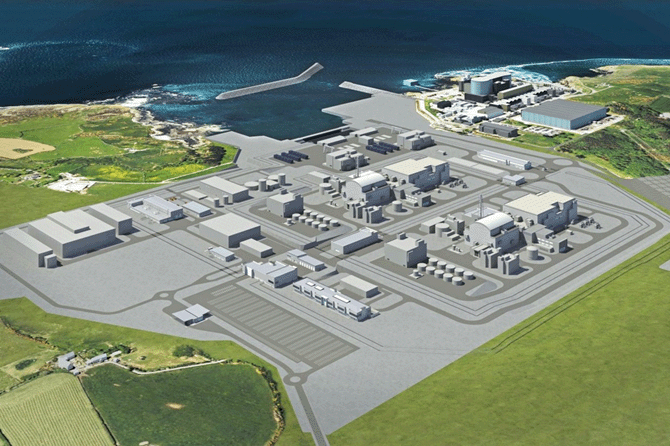
The British government is seeking to take control of a key site in Wales
earmarked for a nuclear power plant as part of wider plans to revamp
nuclear technology for the UK.
State-owned Great British Nuclear is in
early-stage discussions with Hitachi, owner of the land in Wylfa in
Anglesey, an island off north Wales, to buy the site with a view to finding
a new private sector partner to develop a station there.
The site has been
in limbo since Hitachi abandoned plans to build a new reactor there in
January 2019 after failing to strike a financial agreement with the British
government. The Japanese industrial group eventually wrote off £2.1bn on
the project. It also stopped work at a second site in Oldbury, South
Gloucestershire.
Ministers are now determined to revive plans to use the
Wylfa site for new nuclear power to help replace Britain’s current ageing
fleet of nuclear reactors. One minister confirmed that tentative
negotiations with Hitachi had already begun although they acknowledged the
deal might not be finalised until after the election later this year.
The land is thought to be worth about £200mn, but there are expectations that
Hitachi could settle for a lower price given the site is fallow. A
consortium led by the US nuclear company Westinghouse and construction
group Bechtel has proposed building a new plant there using
Westinghouse’s AP1000 reactor technology. It is thought the site could
also host small modular reactors.
FT 11th Feb 2024
https://www.ft.com/content/2e7928c7-ad7f-4ac4-88d8-8cde95ee1a00
Telegraph 11th Feb 2024
Bloomberg 11th Feb 2024
https://www.bnnbloomberg.ca/uk-in-talks-with-hitachi-over-welsh-nuclear-plant-site-ft-says-1.2033580
Energy Voice 12th Feb 2024
City AM 12th Feb 2024
Final public meeting to discuss South Holderness nuclear waste plan
The final public meeting to discuss plans to bury nuclear waste in East
Yorkshire takes place later. The drop-in session at Burstwick Village Hall
is the last of five organised by Nuclear Waste Services (NWS).
The government agency has named South Holderness as having potential for a
Geological Disposal Facility (GDF). Chief executive Corhyn Parr previously
said the scheme would only go ahead with community support. The GDF would
see waste stored up to 3,280ft (1,000m) underground until its radioactivity
had naturally decayed. Officials from NWS said the project could create
thousands of jobs and investment in local infrastructure in the area. The
proposed South Holderness site is one of three areas in England being
considered.
However, the plan has attracted opposition, with two local
councillors calling on East Riding of Yorkshire Council to end talks with
NWS. Beverley and Holderness Conservative MP Graham Stuart, who is also the
Minister for Energy Security, has backed the councillors’ motion saying
“Our community says no”.
BBC 12th Feb 2024
Call to withdrawal from Holderness nuclear waste site talks amid tourism and farming ‘fears’
South East Holderness’ Cllr Lyn Healing and Cllr Sean McMaster said the area had already experienced creeping industrialisation in recent years
Hull Live, Joseph Gerrard, Local Democracy Reporter, 10 Feb 24
Local politicians have called for East Riding Council to walk away from talks on proposals for a site to house radioactive nuclear waste deep beneath south Holderness.
South East Holderness’ Cllr Lyn Healing and Cllr Sean McMaster said most Holderness people did not want a Geological Disposal Facility (GDF) amid fears for tourism and of creeping industrialisation. Beverley and Holderness MP Graham Stuart said he was backing the councillors’ call after he previously said a local referendum should be held on the proposals.
The call follows the unveiling of the proposals in January and the announcement that the council had joined the South Holderness Working Group to explore the proposals. East Riding Council Leader Cllr Anne Handley said it was the first stage in seeing whether a GDF would be right for the area……………………………. more https://www.hulldailymail.co.uk/news/hull-east-yorkshire-news/call-withdrawal-holderness-nuclear-waste-9087294
1 This Month
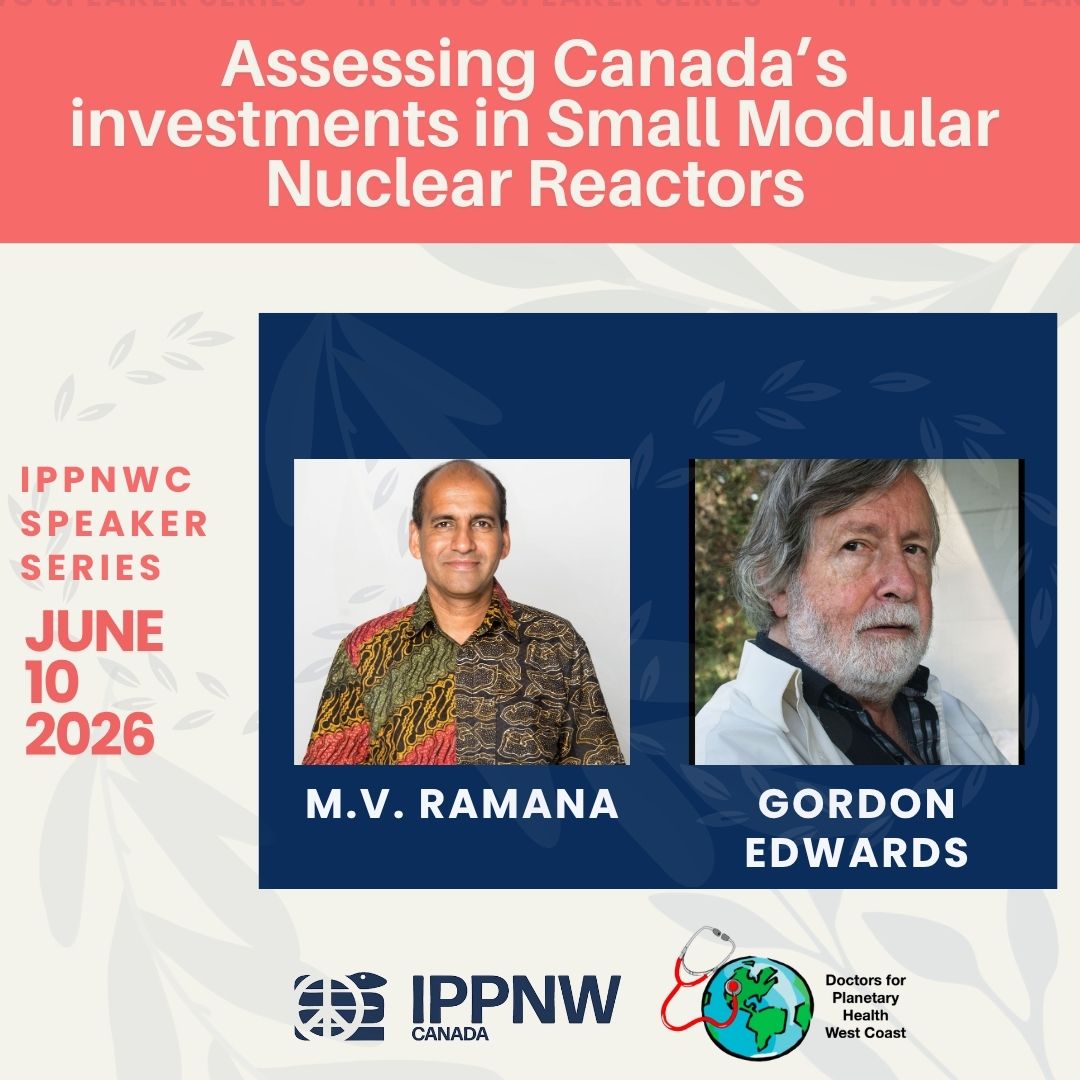
10 June – Assessing Canada’s Investments in Small Modular Nuclear Reactors – https://zoom.us/meeting/register/IiqHA5feRhaEBycOLNTJlA#/registration


Cuba Is Not a Failed State – It Is a Besieged State
PETITION: “Global Appeal to Endorse Palestinian Right of Return of Refugees”
To see nuclear-related stories in greater depth and intensity – go to https://nuclearinformation.wordpress.com
-
Archives
- June 2026 (79)
- May 2026 (306)
- April 2026 (356)
- March 2026 (251)
- February 2026 (268)
- January 2026 (308)
- December 2025 (358)
- November 2025 (359)
- October 2025 (376)
- September 2025 (257)
- August 2025 (319)
- July 2025 (230)
-
Categories
- 1
- 1 NUCLEAR ISSUES
- business and costs
- climate change
- culture and arts
- ENERGY
- environment
- health
- history
- indigenous issues
- Legal
- marketing of nuclear
- media
- opposition to nuclear
- PERSONAL STORIES
- politics
- politics international
- Religion and ethics
- safety
- secrets,lies and civil liberties
- spinbuster
- technology
- Uranium
- wastes
- weapons and war
- Women
- 2 WORLD
- ACTION
- AFRICA
- Atrocities
- AUSTRALIA
- Christina's notes
- Christina's themes
- culture and arts
- Events
- Fuk 2022
- Fuk 2023
- Fukushima 2017
- Fukushima 2018
- fukushima 2019
- Fukushima 2020
- Fukushima 2021
- general
- global warming
- Humour (God we need it)
- Nuclear
- RARE EARTHS
- Reference
- resources – print
- Resources -audiovicual
- Weekly Newsletter
- World
- World Nuclear
- YouTube
-
RSS
Entries RSS
Comments RSS
 nuclear-news