UK Court to Decide Tuesday If Julian Assange Can Appeal Extradition

The decision will be issued at 10:30 am London time
by Dave DeCamp March 25, 2024, https://news.antiwar.com/2024/03/25/uk-court-to-decide-if-julian-assange-can-appeal-extradition/
London’s High Court will rule on Tuesday whether WikiLeaks founder Julian Assange can appeal his extradition to the United States, where he would face trial for exposing US war crimes.
According to WikiLeaks, the written ruling is due to be delivered by 10:30 am London time.
Last month, Assange’s legal team presented its case for the appeal. His lawyers also introduced new evidence, including a bombshell report from Yahoo News that revealed the CIA in 2017, under Mike Pompeo at the time, considered kidnapping and even discussed assassinating Assange over WikiLeaks publishing detailed the CIA’s hacking tools, known as Vault 7.
Assange did not attend the two-day hearing due to his poor health, and he remains in London’s Belmarsh Prison, where he’s been held since 2019. Assange’s family and legal team believe he will die if extradited to the US.
The news of the High Court’s impending decision comes after The Wall Street Journal reported that the US was considering offering a plea deal to Assange and that Justice Department officials had preliminary talks with his legal team. However, Assange’s lawyer, Barry Pollack, said in response to the report that the US has “given no indication” that the US will take a deal.
Assange faces 17 counts under the Espionage Act and one charge for conspiracy to commit a computer intrusion for obtaining and publishing documents from a source, a standard journalistic practice. If Assange is convicted, it would set a grave precedent for press freedom in the US and around the world. A plea deal that criminalizes the journalist-source relationship could also set a dangerous precedent.
WikiLeaks has been asking Americans to put pressure on the Biden administration to stop its pursuit of Assange by contacting their House representatives and telling them to support H.Res.934, a bill introduced by Rep. Paul Gosar (R-AZ) that calls for the US to drop the charges against Assange.
UK launches ‘national endeavour’ to reinforce nuclear deterrent
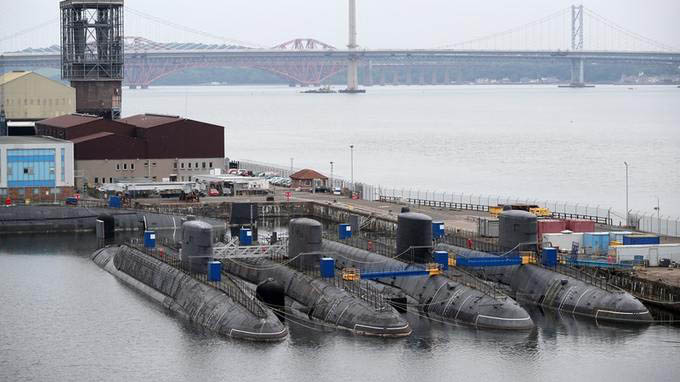
Government and industry will invest £760mn towards critical skills and infrastructure.
Ft.com Sylvia Pfeifer in London, 24 Mar 24
The UK government will launch a “national endeavour” to reinforce the country’s nuclear deterrent, including a promise to invest more than £760mn with industry over the next six years into critical skills and infrastructure.
Rishi Sunak, the prime minister, will on Monday also announce a separate £200mn investment into a “transformation fund” for Barrow-in-Furness, the Cumbrian town where Britain’s nuclear submarines are built by BAE Systems for the Royal Navy. Barrow has suffered from health inequalities, poor housing and some of the most deprived neighbourhoods in the country despite multiple attempts at lasting regeneration.
The investments come as the government prepares to set out how it plans to sustain and modernise the UK’s nuclear deterrent in a new Defence Command Paper. It follows concerns that ageing infrastructure and a lack of investment were undermining the effectiveness of the deterrent, a cornerstone of Britain’s defence posture.
Ministers were forced last month to declare that the deterrent remained “safe, secure and effective” after a nuclear missile test failed when the Trident weapon crashed into the sea near the submarine that fired it. Adding to the embarrassment, defence secretary Grant Shapps was on board HMS Vanguard to witness the test launch which took place in January.
The Defence Command Paper will detail the government’s plans to bring new Dreadnought-class submarines into service in the early 2030s. The Dreadnoughts are due to replace the current Vanguard-class vessels which were commissioned into service in the mid-1990s.
“Safeguarding the future of our nuclear deterrent and nuclear energy industry is a critical national endeavour,” Sunak will say on a visit to Barrow on Monday. “In a more dangerous and contested world, the UK’s continuous at-sea nuclear deterrent is more vital than ever.
And nuclear delivers cheaper, cleaner homegrown energy for consumers.” Investments into Britain’s nuclear capabilities and skills — both defence and civil — are seen as vital if the government is to build a new fleet of atomic power stations to bolster its energy security, as well as deliver on the new Dreadnought programme.
The government is also committed to building a new generation of attack submarines under the trilateral Aukus pact with the US and Australia……………………… more https://www.ft.com/content/a276c351-7e48-4662-a9fe-27363ac24a2b
This is why Sizewell C construction poses ‘possible risk’ to new hospital build
Potential obstacles facing construction of new West Suffolk Hospital in
Bury St Edmunds by 2030 include funding shortfall and development of
Sizewell C
A shortfall in funding and a difficulty in finding a contractor
are among the potential obstacles facing plans to build a new hospital in
Bury St Edmunds by 2030. A report, published ahead of the West Suffolk NHS
Foundation Trust (WSFT) board meeting tomorrow, highlighted potential
issues with the Hardwick Manor project.
The building of a new nuclear power
plant, Sizewell C, on the Suffolk coast was mentioned as one of the reasons
finding a contractor could be challenging.
Suffolk News 21st March 2024
Nuclear test veterans demand compensation and medical records access
By Anna Lamche, BBC News, 20 Mar 24
Veterans exposed to radiation during British nuclear tests are calling for the government to create a “special tribunal” to oversee compensation.
The group, who say their lives have been blighted by ill health as a result of the tests, also want access to their missing military medical records.
The Ministry of Defence (MoD) says no information is withheld from veterans.
But on Tuesday it was threatened with legal proceedings by alleged victims and their families.
Former military personnel and their families served a “letter before action” on the MoD and handed a petition into Downing Street earlier.
Veterans and their families developed cancer, heart problems and even lost babies after the tests – and their children have been born with obvious disabilities, the group claims.
The campaigners have called on the government to establish a “special tribunal” that would investigate, compensate and commemorate alleged victims of the nuclear tests, which took place between 1952 and 1967 in Australia and the South Pacific.
The government is under pressure to act quickly because many of the claimants are now getting older.
The group is demanding access to blood and urine samples taken during the Cold War weapons trials.
Regis
Nuclear test veterans demand compensation and medical records access
By Anna Lamche, BBC News 20 Mar 24
Veterans exposed to radiation during British nuclear tests are calling for the government to create a “special tribunal” to oversee compensation.
The group, who say their lives have been blighted by ill health as a result of the tests, also want access to their missing military medical records.
The Ministry of Defence (MoD) says no information is withheld from veterans.
But on Tuesday it was threatened with legal proceedings by alleged victims and their families.
Former military personnel and their families served a “letter before action” on the MoD and handed a petition into Downing Street earlier.
Veterans and their families developed cancer, heart problems and even lost babies after the tests – and their children have been born with obvious disabilities, the group claims
The campaigners have called on the government to establish a “special tribunal” that would investigate, compensate and commemorate alleged victims of the nuclear tests, which took place between 1952 and 1967 in Australia and the South Pacific.
The government is under pressure to act quickly because many of the claimants are now getting older.
The group is demanding access to blood and urine samples taken during the Cold War weapons trials…………………………………………. https://www.bbc.com/news/uk-68611769
Nuclear power station workers set to walk out in dispute over pay
The union say that the dispute is a result of an ‘inadequate’ pay offer of 4.5%, effective from April 2023.
Caitlyn Dewar, 18 Mar 24, https://news.stv.tv/highlands-islands/dounreay-nuclear-power-station-workers-in-highlands-set-to-walk-out-in-dispute-over-pay
Hundreds of workers at a nuclear power station in the Highlands are being balloted for strike action in a pay dispute.
Unite the union confirmed that around 450 members employed by Magnox Limited based at Dounreay power station are being balloted for strike action in a pay dispute.
The union say that the dispute is a result of an “inadequate” pay offer of 4.5%, effective from April 2023 which was rejected by 95% in a consultative pay ballot.
Unite said the offer amounts to a substantial real terms pay cut, adding that the true rate of inflation based on the RPI stood at 11.4%.
Unite’s Magnox membership includes craft technicians, general operators, chemical and electrical engineers, and maintenance fitters and safety advisors.
Unite general secretary Sharon Graham said: “The Dounreay workforce are highly-skilled and they undertake an extremely important job.
3 days ago
Share this story
Posted in
Hundreds of workers at a nuclear power station in the Highlands are being balloted for strike action in a pay dispute.
Unite the union confirmed that around 450 members employed by Magnox Limited based at Dounreay power station are being balloted for strike action in a pay dispute.
The union say that the dispute is a result of an “inadequate” pay offer of 4.5%, effective from April 2023 which was rejected by 95% in a consultative pay ballot.
Unite said the offer amounts to a substantial real terms pay cut, adding that the true rate of inflation based on the RPI stood at 11.4%.
Unite’s Magnox membership includes craft technicians, general operators, chemical and electrical engineers, and maintenance fitters and safety advisors.
Unite general secretary Sharon Graham said: “The Dounreay workforce are highly-skilled and they undertake an extremely important job.
Ad
“The failure to pay our members a decent pay increase is outrageous, Magnox seems to have money to burn for directors and shareholders but thinks it is acceptable to deny its workers a decent pay increase.”
“Unite will fully support our members at Dounreay power station in the fight for better jobs, pay and conditions.”
Magnox Ltd, currently trading as Nuclear Restoration Services, is a wholly owned subsidiary of the Nuclear Decommissioning Authority (NDA).
The Dounreay power station is scheduled to be fully decommissioned and cleaned-up in 2033.
The union said that the remuneration package of the highest paid Magnox director went up from £331,000 to £651,000 in March 2023, and the company paid dividends of £2.1m in the same period.
Marc Jackson, Unite industrial officer, added: “Pay negotiations with Magnox have been ongoing since January 2023 with next to no movement by the company. However, Magnox has not been slow in making sure the remuneration packages for directors have been bolstered with the highest paid director seeing their package double in the space of a year.
“Unite’s membership at Dounreay power station will no longer accept these double standards, and that’s why we are balloting our members for strike action.”
Magnox has been contacted for comment.
A chance to break the nuclear links – Kate Hudson, CND

,
https://labouroutlook.org/2024/03/17/a-chance-to-break-the-nuclear-links-kate-hudson-cnd/
“It’s just not possible for the UK to have an independent foreign policy, or defence and security policies, if it remains attached at the hip to the US nuclear programme.”
By Kate Hudson, Campaign for Nuclear Disarmament (CND)
Whoever is in the White House after the upcoming presidential election, one thing is clear: Britain has to break its ‘special nuclear relationship’ with the US. We’re all familiar with the so-called ‘special relationship’, basically tying Britain into really bad foreign policy decisions. But not so many people know about the US-UK Mutual Defence
Agreement (MDA) – the world’s most extensive nuclear sharing agreement.
Known in full as the ‘Agreement between the UK and the USA for cooperation in the Uses of Atomic Energy for Mutual Defence Purposes’, the treaty initially established an agreement between both countries to exchange classified information to develop their respective nuclear weapon systems.
At the start, the MDA prohibited the transfer of nuclear weapons, but an amendment in 1959 allowed for the transfer of nuclear materials and equipment between both countries up to a certain deadline.
This amendment is extended through a renewal of the treaty every ten years, most recently in2014 – without any parliamentary debate or vote. The British public and parliamentarians initially found out about that extension and ratification when President Obama informed the United States Congress.
Renewing such agreements on the nod, without transparency or accountability, is never a good thing. When it ties us so tightly to nuclear cooperation with the White House this is an even greater cause for concern. The time has come to really vigorously oppose this Agreement.
It also puts us at odds with our commitments under the NPT: the MDA confirms an indefinite commitment by the US and UK to collaborate on nuclear weapons technology and violates both countries’ obligations as signatories to the NPT. The NPT states that countries should undertake ‘to pursue negotiations in good faith on effective measures relating to… nuclear disarmament’.
Rather than working together to get rid of their nuclear weapons, the UK and US are collaborating on further advancing their nuclear arsenals. Indeed, a 2004 legal advice paper by Rabinder Singh QC and Professor Christine Chinkin concluded that it is ‘strongly arguable that the renewal of the Mutual Defence Agreement is in breach of the nuclear Non-Proliferation Treaty’, as it implies ‘continuation and indeed enhancement of thenuclear programme, not progress towards its discontinuation’.
On every level the MDA must be challenged. It’s just not possible for the UK to have an independent foreign policy, or defence and security policies, if it remains attached at the hip to the US nuclear programme. When the US seems hell-bent on taking us into war after war, unquestioning allegiance from the UK cannot continue.
The MDA is up for renewal again this year. Now is the time to start asking the questions, raising the protest,and making the case for independence. It’s time for the special nuclear relationship to end. Watch this space!
The spending horrors facing UK’s next PM from old nuclear subs to RAAC in schools
Meg Hillier warned that the next Government will face many spending ‘big nasties’ that will eat up already stretched budgets
The spending horrors facing the next PM from old nuclear subs to RAAC in
schools. Meg Hillier warned that the next Government will face many
spending ‘big nasties’ that will eat up already stretched budgets.
The influential chair of the Public Accounts Committee (PAC) has warned of the
“big nasties” of public spending that face the next Government. In an
interview with i, Labour MP Meg Hillier warned that there wasn’t
“nearly enough good project management” in Government to ensure that
the numerous issues she’s identified, from crumbling hospitals to an out
of service a nuclear submarine fleet, are dealt with.
The UK also needs to
consider how it will safely dispose of its fleet of retired nuclear
submarines, a job that is expected to be very costly for the Ministry of
Defence. The current Vanguard class of submarines are due to be phased out
by 2032 and replaced by the Dreadnought class, and it was estimated in 2016
that the renewal of the programme could cost between £167bn and £179bn
over its 30-year life span.
iNews 17th March 2024
https://inews.co.uk/news/politics/spending-horrors-facing-next-prime-minister-2960825
UK government plans to block foreign control of newspapers – what about foreign control of Sizewell nuclear project ?
Telegraph ruling raises questions over Sizewell funding
The government plans to block foreign control of newspapers – what about physical infrastructure?
Questions are being raised about the government’s willingness to allow essential physical infrastructure to fall into the hands of foreign states but not newspapers.
Government minister Lord Parkinson told the House of Lords yesterday: “We will amend the media merger regime explicitly to rule out newspaper and periodical news magazine mergers involving ownership, influence or control by foreign states.”
Legislation is being introduced specifically to prevent The Telegraph newspaper group from being bought by RedBird IMI, a fund backed by the United Arab Emirates.
It is not yet clear, however, how far the new law could stretch. The intention is that it applies only to newspapers and news magazines. But are they really more important than water companies, electricity companies and power stations?
The Chinese state was allowed to have an influence in the development of Hinkley Point C nuclear power station but has been blocked from further involvement in the UK nuclear programme amid security concerns.
However, the UK government has been wooing the UAE to step in to help fund Sizewell C in place of China.
Campaigners against Sizewell C see the Telegraph intervention as grounds to block UAE investment in British nuclear power, on the basis that nuclear power stations must be at least as important to national security as newspapers.
“If the government is prepared to ban foreign state ownership of newspapers because of the UAE’s bid for the Telegraph, ministers must now block UAE investment in Sizewell C in the interests of national security. That deal should also be dead in the water: there is no place in our critical national infrastructure for a regime that does not share our views and values,” said a spokesperson for Stop Sizewell C.
There already exists legislation that could be used to prevent a foreign state having influence in critical infrastructure – the National Security & Investment Act 2021 and the National Security Act 2023 have sought to respond to foreign state interference.
Lord Parkinson told parliament yesterday: “We intend to expand on the current definition of ‘foreign powers’ used in the National Security Act 2023 to ensure a broad definition that also covers officers of foreign governments acting in a private capacity and investing their private wealth.”
That could put the skids under a whole host of utility companies.
However, rather blurring the message, the minister concluded: “I should note that the government remain committed to encouraging and supporting investment into the United Kingdom and recognise that investors deploying capital into this country rely on the predictability and consistency of our regulatory regime. The UK remains one of the most open economies in the world, which is key for the prosperity and future growth of our nation. Our focus here is not on foreign investment in the UK media sector in general; this new regime is targeted and will apply only to foreign states, foreign state bodies and connected individuals, and only to newspapers and news magazines.”
‘Don’t hold your breath’ – people living in Wylfa’s shadow have say on development plans
The UK Government recently announced it had bought the Anglesey site from Hitachi
North Wales Live, David Powell, Court reporter, 17 Mar 24
People living near the Wylfa power station on Anglesey have greeted the prospect of a fresh development at the site with excitement, anxiety and pessimism. Last week the UK Government announced that a £160m deal had been reached with Hitachi to buy sites at Wylfa and Oldbury in Gloucestershire – with a final sign off expected this summer.
The minister for nuclear Andrew Bowie says this is not another “false dawn” for Wylfa and that he was “supremely confident” that new nuclear would be developed at the site. North Wales Live this week visited nearby Cemaes to gauge opinions from people in the village on the proposals.
Cemaes resident William Huw Edwards, 80, used to work as a contractor atRio Tinto
, which ran Anglesey Aluminium, and on the runway at RAF Valley. He remembers disruption during construction work for the current Wylfa power station.
“There used to be two or three lorries at a time in convoys,” he recalled. As for the prospect of a new nuclear development, he said: “A lot of people are against it because of the traffic and the noise.”
He added: “It’s going to cost a lot and they will have to find the money.” He doubts it will be in the near future, saying: “It won’t be soon. Don’t hold your breath.”
But another resident Julie Clemence, 63, would support a new nuclear operation if it were smaller than its predecessor. “The American ones are really huge but I would support it if it’s smaller and less of a blot on the landscape than now,” she said.
………………………………………………………… Dylan Morgan, of Pobl Atal Wylfa B (PAWB), a campaign group against the proposal, said: “This government and anyone following it will face the same challenges regarding attracting any large new private investment to develop reactors at Wylfa or any other site in the global context of a shrinking nuclear industry.
“At the same time, renewable technologies are galloping ahead every year to take an increasing share of the worldwide electricity market.” He claimed 20 years has been “wasted” when money and resources could have been spent developing renewable energy…………………………………….
Meanwhile Katie Hayward, of Felin Honeybees, has said she is “completely broken” after learning the site might be redeveloped after she battled the proposed Wylfa B site for years.
https://www.dailypost.co.uk/news/north-wales-news/dont-hold-your-breath-people-28797236—
HSBC leads Sizewell C investment push as time ticks on final investment decision

Britain’s largest bank by market capitalisation is trying to rally an effort to push a final investment decision over the line for the delayed Sizewell C nuclear super project.
According to a Bloomberg report today, HSBC is discussing the possibility with investment funds to provide a debt facility that would be guaranteed by the UK’s export finance agency.
The report said that people familiar with the matter said the move would help the project, Sizewell C, which in January received government approval to begin the process of building the site, due to take nine years to complete.
But delays have come thick and fast due to inflationary cost rises and the logistical challenges involved with building a massive nuclear power station, so much so that the project is now scoped for a bill with the potential to reach £40bn.
The UK government is working in tandem with Barclays to find equity investors for the project in the hope of reaching a final investment decision this year, with gas giant Centrica having declared an interest.
Sizewell C was proposed by a consortium of EDF Energy and China General Nuclear Power Group, which own 80 per cent and 20 per cent of the project respectively.
The site, along with the also-delayed multi-billion pound Hinkley Point C and another planned major reactor that was unveiled in the nuclear strategy back in January, will form the backbone of the UK’s nuclear energy drive.
Complimenting the large projects, which are estimated to be able to provide power for around six million people each, are small module reactor programmes to be taken up by private investors.
In recent months, the UK government has reportedly been wooing the United Arab Emirates to step in to help fund Sizewell C in place of China.
However the National Security & Investment Act 2021 and the National Security Act 2023 could prove barriers to any foreign state gaining influence through investment in critical infrastructure.
In Chancellor Jeremy Hunt’s Spring Budget last week, he announced a £160m deal with Japanese technology giant Hitachi to buy back two sites on which the latter had committed to build power stations.
UK Steps Up Sizewell Nuclear Push With State-Backed Loans
Mar 14, 2024, William Mathis and Priscila Azevedo Rocha, Bloomberg News, https://www.bnnbloomberg.ca/uk-steps-up-sizewell-nuclear-push-with-state-backed-loans-1.2046821
HSBC Holdings Plc is in talks with investment funds about loans to help to finance the construction of the UK’s Sizewell C nuclear plant, as the government steps up efforts to get a key energy project off the drawing board this year.
The bank is in discussions with funds to provide the debt that would be guaranteed by the country’s export finance agency, according to people familiar with the matter. That would help Sizewell offset risks of financing a long-term project, while securing cheaper capital, the people said, asking not to be identified as the negotiations are private.
HSBC, Sizewell and UK Export Finance all declined to comment. A spokesperson for the Department for Energy Security and Net Zero said the development of the project’s commercial structure is subject to sensitive discussions
Securing state-guaranteed funding would be an important milestone for a project that could cost more than £40 billion ($51 billion). The UK government has vowed to get as much as 25% of the country’s power from nuclear plants in coming years as part of a push to reach net-zero carbon emissions by 2050. Declining output from Britain’s fleet of aging reactors means new plants will be needed by the end of the decade.
So far, the only one under construction is Electricite de France SA’s Hinkley Point C. That plant has been repeatedly delayed, while the projected budget has ballooned to as high as £47.9 billion.
The UK government is working with Barclays Plc to drum up equity investors for the Sizewell project, with bids due later this year. Centrica Plc is seen as a potential anchor investor, with Chief Executive Officer Chris O’Shea saying the company has been in talks with the government.
HSBC is working for Sizewell C Ltd., the operating company set up by EDF to build the copy of Hinkley. The second project should cost less than its forerunner, according to EDF.
The UK has gradually increased its own exposure to Sizewell C, boosting investment in the project to more than £2 billion earlier this year to become the majority shareholder. The government is taking on more construction risk than it did for Hinkley, as it trials a different approach to financing to try to get new projects over the line.
The huge costs involved make it tricky. In 2019, the government offered to take a third of the equity in a £20 billion project in Wales, and provide all the debt during construction plus guaranteed power prices. That wasn’t enough to convince the developer Hitachi Ltd. to proceed.
With assistance from Jessica Shankleman and Francois de Beaupuy.
Dounreay workers vote on strike action after pay talks stall
https://www.gmbscotland.org.uk/newsroom/gmb-scotland-ballot-at-dounreay.html 13 Mar 24
Workers at Dounreay nuclear site are being balloted on industrial action after long-running pay talks stalled.
Members of GMB Scotland and other unions are voting on industrial action including working to rule, overtime bans and strikes after a pay offer was overwhelmingly rejected.
Discussions with management at the Caithness site have been continuing for 18 months and Keir Greenaway, GMB senior organiser in public services, said workers cannot be expected to wait any longer for a fair offer.
He said: “This delay would be unacceptable at any time but when our members have been enduring an unprecedented cost of living crisis, it is beyond the pale.
“Managers insist they are bound by civil service rules but have chosen not to seek exemption from those rules for their own reasons.
“We have heard a lot of words but seen no action by management and words do not pay our members’ bills.
“They deserve to see a fair pay offer urgently and will take whatever action is necessary to secure one. Enough is enough.”
Dounreay joined Magnox Ltd last year and then became part of Nuclear Restoration Services, which is responsible for the clean-up of the Caithness site and 11 others across the UK.
A ballot on industrial action by GMB Scotland, Unite and Prospect members is now open and will continue for three weeks.
UK’s Spring budget a ‘myopic sop’ to nuclear obsessives
https://cnduk.org/spring-budget-a-myopic-sop-to-nuclear-obsessives/ 14 Mar 24
CND Vice-President Dr Ian Fairlie writes for us on the purchase of the Wylfa nuclear site in last week’s budget.
On March 6, as part of the Spring Budget, the Chancellor announced a deal with the Japanese multinational Hitachi to purchase the defunct and closed Wylfa and Oldbury nuclear sites for £160 million. Hitachi suspended the much larger Wylfa project in 2019 and then abandoned it in September 2020 due to the massively rising costs of building nuclear plants.
Many nuclear enthusiasts read into the Chancellor’s statement that the government was going to build new plants at these sites. However a careful reading of the Budget statement reveals no such commitment. Instead, several independent commentators drily remarked that if Hitachi had decided the Wylfa nuclear plant was commercially untenable, why would anyone in Government think it was.
In fact, it is likely the £160 million land purchase was little more than a sop to myopic nuclear obsessives in the Conservative Party. The reality is that, in energy strategy terms, this sum is a drop in the bucket compared to the estimated £46,000 million (£46 billion) which Hinkley C nuclear plant would cost if it ever were completed. And, in another comparison, the Chancellor confirmed that the budget for the 2024 Contracts for Difference (CfD) auctions mainly for wind and solar projects will be set at over £1,000 million (£1 billion).
The environmental group People Against Wylfa B called the Chancellor’s statement a cynical move to try to support Tory Virginia Crosbie MP to keep her Ynys Môn parliamentary seat. Not much chance of that happening as her majority is under 2,000, and several recent by-elections have shown that Tory majorities of even 20,000 or more are now unsafe.
Why the US is trying to imprison Assange: Report from inside the Court

But even if what the United States is saying were true, these documents were not published first by Assange. John Young, the owner of a website called cryptome.org testified to the court that he was the one who published the documents first, and the United States never prosecuted him or asked him to take them down.
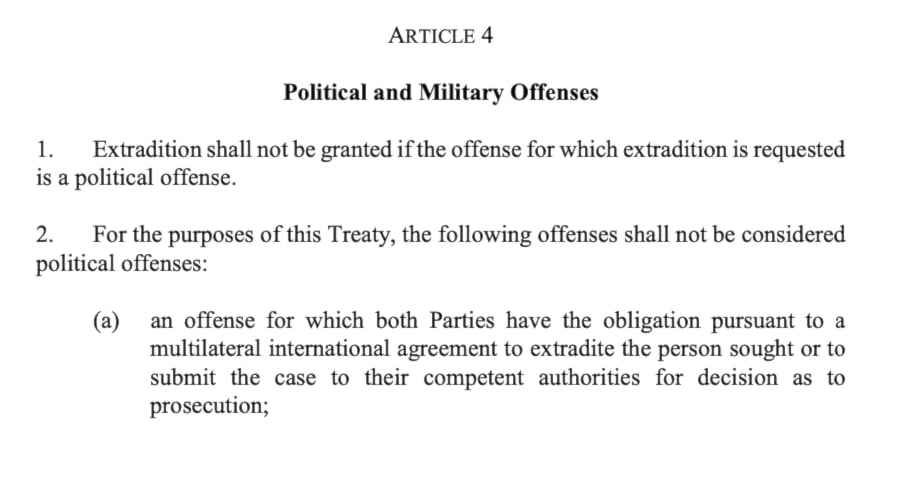
Extraditions for political offenses are forbidden under Article 4 of the US-UK Extradition Treaty 2003
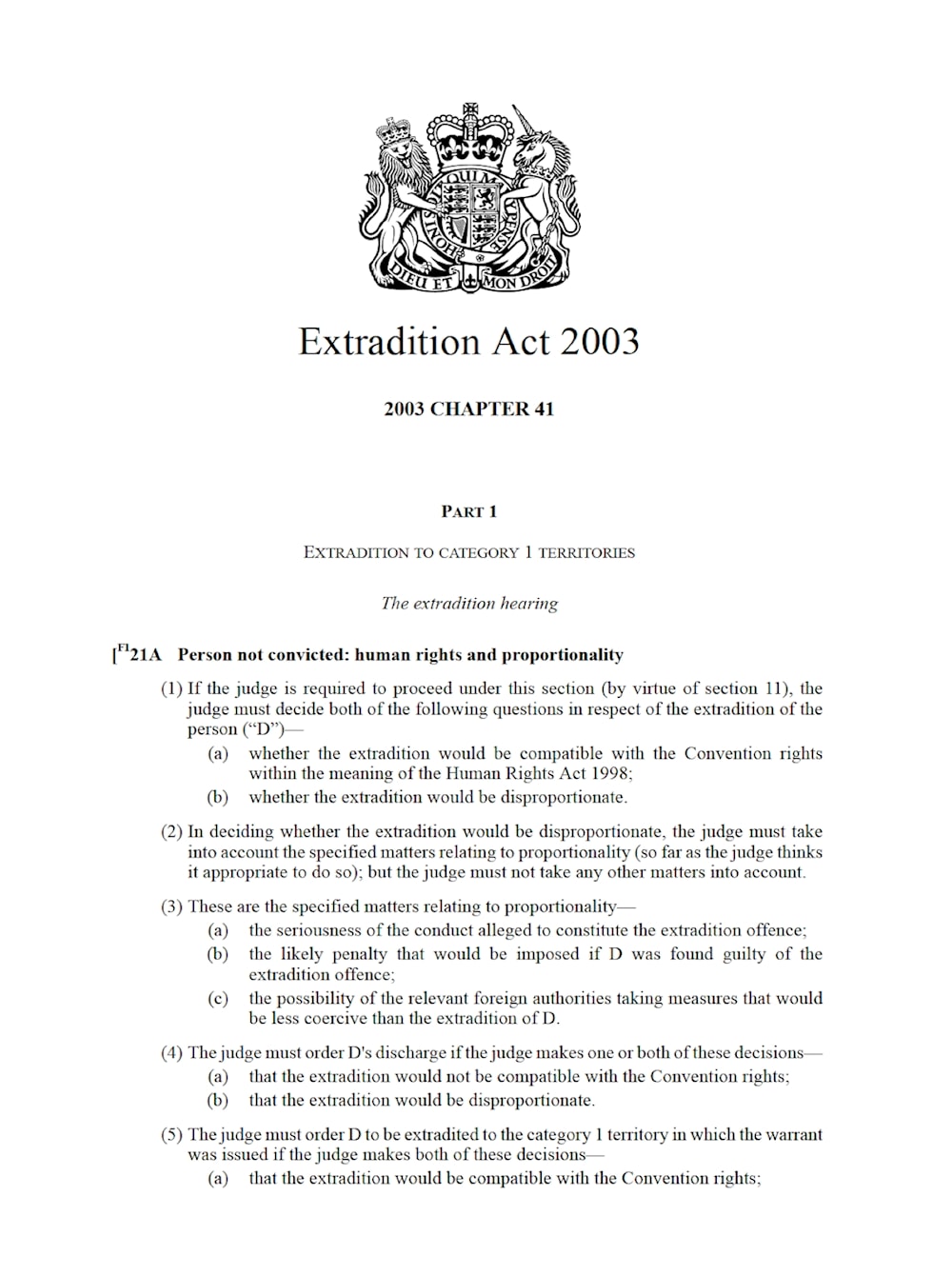
The Extradition Act, which is the implementation of the US-UK treaty inside British law, is missing this section. This is likely due to the fact it was passed at the height of the “War on Terror” in 2003, giving the Americans carte blanche to snatch people, drag them to the US and throw them in dungeons
Richard Medhurst Al Mayadeen English, 7 Mar 2024, https://english.almayadeen.net/articles/analysis/why-the-us-is-trying-to-imprison-assange–report-from-inside
Richard Medhurst is a British journalist who has covered Julian Assange’s extradition case from inside the court since 2020. In this article, he explains what took place in the latest hearings, why the United States is trying to extradite the WikiLeaks founder, and why everyone should care.
Julian Assange is an Australian journalist in the United Kingdom, and the founder of WikiLeaks. He published documents that were given to him by a US soldier called Chelsea Manning, which showed US war crimes in Iraq, Afghanistan, and much more.
The United States want to extradite Assange from the UK to America, and put him on trial for publishing these classified documents. They are threatening him with 175 years in prison.
The reason this case is so serious is because it essentially makes journalism illegal.
The United States claims Assange asked Manning for classified documents and that this is a crime. It’s not.
The US alleges that Assange having classified documents in his possession and publishing them is a crime. It’s not.
Asking for classified documents; protecting sources, these are things journalists do every single day around the world.
But because these files were so embarrassing to the United States and exposed the brutality of their war crimes, they are threatening Assange with almost two centuries in prison; and to do it, they are accusing him of being a “spy” and a “hacker”, charging him with 17 counts under the “Espionage Act”, and with one count of “Conspiracy to Commit Computer Intrusion”.
The goal of this indictment is to make an example out of Assange, and make other journalists afraid to publish things that the public has a right to know.
If extradited, Assange would be placed in the worst prison conditions imaginable, “Special Administrative Measures” (or SAMs): A strict regime of solitary confinement, no contact with other prisoners allowed, and barely any contact with your family. SAMs are internationally recognized as torture. Julian would be sent to the worst prison in America, ADX Florence, a super-maximum security facility in Colorado.
On January 4, 2021, British judge Vanessa Baraitser blocked Assange’s extradition because US prison conditions would be so oppressive in his current state as to drive him to suicide.
Nevertheless, despite blocking the extradition on health grounds, she agreed with all the political and trumped-up charges.
I have attended all of Assange’s court hearings and saw the smears against him debunked by dozens of expert witnesses. But the judge still chose to side with the United States. She chose to essentially criminalize journalism, even drawing dangerous equivalences between the US Espionage Act and Britain’s Official Secrets Act (OSA).
After this, the United States went to the English High Court to appeal her ruling and won by providing empty promises that they would supposedly treat Assange well– even though the United States has a history of violating extradition assurances. I exposed this when I published classified documents from David Mendoza’s extradition from Spain to the US, a case previously cited in court by Julian’s lawyers.
After the US succeeded in overturning the lower court’s ruling in Dec 2021, there was only one thing left: A signature from the Home Secretary, who allowed the extradition to go ahead.
The above is everything that took place between 2020 and 2024, which brings us to the latest hearings at the Royal Courts of Justice in February 2024.
Point 1: To appeal the ruling of the lower court from Jan 4, 2021.
Assange’s lawyers argued that the judge was correct to block Assange’s extradition on health grounds, but she was wrong to agree with all the political charges (equating him with a “hacker” and a “spy”).
They’re saying very plainly: This case is undemocratic, it criminalizes journalism, and doesn’t take into account the fact that the documents Assange published expose enormous US war crimes that the public had the right to know about.
(See for example the “Collateral Murder” video published by Julian Assange’s WikiLeaks: Footage from a US gunship crew laughing as they slaughter Iraqi civilians, among them children and reporters).
Another claim made by the United States is that Assange “harmed informants” by publishing unredacted cables. Ironically, this was proven false by the United States’ own military when they court-martialed Chelsea Manning (the soldier that gave the files to Assange). The US military couldn’t find a single example of anyone having been harmed by the disclosures.
The assertion by the United States that Julian Assange simply published all these documents without censoring or redacting names simply isn’t true: I listened to many journalists tell the court how they spent countless hours meticulously redacting names with Assange.
Assange’s lawyers are also arguing that the judge in the lower court failed to undertake a balancing act. She blindly accepted the United States’ premise that the lives of informants– who weren’t even harmed– are more important than the people killed and tortured by the United States. This is tantamount to saying: The United States should be allowed to continue committing these war crimes in secret; that it’s somehow okay for them to butcher people in Iraq and Afghanistan, and the public have no right to know.
But even if what the United States is saying were true, these documents were not published first by Assange. John Young, the owner of a website called cryptome.org testified to the court that he was the one who published the documents first, and the United States never prosecuted him or asked him to take them down.
This demonstrates that the whole case against Assange is selective, political, and has nothing to do with the law.
Assange’s lawyers are also arguing that the judge in the lower court failed to undertake a balancing act. She blindly accepted the United States’ premise that the lives of informants– who weren’t even harmed– are more important than the people killed and tortured by the United States. This is tantamount to saying: The United States should be allowed to continue committing these war crimes in secret; that it’s somehow okay for them to butcher people in Iraq and Afghanistan, and the public have no right to know.
But even if what the United States is saying were true, these documents were not published first by Assange. John Young, the owner of a website called cryptome.org testified to the court that he was the one who published the documents first, and the United States never prosecuted him or asked him to take them down.
This demonstrates that the whole case against Assange is selective, political, and has nothing to do with the law.
The Espionage Act that Assange is being charged under was created during World War I, in 1917. It has always been used as a political tool against dissidents such as Eugene Debs, or whistleblowers like Daniel Ellsberg and Edward Snowden, who exposed the true extent of the US war in Vietnam, and NSA mass surveillance.
If you’re charged under the Espionage Act, you’re also forbidden from arguing a public interest defense. This means that even if you expose colossal government crimes, you still go to prison.
Point 2: The Home Secretary was wrong to allow the extradition
This constitutes the second part of Assange’s appeal: It is illegal in Britain to extradite someone to another country, knowing they could face the death penalty.
If the Home Secretary, who has the final say on extraditions, is aware of such a risk, they are compelled to bar the extradition.
It is inconceivable that Priti Patel was unaware of who Julian Assange is, and the likelihood he would be killed in the United States. Once in US jurisdiction, the US could pile on additional charges, or simply execute him, as espionage is a capital offense.
Even without a specific death sentence, at 52 years old, even a 30-year bid is akin to a death sentence.
The hollow assurances given by the United States do not preclude the death penalty. And on top of that, the Home Secretary didn’t even bother asking for assurances that would.
So how could the Home Secretary agree to send Assange to a foreign country that so clearly wants to see him dead?
Mike Pompeo, who back then was head of the CIA, and then-president Donald Trump, launched this legal case against Julian Assange. In the past, Donald Trump had called for Assange to be given the death penalty, while Mike Pompeo proclaimed Assange “has no First Amendment rights”. After WikiLeaks published a trove of CIA documents, dubbed the Vault 7 files, Mike Pompeo declared war on WikiLeaks by publicly labeling it a “non-state hostile intelligence service”
All these political denunciations of WikiLeaks and Assange were then followed up with threats against him and his family. As we heard in court in 2020 from protected witnesses, the CIA had drawn up plans to potentially kidnap or assassinate Julian.
The United States is accusing Julian Assange of “espionage”. Normally, this is where the case should be thrown out, because espionage is considered a textbook political offense. And it is forbidden to extradite someone for a political offense under the US-UK Extradition Treaty, Art 4.
Customary extradition treaties have always forbidden extradition for political offenses such as “espionage” and “treason”. And this line of defense has been used before in court to successfully block extraditions.
- Extraditions for political offenses are forbidden under Article 4 of the US-UK Extradition Treaty 2003
Here is where the problem arises:
The Extradition Act, which is the implementation of the US-UK treaty inside British law, is missing this section. This is likely due to the fact it was passed at the height of the “War on Terror” in 2003, giving the Americans carte blanche to snatch people, drag them to the US and throw them in dungeons.
At the time of its passage, many criticized the Extradition Treaty as being extremely one-sided in favor of the United States.
No matter how you look at Assange’s case, it is unfair and illegal.
The United States wants to prosecute Julian Assange under US law, but at the same time deny him any protections under US law, such as free speech. If Assange has no First Amendment rights as a foreign national, then how can he be punished as a foreign national – who is not even in the US? This is such a flagrant double standard, and selective application of the law.
The European Convention on Human Rights (ECHR) is incorporated into British law through the Human Rights Act. Upon examination, it is clear that Julian’s rights are being flagrantly violated
Article 5 protects one from arbitrary detention.
Because this is a political case, it would be a violation of the Extradition Treaty to send Julian to America. Therefore, he has no reason to be in prison right now, and is therefore being arbitrarily detained in violation of his Article 5 rights.
Article 6 guarantees the right to a fair trial.
We know the United States spied on Assange’s conversations with his lawyers when he was inside the Ecuadorian embassy; stole his electronic devices; and collected medical and legal records.
In 2020, I sat in court with Fidel Narvaez, the former Consul to the Ecuadorian embassy in London. We listened to the submissions of two protected witnesses who confirmed they had spied on Assange because the security company they worked for, UC Global, had been contracted by the CIA to do so. They also discussed plans to potentially kidnap and poison Julian Assange and harvest DNA from his baby.
To spy on someone’s privileged conversations with their lawyers, and to use tainted evidence in court is scandalous beyond words, and violates the fundamentals of due process in any jurisdiction. Any judge would have thrown this case out from day one.
We also know Assange will not get a fair trial in America because the jury will be selected from a pool of people who work for the CIA, NSA, or have friends and family working in the intelligence community. These are the very same people whose crimes Julian Assange exposed.
The court in Virginia that issued the charges and would hold this trial is used specifically for this reason; because the jury is biased and the government knows it can’t lose. It is already 100% guaranteed that he will get convicted and go to prison.
Additionally, the United States could use secret evidence against Julian Assange, that he wouldn’t even be allowed to view due to it being “classified”.
Article 7 protects one from being punished retroactively. The case against Julian Assange is unprecedented: No publisher in America has ever been prosecuted, let alone convicted for publishing classified documents.
This case criminalizes journalism, and therefore violates Article 10, which guarantees freedom of expression.
Assange’s lawyers went over the ECHR repeatedly because it is incorporated into British law, meaning the court is obliged to follow it. Not only that, but this was their way of hinting to the judges: If you don’t give us permission to appeal, we will go to the European Court of Human Rights (ECtHR) in Strasbourg, and that court will look upon your decision unfavorably.
(The United Kingdom is a founding and current member of the European Council, which is separate from the European Union).
Assange’s lawyer, Mark Summers, argued very clearly: The Strasbourg court will see that a) these US war crimes were real; b) they were happening on the ground at the time, and; c) by publishing these documents Assange altered the United States’ behavior: The helicopter massacres like in the “Collateral Murder” video stopped, and the Iraq war came to an end.
Assange’s team put together a very compelling defense during this week’s hearing.
Continue readingCold turkeys: The demise of nuclear power

Jim Green, Mar 12, 2024, https://reneweconomy.com.au/cold-turkeys-the-demise-of-nuclear-power-in-australias-aukus-partner-countries/
When announcing the AUKUS agreement in 2021, then Prime Minister (and secret energy minister) Scott Morrison said: “Let me be clear: Australia is not seeking to establish … a civil nuclear capability.” He also said that “a civil nuclear energy industry is not a requirement for us to go through the submarine program.”
However, Coalition Senators argued in a report last year that Australia’s “national security” would be put at risk by retaining federal legislation banning nuclear power and that the “decision to purchase nuclear submarines makes it imperative for Australia to drop its ban on nuclear energy.”
So, let’s see how nuclear power is faring in our AUKUS partners, the UK and the US.

This is a story about conventional, large reactors. All that needs to be said about ‘small modular reactors’ in the UK and the US is that none exist and none are under construction.
This is a story about conventional, large reactors. All that needs to be said about ‘small modular reactors’ in the UK and the US is that none exist and none are under construction.
The UK

The last power reactor start-up in the UK was 29 years ago — Sizewell B in 1995.
Over the past decade, several proposed new nuclear power plants have been abandoned (Moorside, Wylfa, Oldbury) and the only project to reach the construction stage is Hinkley Point C, comprising two French-designed EPR reactors.
In the late 2000s, the estimated construction cost for one EPR reactor in the UK was £2 billion (A$3.9 billion). When construction of two EPR reactors at Hinkley Point commenced in 2018 and 2019, the cost estimate for the two reactors was £19.6 billion.
The current cost estimate for the two reactors has ballooned to £46 billion (A$89 billion) or £23 billion (A$44.5 billion) per reactor. That is 11.5 times higher than the estimate in the late 2000s. Further cost overruns are certain. This is an example of the Golden Rule of Nuclear Economics: Add a Zero to Nuclear Industry Estimates.
The UK National Audit Office estimates that taxpayer subsidies for Hinkley Point — primarily in the form of a guaranteed payment of £92.50 (A$180) per megawatt-hour (2012 prices), indexed for inflation, for 35 years — could amount to £30 billion (A$58 billion) while other credible estimates put the figure as high as £48.3 billion (A$94 billion).
Delays

The delays associated with Hinkley Point have been as shocking as the cost overruns. In 2007, French utility EDF boasted that Britons would be using electricity from an EPR reactor at Hinkley Point to cook their Christmas turkeys in 2017. In 2008, the UK government said the reactors would be complete “well before 2020”.
But construction of the two reactors didn’t even begin until 2018 and 2019, respectively, at which time completion was expected in 2026. Now, completion is expected in 2030 or 2031.
Undoubtedly there will be further delays and if the reactors are completed, it will be more than a quarter of a century after the 2007 EDF boast that Britons would finally be using electricity from Hinkley Point to cook their Christmas turkeys.
Construction will take well over 10 years; planning and construction over 25 years. Yet in Australia, the Coalition argues that Australians could be cooking Christmas turkeys with nuclear power 10 years from now.
‘Something of a crisis’
Nuclear industry lobbyist Tim Yeo said in 2017 that the UK’s nuclear power program faced “something of a crisis”. The following year, Toshiba abandoned the planned Moorside nuclear power project near Sellafield despite generous offers of government support — a “crushing blow” according to Yeo.
Then in 2019, Hitachi abandoned the planned Wylfa reactor project in Wales after the estimated cost of the twin-reactor project had risen by 50 percent.
Hitachi abandoned the project despite an offer from the UK government to take a one-third equity stake in the project; to consider providing all of the required debt financing; and to consider providing a guarantee of a generous minimum payment per unit of electricity.
Long gone was the 2006 assertion from then UK industry secretary Alistair Darling that the private sector would have to “initiate, fund, construct and operate” nuclear power plants.
The UK Nuclear Free Local Authorities noted that Hitachi joined a growing list of companies and utilities backing out of the UK nuclear new-build program:
“Let’s not forget that Hitachi are not the first energy utility to come to the conclusion that new nuclear build in the UK is not a particularly viable prospect. The German utilities RWE Npower and E-on previously tried to develop the site before they sold it on Hitachi in order to protect their own vulnerable energy market share in the UK and Germany.
“British Gas owner Centrica pulled out of supporting Hinkley Point C, as did GDF Suez and Iberdrola at Moorside, before Toshiba almost collapsed after unwise new nuclear investments in the United States forced it to pull out of the Sellafield Moorside development just a couple of months ago.”
Sizewell C

The UK government hopes to progress the Sizewell C project in Suffolk, comprising two EPR reactors, and is once again offering very generous support including taking an equity stake in the project and using a ‘regulated asset base‘ model which foists financial risks onto taxpayers and could result in taxpayers paying billions for failed projects — as it has in the US.
If recent experience is any guide, the government will struggle to find corporations or utilities willing to invest in Sizewell regardless of generous government support.
(The same could be said for plans for small modular reactors or mid-sized reactors envisaged by Rolls-Royce — it is doubtful whether private finance can be secured despite generous taxpayer subsidies.)
Many reactors have been permanently shut down in the UK: the IAEA lists 36 such reactors. Since the Sizewell B reactor startup in 1995, there have been 24 permanent reactors shut-downs and zero startups.
Repeat: since the last reactor startup in the UK, there have been 24 shut-downs!
The capacity of the nine remaining reactors (5.9 gigawatts — GW) is less than half of the peak of 13 GW in the late 1990s. Nuclear power’s contribution to electricity supply has fallen from 22 percent in the early 2000s to 14.2 percent.
Meanwhile, the UK government reports that renewable power sources accounted for 44.5 percent of total UK generation in the third quarter of 2023, a higher share than fossil fuels and around three times more than nuclear’s share.
What to make of the conservative UK government’s goal of quadrupling nuclear capacity to 24 GW by 2050? It is deeply implausible. The facts speak for themselves. Two dozen reactor shutdowns and zero startups since 1995.
The Hinkley Point project has been extremely slow and extremely expensive. The Sizewell C project is uncertain. Other proposals — including proposals for small modular reactors — are even more uncertain and distant.
Unsurprisingly, the extraordinary cost overruns and delays associated with Hinkley Point have complicated plans to advance the proposed Sizewell C project.
In 2010, the UK government announced that Sizewell was one of the locations slated for new reactors. Fourteen years later, construction is some years away and it remains uncertain if the project will reach the construction stage. EDF and the UK government are seeking to raise a further £20 billion from new investors. All reasonable offers considered.
France

The Sizewell C project is equally complicated across the channel due to EDF’s massive debts and its plan to replace the EPR design with an EPR2 design, about which little is known except that safety will be sacrificed on the altar of economics. EDF’s debt as of early 2023 was €64.5 billion (A$107 billion) and it was fully nationalised later in 2023 due to its crushing debts.
In addition to its adventures across the channel, EDF has a “colossal maintenance and investment programme to fund” in France as the Financial Times noted in October 2021.
As in the UK, there has not been a single reactor startup in France since the last millennium. The only current reactor construction project is one EPR reactor under construction at Flamanville. The current cost estimate of €19.1 billion (A$31.6 billion) is nearly six times higher than the original estimate of €3.3 billion (A$5.5 billion).
Construction of the Flamanville reactor began in 2007 and it remains incomplete 17 years later. Planning plus construction have taken over a quarter of a century. Yet the Coalition argues that Australians could be cooking Christmas turkeys with nuclear power 10 years from now.
France’s nuclear industry was in its “worst situation ever“, a former EDF director said in 2016 — and the situation has worsened since then. Another former EDF director said in early 2024 that the French nuclear industry is “on a slow descent to hell” and he has “fierce doubts about EDF’s ability to build more reactors.”
The US

The V.C. Summer project in South Carolina (two AP1000 reactors) was abandoned in 2017 after the expenditure of around US$9 billion (A$13.6 billion). Construction began in 2013 and the project was abandoned in 2017.
The project was initially estimated to cost US$11.5 billion; when it was abandoned, the estimate was US$25 billion (A$38 billion).
Largely as a result of the V.C. Summer disaster, Westinghouse filed for bankruptcy in 2017 and its parent company Toshiba only avoided bankruptcy by selling its most profitable assets. Both companies decided that they would no longer take on the huge risks associated with reactor construction projects. A year earlier, Westinghouse said its goal was to win overseas orders for at least 45 AP1000 reactors by 2030.
Criminal investigations and prosecutions related to the V.C. Summer project are ongoing: the fiasco is known as the ‘nukegate’ scandal.
Vogtle

With the abandonment of the V.C. Summer project in South Carolina, the only remaining reactor construction project in the US was the Vogtle project in Georgia (two AP1000 reactors).
Construction of the Vogtle reactors began in 2013 and the expected completion dates of 2016 and 2017 were pushed back seven years to 2023 and 2024. In 2014, Westinghouse claimed a three-year construction schedule for AP1000 reactors but the Vogtle reactors took 10 and 11 years to complete.
The first licence application for the Vogtle project was submitted in 2006 so planning and construction took 17 years in addition to the time spent before the 2006 application.
The latest cost estimate for the Vogtle project is $34 billion (A$51 billion), more than twice the estimate when construction began (US$14–15.5 billion). The project only survived because of multi-billion-dollar taxpayer bailouts.
In 2006, Westinghouse said it could build an AP1000 reactor for as little as US$1.4 billion (A$2.1 billion) — 12 times lower than the latest Vogtle estimate of US$17 billion (A$25.5 billion) per reactor. Another example of the Golden Rule of Nuclear Economics: Add a Zero to Nuclear Industry Estimates.
Corruption scandals

In 2005, the US Nuclear Energy Institute claimed that Westinghouse’s estimate of US$1,365 per kilowatt “has a solid analytical basis, has been peer-reviewed, and reflects a rigorous design, engineering and constructability assessment.”
In fact, the estimate was out by an order of magnitude and the Institute’s involvement in a raft of corruption scandals has been exposed. No doubt the Dutton Coalition would happily parrot whatever lies the Institute chose to feed them, and no doubt the Murdoch/Sky/AFR echo-chamber would happily amplify those lies.
During the ill-fated ‘nuclear renaissance’, the US Nuclear Regulatory Commission received applications to build 31 reactors, but only the Vogtle and V.C. Summer projects reached the construction stage and only the twin-reactor Vogtle project was completed. Two out of 31 ain’t bad. Well it is, actually.
Thirteen reactors have been permanently shut down since 2013 with many more closures in the pipeline. The US has one of the oldest reactor fleets in the world with a mean age of 42.1 years. The mean age of the 29 reactors closed worldwide from 2018‒2022 was 43.5 years.
Around 20 unprofitable, ageing reactors have been saved by nuclear bailout funding but their future is precarious. In addition to the V.C. Summer corruption scandal, nuclear bailout programs are mired in corruption scandals (see here, here, here and here and if you’re still not convinced see here, here, and here).
Dr. Jim Green is the national nuclear campaigner with Friends of the Earth Australia and a member of the Nuclear Consulting Group.
1 This Month

of the week – Shut Down Drone Warfare!


Tell the Ukrainian Government to Drop Prosecution of Peace Activist Yurii Sheliazhenko

Petition to revoke the licensing of the Near Surface Nuclear Disposal Facility (NSDF) at Chalk River. https://www.ourcommons.ca/petitions/en/Petition/Details?Petition=e-7247
To see nuclear-related stories in greater depth and intensity – go to https://nuclearinformation.wordpress.com
-
Archives
- April 2026 (114)
- March 2026 (251)
- February 2026 (268)
- January 2026 (308)
- December 2025 (358)
- November 2025 (359)
- October 2025 (376)
- September 2025 (257)
- August 2025 (319)
- July 2025 (230)
- June 2025 (348)
- May 2025 (261)
-
Categories
- 1
- 1 NUCLEAR ISSUES
- business and costs
- climate change
- culture and arts
- ENERGY
- environment
- health
- history
- indigenous issues
- Legal
- marketing of nuclear
- media
- opposition to nuclear
- PERSONAL STORIES
- politics
- politics international
- Religion and ethics
- safety
- secrets,lies and civil liberties
- spinbuster
- technology
- Uranium
- wastes
- weapons and war
- Women
- 2 WORLD
- ACTION
- AFRICA
- Atrocities
- AUSTRALIA
- Christina's notes
- Christina's themes
- culture and arts
- Events
- Fuk 2022
- Fuk 2023
- Fukushima 2017
- Fukushima 2018
- fukushima 2019
- Fukushima 2020
- Fukushima 2021
- general
- global warming
- Humour (God we need it)
- Nuclear
- RARE EARTHS
- Reference
- resources – print
- Resources -audiovicual
- Weekly Newsletter
- World
- World Nuclear
- YouTube
-
RSS
Entries RSS
Comments RSS
 nuclear-news