The UK’s nuclear waste problem

“more nuclear power means more nuclear waste”
By Chas Newkey-Burden, The Week UK, 16 Sept 24 https://theweek.com/environment/the-uks-nuclear-waste-problem
Safety concerns as ‘highly radioactive’ material could be buried in the English countryside
“Not in my backyard” is a term normally used in conversations about proposed new housing or rail lines, but a version of it could soon be heard about one of the most dangerous materials on the planet.
Nuclear power stations are filling up with radioactive waste, so “swathes” of the highly dangerous material are set to be “buried in the English countryside”, said The Telegraph. For local communities, it isn’t so much “not in my backyard” as “not under my backyard”, said the Financial Times.
‘100,000 years of hazard’
Sellafield, in Cumbria, is the “temporary home to the vast majority of the UK’s radioactive nuclear waste”, said the BBC, “as well as the world’s largest stockpile of plutonium”. It’s stuck there because no long-term, high-level waste facilities have been created to deal with it.
The “highly radioactive material” releases energy that can infiltrate and damage the cells in our bodies, Claire Corkhill, professor of radioactive waste management at the University of Bristol, told the broadcaster, and “it remains hazardous for 100,000 years”.
The permanent plan to handle the waste currently at Sellafield is to first build a designated 650ft-deep pit to store it. Although the contentious matter of its location has yet to be agreed, the facility will hold some of the 5 million tonnes of waste generated by nuclear power stations over the past seven decades. Then, in the second half of the century, a much deeper geological disposal site will be dug, which will hold the UK’s “most dangerous waste”, such as plutonium, said The Telegraph.
The problem is only going to get bigger because nuclear power is a central part of the government’s mission for “clean power by 2030” and “more nuclear power means more nuclear waste”, said the BBC.
With at least three new nuclear power stations planned, said The Telegraph, the country will quickly be “at odds with” the 1976 review of nuclear waste policy by the Royal Commission on Environmental Pollution, which warned the UK was amassing nuclear waste so fast that it should stop building reactors until it had a solution.
‘Poison portal’
Some believe part of that solution will be found overseas. Earlier this year, there were warnings that Australia could become a “poison portal” for the UK and US as a result of a new three-nation defence pact called Aukus. The original wording of the agreement would allow for facilities to be created to dispose of waste from “Aukus submarines”, which could have included UK and US vessels.
Dave Sweeney, the Australian Conservation Foundation’s nuclear free campaigner, warned at the time that Aukus partners could see Australia as “a little bit of a radioactive terra nullius”.
After pushback, the Australian government added a loophole to the legislation to “ensure Australia will not become a dumping ground for nuclear waste”, said The Guardian.
But the Australian Greens’ defence spokesperson, David Shoebridge, said the changes did not go far enough. The amendment only addresses high-level radioactive waste, he said, and “still allows the US and UK to dump intermediate-level waste, and Australian high-level waste, anywhere in Australia”.
New logo for Geological Disposal Facility (GDF) represents a costly conversation
‘£4,600 excluding VAT’ was the answer to the query posed to Nuclear
Waste Services by NFLA Secretary Richard Outram who asked about the cost of
commissioning a new logo for the GDF Theddlethorpe Community Partnership.
With two speech bubbles signifying a conversation, the new logo was
conceived by House 337, who are ‘experts at building brands across many
sectors’. House 337 is an arm of NWS’s ‘contracted strategic delivery
partner’, MHP. Wags might suggest that a single speech bubble signifying
a one-sided conversation or a deaf ear signifying an inattentive NWS might
have been more appropriate.
NFLA 16th Sept 2024
Sizewell C now: from farce to drama

To ensure that the terrain of the site is strong enough to withstand the pressures and forces of such a mammoth construction and future climate change challenges, ground anchor trials have been ordered. The results of these trials are not yet known, but that has not deterred the Office of Nuclear Regulation from issuing a nuclear site licence.
Construction of Sizewell C is already under way in Suffolk. The promise is for cheap, clean and safe energy, but what is the reality?
by Peter Wilkinson, 17 September 2024, https://eastangliabylines.co.uk/energy/sizewell-c-now-from-farce-to-drama/
As time passes and the land is prepared for the Sizewell C development, the impact of this massive undertaking is finally and painfully revealing itself to residents.
Sizewell C: here we go again
Vegetation has disappeared from large tracts of land. A 100-year-old forest has been felled. Huge lay-down areas are being created to store the equipment required for construction work. The presence of large numbers of aggregate tipper lorries on the small roads around the site has become routine. Footpaths have been closed. Deer have been driven out of their traditional habitat and wander bemused onto roads. Worker campuses are appearing and already, some workers have been charged with driving offences, causing one resident who has seen it all before – and worse – during the construction of Sizewell B to comment, “And so it begins”.
EDF is stamping its imprint all over East Suffolk, making its intentions crystal clear. The trickle of inconvenience will quickly become the intolerability of an invasion of workers, noise, industrialisation and disruption over the next few years.
How do we define ‘safe’ when it comes to nuclear power?
Nuclear power is often cited as being ‘safe’. A quick search of the internet will disabuse anyone of that view. Many reported accidents are trivial, but some are significant and bring with them the contradiction of the term ‘safe’. It is difficult to quantify or qualify the level of safety we can expect from the operation of nuclear power plants, largely because the regulatory authorities – let alone the mere mortals in the communities who are required to host these nuclear facilities – are unaware precisely what those impacts are in relation to exposure to radioactivity.
The Environment Agency itself cannot give a figure on the volume of uranium dust particles that are routinely, and with regulatory knowledge, discharged from an operating nuclear power station and, therefore, cannot – or will not – calculate the associated health impact. These potentially lethal specks of alpha-radiation-emitting dust are dismissed by the regulators as ‘insignificant’. Their presence in the atmosphere and in the sea, however – from accidents such as Chernobyl, Fukushima, Windscale in the 1950s, from atmospheric nuclear weapons testing as well as from the routine operation of nuclear facilities – cannot be denied.
Future risks and threats
The more conventional aspects of threats to our safety presented by nuclear power plants should concern us too. At Sizewell, for example, the site is considered to be too small to accommodate the planned twin EPR reactor development and is also highly vulnerable to rising sea levels and storm surges. So great is this threat, that the entire site is to be surrounded by a curtain wall 14 metres high, requiring foundations 50 metres deep – deep enough to prevent sea water ingress from below as well as solid enough to resist another ‘Beast from the East’ as experienced in 2018.
To ensure that the terrain of the site is strong enough to withstand the pressures and forces of such a mammoth construction and future climate change challenges, ground anchor trials have been ordered. The results of these trials are not yet known, but that has not deterred the Office of Nuclear Regulation from issuing a nuclear site licence.
Sizewell C, like all nuclear plants, needs a daily supply of potable water (rather than salt water from the sea). Sizewell C needs an average of 2.2 million litres a day. Suffolk is the driest county in the country and dramatic reductions in domestic requirements have been suggested as ways in which to balance supply and demand, leaving the fate of water supply in the area uncertain and possibly at the mercy of energy-intensive, polluting and chemicals-reliant desalination plants.
Spent fuel
All nuclear plants are required to host nuclear fuel once it has been ‘spent’ or ‘fissioned’ in the reactor core. It emerges as intensely hot and lethally radioactive and is required to be stored for years in what is effectively an on-site swimming pool before being transferred – in the case of Sizewell B spent fuel – to an on-site dry fuel store where it awaits the identification, construction and transfer to a ‘geological disposal facility’.
EDF/SZC Co estimate that the amount of spent fuel generated by Sizewell C’s two EPR reactors over their lifetimes of a notional 60 years will amount to around 4,000 tonnes. The radioactivity associated with that fuel is unimaginable. As we have seen in the Ukraine with the Zaporizhzhia nuclear power plant, in times of conflict the temptation for an adversary to ‘weaponise’ nuclear facilities is difficult to resist. The aspiration for the UK to treble its nuclear-generated electricity output will require, in addition to proposed ‘gigawatt-sized’ Hinkley Point C and Sizewell C, the deployment of up to 50 ‘small modular reactors’ around the country, each of which is capable of being weaponised.
The hidden nuclear agenda
From the difficulty of crossing roads clogged with construction traffic, to the threat posed by a catastrophic accidental or malicious failure of nuclear containment, the impact of transforming Suffolk’s heritage coast to the energy coast without so much as a public debate about the wisdom or desirability of such a colossal change, is already arriving in many forms.
The questionable stability of the terrain upon which the development is designed to stand, and the need to renew the electricity grid pylon network – characterised by National Grid Electricity Transmission as being from “Norwich to Tilbury to reinforce the high voltage power network in East Anglia between the existing substations at Norwich Main in Norfolk, Bramford in Suffolk, and Tilbury in Essex” – add to the level of anxiety and uncertainty many express about the future of their county.
The actual justification for Sizewell C – not the one used by government of energy security – is to ensure the maintenance of the skills base, the material and the supply chain for Trident renewal. And the purpose of Trident is to maintain our security by threatening the murder of tens of thousands of men, women and children we will never meet.
We have to question what sort of world we are knowingly allowing to be created for future generations. And we have to question what right the government has to ignore what Keir Starmer recently said would be applied across all government departments – ‘a duty of candour’. But perhaps he has already forgotten he said that, or wishes he had not.
Postscript
On the afternoon of Friday 30 August, a popular time to release unwelcome news with the weekend approaching, the Department of Energy Security and Net Zero announced that the government had allocated a further £5.5bn to the investment-averse Sizewell C (SZC) project, taking the total of public money sunk into this scheme to £8bn at a time when the new Labour administration is claiming a lack of public finances with which to help millions of pensioners and children with benefits to keep them warm and fed.
Scottish nuclear base staff using pagers adds to Trident fears
National security concerns have been raised about the use of the antiquated technology in sites where nuclear weapons are stored and maintained.
Two sources have confirmed to this paper that the use of pagers, which appear to have been tampered with to cause explosions across Lebanon in attacks which have injured thousands, remains common at bases in Coulport and Faslane.
Pagers, also known as bleepers, are almost entirely redundant in most walks of life having been superseded by mobile phones decades ago – but they are still used on Ministry of Defence (MoD) sites in Scotland and by the Islamist militant group Hezbollah, which has blamed Israel for the attacks.
NHS workers in England were told to stop using pagers in hospitals in 2019 though it is thought some still use them.
Concerns about their use have been raised in light of Tuesday and Wednesday’s deadly attacks, which have killed at least 21 people including two children, in a move which threatens to escalate tensions between Israel and Lebanon into all-out war.
One source told The National that staff at a Scottish nuclear base who were on call or on duty used pagers.
Alba general secretary Chris McEleny, who previously worked at Royal Naval Armaments Depot Coulport where nuclear warheads are stored, told The National “people will be astounded that the safety of the UK’s nuclear deterrent is still supported by a network of 1980s and 1990s-style handheld pagers”.
He added: “The Hezbollah attack should result in the MoD now assessing the vulnerability of where the country’s stockpile of nuclear weapons are stored because pager holders are highly likely to be in close proximity the most critical possible systems and materials on site but then the pagers go offsite overnight.”
The revelation will add to fears about the state of Britain’s nuclear fleet, which is believed to be “rotting”.
Former Tory special adviser Dominic Cummings last year lifted the lid on what he said was the “nightmare” issue of Trident.
He wrote that nuclear weapons infrastructure was “a dangerous disaster and a budget nightmare of hard-to-believe and highly classified proportions”.
The UK Government was approached for comment.
Hinkley Point C: Building Britain’s first nuclear reactor in 30 years
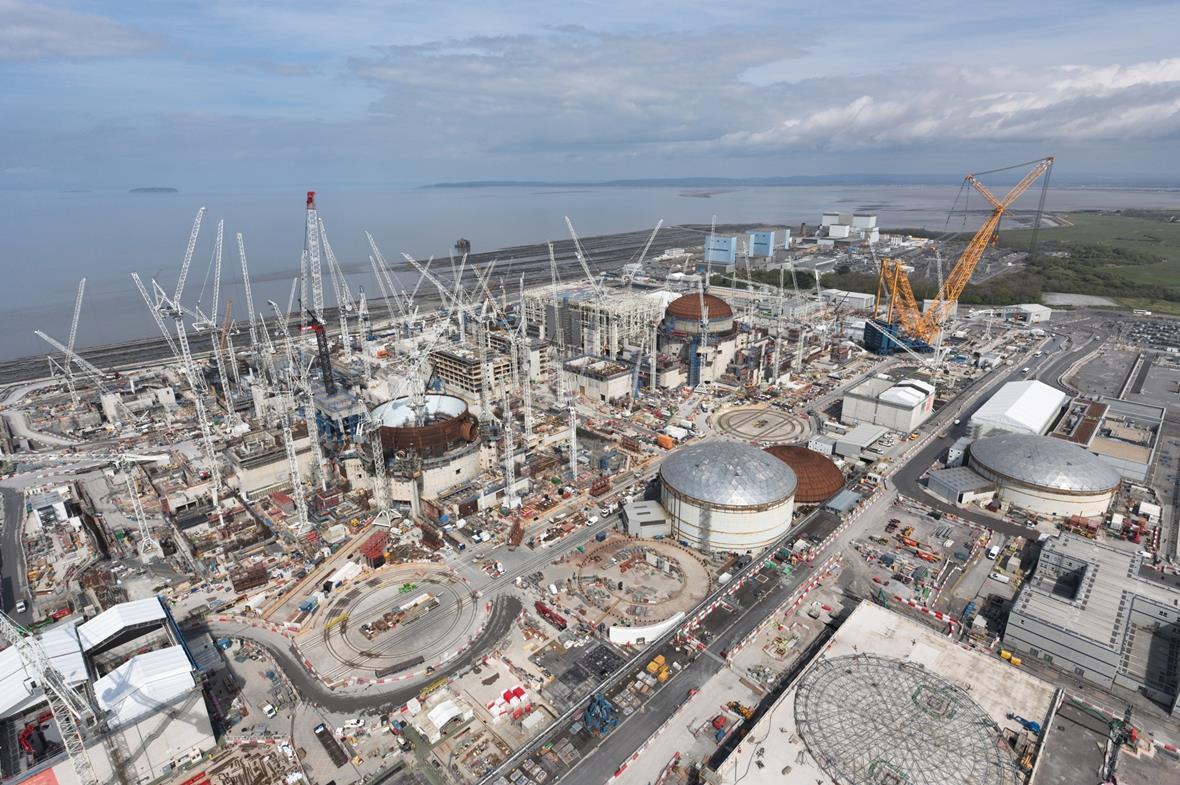
The government revised the strike prices for renewable generation in December 2023, the strike price for offshore wind is £73 and PV £61 so nuclear remains an expensive zero carbon option. The current price for electricity is approximately £83mWhr.
Building, By Thomas Lane, 17 September 2024
Like its Finnish and French twins, Hinkley Point C has suffered from cost overuns and delays. What are the team doing to claw back the losses and what does this mean for Sizewell C?
Nothing on the drive from Taunton to Hinkley Point C hints at the scale of the project at the destination. The journey is along picturesque minor roads, through woods and up and down steep-sided, intimate valleys before the terrain flattens out to reveal Europe’s largest construction site.
The huge location, which is deliberately situated miles away from major population centres, sprawls across a flat plain next to the Bristol Channel on the Somerset coast. Everything about this project is supersized.
There are 58 cranes on this job, one of which is Big Carl, the world’s largest land-based crane. Powered by 12 engines and rolling on 96 wheels, this monster can lift 5,000 tonnes and needs dedicated tracks to move it to the different parts of the nuclear island, where the reactors are being built.
A dedicated bus company was set up to avoid thousands of workers clogging up the lanes with traffic. It brings up to 11,000 of them from around the area and home again on a fleet of 176 buses. This includes a route to transport people around the 176-hectare site. The site even has a doctor’s surgery, a fire service and police station.
The civil engineering works are well advanced, with one of the two reactors close to fit-out and construction on the second coming along. Works elsewhere are progressing with the project about to move from the civil engineering phase to the complex mechanical, electrical and heating fit-out stage (see box).
Getting to this point has been long, slow and expensive. Hinkley Point C is the first nuclear reactor to be built since Sizewell B was completed in 1995. Called the European pressurised water reactor (EPR), Hinkley Point C is the third example to be built in Europe. The first was built at Olkiluoto in Finland and the second at Flamanville in France.
Each of these projects has gone massively over budget and taken much longer to build than envisaged (see box). The latest estimates suggest that Hinkley Point will cost as much as £34bn, nearly double the original budget of £18bn.
Originally scheduled to complete in 2025, the plant could come online as late as 2031. Why is Hinkley proving so expensive to build, despite the lessons from two earlier projects? And what are the cost and programme implications – and therefore the likelihood of it going ahead – for the proposed Sizewell C and beyond?.
There are many reasons for the cost increases and delays. These include the impact of the pandemic, which has delayed construction by 15 months, inflation and the challenge of finding people with the skills to meet the exacting standards demanded by nuclear construction. Different nuclear regulatory regimes across Europe are a big reason why the third EPR reactor is still costing more and is taking longer to build than originally envisaged.
“We had to substantially adapt the EPR design to satisfy British regulations, requiring 7,000 changes, adding 35% more steel and 25% more concrete,” explains Simon Parsons, EDF’s delivery director for the nuclear island.
According to Parsons, the French regulatory approach is very prescriptive, whereas in the UK it is up to EDF to prove that its design meets UK requirements. The UK is more focused on the consequences of failure than in Europe.
The main components inside the reactor building such as the reactor pressure vessel and steam generators are made to the same design by the same manufacturers but are subject to a UK specific safety regime. “We’ve been asked to do more FMEA (failure mode and effects analysis), material analysis and fracture toughness testing of welds over a piece of equipment,” Parsons says.
Progress at Hinkley Point…………………………………………………………………………………………………………………………………….
………………………….The digital data will be used for building operation, maintenance and – in 60 years after the plant starts operating – decommissioning. The data has a second important function: it will be used to build Sizewell C assuming funding is confirmed by the new government. Crucially for the future of UK nuclear, this will incorporate the lessons learnt from the construction of each reactor.
Will Hinkley Point and Sizewell provide value for money?
……………………….Hinkley Point and Sizewell will produce 14% of the UK’s electricity, the same as generated in 2022. This is considerably less than during nuclear’s 1990s heyday when it generated 24.5% of the UK’s electricity.
When Sizewell and Hinkley Point C start generating power, the only operational nuclear power station will be Sizewell B, which means nuclear’s total contribution to UK electricity generation will be 17%.
The argument against nuclear is the cost, with critics saying it is poor value for money compared with renewables. All three EPR nuclear power stations built in Europe have suffered from serious cost overruns and delays.
…………………Hinkley Point C got the green light in 2016 with an estimated £18bn build cost and completion by 2027. The most recent estimates put costs as high as £34bn at 2015 prices, £46bn in today’s money. The poor budgetary track record of the EPR begs the question, is new nuclear good value for money?
Hinkley Point was originally a privately financed joint venture between EDF and China General Nuclear with EDF owning two-thirds and CGN the remaining third. The station was to be financed using the Contracts for Difference mechanism which is used to support forms of electricity generation which can’t compete with gas.
This government guarantees a minimum payment for the electricity, the so-called strike price. In 2012 a strike price of £93.50mWhr was agreed for Hinkley Point C at a time when electricity cost £40mWhr, provoking criticism that nuclear was too expensive. The strike price is inflation linked meaning it is worth approximately £139 at 2023 prices.
The government revised the strike prices for renewable generation in December 2023, the strike price for offshore wind is £73 and PV £61 so nuclear remains an expensive zero carbon option. The current price for electricity is approximately £83mWhr.
As the cost of Hinkley Point has increased, the backers have had to provide more funding. The souring of relations between Britain and China saw CGN stop providing any more money, leaving EDF to fund the shortfall. EDF has called upon the UK government to help out with the escalating cost but it has refused. EDF was fully nationalised in 2023, leaving the French taxpayer to pick up the tab for the cost overruns.
Like Hinkley Point, Sizewell was a joint venture between EDF and CGN but concerns over Chinese involvement meant the UK government took over from CGN in 2022. The cost overruns on Hinkley mean EDF wanted a different funding arrangement to avoid picking up the construction risk for Sizewell.
It will be funded using the regulated asset base model, which is the same as used for Thames Tideway; a surcharge is placed on electricity bills to fund the plant. EDF’s role would be to build and operate the plant without taking the construction risk.

A development consent order for the project was granted in January 2024 and the nuclear site licence approved in May 2024. The final investment decision will be made at the end of this year.
Sizewell C may cost less to build than Hinkley Point thanks to the experience gained constructing the latter, but the British consumer could end up paying more thanks to the different funding arrangement…………………………………………………………………………………………………………………………………………………………………………………………………. https://www.building.co.uk/buildings/hinkley-point-c-building-britains-first-nuclear-reactor-in-30-years/5130997.article
Nuclear Free Local Authorities want to lament, not ‘celebrate’ nuclear legacy.
The Nuclear Decommissioning Authority (NDA) has published its first Heritage Vision and Strategy[i] to ‘celebrate the history and cultural heritage of the nuclear industry’, but to the Nuclear Free Local Authorities the history of the industry is rather something to lament.
The NDA claims that the ‘benefits of preserving, safeguarding, and celebrating nuclear heritage are many, ranging from learning lessons of the past so we can support decommissioning and future nuclear developments, to realising significant social value potential by connecting with local communities and other stakeholders’ but the Nuclear Free Local Authorities are concerned that the strategy will only look to capture the ‘fluffy side’ of nuclear history and will disregard cataloguing its ‘sinister side’.
For the history of the nuclear industry is littered with money, scientific and human resources wasted on abortive, failed or delayed nuclear power designs; the major accidents at Windscale and Wylfa[ii] which endangered large parts of Britain; cancer clusters; the employment of civil nuclear facilities to produce plutonium for British nuclear weapons which poisoned Indigenous people and their lands and ruined the health and took the lives of many of the British military personnel involved in the test programme; a disastrous and costly venture into reprocessing; and a legacy of radioactive contamination of land, air, watercourses and seas, and radioactive buildings to demolish and a stockpile of high-level radioactive waste to manage that will cost over £280 Billion of taxpayers money at current prices.
Councillor Lawrence O’Neill, Chair of the NFLA Steering Committee, said: “Glorifying nuclear history by celebrating it, and ignoring its dark side, will only help facilitate the development of yet more nuclear plants in the future by boosting its acceptability at a time when every available penny and every national resource should be focused on building more renewable energy and storage capacity to achieve Net Zero and the Labour Government’s ambition to make Britain a clean energy superpower.”
The NDA opened Nucleus, the Nuclear and Caithness Archives, near the airport in Wick, Caithness in 2017[iii]. With a team of approximately 20 including archivists, preservation experts and support staff, Nucleus holds archives and artefacts from the nuclear industry. The organisation will work with staff from other sections of the NDA and national heritage organisations from England, Scotland, and Wales to deliver the new strategy.
Nucleus is open to the public Monday to Friday 9am to 5pm. Archives may be viewed in our public search room between 10am to 4pm. Visitors are urged to make an appointment and pre-order documents at least two days in advance. Drop-in customers will also be accommodated as far as possible on the day. Documents can be requested under the provisions of the Freedom of Information Act. Please phone 01925 802077 or email enquiries@nda.gov.uk. Members of the public are also invited to visit our exhibition space located at the front of the building.
Ends://For more information, contact NFLA Secretary Richard Outram by email to richard.outram@manchester.gov.uk
The UK government deserves an award for the biggest load of nuclear propaganda BS yet!

“to safeguard and celebrate the
history and cultural heritage of the nuclear industry”
will also support
future nuclear developments
The Nuclear Decommissioning Authority (NDA) has published the first ever
nuclear heritage vision and strategy. The NDA is the organisation
responsible for decommissioning the UK’s legacy nuclear sites, sites and
facilities. It said the purpose of the nuclear heritage vision and
strategy, published on 12 September, is “to safeguard and celebrate the
history and cultural heritage of the nuclear industry”. Among the
strategy’s aims will be the collection of learnings to improve planning
of decommissioning activities and reduce risks. This will also support
future nuclear developments such as new nuclear builds, research and
development, long term decommissioning programmes and a Geological Disposal
Facility (GDF).
New Civil Engineer 16th Sept 2024,
https://www.newcivilengineer.com/latest/inaugural-nuclear-heritage-strategy-to-support-decommissioning-planning-and-new-nuclear-builds-16-09-2024/
Safety level at Scotland’s largest nuclear site raised to ‘enhanced’ after leaks found
By Katharine Hay, Rural affairs correspondent
Inspectors found “inadequate” storage of alkali metals at the site
earlier this year which fell below the legal requirements. A watchdog has
called for an increase in safety and regulation requirements at
Scotland’s largest nuclear clean-up and demolition project over the
current state of the building.
The Office for Nuclear Regulation (ONR)
found leaks from low-level radioactive waste pits in recent site
inspections at Dounreay, a nuclear power complex which is currently being
decommissioned on the north Caithness coast in the Highlands.
Scotsman 15th Sept 2024
One big factor could decide if one of Wales’ biggest (nuclear) projects can happen
Ken Skates says he is determined to deliver on ‘big road projects’
Wales Online, By Owen Hughes, Daily Post Business Editor, Ben Summer, Senior reporter, 14 Sept 24
Welsh Government Transport Secretary Ken Skates says he wants to deliver on “big road projects”, while discussing a key factor that might resurrect a major transport scheme. The Welsh Government’s roads review, which delivered its conclusion in 2023, shelved several prominent Welsh transport initiatives – especially in north Wales where the Menai crossing, Llanbedr bypass and Flintshire ‘Red Route’ were all cancelled.
These choices were made by then-transport minister Lee Waters, guided by a panel of transportation and environmental specialists appointed by the Welsh Government. This was criticised last year by Ken Skates when he was a backbencher; he later took on the transport minister position under Vaughan Gething and has maintained it with First Minister Eluned Morgan’s new leadership.
Mr Skates hasn’t announced an outright reversal of previous decisions, but he’s hinted at potential modifications to the projects to improve their environmental impact as well as underline the economic benefits of the projects, reports North Wales Live. This week, he spoke about progress made and specifically pointed out that the future of a third Menai crossing might hinge on one pivotal element.
This relates to the dormant Wylfa B project near Cemaes; should it advance, it would necessitate better road network capacity to support the construction of the multi-billion-pound nuclear facility. Wylfa was identified by the preceding UK Government as the optimal site for the nation’s next significant nuclear station.
This week it has been reported that the new UK Government is reviewing the potential of the Wylfa Newydd site, with one option being to repurpose it for a number of small modular reactors (SMRs). Whichever path is taken, be it SMRs or another venture, will require billions in investment and significant road improvements………………………………………
https://www.walesonline.co.uk/news/politics/one-big-factor-decide-one-29935573
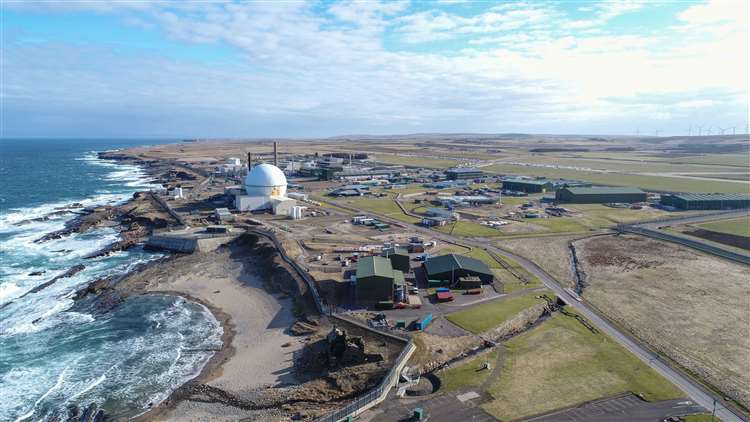
Dounreay placed on ‘special measures’ over wide-ranging safety concerns
John O’Groat Journal By Iain Grant, 13 September 2024
An action plan has been drawn up by operators NRS to address the issues which include ageing, deteriorating plant, radioactive leaks and the storage of chemicals.
Among the problem areas is the condition of buildings in the prototype fast reactor being used to store drums of radioactive sodium.
An inspection by the Office for Nuclear Regulation (ONR), in April made grim reading for site management. It found significant corrosion and metal loss of structural steelwork in the turbine hall.
It concluded “It was judged that the steam generator hall and generator transformer house are not adequate, as the licensee has failed to safely protect the drums against uncontrolled
degradation via air and moisture ingress.
“It is also judged that the licensee is not recognising when there is degradation in these areas.”
The issue first came to light following a probe into a minute leak of
radioactive tritium from a sodium drum in the turbine hall in November
2022. Its exposure to rainwater through a leaky roof was blamed for causing
the corrosion.
The inspection was one of a number carried out at Dounreay
in the spring and summer to receive an amber rating by ONS. Others revealed
some elderly electrical plant in a “degraded” state while Dounreay was
found to have breached the Control of Major Accident Hazards (CoMAH)
regulations by its stockpile of chemicals being over its set limit. A fire
safety inspection was generally positive but flagged up a “significant
shortfall” in assessment and control of sources of dangerous substances.
The inspector said: “It is my judgement that Dounreay do not currently
understand the totality of risk presented by dangerous substances on site
and therefore cannot provide adequate assurance as to the safety of
personnel on site.”
John O’Groat Journal 13th Sept 2024
UK sent Kyiv large supplies of old military equipment, watchdog finds
One defence official, not involved in the audit, said: “The war has tested our stockpiles, but it’s a good thing for us that we have cleared out old kit and can now replace it with new equipment.”
Defence ministry dispatched kit ‘due to be scrapped or replaced’, according to National Audit Office
Ft.com John Paul Rathbone in London, September 11 2024
Much of the military aid the UK has given to Ukraine has consisted of old equipment, such as army boots that otherwise would have had to be thrown away, according to a spending watchdog.
Military gear that was “often due to be scrapped or replaced” was prioritised by the Ministry of Defence because it was believed to have “immediate military value” to Ukraine — but sending it to Kyiv also “reduced waste or costs relating to disposal”, the National Audit Office said on Wednesday.
The ministry also used other “innovative ways of sourcing military equipment”, such as reverse-engineering replacement tracks for Soviet-era T72 tanks from samples at a tank museum in Dorset, the NAO noted.
The findings come as some of Kyiv’s western allies tire of supporting Ukraine almost three years after Russia launched its full-scale invasion. The £7.8bn of military aid the UK has pledged or sent to Kyiv make it the third-largest supplier of western support to Ukraine after the US at £56.5bn, and Germany at £16.2bn, the NAO said. The UK has pledged to continue providing £3bn a year of military aid. Other western allies have also given ageing equipment to Kyiv: in one recent US example, 10 donated vehicles ostensibly worth more than $7mn had a combined book value of zero.
However, ageing military equipment cleared from British stockpiles was only a small portion of total UK aid sent to Ukraine, because it had a book value of just £171.5mn versus an estimated replacement cost of £2.7bn. Three-quarters of it also came during the first year of the invasion. The UK spent a further £2.4bn on procuring equipment, contributed £500mn to an international fund, and spent £830mn on operational support, some channelled via Nato………………………………………………………………………………………………………………………………..
One finding concerned the value of UK military supplies. The report cited 17,000 pairs of army boots, which the UK donated in March 2022. The shoes were nearing the end of their usable life and, if not sold, “would have been sent to landfill”. In another example, the NAO said the 14 Challenger 2 tanks sent in 2023 had a book value of just £17mn, compared to their original purchase price at the end of the 1990s of £47mn.
One defence official, not involved in the audit, said: “The war has tested our stockpiles, but it’s a good thing for us that we have cleared out old kit and can now replace it with new equipment.”
The UK has set aside £2.5bn to replenish its stockpiles depleted by the war. In April, the previous Conservative government pledged £10bn in investment to boost munitions productions over the next decade.
Bolstering Britain’s defence industry is also expected to be a priority in the “root and branch” defence review launched by the Labour government in July………………………….. https://www.ft.com/content/f44bf7d0-0895-4f63-9fce-d3de8e686b57
Nuclear vs Energy Storage

The Chair of the Nuclear Free Local Authorities has made a plea to the new
Minister of State for Energy for the Department of Energy Security and Net
Zero to prioritise investment in energy storage capacity alongside
renewables as a key component in making Britain a Net Zero nation. Energy
storage, both short- and long-term, is often an unsung, but essential,
element to achieving – as is the Labour Government’s stated ambition
– the goal to make the UK a ‘clean, green energy superpower’.
Numerous academic studies have demonstrated that this is not only possible
solely through investment in renewables, but that it can be achieved at a
cost to the taxpayer that is £100 billion lower than one which embraces
nuclear energy.
The NFLA’s Scotland Policy Advisor Pete Roche has just
written an excellent briefing published under the No2 Nuclear banner
titled, ‘Energy Storage and Flexibility in a 100% Renewable Energy
System’, which highlights its criticality in capturing the surplus energy
often generated, but unused, by renewables as well is in more effectively
managing energy demand against supply.
Dr. M.V. Ramana, the Simons Chair in
Global Disarmament and Human Security at the University of British
Columbia, described the balance between generation, storage and management:
“We have learned how to manage grids with high proportions of renewable
sources. To balance this variability, we must invest in a mix of renewable
energy technologies across various regions, and in battery and other
storage technologies to store excess energy. In addition, we need to shape
electricity demand to more closely match supply.”
NFLA 12th Sept 2024
‘Let’s Just Fight’: How Britain Prefers War Over Peace in Ukraine

Boris Johnson avoided promoting a compromise peace in Ukraine after Russia invaded. Now, Labour continues to help prolong the conflict to secure British interests.
DECLASSIFIED UK, MARK CURTIS, 9 September 2024
Last week, defence secretary John Healey announced that the UK “will continue to step up our support to help Ukraine achieve victory” in its war with Russia.
Both he and foreign secretary David Lammy have repeatedly said “Labour will stand with Ukraine for as long as it takes to win”.
When President Volodymyr Zelensky’s Ukrainian forces conducted an incursion into Russia’s Kursk region last month, Healey praised the move as “bold”, saying it put Russian president Vladimir Putin “under pressure”.
Equipment used in that offensive included UK-supplied Challenger tanks sent to Ukraine last year.
Prime minister Keir Starmer has also told Zelensky he is willing to allow Ukraine’s use of UK-supplied long-range missiles to hit targets inside Russia – provided the US agrees to it.
Despite Labour’s public relations about “change” during the general election, Lammy has consistently said that “with Labour there will be no change in the UK’s financial, military, diplomatic and political support for Ukraine”.
The consequences of this are hard to overstate. Since Russia’s brutal invasion, inflicting untold misery on millions of Ukrainians, bombarding civilians and committing war crimes, UK governments have been overwhelmingly focused on one thing – “winning” the war.
Yet one thing Whitehall has conspicuously avoided is making serious attempts at promoting a compromise peace that would end the fighting.
Indeed, one casualty of Ukraine’s recent incursion into Russia is that it derailed secret talks to negotiate an agreement halting strikes on energy and power infrastructure, according to the Washington Post.
There are specific reasons Whitehall prefers war over peace in Ukraine. It is worth going back to the very first chance negotiators had to end this devastating conflict soon after Russia invaded.
Scuppering peace prospects
There is considerable evidence showing the UK helped scupper the prospects for peace within a few weeks of Russia’s invasion in February 2022.
The following month, direct peace negotiations between Ukrainian and Russian delegations and mediation efforts by the then Israeli prime minister, Naftali Bennett, created a genuine chance for ending the war peacefully.
Meeting in Turkey, the two sides produced the Istanbul communiqué in late March 2022 in which Ukraine promised not to join Nato or allow foreign military bases on its soil. For its part, Russia promised to withdraw its occupation troops from Ukraine, although not from the Donbas region or the Crimea.
David Arakhamia, the parliamentary leader of Zelensky’s “Servant of the People” party who led Ukraine’s delegation in the talks, later revealed that Moscow was “ready to end the war if we took neutrality… and made commitments that we would not join Nato”.
This was the key point”, he said in an interview in 2023.
Reports suggest Zelensky was then prepared to give up Nato membership and that he understood this was the key issue for Moscow. “And as far as I remember, they started a war because of this”, he said at the time.
‘Permanent neutrality’
Russia and Ukraine appeared relatively close to a deal that would “have ended the war and provided Ukraine with multilateral security guarantees, paving the way to its permanent neutrality and, down the road, its membership in the EU”, according to one detailed study…………………………………………………………………………………………………………..
‘Keep fighting and dying’
In their summit in Brussels on 24 March 2022, Nato decided to oppose peace negotiations until Russia had fully withdrawn all its troops from Ukraine.
By early April, the Washington Post was reporting that “For some in Nato, it’s better for Ukrainians to keep fighting and dying than to achieve a peace that comes too soon or at too high a price for Kyiv and the rest of Europe.”
Former German chancellor Gerhard Schröder, who acted as one of the mediators in the Istanbul talks, later said that “nothing could happen because everything else was decided in Washington…. the Ukrainians did not agree to peace because they were not allowed to. They first had to ask the Americans about everything they discussed.”
Enter Boris Johnson
As talks were approaching a possible agreement, UK prime minister Boris Johnson arrived unannounced in Kyiv on 9 April 2022.
A report in Ukrainska Pravda noted that Johnson brought two messages: “The first is that Putin is a war criminal, he should be pressured, not negotiated with”, and “the second is that even if Ukraine is ready to sign some agreements or guarantees, they [the collective West] are not”.
Before his visit, Johnson “instructed” Zelensky “not to make any concessions to Putin”, columnist Simon Jenkins wrote in the Guardian.
David Arakhamia said that Johnson had come to Kyiv to inform Ukrainian officials the West wouldn’t sign any agreement with Moscow, instead urging: “let’s just fight.”……………………………………………..
Peace feelers
The March/April 2022 negotiations may have produced the best opportunity to bring about a compromise peace, but there have been others since.
It is difficult to gauge whether the peace feelers put out by the Kremlin over the past two and half years are simply part of its propaganda strategy or serious attempts to end the fighting. The reason is that they have never been seriously tested by Washington and London……………………………………………………………..
Total war
The US and UK have long publicly rejected talks based on anything other than Russia’s complete withdrawal from Ukraine.
This principled position might have merit but for the real world intervening. Aggressors should surely not be rewarded in international relations, but this is something that applies as much to the US/UK in Iraq or Libya, or Israel in the occupied Palestinian territories, as to Russia in Ukraine.
Only in the case of Ukraine, however, has the UK held to the high-minded position that Moscow must withdraw all its forces before any peace moves can be considered.
The second obvious truth is that holding to the position of regaining full control over all Ukrainian territory – including the disputed areas in the Donbas and the Crimea – is simply a recipe for ongoing war.
As leading analyst Anatol Lieven has written, “To recover everything it has lost since 2014 looks impossible. It would require the total defeat of the Russian military.”
Yet this appears to be what Keir Starmer wants. “This terrible conflict must end with the defeat of Putin in Ukraine”, the then UK opposition leader said in the House of Commons in 2023.
Although Zelensky vows to fight on, some senior Ukrainian figures are more than aware of the need for pragmatism. ………………………………………………….
What does Britain want?
To the UK establishment, the Ukraine war is a proxy one against Russia, its key rival for influence in Europe.
With Ukraine as the latest battleground in a modern great game, Whitehall’s main goal is to maintain Russia as a pariah state and end its independent foreign policy, which challenges Nato’s supremacy in Europe and, to an extent, the Middle East.
The war has enabled the UK to cement relations with an important new ally. UK officials have barely hidden their glee at overcoming their European competitors to get to Kyiv first. ……………………………………………………
MI6 in Ukraine
It turns out that British intelligence was increasingly active in Ukraine for years before Russia’s invasion – a remarkable turnaround from the blackout of the Cold War years.
A bombshell New York Times investigation in February 2024 notes that the CIA established 12 secret “forward operating bases” along Ukraine’s border with Russia in the decade before 2022…………………………………………………..
According to the New York Times, in the run-up to the 2022 invasion, the head of one of Russia’s intelligence services reported to Putin that CIA and MI6 were controlling Kyiv and were turning the neighbouring country “into a beachhead for operations against Moscow.”
In other words, “Ukraine was drawn into a Western coalition for the purpose of waging a broad-based shadow war against Russia”, comments Mark Episkopos, a fellow at the Quincy Institute.
He adds: “Moscow repeatedly warned — for many years before 2014 — that it was and remains prepared to take drastic action to prevent Ukraine from being used by the West as a forward operating base against Russia. Yet that, as recounted in lurid detail by the New York Times, is precisely what has happened over the past 10 years”.
This budding intelligence relationship has been cemented by the war itself. US Defense Department documents leaked in March 2023 showed Britain then had the largest number of special forces operating in the country, with 50 troops.
War profits
Courting Ukraine as a new ally has major benefits for the UK arms industry, which exerts enormous influence over Whitehall’s foreign policies. War is good for them, peace not so much.
In the ten years before Russia’s invasion of Ukraine, UK arms companies sold only £35m in military equipment to Kyiv. That figure has skyrocketed since February 2022 to over £800m.
UK arms corporations have secured a new, lucrative market……………………………………….
The war is a boon right across the UK’s substantial military industry: Britain has sent around 400 different military capabilities to Ukraine since 2022.
For US arms companies, the prize has been even greater. Washington has provided over $150bn worth of military equipment and aid to Ukraine since 2022.
Endgame
Journalist Branko Marcetic has long documented reports highlighting Western opposition to Ukraine peace prospects.
“It’s becoming increasingly difficult to deny the war in Ukraine could have been ended mere months into the Russian invasion — and that the US and UK governments worked to prevent this from happening”, he writes.
If a compromise peace holds little value for the British elite, what does “winning” mean? A war with Russia?
In May this year the UK and US publicly gave Ukraine the go-ahead to use British-supplied weapons to strike targets inside Russia, saying it was up to Kyiv whether to do so.
That decision appeared to cross a line. With senior British military figures saying the UK must be prepared to fight a war with Russia, who knows what endgame is being planned in Whitehall, or what Keir Starmer’s limits might be. https://www.declassifieduk.org/lets-just-fight-how-britain-prefers-war-over-peace-in-ukraine/
Boris Johnson goes into business with Steve Bannon, Charlotte Owen and a uranium entrepreneur
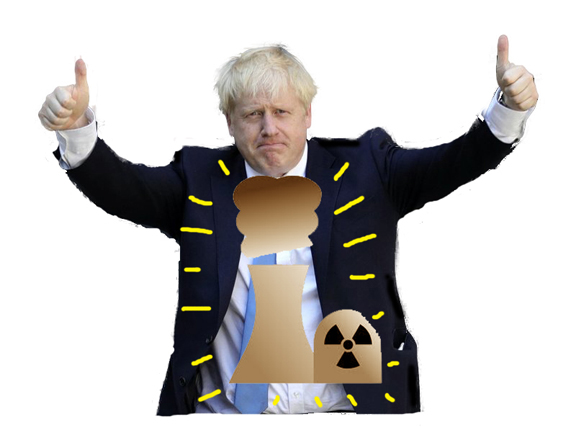
Owen, who was elevated to the House of Lords last year at the age of 29, now has a plum job despite having no energy sector experience.
by Jack Peat, 2024-09-09, https://www.thelondoneconomic.com/business-economics/boris-johnson-goes-into-business-with-steve-bannon-charlotte-owen-and-a-uranium-entrepreneur-382535/
Boris Johnson has been added as the director and co-chairman of Better Earth, a company that lists Charlotte Owen, Steve Bannon and a uranium entrepreneur among its staffers.
Better Earth was incorporated by Amir Adnani in December last year and now includes a high-profile roster of employees, including a former prime minister, a controversial media strategist and Britain’s youngest peer.
Adnani, a Canadian citizen of Iranian heritage, is the director of a network of offshore companies based in the British Virgin Islands and is president and CEO of Uranium Energy Corp, a US-based mining and exploration company, championed by former Donald Trump adviser Bannon.
On 1st May, Companies House filings reveal that “the Rt Hon Alexander Boris de Pfeffel Johnson” was added as a director and co-chairman, shortly followed by Charlotte Owen – now Baroness Owen of Alderley Edge – who joined the company to work alongside him despite having a lack of energy sector experience.
Headquartered in a serviced office building in Sevenoaks, Better Earth describes itself as an “energy transition company”.
Its website, which is currently under construction, says it will “work directly with national governments and regions that are seeking both inward investment and/or to reduce their emissions ahead of 2030”.
In 2022, just days before leaving office, Johnson announced a £700 million investment in the controversial Sizewell C reactor stating the country needed to “Go nuclear, go large!”.
At the time, Caroline Lucas, the then Green MP and former party leader, described Sizewell C as “massively costly, achingly slow and carries huge unnecessary risks”.
Among those who cheered the Sizewell C investment was Adnani. He excitedly posted the announcement on his Twitter account: “Boris Johnson plans to sign off on new £30bn nuclear plant in his final week in power! #uranium.”
Adnani has appeared at least twice on former Donald Trump adviser Steve Bannon’s War Room podcast, and on one occasion told him that his ambition was to achieve “full spectrum energy dominance”.
Doesn’t sound scary at all!
Democracy Dumped in Cumbria.. Nuclear Dump Under the Irish Sea Here We Come?! UNLESS….

On By mariannewildart
Today’s BBC news item features Councillor David Moore enthusing “it’s (Sellafield) the biggest employer in the area”. He adds: “I think that’s why conversation here’s different. We’re already the hosts of the waste. And we all want to find it a safer location.” Councillor Moore is of course very keen on new wastes arriving at Sellafield.
What today’s BBC news article on nuclear waste fails to state is that Councillor David Moore was one of only 3 (I know!) “executive councillors” who took the decision to put Cumbria in the frame for an unprecedented deep sub-sea nuclear dump by agreeing to the “Community Partnership” with Nuclear Waste Services in the plan to “deliver a Geological Disposal Facility.” In doing so Councillor Moore failed to declare his fiscal interests in the nuclear industry by dint of his paid membership of various nuclear bodies (monies recieved totalling over £100,000) and his spouse’s employment.
A police complaint was made about this ongoing failure to declare interests but Cumbria police after over a year of obfuscation and delays decided that there was no offence. Cumbria police have essentially given the green light to those in public office not to declare fiscal interests in decisions they make on industrial developments.
We have asked for sight of Cumbria Police’s reasons for failing to take Councillor David Moore to task over his failure to declare interests but to no avail. It is clear that Councillor Moore was told by Cumbria Police that no action would be taken against him long before we were told. And we were only told after saying we would make an official complaint against the length of time the Police’s decision was taking.
We have sent off another email today asking for sight of Cumbria Police’s justification for not taking any action against David Moore – not even a slap on the wrist it appears for what is a criminal offence. Meanwhile Councillor David Moore, who has put Cumbria once again in the frame for a nuclear dump, is the ‘go to’ voice of the “community” for the mainstream media.
Something is very wrong here.
oday’s email to Cumbria Police’s Disclosure Unit:
Dear Disclosure Unit
We do not appear to have had full answers from you regarding Cumbria Police’s decision not to prosecute Councillor David Moore’s failure to declare nuclear interests when taking nuclear decisions with Copeland Borough Council. David Moore is quoted on today’s BBC News as a Councillor and member of the GDF Partnership. The news item does not mention that David Moore was one of only three councillors who voted to go forward with GDF Partnership while recieving monies from the nuclear industry. https://www.bbc.co.uk/news/articles/czx6e2x0kdyo
?What Date was Councillor David Moore told of the decision that he had committed no criminal offence when making Council decisions on nuclear by neglecting to disclose monies from the nuclear industry and that fact that his wife works for ……..
On behalf of over 30 people signing a letter of complaint against Cllr David Moore, I request sight of the “comprehensive review of the police investigation that was undertaken and the outcome that no further action is to be taken because there is no evidence of any criminality.”
In particular I request sight of justifications for overturning the Localism Act in the case of Cllr David Moore
http://publicsectorblog.practicallaw.com/first-conviction-of-a-councillor-under-the-localism-act-2011/
The original letter of complaint was written in 2022 – the length of time the police took to reply to us and then take a decision (to take no action) is scandalous.
For all links including the original letter check out Lakes Against Nuclear Dump
1 This Month



26 September – International Day for the Total Elimination of Nuclear Weapons


PLEASE OPPOSE HR 8255 AND S.3639 – bills would accelerate satellite deployment, with no environmental review or safeguards – https://ncstd5li.quorum.us/campaign/169331/
To see nuclear-related stories in greater depth and intensity – go to https://nuclearinformation.wordpress.com
-
Archives
- September 2026 (269)
- August 2026 (330)
- July 2026 (355)
- June 2026 (287)
- May 2026 (306)
- April 2026 (356)
- March 2026 (251)
- February 2026 (267)
- January 2026 (308)
- December 2025 (358)
- November 2025 (359)
- October 2025 (375)
-
Categories
- 1
- 1 NUCLEAR ISSUES
- business and costs
- climate change
- culture and arts
- ENERGY
- environment
- health
- history
- indigenous issues
- Legal
- marketing of nuclear
- media
- opposition to nuclear
- PERSONAL STORIES
- politics
- politics international
- Religion and ethics
- safety
- secrets,lies and civil liberties
- spinbuster
- technology
- Uranium
- wastes
- weapons and war
- Women
- 2 WORLD
- ACTION
- AFRICA
- Atrocities
- AUSTRALIA
- Christina's notes
- Christina's themes
- culture and arts
- Events
- Fuk 2022
- Fuk 2023
- Fukushima 2017
- Fukushima 2018
- fukushima 2019
- Fukushima 2020
- Fukushima 2021
- general
- global warming
- Humour (God we need it)
- Nuclear
- RARE EARTHS
- Reference
- resources – print
- Resources -audiovicual
- Weekly Newsletter
- World
- World Nuclear
- YouTube
-
RSS
Entries RSS
Comments RSS

