MP’s claim of support for nuclear power in Highlands challenged
By John Davidson john.davidson@hnmedia.co.uk, Northern Times 11th June 2024
An anti-nuclear campaigner has hit out at a claim made by Highland MSP Edward Mountain that people in the region want nuclear power.
The Conservative MSP hosted an energy summit in Strathpeffer last Friday, bringing together industry experts and members of the public.
The aim was to discuss the future of energy production and provision in the Highlands, with panellists including representatives from SSEN, Storegga, Highland Fuels, Highland Renewables, and the Anaerobic Digestion and Bioresources Association.
Scottish Greens brand Labour’s commitment to nuclear weapons ‘obscene and immoral’

Chris Jarvis 9 June 2024 https://bright-green.org/2024/06/09/scottish-greens-brand-labours-commitment-to-nuclear-weapons-a-obscene-and-immoral/
Labour’s commitment to the UK’s nuclear arsenal has been branded an ‘obscene and immoral waste of money’ by the Scottish Green Party. The party’s external affairs spokesperson Ross Greer went on to say that nuclear weapons are a ‘moral evil’ and urged voters who support a nuclear-free world to vote Green.
Greer said: “Nuclear weapons are a moral evil and an obscene and immoral waste of hundreds of billions of pounds. It is a vast money pit that could be far better spent eradicating poverty, tackling the climate crisis and transforming public services like the NHS.
“Trident does nothing to make us safer, and has no place in Scotland. The so-called ‘triple-lock’ that Labour is proposing is a multi-billion bung to a weapons industry already enjoying eye watering profits from the UK’s aggressive foreign policy.
The message from Sir Keir Starmer is very simple. If you care about peace and global security, don’t vote Labour.”
Greer added: “With Labour and Tories in lockstep on nuclear weapons, the only way we will disarm Scotland’s waters is as an independent nation.
“I look forward to the day when an independent Scotland can finally take its place on the world stage and join the dozens of other nations who have signed the Treaty on the Prohibition on Nuclear Weapons.”
Keir Starmer’s policy on nuclear weapons
Prof Nick Megoran
School of geography, politics and sociology, Newcastle University
It is ironic that news of Keir Starmer’s plan to restate Labour’s commitment to “a ‘triple lock’ for the UK’s nuclear deterrent” (Keir Starmer to declare Labour as ‘party of national security’, 2 June) emerged on the same day that Toshiko Tanaka, a survivor of the Hiroshima atomic bomb, addressed a spellbound meeting in London – organised by the Campaign for Nuclear Disarmament and the Quakers – about her childhood experiences in 1945.
She spoke of seeing the initial explosion that killed every one of her classmates. She recounted regaining consciousness with a mouth full of dirt, running home to a mother who could not recognise her own badly burnt daughter, and smelling the lingering stench of burning flesh as bodies were cremated. To this day, she struggles to sleep as new sores break out on her skin, and cannot see a grilled tomato without remembering the ghastly sight of skin peeling off the dying who staggered through her neighbourhood like zombies.
Through the nuclear non-proliferation treaty, the UK is committed to the goal of a nuclear-weapons-free world. Starmer should formulate policy based on our legal and moral obligations, not a calculating attempt to win votes by looking tougher than the Tories.
Norman Rimmell
Darley Dale, Derbyshire
Jeremy Corbyn is right – our political leaders are sticking their heads deeply in the sand. He could have added that if it’s possible for something to go wrong then you can be certain that one day it will. We may escape nuclear war, but accidental nuclear attack will, one day, happen. We’ve been extremely lucky to have escaped this so far, but eventually our luck will run out, unless we put a stop to this madness.
Nuclearisation of universities
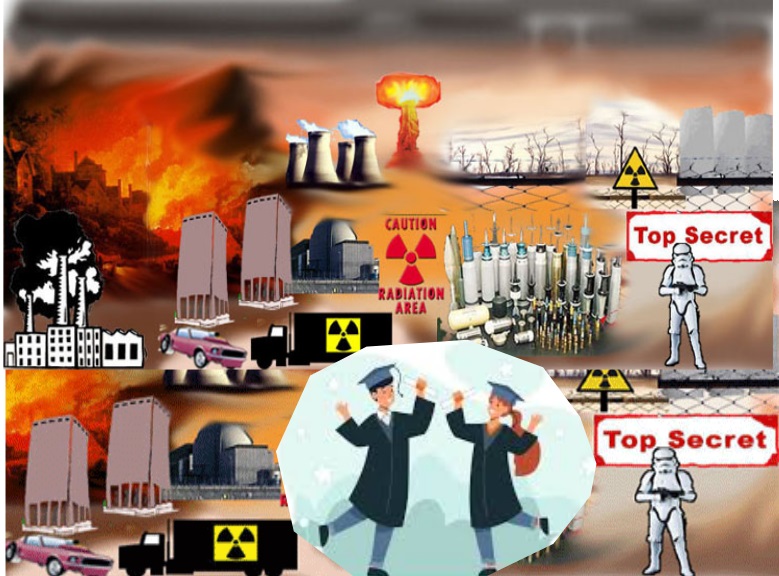
Helping youngsters start a nuclear career
by Business Crack, June 9, 2024
“………..The Nuclear Sponsorship Scheme offers 50 students a series of summer placements after each year of their degree as well as funding worth £42,000 – £27,000 in university fees and a £15,000 subsistence bursary – £5,000 per year for three years.
The scheme is means-tested and aimed at increasing social mobility among young people from lower socio-economic backgrounds………………… https://businesscrack.co.uk/2024/06/09/helping-youngsters-start-a-nuclear-career/
MSP’s claim of support for nuclear power in Highlands challenged
By John Davidson , john.davidson@hnmedia.co.u, 09 June 2024 https://www.johnogroat-journal.co.uk/news/msp-s-claim-of-support-for-nuclear-power-in-highlands-challe-352590/
An anti-nuclear campaigner has hit out at a claim made by Highland MSP Edward Mountain that people in the region want nuclear power.
The Conservative MSP hosted an energy summit in Strathpeffer last Friday, bringing together industry experts and members of the public.
The aim was to discuss the future of energy production and provision in the Highlands, with panellists including representatives from SSEN, Storegga, Highland Fuels, Highland Renewables, and the Anaerobic Digestion and Bioresources Association.
More than 70 people attended the Let’s Talk Energy Summit at Strathpeffer Pavilion.
Mr Mountain, who convenes the Scottish parliament’s Net Zero, Energy and Transport Committee, said that these contributors would be useful to inform his work at Holyrood.
He said that people at the summit wanted to see a mixture of different energy systems, including nuclear, rather than just renewables.
“I was excited to host this well-attended event in Strathpeffer alongside an experienced panel of five industry professionals where we discussed the many complexities of renewable energy,” Mr Mountain said.
“I was interested to note the near-unanimous support for nuclear energy throughout the audience as part of our energy mix in the Highlands, and I feel that we ought to look at developing our power closer to where it is going to be used.
“People in the Highlands understand better than anyone the need for different energy sources, as well as energy security.
“However, these communities won’t be walked over when it comes to infrastructure, and big companies need to understand that they must be honest about what they are planning in the medium and long-term.”
Tor Justad, chairperson of Highlands Against Nuclear Power (HANP), challenged the assertion that the support for nuclear at the summit reflected public opinion.
He said: “In a recent survey, 62 per cent of the Scottish population supported renewable energy over nuclear.
“There may have been ‘near unanimous’ support from a handful of organisations and public at the ‘Energy Summit’ held in Strathpeffer recently, but presumably they weren’t provided with any downsides to nuclear.
“If HANP had been invited we could have provided a long list of reasons why nuclear has no place either in energy production or reaching a net zero target.
“A few of these include cost – as producing electricity through nuclear is three times as expensive as renewables; and the risks at all stages, including decommissioning, as we know from radioactive particles on shores near Dounreay, sodium tank leaks and previous accidents involving the shaft and silo.
“Nuclear is not clean as uranium has to be mined and there are massive carbon emissions during the average 13-year construction period of a nuclear plant.
“So the claim that Highlanders want nuclear power has no basis in fact and any support is likely to come from nuclear employees at Dounreay and their supporters, where it is claimed that the clean-up will take another 40 years at a cost to taxpayers of a staggering £8.7 billion – so not much chance of cheaper electricity any time soon.
“HANP will continue to actively oppose any new nuclear proposals for the Highlands, any part of Scotland and in other parts of the UK together with fellow NGO’s opposed to new nuclear.”
We should aim for nuclear disarmament – Plaid leader, UK
By Nick Bourne, BBC News, 9 June 24
Nuclear disarmament of the UK is something “we all should be aiming for”, according to Plaid Cymru’s leader Rhun ap Iorwerth.
But he said the UK’s defence force should be “well-funded”, able to “play their part in defending ourselves in peacekeeping roles” and ensures the welfare of military personnel after they leave service.
His comments come after Conservative minister Penny Mordaunt said in a general election debate Russia’s leader Vladimir Putin would doubt Labour’s willingness to use nuclear arms.
“I’m against the nuclear deterrent because I don’t think that is the kind of defence that we need and should be building in the 21st Century,” Mr ap Iorwerth told BBC Radio Wales’ Sunday Supplement……………………………
The Plaid leader shared a stage with leading figures from other political parties in Friday’s BBC general election debate……………………………….
The Green Party and the SNP both confirmed they opposed renewing Trident – arguing the money could be better spent on other areas of defence. https://www.bbc.com/news/articles/cj551318ejlo
Keir Starmer’s Trident triple lock: how Britain’s obsession with nuclear weapons has become part of election campaigns

The nuclear debate is also wrapped up in a gendered narrative that sees a commitment to nuclear weapons as strong, sensible, rational and masculine, and anything else as weak, irrational and feminine
Nick Ritchie, Professor, Department of Politics & International Relations, University of York, June 7, 2024 https://theconversation.com/keir-starmers-trident-triple-lock-how-britains-obsession-with-nuclear-weapons-has-become-part-of-election-campaigns-231834
With a campaign slogan of “change”, Keir Starmer is on a mission to persuade the electorate that the Labour party of 2024 is different to the one of 2019. Part of this is his unequivocal “triple lock” commitment to Trident, the UK’s nuclear weapon system.
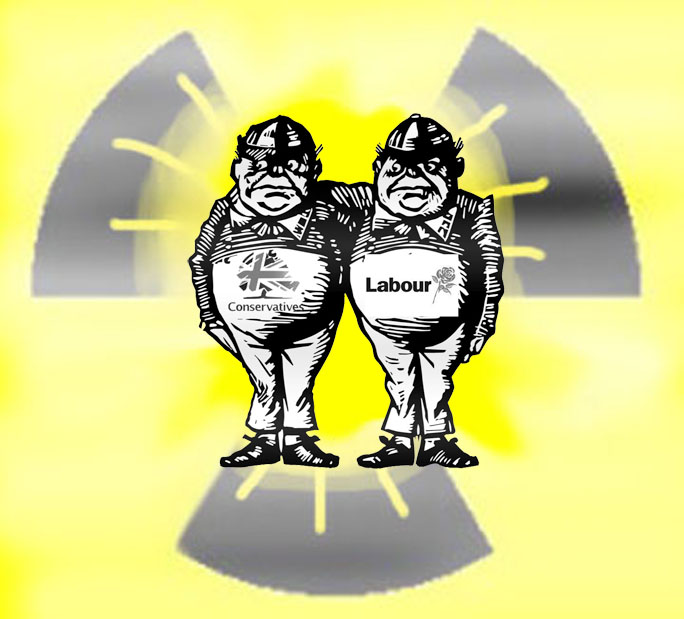
At a time when the risk of a major European war is higher than it has been for decades, Starmer has reiterated his support for a massive programme to replace the Trident system (submarines, warhead, missiles and infrastructure), initiated by former Labour prime minister Tony Blair, in 2006. The triple lock is a commitment to the current programme to build four new ballistic missile submarines, keep one of the four always at sea on operational patrol and keep the system up to date.
Starmer is pushing back against Conservative claims that Labour is “weak”, “cannot be trusted” and is a “danger to national security”, accusations that have plagued his predecessor Jeremy Corbyn, a lifelong opponent of nuclear weapons.
Ideas of British national identity and Britain’s place in the world connect to a commitment to nuclear weapons. This identity is also tied to the idea of Britain as a military power in Europe, and Labour’s current identity of being strong on defence.
Prospective prime ministers are effectively required to publicly declare that they would be prepared to use nuclear weapons. Commitment to nuclear deterrence has become a de facto criterion for entering No 10.
Corbyn found this out in 2017 when he told the BBC’s Andrew Marr he would never use nuclear weapons first, or perhaps ever, if he were prime minister. In an unprecedented intervention, serving and former chiefs of the defence staff said that Corbyn’s response showed he “should not be trusted … with the nation’s defence and security”, and was unfit to be prime minister. Corbyn’s opposition to Trident is still being used to attack Starmer and Labour years later.
Starmer first signalled his commitment to Trident in 2021. Two years later, shadow defence secretary John Healey and shadow foreign secretary David Lammy declared their “unshakable” commitment to nuclear weapons as part of “Labour’s heritage”. But concerns about the morality and efficacy of using nuclear weapons have long divided Labour.
This is quite different to how nuclear weapons, which are based in Scotland, are framed by the Scottish National Party. In their conception of an independent Scotland’s national identity nuclear weapons are associated with imposed, undemocratic, Tory “imperialism” in which Labour has been complicit, and contrary to the SNP’s version of progressive internationalism. The SNP has said they would remove nuclear weapons from Scotland in the event of Scottish independence.
The nuclear debate is also wrapped up in a gendered narrative that sees a commitment to nuclear weapons as strong, sensible, rational and masculine, and anything else as weak, irrational and feminine.
The nuclear ‘consensus’
This Whitehall nuclear consensus closes down democratic debate on if, how and why the prime minister might use nuclear weapons. But views in the country are far from settled.
Recent polling shows 53% supports or strongly supports the UK having nuclear weapons, with about 30% opposed or strongly opposed. For women, the split is 50:50. For under 25s, it is 28% in favour and 43% against. In Scotland it is 35% in favour and 41% against (the rest say they don’t know).
The UK prime minister is one of a handful of people in the world with the power to inflict truly catastrophic levels of violence upon another society. Nuclear weapons should therefore be subject to intense scrutiny and debate, especially in a liberal democratic society. Starmer should appreciate this as a human rights lawyer, since practically any use of nuclear weapons would transgress international humanitarian and human rights law.
The nuclear programme is also hugely expensive. At a time when public services including health and education are under serious pressure, this arguably makes democratic debate even more necessary.
In March 2024 the House of Commons public accounts committee reported that the cost of the Ministry of Defence’s 10-year equipment plan was over budget by £17 billion, despite a budget increase of £46.3 billion. The greatest cause of this was the nuclear programme, where costs have increased by £38.2 billion (62%) since the last plan. The nuclear programme is now 34.5% of the £288.6 billion defence equipment plan, which itself is 49% of the total MoD budget.
In particular, the programme to deliver the new Dreadnought ballistic missile submarines has become the MoD’s highest priority. The department will redirect funds from conventional military programmes to support it if it can’t get more money from the Treasury. Labour and the Conservatives have both committed to increase the defence budget, especially for conventional forces, but have not said where the money will come from.
There are other political reasons why Starmer has come out strong for Trident. In particular, the thousands of jobs that the production and maintenance of nuclear-powered submarines supports in England and Scotland, and the power of the unions in the Labour party. The “triple lock” language also mirrors the triple lock commitment on pensions. This may appeal to older voters, who are more likely to vote (and vote Conservative).
Starmer’s “triple lock” might make sense politically from his perspective, but it is symptomatic of a nuclear consensus in Whitehall politics that brooks little dissent. The result is that debate on these difficult and serious security, economic, legal and moral choices on nuclear weapons routinely gets shut down and reduced to political performance. In the words of retired senior British Army officer General Sir Richard Shirreff, it infantilises a deadly serious issue.
Should USS Investment Builder invest in nuclear power?

Government talks about sharing the benefits if the project comes in ahead of time and cost, but this is fantasy land. Nuclear projects are invariably late and overbudget. From a reputational point of view, USS’s investment in Thames Water has been damaging, but association with Sizewell C could turn out far worse.
Steve Thomas, Coordinating Editor, Energy Policy, Emeritus Professor of Energy Policy
Public Services International Research Unit (PSIRU), Business School , University of Greenwich 5 June 24 https://divestuss.org/news/
The British government is scouring the world for investors willing to invest in its Sizewell C project. USS has been named as one of six investors shortlisted for the project, perhaps with a stake of about £600m. Would investing in Sizewell C using the Regulated Asset Base (RAB) model be a wise investment for USS funds? From a wider perspective, would it contribute usefully to the government’s target of ‘net zero’ greenhouse gas emissions by 2050 and would it offer cheap power?
Sizewell’s predecessor, the Hinkley Point C project to build two EPR reactors has been a disaster both for UK consumers and for its main owner, Electricité de France (EDF). In 2008 when the project was announced, EDF claimed Christmas turkeys would be cooked using power from the plant in 2017 and the government claimed the reactors would cost £5.6bn. By the time the final investment decision was taken in 2016, completion had slipped to 2025 and the cost had gone up to £18bn (2015 money). The price consumers would have to pay for the power was high, £92.5/MWh (2012 money) or about £130/MWh in 2024 money. The one saving grace for consumers was that the price was fixed in real terms and when construction costs escalated, they fell on EDF. In January 2024, the cost and time estimate for Hinkley had increased to £31-35bn (2015 money) or up to £46bn in 2024 money with completion in 2029-31.
Luckily, Britain was not relying on Hinkley to keep the lights on. As a result, in its most recent annual report, EDF announced it was writing off €12.9bn, a large proportion of its investment to date. Press reports talk about the Sizewell project, claimed to be a duplicate of Hinkley, costing about £20bn, implying it could be built for less than half the cost of Hinkley and this is clearly implausible. Even if it could be built for 20% less than Hinkley, that would still imply a cost of nearly £40bn.
European predecessor projects using the same technology as Hinkley and Sizewell, Olkiluoto in Finland and Flamanville in France, have also been disasters taking 18 years to build and coming in at 3-4 times overbudget.
Soon after the Hinkley investment decision was taken, EDF realised its error and abandoned plans to build Sizewell using the same financial model as Hinkley.
Continue readingScots urged to vote in anti-nuclear MPs to ‘take target off our backs’
The National By Adam Robertson, @adam_robertson9 Multimedia Journalist, 6 June 24
THE Scottish Campaign for Nuclear Disarmament (CND) has launched a major new project amid campaigning for the General Election, highlighting how Scots have “targets on our backs” due to the nuclear weapons on the Clyde.
The Scottish CND’s new campaign aims to push voters to back candidates who support the UN Treaty on the Prohibition of Nuclear Weapons (TPNW).
We previously reported how the SNP said they would support signing the document, which would entirely outlaw nuclear weapons across the globe, after achieving independence. …………………………………………..(Subscribers only) https://www.thenational.scot/news/24368745.scottish-cnd-launch-new-campaign-amid-general-election/
Stockpiling nuclear weapons? That will do nothing for national security, Keir Starmer
Until the UK and other nuclear states are brave enough to disarm, the Doomsday Clock will keep ticking towards midnight.
Until the UK and other nuclear states are brave enough to disarm, the Doomsday Clock will keep ticking towards midnight
Jeremy Corbyn, https://www.theguardian.com/commentisfree/article/2024/jun/05/stockpiling-nuclear-weapons-national-security-keir-starmer-jeremy-corbyn
Seventy-seven years ago, a group of scientists created a symbolic Doomsday Clock to measure humanity’s proximity to self-destruction, or “midnight”. The hands move closer to – or further away from – midnight, depending on what existential threats exist at that particular time. Addressing the UN general assembly last year, the UN secretary-general, António Guterres, announced that the clock had moved to 90 seconds to midnight, declaring that humanity was perilously close to catastrophe. “This is the closest the clock has ever stood to humanity’s darkest hour,” he said. “We need to wake up – and get to work.” Guterres named three perilous challenges. One, extreme poverty. Two, an accelerating climate crisis. And three, global nuclear war.
“Lie flat in a ditch and cover the exposed skin of the head and hands.” In 1980, Margaret Thatcher’s government published a pamphlet, Protect and Survive, advising people what to do in the event of a nuclear attack. In what was in essence a DIY handbook, people were instructed to hide under a table, place bodies of dead relatives in another room or, if outside, lie on the floor and hope for the best. Adopting an optimistic attitude toward our extinction, the 32-page booklet was ridiculed by a population that knew there was no survival kit for nuclear annihilation.
The government no longer distributes booklets that advise us how to survive nuclear war. Instead, it buries its head in the sand entirely, turning a blind eye to the fact that we are getting closer and closer to midnight. After a period of gradual decline that followed the end of the cold war, the number of operational nuclear weapons has risen again. There are now more than 12,500 warheads around the world, with 90% belonging to Russia and the United States alone.
Which brings us to Keir Starmer’s most recent speech. “National security will always come first,” he said, as he pledged to increase defence spending and update Britain’s nuclear arsenal. He is right that security is important, but endless escalation is not the answer. What about standing up to the fossil-fuel giants jeopardising the security of our planet? Or abolishing the two-child benefits cap to end atrocious levels of food insecurity across our country? If he really cared about global insecurity, he would defend a foreign policy of peace and human rights, to ensure we get on with our neighbours in pursuit of a more stable world.
Ever since Russia’s illegal invasion of Ukraine in February 2022, many of us have warned of the rising risk of nuclear escalation – a risk that was heightened last year when Russia announced plans to halt participation in New Start, the last remaining nuclear arms control treaty with the US. In a recent worrying development, Kyiv intelligence sources have reported that a Ukrainian drone has targeted a long-range radar deep inside Russia, the primary function of which is to alert the security forces of a nuclear attack.
It is estimated that a nuclear war between Russia and the US could kill 200 million people in the near term. The former defence secretary Ben Wallace has previously said he expects the UK to be at war by the end of this decade, which is used as a basis for a continued increase in our already bloated defence budget. The Labour party has also signalled it will raise defence spending. But why can’t our media ask politicians some simple questions: what are you doing to prevent the descent into a protracted, all-out-war with Russia? Why can’t you learn from Latin American and African countries and establish zones of peace?
Meanwhile, nuclear threats have loomed over the Middle East because our political leaders lack the ability and willingness to facilitate de-escalation and diplomacy. Our government could have called for a ceasefire in Gaza from the very beginning. They instead ignored warnings from the anti-war movement for de-escalation – and came far too close to an all-out conflict with Iran. Even without the involvement of more global players with nuclear capabilities, the human consequences of such a war would have been catastrophic for the entire world. Remember, doomsday need not be nuclear for it to be an extinction-level event; the first two months of Israel’s bombardment of Gaza produced more greenhouse gases than the annual emissions of 20 of the world’s most climate-vulnerable countries combined. The only winners are the arms companies making huge profits from death and destruction.
Many justify their entertainment of the prospect of mass extinction with the myth of nuclear deterrence. There are several examples that show the threat of nuclear retaliation has failed to deter an invasion. And there are several factors to explain why, when war has been averted, it was not the threat of destruction that got people to the negotiating table. Ultimately, we should not have to debate the failures of deterrence theory. Just speaking to the descendants of the survivors of Hiroshima or Nagasaki – known as the hibakusha – should be enough to dissuade our political class from their red-button grandstanding.
Some may say that war is a bad time to talk about nuclear disarmament. In reality, there is no better time to do so. If the next government wants to be a global leader, it would advance the cause for nuclear disarmament by signing the treaty on the prohibition of nuclear weapons, which bans the development, production, possession, use or threat of use of nuclear weapons. Currently, it cannot even honour the treaties it has already signed. Our government claims it is still committed to the treaty on the non-proliferation of nuclear weapons (signed by Harold Wilson in 1968), but its stockpiles speak louder than words.
Security is not the ability to threaten and destroy your neighbour. Security is getting on with your neighbour. It’s giving children a habitable future. It’s ensuring people have a roof over their head. And it’s when everybody has enough resources to live a happy and healthy life. A report from 2020 calculated that the government spent £8,300 every minute on nuclear weapons that year. Imagine if we instead spent that money on renewable energy, social housing, public healthcare, schools and lifting children out of poverty?
Many of us grew up with the real and terrifying threat of nuclear destruction during the cold war. I don’t want our children learning how to duck and cover in preparation for its return. Those who beat their chests in the name of national security must know that, in the event of a nuclear war, nobody wins. If our politicians care about the legacy they leave behind, they may want to consider the following possibility: if they carry on down this path, there may not be anybody around to remember them at all.
- Jeremy Corbyn was leader of the Labour party from 2015 to 2020
Jeremy Corbyn was smeared for rejecting the use of nuclear weapons – but he was right,

 Corbyn was smeared for rejecting the use of nuclear weapons – but he was right https://leftfootforward.org/2020/01/corbyn-was-smeared-for-rejecting-the-use-of-nuclear-weapons-but-he-was-right/, Kate Hudson
– It’s time to smash the narrative that using nuclear weapons is ‘patriotic,
|
A recurrent trope in the post-election analysis has been Jeremy Corbyn’s supposed lack of patriotism. It’s worth examining. Rather than arriving at this conclusion by demonstrating that Corbyn doesn’t love his country – for which there is no evidence whatsoever – it seems largely to be based on his unwillingness to commit to killing millions of innocent civilians at the touch of a button. The media seemed hell-bent on pushing this approach during the election (and it’s resurfacing in the leadership debate). Fortunately others in the public eye, footballer Gary Lineker for one, have more common sense. ‘Nuclear thing is bonkers’ he tweeted, ‘We’re all f**ked if they’re ever used.’ Quite so. And he went on to say – in a twitter debate with TV presenter Piers Morgan – that Trident should be scrapped. Morgan tried to assert the strange logic that because we had them they hadn’t been used. Lineker quite sensibly pointed out that nuclear weapons would not have been used if there were no nuclear weapons. This is a point we have been making for some time. It reminds me of a debating point made by some pro-nuclear advocates that ‘we have them in order not to use them’. Clearly a silly approach – we could save ourselves £205 billion by not having them in order not to use them! But having blighted the election with a knee-jerk prime ministerial virility test this is now resurfacing during the Labour leadership contest. Candidates – most notably and recently, Rebecca Long Bailey on Tuesday’s Today programme – are again being asked their position on the use of nukes. Because willingness to press the button has come to falsely symbolise strong leadership, patriotism and a commitment to Britain’s status in the world, who is going to say no? Nothing could show more clearly the urgent need to have a genuine debate about nuclear weapons, what they are and what their use would mean. We also need politicians to realise that nuclear weapons are not something to posture wildly about – they are indeed weapons of mass destruction. There will be no life worthy of the name after their use. Survivors will envy the dead. Most concerning is the fact that unquestioning attachment to a totemic but anachronistic weapons system prevents a real assessment of what is needed to meet our security needs in the 21st century – and what we need to spend our defence budget on. It is an open secret that the MoD is overcommitted on ‘big ticket’ projects. Yet no one seems to dare to question Trident, presumably on the grounds that they would be immediately characterised as a lily-livered traitor. National security strategies since 2010 have identified cyber warfare, terrorism, climate change, pandemics and organised crime as some of the key contemporary threats we face. Nuclear threats have actually been downgraded in risk level but nevertheless Trident replacement is proceeding – with significant opportunity cost to other higher level defence priorities. Even former advocates of nuclear weapons, like Lord Des Browne, are speaking out. He was the Defence Secretary who pushed the decision on Trident replacement through parliament in the Blair years. Now he has raised serious concerns about the impact of new technology on Trident and its replacement. When Trident was launched in the 1990s it was the gold standard of nuclear weapons, undetectable under the waters, 24/7. Now, he states, the replacement will be obsolete before it’s launched: the rapid development of underwater drone technology will render subs fully detectable and advanced hacking skills will jeopardise the security of targeting and missile use. So this is the problem with reducing serious questions about our national security to the level of a ‘will they/won’t they press the button?’ game show, trapping politicians in a ridiculous zero-sum game where actually everyone loses. Our real security needs are ignored and underfunded. It’s time for change – rethinking our security is well overdue. Kate Hudson is General Secretary of the Campaign for Nuclear Disarmament. |
|
UK Labour talks up nuclear weapons to banish Corbyn’s shadow
Keir Starmer says he would be prepared to use nuclear weapons, unlike his predecessor.
JUNE 3, 2024 BY ANDREW MCDONALD, https://www.politico.eu/article/uk-labour-talks-nukes-escape-jeremy-corbyn-shadow/—
LONDON — Want to show you’ve moved on from your far-left predecessor? Try a nuclear strike.
Labour leader Keir Starmer on Monday told reporters he would push the button on Britain’s nuclear deterrent if necessary, as the party aims for election victory on July 4 and tries to demonstrate it’s moved on from the tenure of former party chief Jeremy Corbyn.
“On the nuclear deterrent, it is fundamental, it is a vital part of our defense — and of course that means we have to be prepared to use it,” Starmer said.
In keeping with Western nuclear doctrine, Starmer did not set out the circumstances in which he would actually use the U.K.’s nuclear arsenal — at the center of which is the Trident program of nuclear submarines based in Scotland.
But the commitment alone was an eye-opening moment in the campaign — and an important one for Starmer, who has sought to define himself in contrast to Corbyn, the NATO skeptic and lifelong opponent of nuclear weapons who shifted Labour to the left from 2015 to 2019.
Distance from Corbyn
Corbyn was a long-time supporter of the anti-nukes Campaign for Nuclear Disarmament and voted against renewing Trident in 2016, after giving his MPs a free vote on the issue. Despite his own views, however, he did not shift his party’s overall position on the nuclear deterrent, and Labour manifestos under Corbyn did not commit to scrapping Trident.
But Corbyn did come under fire when, in one of his first interviews as Labour leader in 2015, he said he would instruct the U.K.’s defense chiefs never to use nuclear weapons if he became prime minister. “I am opposed to the use of nuclear weapons,” he said at the time. “I am opposed to the holding of nuclear weapons. I want to see a nuclear-free world. I believe it is possible.”
Starmer, who served under Corbyn as a shadow minister, has tried to distance himself from his former boss since becoming leader — despite initially talking up the policies of his “friend” while running for the party leadership in 2020. Corbyn has since been expelled from the party.
Speaking Monday, Starmer sought to hammer home the party’s new direction under his leadership.
With my changed Labour Party, national security will always come first,” Starmer said.
The Labour leader also stressed that his top team is fully behind him in supporting the nuclear deterrent — even though his Shadow Foreign Secretary David Lammy and Deputy Leader Angela Rayner joined Corbyn to vote against the renewal of Trident in 2016.
“I lead this party, I’ve changed this party … and I’ve got my whole shadow cabinet behind me,” Starmer said.
UK’s nuclear deterrent key to Starmer’s plans to keep Britain safe

Labour leader Keir Starmer will meet with forces veterans and a group of his party’s candidates when he campaigns in the North West of England on Monday
Independent, Richard Wheeler, 3 June 24
Sir Keir Starmer will pitch Labour as the “party of national security” as he seeks to switch attention to defence matters during the general election campaign.
The Labour leader is expected to meet with forces veterans and a group of his party’s candidates when he campaigns in the North West of England on Monday.
Sir Keir will reaffirm his commitment to a “nuclear deterrent triple lock” as well as his ambition to increase defence spending to 2.5 per cent of gross domestic product (GDP), a measure of the size of the economy.
Prime Minister Rishi Sunak has made clear he wants to meet the 2.5 per cent target by 2030 although Labour has so far declined to outline its timeline, only noting they would do so when economic conditions allow.
Labour says its nuclear deterrent triple lock involves: a commitment to construct the four new nuclear submarines in Barrow-in-Furness; maintaining Britain’s continuous at-sea deterrent; and the delivery of all future upgrades needed for the submarines to patrol the waters.
The Vanguard-class submarines are due to be replaced by the bigger Dreadnought-class submarines in the 2030s.
Between £31 billion and £41 billion has been set aside for the wider programme of replacing the Vanguard-class submarines, according to figures from the House of Commons Library.
Sir Keir has been attempting to shift perceptions of Labour’s defence stance following the party’s time under the leadership of Jeremy Corbyn, a long-standing critic of Nato and Trident………………………………..
” alongside our unshakeable commitment to Nato, an incoming Labour government will introduce a ‘triple lock’ commitment on our nuclear deterrent – providing vital protection for the UK and our Nato allies in the years ahead, as well as supporting thousands of high paying jobs across the UK.”
Defence Secretary Grant Shapps said: “Twelve members of Starmer’s front bench team, including Angela Rayner and David Lammy, voted against Trident. https://www.independent.co.uk/news/uk/politics/labour-keir-starmer-nuclear-deterrent-monday-b2555401.html
Labour pledges to launch Great British Energy ‘within months’ of general election victory: it includes nuclear power.
The Labour Party has unveiled more details on its plans to set up a
publicly owned energy company, Great British Energy, confirming its
intention to launch the firm as a priority should the Party win July’s
general election.
The Great British Energy website went live late on
Thursday night (30 May), providing more information on how the company
would work and the benefits it could bring in terms of lower energy bills,
new green jobs and future-proofing the UK.
Labour leader Kier Starmer has
stated that setting up Great British Energy would be one of his
government’s first steps after the election on 4 July. Great British
Energy would focus on energy generation in the first instance, the website
confirms. It would be backed with public funding from Labour’s
slimmed-down multi-billion-pound annual green investment coffers.
This funding would be raised through an enhanced windfall tax on North Sea oil
and gas operators, who already pay a 75% tax rate which would be hiked to
78% under a Labour Government. Labour wants to use Great British Energy
support both mature renewable and nuclear technologies, and emerging
technologies such as floating offshore wind, tidal and renewable hydrogen.
Regardless of a technology’s maturity, the aim will be to crowd in
private investment by offering the public funding and government expertise
needed to reduce risks for investors. Great British Energy would be based
in Scotland, and Labour has a vision to ensure that it supports energy
generation assets in all UK regions. It will partner with other
organisations to deliver at least 8GW of community renewables over the
course of the next Parliament.
Edie 31st May 2024
Call for next UK government to make ‘big decisions’ on nuclear power projects

The manifesto also pressed for the building of a fleet of Small Modular Reactors.
Independent, Alan Jones, 1 June 24
The next government is being urged to make “big decisions” on nuclear power projects to help deliver jobs and energy security.
The Nuclear Industry Association (NIA) has published its manifesto, saying it was important to ensure continued momentum.
The association called for measures including pressing ahead with the planned Sizewell C power station, as well as extending the life of current power stations.
The manifesto also pressed for the building of a fleet of Small Modular Reactors (SMRs) across the country and a third large-scale station at Wylfa on Anglesey in north Wales.
Tom Greatrex, chief executive of the NIA, said: “Big decisions on new nuclear projects are needed as a matter of urgency during the next parliament……………………………….. https://www.independent.co.uk/business/call-for-next-government-to-make-big-decisions-on-nuclear-power-projects-b2554453.htm
1 This Month
Chernobyl: The Lost Tapes – A good documentary on Chernobyl on SBS available On Demand for the next 3 weeks– https://www.sbs.com.au/ondemand/tv-program/chernobyl-the-lost-tapes/2352741955560

of the week–London Campaign for Nuclear Disarmament

Tell the Ukrainian Government to Drop Prosecution of Peace Activist Yurii Sheliazhenko
To see nuclear-related stories in greater depth and intensity – go to https://nuclearinformation.wordpress.com
-
Archives
- April 2026 (114)
- March 2026 (251)
- February 2026 (268)
- January 2026 (308)
- December 2025 (358)
- November 2025 (359)
- October 2025 (376)
- September 2025 (257)
- August 2025 (319)
- July 2025 (230)
- June 2025 (348)
- May 2025 (261)
-
Categories
- 1
- 1 NUCLEAR ISSUES
- business and costs
- climate change
- culture and arts
- ENERGY
- environment
- health
- history
- indigenous issues
- Legal
- marketing of nuclear
- media
- opposition to nuclear
- PERSONAL STORIES
- politics
- politics international
- Religion and ethics
- safety
- secrets,lies and civil liberties
- spinbuster
- technology
- Uranium
- wastes
- weapons and war
- Women
- 2 WORLD
- ACTION
- AFRICA
- Atrocities
- AUSTRALIA
- Christina's notes
- Christina's themes
- culture and arts
- Events
- Fuk 2022
- Fuk 2023
- Fukushima 2017
- Fukushima 2018
- fukushima 2019
- Fukushima 2020
- Fukushima 2021
- general
- global warming
- Humour (God we need it)
- Nuclear
- RARE EARTHS
- Reference
- resources – print
- Resources -audiovicual
- Weekly Newsletter
- World
- World Nuclear
- YouTube
-
RSS
Entries RSS
Comments RSS
 nuclear-news