The UK nuclear lobby’s festival of joyous propaganda.
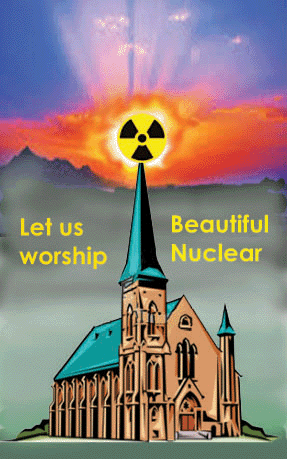
The Sizewell C team has been raising awareness of the new nuclear power
project at community events across the county this summer. From The Suffolk
Show and the First Light Festival to Sotterley Country Fair, the team have
been engaging with thousands of people across the county as the project
continues to make significant progress.
“We’re really lucky in Suffolk to
have some of the best summer festivals and community events in the
country,” says Marjorie Barnes, Head of Regional External Affairs and
Development, Sizewell C. This week, Sizewell C volunteers attended the
Aldeburgh Carnival, and in September the team will be at the first Leiston
Book Festival.
Sizewell C 23rd Aug 2024
“Final Investment Decision (FID) ” in Sizewell C nuclear station might never happen

There are media reports that a Final Investment Decision (FID) “risks
dragging into 2025″ over negotiations with investors. See Bloomberg’s
report, also New Civil Engineer and Energy Live News. These articles do not
consider whether a FID might not in fact ever happen, but we are keeping up
the pressure. Interestingly, while Bloomberg mentions four of the known
possible investors (see list below on original), USS and Equitix are absent. It’s
unclear what, if anything, this means but we are attempting to find out. If
you have not yet written to these companies to urge them not to invest, now
would be an excellent time to do so.
Stop Sizewell C 22nd Aug 2024
Sizewell C seeks permit for ‘water vole displacement activities’.
Sizewell C is seeking a permit to “undertake water vole displacement activities” on two rivers near the development.
Sizewell C seeks permit for ‘water vole displacement activities’.
Sizewell C is seeking a permit to “undertake water vole displacement
activities” on two rivers near the development.
ENDS 21st Aug 2024
Report on nuclear power in Wales is so secret the UK Government won’t even disclose its name

21 Aug 2024, Martin Shipton, https://nation.cymru/news/report-on-nuclear-power-in-wales-is-so-secret-the-uk-government-wont-even-disclose-its-name/
A campaigner wanting to find out how power from a possible new nuclear power plant on Anglesey would be channelled into the national grid has been refused all information, including even the name of an official report on the matter.
Dr Jonathan Dean, a trustee of the Campaign for the Protection of Rural Wales, wrote to the UK Government’s Department of Energy Security and Net Zero (DESNZ), asking: “Please could I get a copy of the evaluation report where it was concluded that Wylfa on Ynys Môn should be selected as the next large nuclear site after Sizewell C.”
His request was rejected. He wrote back stating: ”I wondered if it would be possible to obtain a redacted copy of the report you mention. I have little interest in any commercial details. Ideally the whole report suitably redacted, but at least those sections dealing with the connection to the national grid; use of waste heat as per section 4.8 of national policy statement EN-1; location and area of land considered on Ynys Môn; and means of overcoming the many reasons given by the Planning Inspectorate in their recommendation to the Secretary of State in 2019/2020 to refuse the DCO [Development Consent Order] application made by Horizon Nuclear Power.
“Would it be possible to know the title and any reference number for this report to aid future requests?”
Confidential information
He was then told: “The report has been withheld in full under regulation 12(5)(b) of the Environmental Information Regulations 2004 and no part of the report is available for disclosure … [The] report does not have a reference number and the title of the report is confidential information.”
Later the Department said it had quoted the wrong section of the regulations as the reason for turning down Dr Dean’s request . The correct section was regulation 12(5)(e), which states: “(The) confidentiality of commercial or industrial information where such confidentiality is provided by law to protect a legitimate economic interest.”
Dr Dean told Nation.Cymru: “There have been tentative ideas to connect the transmission grid in north Wales to that in the south since at least 2009 that I am aware of. Then the idea was a subsea connection from Wylfa to Pembroke And back in 2012 NGET [National Grid Electricity Transmission] wanted to build a 400 kV transmission line to Lower Frankton from Cefn Coch to service mid Wales wind farms.
“The Offshore Transmission Network Review in 2020 again suggested a subsea connection linking Lancashire to Wylfa to Pembroke, taking in the new Irish Sea wind farms.
“The Holistic Network Design (HND) of 2022 changed things. It brought power subsea from Scotland into Pentir (Bangor) and took power from Pentir to Swansea North substation. Although heavily caveated as just indicating a network need, and not indicating technology or route, it was described as a ‘double circuit’ which could be interpreted as meaning pylons.
“In the ‘Beyond 2030’ report this year the ESO [Electricity System Operator] says that the subsea link into Pentir will be double the capacity (4 GW?) of that in the HND, but interestingly show the extra capacity connecting to Bodelwyddan not Pentir.
“Meanwhile NGET have planned a substation at Gwyddelwern, supposedly for north Wales wind farms, and Llandyfaelog for mid Wales wind farms.
“Last week, the Beyond 2030 Celtic Sea report revealed Llandyfaelog will be one of the landing points for the Celtic Sea wind farms, and that Swansea North substation has no free capacity or space to expand
“Pentir is constrained ‘behind’ both Eryri and the new north east Wales national park (currently Area of Outstanding Natural Beauty). If all the capacity from Scotland came into Bodelwyddan and headed south from there, depending on the final limits of the new national park, there may be no obvious hard constraints to pylons.
“So what might be possible? The line could go down the vale of Clwyd, maybe via the new substation in Gwyddelwern, to Cefn Coch (previously desired substation site) then Newtown (132 kV link), Builth and down the Tywi to the new substation in Llandyfaelog.
“Vyrnwy Frankton wouldn’t be needed, Tywi Usk wouldn’t be needed, and with a bit of re-jigging, Teifi Tywi wouldn’t be needed. Technically it would be a far superior transmission solution (at least the correct transmission voltage!) with up to 6 GW capacity and meet the HND objectives of linking north to south Wales. It would likely be 50m pylons carrying 400 kV double circuits.
“If there wasn’t the desire to extract wind power from mid Wales, the alternative could be a HVDC [High Voltage Direct Current] ‘bootstrap’ from Pentir to Pembroke (as per 2009). The two double circuit lines out of Pembroke can carry 12 GW so can easily accept 6 GW from north Wales (4 GW of it from Scotland) and 3 GW from the Celtic Sea, while still having space for the 2 GW Pembroke power station which will, apparently, be converted to hydrogen and/or carbon capture.
“But this is just my feverish imagination. We will have to wait and see.”
Grid connection
Responding to the UK Government’s secrecy over the transmission link from Wylfa, Dr Dean said: “I have always had an interest in Wylfa as I brought my family to Ynys Môn in the 1960s. I remember going to one of the first public meetings about Wylfa B in 1976 to hear my father talk.
“When Hitachi were developing the last iteration of Wylfa B I was involved with the campaign to have the grid connection put underground or subsea. This campaign was supported by Albert Owen, Rhun ap Iorwerth and then Virginia Crosbie. However Hitachi refused to consider a subsea connection and National Grid refused to consider a buried connection
“The Hitachi proposal was ultimately recommended for refusal by the Planning Inspectorate for multiple reasons. Knowing the north Wales grid will be so constrained by 2030, due to the growth of renewables, so much so that pylons are required from Bangor to Swansea, I was shocked at the announcement of a GW scale station. I had expected a series of SMRs [Small Modular Reactors]. There will be no spare grid capacity in the whole of north Wales for nuclear.
“As trustee of CPRW I was concerned that a new line of pylons would be put through Eryri, against UK planning policy, as there is no way around the national park other than under the sea. The UK. planning policy for nuclear has never considered grid connections, so I assumed that the DESNZ report must have addressed this. A power station without a grid connection would just be an enormous white elephant
“I still don’t understand why such technical details should be withheld from the public, given there was a very clear announcement the power station would happen. The fact the report has a ‘secret’ title, and no reference number, makes me think it doesn’t actually exist! But I cannot believe governments announce new power stations based on no analysis or consideration. Surely not?
“All I want to know is, will it be a subsea cable or more pylons all the way to Connah’s Quay? I really don’t see the need for such secrecy.
Defence Correspondents: The Journalistic Wing of the Military?

There are stenographers – and then there are UK defence correspondents.
DECLASSIFIED UK, DES FREEDMAN, 19 August 2024
An analysis of broadcasters’ online coverage of defence spending and strategy since Keir Starmer won the election shows that reporting is virtually 100% in line with the government’s own priorities.
Critical voices, where they are included, are entirely from the right.
All 20 articles posted under ‘defence’ since 4 July – 14 from Sky, 5 from the BBC and 1 from ITV – faithfully reproduce the government’s agenda.
These include its proposals for a defence review, its promise to increase military spending to 2.5% of GDP, its commitment to Ukraine and NATO (described on the BBC by foreign secretary David Lammy as ‘part of Britain’s DNA’).
Its notion that there is a need to restore confidence in the military in order to face up to “rapidly increasing global threats” (as Sky quoted defence secretary John Healey) also features.
The only critical voices that appear are Conservative shadow ministers, hawkish think tank spokespeople and military ‘experts’, all speaking about how vital it is to boost defence spending, which currently stands at £64.6bn a year (2.32% of GDP).
Such spending is apparently necessary to confront what the army’s chief Sir Roland Walker has described as an “axis of upheaval” composed of Russia, China, Iran and North Korea.
Sky quoted Walker without comment on 23 July as saying that “there was an ‘urgent need’ for the British Army to rebuild its ability to deter future wars with credible fighting power”.
Churnalism
Much of the coverage feels like a press release from the Ministry of Defence, which is hardly surprising given that MoD statements are liberally incorporated – without challenge – into news reports.
For example, ITV News’ report of 16 July on Labour’s “root and branch” review of defence draws heavily on the MoD’s release earlier that day
Its only deviation from government spin is that it also quotes the shadow armed forces minister Andrew Bowie saying that “the country didn’t need another review, and instead ‘we just need to get on and spend more money on defence’.”
Both the BBC and Sky ran lengthy, gushing reports on the speeches given by the defence secretary and General Walker at the Royal United Services Institute’s ‘Land Warfare’ conference on 22/23 July, unambiguously pushing the line that increasing defence spending was crucial to securing peace.
None of these pieces featured comments about the huge political and economic risks of increasing defence spending and a possible acceleration, not reduction, of instability.
Guns not butter
This isn’t just a matter of excluding voices from the left arguing for a completely different set of priorities. There isn’t even room for mainstream economists like Paul Johnson from the Institute for Fiscal Studies, criticising the way recent governments have presented the proposed hike and making the obvious, if important, point that “[m]ore money for defence means less for everything else”…………………………………………………………………………………………..
‘Pre-war world’
The tone of recent coverage is, however, entirely in line with what has gone on before where news broadcasters have acted more as cheerleaders of the UK government’s strategic defence priorities than impartial journalists.
For example, following a widely reported speech in January by then defence secretary Grant Shapps, committing the UK to spending 2.5% of GDP on defence, Sky News launched a series called “Prepared for War?” in April.
This examined whether the UK was ready for the “possibility of armed conflict” and was based on interviews with defence specialists, former military officers and academics, all of whom were singing to the same pro-war hymn sheet.
It reported on the emergence of a “national defence plan” to deal with “mounting concerns about Russia, China and Iran” and uncritically embraced the idea that we are now in a “pre-war world”.
This has all the trappings of a drive to war.
Seduced
Broadcasters’ favourite defence-related stories appear to be ones where they can show dazzling images of the latest military hardware.
As Richard Norton-Taylor, former defence correspondent for the Guardian and now contributor to Declassified UK, has noted: “The MoD knows how to seduce journalists, especially those writing for specialist defence publications – often used as primary sources by mainstream journalists – by showing off new weapons.”
So in January, Sky News ran a puff piece on a new laser system, DragonFire, developed by the MoD to the tune of around £100m, that spoke of its “pinpoint accuracy” taken straight from the MoD’s own press release. ……………………………………………………………………………………………………………..
As always, an uncritical embrace of the UK’s strategic geopolitical interests comes before any commitment to transparency and even to exploring the claim that increasing military spending might not be the best way of de-escalating rising tensions across the globe.
How do we account for this deference on the part of defence correspondents?
Declassified UK has run several stories examining this question and revealing the preferential treatment of favoured journalists, sanctions against those who ask tough questions, the close contacts between correspondents and defence and security-related officials and indeed the existence of a revolving door between journalism and military PR.
When it comes to reporting on defence and security, ‘[d]eference, as much as secrecy, remains the English disease’, notes Norton-Taylor.
Indeed, all too often, it’s not a specific strategy so much as ideological congruence between the defence establishment and defence journalists about what is understood to be protecting the “national interest”.
That means that while the UK ramps up its support for Ukraine and continues to stand by Israel in defending it from possible attacks from Iran, British broadcast journalists are operating effectively as part of a coordinated effort to boost defence spending.
Their silence on stories such as the training of Israeli troops inside the UK or the number of UK military flights from Cyprus to Israel is just as troubling as their more visible and uncritical amplification of successive UK governments’ defence priorities.
This isn’t journalism but public relations https://www.declassifieduk.org/defence-correspondents-the-journalistic-wing-of-the-military/
Nuclear unicorn Newcleo to move holding company from UK to France to tap EU funds
The move comes as the startup targets a €1bn equity round
Sifted Kai Nicol-Schwarz, 21 Aug 24
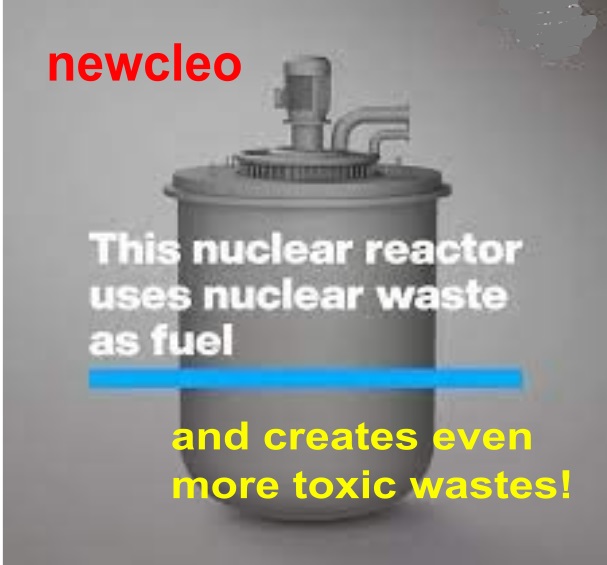
Nuclear power startup Newcleo is moving its holding company from the UK to France, as the company looks to tap EU funding pools in its bid to raise a €1bn equity round.
Newcleo said in its annual accounts, released yesterday, that it had announced to shareholders and employees in January that it was making the move to increase the potential of attracting “significant funding from EU financial institutions”.
“While we are moving the location of our holding company, our plans for the UK are unchanged and we remain committed to investing and building next-generation SMRs to generate electricity for the UK grid and industry,” a Newcleo spokesperson told Sifted. Sifted understands that the move would not involve employees relocating.
…………………………………………………………. founder and CEO Stefano Buono told Sifted in May that the company would need to raise billions more if it’s to realise its ambitions of building a revenue-making commercial reactor by the early 2030s.
Newcleo is hoping French and EU institutional funding can help it get there. “The rationale for the restructure is partly to improve the potential to attract funding from French and other EU financial institutions in the future,” the company said in its accounts.
French government-funded investment bank Bpifrance has “strict” requirements on holding companies being based in the country, explains Tommy Stadlen, cofounder and partner at Giant Ventures.
………………………………..Newcleo’s average monthly cash burn is €13m for the first half of 2024 and it made a loss of €57.5m in 2023 — up from €18.1m in 2022 — according to its accounts. The company had €221m of cash in the bank on 30 June 2024.
https://sifted.eu/articles/nuclear-newcleo-raise-startup-france
Final investment decision on new nuclear plant Sizewell C is delayed
The crucial final investment decision (Fid) for the new nuclear power
plant Sizewell C is unlikely to be agreed until 2025, according to recent
reports. Financial sector publication Bloomberg reported that anonymous
sources close to the project said negotiations between potential private
investors were moving more slowly than had been expected.
The Fid had already been delayed by the general election, but new energy secretary Ed
Miliband indicated his support for Sizewell in an early speech to
parliament before the 2024 summer recess. Bloomberg reported negotiations
with Centrica, Emirates Nuclear Energy Corporation, Amber Infrastructure
Group and Schroders Greencoat are ongoing.
Earlier in July, Centrica chiefnexecutive officer Chris O’Shea said: “An investment decision this year would be dependent upon how the government and the Sizewell company want to
move. “We are able to move as quickly as the other parties, but I think
we should be realistic that the government have been in office less than
three weeks and they need to figure out what they want to do.”
New Civil Engineer 20th Aug 2024
UK’s nuclear facilities ‘at high risk of atomic blackmail’ from Putin

the British sites can be seen in the same way as those in Ukraine in being susceptible to sabotage and infiltration.
The full-scale invasion of Ukraine has brought with it high-level warnings that the UK is headed for a direct military confrontation with Russia.
Josh Layton https://metro.co.uk/2024/08/19/uks-nuclear-facilities-at-high-risk-atomic-blackmail-putin-21449130/
The UK’s nuclear facilities are at high risk from hostile states who are tipping the world into war, according to an expert in risk management.
Dr Simon Bennett warned that World War Three is only a matter of years away, with Russia already pursuing a strategy of ‘atomic blackmail’.
Dr Bennett revived author Bennett Ramberg’s Cold War-era theory of how nuclear power facilities can be weaponised for political ends in calling on the UK government to ramp up defence spending.
He also believes the potential exists for a cornered Vladimir Putin to escalate from psyops to a deliberate use of the Zaporizhzhia nuclear power plant as a dirty bomb, which would have devastating consequences for Ukraine and neighbouring countries.
The risk management expert, of the University of Leicester, warned that the UK government has ‘lost sight’ of its primary duty to protect its citizens amid a slide to global conflict.
‘The full-scale invasion of Ukraine by Russia is the first large-scale conflict where there are potentially numerous nuclear power plants at risk,’ he said.
‘Not only at Zaporizhzhia, which is Europe’s largest power plant, but in Russia, where the current incursion could see the Ukrainians reach the Kursk nuclear power station if they drive hard to the east.
In the 80s, Bennett Ramberg came up with the hypothesis of atomic blackmail, which is based on the premise that as the number of nuclear power stations grows, so does the potential for an aggressor to use them to gain leverage over the owners
‘The potential for a facility like Zaporizhzhia to be used very crudely against an opponent is clear to see.
‘If the plant, which has six reactors, was rigged with powerful demolition mines, and they were detonated, the radiation would be off the scale.
‘It’s possible the Russians have already placed explosives there.’
Dr Bennett, director of the university’s Civil Safety and Security Unit, told Metro.co.uk that Putin — who is under pressure after Ukraine’s invasion of Russia’s Kursk region — is capable of the unthinkable.
He a drew a comparison with one of the darkest days of history.
‘Using Zaporizhzhia for atomic blackmail gives Putin leverage over not just Ukraine but the entire world,’ Dr Bennett said.
One of the latest safety incidents at Zaporizhzhia came last week when smoke was filmed rising from one of the cooling towers at the Russian-held facility in eastern Ukraine.
Experts doubted there was any risk of an explosion, with Ukraine saying that the fire was started deliberately by setting light to tyres.
However the use of the plant in this way, which follows continued reports of incidents involving drones and shelling, fits with Ramberg’s theory — and has implications for the UK’s own security, according to Dr Bennett.
On Saturday, the safety situation at Zaporizhzhia was ‘deteriorating’ after a nearby drone strike, the International Atomic Energy Agency said.
The party behind the explosion, just outside the site’s protected area, has not been identified. Under Rishi Sunak, the British government announced the biggest expansion in nuclear power for 70 years, and the new prime minister is also committed to building new facilities.
Through Ramberg’s thesis, the British sites can be seen in the same way as those in Ukraine in being susceptible to sabotage and infiltration.
‘If we think more laterally, the number of power stations in the UK is growing, and through the optics of Ramberg’s theory, we are offering our enemies more targets and potentially more leverage over us in a conflict,’ Dr Bennett said.
The Russian FSB security agency and GRU military intelligence are very good at hybrid warfare, so what they could be doing at the moment is recruiting and running individuals as “sleepers” within the British state and potentially within the nuclear industry, ready to be activated at any moment. Three civil servants have recently been charged under the National Security Act and my understanding is that they are alleged to have been spying for China.’
The full-scale invasion of Ukraine has brought with it high-level warnings that the UK is headed for a direct military confrontation with Russia.
British sites, including a shipyard housing nuclear submarines in Barrow-in-Furness, were last week reported by the Financial Times to be on the Kremlin’s list of targets.
Tobias Ellwood, former chair of the Commons Select Committee, responded by saying: ‘We must wake up — storm clouds are gathering.’
Dr Bennett said: ‘The British state needs to take these nuclear threats far more seriously not just within the optics of the Ukraine-Russia war but because, in my opinion, there will be a world war in the next five to 10 years. It will start in the Asia-Pacific, where China will invade Taiwan and, because of the Aukus pact, we will be directly involved in defending Taiwan.
‘Russia will be involved because of its ties with China, leading to a multi-hemisphere conflict.’

Dr Bennett, whose book ‘Atomic Blackmail?’ examines the weaponisation of nuclear facilities in the Russia-Ukraine war, has raised the issues in letters and emails to various governments, including that of Rishi Sunak, but to date has not received any acknowledgement.
‘In my opinion, the government obsession with net zero and climate change agreements distracts from a far greater threat to safety, namely atomic blackmail,’ he said.
‘The primary purpose of the state is national security and in my view we have lost sight of that purpose. The Labour government is carrying out a defence review when what we really need is to raise the 2% of GDP we spend on defence to a minimum 4% of GDP.’
The prospect of an apocalyptic conflict in a matter of years has gained traction during the Ukraine-Russia war and China’s continued pressure on Taiwan, which it views as its own territory.
The author intends to continue trying to raise the alarm.
Labour MP under fire for accepting £2,000 donation from Sizewell C developer.

Opposition to the proposed power plant accuse Jack Abbott of being in ‘EDF’s pocket’
Luke Barr, 19 August 2024
A Labour MP whose constituency borders the proposed Sizewell C nuclear power station has been criticised for accepting a £2,000 donation from the developer behind the project.
Jack Abbott, the newly appointed MP for Ipswich, is facing scrutiny over the decision to
take cash from the French energy giant EDF earlier this month. EDF is the
main private investor behind the proposed nuclear project, which is
expected to cost £20bn and will be part-funded by the taxpayer.
New filings show that Mr Abbott registered the EDF donation on Aug 2, just weeks after
he was elected in Ipswich. His constituency neighbours Sizewell C, which
once completed will serve as a 3.2 gigawatt power station providing energy
to around 6m homes.
However, the project has faced opposition from
campaigners who claim that it risks large cost overruns that will fall on
household bills and that it will spoil local nature.
Alison Downes, executive director of the Stop Sizewell C campaign group, claimed the EDF
donation suggested Mr Abbott was “in EDF’s pocket”. She said: “A huge
project like this has money and will likely use it to persuade people to
lend their support. It is telling that an organisation like ours doesn’t
have lots of money but still has plenty of support.”
A final investment decision on Sizewell C has yet to be made despite around £2.5bn already
being spent on the project. The Government had expected to secure backing
from private investors by the end of the year, although negotiations are at
risk of running into 2025.
Telegraph 19th Aug 2024
The Nuclear Decommissioning Authority (NDA)NDA’s £30 million investment into nuclear research & innovation
The Nuclear Decommissioning Authority (NDA) has awarded contracts totalling
£30million to drive innovation and research into new techniques to deliver
safe, sustainable and cost-effective decommissioning.
The NDA is cleaning up the UK’s oldest nuclear sites which were designed without
decommissioning in mind, posing challenges which require first-of-a-kind
engineering and technological solutions. Research is an essential part of
the decommissioning programme and each year the NDA group invest
£100million in Research & Development (R&D). The aim is to solve
challenging technical problems more effectively, more efficiently, and,
where possible, for less cost.
The NDA Research Portfolio (NRP) competition
forms a key part of the NDA’s strategic research programme and provides
direct funding for research that supports strategic objectives including
growing and maintaining diverse skills within the supply chain and
promoting innovation across multiple sites.
Electronic Specifier 19th Aug 2024
Nuclear Free Local Authorities send message of solidarity to Canadian First Nations opposed to nuke dump

14th August 2024
Following the United Nations’ International Day of the World’s Indigenous Peoples (9 August), the UK/Ireland Nuclear Free Local Authorities have joined the Cumbrian campaign group, Lakes against Nuclear Dump (LAND) in sending a message of solidarity and support to the Canadian First Nations who have publicly declared their opposition to the development of an underground nuclear waste dump at Ignace, Ontario.
On July 15, the Anishinaabeg of Kabapikotawangag Resource Council (the “AKRC”), representing five tribal groups, published their Declaration of Opposition in which the Council states declared that the Deep Geological Repository proposed near Ignace ‘poses and unprecedented threat to the integrity, safety, and sanctity of Kabapikotawangag and its surrounding environments. It has the potential to compromise the health, welfare, and cultural heritage of our Anishinaabeg people.
As stewards of the lands and waters in our territory, we have not provided our free, prior, and informed consent. We have a duty to protect and safeguard Kabapikotawangag (also known as Lake of the Woods). We cannot let this type of project move forward.’
The Nuclear Waste Management Organisation was established by the Canadian nuclear industry to lead the effort to find a location for an underground nuclear waste repository. Its attempt to foist a nuclear waste dump on First Nation land near Ignace, in collaboration with provincial and local authorities, appears to contravene the legal obligations made originally by the British Government to the First Nations under Treaty 3 and the commitments made by the Canadian Government in signing the UN Declaration on the Rights of Indigenous People.
………………………………………………………………………………………..This represents another example of ‘nuclear colonialism’, in which militaries, the nuclear industry, and their supporters in government disproportionately locate their activities in lands traditionally occupied by Indigenous People, impacting their environment, health, culture and future. At the first and last of the nuclear cycle, from the mining of uranium to the disposal of radioactive waste, the lands of Indigenous people are seen as fair game by big business, whilst their land has also been seen as ideal for nuclear weapons testing by the major powers.
The NFLAs have participated in several online meetings with campaign groups in the UK and Canada which are opposed to nuclear waste dumps in their locality. We are delighted now to be in contact with the Canadian First Nations. https://www.nuclearpolicy.info/news/nflas-send-message-of-solidarity-to-canadian-first-nations-opposed-to-nuke-dump/
Sellafield apologises after pleading guilty to cybersecurity failings
By Ollie Rawlinson @ORawlinsonNews, Reporter
The charges, brought by the Office for Nuclear Regulation (ONR), cover a four-year period from 2019 to 2023 and were heard in Westminster Magistrates Court.
According to The Guardian newspaper, the court heard that three-quarters of Sellafield’s servers were vulnerable to cyberattacks, leaving the world’s largest store of plutonium exposed to potential threats.
The ONR revealed that sensitive nuclear information (SNI) had been left at risk due to outdated technology, including the use of Windows 7 and Windows 2008.
It was also discovered that critical IT health checks, which Sellafield claimed were being performed, were not conducted.
A report by external IT firm Commissum found that even a ‘reasonably skilled hacker’ could have accessed and compromised sensitive data.
Sellafield CEO Euan Hutton apologised in a written statement, asserting that the company has since addressed these issues………………………………….
Chief Magistrate Paul Goldspring is expected to deliver a final sentencing in September. Sellafield has agreed to pay £53,000 in legal costs.
The case marks the first time a nuclear site has been prosecuted for cybersecurity offences.
Carlisle News & Star 14th Aug 2024
NFLA’s send ‘very best of luck’ to Peace Museum on reopening in historic Salts Mill

13th August 2024
https://www.nuclearpolicy.info/news/nflas-send-very-best-of-luck-to-peace-museum-on-reopening-in-historic-salts-mill/
Saltaire is a village in West Yorkshire that has much to commend it to visitors. It is a World Heritage Site, four miles north of Bradford, which was built by enlightened industrialist Sir Titus Salt in the 19th century. Now the village has one more attraction for the curious to experience – the UK’s only dedicated Peace Museum.
NFLA and Mayors for Peace Secretary Richard Outram was quick to send a note to the trustees, staff, and volunteers to wish them ‘the very best of luck for your reopening today (10 August) and for a successful future in your new premises…The Peace Museum does an incredible job in educating the public about the history of the peace movement and in raising their awareness of the importance of peace in their lives, in their communities, and between nations. That importance has become even more self-evident in recent days with race riots in many of our major towns and cities.’
The Peace Museum is unique in the UK in covering peace history, non-violence, and conflict resolution.
After a four year gap, the Peace Museum has moved from central Bradford to the third floor of the historic Salts Mill, eponymously named after the village’s employer and benefactor. The new home of the Peace Museum is fully-accessible and it can be reached by regular trains which stop at Saltaire Railway Station.
The renovated space will include a newly developed permanent exhibition which explores the often-untold stories of peace, peacemakers, social reform and peace movements. Visitors will be able to see objects from the Museum’s unique collection of 16,000 items, including banners that were originally used at Greenham Common Peace Camp and the Campaign for Nuclear Disarmament’s original drawings of the now well recognized peace symbol. It will also share personal stories of people’s motivations to campaign for peace and the impacts of conflict.
The new Museum will also have temporary exhibitions, an education space, research facilities and a shop.
This development, move, and re-opening have been made possible through the support of various funders, grants, and donations from supporters. The National Lottery Heritage Fund has enabled the creation of a new engaging and accessible exhibition and educational programmes. Generous capital funding has been received from Bradford 2025 and Bradford City Council, and other financial backers include the Key Fund, Art Fund, Association of Independent Museums, Pilgrim Trust, Museum Development North and Arts Council England.
The Peace Museum has a presence on Facebook – peacemuseum.org.uk – where it is possible to subscribe for a regular newsletter.
The Peace Museum is open Wednesday to Sunday, 10am to 4pm. Entry is free, but donations are gratefully received and encouraged.
Hinkley Point B: What happens after a nuclear power station stops making electricity?
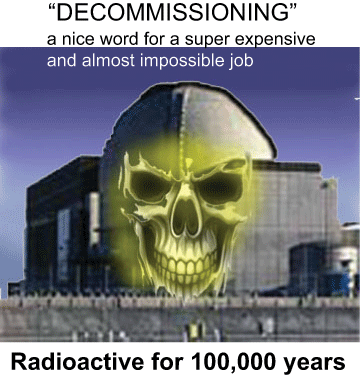
After shutting down in 2022, the job now is to carefully
remove tonnes of nuclear waste to be transported for storage at Sellafield
in Cumbria. The team is halfway through that task with one reactor empty
and one more to go.
I was given exclusive access to the power station,
getting the chance to travel deep within the bowels of the building and see
something few people outside EDF Energy get to – the cooling ponds, where
spent fuel is cooled down before being sealed for transport and storage.
there will be another couple of years to finish defuelling operations, then
EDF hands this place over to the Nuclear Decommissioning Authority as the
painstaking job of decommissioning will continue for many years.
ITV 13th Aug 2024
Revealed: ministers’ doubts over nuclear plant at Torness
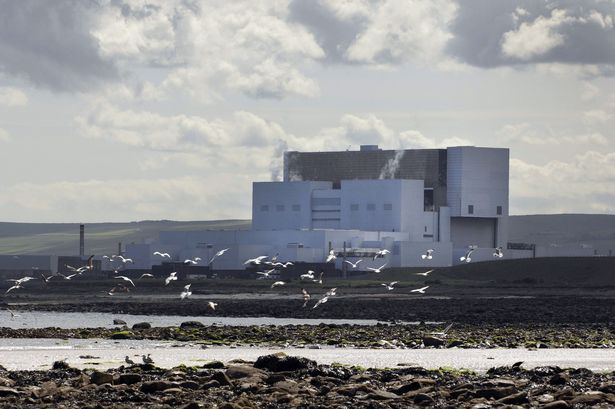
Torness Rob Edwards, August 12, 2024
Labour and Conservative governments secretly harboured doubts about building a nuclear power station at Torness in East Lothian in the late 1970s, according to internal documents released by the Scottish Government.
Campaigns against Torness won support within the then Scottish Office, and came closer to success than realised. There was a “real risk” of the treasury in London delaying the project, warned one official.
But the nuclear industry fought a fierce behind-the-scenes battle in defence of the power station, and it ended up being built in the 1980s.
Campaigners condemned past decision-making about Torness as a “total sham”. According to one former UK Government adviser, lobbying by the nuclear industry had always been “more influential” than evidence.
The Ferret analysed 11 large government files on Torness in 1978 and 1979 at the National Records of Scotland in Edinburgh. One was only released in 2023 after a request under freedom of information law.
The files reveal that ministers and officials in both James Callaghan’s and Margaret Thatcher’s governments privately raised concerns about the proposed nuclear station at Torness.
Torness was the target for a series of anti-nuclear protests in the 1970s, initially organised by the Scottish Campaign to Resist the Atomic Menace (SCRAM). There were demonstrations and an occupation of the site in 1978, and in May 1979 more than 10,000 people joined a weekend protest there.
Despite further protests in 1980 and 1981, the nuclear station was built and formally opened by Thatcher in 1989. It is currently scheduled to keep operating until 2028, though there are plans to run it for longer.
Early in 1978 SCRAM made a submission to the Scottish Office arguing that Torness should be subject to a new public inquiry. An earlier inquiry in 1974 had been inadequate because it had not specified the type of reactors to be built, the campaign group argued……………………………………………………………………………………………………
Case for Torness ‘less than convincing’
However, a covering note from an official on 16 May 1979 admitted that the case for Torness was “less than convincing”. The absence of information in support of the plant was “worrying”, the official commented, “because I think there is a real risk in the present climate of the treasury seeking to re-examine or hold up the project”.
In a memo two days later, Fletcher said: “I still have some doubts concerning the advisability of a nuclear station at Torness”. A handwritten note by an official added simply “Amen”.
A memo on 1 June 1979 reported that Torness’s backer, the government-owned South of Scotland Electricity Board (SSEB), was “most despondent” about the lack of investment approval. All the signs were that the project was “slipping out of control”, it said.
In the end, though, the government documents show that the SSEB, backed by its supporters in the Scottish Office, saved Torness. They worked hard to convince the treasury and, ultimately, Thatcher, that it should go ahead because it was needed to sustain the power station industry…………………………………………………………………………
Torness ‘a total sham’
The veteran environmental campaigner and energy author, Walt Patterson, testified at the Torness inquiry in 1974. “Torness was a total sham, and the inquiry had no relevance to the official decision to build it,” he told The Ferret.
“Torness was ordered just to keep the power station building industry busy, not because we could use the electricity.”
Pete Roche, a nuclear consultant who worked with SCRAM in Edinburgh in the 1970s and 1980s, suggested that politicians might have been worried that cancelling Torness would “somehow legitimise protest”.
He said: “We knew at the time that the case for Torness was collapsing before our very eyes, but it’s a pleasant surprise to learn that both Labour and Tory Ministers had secretly expressed doubts about the plant.”
Dr Ewan Gibbs, a researcher from the school of social and political sciences at University of Glasgow who has studied Torness protests, pointed out that anti-nuclear activists had mobilised tens of thousands of people in opposition to the plant.
“Thanks to these new research findings, we now know that both Scottish Labour and Tory ministers had serious doubts over the nuclear power station project in the late 1970s.”……………………………………….. more https://theferret.scot/torness-nuclear-doubts-ministers/—
1 This Month
Chernobyl: The Lost Tapes – A good documentary on Chernobyl on SBS available On Demand for the next 3 weeks– https://www.sbs.com.au/ondemand/tv-program/chernobyl-the-lost-tapes/2352741955560

of the week–London Campaign for Nuclear Disarmament

Tell the Ukrainian Government to Drop Prosecution of Peace Activist Yurii Sheliazhenko
To see nuclear-related stories in greater depth and intensity – go to https://nuclearinformation.wordpress.com
-
Archives
- April 2026 (126)
- March 2026 (251)
- February 2026 (268)
- January 2026 (308)
- December 2025 (358)
- November 2025 (359)
- October 2025 (376)
- September 2025 (257)
- August 2025 (319)
- July 2025 (230)
- June 2025 (348)
- May 2025 (261)
-
Categories
- 1
- 1 NUCLEAR ISSUES
- business and costs
- climate change
- culture and arts
- ENERGY
- environment
- health
- history
- indigenous issues
- Legal
- marketing of nuclear
- media
- opposition to nuclear
- PERSONAL STORIES
- politics
- politics international
- Religion and ethics
- safety
- secrets,lies and civil liberties
- spinbuster
- technology
- Uranium
- wastes
- weapons and war
- Women
- 2 WORLD
- ACTION
- AFRICA
- Atrocities
- AUSTRALIA
- Christina's notes
- Christina's themes
- culture and arts
- Events
- Fuk 2022
- Fuk 2023
- Fukushima 2017
- Fukushima 2018
- fukushima 2019
- Fukushima 2020
- Fukushima 2021
- general
- global warming
- Humour (God we need it)
- Nuclear
- RARE EARTHS
- Reference
- resources – print
- Resources -audiovicual
- Weekly Newsletter
- World
- World Nuclear
- YouTube
-
RSS
Entries RSS
Comments RSS
 nuclear-news