Secrecy over radioactive pollution from nuclear bases

The Ferret, Rob Edwards, October 22, 2024
The Ministry of Defence has blocked the Scottish Government’s environmental watchdog from releasing information about radioactive pollution from the Clyde nuclear bomb bases for the last nine years.
Emails released under freedom of information (FoI) law reveal that the Ministry of Defence (MoD) asked the Scottish Environment Protection Agency (Sepa) not to publish information about “environmental issues with radioactivity” at Faslane and Coulport near Helensburgh to protect “national security”.
In response to FoI requests from The Ferret, Sepa has refused to release more than 20 files about radioactive problems at the bases since 2016, and redacted others. We have appealed to the Scottish Information Commissioner, David Hamilton…………………………………………………………………………………………………………………..
Sepa’s refusal to release the files is under investigation by the Scottish Information Commissioner, following two appeals by The Ferret in August and September 2024.
‘Difficult’ to withhold information about radioactive pollution
Now, in response to another FoI request, Sepa has released email correspondence with the MoD about The Ferret’s FoI requests on Faslane and Coulport. These show that the MoD asked Sepa not to publish certain files.
Sepa emailed the MoD in October and November 2023 with files it proposed to release asking whether they “should be disclosed”. The MoD replied on 27 November saying that “HQ colleagues” wanted information withheld, though exactly how much or what has been redacted……………………………………………………………………………………………………………………………………………………………..
Secrecy over radioactive pollution ‘unacceptable’
Professor Campbell Gemmell was Sepa’s chief executive between 2003 and 2012 when it released more than 400 pages about safety at Faslane and Coulport. The MoD were “very challenging to deal with”, he recalled.
He said: “The UK ministry applied pressure repeatedly on radioactive waste issues seeking to keep relevant environmental information out of the public domain. Putting similar effort into remedy would be better.”………………………….
The Scottish Campaign for Nuclear Disarmament pointed out that it was well known that the four nuclear-armed Vanguard-class submarines based on the Clyde were ageing and overstretched. They were more likely to leak, argued the group’s co-vice chair, David Kelly.
“This information is not a threat to national security. But it is a threat to the image of a responsible Ministry of Defence, that pollutes our environment with ever-increasing amounts of radioactive isotopes in the name of keeping us safe.”………………………………………………………………………………………………………
https://theferret.scot/radioactive-pollution-clyde-nuclear-bases/
‘Millions of fish could die’ under current Hinkley Point C plan
Environmental advocates demand EDF takes action
By Lewis Clarke, Somerset Live , 22nd Oct 2024
A solutions-focussed, scientifically backed answer to the critical environmental situation at Hinkley Point C has been released by a coalition of scientists, engineers, and innovators, showing that the Acoustic Fish Deterrent (AFD) is both a necessary and feasible requirement for the builders of Hinkley Point C – EDF Energy – to apply.
An AFD Delivery Report, launched on October 16, gives evidence that the AFD can be installed safely and effectively in the Severn Estuary. It highlights the innovations in technical ability, technology, logistics, and science which will reduce maintenance times from 72 days per year down to just 19. The report debunks common misconceptions about noise levels, diving time, and more with scientifically backed evidence, and urges EDF to ensure the system is installed, tested, and operational before the station starts to abstract cooling water.
In light of the critical environmental situation at Hinkley Point C, a parliamentary debate led by Sir Ashley Fox MP was held last week on Wednesday 9th October 2024. During the debate, Sir Ashley Fox addressed that EDF Energy’s mosaic of mitigation measures, specifically the proposed saltmarsh plans, are a completely illogical choice.
The saltmarsh plans are a proposed alternative to the Acoustic Fish Deterrent (AFD), a system designed to protect aquatic life by deterring fish from entering the cooling systems of the power plant, and was included in the initial design plans of Hinkley Point C.
The AFD system remains mandated in the Development Consent Order (DCO). It is also considered best practice for screening estuarine intakes in the UK by the Environment Agency, and has been scrutinised by a Welsh Government Report (2021), a Public Inquiry (2022), and the ruling by Secretary of State Kwasi Kwarteng (2022) which all stated that the AFD must be installed. EDF Energy has been working to remove this vital environmental protection measure for nearly eight years, arguing on the grounds of health and safety concerns, noise pollution and effect on mammals, and further delay of the completion of Hinkley Point C.
The AFD Delivery Report provides a solution to the current impasse, but without the AFD, it has been warned by the Welsh Government Commission that approximately 182 million fish would be killed annually, including sensitive species like shad, sprat, Atlantic salmon, and herring.
In the AFD Delivery Report, Professor Mark Everard, University of West of England says “There can in my scientific view be no justification for removal of AFD. It makes absolutely no sense to permit very substantial damage to marine biodiversity and hope then that modest mitigation entailing a degree of recruitment only of species reliant on the saltmarsh can offset it.
“Cost reduction is cited by EDF as one element of its plan to remove the mandated AFD and would appear to be its principal consideration, but one that obviously overlooks the vital purpose of deflecting fish from the intake. Ideally, saltmarsh restoration should be implemented ADDITIONALLY to the AFD to mitigate the still substantial likely entrainment of multiple life stages of fish and invertebrates, even with deflection from the intake.”
South Gloucestershire Council understands that EDF will make another application to the Secretary of State to remove the requirement for an AFD in the new year, and so has written to the Secretary of State for Energy, Security & Net Zero, the Rt Hon Ed Milliband, requesting that he upholds the existing requirement to install an AFD.
Councillors Maggie Tyrrell and Ian Boulton, said in their letter to the Secretary of State: “We are writing to express our gravest concern regarding the scale of impact on the migratory fish populations of the Severn Estuary Special Area of Conservation (SAC) which will result from the massive water abstraction at Hinkley Point C of 120,000 litres of seawater a second for 60 years once the power station is operational.
“This impact would be made significantly worse by the proposed application for a change to the 2013 Development Consent Order to remove the required Acoustic Fish Deterrent (AFD).
“A Welsh Government report on the AFD cites evidence that removal of the AFD would capture at least 182 million fish per year, a significant proportion of which would be killed. Put simply, removing the AFD would cause critical levels of wildlife destruction.”
The council is also concerned that EDF are approaching local landowners about a plan to create new salt marshes, which they would propose as alternative compensation habitat for fish in place of the AFD. It is understood that local landowners are deeply concerned about the idea, which has been turned down in other areas when raised by EDF, and experts query EDFs claims that new saltmarshes would offer suitable habitat for fish killed by the water intake of the new power station.
The council’s letter also highlighted that even with the AFD, that compensation will still be needed as some fish will still be drawn into the intake and killed. Alongside the letter, the Secretary of State was also provided with information about priorities to deliver improvements for fish passage in the Bristol Avon river and Coastal Catchments……………………
https://www.somersetlive.co.uk/news/somerset-news/millions-fish-could-die-under-9641529
‘Nuclear waste would be disaster for our seaside’
BBC News, Paul Murphy, Environment Correspondent, 21 Oct 24
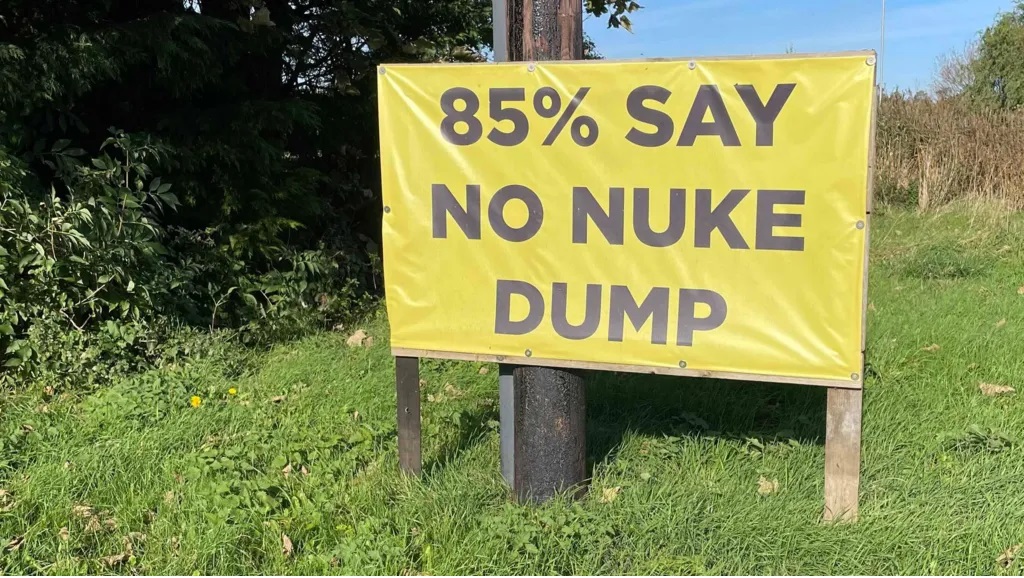
Campaigners opposed to plans for a nuclear waste disposal site on the Lincolnshire coast say it could be “disastrous” for the seaside economy.
The former Theddlethorpe gas terminal on the Lincolnshire coast is one of three sites being considered for an underground facility.
Guardians of the East Coast (GOTEC) said a survey of more than 1,000 visitors to the resorts of Mablethorpe and Skegness found the “great majority” would be put off coming to the area.
GOTEC said it had carried out “extensive research” into the potential impact of the facility.
The group has produced a 60-page booklet called The Nuclear Option.
According to chairman Mike Crookes, the facility would “blight this area” and the economic impact on tourism could be “profound” and “catastrophic”.
“The tourism industry in this area brings £600m of economic benefit and 8,000 jobs,” he said. “We need to protect this at all costs.”
A survey of 1,100 people along the coastline from Mablethorpe to Skegness, carried out by GOTEC, found “83% of them would not visit this area if that facility was built”, Mr Crookes added.
NWS is considering the site for what is known in the waste industry as a geological disposal facility (GDF).
Other possible sites have been mooted in Hartlepool and Cumbria………………………………………………………………………..
Most of the radioactive waste generated by the UK’s nuclear power stations is being temporarily stored at Sellafield in Cumbria, but longer term storage is needed for substances that remain hazardous for many thousands of years.
The idea of a nuclear waste site, or GDF, was first proposed for Theddlethorpe more than three years ago.
Local councillors have called for a referendum on the development.
According to the Theddlethorpe GDF Community Partnership, a facility would only be built in an area where the community “demonstrates if it is willing to host one”, following a “test of public support“, such as a referendum or consultation.
…………………………………… “The government has committed to providing multi-million-pound investment to the community that hosts a GDF. This investment could support better transport links which could help to enhance tourism in a local area.”
https://www.bbc.co.uk/news/articles/cy4d3y33y3go
Nuclear lobby continues to infiltrate education

Pupils from Alde Valley Academy have joined the Sizewell C Youth Council.
This initiative aims to provide the nuclear power project with insights
into the needs of local young people. The students, from Years 7 to 11,
will have regular meetings with joint managing director, Julia Pyke, and
other project leaders. They will discuss local needs, aspirations, and the
project’s progress. Julia Pyke, Sizewell C joint managing director, said:
“Consultation for big infrastructure projects can sometimes be skewed
towards older people.
East Anglian Daily Times 21st Oct 2024
https://www.eadt.co.uk/news/24658473.alde-valley-academy-pupils-join-sizewell-c-youth-council/
Councillors raise concerns over fish populations at Hinkley C
Forty-four tonnes of fish could die every year once the site is running
South Gloucestershire Council have raised concerns over the potential loss
of wildlife at Hinkley Point C as bosses propose installing saltmarsh land
in parts of North Somerset and Gloucestershire. EDF energy, who run the
nuclear power station at Hinkley C, are planning to build the habitat to
compensate for the 44 tonnes of fish that could die every year once the
site is running. But land owners and councillors in South Gloucestershire
have raised concern about the loss of wildlife and the health of the
region’s rivers.
Rayo 18th Oct 2024,
https://hellorayo.co.uk/greatest-hits/bristol/news/hinkley-south-gloucestershire-letter/
Some Types of Pollution Are More Equal than Others
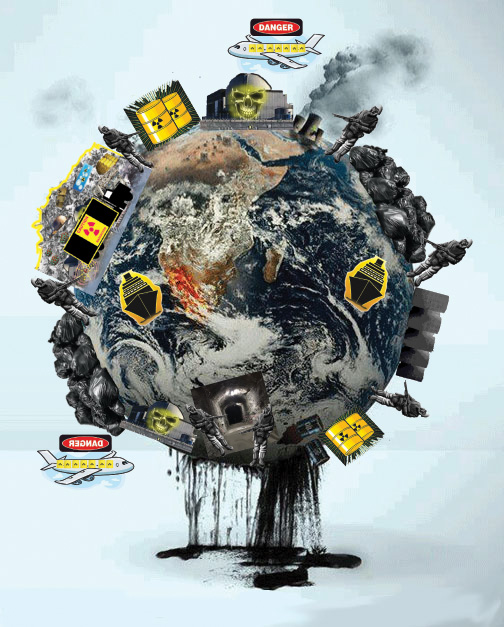
There is a BIG taboo around Radioactive Pollution. We published a report last June into acid mine pollution alongside radioactive pollution in Whitehaven Harbour – so far ignored by mainstream media.
Marianne Birkby, Oct 20, 2024 https://radiationfreelakeland.substack.com/p/some-types-of-pollution-are-more?utm_source=post-email-title&publication_id=2706406&post_id=150473856&utm_campaign=email-post-title&isFreemail=true&r=ln98x&triedRedirect=true&utm_medium=email
Whitehaven Mine Pollution- Report by Radiation Free Lakeland – evidence to inform Authorities in future mitigation/prevention regarding mine pollution
The Westmorland Gazette and other local press have today published a feel good article about beach cleans in Cumbria. So far so good but the beaches contain far more insidious and long lived pollution than plastic, in the form of radioactive wastes from decades of Sellafield’s operations. In Whitehaven Harbour these radioactive wastes are literally magnified by the presence of the ongoing acid mine pollution pouring into the harbour. Instead of addressing this ongoing pollution event the local MP Josh MacAlister is greenwashing the ongoing devastation by bigging up Whitehaven as the West Coast Riviera and fizzingly pushing for a ferry service while boats are understandably leaving because of the visible acid mine pollution.
Less visible is the “historic” radioactive pollution still pouring out of Sellafield with more radioactive waste arriving almost daily.
First ex-Royal Navy nuclear submarine to be disposed of enters final dismantling phase.
Navy Lookout 15th Oct 2024 https://www.navylookout.com/first-ex-royal-navy-nuclear-submarine-to-be-disposed-of-enters-final-dismantling-phase/
Work has started on the third and final phase of the project to dismantle ex-HMS Swiftsure. As the demonstrator project for the dismantling programme, she will be the first former RN SSN to be fully disposed of.
The glacial project to safely scrap the growing fleet of decommissioned boats has finally begun to make some progress at Rosyth in the last few years. Each submarine will undergo a three-step process which involves Low Level Radioactive Waste (LLW) being removed first. The second and most demanding stage involves the removal of the Reactor Pressure Vessel that holds the reactor core and is classed as Intermediate Level Radioactive Waste (ILW).
Work has started on the third and final phase of the project to dismantle ex-HMS Swiftsure. As the demonstrator project for the dismantling programme, she will be the first former RN SSN to be fully disposed of.
The glacial project to safely scrap the growing fleet of decommissioned boats has finally begun to make some progress at Rosyth in the last few years. Each submarine will undergo a three-step process which involves Low Level Radioactive Waste (LLW) being removed first. The second and most demanding stage involves the removal of the Reactor Pressure Vessel that holds the reactor core and is classed as Intermediate Level Radioactive Waste (ILW).
Swiftsure’s disposal is a notable achievement as the first Pressurised Water Reactor (PWR) anywhere in the world to be dismantled. Other nations use a much simpler process and cut the entire reactor compartment out of the submarine and transport it structurally complete for burial in land storage facilities. The US has successfully disposed of over 130 nuclear ships and submarines since the 1980s. The Russians have disposed of over 190 Soviet-era boats (with some international assistance) since the 1990s while France has already disposed of 3 boats from their much smaller numbers.
Besides the progress with Swifsure, LLW has been safely removed from ex-HMS Resolution, Revenge and Repulse. As experience has been gained working on successive boats techniques have been refined and more waste has been managed to final disposal at reduced cost. The optimisation of the process allowed 50% greater tonnage of waste to be removed in 75% of the time it took for Swiftsure. So far the work has been completed safely on budget and on time. Work has yet to begin on ex-HMS Dreadnought, Churchill and Renown still afloat in the basin at Rosyth.
While there is positive progress at Rosyth, 14 Dock at Devonport is still not ready to accept the first boat to begin defuelling and dismantling. There are now 15 decommissioned submarines filling up the basins in Plymouth (soon to be 16 when HMS Triumph goes in 2025). Work to get rid of this legacy cannot start soon enough. At least the lessons learned in Rosyth should give the teams at Devonport an advantage although the majority of these boats still have their nuclear fuel on board and will have to undergo a 4-stage process.
Apollo Global Management Inc in Talks to Partly Finance EDF’s Hinkley UK Nuclear Power Plant
By Aaron Kirchfeld, Silas Brown, and Francois de BeaupuyOctober 15, 2024
(Bloomberg) — Apollo Global Management Inc. is in talks with Electricite de France SA to provide financing for a nuclear power plant under construction in the UK, people with knowledge of the matter said.
The alternative asset manager has held early discussions about providing a complex mix of equity and debt that may total billions of pounds, the people said, asking not to be identified because deliberations are private.
EDF has been holding meetings with a series of investors including investment firms, sovereign wealth funds and infrastructure specialists to raise as much as £4 billion ($5.2 billion) through a deal that would give investors a stake in the Hinkley Point C project, Bloomberg News reported last week. Centrica Plc. is one of the companies considering investing.
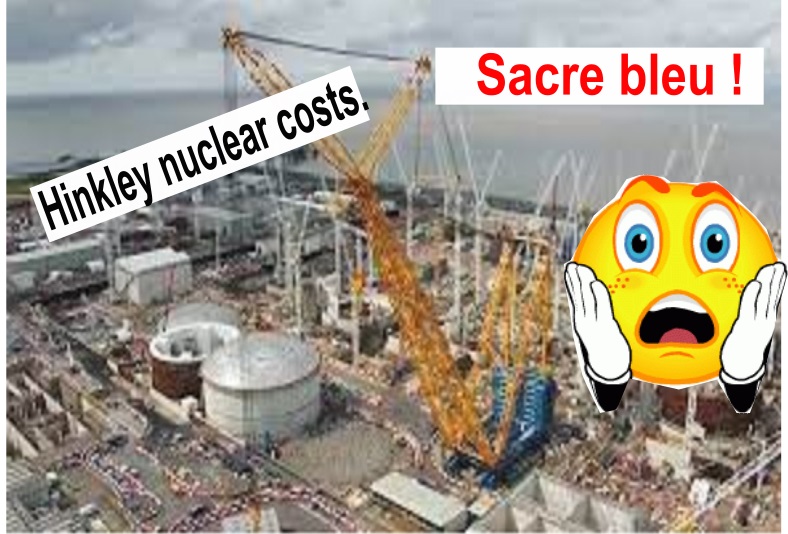
The estimated cost of building Hinkley has risen to as much as £47.9 billion in current terms, due in part to lingering labor shortages and supply chain issues. The first of the two reactors at the site is scheduled to become operational in 2030 — five years later than initially planned — under EDF’s base-case scenario.
Talks about financing Hinkley are at an early stage and may not result in a deal, the people said. Representatives for Apollo and EDF declined to comment………………… https://www.bnnbloomberg.ca/investing/2024/10/15/apollo-in-talks-to-partly-finance-edfs-hinkley-uk-nuclear-power-plant/
North Somerset MP objects to salt marsh at Kingston Seymour
North Somerset Times 16th Oct 2024
NORTH Somerset’s MP, Sadik Al-Hassan, objects to the creation of a salt marsh in the corner of his constituency, claiming his constituents are being “shut out of the conversation.”
The proposed salt marsh at Kingston Seymour, which sits on the boundary with the neighbouring Wells and Mendip Hills constituency, is one of four sites earmarked on the Severn Estuary by EDF as environmental mitigation measures for its construction of Hinkley Point C. The other sites include Littleton, Arlingham and Rodley………………………………………….. https://www.northsomersettimes.co.uk/news/24657962.north-somerset-mp-objects-salt-marsh-kingston-seymour/
Small nuclear reactors won’t be ready in time for the needs of energy-guzzling needs of Artificial Intelligence.
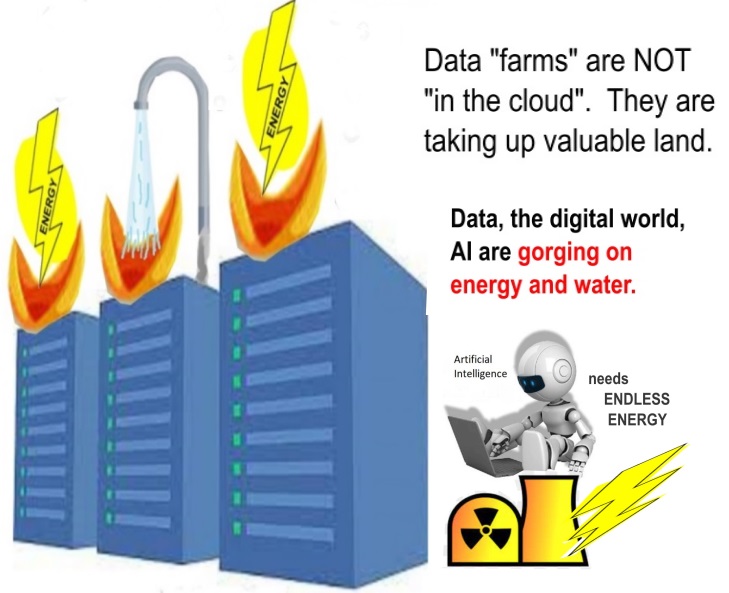
As of last month, when [data centres] were classed as critical national
infrastructure, data centres are on a par with utilities, meaning the
government would step in were there a risk to connectivity. Nonetheless, as
Rohan Kelkar, the executive vice-president of power products at Schneider
Electric, puts it, the “lack of grid capacity puts UK’s AI and data
centre ambitions and energy transition goals at risk”.
So much so that we have seen the boroughs of Hillingdon, Ealing and Hounslow all rejecting
data centre projects in order to retain supply for housing. This is far
from a UK-specific issue. In Ireland, the pressure on the national grid
from computing needs is so acute they have had to pause some data centre
approvals over concerns that excessive demand from data centres could lead
to blackouts.
On the other side of the Atlantic, Big Tech companies are
also grappling with the energy conundrum: how to find low-carbon, reliable
sources of power for their power-hungry warehouses without jeopardising
customer needs or their net zero goals. Along with renewable energy and
improving battery storage, right now they all seem to be turning in one
direction: towards nuclear power. Microsoft signed a deal last month to
help resurrect a unit of the Three Mile Island plant in Pennsylvania.
Amazon bought a nuclear-powered data centre earlier in the year. On Monday,
Google became the latest to announce a nuclear energy deal to meet the
needs of its data centres, looking at mini reactors developed by a
Californian company.
A cocktail of technological innovation means this
could happen in the UK, too. Rolls-Royce, the engineer, is at the forefront
of developing mini reactors and is already having conversations with
operators in the UK about their use. While mini nukes would not have been
commercially viable in the past, now that demand for data centres has
jumped exponentially, their potential use has become more feasible. Another
key component in the future marriage of computing and nuclear power is that
data centres are becoming less location driven because of improvements in
latency, the time it takes for data to travel from one point to another.
The immediate problem with the introduction of small nuclear reactors?
Rolls-Royce estimates that they remain a decade or more away, with none
currently operating and generating electricity in the UK. In the meantime,
connection to the “constrained” grid, remains all-important headache
for those looking to build data centres.
Times 16th Oct 2024
‘A catastrophically poor bargain for the UK’: Experts verdict on government plan for new nuclear finance
NFLA 14th Oct 2024
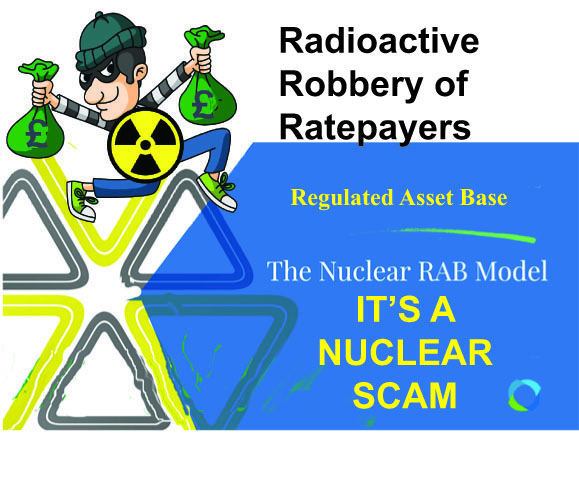
As Prime Minister Sir Kier Starmer meets world finance leaders today at the UK International Investment Summit, the Chair of the Nuclear Free Local Authorities has co-signed a letter sent to the Energy Secretary and government departments challenging plans to use the Regulated Asset Base model to finance future nuclear power plants.
The letter, drafted by the former Chief Statistician of the Scottish Office, has been endorsed by thirty high-level experts, comprising senior academics, former civil servants, nuclear regulators, citizen scientists and NGOs. It has been sent to Energy Secretary, Ed Miliband, and several Whitehall departments – the Energy Security and Net Zero Committee, the National Audit Office, the Public Accounts Committee, and the Comptroller and Auditor General.
14th October 2024
‘A catastrophically poor bargain for the UK’: Experts verdict on government plan for new nuclear finance
As Prime Minister Sir Kier Starmer meets world finance leaders today at the UK International Investment Summit, the Chair of the Nuclear Free Local Authorities has co-signed a letter sent to the Energy Secretary and government departments challenging plans to use the Regulated Asset Base model to finance future nuclear power plants.
The letter, drafted by the former Chief Statistician of the Scottish Office, has been endorsed by thirty high-level experts, comprising senior academics, former civil servants, nuclear regulators, citizen scientists and NGOs. It has been sent to Energy Secretary, Ed Miliband, and several Whitehall departments – the Energy Security and Net Zero Committee, the National Audit Office, the Public Accounts Committee, and the Comptroller and Auditor General.
Due to the inevitable huge costs and construction delays, the private sector is loath to finance new nuclear power projects; Sizewell C is struggling to find financial backers. Consequently, new plants can only be built with a significant public subsidy.
The latest subsidy mechanism to be adopted by the UK Government is the Regulated Asset Base model, in which an additional nuclear levy will be imposed on hard-pressed electricity consumers to make interim payments to developers of new nuclear projects to periodically offset their construction costs; this lifts the burden of rising costs and costly delays from the shoulders of developers and places this upon those of the customer. In so doing, not only is the project derisked for the developer, but the latter has less incentive to arrest costs or prevent delays because they know electricity consumers will have to meet them.
The experts have labelled RAB ‘a catastrophically poor bargain for the UK’.
The NFLAs have labelled RAB ‘ROB’, calling it daylight robbery and especially iniquitous when imposed upon the poorest and oldest customers. Many households are already struggling to pay huge, and rising, energy bills, and will be further burdened by a nuclear levy, and as new nuclear plants take so long to build many older customers are unlikely to be around to access any electricity from them.
In a response to a 2022 government consultation by the Business Department,[1] we denounced the proposal to impose a RAB levy on these groups, who are most vulnerable to cold and fuel poverty, and called for them to be exempted from the levy or promptly recompensed by the government if they are required to pay it.
14th October 2024
‘A catastrophically poor bargain for the UK’: Experts verdict on government plan for new nuclear finance
As Prime Minister Sir Kier Starmer meets world finance leaders today at the UK International Investment Summit, the Chair of the Nuclear Free Local Authorities has co-signed a letter sent to the Energy Secretary and government departments challenging plans to use the Regulated Asset Base model to finance future nuclear power plants.
The letter, drafted by the former Chief Statistician of the Scottish Office, has been endorsed by thirty high-level experts, comprising senior academics, former civil servants, nuclear regulators, citizen scientists and NGOs. It has been sent to Energy Secretary, Ed Miliband, and several Whitehall departments – the Energy Security and Net Zero Committee, the National Audit Office, the Public Accounts Committee, and the Comptroller and Auditor General.
Due to the inevitable huge costs and construction delays, the private sector is loath to finance new nuclear power projects; Sizewell C is struggling to find financial backers. Consequently, new plants can only be built with a significant public subsidy.
The latest subsidy mechanism to be adopted by the UK Government is the Regulated Asset Base model, in which an additional nuclear levy will be imposed on hard-pressed electricity consumers to make interim payments to developers of new nuclear projects to periodically offset their construction costs; this lifts the burden of rising costs and costly delays from the shoulders of developers and places this upon those of the customer. In so doing, not only is the project derisked for the developer, but the latter has less incentive to arrest costs or prevent delays because they know electricity consumers will have to meet them.
The experts have labelled RAB ‘a catastrophically poor bargain for the UK’.
The NFLAs have labelled RAB ‘ROB’, calling it daylight robbery and especially iniquitous when imposed upon the poorest and oldest customers. Many households are already struggling to pay huge, and rising, energy bills, and will be further burdened by a nuclear levy, and as new nuclear plants take so long to build many older customers are unlikely to be around to access any electricity from them.
In a response to a 2022 government consultation by the Business Department,[1] we denounced the proposal to impose a RAB levy on these groups, who are most vulnerable to cold and fuel poverty, and called for them to be exempted from the levy or promptly recompensed by the government if they are required to pay it.
Letter………………………………………………………………………………………………………. https://www.nuclearpolicy.info/news/a-catastrophically-poor-bargain-for-the-uk-experts-verdict-on-government-plan-for-new-nuclear-finance/
A nuclear kettle of fish at Hinkley Point C
Is a trawler’s worth of fish getting in the way of our nuclear
ambitions? Tali Fraser investigates something fishy going on around Hinkley
Point C. Among ministers of the last government, it is known as “the fish
disco”, and it is, they say, a cautionary tale that illustrates the
nation’s inability to build critical infrastructure.
The story centres on
the massive construction site on the Bristol Channel where EDF is building
the Hinkley Point C nuclear power station that is essential to meet the
nation’s future energy needs. Nuclear reactors need to be cooled – one
reason they are often based on the coast – but the intake of the water
poses a risk to fish. EDF’s initial solution included what they called an
“acoustic fish deterrent”, essentially a series of 280 underwater
speakers blasting a series of high-pitched sound pulses louder than a jumbo
jet. The company, however, has begun to argue that the deterrent, mockingly
dubbed “the fish disco” by former environment secretary Michael Gove,
is unnecessary and wants instead to mitigate the risk by other means.
Critics, however, say the company is reneging on a promise it made to win
planning consent because it wants to save cash (the cost of the deterrent
is estimated to run to the tens of millions of pounds).
Politics Home, 15th Oct 2024
https://www.politicshome.com/thehouse/article/fish-disco-hinkley-point-c-nuclear-energy
Open Letter to the Department for Energy Security -new nuclear power ‘a catastrophically poor bargain’.
1 Open Letter to the Department for Energy Security and Net Zero. Senior
academics, former civil servants, nuclear regulators, and NGOs write to
ESNZ, NAO, PAC, saying new nuclear power ‘a catastrophically poor bargain’………………………………………. signatures,
Bylines Scotland 14th Oct 2024
https://bylines.scot/environment/open-letter-to-the-department-for-energy-security-and-net-zero/
Campaigners welcome international investors to UK summit but urge them to boycott “toxic investment” Sizewell C 14.10.24
Campaigners opposed to Sizewell C unfurled two banners saying “Sizewell
C is a Toxic Investment” this morning outside the City of London’s
Guildhall. The protest took place as world business leaders gathered for
Labour’s first International Investment Summit, and the Labour government
launched its Industrial Strategy consultation.
A Sizewell C Final Investment Decision (FID) has been delayed and rumours are swirling around about which, if any, of the small pool of private investors reported to be
taking part in the equity raise are still involved. Alison Downes of Stop
Sizewell C said “It’s fantastic that Britain is open for business, but
we’re here to tell international investors that, unless they want to find
themselves embroiled in another HS2, they should put their money into
renewables instead of slow, risky, expensive, “toxic” Sizewell C. The
reality is that Sizewell C cannot help the Labour government achieve its
Energy Mission, and if UK investors won’t touch it, neither should
international ones, nor the taxpayer.” https://tasizewellc.org.uk/campaigners-welcome-international-investors-to-uk-summit-but-urge-them-to-boycott-toxic-investment-sizewell-c-14-10-24/
Stop Sizewell C 14th Oct 2024
Nuclear – not the way ahead

12 Oct 24 https://renewextraweekly.blogspot.com/2024/10/nuclear-not-way-ahead.html
Renewable energies consistently outperform nuclear power in terms of cost and deployment speed and are therefore chosen over nuclear power in most countries’ – so says this years independent World Nuclear Industry status report (WNISR). It notes that in 2023, 5 new nuclear reactors (5 GW) started up and 5 were closed (6 GW), capacity thus declining by 1 GW. So overall it says that nuclear energy’s share of global commercial gross electricity generation declined from 9.2 % to 9.1%, little more than half of its peak of 17.5 % in 1996. In 2023, total investment in non-hydro renewable electricity capacity reached a record US$623 billion, 27 times the reported global investment decisions for the construction of nuclear power plants, with solar and wind power capacities growing by 73% and 51%, respectively.
Nevertheless, some countries are still pushing on with new nuclear, despite its poor economics, including the UK and Sweden. Sweden has mooted a new financing model but its critics say support for nuclear ‘is like throwing money down the drain’ since ‘the expansion of solar energy will make nuclear power obsolete and push it out of the electricity market by the 2030s’. In the UK, and also in France, it has been argued that part of the reason for the political commitment to new nuclear is link between civil and military nuclear, with cross-funding and technical collaboration seen as beneficial.
However, be that as it may, Emeritus Profs. Stephen Thomas (University of Greenwich) and Andrew Blowers (OU) do not see nuclear civil power prospering in the UK, indeed they say that ‘it is time to expose the Great British nuclear fantasy once and for all.’ They claim that ‘no amount of political commitment can overcome the lack of investors, the absence of credible builders and operators or available technologies let alone secure regulatory assessment and approval. Moreover, in an era of climate change there will be few potentially suitable sites to host new nuclear power stations for indefinite, indeed unknowable, operating, decommissioning and waste management lifetimes. And there are the anxieties and fears that nuclear foments, the danger of accidents and proliferation and the environmental and public health issues arising from the legacy of radioactive waste scattered on sites around the country’.
They go on to suggest backing off new nuclear projects. They do recognise that ‘abandoning Sizewell C and the SMR competition will lead to howls of anguish from interest groups such as the nuclear industry and trade unions with a strong presence in the sector. It will also require compensation payments to be made to organisations affected. However, the scale of these payments will be tiny in comparison with the cost of not abandoning them’.
Certainly the cost of construction is vast- and expanding. The EPR being built by EDF at Hinkley Point may in the event cost £35bn, with there’s still being a way to go- 2030 for unit 1 start up, maybe 2031 for Unit 2. And as industry commentators have noted ‘as the cost of Hinkley Point has increased, the backers have had to provide more funding. The souring of relations between Britain & China saw CGN stop providing any more money, leaving EDF to fund the shortfall. EDF has called upon the UK government to help out with the escalating cost but it has refused. EDF was fully nationalised in 2023, leaving the French taxpayer to pick up the tab for the cost overruns’.
UK consumers will of course pay the high cost of the power when it comes on the grid. They will also be expected to shell out for the next EPR that is planned in the UK, at Sizewell, but this time in advanced of completion, under the RAB financing system. However, although the government has provided £5.5bn to move things along, the final (private) investment decision on Sizewell C keeps being delayed. EDF aimed to secure funding by the end 2024, but that may now be extended to 2025 – and EDF is still looking for £4bn to finish Hinkley Point!
All in all, with EDF’s finances in a mess, and few other companies keen to take risks with this technology, it looks a bit uncertain. Even the UK government seems to be having doubts, with plans for a new large project on Wylfa in Wales may be subject to a review. Proposals are currently being considered for small modular reactors under a UK SMR competition, but the US NuScale PWR has just been eliminated from the race. It was once seen as the leader, but it had lost a US order. EDF had earlier dropped out. So that leaves Rolls-Royce, GE-Hitachi, Westinghouse, and Holtec Britain, with the newly formed agency, Great British Nuclear, expected to announce 2 winners later this year or early next year. Up to £20bn is at stake. However few see any power being available anywhere from SMRs until the early or mid 2030s. Despite a lot of hype, in reality it has been slow going. And there are risks.
Overall then, the prospects for new nuclear in the UK, or indeed elsewhere, do not look too good. Even in China, renewables are expanding very much faster, with according to the WNISR/IRENA, at the end of 2023, there being over 1000GW of wind and solar and around 421GW of hydro in place, compared to just 53GW of nuclear. Given the scale and rate of deployment, and the costs, it’s pretty clear which should be the way forward in terms of energy supply there and everywhere else.
Nuclear fission may have a small role to play in some isolated locations and in some applications, and fusion may be viable at commercial scale at some stage, but we have to be aware of hype and overselling in this area, and also in the wider nuclear debate, with nuclear sometimes being sold as the answer to climate change. It’s not. As I have indicated in earlier posts, there is no shortage of studies from around the world confirming the view that nuclear is a costly and risky distraction from renewables, which are the main energy supply solutions to climate change. And Germany has shown how the exit from nuclear can be done, led by renewables. Although they do have some issues in terms of balancing, renewables, along with energy efficiency, demand management and storage, are the way ahead to an economically viable and sustainable energy future.
1 This Month
Chernobyl: The Lost Tapes – A good documentary on Chernobyl on SBS available On Demand for the next 3 weeks– https://www.sbs.com.au/ondemand/tv-program/chernobyl-the-lost-tapes/2352741955560

of the week–London Campaign for Nuclear Disarmament

Tell the Ukrainian Government to Drop Prosecution of Peace Activist Yurii Sheliazhenko
To see nuclear-related stories in greater depth and intensity – go to https://nuclearinformation.wordpress.com
-
Archives
- April 2026 (126)
- March 2026 (251)
- February 2026 (268)
- January 2026 (308)
- December 2025 (358)
- November 2025 (359)
- October 2025 (376)
- September 2025 (257)
- August 2025 (319)
- July 2025 (230)
- June 2025 (348)
- May 2025 (261)
-
Categories
- 1
- 1 NUCLEAR ISSUES
- business and costs
- climate change
- culture and arts
- ENERGY
- environment
- health
- history
- indigenous issues
- Legal
- marketing of nuclear
- media
- opposition to nuclear
- PERSONAL STORIES
- politics
- politics international
- Religion and ethics
- safety
- secrets,lies and civil liberties
- spinbuster
- technology
- Uranium
- wastes
- weapons and war
- Women
- 2 WORLD
- ACTION
- AFRICA
- Atrocities
- AUSTRALIA
- Christina's notes
- Christina's themes
- culture and arts
- Events
- Fuk 2022
- Fuk 2023
- Fukushima 2017
- Fukushima 2018
- fukushima 2019
- Fukushima 2020
- Fukushima 2021
- general
- global warming
- Humour (God we need it)
- Nuclear
- RARE EARTHS
- Reference
- resources – print
- Resources -audiovicual
- Weekly Newsletter
- World
- World Nuclear
- YouTube
-
RSS
Entries RSS
Comments RSS
 nuclear-news