Britain’s Energy Secretary Follows Tech Giants In Pursuit Of New Nuclear Power Stations
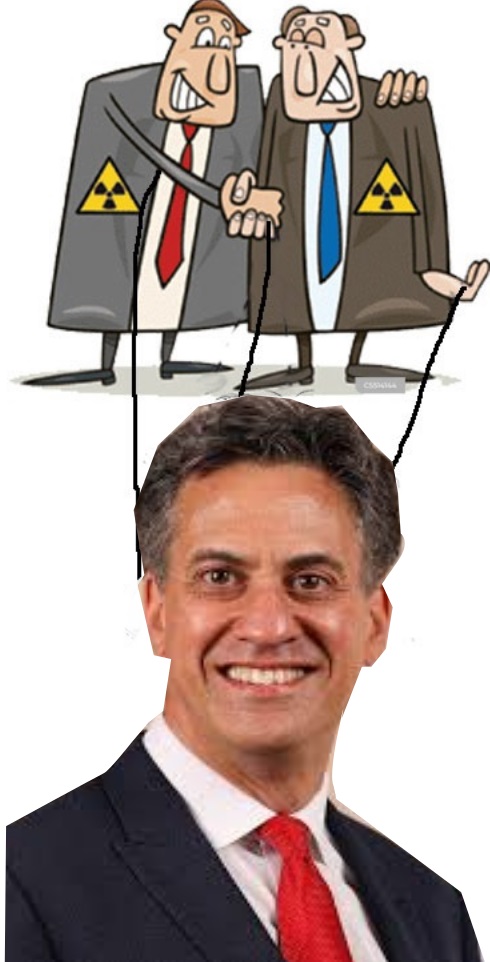
the government is “determined to drive forward” with nuclear power through both public and private investment, despite this being a period of “immense challenge for the public finances.”
Miliband was speaking in London on Thursday at the Nuclear Industry Association’s Nuclear 2024 conference, where he told the audience that their industry has an essential role to play in the U.K.’s pursuit of achieving a [ ?] clean power system by 2030.
Robert Olsen, Forbes 7th Dec 2024
British Energy Secretary Ed Miliband has been watching U.S. tech companies striking deals with operators and developers of nuclear power plants, and now he’s eager to pursue similar projects in the U.K.
“My message is clear: if you want to build a nuclear project in Britain, my door is open,” Miliband said. “My department is listening. We want all your ideas for projects that can work and provide value for money.”
Miliband was speaking in London on Thursday at the Nuclear Industry Association’s Nuclear 2024 conference, where he told the audience that their industry has an essential role to play in the U.K.’s pursuit of achieving a [ ?] clean power system by 2030.
He said the government is “determined to drive forward” with nuclear power through both public and private investment, despite this being a period of “immense challenge for the public finances.”
Great British Nuclear (GBN), the government body tasked with spearheading the development of small modular reactors (SMRs), has started contract negotiations with four companies shortlisted for the U.K.’s small modular reactor program, and final decisions will be made next year.
Britain’s Rolls-Royce is competing with U.S.-based rivals GE Hitachi, Holtec and Westinghouse Electric for contracts to develop SMRs in the U.K. The competition was launched last year, as part of the government’s plan to replenish the country’s dwindling nuclear industry………………………………..https://www.forbes.com/sites/robertolsen-1/2024/12/07/britains-energy-secretary-follows-tech-giants-in-pursuit-of-new-nuclear-power-stations/
Hinkley update: mixed reaction as first reactor drops into place
Mr Vince said: “I’m really pleased to be a patron of the Stop Hinkley campaign which is working to stop the government wasting billions of taxpayers’ money on a technology which is hugely expensive and slow to develop.”
By Simon Hacker , Punchline Gloucester 6th Dec 2024
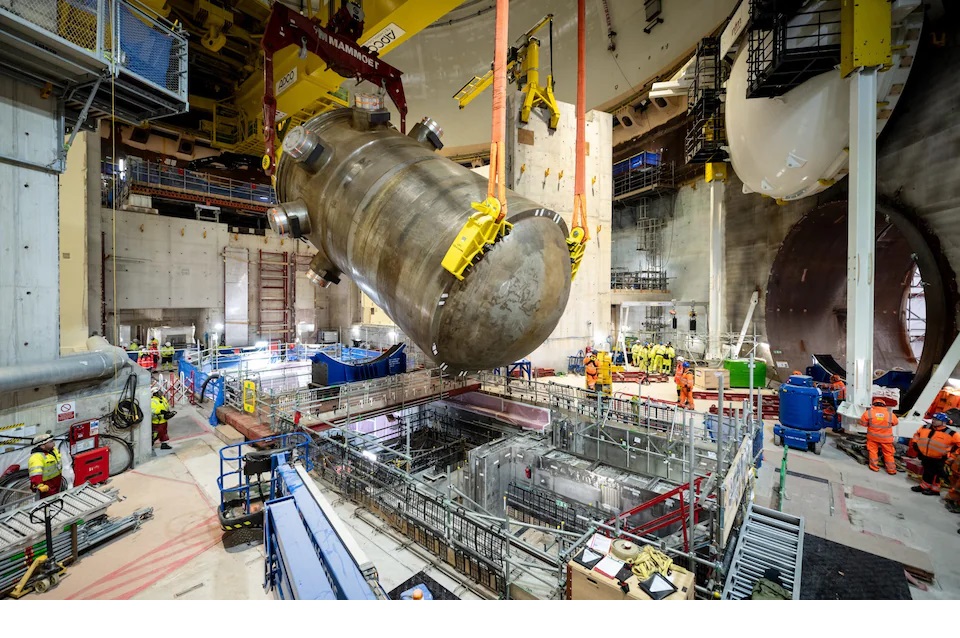
It may be delayed to the extent that existing nuclear reactors are now planning to remain operational for an extra three years, but Hinkley Point C has come a step closer to activation with an overnight operation to drop a crucial 500-tonne reactor for the process into place.
When switched on, Somerset’s Hinkley Point C, near Bridgwater, is estimated to be capable of providing 7% of the UK’s power needs – calculated to keep six million homes supplied.
The 13m-long reactor is the first of two to be put in place by French project owner EDF and each will contain the nuclear chain reaction that will generate power from a planned operational date of 2030. the 12-hour operation to manoeuvre the unit into place was the first such job in 30 years in the UK.
But the road to this landmark has been far from smooth. With the installation some five years later than was originally planned, Covid, supply chain issues and political negotiations have ensured an uphill slog on the technology’s re-introduction, while – in keeping with the original advent of nuclear power – costs have spiralled: back in 2017, the taxpayer was told that the cost of this project would be £18bn. It now stands at £46bn.
Gloucestershire businessman and energy entrepreneur Dale Vince, who owns Ecotricity and campaigns for Britain’s energy production to be brought back into the hands of British business, has argued against nuclear installations on the Severn Estuary since 1983 and became a patron of the Stop Hinkley campaign this summer.
Speaking about the decision, Mr Vince said: “I’m really pleased to be a patron of the Stop Hinkley campaign which is working to stop the government wasting billions of taxpayers’ money on a technology which is hugely expensive and slow to develop.”
Alongside Mr Vince, the Somerset campaign is urging the government to adopt a 100% renewable energy strategy which it argues is “perfectly feasible” and which, compared to the UK Government’s current strategy, would save more than £100bn on the route plan to reach net zero by 2050.
Roy Pumfrey, Stop Hinkley spokesperson, said nuclear power is “rapidly losing ground to the astonishing growth in renewables” and the campaign has wanred that there is “no scientific solutuon to safeguarding nuclear waste” and contends that while no electricity production is zero carbon, nuclear is calculated to produce between 8 and 11 times more carbon emissions than renewable sources.
EDF has also waded into controversy here in Gloucestershire this week after the Gloucestershire Wildlife Trust claimed the supplier’s mitigation scheme for fish killed in the planned nuclear site was “shambolic” and threatens to create the perfect conditions for an ecological disaster in the Severn Estuary.
Hinkley Point C is financed by the state-owned French energy giant EDF Energy and China General Nuclear Power Group, which is also state-owned. https://www.punchline-gloucester.com/articles/aanews/hinkley-update-mixed-reaction-as-first-reactor-drops-into-place
Explosives speed Sizewell A turbine hall decommissioning
WNN, Friday, 6 December 2024
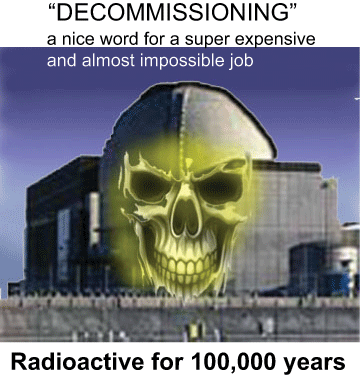
More than 1200 holes were drilled and 700 kilogrammes of explosive used for the demolition of large concrete plinths in the turbine hall of Sizewell A nuclear power plant in the UK.
Nuclear Restoration Services said it was the largest use of explosives on a nuclear site for conventional demolition purposes in decades.
After the holes were drilled into the plinths, the charges were set and covered for the detonation, which was all planned and carried out with Office for Nuclear Regulation (ONR) oversight.
A series of test blasts had to take place and special detonator timings designed to meet nuclear site regulations for air overpressure and ground vibration, with Offive for Nuclear Regulation (ONR) having placed a hold point on the work until they were sure any risks from the novel operation had been minimised.
The ONR said that following the blasts, the huge turbine supporting concrete bases can be removed using heavy machinery within two weeks, rather than “deploying older and slower methods of drilling the structure apart which would have taken several months”.
Sizewell A’s twin reactors shut down in 2006 after 40 years of operation. Planning consent was given to demolish the turbine hall and electrical annexe in August and more than 35 miles of cabling and 8000 scaffolding boards, clips and pipes have been taken out………………………….. https://www.world-nuclear-news.org/articles/explosives-used-in-sizewell-a-turbine-hall-decommissioning
Drugs found in control room at Dungeness Nuclear Power Station
Millie Bowles
https://www.kentonline.co.uk/romney-marsh/news/drugs-found-in-nuclear-power-station-control-room-316864/
mbowles@thekmgroup.co.uk. 05 December 2024
Staff were drug tested and sniffer dogs were deployed after a bag of suspected drugs was found at a nuclear power station.
The package, believed to have contained powdered drugs thought to be cocaine, was discovered by a worker at Dungeness B Power Station last month.
Safety warnings as cracks rise at Torness nuclear plant
Rob Edwards, The Ferret, 22 July 24,

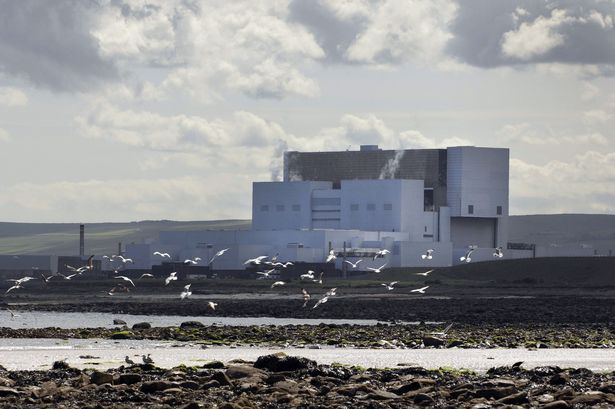
The number of cracks in the core of an ageing nuclear reactor at Torness in East Lothian has risen to 46, prompting warnings that prolonging its operation would be “gambling with public safety”.
The UK Office for Nuclear Regulation (ONR) told The Ferret that the cracks were detected in April 2024 and were “at the upper end of expectations”. The first three cracks were discovered at Torness in February 2022. July 21, 2024
ONR has previously said that spreading cracks could result in debris inhibiting the cooling of hot radioactive fuel. This can lead to a reactor meltdown, which can result in the escape of radioactivity to the environment.
In 2021 the plant’s operator, EDF Energy, said that Torness would be closed in 2028 – two years earlier than expected – because of expected cracking. The station was originally scheduled to close in 2023, and in 2016 its expected life was extended to 2030.
But in January 2024 EDF changed its mind, and announced it would review whether the plant’s life could again be extended beyond 2028 “subject to plant inspections and regulatory approvals”.
Campaigners are now worried that EDF could be putting nuclear safety at risk. They are calling for Torness to be shut down “sooner rather than later”.
EDF, however, insisted that the cracks did not affect normal operations or the ability to shut down Torness in an emergency. The plant’s life would be reviewed “by the end of 2024” with the “ambition” of generating electricity after 2028.
ONR pointed out that EDF would have to demonstrate Torness would be safe to operate beyond 2028. “We will not allow any plant to operate unless we are satisfied that it is safe to do so,” it said.
The cracks have opened up in the ring-shaped graphite bricks packed around the reactor’s highly radioactive uranium fuel. They were detected in one of the two reactors at Torness during EDF’s latest inspection on 18 April 2024.
“EDF’s sampling of fuel channels showed 46 bricks with a single full height axial crack (a crack all the way through), which was at the upper end of expectations,” said ONR in response to freedom of information requests from The Ferret…………………………………………………………………………….
Scotland’s other nuclear power station at Hunterston in North Ayrshire was closed down in January 2022, more than a year earlier than planned. This followed the discovery of an estimated 586 cracks in its two reactors.
Torness ‘well past’ its design life
Pete Roche, a veteran nuclear critic, pointed out that it was EDF that decided to close Torness in 2028 because of cracking. “Given that the number of cracks are increasing, they would be gambling with public safety to now go back to a 2030 closure date,” he said.
“It’s difficult to avoid the conclusion that EDF is prepared to gamble because the plant it is building in England at Hinkley Point C is so late.”
The Guardian reported in February 2024 that delays and cost overruns at Hinkley in Somerset had cost EDF £11 billion. The plant was originally due to be built for £18bn in 2017, but is now expected to cost £46bn and be completed by 2031.
According to environmental campaigner, Dr Richard Dixon, Torness was “well past” its 30 year design life. “Now the cracks are meeting the worst predictions but suddenly EDF thinks it is a good idea to run the reactors for longer,” he said.
The Scottish Greens warned of the “devastating destruction” that could be caused by poorly maintained nuclear plants. “These reports are very worrying and should concern us all,” said the party’s co-leader and Lothian MSP, Lorna Slater.
“When it comes to something as dangerous as nuclear energy, there can be no room for error or regret. It underlines why Torness needs to be shut down sooner rather than later.”……………………………………………………………………………………………. more https://theferret.scot/torness-safety-warnings-as-cracks-rise/
Cost of switching off UK wind farms soars to ‘absurd’ £1bn
Britain’s curtailment cost jumps as grid struggles to cope with power
British bill payers have spent an “absurd” £1bn to temporarily switch
off wind turbines so far this year as the grid struggles to cope with their
power.
The amount of wind power “curtailed” in the first 11 months of
2024 stood at about 6.6 terawatt hours (TWh), according to official
figures, up from 3.8 TWh in the whole of last year. Curtailment is where
wind turbines are paid to switch off at times of high winds to stop a surge
in power overwhelming the grid.
Households and businesses pay for the cost
of this policy through their bills. The cost of switching off has reached
about £1bn so far this year, according to analysis of market data by
Octopus Energy which was first reported by Bloomberg. This is more than the
£779m spent last year and £945m spent in 2022.
The jump in curtailment
follows the opening of more wind farms at a time when the country still
lacks the infrastructure needed to transport all the electricity they
generate at busy times. Clem Cowton, the director of external affairs at
Octopus, added:
“The outdated rules of our energy system mean vast
amounts of cheap green power go to waste. “It’s absurd that Britain
pays Scottish wind farms to turn off when it’s windy, while
simultaneously paying gas-power stations in the South to turn on.
Telegraph 2nd Dec 2024,
https://www.telegraph.co.uk/business/2024/12/02/britain-paying-wind-farms-record-1bn-to-switch-off/
Lincolnshire county councillors demand answers on Nuclear Waste Services’ (NWS) proposed Geological Disposal Facility (GDF) at Theddlethorpe
By James Turner, Local Democracy Reporter, 03 December 2024
Lincolnshire county councillors demand answers on Nuclear Waste Services’
(NWS) proposed Geological Disposal Facility (GDF) at Theddlethorpe.
Concerned representatives have criticised the level of communication from
the government body behind a proposed underground nuclear waste facility.
Members of Lincolnshire County Council’s executive raised concerns about a
number of unanswered questions regarding Nuclear Waste Services’ (NWS)
proposed Geological Disposal Facility (GDF) during a meeting on Tuesday
(December 3) – specifically about where it could be built and, crucially,
whether it is safe. NWS was previously considering three sites to locate
the facility, which is estimated to cost between £20 billion and £53
billion, making it the largest planned infrastructure project in the UK.
Lincs Online 3rd Dec 2024 https://www.lincsonline.co.uk/louth/very-poor-communication-slammed-as-members-demand-to-know-9394650/
UK underestimates threat of cyber-attacks from hostile states and gangs, says security chief
New head of National Cyber Security Centre to warn of risk to infrastructure in first major speech
Dan Milmo technology editor, Guardian, Tue 3 Dec 2024
The UK is underestimating the severity of the online threat it faces from hostile states and criminal gangs, the country’s cybersecurity chief will warn.
Richard Horne, the head of GCHQ’s National Cyber Security Centre, will cite a trebling of “severe” incidents amid Russian “aggression and recklessness” and China’s “highly sophisticated” digital operations.
In his first major speech as the agency’s chief, Horne will say on Tuesday that hostile activity in UK cyberspace has increased in “frequency, sophistication and intensity” from enemies who want to cause maximum disruption and destruction………………………………………………….. https://www.theguardian.com/technology/2024/dec/03/uk-underestimates-threat-of-cyber-attacks-from-hostile-states-and-gangs-says-security-chief
Delays to nuclear plants giving Sizewell B a new lease of life

EDF is considering plans to keep the power station in Suffolk going for an extra
20 years to underpin Britain’s net zero ambitions after building new
plants proves tricky. Sizewell B in Suffolk, the nuclear power plant that
provides about 3 per cent of the UK’s electricity and has been in the
midst of a 47-day maintenance outage.
Nuclear power has dwindled to about
14 per cent of the UK’s electricity mix, down from about a quarter in the
late 1990s. Of the five plants still running, all of which are operated by
EDF, the French state-backed power group, only Sizewell B is set to be
still running by the end of the decade.
Efforts to revive the industry have
been beset by delays and soaring costs, with Hinkley Point C, the first
plant to be built in Britain in more than two decades, running up to six
years behind schedule and billions over budget. Sizewell B, which began
generating power in 1995, was the last. It is against this backdrop that
the operators of Sizewell B will make the case to EDF in Paris to extend
the life of the plant, capable of powering two million homes, by another 20
years.
Keeping the plant running until 2055 is set to cost roughly £700
million. The plant has relatively fixed costs and has already forward-sold
the majority of power set to be generated next year. However, the
volatility in power prices since the pandemic, exacerbated by the Russian
invasion of Ukraine, has complicated the business case for keeping Sizewell
B running for longer.
The French energy group, which has an 80 per cent
stake in Sizewell B alongside Centrica’s 20 per cent, is attempting to
pay down a debt pile of almost £45 billion. Here in the UK, it is in talks
with private investors to raise between £4 billion and £5 billion to help
meet the spiralling bill to complete Hinkley Point C. Sizewell C is also
competing for EDF capital, even if the company intends to eventually sell
down its stake in the project from 50 per cent to about 20 per cent. Two
nuclear power stations with identical designs in America — Wolf Creek and
Callaway — have already been granted extensions to their operating
licences that will see them run from 40 years to 60 years, providing a
precedent.
Times 2nd Dec 2024 https://www.thetimes.com/business-money/energy/article/delays-to-nuclear-plants-giving-sizewell-b-a-new-lease-of-life-r6fdzx9j5
Lifespan of four nuclear power stations extended
Kevin Keane, BBC Scotland environment correspondent, 3 Dec 24
The lifespan of Scotland’s last remaining nuclear power station and three other plants in England are to be extended.
EDF Energy says Torness, in East Lothian, and its sister site Heysham 2, in Lancashire, will continue generating for an extra two years until 2030.
Two other sites – Hartlepool and Heysham 1 – will continue for an extra year until 2027.
The French state-owned company says it will now invest £1.3bn across its operational nuclear estate over the next three years.
Torness employs about 550 people with a further 180 contractors also working on site.
It began generating electricity in 1988 and was originally due to be decommissioned last year.
Construction work on Hartlepool power station started in 1968, taking 15 years to complete. Heysham 1 began generating in 1983 followed by Heysham 2 five years later.
In 2016, a decision was taken to extend Torness’ life until 2030 – but the discovery of cracks in the graphite bricks, which make up the reactor cores of some advanced gas-cooled power stations, led to a review.
As a result, it was announced in 2021 that the closure dates for Torness and Heysham 2 would be brought forward again by two years to 2028.
EDF says it has spent several years studying the progress of cracking and engineers feel they have a better understanding of the issues.
It says regular inspections will be carried out to ensure the sites can continue to operate safely.
……………………………………………The company made the decision following a year-long review into the four sites.
A separate review is looking at the possibility of extending its Sizewell B facility in Suffolk for a further 20 years…………………. https://www.bbc.co.uk/news/articles/c33dvekx021o
Campaigners lose bid to challenge Sizewell C licence decision in High Court

TEAGS claimed that the ONR unlawfully failed to include sea defences in its considerations when issuing a nuclear site licence for the development
Rayo 3rd Dec 2024
A campaign group has lost a High Court bid to challenge a regulator’s decision to issue a licence for the Sizewell C nuclear site in Suffolk.
Theberton and Eastbridge Action Group on Sizewell Limited (TEAGS), which campaigns under the name Stop Sizewell C, claimed that the Office for Nuclear Regulation (ONR) unlawfully failed to include sea defences in its considerations when issuing a nuclear site licence (NSL) for the development.
Barristers for TEAGS told a hearing on Tuesday that the legal challenge over the decision should be allowed to continue while lawyers for the ONR and Sizewell C Limited (SZC), which owns the site, claimed it should be thrown out.
In a ruling, Mrs Justice Lieven dismissed the claim, ruling that the challenge had “no chance of success” and was “totally without merit”.
She said: “The fundamental argument advanced by the claimant is, in my view, plainly wrong.”
……………………………….Philip Coppel KC, for TEAGS, said in written submissions the challenge to the issuing of the NSL was “arguable” as the licence does not “cover the event of an accident or other emergency in respect of” sea defences.
In court, he said: “Sea defences have the obvious potential to affect safety.”
He continued: “The regulator cannot treat the consequences of such a mistake as an acceptable risk in the operation of a nuclear reactor.”
…………………Following the ruling, Paul Collins, of Stop Sizewell C, said “We are disappointed and surprised that the Court concluded that the 1965 Nuclear Installation Act did not require the imposition of a condition, when the Sizewell C nuclear site licence was granted, to deal with a safety issue – namely the sea defences – that was well known at that time.
“The judge fully acknowledged that the sea defences are critical for the safety of Sizewell C’s reactors.”
Alison Downes, also of Stop Sizewell C, said: “It remains the case that we are deeply concerned about this issue.
“There is still no final design of the sea defences let alone guarantees that the construction is feasible. We thank our legal team and supporters and are considering our position.” https://hellorayo.co.uk/hits-radio/suffolk/news/campaigners-lose-bid-challenge-sizewell-c-licence-decision-high-court/
Midlands Regional Hub for Nuclear Skills officially launched

A new Midlands Regional Hub for Nuclear Skills has been endorsed by the
Nuclear Skills Delivery Board to help develop the future nuclear workforce.
The Hub was launched at an event hosted by the University of Derby with
Rolls-Royce as the prime sponsor.
The government, in partnership with the
civil and defence nuclear industry, are making significant long-term
investments in nuclear skills, jobs and education to help the sector fill
40,000 new jobs by the end of the decade. The National Nuclear Strategic
Plan for Skills (NNSPS) was launched in May 2024 to address the national
nuclear skills shortage and sets out targeted action that the UK will take
to ensure it has the required skills to support the UK’s nuclear
ambitions. Ensuring the delivery of the NNSPS is the Nuclear Skills
Executive Council (NSEC) which brings together CEOs from across key sector
organisations.
Derby University 2nd Dec 2024 https://www.derby.ac.uk/news/2024/midlands-regional-hub-for-nuclear-skills-officially-launched/
EDF Brings Sizewell Back Online, Balancing UK’s Nuclear Grid
EDF Energy has successfully brought the Sizewell B-2 reactor back online,
strengthening the UK’s nuclear power grid as several reactors remain
offline for scheduled maintenance. With Sizewell B-2 back in action, only
five reactors remain offline. Currently undergoing maintenance are Sizewell
B-1, Heysham 2-8, Heysham 1-2, Torness 2, and Hartlepool 1, leaving a 3,015
MW capacity unavailable. These outages aim at ensuring long-term
reliability, with more maintenance planned through 2025.
Notably, Heysham
1-1, Heysham 1-2, and Hartlepool are nearing decommissioning by 2026, which
could pose future challenges unless new capacities are developed.
Finimize 1st Dec 2024 https://finimize.com/content/edf-brings-sizewell-back-online-balancing-uks-nuclear-grid
‘Great British Nuclear Fantasy’ Mirrors SMR Hype in Canada

While Canada touts small modular nuclear reactors and U.S. investors run for cover, the United Kingdom will waste billions watching the industry slowly crumble, writes veteran journalist Paul Brown.
Paul Brown, Dec 01, 2024, https://energymixweekender.substack.com/p/great-british-nuclear-fantasy-mirrors
According to the United Kingdom’s Labour government, the country is forging ahead with large nuclear stations and a competition to build a new generation of small modular reactors.
Great British Nuclear, a special organization created by the last Conservative administration and continued by Labour, is charged with finding sites for new large reactors and getting a production line running to produce the best small modular reactors. These will be mass produced in as yet non-existent factories.
The state of play in the UK mirrors the unbridled hype in Canada, with provinces like Ontario putting nuclear ahead of more affordable, more genuinely green energy options and the industry brazenly hiring departing provincial cabinet ministers to guide its lobbying efforts. That’s in spite of independent analysts declaring SMRs a “Hail Mary” unlikely to succeed and pointing out that, in contrast to the private power market in the U.S., Canada’s mostly public utilities make it easier for SMR proponents to avoid transparency on costs—and let taxpayers/ratepayers assume the risk if things go wrong.
The UK government is cheered on by both the country’s trade unions and the right-wing press which otherwise spends much time attacking the renewables industry and pouring scorn on Labour’s drive to reach net zero.
However, two distinguished academics who have much spent of their careers studying the electricity industry have produced a comprehensive study that says this latest nuclear “renaissance” won’t happen. Better for the country to cut its losses now and cancel the program than continue to waste billions more pounds letting the nuclear industry crumble slowly, they say.
Prof. Stephen Thomas, emeritus professor of energy policy at Greenwich University in London and Prof. Andy Blowers, emeritus professor of social studies at the Open University, pull no punches. Their report is titled: “It is time to expose the Great British Nuclear Fantasy once and for all.”
Currently, the French electricity giant EDF is building two 1,600-megawatt European pressurized water reactors at Hinkley Point in Somerset. The project is 13 years later than EDF’s original schedule, and the cost has escalated from £18 billion when contracts were signed in 2016 to £35 billion in 2024 (and that is in 2015 prices). The first of the two reactor’s start-up date has this year been postponed until 2030 at the earliest.
With this flagship project costing so much, EDF, already deeply in debt, has declined to finance the second planned twin reactors of the same design at Sizewell C in Suffolk. Site preparation work for this station is under way and the British government has sunk £8 billion into the project already without yet making a final investment decision, even though it was promised earlier this year. This is because the government cannot yet find the private capital required to build the reactors. The two professors say the government should cut its losses now and pull the plug on the project.
Even more pointless according to the two academics is the small modular reactor competition which has four companies, Rolls Royce, Westinghouse, Holtec, and GE Hitachi, putting forward designs. All have the same basic idea, which is to build the reactors in factories and assemble them at sites all over Britain. This, they claim, would be more efficient than building large reactors, and therefore produce cheaper electricity.
The government has said it is prepared to spend £20 billion through 2038 to get these up and running. But the report points out that none of the designs have been completed, let alone tested, so there is no evidence that the claims for them can be justified. They point out nuclear power has “a long history of over-promising and not delivering.”
“Rigorous regulatory and planning processes are essential but are necessarily time-consuming, expensive, and place significant hurdles in the way of an accelerated nuclear program,” the report states. “Some projects may fail to gain site licences or planning permission and all will face substantial delays to the commencement of development.”
The report also points to climate change as a potential problem, since nearly all the potential sites are on coastlines vulnerable to sea level rise and storm surges.
“Despite the sound and fury, the Great British Nuclear project is bound to fail,” Blowers and Thomas conclude.
“No amount of political commitment can overcome the lack of investors, the absence of credible builders and operators, or available technologies, let alone secure regulatory assessment and approval,” they write. “Moreover, in an era of climate change, there will be few potentially suitable sites to host new nuclear power stations for indefinite, indeed unknowable, operating, decommissioning, and waste management lifetimes.”
The two authors acknowledge that “abandoning Sizewell C and the SMR competition will lead to howls of anguish from interest groups such as the nuclear industry and trade unions with a strong presence in the sector. It will also require compensation payments to be made to organizations affected. However, the scale of these payments will be tiny in comparison with the cost of not abandoning them.”
So “it is our hope that sanity and rationality may prevail and lead to a future energy policy shorn of the burden of new nuclear and on a pathway to sustainable energy in the pursuit of net zero.”
Decommissioning old nuclear sites to cost £130bn in blow to Miliband

The figures mean the cost of the UK’s nuclear clean-up alone is close to the total value of electricity produced by atomic power stations since the 1950s.
If the cost of building Britain’s 20-odd past and present nuclear power stations were included – around £30bn each in today’s money – the total cost of several hundred billion pounds would far exceed the value of the power produced, say experts.
Expense to taxpayer of cleaning up former power plants is higher than previously estimated, say auditors
Jonathan Leake, Telegraph, 29 Nov 24
Ed Miliband faces a bill of almost £130bn to clean up Britain’s old nuclear sites after estimated costs jumped.
It will cost £128.8bn to safely wind down old facilities, according to an investigation by the National Audit Office (NAO) – £23.5bn more than previously expected, after factoring in the cost of shutting eight power stations that are currently operational.
Seven nuclear stations are due to shut down in 2028 at which point operator EDF, France’s state-owned energy firm, will hand them back to the British Government for decommissioning.
Another station, Sizewell B, is expected to keep operating into the 2030s when it too will be decommissioned at taxpayer expense.
The NAO report, which looked at the overall operation of Mr Miliband’s Department for Energy Security and Net Zero (Desnz), said: “The current best estimate is that the eight existing sites will each cost £23.5bn to defuel and decommission.”
This is in addition to £105.3bn already set aside for dealing with other legacy projects, chiefly waste stockpiled at Sellafield in Cumbria.
Desnz oversees a Nuclear Liabilities Fund set up to save the money needed for decommissioning the eight stations, but the NAO said this had proven woefully inadequate.
It also warned that the final costs and taxpayer contributions could rise even higher.
The NAO said: “Costs could rise further, particularly if defuelling takes longer than planned … There is a risk that further taxpayer contributions may be required.”
However, the cost of decommissioning the UK’s remaining working nuclear stations is dwarfed by the amount which the NAO found was needed for dealing with legacy waste since the 1950s.
About 70pc of the costs relate to the Sellafield site in Cumbria, where thousands of tonnes of highly radioactive waste are stored in buildings and cooling ponds that are up to 70 years old – many considered extremely hazardous.
The figures mean the cost of the UK’s nuclear clean-up alone is close to the total value of electricity produced by atomic power stations since the 1950s.
Figures released by the Department of Energy and Climate Change show that since Britain’s first nuclear power station opened in 1956, they have generated 2.6bn megawatt hours (MWh) of electricity with a wholesale value of about £200bn at today’s prices.
If the cost of building Britain’s 20-odd past and present nuclear power stations were included – around £30bn each in today’s money – the total cost of several hundred billion pounds would far exceed the value of the power produced, say experts.
The NAO report also looked at the system of Contracts for Difference (CfD) – a financing method created by the UK to guarantee investors in wind farms, solar farms and nuclear power stations sufficient income.
Such schemes, it warned, were already set to cost consumers £89bn by the 2030s – but the final sums could be far higher because of unreliable estimates for the amount of power likely to be produced……………………… https://www.telegraph.co.uk/business/2024/11/29/decommissioning-old-nuclear-sites-to-cost-130bn-in-blow/
1 This Month
Chernobyl: The Lost Tapes – A good documentary on Chernobyl on SBS available On Demand for the next 3 weeks– https://www.sbs.com.au/ondemand/tv-program/chernobyl-the-lost-tapes/2352741955560

of the week–London Campaign for Nuclear Disarmament

Tell the Ukrainian Government to Drop Prosecution of Peace Activist Yurii Sheliazhenko
To see nuclear-related stories in greater depth and intensity – go to https://nuclearinformation.wordpress.com
-
Archives
- April 2026 (139)
- March 2026 (251)
- February 2026 (268)
- January 2026 (308)
- December 2025 (358)
- November 2025 (359)
- October 2025 (376)
- September 2025 (257)
- August 2025 (319)
- July 2025 (230)
- June 2025 (348)
- May 2025 (261)
-
Categories
- 1
- 1 NUCLEAR ISSUES
- business and costs
- climate change
- culture and arts
- ENERGY
- environment
- health
- history
- indigenous issues
- Legal
- marketing of nuclear
- media
- opposition to nuclear
- PERSONAL STORIES
- politics
- politics international
- Religion and ethics
- safety
- secrets,lies and civil liberties
- spinbuster
- technology
- Uranium
- wastes
- weapons and war
- Women
- 2 WORLD
- ACTION
- AFRICA
- Atrocities
- AUSTRALIA
- Christina's notes
- Christina's themes
- culture and arts
- Events
- Fuk 2022
- Fuk 2023
- Fukushima 2017
- Fukushima 2018
- fukushima 2019
- Fukushima 2020
- Fukushima 2021
- general
- global warming
- Humour (God we need it)
- Nuclear
- RARE EARTHS
- Reference
- resources – print
- Resources -audiovicual
- Weekly Newsletter
- World
- World Nuclear
- YouTube
-
RSS
Entries RSS
Comments RSS
 nuclear-news