EDF delays salt marsh consultation for Hinkley Point C
EDF has delayed a formal public consultation over the proposed location of
a new salt marsh which would act as an environmental mitigation for the
Hinkley Point C nuclear power plant. The consultation was due to commence
in January but will now be delayed to later in 2025 to “carefully
evaluate the best approach.” Four possible locations have been proposed
for a salt marsh along the River Severn, including Kingston Seymour,
Arlingham, Littleton, and Rodley.
Bridgwater Mercury 8th Jan 2025,
https://www.bridgwatermercury.co.uk/news/24842339.edf-delay-salt-marsh-consultation-hinkley-point-c/
No more buckets and spades – would nuke dump end West Cumbrian tourism?
NFLA 7th Jan 2025
The UK/Ireland Nuclear Free Local Authorities fear the siting of a Geological Disposal Facility in the South Copeland Search Area could lead to irrecoverable damage to the tourist economy and the loss of many local jobs.
Local campaigners in Millom and District against the Nuclear Dump have always been aware of this possibility. One of their first posters in a nod to Fifties tourism flyers urged visitors to ‘Come holiday at Britain’s first nuclear waste dump’, with the tagline ‘Its radiant’.
The most recent statistical analysis published by Cumbria Tourism shows that day trippers and holidaymakers brought in almost £300 million in annual revenue to South-West Cumbrian coastal resorts, helping to sustain over 2,300 full-time jobs…………………………………………….. https://www.nuclearpolicy.info/news/no-more-buckets-and-spades-would-nuke-dump-end-west-cumbrian-tourism/
University of Cumbria’s central role in new £4.9 million nuclear robotics and AI cluster.

University of Cumbria is part of a consortium with
UK Atomic Energy Authority, University of Oxford and University of
Manchester to develop a new nuclear robotics and AI cluster linking Cumbria
and Oxfordshire. Awarded £4.9 million, the cluster is the largest of seven
new projects supported through an overall funding package of £22 million
from the UK Research and Innovation (UKRI) Engineering and Physical
Sciences Research Council (EPSRC) Place Based Impact Acceleration Account
(PBIAA) scheme to strengthen emerging and existing research and innovation
clusters to kickstart economic growth and address regional needs.
University of Cumbria 6th Jan 2025
https://news.cumbria.ac.uk/news/university-of-cumbrias-central-role-in-new-gbp-4-9-million-nuclear-robotics-and-ai-cluster
Energy efficiency, the forgotten tool for dealing with climate change

How to keep warm when budgets are squeezed.
Sub-zero temperatures are hitting the UK just as gas and electricity prices have risen for millions of households. Energy bills are about 50% higher than pre-Covid levels,
leaving many struggling to cover the cost alongside other financial
demands.
So what can you do to stay warm while keeping costs down? Before
having an argument between family or flatmates about the heating, try
touring the property to work out how to save energy. That may include
turning off radiators in unused rooms, switching lights off when they are
not needed, and not leaving electrical appliances on standby. Curtains
should be open during the day, then drawn at dusk. Manage your draughts by
putting a black bag with scrunched up paper up an unused chimney, or try
limiting other draughts around the home. You can easily make your own
draught excluders. Cold, hard floors can be covered by a rug if you have
one. Layer up with clothes, safely use a hot water bottle, and make sure
you have warm nightwear.
BBC 3rd Jan 2025
https://www.bbc.co.uk/news/articles/cd6084l4zx6o
Faslane Peace Camp warns of growing nuclear risks amid rising tensions
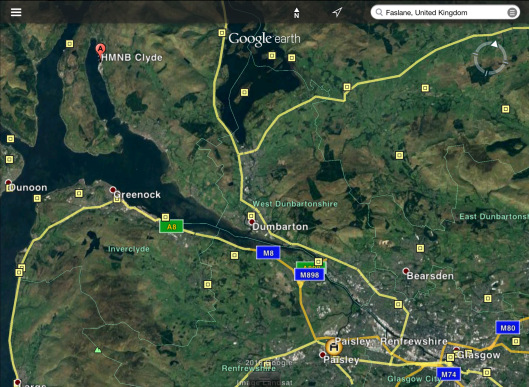
SCOTLAND is on the front line of a new international arms race spurred on
by a rise in frosty nuclear rhetoric. Just last month, the UK was declared
to be “directly involved” in the Ukraine war, meaning HM Naval Base
Clyde at Faslane – only 25 miles outside Glasgow – could be seen as a
“legitimate target”.
For the occupiers of Faslane Peace Camp,
site-sitting over the festive period, action and awareness are needed now
more than ever to pull us back from the brink of a nuclear winter just one
year before the 80th anniversary of the Hiroshima and Nagasaki bombings.
Acknowledging the risk of dealing in nuclear currency, Pete Roche, director
at Edinburgh Energy and Environment Consultancy, advocates for an energy
system throughout Scotland and the UK that runs entirely on renewables. The
previous Greenpeace campaigner said: “It is perfectly feasible to run
Scotland and the UK’s energy system on 100% renewables. This could save
well over £100 billion by 2050 compared to business as usual.”
The National 4th Jan 2025
https://www.thenational.scot/news/24832799.faslane-peace-camp-warns-growing-nuclear-risks-amid-rising-tensions/
A new year – but old policies

Renew Extra 4th Jan 2025
Given the UK’s tight economic situation, there were some concerns about backsliding on renewables and watering down plan to fully decarbonise the power grid by 2030 after PM Starmer said, at the end of last year, that the target was now to have ‘at least 95%’ clean power generation by that year, i.e. lots more renewables plus some new nuclear, but not totalling 100%.
………………..Net Zero Secretary Ed Miliband said nuclear power was vital, and that led some to speculate that Labour might condone higher power bills to pay for Small Modular Reactors, although he didn’t go quite as far as the Tony Blair Institute report which pushed new nuclear hard and said that the impacts of Chernobyl and Fukushima, ‘while serious, have been significantly overestimated’. The report was dismissed as ‘mostly tosh’ by Johnathon Porritt.
Certainly it did feel a bit backward looking, whereas, according to Emma Pinchbeck, one time head of Energy UK and now chair of the Climate Change Committee, private investors were keen to see ambitious new approaches to energy and climate change being backed by the government.
It is true that some ‘big tech’ companies like Amazon, Microsoft and Google, may be looking at Small Modular Reactors and some other nuclear techs, but the bulk of global funding for new energy tech is still going to renewables- and the big IT companies investment in SMRs/AMRs may just be a speculative, but possibly doomed, side bet.
………………………overall, the government does seem to be trying to get it right on pushing ahead rapidly with renewables, even if it is still a bit trapped in what some see as a nuclear dead end and also by its arguably misplaced optimism about CCS. Certainly Dr Doug Parr, Greenpeace UK, said ‘any money earmarked for carbon capture and storage- which is expensive, impossible to make zero carbon and fails to detach electricity prices from the volatile international gas market – would be better spent on the renewables, grid and storage infrastructure that will actually deliver clean power’.
………………………………………………………..based on a Royal Society study last year, it was concluded that, although the UK would need a lot of energy storage capacity, ‘a system based entirely on wind and solar, supported by large-scale hydrogen storage, and a possible mix of other storage options……….. would not be expensive.’
And more recently Dale Vince, Labour-supporting Ecotricty founder, said ‘we can secure a cleaner, cheaper energy future without nuclear’. He noted specifically that the cost of Hinkley Point C had ‘ballooned to £46bn’ after it was ‘originally priced at £18bn’ and argued that ‘if Hinkley Point C is anything to go by, Sizewell C really should have rigorous financial scrutiny.’ Certainly Hinkley Point is running late. It is now scheduled to be complete in 2031, after EDF’s former chief executive Vincent de Rivaz had originally said it would come online by Christmas 2017.
…………………..Clearly he feels we would do better to get on with the new green energy technologies. He is not alone. Hopefully 2025 will see more of that, and less backsliding. https://renewextraweekly.blogspot.com/2025/01/a-new-year-but-old-polices.html
BBC staffers reveal editor’s ‘entire job’ to whitewash Israeli war crimes

News editor Raffi Berg reportedly controls online coverage of genocide in Gaza to ensure Israeli crimes are ‘watered down’ or ignored
News Desk, DEC 28, 2024, https://thecradle.co/articles/bbc-staffers-reveal-editors-entire-job-to-whitewash-israeli-war-crimes
BBC editor Raffi Berg has almost complete control of the British broadcaster’s online coverage of Israel’s war on Gaza and is ensuring that all events are reported with a pro-Israel bias, according to a new report published on 28 December by Drop Site News.
“This guy’s entire job is to water down everything that’s too critical of Israel,” one former BBC journalist said.
Drop Site News spoke to 13 current and former staffers who stated that the BBC’s coverage consistently devalues Palestinian life, ignores Israeli atrocities, and creates a false equivalence in an entirely unbalanced conflict.
Another BBC journalist said Berg plays a key role in a broader BBC culture of “systematic Israeli propaganda.”
“How much power he has is wild,” said another journalist.
There was an extreme fear at the BBC, that if you ever wanted to do anything about Israel or Palestine, editors would say: ‘If you want to pitch something, you have to go through Raffi and get his signoff,” another journalist explained.
In one case, Berg downplayed Amnesty International’s accusation that Israel is committing genocide in Gaza.
Berg chose a headline that stated, “Israel rejects ‘fabricated’ claims of genocide,” to describe the Amnesty report and failed to post the story for 12 hours after it was written to suppress its online reach.
The journalists interviewed by Drop Site also noted that the Amnesty report was not covered on the BBC’s flagship news programs—BBC One’s News At One, News At Six, or News At Ten or its flagship current affairs program, BBC Two’s Newsnight.
“Anyone who writes on Gaza or Israel is asked: ‘Has it gone to edpol [editorial policy], lawyers, and has it gone to Raffi?'” another journalist said.
Raffi Berg, who wrote a book praising clandestine Mossad operations, wields great power to influence perceptions of Israel’s war on Gaza because the BBC news website is the most-visited news site on the internet, with over 1.1 billion visits in May alone.
Israel’s war on Gaza has killed over 45,000 Palestinians, the majority women and children, and flattened large swathes of the besieged enclave.
The pro-Israel bias imposed by Berg is evident in the language used to cover the war.
While stories “prominently” used words like “massacre,” “slaughter,” and “atrocities” to refer to Hamas, they “hardly, if at all,” used them “in reference to actions by Israel,” wrote Rami Ruhayem, a Beirut-based BBC Arabic correspondent.
In another case, the BBC published a story with a headline that hid Israel’s responsibility for killing an entire family in a missile strike.
“Israel Gaza: Father loses 11 family members in one blast,” the headline stated.
Drop Site notes that when the BBC does mention Israel as the perpetrator, it uses the caveat “reportedly.”
The BBC also uses euphemisms preferred by the Israeli army to hide its soldiers’ war crimes. For example, the BBC describes the forcible transfer or ethnic cleansing of Palestinian civilians as “evacuations.”
In one case, the BBC described Israel’s total siege on Gaza with a headline stating, “Israel aims to cut Gaza ties after war with Hamas.”
Defense minister Yoav Gallant’s public vow to impose a “full siege” on Gaza while calling Palestinians “human animals” received just one mention in any BBC online content.
The journalists speaking with Drop Site said they made specific requests to BBC management to balance its coverage, but their requests have been ignored.
“Many of us have raised concerns that Raffi has the power to reframe every story, and we are ignored,” one journalist said.
“Almost every correspondent you know has an issue with him,” one stated. “He has been named in multiple meetings, but [BBC management] just ignore it.”
The journalist said they demanded that stories should “emphasize that Israel had not granted the BBC access to Gaza, that the network should end the practice of presenting the official Israeli versions of events as fact, and that the BBC should do more to offer context about Israeli occupation and the fact that Gaza is overwhelmingly populated by descendants of refugees forcibly driven from their homes beginning in 1948.”
Sizewell C faces calls for more scrutiny of costs ahead of Final Investment Decision

New Civil Engineer, 02 Jan, 2025 By Tom Pashby
The cost of Sizewell C should face scrutiny from the government’s newly-formed Office for Value for Money (OVfM), according to concerned parties.
Ecotricity founder and CEO Dale Vince wrote a letter to the OVfM “formally” requesting it start “a process” for assessing Sizewell C’s value for money, while a member of the House of Lords and campaigners have also expressed concern over the cost.
The government has already committed billions towards the Suffolk nuclear power station, despite its intention for it to be privately funded. The final investment decision (FID) is the ultimate confirmation that the power station will move ahead, with details of who will pay for it and how. This has been continually pushed back, most recently because of the summer’s General Election.
It now expected that FID will be made at the conclusion of the government Spending Review in the spring………………………………………………………………………………………………………………..

- You are here:Latest
Sizewell C faces calls for more scrutiny of costs ahead of Final Investment Decision
02 Jan, 2025 By Tom Pashby
The cost of Sizewell C should face scrutiny from the government’s newly-formed Office for Value for Money (OVfM), according to concerned parties.
Ecotricity founder and CEO Dale Vince wrote a letter to the OVfM “formally” requesting it start “a process” for assessing Sizewell C’s value for money, while a member of the House of Lords and campaigners have also expressed concern over the cost.
The government has already committed billions towards the Suffolk nuclear power station, despite its intention for it to be privately funded. The final investment decision (FID) is the ultimate confirmation that the power station will move ahead, with details of who will pay for it and how. This has been continually pushed back, most recently because of the summer’s General Election.
It now expected that FID will be made at the conclusion of the government Spending Review in the spring.
Meanwhile, earthworks are underway at the site (pictured).
What is the Office for Value for Money?
The creation of the OVfM was announced in the new Labour government’s Autumn Budget 2024. It is a “time-limited HM Treasury Unit”, according to its website, with two roles.
Related questions you can explore with Ask NCE, our new AI search engine.

- What is the current status of the Sizewell C nuclear power project?
- How much has the UK government committed to the Sizewell C project so far?
- What are the concerns about the cost of the Sizewell C project?
- How does the regulated asset base funding method work for nuclear power projects?
- What is the expected timeline for the Final Investment Decision on Sizewell C?
If you would like to ask your own question you just need to login, register or subscribe.
Its first role is to “provide targeted interventions through the multi-year Spending Review, working with government departments.
“This will include conducting an assessment of where and how to root out waste and inefficiency, undertaking value for money studies in specific high-risk areas of cross-departmental spending, and scrutinising investment proposals to ensure they offer value for money,” the government said.
The second role it has responsibility for is to develop recommendations for “system reform” which will “underpin a ruthless focus within government on realising benefits from every pound of public spending”.
It is chaired by David Goldstone, a non-executive director (NED) at the Submarine Delivery Agency, as well as a NED at HS2 Ltd acting as a representative of the Treasury, and he is a member of the Projects & Programmes Committee of Great British Nuclear.
The UK Government characterises his role at OVfM as the “independent” chair.
Vince’s letter to the OVfM
Vince, who was awarded an OBE (Order of the British Empire) for services to the environment and to the electricity industry in 2004, wrote a letter to Goldstone requesting scrutiny of Sizewell C.
In the letter, Vince said: “Sizewell C has already cost UK taxpayers £3.7bn – that’s before a Final Investment Decision (FID) has been made and a further £2.7bn has been allocated for 2025- 26.”
Soon after the Autumn Budget, the Treasury told NCE that the £2.7bn mentioned in the Budget documents is not new funding but rather a sum that would be invested either via the previously announced £5.5bn Devex scheme, or through a separate FID subsidy scheme that would be established at the point of FID.
Vince continued: “If Hinkley Point C is anything to go by, Sizewell C really should have rigorous financial scrutiny.”
He warned that the cost of Hinkley had “ballooned” to £46bn and mentioned delays to the construction of the nuclear power plant.
“Due to a novel funding method (regulated asset base) a lengthy construction timeline for Sizewell will saddle consumers with higher bills long before it delivers a single unit of electricity at a time when there is clear evidence that we can secure a cleaner, cheaper energy future without nuclear,” he said.
Vince went on to ask if the remit of the OVfM covers Sizewell C and said: “I’d like to formally request you start a process and please let me know how we can take part.”
Peer says rumours swirl about government having ‘second thoughts’ about Sizewell
Backbench Conservative peer Lord Howell of Guildford asked the government on 7 October 2024 “whether a Final Investment Decision (FID) regarding Sizewell C will be scrutinised by the new Office of Value for Money, prior to the FID being taken”.
Howell was energy secretary in Margaret Thatcher’s government which supported the construction of nuclear power plants.
The government responded on 21 October saying: “The Office for Value for Money is in the process of being established and appointing an independent Chair”. The OfVM was officially launched on 30 October in the Budget.
On 31 October, NCE asked the Treasury under the Freedom of Information Act “what plans the Office for Value for Money has to evaluate the economic benefits of Sizewell C against public spending and whether the assessment is due to, or has started, before the final investment decision?”
The Treasury said it “does not hold information within the scope of [the] request”.
NCE asked Howell if he planned to ask the question again after Goldstone had been appointed.
Howell told NCE he didn’t plan to, adding: “I fear that direct questions will reveal little or nothing.
“Is the new government having second thoughts? Some say they are.”
Campaigners say lack of scrutiny ‘inexcusable’
Stop Sizewell C executive director Alison Downes said: “Billions of pounds of taxpayers’ money have already been spent on Sizewell C, and much more will certainly be required.
“Coupled with the fact that no project this risky has ever had its lengthy and unpredictable construction bankrolled by British energy bill payers, not submitting Sizewell C for detailed scrutiny by the Office of Value for Money would be completely inexcusable.”……………………………………………. more https://www.newcivilengineer.com/latest/sizewell-c-faces-calls-for-more-scrutiny-of-costs-ahead-of-final-investment-decision-02-01-2025/
A 12-year-old schoolgirl has designed a solar-powered blanket for the homeless
A 12-year-old schoolgirl has designed a solar-powered blanket for the
homeless, winning a prize in a UK engineering competition. Rebecca Young,
from Kelvinside Academy in Glasgow, said she thought of the invention after
seeing people sleeping on the city streets. Tasked with producing a design
to address a social issue, she began researching sleeping bags and
backpacks to see if there was a way to help protect those living rough from
the cold.
Times 1st Jan 2024 https://www.thetimes.com/uk/scotland/article/girl-12-designs-solar-powered-blanket-for-homeless-xxwwg2rrx
Government urged to review Sizewell C nuclear plant over ballooning cost
Ecotricity founder Dale Vince, a Labour donor, has called for an urgent cost review of the Sizewell C nuclear power station and Net Zero Teesside carbon capture project.
By Jessica Mills Davies, Energy Voice, 30/12/2024,
Ecotricity founder Dale Vince has demanded a formal review of the Sizewell C nuclear power station, and a new carbon capture project, over concerns costs have “ballooned” by tens of billions of pounds.
He has written to David Goldstone, the chair of the Treasury’s new Office for Value for Money (OVfM), asking him to examine plans to develop a new nuclear power project in Suffolk that he warned “will saddle consumers with higher bills long before it delivers a single unit of electricity”.
“Due to a novel funding method (RAB) a lengthy construction timeline for Sizewell will saddle consumers with higher bills long before it delivers a single unit of electricity at a time when there is clear evidence that we can secure a cleaner, cheaper energy future without nuclear,” said the renewable energy entrepreneur, who has donated money to the Labour Party………………………………………………………………………………… https://www.energyvoice.com/renewables-energy-transition/564942/government-urged-to-review-sizewell-c-nuclear-plant-over-ballooning-cost/
Some Types of Pollution Are More Equal than Others
There is a BIG taboo around Radioactive Pollution. We published a report last June into acid mine pollution alongside radioactive pollution in Whitehaven Harbour – so far ignored by mainstream media.
Marianne Birkby, Oct 20, 2024, https://radiationfreelakeland.substack.com/p/some-types-of-pollution-are-more?fbclid=IwY2xjawHh0f1leHRuA2FlbQIxMAABHUnO_Vn81d2vI8K3TJv2FDpKMvMeozmDbga7z5mLwKNgZSE_7FT9wPa0pA_aem_5S_Vz4KQ2AgvtszsvnQJeQ
Whitehaven Mine Pollution
The Westmorland Gazette and other local press have today published a feel good article about beach cleans in Cumbria. So far so good but the beaches contain far more insidious and long lived pollution than plastic, in the form of radioactive wastes from decades of Sellafield’s operations.
In Whitehaven Harbour these radioactive wastes are literally magnified by the presence of the ongoing acid mine pollution pouring into the harbour. Instead of addressing this ongoing pollution event the local MP Josh MacAlister is greenwashing the ongoing devastation by bigging up Whitehaven as the West Coast Riviera and fizzingly pushing for a ferry service while boats are understandably leaving because of the visible acid mine pollution.
Less visible is the “historic” radioactive pollution still pouring out of Sellafield with more radioactive waste arriving almost daily.
………………………………….Dear Marine Conservation Society,
Thank you for highlighting pollution threats to our oceans.
We are a nuclear safety volunteer group in Cumbria increasingly worried about radioactive pollution alongside acid mine polllution flowing into Whitehaven harbour.
Our own investigations have found the highly radioactive isotope AM241 confirmed by a laboratory in the US at levels above 37 bq/kg. This is alongside the acid mine pollution with the presence of heavy metals which magnifies the impacts of radioactivity. Sellafield is funding a multi-million pound water sports centre encouraging people into the contaminated silt at Whitehaven and effectively greenwashing the ongoing pollution event.
Attached is our report and the report from Eberline Laboratory. The regulators and nuclear industry are brushing this pollution aside but clearly there is an ongoing issue that no-one is addressing.
What is the MSC position on this?
Marianne, Radiation Free Lakeland
Examining Annie Jacobsen’s Nuclear War: A Scenario.

Aileen Mejia explores the power of grassroots action, the flaws of nuclear deterrence, and the vital role of local movements in Scotland in shaping a world free from nuclear weapons
secure scotland, Dec 31, 2024
Annie Jacobsen’s chilling, well researched book
Nuclear War: A Scenario explores what a nuclear strike on the United States
may entail. By presenting a hypothetical, yet deeply plausible series of
events, Jacobsen explores the fragility of global security and the
devastating consequences of failing to prioritize de-escalation and
disarmament.
The book highlights issues that are extremely pertinent to the
grassroots groups in Scotland that relentlessly advocate for nuclear
disarmament and the application of the Treaty on the Prohibition of Nuclear
Weapons, including Secure Scotland and the Scottish Campaign for Nuclear
Disarmament (SCND), which are part of the International Campaign to Abolish
Nuclear Weapons (ICAN). https://substack.com/home/post/p-153802524
Labour donor Dale Vince urges ‘rigorous financial scrutiny’ of Sizewell C costs
Green energy entrepreneur voices concerns over project’s funding and ‘spiralling costs’ of UK’s other nuclear plants.
Michael Savage , Observer 28th Dec 2024
The government’s new value for money tsar has been challenged to examine the costs of a nuclear power station to be given final approval next year, as ministers attempt to shore up private investment for the project.
New nuclear plants are a key part of the government’s plan to have clean power by 2030. The Sizewell C reactor, billed as generating enough energy to power 6m homes, is expected to be given the final go ahead in June’s review of public spending. Its projected costs are in excess of £20bn.
However, Labour donor and green energy entrepreneur Dale Vince has written to the chair of the governments’ new Office for Value for Money (OVfM), David Goldstone, arguing that a nuclear plant already being built has seen spiralling costs. He also warns the construction of Sizewell C “will saddle consumers with higher bills long before it delivers a single unit of electricity”.
The government and the French state-owned company EDF will fund about 40% of the Sizewell C project, with ministers currently rounding up private investors to meet the rest of the costs. In his letter, Vince claims that billions have already been spent on the project, even “before a final investment decision has been made”. He also raises concerns about the ballooning costs and delays of Sizewell C’s sister project, Hinkley Point C, in Somerset.
“If Hinkley Point C is anything to go by, Sizewell C really should have rigorous financial scrutiny,” he writes. “Originally priced at £18bn, the cost of Hinkley has ballooned to £46bn and then there’s the delays. Back in 2007, the then EDF chief executive Vincent de Rivaz said that by Christmas 2017 we would be using electricity generated from atomic power at Hinkley. We’re now in Christmas 2024 and Hinkley isn’t due to be completed until 2031.
“Due to a novel funding method, a lengthy construction timeline for Sizewell will saddle consumers with higher bills long before it delivers a single unit of electricity at a time when there is clear evidence that we can secure a cleaner, cheaper energy future without nuclear.”
It comes after a similar warning by Citizens Advice earlier this year. The charity warned that the Suffolk project may offer “poor value for money” and called for greater clarity on its funding, in a letter to the Department for Energy Security and Net Zero. It has warned that the project’s funding model could expose households to cost overruns……………………………………… https://www.theguardian.com/business/2024/dec/28/labour-donor-dale-vince-urges-rigorous-financial-scrutiny-of-sizewell-c-costs
Complex plan for dismantling UK’s 27 dead, rusting, radioactive nuclear submarines.

Fife Council approve Babcock plans for Rosyth Dockyard
28th December, By Ally McRoberts
A NEW secure compound for the Submarine Dismantling Project at Rosyth Dockyard has been given the green light by Fife Council.
Babcock International had sought a certificate of lawfulness to change the use of a car park on Keith Road – with the loss of 86 spaces – and build a storage facility on it.
The much-delayed project aims to dismantle seven old nuclear subs at Rosyth, remove the radioactive waste and recycle as much of the metal as they can into “tin cans and razors”.
The new facility is needed for phases three and four and will be enclosed by three metres high walls, with new gates and drainage infrastructure.
In the application it was described as a laydown area and contractors’ compound that will be roughly 45 metres by 35 metres in size, and take up around half an acre of
land close to dry dock number three.
Swiftsure is the first vessel being disposed of at Rosyth and it’s scheduled to be recycled by 2026. In total, the project will dispose of 27 nuclear subs. Seven have been laid up at
Rosyth for decades – Dreadnought has been there so long, since 1980, that
most of the low-level radiation has “disappeared naturally” – and there are
15 at Devonport in Plymouth. Five are still in service with the Royal Navy.
The UK Government said earlier this year that the project has already
invested more than £200 million into the dockyard and the wider UK supply
chain and sustains more than 500 jobs.
Dunfermline Press 27th Dec 2024
https://www.dunfermlinepress.com/news/24820505.fife-council-approve-babcock-plans-rosyth-dockyard/
Fault puts nuclear power station offline over Christmas
A reactor at a nuclear power station went offline over Christmas, an
energy provider has confirmed. EDF Energy said the outage at Heysham 2
power station, near Morecambe, on Monday was caused by an issue with the
high voltage transmission system run by National Grid. National Grid
confirmed there was a fault at one of its remote substations that was at
about the time Heysham 2 tripped. EDF said it worked with National Grid
over the Christmas period to fix the issue and safely return the reactor to
service.
BBC 28th Dec 2024
https://www.bbc.co.uk/news/articles/ckgx9p1qll4o
1 This Month
Chernobyl: The Lost Tapes – A good documentary on Chernobyl on SBS available On Demand for the next 3 weeks– https://www.sbs.com.au/ondemand/tv-program/chernobyl-the-lost-tapes/2352741955560

of the week–London Campaign for Nuclear Disarmament

Tell the Ukrainian Government to Drop Prosecution of Peace Activist Yurii Sheliazhenko
To see nuclear-related stories in greater depth and intensity – go to https://nuclearinformation.wordpress.com
-
Archives
- April 2026 (139)
- March 2026 (251)
- February 2026 (268)
- January 2026 (308)
- December 2025 (358)
- November 2025 (359)
- October 2025 (376)
- September 2025 (257)
- August 2025 (319)
- July 2025 (230)
- June 2025 (348)
- May 2025 (261)
-
Categories
- 1
- 1 NUCLEAR ISSUES
- business and costs
- climate change
- culture and arts
- ENERGY
- environment
- health
- history
- indigenous issues
- Legal
- marketing of nuclear
- media
- opposition to nuclear
- PERSONAL STORIES
- politics
- politics international
- Religion and ethics
- safety
- secrets,lies and civil liberties
- spinbuster
- technology
- Uranium
- wastes
- weapons and war
- Women
- 2 WORLD
- ACTION
- AFRICA
- Atrocities
- AUSTRALIA
- Christina's notes
- Christina's themes
- culture and arts
- Events
- Fuk 2022
- Fuk 2023
- Fukushima 2017
- Fukushima 2018
- fukushima 2019
- Fukushima 2020
- Fukushima 2021
- general
- global warming
- Humour (God we need it)
- Nuclear
- RARE EARTHS
- Reference
- resources – print
- Resources -audiovicual
- Weekly Newsletter
- World
- World Nuclear
- YouTube
-
RSS
Entries RSS
Comments RSS
 nuclear-news