NUCLEAR BRIBERY: Nuclear Waste Services funds Cumbrian community projects

More than 260 projects across Cumbria and Lincolnshire have received
financial support from Nuclear Waste Services (NWS). The community projects
have received millions of pounds worth of funding from NWS in the last
three years. The communities in which NWS operates have been supported by
funding that aims to benefit people and projects. Over the last three
years, more than £10 million has been awarded to over 260 initiatives
across Cumbria and Lincolnshire ranging from youth schemes, mental health
initiatives, and mountain rescue.
Carlisle News & Star 13th Feb 2025, https://www.newsandstar.co.uk/news/24931120.nuclear-waste-services-funds-cumbrian-community-projects/
The Coventry experiment: why were Indian women in Britain given radioactive food without their consent?
When details about a scientific study in the 1960s became public, there was shock, outrage and anxiety. But exactly what happened?
By Samira Shackle, Guardian, 11 Feb 25
In 2019, Shahnaz Akhter, a postdoctoral researcher at Warwick University, was chatting to her sister, who mentioned a documentary that had aired on Channel 4 in the mid-1990s. It was about human radiation experiments, including one that had taken place in 1969 in Coventry. As part of an experiment on iron absorption, 21 Indian women had been fed chapatis baked with radioactive isotopes, apparently without their consent.
Having grown up in Coventry’s tight-knit South Asian community, Akhter was shocked that she had never heard of the experiment. When she looked into it, she found an inquiry by the Coventry Health Authority in 1995 conducted soon after the documentary aired. The inquiry examined whether the experiment put the subjects’ health at risk and whether informed consent was obtained. But the only mention of the women’s perspectives was a single sentence: “At the public meeting, it was stated that two of the participants who had come forward had no recollection of giving informed consent.”
…………………………………… rather than putting out a public call for information, Akhter quietly asked around within her community for people who might know families that had been affected.
By chance, at about the same time, a historian and broadcaster, Dr Louise Raw, came across some old reporting about the radioactive chapatis – specifically, a 1995 story in India Today following up on the documentary, which jogged her memory of watching the film when it aired. Raw is interested in hidden histories and was immediately intrigued.
……………………………………………………….The story provoked major anxiety in Coventry. Though the study only involved 21 women, Owatemi was contacted by scores of people terrified that their mothers or grandmothers had been affected.
………………………………………Desperate for information, Kalbir – an articulate, assertive woman who sees herself as a fighter – tried to get access to her mother’s medical records, only to hit dead ends: the doctor’s surgery no longer existed and medical confidentiality still applied after death. Meanwhile, Akhter and Owatemi’s efforts were stalling too. The Medical Research Council (MRC), the public body that funds and coordinates research into human health in the UK, says it does not have any documentation relating to the study, not even a list of who was experimented on………………………………
The study took place more than 50 years ago, yet it still stirs up strong emotions, tapping into a host of broader anxieties about racial health inequalities and abuses by the medical establishment. After so many years have elapsed, sorting truth from panic is a complex task. What really happened in Coventry in 1969?
……………………………………………………..In the postwar period, doctors used radiation to treat everything from arthritis to ringworm. By the mid-1950s, it had become clear that exposure increases the chance of developing certain cancers and can cause infertility. The use of radiation was pared back, but medical researchers remained excited about the quick, precise experimentation it offered.
……………………………………..a new set of principles for ethical research on humans, known as the Nuremberg Code, had been introduced. The first of its 10 points is: “The voluntary consent of the human subject is absolutely essential.” The code also sets out other principles: experiments should be for the good of society and carried out by qualified researchers, and the risk should never exceed the potential benefit. But at first the code didn’t have much effect on researchers in the UK and the US, who saw it as something that applied to evil war criminals, not high-minded doctors who wanted to further scientific knowledge. In 1964, the medical researcher Paul Beeson, who had been a professor of medicine at both Yale and Oxford, wrote that the Nuremberg Code was “a wonderful document to say why the war crimes were atrocities, but it’s not a very good guide to clinical investigation which is done with high motives”.
……………………………..There are countless other examples from the US, UK and Canada. A number of these involved radiation exposure: in the 1950s, pregnant women in London and Aberdeen were injected with radioactive iodine to test their thyroid function despite the fact that radiation exposure of any sort poses a risk to a foetus. In Massachusetts in the 1940s and 1950s, boys with learning difficulties at a residential school were fed radioactive oatmeal as part of an experiment to see how Quaker Oats were digested.
………………………………………………………………………………………………………. in Cardiff Elwood hired an Indian housewife to teach a group of Welsh women to make traditional chapatis. Using flour fortified with radioactive iron, they made 200 chapatis to freeze until needed. Meanwhile, Elwood looked for participants. He needed South Asian women who still ate a traditional diet. Eventually he settled on Coventry, where there was a community of migrants from the Punjab region of India. Elwood’s team enlisted a doctor’s surgery in Foleshill, the centre of Coventry’s South Asian community, to identify women who could take part.
………………………………………………………….Despite translation difficulties, and the possibility that the women did not understand what was happening, the study got under way. Every morning for four days, the women were asked to eat one of the irradiated chapatis, which were delivered on dry ice each morning. A few hours later, Tom Benjamin, a field worker on Elwood’s team, would return, visiting all 21 houses to check the women had eaten it and record what foods they’d had with it. Seventeen days later, the women were picked up and driven an hour and a half to Harwell Laboratory for testing,
…………………………………Kalbir finds it upsetting to imagine her mother there. “The terror these women must have gone through,” she said. “They were already struggling in England. Our homes were being attacked by racists, we would get abused on the street, and then the system does this to them.”
The study, published in 1970, found that iron was not absorbed any more effectively from chapatis and the fermented flour they use than from bread. No one informed the women about the results, and no one followed up to check whether the radiation exposure had impacted their health.
………………………………………………In the 1990s, MRC officials insisted that it would be a poor use of public money to do a follow-up study on the women since the level of radiation exposure was so low. But to people who already feel misled, such reassurances can feel like a repetition of the “doctor knows best” mentality. “I feel anger, frustration and massive anxiety,” Kalbir told me. “I’m desperate to get answers and justice.” As it has surfaced and resurfaced, the story of the radioactive chapatis has come to represent something more than itself. “These women had a hard time in England,” said Kalbir. “They didn’t understand the way research and the medical professions worked. They had a great deal of trust. This shouldn’t have happened.” https://www.theguardian.com/news/2025/feb/11/the-coventry-experiment-why-were-indian-women-in-britain-given-radioactive-food-without-consent
‘Nothing prepared us for Sizewell C devastation’
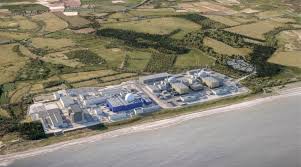
Richard Daniel, Environment reporter, BBC East of England, 10 Feb 25
Groundwork for a new nuclear power station on the Suffolk coast is well under way, but the funding needed to build it has still not been agreed.
Sizewell C said it was confident a final investment decision on the station would be made this summer.
Meanwhile, the cost of its sister project, Hinkley Point C in Somerset, has risen to as high as £46bn.
Opponents have likened Sizewell C to the beleaguered HS2 rail project and said the government should pull out before it is too late.
So what is the state of play?
In east Suffolk, signs of development are hard to miss.
Thousands of trees have been felled, and a huge swathe of land stretching from the outskirts of Leiston to the coast have been cleared for a new construction compound and access road to the Sizewell C site.
Elsewhere, land is being dug up for a new link road off the A12, a new bypass around the villages of Stratford St Andrew and Farnham, and two park-and-ride sites at Wickham Market and Darsham.
The groundwork started a year ago.
The twin reactors would generate 3.2 GW of electricity, sufficient to power six million homes.
So far the UK government, which has an 85% stake in the project, has pledged £5.5bn towards development work.
Last month, EDF denied reports that the total cost of the project had risen to over £40bn, up from an estimated £20bn in 2018.
It is seeking investors and the government said a final investment decision would be made in June.
‘It’s all gone’
David Grant’s farm at Middleton, near Leiston, has been cut in two by the new Sizewell link road and an access road to the B1122.
He said he had lost 38 acres (15 hectares) of arable land.
Opponents of Sizewell C still argue the project should be scrapped before it is too late.
Alison Downes, from Stop Sizewell C, said: “The taxpayer is being forced to pay for what is basically a bet that this project is a good idea and should go ahead.
“The possibility that Sizewell C could go ahead at whatever price is just completely inconceivable.
“Every penny they spend on Sizewell C is a penny lost to cheaper, quicker renewable energy projects that could get us to net zero more quickly and address our climate crisis.”
“Nothing prepared us for the devastation caused,” he said.
“It’s all gone, dug out with machines completely ruthlessly and without any sympathy.
“I think this is HS2, but bigger, frankly.
“I’ve got friends who were involved in the HS2 cancellation and they haven’t even been able to repurchase their land. Luckily we have the option to repurchase if this doesn’t go ahead.”
‘Every penny they spend is a penny lost’
Opponents of Sizewell C still argue the project should be scrapped before it is too late.
Alison Downes, from Stop Sizewell C, said: “The taxpayer is being forced to pay for what is basically a bet that this project is a good idea and should go ahead.
“The possibility that Sizewell C could go ahead at whatever price is just completely inconceivable.
“Every penny they spend on Sizewell C is a penny lost to cheaper, quicker renewable energy projects that could get us to net zero more quickly and address our climate crisis.”…………………. https://www.bbc.co.uk/news/articles/cd9qwygd5j4o
Engineer who worked on Hinkley Point C nuclear project quizzed on suspicion of being a Russian spy
By LETTICE BROMOVSKY, 4 February 2025 , https://www.dailymail.co.uk/news/article-14355483/Nuclear-power-worker-suspicion-Russian-spy.html?openWebLoggedIn=true&login
An engineer who worked on a UK nuclear project was quizzed on suspicion of being a spy after he returned to the UK from Russia.
Mario Zadra, a 67-year-old Italian national, who worked as an engineer on the Hinkley Point C project from 2020 to 2023 from their headquarters in Bristol, was questioned by counter-terrorism police after he flew into Heathrow airport on April 12, 2023.
It was reported that potentially sensitive documents were found in his possession and were seized by the authorities to prevent them being ‘used to carry out a hostile attack’.
Zadra was arrested under Schedule Three, which gives police the power to search, question, and detain a person to determine whether they are engaged in hostile activity, Burnham & Highbridge Weekly News first reported.
Hinkley Point C is currently constructing two new nuclear reactors, which will provide zero-carbon electricity for around six million homes, and is expected to cost a massive £46billion.
Zadra was later dismissed by his employer, Alten Ltd, a supplier for EDF’s Hinkley Point C – settling for more than £37,000 in an employment tribunal, local media reported.
Counter terrorism police retained Mr Zadra’s hard drives for national security reasons. He was not charged with any offence.
A spokesperson for Hinkley Point C said: ‘Hinkley Point C takes information security very seriously and there are rigorous measures in place to protect sensitive data.
‘This individual did not have access to sensitive nuclear information. The information he removed was outdated.
‘Allegations made by this person were thoroughly investigated and independently reviewed. His contract with Alten Ltd ended as a result of increasingly inappropriate and disruptive behaviour.’
The Met police and the Home Office have been approached for comment.
Octopus Energy launches renewables investment platform for consumers
Octopus Energy, the UK’s largest energy supplier, has launched an
investment platform allowing consumers to buy shares of a renewable energy
project. Octopus has launched ‘the Collective’ which it says is a
first-of-its-kind initiative that enables customers to invest in renewables
themselves. There is a minimum investment requirement of £25 but, since
there are no fees and the Collective is free to join, all returns go to the
investor. A YouGov survey revealed that 33% of Brits want to invest in
green power; Octopus says that by becoming the first energy company in the
UK with a retail investment platform regulated by the Financial Conduct
Authority (FCA), it will meet this demand.
Current 10th Feb 2025 https://www.current-news.co.uk/octopus-energy-launches-renewables-investment-platform-for-consumers/
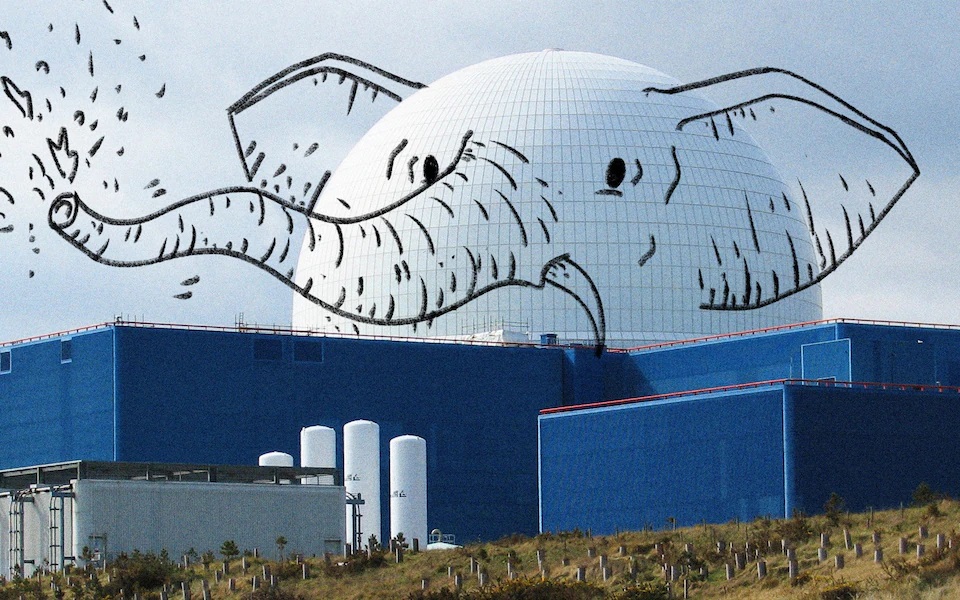
The £40bn nuclear project at risk of becoming another British white elephant.
Telegraph 9th Feb 2025, Matt Oliver. Industry Editor,
On the Suffolk coast, an army of yellow diggers and dump
trucks are levelling fields and preparing the ground for one of Britain’s
biggest infrastructure projects. It is here that thousands of workers plan
to raise Sizewell C, a multibillion-pound nuclear power station, in the
late 2030s, eventually providing power for some 6m homes. If approved in
the coming months, the scheme would replace capacity lost elsewhere over
the next decade as other nuclear plants from the 1970s and 80s gradually
shut down.
Yet that is still a big “if”, with Labour ministers
currently weighing up whether the benefits of Sizewell C are worth the
gargantuan costs, which will reportedly exceed £40bn (the original budget
given to HS2). On one hand, it is a shovel-ready project that promises to
boost energy security and economic growth – something Rachel Reeves, the
Chancellor, is in desperate need of.
Hanging over the project, however, is
the shadow of its sister scheme: Hinkley Point C in Somerset, which is
running years behind schedule and has gone dramatically over-budget.
Should Sizewell C spiral into disaster, like Hinkley, it could easily become a
white elephant that kills off the prospects of any future successors. And
unlike its sister scheme, which was funded entirely by EDF and other
investors, British taxpayers will be on the hook if things go wrong, with
the Government playing the role of anchor investor.
“There is no transparency around Sizewell C,” says spokesman Alison Downes, who lives
nearby. “Why, despite government support, does its likely eye-watering
cost and impact on households remain shrouded in secrecy? Hinkley has
morphed into the most expensive nuclear power station ever built, by some
distance. Originally budgeted at £18bn, it is now estimated to cost
£46bn. Miliband quietly initiated a review of the nuclear programme last
year and there is speculation he could soon axe the Wylfa proposal in
favour of focusing on mini nuclear plants known as small modular reactors
(SMR) instead.
https://www.telegraph.co.uk/business/2025/02/09/sizewell-c-becoming-another-british-white-elephant/
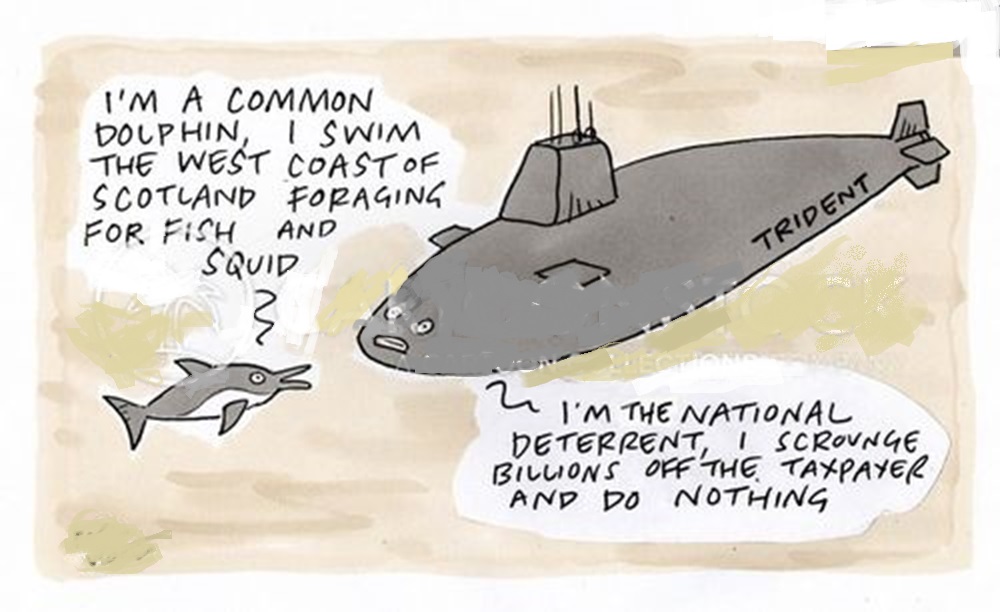
Trident nuclear submarine project rated “unachievable” third year running
The IPA’s latest report for 2023-24 was published in January 2025, six months late. It assessed the feasibility of 227 major government projects, including 44 run by the MoD with a total cost of £298bn.
A new submarine programme, known as Aukus, to eventually replace the Astute-class boats, is under development with the US and Australia. Its budget for 2023-24 was £495m, but its total cost and delivery date have been kept secret to protect “national security” and “international relations”.
Aukus was rated as amber for 2023-24 and 2022-23. The IPA suggested that the MoD might be over-stretching itself on the project.
Rob Edwards, The Ferret 10th Feb 2025
A £4bn project to help replace nuclear-armed Trident submarines on the Clyde has been branded as “unachievable” for the third year running by a UK government watchdog.
The Infrastructure and Projects Authority (IPA) has again given the manufacture of new reactors to power replacement submarines its lowest rating of “red” for 2023-24. There are “major issues” that do not seem to be “manageable or resolvable”, it said.
The IPA has badged eight other major UK nuclear weapons projects, with a combined overall cost of over £55bn, as “amber”. This means they are facing “significant issues” which require “management attention”.
These include building new facilities at the Faslane nuclear base, near Helensburgh, and dismantling nuclear submarines at Rosyth in Fife. The construction of the entire future nuclear-powered fleets of submarines – Astute, Dreadnought and Aukus – was also rated amber.
Campaigners attacked the UK nuclear weapons programme as “an unaffordable shambles” and a “disastrous money pit”. They have demanded its cancellation, and asked for the money saved to be spent on public services.
The Scottish National Party (SNP) accused the Ministry of Defence (MoD) of being “totally unable” to deliver a cost-effective replacement for Trident on time. The Scottish Greens said that public money shouldn’t be wasted on “deadly Cold War hangovers.”…………………………………..
The IPA’s latest report for 2023-24 was published in January 2025, six months late. It assessed the feasibility of 227 major government projects, including 44 run by the MoD with a total cost of £298bn.
Nine of the MoD projects were related to nuclear weapons and submarine programmes, with a total cost of at least £59bn. The one that was given a red rating was to construct reactors to be installed in four Trident-armed Dreadnought submarines to replace ageing Vanguard submarines at Faslane in the 2030s.
The project was also rated as red in 2022-23 and 2021-22, as The Ferret reported. According to the IPA, that means that “successful delivery of the project appears to be unachievable” and it may need its “overall viability reassessed”.
It said: “There are major issues with project definition, schedule, budget, quality and/or benefits delivery, which at this stage do not appear to be manageable or resolvable.”
The Dreadnought reactors, which are being built by Rolls-Royce in Derby, faced “ongoing challenges associated with achieving the required delivery date” in 2028, the IPA added. This was an “important milestone” for the UK’s policy of keeping at least one nuclear-armed submarine on patrol all the time, known as “continuous at sea deterrent”.
Among the eight other nuclear projects rated as amber, was a £1.9bn scheme to build new facilities at Faslane and nearby Coulport, on the Clyde, to support new submarines. Its rating was kept secret in 2022-23 and it was red in 2021-22.
Amber is defined by the IPA as: “successful delivery appears feasible but significant issues already exist, requiring management attention”. The issues “appear resolvable at this stage” and should not cause delay or increased costs “if addressed promptly”.
The Clyde infrastructure project was entering its “most complex phase” over the next four years, the IPA said. It highlighted “two main issues affecting delivery confidence”.
One was rebuilding existing facilities while they continue to be used for submarine operations. The other was attracting and retaining suitably skilled staff “to a remote site in a very tight labour market in western Scotland.”
Costs of some nuclear projects kept secret
A £362m project to begin dismantling defunct nuclear submarines at the Rosyth naval base on the Firth of Forth, was also rated as amber for 2023-24, as it was for 2022-23 and 2021-22. “This is a novel and complex project and learning by doing encounters difficulty and challenge that cannot necessarily be planned for,” commented the IPA.
A £37bn project to build the four Dreadnought submarines, other than the reactors, has been rated as amber for the last six years. An £11bn project to finish building seven nuclear-powered but conventionally-armed Astute submarines has been amber for the last three years.
A new submarine programme, known as Aukus, to eventually replace the Astute-class boats, is under development with the US and Australia. Its budget for 2023-24 was £495m, but its total cost and delivery date have been kept secret to protect “national security” and “international relations”.
Aukus was rated as amber for 2023-24 and 2022-23. The IPA suggested that the MoD might be over-stretching itself on the project.
There was “a degree of risk relating to the ability of the defence nuclear enterprise and the wider UK supply chain to resource the programme with the necessary skills, experience and infrastructure to deliver against a demanding schedule, without adversely impacting the delivery of the Dreadnought programme,” it said.
A new programme repackaging previous projects for making and storing nuclear materials at Aldermaston in Berkshire has been rated as amber for the last two years. Its total cost and delivery date have been kept under wraps.
The rating, costs and comments on another project to test nuclear weapons in France and England, known as Teutates, have also been kept secret for national security and international relations reasons.
The SNP highlighted the MoD’s record of radioactive leaks and rising costs on the Clyde. “It is disappointing but not surprising that the MoD seems to be totally unable to manufacture a replacement for Trident in a timely or cost-effective manner,” said SNP MSP Keith Brown.
“The UK’s nuclear weapons aren’t safe for workers and wildlife, they don’t work when tested, and their manufacture is not efficient. Nor are they delivering a good deal for taxpayers.”
The Scottish Greens described nuclear weapons as a “moral abomination” that should be opposed. “The fact that they have also proven to be a disastrous money pit only underlines the urgent need to remove them for good,” said Green MSP Maggie Chapman.
“We could do so much good with this money, investing in services that make our lives safer and better, rather than wasting it on these deadly Cold War hangovers.”
The Scottish Campaign for Nuclear Disarmament (SCND) blasted the UK’s nuclear weapons as “a colonial hangover, an unaffordable shambles, a danger to us and the world”.
SCND chair, Lynn Jamieson, said: “The combined cost of keeping the nuclear weapon system going and of building a replacement escalates while public services are drastically cut.”
The Nuclear Information Service, which researches and criticises nuclear weapons, argued that the UK nuclear programme was unsustainable. “The case for cancelling badly run and unaffordable weapons projects is compelling,” said research manager, Tim Street……………………
https://theferret.scot/trident-nuclear-unachievable-third-year/
It’s money that has stopped nuclear power, not planning problems
David Toke, Feb 09, 2025, https://davidtoke.substack.com/p/its-money-that-has-stopped-nuclear
Of all the nonsense about nuclear power that one hears, the idea that somehow it is planning problems rather than financial issues that stop its development surely takes the biscuit. The Government bats away any formal planning objection made to its nuclear plant when companies want to build them. Yet the UK government is flogging nuclear planning problems as a scapegoat for the technology’s failure for all it is worth. And it is talking about the non-existent concept of small modular reactors (see HERE). Is this a smokescreen to hide its problems with financing Sizewell C?
The real reason for the failure of the Wylfa project
There was a silly story published in most leading newspapers about the proposed Wylfa plant in North Wales being knocked back in 2019 because of ‘language’ objections (see HERE). The reality was that the proposal was scrapped for financial reasons. This involved the Government being unable to offer enough incentives to keep Hitachi interested in developing the project. In January 2019 the BBC reported that ‘Japanese tech giant Hitachi said it was suspending construction of the new plant in north Wales as the project’s cost continues to spiral.’ (see HERE). The National Grid cancelled plans for pylons needed for the project (see HERE).

The reporting at the time failed to mention any planning issues, only the financial ones. Indeed, once Hitachi announced its withdrawal, that was the effective end of the plans. However, the company set up to make the planning application continued what looks to me like it was going through the motions. It didn’t matter that the Planning Inspector rejected the application. If the proposal was a real one (in an economic sense), the government would surely have overruled the Inspector without delay. -As indeed happened in 20122 with the planning application for Sizewell C.
By contrast, the recent coverage of the planning objections to the Hitachi proposal seems to completely omit any mention of the real reason why the project was abandoned.
Problems with the Government’s nuclear programme
Hitachi originally bought the ‘Horizon’ option from RWE and E.On. It consisted of the proposed development at Wylfa and another at Oldbury in Gloucestershire. RWE/E.ON had withdrawn from the proposal in 2012. This (Horizon) was one of three consortia set up in 2009 to constitute the Government’s new nuclear programme. This was announced by Ed Miliband in 2009 in his last manifestation as Energy Secretary.
The second consortium to fall apart, the so-called ‘NuGen’ consortium, was supposed to build a new nuclear project at Sellafield called ‘Moorside’. This consortium was originally owned by Iberdrola, the Spanish company and the French company GDF Suez (now Engie). However, they lost interest and the consortium was bought up instead by Toshiba in 2013. Then in 2017, Toshiba decided to ‘mothball’ the project. Again, financial reasons were always cited as the reason for this. Once again this had nothing to do with planning issues.
This left the third consortium led by EDF. They advanced their Hinkley C project. Eventually, they agreed the controversial deal whereby they would receive £92.50 per MWh over 35 years in 2012 prices, now worth over £130 power MWh in today’s money. They also agreed on a contract for Sizewell C so that if that went ahead as well both projects would receive £89.50 per MWh.
I knew at the time this was a bit of PR and that EDF would never go ahead with the agreement in respect of Sizewell C. They did not. Instead, they have agreed on a deal whereby, in effect, most of the costs, including the inevitable large overruns, will be paid by the British taxpayer or electricity consumer.
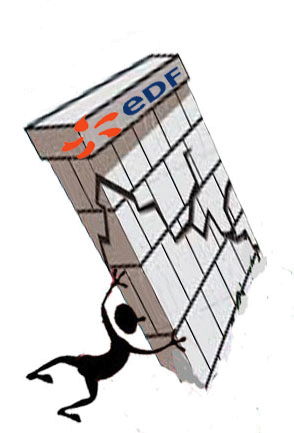
So, none of the privately owned companies originally involved in the British nuclear programme went ahead with the proposals. Centrica was also involved with the Hinkley C proposal at one stage, but it withdrew in 2013. Only the French-state-owned EDF has gone ahead with building a nuclear power plant, ie Hinkley C. EDF can carry on the construction. This is despite the mounting construction cost overruns. The French state pays!
Planning and paying for Sizewell
In effect, the French taxpayer is paying for a British nuclear power plant in the shape of Hinkley C. However, the French have said that this cannot happen again (ie they paying (most of) the cost overruns for a British nuclear power station). Hence Sizewell C will be funded mostly by the British taxpayer and electricity consumer, with the Brits taking the main liabilities, not the French.
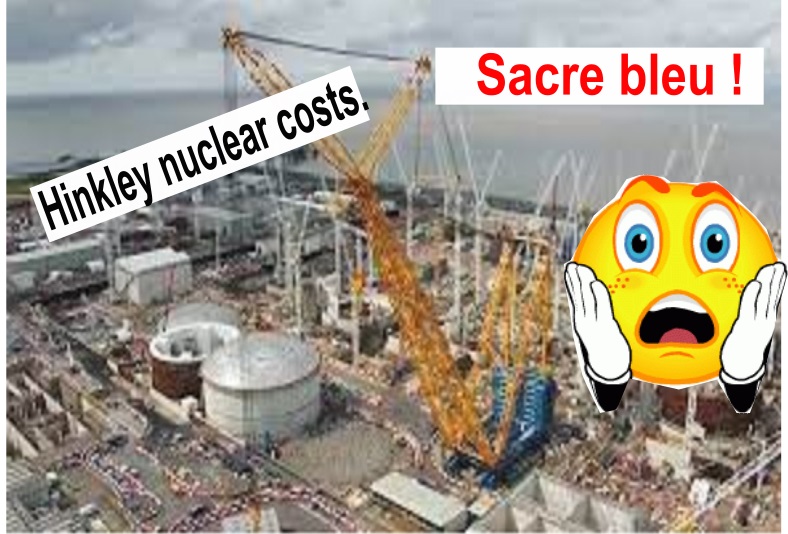
The UK Government is currently arguing within itself and with EDF about how much Treasury funding the UK Government is going to put into the project. There has been a charade of looking for private investors. The only way private investment could be achieved would be for the investors to be effectively guaranteed their profits at the taxpayers’ or energy consumers’ expense.
Interestingly, in 2022 the Planning Inspector said they could not recommend the Sizewell C project without a more convincing plan to ensure a sustainable water supply. However, this objection was batted aside by the then Energy Secretary, Kwasi Kwateng, in 2022 (see HERE). This affair received little publicity because everybody knew that the Government could easily dismiss this problem, and override recommendations by Planning Inspectors. The Government saw no reason at the time to make a big deal out of it. After all, why would the Government want to publicise doubts about the water supply for Hinkley C when it wanted the project to go ahead?
Indeed in the summer of 2022, all the talk was on how to pay for Sizewell C. With planning consent having been sorted, Boris Johnson wanted to go full steam ahead and give the final go-ahead, something that did not please the Treasury. According to a report in The Times (see HERE) ‘Simon Clarke, the chief secretary to the Treasury……………. wrote to Johnson and Zahawi warning that a signoff for Sizewell would compromise the new prime minister’s ability to cut taxes or spend more on the cost of living’. Apparently, even Liz Truss did not want to take on the costs of Sizewell C.
But fast forward to February 2025 (with still no final go-ahead for Sizewell C), and the Government saw fit to make a very big deal out of a planning debating point regarding an already-abandoned project in Wales. Why? Maybe, I think to distract attention from the fact that it is the financing of nuclear power and its delivery that is the big problem. One can almost hear Sir Humphrey intoning ‘The public does not need to be overloaded with such details’. Otherwise, the politicians might stop blaming each other about things (eg costs of nuclear power) over which they have no control and focus on things that they do have some control.
Planning (or not?) for heat pumps
One thing that the politicians do control are the building regulations which could be making heat pumps and solar PV mandatory in new buildings. Alas, this has been kicked into the long grass by a press release a few weeks ago (see HERE). The Government has full control over the regulations, but it has given way to pressures from the construction industry. Yes, that is the same industry who are so keen on building nuclear power stations.
Nimbys. Naysayers. Traitors. Children take note, why learn oracy when insults will do?
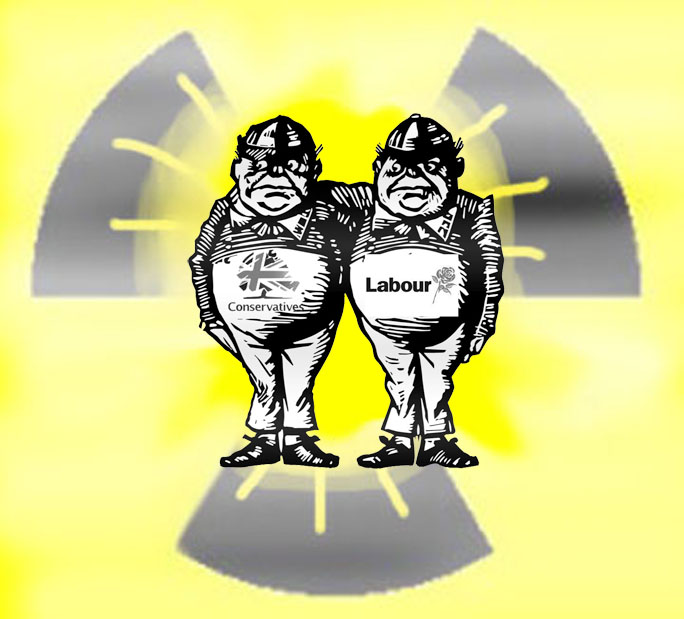
Catherine Bennett, Guardian, 9th Feb 2025
Keir Starmer’s rhetoric against green campaigners appears to have taken a playground turn.
Before the last election, in what was billed as his “most personal interview yet”, Keir Starmer said: “I’m not in the habit of bandying insults around”. It was once part of his appeal, or meant to be, that his speech was polite, even to the point of colourless, in contrast to the ugly gibberish streaming out of Boris Johnson, then Liz Truss. When the Tories went low, Starmer went sorrowful headteacher. “I don’t think Boris Johnson is a bad man,” he said in one speech, “I think he is a trivial man.”
His favourite word, these days, is “nimbys”. Starmer uses it so freely he’s personally breathed new life into the original acronym (“not in my back yard”), revealing along the way its largely unexplored potential to create national disharmony. Why restrict such a genius jibe to arguments about ring roads and executive homes?
Last week’s headlines about his plan for nuclear power expansion – typically, “Starmer to ‘push past nimbyism’ in pledge to expand nuclear power sites” – are only the latest in which Starmer demonstrates how any opposition to any scheme with environmental consequences can be represented, by a skilled litigator like himself, as nimbyism: purely selfish, irrational and against the common good. Unlike the visionary tech overlords such as Google, Meta and Amazon, which Starmer invited, in the same speech, to profit, with their data centres, from the UK nimbys’ certain defeat. His government’s pro-nuclear press release featured praise from similarly patriotic, non-nimby-infested corporations, such as EDF and Microsoft.
It is thanks to Starmer we now understand that Greenpeace and other environmental campaigners – actually anyone with questions about, for instance, the disposal of nuclear waste – are essentially indistinguishable from other varieties of nimby he has been insulting for a while, so as to trivialise in advance any disquiet about Labour’s plans to tear up planning regulations.
Look beyond the acronym’s “back yard” element: now any non-local objection to 150 infrastructure projects, all evidently beyond criticism, also identifies a person as, in his eyes, the enemy of his “working people”.
…………………………..“There are countless more examples of Nimbys and zealots gumming up the legal system,” he wrote, “often for their own ideological blindspots to stop the Government building the infrastructure the country needs.” Anti-growth traitors, the lot of them. “They want to win for themselves,” Starmer raved, “not for the country.”………………………………………..
For prominent Tory idealists, there must be validation in Starmer’s promise to fulfil their dreams, never properly realised, of humbling environmentalists and trashing planning restrictions (in places where they don’t live). Not forgetting the satisfaction of seeing Starmer recycle, for Labour, their exact same phrases, sometimes wearing the same accessories – hard hats and hi-vis jackets – for the benefit of vanity photographers recently declassified as a Tory outrage.
Since it can’t be plagiarism, only shared passion can explain why Starmer and David Cameron have phrased their ambitions in identical terms, in wanting, say, a “bonfire of red tape” (Starmer 2024; Cameron 2014). Starmer thinks regulations are “suffocating” (likewise Cameron); Starmer says “we are the builders” (ditto George Osborne); Starmer wants to end “dithering” (Cameron, “cut through the dither”); Starmer declares Britain “open for business” (Cameron, same, 2012); Starmer confronts those “talking our country down” (so did Cameron, 2011).
To judge by their interchangeable expressions of annoyance, hostility to environmental protections is also common ground for Reeves and Osborne. For him, they placed “ridiculous costs on British businesses”; for her, they make “delivering major infrastructure in our country far too expensive”. In 2012, the vice-president of the RSPB, Britain’s largest nature conservation charity, called Osborne “a bloody idiot”.
…………………………The teaching of “oracy” in schools was once a priority for Starmer. Confident speaking, he said, gives “an inner belief to make your case in any environment”. Whatever explains his recent change in style, the debacle is not without educational value. Kids, if you go in for name-calling, offensive misrepresentation and unconvincing assertions of your superior judgement, the finest voice coach may struggle to transform it into persuasive oracy. Even when, as with Starmer’s nimbys, your targets were, only months ago, your friends. https://www.theguardian.com/commentisfree/2025/feb/09/nimbys-naysayers-traitors-children-take-note-why-learn-oracy-when-insults-will-do
Opposition mounts to planned nuclear plant as Starmer confirms new policy of ‘Build, baby, build’
Martin Shipton Nation Cymru 9th Feb 2025
Opposition to a proposed nuclear energy plant in Bridgend is mounting, with the local Green Party saying it is “unnecessary, unwanted and unsafe”.
But doubts about the proposal come as Keir Starmer confirmed that the UK Government intends to change the planning system to make it easier for such projects to go ahead.
An American-owned company called Last Energy intends to build the SMR (small modular reactor) plant next to the River Llynfi, just to the north of Bridgend.
The Green Party argues that If the development goes ahead, it will be funded by venture capitalists who are not likely to be citizens of Wales. The nuclear power plant will operate for profit, as a private enterprise.
Untested
A party spokesperson said: “It is based on a new design which if built will be the first of its kind. So the design is untested in the real world. Locals, including Green Party members, have several credible reasons for concern.
“The Green Party questions the need for a nuclear power plant, when Wales has the natural resources required to produce all its energy from a mixture of solar power, onshore and off-shore wind generation.
“It is true that people need secure energy supplies which can be quickly restored, and that Wales needs investment in improving the grid infrastructure. But nuclear power is not the solution to Wales’ energy needs.
“As was proved in the December 2024 storm, we desperately need improvements to our energy resilience – such as the ability to restore power after severe climate events, and this should be the focus of any energy investment.
“Do locals want a nuclear power plant in Bridgend? Last Energy has hosted two community consultations, one in Bettws and one in Pencoed. Debra Cooper, the Green Party Chair for Bridgend, attended both events and asked how the locals had been invited to these meetings, given that many were unaware that they were taking place.
“The speaker gave a vague reply that Facebook had been used, and that Last Energy had outsourced the invitations. More consultation events are planned, and we demand that Last Energy genuinely seeks to invite the community to their consultations.
“Is nuclear power safe? The risk of nuclear leaks from the onsite nuclear waste storage is not acceptable.
“Who will pay for future nuclear waste storage? There is a risk that no other region of the UK will be willing to store the nuclear waste, and that this area will become a long term nuclear waste storage site. The consequences of accidental leakage and terrorist targeting have not been fully considered.”
Nuclear waste
Brian Jones, CND Cymru Vice Chair, said: ““Last Energy, despite having never built a nuclear reactor, is proposing to build four nuclear reactors near Bridgend which, like all nuclear reactors, will produce nuclear waste which needs to be safely contained and monitored for thousands of years. Nuclear power stations have consistently cost more and taken longer to build than originally proposed.”
Tony Cooke, who leads on Wales energy policy development for the Green Party, said: “Green Party policy is clearly opposed to any new nuclear power stations. The developers haven’t actually built any to their proposed design and they don’t have a design licensed by the UK Office for Nuclear Regulation which would be required. Their website claims more than 300 are operating globally – but this is misleading – there are more than 300 pressurised water reactors), but PWR refers to a generic ‘family’ approach to design – not a specific one. Licensing is not likely to be quick. (years not months)
“The developers are presumably targeting an ex coal fired power station site because it has a now unused grid connection. These are valuable, given the time lag in getting new grid connections. The site should be prioritised for battery storage, which is needed and complements renewable generation. Because of the small scale of the proposal it is in the powers of the local authority to reject it. We should lobby for them to do so.”
Planning approvals
Richard Outram, secretary of the Britain / Ireland Nuclear Free Local Authorities group said: “Nuclear energy can never be 100% safe and is never ‘clean’ whatever the industry claims. Last Energy has a long way to go before securing the necessary regulatory or planning approvals to begin its project by 2027. The Office for Nuclear Regulation said this was ‘very ambitious’. And Last Energy does not even appear to have any working reactors – just mock ups! Nuclear at Bridgend would be more Lost Energy – renewables are the future.”
Last Energy says it hopes the pressurised water reactors will supply power to “mid-size manufacturers throughout the region, providing 24/7 baseload power and putting the local economy on a path toward industrial decarbonisation”.
It says the project will not need taxpayer cash, with the company estimating it would be making a £300m investment, £30m of which would benefit the local economy, excluding business rates collected by Bridgend County Borough Council. It also expects to create at least 100 local full-time jobs.
Last Energy UK CEO Michael Jenner said: “Last Energy’s Llynfi project will not only transform a vacant coal site into a hub for clean energy production, it will also create economic opportunity for companies throughout South Wales.
“The benefits of nuclear power speak for themselves, so our focus must be on delivering those benefits on time and on budget. Last Energy’s emphasis on mass-manufacturability allows us to deliver significantly smaller plants in under 24 months with purely private financing.
“We look forward to engaging with the public, meeting local suppliers, and being an active partner in south Wales’ path towards energy security and industrial decarbonisation.”
Nato
In June 2024, Last Energy announced it was working with Nato to research opportunities for the future deployment of micro-nuclear power technologies at military installations.
The partnership between Last Energy and Nato Energy Security Centre of Excellence (Ensec Coe) will see the two parties research military applications for the micro-reactors and look into potential deployment.
In October 2024, independent nuclear experts told New Civil Engineer magazine that SMRs could be used to produce weapons-grade material, but various practical, legal and moral challenges made this unlikely to be done in reality.
On February 6 Prime Minister Keir Starmer pledged to “build baby build”, as he announced plans to make it easier to construct mini nuclear power stations in England and Wales.
He told the BBC the government was going to “take on the blockers” and change planning rules so new reactors could be built in more parts of the country.
Sir Keir said he wanted the country to return to being “one of the world leaders on nuclear”, helping to create thousands of highly skilled jobs and boosting economic growth. https://nation.cymru/news/opposition-mounts-to-planned-nuclear-plant-as-starmer-confirms-new-policy-of-build-baby-build/
CND Cymru warns against Starmer’s ‘anti-democratic’ push for mini-nuclear reactors
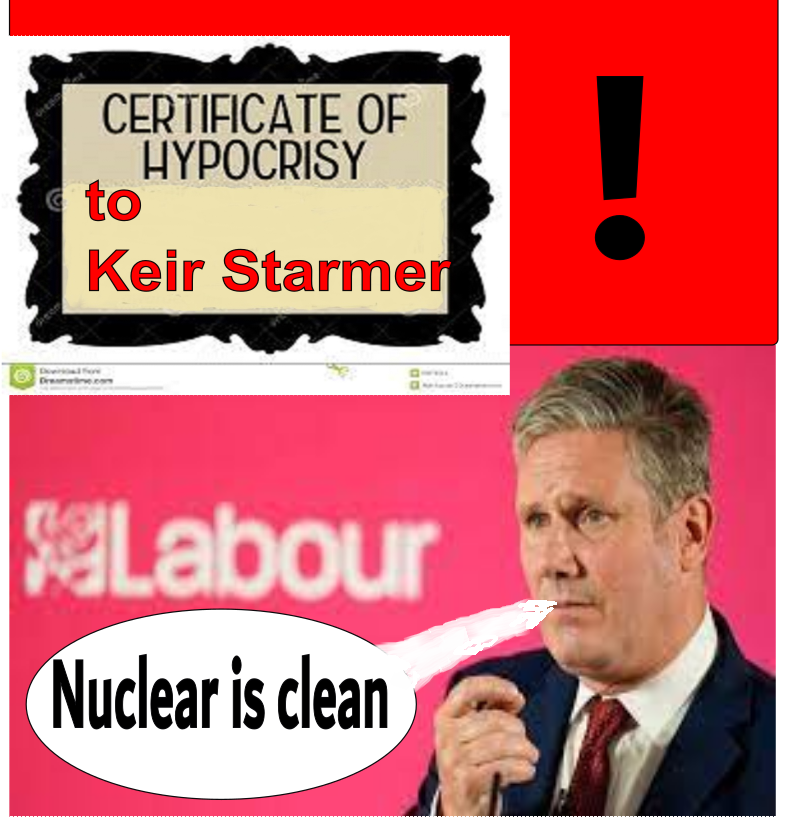
Morning Star 7th Feb 2025 https://morningstaronline.co.uk/article/cnd-cymru-warns-against-starmers-anti-democratic-push-mini-nuclear-reactors
CND CYMRU has blasted Sir Keir Starmer’s “anti-democratic” push to put nuclear reactors in communities without consultation.
The Prime Minister announced planning reforms this week that will see “archaic” rules slashed to allow more power plants approved across England and Wales.
Clearing a path for so-called small modular reactors (SMRs) to be built for the first time, the government said growth will be prioritised ahead of so-called Nimbys.
A set list of eight sites where mini-nuclear power stations can be included in planning rules and the expiry date on nuclear planning rules will be scrapped.
CND Cymru national secretary Dylan Lewis-Rowlands said: “If the proposals from Westminster are to be believed, then not only could plans similar to this pop up anywhere in Wales or England, but could also be pushed through against community will from the UK government.”
CND Cymru vice-chairman Brian Jones added: “This is not just a question of nuclear development, but of democracy.
“The intention of this move by Starmer seems to be something that the nuclear power and weapons industry has only dreamt of before — the ability to ignore communities wishes and focus their vast lobbying budgets on getting central government to allow them to build wherever they want, without opposition.
“It is fundamentally putting profit before people and planet, and turning Britain into a nuclear power test site for SMRs. It is, in one word, anti-democratic.”
Concerns were also raised regarding the intention of these proposals to power AI datacentres, with Mr Lewis-Rowlands warning: “The industry always try and co-opt any reason to push development and secure the lucrative government money that allows them to pay their shareholders.

Prime Minister Keir Starmer (centre) and Energy Security and Net Zero Secretary Ed Miliband (right) meet staff at the new decontamination and decommissioning lab during a visit to Springfields (Preston Lab), National Nuclear Laboratory facility in Preston, Lancashire, as the Government is pledging to create thousands of highly skilled jobs by reforming planning rules to make it easier to build new nuclear reactors. Picture date: Thursday February 6, 2025
Can the nuclear industry find a better way to build?
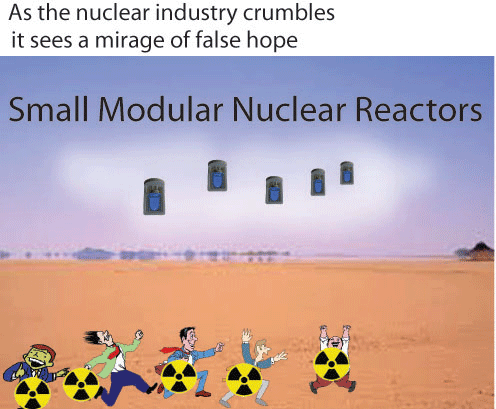
The sector is hopeful that using copies of established reactors can help keep costs down and
prevent delays for new projects.
On a construction site sitting behind the
beach at Sizewell, on England’s East Anglian coast, mountains of soil
make it hard to see two small, blue signs. These indicate the spots where,
in the middle of the next decade, two nuclear reactors should start
generating enough energy to power 6mn homes.
The extraordinary thing about
the 900-acre site is not its scale but that it has an identical twin —
for reasons that reveal a lot about the latest thinking on building nuclear
power stations. The new Sizewell C plant has been designed to be as close
as possible a copy of Hinkley Point C, a project 280 miles away on the
other side of the country. Building there started in 2016, eight years
before that at Sizewell.
The replication is part of a push across Europe and North America to tackle what Bent Flyvbjerg, an academic studying project management, calls the nuclear power industry’s “negative learning” problem. More simply: for an industry that has become infamous
for massive cost overruns and endless delays, maybe the solution is just to
build exact copies of established reactors.
The IEA has found that nuclear
plants delivered since 2000 in the US and Europe were on average eight
years late and cost two-and-a-half times their original budget. The UK
government on Thursday announced planning reforms intended to make it
easier to build nuclear plants quickly and cheaply. Tom Burke, founder of
E3G, a London-based clean energy consultancy, is far more sceptical, saying
the information from the countries claiming better records lacks
credibility. “Where the publicly available information is reliable — if
you look at what happened in Finland, the United States and the United
Kingdom — people have not built reactors to time and budget, ever,”
Burke says. EDF has said UK regulations meant there were 7,000 changes to
the design for Hinkley Point from that at Flamanville — although the
UK’s Office for Nuclear Regulation has disputed the figure.
Many developers’ hopes are hanging on a new breed of reactors — small
modular reactors. The devices are intended to be small enough to
mass-produce on a highly standardised basis in the controlled environment
of a factory. They will then be taken to power station sites for
installation. Most SMRs will have a capacity below 300MW, less than 10 per
cent of the 3.2GW capacity at Sizewell C, and will be far smaller.
Yet sceptics such as E3G’s Burke are far from convinced. Asked if he thinks
steady orders and standardisation can bring the sector’s costs under
control, Burke replies: “I think that’s one of the biggest ‘ifs’
I’ve ever seen.”
FT 10th Feb 2025
https://www.ft.com/content/5e563e3f-575d-4a90-bd46-4d0a3083f707
Sizewell C campaigners slammed “clueless” Government
By Dominic Bareham, East Anglian Daily Times 9th Feb 2025
Campaigners opposed to the new Sizewell C nuclear power station have slammed prime minister Sir Keir Starmer’s backing for nuclear energy as “appalling”.
On Thursday, the Labour leader pledged to “build, baby, build” as part of an effort to create thousands of highly skilled jobs and boost economic growth in the UK.
This included plans to “fast forward on nuclear” by tackling “blockers” and changing planning rules so more reactors could be built in more parts of the country.
But Jenny Kirtley, chair of action group Together Against Sizewell C (TASC), said: “Starmer’s statement is appalling, full of soundbites fuelled by the pro-nuclear lobbyists – many of whom already have their ‘snouts in the trough’ – spouted by a clueless government blaming ‘blockers’ to divert attention away from the evidence that nuclear is not cheap, quick to deploy, homegrown, nor clean.”
In response to the prime minister’s suggestion that legal actions brought by campaign groups had delayed construction projects, she said Sizewell C had not been blocked by campaigners, but by “incompetent planning”.
In particular, she highlighted locating the reactor on a “fast eroding coastline” and in the UK’s driest, most drought-prone region with “no guaranteed sustainable supply of mains water”.
Instead, she said the UK government should be looking to develop renewable energy.
She added: “With renewables, we already have technologies that are cheaper, quicker to deploy and cleaner than nuclear, yet Labour favours slow nuclear, meaning that fossil fuels will burn for longer.”……………………….. https://www.eadt.co.uk/news/24919434.sizewell-c-campaigners-slammed-clueless-government/
Labour’s growth policy is fantasy fiction
Richard J Murphy, Tax Research 9th Feb 2025
Labour is promising growth based on carbon capture and storage, new nuclear power stations and sustainable flying, and none of them are known to work. They’re gambling on economic fantasies.
Labour’s economic policies are increasingly based upon fantasy. I wish I didn’t have to say that, but let me explain.
Labour says it’s going to deliver economic growth in the UK, and at the same time, it’s going to deliver net zero. I don’t believe them. On the basis of their policies, I think they’re talking utter rubbish, and their ideas are based upon economic fantasies.
There are three issues that illustrate this point, and I’m going to try and keep them as simple as possible.
Those three issues are carbon capture and storage, which they are planning to use to control the emissions of big business and therefore achieve net zero, and nuclear power, which is based upon the idea that there can be a new series of at least ten nuclear power stations built in the UK, and a third runway for Heathrow.
Let’s run through those. Carbon capture and storage was announced first of these three, so perhaps I will pick it for that reason.
Carbon capture and storage is a relatively simple idea. What it says is that we don’t have to stop industry from producing carbon, which we all know is polluting the atmosphere and, therefore, creating climate change. Instead, we capture the carbon that is created by business in its industrial processes, and then store it underground, in the case of the UK, almost certainly in the old oil and gas fields under the North Sea. There’s just one little problem with this idea: nobody’s actually done it. ……………………………………………………………
What else could he have done with that money? He could have talked about putting insulation into UK houses and cutting the demand for energy.
He could have literally talked about putting solar panels on the roofs of hundreds of thousands, if not millions, of households.
But no, he didn’t want to do that. He instead wants to undertake an economic fantasy; something that has not been proven to be possible, is what he’s choosing over actual deliverables that would create jobs in streets throughout the UK, for real people in the UK, in every constituency in the UK, and which would work. This is what I mean by economic fantasy.
And the nuclear program, to which he has also signed up, which is supposedly going to deliver clean energy from ten new nuclear power stations, is just as fantastical as is carbon capture and storage. The reason why is that these are all based upon a technology created by Rolls Royce called the Small Modular Reactor. And absolutely nobody has any idea whether they will work or not. The technology is, once again, totally unproven. But we are apparently going to have ten of them.
Will they work? Who knows.
How will the waste be managed? Who knows.
What will be the cost from managing the waste from ten new nuclear power stations? Who knows? But I do know that the cost of clearing the first ever nuclear establishment in Scotland – Dounreay – a tiny little reactor built in the 1950s, has recently been increased from £2 billion to £8 billion, and it won’t be clean for another century as yet, which actually means nobody knows when or if it will ever happen.
So, this isn’t clean energy. It is actually about creating long-term, dangerous waste that we don’t know how to manage and at what cost. And yet, Labour is pursuing it because this is another economic fantasy on its part. Growth is apparently all that matters. The fact that we might destroy significant parts of the countryside that can never be used again as a consequence of doing so is neither here nor there.
And then we come to Heathrow………………………………………………………………………..
So, what is Labour up to here? They are living with the most extraordinary short-term thinking, which is totally based upon fantasy because Heathrow Airport hasn’t actually asked for a third runway yet, Rolls Royce hasn’t proved that their reactors work as yet, and absolutely nobody on the planet knows whether carbon capture and storage work as yet. But Labour is putting all its faith into these unproven situations to supposedly create the economic growth which is going to let us have nurses and education and everything else.
They could, of course, do something else. They could, of course, simply fund nurses and education and whatever else it is, because they have the power to do so because they create the money in this country and direct how it is used. Instead, they want to play games of economic fantasy.
And I don’t trust them for that reason.
These are dangerous games. They should not be being pursued.
They are playing with our planet.
They’re putting lives at risk.
They’re putting futures at risk.
They aren’t going to deliver growth, and they are threatening the well-being of generations to come. They’re dangerous people, and I really don’t think they deserve to be in office. https://www.taxresearch.org.uk/Blog/2025/02/09/labours-growth-policy-is-fantasy-fiction/
‘Build baby build’, says PM as he sets out nuclear plan
BBC 6th Feb 2025, Hafsa Khalil. BBC News, Becky Morton, Political reporter,
https://www.bbc.co.uk/news/articles/c805mjxe2y9o
Sir Keir Starmer has pledged to “build baby build”, as he announced plans to make it easier to construct mini nuclear power stations in England and Wales.
The prime minister told the BBC the government was going to “take on the blockers” and change planning rules so new reactors could be built in more parts of the country.
Sir Keir said he wanted the country to return to being “one of the world leaders on nuclear”, helping to create thousands of highly skilled jobs and boosting economic growth.
Unions and business groups welcomed the move, but some environmentalists criticised the government, saying it had “swallowed nuclear industry spin whole”.
Currently, progress building nuclear power stations in the UK can be slow – to get from planning to “power on” can take nearly 20 years.
Speaking on a visit to the UK National Nuclear Laboratory in Lancashire, Sir Keir said the process was too long and that changes announced by the government would speed it up.
Asked by the BBC’s Chris Mason if “build baby build” was his mantra like US President Donald Trump’s “drill baby drill”, Sir Keir said: “I say build baby build. I say we’re going to take on the blockers so that we can build.”
He said the government had already changed the rules to allow onshore wind farms and was now acting to ensure “we can fast forward on nuclear”.
Pressed over whether people who live near nuclear infrastructure could get money off their electricity bills, the prime minister said while this was not part of the announcement the government had already backed the idea of benefits for local communities hosting energy infrastructure.
In the 1990s, nuclear power generated about 25% of the UK’s electricity but that figure has fallen to around 15%, with no new power stations built since then and many of the country’s ageing reactors due to be decommissioned over the next decade.
Mini nuclear power stations – or small modular reactors (SMRs) – are smaller and cheaper than traditional nuclear power plants, and produce much less power.
However, while there are some 80 different designs under development globally, according to the International Atomic Energy Agency, the concept has yet to be proven commercially.
The plans announced on Thursday mark the first time SMRs will be included in planning rules. A list of the only places a nuclear reactor could be built – made up of just eight sites – will also be scrapped.
Sir Keir said the plans would improve the country’s energy security by increasing the supply of clean, homegrown power.
He added that Britain had been “held hostage” by Russian President Vladimir Putin for “too long”, which has resulted in energy prices “skyrocketing at his whims”.
The process of choosing to loosen rules on where nuclear reactors could be built began under Rishi Sunak’s Conservative government with a consultation in January 2024.
Ministers said Britain is considered one of the world’s most expensive countries in which to build nuclear power, and a new Nuclear Regulatory Taskforce will be established to speed up the approval of new reactor designs and stream line how developers engage with regulators.
Conservative shadow energy secretary Andrew Bowie said it was “about time” Labour followed his party’s lead in recognising the benefits “of stable, reliable, baseload nuclear power”.
But Doug Parr, policy director of Greenpeace UK, claimed the government had not applied “so much as a pinch of critical scrutiny or asking for a sprinkling of evidence”.
“The Labour government has swallowed [the] nuclear industry spin whole,” he said, adding: “They present as fact things which are merely optimistic conjecture on small nuclear reactor cost, speed of delivery and safety.”
While the overall cost of nuclear power is comparable with other forms of energy, nuclear plants are extremely expensive to build.
The head of the Nuclear Industry Association, Tom Greatrex, said the changes would give investors certainty and enable them to get on with building new plants.
Gary Smith, GMB’s general secretary, said the union has repeatedly said “there can be no net zero without new nuclear”.
The previous Conservative government gave the go-ahead for a new nuclear reactor on the Suffolk coast – Sizewell C – in 2022.
The new Labour government committed a further £2.7bn to the project in October but a final decision on its future is not due to come until the spending review later this year.
Two new nuclear reactors are also being built at Hinkley Point C in Somerset, which are due to open in 2030.
1 This Month
Chernobyl: The Lost Tapes – A good documentary on Chernobyl on SBS available On Demand for the next 3 weeks– https://www.sbs.com.au/ondemand/tv-program/chernobyl-the-lost-tapes/2352741955560

of the week–London Campaign for Nuclear Disarmament

Tell the Ukrainian Government to Drop Prosecution of Peace Activist Yurii Sheliazhenko
To see nuclear-related stories in greater depth and intensity – go to https://nuclearinformation.wordpress.com
-
Archives
- April 2026 (126)
- March 2026 (251)
- February 2026 (268)
- January 2026 (308)
- December 2025 (358)
- November 2025 (359)
- October 2025 (376)
- September 2025 (257)
- August 2025 (319)
- July 2025 (230)
- June 2025 (348)
- May 2025 (261)
-
Categories
- 1
- 1 NUCLEAR ISSUES
- business and costs
- climate change
- culture and arts
- ENERGY
- environment
- health
- history
- indigenous issues
- Legal
- marketing of nuclear
- media
- opposition to nuclear
- PERSONAL STORIES
- politics
- politics international
- Religion and ethics
- safety
- secrets,lies and civil liberties
- spinbuster
- technology
- Uranium
- wastes
- weapons and war
- Women
- 2 WORLD
- ACTION
- AFRICA
- Atrocities
- AUSTRALIA
- Christina's notes
- Christina's themes
- culture and arts
- Events
- Fuk 2022
- Fuk 2023
- Fukushima 2017
- Fukushima 2018
- fukushima 2019
- Fukushima 2020
- Fukushima 2021
- general
- global warming
- Humour (God we need it)
- Nuclear
- RARE EARTHS
- Reference
- resources – print
- Resources -audiovicual
- Weekly Newsletter
- World
- World Nuclear
- YouTube
-
RSS
Entries RSS
Comments RSS
 nuclear-news